US Business

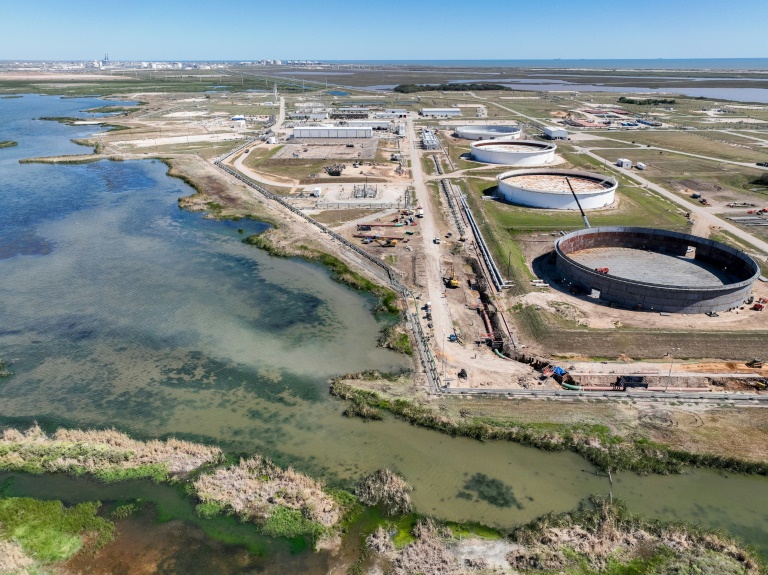
US to begin refilling oil reserve after huge Biden release

The US Energy Department announced Friday a plan to add oil back to the Strategic Petroleum Reserve (SPR) after a historically large release undertaken by the Biden administration.

The policy marks a significant shift after President Biden authorized the biggest-ever release earlier this year following Russia’s invasion of Ukraine, which sent oil prices to $120 a barrel.

The plan represents “an opportunity to secure a good deal for American taxpayers by repurchasing oil at a lower price than the $96 per barrel average price it was sold for, as well as to strengthen energy security,” the Department of Energy (DOE) said in a news release. 

The agency said it will buy up to three million barrels of oil under a pilot program designed to attract sellers who can lock in prices.

The SPR currently holds 382 million barrels of crude, down some 216 million barrels from its level before September 2021.

A Biden official said in October that the administration planned to purchase oil to refill the reserve as soon as prices hit around $67-72 a barrel.

Crude prices have fallen significantly from their peak levels earlier in the year. On Friday, US benchmark West Texas Intermedia dropped 2.4 percent to $74.29 a barrel.

The DOE announcement noted that gasoline prices have dropped by more than $1.80 a gallon from their June 2022 apex and now stand at the cheapest level since September 2021.

Texas sends nearly 90 migrants by bus to Philadelphia

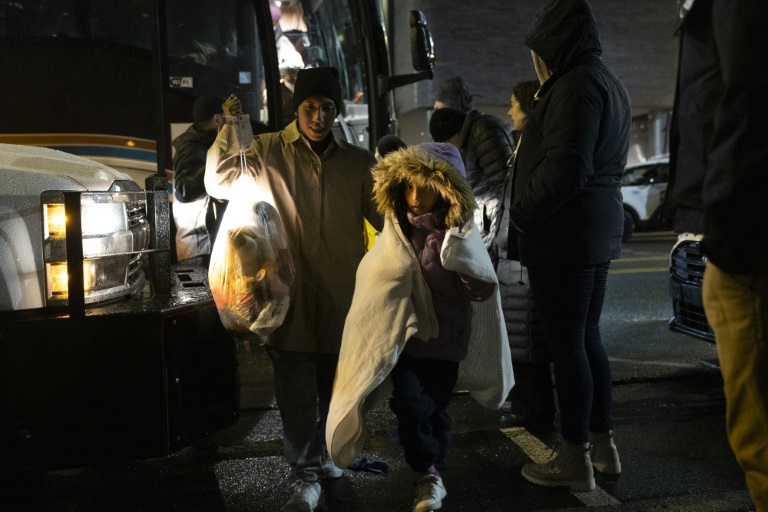
Two buses carrying nearly 90 migrants from Latin America arrived in Philadelphia on Friday, after being sent north by the state of Texas as part of a political battle over immigration in the United States.

In recent months Texas and other conservative states bordering Mexico have been sending migrants to northern Democratic strongholds to send a message about President Joe Biden’s immigration policy, which they believe is too permissive.

Charitable organizations helping the migrants said the group of over 85 men, women, and children was largely made up of Colombians and Nicaraguans who had crossed into the US near Eagle Pass in Texas.

Emilio, an activist with Casa de Venezuela, one of several NGOs who went to meet the new arrivals, said the migrants were being taken care of.

“They didn’t know what to expect in Philadelphia,” said Emilio, who asked only to be identified by his first name. “They were actually kindly surprised that a group of people was waiting for them at the bus station with clothes, coffee and blankets, because the weather is quite cold here right now.”

He added that most of the migrants would like to go to New York and the charities are trying to arrange transportation for them.

The office of Texas Governor Greg Abbott did not respond to AFP’s request for comment.

The White House has slammed the states for using migrants as “political pawns.”

The latest arrival of buses from the south comes as hundreds of migrants are gathering at the Mexican border, waiting for the expiry next week of a Covid-19 health measure that automatically blocks asylum seekers from entering the United States.

The “Title 42” measure has been used to expel hundreds of thousands of people since being invoked by former president Donald Trump in the early days of the Covid-19 pandemic, and has been criticized as cruel and ineffective. 

It expires at midnight on December 21.

In September, Florida Governor Ron DeSantis sent two planes carrying migrants to the wealthy island of Martha’s Vineyard.

The move came a week after Abbott sent two buses carrying migrants to a location near the official residence of Vice President Kamala Harris in Washington.

While immigration is a hot-button issue in the United States, experts say that half of the labor shortage in the country — estimated at around 3.5 million by the Federal Reserve — is due to a lack of migrants.

US justice chief orders equal treatment for cocaine, crack offenders

The US attorney general ordered justice officials Friday to treat drug offenders equally in powder cocaine and crack cocaine cases, after decades of disparities saw African Americans jailed more often and longer than whites.

In a directive to the Department of Justice, Merrick Garland said there was no reason to apply harsher penalties for crack offenses.

“The crack/powder disparity is simply not supported by science, as there are no significant pharmacological differences between the drugs” said the directive.

When crack, a cocaine derivative, swept through the United States in the 1980s and 1990s, Congress passed a law — crafted by then-senator and now President Joe Biden — setting harsher penalties for possession and dealing than those for powder cocaine.

The law recommended up to five years in prison for possession of 500 grams of cocaine, but only five grams of crack, justifying it by the more intense impact of crack, according to The Sentencing Project.

In addition, crack possession carried a mandatory prison sentence for the first offense involving more than five grams.

At the time crack was most common in poorer and African American communities, while powder cocaine was more widespread among whites and the wealthy.

The result was mass incarceration of Black people, often for very lengthy sentences, during the crack epidemic, swelling jail populations for long periods.

The consequences still echo through the prison system and Black communities, despite a 2010 law that eliminated the mandatory sentencing requirements for crack and changed the ratio to 18-to-1.

Though less harsh, it still treated crack use as far worse than powder cocaine.

A law signed by then president Donald Trump in 2018 allowed crack offenders to appeal based on the disparity in sentencing for the two drugs.

It has led to more than 4,500 people seeing their sentences reduced, according to an August 2022 report by the US Sentencing Commission.

But the memo from Garland, a Biden appointee, said “the crack/powder sentencing differential is still responsible for unwarranted racial disparities in sentencing.”

“The higher penalties for crack cocaine offenses are not necessary to achieve (and actually undermine) our law enforcement priorities,” it said.

Garland said the Biden administration supports proposed legislation to change the sentencing laws in Congress, the EQUAL Act.

The act was submitted in January 2021 but has not advanced.

US probing GM's autonomous driving unit after incidents

US authorities opened a preliminary investigation into General Motors’ Cruise autonomous driving program following sudden stop incidents, according to a notice seen Friday by AFP.

The National Highway Traffic Safety Administration is reviewing two types of incidents that result in Cruise vehicles “becoming unexpected roadway obstacles,” said the notice.

Cruise began offering first-in-the-nation commercial driverless taxi service to the public in part of San Francisco in June. 

While there have been no fatalities from the incidents, the investigation comes on the heels of an ongoing NHTSA probe into Tesla’s “Autopilot” driver-assistance system.

The agency received three incident reports in which Cruise vehicles were struck by another auto from the rear following a “hard braking maneuver,” according to the notice.

The agency has also been alerted to “multiple” cases where unmanned Cruise vehicles became “immobilized,” stranding passengers in unsafe locations or becoming an impediment to others on the road.

“Immobilization may cause other road users to make abrupt or unsafe maneuvers to avoid colliding with the immobilized Cruise vehicle, by, for example, diverting into oncoming lanes of traffic or into bike lanes,” said the notice, which also cited the risk of delay to emergency response vehicles.

The review by NHTSA’s Office of Defects Investigation covers around 242 vehicles and aims to determine the frequency of the incidents and their safety consequences.

A Cruise statement highlighted that the service has run nearly 700,000 fully autonomous miles “in an extremely complex urban environment with zero life-threatening injuries or fatalities,” while there are more than 40,000 deaths annually on US roads, Cruise said.

“There’s always a balance between healthy regulatory scrutiny and the innovation we desperately need to save lives, which is why we’ll continue to fully cooperate with NHTSA or any regulator in achieving that shared goal,” Cruise said.

Cruise recalled 80 vehicles earlier this year to upgrade software following an incident in June in which one of its cars was hit from the rear by another vehicle after breaking sharply while making an unprotected left turn.

Two people were slightly injured, according to a report submitted to the California Department of Motor Vehicles.

US probing GM's autonomous driving unit after incidents

US authorities opened a preliminary investigation into General Motors’ Cruise autonomous driving program following sudden stop incidents, according to a notice seen Friday by AFP.

The National Highway Traffic Safety Administration is reviewing two types of incidents that result in Cruise vehicles “becoming unexpected roadway obstacles,” said the notice.

Cruise began offering first-in-the-nation commercial driverless taxi service to the public in part of San Francisco in June. 

While there have been no fatalities from the incidents, the investigation comes on the heels of an ongoing NHTSA probe into Tesla’s “Autopilot” driver-assistance system.

The agency received three incident reports in which Cruise vehicles were struck by another auto from the rear following a “hard braking maneuver,” according to the notice.

The agency has also been alerted to “multiple” cases where unmanned Cruise vehicles became “immobilized,” stranding passengers in unsafe locations or becoming an impediment to others on the road.

“Immobilization may cause other road users to make abrupt or unsafe maneuvers to avoid colliding with the immobilized Cruise vehicle, by, for example, diverting into oncoming lanes of traffic or into bike lanes,” said the notice, which also cited the risk of delay to emergency response vehicles.

The review by NHTSA’s Office of Defects Investigation covers around 242 vehicles and aims to determine the frequency of the incidents and their safety consequences.

A Cruise statement highlighted that the service has run nearly 700,000 fully autonomous miles “in an extremely complex urban environment with zero life-threatening injuries or fatalities,” while there are more than 40,000 deaths annually on US roads, Cruise said.

“There’s always a balance between healthy regulatory scrutiny and the innovation we desperately need to save lives, which is why we’ll continue to fully cooperate with NHTSA or any regulator in achieving that shared goal,” Cruise said.

Cruise recalled 80 vehicles earlier this year to upgrade software following an incident in June in which one of its cars was hit from the rear by another vehicle after breaking sharply while making an unprotected left turn.

Two people were slightly injured, according to a report submitted to the California Department of Motor Vehicles.

Capitol riot panel to vote on pursuing Trump criminal charges: report

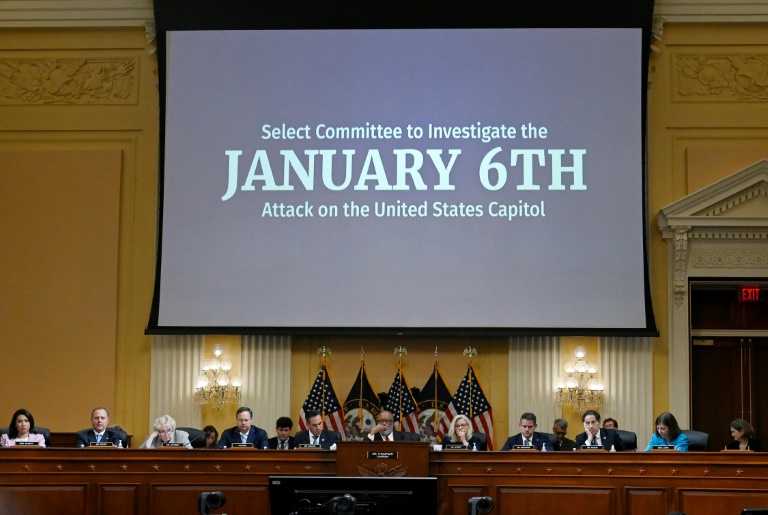
Lawmakers investigating last year’s attack on the US Capitol will vote Monday on whether to recommend criminal charges against former president Donald Trump on at least three counts — including insurrection, Politico reported on Friday.

The political news site said a congressional subcommittee that has been evaluating potential criminal referrals stemming from the January 6, 2021 Capitol riot would recommend at least three charges for Trump.

Politico, citing two people familiar with the contents of a committee report, said the charges are insurrection, obstruction of an official proceeding and conspiracy to defraud the US government.

The full House committee investigating the Capitol riot is to hold its last meeting at 1:00 pm (1800 GMT) on Monday and release its final report two days later.

During the Monday meeting, the members of the committee will vote on whether to refer any individuals for potential criminal charges.

The committee itself cannot file charges but can make recommendations to the Justice Department, which has appointed a special counsel to look into Trump’s role in the Capitol riot and his efforts to overturn the 2020 presidential election won by Democrat Joe Biden.

Trump, who has announced plans to run for president again in 2024, was subpoenaed by the House committee but declined to testify.

Hundreds of people have been arrested for involvement in the assault on the Capitol, and two members of a far-right militia, the Oath Keepers, were convicted of sedition in the most high-profile case yet stemming from the attack.

Trump was impeached by the Democratic-majority House of Representatives for “incitement of insurrection” after the attack on the Capitol but was acquitted by the Senate.

Musk faces backlash as Twitter suspends journalists

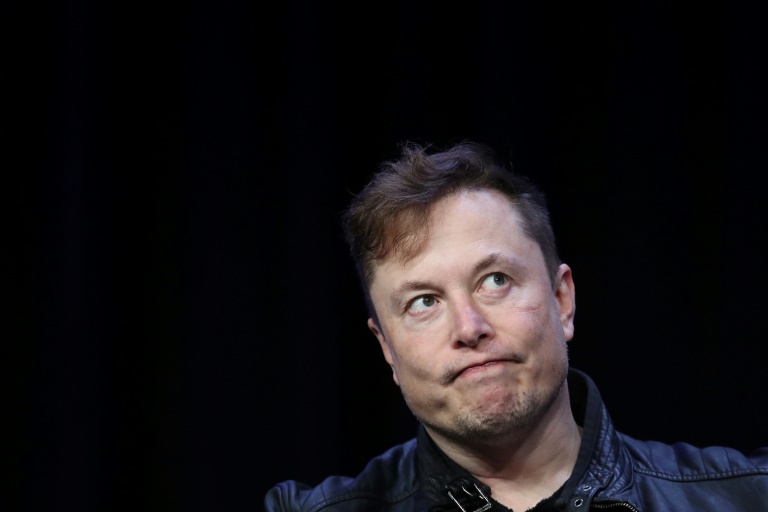
Twitter owner Elon Musk drew anger and stern warnings from the UN and EU on Friday after suspending the accounts of half a dozen prominent journalists — accusing them of endangering his family.

Journalists from CNN, the New York Times and the Washington Post were cut off from the platform without warning, provoking the newest controversy since Musk took over the company on October 27.

“News about arbitrary suspension of journalists on Twitter is worrying,” EU commissioner Vera Jourova posted on Twitter, warning the influential platform could face hefty fines through European laws.

“Elon Musk should be aware of that. There are red lines. And sanctions, soon,” she added.

The spokesman for UN chief Antonio Guterres called it a “dangerous precedent at a time when journalists all over the world are facing censorship, physical threats and even worse.”

The latest controversy began when Musk on Wednesday suspended @elonjet, an account that tracked flights of his private jet.

Musk said the move was necessary after a car in Los Angeles carrying one of his children was followed by “a crazy stalker” and seemed to blame the tracking of his jet for the incident.

Some of the journalists had reported on the affair, including tweets linking to the suspended @elonjet account, which Musk said amounted to “assassination coordinates” against he and his family.

In a chat hosted live on Twitter, Musk provided no evidence for his claim but told some of the suspended reporters that on Twitter “everyone’s going to be treated the same… they’re not special because you’re a journalist.”

Pressed further on his allegations, Musk ended the conversation. Twitter Spaces, the feature where the chat took place, was then suspended.

Media organizations criticized the move sharply and opened the door to re-evaluating their relationship with Twitter, which has become an essential tool for journalism over the past decade.

“The impulsive and unjustified suspension of a number of reporters, including CNN’s Donie O’Sullivan, is concerning but not surprising,” the news organization said in a tweet.

“Twitter’s increasing instability and volatility should be of incredible concern for everyone who uses the platform.”

The New York Times said in a statement it also wanted answers from Twitter regarding the “questionable” suspension of journalists.

Paris-based Reporters Without Borders (RSF), which defends the freedom of the press around the world, decried a “Kafkaesque nightmare” for journalists that depend on Twitter.

The Committee to Protect Journalists said Twitter “should immediately restore these reporters’ accounts.”

“If confirmed as retaliation for their work, this would be a serious violation of journalist’s right to report the news without fear of reprisal,” added Jodie Ginsberg, the president of the CPJ.

– Twitter exodus? –

Twitter has lurched from one controversy to the next since Musk took control after paying $44 billion, mainly by selling shares in Tesla, his successful electric car company. 

The billionaire’s talk of unfettered speech has scared off major advertisers and caught the attention of regulators.

Musk has reinstated the account of former US president Donald Trump and lashed out against the outgoing key advisor for the US response to the Covid-19 pandemic, Anthony Fauci, a frequent target of vitriol on right-wing media.

CNN has reported that Twitter’s former head of trust and safety fled his home after baseless attacks on Twitter content moderation, endorsed by Musk.

Meanwhile, a purge initiated by Musk at Twitter left more than half of its 7,500 employees on the sidelines and now many of them are taking the SpaceX and Tesla tycoon to court.

Musk at one point signaled he was going to war with Apple over the App Store, only to later tweet that it was a “misunderstanding.”

Market tracker Insider Intelligence forecast that Twitter will experience an exodus of users.

“There won’t be one catastrophic event that ends Twitter,” said Insider Intelligence analyst Jasmine Enberg.

“Instead, users will start to leave the platform next year as they grow frustrated with technical issues and the proliferation of hateful or other unsavory content.”

Musk faces backlash as Twitter suspends journalists

Twitter owner Elon Musk drew anger and stern warnings from the UN and EU on Friday after suspending the accounts of half a dozen prominent journalists — accusing them of endangering his family.

Journalists from CNN, the New York Times and the Washington Post were cut off from the platform without warning, provoking the newest controversy since Musk took over the company on October 27.

“News about arbitrary suspension of journalists on Twitter is worrying,” EU commissioner Vera Jourova posted on Twitter, warning the influential platform could face hefty fines through European laws.

“Elon Musk should be aware of that. There are red lines. And sanctions, soon,” she added.

The spokesman for UN chief Antonio Guterres called it a “dangerous precedent at a time when journalists all over the world are facing censorship, physical threats and even worse.”

The latest controversy began when Musk on Wednesday suspended @elonjet, an account that tracked flights of his private jet.

Musk said the move was necessary after a car in Los Angeles carrying one of his children was followed by “a crazy stalker” and seemed to blame the tracking of his jet for the incident.

Some of the journalists had reported on the affair, including tweets linking to the suspended @elonjet account, which Musk said amounted to “assassination coordinates” against he and his family.

In a chat hosted live on Twitter, Musk provided no evidence for his claim but told some of the suspended reporters that on Twitter “everyone’s going to be treated the same… they’re not special because you’re a journalist.”

Pressed further on his allegations, Musk ended the conversation. Twitter Spaces, the feature where the chat took place, was then suspended.

Media organizations criticized the move sharply and opened the door to re-evaluating their relationship with Twitter, which has become an essential tool for journalism over the past decade.

“The impulsive and unjustified suspension of a number of reporters, including CNN’s Donie O’Sullivan, is concerning but not surprising,” the news organization said in a tweet.

“Twitter’s increasing instability and volatility should be of incredible concern for everyone who uses the platform.”

The New York Times said in a statement it also wanted answers from Twitter regarding the “questionable” suspension of journalists.

Paris-based Reporters Without Borders (RSF), which defends the freedom of the press around the world, decried a “Kafkaesque nightmare” for journalists that depend on Twitter.

The Committee to Protect Journalists said Twitter “should immediately restore these reporters’ accounts.”

“If confirmed as retaliation for their work, this would be a serious violation of journalist’s right to report the news without fear of reprisal,” added Jodie Ginsberg, the president of the CPJ.

– Twitter exodus? –

Twitter has lurched from one controversy to the next since Musk took control after paying $44 billion, mainly by selling shares in Tesla, his successful electric car company. 

The billionaire’s talk of unfettered speech has scared off major advertisers and caught the attention of regulators.

Musk has reinstated the account of former US president Donald Trump and lashed out against the outgoing key advisor for the US response to the Covid-19 pandemic, Anthony Fauci, a frequent target of vitriol on right-wing media.

CNN has reported that Twitter’s former head of trust and safety fled his home after baseless attacks on Twitter content moderation, endorsed by Musk.

Meanwhile, a purge initiated by Musk at Twitter left more than half of its 7,500 employees on the sidelines and now many of them are taking the SpaceX and Tesla tycoon to court.

Musk at one point signaled he was going to war with Apple over the App Store, only to later tweet that it was a “misunderstanding.”

Market tracker Insider Intelligence forecast that Twitter will experience an exodus of users.

“There won’t be one catastrophic event that ends Twitter,” said Insider Intelligence analyst Jasmine Enberg.

“Instead, users will start to leave the platform next year as they grow frustrated with technical issues and the proliferation of hateful or other unsavory content.”

Kyiv warns of long cuts after Russian missiles batter grid

A fresh barrage of deadly Russian strikes battered Ukraine on Friday, worsening dire conditions for Ukrainians and provoking accusations of “war crimes” from the European Union.

The strikes knocked out water and electricity services in several regions in a country already enduring near freezing temperatures.

The national energy provider warned Ukrainians it could take longer to restore electricity after dozens of Russian missiles targeted key infrastructure sites in the north, south and centre of the country.

“Priority will be given to critical infrastructure: hospitals, water supply facilities, heat supply facilities, sewage treatment plants,” Ukrenergo said in a statement Friday.

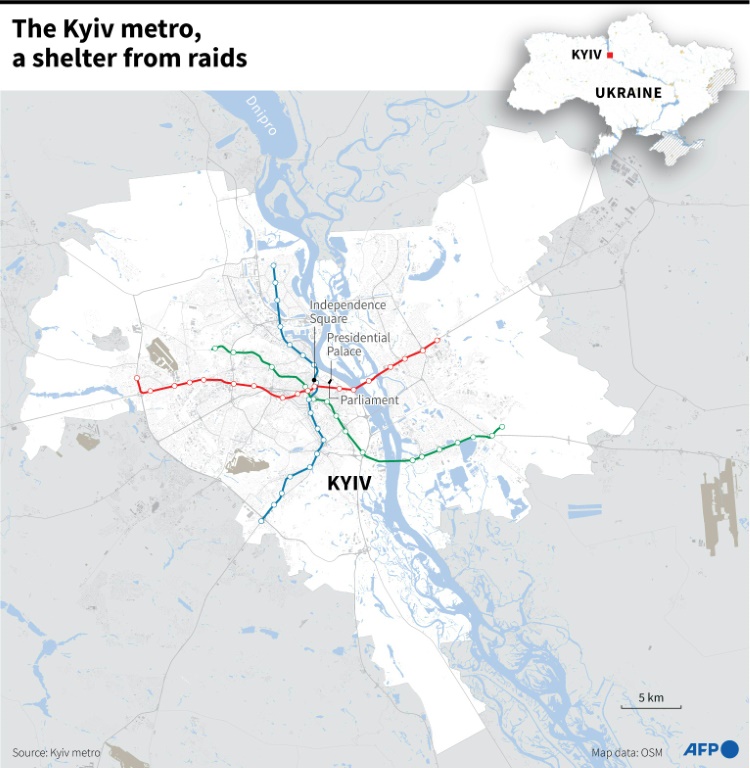
Residents of the capital wrapped in winter coats crammed into underground metro stations after air raid sirens rang out early Friday: the ninth wave of Russian aerial bombardments since October.

“I woke up, I saw a rocket in the sky,” Kyiv resident 25-year-old Lada Korovai said. “I saw it and understood that I have to go to the tube.”

“We live in this situation. It’s a war, it’s real war,” she told AFP.

The aerial onslaught is the latest brought by Russian forces to target what Moscow says are military-linked facilities. They follow a series of embarrassing battlefield defeats for Russia.

– ‘Biggest’ missile attack of invasion –

The European Union’s foreign policy chief Josep Borrell denounced the “indiscriminate terror” of the attacks.

“These cruel, inhumane attacks aim to increase human suffering and deprive Ukrainian people, but also hospitals, emergency services and other critical services of electricity, heating and water,” said Borrell in a statement.

“These bombings constitute war crimes and are barbaric. All those responsible shall be held accountable.”

Kharkiv, Ukraine’s second largest city, was left without electricity, its mayor said, although regional officials said they planned to have power restored by midnight.

In the central city of Kryvyi Rig, where Ukraine President Volodymyr Zelensky was born, the airstrikes hit a residential building.

“A 64-year-old woman and a young couple died. Their little son still remains under the rubble of the house,” the region’s governor Valentyn Reznichenko said, adding that 13 others had been wounded.

Oleksandr Starukh, head of the frontline Zaporizhzhia region, which houses Europe’s largest nuclear power plant, said they had been targeted by more than a dozen Russian missiles.

Kyiv meanwhile “withstood one of the biggest missile attacks since the beginning of the full-scale invasion. Regional officials said their air-defence forces had shot down 37 out of 40 missiles.

Kyiv Mayor Vitali Klitschko said the water supply had been disrupted and that the metro had stopped running so people could shelter underground.

The Kyiv metro is a vital resource for the capital, which had a pre-war population of three million. It has been used as a city-wide bomb shelter since the Russian invasion.

– ‘Survive winter’ –

About half of Ukraine’s energy grid has been damaged in sustained attacks and the national provider warned Friday of emergency blackouts because of the “massive” wave of Russian attacks.

In Ukrainian-held Bakhmut — an eastern city at the epicentre of the war — some residents received wood stoves distributed by volunteers, AFP journalists said.

Bakhmut resident, 85-year-old Oleksandra was braving the cold to collect medication at a nearby pharmacy in the Donetsk region city.

“I’ll survive winter. I’ll just walk more to get warm,” the old woman told AFP. 

In the south, fresh Russian shelling in Kherson, recently recaptured by Ukraine, killed one person and wounded three more.

Kherson has been subjected to persistent Russian shelling since Moscow’s forces retreated in November and power was cut in the city earlier this week.

On Thursday, Russian attacks killed 14 people, the deputy head of the Ukrainian presidency Kyrylo Tymoshenko said. 

In the Russian-controlled region of Lugansk in eastern Ukraine, Moscow-installed officials said shelling from Kyiv’s forces had killed eight and wounded 23.

– Putin to visit Belarus –

“The enemy is conducting barbaric shelling of cities and districts of the republic,” the Russian-installed leader of Lugansk Leonid Pasechnik said on social media.

Moscow has said the strikes on Ukrainian infrastructure are a response to an explosion on the Kerch bridge connecting the Russian mainland to the Crimean peninsula annexed by Moscow in 2014.

The Kremlin has said it holds Kyiv ultimately responsible for the humanitarian impact of the strikes for refusing to capitulate to Russian negotiation terms.

But Ukrainian defence officials said this week that its forces had shot down a swarm of more than a dozen Iranian-made attack drones launched at Kyiv, a sign that Western-supplied systems are having an impact.

Separately on Friday, Russian President Vladimir Putin announced he would visit Belarus next week for talks with his counterpart and ally Alexander Lukashenko.

Minsk said the pair would hold one-on-one talks as well as wider negotiations with their ministers on “Belarusian-Russian integration”. 

NATO chief Jens Stoltenberg told AFP Friday: “We have to understand that President Putin is ready to be in this war for a long time and to launch new offensives.”

Meanwhile the European Union on Friday imposed a fresh round of sanctions on Moscow, including restricting the export of drone engines to Russia or countries like Iran looking to supply Moscow weapons.

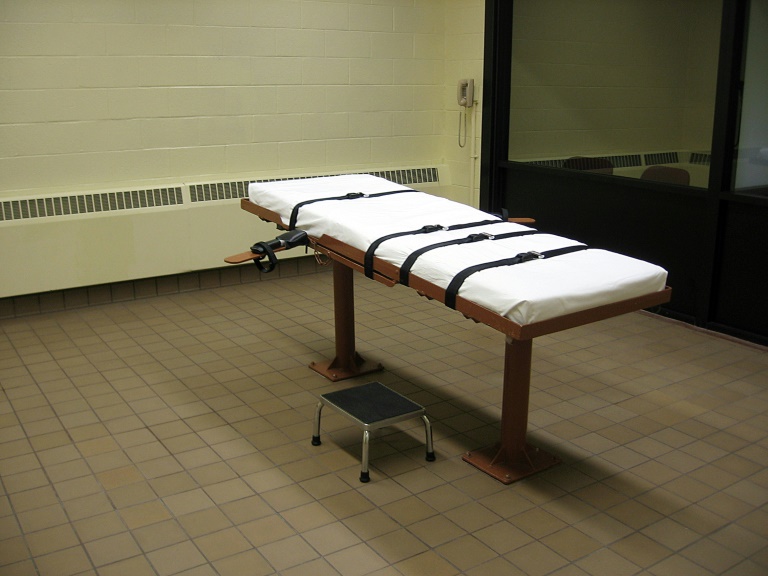
2022 'year of botched executions' in US: report

One-third of the executions by lethal injection in the United States this year were “botched,” a capital punishment watchdog group said Friday.

The Death Penalty Information Center (DPIC) said 18 executions were carried out in the country in 2022, the fewest in a non-pandemic year since 1991.

“2022 could be called ‘the year of the botched execution’ because of the high number of states with failed or bungled executions,” the nonprofit DPIC said in its annual report.

“Seven of the 20 execution attempts were visibly problematic — an astonishing 35 percent — as a result of executioner incompetence, failures to follow protocols, or defects in the protocols themselves,” it said.

In Alabama, for example, it took three hours to set an IV line for the July 28, 2022 execution by lethal injection of convicted murderer Joe James Jr., the DPIC said.

Two other execution attempts in Alabama were halted because of problems setting IV lines and the governor ordered a moratorium on executions while a review of procedures is carried out.

The DPIC said 37 of the 50 US states have abolished the death penalty or not carried out an execution in more than a decade.

The governor of Oregon this month commuted the sentences of all 17 inmates on the state’s Death Row to life in prison.

This year there were five executions in Oklahoma, five in Texas, three in Arizona, two in Alabama, two in Missouri and one in Mississippi.

Among those executed in 2022 were “prisoners with serious mental illness, brain damage, intellectual disability, and strong claims of innocence,” according to the DPIC.

It said the number of death sentences imposed was also on the decline with just 20 so far this year.

In perhaps the most notable case, the young man who carried out the 2018 mass shooting at a high school in Parkland, Florida, was given life in prison after a jury declined to sentence him to death.

Close Bitnami banner
Bitnami