US Business

Twitter suspends accounts of journalists covering Musk

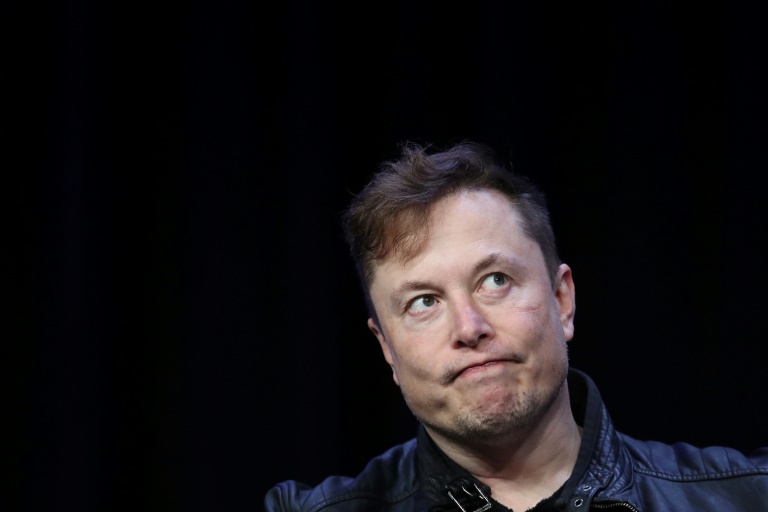
Twitter suspended Thursday accounts of more than a half-dozen journalists who had been writing about the company and its new owner Elon Musk.

Silencing journalists at Twitter while claiming to be a free speech champion is the latest controversy provoked by Musk since he took over the company, which has seen staffing gutted and advertisers exit.

Some of the journalists had been tweeting about Twitter shutting down an @ElonJet account that tracked flights of billionaire Musk’s private jet and about versions of that account hosted at other social networks.

Twitter did not say why the reporters’ accounts were suspended.

“Nothing says free speech like suspending journalists who cover you,” Sarah Reese Jones of news commentary website PoliticusUSA said in a tweeted response to posts about the suspensions.

Checks at Twitter showed account suspensions included reporters from CNN, The New York Times, and The Washington Post as well as independent journalists.

“The impulsive and unjustified suspension of a number of reporters, including CNN’s Donie O’Sullivan, is concerning but not surprising,” the news organization said in a tweet.

“Twitter’s increasing instability and volatility should be of incredible concern for everyone who uses the platform.”

CNN said that it has asked Twitter for an explanation of the suspension.

In a statement, The New York Times said it also wanted answers from Twitter regarding the “questionable” suspension of journalists.

“I have no idea what rules I purportedly broke,” independent journalist Aaron Rupar, whose Twitter account was suspended, wrote in a Substack post.

“I haven’t heard anything from Twitter at all.”

In a tweet late Thursday, Musk appeared to allude to the suspension of the reporters’ accounts with this tweet: “If anyone posted real-time locations & addresses of NYT reporters, FBI would be investigating, there’d be hearings on Capitol Hill & Biden would give speeches about end of democracy!”

Musk on Wednesday tweeted that a car in Los Angeles carrying one of his children was followed by “a crazy stalker” and seemed to blame the tracking of his jet for this alleged incident. In the tweet, he said legal action is being taken against the person who ran ElonJet.

The Twitter account that tracked flights of Musk’s private jet was shut down Wednesday despite the billionaire’s statement that he is a free speech absolutist.

Twitter later sent out word that it updated its policy to prohibit tweets, in most cases, from giving away someone’s location in real time.

Musk had gone public saying he would not touch @ElonJet after buying Twitter in a $44 billion deal as part of his commitment to free speech at the platform.

– Exodus expected –

Twitter has lurched from one controversy to the next since Musk took control in late October.

The billionaire’s talk of unfettered speech scared off major advertisers and caught the attention of regulators.

Musk has reinstated the account of former US president Donald Trump and lashed out against the outgoing key advisor for the US response to the Covid-19 pandemic, Anthony Fauci, a frequent target of vitriol on right-wing media.

CNN has reported that Twitter’s former head of trust and safety fled his home after baseless attacks on Twitter content moderation, endorsed by Musk.

Meanwhile, a purge initiated by Musk at Twitter left more than half of its 7,500 employees on the sidelines and now many of them are taking the SpaceX and Tesla tycoon to court.

Musk at one point signaled he was going to war with Apple over the App Store, only to later tweet that it was a “misunderstanding.”

Market tracker Insider Intelligence forecast that Twitter will experience an exodus of users.

“There won’t be one catastrophic event that ends Twitter,” said Insider Intelligence analyst Jasmine Enberg.

“Instead, users will start to leave the platform next year as they grow frustrated with technical issues and the proliferation of hateful or other unsavory content.”

Deadly Russian shelling cuts off Kherson power

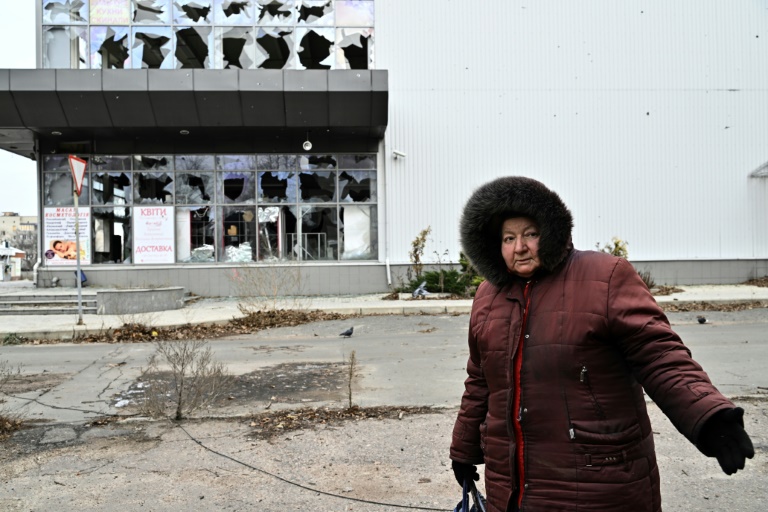
Russian forces bombarded Kherson on Thursday, killing two people and depriving the Ukrainian city of electricity as the European Union announced its latest slew of sanctions against Moscow and an 18 billion euro aid package for Kyiv.

Moscow-allied officials in the Russian-occupied city of Donetsk, meanwhile, said they have come under some of the heaviest shelling in years from Ukrainian forces, leaving one person dead.

Despite Russia’s retreat from the southern port city in November, Kherson remains within reach of Moscow’s weaponry and under constant threat.

Ukrainian President Volodymyr Zelensky said Russian forces had attacked Kherson 16 times on Thursday alone.

The International Committee of the Red Cross confirmed that one of its Ukrainian team members had been killed by the strikes and urged that humanitarian “personnel and property” be spared.

While winter temperatures plunge below freezing, the heavy shelling has left Kherson “completely without power”, according to regional governor Yaroslav Yanushevych.

Much of Ukraine is struggling without heat or power after Moscow started targeting electricity and water systems nearly two months ago.

The UN human rights chief warned the campaign has inflicted “extreme hardship” on Ukrainians this winter, and also decried likely war crimes as he described his office’s documentation of civilians killed by Russian forces.

“Winter is coming, how can people survive?,” Svetlana, a resident of the capital, told AFP. “Lord, what do they want from us? They do not let Ukrainians live.”

– Summary killings –

UN rights chief Volker Turk said his office has documented the executions and direct killings of 441 civilians across three regions of Ukraine from the start of Russia’s invasion on February 24 until April 6.

The “actual figures are likely to be considerably higher”, he said, adding “there are strong indications that the executions… may constitute the war crime of willful killing.”

Beyond that initial period, Turk said his team had continued to document gross rights violations affecting both civilians and combatants, including arbitrary detention, enforced disappearances, torture and sexual violence.

So far, he added, “accountability remains sorely lacking”.

He also warned of further displacements as Russian attacks on critical infrastructure leave people without power or clean water. 

“Additional strikes could lead to a further serious deterioration in the humanitarian situation and spark more displacement,” he said.

An estimated 18 million Ukrainians are already in need of humanitarian aid. 

– Kyiv expected to be targeted again –

Ukrainian commander-in-chief General Valeriy Zaluzhny told British weekly The Economist they expected a fresh Russian assault on Kyiv in the early months of 2023.

Kyiv was the primary target when the Russians first invaded on February 24. But their northern campaign, launched from Belarus, was rebuffed by a gritty Ukrainian counter-offensive that preserved the seat of government.

“The Russians are preparing some 200,000 fresh troops. I have no doubt they will have another go at Kyiv,” Zaluzhny said.

Russia has appeared to pump up its presence anew in Belarus in recent weeks, according to US-based conflict monitor the Institute for the Study of War.

But it said exercises and deployments do not likely indicate plans by Belarusian forces to attack northern Ukraine themselves.

Instead, the actions “are likely part of ongoing Russian information operations” to keep Kyiv nervous and force it to maintain significant force levels in the north, far from the active front lines, according to ISW.

– Blasts in Donetsk –

Having retreated from parts of southern Ukraine, Moscow’s forces have since engaged in fierce battles in the east, particularly in the Donetsk region.

The region has been partly controlled by Moscow-backed separatists since 2014.

On Thursday, local Russia-aligned authorities reported “the most massive shelling since 2014” in the regional capital, Donetsk city.

At least one person was killed and nine more injured in the strikes, they said.

In Donetsk, “the epicentre of the fighting remains the Bakhmut and Avdiivka directions,” Ukraine deputy defence minister Ganna Malyar told a briefing. 

“The enemy is hard to beat,” Petro, a Ukrainian military unit chief in the area, told AFP.

“Staying on the frontline is very difficult. They sustain heavy losses, but so do we.”

– International support –

The EU unleashed its ninth wave of sanctions on Russia Thursday, blacklisting “almost 200” individuals and entities, targeting three banks, curbing mining investments and banning more TV channels.

But diplomats have warned that the bloc is increasingly running out of ways to hurt the Russian economy as the war drags towards its 10th month. 

The EU also cleared the way to giving Ukraine another 18 billion euros ($19 billion) in aid following an impassioned plea from Zelensky.

In Washington, the Pentagon announced it will expand training for Ukrainian forces in Germany to about 500 persons per month focused on larger-scale manoeuvres and specific weapons systems.

The new effort will “include joint maneuver and combined arms operations training while building upon the specialized equipment training that we’re already providing,” Pentagon press secretary Pat Ryder said.

Ryder would not confirm expectations that the United States will provide advanced Patriot air defence batteries to Ukraine, which would bring added protection against Russian cruise missiles as well as tactical ballistic missiles Moscow is believed to be seeking from Iran.

Asian stocks join global retreat as central banks see higher rates

Asian stocks fell Friday as investors contemplated interest rates going higher than expected for an extended period after central banks reaffirmed their commitment to bringing down inflation.

After a healthy rally in recent weeks fuelled by signs that price rises were slowing, the US Federal Reserve and European Central Bank this week crushed any Christmas spirit by hiking borrowing costs again and warning of more pain to come.

While inflation in most countries has started coming down from the highs seen earlier this year — helped by a drop in energy costs — they remain at multi-decade highs.

And observers have warned that economies could be heading for a period of stagflation where prices keep rising but growth stalls.

After a rough week for markets, anxiety was enhanced on Wednesday after the Fed hiked rates as expected but indicated they would likely have to go higher than had been expected, ramping up fears of a recession.

That was followed by similar moves by the ECB on Thursday, with its boss Christine Lagarde warning: “We have more ground to cover, we have longer to go and we are in for a long game.”

The Bank of England also lifted rates and said more hikes were on the cards.

The decisions came as data also showed that almost a year of monetary tightening was hitting the economy more and more, with US retail sales dropping in November as American consumers — the key driver of growth — began to feel the pinch.

– Recession on horizon? –

“With central banks on both sides of the pond suggesting they have more work to tame inflation, hiking interest rates into a dimming macro environment will undoubtedly trigger a recession,” said SPI Asset Management’s Stephen Innes.

“The question is just how profound. Forget inflation; Asia traders are now worried about a global recession.”

All three main indexes on Wall Street tumbled Thursday, with the Nasdaq losing more than three percent as tech firms took another blow, while Paris and Frankfurt were also off more than three percent.

And the losses carried through to Asia, where Tokyo gave up more than one percent while Sydney, Seoul, Singapore, Wellington, Taipei, Jakarta and Manila were also in the red.

However, the dollar eased back slightly after Thursday’s rally.

Hong Kong and Shanghai also sagged, though the losses were less severe, with traders supported by signs of progress in talks on allowing US officials to audit Chinese firms listed in New York, easing concerns about a possible delisting of some big names such as Alibaba and Tencent.

The news provided a little more help to Hong Kong traders, whose sentiment has been lifted by China’s shift away from the economically damaging zero-Covid policy as well as moves to open the city further to overseas visitors.

And a report in the city’s South China Morning Post said the border with mainland China would be fully reopened next month, providing another much-needed boost to the beleaguered economy.

However, the mood was soured a little by a US decision to put 36 Chinese companies including top producers of advanced computer chips on a trade blacklist, severely restricting their access to any US technology.

– Key figures around 0230 GMT –

Tokyo – Nikkei 225: DOWN 1.5 percent at 27,620.66 (break)

Hong Kong – Hang Seng Index: DOWN 0.2 percent at 19,327.32

Shanghai – Composite: DOWN 0.1 percent at 3,164.07

Euro/dollar: UP at $1.0648 from $1.0627 on Thursday

Dollar/yen: DOWN at 137.28 yen from 137.80 yen

Pound/dollar: DOWN at $1.2211 from $1.2175

Euro/pound: DOWN at 87.20 pence from 87.26 pence

West Texas Intermediate: UP 0.2 percent at $76.26 per barrel

Brent North Sea crude: UP 0.2 percent at $81.40 per barrel

New York – Dow: DOWN 2.3 percent at 33,202.22 (close)

London – FTSE 100: DOWN 0.9 percent at 7,426.17 (close)

Twitter suspends accounts of journalists covering Musk

Twitter suspended Thursday the accounts of more than a half-dozen journalists who had been writing about the company and its new owner Elon Musk.

Some of the journalists had been tweeting about Twitter shutting down an @ElonJet account that tracked flights of the billionaire’s private jet and about versions of that account hosted at other social networks.

Twitter did not say why the reporters’ accounts were suspended.

“Nothing says free speech like suspending journalists who cover you,” Sarah Reese Jones of news commentary website PoliticusUSA said in a tweeted response to posts about the suspensions.

Checks at Twitter showed account suspensions included reporters from CNN, The New York Times, and The Washington Post as well as independent journalists.

An account for Twitter rival Mastodon was also suspended, according to a report by NBCNews.

Musk on Wednesday tweeted that a car in Los Angeles carrying one of his children was followed by “a crazy stalker” and seemed to blame the tracking of his jet for this alleged incident. In the tweet, he said legal action is being taken against the person who ran ElonJet.

The Twitter account that tracked flights of Musk’s private jet was shut down Wednesday despite the billionaire’s statement that he is a free speech absolutist.

“Well it appears @ElonJet is suspended,” creator Jack Sweeney tweeted from his personal @JxckSweeney account, which was subsequently suspended as well.

Twitter later sent out word that it updated its policy to prohibit tweets, in most cases, from giving away someone’s location in real time.

“Any account doxxing real-time location info of anyone will be suspended, as it is a physical safety violation,” Musk said in a tweet.

“This includes posting links to sites with real-time location info.”

Doxxing refers to revealing identifying information such as home address or phone number online, typically to target someone for abuse.

Tweets sharing a person’s location that are “not same-day” are allowed under the tweaked policy, as are posts about being at a public event such as a concert, Twitter said.

Sweeney attracted attention with his Twitter account that tracks the movements of Musk’s plane and even rejected Musk’s offer of $5,000 to shut down @ElonJet, which had hundreds of thousands of followers.

Musk had gone public saying he would not touch the account after buying Twitter in a $44 billion deal as part of his commitment to free speech at the platform.

Flight-following websites and several Twitter accounts offer real-time views of air traffic, but that exposure draws pushback ranging from complaints to equipment seizures.

US rules require planes in designated areas be equipped with ADS-B technology that broadcasts aircraft positions using signals that relatively simple devices can pick up.

Google rivals join forces in online maps

Google rivals on Thursday unveiled a project to make freely available data sets for map features to be built into online offerings.

Alphabet-owned Google dominates online mapping, selling its services to other companies or platforms and using location and navigation capabilities to enhance its other offerings, including online advertising.

Meta, Microsoft, TomTom and Amazon Web Services have now introduced what they call the Overture Maps Foundation, the goal of which is to make comprehensive mapping data openly available for use by whoever may need it, the nonprofit Linux Foundation said in a release.

“Mapping the physical environment and every community in the world, even as they grow and change, is a massively complex challenge that no one organization can manage,” said Linux Foundation executive director Jim Zemlin.

“Industry needs to come together to do this for the benefit of all.”

Google was notably absent from the list of companies teaming up in Overture, which said its goal is to expand membership to speed up progress.

The coalition expected to release its first mapping datasets by the middle of next year.

“Immersive experiences, which understand and blend into your physical environment, are critical to the embodied internet of the future,” Maps at Meta engineering director Jan Erik Solem said in the release.

“By delivering interoperable open map data, Overture provides the foundation for an open metaverse built by creators, developers, and businesses alike.”

Map data already underlies applications for search, navigation, logistics, games, autonomous driving and more, according to the Linux Foundation.

Overture map data will be open source, meaning developers are free to not only use it but to build on it, the Linux Foundation said.

Panama shuts down huge copper mine in contract dispute

Panama ordered a halt Thursday to work at a copper pit that is the largest mine in Central America, after a deadline for a new contract with its Canadian operators expired.

President Laurentino Cortizo said he had ordered that only maintenance work continue at the huge mine operated by First Quantum Minerals.

This mining project is considered the largest private investment in Panama’s history, contributing four percent of its GDP and accounting for 75 percent of its export revenues.

Panama had given the company until Wednesday to agree to a new contract under which the amount it pays Panama for this mining concession would rise by a factor of 10, to $375 million a year.

Minera Panama, the local unit of First Quantum, “has not lived up to its commitment” to sign that new agreement, the president said.

“This is not acceptable for me as president, nor for the government, nor for the people of Panama,” Cortizo said in a televised speech.

First Quantum’s manager in Panama, Keith Green, who is Scottish, did not immediately respond to the announcement.

First Quantum, one of the largest copper miners in the world, began commercial copper production at the site in Donoso in 2019, through Minera Panama.

It has spent $10 billion on earthworks, construction buildings to house more than 7,000 employees, the purchase of heavy machinery, a power plant, a port for deep-draft merchant ships, access roads, and re-forestation plans.

Cortizo in January announced plans to toughen the terms of the mining contract.

“Panama has the inalienable right to receive fair income from the extraction of its mineral resources, because the copper is Panamanian,” he said then.

The deposit, discovered in 1968, lies on the Caribbean coast, 240 kilometers (150 miles) by road from the capital Panama City.

The mine is the biggest in Central America, producing 300,000 tons of copper concentrate per year, according to Green.

A week ago Green told AFP, “we intend to reach an agreement, but negotiations are a bit deadlocked.”

The company ran into trouble in 2017 when Panama’s Supreme Court, acting on a suit filed by environmental groups, said the mining contract it had was unconstitutional.

$858 bn US defense bill scraps military vaccine mandate

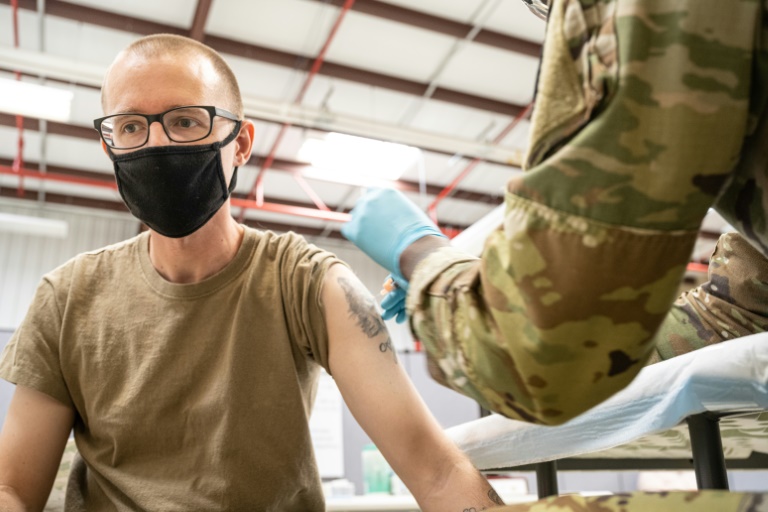
US lawmakers directed the Pentagon to rescind its Covid-19 vaccine mandate as part of the $858 billion 2023 defense spending bill passed by the Senate on Thursday.

The mandate — under which the Pentagon says more than 8,000 military personnel have been discharged for refusal to comply — was scrapped over the objections of US President Joe Biden and Defense Secretary Lloyd Austin, in a victory for Republicans who sought to end it.

While various other US measures aimed at curbing the spread of Covid-19 have previously been relaxed or removed, the Pentagon’s vaccine requirement remained on the basis that it protected the health and readiness of military personnel.

But the National Defense Authorization Act (NDAA) for fiscal year 2023 — which was previously passed by the House of Representatives, and still must be signed by Biden — now requires the defense secretary to end the mandate.

The White House supported Austin’s opposition to repealing the mandate, but that was not enough to carry the day in Congress.

Republicans, who have insisted that various Covid-19 prevention measures infringe on personal freedom, pushed for the mandate’s removal and had threatened to hold up the bill if it did not lift the shot requirement.

A group of Republican senators called in a late November letter for the mandate to be scrapped and for the reinstatement of those who were removed from the armed forces as a result.

The mandate has “ruined the livelihoods of men and women who have honorably served our country,” they wrote, also arguing that removing troops from the military at a time when it is struggling with recruiting is detrimental.

– ‘Myths and misbeliefs’ –

A proposal by Republican senators — which would have prohibited the imposition of a new Pentagon mandate without congressional approval and required the reinstatement with back pay of personnel dismissed under the current one — failed to pass earlier on Thursday.

The NDAA leaves the decision on potential reinstatement of servicemembers discharged under the mandate up to the Pentagon, which declined to comment on the legislation prior to its passage.

“The military departments have the ability to consider applications for reinstatement of servicemembers who were previously separated for refusing the vaccine,” an explanatory statement accompanying the NDAA said.

Republican Representative Kevin McCarthy, who is seeking to become speaker of the House, has argued that the mandate has affected recruiting — an assertion the Pentagon has questioned.

Austin said that he has “not seen any hard data that directly links the Covid mandate to an effect on our recruiting.”

Deputy Pentagon Press Secretary Sabrina Singh said the mandate “appears to have very minimal impact on recruiting,” and that doing away with it “would impact the readiness of the force.”

Singh also said that the majority of respondents to a survey spanning from January to September 2022 said the mandate did not change the likelihood they would consider joining the military.

But General David Berger, the commandant of the US Marine Corps, said it had affected recruiting in some areas of the country, putting the blame on “myths and misbeliefs” and defending the mandate as “critical to make sure we can do our job.”

Harrison Ford swaps movies for TV with '1923'

Harrison Ford has rarely bothered with television since “Star Wars” propelled him to A-list movie fame nearly half a century ago — but that is about to change with small-screen Western “1923.”

Spun off from “Yellowstone,” a modern-day cowboy saga that has become a rare cable TV ratings juggernaut in the United States, Ford’s prequel series traces the ancestors of the wealthy, ruthless Dutton clan and their sprawling Montana ranch.

“It’s a very complicated and ambitious — epic, even — undertaking, this story,” Ford told AFP at the Los Angeles premiere for the show, which will stream on Paramount+ from Sunday.

With the show shot largely on location in Montana, Ford joked that he was lured to “1923” by the prospect of “outdoor work.”

But Ford, who spent years working repetitive television jobs in Los Angeles before he was cast as Han Solo and Indiana Jones, is not the only Hollywood film giant to sign up for the TV series.

He and Oscar winner Helen Mirren co-star as Jacob and Cara Dutton, a long-married couple working to protect their land and cattle from bears, wolves and jealous neighboring ranchers. Former James Bond actor Timothy Dalton is cast as a villain.

Their presence in “1923” is part of a broader trend in the entertainment industry. Movie stars from Al Pacino to Meryl Streep have flocked to the small screen to be part of the so-called “golden age of television.” 

The entry of deep-pocketed streaming giants Netflix, Amazon Prime and Apple TV+ has created a highly competitive and lucrative marketplace, forcing other networks to up their game.

“It’s just following the good writing,” said Ford.

“The writing can be found in movies and in television, and I just found some great writing in television. That’s what made me want to do it.”

Ford is still set to appear on the silver screen in next year’s “Indiana Jones and the Dial of Destiny” as well as several Marvel superhero films in a minor recurring role.

– ‘American history’ –

Of course, few recent series can boast the success of “Yellowstone.”

Its season five premiere last month broke ratings records, luring more than 12 million viewers to Paramount’s relatively small cable network — a number higher than “Game of Thrones” at the same stage.

The show, which appeals to America’s conservative heartland, has already launched a separate Dutton family prequel spin-off called “1883,” starring Sam Elliott, Tim McGraw and Faith Hill.

But “this particular Duttons saga has a different kind of character to the other two,” said Ford, about “1923.”

“Each of them has an individual character which I think is really interesting and powerful.”

For Mirren, “1923” is a “wonderful observation and essay on American history” that feels like “a sprawling Russian novel.”

Dalton said the truth about pioneers in the West has “not ever really been told honestly, has it?”

“It’s been dressed-up in idealism… people aren’t very nice when they’re in bad circumstances.”

– ‘Love of the land’ –

In the show, Ford is regularly seen riding a horse through the stunning mountains of Montana — just a few hours’ drive from the remote ranch in Wyoming that the actor has called home for decades.

During the first episode, his character is confronted by a sheep rancher who claims the size of Dutton’s enormous and closely guarded property is unfair, given that his neighbors are scrabbling to keep their flocks alive on the sparse surrounding lands.

The question of who owns America’s majestic West is a common theme across the “Yellowstone” shows, which portray Native Americans as well as ranchers.

It hits close to home for Ford, who moved from California to Wyoming seeking privacy in the 1980s, and is an active environmentalist who has donated hundreds of acres of his own land for conservation.

So, does “1923” have any lessons for solving America’s never-ending debate over its most precious resource?

“Well, there are perceptions, that are not mine, about the land,” said Ford.

“But it’s a complicated issue, love of the land — what it means, in a particular place, in a particular time, to a particular kind of person.”

EU studies ways to rival vast new US subsidies on greener tech

EU leaders on Thursday tasked the European Commission with coming up with ways to vie with huge US subsidies on greener tech such as electric vehicles to protect the bloc’s industrial base.

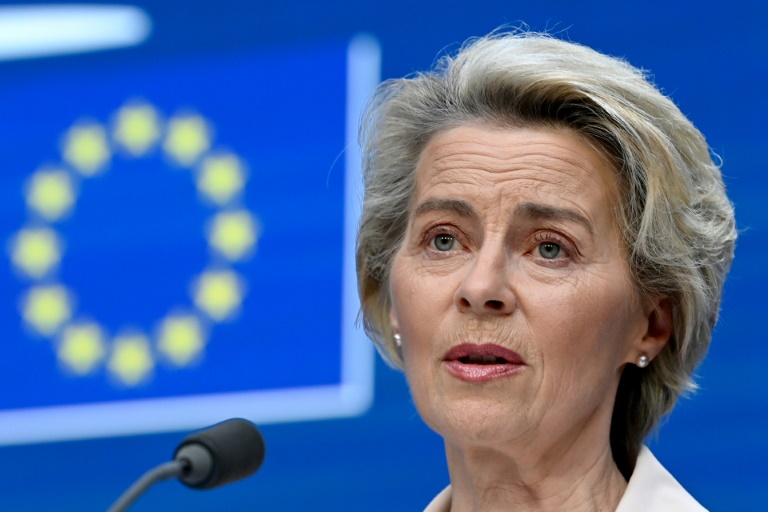
“We will come forward in January with a state aid proposal that is not only faster and simpler, but even more predictable,” commission chief Ursula von der Leyen said after a summit.

The European bloc is unsettled by parts of the multi-billion-dollar US Inflation Reduction Act (IRA) which lavishes subsidies and tax cuts for US purchasers of electric vehicles — if they “Buy American”.

The bloc views the act as discriminatory against European car manufacturers, a breach of World Trade Organization rules, and a threat to investment in Europe.

To compete — and keep big industrial companies on its shores — many EU countries want rules around national subsidies loosened and public investment in cleaner energy boosted.

European companies “need subsidies in the same way as those in the United States, and of the same magnitude, if you want to avoid a fragmentation of the European market,” French President Emmanuel Macron said.

The EU leaders, in their summit conclusion text, stressed the need to safeguard “Europe’s economic, industrial and technological base and of preserving the global level playing field”.

The commission’s upcoming proposals, it said, should look at “mobilising all relevant national and EU tools as well as to improving framework conditions for investment, including through streamlined administrative procedures.”

– Some unconvinced –

Some EU countries, though, were not convinced that a big-gun response was needed.

“Finland is not ready for new instruments,” Prime Minister Sanna Marin said, adding that Europe needed to ensure that “we do not get into an unnecessary trade war with the US”.

German Chancellor Olaf Scholz said he believed the EU had a possibility of winning status like Canada within the United States’ application of its subsidies — despite it not being part of the North American Free Trade Agreement.

“In the next few weeks, we will have to agree on a fair framework with the US and then we will have to make regulations to defend our own industrial development,” Scholz said.

Macron and the commission have tried to persuade US President Joe Biden to change the contentious parts of the IRA, to no avail apart from receiving promises of some “tweaks”. 

Biden and his administration believe the EU is free to come up with its own subsidy arrangement for electric vehicles — a sector in which China has advantages when it comes to batteries and rare-earth supplies.  

While positions were being worked out on that issue, the European Union on Thursday adopted a plan to sign a global minimum 15 percent tax on multinational businesses, after months of wrangling. 

The landmark agreement between nearly 140 countries is intended to stop governments racing to cut taxes to lure the world’s richest firms to their territory.

“Today the European Union has taken a crucial step towards tax fairness and social justice,” EU economy commissioner Paolo Gentiloni said.

“Minimum taxation is key to addressing the challenges a globalised economy creates.”

The plan was drawn up under the guidance of the Organisation for Economic Cooperation and Development and already had the backing of Washington and several major EU economies.

Deadly Russian shelling cuts off Kherson power

Russian shelling killed two people including a Red Cross worker in Kherson on Thursday and completely cut power in the southern city, Ukrainian officials said, with temperatures near freezing.

Moscow-allied officials in the Russian-occupied city of Donetsk, meanwhile said they had come under some of the heaviest shelling in years from Ukrainian forces, leaving one person dead.

The UN’s human rights chief also set out evidence of what he said was Russian killings of hundreds of Ukrainian civilians in the first months of the war.

Despite Russia’s humiliating retreat from Kherson in November, the city remains within the reach of Moscow’s weaponry and under constant threat.

The city was left “completely without power” after a series of strikes, regional governor Yaroslav Yanushevych said.

Mirjana Spoljaric, head of the International Committee of the Red Cross, said a worker with the Ukrainian Red Cross was one of those killed.

“Red Cross works close to the frontlines helping people wounded and those no longer taking part in hostilities,” she wrote on Twitter.

“It is imperative that its personnel and property are spared.”

– Summary killings –

UN rights chief Volker Turk said his office had documented the summary executions and direct killings of 441 civilians across just three regions of Ukraine from the start of Russia’s invasion on February 24 until April 6.

The “actual figures are likely to be considerably higher” he said, adding “there are strong indications that the executions… may constitute the war crime of wilful killing.”

Beyond that initial period, Turk said his team had continued to document gross rights violations affecting both civilians and combatants, including arbitrary detention, enforced disappearances, torture and sexual violence.

So far, he added, “accountability remains sorely lacking.”

– Kyiv expected to be targeted again –

Intense fighting continued along the front lines in the east, especially in the Bakhmut area targeted for capture by Russian forces in October.

Much of Ukraine continues to struggle with power supplies after the Russian air campaign targeted electricity and water systems starting nearly two months ago.

Ukraine’s commander-in-chief General Valeriy Zaluzhny told British weekly The Economist they expected a fresh Russian assault on Kyiv in the early months of 2023.

Kyiv was the primary target when the Russians first invaded on February 24, but their northern campaign, launched from Belarus, was rebuffed by a gritty Ukrainian counter-offensive that preserved the seat of government.

“The Russians are preparing some 200,000 fresh troops. I have no doubt they will have another go at Kyiv,” Zaluzhny said.

Russia has appeared to pump up its presence anew in Belarus in recent weeks, according to US-based conflict monitor, the Institute for the Study of War.

But it said exercises and deployments do not likely indicate plans by Belarus forces themselves to attack northern Ukraine.

Instead, the actions “are likely part of ongoing Russian information operations” to keep Kyiv nervous and forced to maintain significant force levels in the north, far from the active front lines, according to ISW.

– Blasts in Donetsk –

Having retreated from parts of southern Ukraine, Moscow’s forces were engaged in fierce battles in the east, particularly in the Donetsk region.

The region has been partly controlled by Moscow-backed separatists since 2014.

On Thursday, local Russia-aligned authorities reported “the most massive shelling since 2014” in the regional capital, Donetsk city.

At least one person was killed and nine more injured in the strikes, they said.

In Donetsk, “the epicentre of the fighting remains the Bakhmut and Avdiivka directions,” Ukraine deputy defence minister Ganna Malyar told a briefing. 

“The enemy is hard to beat,” Petro, a Ukrainian military unit chief in the area, told AFP.

“Staying on the frontline is very difficult. They sustain heavy losses, but so do we.”

– US support –

In Washington the Pentagon announced it will expand training for Ukrainian forces in Germany to about 500 persons per month focused on larger-scale maneuvers and specific weapons systems.

The new effort will “include joint maneuver and combined arms operations training, while building upon the specialized equipment training that we’re already providing,” Pentagon Press Secretary Pat Ryder said.

Ryder would not confirm expectations that the United States will provide advanced Patriot air defense batteries to Ukraine, which would bring  added protection against Russian cruise missiles as well as tactical ballistic missiles Moscow is believed seeking from Iran.

The European Union also cleared the way to giving Ukraine another 18 billion euros ($19 billion) in aid following an impassioned plea from Ukraine President Volodymyr Zelensky.

Close Bitnami banner
Bitnami