World

S.African court confirms Shell seismic exploration ban

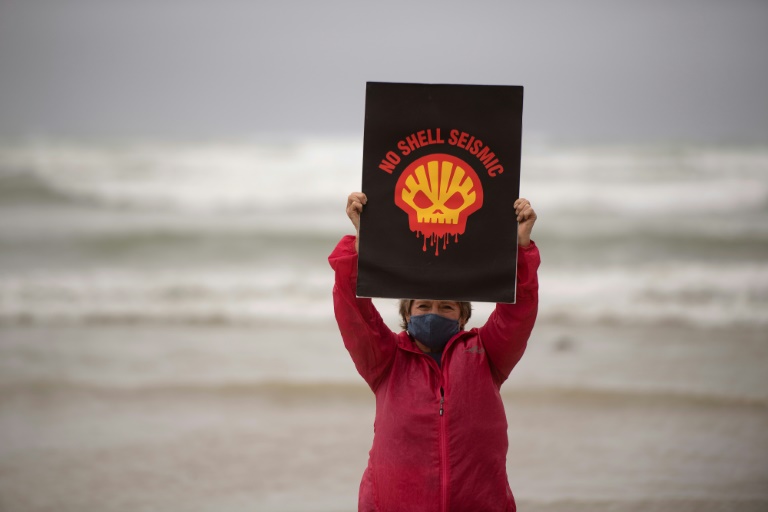
A South African court on Thursday upheld a ban imposed on energy giant Shell from using seismic waves to explore for oil and gas off the Indian Ocean coast.

The judgement was a major victory for environmentalists who had argued the technique would affect whales and other marine life.

In a ruling seen by AFP, the high court in the southern city of Makhanda said authorisation granted in 2014 to search for oil and gas in the Transkei and Algoa areas “is reviewed and set aside.”

Last December the same court had issued an interim order prohibiting Shell from going ahead with its plans.

Civil rights organisations and civilians celebrated outside the courthouse, according to local media. 

“We live off the land and the ocean. The government tells us that oil and gas will bring job opportunities, but we know full well that it will destroy our livelihoods,” Nonhle Mbuthuma from the local environmental lobby group Amadiba said in a statement.

A Shell spokesperson told AFP they “respect the court’s decision” and would review the judgment to “determine our next steps”.

Shell did not say if it would appeal the judgment.

“We remain committed to South Africa and our role in the just energy transition,” he said.

Green Connection, one of the environmental and rights groups which had filed the case, said in a statement “civil society, traditional communities and small-scale (fishermen) have once again been vindicated by the courts”.

Shell planned to map more than 6,000 square kilometres (2,300 square miles) by bouncing sonic waves off the sea floor and using the reflection to build up a 3D image.

The area lies off South Africa’s so-called Wild Coast. The 300-kilometre (185-mile) stretch boasts rich waters housing exquisite marine life and natural reserves.

Campaigners argued that the research would have sent an “extremely” loud shockwaves every 10 seconds, 24 hours a day for five months, potentially harming migration, feeding and other routines for marine mammals and other species.

“This court victory shows that the fossil-fuel companies are required to follow the law, include all affected people in public participation processes and consider all the harms to the environment,” Pooven Moodly of Natural Justice said in a statement.

South Africa’s energy ministry had backed the scheme, and lashed those who opposed it as thwarting investment in the country’s development.

Nearly 150 oil and gas projects are underway in Africa. Greenpeace Africa’s programme chief Melita Steele expressed the hope that Thursday’s “victory will reverse the trend”.

'Cosmoss': Supermodel Kate Moss launches wellness brand

British supermodel Kate Moss on Thursday launched a website selling her own beauty and lifestyle products called Cosmoss, becoming the latest star to venture into branded e-commerce.

Moss follows celebrities such as US actress Gwyneth Paltrow who has forged a second career marketing wellness products on her Goop website.

With her sculpted cheek bones, grungy style and famous boyfriends including US actor Johnny Depp and British musician Pete Doherty, Moss epitomised the 1990s-era fashion scene and its hard-partying lifestyle.

But in an interview on BBC radio’s “Desert Island Discs” in July, Moss said that she now prefers trips to the garden centre and meditation to clubbing, and is “not into being out of control anymore”.

Vogue magazine reported that Moss, 48, spent two-and-a-half years developing the products for her new brand.

So far the Cosmossbykatemoss.com website sells a small range of vegan-friendly products including tins of herbal teabags for £20 ($23), facial oil containing CBD (£105) — an active ingredient in cannabis — and perfume with essential oils (£120).

Moss recommends using the products in combination in “rituals” that “balance body and soul with the natural environment and the circadian cycles”.

Cosmoss is not Moss’s first venture into personal branding.

She designed a line of clothing for teen fashion chain Topshop — which closed its physical stores during the pandemic — and gave her name to lipsticks by Rimmel.

In 2016 she launched a talent agency, Kate Moss Agency, signing her own daughter, Lila Moss, as well as other offspring of stars such as Ella Richards (granddaughter of Keith) and artists such as Rita Ora.

In May, Moss testified at former boyfriend Depp’s defamation trial against his ex-wife Amber Heard.

The model said that reports that Depp once threw her down a flight of stairs were untrue.

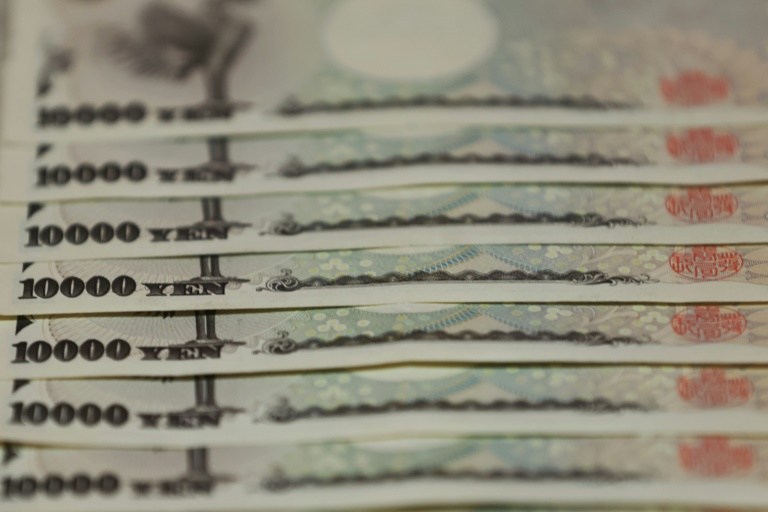
Yen sinks to new 24-year low against dollar

The yen plunged to a new 24-year low against the dollar on Thursday as Japan sticks with its long-standing monetary easing policies in contrast to tightening by the US Federal Reserve.

One dollar was more worth more than 140 yen for the first time since 1998 in European afternoon deals, as the greenback also strengthened against other currencies.

The yen has been falling against the dollar from around 115 in March, prompting analysts to point to the possibility of government intervention.

The steep decline has mainly been driven by the differing approaches of the Bank of Japan and other central banks including the Fed, which have raised interest rates to tackle soaring inflation fuelled by the Ukraine war.

David Forrester, senior FX strategist at Credit Agricole CIB in Hong Kong, said breaching 140 yen per dollar marked an “important technical level”.

“Previously, if you look at when the Bank of Japan has intervened to buy the yen, it’s usually been around these levels,” he told AFP.

The Japanese currency fell 0.6 percent to hit 140.13 yen per dollar at around 1425 GMT.

Earlier on Thursday, Japan’s top government spokesman repeated comments about the importance of stability in forex markets, saying that “rapid changes are undesirable”.

But he did not give any indication that special measures, like the finance ministry instructing the BoJ to buy the yen against other currencies to bolster its value, were on the cards.

With volatility increasing, “the government plans to monitor the trend of the foreign exchange market carefully with a high sense of urgency,” Hirokazu Matsuno told reporters.

– Government intervention? –

Last week, Fed Chair Jerome Powell declared his commitment to aggressive rate hikes, eliminating hope that the US central bank may soften its position to avoid an economic slowdown.

But policymakers at the Bank of Japan have refused to abandon easy-money measures put in place a decade ago, aimed at generating growth in the world’s third-largest economy and sustained price rises of around two percent.

Also, “higher energy prices throughout the year have been a big weight on Japan’s trade balance and current account balance… but that has eased a little bit recently,” Forrester said.

Inflation in Japan is at its highest in seven years, and prices for items excluding fresh products rose 2.4 percent on-year in July — but the BoJ sees these increases as temporary, and says it is committed to its current policy.

“Inflation in Japan is not only accelerating but broadening out beyond just food and energy price inflation,” which is starting to indicate “that maybe the BoJ does have to shift its stance a little”, Forrester said. 

“If they’re stubborn on that front, then the ministry of finance may have to intervene, to reduce imported inflation due to the weaker yen,” he added.

Although it makes imported goods more expensive in Japan, a weaker yen can also inflate the profits of Japanese companies selling products overseas, including major firms such as Toyota and Nintendo.

On Wednesday, Prime Minister Fumio Kishida announced a further relaxation of the country’s strict border rules to allow tourists on package tours, but without a guide.

The decision was made partly “from the viewpoint of taking advantage of a cheap yen”, he told reporters.

js-kaf-hih-lth/rl

Global stocks selloff intensifies on recession fears

Global stock markets sank Thursday, propelled by rampant inflation and growing recession fears as another major Chinese city went into lockdown.

Frankfurt, London and Paris equities closed down between 1.5 and two percent as record-high eurozone inflation fuelled fears that borrowing costs are set to climb even higher even as the region faces rocketing winter energy costs due to Russia’s war on Ukraine.

The European Central Bank will announce its latest monetary policy decision next Thursday, after delivering its first rate hike in a decade in July.

“More pain is likely for investors as Europe’s energy crunch gets worse”, said City Index analyst Fawad Razaqzada.

Meanwhile the yen plunged to a new 24-year low against the dollar on Thursday as Japan sticks with its long-standing monetary easing policies in contrast to tightening by the US Federal Reserve.

One dollar was more worth more than 140 yen for the first time since 1998 in afternoon deals in Europe, as the greenback also strengthened against other currencies.

The greenback was also at its strongest level against the pound since the height of the pandemic in 2020, with sterling buying less than $1.16.

On Wall Street, the Dow was down 0.5 percent at 31,358.97 points in late morning trading.

– ‘Outlook is poor’ –

“Markets remain unable to snap their recent losing streak, with investors still positioning for tougher times ahead,” said Interactive Investor analyst Richard Hunter.

“Central to current concerns are recessionary fears in the US and a beleaguered China. 

“With the world’s two largest economies under pressure, the immediate outlook is poor.”

Asian equities weakened further Thursday as traders continued to digest shrinking factory activity in powerhouse economy China.

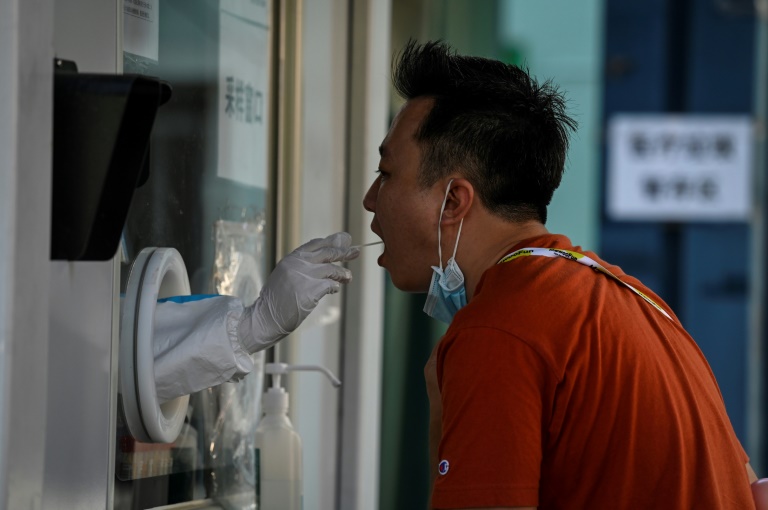
Shanghai also dropped after news that the Chinese city of Chengdu would effectively lock down around 16 million people in a bid to contain a Covid-19 outbreak, likely dealing another blow to a stuttering economy.

“With Covid outbreaks unlikely to diminish as we head into winter, the prospects for a China rebound this side of next year have virtually disappeared, raising concerns over a prolonged global slowdown”, said CMC Markets analyst Michael Hewson. 

Meanwhile on Wall Street the tech-heavy Nasdaq was down around two percent, with investors taking a fright over the fortunes of NVIDIA, a California-based maker of high-performance graphics cards popular with gamers.

Shares in the company were down 11.4 percent nearing midday trading.

“NVIDIA shares have slumped sharply on the open after the US government ordered the company to halt sales of its top AI chips to China and Russia, with the company saying it cost them up to $400m in the current quarter”, Hewson said.

“With Chengdu also going into lockdown and China being one of its biggest markets, the next quarter is likely to be a big headwind for the rest of the sector,” he added.

Oil prices slumped more than two percent on growth worries as well as concerns easing about a possible decision by OPEC+ members to cut production to support prices that Saudi officials had posited last month.

“I’m not sure Saudi Arabia expected markets to test their nerve so quickly but it seems the suggestion that a reduction next week won’t be considered has removed the production cut risk for now,” said analyst Craig Erlam at OANDA trading platform.

– Key figures at around 1530 GMT –

New York – Dow: DOWN 0.5 percent at 31,358.97 points

EURO STOXX 50: DOWN 1.7 percent at 3,456.70 

London – FTSE 100: DOWN 1.9 percent at 7,148.50 (close)

Frankfurt – DAX: DOWN 1.6 percent at 12,630.23 (close)

Paris – CAC 40: DOWN 1.5 percent at 6,034.31 (close)

Tokyo – Nikkei 225: DOWN 1.5 percent at 27,661.47 (close)

Hong Kong – Hang Seng Index: DOWN 1.8 percent at 19,597.31 (close)

Shanghai – Composite: DOWN 0.5 percent at 3,184.98 (close)

Euro/dollar: DOWN at $0.9940 from $1.0054 on Wednesday

Pound/dollar: DOWN at $1.1534 from $1.1622

Euro/pound: DOWN at 86.13 pence from 86.50 pence

Dollar/yen: UP at 139.95 yen from 138.96 yen

West Texas Intermediate: DOWN 2.7 percent at $87.14 per barrel

Brent North Sea crude: DOWN 2.5 percent at $93.12

burs-lcm/rl

War in Ukraine: latest developments

Here are the latest developments in the war in Ukraine:

– UN team visits endangered atomic plant – 

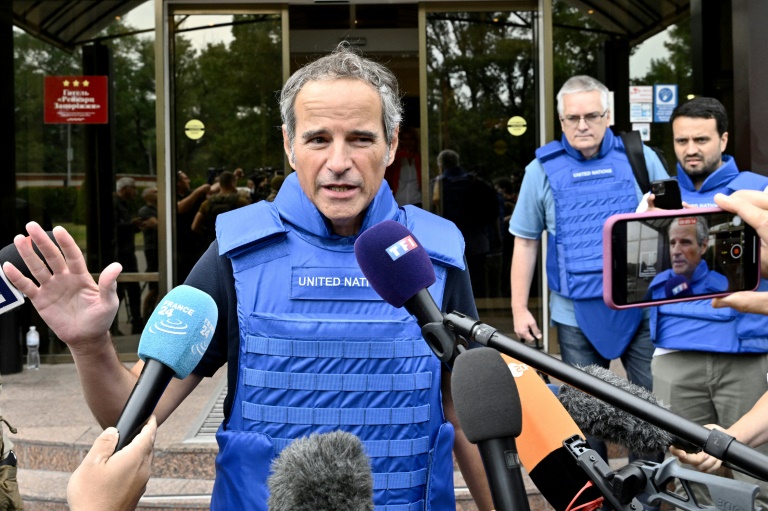
A 14-strong team of UN nuclear inspectors visits the Russian-occupied Zaporizhzhia nuclear plant in southern Ukraine to ensure its safety amid concern that the war which is raging nearby could spark a nuclear accident.

The inspection of Europe’s biggest nuclear facility went ahead despite further shelling in the area that forced the closure of one of its six reactors. Russia and Ukraine have accused each other of being responsible for the attacks.

After the visit, Rafael Grossi, the head of the International Atomic Energy Agency, announces that the IAEA will be “staying” at the station.

“The IAEA is staying here. Let the world know that the IAEA is staying at Zaporizhzhia,” he says.

– Macron defends Putin outreach –

French President Emmanuel Macron defends his policy of keeping up dialogue with Russia, saying that Turkey should not be the only world power talking to Moscow.

Macron drew criticism at the start of the war for his failed attempts to talk his Russian counterpart Vladimir Putin out of invading Ukraine. After a lengthy pause following widespread claims of Russian war crimes in Ukraine he spoke again with Putin on August 19.

“Who wants Turkey to be the only world power which continues to talk to Russia?” the president told a meeting of French ambassadors at the Elysee Palace.

“The job of a diplomat is to talk to everyone, especially to people with whom we do not agree.”

– Putin visits Kaliningrad –

As tensions soar between Moscow and the West, Putin visits Russia’s Baltic Sea territory of Kaliningrad, which is wedged between NATO member countries.

Kaliningrad is separated from the Russian mainland by Lithuania which has firmly backed Ukraine.

Russia in June clashed with Lithuania after Vilnius banned the rail transit of sanctioned goods from mainland Russia to Kaliningrad. The EU later ordered Lithuania to let goods through, with the exception of weapons.

burs-cb/har

Semiconductor giant Micron to invest $15 bn in Idaho

Semiconductor giant Micron announced Thursday it will invest $15 billion over the next decade to expand its operations in the US state of Idaho to build memory capacity for automotive and other sectors.

The plan, part of a Micron global investment strategy to invest $150 billion, will create 17,000 new jobs, the Boise, Idaho-based company said.

The initiative, which Micron called the “largest private investment ever made in Idaho,” follows a Micron pledge last month to spend $40 billion in “leading-edge memory manufacturing” in the United States.

The project will tap into state funds that are part of the $52 billion to promote production of microchips included in the Chips and Science Act, which President Joe Biden signed into law on August 9. 

“Today’s announcement by Micron is another big win for America,” Biden said  Thursday in a statement that also highlighted announcements in recent days from Toyota to ramp up the production of batteries for electric vehicles, as well as plans unveiled by First Solar, Honda and Corning.

“In our future, we will make (electric vehicles), chips, fiber optics and other critical components here in America, and we will have an economy built from the bottom up and middle out,” Biden said.

Independent journalism under attack in Central America

Central American journalists can pay a steep price for publishing unflattering stories about governments in the region — one with a history of civil wars and dictatorships and where poverty, violence and corruption are rampant.

To wit, a photographer was forced to flee Nicaragua, a newspaper chief in Guatemala is under arrest, and a news website in El Salvador was hauled before the courts. Such punishment is an increasingly familiar woe in Central America.

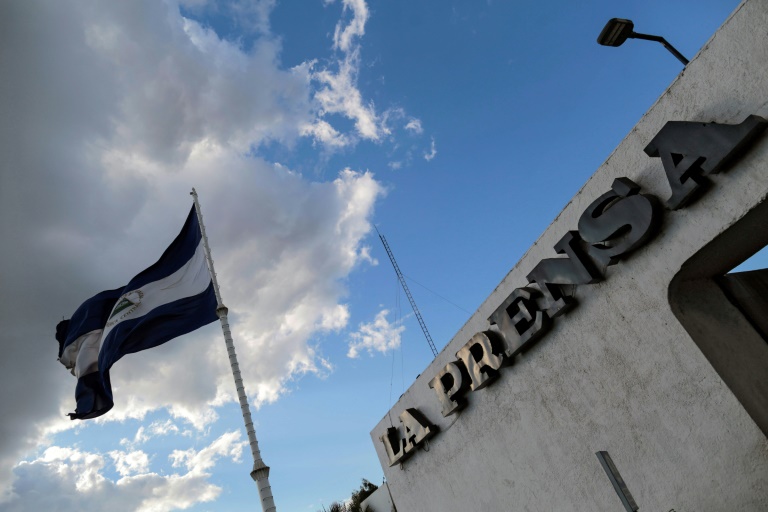
Nicaragua’s La Prensa newspaper is almost 100 years old, but a year ago its offices were occupied by police, and the property was taken over by the state last week.

The newspaper’s manager Juan Lorenzo Holmann was arrested in 2021 and in April this year was sentenced to nine years in jail.

A harsh critic of President Daniel Ortega’s leftist government, he was accused of money laundering.

That was the same charge filed against the owner of Guatemala’s El Periodico newspaper, Jose Ruben Zamora, who was detained a month ago.

“Money laundering is an increasingly frequent accusation in Central America” against those working in independent media, said Carlos Dada, director at Salvadoran website El Faro, who is also accused of asset laundering.

El Faro had claimed President Nayib Bukele was involved in secret negotiations with violent drug gangs, against whom he has launched an offensive that has seen more than 50,000 suspected gang members arrested under emergency laws.

“The concentration of power in the hands of authoritarian regimes is succeeding more and more in silencing critics and the independent press,” Dada told AFP.

“Harassment is increasing.”

The accused all claim they are the victims of bogus accusations aimed at silencing them.

Both Nicaragua and El Salvador accuse independent media of being financed from abroad and trying to destabilize the country.

– ‘Drowning independent press’ – 

“The strategy of drowning independent press, which Cuba installed decades ago and which was also adopted in Venezuela and other countries in the region, has been recently perfected” by the Ortega regime, said Carlos Jornet, president of the press freedom commission at the Inter-American Press Society (SIP).

And the trend is spreading, even to traditionally stable Costa Rica.

During the electoral campaign, President Rodrigo Chaves attacked the press for discussing the sanctions he received when accused of sexual harassment while working at the World Bank, and for exposing potential irregular campaign financing.

In July, La Prensa photographer Oscar Navarrete was covering the expulsion to Costa Rica by authorities of an order of nuns, who found themselves among 1,5000 organizations deemed illegal by the government.

Angered by his coverage the government planned to arrest him and even searched his house, but Navarrete had already gone into hiding.

“They took all my equipment… they obliterated everything with such violence that my mother went into shock,” said Navarrete, who lives in exile in Costa Rica.

La Prensa now operates out of the Costa Rican capital San Jose. More than 100 journalists have been forced into exile and many others were arrested over criticism of Ortega.

– ‘Killing the newspaper’ –

Zamora accuses Guatemalan President Alejandro Giammattei and Attorney General Consuelo Porras of fabricating a case against him to justify his detention.

The US has added Porras to a corrupt persons list for hampering and then firing an anti-mafia prosecutor.

El Periodico has published more than 100 investigations into Giammattei’s presidency, including the alleged payment of bribes.

The president is “intolerant of criticism” said the newspaper’s deputy chief Lucy Chay. 

The government has frozen the newspaper’s bank accounts.

“They want to kill the newspaper,” added Chay.

“They seem to be stepping up harassment of journalists investigating corruption, human rights violations and abuses of power,” Juan Pappier of Human Rights Watch (HRW) told AFP.

Several prosecutors and judges investigating corruption in Guatemala have been subjected to “spurious criminal proceedings,” added Pappier.

– Threats, intimidation, harassment –

As part of its crackdown on criminal groups, El Salvador passed a law making the reproduction of gang messages punishable by up to 13 years in prison.

El Faro fell afoul of that by publishing interviews with people who claimed to be gangsters and said they had negotiated with Bukele, who denies the allegations.

Dada says his mobile phone and those of 20 El Faro colleagues were infected by the Pegasus virus, which is only sold to state agencies.

The government denies any involvement.

Beyond threats, intimidation and harassment, there are also murders.

Honduras has recorded 97 murders of journalists since 2001, the country’s committee for freedom of expression says.

The committee’s director Amada Ponce says the press cannot tackle subjects such as drug-trafficking and mining without major risks.

Journalists are “judicially persecuted, stigmatized or threatened” just for carrying out their work, Amada said.

Brazil economy grows 1.2% in Q2, beating expectations

Brazil’s economy posted higher-than-expected growth of 1.2 percent in the second quarter, official data showed Thursday, giving President Jair Bolsonaro a boost ahead of elections next month.

The result beat analyst expectations for 0.9 percent growth in Latin America’s largest economy. It was the fourth straight quarter of expansion for the Brazilian economy as it rebounds from the effects of the coronavirus pandemic.

This latest spurt of growth was fueled by rises in manufacturing (up 2.2 percent) and the service sector (1.3 percent), the state statistics agency IBGE said.

Compared to the second quarter of last year, the expansion was 3.2 percent.

Accumulated growth in the first half of the year was 2.5 percent compared to projections of close to stagnation.

The figures are good news for Bolsonaro, who is fighting to narrow a 15-point deficit in public opinion polls as he takes on leftist ex-president Luiz Inacio Lula da Silva.

On Wednesday, the government reported a decline in unemployment to fewer than 10 million people for the first time since 2016.

Claudia Moreno, an economist at digital bank C6, pointed to a “recovery in investments (4.8 percent) and family consumption (2.6 percent) in the second quarter compared to the previous one” despite high inflation as significant drivers.

The improved performance of the economy has led analysts to revise their 2022 growth predictions from under 0.3 percent in January to 2.1 percent, according to the latest central bank survey.

Even so, economists expect growth to slow in the third quarter due to the delayed effect of the central bank’s hike in interest rates in a bid to slow down inflation.

Interest rates have risen from a historic low of two percent in March 2021 to 13.75 percent last month.

Inflation, which is one of the main issues worrying voters, was over 10 percent in the 12 months to July, with Bolsonaro’s government cutting utility rates and fuel prices in a bid to put the brakes on.

Moreno believes another reason for slowing growth over the second half of the year is that the service sector has now recovered from the pandemic.

She says the economy will also be affected by “a drop in the price of raw materials and the global slowdown.”

Analysts believe there will be an injection of cash into the economy thanks to a 50 percent increase in social assistance to 20 million vulnerable families from 400 to 600 reais ($80 to $120).

Brazil ended 2021 with 4.6 percent growth compared to the previous year, when the economy shrank by 3.9 percent due to the pandemic.

Afghan woman says she was raped, forced to marry Taliban official

An Afghan woman has claimed in an online video that a Taliban official beat, raped and forced her into marrying him — charges which the senior member of the hardline Islamist movement has denied.

The woman, who identified herself only as Elaha, said she was sexually assaulted by Saeed Khosty, a former spokesman for the interior ministry.

Khosty denied the assault accusations, saying he had divorced Elaha after what he called a “consensual marriage”.

Their accusations and denials have been shared thousands of times on social media in Afghanistan, where it is rare for such allegations and personal details to be aired publicly.

Dressed in a hijab, Elaha, who said she was a medical student at Kabul University and appeared to be in her mid-twenties, is seen crying as she describes her ordeal in the footage posted online on Tuesday.

“In February, Saeed Khosty, who was the spokesman for the interior ministry, forcefully married me inside the intelligence department,” she said, without specifying how the two had met.

“I was beaten. I was raped there. I didn’t know what to do,” she said.

Elaha, who said she was the daughter of a former Afghan general, added that she tried to flee but was caught at the Torkham border with Pakistan and taken to a prison in Kabul.

She said she was asked to apologise to Khosty, and when she refused she was “beaten”.

It was not known where Elaha had posted the video from, or where she was now.

On Twitter, Khosty denied the accusations.

“She had some issues regarding beliefs and faith. I tried to correct her through discussions and advice, but it did not work,” the Taliban official said. 

“I have not beaten her, but exercising my Islamic rights I divorced her. I regret my marriage to her, which I had entered into hastily.”

He said Elaha was free to file a case against him if she wished.

“I apologise to the mujahideen of the Islamic Emirate and Afghan nation. May God forgive me,” Khosty said.

“If I’m proved guilty, the court can punish me. If she does not believe in the courts of the Islamic Emirate, then I’m ready to go to any court that she wants.” 

After Elaha’s video emerged, the hashtag #justiceforElaha went viral on social media.

Khosty received support online from some Taliban members.

“Unless a court convicts him, he is not a criminal for me,” tweeted former Kabul police spokesman General Mobeen Khan.

Last year, Taliban Supreme Leader Hibatullah Akhundzada issued a decree ordering authorities to take strict action against those who “force women to marry by coercion or pressure”.

Since returning to power last year, the Taliban have enforced a series of strict rules on the conduct of women, especially in relation to public life.

The hardline Islamists have shut girls’ secondary schools in most provinces and barred women from many government jobs.

They have also ordered women to fully cover up in public, ideally with an all-encompassing burqa.

Global stocks selloff intensifies on recession fears

Global stock markets sank Thursday, propelled by rampant inflation and growing recession fears as another major Chinese city went into lockdown.

Frankfurt, London and Paris equities each slid about 1.5 percent in afternoon trading as record-high eurozone inflation fuelled fears that borrowing costs are set to climb even higher, as the region faces rocketing winter energy costs due to Russia’s war on Ukraine.

On Wall Street, the Dow opened down 0.5 percent at 31,359.86 points.

Asian markets posted losses as investors braced for more interest rate hikes, which seek to quell runaway inflation but could derail economic activity, while oil prices tumbled on demand worries.

“More pain is likely for investors as Europe’s energy crunch gets worse”, said City Index analyst Fawad Razaqzada.

The European Central Bank will announce its latest monetary policy decision next Thursday, after delivering its first rate hike in a decade in July.

– ‘Tougher times ahead’ –

“Markets remain unable to snap their recent losing streak, with investors still positioning for tougher times ahead,” said Interactive Investor analyst Richard Hunter.

“Central to current concerns are recessionary fears in the US and a beleaguered China. 

“With the world’s two largest economies under pressure, the immediate outlook is poor.”

Asian equities weakened further Thursday as traders continued to digest shrinking factory activity in powerhouse economy China.

Shanghai also dropped after news that the Chinese city of Chengdu would effectively lock down around 16 million people in a bid to contain a Covid-19 outbreak, likely dealing another blow to a stuttering economy.

It was a “morose session with a flight to the dollar”, said Swissquote Bank analyst Ipek Ozkardeskaya.

Wall Street had slid Wednesday as Treasury yields — a key gauge of future interest rates — rose further as a broadly healthy report on US private jobs showed there was room for the Federal Reserve to continue tightening monetary policy.

A government jobs report Friday will be closely watched by traders hoping for an idea about the next move by the bank.

“Rising Treasury yields, reports that China has locked down Chengdu (city of 21.2 million residents) for Covid testing, a litany of manufacturing PMI readings for August around the globe that were sub-50.0 (i.e. indicative of contraction), and some disappointing earnings guidance … are among the headline catalysts contributing to the weak disposition of the futures market,” Briefing.com analyst Patrick J. O’Hare wrote to clients ahead of the start of trading in New York.

PMIs, which are surveys of executives about current business conditions and the outlook for the future, are valued by the market as providing near real-time indications about the condition of the economy.

However Fed officials have made clear they are willing to tolerate an economic slowdown in order to bring interest rates down. 

The prospect of more US rate hikes continued to push the dollar higher, with 140 yen within reach for the first time since 1998.

The greenback was also at its strongest level against the pound since the height of the pandemic in 2020, with sterling buying less than $1.16.

– Key figures at around 1330 GMT –

New York – Dow: DOWN 0.5 percent at 31,359.86 points

London – FTSE 100: DOWN 1.7 percent at 7,163.46

Frankfurt – DAX: DOWN 1.3 percent at 12,669.90

Paris – CAC 40: DOWN 1.6 percent at 6,029.01

EURO STOXX 50: DOWN 1.4 percent at 3,466.46

Tokyo – Nikkei 225: DOWN 1.5 percent at 27,661.47 (close)

Hong Kong – Hang Seng Index: DOWN 1.8 percent at 19,597.31 (close)

Shanghai – Composite: DOWN 0.5 percent at 3,184.98 (close)

Euro/dollar: DOWN at $0.9982 from $1.0054 on Wednesday

Pound/dollar: DOWN at $1.1565 from $1.1622

Euro/pound: UP at 86.31 pence from 86.50 pence

Dollar/yen: UP at 139.55 yen from 138.96 yen

West Texas Intermediate: DOWN 2.1 percent at $87.65 per barrel

Brent North Sea crude: DOWN 2.0 percent at $93.73

burs-lcm/rl

Close Bitnami banner
Bitnami