World

Twitter says it is actively testing edit button

Twitter said Thursday it has begun actively testing an edit button, after months of publicly discussing such a tweak.

The trial of “Edit Tweet” will begin with internal employees, then be expanded out to the platform’s “Twitter Blue” subscription population, the company said.

“Edit Tweet is a feature that lets people make changes to their Tweet after it’s been published,” the company said on its blog. “Think of it as a short period of time to do things like fix typos, add missed tags, and more.”

Under the revision being studied, users could edit a tweet “a few times” in the 30 minutes after the initial posting, in ways that transparently note the changes to “help protect the integrity of the conversation and create a publicly accessible record of what was said,” the company said.

Tesla Chief Executive Elon Musk, who is locked in a lawsuit with Twitter over a potential acquisition of the micro-blogging platform, had backed an edit button shortly before the company said in April it was studying the change.

Users of Twitter Blue — the subscription offering now available in the United States, Canada, Australia and New Zeeland– “receive early access to features and help us test them before they come to Twitter,” the company said.

An aim of the tweak is that “Tweeting will feel more approachable and less stressful, Twitter said. “You should be able to participate in the conversation in a way that makes sense to you, and we’ll keep working on ways that make it feel effortless to do just that.”

However, a Twitter spokesperson said the test will not necessarily be employed universally on the platform.

Cambodian opposition figure faces French defamation trial

Longstanding Cambodian opposition figure Sam Rainsy faced a French court on Thursday in defamation cases brought against him by top officials in his home country.

Rainsy, 73, was targeted with two separate complaints by Cambodian Prime Minister Hun Sen and his son-in-law and deputy national police chief, Dy Vichea, over Facebook posts dating back to 2019.

Hun Sen contests Rainsy’s allegation that he was behind the 2008 death in a helicopter crash of national police chief Hok Lundy, who was Dy Vichea’s father.

“Hun Sen killed Hok Lundy using a bomb placed inside his helicopter,” Rainsy claimed on Facebook.

The leader of Cambodia’s government “decided to murder Hok Lundy because he knew too much about Hun Sen’s misdeeds”, he added.

Dy Vichea has brought a second case against Rainsy over a separate 2019 Facebook post.

The hearing began at 2:30 pm Paris time (1230 GMT) and is expected to last a single day, with judges rendering a verdict within weeks.

Entering the court, Rainsy told AFP that he expected “true justice” from the French court.

Luc Brussolet, a lawyer representing both Cambodian officials, told AFP Wednesday he expected the court to “find the remarks in question defamatory”.

But Rainsy’s lawyer Jessica Finelle told AFP that judges ought to “recognise that it is in the public interest for Sam Rainsy to denounce crimes committed by Hun Sen within a dictatorship”.

– ‘Exonerate him’ –

Her client “has been persecuted for 30 years by Hun Sen. The only weapon remaining to him is freedom of expression, to testify about what he has experienced and condemn what political opponents and human rights defenders are suffering in Cambodia”, she said.

Rainsy was one of the founders of the Cambodia National Rescue Party, the country’s main opposition movement.

He spent years fighting Hun Sen — who has ruled for the past 37 years — before seeking refuge in 2015 in France, where he is a dual national.

Rainsy is the target of many court cases in Cambodia, where he says he is being persecuted for political reasons.

The government there accused him of an attempted coup when he sought to return in 2019.

“In his home country, Sam Rainsy is the victim of a slew of trials, the regime is trying to muzzle him,” said another of his lawyers, Mathias Chichportich.

The French tribunal should “enshrine Sam Rainsy’s right to express his political struggle” and “exonerate him”, he added.

“His words are founded on a solid factual basis.”

Although Rainsy’s party performed strongly in the 2013 elections, it was dissolved four years later.

In 2018, Hun Sen’s movement swept every seat in Cambodia’s parliament, a result that was fiercely contested.

Since then, increasing numbers of dissidents have been arrested and prosecuted.

Dozens of opposition figures were sentenced in a mass trial in June, with Rainsy receiving an eight-year prison sentence in his absence.

He has already been jailed in his absence for terms of 25 and 10 years for trying to topple Hun Sen, who is expected to run again in new elections next July.

Chinese city of 21 million shuts down over Covid outbreak

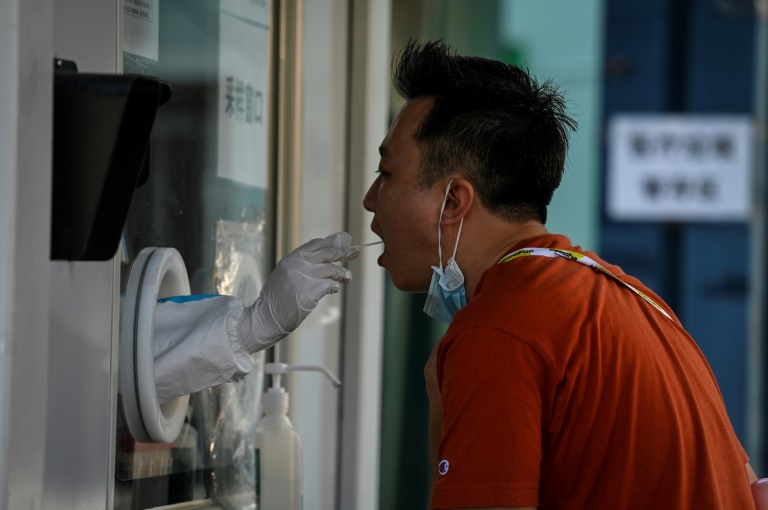
Around 21 million people in the Chinese city of Chengdu effectively went into lockdown on Thursday as authorities raced to snuff out a new Covid-19 outbreak.

China is the last major economy wedded to a zero-Covid policy, stamping out virus flare-ups with snap shutdowns, mass testing and lengthy quarantines.

Chengdu, in the southwest, became the latest city to announce a shutdown, saying in an official notice that residents must “stay home in principle” from 6:00 pm (1000 GMT) on Thursday to combat a new wave of infections.

Each household will be allowed to send one person out to buy groceries and essential goods per day, provided they have tested negative in the previous 24 hours, the notice said.

It added that all residents would be tested for the virus between Thursday and Sunday, and urged them not to leave the city unless “absolutely necessary”.

“The current state of epidemic control is abnormal, complex and grim,” the announcement said, adding that the measures aimed to “decisively arrest the spread of the outbreak and guarantee the health of all citizens”. 

Chengdu recorded 157 new local infections on Thursday, of which 51 displayed no symptoms, the city government said in a separate notice.

Swedish carmaker Volvo said the lockdown had forced it to temporarily close its Chengdu plant, which employs nearly 3,000 people.

Photos of empty supermarket shelves and Chengdu residents scrambling to hoard groceries went viral on social media. 

Children in at least 10 cities and provinces across China are facing disruptions to their new academic year as pandemic controls force schools to switch to online learning, according to a report run Thursday in state-affiliated media.

Xining, the capital of western Qinghai province and home to 2.5 million people, has rolled out a mass testing drive and told residents in its main urban area to work from home for three days.

China’s southern hub of Shenzhen said new virus restrictions would come into force Thursday evening in its Nanshan district, which hosts the headquarters of tech giants Tencent and ZTE.

The district government said it had ordered entertainment venues including bars, cinemas and karaoke clubs to close, and started requiring residents to produce a recent negative Covid test to enter their housing compounds.

China has stuck to its zero-tolerance virus strategy despite concern that the approach is stifling its economy.

Last month, travellers in the southern island province of Hainan protested after more than 80,000 tourists were stranded in a resort city because of a Covid-19 flare-up.

Social media videos from the eastern megacity of Shanghai showed panicked crowds fleeing an Ikea store and another building as officials tried to impose local lockdowns in response to just two suspected cases.

EU watchdog approves first Omicron jabs

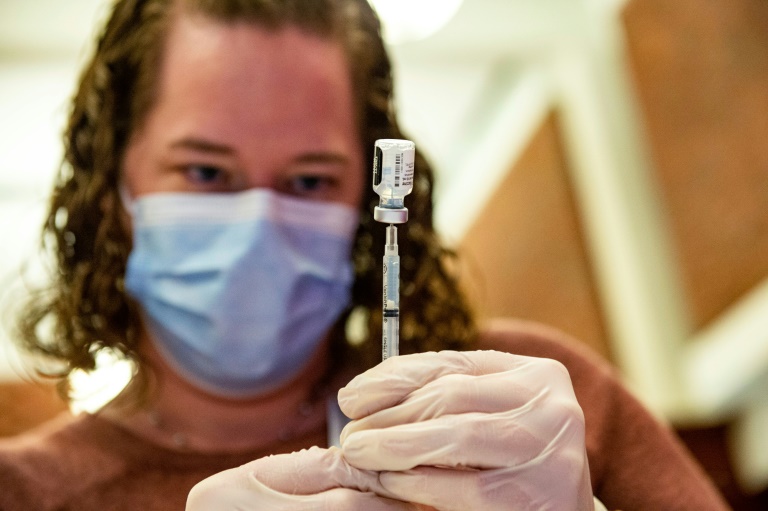
The EU’s drug regulator on Thursday approved Covid-19 vaccines by Pfizer/BioNTech and Moderna adapted for the Omicron variant, paving the way for a booster campaign this winter.

The so-called “bivalent” jabs target both the original virus that emerged in the Chinese city of Wuhan in 2019 and the BA.1 subvariant of Omicron, the European Medicines Agency (EMA) said.

The vaccines are not updated for the newer and more infectious BA.4 and BA.5 types that have become dominant worldwide, with a decision on a jab to counter those variants expected within weeks.

The Amsterdam-based EMA said that the two jabs backed for people aged 12 and above on Thursday were the “first adapted Covid-19 booster vaccines recommended for approval in the EU”.

“These vaccines are adapted versions of the original vaccines Comirnaty (Pfizer/BioNTech) and Spikevax (Moderna) to target the Omicron BA.1 subvariant in addition to the original strain of SARS-CoV-2,” it said.

European nations have been keen to rush through the new generation of jabs so they can start booster campaigns ahead of a feared Covid surge in the latter part of this year.

EU Health Commissioner Stella Kyriakides hailed the decision as “important to protect Europeans against the likely risk of autumn and winter waves of infections.”

“We need to be ready to face another winter with Covid-19,” she said in a statement.

The EMA said that studies showed that the new jabs could “trigger strong immune responses” against Covid. 

It said that “in particular, they were more effective at triggering immune responses against the BA.1 subvariant than the original vaccines.”

– New strains –

The EU’s Kyriakides said she expected the EMA to rule on vaccines adapted for the now-dominant BA.4 and 5 strains “in the coming weeks.”

Pfizer recently applied for authorisation for a vaccine adapted against the two newer types.

The United States authorised its first anti-Omicron vaccines on Wednesday, approving Pfizer and Moderna jabs for the BA.4 and BA.5 strains.

Britain authorised the Moderna vaccine for the BA.1 type in mid-August.

The 27-nation EU is currently still using the same coronavirus vaccines that were approved nearly two years ago for use against the original strain.

While they offer some protection against newer variants, the race has been on to produce jabs that also target the milder but more infectious Omicron strains.

While previous “variants of concern” like Alpha and Delta eventually petered out, Omicron and its sublineages have dominated throughout 2022.

The BA.4 and BA.5 types have in particular helped to drive a wave of new cases of the disease in Europe and the United States in recent months.

Health authorities have therefore been keen to get updated vaccines as soon as possible ahead of a feared new wave of the disease later this year.

All Omicron variants tend to have a milder disease course as they settle less in the lungs and more in the upper nasal passages, causing symptoms like fever, tiredness and loss of smell.

On risky mission, UN team reaches Ukraine nuclear plant

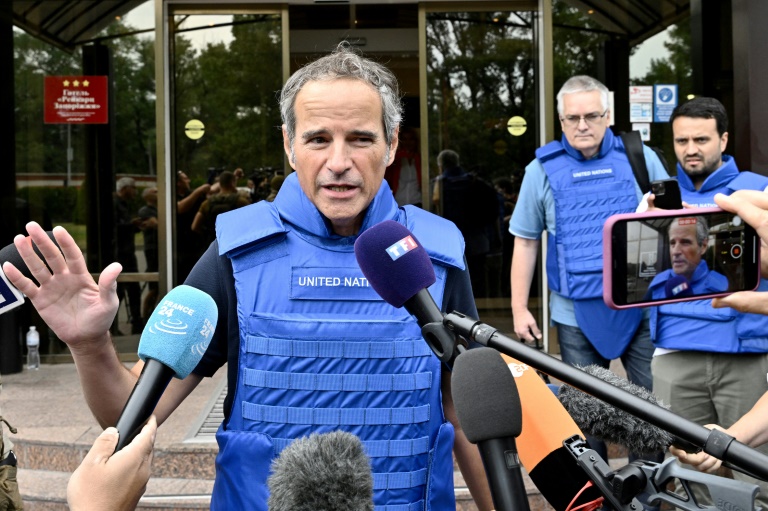
UN inspectors arrived at a Russian-held nuclear plant in southern Ukraine Thursday despite an early shelling attack, as the ICRC warned the consequences of a strike on the facility could be “catastrophic”.

After crossing the frontline into Russian-held territory, the 14-strong team from the International Atomic Energy Agency (IAEA) reached the facility around 3:00 pm, the agency said on Twitter. 

“IAEA’s support and assistance mission to #Zaporizhzhya (ISAMZ) led by Director General Rafael Grossi has just arrived at Zaporizhzhya nuclear power plant to conduct indispensable nuclear safety and security and safeguards activities,” it said.

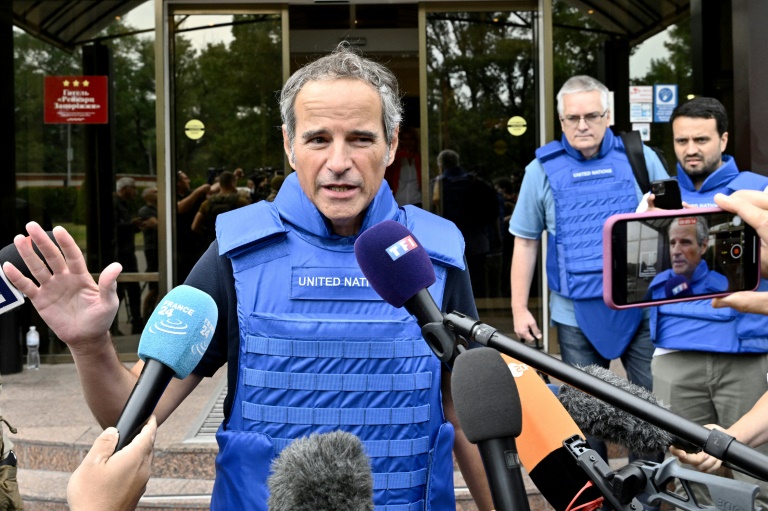
Wearing bright blue flak jackets and helmets, they had vowed to press ahead to reach Europe’s biggest nuclear facility despite early-morning shelling in the area that forced the closure of one of its six reactors.

Energoatom, Ukraine’s nuclear agency, said it was “the second time in 10 days” that Russian shelling had forced the closure of a reactor. 

It said the plant’s emergency protection system kicked in shortly before 5:00 am (0200 GMT), shutting reactor five, “due to another (Russian) mortar shelling” and that a backup power supply “was damaged” in the attack. 

The area around the plant, which lies on the southern banks of the Dnipro River, has suffered repeated shelling, with both sides blaming the other, sparking global concern over the risk of an accident.

– ‘Stop playing with fire’ –

“It is high time to stop playing with fire and instead take concrete measures to protect this facility… from any military operations,” ICRC chief Robert Mardini told reporters in Kyiv. 

“The slightest miscalculation could trigger devastation that we will regret for decades.”

After Russian forces seized the plant on March 4, Energoatom shut two reactors, followed by a third after shelling on August 5. With a fourth in repairs, Thursday’s incident leaves only one of the six reactors working. 

Mardini said it was “encouraging” the IAEA team was going to inspect the plant because the stakes were “immense”.

“When hazardous sites become battlegrounds, the consequences for millions of people and the environment can be catastrophic and last many years,” he said.

On leaving Zaporizhzhia, the IAEA chief said his team  would be travelling through areas where “the risks are significant” but had decided to go ahead anyway. 

“We have to proceed with this. We have a very important mission to accomplish.”

– Shelling, saboteurs and back-to-school –

The town of Energodar which is located next to the plant came under sustained attack at dawn, with Russian troops firing “mortars and using automatic weapons and rockets”, its mayor Dmytro Orlov said on Telegram. 

But Moscow accused Kyiv of smuggling in up to 60 military “saboteurs”, saying they reached the area near the plant at dawn and that Russian troops had taken “measures to annihilate the enemy”. 

Grossi has said the IAEA will seek to establish a “permanent presence” at the facility “to prevent a nuclear accident and preserve the largest nuclear power plant in Europe”.

Ukraine has accused Russia of deploying hundreds of soldiers and storing ammunition at the plant. 

Meanwhile, Ukrainian troops pressed ahead with a counter-offensive in the nearby region of Kherson to retake areas seized by Russia at the start of the invasion.

In its morning update, the presidency said “heavy explosions continued for the last 24 hours” across Kherson, while five people were killed and 12 others wounded in the eastern Donetsk region. 

Despite the conflict, now in its seventh month, September 1 marked the start of a new school year for children across Ukraine. 

Figures from Ukraine’s education ministry show 2,199 educational institutions have been damaged in the fighting, with 225 completely destroyed.

Just over half of the 23,000 institutions surveyed by the ministry are equipped with bomb shelters, meaning they can physically reopen, while those without will only offer online learning. 

But in Kharkiv, Ukraine’s second city, all learning will be online due to constant Russian shelling, the mayor said last month, with a British charity charging Thursday that dozens of its schools had been “targeted”. 

An investigation by the Centre for Information Resilience found 41 institutions had been “partially or completely destroyed” with researchers finding the shelling “was targeted, rather than a by-product of indiscriminate attacks on civilian infrastructure”.

Meanwhile, the Kremlin denounced as “ridiculous” the decision by EU foreign ministers to suspend a 2007 visa facilitation deal with Russia over the Ukraine conflict.

Ministers agreed the measure on Wednesday but stopped short of closing its borders to all Russians, as demanded by Ukraine. 

IMF agrees to $2.9 bn bailout for bankrupt Sri Lanka

Bankrupt Sri Lanka agreed a conditional $2.9 billion bailout with International Monetary Fund negotiators on Thursday, as the island nation seeks to overcome a bruising economic crisis that saw its president flee the country.

Months of acute food, fuel and medicine shortages, extended blackouts and runaway inflation have plagued the country after it ran out of dollars to finance even the most essential imports.

Sri Lanka has defaulted on its $51 billion foreign debt and in July angry protesters stormed the home of then-president Gotabaya Rajapaksa, with the leader subsequently fleeing the island and issuing his resignation from Singapore. 

“This is an important step in the history of our country,” said successor President Ranil Wickremesinghe of the IMF deal. 

“The beginning will be difficult. But we know as we go on, we can make more progress. It is our commitment that matters now.”

The IMF board will need to ratify Thursday’s staff agreement, which is conditional on the Sri Lankan government striking a deal with creditors to restructure its borrowings.

Creditors needed to help Sri Lanka extricate itself from a “deep crisis” and return to servicing its debt, said the lender’s head of mission Peter Breuer.

“It really is in the interest of all creditors to work with Sri Lanka on this front,” Breuer told reporters, after nine days of talks with government representatives in Colombo. 

“If creditors are not willing to provide these assurances, that would indeed deepen the crisis in Sri Lanka and would undermine its repayment capacity.” 

China — Sri Lanka’s biggest bilateral lender accounting for more than 10 percent of borrowings — has so far not publicly shifted from its offer of issuing more loans instead of taking a cut on outstanding loans.

– ‘The crucial issue’ –

Breuer could not say when the IMF financing would become available, but stressed that Sri Lanka’s needs were “urgent” and must be addressed immediately, with additional support from other lenders.

“Additional financing from multilateral partners will be needed to close financing gaps,” Breuer said.

The IMF’s announcement of the $2.9 billion package, spread over four years, is short of the $3-4 billion sought by Sri Lanka.

The government welcomed the announcement but warned the public that painful economic reforms were still necessary. 

“We will have to make major sacrifices,” Prime Minister Dinesh Gunawardena told parliament.

Financial analyst W.A. Wijewardena, a former central bank deputy governor, said the government would need to implement more painful reforms to secure funding. 

“Debt sustainability is the crucial issue,” he told AFP.

He added that raising government revenue, currently one of the world’s lowest, would be a serious challenge given the current state of the economy. 

The central bank expects a record eight percent GDP contraction this year, slightly below the IMF’s forecast of 8.7 percent.

– More taxes –

The IMF said Sri Lanka had agreed to increase revenues, remove subsidies, ensure a flexible exchange rate and rebuild its foreign reserves, which had hit rock bottom.

President Wickremesinghe, who took office after his predecessor fled, announced further tax hikes and sweeping reforms this week as part of efforts to bring debt under control.

His government had already raised prices on fuel and electricity more than threefold and removed energy subsidies, a key precondition for the IMF bailout. 

The coronavirus pandemic was a hammer-blow to the island’s tourism industry and dried up remittances from Sri Lankans working abroad — both key foreign exchange earners.

Rajapaksa’s government was accused of introducing unsustainable tax cuts that drove up government debt and exacerbated the crisis. 

Inflation hit a fresh monthly record in August, with the country’s main benchmark showing average price rises of 64.3 percent, while the rupee has lost more than 45 percent of its value against the greenback this year. 

Authorities resisted approaching the IMF for relief until the country’s ballooning debt burden forced a default in April. 

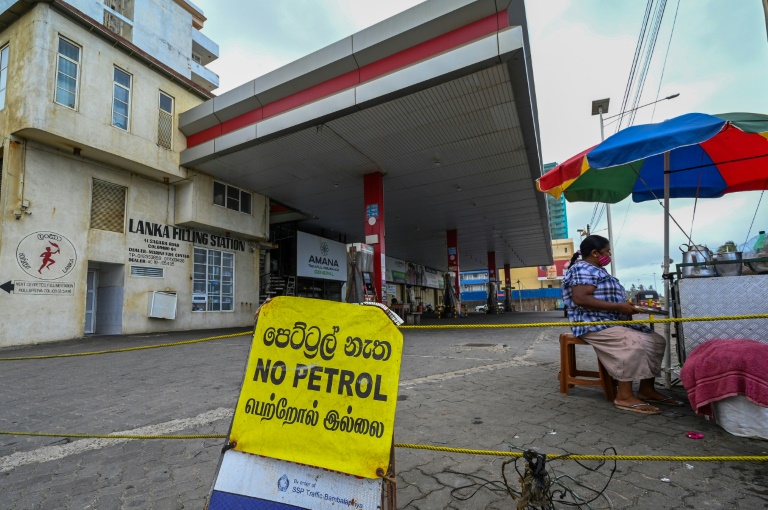
At the peak of Sri Lanka’s petrol shortages, motorists had to wait for weeks to top up, although strict fuel rationing has since shortened queues.

Public anger against government mismanagement of the crisis reached fever pitch in July, when protesters stormed Rajapaksa’s official residence and occupied several other government buildings.

After taking power, Wickremesinghe ordered a crackdown, with security forces shutting down demonstrations and arresting protest leaders.

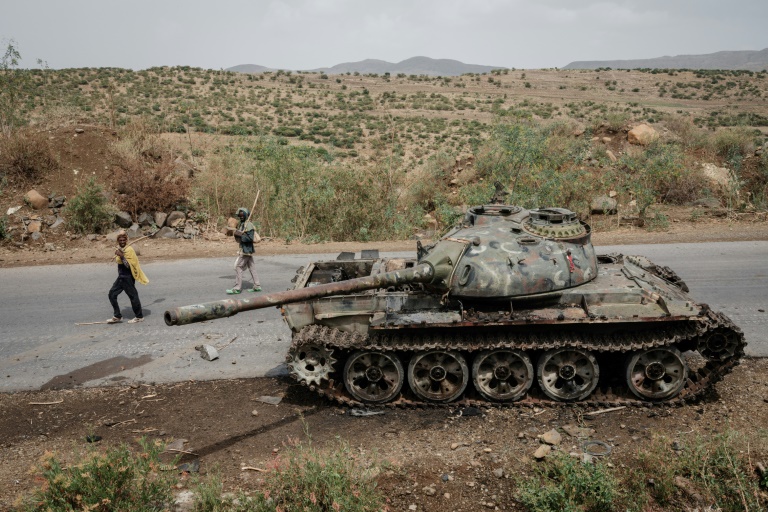
Ethiopia, Eritrea forces launch Tigray offensive: rebels

Ethiopian and Eritrean forces launched a “massive” joint offensive against the Tigray People’s Liberation Front (TPLF) in the northern region of Tigray on Thursday, the rebels said.

“The enemy, having already relocated a massive military force to Eritrea, has now begun a joint campaign with the foreign invading force of Eritrea to brutalise and exterminate the people of Tigray,” the rebels’ military command said in a statement.

AFP was not able to independently verify the claims. Access to northern Ethiopia is severely restricted and Tigray has been under a communications blackout for over a year.

TPLF spokesman Kindeya Gebrehiwot told AFP the attack was coming “from Eritrea”.  

Another TPLF spokesman, Getachew Reda, described it as a four-pronged offensive. He said on Twitter that the rebels were “defending their positions” and reported “heavy shelling” from some locations.

Addis Ababa has not responded to requests for comment about the reported offensive.

Fighting between government forces and the rebels had resumed last week after a five-month lull, with clashes on the ground and air raids over Tigray dashing hopes of peacefully resolving the nearly two-year war.

Combat had been concentrated around the southeastern border of Tigray, with the rebels pushing into the neighbouring Amhara and Afar regions, sending residents fleeing.

The government on Wednesday accused the TPLF of launching a wider “invasion” into parts of western Tigray, and other areas west of the initial clashes.

The rebels in turn alleged that the government and its neighbour Eritrea — which backed federal forces during the war’s early phase — were responsible for opening a new front.

On Thursday, the government said TPLF attacks “had further continued to intensify”.

“Innocent civilians are being killed; many are being displaced and property is being destroyed,” the Government Communication Service said in a statement.

– International alarm –

Fighting has spread since combat erupted on August 24, while the capital of the war-torn Tigray region has been hit twice by air strikes.

The first air raid on Mekele killed at least four people, including children, in a strike the UN children’s agency UNICEF said “hit a kindergarten”.

The second, around midnight on Tuesday, caused injuries and property damage, the TPLF said.

Both sides accused each other of firing first and shattering a March truce that had paused the worst of the bloodshed in northern Ethiopia.

The renewed fighting has alarmed the international community, with UN chief Antonio Guterres and senior diplomats from the European Union and the African Union among those to appeal for restraint.

Britain’s Minister for Africa, Vicky Ford, described the return to conflict as “catastrophic” for the people of Ethiopia and called on all sides to cease hostilities.

“Tigrayan forces should immediately cease fighting in Amhara region and return to Tigray,” she said in a statement on Thursday. “Eritrean forces should leave Tigray.”

In a tweet issued before the latest reported offensive, US Secretary of State Antony Blinken called on the Ethiopian government and the TPLF “to immediately halt military operations and redouble efforts to bring a permanent end to the conflict”.

“We remain deeply concerned at the resumption of fighting and the lives that it puts at risk,” he said.

Legesse Tulu, a spokesman for the Ethiopian government, responded on Twitter, saying: “The US Government needs to cease the ‘both parties’ rhetoric and denounce the destructive path of TPLF affecting various Ethiopian communities.”

– Humanitarian crisis –

Prime Minister Abiy Ahmed sent troops into Tigray to topple the TPLF in November 2020 in response to what he said were rebel attacks on federal army camps.

The TPLF recaptured most of Tigray in a surprise comeback in June 2021 and expanded into Afar and Amhara, before the fighting reached a stalemate.

For months at the start of the war, his government strenuously denied the involvement of Eritrean forces in the conflict, though Abiy later admitted their presence in Ethiopia and said they had withdrawn.

Although Ethiopia and Eritrea fought a brutal border war in 1998-2000 that left tens of thousands dead, Abiy initiated a rapprochement with Eritrean President Isaias Afwerki that earned him the Nobel Peace Prize in 2019.

Eritrea lent Ethiopia military backing when the Tigray conflict broke out, and its troops have been implicated in multiple massacres and other atrocities during the war, allegations Asmara denies. 

Unknown numbers of civilians have died and millions are suffering from a humanitarian crisis in northern Ethiopia, with the conflict hindering efforts to assist those in need.

The government said on Thursday that the TPLF was diverting aid supplies to its fighters.  

US aid chief Samantha Power said humanitarian workers in Tigray, Afar and Amhara were “facing unacceptable interference — including detentions, looting of fuel, and vehicle seizures”.

“USAID reiterates our call for all parties to respect humanitarian operations so that aid can reach those in need,” Power posted on Twitter on Wednesday.

Chinese city of 21 million shuts down over new Covid outbreak

Around 21 million people in the Chinese city of Chengdu effectively went into lockdown on Thursday as authorities raced to snuff out a new Covid-19 outbreak.

China is the last major economy wedded to a zero-Covid policy, stamping out virus flare-ups with snap shutdowns, mass testing and lengthy quarantines.

Chengdu, in the southwest, became the latest city to announce a shutdown, saying in an official notice that residents must “stay home in principle” from 6:00 pm (1000 GMT) on Thursday to combat a new wave of infections.

Each household will be allowed to send one person out to buy groceries and essential goods per day, provided they have tested negative in the previous 24 hours, the notice said.

It said that all residents would be tested for the virus between Thursday and Sunday, and urged them not to leave the city unless “absolutely necessary”.

“The current state of epidemic control is abnormal, complex and grim,” the announcement said, adding that the measures aimed to “decisively arrest the spread of the outbreak and guarantee the health of all citizens”. 

Chengdu recorded 157 new local infections on Thursday, of which 51 displayed no symptoms, the city government said in a separate notice.

Children in at least 10 cities and provinces are facing disruptions to China’s new academic year as pandemic controls force schools to switch to measures like online learning, according to a news report on Thursday in state-affiliated media.

Xining, the capital of western Qinghai province and home to 2.5 million people, has ordered schools to conduct lessons online, rolled out a mass testing drive and told residents in its main urban area to work from home for three days.

China’s southern hub of Shenzhen said that new virus restrictions would come into force from 6:00 pm (1000 GMT) on Thursday in its Nanshan district, which hosts the headquarters of tech giants Tencent and ZTE.

The district government said it had ordered entertainment venues including bars, cinemas and karaoke clubs to close, and started requiring residents to produce a recent negative Covid test to enter their housing compounds.

China has stuck to its zero-tolerance virus strategy despite disruptions from the fast-spreading Omicron strain and concern that the approach is stifling its post-pandemic economic recovery.

Last month, travellers in the southern island province of Hainan protested after more than 80,000 tourists were stranded in a resort city because of a Covid-19 flare-up.

Social media videos from the eastern megacity of Shanghai showed panicked crowds fleeing an Ikea store and another building as officials tried to impose local lockdowns in response to two suspected cases.

UN team pushes ahead with risky mission to Ukraine nuclear plant

UN inspectors pressed on towards a Russian-held nuclear plant in southern Ukraine Thursday despite an early shelling attack, as the ICRC warned the consequences of a strike on the facility could be “catastrophic”.

As the 14-strong team from the International Atomic Energy Agency (IAEA) left for the Zaporizhzhia nuclear plant, Ukraine said Russian troops had shelled the area, forcing the closure of one of its six reactors.

Energoatom, Ukraine’s nuclear agency, said it was “the second time in 10 days” that shelling had forced the closure of a reactor. 

The area around the plant — Europe’s largest nuclear facility — has suffered repeated shelling, with both sides accusing the other of responsibility, sparking global concern over the risk of an accident. 

“It is high time to stop playing with fire and instead take concrete measures to protect this facility… from any military operations,” ICRC chief Robert Mardini told reporters in Kyiv. 

“The slightest miscalculation could trigger devastation that we will regret for decades.”

Energoatom said the plant’s emergency protection system kicked in shortly before 5:00 am (0200 GMT) “due to another (Russian) mortar shelling” and that “operating power unit five was shut down”. 

But the backup power supply “was damaged” in the attack, it said. 

After Russian forces seized the plant on March 4, Energoatom shut two of the reactors, followed by a third after shelling on August 5. 

With a fourth in repairs, Thursday’s incident means only one of the six is functioning.

– ‘The stakes are immense’ –

Mardini said it was “encouraging” that the IAEA team was en route to inspect the plant because the stakes were “immense”.

“When hazardous sites become battlegrounds, the consequences for millions of people and the environment can be catastrophic and last many years,” he said.

On leaving Zaporizhzhia, IAEA chief Rafael Grossi said his team had been updated about the shelling but would press on anyway.

“We are not stopping,” he vowed, despite being aware that in crossing the frontline into Russian-held territory, there was a security “grey area… where the risks are significant”. 

“We have to proceed with this. We have a very important mission to accomplish.”

By early afternoon, the team had crossed into the grey zone after waiting for “several hours at a checkpoint” for permission to cross, Ukraine’s Interfax news agency reported, saying “gunfire could be heard” along the road. 

– Shelling, saboteurs and back-to-school –

Earlier, Energodar Mayor Dmytro Orlov said his town had come under sustained attack at dawn on Thursday, saying Russian troops had fired “mortars and used automatic weapons and rockets”.

Energodar town is located next to the plant on the southern banks of the Dnipro River.

But Moscow accused Kyiv of smuggling in up to 60 military “saboteurs”, saying they reached the area near the plant just after dawn and that Russian troops had taken “measures to annihilate the enemy”. 

Grossi on Wednesday said the IAEA would seek to establish a “permanent presence” at the plant to avoid a nuclear disaster at the facility which is located on the frontline of the fighting.

“My mission is… to prevent a nuclear accident and preserve the largest nuclear power plant in Europe,” he said. 

Ukraine has accused Russia of deploying hundreds of soldiers and storing ammunition at the plant. 

Both Moscow and Kyiv have accused each other of staging “provocations” aimed at disrupting the work of the IAEA mission. 

Meanwhile, Ukrainian troops pressed ahead with a counteroffensive in the nearby southern region of Kherson that began on Monday to retake areas seized by Russian forces at the start of the invasion.

In its morning update, the presidency said “heavy explosions continued for the last 24 hours” across Kherson region, while five people had been killed and 12 others wounded in fighting in the eastern Donetsk region. 

Despite the conflict, now in its seventh month, September 1 marked the start of a new school year for children across Ukraine. 

Figures from Ukraine’s education ministry show 2,199 educational institutions have been damaged in the fighting, with 225 of them completely destroyed.

Just over half of the 23,000 schools surveyed by the ministry are equipped with bomb shelters, meaning they can physically reopen, while those without will only offer online learning. 

But in Kharkiv, Ukraine’s second city, all learning will be online due to constant Russian shelling, its mayor said last month, with a British charity charging Thursday that dozens of its schools had been “targeted”. 

An investigation by the Centre for Information Resilience found 41 institutions had been “partially or completely destroyed” in the northeastern city, with researchers finding the shelling “was targeted, rather than a by-product of indiscriminate attacks on civilian infrastructure”.

Elsewhere, the foreign ministry in London said a British medic volunteering in Ukraine had died in the fighting on August 24 but gave no further details on the circumstances of his death. 

UN team pushes ahead with risky mission to Ukraine nuclear plant

UN inspectors pressed on towards a Russian-held nuclear plant in southern Ukraine Thursday despite an early shelling attack, as the ICRC warned the consequences of a strike on the facility could be “catastrophic”.

As the 14-strong team from the International Atomic Energy Agency (IAEA) left for the Zaporizhzhia nuclear plant, Ukraine said Russian troops had shelled the area, forcing the closure of one of its six reactors.

Energoatom, Ukraine’s nuclear agency, said it was “the second time in 10 days” that shelling had forced the closure of a reactor. 

The area around the plant — Europe’s largest nuclear facility — has suffered repeated shelling, with both sides accusing the other of responsibility, sparking global concern over the risk of an accident. 

“It is high time to stop playing with fire and instead take concrete measures to protect this facility… from any military operations,” ICRC chief Robert Mardini told reporters in Kyiv. 

“The slightest miscalculation could trigger devastation that we will regret for decades.”

Energoatom said the plant’s emergency protection system kicked in shortly before 5:00 am (0200 GMT) “due to another (Russian) mortar shelling” and that “operating power unit five was shut down”. 

But the backup power supply “was damaged” in the attack, it said. 

After Russian forces seized the plant on March 4, Energoatom shut two of the reactors, followed by a third after shelling on August 5. 

With a fourth in repairs, Thursday’s incident means only one of the six is functioning.

– ‘The stakes are immense’ –

Mardini said it was “encouraging” that the IAEA team was en route to inspect the plant because the stakes were “immense”.

“When hazardous sites become battlegrounds, the consequences for millions of people and the environment can be catastrophic and last many years,” he said.

On leaving Zaporizhzhia, IAEA chief Rafael Grossi said his team had been updated about the shelling but would press on anyway.

“We are not stopping,” he vowed, despite being aware that in crossing the frontline into Russian-held territory, there was a security “grey area… where the risks are significant”. 

“We have to proceed with this. We have a very important mission to accomplish.”

By early afternoon, the team had crossed into the grey zone after waiting for “several hours at a checkpoint” for permission to cross, Ukraine’s Interfax news agency reported, saying “gunfire could be heard” along the road. 

– Shelling, saboteurs and back-to-school –

Earlier, Energodar Mayor Dmytro Orlov said his town had come under sustained attack at dawn on Thursday, saying Russian troops had fired “mortars and used automatic weapons and rockets”.

Energodar town is located next to the plant on the southern banks of the Dnipro River.

But Moscow accused Kyiv of smuggling in up to 60 military “saboteurs”, saying they reached the area near the plant just after dawn and that Russian troops had taken “measures to annihilate the enemy”. 

Grossi on Wednesday said the IAEA would seek to establish a “permanent presence” at the plant to avoid a nuclear disaster at the facility which is located on the frontline of the fighting.

“My mission is… to prevent a nuclear accident and preserve the largest nuclear power plant in Europe,” he said. 

Ukraine has accused Russia of deploying hundreds of soldiers and storing ammunition at the plant. 

Both Moscow and Kyiv have accused each other of staging “provocations” aimed at disrupting the work of the IAEA mission. 

Meanwhile, Ukrainian troops pressed ahead with a counteroffensive in the nearby southern region of Kherson that began on Monday to retake areas seized by Russian forces at the start of the invasion.

In its morning update, the presidency said “heavy explosions continued for the last 24 hours” across Kherson region, while five people had been killed and 12 others wounded in fighting in the eastern Donetsk region. 

Despite the conflict, now in its seventh month, September 1 marked the start of a new school year for children across Ukraine. 

Figures from Ukraine’s education ministry show 2,199 educational institutions have been damaged in the fighting, with 225 of them completely destroyed.

Just over half of the 23,000 schools surveyed by the ministry are equipped with bomb shelters, meaning they can physically reopen, while those without will only offer online learning. 

But in Kharkiv, Ukraine’s second city, all learning will be online due to constant Russian shelling, its mayor said last month, with a British charity charging Thursday that dozens of its schools had been “targeted”. 

An investigation by the Centre for Information Resilience found 41 institutions had been “partially or completely destroyed” in the northeastern city, with researchers finding the shelling “was targeted, rather than a by-product of indiscriminate attacks on civilian infrastructure”.

Elsewhere, the foreign ministry in London said a British medic volunteering in Ukraine had died in the fighting on August 24 but gave no further details on the circumstances of his death. 

Close Bitnami banner
Bitnami