World

UN to release Xinjiang rights report within hours

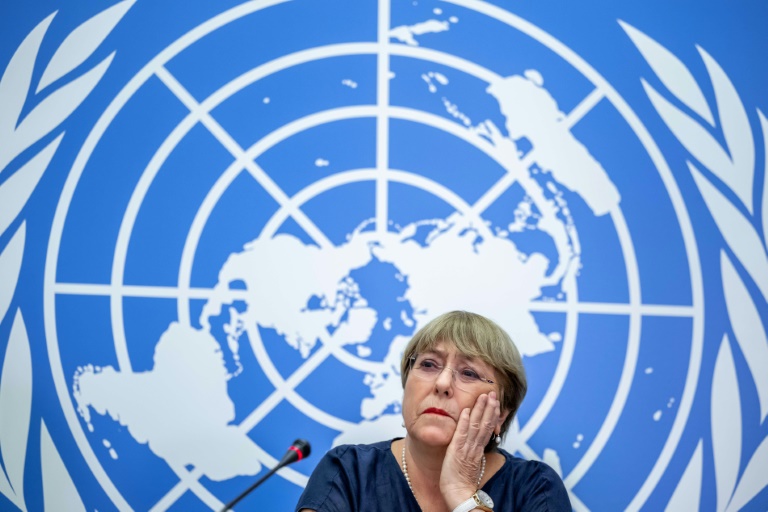
On her way out the door on Wednesday, UN rights chief Michelle Bachelet will release a report on alleged violations in China’s Xinjiang region, infuriating Beijing.

The outgoing High Commissioner for Human Rights promised to release the report before her mandate expires at the end of August.

“The report on Xinjiang will go out by the end of the day,” spokesman Jeremy Laurence told AFP with just hours left of her four-year term.

Beijing stands accused of detaining more than one million Uyghurs and other Muslim minorities in the far-western Xinjiang region.

Campaigners accuse China of a litany of abuses, including mass incarceration, forced labour, compulsory sterilisation and the destruction of Uyghur cultural and religious sites.

The United States and lawmakers in other Western countries have gone as far as accusing China of committing “genocide” against the minority groups.

Beijing vehemently rejects the claims and has long insisted it is running vocational training centres in Xinjiang designed to counter extremism.

It claims the allegations are part of a plot by the United States and other Western nations to smear China and contain its rise.

Bachelet came under increasing pressure to investigate and speak out as the allegations mounted.

– A ‘fabricated lie’: China –

Nearly a year ago, the former Chilean president told the UN Human Rights Council that an independent evaluation of the situation was needed — and indicated that her office was finalising a report.

But it was repeatedly delayed amid growing impatience from rights groups and some countries.

Zhang Jun, China’s ambassador to the UN in New York, said Beijing had made it clear to Bachelet that it was “firmly opposed” to the rights assessment.

“The so-called Xinjiang issue is a completely fabricated lie out of political motivations and its purpose is definitely to undermine China’s stability and to obstruct China’s development,” he told reporters.

Zhang said Bachelet should “stay independent and… not resign to the political pressure of a number of Western countries.”

Bachelet and her office have repeatedly explained that one reason the report was delayed was because it had been sent to Beijing first for comments, as is common with such reports.

But Zhang maintained that Chinese officials had not seen the report yet, and were in any case “completely opposed” to it.

“It simply undermines the cooperation between the UN and a member state. It completely interferes in China’s internal affairs,” he said.

– ‘Cowardly’ –

In her farewell press conference last Thursday, Bachelet admitted she was under “tremendous pressure to publish or not to publish” the long-delayed report.

“But I will not publish or withhold publication due to any such pressure,” she said.

But her decision to release the report on her way out the door, leaving her as-yet unappointed successor to deal with the aftermath, has raised some eyebrows.

During a press briefing in New York on Wednesday, UN chief Antonio Guterres’s spokesman was asked whether the secretary-general condoned such “cowardly” behaviour.

“He does not share your analysis and the adjectives used in describing Madame Bachelet’s work,”  Stephane Dujarric told reporters. 

“He fully respects the independence of the Office of the High Commissioner and the work of the High Commissioner.”

Bachelet released a departing video on Wednesday in which she said the world was at a critical juncture, with shrinking space for debate, often coupled with attacks on rights defenders.

She did not reference the Xinjiang report but said: “That’s the essence of human rights work: doing the hard job of putting the finger where it hurts.”

“The journey to defend human rights never ends.” 

– ‘Better late than never’ –

In May, Bachelet concluded a rare six-day visit to China that took her to Xinjiang.

During her visit, she had urged Beijing to avoid “arbitrary and indiscriminate” measures in the region.

But rights groups criticised her for a perceived lack of firmness. They said she had capitulated to a stage-managed tour of Xinjiang orchestrated by Beijing.

Human Rights Watch said the report would help to show that no state is above the law.

“Better late than never,” HRW’s China director Sophie Richardson told AFP. “If this does in fact happen, it will be a watershed moment.”

nl-rjm-burs/har
US approves shots targeting Omicron

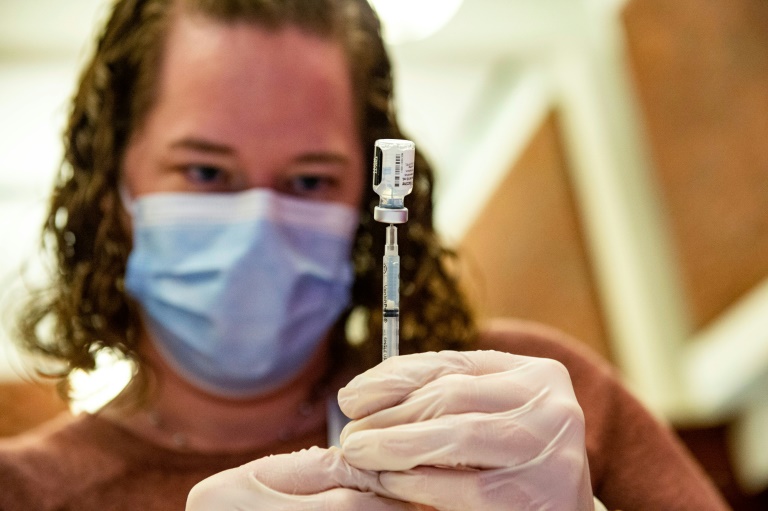
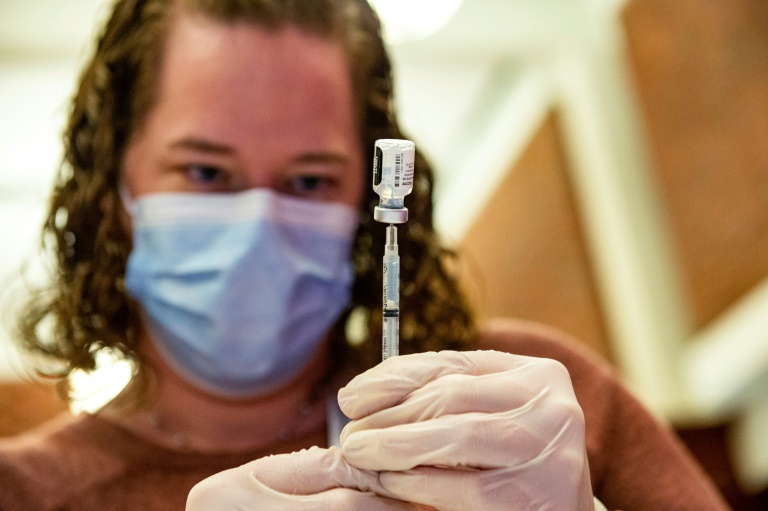
US officials Wednesday authorized updated Covid-19 vaccinations by Moderna and Pfizer-BioNTech that specifically target the latest strains of the Omicron variant, hoping to contain a new wave of feared contagions this winter.

The two new booster shots are approved for people age 12 and above for the Pfizer shot and 18 and older for Moderna, the Food and Drug Administration (FDA) said in a statement.

This new generation of so-called “bivalent” vaccines protects against both the original strain of Covid and the BA.4 and BA.5 lineages — the subvariants of Omicron which account for about 90 percent of all new cases in the United States.

“Although the current Covid-19 surge is waning overall, it’s predicated that we’ll enter yet another surge as we spend more time indoors later this fall and winter,” FDA Commissioner Robert Califf told reporters.

“These update boosters present us with an opportunity to get ahead” of the curve, he said.

While the intense focus on coronavirus has largely faded from daily life for Americans, the United States still records some 80,000 new cases — and 400 deaths — from Covid every day.

Earlier this summer the US health department announced it had purchased 105 million doses from Pfizer and 66 million from Moderna for use over the fall and winter.

The vaccines must still receive a recommendation by the Centers for Disease Control and Prevention, the nation’s health protection agency, before injections can begin.

An independent panel of experts is scheduled to be convened by the CDC on Thursday to discuss the updates. 

– Low booster uptake –

The two companies indicated their updated vaccines could be available for distribution in the United States as early as next week.

“Receiving a booster that specifically targets the Omicron BA.4/.5 variant… is an important public health measure that people can take to help protect themselves,” Moderna chief executive Stephane Bancel said in a statement.

Many Americans will need convincing to take the new shots, as how only about half of those eligible have received a first booster dose.

The vaccines currently in circulation target the initial strain of the virus that first appeared in Wuhan, China. They have gradually proven to be less effective against the variants that have appeared over time, due to rapid evolution of the virus. 

The FDA still recommends people get the original vaccine in order to receive “a foundation of that basic immune response,” Califf said.

In contrast to the Alpha and Delta variants, which eventually waned, Omicron and its subvariants have come to dominate infections worldwide in 2022.

Pfizer and Moderna have also filed for approval of their updated vaccines with the European Medicines Agency.

US approves shots targeting Omicron

US officials Wednesday authorized updated Covid-19 vaccinations by Moderna and Pfizer-BioNTech that specifically target the latest strains of the Omicron variant, hoping to contain a new wave of feared contagions this winter.

The two new booster shots are approved for people age 12 and above for the Pfizer shot and 18 and older for Moderna, the Food and Drug Administration (FDA) said in a statement.

This new generation of so-called “bivalent” vaccines protects against both the original strain of Covid and the BA.4 and BA.5 lineages — the subvariants of Omicron which account for about 90 percent of all new cases in the United States.

“Although the current Covid-19 surge is waning overall, it’s predicated that we’ll enter yet another surge as we spend more time indoors later this fall and winter,” FDA Commissioner Robert Califf told reporters.

“These update boosters present us with an opportunity to get ahead” of the curve, he said.

While the intense focus on coronavirus has largely faded from daily life for Americans, the United States still records some 80,000 new cases — and 400 deaths — from Covid every day.

Earlier this summer the US health department announced it had purchased 105 million doses from Pfizer and 66 million from Moderna for use over the fall and winter.

The vaccines must still receive a recommendation by the Centers for Disease Control and Prevention, the nation’s health protection agency, before injections can begin.

An independent panel of experts is scheduled to be convened by the CDC on Thursday to discuss the updates. 

– Low booster uptake –

The two companies indicated their updated vaccines could be available for distribution in the United States as early as next week.

“Receiving a booster that specifically targets the Omicron BA.4/.5 variant… is an important public health measure that people can take to help protect themselves,” Moderna chief executive Stephane Bancel said in a statement.

Many Americans will need convincing to take the new shots, as how only about half of those eligible have received a first booster dose.

The vaccines currently in circulation target the initial strain of the virus that first appeared in Wuhan, China. They have gradually proven to be less effective against the variants that have appeared over time, due to rapid evolution of the virus. 

The FDA still recommends people get the original vaccine in order to receive “a foundation of that basic immune response,” Califf said.

In contrast to the Alpha and Delta variants, which eventually waned, Omicron and its subvariants have come to dominate infections worldwide in 2022.

Pfizer and Moderna have also filed for approval of their updated vaccines with the European Medicines Agency.

Amazon to unveil its $1bn bet with 'Lord of the Rings' prequel launch

Stanley Kubrick once famously said that J.R.R. Tolkien’s “The Lord of the Rings” trilogy of novels was unfilmable.

It is hard to imagine what the great director would have made of Amazon’s $1 billion gamble on “The Lord of the Rings: The Rings of Power,” a 50-hour television series based on the dry historical footnotes published at the end of book three.

The show, out Friday globally on Prime Video, aims to tap into the huge and enduring appeal of works still regularly voted the world’s best-loved novels of all time, as well as Peter Jackson’s Oscar-winning film adaptations.

It is central to Amazon’s bid to stand out in the “streaming wars” with Netflix, Disney+ and HBO Max — whose own “Game of Thrones” prequel just launched — and is bankrolled by multi-billionaire founder Jeff Bezos, a Tolkien mega-fan.

But populated by heroes and villains who are barely — if at all — referenced in Tolkien’s trilogy and its “Appendices” of fictional mythology, and featuring a largely unknown cast and creators, there is no doubting the scale of the gamble.

“It is quite nerve wracking — we’re building something from the ground up that’s never been seen before,” said Sophia Nomvete, who plays Princess Disa, the first female and first Black dwarf depicted on screen in Tolkien’s world.

“There’s definitely a few nerves. We want to get it right,” she told AFP at the Comic-Con fan event last month.

– ‘True colors’ –

“The Rings of Power” is set in Tolkien’s “Second Age” — a period of history in his fictional Middle Earth world thousands of years before the events of “The Hobbit” and “The Lord of the Rings.”

So while a handful of characters from Jackson’s films reappear in Amazon’s show — mostly younger versions of elves such as Galadriel and Elrond, who are of course immortal — there is no Frodo, Gollum or Aragorn in sight.

Most characters from Tolkien lore are appearing on screen for the first time, and some have even been created entirely from scratch for the show.

“Tolkien hasn’t really written much about who he is as a person,” said Maxim Baldry, whose character Isildur was briefly seen fighting the evil lord Sauron in a flashback at the start of Jackson’s trilogy.

Here, Baldry plays a younger version of the tragic hero, struggling with the death of his mother, overbearing pressure from his father, and a romantic yearning for adventure.

“What a gift, firstly, to explore someone’s beginnings, finding their true colors, understanding who they really are,” said Baldry.

He added: “Season one is purely about setting up characters and introducing new characters to the family… fleshing out a pretty skeletal world that Tolkien just created in the Second Age.”

– ‘Wonderfully crazy’ –

The fate of the series rests in the hands of creators — or “showrunners” — Patrick McKay and J.D. Payne, who pitched their concept to Amazon after it bought the rights in 2017, but had only a handful of previous projects credited on their CVs.

“We wanted to find a huge Tolkienian mega epic. And Amazon were wonderfully crazy enough to say ‘yes, let’s do that,” McKay said at Comic-Con.

At the London premiere Tuesday, Bezos admitted that “some people even questioned our choice” to bring in “this relatively unknown team.”

“But we saw something special,” he said, according to Variety.

Early reviews have been generally positive. Variety said the show slots “neatly into Peter Jackson’s preexisting cinematic universe.”

Critics universally praised its lavish costumes, backdrops, visual effects and set-pieces, as well as Morfydd Clark’s central performance as Galadriel.

However, Time said it was “filled with beautiful images and tired archetypes,” and the Times of London said it “has the vibe of terrified executives carrying an exceedingly expensive vase across a slippery floor.”

– $1 billion –

The show has been dubbed the most expensive ever for television.

Amazon splurged $250 million on the rights from Tolkien’s estate, and some $465 million on the first season alone. It has committed from the start to making five full seasons, meaning the final cost is expected to pass $1 billion.

With high stakes has come considerable secrecy — even its actors have not been told the fates of their characters.

“No idea! I don’t even know what’s happening next season,” said Megan Richards, who plays Poppy Proudfellow, a character whose Harfoot race are ancestors of the hobbits.

“There’s an arc that Tolkien has given us for the Second Age. So there are certain things we know,” Daniel Weyman, who plays a mysterious man billed simply as “The Stranger,” told AFP.

“The thing that I hold on to is that our showrunners, they definitely know their arc. They know their arc already.”

Snap confirms cutting 20 percent of staff

Snapchat’s parent company confirmed Wednesday it is cutting 20 percent of staff, as the troubled messaging app attempts to dig itself out amid competition and revenue woes, as well as recent quarterly losses.

A hit with young internet users in its early days, Snapchat has remained a small player in the social networking space as competition from other apps, such as TikTok, has grown ever more intense.

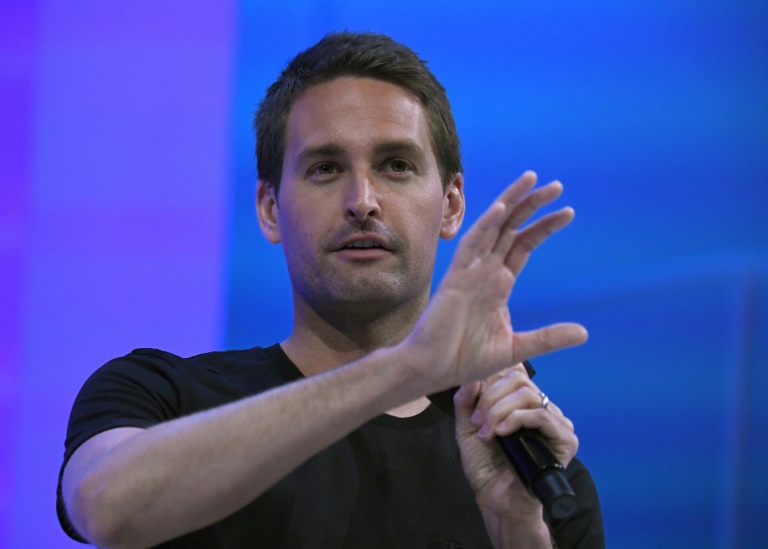
“We must now face the consequences of our lower revenue growth and adapt to the market environment,” Snap CEO Evan Spiegel said in a note to employees Wednesday announcing the decision “to reduce the size of our team by approximately 20 percent.”

In July, the company reported that quarterly losses nearly tripled to $422 million amid conditions “more challenging” than expected.

Tech news website The Verge first reported the southern California-based company would be making the steep cuts to its approximately 6,400 staff.

Restructuring, Spiegel said, would focus on “three strategic priorities: community growth, revenue growth and augmented reality” with unrelated projects to “be discontinued or receive substantially reduced investment.”

Snap said it would discontinue its Snap Originals show programming, third-party app integration known as Minis, its games, and its lightweight drone offering called Pixy. 

It also said it was “winding down” its standalone geolocation app Zenly and music creation app Voisey, which it acquired through takeovers.

Like other social networks, Snap has taken a hit as advertisers have tightened their belts, as well as from new privacy changes by Apple that have bitten into firms’ sales of costly but highly-targeted ads.

“The company is facing layoffs as it works to restructure its ad business and cut costs,” said Insider Intelligence principal analyst Jasmine Enberg.

“Even so, I wouldn’t count Evan Spiegel out.”

Snap has a growing and loyal user base, and is well-positioned to capitalize on advertising and commerce in its augmented reality offerings over the long-term, the analyst reasoned.

Enberg expected Snapchat to end this year with nearly $5 billion in net ad revenue worldwide in a 43 percent increase from 2021. Insider Intelligence projected that ranks of Snapchat users would be up more than 10 percent to 493.7 million by the end of this year.

“We are encouraged by stabilizing user trends, as well as the large shopping and e-commerce advertising opportunity, healthy margins, and perspective and experience from recent upgrades to the management team,” Baird analysts said of Snap in a note to investors.

Snap announced a new chief operating officer, Jerry Hunter, who is being promoted from senior vice president of engineering. Google executive Ronan Harris will become president of the company’s Europe, Middle East and Africa division in October.

Meanwhile, Snap’s chief business officer Jeremi Gorman and Peter Naylor, the vice president of ad sales for the Americas, will be going to work for streaming  television titan Netflix in September, according to the companies.

Snap shares were up more than 10 percent in mid-day trading on the New York Stock Exchange.

Lithuanians slam 'one-sided' reax to Gorbachev death

For many in the West, Mikhail Gorbachev, the last leader of the Soviet Union who has died at the age of 91, is worth applauding for his role in ending the Cold War.

But in some countries that spent years under Soviet rule, he is nothing more than another Russian imperialist who used force to deter nations seeking independence in the early 1990s.

Lithuanian psychologist Robertas Povilaitis, who lost his father during Moscow’s crackdown on the Baltic state’s independence drive, said Gorbachev’s glorification “grates on my ears”.

“To me, this seems one-sided and inadequate,” the 45-year-old told AFP on Wednesday, a day after Gorbachev’s death. 

Povilaitis considers Gorbachev personally responsible for the 1991 deadly Soviet assault that killed his father and 13 other civilians and wounded more than 700 others.

In 2019, a Lithuanian court convicted dozens of Soviet-era officials of war crimes but the country’s prosecutors have refused to investigate Gorbachev, who was in power at the time.

The refusal has angered those seeking justice for the crackdown and this year Povilaitis and a few others initiated a civil case against Gorbachev.

The civil lawsuit states that Gorbachev had control of the Soviet military, but failed to stop the “international crime” against Lithuanians seeking freedom after 50 years of Soviet occupation.

“He participated in very serious crimes, carried them out, organised them, gave orders,” Povilaitis said.

– ‘He was a criminal’ –

He expressed disappointment in the response of some politicians to his death, including European Commission chief Ursula von der Leyen’s praise of Gorbachev as a “trusted and respected leader”.

“Even though Lithuania, Latvia and Estonia are full-fledged members of the EU, she doesn’t have enough empathy or understanding that this person participated in organising the slaughter of current EU citizens,” Povilaitis said.

Lithuanian Defence Minister Arvydas Anusauskas for his part condemned Gorbachev.

“He was a criminal who ordered a ruthless crackdown on peaceful protests in Vilnius, Tbilisi, Almaty, Baku and other cities. There was no remorse,” Arvydas Anusauskas wrote on Facebook.

“Such is the memory we are left with, even though we should never speak ill of the dead — but not this time,” he added.

Foreign Minister Gabrielius Landsbergis said “Lithuanians will not glorify Gorbachev”.

“We will never forget the simple fact that his army murdered civilians to prolong his regime’s occupation of our country,” he said on Twitter.

“His soldiers fired on our unarmed protestors and crushed them under his tanks. That is how we will remember him.”

In the trenches, a foreign fighter's view of Ukraine's offensive

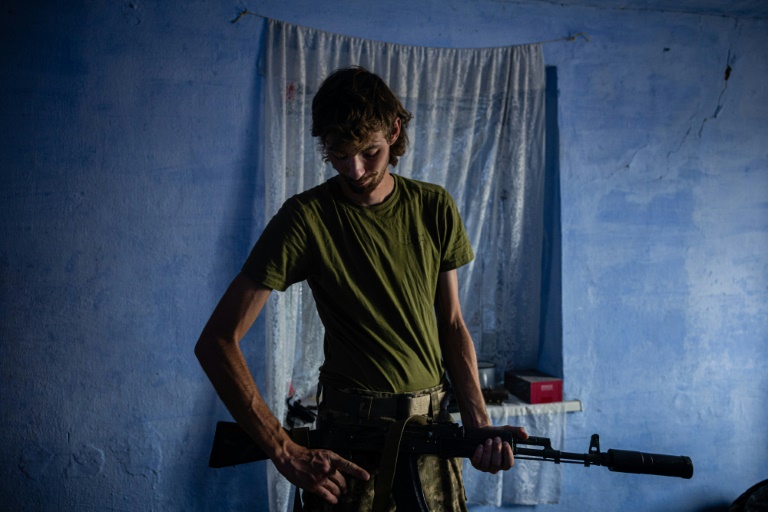
Back home in South Carolina, “Rockstar” was doing a bit of gardening. Today he’s scrabbling around in the trenches with a handful of foreign fighters as Ukraine stages an offensive to retake Russian-held areas.

Some 15 kilometres (nine miles) from the frontline, the lanky 26-year-old is roaming the streets of a Ukrainian village looking for cigarettes.

Despite the curly mullet that earned him his “Rockstar” nickname, Gideon Rinehardt spent four years serving with the US National Guard.

And that experience is probably what made him worthy of joining what he calls the “very special forces” where he’s now serving under a Ukrainian command alongside two other Americans, a Briton, a Frenchman and a Finn.

Getting there was a funny story, he says, recalling how he showed up at a recruitment centre in the western region of Lviv to join the International Legion for the Defence of Ukraine (ILDU). 

“I’m not in great shape but I was still the best one there. So they asked me: do you want to join the normal army or do you want to be a badass?” he told AFP. 

“I’ve never been with the Special Forces, so put me with the normal people,” he told them. 

“But they still sent me here.”

– ‘Pretty intense’ –

Currently they are staying near a still-inhabited village in the southern Mykolaiv region, their barracks full of weaponry, from Czech assault rifles to anti-tank missiles. 

With his comrades out getting supplies in Mykolaiv, the nearest city, Rinehardt is killing time listening to some Def Leppard heavy metal. 

Other volunteers with the ILDU, which was created at the start of the war after an international appeal by Ukrainian President Volodymyr Zelensky, have complained about being badly equipped.

But Rinehardt says the Ukrainians are treating them “very well”.

Before joining in July, he was back in South Carolina “doing some gardening”, he says, without elaborating. 

Since then, it’s been pretty intense, he says. 

“It is a lot of moving in the trenches and into areas that we think the Russians are going to take.”

“There has been a couple of times when they shoot at us and we shoot back. I don’t know if I have killed anyone out here. I try not to think about it.”

– ‘This is trench warfare’ –

Many foreigners weren’t ready for this type of fight, he says. 

“Nothing can prepare you for this war. Some are like, ‘I went to Iraq, I went to Afghanistan’, but this is completely different.

“This is trench warfare, like in World War I, and some Russian soldiers are awfully good at it.”

Ukraine this week launched a counter-offensive to retake southern areas held by Russia, notably around Kherson city and the region of the same name. 

In a town near the frontline, the streets are buzzing with soldiers moving to and from the battlefield.

Some are waiting for a repair truck by an armoured vehicle that overheated. Others, just back from the front, are sitting in the shade under some trees.

“We really pushed them back yesterday,” smiles one soldier with a Ukrainian trident tattooed on his arm, who says his name is Victor. 

But his commanding officer, an Afghan war veteran, is more prudent, warning the battle to retake Kherson will be “long and difficult”. 

Although the foreign fighters are not taking part in the offensive itself, Rinehardt is pleased Ukraine has gone on the offensive. 

“I think we do need to take initiative. That’s the best option right now.”

He decided to join up after being “disgusted” by the atrocities he saw on cable television.

Over the next two months, he’ll have to decide whether or not he will stay longer — and that depends on whether he receives winter gear. 

Despite not speaking a word of Ukrainian, he says he’s careful to maintain good relationships with residents of the village where he is staying.

“This is a moral war, a war of public opinion. We need to behave respectfully. We’re going to leave, and they’re going to stay.”

Secret files 'likely concealed' at Trump home to block FBI probe

Top secret documents found at Donald Trump’s Florida home were “likely concealed” to obstruct an FBI probe into the former president’s potential mishandling of classified materials, the Department of Justice said in an explosive new court filing.

The filing released late Tuesday provides the most detailed account yet of the motivation for the raid on Trump’s Mar-a-Lago estate — which was triggered by a review of highly classified records that he had previously surrendered to authorities.

Before the raid, the FBI uncovered “multiple sources of evidence” showing that “classified documents” remained at Mar-a-Lago, the filing says, despite the assertion by Trump’s representatives that all sensitive materials had been handed over.

The filing made clear that prosecutors are seeking to determine whether Trump or anyone in his immediate orbit acted criminally to prevent federal agents from retrieving classified documents.

“The government also developed evidence that government records were likely concealed and removed from the Storage Room (at Trump’s estate) and that efforts were likely taken to obstruct the government’s investigation,” the filing adds.

When agents conducted their court-ordered search on August 8, they found material so sensitive that “even the FBI counterintelligence personnel and DOJ attorneys conducting the review required additional clearances before they were permitted to review certain documents,” it says.

In total, the filing says, agents recovered more than 100 documents with classification markings, in 13 boxes or containers, during the raid.

In a striking image sure to reverberate around Washington, the filing included a photograph of color-coded documents spread out over a carpet, marked “SECRET” and “TOP SECRET.”

Trump fired back Wednesday at the photo’s release in a post on his Truth Social network.

“Terrible the way the FBI, during the Raid of Mar-a-Lago, threw documents haphazardly all over the floor (perhaps pretending it was me that did it!), and then started taking pictures of them for the public to see,” he wrote. 

“Thought they wanted them kept Secret? Lucky I Declassified.”

– ‘Delayed access’ –

Trump, who is weighing another White House run in 2024, has accused the Justice Department under Democratic President Joe Biden of conducting a “witch hunt” and said the judge “should never have allowed the break-in of my home.”

Trump has taken legal action to seek the appointment of an independent party, or “special master,” to screen the seized files for materials protected by personal privilege.

The government’s filing argues that such an appointment, which would potentially block investigators’ access to the documents, is “unnecessary and would significantly harm important governmental interests, including national security interests.”

The Justice Department said it provided the detailed background on the build-up to the raid “to correct the incomplete and inaccurate narrative” set forth by Trump’s lawyers.

Its investigation began after the National Archives and Records Administration (NARA) received 15 boxes of records in January that had been improperly removed from the White House and taken to Mar-a-Lago.

According to the affidavit used to justify the raid, sensitive national defense information was among the “highly classified” records surrendered at that time, including 67 documents marked as confidential, 92 as secret and 25 as top secret.

In its filing, the Justice Department says “the former president delayed the FBI’s access to the fifteen boxes” once they had been surrendered to NARA.

The Mar-a-Lago search warrant, personally approved by Attorney General Merrick Garland, authorized the FBI to access the “45 office” — a reference to the 45th US president’s private office — and storage rooms.

The extraordinary search was partly based on suspicions of violations of the US Espionage Act related to the illegal retention of sensitive defense documents, the warrant showed.

Tuesday’s filing detailed how FBI agents in a previous operation traveled to Mar-a-Lago on June 3 and took into custody several documents turned over by a Trump custodian — who provided “sworn certification” that they represented the last of the material.

Democratic congressman Adam Schiff, who chairs the House Intelligence Committee, said the actions outlined in the brief were “reckless in the extreme” and showed “deliberate” deception.

In addition to investigations in New York into his business practices, Trump faces legal scrutiny for his efforts to overturn results of the 2020 election, and for the January 6, 2021 attack on the US Capitol by his supporters.

Trump was impeached for a historic second time by the House of Representatives after the Capitol riot — he was charged with inciting an insurrection — but was acquitted by the Senate.

UK political upheaval and stagflation fears weigh on pound

Political uncertainty and growing economic woes, including spiralling inflation and the threat of a recession, are weighing heavily on the British pound, against both the US dollar and the also struggling euro.

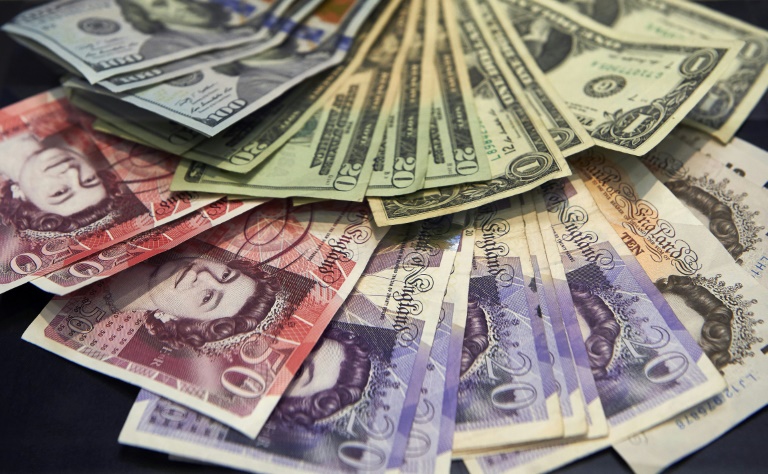
The British currency, which is currently trading at around $1.16 for £1, is a barometer of the UK’s attractiveness to international investors and has dropped to levels last seen in early 2020 and the shock of the Covid-19 outbreak. 

Before that, sterling has not been so cheaply traded since 1985. 

Many currencies are struggling against the greenback, which has been galvanised by the US Federal Reserve’s stated intention to continue raising its key rates.

European currencies are also suffering from the war in Ukraine and the energy crisis, currently heightened by the threat of a total interruption of Russian gas deliveries. 

But the pound is particularly badly hit, losing more than 15 percent against the dollar over the past year.

That has occurred despite the Bank of England (BoE) beginning to raise its key rates at the end of 2021 and repeatedly indicating that it intends to continue this tightening. 

Against the euro, which has been weighed down by the European Central Bank’s difficulties in tightening its monetary policy, the pound has fallen by two percent this year. 

The UK has the highest inflation in the G7, at more 10 percent year-on-year. The BoE estimates that it could rise to 13 percent in October. 

Private bank analysts are even more pessimistic: Citi estimates that the peak could reach 18.6 percent in early 2023, while Goldman Sachs suggests 14.8 percent. 

– All-time low looming? –

However, inflation could hit 22.4 percent next year if the country’s energy prices — which are set to jump 80 percent in October — continue their upward spiral as predicted.

That has prompted analysts at Capital Economics to warn sterling could plunge to an all-time low of $1.05, given the toxic cocktail of a likely recession alongside persistently high inflation — elements of dreaded so-called stagflation.

The term refers to long-running high inflation combined with weak growth and rising unemployment.

Capital Economics argues the BoE will have to stop tightening monetary policy in the coming months, but cannot afford to loosen it either amid that spectre.

Its analysts also note downside risks loom in the form of Liz Truss, the favourite to become prime minister next week, who has threatened to renege on a key element of the country’s post-Brexit deal with the European Union. 

Former finance minister Rishi Sunak, the other candidate in the race, warned this week it would be “complacent and irresponsible” to ignore the risk of markets losing confidence in Britain, as he attacked Truss’s plans to slash taxes. 

“The lack of credibility issue Sunak mentions may see the pound continue to weaken” if Truss is confirmed as the ruling Conservatives’ next leader on Monday, said Derek Halpenny, a currency analyst at MUFG.

Meanwhile, the broader consequences of leaving the EU and its single market and customs union continue to weigh on the pound, according to economists. 

It was trading at less than 80 pence against the euro and more than $1.40 on the eve of the Brexit vote. 

Since then, it has lost more than a fifth of its value against the greenback and more than 10 percent against the European single currency. 

Greenhouse gas, sea levels at record in 2021: US agency

Earth’s concentration of greenhouse gases and sea levels hit new highs in 2021, a US government report said Wednesday, showing that climate change keeps surging ahead despite renewed efforts to curb emissions.

“The data presented in this report are clear — we continue to see more compelling scientific evidence that climate change has global impacts and shows no sign of slowing,” said Rick Spinrad, administrator of the National Oceanic and Atmospheric Administration.

“With many communities hit with 1,000-year floods, exceptional drought and historic heat this year, it shows that the climate crisis is not a future threat but something we must address today,” he said in a statement.

The rise in greenhouse gas levels comes despite an easing of fossil fuel emissions the previous year as much of the global economy slowed sharply due to the Covid-19 pandemic.

The US agency said that the concentration of greenhouse gas in the atmosphere stood at 414.7 parts per million in 2021, 2.3 parts higher than in 2020.

The level is “the highest in at least the last million years based on paleoclimatic records,” the annual State of the Climate report found.

The planet’s sea levels rose for the 10th straight year, reaching a new record of 3.8 inches (97 millimeters) above the average in 1993 when satellite measurements began.

Last year was among the six warmest on record since the mid-19th century, with the last seven years all the seven hottest on record, it said.

The less headline-grabbing average temperatures were in part due to La Nina, an occasional phenomenon in the Pacific that cools waters, which took place early in the year and contributed to February being the coldest since 2014.

But water temperatures were also at records, with exceptionally high recordings documented in particular in lakes in Tibet, an environmentally crucial region as a water source for many of Asia’s major rivers.

– Rising disasters and fears –

Tropical storms, which are expected to increase as the planet warms, were sharply up in 2021, the report said. They included Typhoon Rai, which killed nearly 400 people in the Philippines in December, and Ida, which swept the Caribbean before becoming the second strongest hurricane to hit Louisiana after Katrina.

Among other extraordinary events cited in the report, the celebrated cherry trees in Kyoto, Japan, bloomed at their earliest since 1409.

Wildfires, also expected to rise due to climate change, were comparatively low following recent years although devastating blazes were witnessed both in the American West and Siberia.

The 2021 report comes days after a study said Greenland’s ice sheet is already set to melt at dangerous levels, even without any future warming, with major effects for low-lying areas around the globe that are home to hundreds of millions of people.

The planet remains far off track from an ambition set by the Paris climate accord in 2015 to aspire to limit warming to 1.5 degrees Celsius (2.7 Fahrenheit) above pre-industrial levels to avoid the worst effects of climate change.

In August, the United States under President Joe Biden pushed through the most expansive government package ever to address emissions from the world’s largest economy.

The effort will invest heavily in clean energy and comes as California moves to require all cars to be zero-emission by 2035, a decision with far-reaching consequences for the automobile industry.

Close Bitnami banner
Bitnami