World

High energy prices threaten UK hospital services

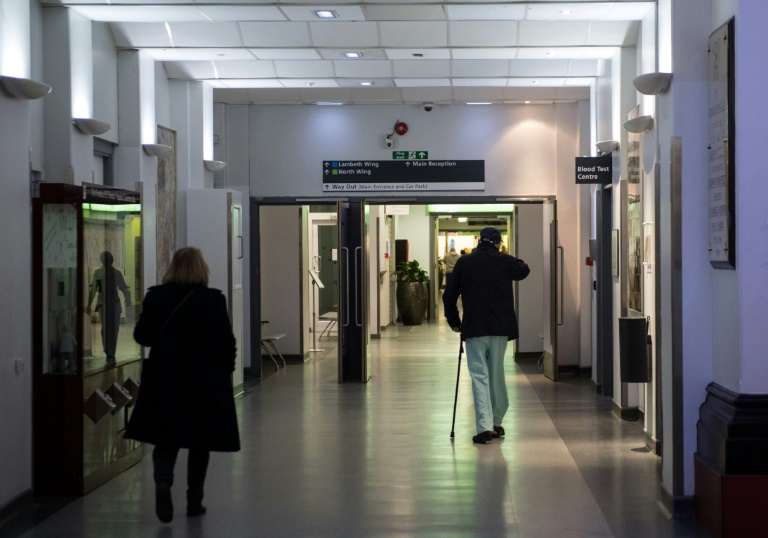
UK hospitals bosses on Thursday warned that patient care may have to be cut to offset huge increases in energy bills over the winter months.

Most hospital groups contacted by medical journal the BMJ said they expected bills to at least double, as the price hikes kicked in.

The NHS Confederation, which represents health providers in the publicly funded National Health Service, said there would be a knock-on effect.

“The gap in funding from rising inflation will either have to be made up by fewer staff being employed, longer waiting times for care or other areas of patient care being cut back,” the group’s senior acute lead, Rory Deighton, told the BMJ.

“A failure to properly compensate the NHS for inflation will only heighten pressure on our health service as we move towards a winter that we know will be particularly challenging this year.”

UK inflation is at a 40-year high of 10.1 percent with dire predictions that rates could climb to 18 percent or more next year.

Last week households were told that their gas and electricity bills would go up by 80 percent from October, with further rises set for next year.

But non-domestic customers are not covered by the energy price cap, making them more vulnerable to the surge in wholesale prices.

Businesses across the board have warned the huge increases could force many to close if the government does nothing to help.

The BMJ said bosses at Great Ormond Street Children’s Hospital in London told it that they expected an energy bill of about £650,000 ($756,000) a month in January and February next year.

At the same time last year, it was about £350,000.

Sheffield Children’s Hospital in northern England has anticipated a rise of nearly 130 percent in its total bill for 2022-23.

But Nottingham University Hospital in central England has budgeted for a 214-percent rise in gas and electricity this year, it added.

NHS England set aside £1.5 billion to cover an expected £485-million increase in energy bills. But the estimate was made in May and prices have risen again, prompting concern it may not be enough.

– ‘Breaking point’ –

The situation only adds to a growing catalogue of problems faced by the publicly funded National Health Service.

The NHS, created in 1948 to provide free healthcare and paid out of general taxation, is a cherished British institution.

But the system, which costs £190 billion a year to run and employs some 1.2 million people in England alone, has long faced significant under-funding.

The NHS Confederation’s Deighton said the UK’s new prime minister, to be installed next week, needs to act immediately to offset cost of living increases.

“The NHS needs at least £3.4 billion to make up for inflation during this year alone, and that is before we face a winter of even higher wholesale energy prices,” he added.

Deighton’s boss, chief executive Matthew Taylor, told The Guardian this week that the NHS was “in its worst state in living memory”.

Problems include chronic staff shortages, overcrowded accident and emergency departments, ambulance delays and lengthy waiting lists for treatment.

One experienced A&E doctor wrote on the UnHerd website this month that the service was “at breaking point”, with patients at risk.

Health experts say the crisis is decades in the making but has been exacerbated by squeezed budgets over the last 12 years of Conservative government, Brexit and the coronavirus pandemic.

Nurses and junior doctors are currently being balloted for strike action as part of widespread industrial action over below-inflation pay offers.

NHS health and social care workers were hailed as heroes during the pandemic but in a sign of the crisis, some hospitals have set up food banks for staff struggling with the rising cost of living.

One NHS manager told LBC radio on Tuesday he was planning to convert spare hospital space into “warm rooms” for employees unable to afford winter heating at home.
Californians told not to charge EVs as grid struggles in heat wave

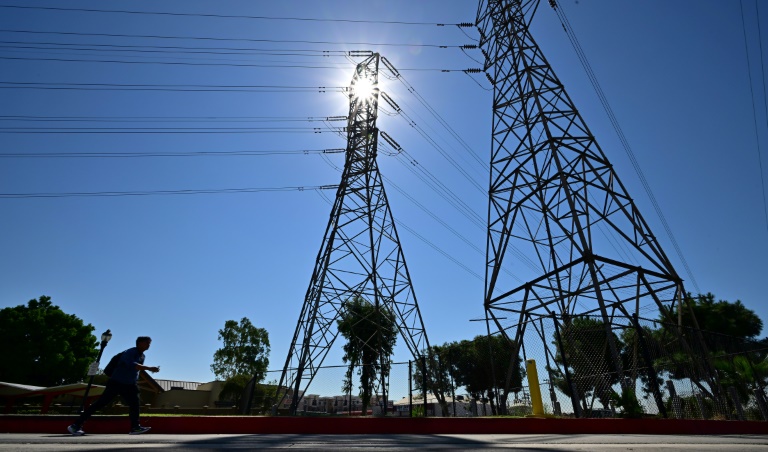
Californians were told Wednesday not to charge their electric vehicles during peak hours, just days after the state said it would stop selling gas-powered cars, as the aging electricity grid struggles with a fearsome heatwave.

Temperatures as high as 112 degrees Fahrenheit (44 degrees Celsius) were forecast in some Los Angeles suburbs as a huge heat dome bakes a swathe of the western United States.

The sweltering weather will put huge demands on the already-stretched power grid, especially when people crank up the air conditioners during the broiling hours after work and school.

“Consumers are urged to conserve power by setting thermostats to 78 degrees or higher, if health permits, avoiding use of major appliances and turning off unnecessary lights,” said the California Independent System Operator, which runs the state’s power grid.

Between 4:00 pm and 9:00 pm, “they should also avoid charging electric vehicles.”

“Reducing energy use during a Flex Alert can help stabilize the power grid during tight supply conditions and prevent further emergency measures, including rotating power outages.”

California’s power companies routinely ask households to limit their usage during the so-called “shoulder hours,” when rooftop solar panels stop producing electricity but demand remains high because of still-elevated temperatures.

The call to limit electric vehicle charging comes a week after state regulators banned the sale of new petrol- and diesel-powered vehicles from 2035.

All but a handful of SUVs, cars and light trucks will have to produce zero tailpipe emissions, with only highly efficient plug-in hybrids permitted to burn fossil fuels.

The move was hailed as a game-changer for the EV industry because of the size of California’s auto market and the potential it has to set national, and even international, standards.

– ‘Dangerously hot’ –

Wednesday’s plea to conserve power was greeted with derision on Twitter, where some said it was proof the state had not thought through its green agenda.

“Perhaps we should figure out how to fix our electric grid before we outlaw gas cars…just a thought,” tweeted @AerysGG

“So………this is what they want. Walking? Hitchin’ A Ride?? Moving to a more reasonable state??” tweeted @cinda_scheef

In response to soaring power demands, California Governor Gavin Newsom declared a state of emergency that temporarily removes pollution controls on fossil fuel power plants to allow them to generate more electricity.

He pointed to the punishing drought in the US West that has crippled hydroelectric plants, and noted the direct effect that climate change is having on day-to-day lives.

“Energy reliability becomes more and more challenging… because demand increases at the same time supply decreases,” he said.

He also called on households to do their part “to help us get through the next week or so, to turn up a little bit the thermostat at home to 78 degrees, try to pre-cool earlier in the day; try not to use too much electricity… between 4:00 pm and 9:00 pm.”

The National Weather Service has issued an “excessive heat warning” for most of California, as well as parts of Arizona and Nevada.

“Dangerously hot conditions expected… until Sunday evening,” the NWS said.

“A prolonged period of excessive heat will significantly increase the potential for heat related illnesses, particularly for those working or participating in outdoor activities.”

“Those without access to adequate or reliable cooling or hydration will be at most risk, but much of the population could be susceptible to impacts as well,” the NWS warned.

Nighttime temperatures are not expected to offer much relief, with lows struggling to get below 80 degrees Fahrenheit in many places.

It is not unusual for southern California to experience heat waves in September, but temperatures above 100 degrees Fahrenheit are considered hot even for a place almost perpetually baked by sunshine.

The heat wave comes after swathes of the southwest were lashed with torrential rains over recent weeks.

Some areas, including the notoriously dusty Death Valley, suffered flooding, and one person died after being swept away in Zion National Park in Utah.

Scientists say global warming, which is being driven chiefly by humanity’s use of fossil fuels, is making natural weather variations more extreme.

Heat waves are getting hotter and more intense, while storms are getting wetter and, in many cases, more dangerous.

Californians told not to charge EVs as grid struggles in heat wave

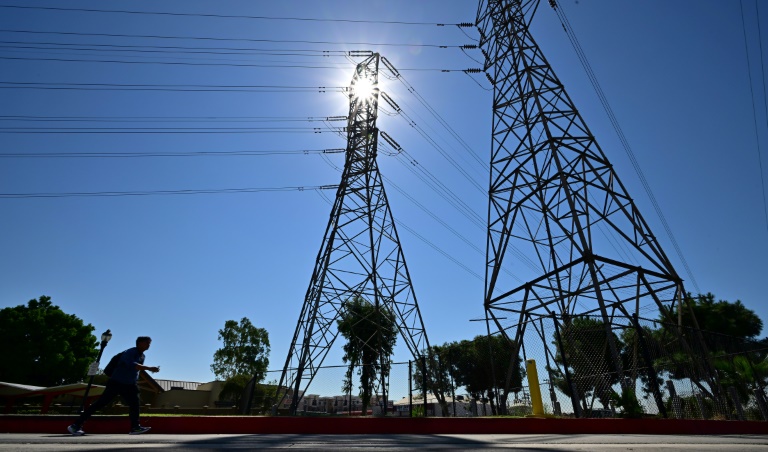
Californians were told Wednesday not to charge their electric vehicles during peak hours, just days after the state said it would stop selling gas-powered cars, as the aging electricity grid struggles with a fearsome heatwave.

Temperatures as high as 112 degrees Fahrenheit (44 degrees Celsius) were forecast in some Los Angeles suburbs as a huge heat dome bakes a swathe of the western United States.

The sweltering weather will put huge demands on the already-stretched power grid, especially when people crank up the air conditioners during the broiling hours after work and school.

“Consumers are urged to conserve power by setting thermostats to 78 degrees or higher, if health permits, avoiding use of major appliances and turning off unnecessary lights,” said the California Independent System Operator, which runs the state’s power grid.

Between 4:00 pm and 9:00 pm, “they should also avoid charging electric vehicles.”

“Reducing energy use during a Flex Alert can help stabilize the power grid during tight supply conditions and prevent further emergency measures, including rotating power outages.”

California’s power companies routinely ask households to limit their usage during the so-called “shoulder hours,” when rooftop solar panels stop producing electricity but demand remains high because of still-elevated temperatures.

The call to limit electric vehicle charging comes a week after state regulators banned the sale of new petrol- and diesel-powered vehicles from 2035.

All but a handful of SUVs, cars and light trucks will have to produce zero tailpipe emissions, with only highly efficient plug-in hybrids permitted to burn fossil fuels.

The move was hailed as a game-changer for the EV industry because of the size of California’s auto market and the potential it has to set national, and even international, standards.

– ‘Dangerously hot’ –

Wednesday’s plea to conserve power was greeted with derision on Twitter, where some said it was proof the state had not thought through its green agenda.

“Perhaps we should figure out how to fix our electric grid before we outlaw gas cars…just a thought,” tweeted @AerysGG

“So………this is what they want. Walking? Hitchin’ A Ride?? Moving to a more reasonable state??” tweeted @cinda_scheef

In response to soaring power demands, California Governor Gavin Newsom declared a state of emergency that temporarily removes pollution controls on fossil fuel power plants to allow them to generate more electricity.

He pointed to the punishing drought in the US West that has crippled hydroelectric plants, and noted the direct effect that climate change is having on day-to-day lives.

“Energy reliability becomes more and more challenging… because demand increases at the same time supply decreases,” he said.

He also called on households to do their part “to help us get through the next week or so, to turn up a little bit the thermostat at home to 78 degrees, try to pre-cool earlier in the day; try not to use too much electricity… between 4:00 pm and 9:00 pm.”

The National Weather Service has issued an “excessive heat warning” for most of California, as well as parts of Arizona and Nevada.

“Dangerously hot conditions expected… until Sunday evening,” the NWS said.

“A prolonged period of excessive heat will significantly increase the potential for heat related illnesses, particularly for those working or participating in outdoor activities.”

“Those without access to adequate or reliable cooling or hydration will be at most risk, but much of the population could be susceptible to impacts as well,” the NWS warned.

Nighttime temperatures are not expected to offer much relief, with lows struggling to get below 80 degrees Fahrenheit in many places.

It is not unusual for southern California to experience heat waves in September, but temperatures above 100 degrees Fahrenheit are considered hot even for a place almost perpetually baked by sunshine.

The heat wave comes after swathes of the southwest were lashed with torrential rains over recent weeks.

Some areas, including the notoriously dusty Death Valley, suffered flooding, and one person died after being swept away in Zion National Park in Utah.

Scientists say global warming, which is being driven chiefly by humanity’s use of fossil fuels, is making natural weather variations more extreme.

Heat waves are getting hotter and more intense, while storms are getting wetter and, in many cases, more dangerous.

Yellen 'optimistic' on deal to set price cap on Russian oil

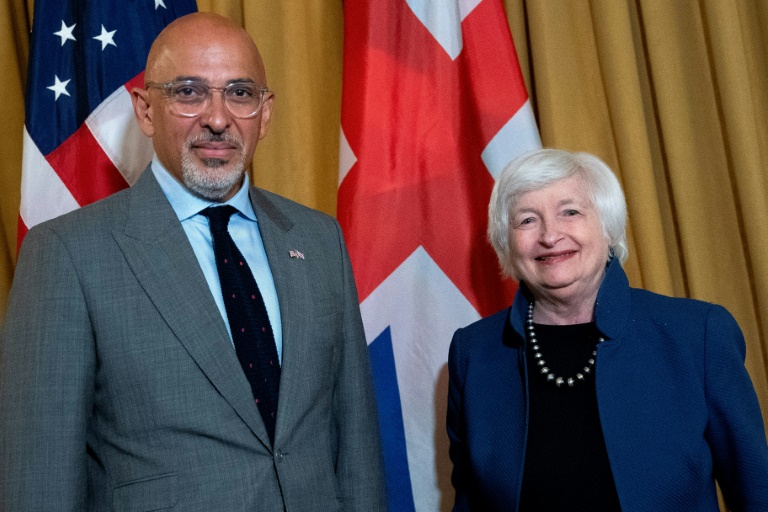
US Treasury Secretary Janet Yellen said Wednesday she was “optimistic” about the possibility of an international agreement to set a price limit on Russia’s oil exports. 

“I’m really optimistic about the substantial progress that’s been made by our teams and the entire G7 for making the price cap a reality,” Yellen said.

The US official met with her British counterpart, Chancellor of the Exchequer Nadhim Zahawi, and noted that “the United Kingdom has been a key ally in the G7’s work to put in place a price cap on Russian oil.”

The leaders of the Group of Seven advanced nations agreed in late June to work towards implementing the ceiling on crude sales, to choke off Moscow’s war chest, as well as bring down global energy prices. 

Yellen said the goal is to deny Vladimir Putin the funds to continue the war in Ukraine and to prop up the Russian economy.

A G7 official late last month explained that the maximum price would remain above the cost of the production, so it would not make economic sense for Moscow to deny oil to importing countries.

“We know that there’s a great deal of room between the price of production, and what Russia is making today,” the official told reporters, noting the goal is to “create economic incentives for Russia to continue to produce oil, but at the same time, deny them the excess revenues.”

The official acknowledged that the plan must be finalized by December 5, when a European ban will take effect on insurers and reinsurers covering Russian oil transport. 

Washington is seeking an “exemption” from the insurance ban for any oil sold below the price cap. 

The challenge is to get as many countries as possible to agree to the cap, and the issue is expected to be a key topic for discussion by leaders at the G20 summit in Bali on November 15 and 16.

US, European stocks drop amid rate hike fears

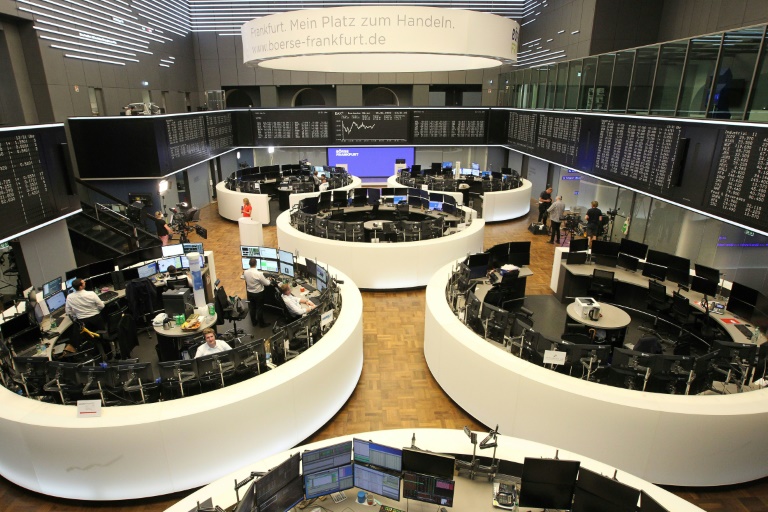
US and European stock markets slid Wednesday as record-high inflation fanned fears that more interest rate hikes are on their way.

Wall Street’s main stock indices closed lower for a fourth day, a downward trend that follows Federal Reserve chief Jerome Powell’s warning last week there will be no respite from increasing interest rates.

Frankfurt, London and Paris stocks all dropped as data showed eurozone inflation hit 9.1 percent in August on surging fuel prices, raising pressure on the European Central Bank to tighten its monetary policy.

And most Asian markets closed lower as well on concerns the US Fed’s rate-hiking policy could send the world’s biggest economy into recession.

Following Powell’s highly anticipated statement, the US “had a quiet start to the week in data,” said Jack Ablin of Cresset Capital. 

Traders are now awaiting the release of US job-creation figures on Friday for a better idea about the state of the economy.

“Starting tomorrow and Friday, I think we’ll have a lot more information to digest,” Ablin said.

– ‘One direction only’ –

Major central banks are rushing to contain surging consumer price inflation that has largely been prompted by fallout from key energy supplier Russia’s invasion of Ukraine.

“The data from the EU has confirmed that inflation is moving in one direction only, and the ECB has a long way to go before it can put a leash on inflation,” said Naeem Aslam, chief market analyst for Markets.com.

The ECB is set to lift borrowing costs next week, having increased them in July for the first time in a decade to help tackle rampant inflation.

Meanwhile, oil prices fell on demand jitters as China imposes further pandemic restrictions, and the possibility that a deal on Iran’s nuclear program could unlock crude exports.

State energy giant Gazprom suspended gas deliveries to Germany on a major pipeline on Wednesday.

It was the latest in a series of supply halts that have fueled Europe’s energy crisis and sent gas and electricity prices soaring before the peak-demand winter.

European gas prices, however, fell on Wednesday after flirting with a record high last week.

– Key figures at around 2030 GMT –

New York – Dow: DOWN 0.9 percent at 31,510.43 points (close)

New York – S&P 500: DOWN 0.8 percent at 3,955.00 (close)

New York – Nasdaq: DOWN 0.6 percent at 11,816.20 (close)

EURO STOXX 50: DOWN 1.3 percent at 3,517.25 (close)

London – FTSE 100: DOWN 1.1 percent at 7,284.15 (close)

Frankfurt – DAX: DOWN 0.7 percent at 12,873.48 (close)

Paris – CAC 40: DOWN 1.4 percent at 6,125.10 (close)

Tokyo – Nikkei 225: DOWN 0.4 percent at 28,091.53 (close)

Hong Kong – Hang Seng Index: FLAT at 19,954.39 (close)

Shanghai – Composite: DOWN 0.8 percent at 3,202.14 (close)

Euro/dollar: UP at $1.0054 from $1.0015 on Tuesday

Pound/dollar: DOWN at $1.1619 from $1.1656

Euro/pound: UP at 86.50 pence from 85.92 pence

Dollar/yen: DOWN at 138.9780 yen from 139.00 yen

West Texas Intermediate: DOWN 2.3 percent at $89.55 per barrel

Brent North Sea crude: DOWN 2.8 percent at $96.49 per barrel

burs-rl-bfm/wd

IAEA wants 'permanent presence' at Russia-held nuclear plant

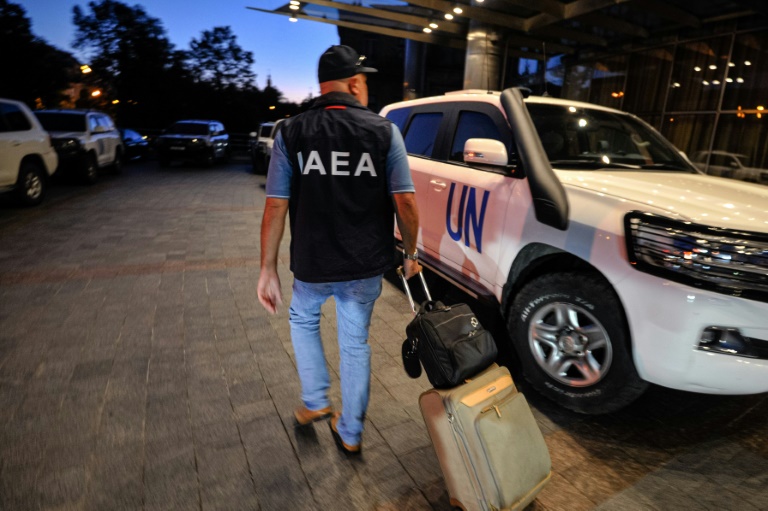
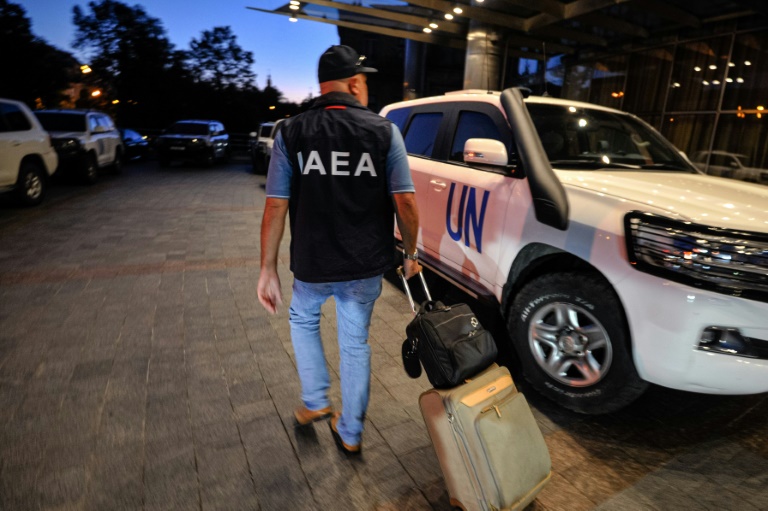
UN inspectors said Wednesday they would seek to establish a permanent presence at a Russian-held plant in southern Ukraine to avoid “a nuclear accident” at the facility on the frontline of the fighting.

The 14-strong team from the International Atomic Energy Agency (IAEA) is expected to arrive at the Zaporizhzhia nuclear plant, which lies inside Russian-held territory, on Thursday.

“My mission is… to prevent a nuclear accident and preserve the largest nuclear power plant in Europe,” IAEA director general Rafael Grossi told reporters after travelling from Kyiv to the city of Zaporizhzhia. 

“We are preparing for the real work which begins tomorrow,” he said. “We are going to try to establish a permanent presence for the agency.”

Fresh shelling struck the town next to Europe’s largest atomic facility on Wednesday, with the fate of the plant on the banks of the Dnipro River stoking global concern. 

“The Russian army is shelling Energodar,” local military official Evhen Yevtushenko said on Wednesday morning, of the town next to the plant which had a pre-war population of 50,000 people. 

Both sides have repeatedly traded blame over attacks in the area. 

One of the shells hit Energodar’s city council, Mayor Dmytro Orlov wrote on Telegram, posting pictures of the damaged building with a hole punched into the side. 

“The Russian occupying forces must stop shelling the corridors to be used by the IAEA mission and not obstruct its activities at the plant,” foreign ministry spokesman Oleg Nikolenko wrote on Facebook. 

– ‘Explicit safety guarantees’ –

Although Zaporizhzhia is normally about a two-hour drive from the plant, it was not immediately clear how the IAEA team would reach the site which would involve crossing the frontline to enter Russian-held areas.

But Grossi said his team had received “explicit” safety guarantees from both sides for their visit which would last “a few days”.

“These are very complex operations,” he said. 

The plant has been occupied by Russian troops since March and Ukraine has accused Russia of deploying hundreds of soldiers and storing ammunition there.

Kyiv has insisted the team access the plant via Ukrainian-held territory.

“Sadly, Russia is not stopping its provocations precisely in the direction the mission needs to travel to reach the plant,” President Volodymyr Zelensky said late Tuesday after meeting Grossi.

The situation was “extremely menacing”, he said, accusing the Russians of “continuing bombardments” and calling for “an immediate and total demilitarisation” of the Zaporizhzhia nuclear plant. 

In Moscow, the Russian defence ministry accused Kyiv of “continued provocations aimed at disrupting the work of the IAEA mission” saying it had shelled the area around the plant on Tuesday hitting a building containing “the solid radioactive waste processing complex”.

– Counteroffensive in the south –

Meanwhile, intensive fighting raged across the nearby southern region of Kherson where Ukraine began a counteroffensive on Monday. 

Most of the region and its provincial capital of the same name were seized by Russian forces at the start of the invasion six months ago.

With the war in the eastern Donbas region largely stalled, analysts have said for weeks that combat is likely to shift south to break the stalemate before winter comes.

In its morning update, the president’s office in Kyiv said “fighting continued throughout the night” in Kherson, and that one person had been killed and two injured in an overnight bombing in the Mykolaiv area. 

But the Russian defence ministry said Kyiv’s attempts to advance its counteroffensive had “failed” with Ukrainian forces suffering “significant losses and were driven back by Russian troops”. 

As Ukraine presses its offensive, the White House said Wednesday that there would be an announcement in the coming days on additional military aid for Kyiv, on top of $13 billion already pledged by Washington.

EU foreign ministers on Wednesday agreed to suspend a 2007 visa facilitation deal with Russia, which will make it more difficult and longer for Russian nationals to get visas.

EU’s foreign policy chief Josep Borrell said ministers had agreed that relations with Moscow “cannot be business as usual”. 

Zelensky, who has called for a total ban on EU tourist visas for Russians, said Wednesday that Russian society must pay the price for the war.

“I think it is humiliating for Europe when it is considered simply as one big boutique or restaurant,” he said in his daily address to the nation. “Europe is a territory of values first of all, not primitive consumption.”

And earlier in the day, Russian energy giant Gazprom suspended gas deliveries to Germany, citing maintenance issues in the latest of a series of supply stoppages that have fuelled an energy crisis in Europe.

The move comes as European countries have faced soaring energy prices since Russia invaded Ukraine in late February and subsequently curbed its gas deliveries to the region.

IAEA wants 'permanent presence' at Russia-held nuclear plant

UN inspectors said Wednesday they would seek to establish a permanent presence at a Russian-held plant in southern Ukraine to avoid “a nuclear accident” at the facility on the frontline of the fighting.

The 14-strong team from the International Atomic Energy Agency (IAEA) is expected to arrive at the Zaporizhzhia nuclear plant, which lies inside Russian-held territory, on Thursday.

“My mission is… to prevent a nuclear accident and preserve the largest nuclear power plant in Europe,” IAEA director general Rafael Grossi told reporters after travelling from Kyiv to the city of Zaporizhzhia. 

“We are preparing for the real work which begins tomorrow,” he said. “We are going to try to establish a permanent presence for the agency.”

Fresh shelling struck the town next to Europe’s largest atomic facility on Wednesday, with the fate of the plant on the banks of the Dnipro River stoking global concern. 

“The Russian army is shelling Energodar,” local military official Evhen Yevtushenko said on Wednesday morning, of the town next to the plant which had a pre-war population of 50,000 people. 

Both sides have repeatedly traded blame over attacks in the area. 

One of the shells hit Energodar’s city council, Mayor Dmytro Orlov wrote on Telegram, posting pictures of the damaged building with a hole punched into the side. 

“The Russian occupying forces must stop shelling the corridors to be used by the IAEA mission and not obstruct its activities at the plant,” foreign ministry spokesman Oleg Nikolenko wrote on Facebook. 

– ‘Explicit safety guarantees’ –

Although Zaporizhzhia is normally about a two-hour drive from the plant, it was not immediately clear how the IAEA team would reach the site which would involve crossing the frontline to enter Russian-held areas.

But Grossi said his team had received “explicit” safety guarantees from both sides for their visit which would last “a few days”.

“These are very complex operations,” he said. 

The plant has been occupied by Russian troops since March and Ukraine has accused Russia of deploying hundreds of soldiers and storing ammunition there.

Kyiv has insisted the team access the plant via Ukrainian-held territory.

“Sadly, Russia is not stopping its provocations precisely in the direction the mission needs to travel to reach the plant,” President Volodymyr Zelensky said late Tuesday after meeting Grossi.

The situation was “extremely menacing”, he said, accusing the Russians of “continuing bombardments” and calling for “an immediate and total demilitarisation” of the Zaporizhzhia nuclear plant. 

In Moscow, the Russian defence ministry accused Kyiv of “continued provocations aimed at disrupting the work of the IAEA mission” saying it had shelled the area around the plant on Tuesday hitting a building containing “the solid radioactive waste processing complex”.

– Counteroffensive in the south –

Meanwhile, intensive fighting raged across the nearby southern region of Kherson where Ukraine began a counteroffensive on Monday. 

Most of the region and its provincial capital of the same name were seized by Russian forces at the start of the invasion six months ago.

With the war in the eastern Donbas region largely stalled, analysts have said for weeks that combat is likely to shift south to break the stalemate before winter comes.

In its morning update, the president’s office in Kyiv said “fighting continued throughout the night” in Kherson, and that one person had been killed and two injured in an overnight bombing in the Mykolaiv area. 

But the Russian defence ministry said Kyiv’s attempts to advance its counteroffensive had “failed” with Ukrainian forces suffering “significant losses and were driven back by Russian troops”. 

As Ukraine presses its offensive, the White House said Wednesday that there would be an announcement in the coming days on additional military aid for Kyiv, on top of $13 billion already pledged by Washington.

EU foreign ministers on Wednesday agreed to suspend a 2007 visa facilitation deal with Russia, which will make it more difficult and longer for Russian nationals to get visas.

EU’s foreign policy chief Josep Borrell said ministers had agreed that relations with Moscow “cannot be business as usual”. 

Zelensky, who has called for a total ban on EU tourist visas for Russians, said Wednesday that Russian society must pay the price for the war.

“I think it is humiliating for Europe when it is considered simply as one big boutique or restaurant,” he said in his daily address to the nation. “Europe is a territory of values first of all, not primitive consumption.”

And earlier in the day, Russian energy giant Gazprom suspended gas deliveries to Germany, citing maintenance issues in the latest of a series of supply stoppages that have fuelled an energy crisis in Europe.

The move comes as European countries have faced soaring energy prices since Russia invaded Ukraine in late February and subsequently curbed its gas deliveries to the region.

EU foreign policy chief hopeful on Iran nuclear deal in 'days'

The EU’s foreign policy chief voiced hope Wednesday at reviving the Iran nuclear deal within days as Israel’s leader, a strong opponent, made his case with US President Joe Biden.

The Biden administration is eager to restore the deal trashed by former president Donald Trump and says that Iran has backed down on some demands that held up diplomacy for a year and a half.

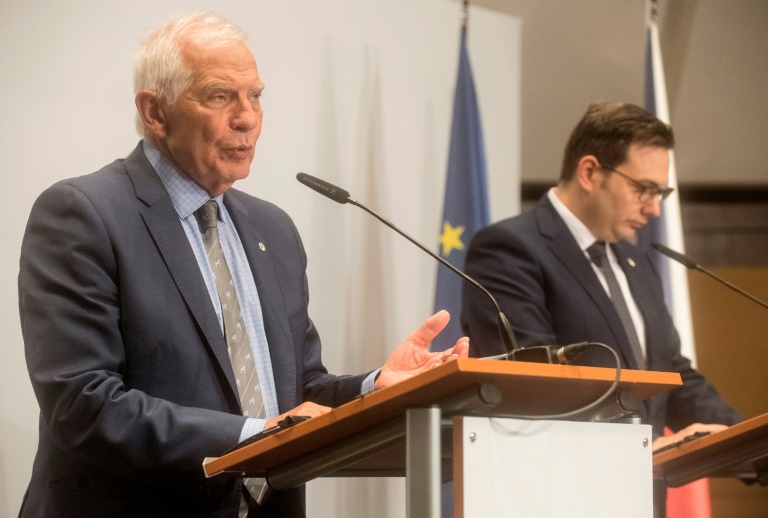
“I am hoping that in the coming days we are not going to lose this momentum and we can close the deal,” top EU diplomat Josep Borrell said after an informal meeting of the bloc’s foreign ministers in Prague.

“It’s clear that there is a common ground, that we have an agreement that takes into account, I think, everyone’s concerns,” he said.

In Washington, National Security Council spokesman John Kirby said the United States was also “cautiously optimistic,” but declined to put a timeframe.

“We do believe we’re closer now than we have been in certain recent weeks and months due in large part to Iran being willing to drop some of their demands that were not related to the deal at all,” Kirby told reporters.

The European Union put forward on August 8 what it called a final text to restore the landmark 2015 agreement, under which Iran was promised sanctions relief in return for stringent restrictions on its nuclear work.

Trump withdrew the United States in 2018 and imposed sweeping new sanctions. A return by Biden could put more than one million barrels of Iranian oil back on international markets, bringing new relief at a time that crude prices are receding from recent highs.

Iran responded to the EU proposal with proposed changes to which the United States replied in turn without divulging the details.

– Israel appeals to Biden –

Iran’s arch-rival Israel has stepped up pressure on Western nations to block the deal and is suspected in a shadowy campaign of sabotage and assassinations within Iran to set back the nuclear programme.

Prime Minister Yair Lapid spoke by telephone with Biden after visits to Washington both by Israel’s defence minister and national security adviser, with its spy chief due next week.

Lapid and Biden “spoke at length about the negotiations on a nuclear agreement, and the various efforts to stop Iran’s progress towards a nuclear weapon”, a statement from the Israeli premier’s office said.

The two also discussed “Iran’s terrorist activity” with Lapid commending Biden for US strikes last week in Syria that Washington said targeted fighters linked to Iran’s elite Revolutionary Guards.

The White House did not immediately comment on the call but the Israeli statement said Biden “emphasised his deep commitment to the security of the State of Israel”.

Lapid told journalists last week that the existing agreement “is a bad deal”.

“It would give Iran $100 billion a year” that would be used by Iran-backed militant groups Hamas, Hezbollah and Islamic Jihad, Lapid added.

The Biden administration says it is under no illusions about Iran but that Trump’s “maximum pressure” approach has achieved nothing other than bringing the clerical state closer to the ability to build a nuclear bomb.

In one sticking point, Iran has insisted that the UN nuclear watchdog drop a probe of three undeclared sites suspected in sensitive work before the 2015 deal.

“We want to reinforce in the text the idea that the International Atomic Energy Agency concentrates on its technical task and moves away from its political role,” Iranian Foreign Minister Hossein Amir-Abdollahian said on a visit to Moscow.

Trump social network unwelcome in Google store over moderation issues

Former US president Donald Trump’s Truth Social app is unwelcome in Google’s app store until it abides by rules regarding content moderation including violent threats, the company said Wednesday.

The internet giant made the statement after the Trump camp argued that it didn’t know why its social network app had yet to be approved for the Google Play Store, which offers content for Android-powered smartphones.

A Google spokesperson said the company notified Truth Social on August 19 that its app violated Play policies and required “effective systems for moderating user-generated content” in order to be offered on the platform.

The app breaks rules barring content that incites physical threats and violence, according to the tech firm.

“Last week Truth Social wrote back acknowledging our feedback and saying that they are working on addressing these issues,” the Google spokesperson said.

Truth Social would still be able to make its app available on its website or other online venues that don’t involve Google’s online shop.

As of Wednesday a version of Truth Social was still available on Apple’s App Store, which is the lone gateway onto the company’s mobile devices.

Truth Social is Trump’s answer to platforms such as Twitter, from which he was ejected after a mob he egged on assaulted the US Capitol in January 2021.

Signs are growing meanwhile that Truth Social is in financial trouble.

Fox Business Network reported last week that the platform had halted payments to the company that hosts it, RightForge, and owes $1.6 million.

Trump Media and Technology Group said in a regulatory filing that it has raised some $15 million in additional funding that it believes will enable it to pay its bills until the end of April of next year.

Meanwhile, a merger between Trump Media and Technology with blank check company Digital World Acquisition Corp, which was formed specifically to carry out the merger, has yet to take place 10 months after the announcement that it would happen. This fusion is supposed to bring in fresh funding for the Trump platform.

Regulators are reported to be scrutinizing the merger to determine if anything was amiss.

Iraq political deadlock persists after bloody unrest

A months-long political crisis in Iraq showed little sign of abating Wednesday despite a fresh push for negotiations after nearly 24 hours of deadly violence between rival Shiite factions ended.

Baghdad’s Green Zone, home to government buildings and embassies, returned to normality after 30 people were killed and 570 wounded in clashes pitting supporters of powerful Shiite cleric Moqtada Sadr against pro-Iran factions.

Since elections in October 2021, political deadlock has left Iraq without a new government, prime minister or president, due to disagreement over forming a coalition.

The tensions escalated sharply on Monday when Sadr loyalists stormed the government palace following their leader’s announcement that he was quitting politics.

But Sadr’s supporters trickled out of the Green Zone in a steady stream on Tuesday afternoon when he appealed for them to withdraw within the hour.

A nationwide curfew was lifted, before shops reopened and infamous traffic jams returned to Baghdad’s streets on Wednesday as the government announced the resumption of school exams postponed by the unrest.

But the hurdles obstructing a solution to Iraq’s political crisis remained firmly in place, with rival powers disagreeing over a path forwards. 

Early elections, less than a year after the last polls, and the dissolution of parliament have been key demands of Sadr.

Sadr’s rivals in the pro-Iran Coordination Framework want a new head of government to be appointed before any new elections are held.

– Snap polls –

On Wednesday,  a senior aide of Sadr, Saleh Mohammad al-Iraqi, lashed out at the Framework in a strongly worded statement that pointed to a widening schism.  

“Iran should reign in its Iraqi camels, or else there will be little room left for regret,” he said Wednesday, referring to the Framework.

Under the constitution, parliament can only be dissolved by a majority vote, which can take place at the request of a third of lawmakers, or by the prime minster in agreement with the president.

President Barham Saleh said late Tuesday that snap elections could provide “an exit from the stifling crisis”.

The Framework called for the swift formation of a new government, “to prevent a recurrence of the strife” that paralysed Baghdad this week. It also called for state institutions to resume functioning.

Prime Minister Mustafa al-Kadhemi, meanwhile, threatened to resign unless the paralysis ends.

Parliament Speaker Mohammed Halbusi on Wednesday declared three days of mourning for those killed in the clashes and Iraq’s National Security Adviser Qassem al- Araji convened a security meeting to look into the circumstances behind the unrest.

Iraq’s borders with Iran reopened, a day after a closing, according to Iranian media. 

Iran’s foreign ministry said that dialogue was the “only solution out of the current crisis.”

In a statement posted on Twitter, the US ambassador to Iraq Alina Romanowski called for “restraint, and dialogue among all parties so these tragic events are never repeated.”

– ‘More protests’ –

“Unless a proper solution is reached, more protests and violence are possible,” said Iraqi political analyst Sajad Jiyad.

Falah Al-Barzanji, a 63-year-old activist, said he believed the calm would be short-lived.  

“Today life has returned to normal, but the fire is still burning under the ashes,” he told AFP.

“The Iraqi parliament must be dissolved and a reformist government must be installed.”

Pope Francis, who visited Iraq last year, said he was “following with concern the violent events that have taken place in Baghdad” and urged dialogue.

Sadr — a longtime player on the war-torn country’s political scene, though he himself has never directly been in government — announced he was quitting politics two days after he said “all parties” including his own should give up government positions to help overcome the deadlock.

Sadr’s bloc emerged from the October election as the biggest in the legislature, with 73 seats, but short of a majority.

Since then Iraq has been paralysed due to disagreement between Shiite factions over forming a coalition.

In June, Sadr’s lawmakers quit in a bid to break the logjam, which led to the Coordination Framework becoming the largest bloc.

Sadr’s supporters had for weeks staged a sit-in outside Iraq’s parliament, after storming the legislature’s interior on July 30, demanding fresh elections be held.

Close Bitnami banner
Bitnami