World

UN raises alarm on Red Sea oil tanker 'time-bomb'

The UN appealed Tuesday for the last $14 million needed to try and prevent a stricken oil tanker from triggering a disaster off Yemen that could cost $20 billion to clean up.

The decaying 45-year-old FSO Safer, long used as a floating storage platform and now abandoned off the rebel-held Yemeni port of Hodeida, has not been serviced since Yemen was plunged into civil war more than seven years ago. 

If it breaks up, it could unleash a potentially catastrophic spill in the Red Sea.

David Gressly, the United Nations’ resident and humanitarian coordinator in Yemen, leads UN efforts on the Safer.

“Less then $14 million is now needed to reach the $80 million target to start the emergency operation to transfer oil from the Safer to a safe vessel,” said Gressly’s communications advisor Russell Geekie.

“We’re deeply concerned. If the FSO Safer continues to decay, it could break up or explode at any time,” he told reporters in Geneva, via video-link from Sanaa.

“The volatile currents and strong winds from October to December will only increase the risk of disaster. If we don’t act, the ship will eventually break apart and a catastrophe will happen. It’s not a question of if, but when.”

He said the result would potentially be the fifth largest oil spill from a tanker in history, with the clean-up costs alone reaching $20 billion.

The Safer contains four times the amount of oil that was spilled by the 1989 Exxon Valdez disaster, one of the world’s worst ecological catastrophes, according to the UN.

“It would unleash an environmental, economic and humanitarian catastrophe,” said Geekie.

The ship contains 1.1 million barrels of oil. The UN has said a spill could destroy ecosystems, shut down the fishing industry and close the lifeline Hodeida port for six months.

The Safer is unusable, is fit only for scrappage and nothing on it works, said Geekie.

“This is a ticking time bomb,” he warned.

“You don’t want to go and smoke a cigarette on the deck, I can tell you that much.”

In shadow of abandoned US airbase, Bagram's economy withers

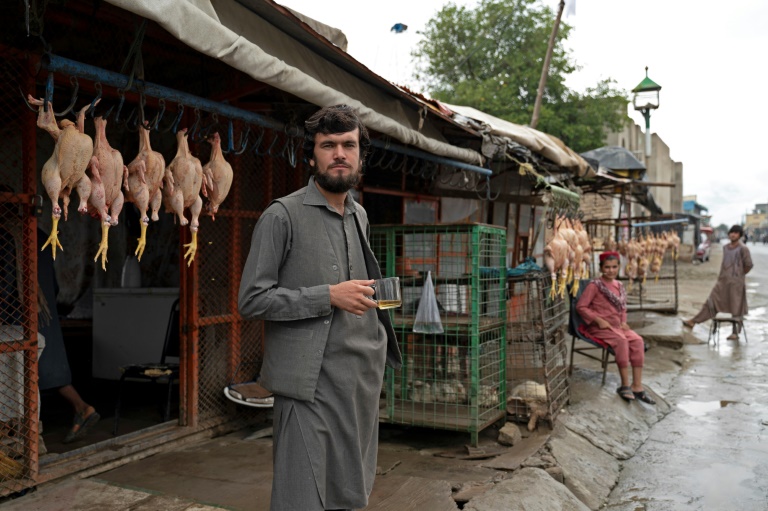
For years, the sprawling military base at Bagram, just north of Kabul, was a potent symbol of the United States’ two decades of war in Afghanistan.

The sprawling complex included an air base that was the linchpin of the US invasion; a prison where rights groups allege widespread violations occurred; and a residential area that featured swimming pools, cinemas and spas.

But weeks before Washington officially ended its military presence in Afghanistan last August, US troops left the airbase in the dead of night.

Today, the military base is occupied by the Taliban, who took over the country in a swift offensive as US forces were exiting.

The US departure from Bagram has also seen the collapse of the economy in the nearby town of the same name, an illustration of how Afghanistan’s fortunes were so heavily tied to the war and foreign aid.

“Today, I’m jobless. I don’t know much about politics, but the exit of US forces from the base is a big economic loss,” said Saifulrahman Faizi, one of the town’s 80,000 residents.

Faizi earned $30 a day when he was employed at the base, at a time when hundreds would queue for hours outside the compound in the hope of getting work.

“Now, nobody goes there. Everything has just crashed, everybody is struggling”, he said.

– Shuttered shops –

Nowhere is the town’s economic collapse more evident than in the main market.

It is marked by rows of shuttered shops and warehouses, and those that remain open have seen sales plummet. 

Shah Wali, a 46-year-old grocery store keeper, said he used to earn an income of between 20,000 and 30,000 Afghanis ($230 and $340). 

Today, he can barely pay his rent.

“With the Islamic Emirate (Taliban) coming to power, peace has returned but business has gone,” Wali told AFP, clutching his prayer beads.

At the peak of the US invasion, Bagram was home to tens of thousands of troops and contractors, with the town serving as a hub for tons of supplies that would service the base.

The airfield was first built by the Americans for their Afghan ally during the Cold War in the 1950s.

The Soviet Union vastly expanded it after the Red Army invaded Afghanistan in 1979.

After their withdrawal, the base was controlled by the Moscow-backed government, and later by the shaky mujahideen administration during the 1990s civil war.

With the Taliban seizing power last year, the airfield is now under their control.

– ‘Empty town’ –

When the US military pulled out, it took much of its military hardware home, but tons of civilian equipment was left behind. 

For several months, the town managed to thrive on a booming scrap business, but residents say that now that, too, is dying.

Shops that sold used gym equipment, generators, air conditioners and spare car parts are either shut or receive few orders.

Several houses are now deserted, their residents having moved to Kabul or elsewhere in search of work.

Many who had worked at the base have also fled the country, fearing reprisals from the Taliban.

“Half the people have gone, the town feels so empty,” said Faizi.

Want to save carbon and land? Study suggests wooden cities

Housing people in homes made from wood instead of steel and concrete could save more than 100 billion tonnes of carbon emissions while preserving enough cropland to feed a booming population, research suggested Tuesday.

More than half of people globally currently live in cities and this proportion is set to rise markedly by 2050. 

According to some estimates, the infrastructure needed to accommodate up to 10 billion people by mid-century could exceed that constructed since the dawn of the industrial era.

That places a huge emphasis on emissions from construction, one of the most polluting sectors and historically one of the trickiest to decarbonise. 

Were all new construction projects carried out using steel and concrete, that could claim up to 60 percent of Earth’s remaining carbon budget for 2C of warming — that is, how much pollution the global economy can produce and still stay within the Paris Agreement temperature guardrail. 

Scientists in Germany and Taiwan wanted to see how much carbon could be saved if firms switched to wood to build new homes instead.

They used an open-source land use model to simulate four different building scenarios: one with conventional materials like cement and steel, and three with additional demand for timber.

They also analysed how additional high wood demand could be satisfied, where it could be produced, and the impacts new tree plantations might have on biodiversity and crop production. 

They found that housing people in timber homes could avoid more than 100 billion tonnes of CO2 by 2100 — that’s around 10 percent of the remaining 2C carbon budget, equivalent to nearly three years of global emissions.

Wood is known to be the least carbon-intensive building material as trees absorb CO2 as they grow, explained the study lead author Abhijeet Mishra, from the Potsdam Institute for Climate Impact Research (PIK).

“Production of engineered wood releases much less CO2 than production of steel and cement,” he said. “Engineered wood also stores carbon, making timber cities a unique long-term carbon sink.”

He said that engineered wood was the ideal material for constructing “mid-rise” buildings — between four and 12 stories — to house growing urban populations.

The study, published in the journal Nature Communications, found that around 140 million hectares — an area larger than Peru — would be needed to grow new trees to meet the increased demand under the timber-led building scenario. 

But the team calculated that these new plantations could be established on existing areas of harvest forest, and so not impact food supply by eating into crop land. 

“We need farm land to grow food for the people –- using it to grow trees could potentially cause competition for the limited land resources,” said co-author Florian Humpenoder, from PIK.

The authors concluded that planting the necessary additional plantations was possible but would require “strong governance and careful planning” from governments in order to limit their impact on biodiversity.

Want to save carbon and land? Study suggests wooden cities

Housing people in homes made from wood instead of steel and concrete could save more than 100 billion tonnes of carbon emissions while preserving enough cropland to feed a booming population, research suggested Tuesday.

More than half of people globally currently live in cities and this proportion is set to rise markedly by 2050. 

According to some estimates, the infrastructure needed to accommodate up to 10 billion people by mid-century could exceed that constructed since the dawn of the industrial era.

That places a huge emphasis on emissions from construction, one of the most polluting sectors and historically one of the trickiest to decarbonise. 

Were all new construction projects carried out using steel and concrete, that could claim up to 60 percent of Earth’s remaining carbon budget for 2C of warming — that is, how much pollution the global economy can produce and still stay within the Paris Agreement temperature guardrail. 

Scientists in Germany and Taiwan wanted to see how much carbon could be saved if firms switched to wood to build new homes instead.

They used an open-source land use model to simulate four different building scenarios: one with conventional materials like cement and steel, and three with additional demand for timber.

They also analysed how additional high wood demand could be satisfied, where it could be produced, and the impacts new tree plantations might have on biodiversity and crop production. 

They found that housing people in timber homes could avoid more than 100 billion tonnes of CO2 by 2100 — that’s around 10 percent of the remaining 2C carbon budget, equivalent to nearly three years of global emissions.

Wood is known to be the least carbon-intensive building material as trees absorb CO2 as they grow, explained the study lead author Abhijeet Mishra, from the Potsdam Institute for Climate Impact Research (PIK).

“Production of engineered wood releases much less CO2 than production of steel and cement,” he said. “Engineered wood also stores carbon, making timber cities a unique long-term carbon sink.”

He said that engineered wood was the ideal material for constructing “mid-rise” buildings — between four and 12 stories — to house growing urban populations.

The study, published in the journal Nature Communications, found that around 140 million hectares — an area larger than Peru — would be needed to grow new trees to meet the increased demand under the timber-led building scenario. 

But the team calculated that these new plantations could be established on existing areas of harvest forest, and so not impact food supply by eating into crop land. 

“We need farm land to grow food for the people –- using it to grow trees could potentially cause competition for the limited land resources,” said co-author Florian Humpenoder, from PIK.

The authors concluded that planting the necessary additional plantations was possible but would require “strong governance and careful planning” from governments in order to limit their impact on biodiversity.

War in Ukraine: latest developments

Here are the latest developments in the war in Ukraine:

– ‘Heavy fighting’ for Kherson –

The Ukrainian presidency reports “heavy fighting” in “almost the entire territory” of the strategic Russian-occupied southern region of Kherson.

On Monday Ukrainian troops launched a widely anticipated counter-offensive to retake the region which was seized by Russia early in the war. 

Kherson, the first major city to fall to Russia after its February 24 invasion, shares its name with the region that is important for agriculture and is adjacent to the Crimean Peninsula, which Russia annexed in 2014.

In late July, Sergey Khlan, a local deputy and adviser to the regional governor, said the region would be recaptured by Kyiv’s forces by September.

– Five killed in Kharkiv –

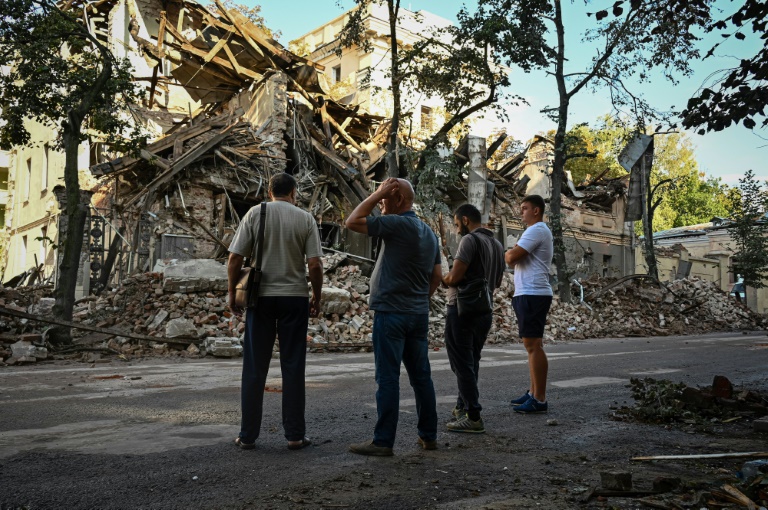
In Ukraine’s second city Kharkiv, at least five people are killed as Russian shelling hits the centre, the mayor Igor Terekhov says. Seven people were also wounded. 

Regional governor, Oleg Synegubov, gives a slightly lower death toll of four and says another four were injured.

“The Russian occupiers shelled the central districts of Kharkiv,” Synegubov says on Telegram, as he warns residents to “stay inside the shelters”.

– Ukrainian grain reaches Djibouti –

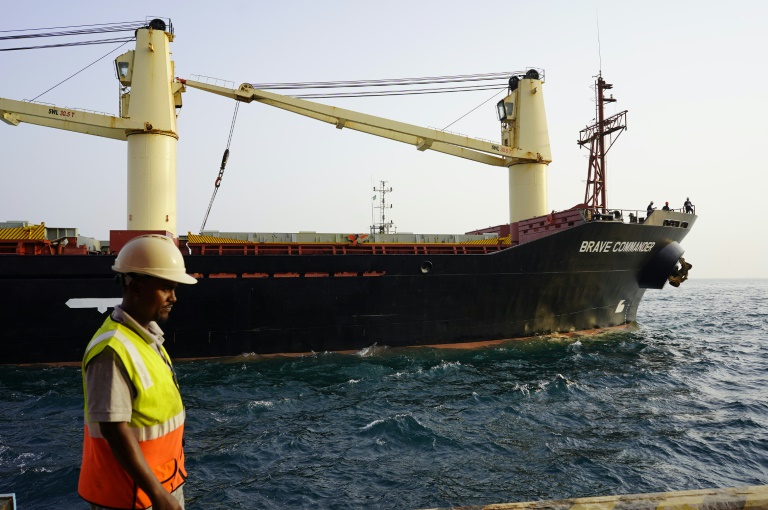
A UN-chartered ship loaded with Ukrainian wheat destined for millions at risk of starvation in Ethiopia arrives in Djibouti.

The bulk carrier MV Brave Commander carrying 23,000 tonnes of grain docked in the Horn of Africa port city, the UN’s World Food Programme says, two weeks after leaving Ukraine.

Ukraine, one of the world’s largest grain exporters, was forced to halt almost all deliveries after Russia’s invasion, raising fears of a global food crisis.

Exports of grains, other foodstuffs and fertilisers from three Black Sea ports resumed at the start of this month under a deal between Kyiv and Moscow that was brokered by the UN and Turkey in July.

According to the Joint Coordination Centre which manages the sea corridor, more than 720,000 tonnes of grain have already left Ukraine.

– Germany braced for gas cuts –

Government measures to ensure gas supplies over winter have prepared Germany to deal with further curbs in Russian deliveries, Chancellor Olaf Scholz says, a day before Moscow is due to cut off gas delivery for three days.

Germany has set about weaning itself off Russian gas since the invasion of Ukraine, bringing mothballed coal power plants back online, launching a drive to save power and filling gas storage facilities ahead of the end of the year.

The government says it has made faster progress replenishing gas stocks than expected and should meet an October target early. 

The preparations meant Germany “was in a much better position in terms of security of supply than was foreseeable a couple of months ago,” Scholz says.

“We can deal well with the threats we are confronted with from Russia, which uses gas as part of its strategy in the war against Ukraine,” he adds

burs-jmy/eab/bp

Musk cites whistleblower to justify scrapping Twitter deal

Elon Musk’s lawyers have filed a fresh notice to terminate his $44 billion buyout of Twitter, citing whistleblower testimony by the platform’s former security chief as “distinct” justification for scrapping the deal.

The termination letter, made public Tuesday, argued that the allegations made by Peiter Zatko would, if true, place Twitter in violation of the initial takeover agreement.

The billionaire Tesla founder has been locked in a bitter legal battle with the social messaging platform since announcing in July that he was pulling the plug on his purchase of the company following a complex, volatile, months-long courtship.

Musk’s decision was partially founded on the allegation that he had been misled by Twitter concerning the number of bot accounts on its platform — a charge strongly denied by the company which is suing the tycoon to compel him to go through with his buyout at the agreed price.

Zatko’s testimony in August had appeared to bolster Musk’s argument, referencing “extreme, egregious” gaps in the platform’s online protections and accusing Twitter of significantly underestimating the number of fake and spam accounts.

In their new termination notice — sent to Twitter and filed with the Securities and Exchange Commission — Musk’s lawyers said the Zatko revelations illustrated “far-reaching misconduct” at Twitter that would likely have “severe consequences” for future business.

As such, they provide “additional and distinct bases to terminate the Merger Agreement,” the letter said.

In a written response, Twitter echoed its previous assertion that Zatko’s testimony was “riddled with inconsistencies and inaccuracies” and rejected the argument that it was in breach of the agreement.

“Twitter intends to enforce the Agreement and close the transaction on the price and terms agreed upon,” the company said.

The legal fight is gathering speed as preparations begin for a five-day trial in October in Delaware’s Chancery Court, which specializes in complex, high-stakes business battles.

Billions of dollars are at stake, but so is the future of Twitter, which Musk has long insisted should allow any legal speech — an absolutist position that has sparked fears the network could be used to incite violence.

Twitter won some early legal skirmishes in the case, including a fast-track trial date, and its stock had risen as analysts predicted the platform would prevail.

But a US judge last week told Twitter to surrender more data to Musk on the key issue of fake accounts, and the billionaire hopes Zatko’s whistleblower complaint could further turn the tide in its favor.

According to Dan Ives of Wedbush Securities, Zatko’s accusations, just weeks away from trial, are “a huge potential win for Musk which could complicate the Twitter case.”

Zatko was hired in late 2020 by the founder and former boss of Twitter, Jack Dorsey, after a massive hack that saw the accounts of major users including Joe Biden, Barack Obama, reality star Kim Kardashian and Musk himself compromised.

Before joining Twitter, Zatko held senior positions at Google and payments processing firm Stripe as well as DARPA, the technological research arm of the Pentagon.

UN ship arrives in Africa with grain for Ethiopia's hungry

A UN-chartered ship loaded with 23,000 tonnes of Ukrainian wheat destined for millions of hungry people in Ethiopia docked in neighbouring Djibouti on Tuesday.

The bulk carrier MV Brave Commander arrived in the Horn of Africa port city two weeks after leaving a Black Sea port in Ukraine, the UN’s World Food Programme said.

“The food on the Brave Commander will feed 1.5 million people for one month in Ethiopia,” WFP’s regional director for East Africa, Mike Dunford, said in video footage provided by the agency from the port.

“So this makes a very big impact for those people who currently have nothing. And now WFP will be able to provide them with their basic needs.”

Ethiopia, along with Kenya and Somalia, is in the grip of a devastating drought that has left 22 million people at risk of starvation across the Horn of Africa, the WFP said earlier this month.

The WFP said the wheat from the Brave Commander was being transported to its operations in Ethiopia.

It was not immediately clear whether the delivery would be affected by a resumption of fighting between government forces and Tigrayan rebels in the north of the country.

Ukraine, one of the world’s largest grain exporters, was forced to halt almost all deliveries after Russia’s invasion in February, raising fears of a global food crisis.

But exports of grain, food and fertilisers from three Black Sea ports resumed at the start of this month under a deal between Kyiv and Moscow, brokered by the UN and Turkey in July.

The agreement lifted a Russian blockade of Ukraine’s ports and set terms for millions of tonnes of wheat and other grain to start flowing from silos and ports.

According to figures late last week from the Joint Coordination Centre which manages the sea corridor, more than 720,000 tonnes of grain have already left Ukraine.

The WFP said the Djibouti port is one of the main corridors it uses for its operations across Eastern and Central Africa, handling 960,000 tonnes of food commodities in 2021. 

– ‘No end in sight’ –

The Horn of Africa is experiencing its worst drought in 40 years and the UN’s World Meteorological Organization warned last week that the situation is set to get even worse with a fifth consecutive failed rainy season.

“There is still no end in sight to this drought crisis, so we must get the resources needed to save lives and stop people plunging into catastrophic levels of hunger and starvation,” WFP executive director David Beasley said earlier this month.

The WFP has warned that famine is a “serious risk,” particularly in Somalia where nearly half the population of 15 million is seriously hungry.

The WFP says food insecurity and malnutrition are a major concern across Ethiopia, with an estimated 20.4 million people in need of food support, including those forced from their homes by the conflict in the north as well as the severe drought in the south and southeast.

Northern Ethiopia has been wracked by war since November 2020 when Prime Minister Abiy Ahmed sent troops into Tigray to topple the Tigray People’s Liberation Front (TPLF) after what he said were attacks by the rebels on federal army camps.

Ukraine's shadow army tracking the Russian troops

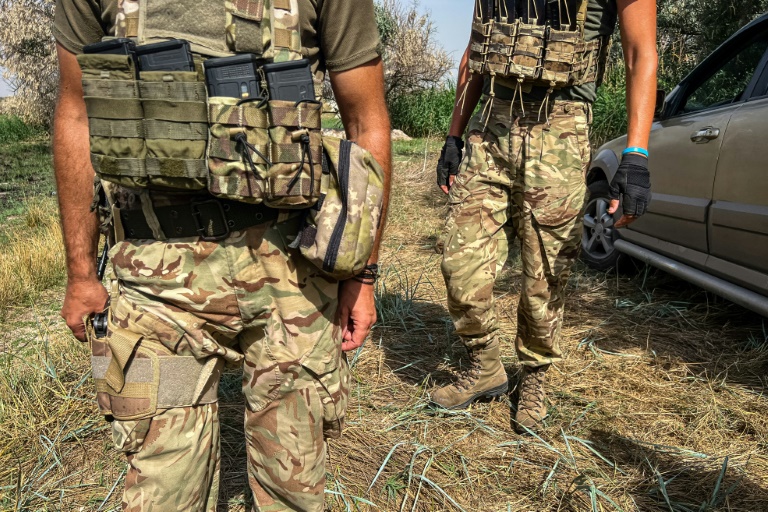
Crouched in bushes on the shores of the Dnipro River, two young Ukrainian men dressed in army gear stalked Russian troops through the camera of a remote-controlled drone.

Oleksiy and Mykola — not their real names — are part of “Rukh Oporu”, the resistance network tracking down Russian forces in southern Ukraine.

Their job is to gather intelligence on Russian troop movements and positions before passing it on to the Ukrainian armed forces.

And since the regular army has launched a counter-offensive to take back the southern Kherson region, the support of this resistance network could prove crucial.

This time, their mission was particularly risky.

They were within range of Russian troops stationed on the other side of the 10-kilometre (six-mile) wide estuary.

Their drone, airborne for 25 minutes, was a simple commercial kit from China, and Russia is able to track those controlling it.

That meant Mykola and Oleksiy were at risk of coming under fire — something they said had happened several times in the past.

But their mission went off without a hitch.

They spotted several trucks and new fortified Russian positions, information they shared with a soldier before leaving the scene.

Now all they needed was a large screen to properly examine today’s footage, so as to locate potential targets and coordinate with the army.

– ‘Thousands’ of agents –

Oleksiy used to take care of his family business but decided to join the resistance network after seeing images of Russian atrocities in Bucha, just outside Kyiv. Mykola used to work in tourism.

Now safely installed in a nearby flat where he could analyse the fresh images, Oleksiy tried to explain his relationship with the regular army.

“We work horizontally,” he said.

“Theoretically I should have gone to army headquarters in Mykolaiv to show it to them, but it’ll be quicker if we do it ourselves.”

Mykolaiv is the first big city west of Kherson, which Russians seized early in the war. 

The recent Ukrainian counter-offensive is to try to take it back.

Mykolaiv has thus become the centre for Ukrainian resistance in the south.

In a nondescript building, Oleksiy introduced AFP journalists to 50-year-old Oleg, a senior figure in Rukh Oporu.

Oleg, his face hidden by a balaclava, agreed to shed some light on the resistance network he coordinated.

“We’re not talking about one or two people here,” he said of the “agents” operating covertly inside Russian-occupied territory.

“There are thousands of people working in separate cells.” 

Almost all of them are civilians, and their main mission consists in following Russian troop movements, he added.

– ‘Very efficient’

The ongoing “counter-offensive relies partly on our data”, he said. 

“We know the locations of the main command centres, of their meetings, of the weapons delivery points, of the main supply routes.

“I spoke to a guy just this morning, he told me he saw 100 vehicles all massing up in one place.

“This guy, he’s not afraid of anything,” said Oleg. “He fights because he knows why he is fighting.”

Roman Kostenko, a former soldier who is now a deputy in the Ukrainian parliament, acknowledged the role played by Rukh Oporu.

“The resistance movement has been very efficient,” said Kostenko, who heads up the defence committee.

“We use the information we get from drones and satellites, but we also need people to confirm the location of our targets,” he told AFP.

For a few weeks now, Ukraine has been taking the fight into the Russian-controlled area.

Russian military infrastructure has been hit by strikes, and targeted killings are carried out almost daily.

On Monday, a former member of the Ukrainian parliament who worked with the newly installed occupying administration in Kherson was shot dead.

Neither Oleksiy nor Oleg could say who carried out such assassinations. 

But a Ukrainian soldier with links to the resistance told AFP: “Some civilians are ready to do it. We gave them weapons.”

This includes former members of Ukraine’s territorial defence forces — a regional reserve usually posted on low-risk missions — “given Kalashnikovs” after being trained by Ukrainian special forces.

– Moscow tightens control –

But Moscow is also tightening its grip on the region. 

Many sources told AFP about cases of civilians being tortured, sometimes simply for having taken part in anti-Russian protests.

AFP was not able to independently confirm the claims.

Another resistance member, Vadym, insists he was “just your average guy” before the war. 

He joined Rukh Oporu to “collect intel, organise caches of weapons, deliver weapons to whoever was ready to use them”.

He told what happened after Russians discovered a weapon stash belonging to two members of the territorial defence forces.

“They killed one of them, and I don’t know what happened to the other one,” he said. 

Vadym ended up leaving the region, which he managed only thanks to a $200 bribe at a checkpoint.

For now, heading back is out of the question.

“Russians can always say that they’ll catch us, but the resistance will prevail,” he said. 

“There’s more of us, we are the people.”

Stocks extend Fed-induced sell-off

Stock markets mostly tumbled again on Tuesday, extending losses that were sparked by last week’s Federal Reserve warning that more monetary tightening was on the way.

London’s FTSE 100 was down in afternoon deals after a public holiday closure the day before, while the Paris CAC 40 fell after staging a rally earlier in the day.

Wall Street indices started the morning in the green, only for the rebound to fizzle.

The Frankfurt DAX bucked the trend as it rose 0.5 percent, though lower than earlier in the day.

Most markets have been slumping since Friday after Federal Reserve chief Jerome Powell warned of more interest rate hikes to fight runaway four-decade high inflation, even at the cost of economic pain.

Oil prices tanked Tuesday on fears about a major hit to demand from any global economic slowdown — and news of more Covid restrictions in key consumer China.

Brent North Sea crude dipped below $100 per barrel.

– Energy woes –

Central banks are scrambling worldwide to tame consumer prices that have surged higher since Russia invaded in Ukraine in late February

German inflation data showed consumer prices rose by 7.9 percent in the year to August as the ongoing energy crisis further stoked price pressures.

In Spain, the inflation rate slowed to 10.4 percent in August as fuel prices eased, but it remained elevated due to rising electricity and food prices.

The European Central Bank, which raised interest rates for the first time in over a decade in July, is expected to hike them again when it meets next week.

Natural gas prices dipped Tuesday despite jitters over supply disruptions from key producer Russia.

Europe’s benchmark Dutch TTF gas contract edged down to 272.500 euros per megawatt hour, having struck a March peak late on Friday.

Many European countries are facing severe supply problems as Moscow turns off the gas taps in response to EU military and diplomatic backing for Ukraine

Russian energy giant Gazprom plans to suspend gas deliveries through the Nord Stream pipeline, which runs to Germany, for three days of “maintenance” work from Wednesday.

In France, French energy firm Engie said Tuesday that Gazprom was further slashing its gas deliveries to the company “due to a disagreement between both sides over the execution of contracts”.

Elsewhere, Asian stocks indices diverged on Tuesday, winning limited support from bargain-buying.

In China, a record 96 percent on-year drop in first-half earnings from the country’s largest developer Country Garden Holdings also served as a grim reminder of China’s beleagured property sector.

– Key figures at around 1330 GMT –

London – FTSE 100: DOWN 0.6 percent at 7,384.94 points

Frankfurt – DAX: UP 0.5 percent at 12,962.09

Paris – CAC 40: DOWN 0.1 percent at 6,214.24 

EURO STOXX 50: DOWN 0.1 percent at 3,567.30

New York – Dow: DOWN 0.6 percent at 31,921.35

Tokyo – Nikkei 225: UP 1.1 percent at 28,195.58 (close)

Hong Kong – Hang Seng Index: DOWN 0.4 percent at 19,949.03 (close)

Shanghai – Composite: DOWN 0.4 percent at 3,227.22 (close)

Euro/dollar: UP at $1.0008 from $0.9972 on Monday

Pound/dollar: DOWN at $1.1664 from $1.1709

Euro/pound: UP at 85.79 pence from 85.38 pence

Dollar/yen: UP at 138.72 yen from 138.68 yen

West Texas Intermediate: DOWN 4.84 percent at $92.31 per barrel

Brent North Sea crude: DOWN 5.05 percent at $99.78 per barrel

burs-rox/lth

Turkish cryptocurrency boss arrested in Albania

The founder of cryptocurrency exchange Thodex, suspected of having fled Turkey with the assets of his clients, has been arrested in Albania, the Turkish interior ministry said on Tuesday.

Turkey issued an international arrest warrant in April last year for fugitive businessman Faruk Fatih Ozer, who fled with a reported $2 billion in investors’ assets.

Tirana had informed Turkish Interior Minister Suleyman Soylu that Ozer, who was wanted by Interpol, “was arrested in Vlora, Albania”, the ministry said.

It added that “extradition procedures to Turkey have been initiated.”

The Istanbul-based Thodex exchange launched aggressive campaigns to lure investors. 

It first pledged to distribute luxury cars through a flashy advertising campaign featuring famous Turkish models.

But the exchange suspended trading in April 2021 after having posted a mysterious message days earlier saying it needed five days to deal with an unspecified outside investment.

It went dark after running a promotional campaign that sold Dogecoins at one-fourth the price at which they were trading on other exchanges.

But the exchange locked in those investments and did not allow the coins to be either sold or converted into other cryptos.

Turkish security officials then released a photo of Ozer going through passport control at Istanbul airport on his way to an unspecified location.

Media reports said the exchange shut down while holding at least $2 billion from 391,000 investors and more than 60 people linked to the company were arrested.

In a statement Tuesday Albanian police said the 28-year-old Ozer had been arrested at a hotel in Himara, a small town in southern Albania on the Ionian coast. 

Two people suspected of having assisted him were also arrested, police said, with computers, mobile phones and bank cards seized.

Footage released by the Albanian police shows a man lying on a bed in a hotel room with his hands restrained behind his back.

– ‘Baseless’ –

Two days after leaving Turkey last year, Ozer denounced the “baseless allegations” against him in a message posted on his company’s official Twitter account.

The businessman said he had gone abroad to meet investors.

“I will return to Turkey in a few days and cooperate with the judicial authorities so that the truth comes out,” he promised at the time.

The manhunt for Ozer came as Turkey’s crypto market started to unravel. President Recep Tayyip Erdogan’s government warned of the risks and announced plans to rein in the digital currency market.

In the same week, officials blocked the account of the Vebitcoin exchange and launched an investigation after it also abruptly ceased operations.

Many Turks turned to cryptocurrencies in an attempt to preserve their savings during a steep drop in the value of the lira and runaway inflation.

The Turkish currency has lost nearly 27 percent of its value against the dollar since January.

A number of governments, including the United States, have said they will introduce tighter regulation on cryptocurrencies amid concerns over volatile trading and its potential use for criminal purposes.

In recent years, the crypto sector has benefitted from a vast infusion of cash due to easy money policies by the world’s biggest central banks.

However, rampant inflation has sparked tighter monetary policy across the globe, helping to send the industry crashing.

Bitcoin has lost more than half its value since the beginning of the year.

Close Bitnami banner
Bitnami