World

Stocks extend Fed-induced sell-off into third day

Stock markets mostly tumbled again on Tuesday, extending losses that were sparked by last week’s Federal Reserve warning that more monetary tightening was on the way.

London’s FTSE 100 ended down after a public holiday closure the day before, while the Paris CAC 40 fell after staging a rally earlier in the day.

Wall Street indices started the morning in the green, only for the rebound to fizzle and dash analyst predictions of “Turnaround Tuesday”.

“US stocks turned negative after confidence and job opening data supported the argument for the Fed to stick to an aggressive stance with fighting inflation,” said Edward Moya, analyst at OANDA trading platform.

“Turnaround Tuesday disappeared faster than dessert does at the Moya household.”

The Frankfurt DAX bucked the trend to end the day up 0.5 percent.

Most markets have been slumping since Friday after Federal Reserve chief Jerome Powell warned of more interest rate hikes to fight runaway four-decade high inflation, even at the cost of economic pain.

A closely-watched US survey found Americans consumers to be happier about the state of the economy than expected, and more willing to spend.

The strong data will boost the idea that the US economy does not need extra help from the Fed, said Ipek Ozkardeskaya, Swissquote Bank analyst.

“Cherry on top: the consumer sentiment regarding the future is improving,” she added. 

“Hence, there is no reason for the Fed to soften its stance.” 

– Energy woes –

Central banks are scrambling worldwide to tame consumer prices that have surged higher since Russia invaded Ukraine in late February.

German inflation data showed consumer prices rose by 7.9 percent in the year to August as the ongoing energy crisis further stoked price pressures.

In Spain, the inflation rate slowed to 10.4 percent in August as fuel prices eased, but it remained elevated due to rising electricity and food prices.

The European Central Bank — which raised interest rates for the first time in over a decade in July — is expected to hike them again when it meets next week.

Energy prices retreated on Tuesday, however, with oil contracts tanking on fears about a major hit to demand from any global economic slowdown — and more Covid restrictions in key consumer market China.

Brent North Sea crude dipped below $100 per barrel.

Natural gas prices, which have soared this year over supply disruptions from key producer Russia, dipped in Europe as German Chancellor Olaf Scholz said government measures have left his country better prepared to cope with further delivery cuts in the winter.

Many European countries are facing severe supply problems as Moscow turns off the gas taps in response to EU military and diplomatic backing for Ukraine.

Russian energy giant Gazprom plans to suspend gas deliveries through the Nord Stream pipeline, which runs to Germany, for three days of “maintenance” work from Wednesday.

Elsewhere, Asian stocks indices diverged on Tuesday, winning limited support from bargain-buying.

A record 96 percent on-year drop in earnings from China’s largest developer Country Garden Holdings served as a grim reminder of the country’s beleaguered property sector.

Investors are also anxious about “flaring geopolitical tensions”, said Naeem Aslam of AvaTrade, especially as Taiwan and Beijing exchanged angry barbs over Chinese drone incursions at an outlying Taiwanese island.

– Key figures at around 1545 GMT –

London – FTSE 100: DOWN 0.9 percent at 7,361.63 points (close)

Frankfurt – DAX: UP 0.5 percent at 12,961.14 (close)

Paris – CAC 40: DOWN 0.2 percent at 6,210.22 (close)

EURO STOXX 50: DOWN 0.2 percent at 3,561.92 

New York – Dow: DOWN 0.8 percent at 31,838.l29

Tokyo – Nikkei 225: UP 1.1 percent at 28,195.58 (close)

Hong Kong – Hang Seng Index: DOWN 0.4 percent at 19,949.03 (close)

Shanghai – Composite: DOWN 0.4 percent at 3,227.22 (close)

Euro/dollar: UP at $0.9993 from $0.9972 on Monday

Pound/dollar: DOWN at $1.1636 from $1.1709

Euro/pound: UP at 85.89 pence from 85.38 pence

Dollar/yen: UP at 138.93 yen from 138.68 yen

West Texas Intermediate: DOWN 5.39 percent at $91.80 per barrel

Brent North Sea crude: DOWN 4.87 percent at $97.93 per barrel

burs-rox/lth
Severe drought in Spain uncovers submerged monuments

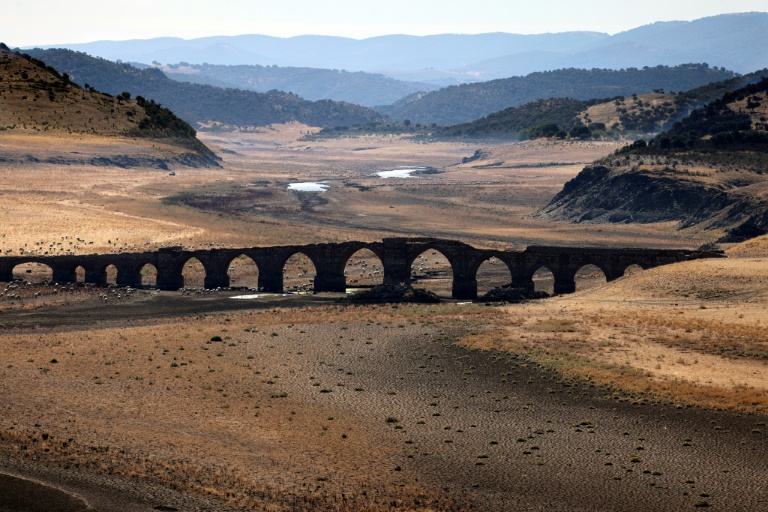
A centuries-old church and a huge megalithic complex are among the underwater monuments that have resurfaced in Spain as a severe drought causes water levels in reservoirs to plunge.

After a prolonged dry spell, Spain’s reservoirs — which supply water for cities and farms — are at just under 36 percent capacity, according to environment ministry figures for August.

The receding waters have exposed the ruins of an 11th-century church in the usually submerged village of Sant Roma de Sau, which was flooded in the 1960s when a nearby dam was built.

Normally, the church’s bell tower is the only visible sign of the village in the northeastern region of Catalonia.

Drawn by pictures on social media and television reports, crowds of tourists fill the restaurants in the nearby village of Vilanova de Sau.

“It has been years since (water levels) are as low as they are now,” said 45-year-old Nuria Ferrerons during a recent visit to the site.

“We saw it on social media and we said ‘well let’s see how it is’,” she added.

Two tourists on a canoe paddled through an arch of the church, which is fenced off to prevent people from getting too close due to the risk the ruins could collapse.

“Normally you can only see the bell tower,” said Sergi Riera, who came to see “something that has not been visible for years”.

In Spain’s western Extremadura region, the receding waters of the Valdecanas reservoir have revealed a prehistoric stone circle on an islet that is normally underwater.

Dubbed the “Spanish Stonehenge”, the circle of dozens of megalithic stones was discovered by archaeologists in 1926 but the area was flooded in 1963 when the reservoir was built.

The stones are also drawing tourists, who reach the islet on boats operated by several private firms.

Officially known as the Dolmen of Guadalperal, the site is believed to date back to 5000 BC.

“People leave delighted,” said Ruben Argenta, who owns a firm offering guided tours of the stones.

Manuel Mantilla, a sixty-year-old from the southern city of Cordoba, was visiting with his wife after hearing about the site through the media.

“We saw that as a unique opportunity,” he said.

Climate change has left parts of Spain at their driest in more than 1,000 years, and winter rains are expected to diminish further, a study published in July by the Nature Geoscience journal showed.

US says Russia receives Iranian combat drones, many faulty

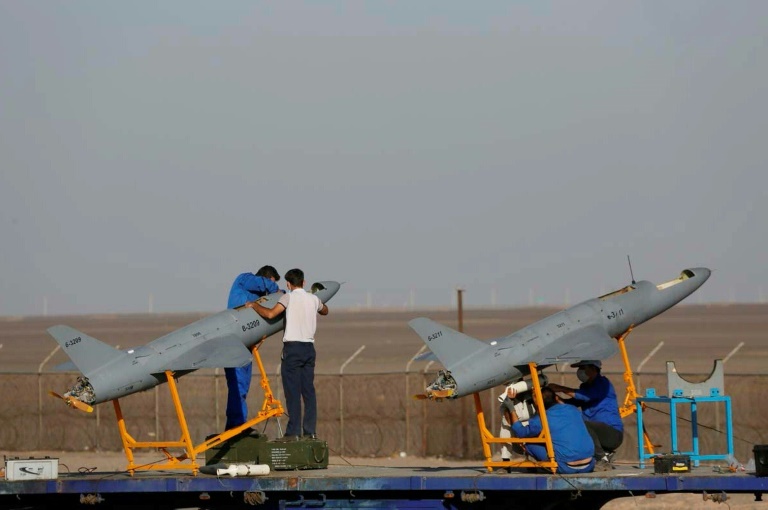
Russia has begun receiving Iranian combat drones to be used in the Ukraine war, but many of them have already proven faulty, the US military said Tuesday.

“Russian transport aircraft loaded the UAV equipment at an airfield in Iran and subsequently flew from Iran to Russia over several days in August,” said Pentagon spokesman Brigadier General Pat Ryder, using the initials for unmanned aerial vehicle.

“It’s likely part of Russia’s plans to import hundreds of Iranian UAVs of various types,” he said.

However, Ryder said, “our information indicates that UAVs associated with this transfer have already experienced numerous failures.”

He did not offer evidence for that claim.

After both sides have deployed and lost large numbers of surveillance and attack drones over the six months of the war, Russian are importing two types from Iran: the Mohajer-6 and the Shahed-series UAVs, according to the Pentagon.  

Russian forces intend to use the Iranian UAVs for air-to-surface attacks, electronic warfare, and battlefield targeting.

Ryder said Moscow turned to Iran in part because sanctions and export controls directed at Russia by Ukraine’s allies have made it harder for Russian industry to produce their own.

Russia seeks 24 years in jail for treason trial journalist

Russian prosecutors on Tuesday requested a 24-year sentence for respected former reporter Ivan Safronov, who is accused of treason for allegedly sharing state secrets. 

The trial comes with independent media and NGOs facing increasing pressure in Russia, especially since the February start of Moscow’s military intervention in Ukraine.

“The prosecutor asked to sentence Ivan to 24 years in a strict regime penal colony,” Safronov’s lawyer Dmitry Katchev told the RIA Novosti news agency following a closed-door hearing. 

Safronov’s former lawyer Yevgeny Smirnov said on Facebook that the ex-reporter turned down an offer of 12 years in jail in return for a guilty plea.  

The 32-year-old worked for business newspapers Kommersant and Vedomosti and was one of Russia’s most respected journalists covering defence. 

He reported on the military, politics and Russia’s space programme.

Safronov was arrested in July 2020, after leaving journalism to serve as an adviser to the head of the state space agency.

The FSB security service has accused Safronov of collecting confidential information about Russian military, defence and security and handing it over to the intelligence service of a NATO member country.

Safronov appeared in court Tuesday inside a glass cage for defendants, wearing a black T-shirt with the Star Wars logo, according to images released by the court. 

The verdict in his case will be announced on September 5, Russian news agencies said.

– ‘Travesty of justice’ –

At the start of his trial in April, Safronov called the case a “complete travesty of justice” and said he was not guilty. 

The ex-journalist has said his reporting was based on analysis of open sources and conversations with officials, adding that he had not been told what constituted treason in his case.

Safronov’s case triggered a backlash from independent journalists and — in an unusual move — from several reporters in the Kremlin press pool covering President Vladimir Putin. 

The Kremlin insisted Safronov’s detention was not related to his previous work as a journalist. 

Former Roscosmos chief Dmitry Rogozin has said that Safronov did not have access to secret information during his time at the space agency. 

According to Safronov’s lawyers, it was the first time in nearly two decades that a journalist has been arrested and placed in pre-trial detention on treason charges.

A growing number of Russians in other professions have in recent years been accused of high treason or disclosing state secrets. 

The start of Moscow’s military campaign in Ukraine has also seen an intensified crackdown on independent media outlets — many of which shut down — and journalists. 

Over the weekend, Moscow police detained journalist and plagiarism campaigner Andrey Zayakin, who is accused of financing “extremist activity”.

The charges concern a 1,000-ruble ($16) donation to an organisation of jailed Kremlin critic Alexei Navalny that was labelled “extremist” last year.

The journalist works for prominent newspaper Novaya Gazeta, whose editor-in-chief last year won the Nobel Peace Prize. 

He also co-founded an online platform that uncovers plagiarism or falsehoods in PhD works and scientific articles, including among officials. 

A Moscow court banned Zayakin from using the internet and restricted his movements as part of pre-trial measures. 

If found guilty, he faces up to eight years in prison. 

Energy price hikes could force UK pubs to shut

British pubs could be forced to close because of massive increases in energy prices, leading industry figures said on Tuesday as they urged the government to step in.

Six of the country’s biggest pub and brewing firms said some pubs had seen a more than 300-percent hike in bills this year, as part of a wider cost of living crisis.

“In some instances, tenants are giving us notice since their businesses do not stack up with energy at these costs,” said William Lees Jones, managing director of the JW Lees pub group.

One pub tenant in the 2,700-strong Greene King group has seen a £33,000 ($38,600) increase in their energy bill this year, said chief executive Nick Mackenzie.

“While the government has introduced measures to help households cope with this spike in prices, businesses are having to face this alone, and it is only going to get worse come the autumn.

“Without immediate government intervention to support the sector, we could face the prospect of pubs being unable to pay their bills, jobs being lost and beloved locals across the country forced to close their doors,” he added. 

– Hospitality fears –

Britain’s cost-of-living crisis has seen inflation soar to 40-year highs, with a growing number of strikes over wages that fail to keep pace with rising prices.

Last week energy regulator Ofgem announced an eye-watering 80-percent increase in gas and electricity prices for the average household from October, with even higher bills expected from January.

But the energy price cap does not apply to businesses.

The brewers — Greene King, JW Lees, Carlsberg Marston’s, Admiral Taverns, Drake & Morgan and St Austell Brewery — urged the government in an open letter to extend the cap to businesses.

Independent restaurants and takeaways — from fish and chips shops to Indian takeaways and kebab houses — have also voiced concern.

On Monday, more than 750 outlets said the increased costs were making hospitality “unsustainable”.

Pubs — a mainstay of British social life for centuries — have faced a torrid few years due to the slump in business due to coronavirus lockdowns and social distancing restrictions.

The number of pubs in England and Wales plunged below 40,000 for the first time ever in the first six months of this year, down more than 7,000 in a decade.

The British Beer and Pub Association, an industry body, said energy price rises, caused by hikes in wholesale costs and a squeeze on supplies due to the war in Ukraine, could damage the sector more than the pandemic if nothing is done.

– Energy intensive –

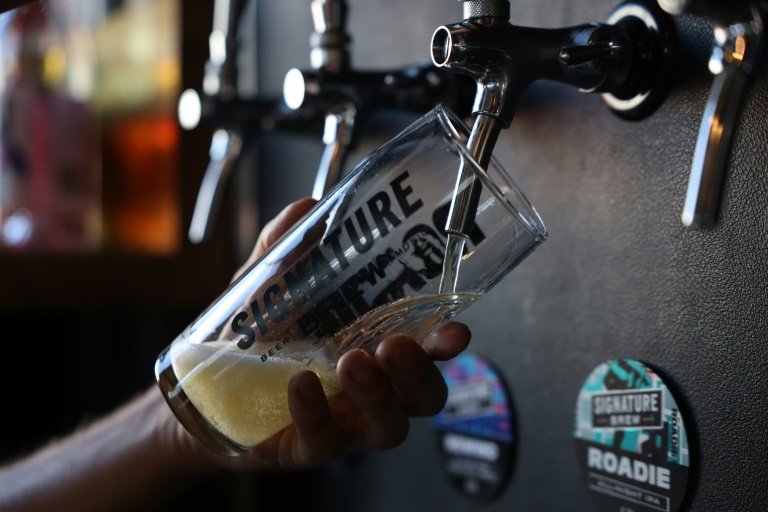
Craft or micro-breweries, which have enjoyed a boom in the last 20 years due to smaller start-up costs and a tax break for producing less than 4,000 litres a year, could also feel the brunt of the hikes.

Last year there were more than 2,400 craft breweries — five times as many as in the early 2000s — with companies such as Beavertown and Brewdog now household names.

But supply chain issues and inflation threaten to turn the tide. While 200 craft establishments opened in Britain last year, up to 60 closed, after some 160 were forced to shut due to the pandemic.

“These breweries haven’t been doing a massive amount of money, just enough to get by,” Nik Antona, chairman of the Campaign for Real Ale (CAMRA), told AFP.

“Unfortunately brewing is quite a high energy intensive industry. You have to boil water. We’re going to see massive rises in energy bills.”

Supplies have also been squeezed by the war in Ukraine, one of the world’s leading producers of wheat and barley.

Josh Walker, production manager at the Exale craft brewery in Walthamstow, northeast London, is trying to remain positive.

SMEs such as his got creative during the pandemic, developing their online presence and launching home-brewing kits for those stuck at home.

Since the lifting of the lockdown, they have organised events to attract customers. Walker said Exale and others like it were still protected from inflation by forward contracts fixing prices of raw materials.

“A lot of our beer is sold at retail price in our tap room. That will protect us more than those selling only wholesale,” he added.

But Antona warned: “There’s going to be a limit on what you can pass on (to the customer).”

Pakistan floods 'worst in country's history', aid efforts gather pace

Aid efforts ramped up across flooded Pakistan on Tuesday to help tens of millions of people affected by relentless monsoon rains that have submerged a third of the country and claimed more than 1,100 lives.

Prime Minister Shehbaz Sharif called the flooding “the worst in the history of Pakistan”, adding it would cost at least $10 billion to repair damaged infrastructure spread across the country. 

The rains that began in June have unleashed powerful floods across the country that have washed away swathes of vital crops and damaged or destroyed more than a million homes.

Authorities and charities are struggling to accelerate aid delivery to more than 33 million people, a challenging task in areas cut off because many roads and bridges have been critically damaged.

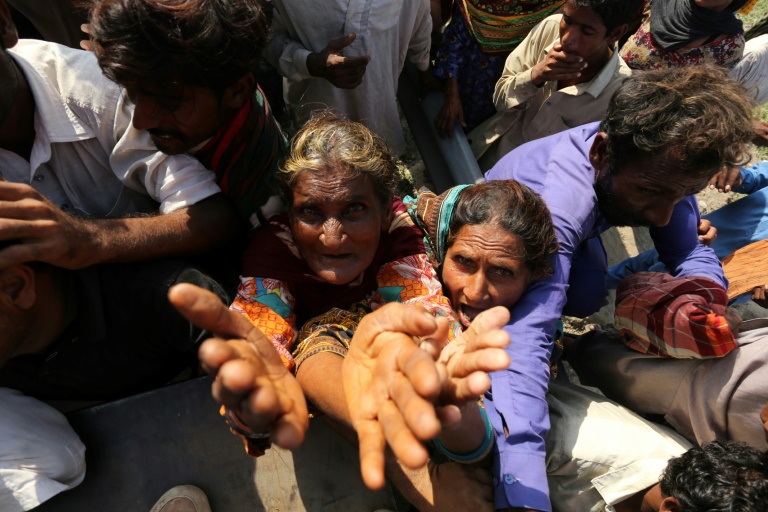
Displaced people have been wandering what dry land remains, seeking shelter, food and drinking water.

“For God’s sake help us out,” said Qadir, 35, who was camped out with his extended family on a road near the southern city of Sukkur.

“We walked along the road for three days to reach here. There’s nothing left back at home, we only managed to save our lives.”

In the country’s south and west, many Pakistanis have crammed onto elevated highways and railroad tracks to escape the flooded plains.

“We don’t even have space to cook food. We need help,” Rimsha Bibi, a schoolgirl in Dera Ghazi Khan in central Pakistan, told AFP.

Pakistan receives heavy — often destructive — rains during its annual monsoon season, which are crucial for agriculture and water supplies.

But such intense downpours have not been seen for three decades.

Pakistani officials have blamed climate change, which is increasing the frequency and intensity of extreme weather around the world.

– ‘Mind-boggling devastation’ –

“To see the devastation on the ground is really mind-boggling,” Pakistan’s climate change minister Sherry Rehman told AFP.

“When we send in water pumps, they say, ‘Where do we pump the water?’ It’s all one big ocean, there’s no dry land to pump the water out.”

She said “literally a third” of the country was under water, comparing scenes from the disaster to a dystopian movie.

The Indus River, which runs the length of the South Asian nation, is threatening to burst its banks as torrents of water rush downstream from its tributaries in the north.

Pakistan as a whole has been deluged with twice the usual monsoon rainfall, the meteorological office said, but Balochistan and Sindh provinces have seen more than four times the average of the last three decades.

– ‘Monsoon on steroids’ –

The disaster could not have come at a worse time for Pakistan, where the economy is in free fall.

Appealing for international help, the government has declared an emergency.

Aid flights have arrived in recent days from Turkey and the United Arab Emirates, while other countries including Canada, Australia and Japan have also pledged assistance.

The United Nations launched a formal $160 million appeal on Tuesday to fund emergency aid.

“Pakistan is awash in suffering. The Pakistani people are facing a monsoon on steroids — the relentless impact of epochal levels of rain and flooding,” UN Secretary-General Antonio Guterres said in a video statement, calling it a “colossal crisis”.

PM Sharif promised donors that any funding would be responsibly spent.

“I want to give my solemn pledge and solemn commitment… every penny will be spent in a very transparent fashion. Every penny will reach the needy,” he said.

Pakistan was already desperate for international support and the floods have compounded the challenge.

Prices of basic goods — particularly onions, tomatoes and chickpeas — are soaring as vendors bemoan a lack of supplies from the flooded breadbasket provinces of Sindh and Punjab.

There was some relief on Monday when the International Monetary Fund approved the revival of a loan programme for Pakistan, releasing a $1.1 billion tranche.

Makeshift relief camps have sprung up all over Pakistan — in schools, on motorways and in military bases.

In the northwestern town of Nowshera, a technical college was turned into a shelter for up to 2,500 flood victims.

They sweltered in the summer heat with sporadic food aid and little access to water.

“I never thought that one day we will have to live like this,” said 60-year-old Malang Jan.

“We have lost our heaven and are now forced to live a miserable life.”

Pakistan floods 'worst in country's history', aid efforts gather pace

Aid efforts ramped up across flooded Pakistan on Tuesday to help tens of millions of people affected by relentless monsoon rains that have submerged a third of the country and claimed more than 1,100 lives.

Prime Minister Shehbaz Sharif called the flooding “the worst in the history of Pakistan”, adding it would cost at least $10 billion to repair damaged infrastructure spread across the country. 

The rains that began in June have unleashed powerful floods across the country that have washed away swathes of vital crops and damaged or destroyed more than a million homes.

Authorities and charities are struggling to accelerate aid delivery to more than 33 million people, a challenging task in areas cut off because many roads and bridges have been critically damaged.

Displaced people have been wandering what dry land remains, seeking shelter, food and drinking water.

“For God’s sake help us out,” said Qadir, 35, who was camped out with his extended family on a road near the southern city of Sukkur.

“We walked along the road for three days to reach here. There’s nothing left back at home, we only managed to save our lives.”

In the country’s south and west, many Pakistanis have crammed onto elevated highways and railroad tracks to escape the flooded plains.

“We don’t even have space to cook food. We need help,” Rimsha Bibi, a schoolgirl in Dera Ghazi Khan in central Pakistan, told AFP.

Pakistan receives heavy — often destructive — rains during its annual monsoon season, which are crucial for agriculture and water supplies.

But such intense downpours have not been seen for three decades.

Pakistani officials have blamed climate change, which is increasing the frequency and intensity of extreme weather around the world.

– ‘Mind-boggling devastation’ –

“To see the devastation on the ground is really mind-boggling,” Pakistan’s climate change minister Sherry Rehman told AFP.

“When we send in water pumps, they say, ‘Where do we pump the water?’ It’s all one big ocean, there’s no dry land to pump the water out.”

She said “literally a third” of the country was under water, comparing scenes from the disaster to a dystopian movie.

The Indus River, which runs the length of the South Asian nation, is threatening to burst its banks as torrents of water rush downstream from its tributaries in the north.

Pakistan as a whole has been deluged with twice the usual monsoon rainfall, the meteorological office said, but Balochistan and Sindh provinces have seen more than four times the average of the last three decades.

– ‘Monsoon on steroids’ –

The disaster could not have come at a worse time for Pakistan, where the economy is in free fall.

Appealing for international help, the government has declared an emergency.

Aid flights have arrived in recent days from Turkey and the United Arab Emirates, while other countries including Canada, Australia and Japan have also pledged assistance.

The United Nations launched a formal $160 million appeal on Tuesday to fund emergency aid.

“Pakistan is awash in suffering. The Pakistani people are facing a monsoon on steroids — the relentless impact of epochal levels of rain and flooding,” UN Secretary-General Antonio Guterres said in a video statement, calling it a “colossal crisis”.

PM Sharif promised donors that any funding would be responsibly spent.

“I want to give my solemn pledge and solemn commitment… every penny will be spent in a very transparent fashion. Every penny will reach the needy,” he said.

Pakistan was already desperate for international support and the floods have compounded the challenge.

Prices of basic goods — particularly onions, tomatoes and chickpeas — are soaring as vendors bemoan a lack of supplies from the flooded breadbasket provinces of Sindh and Punjab.

There was some relief on Monday when the International Monetary Fund approved the revival of a loan programme for Pakistan, releasing a $1.1 billion tranche.

Makeshift relief camps have sprung up all over Pakistan — in schools, on motorways and in military bases.

In the northwestern town of Nowshera, a technical college was turned into a shelter for up to 2,500 flood victims.

They sweltered in the summer heat with sporadic food aid and little access to water.

“I never thought that one day we will have to live like this,” said 60-year-old Malang Jan.

“We have lost our heaven and are now forced to live a miserable life.”

Iraq protesters disperse after Sadr demands end to deadly clashes

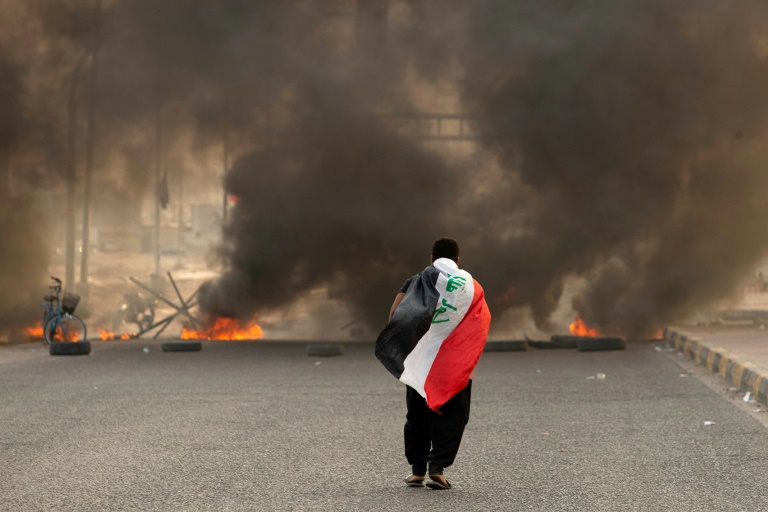
Iraqi supporters of powerful cleric Moqtada Sadr withdrew Tuesday from Baghdad’s Green Zone after he demanded an end to fighting between rival Shiite forces and the army that left 30 dead and hundreds wounded.

The violence that erupted on Monday pitted Sadr loyalists against Shiite factions backed by neighbouring Iran, with the sides exchanging gunfire across barricades — violence the United Nations warned risked tipping the war-ravaged country deeper into chaos.

After Sadr’s speech was broadcast live on television, his supporters started dismantling encampments and clearing the Green Zone, where municipal workers began cleaning up shells and bullet casings left in the wake of the unrest. 

The army lifted a nationwide curfew, with concrete barriers removed from main thoroughfares and traffic slowly starting to trickle back to its normal flow.  

Sadr, a grey-bearded preacher with millions of devoted followers who once led a militia against American and Iraqi government forces, gave followers “60 minutes” to withdraw after which he would threaten to “disavow” those who remained.

“I apologise to the Iraqi people, the only ones affected by the events,” Sadr said in a speech from his base in the central city of Najaf.

“Shame on this revolution… Regardless of who was the initiator, this revolution, as long as it is marred by violence, is not a revolution,” he said.

“I thank the security forces and members of Hashed al-Shaabi,” he added.

Tensions have soared in Iraq amid a political crisis that has left the country without a new government, prime minister or president for months.

They escalated sharply after Sadr’s supporters on Monday afternoon stormed the government palace inside the high-security Green Zone following their leader’s announcement that he was quitting politics.

– ‘Bargaining tactics’ –

By sending supporters in and then asking them to withdraw, Moqtada “is showing the social power he has and the base that he has, particularly to his opponents”, said Renad Mansour of British think tank Chatham House.

Overnight, shelling targeted the Green Zone that houses government buildings and diplomatic missions, amid angry protests after Sadr surprised many by announcing his “definitive retirement”.

Violence continued on Tuesday morning — with the rattle of automatic gunfire and heavier explosions of rocket-propelled grenades — as Sadr’s supporters clashed with the army and men of the Hashed al-Shaabi, former Tehran-backed paramilitaries integrated into the Iraqi security forces.

“I think this strategy of violence and destabilisation is part of Sadr’s negotiation and bargaining tactics,” Mansour told AFP. 

The UN mission in Iraq warned of “an extremely dangerous escalation” and called on all sides to “refrain from acts that could lead to an unstoppable chain of events”.

“The very survival of the state is at stake,” it warned.

Medics said 30 Sadr supporters had been killed since Monday and some 570 others wounded — some with bullet wounds and others suffering tear gas inhalation.

A mass funeral was held Tuesday in the Shiite holy city of Najaf for some of the protesters killed in Baghdad.

Witnesses said earlier that Sadr loyalists and supporters of a rival Shiite bloc, the pro-Iran Coordination Framework, had exchanged fire.

The Framework condemned an “attack on state institutions”, urging the Sadrists to engage in dialogue.

Caretaker Prime Minister Mustafa al-Kadhemi said “security or military forces, or armed men” were prohibited from opening fire on protesters.

– ‘Disturbing’ –

The United States also urged calm amid the “disturbing” reports, while France called on “the parties to exercise the utmost restraint”.

Sadr — a longtime player in the war-torn country’s political scene, though he himself has never directly been in government — announced he was quitting politics two days after he said “all parties” including his own should give up government positions in order to help resolve the political crisis.

His bloc emerged from last October’s election as the biggest in the legislature, with 73 seats, but short of a majority.

Since then the country has been mired in political deadlock due to disagreement between Shiite factions over forming a coalition.

In June, his lawmakers quit in a bid to break the logjam, which led to the Coordination Framework becoming the largest bloc.

Sadr’s supporters had for weeks been staging a sit-in outside Iraq’s parliament, after storming the legislature’s interior on July 30, demanding fresh elections be held.

The Coordination Framework wants a new head of government to be appointed before any new polls are held.

sf-gde-ho/jsa

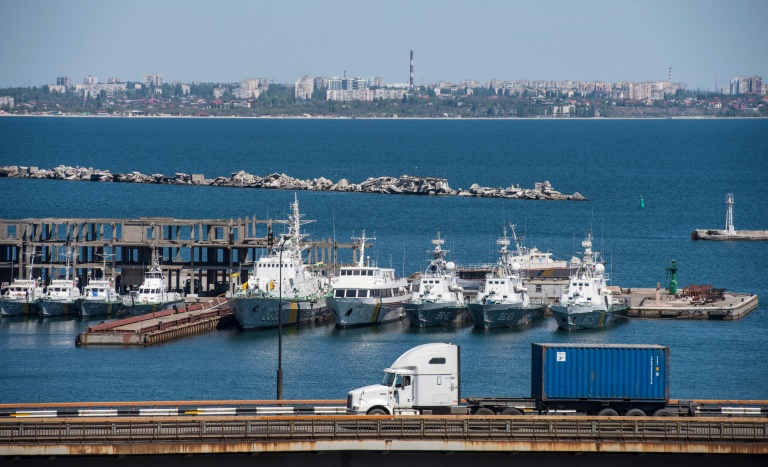
Ukraine seeks UNESCO cultural protection for Odessa

Ukraine’s government will ask the UN’s cultural watchdog to add the historic port of Odessa to its World Heritage List of protected sites as Russia’s invasion continues, the agency said Tuesday.

Russian forces have advanced to within several dozen kilometres (miles) of the city, which blossomed after empress Catherine the Great decreed in the late 18th century that it would be Russia’s modern gateway to the Black Sea.

Analysts say Russian President Vladimir Putin could soon target Odessa to completely block Ukraine’s Black Sea access, potentially with heavy bombardments like those that razed the port of Mariupol.  

In late July, the city was struck by missiles just hours after Russia agreed to allow a shipment of Ukrainian grain exports from the port.

“On July 24, 2022, part of the glass canopy and windows of the Museum of Fine Arts, inaugurated in 1899, were destroyed” by the strikes, the UNESCO cultural agency said after its director Audrey Azoulay met Ukraine’s Culture Minister Oleksandr Tkachenko in Paris on Tuesday.

It said UNESCO experts already on the ground would provide technical assistance so that Odessa could be urgently added to both the World Heritage List and the list of heritage sites in danger.

It will also ask the World Heritage Committee to place the Saint-Sophia Cathedral in Kyiv and the historic centre of Lviv — already recognised as UNESCO sites — on the endangered list.

Adding a landmark site or traditional activity to the UNESCO list aims to mobilise attention to ensure it is preserved against threats to its existence.

The agency says 175 Ukrainian cultural and historic sites have been damaged since Russia launched its invasion in February, including monuments, museums, libraries and religious buildings.

Many were hit despite being marked with the distinctive “blue shield” indicating they are protected under the 1954 Hague convention on culture in armed conflicts, of which both Russia and Ukraine are signatories.

“The agency has already mobilised nearly $7 million and provided several aid measures and experts to advise professionals” working to protect sites or remove artworks to safer locations, UNESCO said.

In July, Ukraine also obtained recognition of the beetroot soup known as borshch on its list of intangible cultural heritage, which it said was under threat from Russia’s invasion.

UN raises alarm on Red Sea oil tanker 'time-bomb'

The UN appealed Tuesday for the last $14 million needed to try and prevent a stricken oil tanker from triggering a disaster off Yemen that could cost $20 billion to clean up.

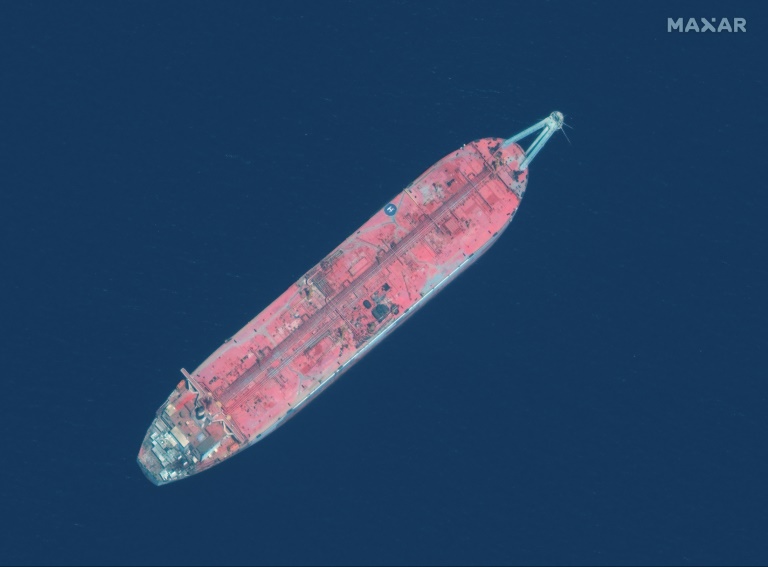
The decaying 45-year-old FSO Safer, long used as a floating storage platform and now abandoned off the rebel-held Yemeni port of Hodeida, has not been serviced since Yemen was plunged into civil war more than seven years ago. 

If it breaks up, it could unleash a potentially catastrophic spill in the Red Sea.

David Gressly, the United Nations’ resident and humanitarian coordinator in Yemen, leads UN efforts on the Safer.

“Less then $14 million is now needed to reach the $80 million target to start the emergency operation to transfer oil from the Safer to a safe vessel,” said Gressly’s communications advisor Russell Geekie.

“We’re deeply concerned. If the FSO Safer continues to decay, it could break up or explode at any time,” he told reporters in Geneva, via video-link from Sanaa.

“The volatile currents and strong winds from October to December will only increase the risk of disaster. If we don’t act, the ship will eventually break apart and a catastrophe will happen. It’s not a question of if, but when.”

He said the result would potentially be the fifth largest oil spill from a tanker in history, with the clean-up costs alone reaching $20 billion.

The Safer contains four times the amount of oil that was spilled by the 1989 Exxon Valdez disaster, one of the world’s worst ecological catastrophes, according to the UN.

“It would unleash an environmental, economic and humanitarian catastrophe,” said Geekie.

The ship contains 1.1 million barrels of oil. The UN has said a spill could destroy ecosystems, shut down the fishing industry and close the lifeline Hodeida port for six months.

The Safer is unusable, is fit only for scrappage and nothing on it works, said Geekie.

“This is a ticking time bomb,” he warned.

“You don’t want to go and smoke a cigarette on the deck, I can tell you that much.”

Close Bitnami banner
Bitnami