World

Russian paratrooper flees to France denouncing army 'chaos'

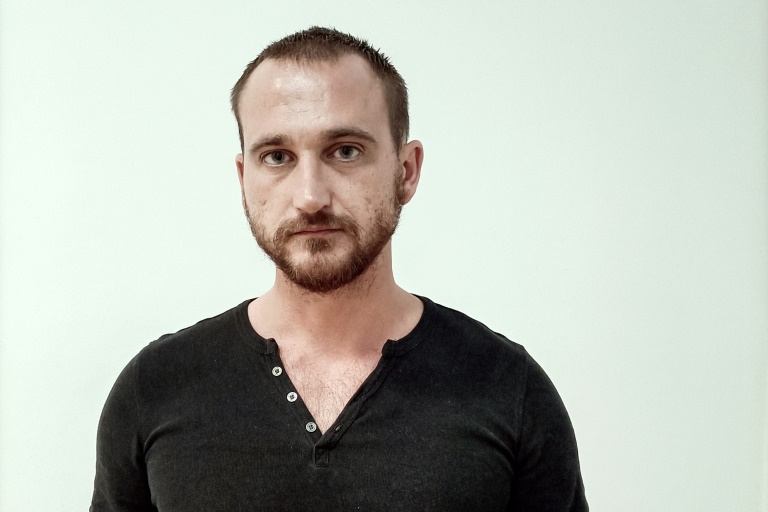
Suddenly notorious for a scathing first-person account of the war in Ukraine published online, Russian paratrooper Pavel Filatiev arrived in France seeking political asylum Sunday after quitting his country for fear of reprisals.

“When I heard the higher-ups were calling for me to be sentenced to 15 years in prison for fake news, I realised that I wouldn’t get anywhere here and my lawyers couldn’t do anything for me in Russia,” Filatiev tells AFP in the asylum seekers’ waiting area at Paris Charles de Gaulle airport.

After a time out from the army, the 34-year-old last year rejoined Russia’s 56th airborne regiment — his father’s old unit — based in Crimea.

The paratroopers were sent into southern Ukraine when President Vladimir Putin began his “special military operation” against Kyiv on February 24.

Filatiev himself spent two months around the key cities of Kherson and Mykolaiv before being withdrawn from the front with an eye infection.

“We didn’t have the moral right to attack another country, especially when it’s the nation that’s closest to us,” he writes in a 141-page broadside called “ZOV” that he posted on the VKontakte social network in August.

The title, the Russian word for “call”, is made up of the identification letters painted on military vehicles during the attack.

In the text, Filatiev rails at both the state of the military and Moscow’s assault on Ukraine, which he believes is broadly opposed by rank-and-file soldiers too afraid to speak out.

– ‘Chaos and corruption’ –

Filatiev depicts a barely functioning army that lacked training and equipment even before the invasion started.

The armed forces “are in the same state Russia has fallen into in the last few years,” he tells AFP.

“Year by year the chaos and corruption grow. Corruption, disorder and a couldn’t-care-less attitude have reached unacceptable levels,” Filatiev adds.

“For the first few months I was in shock, I told myself that it couldn’t be true. By the end of the year, I realised that I didn’t want to serve in an army like this.”

But he did not resign before the attack on Ukraine began, and found himself advancing with his unit into the south of the neighbouring country.

“If the army was already a mess in peacetime, corrupt and apathetic, it’s clear that in wartime, in combat, that this will come even more to the fore and the lack of professionalism is even more obvious,” Filatiev says.

Those in power in Moscow have played a major role in “destroying the army we inherited from the Soviet Union,” he adds.

Filatiev insists that his unit did not participate in the abuses against civilians and prisoners that have caused worldwide outcry and allegations of war crimes by the Russian invaders during his two months at the front.

– ‘Terrorised’ troops –

After being evacuated to a military hospital in the Crimean city of Sebastopol, he tried to resign for health reasons — only to be threatened by his superiors with an investigation if he refused to return to the fighting.

He left Crimea in early August and published his account of the war online.

Filatiev spent some time skipping from one town to another to avoid detection before leaving the country, arriving this week in France via Tunisia.

“Why am I telling all this in detail? I want people in Russia and in the world to know how this war came about, why people are still waging it,” he says.

On the Russian side, “it’s not because they want to fight, it’s because they are in conditions that make it very difficult for them to quit,” Filatiev believes.

“The army, all of Russian society, is terrorised,” he adds.

By Filatiev’s reckoning, just 10 percent of soldiers support the war, with the remainder fearing to speak out.

“Those who are against are afraid to say it, afraid to leave. They’re afraid of the consequences,” he says.

If granted asylum in France, Filatiev says he wants to “work towards this war coming to an end”.

“I want the fewest possible young Russian men to go there and get involved in this, for them to know what’s happening there,” he says.
UN rights chief leaving with China report still unreleased

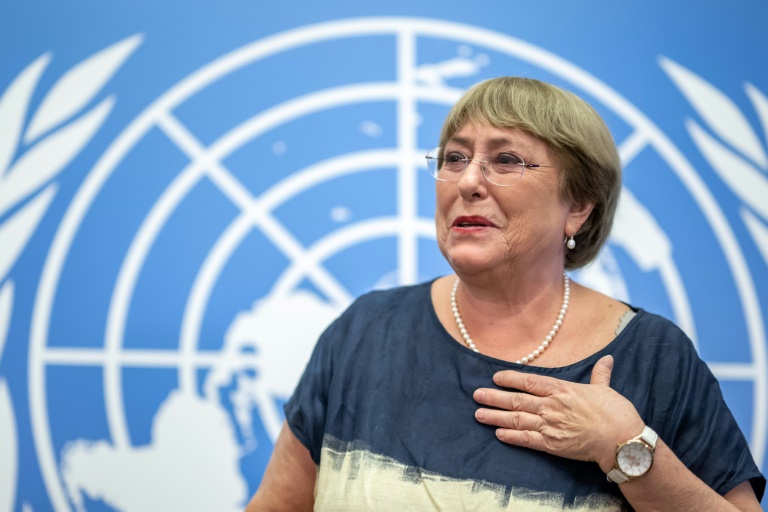
Diplomats paid tribute to departing UN rights chief Michelle Bachelet on Tuesday, despite her failure to release a long-promised report on alleged abuses in China’s Xinjiang region.

A long line of country representatives took the floor at a UN rights council to praise how Bachelet had handled the challenges of the past four years.

But while the former Chilean president was greeted with praise, flowers and a standing ovation, the row over a long-promised report on the rights situation in Xinjiang remains unresolved.

Bachelet told the council nearly a year ago that her office was finalising a report on the situation in the far-western Chinese region, where Beijing stands accused of detaining more than one million Uyghurs and other Muslim minorities.

She steps down from her post on Wednesday with her successor still to be appointed — and the report still unreleased.

Rights groups have grown increasingly frustrated at the delay.

With just a day to go before she steps down however, it looks increasingly unlikely that she will keep her promise to release it before she leaves.

– ‘Tremendous pressure’ –

Several rights groups raised the issue during Tuesday’s meeting, as did Britain’s ambassador to the rights council, Rita French.

It is “essential for all of us that no state is free from objective scrutiny on its human rights record, and that no state can be allowed to stifle the high commissioner’s independent voice,” said French.

“We therefore urge you to publish your report on China.”

John Fisher of Human Rights Watch, while acknowledging Bachelet’s accomplishments, added: “All of that risks being overshadowed if you fail to publish your report on Xinjiang before leaving office.

“Uyghurs and other victims have placed their trust in you to report on the extent of the abuses they face,” he said.

“If you don’t stand up for victims, who will?” 

Campaigners accuse China of a litany of abuses in Xinjiang, including mass detention, forced labour, compulsory sterilisation and the destruction of Uyghur cultural and religious sites.

The United States and lawmakers in other Western countries have gone so far as to accuse China of committing genocide against the minority groups.

Beijing vehemently rejects the claims.

Bachelet did not address the issue on Tuesday, but last week she acknowledged to journalists that her office had been under “tremendous pressure to publish or not to publish”.

She insisted that she would “not publish or withhold publication due to any such pressure”, insisting, “we’re trying very hard to do what I promised”.

Sri Lanka says IMF bailout talks in 'final stage'

Cash-strapped Sri Lanka’s president announced further tax hikes and sweeping reforms on Tuesday, saying that bailout talks with the International Monetary Fund were in the “final stage”.

The country of 22 million people has suffered months of dire shortages and protests culminating in the ouster of Gotabaya Rajapaksa last month.

Presenting a new budget, his successor Ranil Wickremesinghe said Tuesday that Value Added Tax (VAT) would rise from 12 to 15 percent for all goods and services from Thursday.

He said a dedicated debt management agency was being set up to restructure borrowings. In April, Colombo defaulted on its $51 billion external debt.

“Negotiations with the International Monetary Fund have successfully reached its final stage,” Wickremesinghe told parliament.

“Discussions on debt restructuring will be held with the main countries that provide loan assistance to our country,” he said referring to China, Japan and India, the top three creditors of the island.

Debt restructuring is crucial to clinching an agreement with the IMF, which resumed its talks with Colombo last week after political upheaval in July held up negotiations.

Beijing has not publicly shifted from its offer of issuing more loans rather than taking a haircut on existing credit.

Wickremesinghe said he would press ahead with the politically unpopular “restructuring”, seen as meaning the privatisation of state enterprises subsidised by taxpayers.

First in line are the state-run energy companies as well as two state-owned banks that dominate commercial banking in the country, he said.

His government has already raised prices of fuel and electricity more than threefold and removed energy subsidies, a key pre-condition for a possible IMF bailout.

Last week, Wickremesinghe tightened import restrictions with a ban on more than 300 additional items, as the crisis showed no signs of abating.

Worker remittances, a key source of foreign exchange, have dropped by more than 50 percent to $1.6 billion in the six months to June compared to the same period last year.

Inflation is officially estimated to peak at about 65 percent by next month while the import-dependent economy is forecast to contract by a record eight percent this year.

“This crisis will not be solved by accusing one another, nor by faulting the past,” Wickremesinghe told parliament while presenting the budget for the rest of the year.

Shortly after the president’s speech, police in the capital Colombo fired tear gas and water cannon to break up a protest march by hundreds of university students unhappy with the government’s handling of the crisis.  

Police said they arrested six students for disrupting traffic.

'Second life': helicopters rescue the stranded from Pakistan valleys

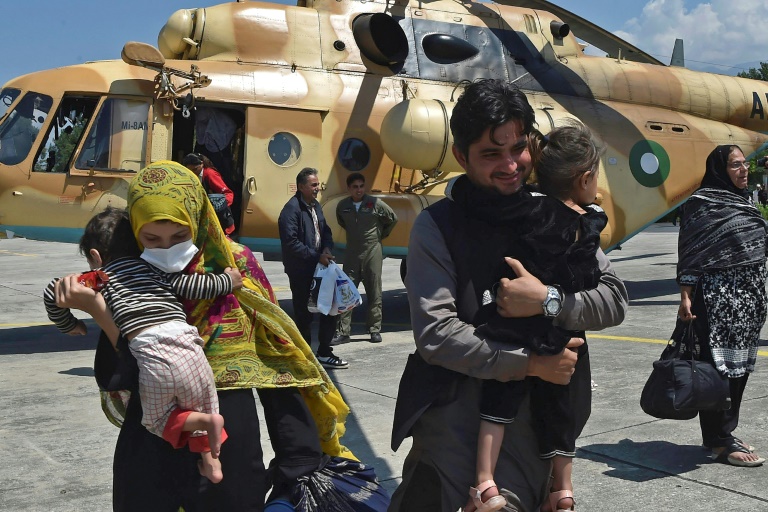
Up to 200,000 people are stranded in remote Pakistan valleys after the unrelenting floods of the past week — with helicopters the only way of reaching them.

Unprecedented rain in the Swat Valley turned rivers into raging torrents that washed away roads and bridges, cutting off tourists and residents from nearby towns, even as the water receded. 

Army and government helicopter missions have rescued hundreds of panicked tourists and locals — some urgently needing medical help.

“It feels like I have got a second life,” said tourist Yasmin Akram, a diabetic who was airlifted to Saidu Sharif’s airfield from the Kalam valley with her 12-year-old daughter and husband. 

The traffic police officer watched in despair as the hotel they fled in the middle of the night was swallowed by the Swat river, taking with it a young boy.

“I witnessed this all with my own eyes,” she said. “Since then I haven’t slept.”

Her husband, dazed from exhaustion, said he ran out of medication for his kidney condition after Kalam was cut off. 

“When I arrived here it was like being given a new life,” said Muhammad Akram, an official with the Punjab government. 

Their two adult sons were left behind, with priority given to the sick, women and children. 

The stunning Swat Valley, known locally as the “Pakistani Switzerland”, is a popular tourist spot because of its majestic mountains, lakes and rivers. 

The deeply conservative area came to notoriety in the mid-2000s, when it saw the rise of a powerful local chapter of the Pakistani Taliban. 

In 2012, following a military operation to displace the Taliban, then-schoolgirl Malala Yousafzai — now a Nobel peace laureate — was shot and left for dead by militants in Swat’s main town, Mingora. 

– ‘Challenges are immense’ –

Junaid Khan, the deputy commissioner for Swat, told AFP that stricken tourists have made up the majority of evacuations. 

Government officials and doctors have been airlifted into the valleys to identify those most in need of rescue. 

Locals are willing to stay behind if food and medical supplies are guaranteed, said Khan.

Thousands of food aid packages have already been delivered –- some dropped from the back of a helicopter when crowds of people reaching for the aircraft made it impossible to land.

“We’ve reached areas that no other organisations and aid groups have been able to,” Khan said at Saidu Sharif’s airfield, where some of the rescue missions are being coordinated. 

Locals are hurrying to create makeshift landing pads for the helicopters –- with the first established on grounds surrounding a mosque in Mankyel.

It could be days before roads leading to the mountains and valleys are repaired. 

“The challenges are immense but the hope is very high in this region which has seen the worst of terrorism, militancy, earthquakes and floods,” said Khan. 

So far 21 deaths have been reported in the area’s valleys –- mostly as a result of collapsed houses — but a handful of people were washed away by floods.

A helicopter supplied by the provincial government’s chief minister –- not built for rescue missions — has helped to pull more than 350 people from villages, carrying up to double the recommended number of passengers. 

Army helicopters have collected hundreds more. 

Eurozone equities bounce from Fed-induced sell-off

Eurozone stocks rebounded Tuesday from recent losses, but London gains were capped as investors played catch-up after a long weekend.

In midday deals, Frankfurt equities jumped 1.9 percent ahead of key German inflation data and Paris won 1.2 percent.

Both markets had slumped Monday as traders digested Federal Reserve chief Jerome Powell’s warning of more interest rate hikes to fight runaway inflation.

London eked out gains on Tuesday after a public holiday closure the day before, while the euro held above one dollar.

Sentiment had soured late Friday after Powell indicated more monetary tightening was needed to bring inflation down from four-decade highs, news that sent Wall Street into a tailspin.

– Positive note –

“European markets have started the week on a positive note following Friday’s sell-off on Wall Street after Powell struck a hawkish tone,” said Interactive Investor analyst Victoria Scholar on Tuesday.

“US futures are pointing to a bounce back, as markets look set to regain some lost ground.”

German inflation data is expected to show how the ongoing energy crisis has further stoked price pressures in the eurozone’s powerhouse economy.

Natural gas prices however dipped Tuesday despite jitters over supply disruptions from key producer Russia.

Europe’s benchmark Dutch TTF gas contract slid to 259.405 euros per megawatt hour, having stuck a March peak late on Friday.

French energy firm Engie said Tuesday that Russian energy giant Gazprom was slashing its natural gas deliveries “due to a disagreement between both sides over the execution of contracts”.

Engie added in a statement that Russian gas supplies had already been reduced drastically after Russia invaded Ukraine in February.

Many European countries are facing severe supply problems as Moscow turns off the gas taps in response to EU military and diplomatic backing for Ukraine.

Asian stocks indices diverged on Tuesday, winning limited support from bargain-buying.

Confidence remains at a premium as traders contemplate the prospect of more Fed rate hikes and a possible recession.

Oil tanked Tuesday on fears about a major hit to demand from any global economic slowdown — and news of more Covid restrictions in key consumer China.

– Key figures at around 1100 GMT –

London – FTSE 100: UP 0.1 percent at 7,435.36 points

Frankfurt – DAX: UP 1.9 percent at 13,141.45

Paris – CAC 40: UP 1.2 percent at 6,298.71

EURO STOXX 50: UP 1.5 percent at 3,622.75

Tokyo – Nikkei 225: UP 1.1 percent at 28,195.58 (close)

Hong Kong – Hang Seng Index: DOWN 0.4 percent at 19,949.03 (close)

Shanghai – Composite: DOWN 0.4 percent at 3,227.22 (close)

New York – Dow: DOWN 0.6 percent at 32,098.99 (close)

Euro/dollar: UP at $1.0034 from $0.9972 on Monday

Pound/dollar: UP at $1.1736 from $1.1709

Euro/pound: UP at 85.50 pence from 85.38 pence

Dollar/yen: DOWN at 138.34 yen from 138.68 yen

West Texas Intermediate: DOWN 1.8 percent at $95.23 per barrel

Brent North Sea crude: DOWN 2.4 percent at $102.53 per barrel

burs/rfj/jj

Indonesia arrests soldiers accused of killings, mutilations in Papua

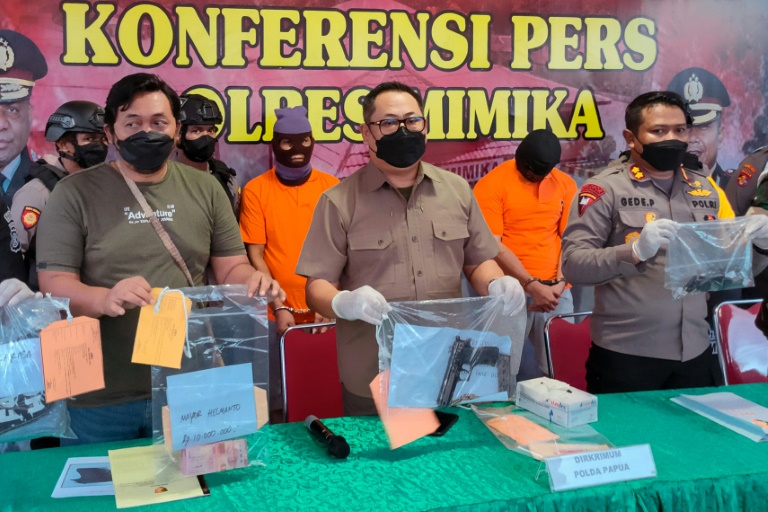
Six Indonesian soldiers have been arrested after being accused of killing four indigenous Papuans and mutilating their bodies last week, authorities said on Tuesday. 

The suspects pretended to be willing to sell weapons to lure the victims on August 22, the day the crime allegedly occurred, Papua provincial police director Faizal Ramadhani told AFP. 

The victims were then dismembered, stuffed into sacks and thrown into a river outside of the city of Timika, according to a police report. 

As of Monday, body parts belonging to three of the victims had been found, Ramadhani said, adding that authorities were continuing to look for the remains of the last victim.

The Papua police have also named four civilians as suspects in the case, three of whom were arrested over the weekend, Ramadhani said.   

The civilian suspects said that the soldiers were “directly involved” in the killing and dismemberment of the victims, who are believed to be affiliated with rebel groups in the Nduga area, Ramadhani said.

Military investigators were questioning the six soldiers, who were named as suspects and arrested by the military police on Monday, military official Chandra W. Sukotjo said on Tuesday. 

Teguh Muji Angkasa, a senior military officer in Papua, told reporters in Jayapura on Monday that the army was coordinating with the police on an investigation. 

“We are committed to upholding the rule of law. We will hand out firm sanction if the soldiers are proven to be involved (in the crime),” Angkasa said. 

Sebby Sambom, a spokesman of the West Papua National Liberation Army, the military wing of Papua’s main separatist group, demanded that the Indonesian government sentence the perpetrators to death.

“This is a crime against humanity by the Indonesian government through its security forces,” Sambom said in a statement, threatening to carry out a “retaliation operation” if his group’s demand was ignored.  

Indonesia maintains a heavy military presence in the resource-rich but underdeveloped Papua region, where the conflict with a rebel separatist insurgency has been claiming an increasing number of victims. 

A former Dutch colony, Papua declared itself independent in 1961, but neighbouring Indonesia took control of the region two years later, with the promise of holding a referendum on independence.

The subsequent vote in favour of staying part of Indonesia was widely considered a sham.

S.Sudan's ex-rebels set to join unified army

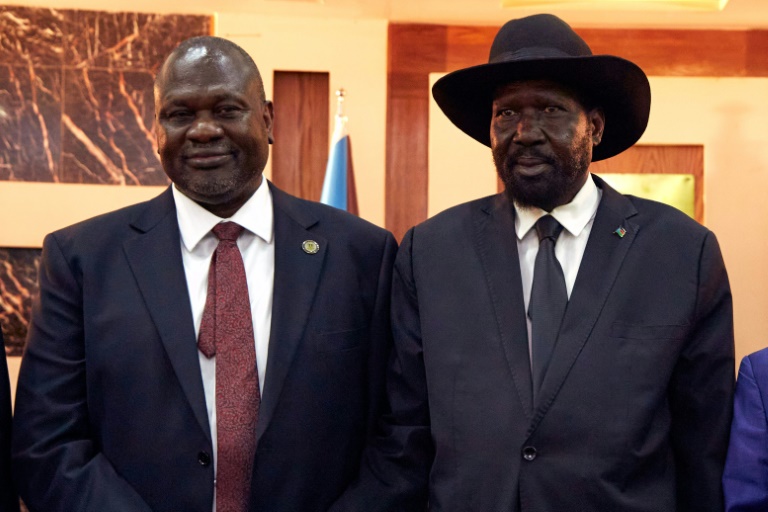
More than 50,000 fighters including former rebels from rival camps in South Sudan’s civil war were set to be integrated into the country’s army in a long-overdue graduation ceremony on Tuesday.

The unification of forces loyal to President Salva Kiir and his rival, Vice President Riek Machar, was a key condition of the 2018 peace deal that ended the brutal five-year conflict in which nearly 400,000 people died.

Since achieving independence in 2011 from Sudan, the world’s youngest nation has lurched from crisis to crisis, battling flooding, hunger, ethnic violence and political turmoil.

The ceremony in the capital Juba, held under tight security, comes against a backdrop of growing frustration in the international community over delays in implementing the peace deal, as explosions of violence threaten to undo even fragile gains.

Earlier this month, South Sudan’s leaders — appointed to run a transitional government — announced that they would remain in power two years beyond an agreed deadline, sparking international concern.

The transition period was meant to conclude with elections in December this year, but the government has so far failed to meet core provisions of the agreement, including drafting a constitution.

According to the peace deal, the troops’ graduation ceremony was supposed to take place in 2019. 

But the two leaders remained deadlocked over the division of senior posts in the unified armed forces command, only inking an agreement in April this year.

Over 52,000 men and women — drawn from Kiir and Machar’s parties as well as the South Sudan Opposition Alliance — will take part in Tuesday’s proceedings to officially join the army, police and other bodies responsible for national security.

The government has invited representatives from neighbouring nations including Ugandan President Yoweri Museveni and Sudanese coup leader General Abdel Fattah al-Burhan to attend the ceremony.

– Unpaid salaries –

The addition of tens of thousands of former rebels to the government’s payroll will add to already crushing economic challenges — civil servants have been unpaid for months.

But the move was nevertheless met with optimism in some quarters, with one former rebel telling AFP he was excited to join the police force.

“I am looking forward to serving my people. I just want to tell our people that finally peace has come after a long struggle,” said the former rebel who only identified himself as John, citing government restrictions.

Many of the new graduates will carry sticks instead of guns at the ceremony, because of a years-long arms embargo imposed by the UN Security Council.

The UN has repeatedly criticised South Sudan’s leadership for its role in stoking violence, cracking down on political freedoms and plundering public coffers.

The United States last month pulled out of two peace process monitoring organisations in South Sudan due to the government’s failure to meet reform milestones, citing a “lack of sustained progress”.

Baidu reports 5% year-on-year decrease in Q2 revenue

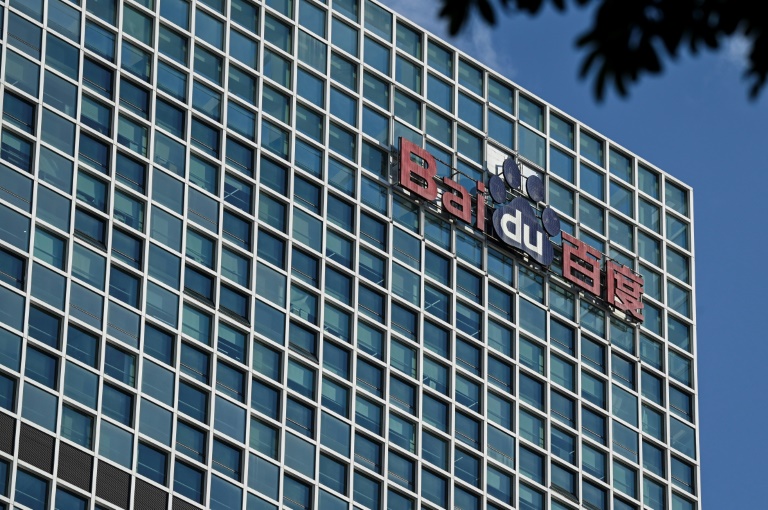
Chinese internet giant Baidu Inc. on Tuesday announced second-quarter revenues of 29.6 billion yuan ($4.3 billion), down five percent from last year after the company faced a challenging economic climate and tight controls on China’s once-thriving tech sector.

Other Chinese tech giants, including Tencent and e-commerce behemoth JD.com, had also reported disappointing results in recent weeks. 

China’s major tech companies have been grappling with economic uncertainty, Covid-19 restrictions that have kept consumers jittery, and heightened scrutiny from regulators in recent months.

Baidu, which operates China’s most widely used search engine, saw revenues decrease but posted a net profit of 3.6 billion yuan ($522 million), buoyed by a 31 percent year-on-year growth in its cloud computing business.

“Despite a challenging macro environment caused by Covid-19, Baidu Core generated  RMB23.2 billion in revenues in the second quarter,” CEO Robin Li was quoted as saying in an official press release.

“Going forward, we remain committed to quality revenue growth and sustainable business models.”

Last year, the Beijing-based group reported second-quarter revenue of 31.4 billion yuan ($4.5 billion), up 20 percent year-on-year at the time.

Baidu has heavily diversified into artificial intelligence, cloud computing and autonomous driving technologies in recent years, as advertising revenue remains sluggish. 

Li claimed Apollo Go, its autonomous driving arm, further consolidated its position as a leading intelligent ride-hailing provider, with fully driverless taxi services launched in the cities of Chongqing and Wuhan.

Beijing regulators’ widespread crackdown on the tech sector, beginning in late 2020, saw record fines, cancelled IPOs and lengthy investigations targeting top players, which decimated revenues and put further pressure on the stalling economy. 

The campaign is intended to reduce monopolistic practices and promote competition between internet platforms. 

Last week, Alibaba rival JD.com reported its slowest revenue growth to date in the second quarter, after tech giant Tencent reported its first drop in quarterly revenue since going public.

Didi Chuxing, China’s answer to Uber, was also fined the equivalent of $1.2 billion last month after a year-long cybersecurity investigation. 

Many parts of China have faced lockdowns and other Covid restrictions in recent months, disrupting business activity and adding to consumer worries as Beijing tries to stamp out the Omicron variant’s spread under its strict zero-Covid policy.

Fighting in Iraqi capital leaves 23 dead as Shiite rivalry escalates

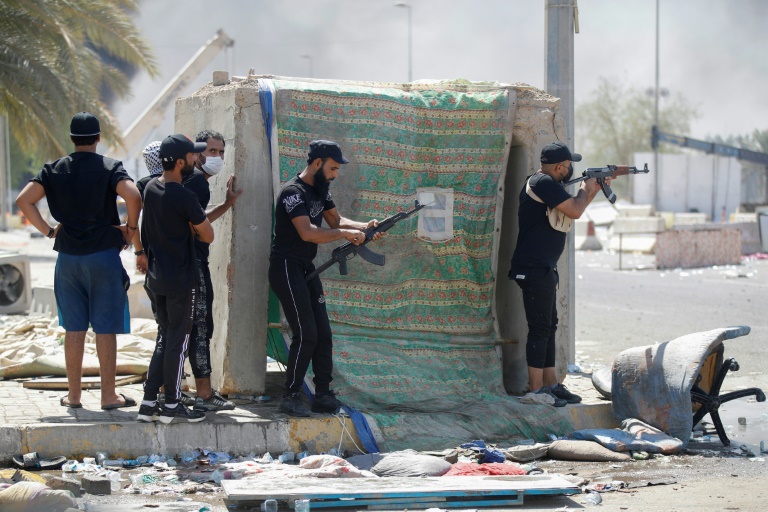
Fighting between rival Iraqi forces raged for a second day Tuesday with rocket fire echoing from Baghdad’s Green Zone where 23 supporters of powerful Shiite leader Moqtada Sadr have been shot dead, medics said.

Tensions have soared in Iraq amid a political crisis that has left the country without a new government, prime minister or president for months.

They escalated sharply after Sadr’s supporters on Monday afternoon stormed the government palace inside the high-security Green Zone following their leader’s announcement that he was quitting politics.

The violence pitches backers of Sadr against rival Shiite factions backed by neighbouring Iran, with the sides exchanging gunfire across barricades — violence the United Nations warns risks tipping the war-ravaged country deeper into chaos.

Overnight, shelling targeted the Green Zone that houses government buildings and diplomatic missions, a security source said, amid angry protests after Sadr’s surprise announcement.

Sadr, a grey-bearded preacher with millions of devoted followers who once led a militia against American and Iraqi government forces after the 2003 US-led overthrow of dictator Saddam Hussein, announced Monday his “definitive retirement” and said he had “decided not to meddle in political affairs”.

On Tuesday morning, fresh clashes broke out between Sadr’s supporters and the army and men of the Hashed al-Shaabi, former Tehran-backed paramilitaries integrated into the Iraqi forces.

The rattle of automatic gunfire and heavier explosions of rocket-propelled grenades could be heard from the Green Zone.

– ‘Dangerous escalation’ –

The United Nations mission in Iraq warned of “an extremely dangerous escalation” and called on all sides to “refrain from acts that could lead to an unstoppable chain of events”.

“The very survival of the state is at stake,” it warned.

But amid an army-imposed nationwide curfew that continued Tuesday, Baghdad was otherwise quiet, with shops shuttered and few cars venturing out on the streets.

On Tuesday morning, medics updated the toll of Sadr supporters killed to 23, with some 380 others injured — some with bullet wounds and others suffering tear gas inhalation.

A mass funeral was held Tuesday in the Shiite holy city of Najaf for some of the protesters killed in Baghdad.

Witnesses said earlier that Sadr loyalists and supporters of a rival Shiite bloc, the pro-Iran Coordination Framework, had exchanged fire.

The Framework condemned an “attack on state institutions”, urging the Sadrists to engage in dialogue.

Caretaker Prime Minister Mustafa al-Kadhemi said “security or military forces, or armed men” were prohibited from opening fire on protesters.

– ‘Disturbing’ –

The United States also urged calm amid the “disturbing” reports, while France called on “the parties to exercise the utmost restraint”.

Shortly after Sadr made his announcement to step down, his followers burst into the Republican Palace in Baghdad — where cabinet meetings are usually held — and initially celebrated including by cooling off in a swimming pool in the garden.

Sadr — a longtime player in the war-torn country’s political scene, though he himself has never directly been in government — announced he was quiting politics two days after he said “all parties” including his own should give up government positions in order to help resolve the political crisis.

His bloc emerged from last year’s election as the biggest in the legislature, with 73 seats, but short of a majority. 

In June, his lawmakers quit in a bid to break the logjam, which led to the Coordination Framework becoming the largest bloc.

Hamzeh Hadad, from the European Council on Foreign Relations, said it was “not clear” what Sadr’s strategy was.

“Whatever it does mean, in typical Sadrist fashion, there is always backtracking expected,” Hadad said.

“The second, and more terrifying thought on this is that he is giving his followers the green light to do whatever they like.”

Iraq has been mired in political deadlock since legislative elections in October last year due to disagreement between Shiite factions over forming a coalition.

Sadr’s supporters have for weeks been staging a sit-in outside Iraq’s parliament, after storming the legislature’s interior on July 30, demanding fresh elections be held.

The Coordination Framework wants a new head of government to be appointed before any new polls are held.

sf-gde/pjm/dv

Fossil fuels causing cost-of-living crisis: climate expert

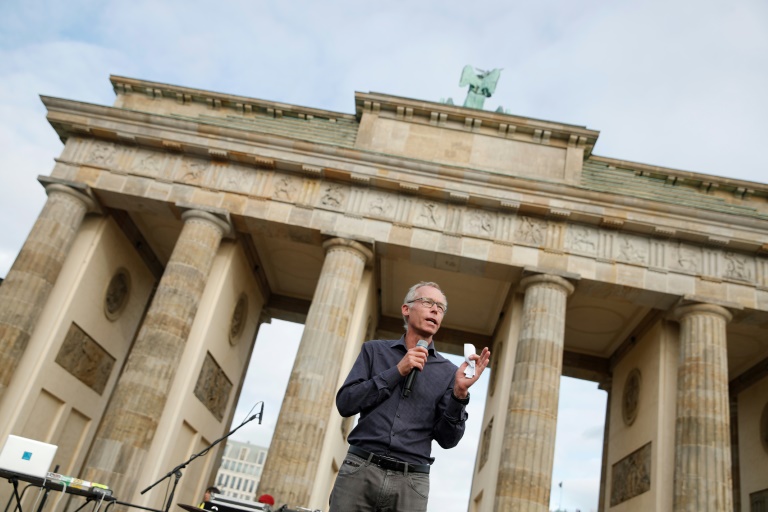
The cost-of-living crisis pushing millions of people towards poverty in Europe is driven by fossil fuels, according to a leading Earth systems scientist, who has warned that global heating risks causing runaway climate change. 

Johan Rockstrom, director of the Potsdam Institute for Climate Impact Research and co-author of the new book Earth For All, said that spiralling inflation was in large measure a result of decades of government failures to decarbonise their economies.

“I find it very disturbing that our political leaders in Europe are unable to communicate that high living costs right now are caused by higher prices on fossil fuels,” he told AFP at the book’s launch on Tuesday. 

“So this is fossil fuel-driven, supply-driven inflation. If 20 years ago you invested in solar (panels) or had a share in a wind farm, you’re not affected today. 

“The only reason why we have this crisis now is that we’ve had 30 years of underinvestment in preparing towards this turbulent phase which we knew would be coming,” said Rockstrom. 

“We’ve been saying since 1990 that we need to phase out the fossil fuel-driven economy towards a renewable-driven economy. And now here we are — we’re now hitting the wall.”

European energy prices soared to new records last week ahead of what many analysts expect to be a challenging winter as Russia’s invasion of Ukraine continues to disrupt oil and gas supplies.

The year-ahead contract for German electricity reached 995 euros ($995) per megawatt hour, while the French equivalent surged past 1,100 euros — a more than tenfold increase in both countries from last year.

In Britain, energy regulator Ofgem said it would increase the electricity and gas price cap almost twofold from October 1 to an average £3,549 ($4,197) per year.

Rockstrom, who helped pioneer the concept of planetary boundaries — thresholds of pollution or warming within which humanity can thrive — said he hoped the current energy price crisis would be “communicated as another nail in the coffin” for oil, gas and coal.

“This should accelerate our transition towards renewable energy systems,” he said. 

– ‘Giant changes required’ –

Rockstrom has spent two years working on Earth For All — a guide to help humans survive climate change — with several of the authors of The Limits to Growth.

Written 50 years ago, that groundbreaking work warned that the development of civilisation could not go on indefinitely with no limit to resource consumption.

The new book outlines two growth trajectories this century.

The first — “Too Little, Too Late” — sees the economic orthodoxy of the last 40 years endure, leading to ever starker inequality as the Earth’s average temperature rises by 2.5 degrees Celsius (36.5 degrees Farenheit) by 2100.  

The second — the “Great Leap” scenario — sees unprecedented mobilisation of resources to produce five changes: eradicate poverty and inequality, empower women, transform the global food system towards more plant-based diets, and rapidly decarbonise energy. 

In particular, the book says the International Monetary Fund must provide $1.0 trillion annually to poorer nations to create green jobs, and rich governments to cancel debt to low-income creditors while giving their own citizens a “universal basic dividend” to help share corporate windfalls.

Rockstrom said the tools are already available to make the Great Leap possible.

“(It) is to do with the current knowledge on all the current existing technologies and practices and policies. If we could put in place all the five turnarounds and scale them up very fast, that’s the best outcome we can have.”

– ‘Urgency point’ –

The project comes after another record-breaking summer that has seen unprecedented heatwaves and drought in Europe and China and devastating floods in Pakistan. 

Rockstrom said the world had reached an “urgency point” as climate-linked disasters occur more frequently than predicted in climate models. 

“Here we are — at 1.1C (of warming now), the things that we thought would happen perhaps at 2C are happening much earlier and are hitting harder,” he said. 

Rockstrom was recently involved in a paper studying the “climate endgame” — scenarios such as the complete melting of the Greenland ice sheet or heating “feedback loops”, which are deemed by scientists to be extremely unlikely and, he believes, therefore understudied.

He explained the possibility of “self-amplified warming”, which is when the Earth itself is triggered into producing emissions from carbon stored in forests and methane in permafrost.

“There is a risk of rolling towards a worst-case scenario, not because we are ploughing in more carbon dioxide and greenhouse gasses from (manmade) sourcing but that the Earth system itself starts emitting these greenhouse gasses.”

Rockstrom said scientists needed to “open up a much broader palette of scenarios” in climate models that could incorporate the kind of low-probability, high-impact events that could lead to runaway warming. 

As to whether governments were finally ready to take the kind of system-changing action needed to avoid climate meltdown, Rockstrom said that he was “actually quite pessimistic”.

“If you asked me three years ago, I would have said I was optimistic — we saw a post-Paris momentum and more policies coming into play and businesses stepping on board,” he said.

“Now with the post-Covid meltdown in public trust and the rise of populism … I cannot see that we are really ready to implement all these giant leaps.

“That’s why timing is really important. We need to bring back the debate and we have to have a conversation about the urgency of action. But is it a challenge? Definitely.”

Close Bitnami banner
Bitnami