World

Fossil fuels causing cost-of-living crisis: climate expert

The cost-of-living crisis pushing millions of people towards poverty in Europe is driven by fossil fuels, according to a leading Earth systems scientist, who has warned that global heating risks causing runaway climate change. 

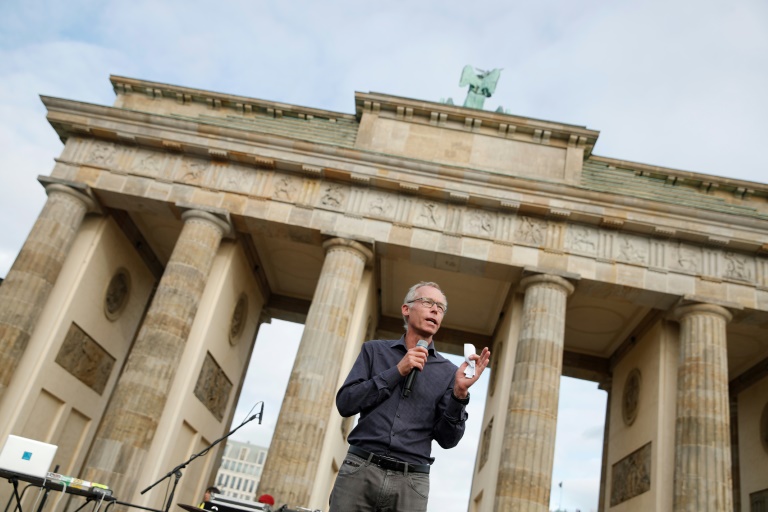
Johan Rockstrom, director of the Potsdam Institute for Climate Impact Research and co-author of the new book Earth For All, said that spiralling inflation was in large measure a result of decades of government failures to decarbonise their economies.

“I find it very disturbing that our political leaders in Europe are unable to communicate that high living costs right now are caused by higher prices on fossil fuels,” he told AFP at the book’s launch on Tuesday. 

“So this is fossil fuel-driven, supply-driven inflation. If 20 years ago you invested in solar (panels) or had a share in a wind farm, you’re not affected today. 

“The only reason why we have this crisis now is that we’ve had 30 years of underinvestment in preparing towards this turbulent phase which we knew would be coming,” said Rockstrom. 

“We’ve been saying since 1990 that we need to phase out the fossil fuel-driven economy towards a renewable-driven economy. And now here we are — we’re now hitting the wall.”

European energy prices soared to new records last week ahead of what many analysts expect to be a challenging winter as Russia’s invasion of Ukraine continues to disrupt oil and gas supplies.

The year-ahead contract for German electricity reached 995 euros ($995) per megawatt hour, while the French equivalent surged past 1,100 euros — a more than tenfold increase in both countries from last year.

In Britain, energy regulator Ofgem said it would increase the electricity and gas price cap almost twofold from October 1 to an average £3,549 ($4,197) per year.

Rockstrom, who helped pioneer the concept of planetary boundaries — thresholds of pollution or warming within which humanity can thrive — said he hoped the current energy price crisis would be “communicated as another nail in the coffin” for oil, gas and coal.

“This should accelerate our transition towards renewable energy systems,” he said. 

– ‘Giant changes required’ –

Rockstrom has spent two years working on Earth For All — a guide to help humans survive climate change — with several of the authors of The Limits to Growth.

Written 50 years ago, that groundbreaking work warned that the development of civilisation could not go on indefinitely with no limit to resource consumption.

The new book outlines two growth trajectories this century.

The first — “Too Little, Too Late” — sees the economic orthodoxy of the last 40 years endure, leading to ever starker inequality as the Earth’s average temperature rises by 2.5 degrees Celsius (36.5 degrees Farenheit) by 2100.  

The second — the “Great Leap” scenario — sees unprecedented mobilisation of resources to produce five changes: eradicate poverty and inequality, empower women, transform the global food system towards more plant-based diets, and rapidly decarbonise energy. 

In particular, the book says the International Monetary Fund must provide $1.0 trillion annually to poorer nations to create green jobs, and rich governments to cancel debt to low-income creditors while giving their own citizens a “universal basic dividend” to help share corporate windfalls.

Rockstrom said the tools are already available to make the Great Leap possible.

“(It) is to do with the current knowledge on all the current existing technologies and practices and policies. If we could put in place all the five turnarounds and scale them up very fast, that’s the best outcome we can have.”

– ‘Urgency point’ –

The project comes after another record-breaking summer that has seen unprecedented heatwaves and drought in Europe and China and devastating floods in Pakistan. 

Rockstrom said the world had reached an “urgency point” as climate-linked disasters occur more frequently than predicted in climate models. 

“Here we are — at 1.1C (of warming now), the things that we thought would happen perhaps at 2C are happening much earlier and are hitting harder,” he said. 

Rockstrom was recently involved in a paper studying the “climate endgame” — scenarios such as the complete melting of the Greenland ice sheet or heating “feedback loops”, which are deemed by scientists to be extremely unlikely and, he believes, therefore understudied.

He explained the possibility of “self-amplified warming”, which is when the Earth itself is triggered into producing emissions from carbon stored in forests and methane in permafrost.

“There is a risk of rolling towards a worst-case scenario, not because we are ploughing in more carbon dioxide and greenhouse gasses from (manmade) sourcing but that the Earth system itself starts emitting these greenhouse gasses.”

Rockstrom said scientists needed to “open up a much broader palette of scenarios” in climate models that could incorporate the kind of low-probability, high-impact events that could lead to runaway warming. 

As to whether governments were finally ready to take the kind of system-changing action needed to avoid climate meltdown, Rockstrom said that he was “actually quite pessimistic”.

“If you asked me three years ago, I would have said I was optimistic — we saw a post-Paris momentum and more policies coming into play and businesses stepping on board,” he said.

“Now with the post-Covid meltdown in public trust and the rise of populism … I cannot see that we are really ready to implement all these giant leaps.

“That’s why timing is really important. We need to bring back the debate and we have to have a conversation about the urgency of action. But is it a challenge? Definitely.”
Fossil fuels causing cost-of-living crisis: climate expert

The cost-of-living crisis pushing millions of people towards poverty in Europe is driven by fossil fuels, according to a leading Earth systems scientist, who has warned that global heating risks causing runaway climate change. 

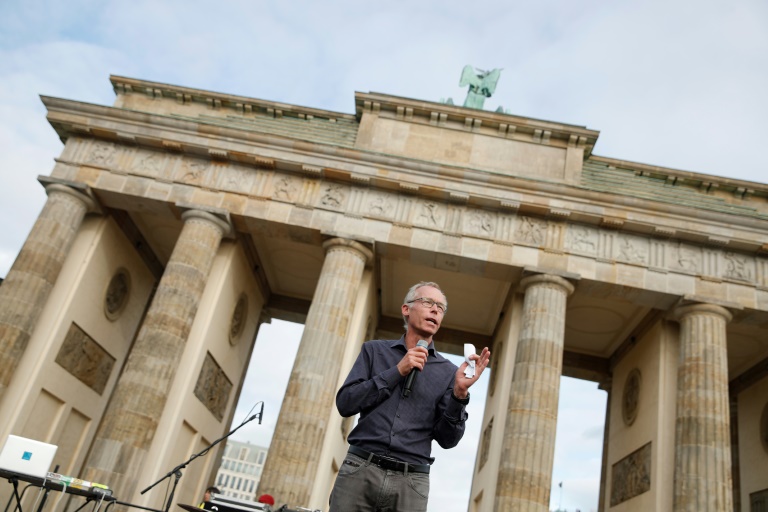
Johan Rockstrom, director of the Potsdam Institute for Climate Impact Research and co-author of the new book Earth For All, said that spiralling inflation was in large measure a result of decades of government failures to decarbonise their economies.

“I find it very disturbing that our political leaders in Europe are unable to communicate that high living costs right now are caused by higher prices on fossil fuels,” he told AFP at the book’s launch on Tuesday. 

“So this is fossil fuel-driven, supply-driven inflation. If 20 years ago you invested in solar (panels) or had a share in a wind farm, you’re not affected today. 

“The only reason why we have this crisis now is that we’ve had 30 years of underinvestment in preparing towards this turbulent phase which we knew would be coming,” said Rockstrom. 

“We’ve been saying since 1990 that we need to phase out the fossil fuel-driven economy towards a renewable-driven economy. And now here we are — we’re now hitting the wall.”

European energy prices soared to new records last week ahead of what many analysts expect to be a challenging winter as Russia’s invasion of Ukraine continues to disrupt oil and gas supplies.

The year-ahead contract for German electricity reached 995 euros ($995) per megawatt hour, while the French equivalent surged past 1,100 euros — a more than tenfold increase in both countries from last year.

In Britain, energy regulator Ofgem said it would increase the electricity and gas price cap almost twofold from October 1 to an average £3,549 ($4,197) per year.

Rockstrom, who helped pioneer the concept of planetary boundaries — thresholds of pollution or warming within which humanity can thrive — said he hoped the current energy price crisis would be “communicated as another nail in the coffin” for oil, gas and coal.

“This should accelerate our transition towards renewable energy systems,” he said. 

– ‘Giant changes required’ –

Rockstrom has spent two years working on Earth For All — a guide to help humans survive climate change — with several of the authors of The Limits to Growth.

Written 50 years ago, that groundbreaking work warned that the development of civilisation could not go on indefinitely with no limit to resource consumption.

The new book outlines two growth trajectories this century.

The first — “Too Little, Too Late” — sees the economic orthodoxy of the last 40 years endure, leading to ever starker inequality as the Earth’s average temperature rises by 2.5 degrees Celsius (36.5 degrees Farenheit) by 2100.  

The second — the “Great Leap” scenario — sees unprecedented mobilisation of resources to produce five changes: eradicate poverty and inequality, empower women, transform the global food system towards more plant-based diets, and rapidly decarbonise energy. 

In particular, the book says the International Monetary Fund must provide $1.0 trillion annually to poorer nations to create green jobs, and rich governments to cancel debt to low-income creditors while giving their own citizens a “universal basic dividend” to help share corporate windfalls.

Rockstrom said the tools are already available to make the Great Leap possible.

“(It) is to do with the current knowledge on all the current existing technologies and practices and policies. If we could put in place all the five turnarounds and scale them up very fast, that’s the best outcome we can have.”

– ‘Urgency point’ –

The project comes after another record-breaking summer that has seen unprecedented heatwaves and drought in Europe and China and devastating floods in Pakistan. 

Rockstrom said the world had reached an “urgency point” as climate-linked disasters occur more frequently than predicted in climate models. 

“Here we are — at 1.1C (of warming now), the things that we thought would happen perhaps at 2C are happening much earlier and are hitting harder,” he said. 

Rockstrom was recently involved in a paper studying the “climate endgame” — scenarios such as the complete melting of the Greenland ice sheet or heating “feedback loops”, which are deemed by scientists to be extremely unlikely and, he believes, therefore understudied.

He explained the possibility of “self-amplified warming”, which is when the Earth itself is triggered into producing emissions from carbon stored in forests and methane in permafrost.

“There is a risk of rolling towards a worst-case scenario, not because we are ploughing in more carbon dioxide and greenhouse gasses from (manmade) sourcing but that the Earth system itself starts emitting these greenhouse gasses.”

Rockstrom said scientists needed to “open up a much broader palette of scenarios” in climate models that could incorporate the kind of low-probability, high-impact events that could lead to runaway warming. 

As to whether governments were finally ready to take the kind of system-changing action needed to avoid climate meltdown, Rockstrom said that he was “actually quite pessimistic”.

“If you asked me three years ago, I would have said I was optimistic — we saw a post-Paris momentum and more policies coming into play and businesses stepping on board,” he said.

“Now with the post-Covid meltdown in public trust and the rise of populism … I cannot see that we are really ready to implement all these giant leaps.

“That’s why timing is really important. We need to bring back the debate and we have to have a conversation about the urgency of action. But is it a challenge? Definitely.”
S.Sudan's ex-rebels set to join unified army

More than 50,000 fighters including former rebels from rival camps in South Sudan’s civil war were set to be integrated into the country’s army in a long-overdue graduation ceremony on Tuesday.

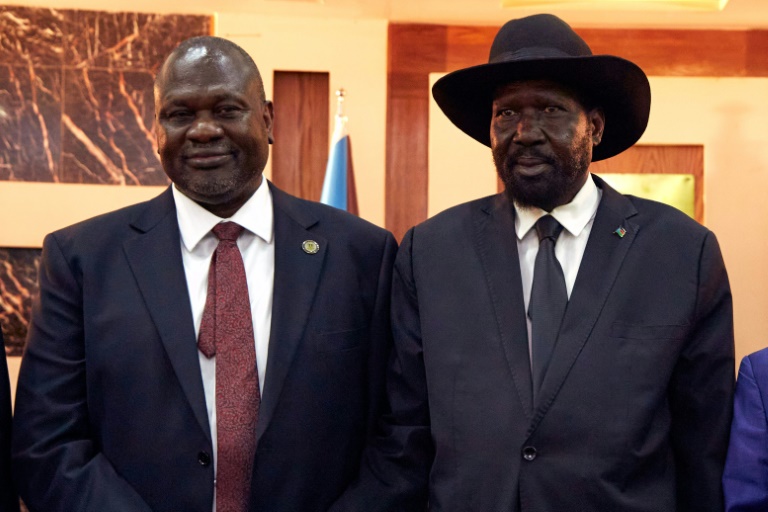
The unification of forces loyal to President Salva Kiir and his rival, Vice President Riek Machar, was a key condition of the 2018 peace deal that ended the brutal five-year conflict in which nearly 40,000 people died.

Since achieving independence in 2011 from Sudan, the world’s youngest nation has lurched from crisis to crisis, battling flooding, hunger, ethnic violence and political turmoil.

The ceremony in the capital Juba, held under tight security, comes against a backdrop of growing frustration in the international community over delays in implementing the peace deal, as explosions of violence threaten to undo even fragile gains.

Earlier this month, South Sudan’s leaders — appointed to run a transitional government — announced that they would remain in power two years beyond an agreed deadline, sparking international concern.

The transition period was meant to conclude with elections in December this year, but the government has so far failed to meet core provisions of the agreement, including drafting a constitution.

According to the peace deal, the troops’ graduation ceremony was supposed to take place in 2019. 

But the two leaders remained deadlocked over the division of senior posts in the unified armed forces command, only inking an agreement in April this year.

Over 52,000 men and women — drawn from Kiir and Machar’s parties as well as the South Sudan Opposition Alliance — will take part in Tuesday’s proceedings to officially join the army, police and other bodies responsible for national security.

The government has invited representatives from neighbouring nations including Ugandan President Yoweri Museveni and Sudanese coup leader General Abdel Fattah al-Burhan to attend the ceremony.

– Unpaid salaries –

The addition of tens of thousands of former rebels to the government’s payroll will add to already crushing economic challenges — civil servants have been unpaid for months.

But the move was nevertheless met with optimism in some quarters, with one former rebel telling AFP he was excited to join the police force.

“I am looking forward to serving my people. I just want to tell our people that finally peace has come after a long struggle,” said the former rebel who only identified himself as John, citing government restrictions.

Many of the new graduates will carry sticks instead of guns at the ceremony, because of a years-long arms embargo imposed by the UN Security Council.

The UN has repeatedly criticised South Sudan’s leadership for its role in stoking violence, cracking down on political freedoms and plundering public coffers.

The United States last month pulled out of two peace process monitoring organisations in South Sudan due to the government’s failure to meet reform milestones, citing a “lack of sustained progress”.

Fighting across southern front as Ukraine wages counter-offensive

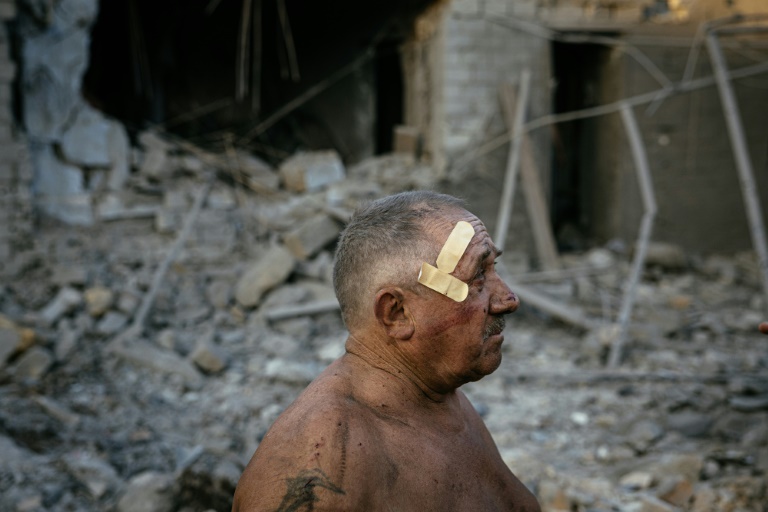
Intense fighting was raging on Tuesday across the southern Ukrainian region of Kherson occupied by Russia, Kyiv’s presidency said, as its troops pressed counter-offensives “in various directions”.

Most of region of Kherson bordering the Black Sea — and its provincial capital of the same name — were seized by Moscow’s military at the start of the invasion six months ago.

With the war in the eastern Donbas region largely stalled, analysts have said for weeks that combat is likely to shift south to break the stalemate before winter comes.

Also on Tuesday, fresh Russian strikes in the northeast city of Kharkiv killed at least five people, prompting officials to urge people to stay indoors.  

But much of the attention remained on the counter-offensive in the south. 

In its morning update the president’s office in Kyiv said “heavy fighting is taking place in almost the entire territory of the Kherson region”.

“Powerful explosions continued throughout the day and throughout the night” and “the Armed Forces of Ukraine launched offensive actions in various directions,” it added.

In his nightly address on Monday, President Volodymyr Zelensky was coy about Ukraine’s overarching strategy whilst striking a bullish tone.

“We shouldn’t betray our troops by giving information about any of our plans,” he said. 

“You won’t hear the specifics from any person in charge because this is war, and that’s how this works.” 

“But the occupiers should know that we will push them to our borderline,” he added. 

“If they want to survive, it is time for the Russian military to flee. Go home.”

– ‘Stay inside’ –

Britain’s defence ministry said starting early Monday “several brigades of the Ukrainian Armed Forces increased the weight of artillery fires in front line sectors across southern Ukraine”.

But it warned that since the start of August, Russia has made “significant efforts” to reinforce troops on the western bank of the Dnipro River which splits Kherson city.

“It is not yet possible to confirm the extent of Ukrainian advances,” the ministry said on Tuesday.

In Ukraine’s second city Kharkiv, at least five people were killed Tuesday as Russian shelling hit the centre of town, the mayor Igor Terekhov said. 

Seven people were also wounded, and regional governor, Oleg Synegubov, gave a slightly lower death toll of four and said another four were injured.

“The Russian occupiers shelled the central districts of Kharkiv,” Synegubov said on Telegram, as he warned residents to “stay inside the shelters”. 

– Challenging offensive –

Moscow’s troops seized Kherson, a town of 280,000 inhabitants, on March 3. It was the first major city to fall following Moscow’s invasion of Ukraine on February 24.

In an update on Facebook early Tuesday, Ukraine’s Southern Command said the situation remained “tense” in its area of operations.

“The enemy attacked our positions five times, but was unsuccessful,” it said. 

The city of Mykolaiv, just northwest of Kherson, had come under “massive bombardment” from Russian anti-aircraft missiles, with two civilians killed and 24 wounded, it said.

On Monday, Russia’s defence ministry claimed it had repulsed attacks in the Kherson and neighbouring Mykolaiv regions and inflicted “heavy losses” on Ukrainian forces.

The ministry said Ukraine’s troops attempted attacks in “three directions” but that they lost more than 560 servicemen and 26 tanks.

“Another attempt at offensive actions by the enemy failed miserably,” the ministry said.

US National Security Council spokesman John Kirby said Kyiv’s counter-attack was already impacting Russia’s capabilities.

“The Russians have had to pull resources from the east simply because of reports that the Ukrainians might be going more on the offence in the south,” Kirby told journalists on Monday, CNN reported.

Meanwhile, a senior Pentagon official said Russia was struggling to find soldiers to fight in Ukraine and that many new recruits were older, in poor shape and lacking training.

Most markets bounce after Powell-induced sell-off

Markets mostly rose Tuesday on bargain-buying following the latest sell-off, but confidence remains at a premium as traders contemplate the prospect of more Federal Reserve interest rate hikes and a possible recession.

Wall Street suffered another day in the red after Friday’s capitulation in response to a warning from US central bank boss Jerome Powell that more tightening was needed to bring inflation down from four-decade highs.

Bets on a third successive three-quarter-point increase next month have surged since his comments, which blew a hole in a recent rally across markets from their June lows.

Now there is a growing fear that the Fed’s priority of beating inflation at any cost will damage the world’s top economy, which is already in a technical recession following two straight quarters of contraction.

“The markets are spooked because they are afraid that the Fed could create a hard landing — that they’ll raise rates into a recession, and that will be really painful for the economy and for corporate profits,” Terri Spath, of Zuma Wealth, told Bloomberg Television.

After Monday’s retreat, Asian equities fared a little better, as bargain buyers jumped back, though sentiment was still weak.

Tokyo, Sydney, Seoul, Singapore, Mumbai, Taipei, Bangkok, Jakarta and Wellington all rose.

But Hong Kong, Shanghai and Manila fell.

London, Paris and Frankfurt edged up in the morning.

In light of the sell-off in response to the Powell speech, Minneapolis Fed President Neel Kashkari said it appeared traders had now accepted the fact that policymakers were focused on fighting price rises.

“People now understand the seriousness of our commitment to getting inflation back down to two percent,” he said.

And Michael Hewson of CMC Markets added: “The effect of higher interest rates as well as the rising cost of living has already started to manifest itself in the most recent lending data.

“It’s been a trend that has been in place since the start of this year, but appears to be accelerating as we head into the autumn.”

While central banks around the world commit to lifting rates to fight inflation, a major driver of the gains continues to cause a headache.

A warning from OPEC kingpin Saudi Arabia that it could cut output has put fresh upward pressure on the commodity, offsetting concerns about a hit to demand from any economic slowdown.

Both main contracts dipped in Asian trade but held most of the more than four percent rally enjoyed Monday.

Waning optimism about an imminent Iran nuclear deal, fresh unrest in Libya and China’s economic travails were adding to the oil market’s strength.

“A combination of fresh supply risks from Libya, along with uncertainty over the upcoming OPEC+ meeting, has provided a boost,” said Warren Patterson of ING Groep NV.

But he added that “fundamentally, the market is in a more comfortable state, and in the absence of a large supply disruption or OPEC+ intervention, it is difficult to see significant upside in the short term”.

– Key figures at around 0810 GMT –

Tokyo – Nikkei 225: UP 1.1 percent at 28,195.58 (close)

Hong Kong – Hang Seng Index: DOWN 0.4 percent at 19,949.03 (close)

Shanghai – Composite: DOWN 0.4 percent at 3,227.22 (close)

London – FTSE 100: UP 0.7 percent at 7,481.54

Euro/dollar: UP at $1.0027 from $0.9998 on Monday

Pound/dollar: UP at $1.1739 from $1.1703

Euro/pound: DOWN at 85.41 pence from 85.42 pence 

Dollar/yen: DOWN at 138.38 yen from 138.73 yen

West Texas Intermediate: UP 0.4 percent at $97.36 per barrel

Brent North Sea crude: UP 0.1 percent at $105.17

New York – Dow: DOWN 0.6 percent at 32,098.99 (close)

Israel sentences World Vision ex-Gaza chief to 12 years for aiding Hamas

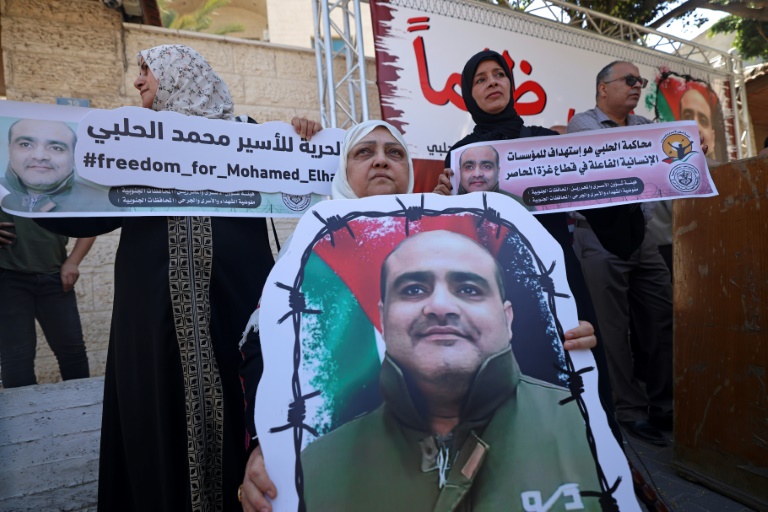
An Israeli court on Tuesday sentenced the former Gaza head of a major US-based aid agency to 12 years in prison for funnelling millions of dollars to Islamist group Hamas.

The Beersheba district court in southern Israel issued a sentence of “12 years’ prison time, less the detention” already served for World Vision’s Mohammed al-Halabi, who has been jailed throughout the past six years of court proceedings.

The sentencing comes after the court issued a ruling in June that Halabi was guilty of siphoning off millions of dollars and tonnes of steel to Hamas, which controls the Palestinian enclave.

Halabi, who was arrested in June 2016 and indicted in August that year, has consistently denied any irregularities.

His lawyer reiterated his claim to innocence following Tuesday’s sentencing.

“He says that he’s innocent, he did nothing and there is no evidence,” Maher Hanna said. “On the contrary, he proved in the court above any reasonable doubt that he made sure that no money will be (given) directly to Hamas.”

According to Hanna, if Halabi had admitted to wrongdoings, he would have been released.

“But he insisted that truth also has value. And for his personal values and for the international humanitarian work values, he insisted on the truth, and he cannot admit a thing that he did not do,” the lawyer said.

– Secret evidence –

Hanna said they would appeal the verdict to the supreme court.

The Israeli prosecution said it was also considering an appeal.

“These are very severe deeds, the defendant funded terror with millions of shekels, helped strengthen the Hamas tunnel network,” Moran Guez of the southern district attorney’s office.

“We asked for 16-21 years prison. We’ll read the sentencing and consider our actions,” she told reporters.

Halabi had been convicted of membership in a terrorist group — Hamas — and of financing terrorist activities, of having “transmitted information to the enemy” as well as the possession of a weapon.

Much of the evidence against him was kept secret, with Israel citing “security concerns”, prompting his legal team to question the verdict’s legitimacy.

In its sentencing, the court said Halabi had joined the military wing of Hamas in 2004, and was “planted in World Vision” the following year.

The court said that besides 12 tonnes of steel and other materials provided to Hamas for their tunnels and positions, he also gave the Islamist rules of the territory “millions of dollars” of World Vision’s money “to fund terror”.

The 12-year sentence was also meant to deter Gazans working in international aid groups from aiding Hamas, according to the court.

“There are huge amounts of money that if they reach terror organisations, will contribute to strengthening the terror regime in Gaza,” the sentencing said.

– ‘Deeply disappointing’ –

World Vision, a US-based Christian charity with almost 40,000 employees globally, said the sentencing was “deeply disappointing”.

Its spokesperson Sharon Marshall stressed her objection to “any form of terrorism or activities that support terrorism,” saying they “don’t see any evidence of those things in this case.”

“We fully support Mohammed’s intent to appeal the verdict and the sentence in this case, and we call for a fair and transparent process at the supreme court,” she said in a statement.

“We remain committed to improving the lives of vulnerable children in the region and hope we’ll be able to advance our humanitarian work in the context of our longstanding cooperation with the relevant authorities in Palestine and Israel,” Marshall said.

Omar Shakir, Israel and Palestine director at Human Rights Watch, called the 12-year sentence a “profound miscarriage of justice,” with the six-year trial and use of secret evidence constituting a “mockery of due process”.

“He should long ago have been released,” Shakir said in a statement.

Following Halabi’s arrest, the Australian government, a major donor to World Vision, announced it was freezing funding to projects in the Gaza Strip.

A subsequent Australian government probe found no evidence of embezzlement.

Japan business leader and monk Inamori dies at 90

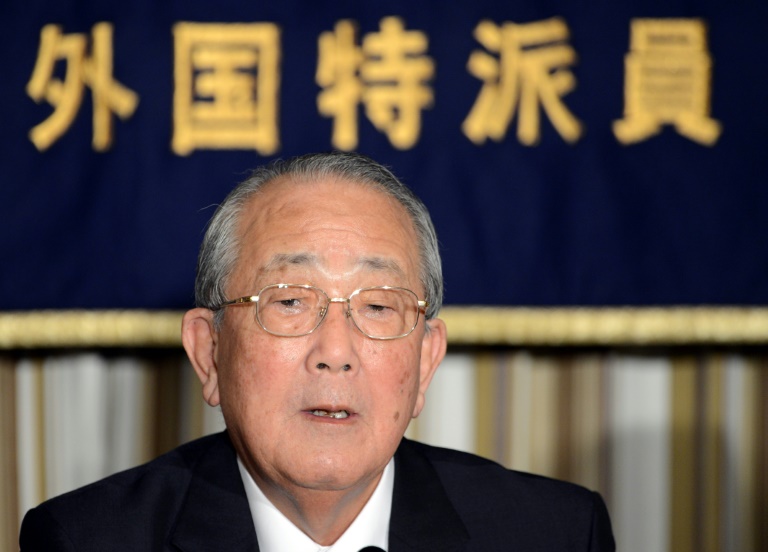
Kazuo Inamori, a business guru and ordained Buddhist monk who reversed the fortunes of debt-ridden Japan Airlines, has died aged 90, a company he founded said Tuesday.

The entrepreneur was one of Japan’s most respected executives, having established electric components maker Kyocera and another firm that later became part of telecoms group KDDI.

He died “of old age” at his Kyoto home on August 24 and a family funeral has since been held, Kyocera said in a statement.

Japan’s government convinced Inamori to come out of retirement in 2010 to head Japan Airlines (JAL) after the ailing carrier filed for bankruptcy.

The businessman — who was 78 at the time — said he was a “complete amateur” in the transport industry, but promised to “do my best”.

His overhaul was successful and JAL shares were relisted on the stock exchange in 2012, less than three years after the airline was forced to delist.

Inamori was an advocate of reducing government interference in business and he was known for his “amoeba management” theory, which grants autonomy to each unit of a company while group members pool their knowledge.

He was also a philanthropist whose close work with Alfred University in the US state of New York led it to rename its engineering department after him.

After stepping down from an active role at Kyocera, he earned the status of Buddhist monk in 1997 at a Kyoto temple, but he did not live a reclusive religious lifestyle.

Kyocera said it planned to hold a separate memorial for Inamori but details had not yet been decided.

Japan business leader and monk Inamori dies at 90

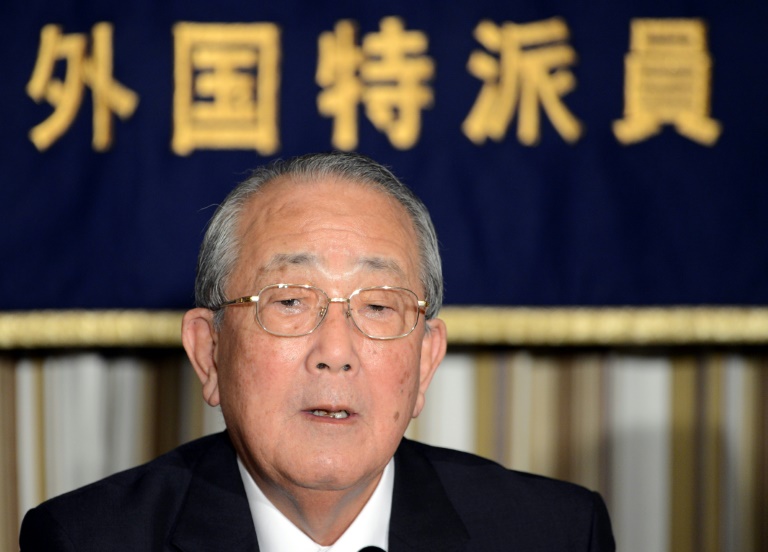
Kazuo Inamori, a business guru and ordained Buddhist monk who reversed the fortunes of debt-ridden Japan Airlines, has died aged 90, a company he founded said Tuesday.

The entrepreneur was one of Japan’s most respected executives, having established electric components maker Kyocera and another firm that later became part of telecoms group KDDI.

He died “of old age” at his Kyoto home on August 24 and a family funeral has since been held, Kyocera said in a statement.

Japan’s government convinced Inamori to come out of retirement in 2010 to head Japan Airlines (JAL) after the ailing carrier filed for bankruptcy.

The businessman — who was 78 at the time — said he was a “complete amateur” in the transport industry, but promised to “do my best”.

His overhaul was successful and JAL shares were relisted on the stock exchange in 2012, less than three years after the airline was forced to delist.

Inamori was an advocate of reducing government interference in business and he was known for his “amoeba management” theory, which grants autonomy to each unit of a company while group members pool their knowledge.

He was also a philanthropist whose close work with Alfred University in the US state of New York led it to rename its engineering department after him.

After stepping down from an active role at Kyocera, he earned the status of Buddhist monk in 1997 at a Kyoto temple, but he did not live a reclusive religious lifestyle.

Kyocera said it planned to hold a separate memorial for Inamori but details had not yet been decided.

China state support for economy this year exceeds 2020, premier says

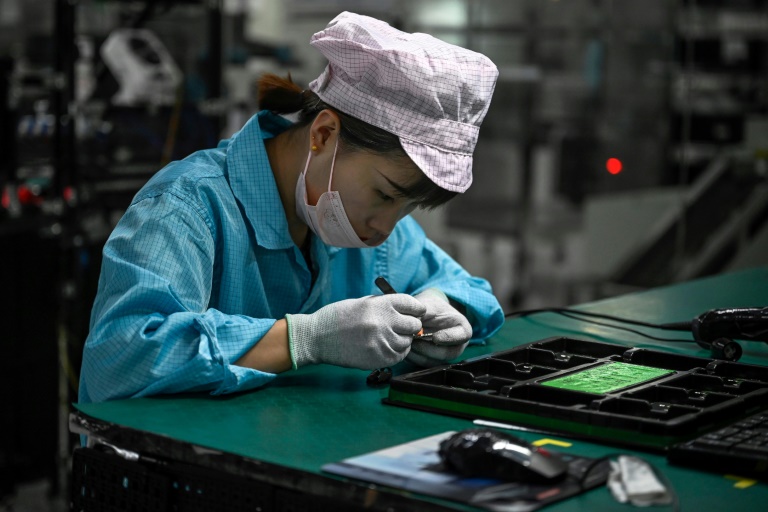
State support for China’s economy this year is now greater than it was in 2020, Beijing’s premier has said, surpassing help given at the height of the coronavirus pandemic as the country grapples with the impacts of its zero-Covid policy and a property sector crisis.

Economists have widely predicted that China will fail to meet its 5.5 percent GDP growth target, blaming record youth unemployment, ballooning developer debt and manufacturing disruptions from frequent Covid lockdowns.

“In response to new challenges, (we have) decisively launched a package of policies to stabilise the economy. Their strength surpasses those of 2020,” Premier Li Keqiang said during a Monday State Council conference.

China’s economy has also been battered by the two-month lockdown of Shanghai, a nationwide mortgage boycott, and a severe drought and heatwave which shut down manufacturing hubs and severely impacted the agricultural sector.

The grim economic outlook underscores the difficulty of balancing economic growth with the country’s strict zero-Covid policy, with targeted lockdowns, travel restrictions and mass testing depleting fiscal revenues and causing disruption to everyday life.

Li hinted at this fact earlier in August, telling officials “the number of people in difficulty has seen an increase” due to the virus and recent natural disasters.

Real estate sales, a major economic driver, fell 22 percent in August, year on year, while new home prices have fallen for 11 months straight, according to data released earlier this month.

China’s economic growth came in at just 0.4 percent on-year in the second quarter — its slowest rate since the pandemic began in 2020.

Beijing has taken a number of steps to help revive its economy, including a ramping-up of infrastructure investment, tax credits and loan facilities for SMEs. 

China’s banks last week lowered their benchmark lending rates, including on mortgage loans, for the second time this year.

Beijing also announced last week that it would allow local governments to issue more bonds.

But Ting Lu, an analyst at Nomura, wrote these measures would likely not be “game changers” due to the continued zero-Covid policy and the persistent distress affecting the property sector. 

China state support for economy this year exceeds 2020, premier says

State support for China’s economy this year is now greater than it was in 2020, Beijing’s premier has said, surpassing help given at the height of the coronavirus pandemic as the country grapples with the impacts of its zero-Covid policy and a property sector crisis.

Economists have widely predicted that China will fail to meet its 5.5 percent GDP growth target, blaming record youth unemployment, ballooning developer debt and manufacturing disruptions from frequent Covid lockdowns.

“In response to new challenges, (we have) decisively launched a package of policies to stabilise the economy. Their strength surpasses those of 2020,” Premier Li Keqiang said during a Monday State Council conference.

China’s economy has also been battered by the two-month lockdown of Shanghai, a nationwide mortgage boycott, and a severe drought and heatwave which shut down manufacturing hubs and severely impacted the agricultural sector.

The grim economic outlook underscores the difficulty of balancing economic growth with the country’s strict zero-Covid policy, with targeted lockdowns, travel restrictions and mass testing depleting fiscal revenues and causing disruption to everyday life.

Li hinted at this fact earlier in August, telling officials “the number of people in difficulty has seen an increase” due to the virus and recent natural disasters.

Real estate sales, a major economic driver, fell 22 percent in August, year on year, while new home prices have fallen for 11 months straight, according to data released earlier this month.

China’s economic growth came in at just 0.4 percent on-year in the second quarter — its slowest rate since the pandemic began in 2020.

Beijing has taken a number of steps to help revive its economy, including a ramping-up of infrastructure investment, tax credits and loan facilities for SMEs. 

China’s banks last week lowered their benchmark lending rates, including on mortgage loans, for the second time this year.

Beijing also announced last week that it would allow local governments to issue more bonds.

But Ting Lu, an analyst at Nomura, wrote these measures would likely not be “game changers” due to the continued zero-Covid policy and the persistent distress affecting the property sector. 

Close Bitnami banner
Bitnami