World

Greenland already locked in to major sea level rise: study

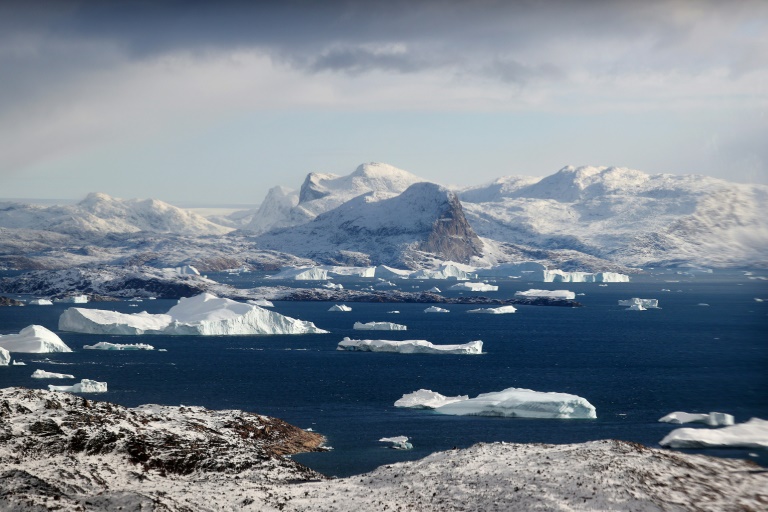
Even without any future global warming, Greenland’s melting ice sheet will cause major sea level rise with potentially “ominous” implications over this century as temperatures continue to rise, according to a study published Monday.

Rising sea levels — pushed up mainly by melting ice sheets on Greenland and Antarctica — are set to redraw the map over centuries and could eventually swamp land currently home to hundreds of millions of people, depending on humanity’s efforts to halt warming. 

The Greenland ice sheet is currently the main factor in swelling the Earth’s oceans, according to NASA, with the Arctic region heating at a faster rate than the rest of the planet. 

In the new study, published in Nature Climate Change, glaciologists found that regardless of any future fossil fuel pollution, warming to date will cause the Greenland ice sheet to shed 3.3 percent of its volume, committing 27.4 centimetres to sea level rise. 

While the researchers were not able to give an exact timeframe, they said most of it could happen by 2100 — meaning that current modelled projections of sea level rise could be understating the risks this century. 

The “shocking” results are also a lowest estimate because they do not take future warming into account, said lead author Jason Box, of the National Geological Survey of Denmark and Greenland. 

“It’s a conservative lower bound. The climate has only to continue warming around Greenland for more commitment,” he told AFP. 

If the high levels of melting seen in 2012 became an annual occurrence, the study estimated sea-level rise could be around 78 cm, enough to swamp vast swathes of low-lying coastlines and supercharge floods and storm surges. 

This should serve “as an ominous prognosis for Greenland’s trajectory through a 21st century of warming”, the authors said. 

In a landmark report on climate science last year, the Intergovernmental Panel on Climate Change (IPCC) said the Greenland ice sheet would contribute an estimated maximum of 18cm to sea level rise by 2100 under the highest emissions scenario. 

Box, who was an author on that report, said his team’s latest research suggests those estimates are “too low”. 

Instead of using computer models, Box and colleagues used two decades of measurements and observational data to predict how the Greenland ice sheet will adjust to the warming already experienced. 

Upper areas of the ice sheet adds mass through snowfall every year, but since the 1980s the territory has been running an ice “budget deficit”, which sees it lose more ice than it gains through surface melting and other processes.

– ‘Radical’ method –

The theory that researchers used was initially developed to explain changes in Alpine glaciers, said Box. 

This holds that if more snow piles up on top of a glacier, it causes lower areas to expand. In this case the reduced snow is driving shrinking in lower parts of the glacier as it rebalances, he said. 

Box said the methods his team used were “radically different” from computer modelling, but could complement this work to predict the impacts of sea level rise in the coming decades. 

He said while climate change was raising more immediate threats like food security, the accelerating pace of sea level rise will become a challenge. 

“It’s kind of decades in the future when it will just force its way onto the agenda because it will begin displacing people more and more and more,” he said.

The world has warmed an average of nearly 1.2 degrees Celsius since pre-industrial times, unleashing a catalogue of impacts from heatwaves to more intense storms.  

Under the Paris climate deal, countries have agreed to limit warming to 2C. 

But in their report on climate impacts this year, the IPCC said even if warming is stabilised at 2C to 2.5C, “coastlines will continue to reshape over millennia, affecting at least 25 megacities and drowning low-lying areas”, which were home to up to 1.3 billion people in 2010. 

Stocks extend losses after Fed chief's rates warning

Stocks slid further Monday and the dollar rallied as traders continued to digest Federal Reserve chief Jerome Powell’s warning of more interest rate hikes to fight inflation.

Wall Street’s main indices opened lower, extending losses of between three and four percent on Friday immediately following Powell’s speech where he clearly stated his priority of bringing inflation down from four-decade highs, even at the expense of economic growth.

“Restoring price stability will take some time and requires using our tools forcefully to bring demand and supply into better balance,” he told the Jackson Hole gathering of global monetary policymakers.

The comments dealt a blow to markets, which had in recent weeks enjoyed a bounce from June lows as weak economic data and a slowdown in price rises fanned hopes the Fed would temper its interest rate hike drive and bring down rates next year.

Powell “didn’t splash some cold water on the stock market’s face,” said market analyst Patrick O’Hare at Briefing.com. 

“He dumped a whole bucket of ice water on it and the stock market wasn’t ready for the ice bucket challenge.”

Yanxi Tan of Malayan Banking said: “The game of assessing the Fed outlook has shifted from guessing how high the peak rate might be to also understanding how long it might stay there for.” 

Analysts said the chances of a third successive 75 basis-point increase next month had risen, with US Treasury yields — a gauge of future interest rates — surging. That in turn helped propel the dollar higher.

The dollar closed in on the 140 yen mark not seen since 1998, but an easing in European gas prices helped the euro limit its losses.

“Powell sent the dollar rallying… on the back of a solid divergence between the decidedly hawkish Fed, and more hawkish, but increasingly worried other central banks,” said Swissquote Bank analyst Ipek Ozkardeskaya.  

“Other major central banks are also hawkish, but they are less aggressive than the Fed,” she added.

Asian stocks ended sharply lower save for Shanghai, which eked out a small gain.

In European trading, both Paris and Frankfurt ended the day in the red.

London was closed for a public holiday.

European gas prices retreated from record highs set last week after Germany said Sunday it is replenishing its gas stocks more quickly than expected, and should meet an October target early despite drastic Russian supply cuts.

An emergency meeting of EU energy ministers was called for next week, with European Commission chief Ursula von der Leyen saying the bloc is working on an “emergency intervention” to rein in electricity prices sent soaring by Russia’s war in Ukraine as well as a structural reform of the market.

Oil prices jumped despite talk that surging interest rates could choke off the economic recovery as traders focused on supply concerns.

“Oil rallied on rising risks of a potential civil war that could put Libyan output at risk and over growing expectations that OPEC+ is positioning themselves to cut production,” said OANDA analyst Edward Moya. 

The commodity has fallen in recent weeks on bets that demand will be hit by an expected drop in economic output, particularly from China as it continues to battle a Covid-19 outbreak with lockdowns.


– Key figures at around 1530 GMT –

New York – Dow: DOWN 0.7 percent at 32,064.39 points 

EURO STOXX 50: DOWN 1.0 percent at 3,569.51

Frankfurt – DAX: DOWN 0.6 percent at 12,892.99 (close)

Paris – CAC 40: DOWN 0.8 percent at 6,222.28 (close)

London – FTSE 100: Closed for public holiday

Tokyo – Nikkei 225: DOWN 2.7 percent at 27,878.96 (close)

Hong Kong – Hang Seng Index: DOWN 0.7 percent at 20,023.22 (close)

Shanghai – Composite: UP 0.1 percent at 3,240.73 (close)

Euro/dollar: UP at $0.9989 from $0.9964 Friday

Pound/dollar: DOWN at $1.1704 from $1.1743

Euro/pound: UP at 85.34 pence from 84.85 

Dollar/yen: UP at 138.67 yen from 137.38

West Texas Intermediate: UP 3.2 percent at $95.99 per barrel

Brent North Sea crude: UP 3.0 percent at $103.98

burs-rl/rox/kjm

EU plans emergency action to halt energy price rise

The European Union is preparing to take emergency action to reform the electricity market and get a grip on energy prices that have soared since Russia invaded Ukraine, senior officials said Monday.

Energy ministers from EU member states will hold urgent talks in Brussels on September 9.

High gas prices have been followed by disruptions in the nuclear and hydroelectric sectors amid a heatwave blamed on climate change — threatening businesses and households with massive bills.

“The skyrocketing electricity prices are now exposing the limitations of our current electricity market design,” EU Commission president Ursula von der Leyen told a forum in Bled, Slovenia.

“It was developed for different circumstances. That’s why we are now working on an emergency intervention and a structural reform of the electricity market.”

Separately, Germany’s Chancellor Olaf Scholz also called for action.

Speaking at a press conference after talks with Czech Prime Minister Petr Fiala, Scholz said that “we are in complete agreement that rapid action has to be taken” to reform the market.

“My impression is, I think our common impression is, that this will now succeed more quickly across Europe than under other framework conditions,” he said.

The Czech Republic holds the rotating presidency of the European Union, and it was Czech Industry and Trade Minister Jozef Sikela who announced next week’s emergency talks.

“We must fix the energy market. Solution on the EU level is by far the best we have,” he said.

The European Commission has yet to publish a detailed plan for market reform, but some member states have been pushing for a temporary cap on wholesale gas prices.

EU officials are also considering measures to split electricity price setting from the gas price and take into account other energy sources.

Some member states have launched price reduction measures of their own, but Brussels believes EU capitals working together will be more effective.

“The main thing we have to do is to separate electricity prices from power prices and hence prevent Putin from dictating electricity prices to Europe by tampering with gas supplies,” Sikela said.

“Therefore one of the proposals we are coming up with is putting a ceiling on prices of gas used in the production of electricity. This will be a functional and less costly solution that should reduce prices.”

The move comes as the 27-nation bloc is trying to shed dependence on supplies of Russian oil and gas following Moscow’s assault on Ukraine.

Reduced supplies and anxiety over the future have sparked rocket growth in energy prices across Europe.

– Private pools –

On Friday, Germany and France reported record electricity prices, with the German year-ahead contract jumping to 995 euros ($995) per megawatt hours while the French equivalent soared past 1,100 euros — compared to 85 euros in both countries last year.

The European Commission is planning to cut EU dependency on Russian gas by two-thirds this year and end its reliance on Russian supplies of the fuel before 2030.

The EU has targeted the Russian energy sector in its sanctions, banning coal imports from Russia.

Its plan to cut gas consumption across the bloc by 15 percent to cope with the energy price crisis came into effect earlier this month.

The aim is for the EU to be able to bolster its reserves of gas in time for what is likely to be a very tough winter.

Some EU nations are launching power saving drives, including measures to cut back on air conditioning, switch off illuminated advertising screens at night and banning the heating of private swimming pools.

Germany said on Sunday is was replenishing its gas stocks more quickly than expected and should meet an October target early.

Some member countries, however, have had carve-outs from strictly following the rules as they are too dependent on Russian supplies.

IAEA team heads to Ukraine nuclear plant, as offensive launched in south

International Atomic Energy Agency chief Rafael Grossi said on Monday he was en route to inspect Ukraine’s Zaporizhzhia nuclear plant, as Kyiv’s forces launched a counteroffensive to retake the occupied southern region of Kherson.

The coastal region of Kherson and its capital city of the same name have been contested by Russian troops since the war broke out six months ago.

“Today there was a powerful artillery attack on enemy positions in… the occupied Kherson region,” local government official Sergey Khlan told Ukraine’s Pryamyi TV channel.

“This is what we have been waiting for since the spring — it is the beginning of the de-occupation of Kherson region.”

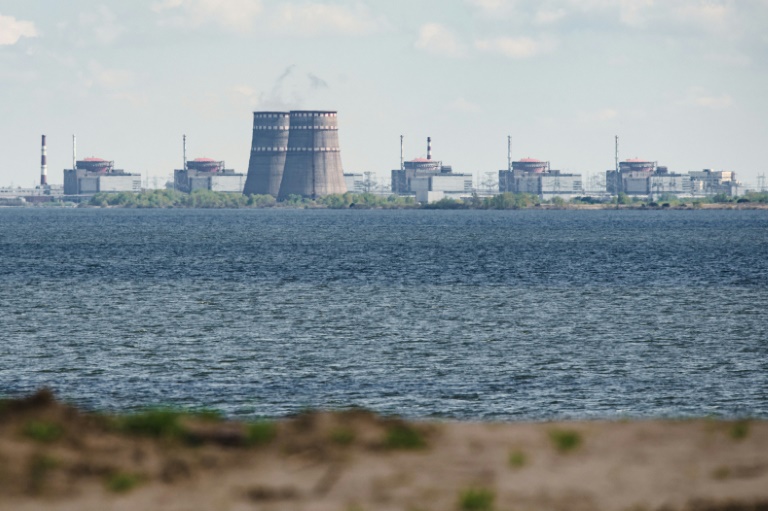
Kherson city lies some 200 kilometres (125 miles) southwest of the Zaporizhzhia nuclear plant — Europe’s largest atomic facility — which has also been occupied by Russian troops since early March. 

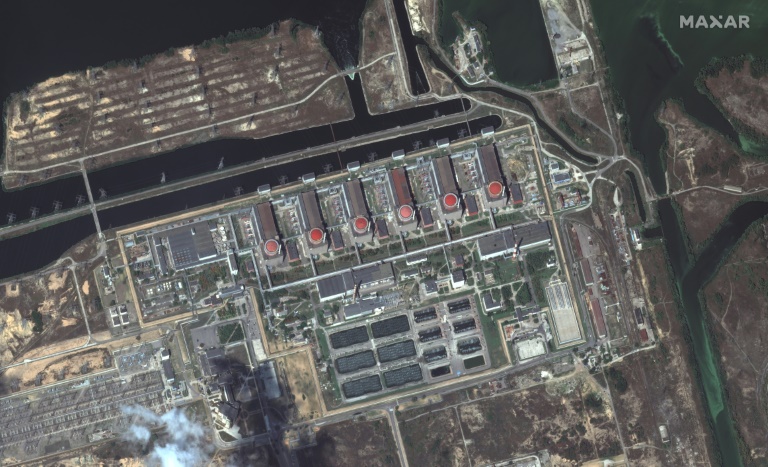
The plant was targeted over the weekend by fresh shelling, its operator said, with Moscow and Kyiv trading blame for attacks around the complex of six nuclear reactors in Energodar, a town on the banks of the Dnipro River.

Ukraine’s nuclear agency Energoatom has warned of the risk of a radiation leak.

Russian troops “continued to fire at Energodar and the Zaporizhzhia nuclear power plant” on Sunday, injuring 10, among them four plant workers, it said in an update early on Monday.

As of 10:00 am (0700 GMT), the plant was operating “with the risk of violating radiation and fire safety standards”. 

But Russia’s defence ministry accused Ukrainian troops of shelling near the plant on Sunday, claiming it had shot down a “Ukrainian strike drone” approaching a nuclear fuel and radioactive waste storage area. 

And Kremlin spokesman Dmitry Peskov urged the international community “to put pressure on the Ukrainian side so it stops endangering the European continent by shelling”.

Peskov said Russia saw the IAEA visit as “necessary” and had been “waiting for this mission for a long time”, insisting it would ensure its safety in the face of “constant” risks. 

– ‘Radiation blackmail’ –

Ukrainian President Volodymr Zelensky on Monday called for sanctions against Russia’s state nuclear energy agency Rosatom over the occupation of the plant.

“It’s not normal that there are no sanctions against Rosatom for its radiation blackmail at the Zaporizhzhia nuclear plant,” he said.

“The Russians are the only terrorists in the world that have managed to turn a nuclear plant into a battlefield.”

The UN’s nuclear watchdog has for months been asking to visit the site, warning of “the very real risk of a nuclear disaster”.

Writing on Twitter, Grossi on Monday said an IAEA support and assistance mission was “now on its way” with the team due to arrive “later this week”. 

The United Nations has called for an end to all military activity in the area surrounding the complex.

Ukraine initially feared an IAEA visit would legitimise the Russian occupation of the site before finally supporting the idea of a mission.

In its Monday update, Energoatom said the Russians had “increased pressure on the personnel of the plant to prevent them from disclosing (to the IAEA) evidence of the occupiers’ crimes at the plant and its use as a military base”.

The G7 industrial powers on Monday demanded free access for the IAEA team to “engage directly, and without interference, with the Ukrainian personnel responsible for operating these facilities”. 

And in Stockholm, Ukraine’s Foreign Minister Dmytro Kuleba said the team’s mission was “the hardest in the history of the IAEA, given the active combat activities undertaken by the Russian federation on the ground.”

Ukraine was the site of the world’s worst nuclear catastrophe in 1986, when a reactor at the northern Chernobyl plant exploded and spewed radiation into the atmosphere.

Experts say any leak at Zaporizhzhia would more likely be on the scale of the 2011 Fukushima disaster in Japan.

Energoatom on Monday warned any leak would scatter radiation over swathes of southern Ukraine and southwestern regions of Russia. 

– Handing out iodine pills –

On the ground, at least two people were killed when Russian shells ploughed into the centre of the southern city of Mykolaiv, mayor Oleksandr Senkevych wrote on Telegram.

“For now, we know about two dead and five wounded,” he wrote, saying residential buildings had been hit.

With tensions high around the plant, Ukraine’s rescue services have been holding training sessions on managing the risk of nuclear accidents. 

Schools in Zaporizhzhia city began distributing iodine pills to reduce medical risk of radiation in the event of a disaster, with some 200 people turning up to collect them on Friday when distribution began, an AFP correspondent said.

“The tablet is taken in case of danger, when the alarm is raised,” said Elena Karpenko, a nurse at the Zaporizhzhia Children’s Hospital. 

burs-hmw/jts/kjm

IAEA team heads to Ukraine nuclear plant, as offensive launched in south

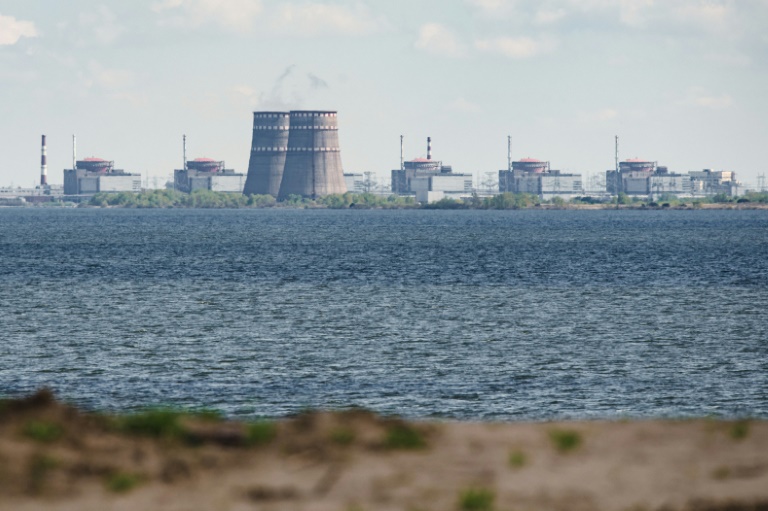
International Atomic Energy Agency chief Rafael Grossi said on Monday he was en route to inspect Ukraine’s Zaporizhzhia nuclear plant, as Kyiv’s forces launched a counteroffensive to retake the occupied southern region of Kherson.

The coastal region of Kherson and its capital city of the same name have been contested by Russian troops since the war broke out six months ago.

“Today there was a powerful artillery attack on enemy positions in… the occupied Kherson region,” local government official Sergey Khlan told Ukraine’s Pryamyi TV channel.

“This is what we have been waiting for since the spring — it is the beginning of the de-occupation of Kherson region.”

Kherson city lies some 200 kilometres (125 miles) southwest of the Zaporizhzhia nuclear plant — Europe’s largest atomic facility — which has also been occupied by Russian troops since early March. 

The plant was targeted over the weekend by fresh shelling, its operator said, with Moscow and Kyiv trading blame for attacks around the complex of six nuclear reactors in Energodar, a town on the banks of the Dnipro River.

Ukraine’s nuclear agency Energoatom has warned of the risk of a radiation leak.

Russian troops “continued to fire at Energodar and the Zaporizhzhia nuclear power plant” on Sunday, injuring 10, among them four plant workers, it said in an update early on Monday.

As of 10:00 am (0700 GMT), the plant was operating “with the risk of violating radiation and fire safety standards”. 

But Russia’s defence ministry accused Ukrainian troops of shelling near the plant on Sunday, claiming it had shot down a “Ukrainian strike drone” approaching a nuclear fuel and radioactive waste storage area. 

And Kremlin spokesman Dmitry Peskov urged the international community “to put pressure on the Ukrainian side so it stops endangering the European continent by shelling”.

Peskov said Russia saw the IAEA visit as “necessary” and had been “waiting for this mission for a long time”, insisting it would ensure its safety in the face of “constant” risks. 

– ‘Radiation blackmail’ –

Ukrainian President Volodymr Zelensky on Monday called for sanctions against Russia’s state nuclear energy agency Rosatom over the occupation of the plant.

“It’s not normal that there are no sanctions against Rosatom for its radiation blackmail at the Zaporizhzhia nuclear plant,” he said.

“The Russians are the only terrorists in the world that have managed to turn a nuclear plant into a battlefield.”

The UN’s nuclear watchdog has for months been asking to visit the site, warning of “the very real risk of a nuclear disaster”.

Writing on Twitter, Grossi on Monday said an IAEA support and assistance mission was “now on its way” with the team due to arrive “later this week”. 

The United Nations has called for an end to all military activity in the area surrounding the complex.

Ukraine initially feared an IAEA visit would legitimise the Russian occupation of the site before finally supporting the idea of a mission.

In its Monday update, Energoatom said the Russians had “increased pressure on the personnel of the plant to prevent them from disclosing (to the IAEA) evidence of the occupiers’ crimes at the plant and its use as a military base”.

The G7 industrial powers on Monday demanded free access for the IAEA team to “engage directly, and without interference, with the Ukrainian personnel responsible for operating these facilities”. 

And in Stockholm, Ukraine’s Foreign Minister Dmytro Kuleba said the team’s mission was “the hardest in the history of the IAEA, given the active combat activities undertaken by the Russian federation on the ground.”

Ukraine was the site of the world’s worst nuclear catastrophe in 1986, when a reactor at the northern Chernobyl plant exploded and spewed radiation into the atmosphere.

Experts say any leak at Zaporizhzhia would more likely be on the scale of the 2011 Fukushima disaster in Japan.

Energoatom on Monday warned any leak would scatter radiation over swathes of southern Ukraine and southwestern regions of Russia. 

– Handing out iodine pills –

On the ground, at least two people were killed when Russian shells ploughed into the centre of the southern city of Mykolaiv, mayor Oleksandr Senkevych wrote on Telegram.

“For now, we know about two dead and five wounded,” he wrote, saying residential buildings had been hit.

With tensions high around the plant, Ukraine’s rescue services have been holding training sessions on managing the risk of nuclear accidents. 

Schools in Zaporizhzhia city began distributing iodine pills to reduce medical risk of radiation in the event of a disaster, with some 200 people turning up to collect them on Friday when distribution began, an AFP correspondent said.

“The tablet is taken in case of danger, when the alarm is raised,” said Elena Karpenko, a nurse at the Zaporizhzhia Children’s Hospital. 

burs-hmw/jts/kjm

War in Ukraine: latest developments

Here are the latest developments in the war in Ukraine:

– IAEA team heads to nuclear plant – 

Chief of the UN’s nuclear watchdog Rafael Grossi says he and his team are on their way to Europe’s largest nuclear power plant Zaporizhzhia, which has been the target of strikes in recent weeks, and will arrive later this week.

The plant has been occupied by Russian troops since the start of the war.

Moscow and Kyiv are trading blame for shelling around the complex of six Soviet-designed nuclear reactors in the city of Energodar, in southern Ukraine.

Ukraine’s Foreign Minister Dmytro Kuleba warns the mission will be the agency’s hardest to date.

“This mission will be the hardest in the history of the IAEA (International Atomic Energy Agency), given the active combat activities undertaken by the Russian Federation on the ground and also the very blatant way that Russia is trying to legitimise its presence,” Kuleba says during a visit to Stockholm.

– Ukraine begins Kherson counter-offensive –

Ukrainian forces begin a counter-attack to retake the southern city of Kherson currently occupied by Russian troops, a local government official says.

“Today there was a powerful artillery attack on enemy positions in… the entire territory of the occupied Kherson region,” Deputy of Kherson Regional Council Sergey Khlan tells Ukraine’s Pryamyi TV channel.

“This is the announcement of what we have been waiting for since the spring — it is the beginning of the de-occupation of Kherson region,” he says.

Russian forces seized Kherson on March 3. 

It was the first major city to fall following Moscow’s invasion of Ukraine on February 24. 

– Germany backs Ukraine’s EU membership –

German Chancellor Olaf Scholz throws his weight behind Ukraine and other nations hopeful of joining the European Union, underlining however that enlarging the bloc to “30 or 36” would require reforms.

The bloc needs to reduce its “one-sided dependencies”, be it on the economic, energy or defence fronts, he urges, calling for a “geopolitical, sovereign and enlarged EU”.

He says he is “committed to” having the six nations of the western Balkans, Moldova, Georgia and Ukraine accede to the bloc.

“Their EU accession is in our interest,” he says.

But as the bloc widens, each member’s veto right would have to go, he says, with a transition to a “majority voting” system so as not to slow down EU decision-making.

– US to meet allies –

US Secretary of Defense Lloyd Austin will meet fellow ministers from allied countries on September 8 in Germany to discuss support for Ukraine in its war against Russia.

The “in-person Ukraine Defense Contact Group”, which will also include senior military officials, will hold talks at the US Ramstein Air Base, says the US Air Forces in Europe and Air Forces Africa.

– EU gets tough on Russian visas –

The European Union plans to make it harder for Russians to travel to the bloc by suspending a deal that eases their visa applications, an EU diplomat says.

“We cannot continue the visa policy as it has been up to now,” the diplomat says, speaking on condition of anonymity ahead of a meeting of EU foreign ministers in Prague to discuss Russia’s invasion of Ukraine.

The measure, which could come into force in October if approved by member states, does not amount to a formal ban on tourism visas demanded by some of Russia’s EU neighbours.

But it would complicate the process of obtaining travel permission and could slow the flow of Russians travelling to Europe, increasing Moscow’s international isolation.

burs-jmy/eab/pvh

Diamond magnate appeals Swiss bribery verdict

French-Israeli diamond magnate Beny Steinmetz was back in court in Switzerland on Monday seeking to clear his name by appealing against his conviction in one of the mining sector’s biggest-ever corruption cases.

The 66-year-old businessman was found guilty in January 2021 of setting up a complex financial web to pay bribes to ensure his company could obtain permits in Guinea’s southeastern Simandou region, which is estimated to contain the world’s biggest untapped deposits of iron ore.

He was sentenced by a Geneva court in 2021 to five years in prison and also ordered to pay 50 million Swiss francs ($52 million) in compensation.

Wearing a dark blue suit and flanked by a new defence team, Steinmetz arrived at the courthouse as a free man.

He has not begun serving his sentence, since he was issued a legal free-passage guarantee to attend the first trial. 

He has been issued another for his appeal, which is set to last until September 7 with the verdict due at a later date.

Steinmetz, who maintained his innocence throughout the original trial, changed his lawyers and beefed up his communications team for the appeal.

– ‘Bought’? –

His new lead lawyer Daniel Kinzer presented an impassioned opening statement, detailing a long line of alleged missteps, errors and misunderstandings in the trial, including accusing the prosecution of relying on coerced and even “bought” testimonies to build its case.

“I am confident the appeals court can be convinced,” he told AFP before the hearings. “We expect that the tribunal recognises that Beny Steinmetz did not bribe anyone.”

During the original trial, Swiss prosecutors convinced the court that Steinmetz and two partners had bribed a wife of the then Guinean president Lansana Conte and others in order to win lucrative mining rights in Simandou.

The prosecutors said Steinmetz obtained the rights shortly before Conte died in 2008 after about $10 million was paid in bribes over a number of years.

Conte’s military dictatorship ordered global mining giant Rio Tinto to relinquish two concessions that were subsequently obtained by Beny Steinmetz Group Resources (BSGR) against an investment of  $160 million.

Just 18 months later, BSGR sold 51 percent of its stake in the concession to Brazilian mining giant Vale for $2.5 billion.

But in 2013, Guinea’s first democratically-elected president Alpha Conde launched a review of permits allotted under Conte and stripped the VBG consortium formed by BSGR and Vale of its permit.

The defence insists there was nothing inappropriate about how BSGR obtained the permits, maintaining that Rio Tinto lost half the concessions for failing to develop them.

They were then “awarded to BSGR on the basis of a solid and convincing business case, with no need to bribe a public official,” Kinzer told AFP.

– ‘Pact of corruption’ –

To secure the initial deal, prosecutors claimed Steinmetz and representatives in Guinea entered a “pact of corruption” with Conte and his fourth wife Mamadie Toure.

Toure, who has admitted to having received payments, has protected status in the United States as a state witness.

Kinzer told the court that much of the prosecutor’s case had relied on her testimony, despite no insight into the “opaque” US deal, and asked that her testimony be deemed inadmissible.

His co-counsel Christian Luscher meanwhile highlighted concerns around the handling of the case by Claudio Mascotto, the prosecutor initially in charge of the investigation, suggesting he had struck a deal with another witness in the case, and asking that he be questioned in court.

He also pointed out that Mascotto had once shared a law practice with the court president, Catherine Gavin, warning of “a problem of appearances”.

Lead prosecutor Yves Bertossa responded angrily to such arguments, accusing the defence of attacking anyone involved in the case.

“They will stop at nothing to try to find a procedural flaw,” he told the court, insisting the case rested on a massive amount of evidence beyond Toure’s testimony, slamming allegations of purchased testimony as laughable.

“The only ones who tried to buy Mamadie Toure,” he insisted, “were Beny Steinmetz and Frederic Cilins,” one of two alleged co-conspirators who are also appealing against previous convictions.

Black Sea dolphins casualties of Russia's war in Ukraine

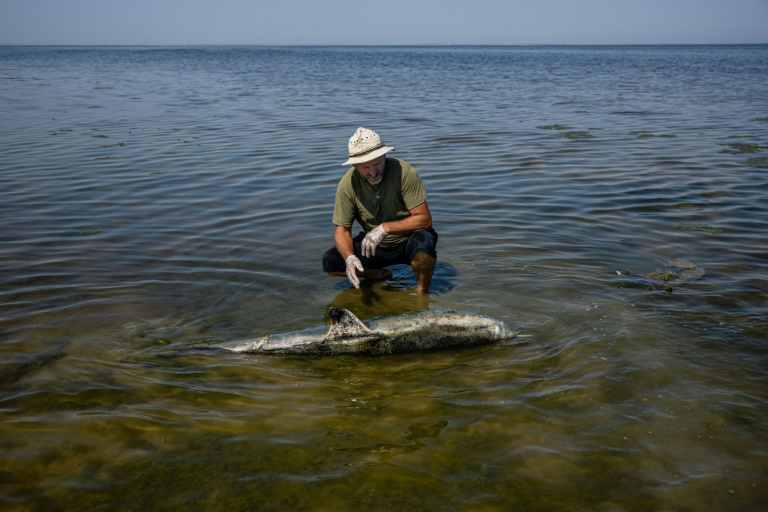
Pacing up and down a beach of fine white sand on the Black Sea coast, 63 year-old Ukrainian scientist Ivan Rusev breathes a sigh of relief: he did not find any dead dolphins today.

A few moments earlier he had rushed towards what he thought was a stranded dolphin. Mercifully it turned out only to be “tangled fishing gear”.

Rusev spoke to AFP from the Tuzly Estuaries National Nature Park, a protected area of 280 square kilometres (108 square miles) in the Bessarabia region of south-west Ukraine.

Rusev, whose weather-beaten face is shaded by a hat he brought during adventures in central Asia, is the scientific director of the park.

Now his job entails walking every morning along beaches bordered by anti-tank mines in search of the dolphins that have been washing up here since the beginning of the war.

“We only found three dolphins over our entire 44 kilometres (27 miles) coastline last year,” he tells AFP.

“This year, over the five kilometres (3 miles) that we can still access, we already found 35 of them.”

Much of the coastline has been off-limits to employees of the park since Ukrainian troops took up positions there to prevent any possible Russian sea assault.

This means Rusev and his team cannot say exactly how many dolphins have been stranded in the park or survey the full extent of the damage.

– Dangerous sonars – 

In any case, the death toll is “terrifying,” says Rusev, who has been keeping an online diary — now widely followed on Facebook — about the impact of the war on wildlife.

When dolphins started washing up on the coast in March, Rusev and his team had to get to work quickly to spot dead animals before the many jackals roaming the area got to them. 

“Then, we reached out to our colleagues in Turkey, Bulgaria, Romania. Everyone witnessed the same thing: a huge number of dolphins have died since the beginning of the war,” Rusev said.

The Turkish Marine Research Foundation (TUDAV) warned in March of an “unusual increase” in dead dolphins washing ashore on the Black Sea coast.

Rusev estimates that 5,000 dolphins have been killed — about 2 percent of the total dolphin population in the Black Sea. 

The Black Sea was home to an estimated 2 million dolphins during the 20th century, but fishing and pollution contributed to their decline.

A survey found there were about 250,000 of dolphins left in 2020. 

There’s no doubt in Rusev’s mind: military sonars used by Russian warships are to blame for the current bloodbath.

The powerful sonars used by warships and submarines “interfere with dolphin’s hearing systems”, he explains.

“This destroys their inner ear, they become blind and cannot navigate or hunt,” and are more susceptible to lethal disease due to their weakened immune systems, according to Rusev.

The dolphin remains do not show any trace of fishing nets or wounds, which for Rusev is further evidence ruling out the possibility they died any other way.

– Trading blame –

Russia and Ukraine are trading blame even on the environmental toll of the war, so Rusev’s theory is disputed. 

Russian scientists who looked into the increase in dolphin mortality blamed morbillivirus, a common lethal disease for the species.

Rusev and his team took samples from dolphins that had recently been found and have sent them to Germany and Italy to settle the debate.

Usually Rusev sleeps in a cabin next to the entrance of the park.

Today, the carcass of a dead dolphin lies next to his cabin, in the lagoon’s stagnant waters.

Rusev covered it with a fishing net. That way, he explains, fish will eat the flesh, and he can give the remaining skeleton to a museum. 

The scientist, sometimes halting conversation to marvel at a white-tailed sea eagle or a flock of pelicans, is visibly worried. 

Military strikes have already hit the national park and burned 100 hectares of protected land.

“War is a terrifying thing,” he said. “It impacts the whole ecosystem, including species that won’t easily recover. 

“Nature’s balance won’t easily recover either.”

Pakistan floods a 'crisis of unimaginable proportions', says minister

A third of Pakistan is under water as a result of flooding caused by record monsoon rains, Climate Change Minister Sherry Rehman said Monday, calling it a “crisis of unimaginable proportions”.

Officials say at least 33 million people — one in every seven Pakistanis — have been affected by the floods, which have killed 1,136 people since the monsoon began in June.

Vast parts of farmland in southern Sindh and western Balochistan provinces are now just landscapes of water, while in the north, roads and bridges have been washed away by raging mountain rivers.

“To see the devastation on the ground is really mind-boggling,” Rehman told AFP in an interview.

“When we send in water pumps, they say ‘Where do we pump the water?’ It’s all one big ocean, there’s no dry land to pump the water out.”

Rehman said “literally a third” of Pakistan was under water, describing it as akin to a dystopian movie.

– Appeal for help –

She also expected the death toll to rise as many areas in the north of the country, where dozens of rivers are still in full flood, remain cut off.

Rehman renewed the government’s appeal for international assistance, while also blaming major industrialised countries for their role in global warming.

Pakistan is responsible for less than one percent of global greenhouse gas emissions, but is eighth on a list compiled by the NGO Germanwatch of countries deemed most vulnerable to extreme weather caused by climate change.

“It’s time for the big emitters to review their policies. We have crossed what is clearly a threshold,” she said.

“The multilateral forum pledges or ambitions voiced by other countries — the rich countries, that have gotten rich on the back of fossil fuels — they don’t really come through.”

Rehman said Pakistan’s economy, already in crisis, would be badly hit by the flooding.

“Sindh is half of Pakistan’s breadbasket and will not be able to grow anything at all next season,” she predicted.

“Not only will our exports be impacted, but our food security will take a hit.”

Rehman said a proper assessment of the damage caused by the flooding would take time.

“Right now, after everyone is actually rescued, we will be feeding and providing cooked meals and shelter,” she said.

“We need to also look for the spread of medical camps, because disease is always the next predator in such an environment.”

The International Monetary Fund board was meeting later Monday to decide whether to green-light the resumption of a $6 billion loan programme, but it is already clear it will take much more to repair and rebuild after this monsoon.

“We are in touch with our big donors… let’s hope they can come up with something that can really assist one of the most climate-impacted countries of the world in its time of need,” Rehman said.

Pakistan floods a 'crisis of unimaginable proportions', says minister

A third of Pakistan is under water as a result of flooding caused by record monsoon rains, Climate Change Minister Sherry Rehman said Monday, calling it a “crisis of unimaginable proportions”.

Officials say at least 33 million people — one in every seven Pakistanis — have been affected by the floods, which have killed 1,136 people since the monsoon began in June.

Vast parts of farmland in southern Sindh and western Balochistan provinces are now just landscapes of water, while in the north, roads and bridges have been washed away by raging mountain rivers.

“To see the devastation on the ground is really mind-boggling,” Rehman told AFP in an interview.

“When we send in water pumps, they say ‘Where do we pump the water?’ It’s all one big ocean, there’s no dry land to pump the water out.”

Rehman said “literally a third” of Pakistan was under water, describing it as akin to a dystopian movie.

– Appeal for help –

She also expected the death toll to rise as many areas in the north of the country, where dozens of rivers are still in full flood, remain cut off.

Rehman renewed the government’s appeal for international assistance, while also blaming major industrialised countries for their role in global warming.

Pakistan is responsible for less than one percent of global greenhouse gas emissions, but is eighth on a list compiled by the NGO Germanwatch of countries deemed most vulnerable to extreme weather caused by climate change.

“It’s time for the big emitters to review their policies. We have crossed what is clearly a threshold,” she said.

“The multilateral forum pledges or ambitions voiced by other countries — the rich countries, that have gotten rich on the back of fossil fuels — they don’t really come through.”

Rehman said Pakistan’s economy, already in crisis, would be badly hit by the flooding.

“Sindh is half of Pakistan’s breadbasket and will not be able to grow anything at all next season,” she predicted.

“Not only will our exports be impacted, but our food security will take a hit.”

Rehman said a proper assessment of the damage caused by the flooding would take time.

“Right now, after everyone is actually rescued, we will be feeding and providing cooked meals and shelter,” she said.

“We need to also look for the spread of medical camps, because disease is always the next predator in such an environment.”

The International Monetary Fund board was meeting later Monday to decide whether to green-light the resumption of a $6 billion loan programme, but it is already clear it will take much more to repair and rebuild after this monsoon.

“We are in touch with our big donors… let’s hope they can come up with something that can really assist one of the most climate-impacted countries of the world in its time of need,” Rehman said.

Close Bitnami banner
Bitnami