World

Musk subpoenas Twitter whistleblower in buyout battle

Elon Musk has formally subpoenaed a Twitter whistleblower to share information about spam accounts at the social network, as the billionaire fights in court to back out of a massive buyout deal.

Musk has tried to pull out of the $44 billion agreement by saying Twitter misled him on the number of false accounts, or bots, prompting strong denials and a lawsuit from the social media firm.

The Tesla boss hopes that allegations made by the former Twitter security chief Peiter Zatko, about major security gaps and problematic practices at the firm, will bolster his case.

According to court documents made public on Monday, Musk’s attorneys served Zatko with a subpoena Saturday demanding he share any documents or messages regarding the impact of spam and false accounts on Twitter’s activity, dating back to January 2019.

Zatko was also ordered to answer questions on the record for Musk lawyers on September 9.

Zatko’s attorney did not immediately respond to a request for comment.

Musk’s attempt to back out of buying Twitter has struggled for momentum in court.

Twitter won some early battles in the case, including a fast-track trial date, and its stock had risen as analysts predicted the platform would prevail over the mercurial Musk.

But a US judge last week told Twitter to surrender more data to Musk on the key issue of fake accounts, and the billionaire hopes Zatko’s whistleblower complaint could further turn the tide in its favor.

While Twitter has pointed out that Musk opted not to perform due diligence typically seen in merger deals, the billionaire’s attorney Alex Spiro told the Delaware judge he had trusted the firm’s filings with the Securities and Exchange Commission (SEC).

The market watchdog was one of the recipients of Zatko’s complaint, which accuses Twitter of issuing untrue statements on account numbers because “if accurate measurements ever became public, it would harm the image and valuation of the company.”

African nations call out climate injustice ahead of COP27

African countries on Monday called for an end to a “climate injustice” saying the continent causes less than four percent of global CO2 emissions but pays one of the highest prices for global warming.

Government officials, international organisations, NGOs and the private sector from more than 60 African nations attended Monday’s opening of Africa Climate Week in Gabon’s capital to prepare for the COP27 UN climate conference in Egypt in November.

Host President Ali Bongo Ondimba told the gathering the continent has to speak with one voice and offer “concrete” proposals for COP27.

“The time has come for Africans to take our destiny into our own hands,” he said, deploring the global failure to meet climate targets.

“Our continent is blessed with all the necessary assets for sustainable prosperity, abundant natural resources… and the world’s youngest and largest working population,” he said.

“But Africa and the rest of the world must address climate change,” when the UN’s intergovernmental climate panel IPCC “describes Africa as the most vulnerable continent.

“Droughts are causing extreme famines and displacing millions of people across the continent,” Bongo said.

“Today, 22 millions of people in the Horn of Africa face starvation because of the drought and famine, countries in the south of the continent are regularly hit by cyclones, rising sea levels threaten cities such as Dakar, Lagos, Capetown and Libreville.”

Egyptian Foreign Minister Sameh Shoukry, head of COP27, which will be held in the Red Sea resort of Sharm El-Sheikh, said: “Despite contributing less than four percent of global emissions”, Africa was “one of the most devastated by the impacts of climate change.

“Also, Africa is obliged, with limited financial means and scant levels of support, to spend about two to three per cent of its GDP per annum to adapt to these impacts,” Shoukry said, calling it a “climate injustice”.

Denouncing the failure of developed countries to deliver on their climate commitments, he warned: “There is no extra time, no plan B and there should also be no backsliding or backtracking on commitments and pledges.”

IMF approves revival of massive Pakistan loan programme

The IMF has approved an agreement to revive a massive loan programme for Pakistan, the finance minister said Monday, as the country grapples with devastating monsoon flooding that has worsened an economic crisis.

“We should now be getting the 7th & 8th tranche of $1.17 billion,” Miftah Ismail said on Twitter.

The original $6-billion bailout package with the International Monetary Fund was signed by former prime minister Imran Khan in 2019, but repeatedly stalled when his government reneged on agreed reforms on subsidies and failed to significantly improve tax collection.

The new agreement follows months of deeply unpopular belt-tightening by the government of Shehbaz Sharif, who took power in April and has effectively eliminated fuel subsidies and introduced new measures to broaden the tax base.

The government reached an agreement with IMF staff last month to restart the suspended aid package.

The board of the Washington-based crisis lender also was considering a request to extend the package through June 2023 and add about $1 billion to the total.

The IMF had not yet issued a statement on its decision.

The latest disbursement would bring the total received under the Extended Fund Facility from the IMF to just over $4 billion.

– Desperate for aid –

Pakistan is desperate for international support for its economy, which suffers from poor revenue collection and dwindling foreign reserves to pay its crippling debt.

The new government has slashed a raft of subsidies to meet the demands of global financial institutions but risks the wrath of an electorate already struggling under the weight of double-digit inflation.

A new coalition government — which came to power after Khan was ousted by a parliamentary no-confidence vote — has said it will make the tough decisions needed to turn the economy around.

Successive administrations blame their predecessors for the country’s economic woes, but analysts say the malaise stems from decades of poor management and a failure to tackle endemic corruption and widespread tax avoidance.

In a bid to secure the IMF loan, Sharif has imposed three fuel price hikes — cumulatively totalling 50 percent — and raised the cost of electricity to effectively end the subsidies introduced by Khan.

Ismail told the national assembly last month that the steps were “essential” to preserve the country from default.

“We knew it would damage our political reputation, but still we did it,” he said. 

The latest budget has earmarked 3.95 trillion rupees ($18.8 billion) just to service the country’s whopping debt of $128 billion.

Under the deal agreed with the IMF last month, policy priorities included steadfast implementation of the budget to reduce the need to borrow.

Pakistan also agreed to continue power sector reforms, introduce a proactive monetary policy to tackle inflation, strengthen governance, combat corruption and improve the social security net.

But the IMF warned that authorities should stand ready to take any additional measures necessary.

IMF approves revival of massive Pakistan loan programme

The IMF has approved an agreement to revive a massive loan programme for Pakistan, the finance minister said Monday, as the country grapples with devastating monsoon flooding that has worsened an economic crisis.

“We should now be getting the 7th & 8th tranche of $1.17 billion,” Miftah Ismail said on Twitter.

The original $6-billion bailout package with the International Monetary Fund was signed by former prime minister Imran Khan in 2019, but repeatedly stalled when his government reneged on agreed reforms on subsidies and failed to significantly improve tax collection.

The new agreement follows months of deeply unpopular belt-tightening by the government of Shehbaz Sharif, who took power in April and has effectively eliminated fuel subsidies and introduced new measures to broaden the tax base.

The government reached an agreement with IMF staff last month to restart the suspended aid package.

The board of the Washington-based crisis lender also was considering a request to extend the package through June 2023 and add about $1 billion to the total.

The IMF had not yet issued a statement on its decision.

The latest disbursement would bring the total received under the Extended Fund Facility from the IMF to just over $4 billion.

– Desperate for aid –

Pakistan is desperate for international support for its economy, which suffers from poor revenue collection and dwindling foreign reserves to pay its crippling debt.

The new government has slashed a raft of subsidies to meet the demands of global financial institutions but risks the wrath of an electorate already struggling under the weight of double-digit inflation.

A new coalition government — which came to power after Khan was ousted by a parliamentary no-confidence vote — has said it will make the tough decisions needed to turn the economy around.

Successive administrations blame their predecessors for the country’s economic woes, but analysts say the malaise stems from decades of poor management and a failure to tackle endemic corruption and widespread tax avoidance.

In a bid to secure the IMF loan, Sharif has imposed three fuel price hikes — cumulatively totalling 50 percent — and raised the cost of electricity to effectively end the subsidies introduced by Khan.

Ismail told the national assembly last month that the steps were “essential” to preserve the country from default.

“We knew it would damage our political reputation, but still we did it,” he said. 

The latest budget has earmarked 3.95 trillion rupees ($18.8 billion) just to service the country’s whopping debt of $128 billion.

Under the deal agreed with the IMF last month, policy priorities included steadfast implementation of the budget to reduce the need to borrow.

Pakistan also agreed to continue power sector reforms, introduce a proactive monetary policy to tackle inflation, strengthen governance, combat corruption and improve the social security net.

But the IMF warned that authorities should stand ready to take any additional measures necessary.

Engine issue forces NASA to scrub launch of giant Moon rocket

NASA scrubbed a test flight on Monday of its largest-ever rocket in a setback to the ambitious program to send humans back to the Moon — and eventually to Mars.

“We don’t launch until it’s right,” NASA administrator Bill Nelson said after an engine issue forced a cancellation of the launch from the Kennedy Space Center in Florida.

“This is a very complicated machine,” Nelson said. “You don’t want to light the candle until it’s ready to go.”

The goal of the flight is to test the 322-foot (98-meter) Space Launch System (SLS) rocket and Orion crew capsule that sits on top. The mission is uncrewed — mannequins equipped with sensors are standing in for astronauts.

Mike Sarafin, mission manager of the Artemis 1 program, said the US space agency may make another attempt on Friday.

“Friday is definitely in play,” Sarafin told reporters. “They’re still holding in the launch countdown configuration and we’re preserving the option for Friday.”

Next Monday is also an alternative launch date.

Blastoff had been planned for 8:33 am (1233 GMT) but was cancelled because of a temperature problem with one of the rocket’s four RS-25 engines.

NASA said a test to get one of the main engines to the proper temperature range for blastoff was not successful.

Delays are “part of the space business,” Nelson said, expressing confidence that NASA engineers will “get it fixed and then we’ll fly.”

Tens of thousands of people — including US Vice President Kamala Harris — had gathered to watch the launch, which comes 50 years after Apollo 17 astronauts last set foot on the Moon.

“While we hoped to see the launch of Artemis 1 today, the attempt provided valuable data as we test the most powerful rocket in history,” Harris tweeted. 

“Our commitment to the Artemis Program remains firm, and we will return to the Moon.”

Veteran NASA astronaut Stan Love told reporters he was disappointed but “not really surprised.”

“This is a brand new vehicle,” Love said. “It has a million parts. All of them have to work perfectly.”

– Extreme temperatures –

Overnight operations to fill the orange-and-white rocket with more than three million liters of ultra-cold liquid hydrogen and oxygen were briefly delayed by a high risk of lightning.

Around 3:00 am, a potential leak was detected during the filling of the main stage with hydrogen, causing a pause. After tests, the flow resumed.

NASA engineers later detected the engine temperature problem and put a hold on the countdown before scrubbing the launch altogether.

The Orion capsule is to orbit the Moon to see if the vessel is safe for people in the near future. At some point, Artemis aims to put a woman and a person of color on the Moon for the first time.

During the 42-day trip, Orion will follow an elliptical course around the Moon, coming within 60 miles (100 kilometers) at its closest approach and 40,000 miles at its farthest — the deepest into space by a craft designed to carry humans.

One of the mission’s primary objectives is to test the capsule’s heat shield, which at 16 feet in diameter is the largest ever built.

On its return to Earth’s atmosphere, the heat shield will have to withstand speeds of 25,000 miles per hour and a temperature of 5,000 degrees Fahrenheit (2,760 degrees Celsius) — roughly half as hot as the Sun.

– Crewed mission to Mars –

The dummies aboard the spacecraft will record acceleration, vibration and radiation levels.

The craft will also deploy small satellites to study the lunar surface.

NASA is expected to spend $93 billion between 2012 and 2025 on the Artemis program, which is already years behind schedule, at a cost of $4.1 billion per launch.

The next mission, Artemis 2, will take astronauts into orbit around the Moon without landing on its surface.

The crew of Artemis 3 is to land on the Moon in 2025 at the earliest.

And since humans have already visited the Moon, Artemis has its sights set on another lofty goal: a crewed mission to Mars.

The Artemis program aims to establish a lasting human presence on the Moon with an orbiting space station known as Gateway and a base on the surface.

Gateway would serve as a staging and refueling station for a voyage to the Red Planet that would take a minimum of several months.

Engine issue forces NASA to scrub launch of giant Moon rocket

NASA scrubbed a test flight on Monday of its largest-ever rocket in a setback to the ambitious program to send humans back to the Moon — and eventually to Mars.

“We don’t launch until it’s right,” NASA administrator Bill Nelson said after an engine issue forced a cancellation of the launch from the Kennedy Space Center in Florida.

“This is a very complicated machine,” Nelson said. “You don’t want to light the candle until it’s ready to go.”

The goal of the flight is to test the 322-foot (98-meter) Space Launch System (SLS) rocket and Orion crew capsule that sits on top. The mission is uncrewed — mannequins equipped with sensors are standing in for astronauts.

Mike Sarafin, mission manager of the Artemis 1 program, said the US space agency may make another attempt on Friday.

“Friday is definitely in play,” Sarafin told reporters. “They’re still holding in the launch countdown configuration and we’re preserving the option for Friday.”

Next Monday is also an alternative launch date.

Blastoff had been planned for 8:33 am (1233 GMT) but was cancelled because of a temperature problem with one of the rocket’s four RS-25 engines.

NASA said a test to get one of the main engines to the proper temperature range for blastoff was not successful.

Delays are “part of the space business,” Nelson said, expressing confidence that NASA engineers will “get it fixed and then we’ll fly.”

Tens of thousands of people — including US Vice President Kamala Harris — had gathered to watch the launch, which comes 50 years after Apollo 17 astronauts last set foot on the Moon.

“While we hoped to see the launch of Artemis 1 today, the attempt provided valuable data as we test the most powerful rocket in history,” Harris tweeted. 

“Our commitment to the Artemis Program remains firm, and we will return to the Moon.”

Veteran NASA astronaut Stan Love told reporters he was disappointed but “not really surprised.”

“This is a brand new vehicle,” Love said. “It has a million parts. All of them have to work perfectly.”

– Extreme temperatures –

Overnight operations to fill the orange-and-white rocket with more than three million liters of ultra-cold liquid hydrogen and oxygen were briefly delayed by a high risk of lightning.

Around 3:00 am, a potential leak was detected during the filling of the main stage with hydrogen, causing a pause. After tests, the flow resumed.

NASA engineers later detected the engine temperature problem and put a hold on the countdown before scrubbing the launch altogether.

The Orion capsule is to orbit the Moon to see if the vessel is safe for people in the near future. At some point, Artemis aims to put a woman and a person of color on the Moon for the first time.

During the 42-day trip, Orion will follow an elliptical course around the Moon, coming within 60 miles (100 kilometers) at its closest approach and 40,000 miles at its farthest — the deepest into space by a craft designed to carry humans.

One of the mission’s primary objectives is to test the capsule’s heat shield, which at 16 feet in diameter is the largest ever built.

On its return to Earth’s atmosphere, the heat shield will have to withstand speeds of 25,000 miles per hour and a temperature of 5,000 degrees Fahrenheit (2,760 degrees Celsius) — roughly half as hot as the Sun.

– Crewed mission to Mars –

The dummies aboard the spacecraft will record acceleration, vibration and radiation levels.

The craft will also deploy small satellites to study the lunar surface.

NASA is expected to spend $93 billion between 2012 and 2025 on the Artemis program, which is already years behind schedule, at a cost of $4.1 billion per launch.

The next mission, Artemis 2, will take astronauts into orbit around the Moon without landing on its surface.

The crew of Artemis 3 is to land on the Moon in 2025 at the earliest.

And since humans have already visited the Moon, Artemis has its sights set on another lofty goal: a crewed mission to Mars.

The Artemis program aims to establish a lasting human presence on the Moon with an orbiting space station known as Gateway and a base on the surface.

Gateway would serve as a staging and refueling station for a voyage to the Red Planet that would take a minimum of several months.

Tens of millions battle Pakistan floods as death toll rises

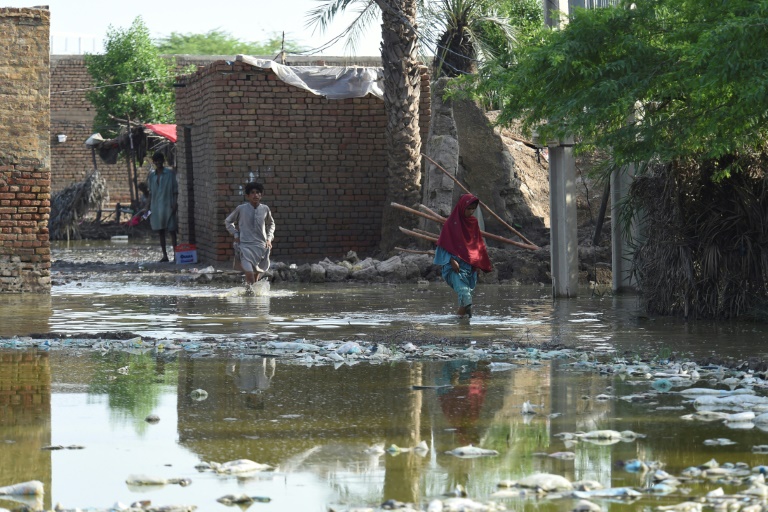
Tens of millions of people across Pakistan were Monday battling the worst monsoon floods in a decade, with countless homes washed away, vital farmland destroyed and the country’s main river threatening to burst its banks.

Climate Change Minister Sherry Rehman said a third of the nation was under water, creating a “crisis of unimaginable proportions”.

Officials say 1,136 people have died since June, when the seasonal rains began, but the final toll could be higher as hundreds of villages in the mountainous north have been cut off after flood-swollen rivers washed away roads and bridges.

The annual monsoon is essential for irrigating crops and replenishing lakes and dams across the Indian subcontinent, but it can also bring destruction.

This year’s flooding has affected more than 33 million people — one in seven Pakistanis — said the National Disaster Management Authority.

“It’s all one big ocean, there’s no dry land to pump the water out,” Rehman told AFP, adding the economic cost would be devastating.

This year’s floods are comparable to those of 2010, the worst on record, when more than 2,000 people died.

Flood victims have taken refuge in makeshift camps that have sprung up across the country, where desperation is setting in.

“Living here is miserable. Our self-respect is at stake,” said Fazal e Malik, sheltering in the grounds of a school now home to around 2,500 people in the town of Nowshera in Khyber Pakhtunkhwa province.

“I stink but there is no place to take a shower. There are no fans.”

Near Sukkur, a city in southern Sindh province and home to an ageing colonial-era barrage on the Indus River that is vital to preventing further catastrophe, one farmer lamented the devastation wrought on his rice fields.

Millions of acres of rich farmland have been flooded by weeks of non-stop rain, but now the Indus is threatening to burst its banks as torrents of water course downstream from tributaries in the north.

“Our crop spanned over 5,000 acres on which the best quality rice was sown and is eaten by you and us,” Khalil Ahmed, 70, told AFP.

“All that is finished.”

– Landscape of water –

Much of Sindh is now an endless landscape of water, hampering a massive military-led relief operation.

“There are no landing strips or approaches available… our pilots find it difficult to land,” one senior officer told AFP.

The army’s helicopters were also struggling to pluck people to safety in the north, where soaring mountains and deep valleys make for treacherous flying conditions.

Many rivers in Khyber Pakhtunkhwa province — which boasts some of Pakistan’s best tourist spots — have overflowed, demolishing scores of buildings including a 150-room hotel that crumbled into a raging torrent.

The government has declared an emergency and appealed for international help, and on Sunday the first aid flights began arriving — from Turkey and the UAE.

It could not have come at a worse time for Pakistan, where the economy is in free fall.

In Washington later Monday, the International Monetary Fund executive board approved the revival of a $6 billion loan programme essential for the country to service its foreign debt.

“We should now be getting the 7th & 8th tranche of $1.17 billion,” Finance Minister Miftah Ismail said on Twitter.

But it is already clear it will take more to repair and rebuild after this monsoon.

Prices of basic goods — particularly onions, tomatoes and chickpeas — are soaring as vendors bemoan a lack of supplies from the flooded breadbasket provinces of Sindh and Punjab.

The meteorological office said the country as a whole had been deluged with twice the usual monsoon rainfall, but Balochistan and Sindh had seen more than four times the average of the last three decades.

Padidan, a small town in Sindh, was drenched by more than 1.2 metres (47 inches) of rain since June, making it the wettest place in Pakistan.

– More arriving daily –

Across Sindh, thousands of displaced people are camped alongside elevated highways and railway tracks — often the only dry spots as far as the eye can see.

More are arriving daily at Sukkur’s city ring road, belongings piled on boats and tractor trollies, looking for shelter until the floodwaters recede.

Sukkur Barrage supervisor Aziz Soomro told AFP the main headway of water was expected to arrive around September 5, but he was confident the 90-year-old sluice gates would cope.

The barrage diverts water from the Indus into 10,000 kilometers (6,210 miles) of canals that make up one of the world’s biggest irrigation schemes, but the farms it supplies are now mostly under water.

The only bright spark was the latest weather report, with the met office saying there was little chance of rain for the rest of the week.


Clashes in northern Ethiopia despite peace pleas

Fighting was reported in a volatile area of northern Ethiopia on Monday, local sources said, despite urgent international appeals for a halt to the renewed hostilities between government forces and Tigrayan rebels.

The warring sides have accused each other of launching attacks last Wednesday that torpedoed a five-month truce and dealt a blow to hopes for a peaceful resolution to the conflict in Africa’s second most populous nation.

On Monday, clashes were reported in an area around the town of Kobo, which lies in the Amhara region just south of Tigray and fell into the hands of rebel fighters at the weekend, prompting many residents to take flight.

“There is heavy fighting nearby. I was hearing the sounds of heavy weaponry starting from morning to around 3:00 pm (1200 GMT),” one Kobo resident told AFP on condition of anonymity after fleeing to Woldiya about 50 kilometres (30 miles) further south.

The resident said many people were flocking from nearby areas to the town, some sleeping on verandahs, while the authorities were allowing some of the displaced to be housed in university dormitories.

“There is currently an air of uncertainty in Woldiya although it’s slightly calmer than yesterday,” the resident said, adding that the town was currently under a dusk-to-dawn curfew.

The government of Prime Minister Abiy Ahmed had announced Saturday that federal forces had pulled back from Kobo in order to avoid “mass casualties”.

In turn, the Tigray People’s Liberation Front (TPLF), which has been fighting government forces and their allies for almost 22 months, said it had captured a number of towns and cities in a counter-offensive.

The various claims could not be independently verified as access to northern Ethiopia is severely restricted.

– ‘I saw people drowning’ –

A diplomatic source said there were clashes in an area about halfway between Kobo and Woldiya on Monday, while a humanitarian source reported “heavy fighting” around the Zobel mountains southeast of Kobo.

Tigist, a 30-year-old mother of three, said she fled Kobo on Friday across a river as the bridge was destroyed, helped by people with light rafts transporting women and children over the water.

“I’m very lucky, I saw people drowning while attempting to cross the river,” she told AFP, a day after finally arriving in Woldiya on Sunday.

“We’re not getting help (from the authorities) in Woldiya, so people are helping each other for food, water, shelter.”

She said people were terrified and were considering travelling further from the combat zone to Dessie, a major city about 100 kilometres (60 miles) further south.

“I don’t know if I ever want to move back to Kobo.” 

The first displaced resident said ambulances were ferrying the wounded to medical facilities inside Woldiya or further afield, adding that the injured included federal troops, members of the Amhara regional force and the Amhara militia known as Fano.

– ‘Outraged’ over renewed fighting –

On Friday, as conflict on the ground escalated, an air strike on Tigray’s capital Mekele killed at least four people including two children, an official at the city’s biggest hospital told AFP.

Tigrai TV, a local network, put the death toll at seven, including three children.

The international community has voiced deep alarm about the resumption of fighting in a conflict that has already caused the deaths of untold numbers of civilians and led to a desperate humanitarian crisis.

A truce was declared in March, leading to a lull in fighting that allowed aid convoys to slowly return to Tigray, where the UN says millions are nearing starvation, and cash, fuel and medicine are in short supply.

Since the end of June, Abiy’s government and the rebels have repeatedly stated their willingness to enter peace talks but disagreed on the terms of such negotiations.

Among the latest to express concern was the UN-appointed International Commission of Human Rights Experts on Ethiopia.

It said it was “outraged” about the renewal of hostilities and called for both sides to cease fighting, return to dialogue and enable humanitarian agencies to distribute aid in Tigray.

A similar plea was made by the Ethiopian Human Rights Commission, an independent state-affiliated body, which said the hostilities resumed as “civilian populations in the affected areas still continue to suffer from recent trauma, loss of loved ones and livelihoods”.

Angola ruling party wins vote, president secures second term

Angola’s MPLA party was on Monday declared the winner of a closely fought election, extending its decades long rule in the oil-rich country and handing President Joao Lourenco a second term.

He promised to be the “president of all Angolans” and to open dialogue after the electoral commission announced the results, which saw the opposition make large gains. 

“This a victory for Angola and Angolans in general,” Lourenco, 68, said in his inaugural address shortly after the unveiling of the result of the August 24 ballot. 

“This vote was a vote of confidence, which gives us the immense responsibility of promoting dialogue and social consultation”.

The National Electoral Commission (CNE) reported the People’s Movement for the Liberation of Angola won 51.17 percent of the ballots against 43.95 percent for the main challenger, the National Union for the Total Independence of Angola (UNITA).

Despite the victory, the outcome — the tightest in Angola’s history — marked a record low for the MPLA and might yet end up in court after UNITA had earlier rejected provisional results.

Several members of the electoral commission did not sign off on the final tally, poll officials said on Monday. 

The MPLA has traditionally wielded control over the electoral process as well as state media, and opposition and civic groups had raised fears of voter tampering.

UNITA leader Adalberto Costa Junior, 60, last week called for an international panel to review the count.

International observers have raised some concerns including questions over the electoral roll and biased reporting by state-owned television, but most said voting was peaceful and well organised. 

– Lowered majority –

The MPLA, a former Marxist liberation movement, has ruled Angola for nearly half a century since independence from Portugal in 1975.

But it has seen a steady decline in support over recent elections.

While it romped to victory with 71.84 percent of the vote in 2012, it only garnered 61 percent five years later.

UNITA scored 26.67 percent in 2017 elections and contested the official count.

Alex Vines, of the UK-based think tank Chatham House, said that while UNITA was likely to challenge the count also this time, the former rebel movement had reasons to be happy. 

“It’s an amazing result for UNITA when you think that 20 years ago, they were defeated on the battlefield,” he said.

“Politics will have to change in Angola now. There’s going to have to be the politics of compromise,” he said.   

The results gave the MPLA 124 of the 220 parliamentary seats up for grabs while UNITA won 90. 

Turnout was low, with only about 45 percent of those registered  casting their ballots, which pointed to a growing disillusionment with politics, said Vines. 

The United States on Monday called on all parties “to express themselves peacefully and to resolve any grievances in accordance with applicable legal processes”.

“We will continue to closely follow the electoral process,” the State Department said in a statement before the final results were announced.

– Second term –

The latest election has been overshadowed by a struggling economy, inflation, poverty, drought and the death of Lourenco’s predecessor Jose Eduardo dos Santos.

Dos Santos was buried in Luanda at a solemn funeral on Sunday.

The opposition has proved popular in urban areas, winning in the capital Luanda and among youth disaffected with the ruling party.

Angola is Africa’s second largest crude producer, but the oil bonanza has been accompanied by corruption and nepotism.

Lourenco, a former general educated in the Soviet Union, was first elected in 2017.

He is credited with far-reaching reforms since taking power, including boosting financial transparency, tackling graft, and promoting business-friendly policies to lure foreign investors.

But critics say his anti-graft crusade has been one-sided and aimed at settling political scores, targeting children and cronies of dos Santos.

His economic reforms have also so far failed to translate into better living conditions for most Angolans, critics say.

“With this vote of confidence, it is time to continue the reforms necessary to make Angola a more prosperous and more developed country,” Lourenco said, promising to pay particular attention “to the expectations of young people”. 

Preparing for the worst near Ukraine's precarious nuclear plant

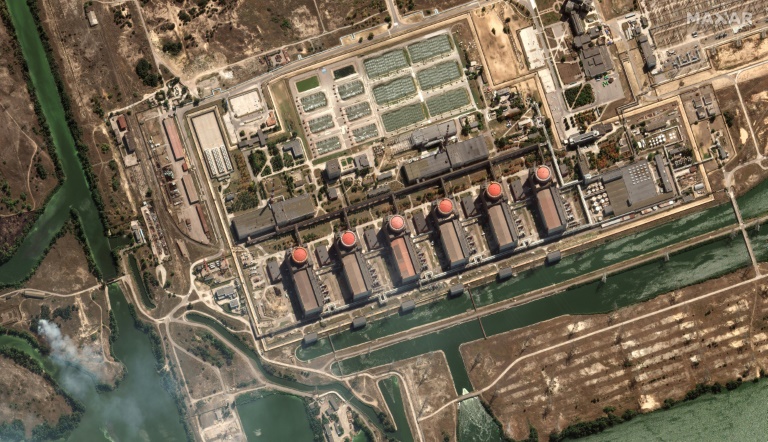
In the southern city of Zaporizhzhia, which lies close to Europe’s largest nuclear plant, which has been targeted by shelling, Ukrainians are picking up iodine pills and preparing for the worst.

The city lies some 50 kilometres (30 miles) as the crow flies from the Zaporizhzhia nuclear plant which has been occupied by Russian troops since early March in an area hit by ongoing fighting.

Moscow and Kyiv have traded blame over the shelling around the complex and the nearby town of Energodar amid UN warnings about “the very real risk of a nuclear disaster”.

“You know, we survived the accident at the Chernobyl nuclear power plant,” says Kateryna, a 68-year-old pensioner who still has thyroid problems linked to the 1986 disaster when one of the reactors exploded.

“That threat was very big, but we survived. Now we have six reactors, not one,” she said of the Zaporizhzhia complex. 

Like dozens of other residents, she went on Monday to a school handing out iodine tablets that can reduce the medical risk of radiation in the event of a disaster. 

Should a serious incident happen at a nuclear facility, it would release radioactive iodine into the atmosphere which, if inhaled, can increase the risk of thyroid cancer — an effect observed after Chernobyl. 

The tablets can help prevent radioactive iodine concentrating in the thyroid gland so it can be flushed out of the body naturally though the urine.

Some 13 schools have been distributing the tablets, which doctors say should be given to anyone living with in a 50-kilometre radius of the plant. 

So far, more than 5,000 of the city’s residents, among them more than 1,500 children, have collected iodine pills over a two-day period, officials say.

“The tablet is taken in case of danger, when the alarm is raised,” said Elena Karpenko, a nurse at the Zaporizhzhia Children’s Hospital.

– Radioactive risk –

With tensions high around the plant, inspectors from the International Atomic Energy Agency, the UN’s nuclear watchdog are due to visit in the coming days, with the team led by IAEA chief Rafael Grossi. 

Beyond the shelling, Kyiv has also accused Moscow of using the plant for storing heavy weaponry and arms and stationing some 500 soldiers at the site. 

But the Kremlin has insisted it only has security personnel there. On Monday, Moscow urged the international community to put pressure on Ukraine “so it stops endangering the European continent by shelling”.

Last week, the plant was briefly severed from the national grid for the first time in its four-decade history after its last working power line was shelled. Ukraine’s nuclear agency Energoatom warned there was a risk of “hydrogen leakage and sputtering of radioactive substances”.

Over the weekend, the emergency services in Zaporizhzhia held training sessions on managing the risk of nuclear accidents. They carried out mock evacuations and conducted decontamination exercises involving radioactive dust. 

So far, the city has stockpiled two tonnes of decontamination products. 

In the event of a leak, two sirens will go off to warn the city’s inhabitants: an initial alarm then a second one 24 hours later. 

“Perhaps the radioactive cloud will not reach the place where people are,” said Taras Tyshchenko, the region’s health chief.

“By the time the second alarm goes off, we will clearly know how far the radioactive cloud has spread. 

“We will have all the information about safe areas to evacuation sites,” he said. 

Close Bitnami banner
Bitnami