World

UN session on high seas biodiversity ends without agreement

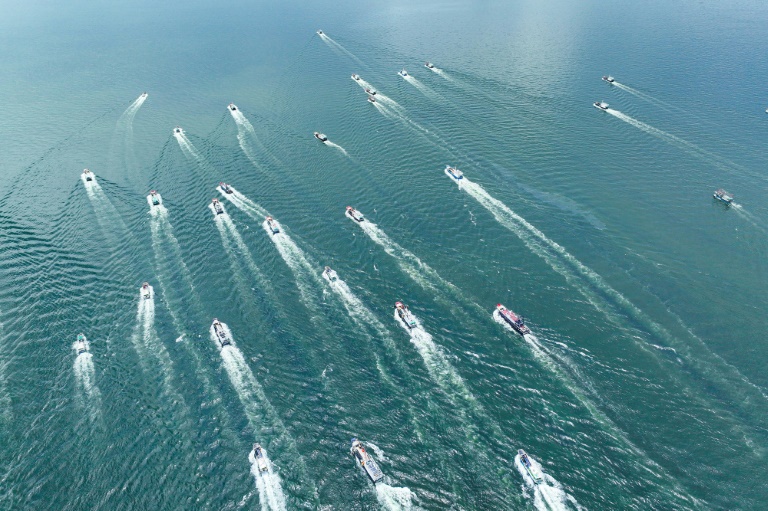
UN member states ended two weeks of negotiations Friday without a treaty to protect biodiversity in the high seas, an agreement that would have addressed growing environmental and economic challenges.

After 15 years, including four prior formal sessions, negotiators have yet to reach a legally binding text to address the multitude of issues facing international waters — a zone that encompasses almost half the planet.

“Although we did make excellent progress, we still do need a little bit more time to progress towards the finish line,” said conference chair Rena Lee.

It will now be up to the UN General Assembly to resume the fifth session at a date still to be determined.

Many had hoped the session, which began on August 15 at the United Nations headquarters in New York, would be the last and yield a final text on “the conservation and sustainable use of marine biodiversity beyond national jurisdiction,” or BBNJ for short.

“While it’s disappointing that the treaty wasn’t finalized during the past two weeks of negotiations, we remain encouraged by the progress that was made,” said Liz Karan of the NGO Pew Charitable Trusts, calling for a new session by the end of the year.

One of the most sensitive issues in the text revolved around the sharing of possible profits from the development of genetic resources in international waters, where pharmaceutical, chemical and cosmetic companies hope to find miracle drugs, products or cures.

Such costly research at sea is largely the prerogative of rich nations, but developing countries do not want to be left out of potential windfall profits drawn from marine resources that belong to no one.

-‘Missed opportunity’-

Similar issues of equity arise in other international negotiations, such as on climate change, in which developing nations that feel outsized harm from global warming have tried in vain to get wealthier countries to help pay to offset those impacts.

The high seas begin at the border of a nation’s exclusive economic zone (EEZ) — which by international law reaches no more than 200 nautical miles (370 kilometers) from its coast — and are under no state’s jurisdiction.

Sixty percent of the world’s oceans fall under this category.

And while healthy marine ecosystems are crucial to the future of humanity, particularly to limit global warming, only one percent of international waters are protected.

One of the key pillars of an eventual BBNJ treaty is to allow the creation of marine protected areas, which many nations hope will cover 30 percent of the Earth’s ocean by 2030.

“Without establishing protections in this vast area, we will not be able to meet our ambitious and necessary 30 by 30 goal,” US State Department official Maxine Burkett said at an earlier press conference.

But delegations still disagree on the process for creating these protected areas as well as how required environmental impact assessments will be implemented before new high seas activity begins.

“What a missed opportunity…”, tweeted Klaudija Cremers, a researcher at the IDDRI think tank, which, like multiple other NGOs, has a seat with observer status at the negotiations.

The delegate from Samoa, addressing the conference on behalf of the smaller developing island nations of the Pacific, said they were “disappointed.”

“We live very far and it is not cheap to travel all this way. This money was not spent on roads, on medicine, schools,” she added.

“The Pacific came here in good faith and will continue to do so until we conclude this conference in the very near future,” she said on the verge of tears, to applause from the room.

Laura Meller, of Greenpeace’s Protect the Oceans campaign, said: “Time has run out. Further delay means ocean destruction. We are sad and disappointed. While countries continue to talk, the oceans and all those who rely on them will suffer.”
UN session on high seas biodiversity ends without agreement

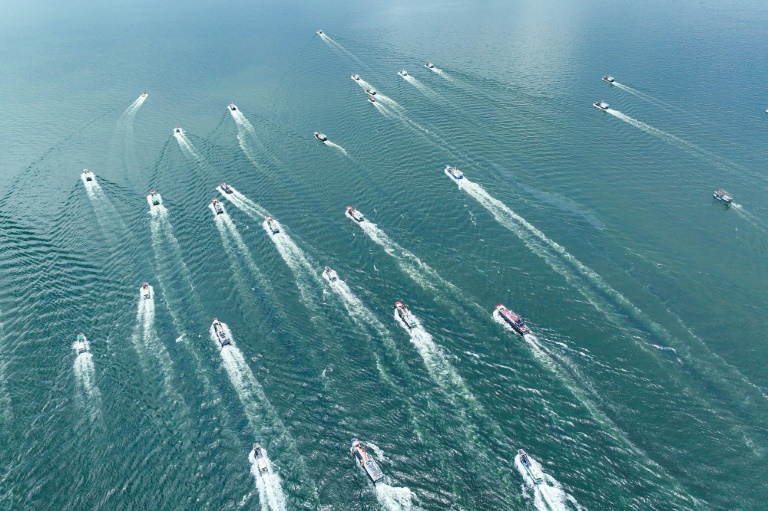
UN member states ended two weeks of negotiations Friday without a treaty to protect biodiversity in the high seas, an agreement that would have addressed growing environmental and economic challenges.

After 15 years, including four prior formal sessions, negotiators have yet to reach a legally binding text to address the multitude of issues facing international waters — a zone that encompasses almost half the planet.

“Although we did make excellent progress, we still do need a little bit more time to progress towards the finish line,” said conference chair Rena Lee.

It will now be up to the UN General Assembly to resume the fifth session at a date still to be determined.

Many had hoped the session, which began on August 15 at the United Nations headquarters in New York, would be the last and yield a final text on “the conservation and sustainable use of marine biodiversity beyond national jurisdiction,” or BBNJ for short.

“While it’s disappointing that the treaty wasn’t finalized during the past two weeks of negotiations, we remain encouraged by the progress that was made,” said Liz Karan of the NGO Pew Charitable Trusts, calling for a new session by the end of the year.

One of the most sensitive issues in the text revolved around the sharing of possible profits from the development of genetic resources in international waters, where pharmaceutical, chemical and cosmetic companies hope to find miracle drugs, products or cures.

Such costly research at sea is largely the prerogative of rich nations, but developing countries do not want to be left out of potential windfall profits drawn from marine resources that belong to no one.

-‘Missed opportunity’-

Similar issues of equity arise in other international negotiations, such as on climate change, in which developing nations that feel outsized harm from global warming have tried in vain to get wealthier countries to help pay to offset those impacts.

The high seas begin at the border of a nation’s exclusive economic zone (EEZ) — which by international law reaches no more than 200 nautical miles (370 kilometers) from its coast — and are under no state’s jurisdiction.

Sixty percent of the world’s oceans fall under this category.

And while healthy marine ecosystems are crucial to the future of humanity, particularly to limit global warming, only one percent of international waters are protected.

One of the key pillars of an eventual BBNJ treaty is to allow the creation of marine protected areas, which many nations hope will cover 30 percent of the Earth’s ocean by 2030.

“Without establishing protections in this vast area, we will not be able to meet our ambitious and necessary 30 by 30 goal,” US State Department official Maxine Burkett said at an earlier press conference.

But delegations still disagree on the process for creating these protected areas as well as how required environmental impact assessments will be implemented before new high seas activity begins.

“What a missed opportunity…”, tweeted Klaudija Cremers, a researcher at the IDDRI think tank, which, like multiple other NGOs, has a seat with observer status at the negotiations.

The delegate from Samoa, addressing the conference on behalf of the smaller developing island nations of the Pacific, said they were “disappointed.”

“We live very far and it is not cheap to travel all this way. This money was not spent on roads, on medicine, schools,” she added.

“The Pacific came here in good faith and will continue to do so until we conclude this conference in the very near future,” she said on the verge of tears, to applause from the room.

Laura Meller, of Greenpeace’s Protect the Oceans campaign, said: “Time has run out. Further delay means ocean destruction. We are sad and disappointed. While countries continue to talk, the oceans and all those who rely on them will suffer.”
Peak Tram back on track in tourist-devoid Hong Kong

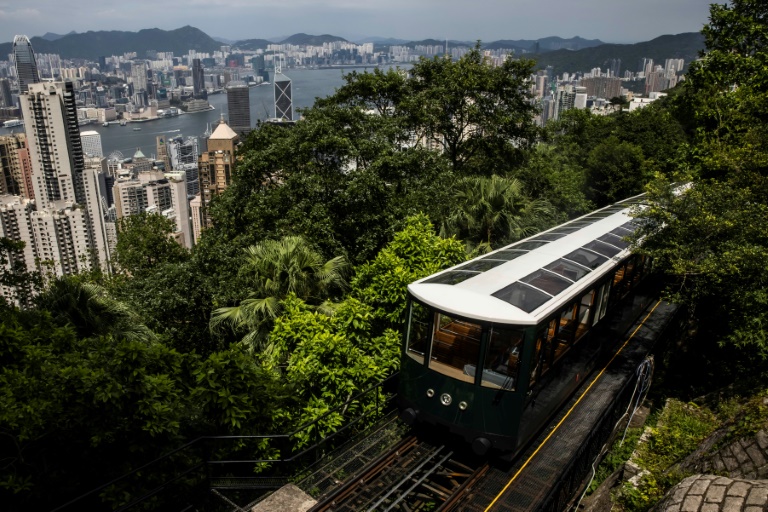
The Peak Tram, Hong Kong’s famed public transport and a popular tourist draw, reopened Saturday after a year-long $102 million facelift even as the city’s coronavirus curbs continue to keep overseas visitors at bay. 

The historic funicular, which dates back to 1888 and offers panoramic views of Hong Kong Island’s famous skyline as it ascends to Victoria Peak, used to draw over six million visitors a year, according to its operator.

The latest makeover brought more spacious tramcars that accommodate 210 passengers, a full overhaul of its rail systems and a redesigned terminus at the heart of Hong Kong’s central business district.

The Peak Tram closed for upgrades in June 2021, a period when the Chinese finance hub’s strict border controls — in line with Beijing’s zero-Covid strategy — all but wiped out its tourism industry.

The redevelopment went overbudget by around $15 million, which its operator attributed to supply chain difficulties during the pandemic, such as bringing the custom Switzerland-made tramcars to Hong Kong.

An adult return ticket now costs HK$88 ($11.20), a nearly 70 percent jump from before the makeover.  

“I hope all visitors will feel it’s worth the price,” May Tsang, general manager of tram operator the Peak Complex, said on Wednesday.

“We have to consider the increase in our operating costs and the long-term sustainability of our business.”

On Saturday morning, a woman surnamed Kwok and her young daughter were among a crowd of around a hundred waiting in line to try out the refurbished tram.

“It’s been a long time since I was here and it’ll be her first time,” she said of her daughter.

Chau, who brought his two sons along for a family outing, said he was generally satisfied with the revamp.

“It’s a bit pricey, but so is everything nowadays.”

Tourists were mostly absent on Saturday as Hong Kong saw just a total of 134,000 visitors in the past four quarters — a mere fraction of the 65 million that came to the city in 2018.

The new sixth generation tramcars are a far cry from the sedan chairs that carried visitors to Victoria Peak during the early days of British colonial rule. 

But they are now painted in a deep green colour, a nod to previous generation tramcars in service from 1948 until 1989 — when they were refurbished in a burgundy red. 

At 396 metres (1,300 feet) above sea level, the Peak, once an exclusive enclave for Hong Kong’s rich and powerful, remained off-limits to most of the local population until 1947.

It is now best known as an easy-to-access spot for residents and tourists to enjoy views of Hong Kong’s sprawling cityscape, with Victoria Harbour in the distance.

Diamond magnate appeals Swiss corruption verdict

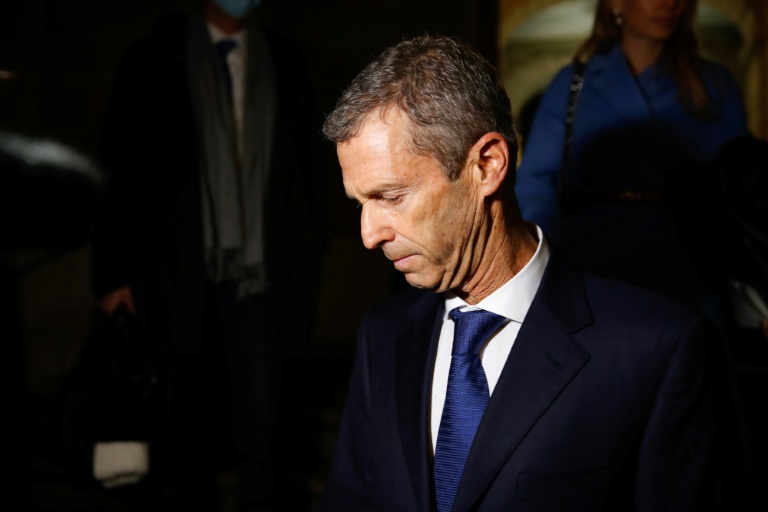
French-Israeli diamond magnate Beny Steinmetz will be back in court in Switzerland on Monday to appeal against a corruption sentence linked to mining rights in Guinea.

A Geneva court convicted the 66-year-old businessman in January 2021 of setting up a complex financial web to pay bribes to ensure his company could obtain permits in an area estimated to contain the world’s biggest untapped deposits of iron ore.

He was sentenced to five years in prison and also ordered to pay 50 million Swiss francs ($52 million) in compensation to the canton of Geneva.

Steinmetz maintained his innocence throughout that trial and immediately appealed against the ruling, decrying it as a “big injustice”.

Two of his alleged co-conspirators, who were slapped with shorter jail terms, are also appealing.

Steinmetz has changed his legal and communications team for the appeal, and they are preparing to argue that the lower court had not fully heard his arguments and had misunderstood the situation.

The first trial had painted Steinmetz in a way that “does not at all correspond to reality,” his spokesman Marc Comina said in a document detailing the diamond magnate’s case. 

Far from being corrupt, Beny Steinmetz Group Resources (BSGR) had legitimately obtained the mining rights in question, and had striven in difficult and complex circumstances to set up an operation that would have benefited Guinea’s national interests, the document said.

– ‘Pact of corruption’ –

Swiss prosecutors painted a far different picture during the first trial, which was the culmination of a drawn-out international investigation that kicked off in Switzerland in 2013.

They accused Steinmetz and two partners of bribing a wife of the then Guinean president Lansana Conte and others in order to win mining rights in the southeastern Simandou region.

The prosecutors said Steinmetz obtained the rights shortly before Conte died in 2008 after about $10 million was paid in bribes over a number of years, some through Swiss bank accounts.

Conte’s military dictatorship ordered global mining giant Rio Tinto to relinquish two concessions to BSGR for around $170 million in 2008.

Just 18 months later, BSGR sold 51 percent of its stake in the concession to Brazilian mining giant Vale for $2.5 billion.

But in 2013, Guinea’s first democratically-elected president Alpha Conde launched a review of permits allotted under Conte and later stripped the VBG consortium formed by BSGR and Vale, of its permit.

To secure the initial deal, prosecutors claimed Steinmetz and representatives in Guinea entered a “pact of corruption” with Conte and his fourth wife Mamadie Toure.

Toure, who has admitted to having received payments, has protected status in the United States as a state witness. 

She and a number of other key witnesses in the case failed to appear in the first trial, and it remained unclear if they would attend the appeal.

– ‘Totally false’ –

Steinmetz, who lived in Geneva during the years when the bribes were allegedly paid, continues to maintain that the bribery allegations are “totally false”, according to the document released by his team.

It insisted that Rio Tinto had lost the rights to half of its concessions in Simandou over its failure to develop them, in accordance with Guinean mining laws, and that BSGR later legitimately bid for and obtained the rights.

There was “nothing illegal or arbitrary” about that decision, the document said.

It also argued that the lower court had misunderstood the nature of the deal with Vale, and that BSGR had wanted to create a lasting partnership and business in Guinea.

“BSGR never intended to leave Guinea once the partnership with Vale was signed,” it said.

“Had it not been driven out of the country, BSGR would still be operating in Guinea today and would be a major player in the country’s economic rise.”

Steinmetz, who was granted a legal free-passage guarantee in order to participate in the first trial, left Switzerland without serving his sentence.

He will be back in the Geneva court from Monday to argue his case after receiving another free-passage, with the appeal hearing due to last through September 7. The verdict will come at a later date.

Energy crisis pushes nuclear comeback worldwide

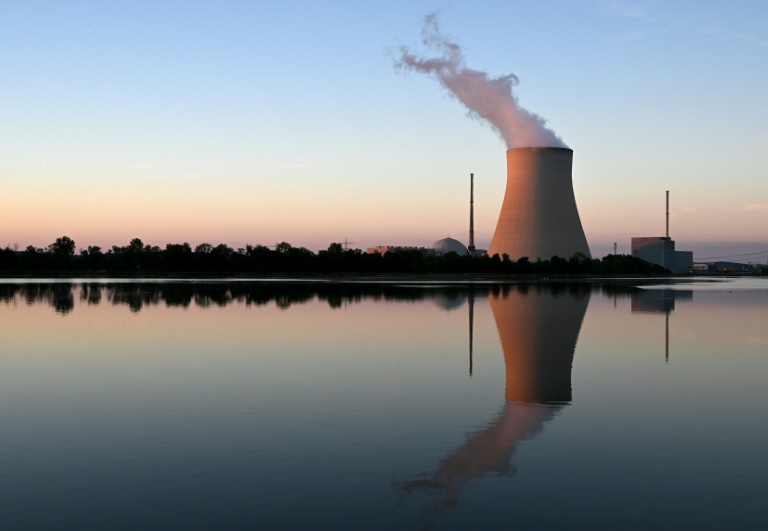
As the costs of importing energy soars worldwide and climate crises wreak havoc, interest in nuclear power is on the rise with nations scrambling to find alternative sources.

Investment in nuclear power declined after Japan’s 2011 Fukushima disaster, the world’s worst nuclear accident since Chernobyl in 1986, as fears over its safety increased and governments ran scared.

But following Moscow’s invasion of Ukraine in February, the subsequent squeeze on energy supplies and Europe’s push to wean itself off of Russian oil and gas, the tide is now turning back in favour of nuclear.

Governments face difficult decisions with rising gas and electricity bills and scarce resources threatening to cause widespread suffering this winter.

Some experts argue that nuclear power should not be considered an option, But others argue that, in the face of so many crises, it must remain part of the world’s energy mix.

One of the countries reconsidering nuclear energy is Japan, where the 2011 accident led to the suspension of many nuclear reactors over safety fears.

This week Japan’s Prime Minister Fumio Kishida called for a push to revive the country’s nuclear power industry, and build new atomic plants.

Other countries that were looking to move away from nuclear have discarded those plans — at least in the short term.

Less than a month after Russia’s attack on Ukraine, Belgium delayed by a decade its plan to scrap nuclear energy in 2025.

While nuclear power, currently used in 32 countries, supplies 10 percent of the world’s electricity production, the International Atomic Energy Agency (IAEA) raised its projections in September for the first time since the 2011 disaster.

The IAEA now expects installed capacity to double by 2050 under the most favourable scenario.

– Climate reasoning –

Even in Germany, Europe’s biggest economy, sticking with nuclear is no longer a taboo subject as the energy crisis rekindles debate on shutting down the country’s last three nuclear power plants by the end of 2022.

Berlin said last month it would await the outcome of a “stress test” of the national electric grid before deciding whether to stick with the phaseout.

Greenpeace Germany’s climate and energy expert, Gerald Neubauer, said turning to nuclear was “not a solution to the energy crisis”.

He said nuclear energy would have “limited” efficacy in replacing Russian gas since it is mainly “used for heating” in Germany not for electricity production.

“The reactors would only save the gas used for electricity, it would save less than one percent of the gas consumption,” he added.

But according to Nicolas Berghmans, energy and climate expert at the IDDRI think tank, extending the use of nuclear “can help”.

“Europe is in a very different energy situation, with several overlapping crises: the problem of Russian gas supply, the drought that has reduced the capacity of dams, the French nuclear plants’ weak output… so all the levers matter,” he said.

The pro-nuclear lobby says it is one of the world’s best options to avoid climate change since it does not directly emit carbon dioxide.

In fact, nuclear energy accounts for a bigger share of the world power mix in most of the scenarios put forward by the IPCC, the UN’s climate experts, to alleviate the global climate crisis.

– Divided opinions –

As the need for electricity booms, several countries have expressed a desire to develop nuclear infrastructure including China — which already has the largest number of reactors — as well as the Czech Republic, India and Poland since nuclear offers an alternative to coal.

Likewise, Britain, France and the Netherlands have similar ambitions, and even the United States where President Joe Biden’s investment plan encourages the sector’s development.

The IPCC experts recognise that the deployment of nuclear energy “can be constrained by societal preferences” since the subject still divides opinion because of the risk of catastrophic accidents and the still unresolved issue of how to dispose of radioactive waste safely.

Some countries, like New Zealand, oppose nuclear, and the issue has also been hotly debated in the European Union over whether it should be listed as a “green” energy.

Last month, the European Parliament approved a contentious proposal giving a sustainable finance label to investments in gas and nuclear power.

Other issues remain over nuclear infrastructure including the ability to build new reactors with costs and delays tightly controlled.

Berghmans pointed to “long construction delays”.

“We’re talking about medium-term solutions, which won’t resolve tensions in the market”, as they will arrive too late to address climate crises, he said, but suggested focusing on the “dynamic” renewable energies sector that can be immediately helpful.

Dead fish and depression on the banks of the Oder

Appearing tired and stressed, Piotr Wloch looks out dejectedly at his empty tourist boats on the Oder river after an environmental disaster that has killed thousands of fish.

Like many local businesses, Wloch has seen bookings plunge by 90 percent following the as yet unexplained catastrophe on the lush banks of a river between Poland and Germany.

“I’m just starting to realise the scale of what happened,” Wloch told AFP.

“Yesterday, I slept all day because I was depressed, unable to move,” he said.

In the empty tourist marina of Cigacice in Poland, firefighters in a rubber dinghy are still removing dead fish while environmental agency workers take water samples for tests.

The stench of dead fish fills the air.

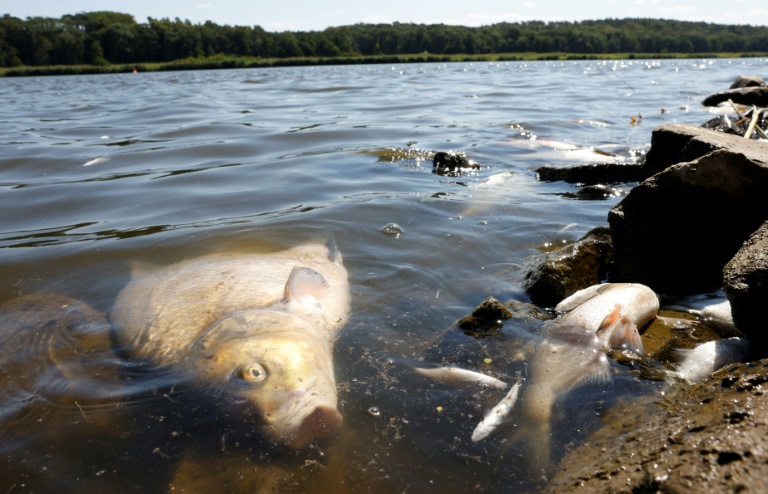
Between 200 and 300 kilograms (440-660 pounds) of dead fish have been removed in Cigacice in the past few days — out of around 300 tonnes in total from the Oder since the start of August, officials said.

“Everyone is afraid. Only some curious people pop in to have a look, but life has stopped,” said Lukasz Duch, director of a local sports centre.

“Before the pollution, on a good weekend, Cigacice would draw between 5,000 and 10,000 tourists.

“This place was full of life… Now businesses are making nothing in high season,” he said.

– ‘Afraid of the river’ –

While the first signs of pollution appeared at the end of July, the area around Cigacice was only affected on August 8.

Thousands of dead fish began appearing in the water. In the region as a whole, residents and firefighters rushed to their river in an effort to clean it up.

Poland’s government only reacted on August 12, sparking widespread criticism from both local Polish authorities and Germany.

“If we had had the information two weeks earlier, we would have prepared,” said Wojciech Soltys, the mayor of Sulechow, the municipality where Cigacice is located.

“Now we are still waiting for clear and concrete information. What happened? When will we be able to go back to the river?”

The Oder begins in the Czech Republic before passing into Poland where it forms a natural border with Germany and then ends up in the Baltic Sea.

Until the end of the 1990s, it was heavily polluted — an industrial legacy of the communist era.

In 1997, following massive flooding, the river cleaned up naturally and people began returning to its banks.

Wloch was part of this movement.

“We worked for a long time for people to come and bathe in the river, relax here. In the 1980s and 1990s it looked terrible,” he said.

“Now, people are afraid of the river again. It will be difficult to restore this confidence,” said Wloch, who has seen 12 years of work disappear in a moment.

– Toxic algae from pollution –

Krzysztof Feodorowicz, owner of a vineyard in the Polish village of Laz near the river, said it looks like “an industrial waste canal”.

Like many others, he had been expecting an environmental disaster.

“The Oder was a time bomb. We knew very well that numerous industrial enterprises in Silesia were pouring their wastewater directly into it,” he said.

Feodorowicz said environmental checks are carried out but they are not working well.

German and Polish officials say the disaster could have been triggered by toxic algae caused by industrial waste in Poland.

“Uncontrolled pollution led to a chain of events that it is impossible to comprehend,” said Grzegorz Gabrys, head of the zoology department at the University of Zielona Gora in Poland.

“Apart from the fish, we have seen the death of other filtering organisms such as clams. If all these organisms have disappeared from the ecosystem, the consequences of this catastrophe could play out over a period of many years,” he said.

Gabrys criticised Poland’s general approach to protecting its waterways.

“Many people consider rivers part of the technical infrastructure,” he said.

Paraphrasing former US president Bill Clinton’s famous phrase, he added: “It’s nature, stupid!”

Peak Tram back on track in tourist-devoid Hong Kong

The Peak Tram, Hong Kong’s famed public transport and a popular tourist draw, reopened Saturday after a year-long $102 million facelift even as the city’s coronavirus curbs continue to keep overseas visitors at bay. 

The historic funicular, which dates back to 1888 and offers panoramic views of Hong Kong Island’s famous skyline as it ascends to Victoria Peak, used to draw over six million visitors a year, according to its operator.

The latest makeover brought more spacious tramcars that accommodate 210 passengers, a full overhaul of its rail systems and a redesigned terminus at the heart of Hong Kong’s central business district.

The Peak Tram closed for upgrades in June 2021, a period when the Chinese finance hub’s strict border controls — in line with Beijing’s zero-Covid strategy — all but wiped out its tourism industry.

The redevelopment went overbudget by around $15 million, which its operator attributed to supply chain difficulties during the pandemic, such as bringing the custom Switzerland-made tramcars to Hong Kong.

An adult return ticket now costs HK$88 ($11.20), a nearly 70 percent jump from before the makeover.  

“I hope all visitors will feel it’s worth the price,” May Tsang, general manager of tram operator the Peak Complex, said on Wednesday.

“We have to consider the increase in our operating costs and the long-term sustainability of our business.”

On Saturday morning, a woman surnamed Kwok and her young daughter were among a crowd of around a hundred waiting in line to try out the refurbished tram.

“It’s been a long time since I was here and it’ll be her first time,” she said of her daughter.

Chau, who brought his two sons along for a family outing, said he was generally satisfied with the revamp.

“It’s a bit pricey, but so is everything nowadays.”

Tourists were mostly absent on Saturday as Hong Kong saw just a total of 134,000 visitors in the past four quarters — a mere fraction of the 65 million that came to the city in 2018.

The new sixth generation tramcars are a far cry from the sedan chairs that carried visitors to Victoria Peak during the early days of British colonial rule. 

But they are now painted in a deep green colour, a nod to previous generation tramcars in service from 1948 until 1989 — when they were refurbished in a burgundy red. 

At 396 metres (1,300 feet) above sea level, the Peak, once an exclusive enclave for Hong Kong’s rich and powerful, remained off-limits to most of the local population until 1947.

It is now best known as an easy-to-access spot for residents and tourists to enjoy views of Hong Kong’s sprawling cityscape, with Victoria Harbour in the distance.

UN session on high seas biodiversity ends without agreement

UN member states ended two weeks of negotiations Friday without a treaty to protect biodiversity in the high seas, an agreement that would have addressed growing environmental and economic challenges.

After 15 years, including four prior formal sessions, negotiators have yet to reach a legally binding text to address the multitude of issues facing international waters — a zone that encompasses almost half the planet.

“Although we did make excellent progress, we still do need a little bit more time to progress towards the finish line,” said conference chair Rena Lee.

It will now be up to the UN General Assembly to resume the fifth session at a date still to be determined.

Many had hoped the session, which began on August 15 at the United Nations headquarters in New York, would be the last and yield a final text on “the conservation and sustainable use of marine biodiversity beyond national jurisdiction,” or BBNJ for short.

“While it’s disappointing that the treaty wasn’t finalized during the past two weeks of negotiations, we remain encouraged by the progress that was made,” said Liz Karan of the NGO Pew Charitable Trusts, calling for a new session by the end of the year.

One of the most sensitive issues in the text revolved around the sharing of possible profits from the development of genetic resources in international waters, where pharmaceutical, chemical and cosmetic companies hope to find miracle drugs, products or cures.

Such costly research at sea is largely the prerogative of rich nations, but developing countries do not want to be left out of potential windfall profits drawn from marine resources that belong to no one.

-‘Missed opportunity’-

Similar issues of equity arise in other international negotiations, such as on climate change, in which developing nations that feel outsized harm from global warming have tried in vain to get wealthier countries to help pay to offset those impacts.

The high seas begin at the border of a nation’s exclusive economic zone (EEZ) — which by international law reaches no more than 200 nautical miles (370 kilometers) from its coast — and are under no state’s jurisdiction.

Sixty percent of the world’s oceans fall under this category.

And while healthy marine ecosystems are crucial to the future of humanity, particularly to limit global warming, only one percent of international waters are protected.

One of the key pillars of an eventual BBNJ treaty is to allow the creation of marine protected areas, which many nations hope will cover 30 percent of the Earth’s ocean by 2030.

“Without establishing protections in this vast area, we will not be able to meet our ambitious and necessary 30 by 30 goal,” US State Department official Maxine Burkett said at an earlier press conference.

But delegations still disagree on the process for creating these protected areas as well as how required environmental impact assessments will be implemented before new high seas activity begins.

“What a missed opportunity…”, tweeted Klaudija Cremers, a researcher at the IDDRI think tank, which, like multiple other NGOs, has a seat with observer status at the negotiations.

The delegate from Samoa, addressing the conference on behalf of the smaller developing island nations of the Pacific, said they were “disappointed.”

“We live very far and it is not cheap to travel all this way. This money was not spent on roads, on medicine, schools,” she added.

“The Pacific came here in good faith and will continue to do so until we conclude this conference in the very near future,” she said on the verge of tears, to applause from the room.

Laura Meller, of Greenpeace’s Protect the Oceans campaign, said: “Time has run out. Further delay means ocean destruction. We are sad and disappointed. While countries continue to talk, the oceans and all those who rely on them will suffer.”
UN session on high seas biodiversity ends without agreement

UN member states ended two weeks of negotiations Friday without a treaty to protect biodiversity in the high seas, an agreement that would have addressed growing environmental and economic challenges.

After 15 years, including four prior formal sessions, negotiators have yet to reach a legally binding text to address the multitude of issues facing international waters — a zone that encompasses almost half the planet.

“Although we did make excellent progress, we still do need a little bit more time to progress towards the finish line,” said conference chair Rena Lee.

It will now be up to the UN General Assembly to resume the fifth session at a date still to be determined.

Many had hoped the session, which began on August 15 at the United Nations headquarters in New York, would be the last and yield a final text on “the conservation and sustainable use of marine biodiversity beyond national jurisdiction,” or BBNJ for short.

“While it’s disappointing that the treaty wasn’t finalized during the past two weeks of negotiations, we remain encouraged by the progress that was made,” said Liz Karan of the NGO Pew Charitable Trusts, calling for a new session by the end of the year.

One of the most sensitive issues in the text revolved around the sharing of possible profits from the development of genetic resources in international waters, where pharmaceutical, chemical and cosmetic companies hope to find miracle drugs, products or cures.

Such costly research at sea is largely the prerogative of rich nations, but developing countries do not want to be left out of potential windfall profits drawn from marine resources that belong to no one.

-‘Missed opportunity’-

Similar issues of equity arise in other international negotiations, such as on climate change, in which developing nations that feel outsized harm from global warming have tried in vain to get wealthier countries to help pay to offset those impacts.

The high seas begin at the border of a nation’s exclusive economic zone (EEZ) — which by international law reaches no more than 200 nautical miles (370 kilometers) from its coast — and are under no state’s jurisdiction.

Sixty percent of the world’s oceans fall under this category.

And while healthy marine ecosystems are crucial to the future of humanity, particularly to limit global warming, only one percent of international waters are protected.

One of the key pillars of an eventual BBNJ treaty is to allow the creation of marine protected areas, which many nations hope will cover 30 percent of the Earth’s ocean by 2030.

“Without establishing protections in this vast area, we will not be able to meet our ambitious and necessary 30 by 30 goal,” US State Department official Maxine Burkett said at an earlier press conference.

But delegations still disagree on the process for creating these protected areas as well as how required environmental impact assessments will be implemented before new high seas activity begins.

“What a missed opportunity…”, tweeted Klaudija Cremers, a researcher at the IDDRI think tank, which, like multiple other NGOs, has a seat with observer status at the negotiations.

The delegate from Samoa, addressing the conference on behalf of the smaller developing island nations of the Pacific, said they were “disappointed.”

“We live very far and it is not cheap to travel all this way. This money was not spent on roads, on medicine, schools,” she added.

“The Pacific came here in good faith and will continue to do so until we conclude this conference in the very near future,” she said on the verge of tears, to applause from the room.

Laura Meller, of Greenpeace’s Protect the Oceans campaign, said: “Time has run out. Further delay means ocean destruction. We are sad and disappointed. While countries continue to talk, the oceans and all those who rely on them will suffer.”
Pope creates new cardinals who may choose successor

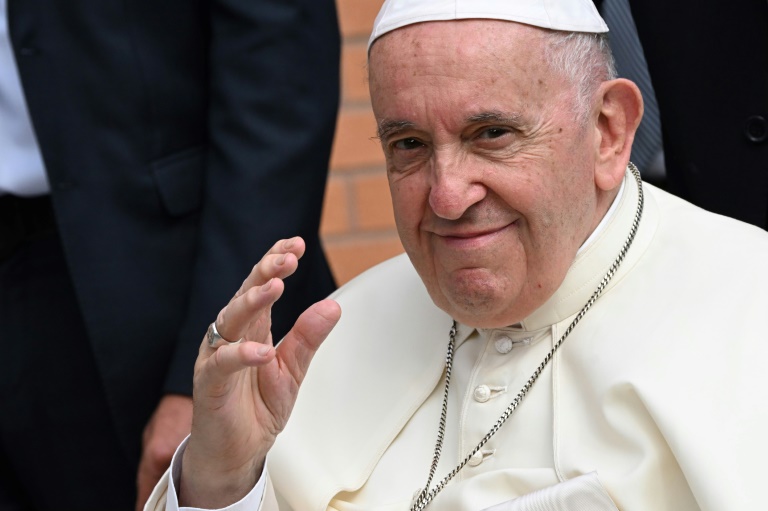
Pope Francis will on Saturday create 20 new cardinals picked from the four corners of the world, most of whom could one day end up choosing the pontiff’s successor.

Francis has raised the possibility of retiring due to his declining health, a path taken by his predecessor Benedict XVI. If he were to do so, a conclave involving all cardinals aged under 80 would be called to pick a successor. 

Sixteen of the 20 cardinals created Saturday would be eligible for that conclave based on their ages.

The ceremony at St. Peter’s Basilica is the 85-year-old pope’s eighth since being elected in 2013 and includes clergy known for their pastoral work and, in some cases, progressive views.

All parts of the globe are represented, including new cardinals from Brazil and Nigeria, Singapore and East Timor, among others. 

After this weekend, Francis will have chosen 83 out of the 132 cardinals currently qualified to elect a new pope. 

That is nearly two-thirds of the total and precisely the percentage needed for any proposed name to pass.

In recent months, the pope has been forced to rely on a wheelchair due to knee pain, which he has said is inoperable. 

He also suffers from sciatica, a chronic nerve condition that causes pain in his hip.  

– Future clues? –

The new cardinals are always scrutinised by Vatican observers for clues as to the future direction of the Church and its 1.3 billion faithful. 

Experts caution, however, that cardinals named by one pope do not necessarily choose successors in their likeness.

The Argentine pontiff has this year completed a major shake-up of the Vatican’s powerful governing body, the Roman Curia, which makes winning new converts a priority.

In keeping with his focus on making the Church more inclusive, transparent and responsive to the needs of the poor and marginalised, Francis has chosen two Africans and five Asians, including two cardinals who hail from India. 

Vatican expert Bernard Lecomte told AFP the pope’s choices are “representative of the Church today, with a large spot for the southern hemisphere”, where 80 percent of the world’s Catholics live.

Virgilio Do Carmo Da Silva, the archbishop of Dili, will on Saturday become the first cardinal of tiny East Timor, an overwhelmingly Catholic nation in Southeast Asia.

The pope has also felt free to bypass the archbishops of major cities to choose those from less powerful seats, such as Robert McElroy, the 68-year-old bishop of San Diego, California. 

McElroy has supported gay Catholics and criticised moves to deny Communion to US politicians — like President Joe Biden — who support abortion.

The pope will also create the youngest cardinal in the world, 48-year-old Italian missionary Giorgio Marengo, who works in Mongolia.

The new crop of cardinals also includes Nigeria’s Peter Okpaleke, the bishop of Ekwulobia, and Leonardo Ulrich Steiner, archbishop of Manaus, Brazil. 

The 80-year-old bishop emeritus of Ghent, Lucas Van Looy, had been nominated but asked to be exempted following criticism of his handling of child sexual abuse by priests in Belgium. 

Saturday’s ceremony at the Vatican will be followed by the traditional “courtesy visit,” in which the general public is invited to greet the new cardinals.

Close Bitnami banner
Bitnami