World

Tunisia recalls Morocco envoy in W. Sahara row

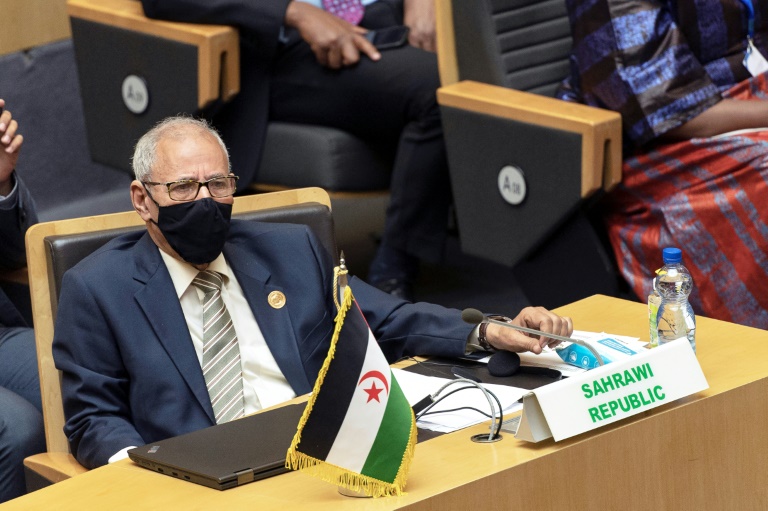
Tunisia said Saturday it would recall its ambassador from Morocco for consultations, a day after the kingdom did the same in response to Tunisia’s president hosting the Polisario movement’s head.

The Polisario wants an independent state in the Western Sahara, a vast stretch of mineral-rich desert which Morocco sees as a sovereign part of its own territory.

Tunisian President Kais Saied had on Friday hosted Polisario chief Brahim Ghali who arrived to attend the Japanese-African investment conference TICAD.

In response to what it called a “hostile” and “unnecessarily provocative” act, Morocco immediately withdrew its Tunis ambassador for consultations and cancelled its own participation in the high-profile conference.

On Saturday the Tunisian Foreign Ministry voiced its “surprise” at Morocco’s reaction.

“Tunisia has maintained its total neutrality on the Western Sahara issue in line with international law,” it said in a statement.

“This position will not change until the concerned parties find a peaceful solution acceptable to all.”

Saied spent much of Friday welcoming African leaders arriving for the TICAD conference, including Ghali who is also president of the self-proclaimed Sahrawi Arab Democratic Republic (SADR).

Morocco accused Tunisia of “unilaterally” inviting the Polisario chief “against the advice of Japan and in violation of the process of preparation and established rules”. 

But Tunisia said Saturday the African Union had issued a direct invitation to the SADR, a member state, to join the conference, noting that it had attended previous such gatherings — alongside Morocco.

The move came as French President Emmanuel Macron visited Morocco’s arch-rival and Polisario backer Algeria for a three-day visit aimed at healing ties with the former French colony.

It is not the first time that Ghali’s travels have sparked Moroccan anger.

In April 2021, he headed to Spain to be treated for Covid-19, sparking a year-long diplomatic row between Spain and the North African kingdom.

That only ended after Madrid dropped its decades-long stance of neutrality over the Western Sahara — a former Spanish colony — and backed a Moroccan plan for limited self-rule there.

The Polisario had waged an armed struggle before agreeing to a ceasefire in 1991 on the promise of a UN-supervised referendum on self-determination, which has never happened.

The African Union’s acting chairman Macky Sall, in a speech to TICAD delegates on Saturday, said he “regretted the absence of Morocco”.

“We hope that this problem will find a solution for the smooth running of our partnership” between Africa and Japan, he said.
Pakistan orders thousands to evacuate near flood-swollen rivers

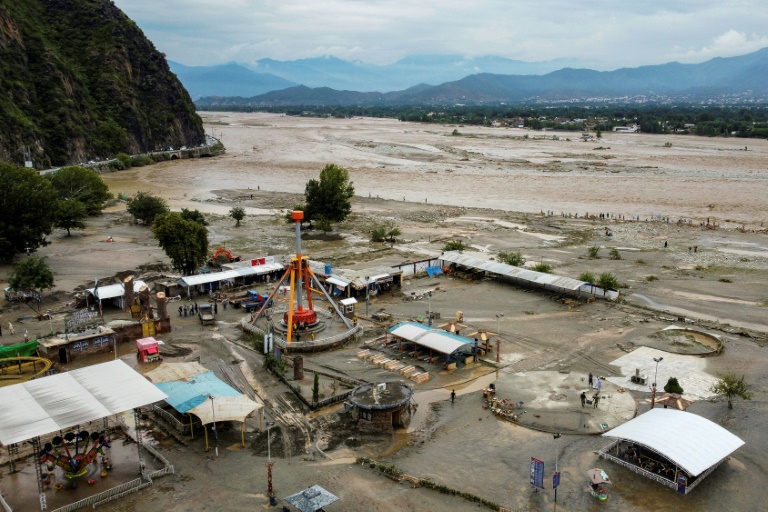
Thousands of people living near flood-swollen rivers in Pakistan’s north were ordered to evacuate Saturday as the death toll from devastating monsoon rains neared 1,000 with no end in sight.

Many rivers in Khyber Pakhtunkhwa — a picturesque province of rugged mountains and valleys — have burst their banks, demolishing scores of buildings including a 150-room hotel that crumbled into a raging torrent.

“The house which we built with years of hard work started sinking in front of our eyes,” said Junaid Khan, 23, the owner of two fish farms in Chrasadda.

“We sat on the side of the road and watched our dream house sinking.”

The annual monsoon is essential for irrigating crops and replenishing lakes and dams across the Indian subcontinent, but each year it also brings a wave of destruction.

Officials say this year’s monsoon flooding has affected more than 33 million people — one in seven Pakistanis — destroying or badly damaging nearly a million homes.

On Saturday, authorities ordered thousands of residents in threatened areas to evacuate their homes as rivers had still not reached maximum capacity.

“Initially some people refused to leave, but when the water level increased they agreed,” Bilal Faizi, spokesman for the Rescue 1122 emergency service, told AFP.

Officials say this year’s floods are comparable to 2010 — the worst on record — when over 2,000 people died and nearly a fifth of the country was under water.

Farmer Shah Faisal, camped by the side of a road in Chrasadda with his wife and two daughters, described how he saw his riverside home swallowed by a river as the powerful current eroded the bank.

The Jindi, Swat and Kabul rivers flow through the town before joining the mighty Indus, which is also flooding downstream. 

“We escaped with our lives,” Faisal told AFP.

– Climate change –

Officials blame the devastation on man-made climate change, saying Pakistan is unfairly bearing the consequences of irresponsible environmental practices elsewhere in the world.

Pakistan is eighth on the Global Climate Risk Index, a list compiled by the environmental NGO Germanwatch of countries deemed most vulnerable to extreme weather caused by climate change.

Still, local authorities must shoulder some of the blame for the devastation.

Corruption, poor planning and the flouting of local regulations mean thousands of buildings have been erected in areas prone to seasonal flooding — albeit not as bad as this year.

The government has declared an emergency and mobilised the military to deal with what Climate Change Minister Sherry Rehman on Wednesday called “a catastrophe of epic scale”.

According to the National Disaster Management Authority, since the monsoon started in June more than two million acres of cultivated crops have been wiped out, 3,100 kilometres (1,900 miles) of roads have been destroyed and 149 bridges have been washed away.

In Sukkur, more than 1,000 kilometres south of Swat, farmlands irrigated by the Indus were under water, and tens of thousands of people were seeking shelter on elevated roads and highways as they waited for fresh torrents from the north.

“We have opened the gates fully,” dam supervisor Aziz Soomro told AFP, adding the main rush of water was expected Sunday.

The flooding could not come at a worse time for Pakistan, whose economy is in free fall and whose politics are gripped by crisis following the ousting of former prime minister Imran Khan by a parliamentary vote of no confidence in April.

Pakistan orders thousands to evacuate near flood-swollen rivers

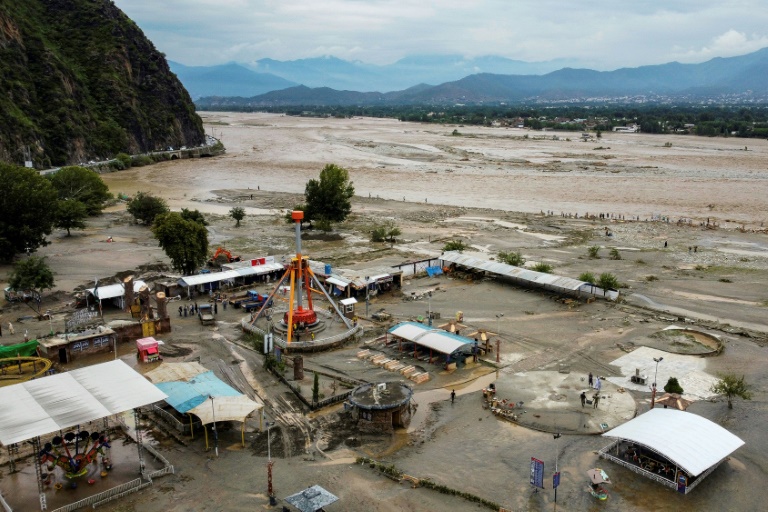
Thousands of people living near flood-swollen rivers in Pakistan’s north were ordered to evacuate Saturday as the death toll from devastating monsoon rains neared 1,000 with no end in sight.

Many rivers in Khyber Pakhtunkhwa — a picturesque province of rugged mountains and valleys — have burst their banks, demolishing scores of buildings including a 150-room hotel that crumbled into a raging torrent.

“The house which we built with years of hard work started sinking in front of our eyes,” said Junaid Khan, 23, the owner of two fish farms in Chrasadda.

“We sat on the side of the road and watched our dream house sinking.”

The annual monsoon is essential for irrigating crops and replenishing lakes and dams across the Indian subcontinent, but each year it also brings a wave of destruction.

Officials say this year’s monsoon flooding has affected more than 33 million people — one in seven Pakistanis — destroying or badly damaging nearly a million homes.

On Saturday, authorities ordered thousands of residents in threatened areas to evacuate their homes as rivers had still not reached maximum capacity.

“Initially some people refused to leave, but when the water level increased they agreed,” Bilal Faizi, spokesman for the Rescue 1122 emergency service, told AFP.

Officials say this year’s floods are comparable to 2010 — the worst on record — when over 2,000 people died and nearly a fifth of the country was under water.

Farmer Shah Faisal, camped by the side of a road in Chrasadda with his wife and two daughters, described how he saw his riverside home swallowed by a river as the powerful current eroded the bank.

The Jindi, Swat and Kabul rivers flow through the town before joining the mighty Indus, which is also flooding downstream. 

“We escaped with our lives,” Faisal told AFP.

– Climate change –

Officials blame the devastation on man-made climate change, saying Pakistan is unfairly bearing the consequences of irresponsible environmental practices elsewhere in the world.

Pakistan is eighth on the Global Climate Risk Index, a list compiled by the environmental NGO Germanwatch of countries deemed most vulnerable to extreme weather caused by climate change.

Still, local authorities must shoulder some of the blame for the devastation.

Corruption, poor planning and the flouting of local regulations mean thousands of buildings have been erected in areas prone to seasonal flooding — albeit not as bad as this year.

The government has declared an emergency and mobilised the military to deal with what Climate Change Minister Sherry Rehman on Wednesday called “a catastrophe of epic scale”.

According to the National Disaster Management Authority, since the monsoon started in June more than two million acres of cultivated crops have been wiped out, 3,100 kilometres (1,900 miles) of roads have been destroyed and 149 bridges have been washed away.

In Sukkur, more than 1,000 kilometres south of Swat, farmlands irrigated by the Indus were under water, and tens of thousands of people were seeking shelter on elevated roads and highways as they waited for fresh torrents from the north.

“We have opened the gates fully,” dam supervisor Aziz Soomro told AFP, adding the main rush of water was expected Sunday.

The flooding could not come at a worse time for Pakistan, whose economy is in free fall and whose politics are gripped by crisis following the ousting of former prime minister Imran Khan by a parliamentary vote of no confidence in April.

Civilians wounded in clashes in Libyan capital

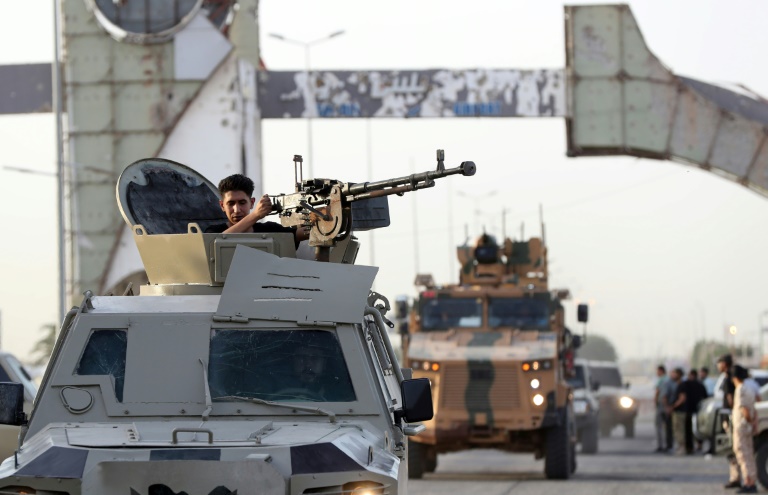
Rival Libyan groups exchanged gunfire in the Libyan capital Saturday, wounding civilians and raising fears of all-out conflict in a country facing a grave political crisis.

With combat continuing, “we are having difficulties moving around”, Oussama Ali, spokesman for the Tripoli ambulance service, said on Libya’s Al-Ahrar television.

He said there were “injured among civilians”, but did not give a number.

Local media reported fatalities but no official toll had been released.

Numerous images on social media purported to show cars burnt-out in the fighting and bullet-riddled buildings.

The fighting broke out in various districts of Tripoli between groups armed with both heavy and light weapons, as two rival governments yet again vie for power in the oil-rich but impoverished North African country.

Gunshots and explosions rang through the darkened streets of Tripoli throughout Friday night, an AFP correspondent said.

The crisis pits groups that back the Tripoli-based Government of National Unity (GNU), led by Abdulhamid Dbeibah, against supporters of a rival government led by former interior minister Fathi Bashagha.

According to local media, two influential armed groups faced off against one another in Tripoli, where divisions have deepened among militias on opposing sides of the political divide.

Bashagha was appointed in February by a parliament elected in 2014 and based in the eastern city of Tobruk, but has since been unable to impose his authority in Tripoli.

Initially ruling out the use of force, the former minister has since hinted that he could resort to armed force.

Last week, he called on “Libyan men of honour” to drop their support for Dbeibah’s “obsolete and illegitimate” administration.

Bashagha is supported by eastern-based military strongman Khalifa Haftar, who launched an unsuccessful offensive on the capital between 2019 and 2020.

Dbeibah — appointed last year as part of a United Nations-backed peace process to end more than a decade of violence in the country — has refused to hand over power before elections.

The UN on Tuesday voiced “deep concern” over growing tensions between the rival Libyan forces, calling for “immediate” moves to calm the situation.

Last month, the most deadly clashes between rival groups in Tripoli since 2020 left 16 people dead, including a child.

Tunis hosts Japan-Africa investment conference

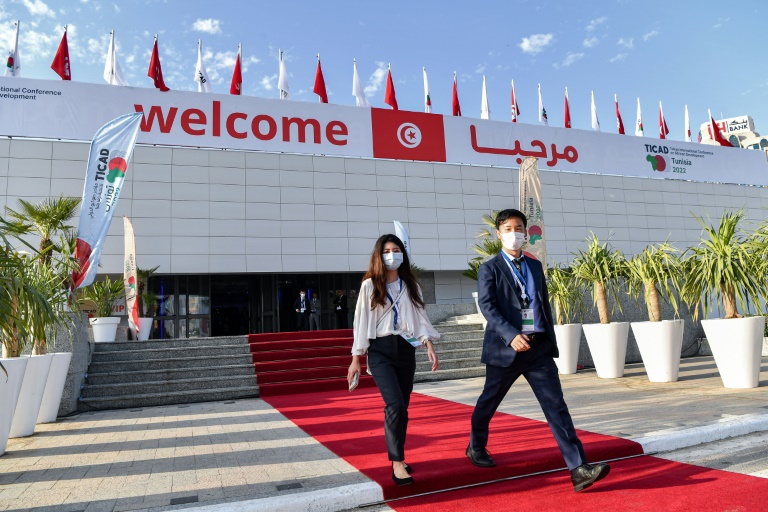
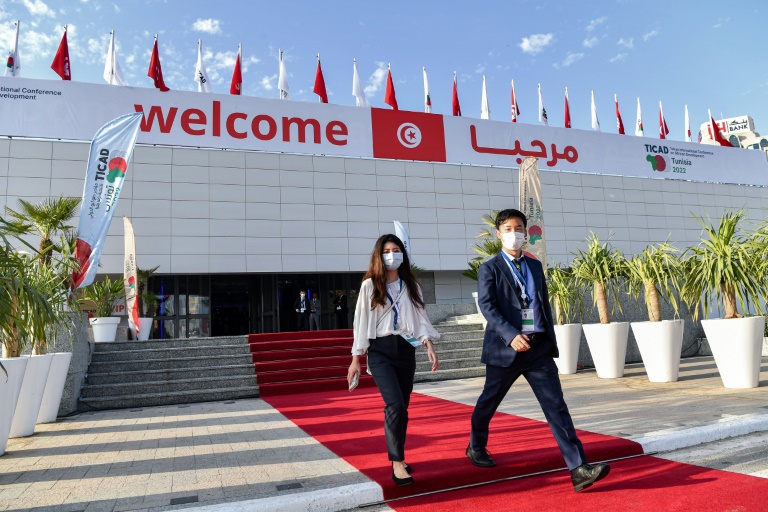
Tunisia and Japan launched a pan-African investment conference on Saturday, seeking to counter the influence of rival China whose economic imprint on the continent has steadily grown.

The conference takes place amid a “complex” international environment caused by the coronavirus pandemic and the war in Ukraine, the Japanese foreign ministry has said.

Some 30 heads of state and government are attending the event in the capital Tunis, at a time when the import-dependent North African nation is grappling with a deepening economic malaise.

In his opening speech, Tunisian President Kais Saied urged delegates to “search together for ways for African peoples to achieve the hopes and dreams of the first generation after independence”.

He praised Japan’s success in “achieving development at the same time as preserve its culture and social traditions”.

“The world cannot continue as it was. With all its wealth and assets, Africa cannot watch its people live through poverty,” he said.

The eighth Tokyo International Conference on African Development (TICAD8) also comes as Beijing cements its influence on the continent with its “Belt and Road” infrastructure initiative.

It is the first TICAD — held every three years either in Japan or an African country — since the pandemic began.

Prime Minister Fumio Kishida will be attending remotely after testing positive for Covid-19.

The Japanese delegation is being led by Foreign Minister Yoshimasa Hayashi, with about 5,000 participants set to attend.

Morocco withdrew from the event and recalled its ambassador from Tunisia for consultations, after Saied hosted the head of Western Sahara’s Polisario independence movement.

The conference will focus on three pillars: economy, society, and peace and stability.

A slick promotional video said the conference aims to promote “African development led by African people”.

But no journalists from African news outlets had been given access to delegates ahead of the event, except Tunisian state media, alongside Japanese journalists.

Japanese economic paper Nikkei reported that aid to Africa could increase by 40 percent over the next three years, in response to other powers that have boosted their presence on the continent.

– Beware of ‘excessive’ debt –

At the last TICAD in 2019, former premier Shinzo Abe — who was assassinated at a campaign event last month — warned investors in Africa they must beware of burdening countries with “excessive” debt, an apparent swipe at China.

Tunisian authorities hope their struggling economy will benefit from hosting the conference by attracting Japanese investment, particularly in the health, automotive and renewable energy sectors.

The conference has sparked anger among Tunisians as major road closures threatened traffic disruptions in the capital.

Authorities also drew widespread mockery after detaining Japanese satellite engineers — TICAD delegates — at Tunis airport for hours because they were in possession of a model satellite that they intend to use to showcase technology.

Authorities have spruced up parts of the city likely to be seen by delegates and dug in roadside plants, but these efforts have also drawn the ire of social media users.

“I feel deeply insulted by the clean-up of Tunis for the TICAD,” one Tunisian wrote on Twitter, arguing that “those we pay to make our lives easier” should instead focus on making the capital livable for citizens all year round.

Tunis hosts Japan-Africa investment conference

Tunisia and Japan launched a pan-African investment conference on Saturday, seeking to counter the influence of rival China whose economic imprint on the continent has steadily grown.

The conference takes place amid a “complex” international environment caused by the coronavirus pandemic and the war in Ukraine, the Japanese foreign ministry has said.

Some 30 heads of state and government are attending the event in the capital Tunis, at a time when the import-dependent North African nation is grappling with a deepening economic malaise.

In his opening speech, Tunisian President Kais Saied urged delegates to “search together for ways for African peoples to achieve the hopes and dreams of the first generation after independence”.

He praised Japan’s success in “achieving development at the same time as preserve its culture and social traditions”.

“The world cannot continue as it was. With all its wealth and assets, Africa cannot watch its people live through poverty,” he said.

The eighth Tokyo International Conference on African Development (TICAD8) also comes as Beijing cements its influence on the continent with its “Belt and Road” infrastructure initiative.

It is the first TICAD — held every three years either in Japan or an African country — since the pandemic began.

Prime Minister Fumio Kishida will be attending remotely after testing positive for Covid-19.

The Japanese delegation is being led by Foreign Minister Yoshimasa Hayashi, with about 5,000 participants set to attend.

Morocco withdrew from the event and recalled its ambassador from Tunisia for consultations, after Saied hosted the head of Western Sahara’s Polisario independence movement.

The conference will focus on three pillars: economy, society, and peace and stability.

A slick promotional video said the conference aims to promote “African development led by African people”.

But no journalists from African news outlets had been given access to delegates ahead of the event, except Tunisian state media, alongside Japanese journalists.

Japanese economic paper Nikkei reported that aid to Africa could increase by 40 percent over the next three years, in response to other powers that have boosted their presence on the continent.

– Beware of ‘excessive’ debt –

At the last TICAD in 2019, former premier Shinzo Abe — who was assassinated at a campaign event last month — warned investors in Africa they must beware of burdening countries with “excessive” debt, an apparent swipe at China.

Tunisian authorities hope their struggling economy will benefit from hosting the conference by attracting Japanese investment, particularly in the health, automotive and renewable energy sectors.

The conference has sparked anger among Tunisians as major road closures threatened traffic disruptions in the capital.

Authorities also drew widespread mockery after detaining Japanese satellite engineers — TICAD delegates — at Tunis airport for hours because they were in possession of a model satellite that they intend to use to showcase technology.

Authorities have spruced up parts of the city likely to be seen by delegates and dug in roadside plants, but these efforts have also drawn the ire of social media users.

“I feel deeply insulted by the clean-up of Tunis for the TICAD,” one Tunisian wrote on Twitter, arguing that “those we pay to make our lives easier” should instead focus on making the capital livable for citizens all year round.

Armed clashes break out in Libyan capital

Rival Libyan groups exchanged gunfire in the Libyan capital overnight Friday-Saturday, an AFP correspondent said, raising fears of all-out conflict in a country facing a grave political crisis.

The fighting broke out in various districts of Tripoli between groups armed with both heavy and light weapons, as two rival governments yet again vie for power in the oil-rich but impoverished North African country.

Gunshots and explosions rang through the darkened streets of Tripoli, the AFP correspondent said, adding that there were no immediate reports of casualties.

The crisis pits groups that back the Tripoli-based Government of National Unity (GNU), led by Abdulhamid Dbeibah, against supporters of a rival government led by former interior minister Fathi Bashagha.

According to local media, two influential armed groups faced off against one another in Tripoli, where divisions have deepened among militias on opposing sides of the political divide.

Bashagha was appointed in February by a parliament elected in 2014 and based in the eastern city of Tobruk, but has since been unable to impose his authority in Tripoli.

Initially ruling out the use of force, the former minister has more recently hinted that he could resort to armed conflict.

Last week, he called on “Libyan men of honour” to drop their support for Dbeibah’s “obsolete and illegitimate” administration.

Bashagha is supported by eastern-based military strongman Khalifa Haftar, who launched an unsuccessful offensive on the capital between 2019 and 2020.

Dbeibah — appointed last year as part of a United Nations-backed peace process to end more than a decade of violence in the country — has refused to hand over power before elections.

The UN on Tuesday voiced “deep concern” over growing tensions between the rival Libyan forces, calling for “immediate” moves to calm the situation.

Last month, the most deadly clashes between rival groups in Tripoli since 2020 left 16 people dead, including a child.

Dutch bus out asylum-seekers at crisis-hit centre

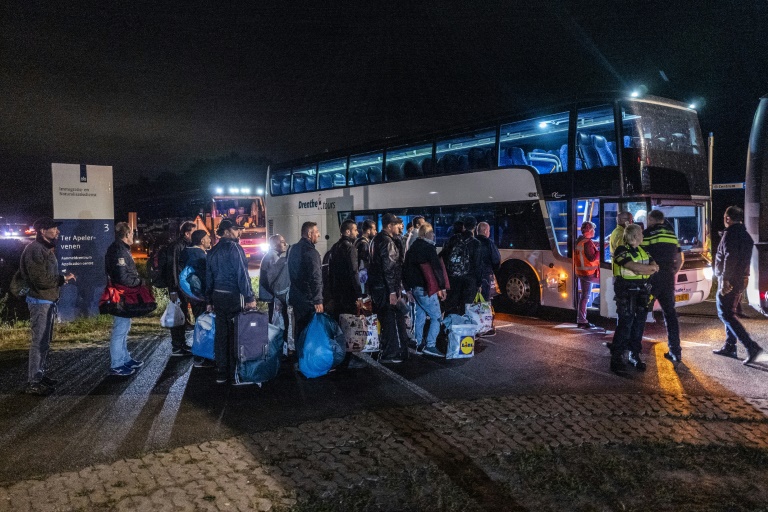
Hundreds of asylum-seekers have been evacuated from a crisis-hit migrant centre to shelters across the Netherlands after having slept there in the open for days, officials said on Saturday.

Aid organisations had warned of a looming humanitarian emergency at the Ter Apel centre near the northern  city of Groningen, where more than 700 people have been sleeping rough outside the gates, many for almost three weeks.

The group of all-male asylum-seekers hoped to be processed and given shelter while their applications were under consideration.

“Several hundred people were taken by bus late last night to other reception locations across the country,” said Leon Veldt, spokesman for the Dutch government’s refugee organisation (COA) said Saturday.

“We hope to slowly normalise the situation at Ter Apel,” he told AFP.

The crisis came under the spotlight after the death at the centre of a three-month-old infant from unknown causes on Wednesday.

Dutch newspapers however reported Saturday that dozens of men remained behind at the centre, mainly out of fear of losing their places in the queue.

On Friday the Red Cross and the Dutch arm of Doctors Without Borders (MSF) had warned of a looming medical and humanitarian emergency.

AFP correspondents on Friday saw hundreds of men on the ground under makeshift tarpaulins, close to a row of dirty portable toilets with no other facilities.

Dutch Prime Minister Mark Rutte admitted  there were “shameful scenes at the centre” and that mistakes had been made, but he promised a “structural solution” to the problem.

The Dutch government late Friday announced a raft of measures to deal with the crisis at the country’s main migrant centre  — blamed on staff shortages at COA and housing shortages in the Netherlands.

Many asylum-seekers whose applications have been approved were forced to remain in reception centres as there are no homes available on the Dutch market.  

The new measures included temporarily suspending a migrant deal with Turkey to take on 1,000 asylum seekers per year and only bringing over families of successful applicants once housing outside reception centres have been found.

The Dutch government also promised to open more centres, including the military possibly making available a property, to use a boat in Arnhem with 200 beds and accommodation at the TU Delft University.

Tunis hosts Japan-Africa investment conference

Japan opens an African investment conference in Tunisia on Saturday, seeking to counter the influence of rival China which has steadily grown its economic imprint on the continent.

The conference takes place amid a “complex” international environment caused by the coronavirus pandemic and the war in Ukraine, the Japanese foreign ministry has noted.

Some 30 heads of state and government are expected to attend the event in the capital Tunis, at a time when the import-dependent North African nation is grappling with a deepening economic malaise.

The eighth Tokyo International Conference on African Development (TICAD8) also comes as Beijing cements its influence on the continent with its “Belt and Road” infrastructure initiative.

It is the first TICAD — held every three years either in Japan or an African country — since the pandemic began.

Prime Minister Fumio Kishida will be attending remotely after testing positive for Covid-19.

The Japanese delegation will be led by Foreign Minister Yoshimasa Hayashi, with about 5,000 participants set to attend.

But the opening risks being overshadowed by Morocco withdrawing from the event and recalling its ambassador from Tunisia for consultations, after Tunisia’s President Kais Saied hosted the head of Western Sahara’s Polisario independence movement.

Since 1993, TICAD conferences backed by the United Nations and other international agencies have generated 26 development projects in 20 African countries.

Most are funded by the Japan International Cooperation Agency (JICA).

The conference will focus on three pillars: economy; society; and peace and stability.

A slick promotional video said the conference aims to promote “African development led by African people”.

But no journalists from African news outlets have been given access to delegates ahead of the event, except Tunisian state media, alongside Japanese journalists.

Japanese economic paper Nikkei reported that aid to Africa could increase by 40 percent over the next three years, in response to other powers that have boosted their presence on the continent.

At the last TICAD in 2019, former premier Shinzo Abe — who was assassinated at a campaign event last month — warned investors in Africa that they must beware of burdening countries with “excessive” debt, an apparent swipe at China.

Tunisian authorities hope their struggling economy will benefit from hosting the conference by attracting Japanese investment, particularly in the health, automotive and renewable energy sectors.

The conference has sparked anger among Tunisians as major road closures threatened traffic disruptions in the capital.

Authorities also drew widespread mockery after detaining Japanese satellite engineers — TICAD delegates — at Tunis airport for hours because they were in possession of a model satellite that they intend to use to showcase technology.

Authorities have spruced up parts of the city likely to be seen by delegates and dug in roadside plants, but these efforts have also drawn the ire of social media users.

“I feel deeply insulted by the clean-up of Tunis for the TICAD,” one Tunisian wrote on Twitter, arguing that “those we pay to make our lives easier” should instead focus on making the capital livable for citizens all year round.

Tunis hosts Japan-Africa investment conference

Japan opens an African investment conference in Tunisia on Saturday, seeking to counter the influence of rival China which has steadily grown its economic imprint on the continent.

The conference takes place amid a “complex” international environment caused by the coronavirus pandemic and the war in Ukraine, the Japanese foreign ministry has noted.

Some 30 heads of state and government are expected to attend the event in the capital Tunis, at a time when the import-dependent North African nation is grappling with a deepening economic malaise.

The eighth Tokyo International Conference on African Development (TICAD8) also comes as Beijing cements its influence on the continent with its “Belt and Road” infrastructure initiative.

It is the first TICAD — held every three years either in Japan or an African country — since the pandemic began.

Prime Minister Fumio Kishida will be attending remotely after testing positive for Covid-19.

The Japanese delegation will be led by Foreign Minister Yoshimasa Hayashi, with about 5,000 participants set to attend.

But the opening risks being overshadowed by Morocco withdrawing from the event and recalling its ambassador from Tunisia for consultations, after Tunisia’s President Kais Saied hosted the head of Western Sahara’s Polisario independence movement.

Since 1993, TICAD conferences backed by the United Nations and other international agencies have generated 26 development projects in 20 African countries.

Most are funded by the Japan International Cooperation Agency (JICA).

The conference will focus on three pillars: economy; society; and peace and stability.

A slick promotional video said the conference aims to promote “African development led by African people”.

But no journalists from African news outlets have been given access to delegates ahead of the event, except Tunisian state media, alongside Japanese journalists.

Japanese economic paper Nikkei reported that aid to Africa could increase by 40 percent over the next three years, in response to other powers that have boosted their presence on the continent.

At the last TICAD in 2019, former premier Shinzo Abe — who was assassinated at a campaign event last month — warned investors in Africa that they must beware of burdening countries with “excessive” debt, an apparent swipe at China.

Tunisian authorities hope their struggling economy will benefit from hosting the conference by attracting Japanese investment, particularly in the health, automotive and renewable energy sectors.

The conference has sparked anger among Tunisians as major road closures threatened traffic disruptions in the capital.

Authorities also drew widespread mockery after detaining Japanese satellite engineers — TICAD delegates — at Tunis airport for hours because they were in possession of a model satellite that they intend to use to showcase technology.

Authorities have spruced up parts of the city likely to be seen by delegates and dug in roadside plants, but these efforts have also drawn the ire of social media users.

“I feel deeply insulted by the clean-up of Tunis for the TICAD,” one Tunisian wrote on Twitter, arguing that “those we pay to make our lives easier” should instead focus on making the capital livable for citizens all year round.

Close Bitnami banner
Bitnami