World

Taming inflation will inflict 'pain' on Americans: Fed's Powell

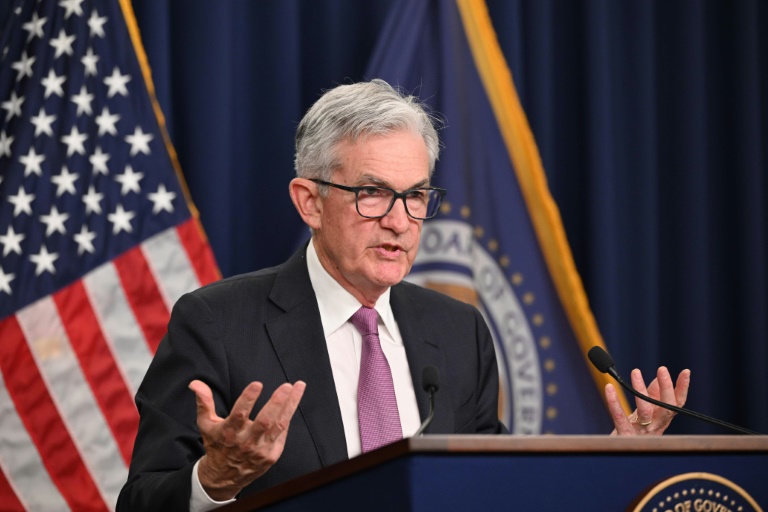
Taming US inflation will inflict “pain” on American families and businesses, but failure to wrestle prices down from their current 40-year high would be even more harmful, Federal Reserve Chair Jerome Powell said Friday in a hotly-anticipated speech to global policymakers.

Addressing the annual gathering of central bankers in Jackson Hole, Wyoming, Powell did not hold back or leave room for doubt about the Fed’s plans, pledging to act “forcefully.”

He warned that the world’s largest economy is likely to slow for a sustained period, and the strong US job market will suffer in order to get prices down — consequences he called the “unfortunate costs of reducing inflation.”

The Fed this year launched an aggressive campaign to raise interest rates — and in his unusually short, notably direct remarks, Powell made it clear that the fight against inflation is not over.

“Restoring price stability will take some time and requires using our tools forcefully to bring demand and supply into better balance,” he told the gathering, held against the backdrop of the majestic Grand Teton mountains.

“While higher interest rates, slower growth and softer labor market conditions will bring down inflation, they will also bring some pain to households and businesses,” Powell said.

“But a failure to restore price stability would mean far greater pain.”

Modest signs of slowing in the US economy and easing price pressures spurred hope in financial markets that the central bank might ease up on its aggressive rate hikes, and perhaps even start to reverse course next year.

But Powell doused hopes of a policy pivot, making it clear that Fed policy and the benchmark borrowing rate would have to remain “sufficiently restrictive” to bring inflation back down to the two percent target.

US markets turned negative on the news, with all three major stock indices losing three percent or more, including a 1,000 point loss for the Dow.

– Improving data –

The supply chain issues that have beleaguered the global economy have continued, worsened by a series of Covid lockdowns in China, which have combined with Russia’s war in Ukraine to send prices soaring worldwide.

In the battle to contain red-hot US inflation, which topped nine percent in June, the Fed has increased rates four times, including three-quarter-point increases in June and July — steep moves unheard of since the early 1980s — to the current level of a range of 2.25 to 2.5 percent.

Powell repeated Friday that another “unusually large” 75 basis point hike could be appropriate at the September policy meeting.

But recent data has shown signs of a slowing in price increases. Annual consumer price inflation dipped to a still-high 8.5 percent in July.

And data released Friday showed the Fed’s preferred inflation measure, the personal consumption expenditures price index, actually fell 0.1 percent in July — a dramatic slowdown from the 1.0 percent surge in June, largely reflecting the recent sharp retreat in global oil prices.

Over the last 12 months, the PCE price index slowed to 6.3 percent, the Commerce Department reported.

But Powell did not take much comfort in the figures.

“While the lower inflation readings for July are welcome, a single month’s improvement falls far short of what (policymakers) will need to see before we are confident that inflation is moving down,” he said.

But President Joe Biden cheered the figures, saying, “The American people are starting to get some relief from high prices.”

Still, he added, “We have more work to do. We have to help families who have been squeezed by decades living paycheck to paycheck.”

Powell pointed to the experience of one of his predecessors, famed inflation dragon slayer Paul Volcker — who used aggressive measures to quell runaway prices — and said officials cannot retreat from their responsibility.

“That means the Fed must hammer demand to come in line with what is becoming a global economy of scarcities or constrained supply,” KPMG economist Diane Swonk said on Twitter.

“That is no small challenge. Powell sees a window to avoid a Volcker outcome of deep recessions w/some pain today. Rock/hard place.”

Taming inflation will inflict 'pain' on Americans: Fed's Powell

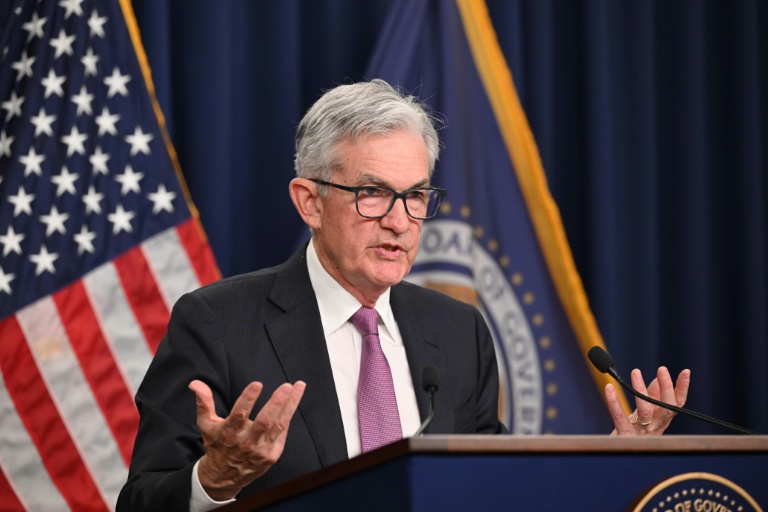
Taming US inflation will inflict “pain” on American families and businesses, but failure to wrestle prices down from their current 40-year high would be even more harmful, Federal Reserve Chair Jerome Powell said Friday in a hotly-anticipated speech to global policymakers.

Addressing the annual gathering of central bankers in Jackson Hole, Wyoming, Powell did not hold back or leave room for doubt about the Fed’s plans, pledging to act “forcefully.”

He warned that the world’s largest economy is likely to slow for a sustained period, and the strong US job market will suffer in order to get prices down — consequences he called the “unfortunate costs of reducing inflation.”

The Fed this year launched an aggressive campaign to raise interest rates — and in his unusually short, notably direct remarks, Powell made it clear that the fight against inflation is not over.

“Restoring price stability will take some time and requires using our tools forcefully to bring demand and supply into better balance,” he told the gathering, held against the backdrop of the majestic Grand Teton mountains.

“While higher interest rates, slower growth and softer labor market conditions will bring down inflation, they will also bring some pain to households and businesses,” Powell said.

“But a failure to restore price stability would mean far greater pain.”

Modest signs of slowing in the US economy and easing price pressures spurred hope in financial markets that the central bank might ease up on its aggressive rate hikes, and perhaps even start to reverse course next year.

But Powell doused hopes of a policy pivot, making it clear that Fed policy and the benchmark borrowing rate would have to remain “sufficiently restrictive” to bring inflation back down to the two percent target.

US markets turned negative on the news, with all three major stock indices losing three percent or more, including a 1,000 point loss for the Dow.

– Improving data –

The supply chain issues that have beleaguered the global economy have continued, worsened by a series of Covid lockdowns in China, which have combined with Russia’s war in Ukraine to send prices soaring worldwide.

In the battle to contain red-hot US inflation, which topped nine percent in June, the Fed has increased rates four times, including three-quarter-point increases in June and July — steep moves unheard of since the early 1980s — to the current level of a range of 2.25 to 2.5 percent.

Powell repeated Friday that another “unusually large” 75 basis point hike could be appropriate at the September policy meeting.

But recent data has shown signs of a slowing in price increases. Annual consumer price inflation dipped to a still-high 8.5 percent in July.

And data released Friday showed the Fed’s preferred inflation measure, the personal consumption expenditures price index, actually fell 0.1 percent in July — a dramatic slowdown from the 1.0 percent surge in June, largely reflecting the recent sharp retreat in global oil prices.

Over the last 12 months, the PCE price index slowed to 6.3 percent, the Commerce Department reported.

But Powell did not take much comfort in the figures.

“While the lower inflation readings for July are welcome, a single month’s improvement falls far short of what (policymakers) will need to see before we are confident that inflation is moving down,” he said.

But President Joe Biden cheered the figures, saying, “The American people are starting to get some relief from high prices.”

Still, he added, “We have more work to do. We have to help families who have been squeezed by decades living paycheck to paycheck.”

Powell pointed to the experience of one of his predecessors, famed inflation dragon slayer Paul Volcker — who used aggressive measures to quell runaway prices — and said officials cannot retreat from their responsibility.

“That means the Fed must hammer demand to come in line with what is becoming a global economy of scarcities or constrained supply,” KPMG economist Diane Swonk said on Twitter.

“That is no small challenge. Powell sees a window to avoid a Volcker outcome of deep recessions w/some pain today. Rock/hard place.”
Macron calls for 'new pact' with Algeria in reconciliation visit

President Emmanuel Macron called Friday for a “new pact” with Algeria and “truth and recognition” of the past, on day two of a visit to France’s former colony aimed at mending troubled ties.

The trip follows months of tensions between Paris and the North African country, which earlier this year marked six decades of independence following 132 years of French rule. 

The three-day visit also comes as European powers scramble to replace Russian energy imports — including with supplies from Algeria, Africa’s top gas exporter, which in turn is seeking a greater regional role.

Macron had proclaimed a “new page” in relations on Thursday, after meeting President Abdelmadjid Tebboune and announcing the creation of a joint commission of historians to examine the colonial period and the devastating eight-year war that ended it, at a cost of hundreds of thousands of lives.

On Friday, Macron — the first French president to be born after Algerian independence in 1962, told journalists he wanted “the truth, and recognition, otherwise we’ll never move forward”.

And on Saturday Macron and Tebboune are to sign “a joint declaration for a renewed, concrete and ambitious partnership”, the French presidency said.

Addressing members of the French community in Algeria later Friday, Macron spoke of his love for the North African country.

“Many people want to promote the idea that France should hate Algeria, or Algeria should hate France,” he said.

“But we are at a moment where we can build a new pact.”

– Security meeting –

Macron earlier laid a wreath at a monument to those who “died for France”, in the mixed Christian-Jewish Saint Eugene cemetery which was a major burial ground for Europeans during colonial times.

Later in the day he met young Algerian entrepreneurs and visited the iconic Grand Mosque of Algiers before heading to second city Oran.

In a visit his office says focuses on the future, Macron is set to meet young artists and sportspeople on Saturday and visit a famous record store, before returning to Algiers.

Ties between Paris and Algiers have seen repeated crises over the years.

They had been particularly tense since last year when Macron questioned Algeria’s existence as a nation before the French occupation and accused the government of fomenting “hatred towards France”.

Tebboune withdrew his country’s ambassador in response and banned French military aircraft from its airspace.

Normal diplomatic relations have since resumed, along with overflights to French army bases in sub-Saharan Africa.

And on Friday, Macron and Tebboune presided over a “coordination meeting” involving security officials from both countries, “the first at this level since independence”, the Algerian presidency said.

The French army’s chief of staff General Thierry Burkhard, his Algerian counterpart Said Chanegriha and France’s Defence Minister Sebastien Lecornu were among those in attendance, Algiers said.

– Gas ‘good’ for Europe –

Algeria is seeking a bigger role in the region, buoyed by surging energy prices that have filled the coffers of Africa’s top natural gas exporter following Russia’s invasion of Ukraine.

Macron’s office has said gas is not a major feature of the visit — although the head of French energy firm Engie, Catherine MacGregor, is in Macron’s 90-strong delegation.

The president said on Friday that Algeria had helped Europe diversify its energy supplies by pumping more gas to Italy, which last month signed a deal to import billions more cubic metres via an undersea pipeline from the North African coast.

The deal is “good for Italy, it’s good for Europe and it improves the diversification of Europe,” he told reporters.

He also dismissed suggestions that Italy and France were “in competition”, noting that France only relies on natural gas for a small part of its energy mix.

The two leaders discussed how to bring stability to Libya, the Sahel region and the disputed territory of Western Sahara, according to Tebboune.

They also spoke at length about the spiky issue of French visas for Algerians, and Macron said Friday they had “very freely” discussed the human rights situation in Algeria.

“These issues will be settled in full respect of Algerian sovereignty,” Macron said.

He urged young Algerians “not to be taken in” by the “immense manipulation” of social media networks by foreign powers including Russia and China, which are both allies of Algiers.

Moderna sues Pfizer, BioNTech over Covid vaccine

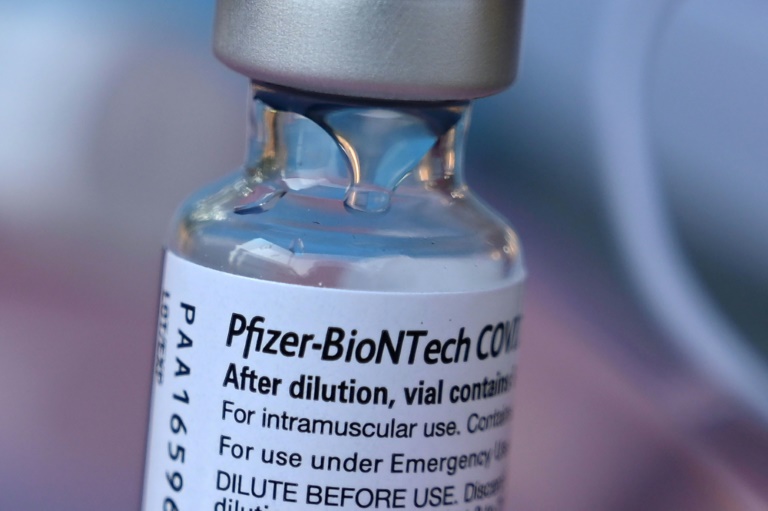
Moderna said Friday it is suing rival vaccine makers Pfizer and BioNTech, alleging the partners infringed on its patents in developing their Covid-19 shot administered to hundreds of millions around the world.

The lawsuits set up a high-stakes showdown between the leading manufacturers of Covid-19 shots that are a key tool in the fight against the disease.

“Moderna believes that Pfizer and BioNTech’s Covid-19 vaccine Comirnaty infringes patents Moderna filed between 2010 and 2016 covering Moderna’s foundational mRNA technology,” the US-based biotech firm said in a statement.

“Pfizer and BioNTech copied this technology, without Moderna’s permission, to make Comirnaty,” Moderna alleged.

Pfizer and BioNTech said they were aware of the litigation, and each issued statements denying any wrongdoing.

“BioNTech’s work is original, and we will vigorously defend against all allegations of patent infringement,” the firm said, adding it “respects valid and enforceable intellectual property rights of others.”

Pfizer pledged to “vigorously defend against the allegations of the lawsuit.”

The mRNA technology used in the Moderna and Pfizer-BioNTech shots differs from that in traditional vaccines, which rely on injecting weakened or dead forms of a virus to allow the immune system to recognize it and build antibodies.

Instead, mRNA vaccines deliver instructions to cells to build a harmless piece of the spike protein found on the surface of the virus that causes Covid-19. 

After creating this spike protein, cells can recognize and fight the real virus, hailed as a major advancement in development of vaccines.

– Key tool against deadly pandemic –

The shots have repeatedly been the subject of inaccurate claims that they are dangerous, but health authorities say they are safe and effective.

The lawsuits — in US district court in Massachusetts, and in regional court in Dusseldorf, Germany — are not seeking the removal of the rival vaccine or an injunction on future sales.

Moderna said it had begun building up the technology in 2010 and patented work on corona viruses in 2015 and 2016, which allowed for rollout of its shots in “record time” after the pandemic struck. 

The virus has killed at least 6.48 million people worldwide since 2020 and made nearly 600 million ill, according to a Johns Hopkins University tracker.

In addition to death and suffering, the disease has led to a re-shaping of life ranging from a change in norms on working from home to a scrambling of supply chains and workforces.

Moderna said it pledged in October 2020 not to enforce its Covid-19-related patents while the pandemic continued, but less than two years later changed that stance as the fight shifted gears.

“Moderna expected companies such as Pfizer and BioNTech to respect its intellectual property rights and would consider a commercially reasonable license should they request one for other markets,” it said. 

“Pfizer and BioNTech have failed to do so,” the firm added.

These types of lawsuits are not unheard of in the pharmaceutical industry, where patents can be worth billions of dollars, and can take years to resolve.

“It is an unfortunate but rather regular occurrence that other companies make allegations that a successful product potentially infringes their intellectual property rights,” BioNTech said in a statement.

TotalEnergies to sell stake in war-linked Russian gas field

French energy firm TotalEnergies said Friday it was divesting its stake in a Russian gas field that was reported this week to be providing fuel that ends up in Russian fighter jets.

The company said that it had signed a deal on Friday with its local Russian partner Novatek to sell its 49 percent in the Termokarstovoye gas field “on economic terms enabling TotalEnergies to recover the outstanding amounts invested in the field.”

It said the divestment had been agreed in July and submitted to Russian authorities in early August, with approval coming on August 25.

That was the day after an article appeared in French daily Le Monde reporting the alleged refining of natural gas condensates from Termokarstovoye into jet fuel for fighter-bombers involved in Russia’s assault on Ukraine since February.

TotalEnergies — formerly Total — owns 49 percent of Terneftegaz, the company that extracts gas from the Termokarstovoye field.

The other 51 percent is held by Novatek, in which the French firm also holds a 19.4 percent stake.

TotalEnergies initially said it had no control over the sales of its Russian partner.

On Friday, it said Novatek had denied that its condensates were being refined into Russian military jet fuel.

Instead, they were sent to processing at a refinery whose products are exclusively exported outside Russia, a Novatek statement relayed by the French firm said.

TotalEnergies also said it was considering legal action in a bid to end an “unfounded controversy which is damaging the reputation of the company.”

Clara Gonzales at Greenpeace France said that the Termokarstovoye sale must not be a “smokescreen for the ongoing commercial relations of TotalEnergies in Russia,” and called for it to offload its stake in Novatek which “supplies the Russian army”.

“We are grateful to (French President) Emmanuel Macron and the French people for supporting Ukraine. Against this background, it is a disgrace to France when French companies assist the murder of Ukrainians and the ruining of our cities,” Ukrainian Foreign Minister Dmytro Kuleba tweeted Friday.

“TotalEnergies, pull out of Russia!”

– ‘Exclusively exported’ fuel –

Le Monde reported Wednesday that condensates from Termokarstovoye were being sent to a refinery that had provided 42,700 tonnes of fuel from February-July sent to airbases hosting Russian planes.

They accounted for more than eight percent of the raw materials received at the refinery in Omsk since the invasion of Ukraine, it added.

Citing data from financial information firm Refinitiv, the newspaper said the jet fuel shipments could be tracked back to the by-products from Termokarstovoye.

Novatek said via TotalEnergies that all condensates from the gas field are “delivered to the Ust-Luga processing complex in the Leningrad region.

“The range of products derived during processing at the Ust-Luga complex includes jet fuel that is exclusively exported outside Russia, and it does not even have the certification to be sold inside the country”.

TotalEnergies is the only major Western energy group to continue its operations in Russia, which accounts for 16.6 percent of its hydrocarbon production and 30 percent of its gas.

Chief executive Patrick Pouyanne had said in March that Russian gas fields exploited by the company’s joint ventures “are going to operate whether I leave or not” and are vital for supplying energy to Europe.

Selling TotalEnergies’ assets at knock-down prices would amount to handing billions to Russian investors, he argued.

But the firm has since announced a partial withdrawal from Russia, including stopping financing the Arctic LNG 2 gas project.

In July, it sold its 20-percent stake in an Arctic oil field to Russia’s Zarubejneft.

Trump raid sparked by recovery of top secret info

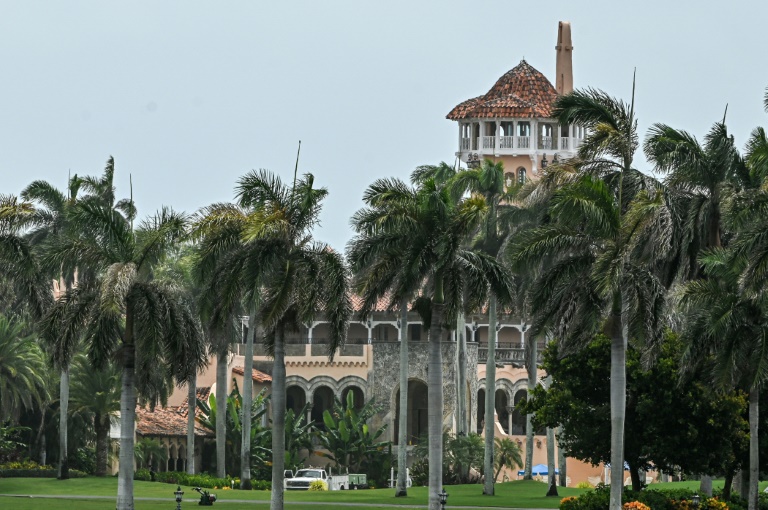
The stunning FBI raid on Donald Trump’s Florida home was triggered by a review of 15 boxes of records previously surrendered by the former US president that contained top secret information — including about human intelligence sources.

The FBI, in the affidavit used to justify the August 8 raid of Mar-a-Lago, said it was conducting a criminal investigation into “improper removal and storage of classified information” and “unlawful concealment of government records.”

The heavily-redacted FBI affidavit released Friday laid out the basis for a Florida judge authorizing the unprecedented raid on the home of a former president, a move which ignited a political firestorm in an already bitterly divided country.

The Republican Trump, who is weighing another White House run in 2024, accused the Justice Department and FBI under Democratic President Joe Biden of conducting a “witch hunt” and said the judge “should never have allowed the Break-in of my home.”

According to the affidavit, the FBI opened the investigation after the National Archives and Records Administration (NARA) received 15 boxes of records in January 2022 that had been improperly removed from the White House and taken to Mar-a-Lago.

It said sensitive National Defense Information (NDI) was among the records recovered including 67 documents marked as confidential, 92 documents marked as secret and 25 marked as top secret.

Among the documents was intelligence information from “clandestine human sources,” which are among the most tightly-held government secrets.

“Highly classified records were unfoldered, intermixed with other records and otherwise unproperly identified,” according to the affidavit.

“Several of the documents also contained what appears to be (Trump’s) handwritten notes,” the affidavit said.

The affidavit said that in June, the Department of Justice informed a Trump lawyer that Mar-a-Lago was “not authorized to store classified information.”

When they raided Mar-a-Lago two months later, FBI agents seized a further stash of documents marked “Top Secret,” “Secret” and “Confidential.”

FBI agents also seized binders of photos, a handwritten note, information about the “President of France,” and the grant of clemency made by Trump to Roger Stone, an ally of the former president.

– ‘The movers’ –

In a May 25, 2022 letter to the Justice Department released along with the affidavit, a lawyer for Trump said classified information may have been “unknowingly included among the boxes brought to Mar-a-Lago by the movers.”

The lawyer, M. Evan Corcoran, said Trump had “readily and voluntarily” cooperated with NARA’s request that documents be returned and said any investigation should not “involve politics.”

Corcoran asserted that a president has the “absolute authority to declassify documents” and the “criminal statute that governs the unauthorized removal and retention of classified documents or material does not apply to the president.”

Government lawyers had opposed the release of the affidavit but the judge ordered it unsealed with redactions the Justice Department said were necessary to protect an ongoing investigation involving national security.

The affidavit was heavily redacted removing the names, for example, of witnesses whose identities the Justice Department and FBI want to keep concealed.

“The government must protect the identity of witnesses at this stage of the investigation to ensure their safety,” the Justice Department said.

In its application for a search warrant, the Justice Department said the investigation was related to “willful retention of national defense information,” an offense that falls under the Espionage Act, “concealment or removal of government records” and “obstruction of a federal investigation.”

The warrant, which was personally approved by Attorney General Merrick Garland, authorized the FBI to search the “45 office” — a reference to the 45th US president’s private office at his Mar-a-Lago residence — and storage rooms

In addition to investigations into his business practices, Trump faces legal scrutiny for his efforts to overturn the results of the November 2020 election, and for the January 6, 2021 attack on the US Capitol by his supporters.

Trump was impeached for a historic second time by the House after the Capitol riot — he was charged with inciting an insurrection — but was acquitted by the Senate.

UN high-seas biodiversity treaty struggles to leave port

A two-week negotiating session on a treaty to protect the high seas wraps up Friday, but UN observers were holding their breath with many points remaining contentious between member states.

After 15 years, including four prior formal sessions, negotiators have yet to reach a legally binding agreement to address the growing environmental and economic challenges involving the high seas, also known as international waters — a zone which encompasses almost half the planet.

Many had hoped that this fifth session, which began on August 15 at the United Nations headquarters in New York, would be the last and yield a final text on “the conservation and sustainable use of marine biodiversity beyond national jurisdiction,” or BBNJ for short.

But a new version of the treaty — distributed to delegates on Friday morning just hours before the official end of negotiations, and seen by AFP — still included many paragraphs open to negotiations.

A meeting scheduled for noon (1600 GMT) was canceled to allow consultations to continue, which observers suggest could run into Saturday.

One of the most sensitive issues revolves around the sharing of possible profits gained from developing genetic resources in international waters, where pharmaceutical, chemical and cosmetic companies hope to find miracle drugs, products or cures.

Such costly research at sea is largely the prerogative of rich nations, but developing countries do not want to be left out of potential windfall profits drawn from marine resources that belong to no one.

The new draft text seems to still side with the developing nations, with a requirement that two percent of all future sales be redistributed, eventually rising to eight percent.

Greenpeace’s Will McCallum accuses the EU, United States and Canada of rejecting the proposal. 

“It’s not even real money. It’s just hypothetical money one day. That is why it is really frustrating,” he told AFP.

The EU pushed back on that characterization, with one European negotiator telling AFP: “We are willing to contribute to the BBNJ agreement through various funding sources, which in our view shall include a fair sharing of benefits from marine genetic resources globally.”

Similar issues of equity between the Global North and South arise in other international negotiations, such as on climate change, where developing nations feel outsized harms from global warming and try in vain to get wealthier nations to help pay to offset those impacts.

– ‘Too close to fail’ –

Some are hopeful for an agreement.

“This is the final stage and delegates are working hard to come to an agreement,” said Liz Karan with the NGO Pew Charitable Trusts.

Jihyun Lee, a youth ambassador with conservation group the High Seas Alliance, said: “We’re too close to fail.”

The high seas begin at the border of nations’ exclusive economic zones (EEZs) — which by international law reach no more than 200 nautical miles (370 kilometers) from each country’s coast — and are under no state’s jurisdiction.

Sixty percent of the world’s oceans fall under this category.

And while healthy marine ecosystems are crucial to the future of humanity, particularly to limit global warming, only one percent of international waters are protected.

One of the key pillars of an eventual BBNJ treaty is to allow the creation of marine protected areas, which many nations hope will cover 30 percent of the Earth’s ocean by 2030.

“Without establishing protections in this vast area, we will not be able to meet our ambitious and necessary 30 by 30 goal,” said US State Department official Maxine Burkett at a press conference.

But delegations still disagree on the process for creating these protected areas, as well as on how to implement a requirement for environmental impact assessments before new activity on the high seas.

“I think they have made a lot of progress in the last two weeks on issues that were very controversial,” said Klaudija Cremers, a researcher at the IDDRI think tank, which like multiple other NGOs has a seat with observer status at the negotiations.

She told AFP that the final talks Friday “could be the push to get an agreement.”

UN high-seas biodiversity treaty struggles to leave port

A two-week negotiating session on a treaty to protect the high seas wraps up Friday, but UN observers were holding their breath with many points remaining contentious between member states.

After 15 years, including four prior formal sessions, negotiators have yet to reach a legally binding agreement to address the growing environmental and economic challenges involving the high seas, also known as international waters — a zone which encompasses almost half the planet.

Many had hoped that this fifth session, which began on August 15 at the United Nations headquarters in New York, would be the last and yield a final text on “the conservation and sustainable use of marine biodiversity beyond national jurisdiction,” or BBNJ for short.

But a new version of the treaty — distributed to delegates on Friday morning just hours before the official end of negotiations, and seen by AFP — still included many paragraphs open to negotiations.

A meeting scheduled for noon (1600 GMT) was canceled to allow consultations to continue, which observers suggest could run into Saturday.

One of the most sensitive issues revolves around the sharing of possible profits gained from developing genetic resources in international waters, where pharmaceutical, chemical and cosmetic companies hope to find miracle drugs, products or cures.

Such costly research at sea is largely the prerogative of rich nations, but developing countries do not want to be left out of potential windfall profits drawn from marine resources that belong to no one.

The new draft text seems to still side with the developing nations, with a requirement that two percent of all future sales be redistributed, eventually rising to eight percent.

Greenpeace’s Will McCallum accuses the EU, United States and Canada of rejecting the proposal. 

“It’s not even real money. It’s just hypothetical money one day. That is why it is really frustrating,” he told AFP.

The EU pushed back on that characterization, with one European negotiator telling AFP: “We are willing to contribute to the BBNJ agreement through various funding sources, which in our view shall include a fair sharing of benefits from marine genetic resources globally.”

Similar issues of equity between the Global North and South arise in other international negotiations, such as on climate change, where developing nations feel outsized harms from global warming and try in vain to get wealthier nations to help pay to offset those impacts.

– ‘Too close to fail’ –

Some are hopeful for an agreement.

“This is the final stage and delegates are working hard to come to an agreement,” said Liz Karan with the NGO Pew Charitable Trusts.

Jihyun Lee, a youth ambassador with conservation group the High Seas Alliance, said: “We’re too close to fail.”

The high seas begin at the border of nations’ exclusive economic zones (EEZs) — which by international law reach no more than 200 nautical miles (370 kilometers) from each country’s coast — and are under no state’s jurisdiction.

Sixty percent of the world’s oceans fall under this category.

And while healthy marine ecosystems are crucial to the future of humanity, particularly to limit global warming, only one percent of international waters are protected.

One of the key pillars of an eventual BBNJ treaty is to allow the creation of marine protected areas, which many nations hope will cover 30 percent of the Earth’s ocean by 2030.

“Without establishing protections in this vast area, we will not be able to meet our ambitious and necessary 30 by 30 goal,” said US State Department official Maxine Burkett at a press conference.

But delegations still disagree on the process for creating these protected areas, as well as on how to implement a requirement for environmental impact assessments before new activity on the high seas.

“I think they have made a lot of progress in the last two weeks on issues that were very controversial,” said Klaudija Cremers, a researcher at the IDDRI think tank, which like multiple other NGOs has a seat with observer status at the negotiations.

She told AFP that the final talks Friday “could be the push to get an agreement.”

'Not coping': Crisis at overcrowded Dutch asylum centre

Asylum seeker Lawrence resigned himself to another night sleeping outside near an overcrowded Dutch refugee centre, as aid groups warn of a humanitarian emergency at the facility where a three-month-old baby recently died.

The Ter Apel centre is in crisis, hit not by soaring arrivals but a backlog of people waiting to be processed — plus severe staff shortages after the government scaled down capacity.

And the centre faced huge scrutiny this week after a baby died inside the facility from unknown causes. 

The chaos is a disappointment for those seeking a better life like Nigerian-born Lawrence, who arrived 13 days ago by train.

“I am still waiting to be processed — and no, I’m not doing fine,” the father-of-two told AFP, who left Nigeria to seek a better life for his family.

“Conditions are terrible here. This is not what I expected — at least not in a civilised country like the Netherlands,” he said, not wanting to give his surname for safety reasons. 

Lawrence endured an arduous journey getting to the Netherlands from his home in the African country’s volatile southeastern region via Italy.

Arriving at the country’s main asylum centre, he expected a quick process and a roof over his head while he awaited the government’s decision.

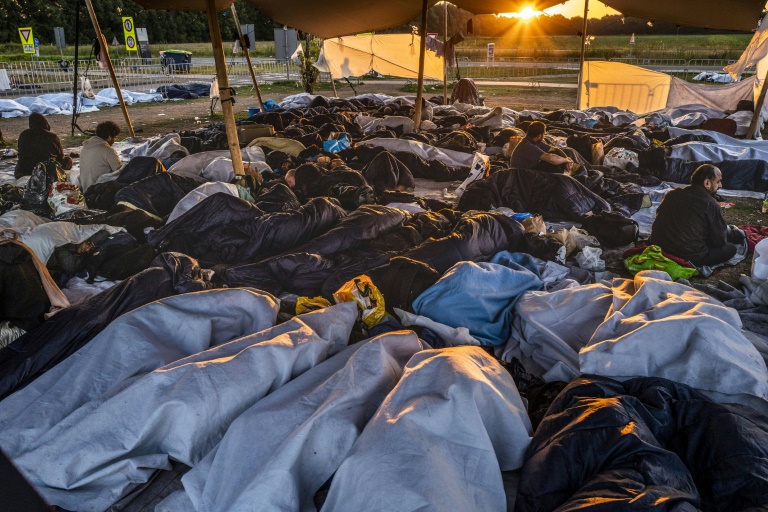
Instead, he joined more than 700 other hopefuls who have been sleeping in front of the gates — many of them for weeks. 

Both the Red Cross and the Dutch arm of Doctors Without Borders (MSF) warned Friday of a growing humanitarian emergency at the refugee centre, a short drive from the northern Dutch city of Groningen.

“It’s clear, if you look around, that we have hundreds of people living here… in dismal conditions and in the open,” said Monique Nagelkerke, an emergency coordinator with MSF.

“There still is no proper sanitation and there are all sorts of medical complaints,” she told AFP.

“The system here is trying to cope, but they’re not coping and that’s why we are here to help.”

– ‘Bunch of dogs’ –

On Thursday, MSF deployed staff to the Ter Apel centre — a first for the organisation that usually gives medical assistance to those in war zones.

Nearby, MSF doctors were treating a number of patients at a “hospital on wheels” set up early Friday.

Patients suffered ailments “you would expect of people who have been on the road for a long time,” Nagelkerke said.

Many had “skin diseases because of poor hygiene, feet problems because people have walked a long way”.

Both MSF and the Red Cross warned that the situation may deteriorate, especially with the end of summer approaching.

“People are cold at night, having to sleep on the ground. What happens when the weather changes?” a Red Cross official told the ANP news agency.

AFP correspondents saw hundreds of men laying under makeshift tarpaulins, with a row of dirty toilets nearby, many littered with empty plastic bottles left by those attempting to wash themselves.

A group of Turkish asylum seekers say some in their group have been sleeping in front of the centre for the past 11 days.

“We are not criminals. I wonder if we’d be better treated if we were a bunch of dogs,” one 37-year-old asylum-seeker told AFP, asking not to be named.

– ‘Shameful’ –

The government has launched an investigation into the baby’s death, which has thrown scrutiny on conditions at the centre.

The Dutch refugee agency (COA) has said the current crisis is down to staff shortages after the government scaled down its capacity to handle asylum-seeker numbers, which took a downturn during the coronavirus pandemic.

“The images from Ter Apel are shameful,” Dutch Prime Minister Mark Rutte said at his weekly press conference on Friday, adding “mistakes have been made”.

Rutte promised “structural solutions”, warning that improvements could take time.

“But that doesn’t mean the situation at the centre will instantly be fixed today, tomorrow or even the day after,” he said. 

The government said Friday it plans to boost the homes available to asylum seekers by 20,000, to alleviate pressure on Ter Apel.

But the Netherlands is already dealing with a housing shortage, and plans to give asylum seekers accommodation can run into fierce resistance.

And there are 16,000 processed asylum seekers desperately looking for places to stay, COA spokesman Leon Veldt told AFP.

“There are too few reception centres and too few opportunities to move on to homes,” he said.

Argentina seizes 1.6 tons of cocaine headed for Dubai

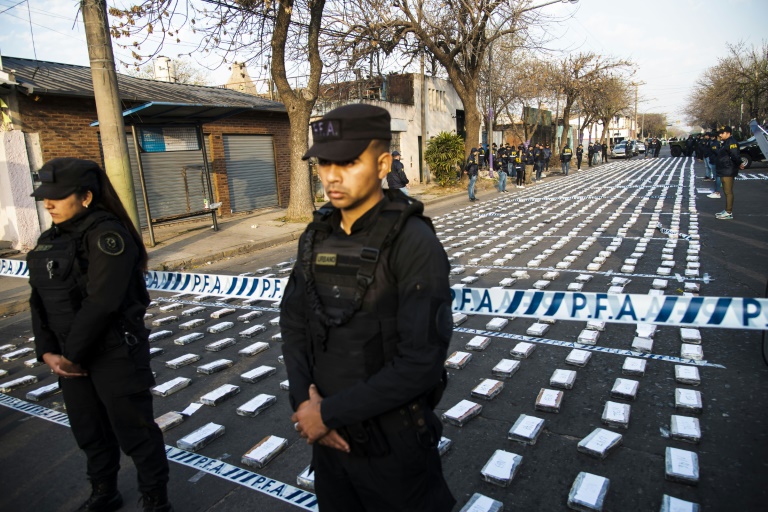
Argentine authorities seized 1.6 tons of cocaine hidden in animal feed destined for Dubai and detained 12 people, police said on Friday.

The seizure, which took place overnight from Thursday to Friday in the central city of Rosario, highlights the role played by Argentine ports in trafficking South American drugs internationally.

The cocaine “is worth approximately $60 million,” said Mariano Giuffra, head of the dangerous drugs department in the federal police.

The arrests took place at various sites around the country.

“They are all Argentines and some of them are known drug traffickers,” added Giuffra.

Several firearms, sports cars and a large amount of cash were also seized.

Rosario, located 310 kilometers (190 miles) from Buenos Aires, is Argentina’s third-largest city and the main port for agricultural exports to the Atlantic.

It is also the most violent city in Argentina, with a murder rate three times the national average.

The cocaine had been hidden in bags of corn fodder that was about to be loaded onto a container destined for Dubai.

Police said the cocaine probably originated in Colombia, the world’s largest producer of the drug.

While most cocaine is produced by Colombia, Peru and Bolivia — where growing coca leaf, which is the main ingredient in the white powder, is legal — experts say Argentina has increasingly taken on an important role in trafficking the drug.

Argentina has several major ports, has a large supply of quality chemicals needed to turn coca leaf into cocaine, and provides ample opportunities for money laundering. 

Close Bitnami banner
Bitnami