World

Taming inflation will inflict 'pain' on Americans: Fed's Powell

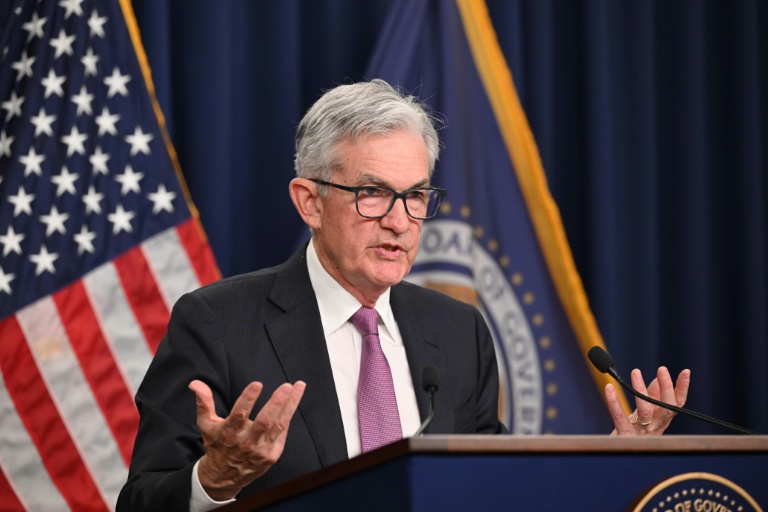
Taming US inflation will inflict “pain” on American families and businesses, but failure to wrestle prices down from their current 40-year high would be even more harmful, Federal Reserve Chair Jerome Powell said Friday in a hotly-anticipated speech to global policymakers.

Addressing the annual gathering of central bankers in Jackson Hole, Wyoming, Powell did not hold back or leave room for doubt about the Fed’s plans, pledging to act “forcefully.”

He warned that the world’s largest economy is likely to slow for a sustained period, and the strong US job market will suffer in order to get prices down — consequences he called the “unfortunate costs of reducing inflation.”

The Fed this year launched an aggressive campaign to raise interest rates — and in his unusually short, notably direct remarks, Powell made it clear that the fight against inflation is not over.

“Restoring price stability will take some time and requires using our tools forcefully to bring demand and supply into better balance,” he told the gathering, held against the backdrop of the majestic Grand Teton mountains.

“While higher interest rates, slower growth and softer labor market conditions will bring down inflation, they will also bring some pain to households and businesses,” Powell said.

“But a failure to restore price stability would mean far greater pain.”

Modest signs of slowing in the US economy and easing price pressures spurred hope in financial markets that the central bank might ease up on its aggressive rate hikes, and perhaps even start to reverse course next year.

But Powell doused those hopes, making it clear that Fed policy and the benchmark borrowing rate would have to remain “sufficiently restrictive” to bring inflation back down to the two percent target.

Markets turned negative on the news, with all three major stock indices down two percent or more around midday.

– Improving data –

The supply chain issues that have beleaguered the global economy have continued, worsened by a series of Covid lockdowns in China, which have combined with Russia’s war in Ukraine to send prices soaring worldwide.

In the battle to contain red-hot US inflation, which topped nine percent in June, the Fed has increased rates four times, including three-quarter-point increases in June and July — steep moves unheard of since the early 1980s — to the current level of a range of 2.25 to 2.5 percent.

Powell repeated Friday that another giant 75 basis point hike could be appropriate at the September policy meeting.

But recent data has shown signs of a slowing in price increases. Annual consumer price inflation dipped to a still-high 8.5 percent in July.

And data released Friday showed the Fed’s preferred inflation measure, the personal consumption expenditures price index, actually fell 0.1 percent in July — a dramatic slowdown from the 1.0 percent surge in June, largely reflecting the recent sharp retreat in global oil prices.

Over the last 12 months, the PCE price index slowed to 6.3 percent, the Commerce Department reported.

But Powell did not take much comfort in the figures.

“While the lower inflation readings for July are welcome, a single month’s improvement falls far short of what (policymakers) will need to see before we are confident that inflation is moving down,” he said.

But President Joe Biden cheered the figures, saying, “The American people are starting to get some relief from high prices.”

Still, he added, “We have more work to do. We have to help families who have been squeezed by decades living paycheck to paycheck.”

Powell pointed to the experience of one of his predecessors, famed inflation dragonslayer Paul Volcker — who used aggressive measures to quell runaway prices — and said officials cannot retreat from their responsibility.

“That means the Fed must hammer demand to come in line with what is becoming a global economy of scarcities or constrained supply,” KPMG economist Diane Swonk said on Twitter.

“That is no small challenge. Powell sees a window to avoid a Volcker outcome of deep recessions w/some pain today. Rock/hard place.”
Macron calls for 'new pact' with Algeria in reconciliation visit

President Emmanuel Macron called Friday for a “new pact” with Algeria and “truth and recognition” of the past, on day two of a visit to France’s former colony aimed at mending troubled ties.

The trip follows months of tensions between Paris and the North African country, which earlier this year marked six decades of independence following 132 years of French rule.

The three-day visit also comes as European powers scramble to replace Russian energy imports — including with supplies from Algeria, Africa’s top gas exporter, which in turn is seeking a greater regional role.

Macron had proclaimed a “new page” in relations on Thursday, after meeting President Abdelmadjid Tebboune and announcing the creation of a joint commission of historians to examine the colonial period and the devastating eight-year war that ended it, at a cost of hundreds of thousands of lives.

On Friday, Macron — the first French president to be born after Algerian independence in 1962, told journalists he wanted “the truth, and recognition, otherwise we’ll never move forward”.

And on Saturday Macron and Tebboune are to sign “a joint declaration for a renewed, concrete and ambitious partnership”, the French presidency said.

Addressing members of the French community in Algeria later Friday, Macron spoke of his love for the North African country.

“Many people want to promote the idea that France should hate Algeria, or Algeria should hate France,” he said.

“But we are at a moment where we can build a new pact.”

– ‘Promising prospects’ –

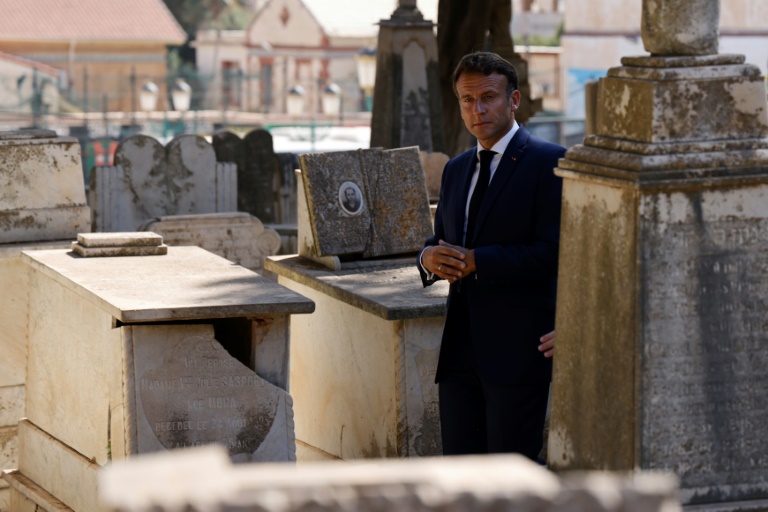
Macron earlier laid a wreath at a monument to those who “died for France”, in the mixed Christian-Jewish Saint Eugene cemetery which was a major burial ground for Europeans during colonial times.

French soldiers sang the Marseillaise as cicadas buzzed in the background.

Macron then visited the Jewish part of the cemetery, accompanied by prominent French Jews.

Later in the day he was set to meet young Algerian entrepreneurs and discuss creating a French-Algerian incubator for digital start-ups, as part of a visit his office said focuses on the future.

Tebboune on Thursday hailed “promising prospects for improving the special partnership” between the two countries.

Ties between Paris and Algiers have seen repeated crises over the years.

They had been particularly tense since last year when Macron questioned Algeria’s existence as a nation before the French occupation and accused the government of fomenting “hatred towards France”.

Tebboune withdrew his country’s ambassador in response and banned French military aircraft from its airspace.

Normal diplomatic relations have since resumed, along with overflights to French army bases in sub-Saharan Africa.

– Gas ‘good’ for Europe –

Algeria is seeking a bigger role in the region, buoyed by surging energy prices that have filled the coffers of Africa’s top natural gas exporter following Russia’s invasion of Ukraine.

Macron’s office has said gas is not a major feature of the visit — although the head of French energy firm Engie, Catherine MacGregor, is in Macron’s 90-strong delegation.

The president said on Friday that Algeria had helped Europe diversify its energy supplies by pumping more gas to Italy, which last month signed a deal to import billions more cubic metres via an undersea pipeline from the North African coast.

Dismissing suggestions that Italy and France were “in competition” for Algerian gas, Macron welcomed the deal.

“It’s good for Italy, it’s good for Europe and it improves the diversification of Europe,” he told reporters.

He also dismissed suggestions that Italy and France were “in competition”, noting that France only relies on natural gas for a small part of its energy mix.

The two leaders discussed how to bring stability to Libya, the Sahel region and the disputed territory of Western Sahara, according to Tebboune.

They also spoke at length about the spiky issue of French visas for Algerians, and Macron said Friday they had “very freely” discussed the human rights situation in Algeria.

“These issues will be settled in full respect of Algerian sovereignty,” Macron said.

He urged young Algerians “not to be taken in” by the “immense manipulation” of social media networks by foreign powers including Russia and China.

Macron was due to visit the iconic Grand Mosque of Algiers on Friday before heading to second city Oran for a stop focused on the arts.

Europe electricity prices soar as tough winter looms

European electricity prices soared to new records on Friday, presaging a bitter winter as Russia’s invasion of Ukraine inflicts economic pain across the continent.

The year-ahead contract for German electricity reached 995 euros ($995) per megawatt hours while the French equivalent surged past 1,100 euros — a more than tenfold increase in both countries from last year.

In Britain, energy regulator Ofgem said it would increase the electricity and gas price cap almost twofold from October 1 to an average £3,549 ($4,197) per year.

Ofgem blamed the increase on the spike in global wholesale gas prices after the lifting of Covid restrictions and Russian curbs on supplies.

The Czech Republic, which holds the rotating European Union presidency, announced Friday that it would convene an EU energy crisis summit “at the earliest possible date”.

Energy prices have soared in Europe as Russia has slashed natural gas supplies to the continent, with fears of more drastic cuts in the winter amid tensions between Moscow and the West over the war.

One-fifth of European electricity is generated by gas-fired power plants, so drops in supply inevitably lead to higher prices.

European gas prices on Friday reached 341 euros per MWh, near the all-time high of 345 euros it struck in March.

The war is not the only culprit in France.

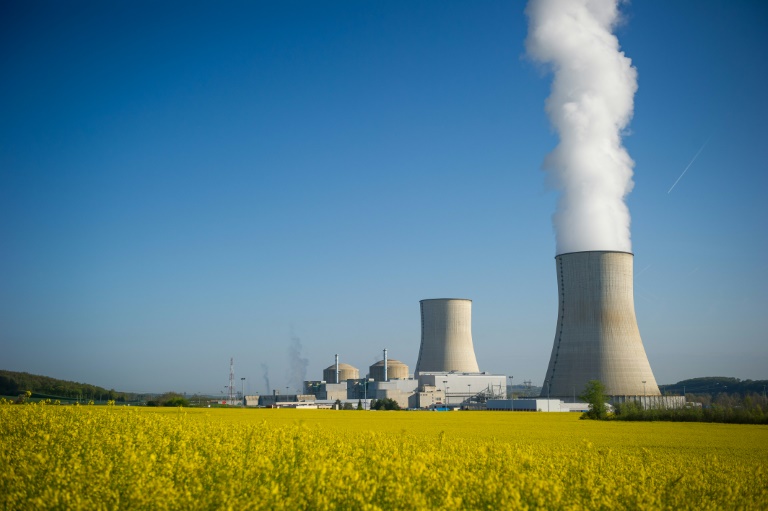
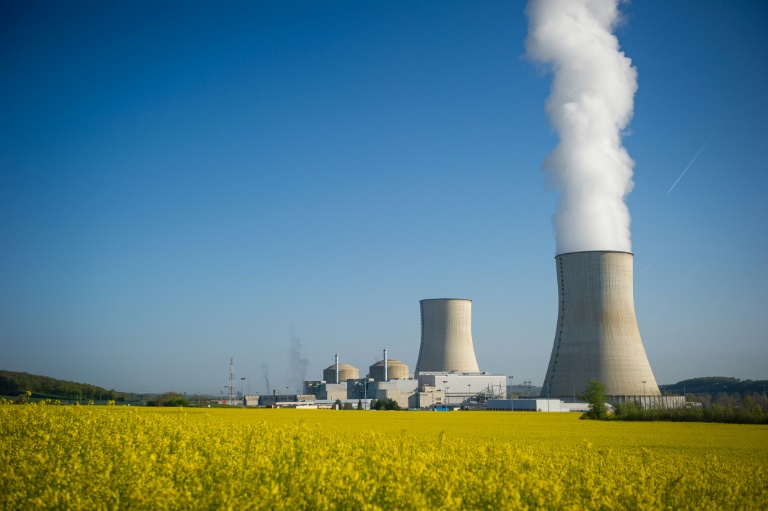
The shutdown of several nuclear reactors due to corrosion issues has contributed to the French electricity price increase as power production has dramatically decreased in the country.

Only 24 of the 56 reactors operated by energy giant EDF were online on Thursday.

France, which traditionally exports electricity, is now an importer.

“Winter is going to be a tough period for all the countries in Europe,” Giovanni Sgaravatti, research assistant at the Bruegl think tank in Brussels, told AFP.

“Prices will stay high, possibly they can even go higher,” he said.

– Recession ‘probably unavoidable’ –

A Bruegel study found that European Union countries have allocated 236 billion euros from September 2021 to August 2022 to shield households and firms from rising energy prices, which began to increase as countries emerged from Covid restrictions and soared after the war.

In recent days and weeks, countries have announced energy savings campaigns to encourage the public to reduce power consumption during the winter.

Germany announced Wednesday that the temperature of public administrative offices this winter would be capped at 19 degrees Celsius (66 degrees Fahrenheit) while hot water would be shut off.

The German measures also include a ban on heating private swimming pools from September and over the six months that the decree is in place.

Finland is encouraging its citizens to lower their thermostats, take shorter showers and spend less time in saunas, a national tradition.

French households are shielded by an energy price cap until December 31 for now.

Industries are also affected by the soaring energy prices.

Factories that produce ammonia — an ingredient to make fertiliser — announced the suspension of their operations in Poland, Italy, Hungary and Norway this week.

HSBC bank warned in a note that “recession is probably unavoidable” in the eurozone, with the economy shrinking in the fourth quarter and the first three months of 2023.

Europe electricity prices soar as tough winter looms

European electricity prices soared to new records on Friday, presaging a bitter winter as Russia’s invasion of Ukraine inflicts economic pain across the continent.

The year-ahead contract for German electricity reached 995 euros ($995) per megawatt hours while the French equivalent surged past 1,100 euros — a more than tenfold increase in both countries from last year.

In Britain, energy regulator Ofgem said it would increase the electricity and gas price cap almost twofold from October 1 to an average £3,549 ($4,197) per year.

Ofgem blamed the increase on the spike in global wholesale gas prices after the lifting of Covid restrictions and Russian curbs on supplies.

The Czech Republic, which holds the rotating European Union presidency, announced Friday that it would convene an EU energy crisis summit “at the earliest possible date”.

Energy prices have soared in Europe as Russia has slashed natural gas supplies to the continent, with fears of more drastic cuts in the winter amid tensions between Moscow and the West over the war.

One-fifth of European electricity is generated by gas-fired power plants, so drops in supply inevitably lead to higher prices.

European gas prices on Friday reached 341 euros per MWh, near the all-time high of 345 euros it struck in March.

The war is not the only culprit in France.

The shutdown of several nuclear reactors due to corrosion issues has contributed to the French electricity price increase as power production has dramatically decreased in the country.

Only 24 of the 56 reactors operated by energy giant EDF were online on Thursday.

France, which traditionally exports electricity, is now an importer.

“Winter is going to be a tough period for all the countries in Europe,” Giovanni Sgaravatti, research assistant at the Bruegl think tank in Brussels, told AFP.

“Prices will stay high, possibly they can even go higher,” he said.

– Recession ‘probably unavoidable’ –

A Bruegel study found that European Union countries have allocated 236 billion euros from September 2021 to August 2022 to shield households and firms from rising energy prices, which began to increase as countries emerged from Covid restrictions and soared after the war.

In recent days and weeks, countries have announced energy savings campaigns to encourage the public to reduce power consumption during the winter.

Germany announced Wednesday that the temperature of public administrative offices this winter would be capped at 19 degrees Celsius (66 degrees Fahrenheit) while hot water would be shut off.

The German measures also include a ban on heating private swimming pools from September and over the six months that the decree is in place.

Finland is encouraging its citizens to lower their thermostats, take shorter showers and spend less time in saunas, a national tradition.

French households are shielded by an energy price cap until December 31 for now.

Industries are also affected by the soaring energy prices.

Factories that produce ammonia — an ingredient to make fertiliser — announced the suspension of their operations in Poland, Italy, Hungary and Norway this week.

HSBC bank warned in a note that “recession is probably unavoidable” in the eurozone, with the economy shrinking in the fourth quarter and the first three months of 2023.

Europe electricity prices soar as tough winter looms

European electricity prices soared to new records on Friday, presaging a bitter winter as Russia’s invasion of Ukraine inflicts economic pain across the continent.

The year-ahead contract for German electricity reached 995 euros ($995) per megawatt hours while the French equivalent surged past 1,100 euros — a more than tenfold increase in both countries from last year.

In Britain, energy regulator Ofgem said it would increase the electricity and gas price cap almost twofold from October 1 to an average £3,549 ($4,197) per year.

Ofgem blamed the increase on the spike in global wholesale gas prices after the lifting of Covid restrictions and Russian curbs on supplies.

The Czech Republic, which holds the rotating European Union presidency, announced Friday that it would convene an EU energy crisis summit “at the earliest possible date”.

Energy prices have soared in Europe as Russia has slashed natural gas supplies to the continent, with fears of more drastic cuts in the winter amid tensions between Moscow and the West over the war.

One-fifth of European electricity is generated by gas-fired power plants, so drops in supply inevitably lead to higher prices.

European gas prices on Friday reached 341 euros per MWh, near the all-time high of 345 euros it struck in March.

The war is not the only culprit in France.

The shutdown of several nuclear reactors due to corrosion issues has contributed to the French electricity price increase as power production has dramatically decreased in the country.

Only 24 of the 56 reactors operated by energy giant EDF were online on Thursday.

France, which traditionally exports electricity, is now an importer.

“Winter is going to be a tough period for all the countries in Europe,” Giovanni Sgaravatti, research assistant at the Bruegl think tank in Brussels, told AFP.

“Prices will stay high, possibly they can even go higher,” he said.

– Recession ‘probably unavoidable’ –

A Bruegel study found that European Union countries have allocated 236 billion euros from September 2021 to August 2022 to shield households and firms from rising energy prices, which began to increase as countries emerged from Covid restrictions and soared after the war.

In recent days and weeks, countries have announced energy savings campaigns to encourage the public to reduce power consumption during the winter.

Germany announced Wednesday that the temperature of public administrative offices this winter would be capped at 19 degrees Celsius (66 degrees Fahrenheit) while hot water would be shut off.

The German measures also include a ban on heating private swimming pools from September and over the six months that the decree is in place.

Finland is encouraging its citizens to lower their thermostats, take shorter showers and spend less time in saunas, a national tradition.

French households are shielded by an energy price cap until December 31 for now.

Industries are also affected by the soaring energy prices.

Factories that produce ammonia — an ingredient to make fertiliser — announced the suspension of their operations in Poland, Italy, Hungary and Norway this week.

HSBC bank warned in a note that “recession is probably unavoidable” in the eurozone, with the economy shrinking in the fourth quarter and the first three months of 2023.

Stocks slump after Fed chair vows tough inflation fight

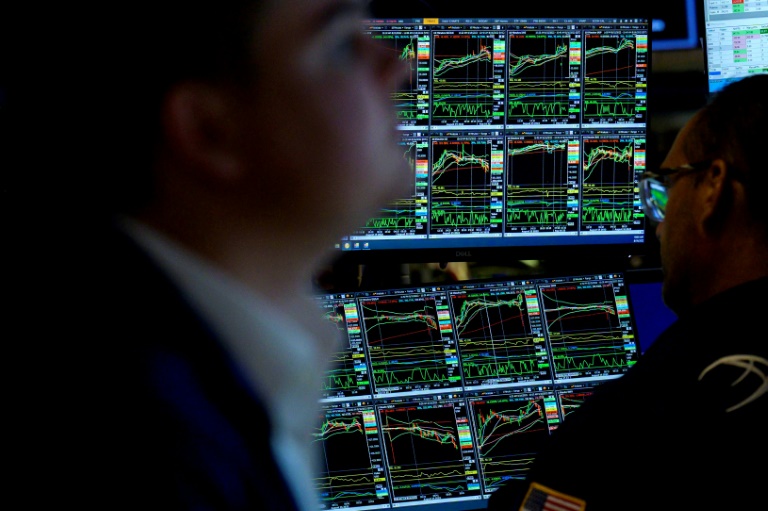
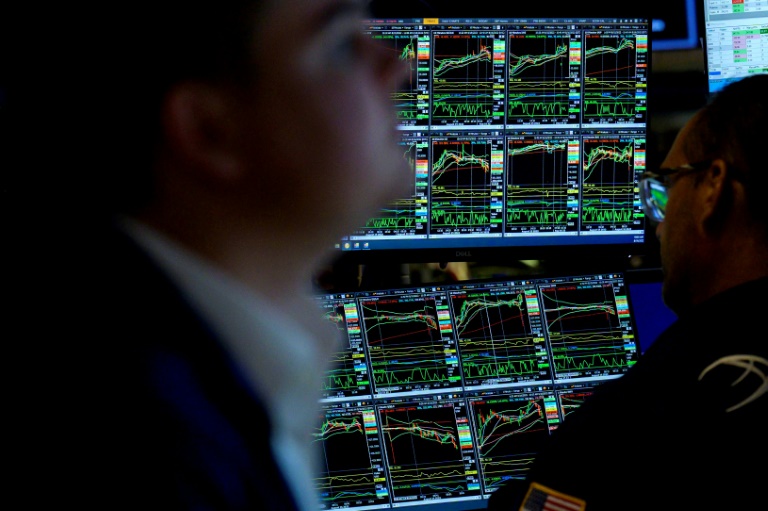
Stocks slumped on Friday after Federal Reserve boss Jerome Powell pledged to act “forcefully” against soaring inflation in a battle that will be painful for American families and businesses.

The Fed has been on an aggressive campaign to raise interest rates — and Powell made it clear at the Jackson Hole gathering of global monetary policymakers that the fight against inflation is not over.

“Restoring price stability will take some time and requires using our tools forcefully to bring demand and supply into better balance,” he told the gathering, held against the backdrop of the majestic Grand Teton mountains.

Modest signs of slowing in the world’s largest economy and easing price pressures spurred hope in financial markets that the central bank might ease up on its aggressive interest rate hikes, and perhaps even start to reverse course next year.

But Powell doused those hopes, making it clear that Fed policy and the benchmark borrowing rate would have to remain “sufficiently restrictive” to return inflation to its two percent target.

“While higher interest rates, slower growth, and softer labor market conditions will bring down inflation, they will also bring some pain to households and businesses,” Powell said.

“But a failure to restore price stability would mean far greater pain.”

Wall Street stocks moved higher as Powell wrapped up his speech, perhaps because he indicated the jury was out on making a third straight 0.75 percentage point hike in interest rates in September.

But then they promptly slumped lower, with the Dow down 1.6 percent in late morning trading, while the S&P 500 fell 1.9 percent and Nasdaq Composite tumbled 2.5 percent. 

“On balance, markets are viewing Powell’s comments as more hawkish than anticipated,” said Matt Weller, Global Head of Research at FOREX.com and City Index.

In addition to the reaction in equities trading, he pointed to the yield on two-year Treasury bonds rising to a near 15-year high.

“Mr. Powell clearly hit a hawkish note, emphasizing the importance of leaving policy tight until inflation was thoroughly licked,” he added.  

The dollar slid against the euro, but rose against the yen and pound.

Sentiment had been boosted ahead of Powell’s speech by the latest readings of the US personal consumption expenditures price index, the Fed’s preferred yardstick for inflation, which dipped 0.1 percent from in July from June, and slowed to 6.3 percent from 6.8 percent on an annual basis.

– Electricity prices shock European stocks –

European equities also saw losses deepen after Powell’s speech, but stocks there had already been struggling after signs that energy prices are likely to keep fuelling inflation.

Sentiment in London had been dented by news that UK domestic energy bills will rocket even higher this year on surging wholesale gas prices as Britain’s cost-of-living crisis worsens.

Frankfurt and Paris stocks retreated amid fears of a eurozone energy crunch in the coming peak-demand winter as Russia curbs supplies.

Europe’s benchmark Dutch TTF gas contract rose Friday 341 euros per megawatt hour, not far from the record high struck in March after key gas producer Russia invaded Ukraine.

Meanwhile, German and French electricity futures prices soared to new records that are at least 10 times above last year.

Elsewhere, Asia was buoyed by signs of progress in talks between US and Chinese regulators that could see tech titans including Alibaba and JD.com avoid a delisting in New York.

More than 200 Chinese firms have for months had the threat of a New York delisting hanging over them as they are caught in a wide-ranging row between the world’s two biggest economies.

– Key figures at around 1530 GMT –

New York – Dow: DOWN 1.6 percent at 32,760.77 points

EURO STOXX 50: DOWN 2.0 percent at 3,601.90

London – FTSE 100: DOWN 0.7 percent at 7,427.31 (close) 

Frankfurt – DAX: DOWN 2.3 percent at 12,971.47 (close)

Paris – CAC 40: DOWN 1.7 percent at 6,274.26 (close)

Tokyo – Nikkei 225: UP 0.6 percent at 28,479.01 (close)

Hong Kong – Hang Seng Index: UP 3.6 percent at 19,968.38 (close)

Shanghai – Composite: UP 1.0 percent at 3,246.25 (close)

Euro/dollar: UP at $0.9999 from $0.9974 on Thursday

Pound/dollar: DOWN at $1.1774 from $1.1832

Euro/pound: UP at 84.93 pence from 84.31 pence

Dollar/yen: UP at 137.31 yen from 136.49 yen

West Texas Intermediate: DOWN 0.2 percent at $92.35 per barrel

Brent North Sea crude: UP 0.2 percent at $99.54

burs-rl/ach 

Stocks slump after Fed chair vows tough inflation fight

Stocks slumped on Friday after Federal Reserve boss Jerome Powell pledged to act “forcefully” against soaring inflation in a battle that will be painful for American families and businesses.

The Fed has been on an aggressive campaign to raise interest rates — and Powell made it clear at the Jackson Hole gathering of global monetary policymakers that the fight against inflation is not over.

“Restoring price stability will take some time and requires using our tools forcefully to bring demand and supply into better balance,” he told the gathering, held against the backdrop of the majestic Grand Teton mountains.

Modest signs of slowing in the world’s largest economy and easing price pressures spurred hope in financial markets that the central bank might ease up on its aggressive interest rate hikes, and perhaps even start to reverse course next year.

But Powell doused those hopes, making it clear that Fed policy and the benchmark borrowing rate would have to remain “sufficiently restrictive” to return inflation to its two percent target.

“While higher interest rates, slower growth, and softer labor market conditions will bring down inflation, they will also bring some pain to households and businesses,” Powell said.

“But a failure to restore price stability would mean far greater pain.”

Wall Street stocks moved higher as Powell wrapped up his speech, perhaps because he indicated the jury was out on making a third straight 0.75 percentage point hike in interest rates in September.

But then they promptly slumped lower, with the Dow down 1.6 percent in late morning trading, while the S&P 500 fell 1.9 percent and Nasdaq Composite tumbled 2.5 percent. 

“On balance, markets are viewing Powell’s comments as more hawkish than anticipated,” said Matt Weller, Global Head of Research at FOREX.com and City Index.

In addition to the reaction in equities trading, he pointed to the yield on two-year Treasury bonds rising to a near 15-year high.

“Mr. Powell clearly hit a hawkish note, emphasizing the importance of leaving policy tight until inflation was thoroughly licked,” he added.  

The dollar slid against the euro, but rose against the yen and pound.

Sentiment had been boosted ahead of Powell’s speech by the latest readings of the US personal consumption expenditures price index, the Fed’s preferred yardstick for inflation, which dipped 0.1 percent from in July from June, and slowed to 6.3 percent from 6.8 percent on an annual basis.

– Electricity prices shock European stocks –

European equities also saw losses deepen after Powell’s speech, but stocks there had already been struggling after signs that energy prices are likely to keep fuelling inflation.

Sentiment in London had been dented by news that UK domestic energy bills will rocket even higher this year on surging wholesale gas prices as Britain’s cost-of-living crisis worsens.

Frankfurt and Paris stocks retreated amid fears of a eurozone energy crunch in the coming peak-demand winter as Russia curbs supplies.

Europe’s benchmark Dutch TTF gas contract rose Friday 341 euros per megawatt hour, not far from the record high struck in March after key gas producer Russia invaded Ukraine.

Meanwhile, German and French electricity futures prices soared to new records that are at least 10 times above last year.

Elsewhere, Asia was buoyed by signs of progress in talks between US and Chinese regulators that could see tech titans including Alibaba and JD.com avoid a delisting in New York.

More than 200 Chinese firms have for months had the threat of a New York delisting hanging over them as they are caught in a wide-ranging row between the world’s two biggest economies.

– Key figures at around 1530 GMT –

New York – Dow: DOWN 1.6 percent at 32,760.77 points

EURO STOXX 50: DOWN 2.0 percent at 3,601.90

London – FTSE 100: DOWN 0.7 percent at 7,427.31 (close) 

Frankfurt – DAX: DOWN 2.3 percent at 12,971.47 (close)

Paris – CAC 40: DOWN 1.7 percent at 6,274.26 (close)

Tokyo – Nikkei 225: UP 0.6 percent at 28,479.01 (close)

Hong Kong – Hang Seng Index: UP 3.6 percent at 19,968.38 (close)

Shanghai – Composite: UP 1.0 percent at 3,246.25 (close)

Euro/dollar: UP at $0.9999 from $0.9974 on Thursday

Pound/dollar: DOWN at $1.1774 from $1.1832

Euro/pound: UP at 84.93 pence from 84.31 pence

Dollar/yen: UP at 137.31 yen from 136.49 yen

West Texas Intermediate: DOWN 0.2 percent at $92.35 per barrel

Brent North Sea crude: UP 0.2 percent at $99.54

burs-rl/ach 

War in Ukraine: latest developments

Here are the latest developments in the war in Ukraine:

– Nuclear power plant reconnected –

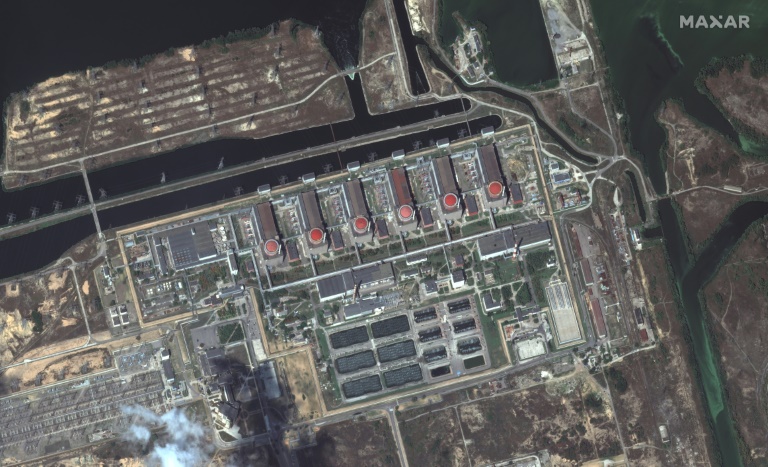
Ukraine’s Russian-occupied Zaporizhzhia nuclear plant has come back online, the state operator Energoatom says, after Kyiv claimed it was cut from the national power grid by Russian shelling.

Europe’s largest nuclear facility was severed from Ukraine’s power network for the first time in its history on Thursday due to “actions of the invaders”, Energoatom said

As of 2:04 p.m. (1104 GMT) the plant “is connected to the grid and produces electricity for the needs of Ukraine” once again, it says.

Zaporizhzhia was seized by Russian troops early on in the war. In recent weeks, Kyiv and Moscow have blamed each other for rocket strikes around the facility in the southern Ukrainian city of Energodar.

“Russia has put Ukrainians as well as all Europeans one step away from radiation disaster,” Ukrainian President Volodymyr Zelensky said late Thursday in his nightly address.

Kyiv suspects Moscow intends to divert power from the Zaporizhzhia plant to the Crimean Peninsula, annexed by Russia in 2014.

– EU sets energy crisis talks –

The Czech presidency of the European Union says it will convene urgent talks to deal with the current energy crisis following Russia’s invasion of Ukraine.

Prime Minister Petr Fiala says on Twitter the meeting of the 27-nation bloc’s energy ministers will “discuss specific emergency measures to address the energy situation.”

The move comes as the EU is trying to shed dependence on supplies of Russian oil and gas following the Ukraine invasion.

“We are in an energy war with Russia and it is damaging the whole EU,” Czech Industry and Trade Minister Jozef Sikela says on Twitter, saying the meeting should take place “at the earliest possible date”.

Reduced supplies and anxiety over the future have sparked rocket growth in energy prices across Europe. The announcement of the new meeting came as German and French electricity prices for 2023 soared to new records and EU members started to frame energy saving plans.

– Turkey meets Finland, Sweden on NATO bids –

Turkey says Sweden and Finland renewed their commitment to fight “terror” at the first meeting aimed at addressing Ankara’s conditions for accepting their NATO membership bids.

“Finland and Sweden have renewed their commitment to demonstrate full solidarity and cooperation with Turkey in the fight against all forms and manifestations of terror,” said a statement from Turkish presidential spokesman Ibrahim Kalin, who attended the talks. 

The two Nordic countries broke with decades-long military non-alignment and asked to join NATO after Russia’s February invasion of Ukraine. 

Their bids have already been ratified by the United States and more than half of the 30 members of NATO. Each application must win unanimous consent from member states.

Only Turkey, a NATO member since 1952, has opposed their applications, demanding the extradition of militants from outlawed groups including the banned Kurdistan Workers’ Party (PKK) and people implicated in a failed 2016 Turkish coup.

– Firm divests from Russian gas field –

French energy company TotalEnergies says it is divesting its stake in a Russian gas field that was reported this week to be providing fuel that ends up in Russian fighter jets.

The firm said it had signed a deal with its local Russian partner Novatek to sell its 49 percent in the Termokarstovoye gas field “on economic terms enabling TotalEnergies to recover the outstanding amounts invested in the field.”

burs-jmy/eab/cdw

'House of the Dragon' renewed for second season

HBO announced Friday that the “House of the Dragon” fantasy drama would return for a second season, after the “Game of Thrones” prequel debuted to nearly 10 million US viewers.

Set years earlier in the same universe of George R.R. Martin’s books, “House of the Dragon” depicts the glory days of the ancestors of popular “Thrones” characters, such as Daenerys Targaryen.

It is based on his book, “Fire and Blood.”

HBO’s return to Westeros, and its prequel show’s addictive blend of scheming dynasties, gory violence and arguably gratuitous sex, has boasted solid numbers and drawn generally warm praise from critics.

The show’s premiere drew 9.98 million viewers in the United States, making it “the largest audience for any new original series in the history of HBO,” the television network’s owner, WarnerMedia, said in a statement earlier this week.

“Game of Thrones” ran for eight seasons between 2011 and 2019, and other spin-offs are in the works.

Some analysts noted that that title drew a whopping 17.4 million viewers to the debut of its final season.

Still, the “House of the Dragon” premiere represents a success for newly merged Warner Bros Discovery, which is under intense scrutiny as it tries to navigate the rapidly changing entertainment landscape dominated by the so-called “streaming wars.”

On September 2, fierce competition will arrive in the form of “The Rings of Power,” another swords-and-dragons-themed epic of the small screen, this time taking place in J.R.R. Tolkien’s Middle Earth, and created by retail giant Amazon’s own streaming platform Prime Video.

Stocks slump after Fed chair vows tough inflation fight

Stock slumped on Friday after Federal Reserve boss Jerome Powell pledged to act “forcefully” against soaring inflation in a battle that will be painful for American families and businesses.

The Fed has been on an aggressive campaign to raise interest rates — and Powell made it clear at the Jackson Hole gathering of global monetary policymakers that the fight against inflation is not over.

“Restoring price stability will take some time and requires using our tools forcefully to bring demand and supply into better balance,” he told the gathering, held against the backdrop of the majestic Grand Teton mountains.

Modest signs of slowing in the world’s largest economy and easing price pressures spurred hope in financial markets that the central bank might ease up on its aggressive interest rate hikes, and perhaps even start to reverse course next year.

But Powell doused those hopes, making it clear that Fed policy and the benchmark borrowing rate would have to remain “sufficiently restrictive” to return inflation to its two percent target.

“While higher interest rates, slower growth, and softer labor market conditions will bring down inflation, they will also bring some pain to households and businesses,” Powell said.

“But a failure to restore price stability would mean far greater pain.”

Wall Street stocks moved higher as Powell wrapped up his speech, perhaps because he indicated the jury was out on making a third straight 0.75 percentage point hike in interest rates in September.

But then they promptly slid lower, with the Dow, S&P 500 and Nasdaq Composite all dropping more than one percent.

The dollar was mixed, slumping against the euro, but rising against the yen and pound.

Sentiment had been boosted ahead of Powell’s speech by the latest readings of the US personal consumption expenditures price index, the Fed’s preferred yardstick for inflation, which dipped 0.1 percent from in July from June, and slowed to 6.3 percent from 6.8 percent on an annual basis.

– Electricity prices shock European stocks –

European equities also saw losses deepen after Powell’s speech, but stocks had been struggling after signs that energy prices are likely to keep fuelling inflation.

Sentiment in London had been dented by news that UK domestic energy bills will rocket even higher this year on surging wholesale gas prices as Britain’s cost-of-living crisis worsens.

Frankfurt and Paris stocks retreated amid fears of a eurozone energy crunch in the coming peak-demand winter as Russia curbs supplies.

Europe’s benchmark Dutch TTF gas contract dipped Friday one day after soaring to 324 euros per megawatt hour, not far from the record high struck in March after key gas producer Russia invaded Ukraine.

But German and French electricity futures prices soared to new records that are at least 10 times above last year.

Elsewhere, Asia was buoyed by signs of progress in talks between US and Chinese regulators that could see tech titans including Alibaba and JD.com avoid a delisting in New York.

More than 200 Chinese firms have for months had the threat of a New York delisting hanging over them as they are caught in a wide-ranging row between the world’s two biggest economies.

– Key figures at around 1435 GMT –

New York – Dow: DOWN 1.2 percent at 32,901.09 points

EURO STOXX 50: DOWN 1.8 percent at 3,609.48

London – FTSE 100: DOWN 0.7 percent at 7,429.72 

Frankfurt – DAX: DOWN 1.9 percent at 13,023.47

Paris – CAC 40: DOWN 1.7 percent at 6,270.92

Tokyo – Nikkei 225: UP 0.6 percent at 28,479.01 (close)

Hong Kong – Hang Seng Index: UP 3.6 percent at 19,968.38 (close)

Shanghai – Composite: UP 1.0 percent at 3,246.25 (close)

Euro/dollar: UP at $1.0049 from $0.9974 on Thursday

Pound/dollar: DOWN at $1.1823 from $1.1832

Euro/pound: UP at 84.97 pence from 84.31 pence

Dollar/yen: UP at 137.10 yen from 136.49 yen

West Texas Intermediate: DOWN 0.8 percent at $91.75 per barrel

Brent North Sea crude: DOWN 0.7 percent at $98.69

burs-rl/lth

Close Bitnami banner
Bitnami