World

Stocks slump after Fed chair vows tough inflation fight

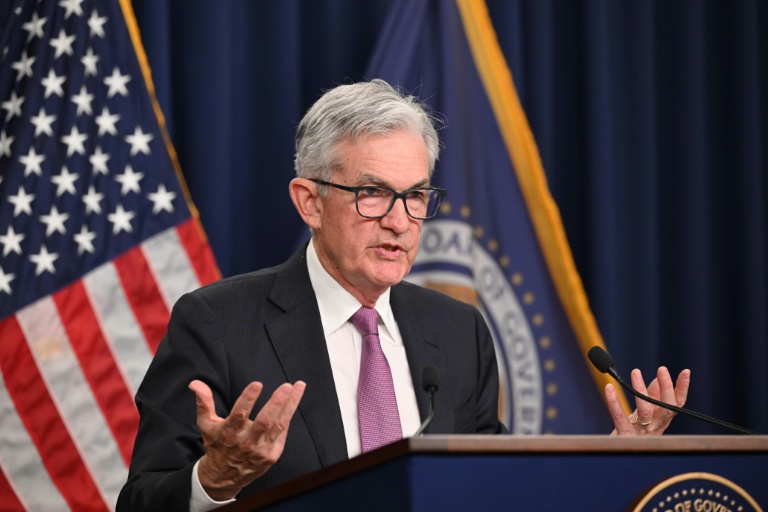
Stock slumped on Friday after Federal Reserve boss Jerome Powell pledged to act “forcefully” against soaring inflation in a battle that will be painful for American families and businesses.

The Fed has been on an aggressive campaign to raise interest rates — and Powell made it clear at the Jackson Hole gathering of global monetary policymakers that the fight against inflation is not over.

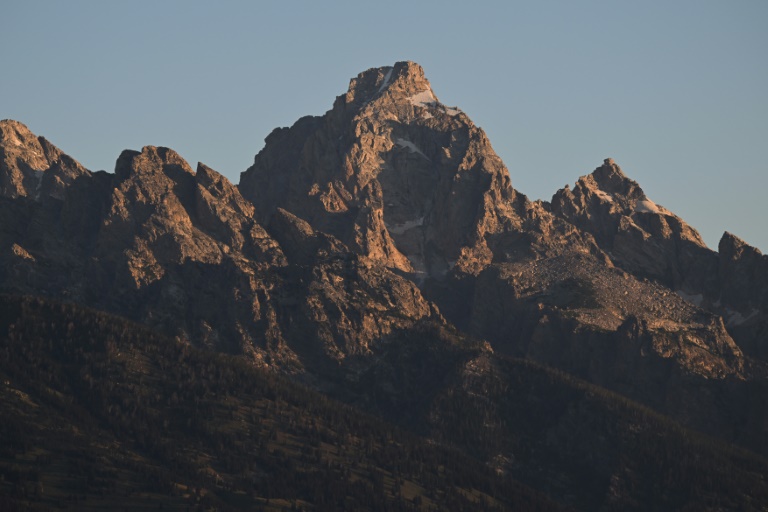
“Restoring price stability will take some time and requires using our tools forcefully to bring demand and supply into better balance,” he told the gathering, held against the backdrop of the majestic Grand Teton mountains.

Modest signs of slowing in the world’s largest economy and easing price pressures spurred hope in financial markets that the central bank might ease up on its aggressive interest rate hikes, and perhaps even start to reverse course next year.

But Powell doused those hopes, making it clear that Fed policy and the benchmark borrowing rate would have to remain “sufficiently restrictive” to return inflation to its two percent target.

“While higher interest rates, slower growth, and softer labor market conditions will bring down inflation, they will also bring some pain to households and businesses,” Powell said.

“But a failure to restore price stability would mean far greater pain.”

Wall Street stocks moved higher as Powell wrapped up his speech, perhaps because he indicated the jury was out on making a third straight 0.75 percentage point hike in interest rates in September.

But then they promptly slid lower, with the Dow, S&P 500 and Nasdaq Composite all dropping more than one percent.

The dollar was mixed, slumping against the euro, but rising against the yen and pound.

Sentiment had been boosted ahead of Powell’s speech by the latest readings of the US personal consumption expenditures price index, the Fed’s preferred yardstick for inflation, which dipped 0.1 percent from in July from June, and slowed to 6.3 percent from 6.8 percent on an annual basis.

– Electricity prices shock European stocks –

European equities also saw losses deepen after Powell’s speech, but stocks had been struggling after signs that energy prices are likely to keep fuelling inflation.

Sentiment in London had been dented by news that UK domestic energy bills will rocket even higher this year on surging wholesale gas prices as Britain’s cost-of-living crisis worsens.

Frankfurt and Paris stocks retreated amid fears of a eurozone energy crunch in the coming peak-demand winter as Russia curbs supplies.

Europe’s benchmark Dutch TTF gas contract dipped Friday one day after soaring to 324 euros per megawatt hour, not far from the record high struck in March after key gas producer Russia invaded Ukraine.

But German and French electricity futures prices soared to new records that are at least 10 times above last year.

Elsewhere, Asia was buoyed by signs of progress in talks between US and Chinese regulators that could see tech titans including Alibaba and JD.com avoid a delisting in New York.

More than 200 Chinese firms have for months had the threat of a New York delisting hanging over them as they are caught in a wide-ranging row between the world’s two biggest economies.

– Key figures at around 1435 GMT –

New York – Dow: DOWN 1.2 percent at 32,901.09 points

EURO STOXX 50: DOWN 1.8 percent at 3,609.48

London – FTSE 100: DOWN 0.7 percent at 7,429.72 

Frankfurt – DAX: DOWN 1.9 percent at 13,023.47

Paris – CAC 40: DOWN 1.7 percent at 6,270.92

Tokyo – Nikkei 225: UP 0.6 percent at 28,479.01 (close)

Hong Kong – Hang Seng Index: UP 3.6 percent at 19,968.38 (close)

Shanghai – Composite: UP 1.0 percent at 3,246.25 (close)

Euro/dollar: UP at $1.0049 from $0.9974 on Thursday

Pound/dollar: DOWN at $1.1823 from $1.1832

Euro/pound: UP at 84.97 pence from 84.31 pence

Dollar/yen: UP at 137.10 yen from 136.49 yen

West Texas Intermediate: DOWN 0.8 percent at $91.75 per barrel

Brent North Sea crude: DOWN 0.7 percent at $98.69

burs-rl/lth
Russians, Belarusians caught in the crossfire in Ukraine

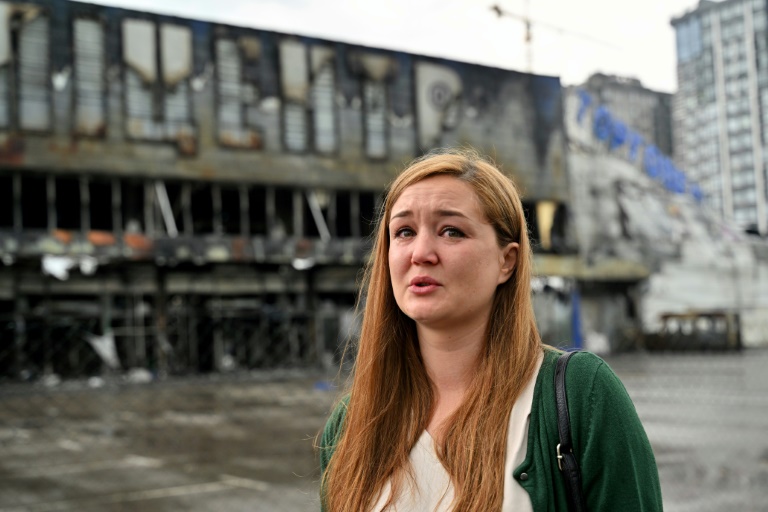
Belarusian political refugee Karyna Patsiomkina thought she would be out of harm’s way when she moved into a flat in Bucha, a lush suburb north of Kyiv, in early February.

She felt comfortable in Ukraine, she said, a country “100 times more democratic” than her homeland, whose strongman leader has ruled with an iron fist for more than two decades. 

The 31-year-old had fled Belarus six weeks earlier for what she expected to be a safe haven because she was facing arrest for anti-government posts.

Some of her friends were already in jail.

But, within only two weeks, on February 24, Moscow had attacked her new home country — using Belarus as a staging ground.

Patsiomkina and most of the hundreds of thousands of Russians and Belarusians living in Ukraine watched in horror.

Many assisted Ukraine but are now facing mounting administrative challenges that may force them out of the country.

Again, in March Patsiomkina had to move as the battle for Bucha raged.

The town has since become known around the world for the alleged war crimes carried out by Russian occupiers there.

Patsiomkina and her flatmate decided to leave on March 8 after the gas and electricity were cut.

After a 48-hour trip to Kyiv — a journey that pre-war would have only taken around an hour — she spent her last pennies on getting to the western city of Lviv.

As soon as she heard that Bucha had been liberated and that evidence of mass atrocities was emerging, she rushed back and volunteered with a psychological support centre and the Red Cross.

She received an official thank you for her work from Bucha city hall in June.

But, a few days later, when she showed up at migration services to extend her residency permit that had just expired, her passport was confiscated.

It was given back to her with a stamp saying she had to leave the country within 10 days, or she would be expelled. 

– ‘Massive refusals’ –

Many similar cases have come to light, with applicants saying they are given no reasonable explanation for refusals.

A Kyiv-based NGO helping Belarusian political refugees called Free Belarus Centre and other human rights groups have pointed to “massive refusals” to issue or extend residency permits.

The refusals are particularly surprising given Kyiv officially says it has not changed its policy towards Belarusian citizens.

Political refugees for the most part, they have mobilised massively to help defend Ukraine.

The 175,000 Russian citizens living in Ukraine — according to numbers from the Ukrainian interior ministry — face the same hurdles.

Asked about these claims, Ukraine’s migration agency did not immediately comment.

Andrei Sidorkin, a 41-year-old musician and producer, has been living in Ukraine for 17 years.

He was about to get Ukrainian citizenship when the war started.

When he asked for a new residency permit, he was refused.

“Migration services are refusing to reconsider their decisions,” Sidorkin told AFP.

Without knowing if it would lead to anything, he still brought his case to court. 

In any case, going back to Russia is “out of the question!” he said. 

“There’s nothing for me there. And I’d be facing 15-20 years in prison,” he said, referring to his support for the Ukrainian war effort.

He was not accepted into the Ukrainian army when he tried to join at the start of the invasion but has been making molotov cocktails and helping evacuate artwork from museums in Kyiv.  

– ‘No one needs us’ –

On the “Russians in Ukraine” chat created on messaging-app Telegram in March, some 1,300 subscribers have been expressing their fears and voicing complaints.

Group moderator Yevgenia, who spoke on condition of anonymity, said that “no one has been expelled yet” from Ukraine.

But she said that there have been issues “particularly in small cities near the front lines.”

As for Patsiomkina, the Bucha municipality eventually helped her get her deportation order overturned.

But she is not allowed to work and is stuck in an administrative limbo. 

Her patience is running out.

“We Belarusians have become nobodies, no one needs us,” she cried, tears running down her cheeks. 

“But we have the same enemy. And we need to fight against that enemy, not run away from it!”

Moderna sues Pfizer, BioNTech for Covid-19 vaccine patent infringement

Moderna said Friday it is suing rival vaccine makers Pfizer and BioNTech, alleging the partners infringed on its patents in developing their Covid-19 shot administered to hundreds of millions around the world.

The lawsuits set up a high-stakes showdown between the leading manufacturers of Covid-19 shots that are a key tool in the fight against the disease.

“Moderna believes that Pfizer and BioNTech’s Covid-19 vaccine Comirnaty infringes patents Moderna filed between 2010 and 2016 covering Moderna’s foundational mRNA technology,” the US-based biotech firm said in a statement.

“Pfizer and BioNTech copied this technology, without Moderna’s permission, to make Comirnaty,” Moderna said.

Pfizer and BioNTech said they have not fully reviewed the complaint, but expressed surprise over the litigation.

“The Pfizer/BioNTech Covid-19 vaccine was based on BioNTech’s proprietary mRNA technology,” a statement said. “We will vigorously defend against the allegations of the lawsuit.”

The mRNA technology used in the Moderna and Pfizer-BioNTech shots differs from that in traditional vaccines, which rely on injecting weakened or dead forms of a virus to allow the immune system to recognize it and build antibodies.

Instead, mRNA vaccines deliver instructions to cells to build a harmless piece of the spike protein found on the surface of the virus that causes Covid-19. 

After creating this spike protein, cells can recognize and fight the real virus, hailed as a major advancement in development of vaccines.

– Key tool against deadly pandemic –

The shots have repeatedly been the subject of inaccurate claims that they are dangerous, but health authorities say they are both safe and effective.

The lawsuits — in US district court in Massachusetts, and in regional court in Dusseldorf, Germany — are not seeking the removal of the rival vaccine or an injunction on future sales.

Moderna said it had begun building up the technology in 2010 and patented work on coronaviruses in 2015 and 2016, which allowed for rollout of its shots in “record time” after the pandemic struck. 

The virus has killed at least 6.48 million people worldwide since 2020 and made nearly 600 million ill, according to a Johns Hopkins University tracker.

In addition to death and suffering, the disease has led to a re-shaping of life ranging from a change in norms on working from home to a scrambling of supply chains and workforces.

Moderna said it pledged in October 2020 not to enforce its Covid-19-related patents while the pandemic continued, but less than two years later changed that stance as the fight shifted gears.

“Moderna expected companies such as Pfizer and BioNTech to respect its intellectual property rights and would consider a commercially reasonable license should they request one for other markets,” it said. 

“Pfizer and BioNTech have failed to do so,” the firm added.

These types of lawsuits are not unheard of in the pharmaceutical industry, where patents can be worth billions of dollars, and can take years to resolve.

Moderna sues Pfizer, BioNTech for Covid-19 vaccine patent infringement

Moderna said Friday it is suing rival vaccine makers Pfizer and BioNTech, alleging the partners infringed on its patents in developing their Covid-19 shot administered to hundreds of millions around the world.

The lawsuits set up a high-stakes showdown between the leading manufacturers of Covid-19 shots that are a key tool in the fight against the disease.

“Moderna believes that Pfizer and BioNTech’s Covid-19 vaccine Comirnaty infringes patents Moderna filed between 2010 and 2016 covering Moderna’s foundational mRNA technology,” the US-based biotech firm said in a statement.

“Pfizer and BioNTech copied this technology, without Moderna’s permission, to make Comirnaty,” Moderna said.

Pfizer and BioNTech said they have not fully reviewed the complaint, but expressed surprise over the litigation.

“The Pfizer/BioNTech Covid-19 vaccine was based on BioNTech’s proprietary mRNA technology,” a statement said. “We will vigorously defend against the allegations of the lawsuit.”

The mRNA technology used in the Moderna and Pfizer-BioNTech shots differs from that in traditional vaccines, which rely on injecting weakened or dead forms of a virus to allow the immune system to recognize it and build antibodies.

Instead, mRNA vaccines deliver instructions to cells to build a harmless piece of the spike protein found on the surface of the virus that causes Covid-19. 

After creating this spike protein, cells can recognize and fight the real virus, hailed as a major advancement in development of vaccines.

– Key tool against deadly pandemic –

The shots have repeatedly been the subject of inaccurate claims that they are dangerous, but health authorities say they are both safe and effective.

The lawsuits — in US district court in Massachusetts, and in regional court in Dusseldorf, Germany — are not seeking the removal of the rival vaccine or an injunction on future sales.

Moderna said it had begun building up the technology in 2010 and patented work on coronaviruses in 2015 and 2016, which allowed for rollout of its shots in “record time” after the pandemic struck. 

The virus has killed at least 6.48 million people worldwide since 2020 and made nearly 600 million ill, according to a Johns Hopkins University tracker.

In addition to death and suffering, the disease has led to a re-shaping of life ranging from a change in norms on working from home to a scrambling of supply chains and workforces.

Moderna said it pledged in October 2020 not to enforce its Covid-19-related patents while the pandemic continued, but less than two years later changed that stance as the fight shifted gears.

“Moderna expected companies such as Pfizer and BioNTech to respect its intellectual property rights and would consider a commercially reasonable license should they request one for other markets,” it said. 

“Pfizer and BioNTech have failed to do so,” the firm added.

These types of lawsuits are not unheard of in the pharmaceutical industry, where patents can be worth billions of dollars, and can take years to resolve.

Ukraine nuclear plant back online as inspection prepared

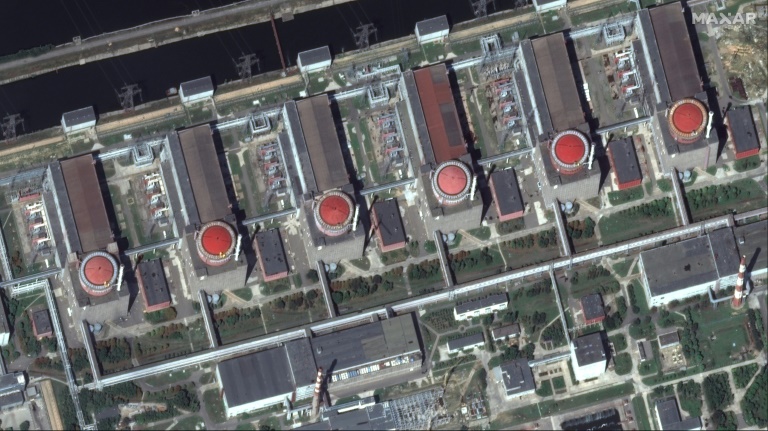
Ukraine’s Zaporizhzhia nuclear plant occupied by Moscow’s troops came back online on Friday afternoon, the state operator said, after Kyiv claimed it was cut from the national power grid by Russian shelling.

The plant — Europe’s largest nuclear facility — was severed from Ukraine’s power network for the first time in its history on Thursday due to “actions of the invaders”, Energoatom said.

In an update, the operator said that as of 2:04 pm (1104 GMT) the plant “is connected to the grid and produces electricity for the needs of Ukraine” once again.

French President Emmanuel Macron warned “civil nuclear power must be fully protected”.

“War in any case must not undermine the nuclear safety of the country, the region and all of us,” he said during a visit to Algeria.

Separately on Friday, the EU presidency vowed to hold an emergency summit on the spiralling energy crisis caused by the war in Ukraine, which this week entered its seventh month.

The bloc has vowed to wean its 27 member states off Russian oil and gas in protest against the invasion.

However, anxiety over supply has sent prices soaring, and on Friday both Germany and France reported record electricity prices for 2023.

Prime Minister Petr Fiala said the Czech Republic, which holds the EU presidency, “will convene an urgent meeting of energy ministers to discuss specific emergency measures”.

– Energy anxiety –

The Zaporizhzhia nuclear plant has been cause for mounting concern since it was seized by Russian troops in the opening weeks of the war.

In recent weeks, Kyiv and Moscow have traded blame for rocket strikes around the facility in the southern Ukrainian city of Energodar.

Ukrainian President Volodymyr Zelensky said late Thursday the cut-off was caused by Russian shelling of the last active power line linking the plant to the network. 

“Russia has put Ukrainians as well as all Europeans one step away from radiation disaster,” he said in his nightly address.

Energoatom said the outage was caused by ash pit fires at an adjacent thermal power plant, which damaged a line connecting the only two of the plant’s six reactors in operation.

The three other power lines linking the complex to the national grid “were earlier damaged during terrorist attacks” by Russian forces, the operator said.

On Friday afternoon Energoatom said one reactor had been reconnected “and capacity is being added”.

– No time to lose –

The International Atomic Energy Agency (IAEA) has previously said the situation at the plant is “highly volatile” and “underlines the very real risk of a nuclear disaster”.

“We can’t afford to lose any more time,” the organisation’s Director General Rafael Mariano Grossi said on Thursday.

“I’m determined to personally lead an IAEA mission to the plant in the next few days.” 

Ukraine energy minister adviser Lana Zerkal said the inspection “is planned for the next week, and now we are working on how they will get there”.

But in an interview with Ukraine’s Radio NV on Thursday evening, she was sceptical the mission would go ahead, despite Moscow’s formal agreement.

“They are artificially creating all the conditions so that the mission will not reach the site,” she said.

Zelensky has said “the IAEA and other international organisations should react much quicker”.

Energoatom did not disclose whether there were blackouts as a result of the power cut.

However, the mayor of the city of Melitopol Ivan Fedorov said on Thursday “Russian occupiers cut off the electricity in almost all occupied settlements of Zaporizhzhia”.

– ‘Unacceptable’ –

Kyiv suspects Moscow intends to divert power from the Zaporizhzhia plant to the Crimean Peninsula, annexed by Russian troops in 2014.

But on Thursday, Washington issued a direct warning against any such move.

“The electricity that it produces rightly belongs to Ukraine,” State Department spokesman Vedant Patel told reporters.

“Any attempt to disconnect the plant from the Ukrainian power grid and redirect to occupied areas is unacceptable.”

President Joe Biden, in a telephone conversation with Zelensky, also called for Russia to return full control of the plant and let in nuclear inspectors, the White House said.

Zelensky said he had spoken with Biden and thanked him for the United States’ “unwavering” support.

Britain’s defence ministry has warned that weekend satellite imagery shows an increased presence of Russian troops at the power plant.

Armoured personnel carriers were deployed within 60 metres (200 feet) of one reactor and “Russian troops were probably attempting to conceal the vehicles by parking them under overhead pipes and gantries”.

“Russia is probably prepared to exploit any Ukrainian military activity near (the plant) for propaganda purposes,” the ministry said.

Taming inflation will inflict 'pain' on Americans: Fed's Powell

Taming high US inflation will inflict “pain” on American families and businesses, but failure to wrestle prices down from their current 40-year high would be even more harmful, Federal Reserve Chair Jerome Powell said Friday in a hotly-anticipated speech to global policymakers.

Addressing the annual gathering of central bankers in Jackson Hole, Wyoming, Powell did not hold back or leave room for doubt about the central bank’s course, pledging to act “forcefully.”

He warned the world’s largest economy is likely to slow for a sustained period, and the strong US job market will suffer in order to get prices down — which he called the “unfortunate costs of reducing inflation.”

The Fed has been on an aggressive campaign to raise interest rates — and Powell made it clear in Jackson Hole that the fight against inflation is not over.

“Restoring price stability will take some time and requires using our tools forcefully to bring demand and supply into better balance,” he told the gathering, held against the backdrop of the majestic Grand Teton mountains.

“While higher interest rates, slower growth, and softer labor market conditions will bring down inflation, they will also bring some pain to households and businesses,” Powell said.

“But a failure to restore price stability would mean far greater pain.”

Modest signs of slowing in the world’s largest economy and easing price pressures spurred hope in financial markets that the central bank might ease up on its aggressive rate hikes, and perhaps even start to reverse course next year.

But Powell doused those hopes, making it clear that Fed policy and the benchmark borrowing rate would have to remain “sufficiently restrictive” to return inflation to its two percent target.

– Improving data –

Supply chain issues have continued, worsened by a series of Covid lockdowns in China, and have combined with Russia’s war in Ukraine, to send prices soaring worldwide.

In the battle to contain red-hot US inflation, which topped nine percent in June, the Fed has hiked rates four times, including massive, three-quarter-point increases in June and July — steep moves unheard of since the early 1980s — to the current level of a range of 2.25 to 2.5 percent.

Powell repeated that another three-quarter point increase could be appropriate at the September policy meeting.

But recent data has shown signs of a slowing in price increases. 

The Fed’s preferred inflation measure, the personal consumption expenditures price index, fell 0.1 percent in July a dramatic slowdown from the 1.0 percent surge in June, largely reflecting the recent sharp retreat in global oil prices.

Over the last 12 months, the PCE price index slowed to 6.3 percent, the Commerce Department reported.

But Powell did not take much comfort in the figures.

“While the lower inflation readings for July are welcome, a single month’s improvement falls far short of what the Committee will need to see before we are confident that inflation is moving down,” he said.

Powell pointed to the experience of one of his predecessors, famed inflation dragonslayer Paul Volcker — who used aggressive measures to quell runaway prices — and said officials cannot retreat from their responsibility.

“We must keep at it until the job is done,” he said, warning against any “premature” easing of policy.

Former Bank of England board member Adam Posen, who leads the Peterson Institute for International Economics in Washington, said he expects the benchmark lending rate will reach four percent by February, and but the Fed will be “willing to go further if needed, with the chances of a reversal in 2023 year “very, very low.”

US creates Arctic ambassador as Russia, China competition rises

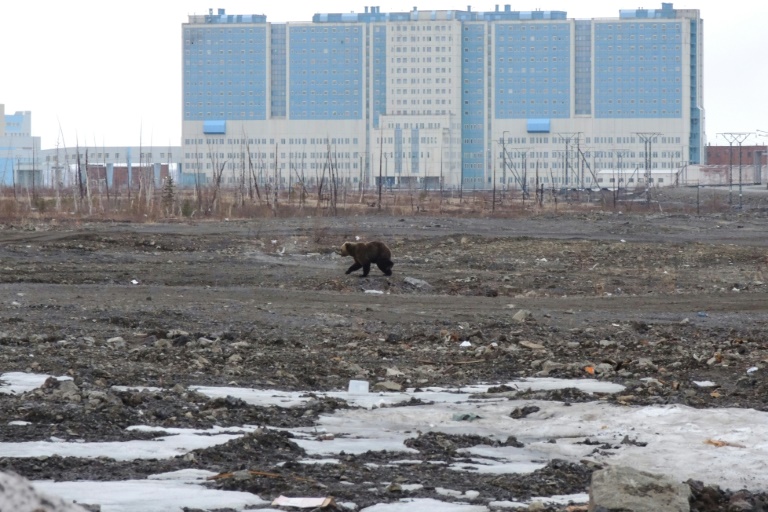
The United States said Friday it will create a position of Arctic ambassador to step up diplomacy as Russia and China increase their presence in waters opened up by climate change.

Secretary of State Antony Blinken will soon name an ambassador-at-large who will engage with other Arctic nations, indigenous groups and other stakeholders, State Department spokesman Vedant Patel said.

“An Arctic region that is peaceful, stable, prosperous and cooperative is of critical strategic importance to the United States and a priority for Secretary Blinken,” Patel said.

Warming has been rising in the Arctic at levels well beyond the rest of the planet, raising the prospect that once impenetrable waterways will open up for both commercial and military vessels.

Russia has been stepping up its presence near the North Pole, both with submarines and warplanes, while China has been building Arctic research stations, widely seen as a prelude to a larger presence.

Blinken, at an Arctic Council meeting last year in Iceland, said that nations in the region had a “responsibility” to ensure “peaceful cooperation.”

The announcement of the new position of US ambassador-at-large comes as several days of talks open in Greenland on Arctic affairs.

Seven of the eight nations in the Arctic Council suspended their participation earlier this year because the rotating chairmanship is held by Russia, which has faced Western ostracization over its invasion of Ukraine.

The new ambassador will replace a previous US position of Arctic coordinator, held by career diplomat Jim DeHart.

Dry summer puts squeeze on French Alps cheese

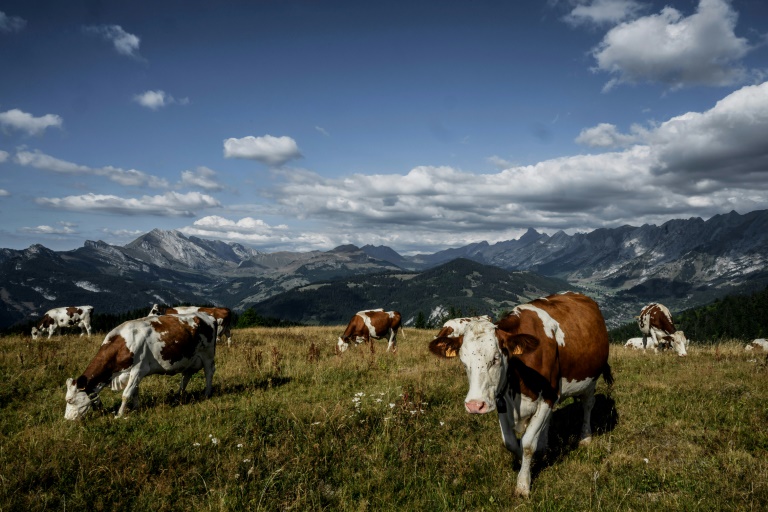
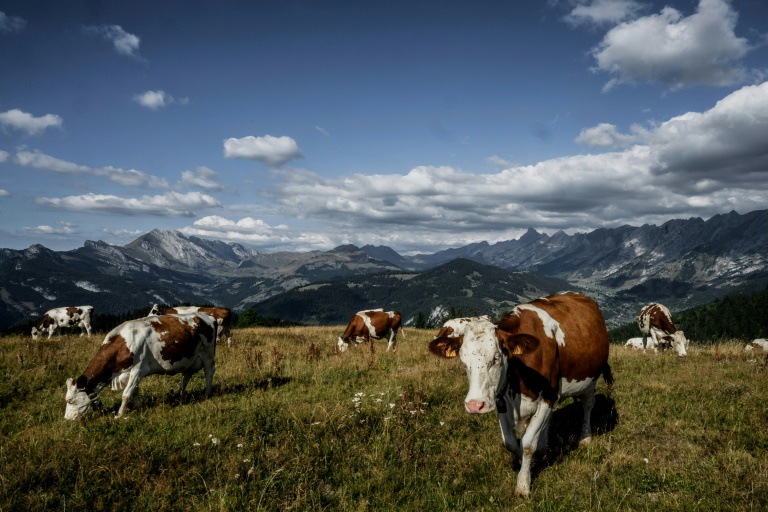
France’s record heat and drought have not spared the majestic pastures under the snow-capped Alps, where cows are struggling to find enough grass to produce milk for reblochon and other prized cheeses.

“Everything’s yellow and parched, so we’ll have to bring them down from the pastures a month early,” said Theo Bargetzy, 28, as cowbells rang out in a field some 1,600 metres (5,250 feet) above sea level.

Crowds of tourists in search of cooler climes have flocked to the Alps this summer where buying local raw-milk reblochon and other hand-made cheeses directly from local producers is a cherished ritual. 

But this year, some heading to Bargetzy’s Lorettes farm perched above La Clusaz are coming away empty-handed — cows are not getting their usual fill of fresh grass, and their milk is less rich as a result.

July was the driest month on record for France overall since 1961, and heat waves pushed temperatures near La Clusaz above 30 degrees Celsius (86 Fahrenheit) on several days, unheard-of on the steep slopes.

“We’re losing one reblochon per cow per day, so in a week that’s 300 fewer cheeses,” Bargetzy says later, while molding fresh curds into discs that will be carefully aged on wooden planks in a cellar until the distinctive orange-gold rind forms.

It takes four litres of milk (just over a gallon) to make each cheese that weighs some 450 grammes (just under a pound) — within the guidelines set by the National Institute of Origin and Quality (INAO), the guardian of France’s strict food and wine appellations.

“The worst thing is that this is when we have lots of tourists wanting to buy, and we don’t have enough for everyone — we run out, and can’t sell to all the people coming to visit,” he said. 

– Raise prices again? –

Dozens of farmers have already dipped into their winter feed stocks, but overall dairy production in the region is down 15 percent from last year’s levels, according to the AFTAlp cheese producers’ association.

“The situation is difficult — we’ve had droughts in the past but this is going on everywhere in France, Italy and elsewhere in Europe,” said the association’s president Jean-Luc Duclos.

Duclos and his family manage a farm with more than 200 cows for making emmental as well as meat near Frangy, with an app-controlled milking system that would astonish his grandfather, who had “four cows and four hectares to feed 11 children.”

He worries that rising costs of feed, gas and electricity since the outbreak of the Ukraine war will create a vicious circle of price speculation and hoarding that could hurt farmers for months to come.

“We’ve already had to raise the prices of our Savoy products… but I think we’ll have to raise them again, by around five to eight percent, to cover the impact of this drought,” he said.

What for generations was subsistence farming has become a thriving Alps industry, though most operations are still family affairs that rely on both local and national networks to distribute their stocks.

Felix Gallet, 46, plays a key role as technical director of the reblochon cooperative in nearby Thones, ensuring the strict hygiene protocols required to sell raw-milk cheeses many countries do not allow because of bacterial risks.

“Our output is down around four or five percent. It’s not a complete catastrophe because some farms are higher up, and temperatures were a little lower than in the valleys,” Gallet said.

“But it’s true that it’s going to have an impact on our volumes, we’re hoping to recover this winter but it’s going to be hard to make up for what we’ve already lost,” he said.

Gallet also warned that in response, producers can increase prices only so much.

“It’s hard to go much higher, even for high-quality cheese. You have to bear in mind what consumers can pay,” he said.

Dry summer puts squeeze on French Alps cheese

France’s record heat and drought have not spared the majestic pastures under the snow-capped Alps, where cows are struggling to find enough grass to produce milk for reblochon and other prized cheeses.

“Everything’s yellow and parched, so we’ll have to bring them down from the pastures a month early,” said Theo Bargetzy, 28, as cowbells rang out in a field some 1,600 metres (5,250 feet) above sea level.

Crowds of tourists in search of cooler climes have flocked to the Alps this summer where buying local raw-milk reblochon and other hand-made cheeses directly from local producers is a cherished ritual. 

But this year, some heading to Bargetzy’s Lorettes farm perched above La Clusaz are coming away empty-handed — cows are not getting their usual fill of fresh grass, and their milk is less rich as a result.

July was the driest month on record for France overall since 1961, and heat waves pushed temperatures near La Clusaz above 30 degrees Celsius (86 Fahrenheit) on several days, unheard-of on the steep slopes.

“We’re losing one reblochon per cow per day, so in a week that’s 300 fewer cheeses,” Bargetzy says later, while molding fresh curds into discs that will be carefully aged on wooden planks in a cellar until the distinctive orange-gold rind forms.

It takes four litres of milk (just over a gallon) to make each cheese that weighs some 450 grammes (just under a pound) — within the guidelines set by the National Institute of Origin and Quality (INAO), the guardian of France’s strict food and wine appellations.

“The worst thing is that this is when we have lots of tourists wanting to buy, and we don’t have enough for everyone — we run out, and can’t sell to all the people coming to visit,” he said. 

– Raise prices again? –

Dozens of farmers have already dipped into their winter feed stocks, but overall dairy production in the region is down 15 percent from last year’s levels, according to the AFTAlp cheese producers’ association.

“The situation is difficult — we’ve had droughts in the past but this is going on everywhere in France, Italy and elsewhere in Europe,” said the association’s president Jean-Luc Duclos.

Duclos and his family manage a farm with more than 200 cows for making emmental as well as meat near Frangy, with an app-controlled milking system that would astonish his grandfather, who had “four cows and four hectares to feed 11 children.”

He worries that rising costs of feed, gas and electricity since the outbreak of the Ukraine war will create a vicious circle of price speculation and hoarding that could hurt farmers for months to come.

“We’ve already had to raise the prices of our Savoy products… but I think we’ll have to raise them again, by around five to eight percent, to cover the impact of this drought,” he said.

What for generations was subsistence farming has become a thriving Alps industry, though most operations are still family affairs that rely on both local and national networks to distribute their stocks.

Felix Gallet, 46, plays a key role as technical director of the reblochon cooperative in nearby Thones, ensuring the strict hygiene protocols required to sell raw-milk cheeses many countries do not allow because of bacterial risks.

“Our output is down around four or five percent. It’s not a complete catastrophe because some farms are higher up, and temperatures were a little lower than in the valleys,” Gallet said.

“But it’s true that it’s going to have an impact on our volumes, we’re hoping to recover this winter but it’s going to be hard to make up for what we’ve already lost,” he said.

Gallet also warned that in response, producers can increase prices only so much.

“It’s hard to go much higher, even for high-quality cheese. You have to bear in mind what consumers can pay,” he said.

Macron looks to past and future on Algeria visit to mend ties

French President Emmanuel Macron called for “truth and recognition” of the past on Friday, the second day of a visit to France’s former colony Algeria aimed at mending their often painful ties.

The three-day trip follows months of tensions between Paris and the North African country, which earlier this year marked six decades of independence following 132 years of French rule.

The visit also comes as European powers scramble to replace Russian energy imports — including with supplies from Algeria, Africa’s top gas exporter, which in turn is seeking a greater regional role.

Macron had proclaimed a “new page” in relations on Thursday, after meeting President Abdelmadjid Tebboune and announcing the creation of a joint commission of historians to examine the colonial period and the devastating eight-year war that ended it, at a cost of hundreds of thousands of lives.

On Friday, Macron — the first French president to be born after Algerian independence in 1962 — dismissed what he said were calls to “choose between pride and repentance”.

“I want the truth, and recognition, otherwise we’ll never move forward,” he said.

On Friday morning Macron laid a wreath at a monument to those who “died for France”, in the mixed Christian-Jewish Saint Eugene cemetery which was a major burial ground for Europeans during colonial times.

French soldiers sang the Marseillaise as cicadas buzzed in the background.

Macron then visited the Jewish part of the cemetery, accompanied by prominent French Jews.

Later in the day he was set to meet young Algerian entrepreneurs and discuss creating a French-Algerian incubator for digital start-ups, as part of a visit his office said focuses on the future.

Tebboune on Thursday hailed “promising prospects for improving the special partnership” between the two countries.

– Gas ‘good’ for Europe –

Ties between Paris and Algiers have seen repeated crises over the years.

They had been particularly tense since last year when Macron questioned Algeria’s existence as a nation before the French occupation and accused the government of fomenting “hatred towards France”.

Tebboune withdrew his country’s ambassador in response and banned French military aircraft from its airspace.

Normal diplomatic relations have since resumed, along with overflights to French army bases in sub-Saharan Africa.

Algeria is seeking a bigger role in the region, buoyed by surging energy prices that have filled the coffers of Africa’s top natural gas exporter following Russia’s invasion of Ukraine.

Macron’s office has said gas is not a major feature of the visit — although the head of French energy firm Engie, Catherine MacGregor, is in Macron’s 90-strong delegation.

The president said on Friday that Algeria had helped Europe diversify its energy supplies by pumping more gas to Italy, which last month signed a deal to import billions more cubic metres via an undersea pipeline from the North African coast.

Dismissing suggestions that Italy and France were “in competition” for Algerian gas, Macron welcomed the deal.

“It’s good for Italy, it’s good for Europe and it improves the diversification of Europe,” he told reporters.

He also dismissed suggestions that Italy and France were “in competition”, noting that France only relies on natural gas for a small part of its energy mix.

– Rights and sovereignty –

The two leaders discussed how to bring stability to Libya, the Sahel region and the disputed territory of Western Sahara, according to Tebboune.

Macron said Friday they had “very freely” discussed the human rights situation in Algeria with Tebboune, whom he said was “sensitive” to the matters.

“These issues will be settled in full respect of Algerian sovereignty,” Macron said.

He also urged young Algerians “not to be taken in” by the “immense manipulation” of social media networks by foreign powers including Russia and China.

Macron was to also visit the iconic Grand Mosque of Algiers on Friday before heading to second city Oran for a stop focused on the arts.

Close Bitnami banner
Bitnami