World

Japan eyes nuclear power push to combat energy crunch

Japan’s prime minister on Wednesday called for a push to revive the country’s nuclear power industry in a bid to tackle soaring imported energy costs linked to the war in Ukraine.

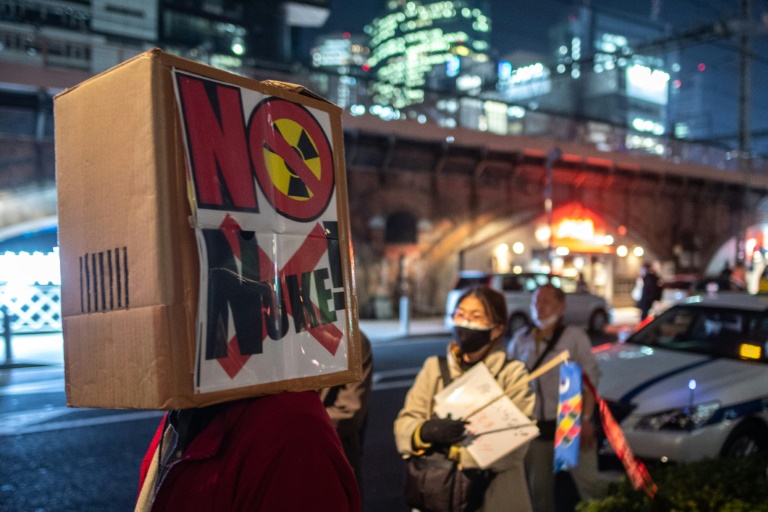
Such a move could prove controversial, after the 2011 Fukushima disaster led to the suspension of many nuclear reactors over safety fears.

Like many countries, Japan — which is aiming to become carbon neutral by 2050 — has faced a squeeze on its energy supplies since Russian forces entered Ukraine six months ago.

The nation has also sweltered through record-breaking temperatures this summer, with residents asked to conserve power wherever possible.

“Russia’s invasion of Ukraine has vastly transformed the world’s energy landscape” and so “Japan needs to bear in mind potential crisis scenarios”, Prime Minister Fumio Kishida said at an energy policy meeting.

Japan should consider building next-generation nuclear reactors, he said, while the government will discuss bringing more nuclear plants online and extending the service life of reactors if safety can be guaranteed.

Kishida called for “concrete conclusions by the end of the year” on the topic, which remains a sensitive one after a deadly tsunami in March 2011 caused a meltdown at the Fukushima plant, the worst nuclear disaster since Chernobyl.

Eleven years on, 10 of Japan’s 33 nuclear reactors are back in action, although not all are operational year-round, and the country is heavily dependent on imported fossil fuels.

The national nuclear safety watchdog has approved in principle the restart of seven more reactors, but those moves often face opposition from local communities.

– ‘All it takes’ –

“In addition to securing the operations of the 10 reactors that are already back online, the government will spearhead an effort to do all it takes to realise the restart” of the others whose safety has been approved, Kishida said.

The prime minister, who joined the meeting remotely after testing positive for Covid-19, also urged policymakers to consider “constructing next-generation nuclear reactors equipped with new safety mechanisms”.

Before the Fukushima disaster, around a third of Japan’s power generation came from nuclear sources, but in 2020 the figure was less than five percent.

Japan’s government has overhauled and strengthened nuclear safety standards, and wants nuclear power to account for 20 to 22 percent of electricity production by 2030, as part of efforts to reach carbon neutrality.

Tom O’Sullivan, a Tokyo-based energy consultant at Mathyos Advisory, said building next-generation reactors in Japan would be a “major step”, because “all the current reactors are conventional ones”.

Bringing more existing nuclear plants online will need to be approved by local governors, which could prove “politically challenging”, O’Sullivan told AFP.

“But again, there’s a different environment now after the Ukraine war,” he said. Polls in recent months also show that public opinion may be softening towards the use of nuclear power.

“I don’t think it’s just the electricity costs. It’s the reliance on Russia, for natural gas, oil and coal… the Japanese public have really woken up to that,” O’Sullivan said.

Japan has imposed sanctions on Russia over the war in Ukraine along with other G7 countries, and the government has pledged to try and reduce its energy dependence on Moscow.

The price of Japanese shares related to nuclear power surged in afternoon trade as local media reported the possible plans, with Tokyo Electric Power ending up 9.96 percent and Mitsubishi Heavy Industries jumping 6.85 percent.
US warns of sanctions against Turkey over Russia ties

Turkey’s top business association has confirmed receiving a letter from the US Treasury warning of possible sanctions if it continues doing business with Russia.

Washington is growing increasingly alarmed that the Russian government and businesses are using Turkey to evade Western financial and trading restrictions imposed in response to the Kremlin’s invasion of Ukraine six months ago.

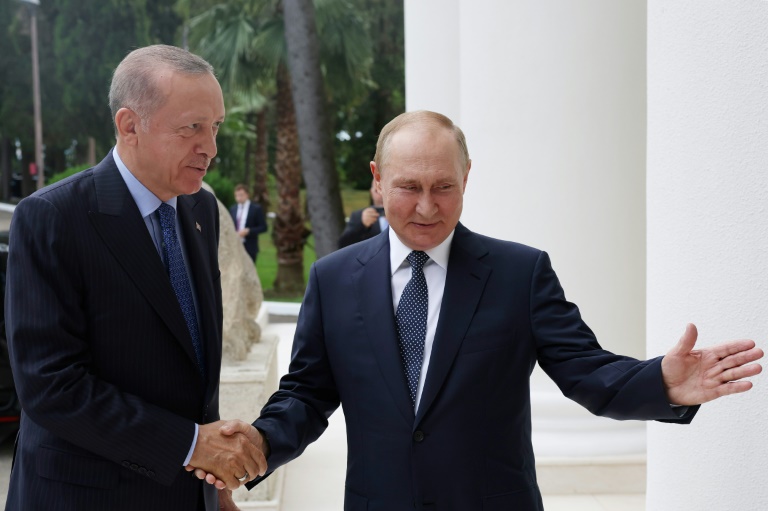
Turkish President Recep Tayyip Erdogan and Russian counterpart Vladimir Putin agreed to step up economic cooperation at a summit in the Black Sea resort of Sochi earlier this month.

Official data show the value of Turkish exports to Russia between May and July growing by nearly 50 percent from last year’s figure.

Turkey’s imports of Russian oil are ballooning and the two sides have agreed to transition to ruble payments for the natural gas exported by the Kremlin-tied giant Gazprom.

US Deputy Secretary of the Treasury Wally Adeyemo paid a rare visit to Ankara and Istanbul in June to express Washington’s worries that Russian oligarchs and big businesses were using Turkish entities to avoid Western sanctions.

NATO member Turkey — on good terms with both Moscow and Kyiv — has tried to stay neutral in the conflict and refused to join the international sanctions regime.

Adeyemo followed that up with a letter to Turkey’s TUSIAD business association and the American Chamber of Commerce in Turkey warning that companies and banks were in danger of being sanctioned themselves.

TUSIAD said in a statement on Tuesday that is has passed on the letter to Turkey’s foreign and finance ministries.

The letter’s contents were first reported by The Wall Street Journal this week.

– ‘Risk of US sanctions’ –

“Any individuals or entities providing material support to US-designated persons are themselves at risk of US sanctions,” Adeyemo wrote.

“Turkish banks cannot expect to establish corresponding relationships with sanctioned Russian banks and retain their corresponding relationships with major global banks as well as access to the US dollar and other major currencies.”

The economic cooperation agreement sealed by Erdogan and Putin includes a deal for more Turkish banks to start processing Russia’s Mir payments system.

Turkish officials have not formally responded to Adeyemo’s letter.

Broader cooperation with Russia could help support Turkey’s ailing economy in the runup to next-year’s general election.

Erdogan has previously argued that Ankara cannot join Western sanctions on Moscow because of Turkey’s heavy dependence on Russian oil and natural gas imports.

“Our economy is such that imposing sanctions on Russia would harm Turkey the most,” Erdogan’s foreign policy adviser Ibrahim Kalin said in June.

“We have taken a clear approach. Right now, the Westerners have accepted this.”

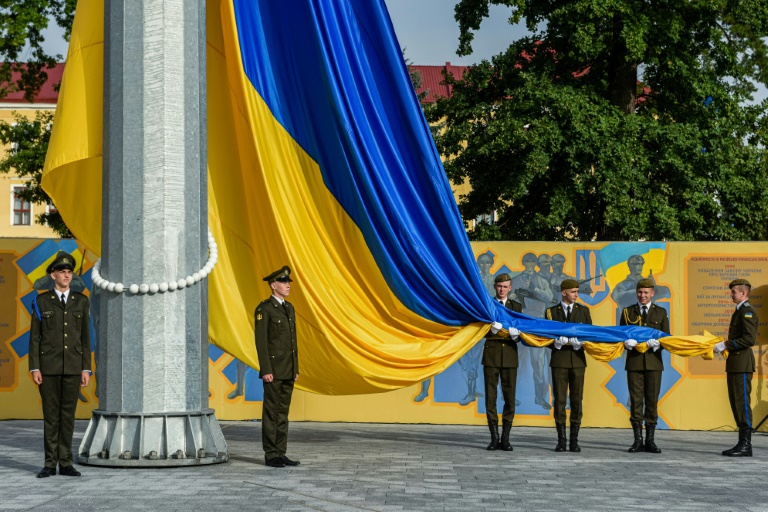
Ukraine will fight 'till the end', Zelensky vows on Independence Day

President Volodymyr Zelensky vowed on Wednesday that Ukraine will resist the Russian invasion “until the end” without “any concession or compromise”, as the nation marks its Independence Day as well as the six-month anniversary of the start of the war.

“We don’t care what army you have, we only care about our land,” Zelensky said in a defiant morning video address. “We will fight for it until the end.”

Referring to Russia — which launched a large-scale attack in the early hours of February 24 — he vowed Ukraine “will not try to find an understanding with terrorists”.

“For us Ukraine is the whole of Ukraine,” he said. “All 25 regions, without any concession or compromise.”

Meanwhile on Wednesday, the US is set to announce $3 billion in fresh military aid to Kyiv on the date it severed ties with the Soviet Union in 1991.

The new tranche of American funding will help Kyiv acquire more weaponry, ammunition and other supplies for its armed forces, locked in a grinding war of attrition with Russian troops in the east and south with neither side advancing significantly in weeks.

The planned White House announcement comes as Washington warned Moscow could be planning a surge in strikes on civilian targets coinciding with Independence Day observations.

Gatherings have been banned in the capital Kyiv, where air raid sirens sounded in the morning, and Zelensky has urged citizens to be on guard against “Russian terror”.

– Global support –

As the war entered its seventh month with no end in sight, British Prime Minister Boris Johnson pledged unlimited assistance to Ukraine.

“People are fighting with steel, with courage to defend their homes and their families, and to preserve their right to decide their own destiny in their own country,” he said in a video message on Wednesday morning.

“However long it takes, the United Kingdom will stand with Ukraine and provide every possible military, economic and humanitarian support.”

On Tuesday, German Chancellor Olaf Scholz warned Russia against further attempts to annex Ukrainian territory in the same way it did the Crimean peninsula in 2014.

Polish President Andrzej Duda also advised against any “appeasement”, saying: “There is no return to business as usual in relations with Russia.”

And French President Emmanuel Macron vowed European Union support for Ukraine would continue “for the long term”.

In an absurd message on Wednesday, the authoritarian leader of Belarus — which offered its territory as a staging ground for Russia’s invasion — gave congratulations to Ukraine on its Independence Day.

“I am convinced that today’s contradictions will not be able to destroy the centuries-old foundation of sincere good neighbourly ties between the peoples of our two countries,” Alexander Lukashenko said in a statement.

– Muted anniversary –

In the early days and weeks of Russia’s invasion, Kyiv was under siege by Russian troops which reached the suburbs of the capital.

Moscow’s offensive quickly faltered, and its forces withdrew in late March to regroup for assaults on Ukraine’s east and south.

But in the capital, Ukrainians were sombre about the anniversary after a half-year of death and destruction.

“Six months, the peace of life has been broken in every family,” Nina Mikhailovna, an 80-year-old pensioner, said at Independence Square in central Kyiv, on Tuesday.

“How much destruction, how many dead, how can we relate to it?” she asked.

Kyiv’s city administration said it would shut public service centres on Wednesday and Thursday, and shopping malls said they would close for the anniversary for safety concerns. 

– Threatened nuclear plant –

Meanwhile, discussions continued on how to protect the Zaporizhzhia nuclear plant in southern Ukraine, occupied by Russian troops and threatened by shelling, which Moscow blames on Kyiv.

The two sides traded accusations at a Tuesday meeting of the UN Security Council on Zaporizhzhia, with Ukraine and its allies demanding Russia pull its troops out of the plant — Europe’s largest nuclear facility — and agree to a demilitarised zone.

Russian Foreign Minister Sergei Lavrov spoke on Tuesday by telephone to French counterpart Catherine Colonna about an expected visit to the plant by inspectors from UN nuclear watchdog the International Atomic Energy Agency (IAEA), amid worries over the high risk of a radiation accident.

IAEA head Rafael Grossi issued a statement on Tuesday deploring weekend shelling at the site, saying further damage had been caused.

“I’m continuing to consult very actively and intensively with all parties so that this vital IAEA mission can take place without further delay,” he said.

It would “help stabilise the nuclear safety and security situation at the site and reduce the risk of a severe nuclear accident in Europe”.

bur-jts/raz

Court suspends Thai PM Prayut from office

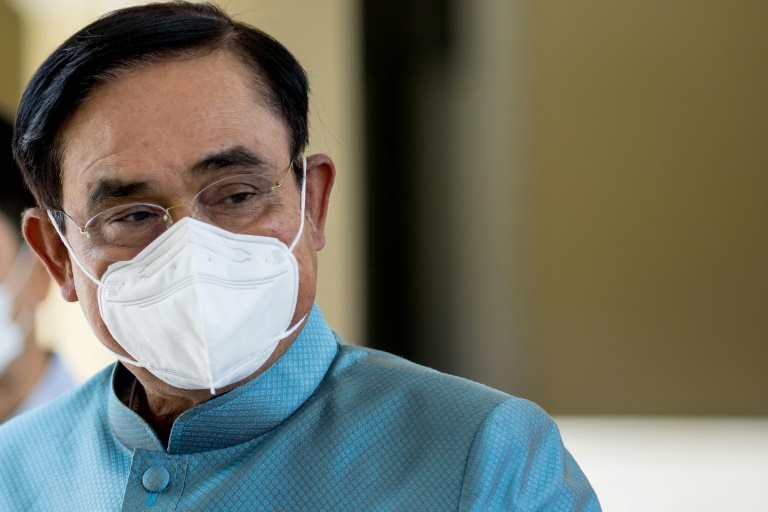
Thailand’s Constitutional Court on Wednesday suspended Prime Minister Prayut Chan-O-Cha from office while it considers a legal challenge that could see him thrown out months before an expected general election.

The court agreed unanimously to hear a case brought by opposition parties who argue Prayut has reached the end of his eight-year term limit as prime minister.

Judges also agreed by five votes to four to suspend Prayut from office until the case is decided, the court said in a statement.

“The court considered the petition and supporting documents and deems the facts according to the request indicate reasonable grounds to suspect that there is a case as requested,” the statement said.

“Thus, a majority vote (five against four) for (Prayut) to be suspended as prime minister, effective August 24, 2022, until the court issues a verdict.”

The court gave Prayut 15 days to respond to the case against him.

Prawit Wongsuwan, one of Prayut’s deputies and another former army chief, will take over as caretaker prime minister while the case is decided.

“The current cabinet will continue its duty as normal because General Prayut has not been ousted from his post, only suspended from duty,” said Wissanu Krea-ngam, another deputy prime minister. 

Pita Limjaroenrat, leader of the opposition Move Forward Party which was among those that backed the petition, said the country needed fresh leadership.

“It is like rowing a boat round the bathtub, going from General Prayut to General Prawit,” Pita told reporters at parliament.

– Legal wrangle –

It is not the first time the Constitutional Court has played a role in Thai politics — it cancelled the results of general election in 2006 and 2014.

The kingdom’s 2017 constitution bars the prime minister from serving more than eight years in total, and opposition parties say Prayut, who took power in a 2014 coup, has reached the limit.

Several hundred anti-government protesters rallied at Bangkok’s Democracy Monument on Tuesday ahead of the court ruling and further demonstrations are planned.

Supporters of the 68-year-old leader argue that the clock on his rule began when the 2017 constitution was instituted, or even after the 2019 general election.

If the court follows this logic, Prayut could technically continue to serve until 2025 or 2027 — if he wins a general election which is due by March.

The former army chief came to power in a military coup that ousted Yingluck Shinawatra’s democratically elected government.

He headed the junta regime for five years and continued as prime minister after the 2019 national elections.

The stern, blunt-speaking Prayut has found himself increasingly out of favour with voters. A recent opinion poll found two-thirds of respondents wanted him to vacate office immediately.

Under Prayut’s watch, the kingdom registered its worst economic performance in 30 years and his government has also faced criticism over its handling of the pandemic.

Youth-led pro-democracy rallies in Bangkok in 2020 attracted tens of thousands of people at their peak, and a key demand of the movement was for Prayut to resign.

On Wednesday, police had placed shipping containers on some streets near government buildings in anticipation of fresh protests.

Asian markets fall as investors eye US Fed outlook

Asian markets were mostly lower on Wednesday as investors await news on the next US interest rate hikes.

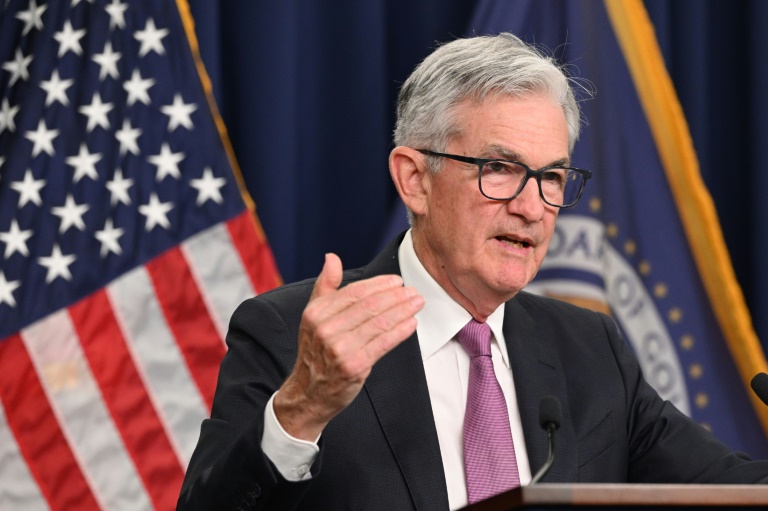
With the Jackson Hole meeting of central bankers this week, focus is on what US Federal Reserve chief Jerome Powell will say about plans to tackle high prices — with many fearing officials could send the economy into recession in its battle to rein in inflation.

The Fed “is probably going to use this weekend to reiterate the fact that rates have more room to climb because they really want to bring inflation down,” Kelvin Tay, Asia-Pacific chief investment officer at UBS Global Wealth Management, told Bloomberg TV.

Central banks face a delicate balancing act between battling inflation, with Russia’s war in Ukraine sending energy prices soaring, and avoiding recession.

“With European gas prices continuing to trade at record highs, investor anxiety is growing that a combination of central banks raising rates and higher energy prices will tip the global economy into a long recession,” said CMC Markets analyst Michael Hewson.

Wall Street ended mostly lower, and key markets in Asia followed suit.

Tokyo started in positive territory but the upward drive was short-lived.

“Lingering worries over US rate hike plans weighed on the market,” said Hiromi Kanamaru, senior strategist at Daiwa Securities.

Tokyo closed down 0.5 percent and Hong Kong, Shanghai and Taipei also fell while Seoul, Sydney and Wellington rose.

The decline continued in Europe, with London down 0.4 percent in opening deals while Frankfurt and Paris were both off 0.2 percent.

“Asian markets have turned risk-averse ahead of the Jackson Hole meeting,” Natixis economist Gary Ng said.

“Hong Kong and China stock markets continue to perform weaker than Asian peers as they face higher uncertainties.” 

– Euro hits new 20-year low –

The euro tumbled to $0.9901 — a new two-decade low — on Tuesday but later clawed back losses as the greenback was hit by poor US economic data.

The dollar had strengthened this week ahead of a speech Friday by Powell, as markets speculate that the Fed will continue to tighten its monetary policy.

Higher interest rates boost the American currency as they make dollar-denominated debt more attractive to investors.

But the euro also has been weighed down by a gloomy outlook for the eurozone economy with energy prices soaring.

– Key figures at around 0830 GMT –

Tokyo – Nikkei 225: DOWN 0.5 percent at 28,313.47 (close)

Hong Kong – Hang Seng Index: DOWN 1.2 percent at 19,268.74 (close)

Shanghai – Composite: DOWN 1.9 percent at 3,215.20 (close)

London – FTSE 100: DOWN 0.5 percent at 7,446.95 

Euro/dollar: DOWN at 0.9947 from 0.9951 

Pound/dollar: UP at 1.1824 from 1.1813

Euro/pound: DOWN at 84.12 pence from 84.23 pence

Dollar/yen: DOWN at 136.49 yen from 136.79 yen

West Texas Intermediate: UP 1.16 percent at $94.82 per barrel

Brent North Sea crude: UP 1.37 percent at $101.49

New York – Dow: DOWN 0.5 percent at 32,909.59 points (close)

China warns of 'severe' threat to harvest from worst heatwave on record

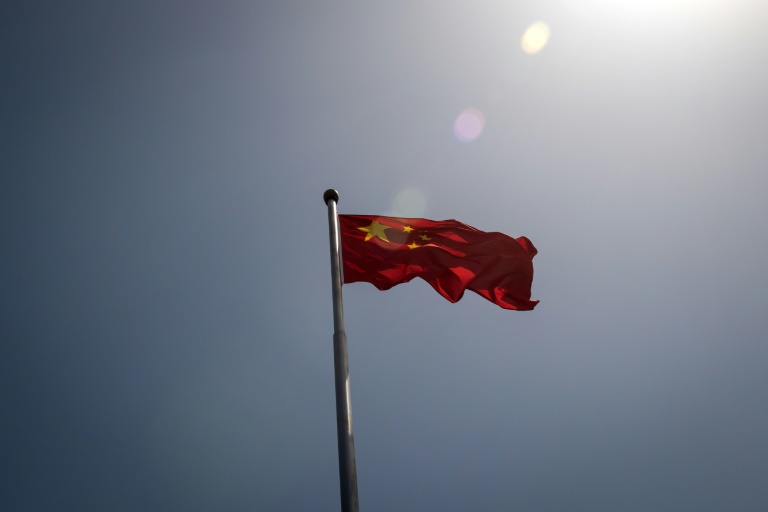
China’s autumn harvest is under “severe threat” from high temperatures and drought, authorities have warned, urging action to protect crops in the face of the country’s hottest summer on record.

The world’s second-largest economy has been hit by record temperatures, flash floods and droughts this summer — phenomena that scientists have warned are becoming more frequent and intense due to climate change.

Southern China has recorded its longest sustained period of high temperatures and sparse rain since records began more than 60 years ago, the agriculture ministry said.

Four government departments issued a notice on Tuesday urging the conservation of “every unit of water” to protect crops.

“The rapid development of drought superimposed with high temperatures and heat damage has caused a severe threat to autumn crop production,” the statement said.

China produces more than 95 percent of the rice, wheat and maize it consumes, but a reduced harvest could mean increased demand for imports in the world’s most populous country — putting further pressure on global supplies already strained by the conflict in Ukraine.

Temperatures as high as 45 degrees Celsius (113 degrees Fahrenheit) have led multiple Chinese provinces to impose power cuts, as cities struggle to cope with a surge in demand for electricity that is partly driven by people cranking up the air conditioning.

The heat broke records in the province of Sichuan, where a temperature of 43.9 degrees Celsius (111 degrees Fahrenheit) was recorded on Wednesday afternoon, the province’s Meteorological Service Centre said in a statement.

The megacities of Shanghai and Chongqing have turned off outdoor decorative lighting, while authorities in Sichuan have imposed industrial power cuts after water levels dropped at key hydroelectric plants.

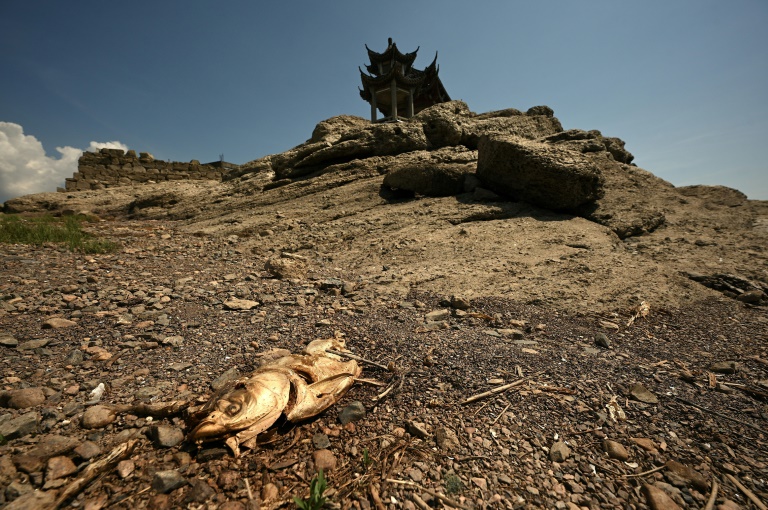
The searing heat is also drying up the critical Yangtze River, with water flow on its main trunk about 50 percent lower than the average over the last five years, state media outlet China News Service reported last week.

– ‘Worst heatwave ever’ –

In Chongqing, where more than 1,500 people were evacuated after hot and dry conditions sparked multiple wildfires, locals were struggling.

“I feel too hot to sleep every night, and I’m awakened by the heat every morning,” Xu Jinxin, a 20-year-old student, told AFP.

“Because of the electricity shortage, we don’t leave the air conditioner on all day but rather turn it off once it’s cooled down a bit.”

The national meteorological service renewed its warnings for drought and high temperatures on Tuesday, calling for 11 provincial governments to activate emergency responses.

Authorities have already turned to cloud seeding — a method to induce rainfall — in parts of the country. 

State broadcaster CCTV published footage this month showing meteorological staff shooting catalyst rockets into the sky and firefighters transporting water to farmers in need.

“This is the worst heatwave ever recorded,” climate and energy expert Liu Junyan of Greenpeace East Asia told AFP.

“Climate science shows extreme heat is becoming exponentially worse,” she said.

“So it’s more likely that next year will have record-breaking heat.”

This year’s extreme weather is raising public awareness of climate change in China, with state media “now coming around to covering climate impacts” with unprecedented urgency, Liu said.

Government climate expert Zhou Bing warned over the weekend of mass displacement caused by climate change, describing extreme weather as nature’s “revenge” on humanity.

China has experienced three other episodes of intense heat so far this century — in 2003, 2013, 2017.

The gap between heatwaves is “significantly shortening”, according to Zhou.

For those living through the sweltering summer, “life goes on with some endurance”, said Xu, the Chongqing resident.

China warns of 'severe' threat to harvest from worst heatwave on record

China’s autumn harvest is under “severe threat” from high temperatures and drought, authorities have warned, urging action to protect crops in the face of the country’s hottest summer on record.

The world’s second-largest economy has been hit by record temperatures, flash floods and droughts this summer — phenomena that scientists have warned are becoming more frequent and intense due to climate change.

Southern China has recorded its longest sustained period of high temperatures and sparse rain since records began more than 60 years ago, the agriculture ministry said.

Four government departments issued a notice on Tuesday urging the conservation of “every unit of water” to protect crops.

“The rapid development of drought superimposed with high temperatures and heat damage has caused a severe threat to autumn crop production,” the statement said.

China produces more than 95 percent of the rice, wheat and maize it consumes, but a reduced harvest could mean increased demand for imports in the world’s most populous country — putting further pressure on global supplies already strained by the conflict in Ukraine.

Temperatures as high as 45 degrees Celsius (113 degrees Fahrenheit) have led multiple Chinese provinces to impose power cuts, as cities struggle to cope with a surge in demand for electricity that is partly driven by people cranking up the air conditioning.

The heat broke records in the province of Sichuan, where a temperature of 43.9 degrees Celsius (111 degrees Fahrenheit) was recorded on Wednesday afternoon, the province’s Meteorological Service Centre said in a statement.

The megacities of Shanghai and Chongqing have turned off outdoor decorative lighting, while authorities in Sichuan have imposed industrial power cuts after water levels dropped at key hydroelectric plants.

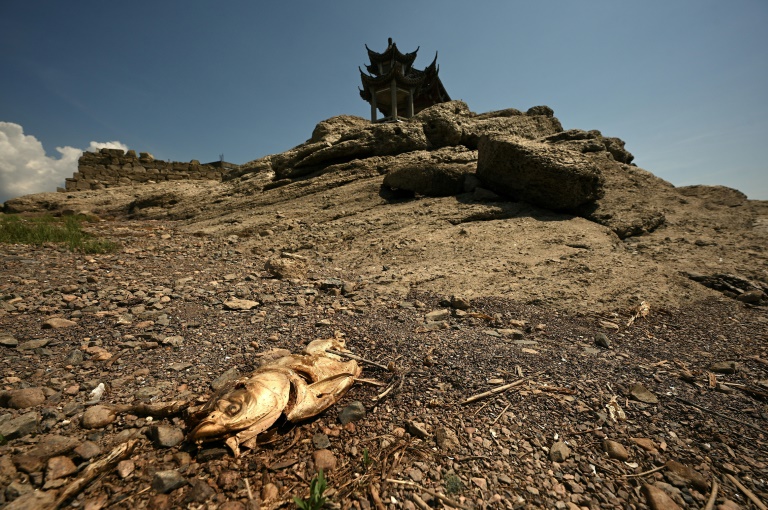
The searing heat is also drying up the critical Yangtze River, with water flow on its main trunk about 50 percent lower than the average over the last five years, state media outlet China News Service reported last week.

– ‘Worst heatwave ever’ –

In Chongqing, where more than 1,500 people were evacuated after hot and dry conditions sparked multiple wildfires, locals were struggling.

“I feel too hot to sleep every night, and I’m awakened by the heat every morning,” Xu Jinxin, a 20-year-old student, told AFP.

“Because of the electricity shortage, we don’t leave the air conditioner on all day but rather turn it off once it’s cooled down a bit.”

The national meteorological service renewed its warnings for drought and high temperatures on Tuesday, calling for 11 provincial governments to activate emergency responses.

Authorities have already turned to cloud seeding — a method to induce rainfall — in parts of the country. 

State broadcaster CCTV published footage this month showing meteorological staff shooting catalyst rockets into the sky and firefighters transporting water to farmers in need.

“This is the worst heatwave ever recorded,” climate and energy expert Liu Junyan of Greenpeace East Asia told AFP.

“Climate science shows extreme heat is becoming exponentially worse,” she said.

“So it’s more likely that next year will have record-breaking heat.”

This year’s extreme weather is raising public awareness of climate change in China, with state media “now coming around to covering climate impacts” with unprecedented urgency, Liu said.

Government climate expert Zhou Bing warned over the weekend of mass displacement caused by climate change, describing extreme weather as nature’s “revenge” on humanity.

China has experienced three other episodes of intense heat so far this century — in 2003, 2013, 2017.

The gap between heatwaves is “significantly shortening”, according to Zhou.

For those living through the sweltering summer, “life goes on with some endurance”, said Xu, the Chongqing resident.

China probes state property firm execs for 'serious violations'

China has announced it is investigating several executives at state-owned property companies, in another blow to a key sector already struggling with slowing sales, angry customers and heavily indebted developers.

Authorities said in separate notices on Tuesday that they were investigating Zhuang Yuekai, chairman of C&D Real Estate, and Shi Zhen, chairman of C&D Urban Services.

They are also looking into Liu Hui, deputy general manager of Shenzhen Talents Housing Group, and Tang Yong, a former chairman at China Resources Land.

All four were “suspected of serious violations of discipline and law”, the notices said, providing few details.

The language used in the announcements, however, typically indicates impending graft charges.

“This is a continuation of China’s crackdown on corruption, from government agencies to financial institutions, and to state-owned enterprises,” said Ting Meng, senior Asia credit strategist at ANZ Bank.

As sentiment in the sector is already weak, this news will “further suppress market confidence” and increase concerns about the internal governance of some state-owned firms, she told AFP.

The investigations come ahead of the ruling Communist Party’s 20th National Congress, at which President Xi Jinping is widely expected to be anointed for an unprecedented third term.

Xi has championed an anti-corruption drive since coming to power, taking down big-name detractors, and observers expect him to use the months leading up to the meeting to cement his grip on power.

The probes follow a regulatory crackdown on some of China’s biggest tech firms.

Authorities have also in recent months announced investigations into figures in the semiconductor industry, including minister for industry and information technology Xiao Yaqing.

Regulatory chiefs, insurance giants, security officials and financiers have faced censure or prosecution under the anti-corruption drive, but it is rare for a minister to be targeted while still in office.

The vast majority of people who have been investigated for corruption in China were eventually convicted.

Murdoch sues small Australian news outlet for defamation

Fox News boss Lachlan Murdoch has sued a small Australian media outlet for defamation over an opinion piece that linked his media empire to the US Capitol riots.

The scion of the Murdoch media empire is seeking damages, accusing Crikey staff of tarnishing his reputation and “covertly using another media organisation to harass” him.

Murdoch — whose Fox News Channel regularly rails at threats to free speech — also asked the court to permanently ban the site from publishing anything suggesting he “illegally conspired with Donald Trump” around the events of January 6.

The lawsuit was filed late Tuesday in Australia’s federal court, and came after Crikey published letters from Murdoch’s lawyers and dared him to sue. 

Crikey even took out an advertisement in the New York Times on Monday, publishing an open letter that welcomed the opportunity to “test this important issue of freedom of public interest journalism in a courtroom”.

Murdoch is chief executive of media behemoth Fox Corporation, which owns Fox News, and co-chairman of News Corp.

He is the eldest son of billionaire media tycoon Rupert Murdoch, owner of scores of outlets including The Wall Street Journal and the New York Post.

– ‘Unindicted co-conspirator’ –

The lawsuit was sparked by a June 29 article written by Crikey’s political editor Bernard Keane, headlined: “Trump is a confirmed unhinged traitor. And Murdoch is his unindicted co-conspirator”.

The original piece did not name the younger Murdoch directly, referring only to the “Murdochs and their slew of poisonous Fox News commentators”.

In legal correspondence with Murdoch, Crikey’s lawyers argued readers would more likely think the article referred to his father.

However, Murdoch’s lawyers argued in documents filed to the federal court Tuesday that their client was defamed 14 times by the article.

The legal filing also refers extensively to an article published in the Sydney Morning Herald — a major Australian newspaper — about Murdoch threatening to sue Crikey.

Murdoch’s lawyers alleged that Crikey tipped off the Sydney Morning Herald, and has since used the saga to drive subscriptions.

The Fox executive has retained high-profile barrister Sue Chrysanthou, who previously represented actor Geoffrey Rush in his defamation case against another Australian media organisation.

– Crikey stands by story –

The legal tussle pits an upstart website, with subscriber numbers in the low tens of thousands, against one of the world’s largest media empires.

Crikey editor-in-chief Peter Fray and chairman Eric Beecher said Wednesday that the site “stands by its story”.

“We look forward to defending our independent public interest journalism in court against the considerable resources of Lachlan Murdoch,” the pair said in a statement published by the site.

“We believe that coverage of the events of January 6 at the US Capitol, and the role of Fox News in those events, is absolutely legitimate.”

Murdoch’s representatives told AFP he would not be commenting as the matter was before the court.

– ‘The defamation capital’ –

The story has made waves in Australia, where the Murdoch family remains a major player in the local media despite its global expansion.

Former Australian Prime Minister Malcolm Turnbull weighed into the saga Wednesday, saying he was “very surprised” by Murdoch’s decision.

“I think it’s hypocritical,” he told public broadcaster ABC, adding that the Murdochs were “always bleating about freedom of speech, and how the defamation laws are too harsh”.

Australia’s tough libel laws offer few protections to the media and have earned the country the nickname “the defamation capital of the world”.

Angolans vote for president in tightest ever race

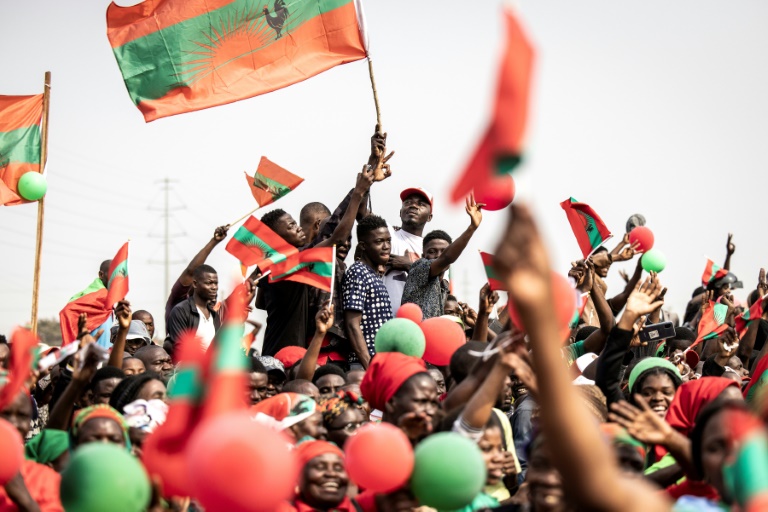
Angolans started casting ballots on Wednesday in what is expected to be the most competitive vote in its democratic history, with incumbent president Joao Lourenco squaring up against charismatic opposition leader Adalberto Costa Junior.

A struggling economy, the high cost of living, soaring poverty compounded by the Covid pandemic, drought in southern parts of the country and the death of a former strongman president all loom large.

The ruling People’s Movement for the Liberation of Angola (MPLA) party, which has held power for nearly five decades in the oil-rich nation, is facing the most serious challenge since the country’s first multiparty vote in 1992.

“It’s been 20 years of peace and we are still poor,” said Lindo, a 27-year-old electrician who only gave his first name while queuing up to vote in a middle class suburb of Nova Vida. “I’m going to vote for Unita. The people want change, the government doesn’t provide for the basic needs of the people”. 

Eight political parties are running, but the real contest lies between the MPLA and its long-standing rival and ex-rebel movement the National Union for the Total Independence of Angola (UNITA).

Opinion polls suggest that support for the MPLA — which won 61 percent of the vote in 2017 elections — will dwindle, while the UNITA, which has entered an electoral pact with two other parties, will make gains. 

But UNITA’s inroads might not be enough to unseat Lourenco, who is expected to secure a second five-year mandate. 

Still, it is unlikely to be a smooth swing back into office for the 68-year-old, who succeeded veteran leader Jose Eduardo dos Santos five years ago.

“The margins will be closer than ever before… but the advantages of incumbency mean MPLA is still odds on to pip Costa (Junior),” said Eric Humphery-Smith, an analyst at London-based Verisk Maplecroft.

– ‘An alternative’ –

The MPLA has maintained its grip on the electoral process and public media in Angola, but the opposition tells its supporters not to be intimidated.

“Don’t be afraid of an alternative,” Costa Junior told supporters at his final rally in the capital Luanda on Monday. “There is no democracy with a single party in power.”

The 60-year-old Costa Junior who is popular among the youth  — a significant and growing voting bloc — pledges to “eradicate poverty” and create jobs.

His rival, a Soviet-educated former general who had promised to usher in a new era for Angola when he was first elected, has trumpeted a list of achievements to woo voters.

“We made and restructured our economy,” he told one of his final rallies in the capital at the weekend. 

But little has changed for most of Angola’s 33 million people for whom life is a daily grind in Africa’s second largest crude oil producer.

The petro-dollars benefited the former president, the late dos Santos who died in Spain last month, his family and cronies.

The night-time and low-key repatriation of dos Santos’s remains to Angola in the final leg of campaigning has added a macabre element to the election.

Analysts warn that ruling party attempts to capitalise on dos Santos’s funeral could backfire as opinions on his legacy are not “unanimous”, especially among young people.

Some 14.7 million people are registered to vote at 13,200 polling stations across the vast southern African nation.

Angolans living overseas are for the first time able to cast ballots from abroad.

Polling opened at 7:00 am (0600 GMT) and ends 11 hours later.

Results are expected within a few days. In past elections, results have been contested in a process that can take several weeks.

Close Bitnami banner
Bitnami