World

J Lo and Ben Affleck hold lavish estate wedding

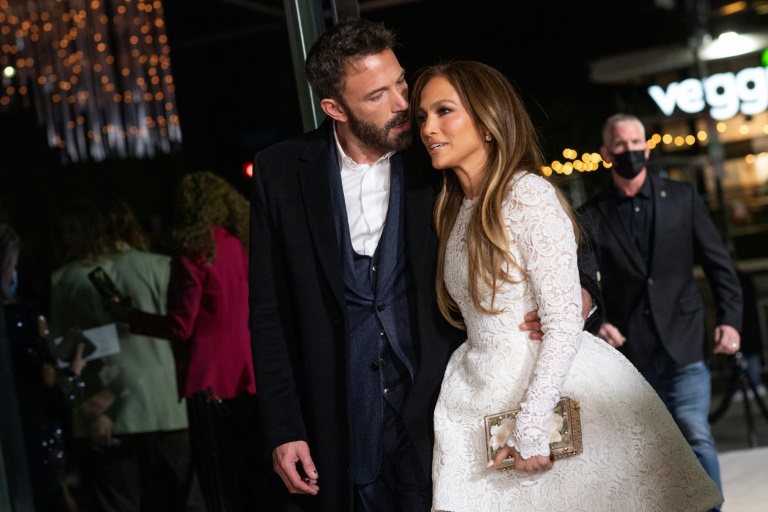
Celebrity couple Jennifer Lopez and Ben Affleck tied the knot Saturday — for the second time in just over a month — in a lavish ceremony at the “Good Will Hunting” star’s estate, US media reported.

The A-list lovebirds already wed in Las Vegas in mid-July, but made it official again, this time in front of friends and family at Affleck’s 87-acre (35-hectare) waterfront compound in the southeastern US state of Georgia.

Among the Hollywood types in attendance at the three-day affair were longtime Affleck pal Matt Damon and director Kevin Smith, People magazine reported.

Guests wore all-white while Lopez donned a Ralph Lauren dress made in Italy, according to Fox News.

Images posted by celebrity gossip site TMZ ahead of the wedding showed dinner seating being arranged on what appeared to be a large, covered dock, with a substantial barge for pyrotechnics floating nearby.

The pair — he is 50 and she is 53 — first met on the set of the widely panned movie “Gigli” in 2002.

They became a media sensation as they dated but postponed their planned 2003 nuptials, then announced their relationship was over in early 2004.

“Bennifer” — the couple’s public nickname from their first highly publicized relationship — set the internet alight last year when photos of them together again began circulating. 

Lopez and Affleck announced their engagement in April.

Lopez posted a video of herself appearing emotional and admiring a green ring in her newsletter, “On The JLo.” US media reported that the ring was an emerald-cut pale green diamond.

This is the fourth marriage for Lopez and the second for Affleck.

Lopez discussed her renewed relationship with Affleck in an interview with People in February.

“It’s a beautiful love story that we got a second chance,” she said.

Rat race: What rodent drivers can teach us about mental health

The girls can’t hide their excitement as they’re brought out to the racing arena.

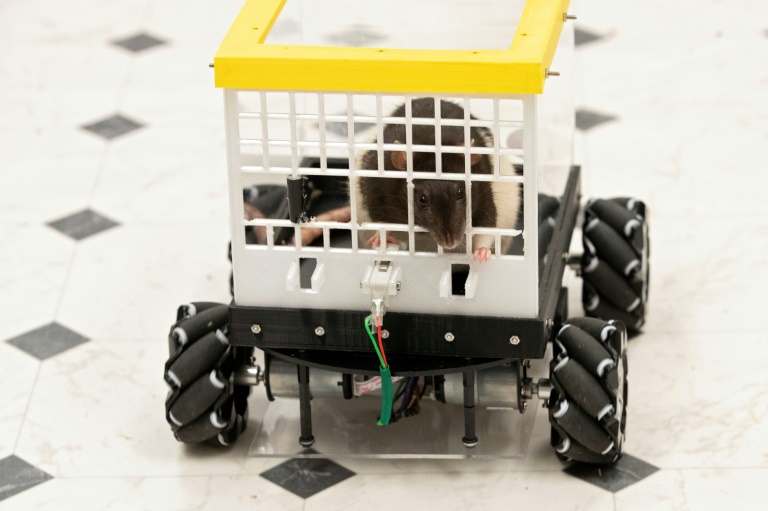
“Black Tail” is up first, taking a few seconds to sniff her surroundings before placing her paw on a lever and zooming away. 

After storming to the finish line, she devours a well-earned Froot Loop hanging on a “treat tree.”

Black Tail is one of the University of Richmond’s rat drivers — a group that first dazzled the world with their ability to operate tiny cars back in 2019. 

Now, the rodents serve as ambassadors for the school’s Behavioral Neuroscience Laboratory, headed by Professor Kelly Lambert.

“It gets people’s attention about how clever and teachable these animals are,” explained Lambert, who has to balance her affection for the furry speedsters with the need for scientific detachment — naming them only by the Sharpie colors that mark their tails.

The idea of racing rodents started out as a playful challenge from a colleague. 

But far from being a novelty act, the animals are part of a boundary-pushing project exploring the ways in which environmental enrichment sculpts the brain — and could in turn hold potential for solving human mental health challenges.

For Lambert, one of the great failings of modern medicine has been its inability to cure mental illness through drugs, even as pharmaceutical companies have reaped in huge profits.

These pharmaceutical approaches have faced increasing scrutiny since a landmark study published in July questioned the theory that chemical imbalances, especially a lack of serotonin, cause depression.

– Froots of their labor –

Instead, Lambert sees behavior therapy as the key to treating the mind, which is where studying fellow mammals comes in.

“Our brains are changing, from the womb to the tomb,” she said. “If we have some type of engaging life, this is probably important and related to depression.” 

A previous experiment of hers had split rats into groups of “workers,” who were assigned an effort-based reward task of digging through dirt mounds for a Froot Loop — or a control group of “trust fund” rats that were simply handed over treats.

When challenged with stressful tasks, the worker rats persisted longer than those conditioned to remain in a state of what psychologists call “learned helplessness.”

And when tasked with swimming, the worker rats showed greater emotional resilience, as shown by a higher ratio of the hormone dehydroepiandrosterone to cortisol in their droppings. 

Rats that learned to drive also had biomarkers of greater resilience and lowered stress — which Lambert suggests might be linked to the satisfaction of acquiring a new skill, like a human mastering a new piano piece.

“They make pathways that they take over and over again in the wild, and we wanted to see if they could continue to have this great navigational skill in a vehicle,” explained research lab specialist Olivia Harding.

Training wasn’t simple: the team first tried having the rats nudge the driving control with their snouts, before finding the animals preferred to stand on their hind legs and use their front paws.

Early car models required the rats to touch wiring placed in the front, left or right of the car, completing a mild electric circuit that corresponded to movement direction. 

Now, though, they get around in fancier rides with levers designed by a roboticist. 

Even when their cars were placed in an unfamiliar spot, pointed away from the treat, the rats learned to turn their vehicles and navigate toward the reward, indicating advanced cognitive processing at work.

Today’s driving ladies, Black Tail and Multicolored Tail, show clear signs of “anticipatory” behavior when humans enter the room, pacing back and forth and trying to climb their walls.

However, just like people, not all rats have similar interests: while certain individuals seemed eager to drive just for the fun of it, others did so just for treats, while still others couldn’t be coaxed into participating at all.

– Into the wild –

Female rats in particular were long ignored by science, because earlier generations of researchers thought their four-day estrous cycles muddied research results.

This potentially deprived scientists of female-specific insights, a trend Lambert has been adamant to reverse in her experiments — and is also now a required condition for federal grants.

Lambert recognized early in her career that studying rats living “non-enriched” lives inside cages without obstacle courses and activities was of limited use, akin to studying humans in solitary confinement.

In her driving study, rats raised in enriched cages fared far better at driving tasks.

Her most recent paper focused on differences between lab rats and those caught in the wild — finding the latter had larger brains, more brain cells, larger spleens to fight disease, and much higher stress levels than their captive cousins.

“It kind of blows my mind” that there had been so little interest in understanding these differences, given their possible impact on human medicine, she said.

It also raises an intriguing philosophical question: are we more like the caged lab rats, the enriched-setting lab rats, or the wild rats?

“I’m feeling a little bit closer to the provisioned lab rat rather than the wild rat,” muses Lambert.

But the wild rats, who have to scavenge for food and avoid predators every day of their lives — much like our own ancestors — might have something to teach us about mental resilience.

On track: Cairo metro employs Egypt's first women train drivers

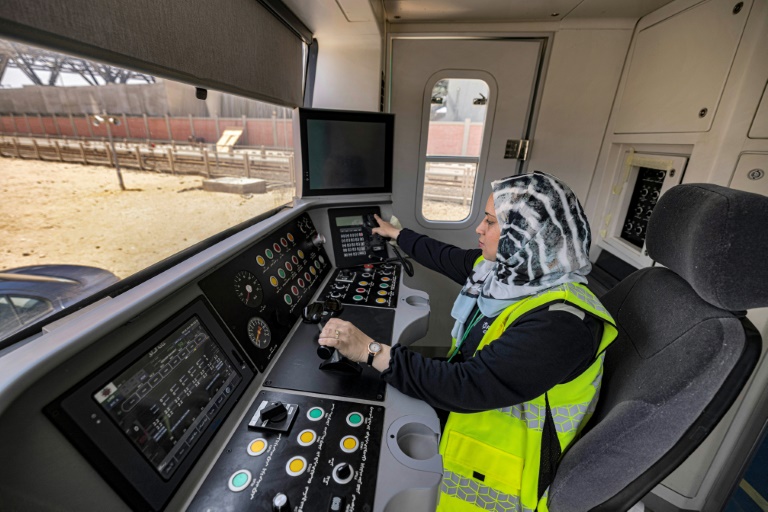
As it prepares to expand to serve a population now exceeding 20 million, the Cairo metro has recruited Egypt’s first female train drivers, a novelty in a country where few women have formal jobs.

Since April, commuters on the network’s newest line have seen women take the controls in the driver’s cab, with reactions ranging from raised eyebrows to outright disapproval, according to the two pioneers.

Egyptian women have had the right to vote and stand for office since 1956, but patriarchal legislation and a male-dominated culture have severely limited personal rights.

The Cairo metro itself provides reserved carriages for women who do not wish to ride with men in an attempt to provide protection against sexual harassment.

Business graduate and mother of two Hind Omar said she had rushed to apply to be a train driver, eager to be a pioneer in a country where only 14.3 percent of women are in formal employment, according to 2020 figures.

“I have several thousand lives in my hands every day,” the 30-year-old told AFP, proudly wearing a fluorescent jacket emblazoned with the RATP-Dev logo of the foreign operations arm of the Paris metro beneath her black and white headscarf.

Omar acknowledged that she had been lucky to have the support of her family.

“My parents found it strange at first but they ended up supporting me,” she said.

“My husband was enthusiastic from the start and always encouraged me.”

A key factor had been the exemption from night shifts offered to women drivers, she said.

Omar said the tests for would-be drivers had been gruelling, requiring candidates to demonstrate their “attention span” and “endurance”.

She said drivers had to remain “extremely vigilant for long hours” during a six-day working week.

– ‘Some passengers were afraid’ –

Omar was one of two women accepted for the training programme run by Egypt’s National Authority for Tunnels in cooperation with RATP-Dev.

The other, Suzanne Mohamed, 32, recalled the first time commuters on the platform saw her in the driver’s cab.

She said she could understand “they were surprised” in a country where women have limited access to many careers.

“Some passengers were afraid,” she told AFP. “They doubted my skills and said they didn’t feel safe with a woman at the controls.”

Launched in 1987, the Cairo metro is the oldest in the Arab world but it has fallen behind other Arab countries in providing employment opportunities for women.

Moroccan Saida Abad became the first female train driver in Africa and the Arab world in 1999.

Even in Saudi Arabia, where until recently women were banned from driving cars, a first group of women is currently in training to be drivers on the railways.

With the Cairo metro planning to add three new lines as well as Egypt’s first monorail system, Omar said she hoped her example would help “pave the way for other women” to become train drivers and ensure “that there’s a lot of us”.

On track: Cairo metro employs Egypt's first women train drivers

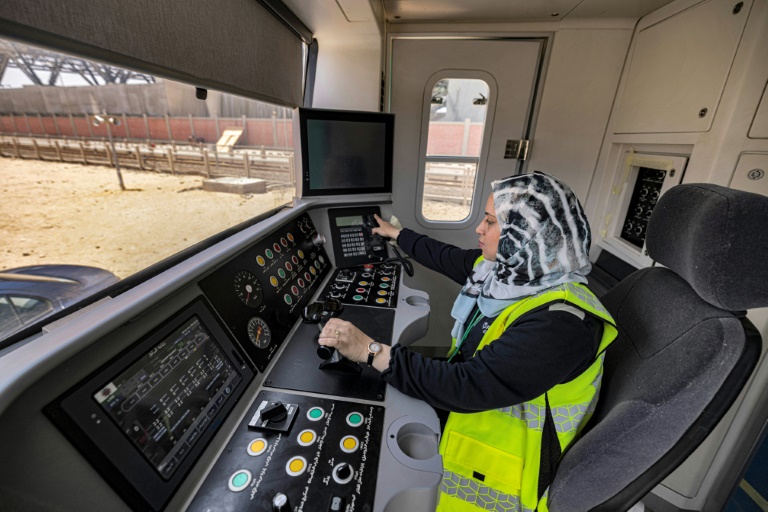
As it prepares to expand to serve a population now exceeding 20 million, the Cairo metro has recruited Egypt’s first female train drivers, a novelty in a country where few women have formal jobs.

Since April, commuters on the network’s newest line have seen women take the controls in the driver’s cab, with reactions ranging from raised eyebrows to outright disapproval, according to the two pioneers.

Egyptian women have had the right to vote and stand for office since 1956, but patriarchal legislation and a male-dominated culture have severely limited personal rights.

The Cairo metro itself provides reserved carriages for women who do not wish to ride with men in an attempt to provide protection against sexual harassment.

Business graduate and mother of two Hind Omar said she had rushed to apply to be a train driver, eager to be a pioneer in a country where only 14.3 percent of women are in formal employment, according to 2020 figures.

“I have several thousand lives in my hands every day,” the 30-year-old told AFP, proudly wearing a fluorescent jacket emblazoned with the RATP-Dev logo of the foreign operations arm of the Paris metro beneath her black and white headscarf.

Omar acknowledged that she had been lucky to have the support of her family.

“My parents found it strange at first but they ended up supporting me,” she said.

“My husband was enthusiastic from the start and always encouraged me.”

A key factor had been the exemption from night shifts offered to women drivers, she said.

Omar said the tests for would-be drivers had been gruelling, requiring candidates to demonstrate their “attention span” and “endurance”.

She said drivers had to remain “extremely vigilant for long hours” during a six-day working week.

– ‘Some passengers were afraid’ –

Omar was one of two women accepted for the training programme run by Egypt’s National Authority for Tunnels in cooperation with RATP-Dev.

The other, Suzanne Mohamed, 32, recalled the first time commuters on the platform saw her in the driver’s cab.

She said she could understand “they were surprised” in a country where women have limited access to many careers.

“Some passengers were afraid,” she told AFP. “They doubted my skills and said they didn’t feel safe with a woman at the controls.”

Launched in 1987, the Cairo metro is the oldest in the Arab world but it has fallen behind other Arab countries in providing employment opportunities for women.

Moroccan Saida Abad became the first female train driver in Africa and the Arab world in 1999.

Even in Saudi Arabia, where until recently women were banned from driving cars, a first group of women is currently in training to be drivers on the railways.

With the Cairo metro planning to add three new lines as well as Egypt’s first monorail system, Omar said she hoped her example would help “pave the way for other women” to become train drivers and ensure “that there’s a lot of us”.

Ex-president dos Santos' body lands in Angola

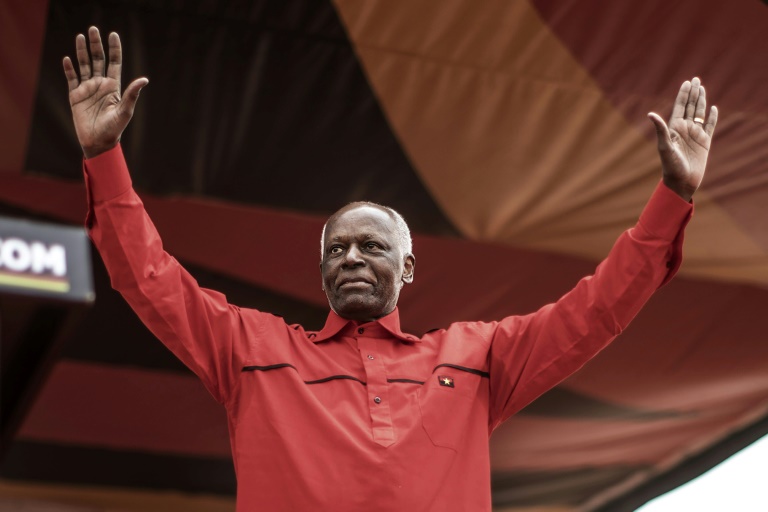
The body of Angola’s Jose Eduardo dos Santos, who died in Spain last month, arrived in Luanda on Saturday, ending a weeks-long feud over the repatriation of the ex-president’s corpse.

A plane carrying the remains landed in the Angolan capital from Barcelona in the evening, AFP reporters at the scene said. 

Only a few dozen people had gathered at Luanda’s airport to welcome the former president’s casket. 

“I was told he was going to arrive, so I came to greet him. It was a nice welcome,” said Wilson Miguel, one of those in attendance.

Several of dos Santos’ children and his widow, Ana Paula, were also present. Ana Paula appeared teary as she got into a vehicle outside the airport. 

Some people clapped as the coffin wrapped in an Angolan flag was taken away followed by a convoy of black cars.

More came out on the streets to watch the convoy pass by. Some cheered, others chanted “Ze Du!”, dos Santos’s nickname, footage posted on social media showed. 

“We Angolans are proud to welcome the remains of president dos Santos, and that he can have a dignified funeral,” said another attendee, Telma Pilartes. 

Dos Santos, who ruled the oil-rich African nation with an iron first from 1979 to 2017, died in Barcelona on July 8 at the age of 79 after suffering a cardiac arrest. 

Since then, the question of when and where he will be buried has pitted the Angolan government and his widow against some of his adult children.

A Barcelona court this week ordered his remains be delivered to Ana Paula and granted authorisation for “the repatriation and international transfer of (his) remains to Angola”. 

Dos Santos’ 44-year-old daughter Tchize dos Santos filed an appeal to challenge the decision.

But Josep Riba Ciurana, a lawyer for the widow told AFP a judge had granted immediate execution of the ruling, allowing the body to leave Spain.

– ‘Ripped out of my arms’ –

“We are the first to be surprised,” said Tchize’s lawyer, Carmen Varela, adding they learnt about the repatriation from television and had not been “notified of anything”.  

Varela explained they wanted to hold the funeral in Barcelona because returning to Angola is not an option for some members of the family. 

Several of dos Santos’ children have faced an array of corruption investigations in recent years.  

The repatriation came just a few days before Angolans are due to head to the polls in a national vote, and marks a small victory for President Joao Lourenco. 

Lourenco was addressing a large crowd of supporters at a campaign rally in Luanda as the body’s imminent return was announced. 

In an Instagram post, Tchize accused the president of using her father’s corpse as a campaigning tool, describing this as a “world shame”. 

The nearly four-decade tenure of dos Santos saw members of his family capitalise on the nation’s oil riches while most Angolans remained mired in poverty.

When he stepped down in 2017, dos Santos handed over power to Lourenco, the former defence minister.

But Lourenco quickly turned on his erstwhile patron, unleashing an anti-corruption drive to recoup billions he suspected had been embezzled under dos Santos, a campaign that has targeted the former president’s family.

“You took me to the altar and… I will not be able to take you to your last (resting) place,” Dos Santos’ eldest daughter Isabel, who has faced a slew of investigations into her multinational business dealings, wrote in an Instagram post.

“They ripped you out of my arms.”

burs-str-ub/ah/har

At least 34 dead in two Turkey road accidents

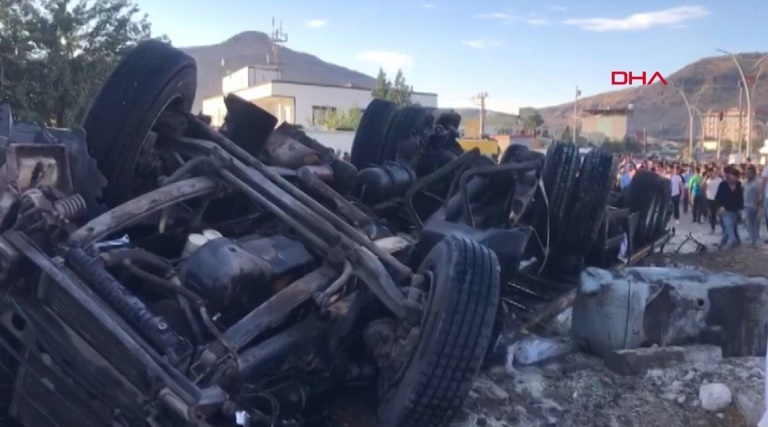
At least 34 people were killed and dozens injured in two separate road accidents Saturday, each in places where collisions had taken place shortly before, local media reported.

A first crash involving a bus and an ambulance killed 15 people and injured 31 more on a motorway in Gaziantep province, said local officials, revising an earlier toll of 16.

Governor Davut Gul said earlier the accident had involved “a bus, an emergency team and an ambulance” on the route between provincial capital Gaziantep and Nizip.

The DHA news agency said a passenger bus had crashed into an ambulance, a firefighting truck and a vehicle carrying journalists at the site of a previous crash.

Three paramedics, three firefighters and two journalists from Turkey’s Ilhas news agency were among those killed, local media reported.

Photos on DHA showed the back of the ambulance ripped out and damage to the bus.

Gendarmes are currently questioning the driver of the bus to try to establish what happened, DHA reported.

– Investigations opened –

Prosecutors are already investigating a second deadly accident a few hours earlier, 250 kilometres away (155 miles) away, which also happened as the emergency services were attending an earlier incident at the site.

On this occasion, at least 19 people were killed and nearly 30 injured after a truck driver hurtled into pedestrians at Derik in Mardin province, Health Minister Fahrettin Koca wrote on Twitter, updating an earlier toll of 16.

The accident in Derik in Mardin province “occurred after the breaks gave out on a lorry, which hit a crowd”, Koca wrote. Another 26 were injured, six of them seriously, he added.

Turkish media shared footage of a driver losing control of his truck, then careening towards nearby vehicles and pedestrians as they try to flee.

Turkey’s official Anadolu press agency reported that an accident involving three vehicles had happened at the same site shortly before. Emergency responders were already at the scene when the lorry ploughed into crowd.

Justice Minister Bekir Bozdag announced on Twitter that prosecutors had opened two investigations into the accidents.

“All resources are mobilised,” he wrote on Twitter, offering his condolences to those who had lost ones.

President Recep Tayyip Erdogan has sent Interior Minister Suleyman Soylu to the site of the accident and he was expected there later Saturday, the Anadolu agency reported.

Chad at 'decisive moment' as dialogue opens

Delayed talks on Chad’s future that the ruling junta says are a “decisive moment” opened Saturday, even as some opposition groups boycott the gathering.

More than 1,400 delegates from the military government, civil society, opposition parties, trade unions and rebel groups gathered in N’Djamena for the “national dialogue” that is scheduled to last three weeks.

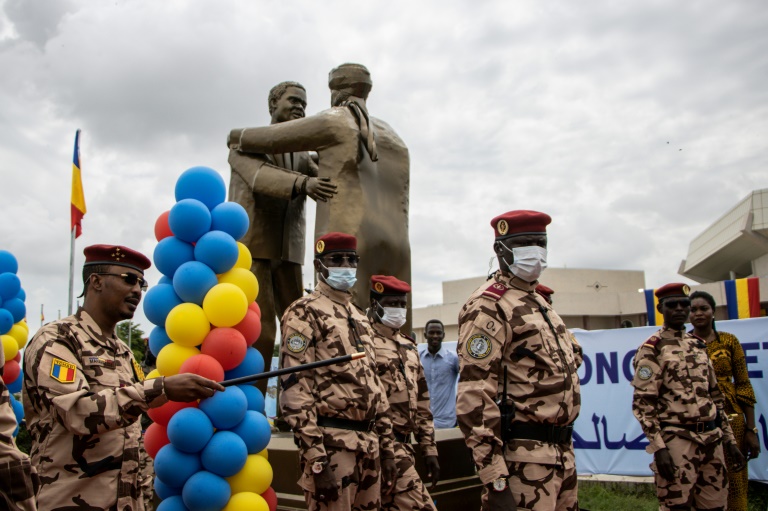
Junta chief General Mahamat Idriss Deby described the forum, his brainchild, as a “decisive moment in history of our country” after arriving in military dress surrounded by tight security to open the forum.

Earlier, he had first inaugurated a statue symbolising national unity at the January 15 palace in the capital N’Djamena before reviewing an honour guard, an AFP journalist at the scene saw.

“This dialogue should allow us definitively to put recourse to arms behind us,” said government spokesman Abderamane Koulamallah.

Deby in midweek signed a decree saying the forum would make “sovereign” decisions which would be legally binding and that he would act as guarantor.

The junta head took power in April 2021 at the age of just 37 after his father, who ruled for 30 years, was killed during a military operation against rebels.

The military leader says the talks should open the way to “free and democratic” elections after an 18-month rule by the junta — a deadline that France, the African Union (AU) and others have urged him to uphold.

The dialogue, which should have begun in February, was hit by repeated delays as Chad’s numerous rebel groups, meeting in Qatar, squabbled over whether to attend.

In the end, around 40 groups on August 8 signed up to a deal that included a ceasefire and guarantee of safe passage.

How to achieve lasting peace, reform state institutions and grant fundamental freedoms to all topped the agenda.

Committees must also draw up a new constitution that will be put to a referendum.

While a number of opposition groups appeared ready to give the forum a chance, some groups did not attend.

– ‘Skewed in advance’ –

The Front for Change and Concord in Chad (FACT) boycotted the event which it considers to be “skewed in advance” towards the military junta.

FACT is a key opposition group which did not sign the peace accord and which triggered the offensive in the northeast last year that ended in the death in combat of Deby’s father Idriss Deby. 

Wakit Tamma, a large coalition of opposition parties and civil society groups, is also refusing to take part, accusing the junta of “human rights violations”.

Forum opponents are also upset at an indication Deby may decide to stand as president having initially pledged not to do so on assuming power as junta chief.

Succes Masra, leader of the Transformers party, which is part of the Wakit Tamma coalition, on Saturday called for civil resistance at a meeting in N’Djamena attended by several hundred supporters which drew a large police presence.

After Saturday’s preliminaries, actual dialogue is set to start on Sunday or Monday.

 – ‘Rebuild Chad’ –

On Thursday, two exiled rebel leaders, Timan Erdimi and Mahamat Nouri of the Union of Forces for Democracy and Development (UFDD), a former defence minister, returned to Chad to participate in the forum.

“We signed this agreement to rebuild Chad,” Erdimi, the head of the Union of Resistance Forces (UFR), told AFP.

Chad, one of the world’s poorest countries, has endured repeated uprisings and unrest since independence from France in 1960.

The talks face major challenges according to observers: time pressure and the absence of two of the biggest rebel groups.

EU fiscal oversight of Greece ends after 12 years

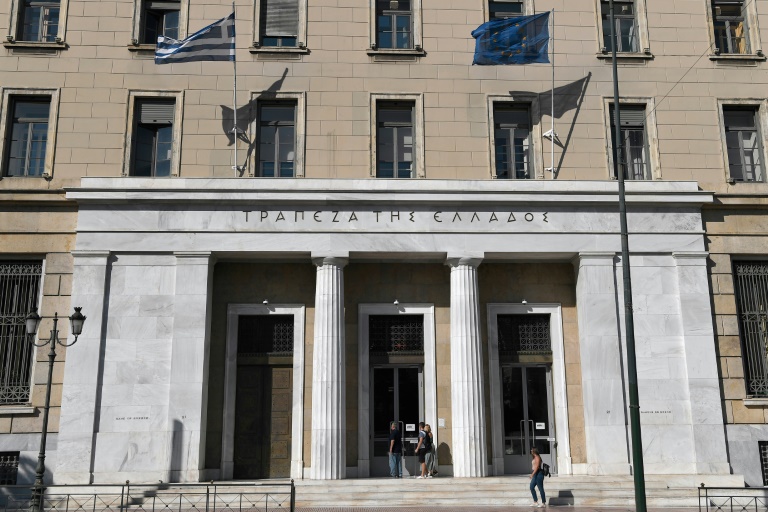
Greece on Saturday concluded 12 years of European Union fiscal surveillance that was imposed in return for bailouts after a crushing debt crisis.

In November 2009, Athens revealed a sharp rise in its public deficit that eventually led to a financial crisis across the eurozone and wreaked havoc on Greek finances for a decade.

In exchange for bailout cash of 289 billion euros and to stop Greece from crashing out of the eurozone, a “troika”, made up of the International Monetary Fund, EU and the European Central Bank, demanded across-the-board reforms from Athens.

These included deep state spending and salary cuts, tax hikes, privatisations and other sweeping reforms aimed at righting public finances. 

The economy contracted by more than a quarter, unemployment spiked to almost 28 percent and skilled professionals emigrated in droves.

“A cycle of 12 years which brought pain to citizens, led to economic stagnation and divided society,” has ended, Prime Minister Kyriakos Mitsotakis said. 

“A new horizon filled with growth, unity and prosperity emerges for all,” he said. “The Greece of today is a different Greece.

“We have recorded strong growth and a significant slide in unemployment of three percent since last year and 5 percent since 2019,” he added. 

Ending the oversight will strengthen Greece’s international market position by increasing its attractiveness to investors. Athens will also now have greater control over its domestic economic policy.

“The end of enhanced surveillance for Greece also marks the symbolic conclusion of the most challenging period the euro area has experienced,” Paolo Gentiloni, the European Commissioner for Economy, said in a statement. 

“The sovereign debt crisis that defined the first years of the previous decade was a steep learning curve for our Union. 

“Our strong collective response to the pandemic indicated that Europe had learned the lessons of that crisis. We must show the same solidarity and unity as we navigate the troubled waters our economies are now entering.”

Greece — like fellow bailed-out EU members Spain, Portugal, Cyprus and Ireland — will still be monitored by its creditors while paying back its debts. 

In Greece’s case, that will take another two generations, with the last loans due for repayment in 2070.

According to European Commission projections, the Greek economy will grow by 4 percent this year, much higher than the eurozone average of 2.6 percent.

However, Greece’s unemployment rate is one of the highest in the monetary union, its minimum wage one of the lowest and the country’s debt is 180 percent of gross domestic product.   

EU fiscal oversight of Greece ends after 12 years

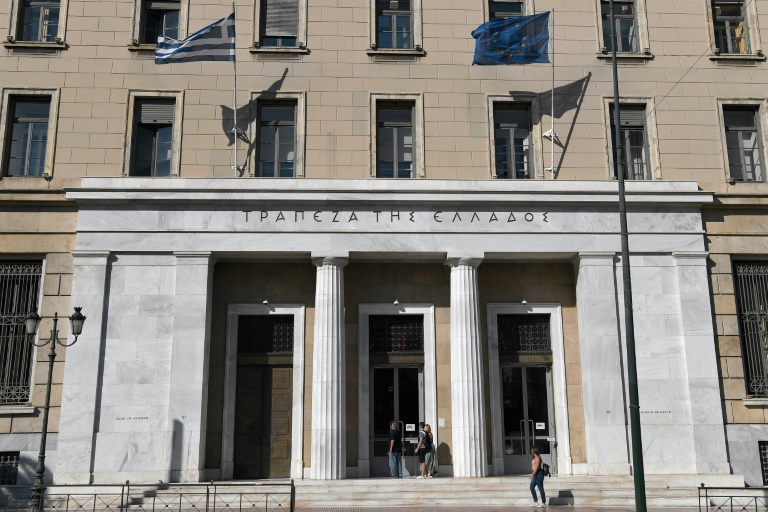
Greece on Saturday concluded 12 years of European Union fiscal surveillance that was imposed in return for bailouts after a crushing debt crisis.

In November 2009, Athens revealed a sharp rise in its public deficit that eventually led to a financial crisis across the eurozone and wreaked havoc on Greek finances for a decade.

In exchange for bailout cash of 289 billion euros and to stop Greece from crashing out of the eurozone, a “troika”, made up of the International Monetary Fund, EU and the European Central Bank, demanded across-the-board reforms from Athens.

These included deep state spending and salary cuts, tax hikes, privatisations and other sweeping reforms aimed at righting public finances. 

The economy contracted by more than a quarter, unemployment spiked to almost 28 percent and skilled professionals emigrated in droves.

“A cycle of 12 years which brought pain to citizens, led to economic stagnation and divided society,” has ended, Prime Minister Kyriakos Mitsotakis said. 

“A new horizon filled with growth, unity and prosperity emerges for all,” he said. “The Greece of today is a different Greece.

“We have recorded strong growth and a significant slide in unemployment of three percent since last year and 5 percent since 2019,” he added. 

Ending the oversight will strengthen Greece’s international market position by increasing its attractiveness to investors. Athens will also now have greater control over its domestic economic policy.

“The end of enhanced surveillance for Greece also marks the symbolic conclusion of the most challenging period the euro area has experienced,” Paolo Gentiloni, the European Commissioner for Economy, said in a statement. 

“The sovereign debt crisis that defined the first years of the previous decade was a steep learning curve for our Union. 

“Our strong collective response to the pandemic indicated that Europe had learned the lessons of that crisis. We must show the same solidarity and unity as we navigate the troubled waters our economies are now entering.”

Greece — like fellow bailed-out EU members Spain, Portugal, Cyprus and Ireland — will still be monitored by its creditors while paying back its debts. 

In Greece’s case, that will take another two generations, with the last loans due for repayment in 2070.

According to European Commission projections, the Greek economy will grow by 4 percent this year, much higher than the eurozone average of 2.6 percent.

However, Greece’s unemployment rate is one of the highest in the monetary union, its minimum wage one of the lowest and the country’s debt is 180 percent of gross domestic product.   

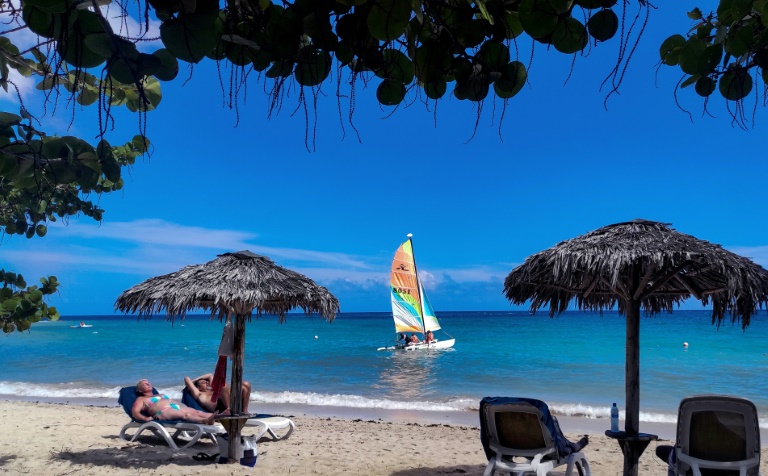
Cuba sees surge in foreign tourists, hopes for more Russians

The number of foreign tourists visiting Cuba so far this year is up nearly sixfold from the 2021 period but remains below pre-pandemic levels, the government said Saturday.

Officials say they are hoping to see more Russian tourists once flights canceled because of Covid-19 and the Ukraine war are restored this year.

The National Statistics Office (ONEI) said 834,891 tourists visited the island from January through July, compared to 141,293 visits in the first seven months of 2021.

International tourism represents Cuba’s second-leading economic activity, after the sale of medical services, but the pandemic, along with continuing travel curbs from the US, saw the numbers collapse in 2020 and 2021.

The total number of foreign visitors plunged from 4.2 million in 2019 to one million a year later. 

But with Covid-19 under better control, Cuban authorities hope to hit 2.5 million visits this year.

The Communist-ruled country is counting in particular on a revival of tourism from Russia, which in 2020 and 2021 displaced Canada as the largest source of foreign visitors.

The Cuban ambassador in Moscow, Julio Garmendia, last week told Russian newspaper Izvestia that efforts are underway to restore canceled flights by this winter.

“We know that the Russians are eager to again vacation in Cuba, and the Cuban people are waiting for them with characteristic hospitality,” he said, the official Cubadebate blog reported.

Data from ONEI, however, show Canada this year is again the leading source of tourists, at 258,896. 

Close Bitnami banner
Bitnami