World

UAE ambassador to return to Iran after six-year absence

The United Arab Emirates said Sunday that its ambassador to Tehran would resume duties within days, six years after ties were downgraded in support of Saudi Arabia.

Ambassador Saif Mohammed al-Zaabi “will resume his duties at the UAE embassy in the Islamic republic of Iran in the coming days to contribute to further advancing bilateral relations”, the Emirati foreign ministry said in a statement.

The move seeks to “achieve the common interests of the two countries and the wider region”, it added.

With Middle East political alignments shifting, UAE presidential adviser Anwar Gargash in mid-July called for an easing of regional tensions and signalled the ambassador’s possible return.

The UAE scaled back its ties with the Islamic republic in 2016, in solidarity with Saudi Arabia, after Iranian protesters attacked the kingdom’s diplomatic missions in Iran following Riyadh’s execution of Shiite Muslim cleric Nimr al-Nimr.

Other Arab Gulf countries including Kuwait made similar moves.

Iran said earlier this month that Kuwait had sent its first ambassador to Tehran since 2016.

In July, the Emirati and Iranian foreign ministers held a telephone conversation and discussed boosting ties, UAE state media reported at the time.

The oil-rich UAE has previously said that Arab Gulf states should take part in “collective diplomacy” to reach an agreement with Iran, which has been in talks with Western powers on reviving a 2015 nuclear deal.

On Tuesday the European Union and United States said they were studying Iran’s response to a “final” draft of such an agreement.

In 2020, the UAE established diplomatic relations with Israel, a move which Tehran condemned.

But Abu Dhabi has been pursuing a policy of rapprochement with former regional rivals including Qatar and Turkey as well as Iran, with which it had maintained strong economic ties despite the diplomatic downgrade. 

Pope 'concerned' after Nicaraguan bishop detained

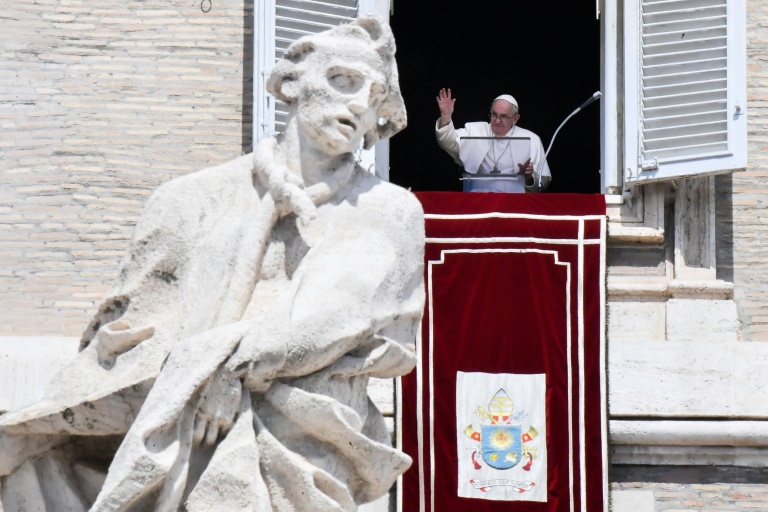
Pope Francis said Sunday he was “concerned” by rising tensions between the state and the Catholic church in Nicaragua, two days after bishop and regime critic Rolando Alvarez was detained.

Francis said he was following “closely with concern and sorrow” the situation in Nicaragua, amid a worsening standoff between the Church and a government accused of increasing authoritarianism.

“I would like to express my conviction and hope that through open and sincere dialogue, the basis for respectful and peaceful coexistence can still be found,” the head of the world’s 1.2 billion Catholics said after the Angelus prayer.

A spokeswoman for the European Union’s foreign policy chief Josep Borrell said the EU was “following closely the situation with concern”.

She repeated Brussel’s position that “Nicaraguans have to find a peaceful and democratic solution to their political crisis through dialogue”. 

The Catholic Church in Nicaragua has been under increasing government pressure since opposition protests in 2018 were met with a crackdown that left hundreds dead.

President Daniel Ortega maintains the protests were part of a Washington-backed opposition plot to unseat him, and accuses bishops of complicity.

The Vatican has said Nicaragua expelled its ambassador to the country in March.

– Taken ‘with violence’ –

Alvarez was detained Friday for “destabilizing and provocative” activities aimed at destabilizing the Central American country.

His detention followed two weeks under police siege at his official residence in Matagalpa, central Nicaragua, after he criticized the closure of Church radio stations and news channels.

Supporters said Alvarez was taken “with violence” to an unknown location, prompting the United Nations and Organization of American States (OAS) to express concern.

Eight others, including five priests, who had been holed up with Alvarez were taken to Managua with him, according to the Latin American Bishops Conference (CELAM), and were all under investigation.

Later, the church said Alvarez was being held at his “family home” where Cardinal Lepoldo Brenes was allowed to visit him.

Brenes reported the bishop’s “physical condition has deteriorated” but his “spirit is strong”, the archdiocese of Managua said in a statement.

The other eight were being held at El Chipote prison, according to the Nicaraguan Center for Human Rights (Cenidh). El Chipote is a notorious lockup for government critics.

Last week, the Cenidh said another Nicaraguan priest, Oscar Benavidez, had been “removed from his vehicle and taken by patrol car to an unknown destination”.

According to the European Union, Nicaragua has more than 180 “political prisoners”.

In the first half of 2022, the bloc says, Nicaraguan authorities closed down over 1,200 civil society organizations.

Earlier this month, Borrell’s office called for the liberation of Nicaragua’s political prisoners, denouncing the government crackdown on opposition activists.

Death toll in Somalia hotel siege climbs to 21

The death toll from a devastating 30-hour siege by Al-Shabaab jihadists at a hotel in Somalia’s capital Mogadishu has climbed to 21, Health Minister Ali Haji Adan said Sunday, as anxious citizens awaited news of missing relatives.

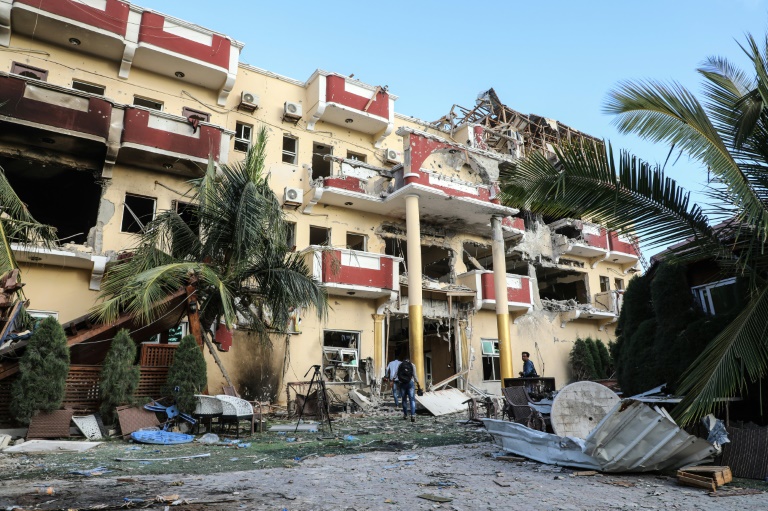
The gun and bomb attack by the Al-Qaeda-linked group on the popular Hayat hotel caused parts of the building to collapse, with many people feared trapped inside since the assault began on Friday evening.

“The ministry of health has so far confirmed the deaths of 21 people and 117 people wounded,” 15 of them seriously, Adan said.

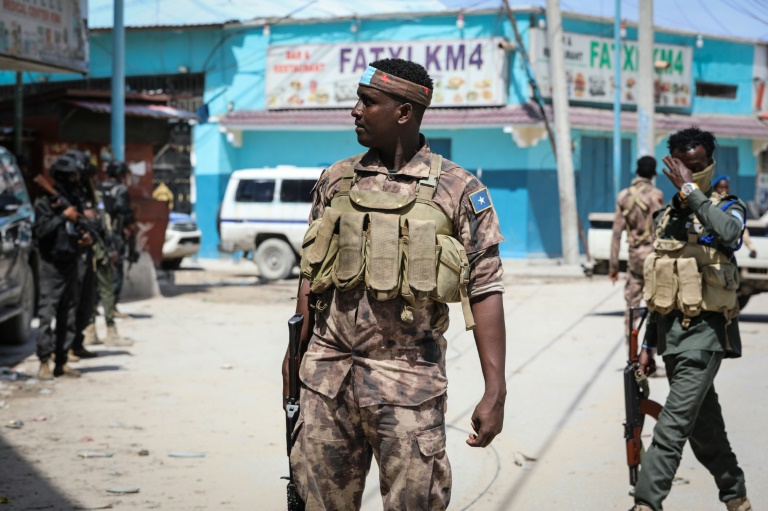
Emergency workers and bomb disposal experts made their way through the heavily damaged hotel on Sunday, looking for any explosives and removing rubble as security forces patrolled the area.

Police commissioner Abdi Hassan Mohamed Hijar told reporters on Sunday that “106 people including children and women” had been rescued during the siege, which ended around midnight.

As bullets and flames ripped through the hotel, security forces searched the property to bring civilians to safety, including three young children who hid inside a toilet.

“The casualties mostly happened in the early hours of the attack, after that security forces spent time rescuing people individually and room by room,” Hijar said.

The attack was the biggest in Mogadishu since Somalia’s new President Hassan Sheikh Mohamud took office in June, and underscored the challenge of trying to crush the 15-year insurrection by the Islamist group.

– ‘Like an earthquake’ –

Dozens of people arrived at the hotel premises on Sunday morning, desperate for news of their family members.

“It is like the devastation after a high-magnitude earthquake… You can only see damaged columns standing in most parts,” said nurse Sadik Ahmed, who lost his uncle in the attack.

“My uncle was killed in the reception area; he had gunshot wounds.” 

The hotel was a favoured meeting spot for government officials and scores of people were inside when a suicide bomber triggered a massive blast, forcing his way onto the premises along with heavily-armed gunmen.

Minutes later, a second explosion struck as rescuers, security forces and civilians rushed to help the injured, witnesses said.

Civil servant Abdifatah Mohamed told AFP he had just sat down with a friend and ordered a cappuccino when he heard a deafening explosion, followed by gunfire. 

“The gunmen directly went towards the lobby area in the main building where they were randomly shooting people,” he said, narrating the harrowing ordeal.

He managed to find shelter near the toilets along with a dozen other people before being rescued 40 minutes later. 

Somalia’s allies, including the United States, Britain, the European Union and Turkey, as well as the UN, strongly condemned the attack, as did ATMIS, the African Union force tasked with helping Somali forces take over primary responsibility for security by the end of 2024.

Earlier this month, Washington announced its forces had killed 13 Al-Shabaab operatives in an air strike, the latest since President Joe Biden ordered the re-establishment of a US troop presence in Somalia, reversing a decision by his predecessor Donald Trump.

– ‘Audacious attack’ –

Samira Gaid, executive director of the Hiraal Institute, a Mogadishu-based security think tank, told AFP that the “audacious attack” was a message to the new government and its foreign allies.

“The complex attack is to show that they are still very much present, very relevant and that they can penetrate government security and conduct such attacks.”

The key “difference between this attack and previous ones is the length of the siege and how long it took for security forces to contain the situation,” she said.

“The length of the siege has been very traumatising,” even for a city that is regularly targeted by Al-Shabaab.

Mohamud said last month that ending the insurgency required more than a military approach, but that his government would negotiate with the group only when the time was right.

Somalia is also battling a looming famine, with the region’s worst drought in 40 years leaving nearly half the country’s population of 15 million at risk of starvation.

Al-Shabaab spokesman Abdiaziz Abu-Musab said Sunday that the group had killed more than 40 people during the hotel siege.

The jihadists have carried out several attacks in Somalia since Mohamud took office, and last month launched strikes on the Ethiopian border.

The militants were driven out of Mogadishu in 2011, but still control swathes of countryside and retain the ability to launch deadly strikes, often targeting hotels and restaurants.

The deadliest attack occurred in October 2017 when a truck packed with explosives blew up in Mogadishu, killing 512 people.

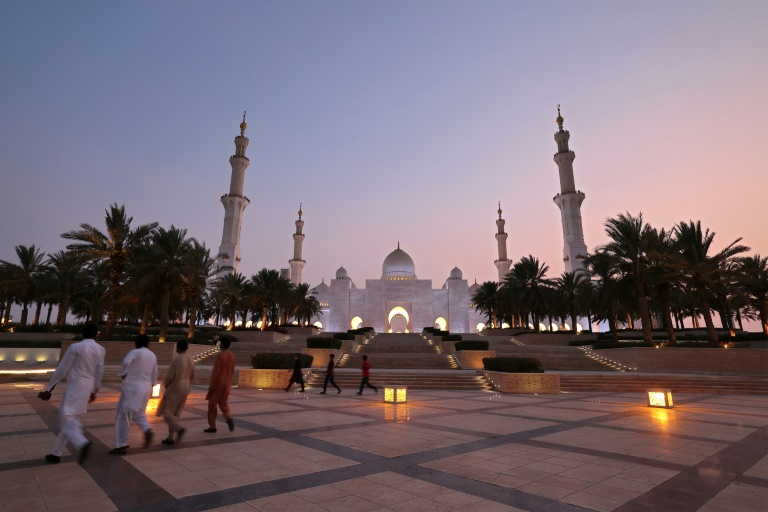
Japan PM tests positive for Covid-19, symptoms mild

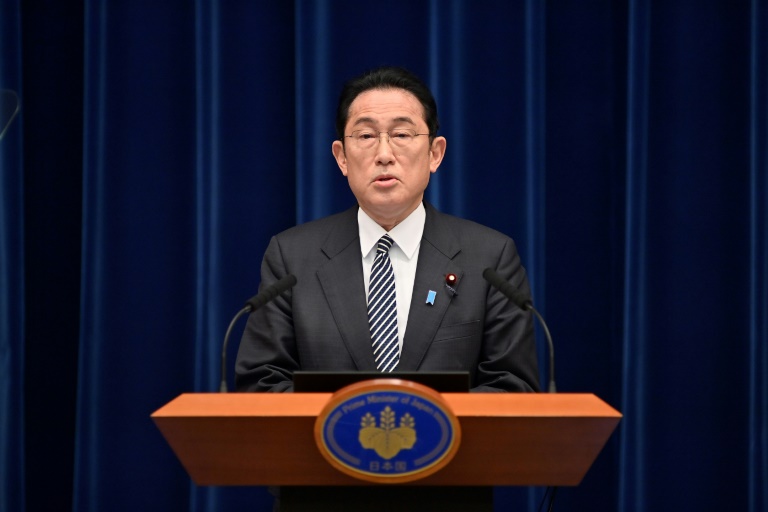
Japanese Prime Minister Fumio Kishida has tested positive for Covid-19, his office said Sunday, a week before the leader was expected to attend an African development conference in Tunisia.

Kishida took a PCR test “after experiencing a mild temperature and a cough” from Saturday evening, an official from the Prime Minister’s Office of Japan told AFP.

Reports in local media including public broadcaster NHK said he may now attend the August 27-28 Tokyo International Conference on African Development (TICAD) remotely.

Japan has logged record Covid-19 cases in recent days, although its total death toll from the disease is far lower than many other countries, at 36,780.

The 65-year-old Kishida, who took office in October, had his fourth vaccine shot earlier this month.

He has been on holiday with his family and was due to return to work on Monday.

Japan has never imposed a strict lockdown, and anti-infection measures mainly targeting bar and restaurant opening hours were lifted in March across the country.

The nation’s borders have partially reopened although tourists are still banned unless they are on organised group trips.

Tokyo has partnered with African countries since 1993 to hold TICAD around every five years.

At the upcoming meeting, Japan will strongly support “African-led development” with a focus on economy, society, and peace and stability, a Japanese foreign ministry briefing document said.

Japan would also contribute to enhancing food security in Africa to address the food crisis which had worsened due to the situation in Ukraine, the document said.

Singapore to repeal colonial-era law against gay sex: PM

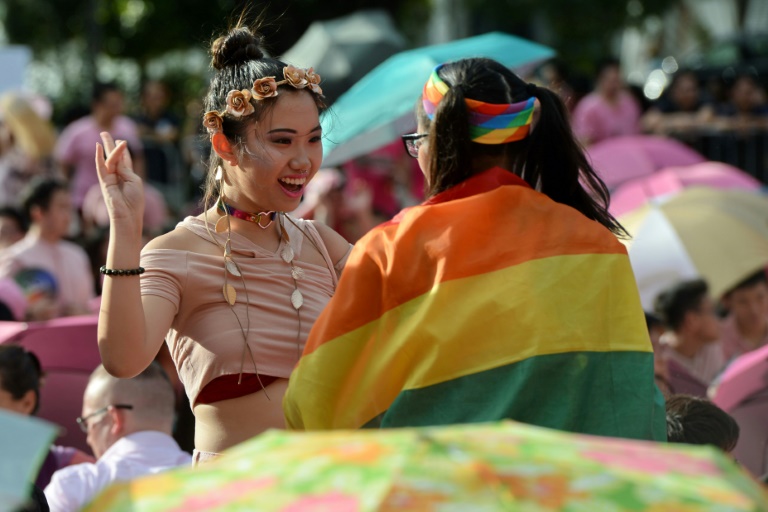
Singapore’s Prime Minister Lee Hsien Loong announced Sunday the country will repeal a colonial-era law criminalising gay sex, though he maintained that the government will continue to “uphold” marriage as being between a man and a woman. 

Inherited from the British colonial era, section 377A of Singapore’s penal code penalises sex between men with up to two years in jail.

Gay rights campaigners have long said the law runs afoul of the affluent city-state’s increasingly modern and vibrant culture, and had mounted two unsuccessful legal challenges.

During a major policy speech Sunday, Lee said attitudes have shifted since 15 years ago when the government decided the law should remain, although it has not been actively enforced.

Gay people “are now better accepted” locally, especially among younger Singaporeans, he said.

“It is timely to ask ourselves again the fundamental question: Should sex between men in private be a criminal offence?” Lee said. 

“The government will repeal section 377A and decriminalise sex between men. I believe this is the right thing to do, and something that most Singaporeans will now accept.”

He added: “This will bring the law into line with current social mores, and I hope, provide some relief to gay Singaporeans.”

However, the repeal of section 377A stops short of full marriage equality. 

Lee said the government recognises that “most Singaporeans do not want the repeal to trigger a drastic shift in our societal norms across the board”, including how marriage is defined and how it is taught in schools.

“Hence, even as we repeal section 377A, we will uphold and safeguard the institution of marriage,” he said.

He stressed that under the law, “only marriages between one man and one woman are recognised in Singapore”.

The government will also amend Singapore’s constitution to keep this definition of marriage from being challenged constitutionally in the courts, Lee added.

– ‘Long road to equality’ –

The first attempt to overturn the law was rejected in 2014. The Court of Appeals dismissed the second challenge last February.

Ahead of Lee’s speech, an alliance of Protestant churches in Singapore had warned Friday against removing the law, which it described as a “marker for many social and moral considerations”.

Repealing the law without safeguards “facilitates the progress of a brand of intolerant and aggressive LGBT activism which seeks to impose its ideology upon Singapore society,” the alliance said.

Expressing “relief” over the government’s decision after Lee’s speech Sunday, gay rights campaigners called the repeal of section 377A the “first step on a long road towards full equality for LGBTQ+ people in Singapore”.

But “the true impact of repeal will be determined by how the people of Singapore respond to it, and treat each other, in the days and months to come”, they said in joint statement signed by more than 20 groups.

They also took aim at the government’s plans to enshrine the definition of marriage between a man and a woman into Singapore’s constitution — heeding calls from the city-state’s religious conservatives. 

“Any move by the government to introduce further legislation or constitutional amendments that signal LGBTQ+ people as unequal citizens is disappointing,” they said. 

“Such a decision will undermine the secular character of our Constitution, codify further discrimination into supreme law, and tie the hands of future Parliaments.”

In 2018, India’s Supreme Court decriminalised gay sex by overturning legislation from its own period under British rule — a decision that spurred campaigners in Singapore to renew their efforts to challenge the law.

The following year, Taiwan took the unprecedented decision in May to legalise same-sex marriage, becoming the first place in Asia to do so.

Somalis anxiously await news of loved ones as hotel siege ends

Somalis anxiously waited to know the fate of their missing relatives on Sunday as emergency workers attempted to clear the debris of a deadly 30-hour siege by Al-Shabaab jihadists at a hotel in the capital Mogadishu.

At least 13 civilians lost their lives and dozens were wounded in the gun and bomb attack by the Al-Qaeda-linked group that began on Friday evening and lasted over a day, leaving many feared trapped inside the popular Hayat Hotel.

On Sunday morning, the area surrounding the hotel was quiet and the roads blocked by a heavy security presence as emergency workers and bomb disposal experts sought to clear the premises of any explosives and remove rubble.

The hotel building sustained heavy damage during the gunfight between Somali forces and the militants, causing some parts of it to collapse and leaving many people frantic for their loved ones who were inside when the attack began.

Police commissioner Abdi Hassan Mohamed Hijar told reporters on Sunday that “106 people including children and women” were rescued by security forces during the siege which ended around midnight.

As bullets and flames ripped through the hotel, security forces searched the property to bring civilians to safety, including three young children who hid inside a toilet.

“The casualties mostly happened in the early hours of the attack, after that security forces spent time rescuing people individually and room by room,” Hijar said.

He did not however provide an update on the number of casualties, saying only that the ministry of health would brief journalists later in the day.

The attack was the biggest in Mogadishu since Somalia’s new President Hassan Sheikh Mohamud took office in June, and underscored the challenge of trying to crush the 15-year insurrection by the Islamist militant group.

– ‘Tense’ –

Dozens of people gathered near the road leading up to the hotel on Sunday morning, desperate for news of their family members as security forces guarded the area, not letting anyone through.

Businessman Muktar Adan, whose brother was inside the hotel when the attack started, told AFP he was waiting for permission to enter the premises and look for his sibling.

“My brother was inside the hotel the last time we heard from him, but his phone is switched off now and we don’t know what to expect,” he said.

Said Nurow, who heard the attack unfold, said he was very worried about his friend who was a guest at the property.

“I hope… (he) is alive, he stayed in the hotel according to the last information we got from his sister,” he told AFP, describing the mood as “tense”.

The hotel was a favoured meeting spot for government officials and scores of people were inside when gunmen stormed the property. 

Somalia’s allies, including the United States, Britain and Turkey, as well as the UN, have strongly condemned the attack. So did ATMIS, the African Union force tasked with helping Somali forces take over primary responsibility for security by the end of 2024.

Earlier this month, Washington announced its forces had killed 13 Al-Shabaab operatives in an air strike, the latest since President Joe Biden ordered the re-establishment of a US troop presence in Somalia, reversing a decision by his predecessor Donald Trump.

– Twin explosions –

Mohamud said last month that ending the jihadist insurrection required more than a military approach, but that his government would negotiate with the group only when the time was right.

According to police, the attack began with a blast caused by a suicide bomber who forced his way into the hotel along with gunmen.

Minutes later, a second explosion struck as rescuers, security forces and civilians rushed to help the injured, witnesses said.

Al-Shabaab spokesman Abdiaziz Abu-Musab told the group’s Andalus radio earlier Saturday that its forces had “inflicted heavy casualties”.

Al-Shabaab has carried out several attacks in Somalia since Mohamud took office, and last month launched strikes on the Ethiopian border.

The militants were driven out of Mogadishu in 2011, but still control swathes of countryside and retain the ability to launch deadly strikes, often targeting hotels and restaurants.

The deadliest attack occurred in October 2017 when a truck packed with explosives blew up in Mogadishu, killing 512 people.
Japan mulls long-range missile upgrades due to China threat: report

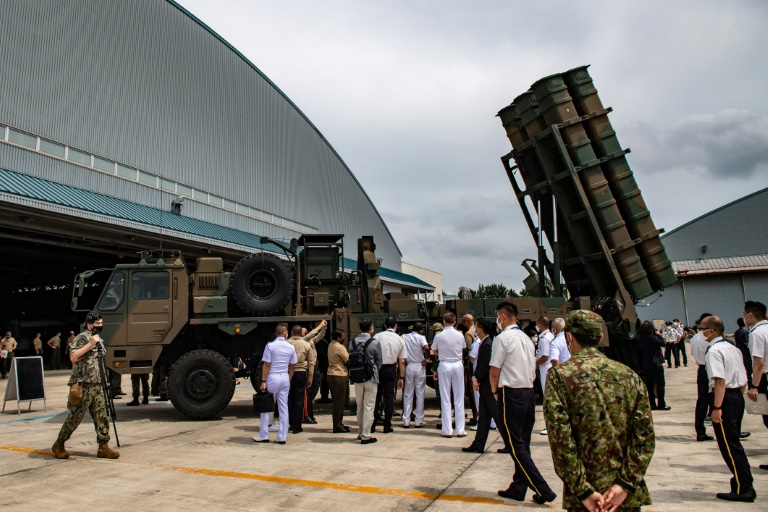
Japan is considering the deployment of more than 1,000 long-range cruise missiles to increase its ability to counter growing regional threats from China, local newspaper Yomiuri Shimbun reported on Sunday.

The country plans to upgrade its existing surface-to-ship missiles to extend their range from 100 kilometres (62 miles) to about 1,000 kilometres (620 miles), which would be enough to reach Chinese coastal areas as well as North Korea, the newspaper reported, citing unnamed sources. 

Upgrades would also need to be made to allow Japan’s existing ships and aircraft to be able to fire the new missiles, which could hit land-based targets, the newspaper reported.

The missiles would be deployed in and around the southwestern Kyushu region and on the small islands that dot Japan’s southwestern waters near Taiwan, Yomiuri reported.

Japanese officials could not immediately be reached for comment on the issue.

The plan is part of Japan’s attempt to narrow the missile capacity gap with China, while also addressing threats from North Korea, the newspaper said.

Japan’s military is not officially recognised under the country’s post-war constitution and defence spending is limited to funding nominally defensive capabilities.

Recent geopolitical tensions, including Russia’s invasion of Ukraine and China’s increasingly aggressive stance over Taiwan, have prompted growing calls in Japan to review defence programmes.

Japanese Prime Minister Fumio Kishida has vowed to significantly boost defence spending, which has been kept close to around one percent of GDP.

Local media also reported that Japan’s defence ministry is likely to request 5.5 trillion yen ($40.2 billion) for the next fiscal year, up slightly from the 5.18 trillion requested for the current fiscal year.

But the ministry was also expected to ask approval for a list of unpriced items, including the development cost to upgrade the long-range cruise missiles, the Asahi Shimbun newspaper said. 

Ex-top prosecutor remanded in Mexico disappeared students case

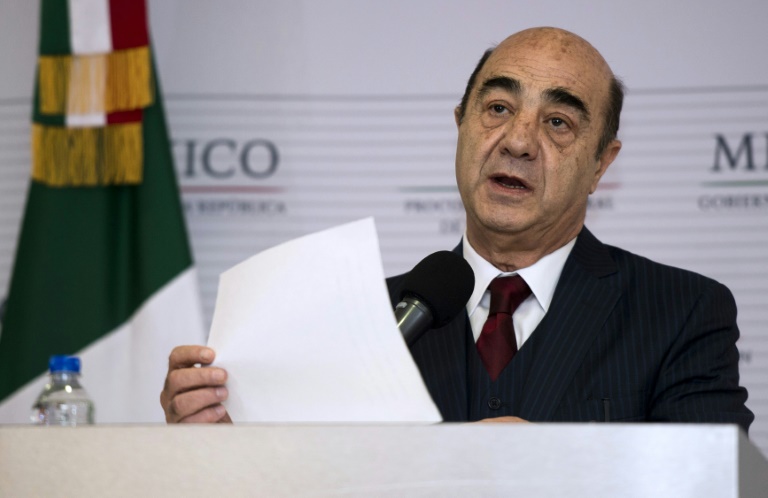
Mexico on Saturday remanded in custody a former attorney general in connection with a controversial investigation he led into the disappearance of 43 students in 2014 — one of the country’s worst human rights tragedies.

The “preventive detention” of Jesus Murillo Karam was imposed “to guarantee his appearance” at a Wednesday court hearing, according to a judicial source, where it will be determined whether he will be tried on charges related to the case.

Murillo Karam, who was arrested on Friday, is the most senior figure detained so far in connection with the case, which shocked the nation and generated international condemnation.

Arrest warrants have also been issued for dozens more suspects including military personnel, police officers and cartel members, prosecutors announced.

They are accused of involvement in organized crime, forced disappearance, torture, homicide and obstruction of justice, they said.

The teaching students had commandeered buses in the southern state of Guerrero to travel to a demonstration in Mexico City before they went missing.

Investigators say they were detained by corrupt police and handed over to the Guerreros Unidos drug cartel which mistook them for members of a rival gang, but exactly what happened to them has been hotly disputed.

According to the official report presented in 2015, cartel members killed the students and incinerated their remains at a garbage dump.

Those conclusions were rejected by independent experts and the office of the United Nations High Commissioner for Human Rights, as well as families of the victims.

Murillo Karam is considered the architect of the so-called “historical truth” version of events presented in 2015 by the government of then-president Enrique Pena Nieto that was widely rejected, including by relatives.

The former heavyweight of the once-dominant Institutional Revolutionary Party (PRI), was arrested for the crimes of forced disappearance, torture and perverting justice, the attorney general’s office said.

Art market pushes on with rocky crypto romance

The closest most people get to owning a world-famous artwork is to buy a cheap poster from a gallery, but art dealers are determined to harness technology to draw in new collectors.

Anaida Schneider, a former banker based in Switzerland, is among those promoting new ownership schemes — for a small fee, investors can buy a digital chunk of a painting and share in the profits when she sells.

“Not everyone has $1 million to invest,” she told AFP. “So I came up with the idea to split, to make like a mutual fund but on the blockchain.”

Each buyer gets an NFT, the unique digital tokens created and stored on the blockchain, the computer code that underpins cryptocurrencies.

Although cryptoassets have been routed this year with plunging values, collapsing projects and widening scandals, the NFT art sector has weathered the storm better than other parts of the crypto world.

NFT artworks accounted for some $2.8 billion in sales last year and the rate has declined only slightly in the first half of this year, according to analyst firm NonFungible.

Collectors and artists are among the most eager experimenters with the technology, even if it means owning only a slice of a digital copy of a painting.

A fifth of 300 collectors surveyed by the website Art+Tech Report said they had already engaged in so-called fractional ownership.

Schneider’s Liechtenstein-based company Artessere offers squares of paintings by Soviet artists including Oleg Tselkov and Shimon Okshteyn for 100 or 200 euros ($100 or $200) a piece.

She is giving herself 10 years to resell them. 

Schneider owns the paintings she sells, thus avoiding legal complications, but attempts to offer novel digital ownership schemes for publicly owned works is proving more tricky.

– ‘Complex and unregulated’ –

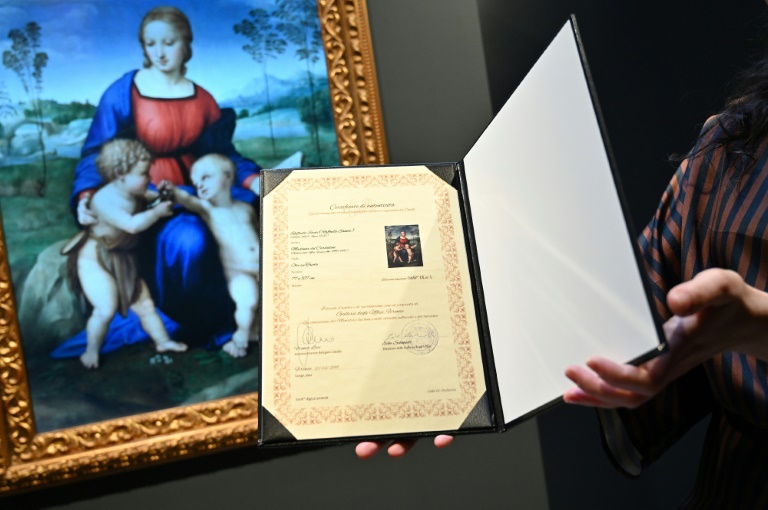
Thirteen Italian museums recently signed deals with Cinello, a firm that sells limited edition digital reproductions, to offer ownership of digital replicas of masterworks.

The buyer gets a unique, high-resolution digital copy to project onto a screen and a certificate from the museum, which gets half the proceeds.

The company held a splashy London show in February displaying digitised works by Renaissance masters including Raphael, Leonardo and Caravaggio. It has since sold a handful of them.

But the Italian culture ministry was reportedly irked that a replica of Michelangelo’s “Doni Tondo” sold for around 240,000 euros but Florence’s Uffizi gallery got less than a third of the proceeds.

A spokesman for the ministry was quoted in several outlets last month as saying the issue was “complex and unregulated” and asked museums not to sign any new contracts around NFTs.

Cinello boss Francesco Losi was not pleased with the characterisation, telling AFP: “We don’t sell NFTs.”

Buyers can ask for an NFT to go with their image, but the firm said they had their own patented system to secure ownership, which they call DAW.

– Mixed blessing –

Cinello said it had digitised more than 200 works and its sales had generated 296,000 euros in extra revenue for Italian museums.

But the firm’s difficulties in Italy underline the mixed blessing of NFTs — they bring publicity but also suspicion.

The NFT sector — which covers anything from avatars in computer games to million-dollar cartoon apes — is replete with scams, counterfeit works, thefts and wash trading.

Losi said he was well aware that NFTs could be used “in the wrong way” and was unsure what future they had in the art world. 

Anaida Schneider stressed that her project was protected by law in Liechtenstein, the tiny principality being among the first jurisdictions to pass a law regulating blockchain companies in 2019.

Beyond that, she said her insurance would cover damage to the artworks and she had also factored in the possibility that the paintings would fall in value, though she declined to give exact details.

“I hope it never happens,” she said. “For me, it’s very important to put this idea in the market.”

Art market pushes on with rocky crypto romance

The closest most people get to owning a world-famous artwork is to buy a cheap poster from a gallery, but art dealers are determined to harness technology to draw in new collectors.

Anaida Schneider, a former banker based in Switzerland, is among those promoting new ownership schemes — for a small fee, investors can buy a digital chunk of a painting and share in the profits when she sells.

“Not everyone has $1 million to invest,” she told AFP. “So I came up with the idea to split, to make like a mutual fund but on the blockchain.”

Each buyer gets an NFT, the unique digital tokens created and stored on the blockchain, the computer code that underpins cryptocurrencies.

Although cryptoassets have been routed this year with plunging values, collapsing projects and widening scandals, the NFT art sector has weathered the storm better than other parts of the crypto world.

NFT artworks accounted for some $2.8 billion in sales last year and the rate has declined only slightly in the first half of this year, according to analyst firm NonFungible.

Collectors and artists are among the most eager experimenters with the technology, even if it means owning only a slice of a digital copy of a painting.

A fifth of 300 collectors surveyed by the website Art+Tech Report said they had already engaged in so-called fractional ownership.

Schneider’s Liechtenstein-based company Artessere offers squares of paintings by Soviet artists including Oleg Tselkov and Shimon Okshteyn for 100 or 200 euros ($100 or $200) a piece.

She is giving herself 10 years to resell them. 

Schneider owns the paintings she sells, thus avoiding legal complications, but attempts to offer novel digital ownership schemes for publicly owned works is proving more tricky.

– ‘Complex and unregulated’ –

Thirteen Italian museums recently signed deals with Cinello, a firm that sells limited edition digital reproductions, to offer ownership of digital replicas of masterworks.

The buyer gets a unique, high-resolution digital copy to project onto a screen and a certificate from the museum, which gets half the proceeds.

The company held a splashy London show in February displaying digitised works by Renaissance masters including Raphael, Leonardo and Caravaggio. It has since sold a handful of them.

But the Italian culture ministry was reportedly irked that a replica of Michelangelo’s “Doni Tondo” sold for around 240,000 euros but Florence’s Uffizi gallery got less than a third of the proceeds.

A spokesman for the ministry was quoted in several outlets last month as saying the issue was “complex and unregulated” and asked museums not to sign any new contracts around NFTs.

Cinello boss Francesco Losi was not pleased with the characterisation, telling AFP: “We don’t sell NFTs.”

Buyers can ask for an NFT to go with their image, but the firm said they had their own patented system to secure ownership, which they call DAW.

– Mixed blessing –

Cinello said it had digitised more than 200 works and its sales had generated 296,000 euros in extra revenue for Italian museums.

But the firm’s difficulties in Italy underline the mixed blessing of NFTs — they bring publicity but also suspicion.

The NFT sector — which covers anything from avatars in computer games to million-dollar cartoon apes — is replete with scams, counterfeit works, thefts and wash trading.

Losi said he was well aware that NFTs could be used “in the wrong way” and was unsure what future they had in the art world. 

Anaida Schneider stressed that her project was protected by law in Liechtenstein, the tiny principality being among the first jurisdictions to pass a law regulating blockchain companies in 2019.

Beyond that, she said her insurance would cover damage to the artworks and she had also factored in the possibility that the paintings would fall in value, though she declined to give exact details.

“I hope it never happens,” she said. “For me, it’s very important to put this idea in the market.”

Close Bitnami banner
Bitnami