World

Fuel price hikes, scarce rice add to hardship in Myanmar

Dozens of people queue under monsoon drizzle for subsidised cooking oil in Myanmar’s commercial hub Yangon, waiting for one of the many commodities that have become scarce as economic misery strikes the city.

The country’s economy tanked following a military coup last year and has been further rattled by the junta’s attempts to seize foreign exchange as well as erratic rules governing businesses and imports.

Living standards are being hammered by global commodity price spikes sparked by Russia’s invasion of Ukraine, leaving many struggling to get by and relying on subsidies or charity to put food on the table.

“People can’t spend much of their income on food because of higher commodity prices,” said 55-year-old housewife Khin Khin Than as she waited to fill her plastic bottle with oil sold by a local association.

The market price for roughly 1.6 kilograms of oil has rocketed to 9,000 kyat ($4.25) from 5,000 kyat, she said. 

“If only one person is working, a family won’t have much money left for food.”

In July the World Bank said about 40 percent of the population were living under the national poverty line.

Consumer Price Index inflation hit 17.3 percent year-on-year in March, it added.

The price of rice has also shot up thanks to increased transport costs and as the military and anti-junta fighters turn swathes of the country into battlegrounds.

Even the state-backed Global New Light of Myanmar newspaper carries almost daily reports on the rising cost of rice, eggs, vegetables, bus travel and rent.

Last week the price of a litre of diesel jumped by around six US cents overnight, state media reported, to a high of 2,440 kyat ($1.15) per litre.

On the day before last year’s coup, customers in Yangon were paying 695 kyat at the pump in Yangon according to industry figures.

This week the junta announced it had formed a steering committee to purchase fuel from ally Russia, but gave no details on when or how this would begin.

Many people are relying on charity to make ends meet.

“If we cook at home, there is no electricity, rice is expensive to buy,” said Lay Lay, 68, one of hundreds queuing at a monastery for a free meal of curry and rice.

“Cooking costs are too high for someone who is retired.”

Ashin Ottamasiri, who supervises the distribution, said his monastery is giving out coupons to 500 people every day for food the monks cook using ingredients donated to them.

“But some days there are more than 600 people,” he said. “If we run out of rice and curry, we give cakes, snacks and fruits.”

“I can’t give shelter for many people but I can share food so people will have meals like I do.”
Greenland treads softly on tourism as icebergs melt

As tourists flock to Greenland to take in its breathtaking icebergs and natural beauty, authorities are mulling ways to control crowds to protect the fragile environment, already threatened by global warming.

“It’s a dream destination,” said Yves Gleyze, a veteran off-the-beaten-track French tourist in his 60s as he arrived at the airport in Ilulissat.

Visitors to the third-biggest town in the Danish autonomous territory are met by a rugged, austere landscape of grey rock and sparse vegetation.

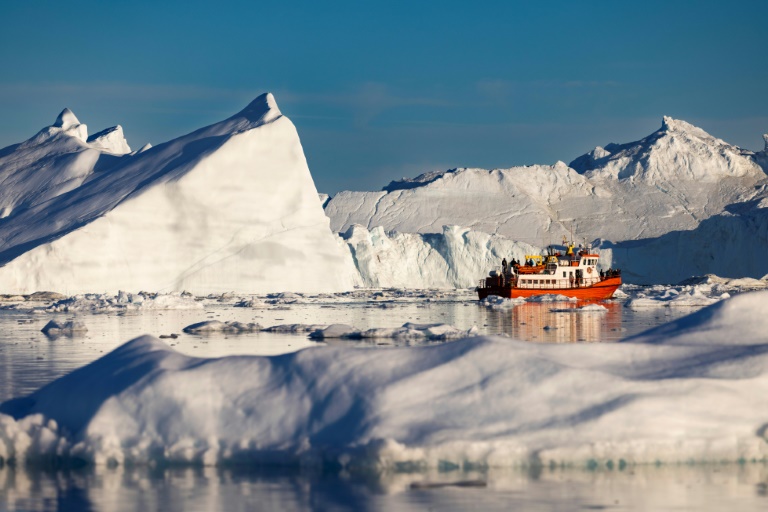
But mesmerising views of massive icebergs come into view after just a short drive.

Breaking off from the Ilulissat glacier in the neighbouring fjord, the majestic blocks of ice drift slowly by in Disko Bay, the occasional whale making an appearance.

The postcard views attracted 50,000 tourists in 2021, more than 10 times the town’s population.

More than half make only a short pit stop during an Arctic cruise.

Numbers are expected to swell with the opening of an international airport in the next two years, a welcome boost to the island’s revenues but also a challenge, given the delicate — and melting — ecosystem.

– ‘Icebergs getting smaller’ –

In the past 40 years, the Arctic has warmed nearly four times faster than the rest of the planet, according to a recent scientific study.

“We can see changes every day caused by climate change: the icebergs are getting smaller, the glacier is retreating,” said mayor Palle Jeremiassen.

Thawing permafrost is also threatening the stability of some buildings and infrastructure.

With the immaculate landscape so coveted by tourists changing,  officials are determined to protect it without turning away tourists.

“We want to control the arrival of tourist ships here,” said Jeremiassen, noting the risks posed by the highly-polluting vessels.

In order to protect the environment and community, Ilulissat should only welcome “one ship max per day, max one thousand tourists per ship,” he said.

Recently, three cruise ships arrived on the same day, spewing out 6,000 visitors.

Jeremiassen said the town’s infrastructure is not designed to accommodate such numbers, nor is it able to ensure that tourists respect protected areas, notably in the fjord.

Nearby Iceland, where the tourism industry has been flourishing for two decades, is an example of how not to do things, he insisted.

“We don’t want to be like Iceland. We don’t want mass tourism. We want to control tourism here. That’s the key we have to find.”

– Small fish –

Greenland has enjoyed self-rule since 2009 but hopes to gain full independence from Denmark one day.

To do so means it would have to get by without subsidies from Copenhagen, which currently make up a third of its budget. It has yet to find a way to stand alone financially, and for now, its main natural resource is the sea.

In Ilulissat, one in three locals live off fishing, which accounts for most of Greenland’s revenues.

But climate change is having a big impact.

“Back when I was young we had pack ice we could walk on,” said Lars Noasen, the captain of a tourist boat as he navigated deftly between iceberg debris in Disko Bay.

“Now the pack ice is not so solid anymore. You can’t use it for anything, you can’t dogsled on the ice and fish like in the old days.”

In the past two decades, Greenland’s massive ice cap has lost 4.7 trillion tonnes of ice, contributing to a sea level rise of 1.2 centimetres on its own, according to Danish Arctic researchers. 

The disappearing ice has affected fishermen.

“The ice conditions are changing. The main fjord used to be closed off by huge icebergs and sea ice and they (the fishermen) were not able to sail in before,” said Sascha Schiott, a researcher at the Greenland Institute of Natural Resources.

Now they can.

Boats are also able to head out fishing year-round now, which has increased fishermen’s hauls.

But the size of the fish they’re catching has decreased, largely due to overfishing, says Schiott.

Ejner Inusgtuk, a craggy-faced fisherman preparing his lines in the port, disagreed and said climate change is to blame.

“The climate is too warm.”

Chinese city dims lights in heatwave power crunch

A provincial capital in southwest China has dimmed outdoor advertisements, subway lighting and building signs to save energy, official announcements said, as the area battles a power crunch triggered by record-high temperatures.

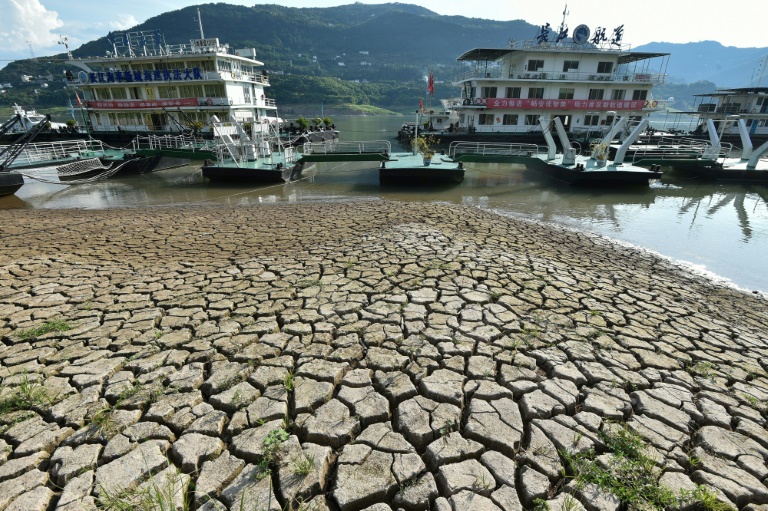
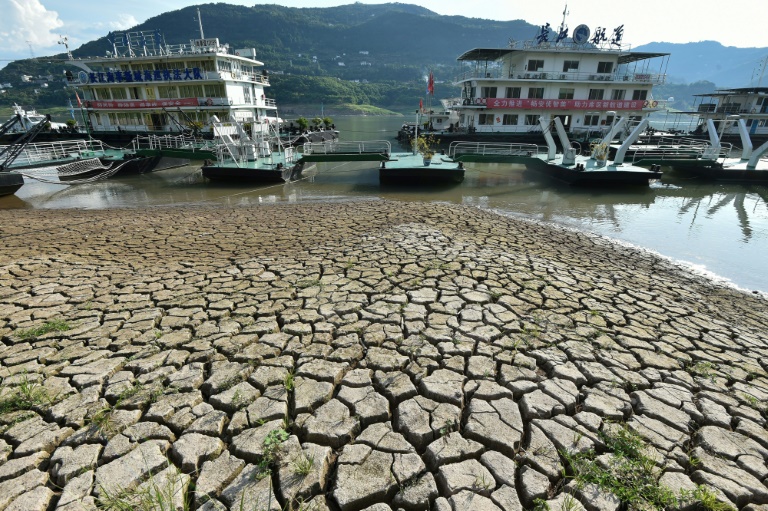
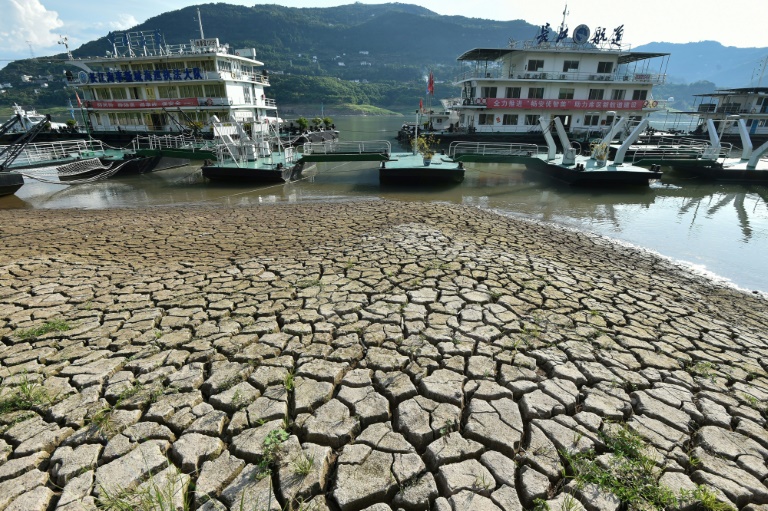
The mercury has soared beyond 40 degrees Celsius (104 Fahrenheit) in Sichuan province this week, fueling massive demand for air conditioning and drying up reservoirs in a region reliant on dams for most of its electricity.

Factories including a joint venture with Japanese car giant Toyota in provincial capital Chengdu have been forced to halt work, while millions in another city Dazhou grappled with rolling power cuts.

“Hot and muggy weather has caused the city’s electricity supply for production and daily life to be pushed to its limit,” Chengdu’s urban management authorities said in a notice on social media Thursday.

Faced with a “most severe situation”, the city — home to over 20 million people — ordered landscape illumination and outdoor advertising lights to be switched off in notices issued Tuesday, the statement said. 

Building name signs will also be darkened.

And Chengdu metro said in a video on China’s Twitter-like Weibo platform that it would also turn off advertisement lights and “optimise” the temperature in stations to save energy.

Photos circulating on Weibo showed dimmed lights on metro platforms, walkways and in malls, with commuters walking in partial darkness.

The searing heat is also drying up the critical Yangtze River, with water flow on its main trunk about 51 percent lower than the average over the last five years, state media outlet China News Service reported Thursday.

Sichuan’s power woes could also have ripple effects on the wider Chinese economy — the province is a key supplier of energy generated by hydropower, including to eastern industrial powerhouses like Jiangsu and Zhejiang.

China is battling extreme weather on several fronts, with 17 people killed in a flash flood in the northwest of the country on Thursday following torrential rains.

Meanwhile, weather authorities in the eastern Jiangsu province warned drivers of tire puncture risks on Friday as the surface temperature of some roads were poised to hit 68 degrees Celsius.

The China Meteorological Administration earlier said the country was going through its longest period of sustained high temperatures since records began in 1961.

Scientists say extreme weather across the world has become more frequent due to climate change and that urgent global cooperation is needed to slow an impending disaster.

The world’s two largest emitters are the United States and China. 

But earlier this month Beijing announced it was freezing its cooperation with Washington on global warming in protest at a visit by US House Speaker Nancy Pelosi to Taiwan.

Chinese city dims lights in heatwave power crunch

A provincial capital in southwest China has dimmed outdoor advertisements, subway lighting and building signs to save energy, official announcements said, as the area battles a power crunch triggered by record-high temperatures.

The mercury has soared beyond 40 degrees Celsius (104 Fahrenheit) in Sichuan province this week, fueling massive demand for air conditioning and drying up reservoirs in a region reliant on dams for most of its electricity.

Factories including a joint venture with Japanese car giant Toyota in provincial capital Chengdu have been forced to halt work, while millions in another city Dazhou grappled with rolling power cuts.

“Hot and muggy weather has caused the city’s electricity supply for production and daily life to be pushed to its limit,” Chengdu’s urban management authorities said in a notice on social media Thursday.

Faced with a “most severe situation”, the city — home to over 20 million people — ordered landscape illumination and outdoor advertising lights to be switched off in notices issued Tuesday, the statement said. 

Building name signs will also be darkened.

And Chengdu metro said in a video on China’s Twitter-like Weibo platform that it would also turn off advertisement lights and “optimise” the temperature in stations to save energy.

Photos circulating on Weibo showed dimmed lights on metro platforms, walkways and in malls, with commuters walking in partial darkness.

The searing heat is also drying up the critical Yangtze River, with water flow on its main trunk about 51 percent lower than the average over the last five years, state media outlet China News Service reported Thursday.

Sichuan’s power woes could also have ripple effects on the wider Chinese economy — the province is a key supplier of energy generated by hydropower, including to eastern industrial powerhouses like Jiangsu and Zhejiang.

China is battling extreme weather on several fronts, with 17 people killed in a flash flood in the northwest of the country on Thursday following torrential rains.

Meanwhile, weather authorities in the eastern Jiangsu province warned drivers of tire puncture risks on Friday as the surface temperature of some roads were poised to hit 68 degrees Celsius.

The China Meteorological Administration earlier said the country was going through its longest period of sustained high temperatures since records began in 1961.

Scientists say extreme weather across the world has become more frequent due to climate change and that urgent global cooperation is needed to slow an impending disaster.

The world’s two largest emitters are the United States and China. 

But earlier this month Beijing announced it was freezing its cooperation with Washington on global warming in protest at a visit by US House Speaker Nancy Pelosi to Taiwan.

Chinese city dims lights in heatwave power crunch

A provincial capital in southwest China has dimmed outdoor advertisements, subway lighting and building signs to save energy, official announcements said, as the area battles a power crunch triggered by record-high temperatures.

The mercury has soared beyond 40 degrees Celsius (104 Fahrenheit) in Sichuan province this week, fueling massive demand for air conditioning and drying up reservoirs in a region reliant on dams for most of its electricity.

Factories including a joint venture with Japanese car giant Toyota in provincial capital Chengdu have been forced to halt work, while millions in another city Dazhou grappled with rolling power cuts.

“Hot and muggy weather has caused the city’s electricity supply for production and daily life to be pushed to its limit,” Chengdu’s urban management authorities said in a notice on social media Thursday.

Faced with a “most severe situation”, the city — home to over 20 million people — ordered landscape illumination and outdoor advertising lights to be switched off in notices issued Tuesday, the statement said. 

Building name signs will also be darkened.

And Chengdu metro said in a video on China’s Twitter-like Weibo platform that it would also turn off advertisement lights and “optimise” the temperature in stations to save energy.

Photos circulating on Weibo showed dimmed lights on metro platforms, walkways and in malls, with commuters walking in partial darkness.

The searing heat is also drying up the critical Yangtze River, with water flow on its main trunk about 51 percent lower than the average over the last five years, state media outlet China News Service reported Thursday.

Sichuan’s power woes could also have ripple effects on the wider Chinese economy — the province is a key supplier of energy generated by hydropower, including to eastern industrial powerhouses like Jiangsu and Zhejiang.

China is battling extreme weather on several fronts, with 17 people killed in a flash flood in the northwest of the country on Thursday following torrential rains.

Meanwhile, weather authorities in the eastern Jiangsu province warned drivers of tire puncture risks on Friday as the surface temperature of some roads were poised to hit 68 degrees Celsius.

The China Meteorological Administration earlier said the country was going through its longest period of sustained high temperatures since records began in 1961.

Scientists say extreme weather across the world has become more frequent due to climate change and that urgent global cooperation is needed to slow an impending disaster.

The world’s two largest emitters are the United States and China. 

But earlier this month Beijing announced it was freezing its cooperation with Washington on global warming in protest at a visit by US House Speaker Nancy Pelosi to Taiwan.

North Korea rejects Seoul's aid offer as 'height of absurdity'

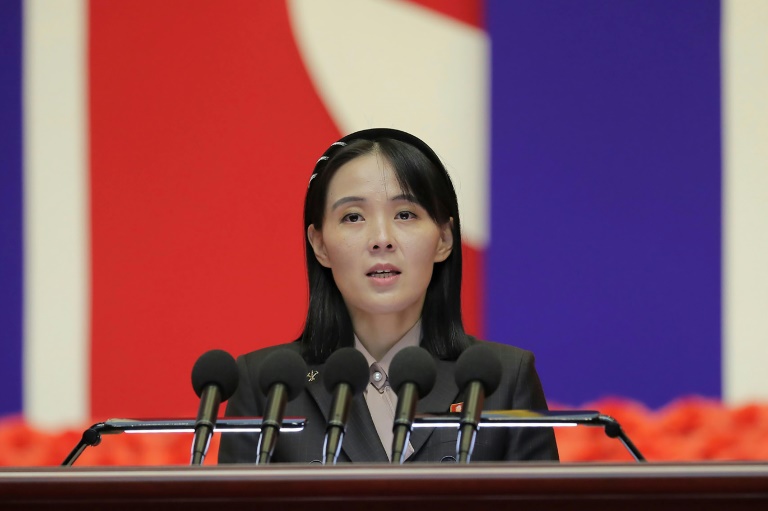
The powerful sister of North Korean leader Kim Jong Un on Friday rejected Seoul’s offer of economic assistance in return for denuclearisation steps, calling it the “height of absurdity” and a deal Pyongyang would never accept.

The statement follows South Korean President Yoon Suk-yeol this week putting forward an “audacious” aid plan that would include food, energy and infrastructure help in return for the North abandoning its nuclear weapons programme. 

Analysts previously said the chances of Pyongyang accepting such a deal — first floated during Yoon’s inaugural speech — were vanishingly slim, as the North, which invests an enormous chunk of its GDP into weapons programmes, has long made it clear it will not make that trade.

Kim Jong Un’s sister, Yo Jong, on Friday called Yoon’s offer the “height of absurdity”, claiming it was as realistic as creating “mulberry fields in the dark blue ocean”.

“To think that the plan to barter ‘economic cooperation’ for our honor, (our) nukes, is the great dream, hope and plan of Yoon, we came to realize that he is really simple and still childish,” she said in a statement carried by the official Korea Central News Agency.

She added that there would never be negotiations between the countries that used denuclearisation as a starting point.

“No one barters its destiny for corn cake,” she said. 

She also accused the South of recycling proposals the North had previously rejected, while comparing Yoon to a barking dog — saying it would have been better “for his image to shut his mouth”.

South Korea’s presidential office expressed “strong regret” over Yo Jong’s “rude” remarks, but added that the offer of economic aid remained in place. 

“North Korea’s attitude is in no way helpful to the peace and prosperity of the Korean peninsula, as well as its own future, and only promotes isolation from the international community,” it said in a statement. 

The personal nature of Yo Jong’s attack against Yoon showed that relations would likely be “severely difficult” over the hawkish new president’s five-year term, Yang Moo-jin, a professor at the University of North Korean Studies, told AFP.

“Yoon has said that North Korea’s denuclearisation is the very basis for sustainable peace on the Korean Peninsula,” Yang said.

“Today, by ridiculing Yoon, Kim Yo Jong basically told him once again that the North cannot disagree more.”

-‘Ready to mobilise’-

Pyongyang last week warned it would “wipe out” Seoul authorities over a recent Covid-19 outbreak, a threat that came less than a month after Kim Jong Un said his country was “ready to mobilise” its nuclear capability in any war with the United States and the South.

Yoon on Wednesday said his administration had no plans to pursue its own nuclear deterrent, even as Pyongyang test-fired two cruise missiles the same day.

Cheong Seong-chang, director of the Center for North Korean Studies at the Sejong Institute, said Yo Jong’s Friday statement “clearly reaffirms” Pyongyang will never give up its nukes.

Accordingly, the Yoon administration’s policies on North Korean denuclearisation will inevitably need a “fundamental revision”, he told AFP. 

“The weight of North Korean nuclear threats that South Korea has to live with has already exceeded the level it can bear,” he said. 

North Korea has conducted a record-breaking blitz of weapons tests this year, including firing an intercontinental ballistic missile at full range for the first time since 2017.

Washington and South Korean officials have repeatedly warned that the North is preparing to carry out what would be its seventh nuclear test.

Vitaliy Kim: south Ukraine leader with a sardonic side

Vitaliy Kim has a wicked sense of humour. Perhaps it’s necessary: he is governor of Ukraine’s southern region of Mykolaiv, where a fresh faceoff with Russian troops is rumoured to loom.

Overnight missiles hammer the provincial capital. Water lines have been cut and Kim’s own office was plucked from existence by a missile strike on the building in the first weeks of the war.

When the block was bombed in March and Kim was announcing bleak updates on social media, he quipped that he had only escaped counting among the 37 killed because he overslept.

His selfie videos — gloating in a seized Russian vehicle, or giggling with glee over jokes at Moscow’s expense — have made him a cult persona in the months since.

Through it all, there is an undeniable sense the round-faced 41 year-old is trying to make light of the grim crisis.

“There are different ways to manage a situation,” he told AFP this week with a hint of a grin. “This is my style, it doesn’t mean that it’s easy.”

Nevertheless, he insists: “I enjoy every job I’m doing.”

– Comic relief –

Kim’s region is a swathe of sunny southern Ukraine pressed up against the Black Sea coast, where the war with Russia is shifting as it approaches its seventh month.

Like many public officials he has aped the fashion of President Volodymyr Zelensky since the invasion began in late February, making public appearances sporting military drabs.

On Wednesday he spoke to journalists wearing camouflage trousers and a black T-shirt marked with the silhouette of the extraterrestrial “Predator” from the 1987 sci-fi/horror movie of the same name, incongruously captioned “department patrol police”.

Shadowed by the municipal building where his office once stood — and where the walls are still stained with bloody handprints — he explains the philosophy of comic leadership he developed when the war started.

“I made the decision to make our enemy look stupid and foolish,” he said. “Many of our people needed this, not to be afraid.” 

Those early days are now gone and people “now just like” his humorous style. They “mostly don’t need it” like they once did, he said.

His sense of humour seems to align with the broader “wink and nudge” comedic manner Ukraine has adopted to cope with months of violence and no end in sight.

When a Russian airfield in Crimea was the site of explosions last week, Ukrainian officials suspected of masterminding a daring raid reacted with coy glee, without officially confirming responsibility.

Kim also believes he introduced the use of the term “orcs” to jokingly refer to Russian soldiers.

The word — now used nationwide among servicemen — is lifted from fantasy novels and video games, alluding to goblin-esque evil creatures.

“They were truly like them because they were out of their mind,” he explained. “The propaganda in Russia for dozens of years changed their thinking.” 

“Even they didn’t understand what they’re doing.”

– Tactician in disguise –

But Kim — a child of teacher parents — is not a full-time jester.

When quizzed about the supposed Ukrainian counteroffensive being mustered in his region, he becomes stoney faced.

He only says that there is a “good situation” on the front line. Planning an offensive is “not so simple”. And Ukraine is engaged in “active defence”.

“Counter-offensive is a very wide expression,” he says. “It is going, that’s all.” 

Despite his effusive public persona, he is giving nothing away.

There is a sense that behind the man quick to quip there is another, making contingencies for any deadly serious new turn the unfolding war with Russia could take. 

He said that some people mistook his lighter side as a sign of weakness. 

“That’s not true, because I can smile and I can destroy something.”

Germany's Scholz faces grilling over tax fraud scandal

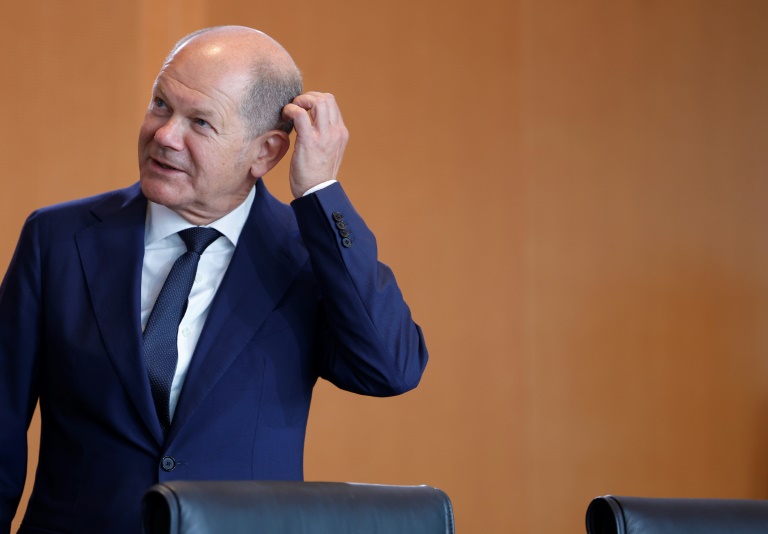
German Chancellor Olaf Scholz will answer to a committee on Friday as part of investigations into a financial scandal that cost the government billions, as the leader struggles to shed suspicions over his possible role in the huge tax fraud scam.

Scholz will testify for the second time to the parliamentary committee in Hamburg, which is probing whether local political figures helped a bank to avoid paying back falsely claimed tax rebates.

Scholz was the mayor of Hamburg from 2011 to 2018, when he became finance minister in the cabinet of the then Chancellor, Angela Merkel.

First exposed in 2017, the “cum-ex” scam involved numerous participants swiftly exchanging company shares amongst themselves around dividend day to claim multiple tax rebates on a single payout.

Dozens of people have been indicted over the scandal in Germany, including bankers, stock traders, lawyers and financial consultants.

The Hamburg committee is investigating why local finance authorities in 2016 dropped a bid to claw back 47 million euros ($48 million) in taxes from private bank M. M. Warburg over cum-ex trades.

The bank eventually had to pay back tens of millions of euros under pressure from Merkel’s federal government. 

According to German media reports, investigators have examined emails from the account used by Scholz during his time as the mayor of Hamburg in connection with the scandal.

– ‘No findings of political influence’ –

The grilling in Hamburg comes with Scholz already facing dismal popularity ratings after his first six months in office were tarnished by criticism over his perceived weak response to the war in Ukraine.

More recently, the chancellor has also struggled to reassure Germans over possible energy shortages this winter and the very real prospect of a recession in Europe’s biggest economy.

Scholz also this week faced a backlash over his failure to immediately condemn comments on the Holocaust made in Berlin by Palestinian president Mahmud Abbas.

Scholz’s spokesman Steffen Hebestreit on Wednesday assured journalists that the chancellor would answer all of the committee’s questions and had nothing to hide.

Asked about the scandal himself during a summer press conference last week, Scholz said he had “commented on these things very extensively and for many hours and will do so again”. 

“A huge number of hearings, a huge number of files have brought only one result: there are no findings that there was political influence,” he said.

But rumours are swirling that the decision to let Warburg off the hook was taken shortly after a conversation between Scholz and Christian Olearius, then head of the bank.

Scholz has denied exerting pressure on Hamburg’s tax authority over Warburg’s cum-ex activity, but new allegations in recent days allege he may yet be hiding something.

According to several German media reports, investigators have seized emails from Scholz’s former office manager Jeanette Schwamberger that could bring new evidence to light.

– Cash stash –

These emails are “potentially relevant to the evidence, as they suggest considerations around deleting data”, according to the reports.

The Frankfurter Allgemeine Zeitung said the emails clearly “incriminate” Scholz.

Other newly seized documents reportedly suggest that Scholz, contrary to what he has claimed so far, did raise the subject of reimbursement directly with Olearius.

These latest revelations suggest that Scholz and his people have “tried to provide only limited information on certain meetings or telephone conversations”, said Matthias Hauer, an opposition conservative MP.

Johannes Kahrs, a former MP with Scholz’s Social Democrats (SPD) party, is also under investigation as part of the Hamburg probe.

According to German media, investigators recently found around 200,000 euros in cash in a bank safe deposit box belonging to Kahrs, though it is unclear whether the find has anything to do with the cum-ex scandal.

Asked about the cash at the summer press conference, Scholz said: “I’m as curious as you are, and of course I’d like to know where it came from.”

Trump executive pleads guilty to tax fraud, will testify at upcoming trial

Allen Weisselberg, the long-time chief financial officer of the Trump Organization, pleaded guilty on Thursday to tax fraud and agreed to testify at an upcoming criminal trial of the former US president’s real estate company.

The 75-year-old Weisselberg, who served as CFO of the Trump Organization from 2005 to 2021, pleaded guilty to 15 counts of tax fraud, Manhattan District Attorney Alvin Bragg said in a statement.

Weisselberg admitted his involvement in a 15-year scheme with co-defendant the Trump Organization to defraud federal, New York State and New York City tax authorities, Bragg said.

Weisselberg is to serve five months in prison contingent on his testifying truthfully at the October criminal trial of the Trump Organization on tax fraud charges, Bragg said.

Weisselberg has steadfastly refused to deliver testimony against Donald Trump personally. The 76-year-old Trump served as president and owner of the Trump Organization until 2017, when he entered the White House.

But the former Trump Organization executive could face additional prison time if he fails to testify at the criminal trial of the real estate company.

Jury selection in the Trump Organization trial on tax fraud charges is scheduled to begin October 24, Bragg said. 

In the plea agreement, Weisselberg admitted evading payment of taxes due on $1.76 million in unreported income. He will be required to repay nearly $2 million in taxes, penalties and interest.

“Today Allen Weisselberg admitted in court that he used his position at the Trump Organization to bilk taxpayers and enrich himself,” Bragg said.

“Weisselberg had the Trump Organization provide him with a rent-free apartment, expensive cars, private school tuition for his grandchildren and new furniture -– all without paying required taxes,” he said.

“This plea agreement directly implicates the Trump Organization in a wide range of criminal activity and requires Weisselberg to provide invaluable testimony in the upcoming trial against the corporation,” he said. “We look forward to proving our case in court against the Trump Organization.”

– Legal battles –

Trump’s business practices are the subject of a separate probe by New York Attorney General Letitia James and the former president was questioned for more than four hours last week in connection with that investigation.

According to US press reports, Trump, who is weighing another White House run in 2024, invoked his legal right not to answer questions more than 400 times during his deposition with James.

James suspects the Trump Organization fraudulently overstated the value of real estate properties when applying for bank loans, while understating them with tax authorities to pay less in taxes.

The New York cases are among myriad legal battles facing the former president.

FBI agents searched his palatial Mar-a-Lago residence in Florida on August 8 and seized documents marked “Top Secret,” “Secret” and “Confidential.”

The search warrant for the raid, which was personally approved by Attorney General Merrick Garland, directed the FBI to seize documents and records “illegally possessed” in violation of three criminal statutes, including one falling under the Espionage Act, which makes it a crime to illegally obtain or retain national security information.

Trump vehemently denounced the FBI raid on his home as a “witch hunt” and claimed that all of the material confiscated during the search had been previously “declassified.”

Trump is also facing legal scrutiny for his efforts to overturn the results of the November 2020 election and the January 6, 2021 attack on the US Capitol by his supporters.

Lake Mead mob murder: Gun found near site of body in barrel

US detectives investigating a possible decades-old mob murder said Thursday they had found a gun near the spot on an evaporating Las Vegas lake bed where a body inside a barrel was discovered.

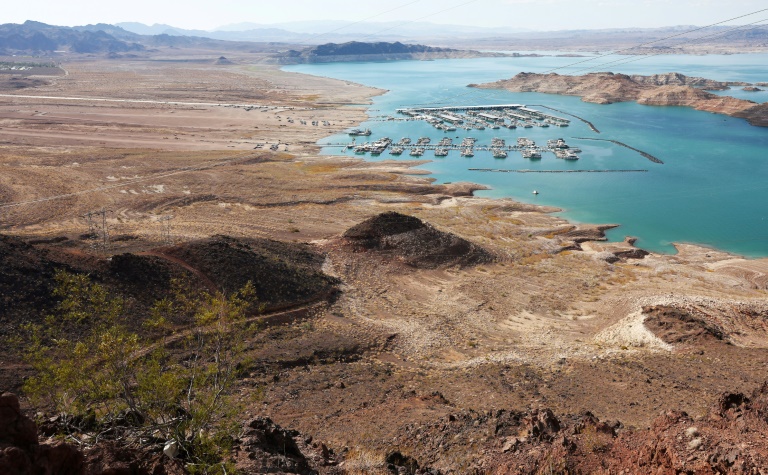
Numerous bodies have been revealed this year at rapidly receding Lake Mead, with Mafia-watchers speculating the body in the barrel was the handiwork of gangsters from the gambling haven’s crime-ridden past.

Police have revealed few details about the finds, but the victim discovered in May had been shot in the head and stuffed in a barrel before being thrown overboard — a trademark of the hitmen who stalked Las Vegas in the 1970s and 1980s.

“A firearm has been recovered in the Lake Mead National Recreation Area on August 17, 2022, in close proximity to where one of the human remains were found,” police in Las Vegas tweeted.

They added, however, that it was too early to determine whether it was connected to the current investigation.

A police spokesman confirmed the weapon, which was discovered by a journalist, had been located near the spot where the barrel was found.

Days after the body in the barrel surfaced, another corpse was reported. A third was discovered in July.

Two more sets of skeletal remains were found this month in the Swim Beach area.

A historic drought gripping much of the western United States is putting a strain on water sources, with reservoirs and lakes falling to record low levels.

Lake Mead once sat 1,200 feet (365 meters) above sea level. But after more than two decades of drought, it is rapidly shrinking.

On Thursday it was at only 1,042 feet — close to its lowest level since the reservoir was filled in the 1930s.

Scientists say human-caused climate change, fueled by the unchecked burning of hydrocarbons for energy, is exacerbating the natural drought cycle.

Close Bitnami banner
Bitnami