World

US inflation eases in July amid falling oil prices

US inflation eased slightly in July, according to official data Wednesday, potentially taking pressure off the Federal Reserve to hike interest rates sharply while bringing a much-needed boost to President Joe Biden just months before crucial midterm elections.

With energy costs dropping in recent weeks, the consumer price index dipped to an annual rate of 8.5 percent last month, the Labor Department reported, lower than markets were projecting.

Fueled by aggressive consumer spending of pandemic savings, global supply chain snarls, domestic worker shortages and Russia’s war on Ukraine, inflation soared 9.1 percent on-year in June, the highest in 40 years.

But the CPI was unchanged compared to June, a dramatic shift from the big increase in the prior month and defying expectations of a modest rise.

“Today we received news that our economy had zero percent inflation in the month of July. Zero percent,” Biden said at a White House event. 

“We are seeing signs that inflation may be beginning to moderate,” he said, although he acknowledged that the global challenges remain and the economy could face “additional headwinds.”

When volatile food and energy prices are excluded from the calculation, the so-called core CPI rate rose just 0.3 percent — the smallest in four months, according to the report.

Soaring prices have continued to climb in the United States, squeezing family budgets and, by extension, Biden’s popularity.

Biden’s opponents accuse the president of precipitating inflation with a gigantic $1.9 trillion coronavirus relief package, enacted in March last year shortly after assuming office.

And Republicans renewed their criticism of Biden’s economic policy, warning that Sunday’s passage in the Senate of his massive climate and health care bill titled the “Inflation Reduction Act,” would do the opposite of its stated purpose.

But the president said his economic policies are working.

In addition to cooling inflation “jobs are booming” and wages are rising “That’s what happens when you build an economy from the bottom up from the middle out,” he said

“Our work is far from over… (but) the economic plan is working.”

– Devil in the details –

Still, the devil is in the details. 

Economists caution against taking too much solace from a single good report, and they worry that the inflation slowdown linked to the drop in gasoline prices could be outweighed by rising rent and real estate prices.

The question now facing Washington is whether it will be possible to bring inflation down without plunging the world’s largest economy into recession, after two quarters of economic contraction in the first half of the year.

In a bid to tamp down inflation, the Fed has already hiked the interest rate four times to a range of 2.25 to 2.5 percent, including two consecutive 75-basis-point increases.

Fed officials have made it clear that a third jumbo rate increase remains on the table at next month’s policy meeting.

“One month’s data is too volatile to call a peak in inflation,” said Joseph Gagnon of the Peterson Institute for International Economics.

“If August data are the same, it takes 75 basis points off the table for September,” Gagnon, a former Fed economist, said on Twitter.

Wall Street soared in early trading, with the benchmark Dow gaining nearly 500 points.

But the robust jobs market, which pushed the July unemployment rate to the pre-pandemic level of 3.5 percent, has a downside. There are still nearly two jobs open for every available worker, and labor costs have risen sharply, which pushes wages up and fuels more inflation.

Rubeela Farooqi of High-Frequency Economics cautioned that despite the slower pace of increases last month, “prices remain uncomfortably high.”

“Coupled with strength in job growth and wages, the data support the case for another aggressive rate hike in September,” she said in an analysis.
Kenya waits impatiently for results of close-fought vote

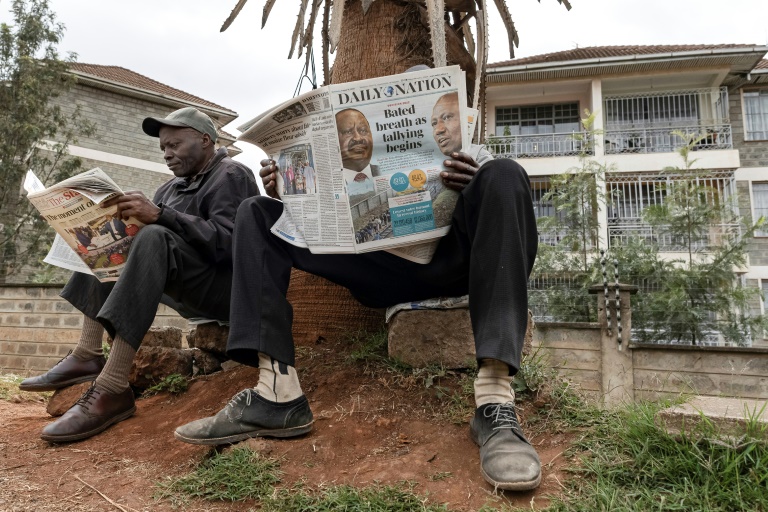
Kenyans on Wednesday were waiting for the results of the country’s presidential election after a largely peaceful poll, with preliminary results on television suggesting a tight race as low turnout pointed to growing frustration with the political elite.

Deputy President William Ruto and Raila Odinga, the veteran opposition leader now backed by the ruling party, have vowed to maintain calm following Tuesday’s poll, but the memory of past election-related violence remains fresh for many Kenyans.

With pressure building on the Independent Electoral and Boundaries Commission (IEBC), which has to declare the results by August 16, officials worked overnight to count votes under the watchful eye of observers.

The complicated process of verifying and tallying votes is expected to take days, and IEBC chairman Wafula Chebukati urged Kenyans to be patient, keen to avoid rigging allegations that have haunted previous polls.

Kenyans, some of whom lined up before dawn to cast their ballot, voted in six elections on Tuesday, choosing a new president as well as senators, governors, lawmakers, woman representatives and some 1,500 county officials.

But despite the early show of enthusiasm, turnout was markedly lower than in previous years, suggesting that for some Kenyans at least, patience with the political establishment was running out.

In Ruto’s Rift Valley stronghold of Eldoret, Anthony Kemboi, a 24-year-old graduate, told AFP voter disillusionment was to blame.

“People did not turn out… as compared to the past because there have been fake promises” over the years, he said.

According to the latest IEBC figures, turnout was just over 65 percent, with voting still under way in Wajir county, where a gunfight forced officials to postpone the poll until Wednesday.

That compares with a final turnout of 78 percent in the disputed August 2017 election.

In the lakeside city of Kisumu — Odinga’s bastion — retired civil servant Koga Edward said younger Kenyans had simply failed to show up.

“Most of our youth, they are only good at participating in political rallies, but they don’t participate in the actual voting process,” the 65-year-old told AFP.

– ‘No longer care’ –

“Personally, I did not even vote because I no longer care,” said Caroline Mwangi, a 31-year-old waitress in Kenya’s capital Nairobi.

Politicians “tell the same old stories and they do nothing for us,” she told AFP.

Others said they just wanted the election cycle to end so they could focus on putting food on the table in a country hit by skyrocketing inflation and an unemployment crisis. 

“The election was done yesterday, I am not interested in wasting more time on it,” Celestine Muoki, a 28-year-old IT specialist, told AFP.

“Let us move on.”

Gabrielle Lynch, professor of comparative politics at the University of Warwick in England, said the shrinking turnout was a consequence of politicians’ tendency to “promise a lot and then under-deliver”.

“Many Kenyans are… becoming unfortunately increasingly sceptical about the political class,” she told AFP.

Few Kenyans expect either Ruto or Odinga to accept the result without a challenge in a country where no presidential election outcome has gone uncontested since 2002.

Once the heir-apparent, Ruto, 55, found himself banished to the sidelines after President Uhuru Kenyatta — who cannot run again — joined hands with his former foe Odinga, 77, in a move that stunned the country.

Ruto has since cast himself as the champion of “hustlers” trying to survive in a country ruled by “dynasties” — the Kenyatta and Odinga families that have dominated Kenyan politics since independence from Britain in 1963.

– ‘Life is very hard’ –

With a third of Kenya’s population living in poverty, economic pressures weighed on voters even before the war in Ukraine sent the prices of essential goods soaring.

Some observers surmised that the economy could even surpass tribal affiliations as a key motivator for Kenya’s 22 million registered voters.

With two other candidates also in the race, Kenya could stage a run-off for the first time in its history, if neither Ruto nor Odinga wins more than 50 percent of the vote.

Kenya’s international partners are closely watching the election as a test of its stability in a region blighted by conflict.

Security is tight nationwide, with a view to preventing a repeat of the post-election violence that roiled Kenya after the 2007 and 2017 polls, and schools have been ordered to remain closed until Monday.

In deserted downtown Nairobi, Japeth Kigongi, a 25-year-old shoe shiner, told AFP he couldn’t even afford to travel to his home constituency to vote.

“Life has become very hard,” he said.

“Whoever will be chosen, I will back him so long as there’s peace.”

Sri Lanka protest camp clears out after crackdown

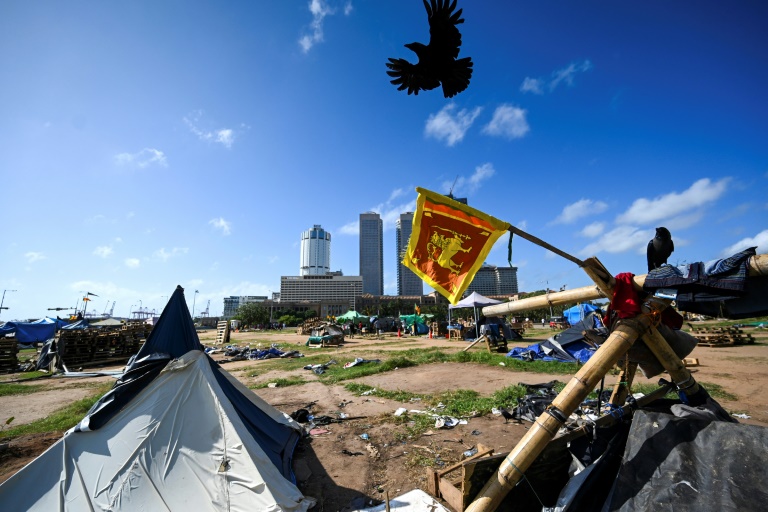
Protesters in Sri Lanka who brought down the previous government announced they were dismantling their main demonstration site near the president’s office on Wednesday in the wake of a crackdown against their leaders.

The group led by university students and leftist parties said they were clearing out their tents along the Galle Face seafront promenade in the capital.

A spokesman said they had also withdrawn four court challenges against a police order for them to vacate the area that claimed their tents were a hindrance to nearby hotels.

Activists were seen taking down their tents and removing other structures they had put up supporting their struggle against the administration.

The demonstrations began on April 9 as a protest against shortages of essentials such as fuel, food and medicines in Sri Lanka’s worst ever economic crisis.

They peaked when tens of thousands poured into Colombo and overran Gotabaya Rajapaksa’s presidential palace on July 9, forcing him to flee and eventually resign.

Days after Rajapaksa fled to Singapore and announced his resignation, troops evicted protesters occupying the palace as well as the home and office of the prime minister.

Security forces were accused of using excessive force to evict the demonstrators, with more than 80 people suffering injuries that required hospitalisation.

Since then, dozens of activists have been arrested on charges of damaging state property.

A top trade union leader, Joseph Stalin, was released on bail Monday following international criticism over his arrest last week on a charge of causing $90 worth of damage.

Rajapaksa’s successor, Ranil Wickremesinghe, has drawn a distinction between “protesters” and “rioters” and vowed tough action against “any troublemakers”.

Soon after protesters overran the palace, there were social media posts of them frolicking in the pool and bouncing on four-poster beds inside the sprawling compound.

But protesters also turned over to authorities around 17.5 million rupees ($46,000) in cash found in one of the rooms.

US inflation eases slightly to 8.5% in July as fuel prices dip

US inflation eased slightly in July, official data showed Wednesday, taking pressure off the Federal Reserve to hike interest rates sharply while bringing a much-needed boost to President Joe Biden just months before crucial midterm elections.

With energy costs dropping in recent weeks, the CPI dipped to an annual rate of 8.5 percent last month, the Labor Department reported.

Fueled by aggressive consumer spending of pandemic savings, global supply chain snarls, domestic worker shortages and Russia’s war on Ukraine, the consumer price index had soared 9.1 percent on-year in June, the highest in 40 years.

But July’s consumer price index was unchanged compared to the month before, well below a forecasted increase, while CPI excluding volatile food and energy goods rose just 0.3 percent — the smallest in four months — the figures showed.

Consumer prices have continued to climb in the United States, squeezing family budgets and, by extension, Biden’s popularity.

His opponents accuse the president of precipitating inflation with his gigantic $1.9 trillion coronavirus relief package, which he enacted in March last year shortly after assuming office.

And Republicans renewed their criticism of Biden’s economic policy, warning that Sunday’s passage in the Senate of his massive climate and healthcare bill titled the “Inflation Reduction Act,” would do the opposite of its stated purpose.

But the devil is in the details. 

Experts worry that the inflation slowdown linked to the drop in gasoline prices could be outweighed by rising rent and real estate prices.

“The larger issue is what happens to home ownership costs & rents,” Diane Swonk, chief economist for KPMG, wrote on Twitter.

The question now facing Washington is whether it will be possible to bring inflation down sustainably, without plunging the world’s largest economy into recession, after two quarters of economic contraction.

In a bid to tamp down inflation, the Fed has already hiked the interest rate four times to a range of 2.25 to 2.5 percent, including 75-basis-point increases at each of the past two meetings.

Fears that Wednesday’s reading would come in above forecasts, pushing the central bank to unveil another jumbo hike, weighed on equities in Asia and Europe, with most markets in the regions falling into the red. 

On the bright side, the US labor market remains dynamic and in July the unemployment rate fell to the pre-pandemic level of 3.5 percent.

But there are still nearly two jobs open for every available worker, which pushes wages up and contributes to inflation.

Trump to be deposed in New York civil probe

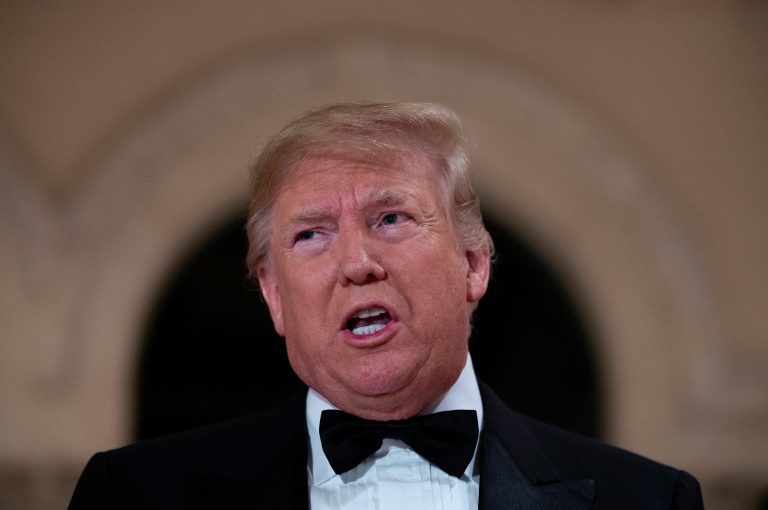
Donald Trump looks set to be deposed Wednesday in New York as part of the state attorney general’s civil probe into alleged fraud at his family business, the ex-president said on his social media network.

“In New York City tonight,” Trump posted on his Truth Social just after midnight. 

“Seeing racist N.Y.S. Attorney General tomorrow, for a continuation of the greatest Witch Hunt in U.S. history!” he added. “My great company, and myself, are being attacked from all sides. Banana Republic!”

New York Attorney General Letitia James suspects the Trump Organization fraudulently overstated the value of real estate properties when applying for bank loans, while understating them with the tax authorities in order to pay less in taxes.

Trump and his eldest children, Donald Jr and Ivanka, had been due to start testifying under oath in July but the depositions were postponed due to the death of the former president’s first wife.

The Trumps have denied any wrongdoing, and the former Republican leader has charged that the probe is politically motivated.

If James, an African-American Democrat, finds any evidence of financial misconduct, she can sue the Trump Organization for damages but can not file criminal charges, as it is a civil investigation.

James’s probe is one of several legal battles in which Trump is embroiled, threatening to complicate any bid for another run for the White House in 2024.

The deposition comes on the heels of a Federal Bureau of Investigation raid on Trump’s Florida residence in an escalation of legal probes into the 45th president that has set off a political firestorm.

The FBI declined to provide a reason for the raid, but US media outlets said agents were conducting a court-authorized search related to the potential mishandling of classified documents that had been sent to Mar-a-Lago after Trump left the White House in January 2021.

Fascism is history, Italy's far-right leader says

Fascism is history, Italy’s far-right leader Giorgia Meloni declared Wednesday in a video message aimed at international critics alarmed by her predicted victory in September 25 elections.

The 45-year-old, whose Brothers of Italy party is topping opinion polls, recorded a monologue in English, Spanish and French that rails at “the left” and defends her fight for “stability, freedom and prosperity for Italy”.

“I have been reading that the victory of Fratelli d’Italia in the September elections would mean a disaster, leading to an authoritarian turn, Italy’s departure from the euro and other nonsense of this sort. None of this is true,” she said in the video sent to international journalists.

She also condemned as “absurd” the notion she would put at risk far-reaching structural reforms agreed with the European Union in return for billions of euros in post-pandemic recovery funds.

Brothers of Italy, which Meloni founded in 2012, is a political descendant of the Italian Social Movement (MSI), formed by supporters of fascist dictator Benito Mussolini after World War II.

But she insisted in her video: “The Italian right has handed fascism over to history for decades now, unambiguously condemning the suppression of democracy and the ignominious anti-Jewish laws.”

Brothers of Italy was the only main party not to join the national unity government formed by Prime Minister Mario Draghi in February 2021 — and has since seen its poll ratings soar.

Since the coalition collapsed and Draghi resigned last month, it has remained in pole position with around 23 percent of support.

Meloni has agreed an alliance to form a government with Silvio Berlusconi’s Forza Italia and Matteo Salvini’s anti-immigration League, but reiterated this week she plans to be prime minister if her party comes out on top.

Her rise has prompted a slew of negative headlines at home and abroad, to which her team is starting to respond, including with an interview to Fox News in English last month.

Meloni emphasises her Christian and family values, backs more defence spending, lower taxes and an end to mass immigration.

In her video, she says the “Italian conservatives” she leads are “a bastion of freedom and defence of Western values”.

While backing the EU’s tough response to Russia’s invasion of Ukraine, she is highly critical of the bloc and has ties to Spain’s Vox and Poland’s Law and Justice parties.

In her video, she emphasised the “shared values” with Britain’s Conservatives, the US Republicans and Israel’s Likud.

Chinese court rejects appeal in landmark #MeToo case

A Chinese court rejected an appeal in a landmark sexual harassment case on Wednesday, dealing a blow to the country’s fledgling #MeToo movement.

Zhou Xiaoxuan stepped forward in 2018 to accuse popular state TV host Zhu Jun of forcibly kissing and groping her during her 2014 internship at the broadcaster.

Zhou’s case inspired many others to share their experiences of sexual assault publicly and sparked a social media storm.

A Beijing court rejected her appeal on Wednesday, citing insufficient evidence.

Zhou’s case was rejected last year on similar grounds, prompting her to appeal.

But the court said it had “rejected all the appeal requests by Zhou and will uphold the previous judgment”.

Police cordoned off long stretches of pavement outside the Beijing No. 1 Intermediate People’s Court ahead of her arrival this morning, with officers logging the details of passers-by.

“I still feel a little scared and dejected,” she told AFP ahead of her appeal this morning. 

“The process of the first trial was a deep secondary injury.”

Zhou, 29, told AFP before returning to court that her legal team would focus on getting access to more evidence, such as police transcripts of interviews with her parents after she reported the incident — which were not included in the earlier trial — and surveillance footage.

Zhou said Zhu was absent from earlier proceedings, and that while he had sued her for defamation, she was not aware of further developments in that case.

A small group of supporters came to wish Zhou luck on Wednesday, holding up signs that said “#MeToo” and balloons spelling out “All the best” in Chinese.

“Four years have passed, and the most important thing is that we have raised this question: When a woman encounters sexual harassment in a closed space, is her pain worth paying attention to?” Zhou said to supporters.

“There may be no answer today, but the most important thing is that we put this question here.”

– ‘Too difficult’ –

Zhou, also known by the pseudonym Xianzi, originally sued for a public apology from Zhu and 50,000 yuan ($7,400) in damages.

Her first hearing in December 2020 drew a large crowd and a significant police presence in Beijing.

Reporters from foreign media outlets including AFP were dragged away by police while filming the scene.

“The process for my case has truly been too difficult,” Zhou told AFP.

“I worry that other victims fear standing up for their rights after seeing what I’ve experienced.”

But she added that with her case, “perhaps the next victim that walks into court can receive more trust”.

Her case against Zhu was originally filed under the “personality rights” law — covering rights relating to an individual’s health and body.

But her lawyers later asked for it to be considered under a new sexual harassment law that was passed in 2020.

Despite that law, many women in China are still reluctant to come forward with harassment charges, and it is rare for cases to make it to court in a legal system that places a heavy burden on the claimant.

The country’s #MeToo movement has stumbled since 2018, when a wave of women published allegations of sexual harassment against university professors.

Threatened at the time by the prospect of an uncontrolled mass movement, internet censors quickly began blocking social media hashtags and keywords.

Ailing beluga put down in last-ditch French rescue bid

An ailing beluga whale that strayed into France’s Seine river was put down by vets Wednesday during a last-ditch rescue attempt to keep the animal alive, local officials said.

The fate of the whale captured the hearts of people across the world since it was first spotted in the highly unusual habitat of the river that flows through Paris, far from its usual Arctic waters.

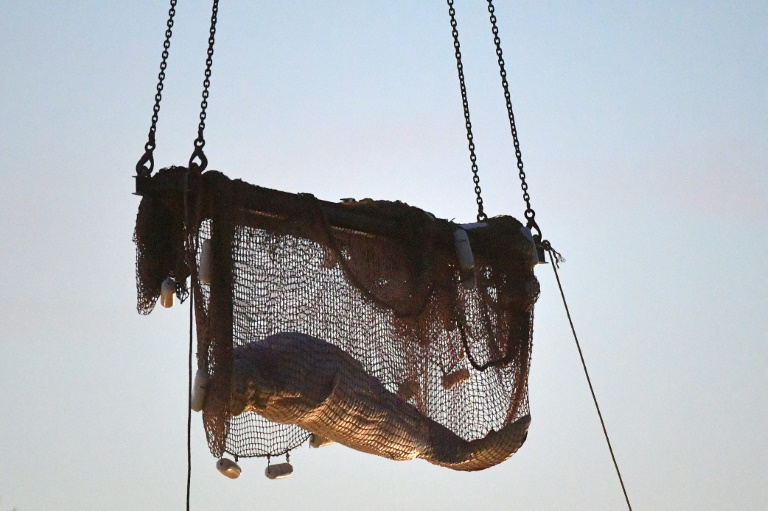
Rescuers had worked overnight to lift the male out of the Seine by crane for transfer to a saltwater pen, in a delicate, final effort to save the life of the ailing mammal, which was no longer eating.

It was then driven at a painstakingly slow speed north to the Normandy port of Ouistreham, where vets hoped to release the animal into a habourside pen and then possibly into the wild.

But the experts unanimously decided after examining the beluga on arrival in Ouistreham that there was no other option than to put the male down, the local authority of the Calvados region said.

“Despite the technical and logistical efforts, the condition of the cetacean unfortunately deteriorated during the trip,” it said. 

“Examinations showed that the beluga was in a state of great weakness and its respiratory activity failing. The decision was therefore taken collectively, with the veterinarians, to euthanize it,” it added.

– ‘Tragic outcome’ –

After nearly six hours of work by dozens of divers and rescuers, the 800-kilogramme (1,800-pound) cetacean had been lifted from the river by a net and crane at around 4:00 am (0200 GMT) and placed on a barge under the immediate care of a dozen veterinarians.

The 24 divers involved in the operation and the rescuers handling the ropes had to try several times to lure the animal into the nets to be lifted out of the water.

The beluga was then given a health check and driven to Ouistreham.

“During the journey the vets noted a worsening of his health and in particular the breathing,” said Florence Ollivet-Courtois, a vet for the local emergency services, in a video posted on social media.

“The animal was not getting enough air and suffering visibly. We therefore decided that it made no sense to set it free and proceeded to euthanasia.”

“The transfer was risky, but essential to give an otherwise doomed animal a chance,” the Sea Shepherd NGO, which has been assisting in the rescue, said on Twitter.

“Following the deterioration of his condition, the vets took the decision to euthanize him. We are devastated by this tragic outcome that we knew was very likely,” it said.

The four-metre (13-foot) whale was discovered more than a week ago heading towards Paris and was stranded about 130 kilometres (80 miles) inland from the English Channel at Saint-Pierre-la-Garenne in Normandy.

Since Friday, the animal’s movement inland had been blocked by a lock some 70 kilometres northwest of Paris, and its health deteriorated after it refused to eat.

– Killer whale also died –

This is the second drama involving a big marine mammal in an unexpected area to grip France in the last months.

A sick killer whale — a member of the dolphin family also known as an orca — was spotted in the Seine in May but died after attempts failed to guide the animal back to the sea.

Interest in the beluga’s fate has spread far beyond France, generating a large influx of financial donations and other aid from conservation groups as well as individuals, officials said.

While belugas migrate south in the autumn to feed as ice forms in their native Arctic waters, they rarely venture so far.

According to France’s Pelagis Observatory, which specialises in sea mammals, the nearest beluga population is off the Svalbard archipelago, north of Norway, 3,000 kilometres from the Seine.

The trapped whale is only the second beluga ever sighted in France. The first was pulled out of the Loire estuary in a fisherman’s net in 1948.

Ailing beluga put down in last-ditch French rescue bid

An ailing beluga whale that strayed into France’s Seine river was put down by vets Wednesday during a last-ditch rescue attempt to keep the animal alive, local officials said.

The fate of the whale captured the hearts of people across the world since it was first spotted in the highly unusual habitat of the river that flows through Paris, far from its usual Arctic waters.

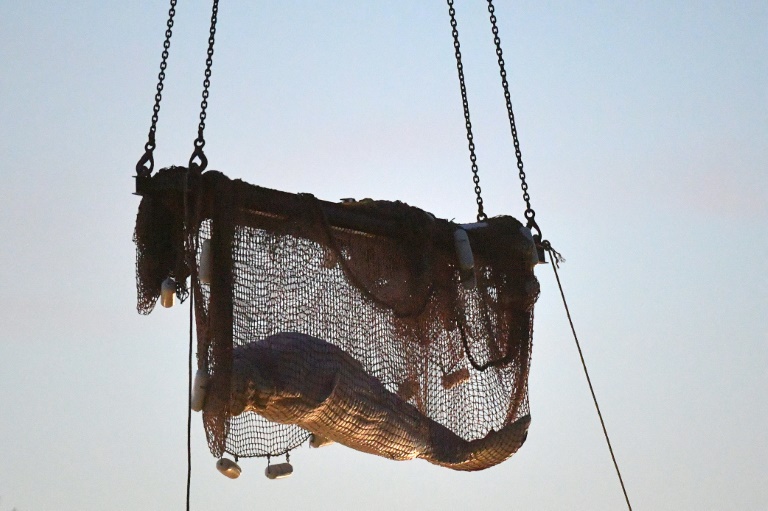
Rescuers had worked overnight to lift the male out of the Seine by crane for transfer to a saltwater pen, in a delicate, final effort to save the life of the ailing mammal, which was no longer eating.

It was then driven at a painstakingly slow speed north to the Normandy port of Ouistreham, where vets hoped to release the animal into a habourside pen and then possibly into the wild.

But the experts unanimously decided after examining the beluga on arrival in Ouistreham that there was no other option than to put the male down, the local authority of the Calvados region said.

“Despite the technical and logistical efforts, the condition of the cetacean unfortunately deteriorated during the trip,” it said. 

“Examinations showed that the beluga was in a state of great weakness and its respiratory activity failing. The decision was therefore taken collectively, with the veterinarians, to euthanize it,” it added.

– ‘Tragic outcome’ –

After nearly six hours of work by dozens of divers and rescuers, the 800-kilogramme (1,800-pound) cetacean had been lifted from the river by a net and crane at around 4:00 am (0200 GMT) and placed on a barge under the immediate care of a dozen veterinarians.

The 24 divers involved in the operation and the rescuers handling the ropes had to try several times to lure the animal into the nets to be lifted out of the water.

The beluga was then given a health check and driven to Ouistreham.

“During the journey the vets noted a worsening of his health and in particular the breathing,” said Florence Ollivet-Courtois, a vet for the local emergency services, in a video posted on social media.

“The animal was not getting enough air and suffering visibly. We therefore decided that it made no sense to set it free and proceeded to euthanasia.”

“The transfer was risky, but essential to give an otherwise doomed animal a chance,” the Sea Shepherd NGO, which has been assisting in the rescue, said on Twitter.

“Following the deterioration of his condition, the vets took the decision to euthanize him. We are devastated by this tragic outcome that we knew was very likely,” it said.

The four-metre (13-foot) whale was discovered more than a week ago heading towards Paris and was stranded about 130 kilometres (80 miles) inland from the English Channel at Saint-Pierre-la-Garenne in Normandy.

Since Friday, the animal’s movement inland had been blocked by a lock some 70 kilometres northwest of Paris, and its health deteriorated after it refused to eat.

– Killer whale also died –

This is the second drama involving a big marine mammal in an unexpected area to grip France in the last months.

A sick killer whale — a member of the dolphin family also known as an orca — was spotted in the Seine in May but died after attempts failed to guide the animal back to the sea.

Interest in the beluga’s fate has spread far beyond France, generating a large influx of financial donations and other aid from conservation groups as well as individuals, officials said.

While belugas migrate south in the autumn to feed as ice forms in their native Arctic waters, they rarely venture so far.

According to France’s Pelagis Observatory, which specialises in sea mammals, the nearest beluga population is off the Svalbard archipelago, north of Norway, 3,000 kilometres from the Seine.

The trapped whale is only the second beluga ever sighted in France. The first was pulled out of the Loire estuary in a fisherman’s net in 1948.

Qatar World Cup start brought forward to November 20: sources

The World Cup’s start will be brought forward by a day to allow hosts Qatar to play the opening game, sources told AFP on Wednesday, just over three months before the competition gets underway.

Qatar will now play Ecuador on November 20, 24 hours earlier than planned, in a move that FIFA’s ruling council was expected to confirm soon, according to sources with knowledge of the matter.

The change will see the tournament, which was switched to November-December to avoid the Gulf country’s searing summer heat, keep to its tradition of the hosts playing the opening match.

Senegal and the Netherlands had been scheduled to play the first game on November 21, followed by England against Iran and then the official inauguration match, Qatar’s World Cup debut, that evening.

“There were discussions and agreement between the two respective teams and there was a request from CONMEBOL — the South American confederation,” one World Cup source told AFP, speaking on condition of anonymity as no official decision has been announced.

“We wanted to follow the tradition that either the reigning champions or the host country be involved in the opening match,” the source added.

FIFA and the Qatari organising committee declined to comment on the change to the mega event that ends on December 18.

But another tournament source said action would be taken to help fans with tickets for the November 21 game.

“Any disruption will be dealt with so the impact is minimal,” the source told AFP.

Under the change, Netherlands v Senegal in Group A would be moved from 1:00pm (1000 GMT) on November 21 to a 7:00pm start. “It is a better slot for both teams for television and other areas,” said the World Cup source.

England’s Group B match against Iran is not changed.

– 100-day countdown –

Companies with major deals linked to the World Cup expressed confidence that the unusual schedule change could be handled smoothly. 

“It is something we will deal with,” said Jaime Byrom, chairman of Match Hospitality, which has a deal with FIFA to organise hospitality packages for World Cup matches and has locked in 450,000 tickets for the tournament.

“It is really not — compared to the other challenges that we could have faced or have faced in the past — a particularly large problem,” Byrom told AFP.

“We have to focus on those customers who are most affected and I guess in this case we will be looking at our Ecuadorian customers who are travelling from overseas, and making sure that they are on time for the match.”

The opening match is scheduled to be held at the 60,000-capacity Al Bayt stadium, one of seven new venues purpose-built for the tournament since Qatar was controversially awarded the World Cup in 2010.

The wealthy Gulf state is preparing a spectacular opening ceremony in the stadium, whose structure was inspired by traditional Arab tents.

Moving forward the opening match will also mean changing the 100-day countdown that had been scheduled to start on Saturday, with special events across the tiny nation of 2.8 million people.

After a row over the bidding process, Qatar has faced criticism over labour rights and its treatment of the LGBTQ community. But FIFA president Gianni Infantino has said the tiny, gas-rich state will host the “best ever” World Cup.

Close Bitnami banner
Bitnami