World

China warns it will not tolerate Taiwan 'separatists'

China on Wednesday vowed zero tolerance for “separatist activities” in Taiwan and reaffirmed that it would take the self-ruled island by force if necessary.

The warning from Beijing, which considers Taiwan its territory, came after days of unprecedented Chinese military drills around the island sparked by US House Speaker Nancy Pelosi’s trip.

Pelosi last week became the highest-ranking US official to visit Taiwan in decades despite stark threats from China, which tries to keep Taipei isolated on the world stage.

China’s Taiwan Affairs Office on Wednesday issued a white paper laying out how it intends to claim the island through a range of economic incentives and military pressure.

“We are ready to create vast space for peaceful reunification, but we will leave no room for separatist activities in any form,” said the paper.

China will “not renounce the use of force, and we reserve the option of taking all necessary measures”.

It added, however: “We will only be forced to take drastic measures to respond to the provocation of separatist elements or external forces should they ever cross our red lines.”

China last issued a white paper on Taiwan in 2000.

Taiwan’s Mainland Affairs Council, the island’s top policymaking body on China, rejected the paper and said the document “is full of… lies”.

“Taiwan maintains that ‘neither side belongs to the other’, and firmly refuses ‘one country, two systems’ — this is the current status of the Taiwan Strait and the reality,” it said in a statement.

“One country, two systems” refers to the model under which Hong Kong and Macau were promised a degree of autonomy under Chinese rule. It has been proposed by Beijing as a solution for Taiwan.

The release of the white paper came on the same day that a top Taiwan opposition politician flew to China for meetings with Taiwanese businesspeople, prompting condemnation from Taipei which had called on him to cancel the trip.

Andrew Hsia, deputy chairman of the Beijing-friendly Kuomintang party, travelled to China with a delegation in an unofficial capacity and was not scheduled to visit the capital. 

He will quarantine for 10 days and return to Taiwan on August 27, the party said in a statement.

But President Tsai Ing-wen criticised him for travelling across the Taiwan Strait after days of Chinese military drills around the island.

“At this moment, the Kuomintang still insisted on going to China, disappointing our people. The Kuomintang’s actions are also sending the wrong message to the international community,” Tsai told a meeting of her ruling party on Wednesday.

Since the late 1990s, the island has transformed from an autocracy into a vibrant democracy, and a distinct Taiwanese identity has emerged.

Relations between the two sides have significantly worsened since Tsai became president in 2016.

Tsai and her Democratic Progressive Party do not consider Taiwan to be part of China.

Their platform falls under China’s broad definition of Taiwanese separatism, which includes those who advocate for the island to have an identity separate from the mainland.

– Invasion fears –

The Chinese white paper promised Taiwan economic prosperity as well as “greater security and dignity” after “reunification”.

But that offer comes in the shadow of the biggest military exercises China has ever conducted around the island, including training for a blockade.

The drills have raised fears that China’s Communist leadership could be preparing for an invasion.

The exercises were initially expected to conclude on Sunday, but have continued this week.

China’s People’s Liberation Army on Wednesday morning released details of exercises it conducted a day earlier, saying the drills were focused on establishing air dominance.

The military later said it had “successfully completed various tasks” in the Taiwan Strait.

It said it would “continue to carry out military training and prepare for war”, without specifying whether more drills had been conducted on Wednesday or if there would be further exercises.

But Taiwan’s defence ministry said it detected 36 Chinese warplanes and 10 ships operating around the strait on Wednesday, conducting joint air-sea operations.

Seventeen planes crossed the median line — an unofficial demarcation between China and Taiwan that Beijing does not recognise.

The ministry added that the Taiwanese military “will adjust how we deploy our forces… without letting our guard down”.

Taiwan has accused China of using the Pelosi visit as an excuse to rehearse for an invasion.

It has conducted its own military drills to prepare for an attack on the island, and on Wednesday released footage of its air, land and sea forces responding to the Chinese exercises.

The Taiwanese drills prompted another Chinese warning on Tuesday.

Any attempt to “resist reunification through arms”, said foreign ministry spokesman Wang Wenbin, “will end in failure like a mantis trying to stop a chariot”.

European stocks steady, dollar down before US inflation data

European stock markets and the dollar fell Wednesday ahead of a crucial US inflation report that could help set the the pace of future interest rate hikes by the US Federal Reserve. 

Analysts warn that if the reading exceeds forecasts, it could increase the possibility of further monetary policy tightening by the Fed, reinforcing expectations for a possible recession. 

The US central bank has said its decision on the timing and magnitude of the rate hikes will depend on data, as it attempts to tread a fine line between bringing down inflation from four-decade highs and not choking off recovery. 

Recent indicators showing a slowdown in activity had fuelled hopes that the Fed would be less hawkish. 

But a bigger-than-predicted jump in US jobs last month revived talk of a third straight three-quarter-point hike in September.

The Fed “will need to make sure inflation moves back towards target sustainably before contemplating pausing its tightening cycle”, said Carol Kong at Commonwealth Bank of Australia.

“A strong inflation outcome today will likely reinforce the (Fed) is still some way away from that point yet, and see markets re-adjust higher their expectations for US interest rates.”

The data on Wednesday come at a sensitive time for world markets, which have been buffetted by the war in Ukraine, supply chain snarls and rising China-US tensions over Taiwan.

While the latest earnings season has been less painful than feared, there are increasing signs that the economic slowdown is beginning to impact companies, with some major firms — including Apple and Amazon — providing downbeat outlooks.

Chip-maker Micron became the latest, saying revenue would likely come in at the low end of its forecasts in the fourth quarter owing to weak demand.

A day before, rival Nvidia unveiled disappointing results.

Elsewhere, oil prices remain stuck around six-month lows, even after news that supplies from Russia to three European countries through Ukraine had been halted as sanctions prohibited the processing of the transit payment.

Crude oil prices have essentially wiped out all the gains seen since Russia’s invasion of its neighbour in February as expectations of a recession hit demand forecasts.

But Edward Moya, analyst at Oanda trading group, said the market would not likely weaken further.

“Whatever crude demand destruction that occurs from a weakening global economy won’t be able to drag down oil prices much lower given how low the supply outlook remains,” he said. 

– Key figures at around 1100 GMT –

London – FTSE 100: UP 0.1 percent at 7,491.60 points

Frankfurt – DAX: UP 0.1 percent at 13,553.42

Paris – CAC 40: DOWN 0.1 percent at 6,484.03

EURO STOXX 50: DOWN 0.1 percent at 3,712.82

Tokyo – Nikkei 225: DOWN 0.7 percent at 27,819.33 (close)

Hong Kong – Hang Seng Index: DOWN 2.0 percent at 19,610.84 (close)

Shanghai – Composite: DOWN 0.5 percent at 3,230.02 (close)

New York – Dow: DOWN 0.2 percent at 32,774.41 (close)

Euro/dollar: UP at $1.0237 from $1.0213 Tuesday

Pound/dollar: UP at $1.2091 from $1.2071

Euro/pound: UP at 84.66 pence from 84.57 pence

Dollar/yen: DOWN at 134.97 yen from 135.12 yen

West Texas Intermediate: DOWN 1.3 percent at $89.35 per barrel

Brent North Sea crude: DOWN 1.2 percent at $95.12 per barrel

Heat, drought rekindle huge wildfire in southwest France

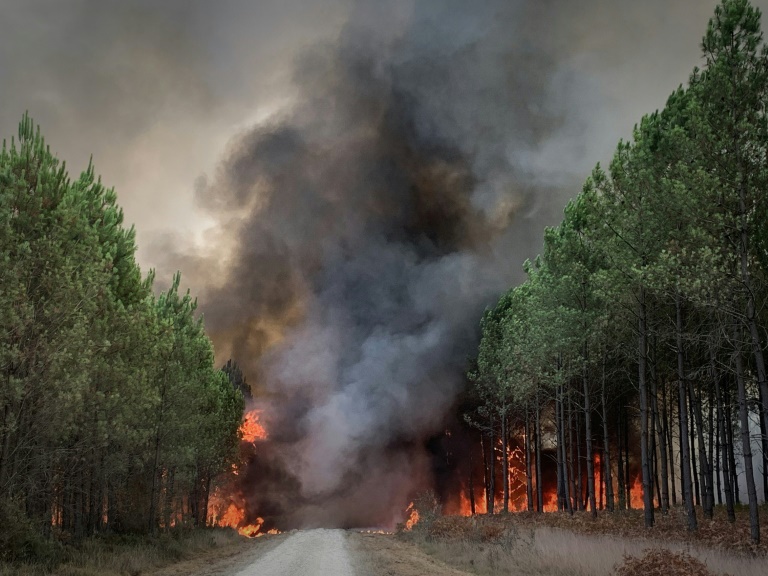
A fire that destroyed thousands of hectares of tinder-dry forest in southwest France has flared again amid a fierce drought and the summer’s latest wave of extreme heat, officials said Wednesday.

An additional 6,000 hectares (15,000 acres) of pine forest have burned in the so-called Landiras blaze since Tuesday afternoon, forcing the evacuation of around 6,000 people, Gironde regional officials said in a statement.

“The fire is extremely violent and has spread to the Landes department” further south, home of the Landes de Gascogne regional park, the prefecture said, and further evacuations are likely.

“It’s a major fire… much more intense and fast-moving” than at the height of the Landiras blaze that ignited in July, Marc Vermeulen of the regional fire-fighting authority told journalists.

No one has been injured in the coastal area that draws huge summer tourism crowds but 16 houses were destroyed or damaged near the village of Belin-Beliet.

The fire was spreading toward the A63 motorway, a major artery linking Bordeaux to Spain, with thick smoke forcing the road’s closure between Bordeaux and Bayonne.

The Landiras fire was the largest of several that have raged this year in southwest France, which has been buffeted by record drought and a series of heat waves.

Arsonists set some of the fires and officials initially suspected a criminal origin for the Landiras blaze. Police later released a suspect for lack of evidence.

Around 500 firefighters are on the scene, supported by water-dropping planes.

The Gironde prefect, Martin Guespereau, said Wednesday “the risks are very high” that adverse weather conditions will allow the fire to spread further.

“The weather is very unfavourable because of the heat, the dry air, the record drought and the fact that there is a lot of peat in the ground… the fire didn’t go out in July, it went underground,” he told journalists.

The Landiras fire and a second large blaze near Arcachon burned a combined 21,000 hectares and forced more than 36,000 people to evacuate before they were brought under control — but not fully extinguished.

Wildfires have also ignited in the dry hills of the southeast and even in the normally lush areas of Brittany along the English Channel.

On Wednesday, officials in western France said a forest fire near Angers and Le Mans has burned 1,200 hectares since Monday as nearly 400 firefighters struggle to contain it.

What we know of the symptoms and spread of monkeypox

With monkeypox surging across the world, experts are gathering more evidence on how people catch it and its typical symptoms.

Several months into the epidemic, it is clear the wave of infections is linked above all to sexual intercourse between men.

Nearly 28,000 cases have been confirmed worldwide in the last three months and the first deaths are starting to be recorded.

Here is a summary of what we know:

– Who is catching it? –

Monkeypox has been around in a dozen African countries for decades, but in contrast to previous outbreaks on the continent, the virus is now predominantly spread through sexual activity.

Some 99 percent of US cases have so far been among men who have sex with men (MSM).

In Africa, the virus notably affects children.

In the last three weeks studies printed in leading medical publications — British Medical Journal (BMJ), The Lancet and New England Journal of Medicine (NEJM) — painted a clinical picture of the current spike in infections, even if it is still early days and the results are based on only a few hundred cases.

In each study, the MSM community accounts for nearly all cases.

– How is it transmitted? –

The male sex link was no surprise as it appeared from the first recorded observations and has been targeted by health authorities.

This leads to the sensitive question of whether the virus is transmitted through sexual activity.

The latest clinical reports leave little doubt.

“Our study strengthens the evidence for skin-to-skin contact during sex as the dominant mechanism of transmission of monkeypox, with important implications for disease control,” said The Lancet with data from several Spanish hospitals.

The viral charge had been found to be much higher in patients’ skin lesions than in their breathing equipment.

This observation seems to undermine the idea pushed by some researchers that airborne transmission was also playing a major role in the spread of cases.

At the same time monkeypox is not thought to be caught via sperm, and although that has not been totally ruled out, current research is far from proving it.

– Symptoms? –

All three studies agreed on the main symptoms.

“The characteristics of the cohort we describe differ from those of populations affected in previous outbreaks in endemic regions,” the BMJ noted in the study of UK cases.

The two key elements are fever, often with muscular aches, and skin lesions which scab over.

But the details vary, probably because of the type of transmission, with recent cases heavily linked to sexual activity.

For all three studies, the lesions often break out in the anus, penis and mouth. One complication that has previously been rarely observed has been inflammation of the rectum or a swelling on the penis.

The Lancet found complications occurred in 40 percent of cases and the NEJM in some 20 percent.

But there was also some good news about the gravity of the illness.

“Clinical outcomes in this case series were reassuring. Most cases were mild and self-limited, and there were no deaths,” the NEJM said.

“Although 13 percent of the persons were admitted to a hospital, no serious complications were reported in the majority of those admitted.”

– Questions remain –

The Lancet report raised the issue of the efficacy of vaccines, given that 18 percent of cases were in people who had already received a jab meant to protect against monkeypox.

But some patients had had the vaccination for many years, even decades before catching the virus.

It is also unclear how other illnesses increase the risk of catching monkeypox. About 40 percent of patients in the Lancet study carried HIV, but it was impossible to work out if there was a direct link between the two.

13 killed in Russian strikes near nuclear plant

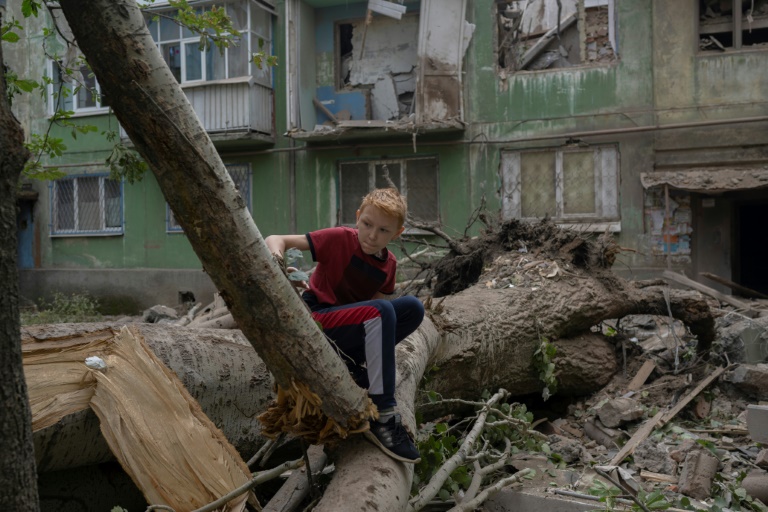
Ukraine on Wednesday accused Russia of rocket strikes that killed 13 civilians in areas near a Russian-held power plant, where renewed fighting has raised fears of a nuclear disaster.

The overnight strikes in the Dnipropetrovsk region in central Ukraine also injured 11 people, with five reported to be in a serious condition.

“It was a terrible night, regional governor Valentin Reznichenko wrote on Telegram, urging residents to shelter when they hear air raid sirens.

“I am asking and begging you… Don’t let the Russians kill you,” he wrote, adding that Russia had fired a total of 80 rockets at the area.

Most of the casualties were in the town of Marganets, just across the Dnieper River from the Zaporizhzhia nuclear power plant, Europe’s biggest.

Regional council head Mykola Lukashuk said the strikes had hit a local power line, leaving thousands of people without electricity.

Ukraine and Russia have accused each other of recent shelling around the plant itself.

Ukraine says Russia has stationed hundreds of troops and stored ammunition at the plant.

The tensions have brought back memories of the 1986 Chernobyl nuclear disaster in then Soviet Ukraine, which killed hundreds of people and spread radioactive contamination over much of Europe.

The plant was captured by Russian troops on March 4 after a battle with Ukrainian forces.

– Beachgoers fleeing –

The strikes came a day after major blasts at the Saki airfield, a key military base on the Russian-annexed Crimea peninsula.

Dramatic amateur footage on social media appeared to show panicked holidaymakers fleeing a Crimean beach with young children, as ballooning clouds of grey smoke rose over the horizon.

Russia annexed Crimea in 2014 and has used the region as a staging ground for its attacks, but it has rarely been a target for Ukrainian forces.

Moscow insisted that the explosions were caused by detonating ammunition rather than Ukrainian fire.

Ukraine’s army, which for months pleaded for long-range artillery from Western allies, has been hitting targets deeper in Russian-held territory since some started arriving in recent weeks. 

Kyiv has also taken credit for several acts of sabotage inside Russian-held territory.

– New buyer for Ukraine grain? –

The war has severely hampered grain supply from Ukraine, leading to an international food crisis as it is one of the world’s biggest producers.

But some ships have been able to leave Ukrainian ports in recent days after a deal with Russia brokered by the United Nations and Turkey.

The first grain shipment to leave on the Sierra Leone-flagged vessel Razoni departed the Ukrainian port of Odessa on August 1 and had been expected to dock in the Lebanese port of Tripoli at the weekend.

But the Ukrainian embassy said a new buyer for the shipment was being sought after the original Lebanese buyer cancelled the order.

A five-month delay after Russia’s invasion “prompted the buyer and the shipping agent to reach agreement on the cancellation of the order,” the Ukraine embassy said in a statement late Tuesday.

It is currently anchored off the Turkish port of Mersin.

Japan PM reshuffles cabinet as approval ratings slide

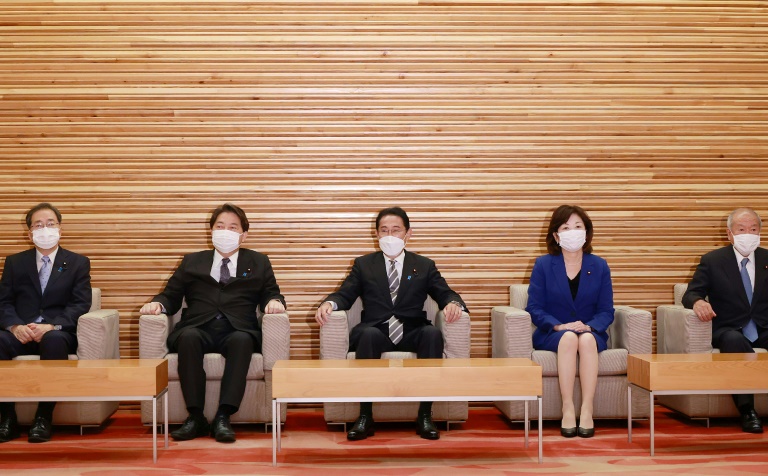
Japan’s prime minister reshuffled his cabinet Wednesday after a slump in approval ratings, replacing the brother of assassinated ex-leader Shinzo Abe as defence minister.

Fumio Kishida led his ruling party to victory in an upper house election last month, days after Abe was shot dead by a man resentful of the Unification Church.

Since then, as the public scrutinises the church’s ties with Japanese politicians and Kishida’s handling of the economy, approval ratings for the government have tumbled.

They fell 13 percentage points in three weeks to 46 percent, according to a poll published Monday by public broadcaster NHK.

Political veteran Yasukazu Hamada was named defence minister — a key role, given Kishida’s pledge to ramp up the defence budget to counter growing threats from China and North Korea.

Hamada, who previously served as defence minister from 2008-9, replaced Abe’s brother Nobuo Kishi, whose ailing health has prompted concern.

Kishi also recently vowed to “thoroughly review” his links to the Unification Church, after acknowledging that church members had served as campaign volunteers.

Since Abe’s death a month ago, Japanese media has revealed that many ruling lawmakers — especially those in Abe’s faction — received similar assistance from Unification Church members, something the group says followers only do as private citizens.

The organisation founded in Korea in 1954, whose followers are colloquially known as “Moonies”, has confirmed that the mother of the man suspected of killing Abe was a member.

She reportedly declared bankruptcy after making donations of around 100 million yen ($1 million at the time) to the church.

On Wednesday, Kishida said he had told all his ministers to review their ties with the organisation, “so as to clear suspicion from the public”.

“I appointed only those who accepted my strict instructions that each one of them check their relationship with the group and strictly review it based on their responsibility as a politician,” he told reporters.

Earlier, the top government spokesman announced the new cabinet including Katsunobu Kato, who served as health minister under Abe and returns to head the ministry.

Flamboyant figure Taro Kono, who has also held several high-profile ministerial posts, was named digital affairs minister.

And Sanae Takaichi, known for her hawkish views, is the new economic security minister — one of just two women in the cabinet.

The current foreign and finance ministers will stay in place, while Kishi has been appointed aide to the prime minister.

China warns it will not tolerate Taiwan 'separatists'

China on Wednesday vowed zero tolerance for “separatist activities” in Taiwan and reaffirmed that it would take the self-ruled island by force if necessary.

The warning from Beijing, which considers Taiwan its territory, came after days of unprecedented Chinese military drills around the island sparked by US House Speaker Nancy Pelosi’s trip.

Pelosi last week became the highest-ranking US official to visit Taiwan in decades despite stark threats from China, which tries to keep Taipei isolated on the world stage.

China’s Taiwan Affairs Office on Wednesday issued a white paper laying out how it intends to claim the island through a range of economic incentives and military pressure.

“We are ready to create vast space for peaceful reunification, but we will leave no room for separatist activities in any form,” said the paper.

China will “not renounce the use of force, and we reserve the option of taking all necessary measures”.

It added, however: “We will only be forced to take drastic measures to respond to the provocation of separatist elements or external forces should they ever cross our red lines.”

China last issued a white paper on Taiwan in 2000.

The release came on the same day that a top Taiwan opposition politician flew to China for meetings with Taiwanese businesspeople, prompting condemnation from Taipei which had called on him to cancel the trip.

Andrew Hsia, deputy chairman of the Beijing-friendly Kuomintang party, travelled to China in an unofficial capacity and did not visit the Chinese capital.

But President Tsai Ing-wen’s party criticised him for travelling across the Taiwan Strait as Chinese military drills continued around the island.

“Not only is the timing wrong and the stance confused, it’s also letting down the military, which is working hard to defend the country,” the ruling Democratic Progressive Party said in a statement on social media.

Since the late 1990s, the island has transformed from an autocracy into a vibrant democracy, and a distinct Taiwanese identity has emerged.

Relations between the two sides have significantly worsened since Tsai became president in 2016.

Tsai and her party do not consider Taiwan to be part of China.

Their platform falls under China’s broad definition of Taiwanese separatism, which includes those who advocate for the island to have an identity separate from the mainland.

– Invasion fears –

The Chinese white paper promised Taiwan economic prosperity as well as “greater security and dignity” after “reunification”.

But that offer comes in the shadow of the biggest military exercises China has ever conducted around the island, including training for a blockade.

The drills have raised fears that China’s Communist leadership could be preparing for an invasion.

The exercises were initially expected to conclude on Sunday, but continued this week.

China’s People’s Liberation Army on Wednesday morning released details of the exercises it conducted a day earlier.

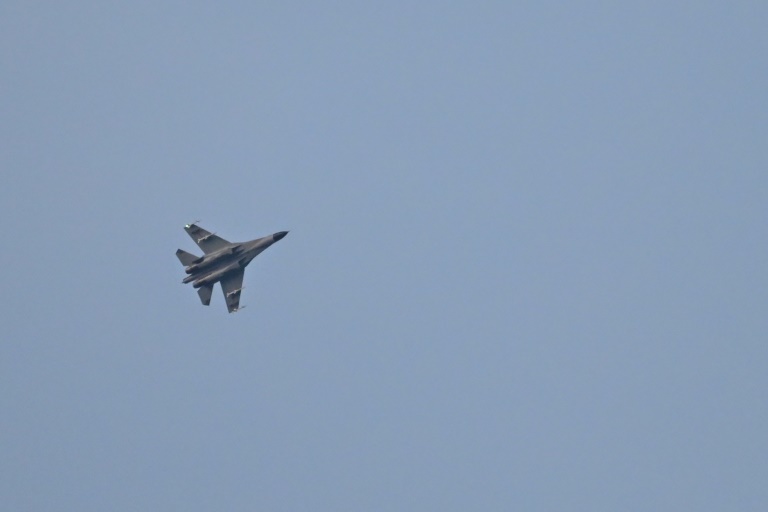
The PLA’s Eastern Theatre command said the Tuesday drills focused on establishing air dominance, and it released video and photos of jet fighters taking off and conducting manoeuvres — including in-flight refuelling from a tanker.

The military later said it had “successfully completed various tasks”, without specifying whether more drills had been conducted on Wednesday or if there would be further exercises.

“The troops in the (Eastern) Theatre will keep a close eye on the changes in the situation in the Taiwan Strait, continue to carry out military training and prepare for war,” the PLA said.

Taiwan has accused China of using the Pelosi visit as an excuse to rehearse for an invasion.

It has conducted its own military drills to prepare for an attack on the island, and on Wednesday released footage of its air, land and sea forces responding to the Chinese exercises.

The Taiwanese drills prompted another Chinese warning on Tuesday.

Any attempt to “resist reunification through arms”, said foreign ministry spokesman Wang Wenbin, “will end in failure like a mantis trying to stop a chariot”.

Elon Musk sells nearly $7 billion worth of Tesla shares

Elon Musk has sold nearly $7 billion worth of Tesla shares, according to legal filings, amid a high-stakes legal battle with Twitter over a $44 billion buyout deal.

The Tesla boss sold some 7.9 million shares between August 5 and 9, according to filings published on the Securities and Exchange Commission’s website on Tuesday.

“In the (hopefully unlikely) event that Twitter forces this deal to close and some equity partners don’t come through, it is important to avoid an emergency sale of Tesla stock,” Musk, the world’s richest man, wrote on Twitter late Tuesday.

Twitter is locked in a legal battle with the mercurial Tesla boss over his effort to walk away from the April agreement to buy the company, and a judge has ordered that a trial will begin in October.

Musk has filed a countersuit, accusing Twitter of fraud and alleging the social media platform misled him about key aspects of its business before he agreed to a $44 billion buyout.

The move comes after Musk sold around $8.5 billion worth of shares in the electric carmaker in April as he was preparing to finance the Twitter deal. He tweeted at the time: “No further TSLA sales planned after today.”

Tesla rose 3.4 percent to $879 before the start of regular trading Wednesday, while Twitter jumped 4.3 percent to $44.69, Bloomberg reported.

Musk has now sold about $32 billion worth of Tesla shares since November.

“He is cashing up for Twitter,” Charu Chanana, a strategist at Saxo Capital Markets told Bloomberg News. 

Chanana said she believed Musk may be attempting to take advantage of a Tesla share price rebound of about 35 percent since late May.

“The bear market rally has started to falter, and further repricing of Fed expectations could mean more pain for equities ahead, especially in tech.”

Analysts say Musk may continue selling Tesla stock.

“Musk said at the Tesla shareholder meeting that any weakness in the share price was a buying opportunity, and then 24 hours later started selling stock himself,” Jim Dixon, a senior equity sales trader at Mirabaud Securities, told Bloomberg News. 

Dixon added that it was “very unlikely” that Musk was finished selling Tesla stock.

Tesla share prices have been tied to the fate of Musk’s Twitter deal in recent weeks, first slumping over concerns that pursuing the deal could distract him and lead to unnecessary financial risk, and then rebounding when he said he wanted to abandon the takeover.

Musk’s deal to buy Twitter included a provision that if it fell apart, the party breaking the agreement would pay a termination fee of $1 billion under certain circumstances.

At a net worth of $250 billion, Musk tops the Bloomberg Billionaires Index, although he has lost $20.1 billion since the start of the year, mainly due to the decline in Tesla’s stock price.

— Bloomberg News contributed to this story —

Germany plans 10-bn-euro inflation relief tax package

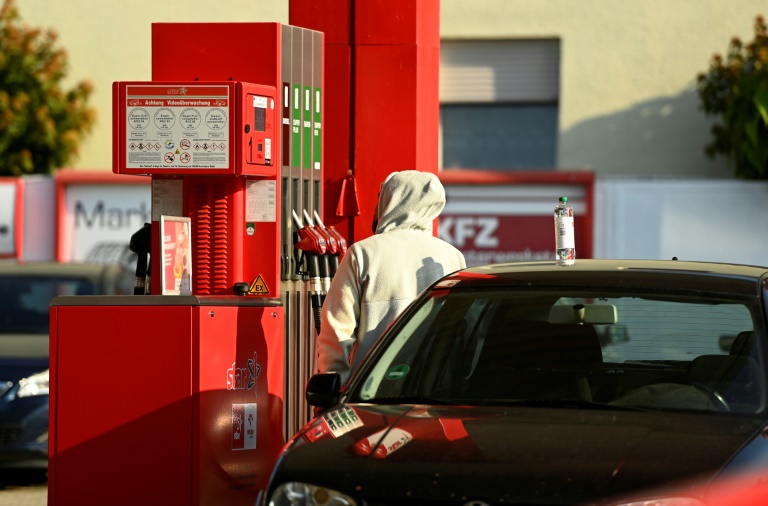
Germany will offer tax relief worth 10 billion euros ($10.2 billion) to help workers cope with soaring inflation, Finance Minister Christian Lindner said Wednesday.

The package will raise base tax-free allowance as well as bring up the level from which the top income tax rate of 42 percent will apply. Families will also benefit from higher tax exemptions for dependent children.

Inflation in Germany reached 7.5 percent in July, fractionally lower than the 7.6 percent recorded in June, fuelled mainly by energy prices that soared following Russia’s invasion of Ukraine.

Lindner said his plan is aimed primarily at fighting the problem of employees who find themselves with a higher tax burden because they have received a pay increase to combat inflation.

As a result, the gain the workers have received is wiped out essentially by the higher taxes due.

The phenomenon, called “cold progression”, also typically hits lower incomes harder.

Lindner said 48 million Germans would be facing higher taxes from January 2023 if no relief was offered.

“For the state to benefit at a time when daily life is becoming more expensive… that is not fair and also dangerous for economic development,” said Lindner.

– Double whammy –

The tax relief measures come on top of a 30 billion euro package unleashed by Chancellor Olaf Scholz earlier this year to help consumers beat inflation.

The earlier package included a fuel tax cut and a public transport ticket valid across Germany priced at just 9 euros a month for June, July and August.

But it is clear that the clouds hanging over Europe’s biggest economy are only darkening as the country heads into the colder months.

The Ukraine conflict has derailed Germany’s hopes of finally shaking off the coronavirus pandemic and roaring back to growth.

With its export-oriented industries, Germany has been particularly vulnerable to the supply chain bottlenecks and raw material shortages caused by the pandemic. 

But now, Germans are also staring down the barrel of doubling energy bills, after Russia drastically curtailed its supply following its invasion of Ukraine.

The power crunch is not only nibbling away at consumers’ purchasing power but also hurting German industry, much of which relies on cheap energy supplies to manufacture exports.

Employees in Europe’s biggest economy are therefore facing the double whammy of higher costs and a growing threat of job losses as major companies mull idling some factories because it may no longer be cost effective to keep production lines running.

German growth stagnated in the second quarter of the year, but analysts have warned that a recession in the second half will be inevitable.

At their last forecast in March, the German government’s economic advisers estimated that gross domestic product will expand by 1.8 percent for 2022. 

Heat, drought rekindle huge wildfire in southwest France

A fire that destroyed thousands of hectares of tinder-dry forest in southwest France has flared again amid a fierce drought and the summer’s latest heat wave, officials said Wednesday.

An additional 6,000 hectares (15,000 acres) of pine forest have burned in the so-called Landiras blaze since Tuesday afternoon, forcing the evacuation of some 3,800 people,” Gironde regional officials said in a statement.

“The fire is extremely violent and has spread to the Landes department” further south, home of the Landes de Gascogne regional park, the prefecture said.

No one has been injured in the coastal area that draws huge summer tourism crowds but 16 houses were destroyed near the village of Belin-Beliet.

The prefecture warned the fire was spreading toward the A63 motorway, a major artery linking Bordeaux to Spain.

Speed limits on the highway have been lowered to 90 kmph (55 mph) in case smoke starts to limit visibility, and a full closure could be ordered if the fire worsens.

The Landiras fire that ignited in July was the largest of several that have raged this year in  southwest France, which has been buffeted by record drought and a series of heat waves.

Arsonists set some of the fires and officials initially suspected a criminal origin for the Landiras blaze. Police later released a suspect for lack of evidence.

Around 500 firefighters are on the scene, supported by water-dropping planes.

The Landiras fire and a second large blaze near Arcachon burned a combined 21,000 hectares and forced more than 36,000 people to evacuate before they were brought under control — but not fully extinguished.

And in western France, a forest fire near Angers and Le Mans has burned 1,200 hectares since Monday as nearly 400 firefighters struggle to contain it.

The regional firefighting coordination centre said it suspects arsonists are behind some of the “unlikely flare-ups” of the blaze.

Close Bitnami banner
Bitnami