World

Japan PM reshuffles cabinet as approval ratings slide

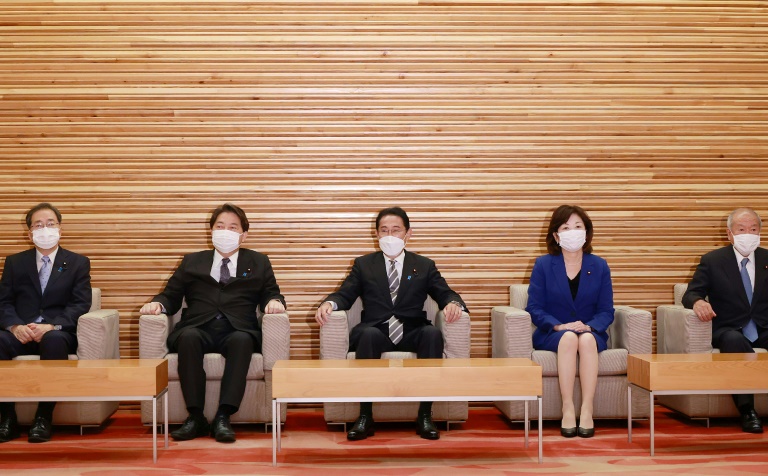
Japan’s prime minister reshuffled his cabinet Wednesday after a slump in approval ratings, replacing the brother of assassinated ex-leader Shinzo Abe as defence minister.

Fumio Kishida led his ruling party to victory in an upper house election last month, days after Abe was shot dead by a man resentful of the Unification Church.

Since then, as the public scrutinises the church’s ties with Japanese politicians and Kishida’s handling of the economy, approval ratings for the government have tumbled.

They fell 13 percentage points in three weeks to 46 percent, according to a poll published Monday by public broadcaster NHK, while another survey by the Yomiuri Shimbun daily showed a drop of eight points from July to 57 percent.

Political veteran Yasukazu Hamada was named defence minister — a key role given Kishida’s pledge to ramp up the defence budget to counter growing threats from China and North Korea.

Hamada, who previously served as defence minister from 2008-9, replaced Abe’s brother Nobuo Kishi, whose ailing health has prompted concern.

Kishi also recently vowed to “thoroughly review” his links to the Unification Church, after acknowledging that church members had served as campaign volunteers.

Since Abe’s death a month ago, Japanese media has revealed that many ruling lawmakers — especially those in Abe’s faction — received similar assistance from Unification Church members, something the group says followers only do as private citizens.

The organisation founded in Korea in 1954, whose followers are colloquially known as “Moonies”, has confirmed that the mother of the man suspected of killing Abe was a member.

She reportedly declared bankruptcy after making donations of around 100 million yen ($1 million at the time) to the church.

The public is also split over Kishida’s decision to hold a state funeral for Abe, Japan’s longest serving prime minister whose nationalistic stance was divisive.

Top government spokesman Hirokazu Matsuno read out a list of new cabinet members including Katsunobu Kato, who served as health minister under Abe and returns to head the ministry.

Flamboyant figure Taro Kono, who has also held several high-profile ministerial posts, was named digital affairs minister, tasked with moving more of Japan’s stubbornly analogue systems online.

And Sanae Takaichi, known for her hawkish views, is the new economic security minister. The current foreign and finance ministers will stay in place.

China warns it will not tolerate Taiwan 'separatists'

China on Wednesday vowed zero tolerance for “separatist activities” in Taiwan and reaffirmed that it would take the self-ruled island by force if necessary.

The warning from Beijing, which considers Taiwan its territory, came after days of unprecedented Chinese military drills around the island sparked by US House Speaker Nancy Pelosi’s trip.

Pelosi last week became the highest-ranking US official to visit Taiwan in decades despite stark threats from China, which tries to keep Taipei isolated on the world stage.

China’s Taiwan Affairs Office on Wednesday issued a white paper laying out how it intends to claim the island through a range of economic incentives and military pressure.

“We are ready to create vast space for peaceful reunification, but we will leave no room for separatist activities in any form,” said the white paper.

China will “not renounce the use of force, and we reserve the option of taking all necessary measures”.

It added, however: “We will only be forced to take drastic measures to respond to the provocation of separatist elements or external forces should they ever cross our red lines.”

China last issued a white paper on Taiwan in 2000.

Since the late 1990s, the island has transformed from an autocracy into a vibrant democracy, and a distinct Taiwanese identity has emerged.

Relations between the two sides have significantly worsened since Tsai Ing-wen became president in 2016.

Tsai and her Democratic Progressive Party do not consider Taiwan to be part of China.

Their platform falls under China’s broad definition of Taiwanese separatism, which also includes those who advocate for the island to have an identity separate from the mainland.

– Invasion fears –

The Chinese white paper promised Taiwan economic prosperity as well as “greater security and dignity” after “reunification”.

But that offer comes in the shadow of the biggest military exercises China has conducted around the island, including training for a blockade.

The drills have raised fears that China’s Communist leadership could be preparing for an invasion.

The exercises were initially expected to conclude on Sunday, but have continued this week with no confirmation of when they will end.

China’s People’s Liberation Army on Wednesday released details of the exercises it conducted a day earlier around Taiwan.

The PLA’s Eastern Theater command said the Tuesday drills focused on establishing air dominance, releasing video and photos of jet fighters taking off and conducting manoeuvres — including in-flight refuelling from a tanker.

Taiwan has accused China of using the Pelosi visit as an excuse to rehearse for an invasion.

It has conducted its own military drills to prepare for an attack on the island, and on Wednesday released footage of its air, land and sea forces responding to the Chinese exercises.

The Taiwanese drills prompted another Chinese warning on Tuesday.

Any conspiracy to “resist reunification through arms”, said foreign ministry spokesman Wang Wenbin, “will end in failure like a mantis trying to stop a chariot”.

Billboards get Poles talking low birth rate

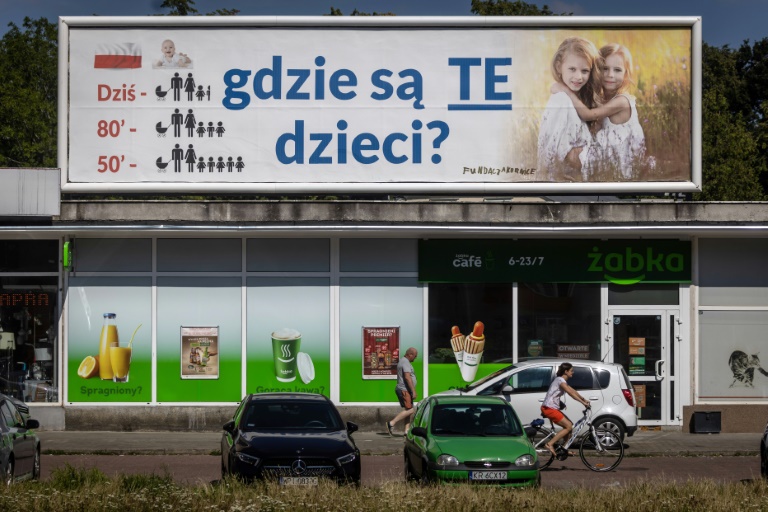
The billboards are hard to miss: large and plastered all over Poland, they show two blonde girls in immaculate white posing in a wheat field.

The caption asks: “Where are these children?”

An accompanying pictogram showing falling birth rate statistics claims the average Polish family had five children in the 1950s, down to three in the 80s and 1.5 today.

The signs, put up in recent weeks by a Catholic foundation, have triggered a fiery debate in the conservative-led country, where family and reproductive rights are an enduring source of tension.

The campaign has already spawned parodies. One version has a billboard with a dumpling pictogram and the line: “Where are these pierogis?”

Observers have been quick to point out that the figures in the original billboard are incorrect: official statistics show Polish women were having fewer than four children on average during the 1950s.

Still, the current birth rate is worrisome: with 1.4 children per woman, Poland is below the EU average and the threshold of generational renewal.

“Our campaign does not have an ideological or political goal,” said the Kornice foundation whose president, a wealthy entrepreneur with Catholic ties, is one of Poland’s richest men.

“It simply invites people to reflect.”

– ‘Fundamentalist undertone’ –

Kornice had already made headlines for other controversial billboard campaigns, including ones opposing abortion and divorce.

For Paulina Zagorska, a women’s activist, “the fundamentalist undertone of these billboards is obvious: their authors attribute the falling birth rate to contraception and challenges to the traditional family model”.

Many observers have seized the occasion to denounce the near-total abortion ban introduced by the right-wing government and to condemn its family policies.

According to leftwing opposition MEP Robert Biedron, “there aren’t enough children because of a shortage of nurseries and kindergartens… insufficient wages… a fear of pregnancy following inhuman anti-abortion laws”.

A study published in May by the research firms SW Research and Garden of Words found that half of Polish women considered their country unfavourable to motherhood, notably because of abortion restrictions and difficult access to medical care.

– National mission –

Yet the birth rate is one of the key pillars of the ruling party’s programme, whose staple is a popular monthly child allowance called 500+. 

The party’s family policies are meant to help young households get off the ground and to guarantee childcare during the early years.

But critics argue that the policies are mostly designed to benefit the traditional family model and to encourage women to stay at home. 

The family ministry calls fertility “a vital issue” in its official programme, adding that it must be defended “even at the cost of the temporary withdrawal from the labour market of women who prefer to educate their children”.

For Irena Kotowska, a demography expert at The Polish Academy of Sciences, these family policies adopted under the influence of the Church have been “ineffective”.

Poland currently numbers 38.2 million people but its population could dwindle by 2.3 million by 2040, according to a Eurostat forecast. 

– Historical factor –

Historic trends are also affecting the dwindling numbers.

“Massive unemployment, brought about by the sudden transition to capitalism, led to falling birth rates in the 1990s in the former Eastern bloc countries,” Kotowska said.

“So, there aren’t many women of childbearing age from those years, and they don’t have a lot of children,” she added.

The Czech Republic, another ex-communist country with a similar historical trajectory, was able to soften the trend “through progressive politics based on gender equality, institutional support and an adjustment of the labour market.”

Kotowska doubts the influx of Ukrainians — mainly women and children — who fled Russia’s invasion of their homeland for Poland is enough to “reverse the population decline”.

Perhaps immigration from Africa and the Middle East could have an effect, though she said it was not realistic.

“I don’t think it’s conceivable in Poland, where birth policy is intrinsically linked to nationalism and ethnicity,” she explained.

Meanwhile, the government recently warned in an official report of the long-term risk of “the death of the Polish nation”. 

Experts see inflation reprieve in America

Is inflation finally slowing down in the United States?

Inflation data due to be released Wednesday is expected to show at least a partial cooling down of consumer prices and bring a breath of fresh air for US President Joe Biden just months before crucial midterm elections.

Fueled by aggressive consumer spending of pandemic savings, global supply chain snarls, domestic worker shortages, and Russia’s war on Ukraine, inflation reached 9.1 percent in June, year over year, the highest in 40 years.

But it is expected to fall to 8.6 percent in July, according to MarketWatch.

White House spokeswoman Karine Jean-Pierre said that although the administration has not seen the fresh statistics yet, “We know that gas prices have fallen.”

“And we hope those gas price declines will factor into the CPI inflation data,” Jean-Pierre told reporters Tuesday.

Consumer prices have continued to climb in the United States, squeezing family budgets and, and by extension, Biden’s popularity.

His opponents accuse Biden of precipitating inflation with his gigantic $1.9 trillion coronavirus relief package, which he enacted in March last year, shortly after assuming office.

And Republicans renewed their criticism of Biden’s economic policy, saying Sunday’s passage in the Senate of his massive climate and healthcare bill titled the “Inflation Reduction Act,” does the opposite of its stated purpose.

– Larger issue –

But the devil is in the details. 

Experts worry that the inflation slowdown linked to the drop in gasoline prices could be outweighed by rising rent and real estate prices.

“The larger issue is what happens to home ownership costs & rents,” Diane Swonk, chief economist for KPMG, wrote on Twitter.

Similar to other economists, Swonk expects to see a rise in the so-called underlying inflation rate that excludes food and energy, which had risen to 5.9 percent in June, year over year.

The question now facing Washington is whether it will be possible to bring inflation down sustainably, without plunging the world’s largest economy into recession, after two quarters of economic contraction.

In a bid to tamp down inflation, the US Federal Reserve has already hiked the interest rate four times to a range of 2.25 to 2.5 percent.

On the bright side, the US labor market remains dynamic and in July the unemployment rate fell to the pre-pandemic level of 3.5 percent.

But there are still nearly two jobs open for every available worker, which pushes wages up and contributes to inflation.

Inflation data will be released Wednesday at 8:30am local time (1230 GMT).

Stranded beluga whale rescued from France's Seine river

A beluga whale stranded in the river Seine in northern France for more than a week was removed from the water early Wednesday in the first stage of an ambitious rescue operation to return it to the sea.

After nearly six hours of work by dozens of divers and rescuers, the 800-kilogram (1,800-pound) cetacean was lifted from the river by a net and crane at around 4:00 am (0200 GMT) and placed on a barge under the immediate care of a dozen veterinarians, AFP journalists said.

The beluga, a protected species usually found in cold Arctic waters, will be placed in a refrigerated truck and transported to the coast if tests show it is fit enough, said Isabelle Dorliat-Pouzet, secretary general of the Eure prefecture.

“We are awaiting the results of the blood test and the ultrasounds and, depending on the results, a decision will be made whether or not he should take the road to the sea,” she told a press conference by the river just an hour after the whale was pulled out.

“As I speak to you, he is alive, he is on the barge, he survived. He is being treated,” Dorliat-Pouzet said.

“We could see that he is a male, that he is very underweight and that he has a few sores,” she added.

The four-metre (13-foot) whale was spotted more than a week ago heading towards Paris and was stranded about 130 kilometres (81 miles) inland from the Channel at Saint-Pierre-la-Garenne in Normandy.

Since Friday, the animal’s movement inland had been blocked by a lock at Saint-Pierre-la-Garenne, 70 kilometres northwest of Paris, and its health deteriorated after it refused to eat.

But its condition was “satisfactory”, Isabelle Brasseur of the Marineland sea animal park in southern France told AFP on Tuesday.

A seawater basin at a lock in the Channel port of Ouistreham has been readied for the animal, which will spend three days there under observation and treatment in preparation for its release into the open sea.

“There it will, we hope, have a better chance of survival,” said conservation group Sea Shepherd France, which is assisting the operation.

The beluga will be taken onto the high seas and released “far enough away from the coast” to regain its rightful place in nature, Dorliat-Pouzet said earlier.

– ‘A great day’ –

“Today is a great day for this beluga whale and for everyone involved in its rescue,” Sea Shepherd said on its website.

The “exceptional” operation to return it to the sea is not without risk for the whale, which is already weakened and stressed, said Brasseur, part of a Marineland team sent to assist with the rescue.

“It could be that he dies now, during the handling, during the journey or at point B,” in Ouistreham, she said.

The 24 divers involved in the operation and the rescuers handling the ropes had to try several times between 10:00 pm and 4:00 am to lure the animal into the nets to be lifted out of the water.

As preparations for the operation got under way, people gathered along the banks of the river to observe.

“I’m hopeful that he will reach the sea and that he will not end up like the orca,” said Isabelle Rainsart, referencing a killer whale that was spotted in the Seine in May but later died. 

“We will wait to see how the transport goes, but we may have already succeeded in the hard part,” added Rainsart, who first filmed the beluga on August 2 from her garden overlooking the river.

Interest in the beluga’s fate has spread far beyond France, generating a large influx of financial donations and other aid from conservation groups as well as individuals, officials said.

While belugas migrate south in the autumn to feed as ice forms in their native Arctic waters, they rarely venture so far.

According to France’s Pelagis Observatory, which specialises in sea mammals, the nearest beluga population is off the Svalbard archipelago, north of Norway, 3,000 kilometres from the Seine.

The trapped whale is only the second beluga ever sighted in France. The first was pulled out of the Loire estuary in a fisherman’s net in 1948.

Stranded beluga whale rescued from France's Seine river

A beluga whale stranded in the river Seine in northern France for more than a week was removed from the water early Wednesday in the first stage of an ambitious rescue operation to return it to the sea.

After nearly six hours of work by dozens of divers and rescuers, the 800-kilogram (1,800-pound) cetacean was lifted from the river by a net and crane at around 4:00 am (0200 GMT) and placed on a barge under the immediate care of a dozen veterinarians, AFP journalists said.

The beluga, a protected species usually found in cold Arctic waters, will be placed in a refrigerated truck and transported to the coast if tests show it is fit enough, said Isabelle Dorliat-Pouzet, secretary general of the Eure prefecture.

“We are awaiting the results of the blood test and the ultrasounds and, depending on the results, a decision will be made whether or not he should take the road to the sea,” she told a press conference by the river just an hour after the whale was pulled out.

“As I speak to you, he is alive, he is on the barge, he survived. He is being treated,” Dorliat-Pouzet said.

“We could see that he is a male, that he is very underweight and that he has a few sores,” she added.

The four-metre (13-foot) whale was spotted more than a week ago heading towards Paris and was stranded about 130 kilometres (81 miles) inland from the Channel at Saint-Pierre-la-Garenne in Normandy.

Since Friday, the animal’s movement inland had been blocked by a lock at Saint-Pierre-la-Garenne, 70 kilometres northwest of Paris, and its health deteriorated after it refused to eat.

But its condition was “satisfactory”, Isabelle Brasseur of the Marineland sea animal park in southern France told AFP on Tuesday.

A seawater basin at a lock in the Channel port of Ouistreham has been readied for the animal, which will spend three days there under observation and treatment in preparation for its release into the open sea.

“There it will, we hope, have a better chance of survival,” said conservation group Sea Shepherd France, which is assisting the operation.

The beluga will be taken onto the high seas and released “far enough away from the coast” to regain its rightful place in nature, Dorliat-Pouzet said earlier.

– ‘A great day’ –

“Today is a great day for this beluga whale and for everyone involved in its rescue,” Sea Shepherd said on its website.

The “exceptional” operation to return it to the sea is not without risk for the whale, which is already weakened and stressed, said Brasseur, part of a Marineland team sent to assist with the rescue.

“It could be that he dies now, during the handling, during the journey or at point B,” in Ouistreham, she said.

The 24 divers involved in the operation and the rescuers handling the ropes had to try several times between 10:00 pm and 4:00 am to lure the animal into the nets to be lifted out of the water.

As preparations for the operation got under way, people gathered along the banks of the river to observe.

“I’m hopeful that he will reach the sea and that he will not end up like the orca,” said Isabelle Rainsart, referencing a killer whale that was spotted in the Seine in May but later died. 

“We will wait to see how the transport goes, but we may have already succeeded in the hard part,” added Rainsart, who first filmed the beluga on August 2 from her garden overlooking the river.

Interest in the beluga’s fate has spread far beyond France, generating a large influx of financial donations and other aid from conservation groups as well as individuals, officials said.

While belugas migrate south in the autumn to feed as ice forms in their native Arctic waters, they rarely venture so far.

According to France’s Pelagis Observatory, which specialises in sea mammals, the nearest beluga population is off the Svalbard archipelago, north of Norway, 3,000 kilometres from the Seine.

The trapped whale is only the second beluga ever sighted in France. The first was pulled out of the Loire estuary in a fisherman’s net in 1948.

Taliban torn over reforms one year after seizing power

One year on from the Taliban’s return to power in Afghanistan, some cracks are opening within their ranks over the crucial question of just how much reform their leaders can tolerate.

Infamous during their first reign for their brutal crackdowns on rights and freedoms, the Islamists vowed to rule differently this time.

On a superficial level at least, they appear to have changed in some respects.

Officials in Kabul have embraced technology, while cricket matches are cheered in full stadiums.

Televisions were banned under the Taliban government’s first incarnation, while Afghans now have access to the internet and social media.

Girls are allowed to attend primary school and women journalists are interviewing government officials — unthinkable during the Taliban’s first stint in power in the 1990s.

The group’s hardline core, composed of battle-hardened veteran fighters, is against any significant ideological change that could be viewed as a sign of capitulation to their enemies in the West. 

“You have one (Taliban) camp, which is pushing ahead with what they’re seeing as reforms, and another camp that seems to think even these meagre reforms are too much,” said Ibraheem Bahiss, an Afghanistan analyst with International Crisis Group.

The United States and its allies — which had bankrolled Afghanistan for 20 years — have locked the country out of the global banking system and billions in frozen assets abroad, as they hold out for reforms from the Taliban.

Without significant progress, it is the Afghan people who suffer as the country reels under a massive economic crisis that has seen some families choose between selling their organs or their infant daughters.

– ‘Retrograde dogmatic views’ –

On whether the Taliban are even capable of reform, analysts are wary that recent policy changes amount to little more than “tokenism”.

“There are some cases where we could point to an evolution in policy, but let’s be very clear… We’re still looking at an organisation that has refused to move beyond very retrograde, dogmatic views,” said Michael Kugelman, an Afghanistan specialist with the Washington-based Wilson Center think tank.

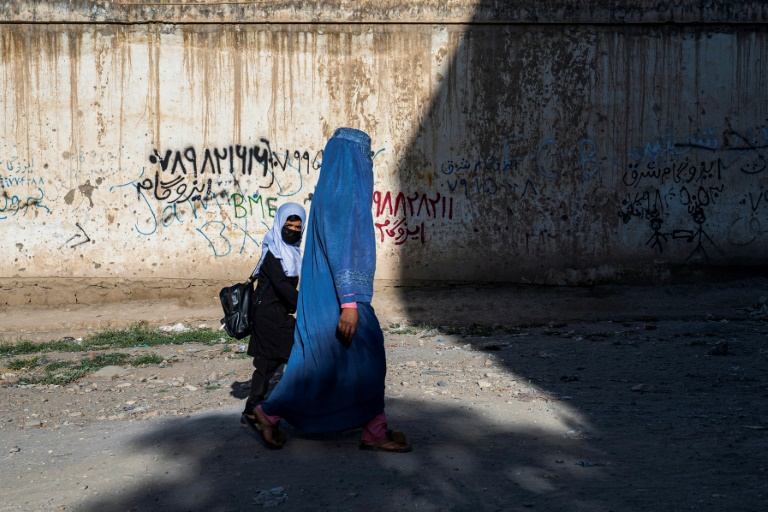
Most secondary schools for girls remain closed. Many women have been forced out of government work, while many fear venturing out and being chastised by the Taliban.

Simple joys such as music, shisha and card games are strictly controlled in the most conservative areas, while protests have been crushed and journalists regularly threatened or detained.

Demands from the West for an inclusive government were ignored, and the assassination of Al-Qaeda’s leader in Kabul last week underlined the Taliban’s ongoing ties with jihadist groups.

– Reform as capitulation –

It is from the Taliban’s power base of southern Kandahar that the secretive supreme leader Hibatullah Akhundzada gathers his powerful inner circle of veteran fighters and religious clerics to impose a harsh interpretation of sharia.

And for them, ideological concerns outweigh any political or economic drivers to effect change.

“The needs of the Afghans remain the same as 20 years ago,” Mohammad Omar Khitabi, a member of a council of clerics who advise Akhundzada in Kandahar, told AFP.

His thoughts are echoed by Kandahar’s Vice and Virtue Director Abdul Rahman Tayabi, another close aide of the supreme leader.

“Our people do not have too many demands, like people in other countries might have,” he told AFP.

Afghan families were left stunned in March when Akhundzada overturned the education ministry’s decision to reopen secondary schools for girls.

Some analysts believe he felt uneasy over what could be seen by hardliners as an act of surrender to the West on girls’ rights.

Hopes of restoring international money flows were shattered — to the dismay of many Taliban officials in Kabul, some of whom spoke out against the decision.

Relations with Western diplomats — who meet regularly with Taliban ministers but have no access to Akhundzada — suffered a major setback.

A slew of directives that harked back to the first reign of the Taliban quickly followed.

“The decisions that (Akhundzada) has made so far are all based on the opinions of religious scholars,” said Abdul Hadi Hammad, the head of a madrassa and member of the supreme leader’s advisory council.

Akhundzada has stressed the need for unity in the movement as he carefully seeks to balance several factions — including competing groups that claim the credit for the 2021 victory over US-led forces.

While advisers to Akhundzada claim the Taliban can survive without foreign income, unlocking billions of dollars in frozen assets abroad would be a crucial lifeline.

“We know the Taliban can be transactional, but they cannot appear to be transactional,” a Western diplomat told AFP on condition of anonymity.

– Economic pressure –

Within the movement, no one dares openly challenge Akhundzada’s power, but discontent is quietly growing among the lower ranks.

“Taliban guards are getting their salaries late, and their salaries are low too. They are unhappy,” said one mid-level Taliban official based in northwestern Pakistan, who asked not to be named. 

Many have returned to their villages or travelled to Pakistan to take up different work, another Taliban member added.

Attempts by the movement to shore up revenue through lucrative coal mining have sparked infighting in the north, exacerbated by ethnic divisions and religious sectarianism.

With winter only a few months away, food security and freezing temperatures will put even more pressure on the leaders of one of the world’s poorest countries.

These mounting stresses have the potential to worsen divisions, Kugelman said, though likely not enough to force any dramatic shift in policy.

“If the Taliban leadership start to feel very real threats to their political survival, then could they change?” he asked.

“Given that they are ideologically focused, that may not be the case.”

Bollywood seeks boost with 'Forrest Gump' remake

One of India’s biggest stars is banking on a remake of Hollywood feelgood hit “Forrest Gump” to revive the fortunes of Hindi-language Bollywood, after a string of weak box-office showings.

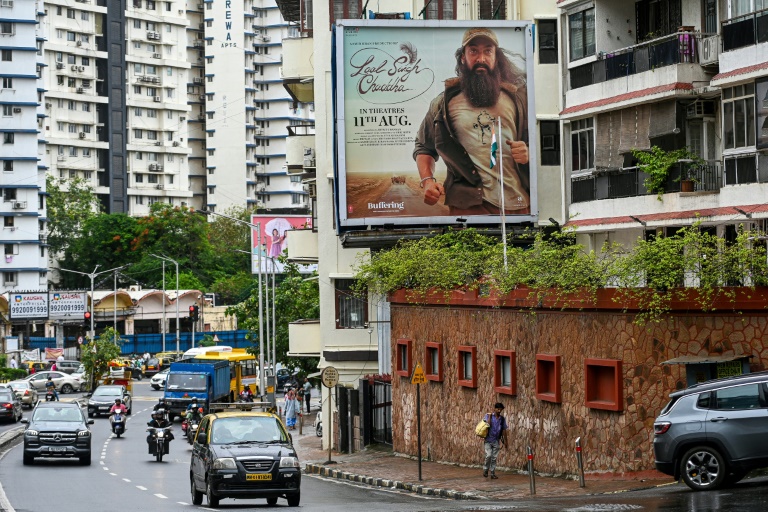
Aamir Khan’s “Laal Singh Chaddha”, an adaptation of the 1994 US classic starring Tom Hanks, hits cinemas on Thursday ahead of India’s 75th independence celebrations.

Disappointing takings for other Bollywood A-listers have cast a pall over an industry still recovering from Covid-19 lockdown losses when many in movie-mad India turned to streaming giants like Netflix and Disney+ Hotstar.

The adaptation keeps several iconic scenes from the original — which netted six Oscars, including for Best Picture — such as a floating white feather, ping-pong playing and lots of running.

– Box of golgappas –

But there are several changes, with Gump’s “box of chocolates” line becoming “Life is just like a golgappa. Your tummy might feel full, but your heart always craves more.”

Golgappa is a popular Indian snack, while the second half of the saying — “you never know what you’re gonna get” in the original —  draws from a common Hindi phrase.

The film promises to take people through India’s history in the same way Gump stumbled through and influenced major US events like the Vietnam War.

This could irk Indian right-wing critics who have already called for a boycott of the film because of comments made by Khan in 2015 that were deemed to be unpatriotic.

Khan, the star of megahit “Dangal” (2016), and screenwriter Atul Kulkarni were coy in sharing what Indian historical settings would be featured.

Kulkarni would only say that his script was a “beautiful story about a beautiful country called India through a beautiful person called Laal Singh”.

– Remaking a ‘classic’ –

Khan, 57, admitted that he initially put off reading Kulkarni’s script, uncertain it would be possible to adapt such a “cult classic”.

“It’s like saying we are remaking ‘Mughal-e-Azam’ and ‘Mother India’. It’s not a wise thing to do,” he said, referring to two Indian classics.

“But when I heard the script, I understood he’s done it. It was a moving experience for me. I really loved it. The moment I heard it I wanted to do this.”

Bollywood star Kareena Kapoor, 41, who plays Singh’s lifelong friend Rupa, based on Robin Wright’s Jenny Curran, said the plot was “timeless” with a love story at its core.

“I wondered how they would play around with such an iconic film,” added Naga Chaitanya, a Telugu-language star from the southern film industry “Tollywood” who plays Bala, an adaptation of Gump’s shrimp-fishing Vietnam comrade Bubba.

“But the way they have conceived the film for Indian cinema is unique.”

– Competition –

Recent silver-screen hits have not come from Hindi-language Bollywood but are in other Indian languages, such as action flicks “Pushpa”, “KGF: Chapter 2” and “RRR”.

“RRR”, released in March, raked in $87 million domestically, while “KGF: Chapter 2”, which debuted a few weeks later, took in $106 million, media analyst Karan Taurani of Mumbai-based Elara Capital told AFP.

Action film “Shamshera”, released on July 22 and starring Bollywood actor Ranbir Kapoor, has so far only made $5.6 million, dashing hopes it would lure audiences back to Hindi cinema.

A rare Bollywood hit this year has been comedy horror “Bhool Bhulaiyaa 2” released on May 20 and featuring rising star Kartik Aryan, which has brought in $24 million so far.

Now, all eyes are on “Laal Singh Chaddha” and family dramedy “Raksha Bandhan” with Bollywood megastar Akshay Kumar — which also releases on Thursday.

Taurani estimates that “Laal Singh Chaddha” will make $19 million, falling short of Khan’s per-film average of $35 million.

Khan, who co-produced “Laal Singh Chaddha”, believes Bollywood hasn’t lost its mojo, blaming the early release of movies on streaming services for lower box-office takings.

“I feel that perhaps we — I’m including myself in this — as Hindi filmmakers, need to… also pick topics which are relevant to a larger audience, as opposed to picking topics which are relevant to a smaller audience,” he said.

Space invaders: How video gamers are resisting a crypto onslaught

When video game designer Mark Venturelli was asked to speak at Brazil’s biggest gaming festival, he submitted a generic-sounding title for his presentation — “The Future of Game Design” — but that was not the talk he gave.

Instead, he launched into a 30-minute diatribe against the blockchain technology that underpins cryptocurrencies and the games it has spawned, mostly very basic smartphone apps that lure players with the promise of earning money.

“Everything that is done in this space right now is just bad — actually it’s terrible,” he told AFP.

He is genuinely worried for the industry he loves, particularly because big gaming studios are also sniffing around the technology.

To crypto enthusiasts, blockchain will allow players to grab back some of the money they spend on games and make for higher-stakes enjoyment.

Critics say the opposite is true — game makers will capture more profits while sidestepping laws on gambling and trading, and the profit motive will kill all enjoyment.

The battle lines are drawn for what could be a long confrontation over an industry worth some $300 billion a year, according to Accenture.

– ‘Ecologically mortifying’ –

Gamers like Venturelli might feel that they have triumphed in the early sorties.

Cryptocurrencies have crashed recently and dragged down the in-game tokens that had initially attracted players.

“Nobody is playing blockchain games right now,” Mihai Vicol of Newzoo told AFP, saying between 90 and 95 percent of games had been affected by the crash. 

Ubisoft, one of the world’s biggest gaming firms, last year tried to introduce a marketplace to one of its hit games for trading NFTs, the digital tokens that act as receipts for anything from art to video game avatars. 

But gamers’ forums, many already scattered with anti-crypto sentiment, lit up in opposition.

Even French trade union IT Solidarity got involved, labelling blockchain “useless, costly, ecologically mortifying tech” — a reference to the long-held criticism that blockchain networks are hugely power hungry.

Ubisoft quickly ditched the NFT marketplace in Tom Clancy Ghost Recon Breakpoint.

Last month, Minecraft, a world-building game hugely popular with children and teenagers, announced it would not allow blockchain technology. 

The firm criticised the “speculative pricing and investment mentality” around NFTs and said introducing them would be “inconsistent with the long-term joy and success of our players”.

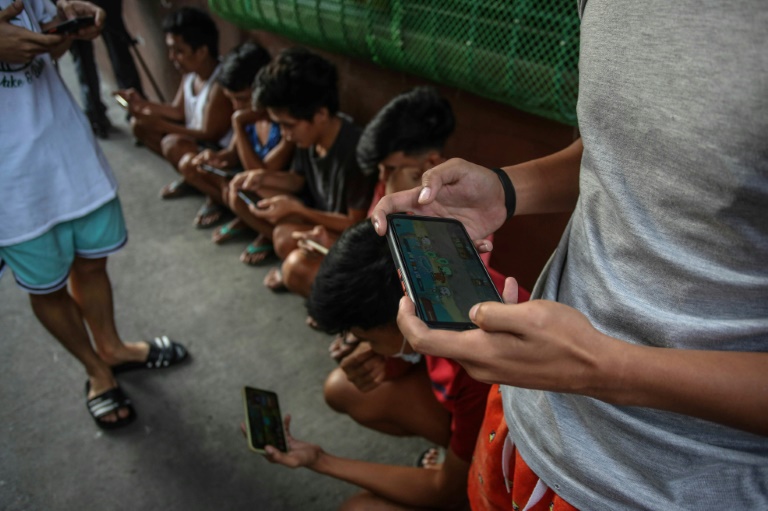
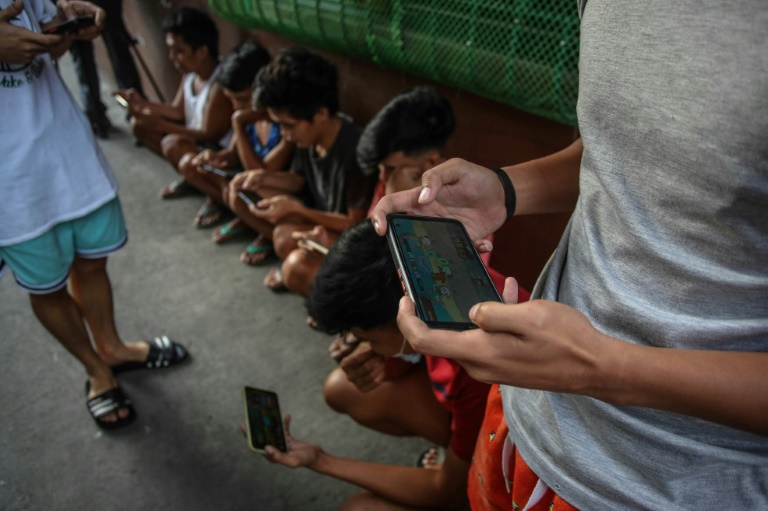
The wider sector also has a serious image problem after a spectacular theft earlier this year of almost $600 million from Axie Infinity, a blockchain game popular in the Philippines. 

Analyst firm NonFungible last week revealed that the NFT gaming sector crashed in the second quarter of this year with the number of sales plunging 22 percent.

All of this points to a bleak time for crypto enthusiasts, but blockchain entrepreneurs are not giving up. 

– ‘Revolutionise’ gaming –

Sekip Can Gokalp, whose firms Infinite Arcade and Coda help developers introduce blockchain to their games, argues it is still “very early days”.

He told AFP some of the attention-grabbing play-to-earn games had been “misguided” and he was convinced the technology still had the potential to “revolutionise” gaming.

Reports of a culture clash between gamers and crypto fans, he said, were overplayed and his research suggested there was substantial overlap between the two communities.

Gokalp can take heart from recent announcements by gaming giants such as Sega and Roblox, a popular platform mostly used by children, indicating they are still exploring blockchain. 

And Ubisoft, despite abandoning its most high-profile blockchain effort, still has several crypto-related projects on the go. 

Among the many benefits trumpeted by crypto enthusiasts are that the blockchain allows players to take items from one game to another, gives them ownership of those items and stores their progress across platforms. 

Vicol, though, reckons blockchain gaming needs to find other selling points to succeed.

“It could be the future,” he said, “but it’s going to be different to how people envisage it today”. 

Brazilian Venturelli, whose games include the award-winning Relic Hunters, used his talk at the BIG Festival in Sao Paulo to dismiss all the benefits trumpeted by crypto fans as either unworkable, undesirable or already available. 

And he told AFP that play-to-earn games risked real-world damage in Latin America — a particular target for the industry — by enticing young people away from occupations that bring benefits to society.

He said many people he knows, including venture capitalists and the heads of billion-dollar corporations, shared his point of view.

“They came to congratulate me on my talk,” he said. 

But with new blockchain games emerging every day, he accepts that the battle is far from over.

Space invaders: How video gamers are resisting a crypto onslaught

When video game designer Mark Venturelli was asked to speak at Brazil’s biggest gaming festival, he submitted a generic-sounding title for his presentation — “The Future of Game Design” — but that was not the talk he gave.

Instead, he launched into a 30-minute diatribe against the blockchain technology that underpins cryptocurrencies and the games it has spawned, mostly very basic smartphone apps that lure players with the promise of earning money.

“Everything that is done in this space right now is just bad — actually it’s terrible,” he told AFP.

He is genuinely worried for the industry he loves, particularly because big gaming studios are also sniffing around the technology.

To crypto enthusiasts, blockchain will allow players to grab back some of the money they spend on games and make for higher-stakes enjoyment.

Critics say the opposite is true — game makers will capture more profits while sidestepping laws on gambling and trading, and the profit motive will kill all enjoyment.

The battle lines are drawn for what could be a long confrontation over an industry worth some $300 billion a year, according to Accenture.

– ‘Ecologically mortifying’ –

Gamers like Venturelli might feel that they have triumphed in the early sorties.

Cryptocurrencies have crashed recently and dragged down the in-game tokens that had initially attracted players.

“Nobody is playing blockchain games right now,” Mihai Vicol of Newzoo told AFP, saying between 90 and 95 percent of games had been affected by the crash. 

Ubisoft, one of the world’s biggest gaming firms, last year tried to introduce a marketplace to one of its hit games for trading NFTs, the digital tokens that act as receipts for anything from art to video game avatars. 

But gamers’ forums, many already scattered with anti-crypto sentiment, lit up in opposition.

Even French trade union IT Solidarity got involved, labelling blockchain “useless, costly, ecologically mortifying tech” — a reference to the long-held criticism that blockchain networks are hugely power hungry.

Ubisoft quickly ditched the NFT marketplace in Tom Clancy Ghost Recon Breakpoint.

Last month, Minecraft, a world-building game hugely popular with children and teenagers, announced it would not allow blockchain technology. 

The firm criticised the “speculative pricing and investment mentality” around NFTs and said introducing them would be “inconsistent with the long-term joy and success of our players”.

The wider sector also has a serious image problem after a spectacular theft earlier this year of almost $600 million from Axie Infinity, a blockchain game popular in the Philippines. 

Analyst firm NonFungible last week revealed that the NFT gaming sector crashed in the second quarter of this year with the number of sales plunging 22 percent.

All of this points to a bleak time for crypto enthusiasts, but blockchain entrepreneurs are not giving up. 

– ‘Revolutionise’ gaming –

Sekip Can Gokalp, whose firms Infinite Arcade and Coda help developers introduce blockchain to their games, argues it is still “very early days”.

He told AFP some of the attention-grabbing play-to-earn games had been “misguided” and he was convinced the technology still had the potential to “revolutionise” gaming.

Reports of a culture clash between gamers and crypto fans, he said, were overplayed and his research suggested there was substantial overlap between the two communities.

Gokalp can take heart from recent announcements by gaming giants such as Sega and Roblox, a popular platform mostly used by children, indicating they are still exploring blockchain. 

And Ubisoft, despite abandoning its most high-profile blockchain effort, still has several crypto-related projects on the go. 

Among the many benefits trumpeted by crypto enthusiasts are that the blockchain allows players to take items from one game to another, gives them ownership of those items and stores their progress across platforms. 

Vicol, though, reckons blockchain gaming needs to find other selling points to succeed.

“It could be the future,” he said, “but it’s going to be different to how people envisage it today”. 

Brazilian Venturelli, whose games include the award-winning Relic Hunters, used his talk at the BIG Festival in Sao Paulo to dismiss all the benefits trumpeted by crypto fans as either unworkable, undesirable or already available. 

And he told AFP that play-to-earn games risked real-world damage in Latin America — a particular target for the industry — by enticing young people away from occupations that bring benefits to society.

He said many people he knows, including venture capitalists and the heads of billion-dollar corporations, shared his point of view.

“They came to congratulate me on my talk,” he said. 

But with new blockchain games emerging every day, he accepts that the battle is far from over.

Close Bitnami banner
Bitnami