World

Asian, European markets hit by rate fears ahead of inflation data

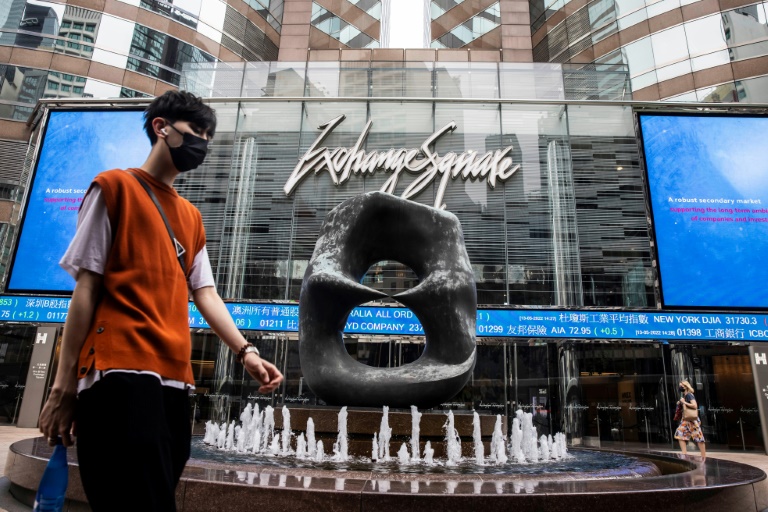
Equities fell Wednesday, tracking a drop on Wall Street ahead of a crucial US inflation report later in the day, which could have a huge bearing on the Federal Reserve’s plans for raising interest rates.

Investors are preparing for the consumer price figures with a sense of dread as analysts warn a forecast-beating reading would ramp up bets on another big Federal Reserve hike and reinforce recession expectations.

The US central bank has said its decision on when and by how much to tighten monetary policy will be driven by data as it struggles to walk a fine line between bringing inflation down from four-decade highs and trying not to damage the economy.

There had been hope that recent indicators showing activity slowing would give the Fed room to be less hawkish. But a bigger-than-predicted jump in jobs last month revived talk of a third straight three-quarter-point hike in September.

“The (Fed policy board) will need to make sure inflation moves back towards target sustainably before contemplating pausing its tightening cycle,” Carol Kong, of Commonwealth Bank of Australia, said.

“A strong inflation outcome today will likely reinforce the (board) is still some way away from that point yet, and see markets readjust higher their expectations for US interest rates.”

Wednesday’s figures come at a sensitive time for world markets, which have been buffeted by a range of other issues including the war in Ukraine, supply chain snarls and rising China-US tensions over Taiwan.

While the latest earning season has been less painful than feared, there are increasing signs that the economic slowdown is beginning to impact companies, with some major firms — including Apple and Amazon — providing downbeat outlooks.

Chip-maker Micron became the latest, saying revenue would likely come in at the low end of its forecasts in the fourth quarter owing to weak demand. That came a day after rival Nvidia unveiled disappointing results.

Tech firms led losses in New York, with the Nasdaq off more than one percent, and they did so in early Asian trade.

Hong Kong led losses, shedding two percent, while Shanghai, Tokyo, Sydney, Seoul, Mumbai, Wellington, Taipei, Bangkok and Jakarta also dropped.

Traders were unmoved by the news that China’s consumer price index rose last month to a two-year high but came in below expectations.

London, Paris and Frankfurt were also down in the morning.

Oil prices sank and remain stuck around six-month lows, even after news that supplies from Russia to three European countries through Ukraine had been halted as sanctions prohibited the processing of the transit payment.

The cost of the commodity has essentially wiped out all the gains seen since Russia’s invasion of its neighbour in February as expectations of a recession hit demand forecasts, while consumers are put off buying petrol owing to rising prices.

But OANDA’s Edward Moya said the market would not likely weaken further.

“Whatever crude demand destruction that occurs from a weakening global economy won’t be able to drag down oil prices much lower given how low the supply outlook remains,” he said in a note. 

– Key figures at around 0810 GMT –

Tokyo – Nikkei 225: DOWN 0.7 percent at 27,819.33 (close)

Hong Kong – Hang Seng Index: DOWN 2.0 percent at 19,610.84 (close)

Shanghai – Composite: DOWN 0.5 percent at 3,230.02 (close)

London – FTSE 100: DOWN 0.1 percent at 7,4478.76

Euro/dollar: DOWN at $1.0203 from $1.0213 Tuesday

Pound/dollar: UP at $1.2083 from $1.2071

Euro/pound: DOWN at 84.44 pence from 84.57 pence

Dollar/yen: DOWN at 135.00 yen from 135.12 yen

West Texas Intermediate: DOWN 0.8 percent at $89.79 per barrel

Brent North Sea crude: DOWN 0.6 percent at $95.69 per barrel

New York – Dow: DOWN 0.2 percent at 32,774.41 (close)
Deliveroo says losses grow, to exit Netherlands

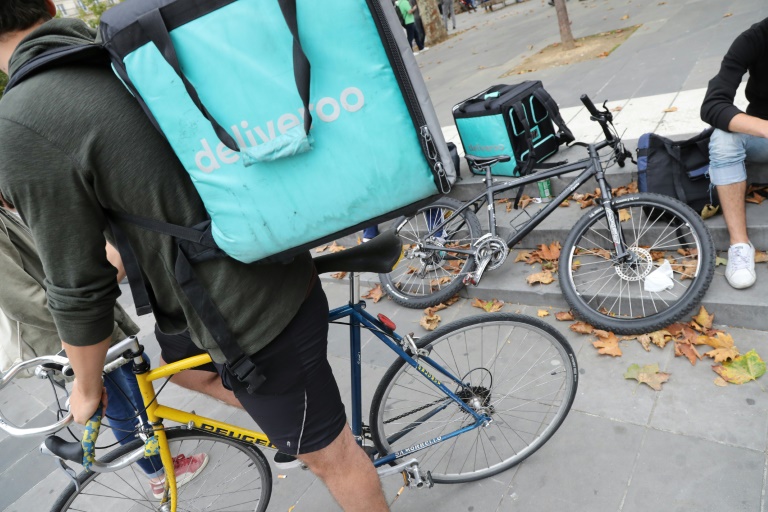
Deliveroo, the international delivery food app, announced Wednesday a big increase in losses as investment costs ate into rising revenues, adding it planned to exit its struggling Netherlands market.

Loss after tax jumped 41 percent to £153.8 million ($186 million) compared with the first six months of last year, the British group said in a statement.

Revenue grew 12 percent to £1 billion despite easing Covid curbs and controversy over treatment of its riders.

Deliveroo said the outlook was clouded by strong inflation and the Ukraine war. 

However, company founder and chief executive Will Shu expressed confidence in the company’s ability “to adapt financially to any further changes in the macroeconomic environment”. 

– Netherlands exit –

Deliveroo said it “proposes to consult on ending its operations in the Netherlands”, noting it did “not hold a strong local position” in the country.

The company added that it “would require a disproportionate level of investment, with uncertain returns, to reach and sustain a top tier market position”.

A planned exit from the Netherlands towards the end of November follows Deliveroo’s departure from Spain last year, although the group on Wednesday said it had gained market share in the UK and Italy.

It added that overall marketing and other investment costs, including spend on technology, jumped 29 percent to almost £369 million in the first half.

Deliveroo has enjoyed strong sales growth in a short space of time but faces questions over its sustainability, highlighted by its failed stock market debut which took place in London last year.

Its initial public offering was the capital’s biggest stock market launch for a decade, valuing the group at £7.6 billion.

But its share price tumbled on launch day by almost a third from the IPO price of £3.90 as investors questioned Deliveroo’s treatment of its self-employed riders.

A French court of appeal last month found Deliveroo guilty of “undeclared work” for classifying a courier as an independent contractor instead of an employee.

In early London trading following Wednesday’s earnings update, Deliveroo’s share price rose 0.8 percent at 92 pence.

“Stay-at-home stocks like Deliveroo fared extremely well during the pandemic when restaurants and bars were shut and households were forced into lockdown,” noted Victoria Scholar, head of investment at Interactive Investor. 

“However, the reopening of the economy combined with stiff competition from the likes of Just Eat and Uber Eats and q-commerce (quick-commerce) players like Gorillas and Go Puff, as well as the cost-of-living crisis, have created an extremely challenging environment.”

Raymond Briggs, author of UK Christmas classic 'The Snowman', dies aged 88

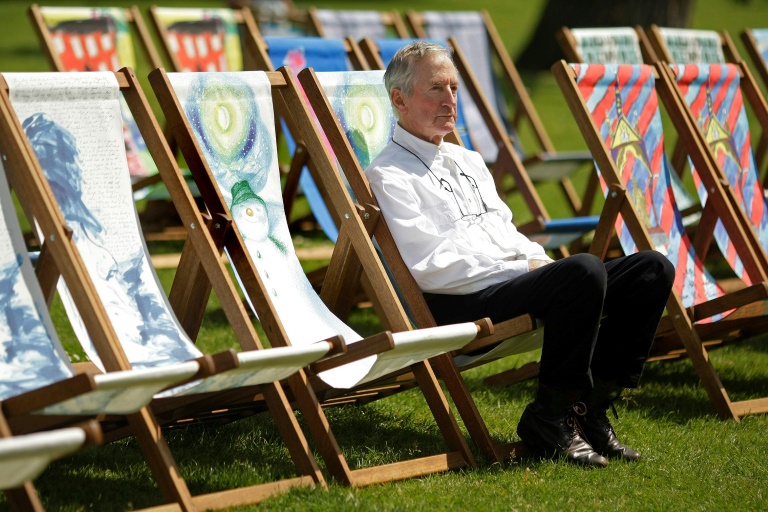
British cartoonist and illustrator Raymond Briggs, whose creation “The Snowman” became a Christmas staple for generations of children, has died aged 88, his publisher Penguin Random House said Wednesday.

The 1978 picture book about a young, ginger-haired boy who builds a snowman that magically comes to life has sold more than 5.5 million copies globally and was transformed into an animated film in 1982.

First shown on British TV, with an introduction by David Bowie in some later versions, the film and its memorable musical score has become synonymous with Christmas ever since, being shown every year.

“Raymond’s books are picture masterpieces that address some of the fundamental questions of what it is to be human, speaking to both adults and children,” said Francesca Dow, managing director of Penguin Random House Children’s. 

Reflecting his own curmudgeonly nature, Brigg’s first major success came in 1973 with “Father Christmas”, in which Santa Claus is an irascible old man who hates the cold and snow, and finds delivering presents a chore.

In 1977’s “Fungus the Bogeyman”, the eponymous hero of the slimy underworld scares vicars, wakes human babies and makes things go bump in the night.

Briggs later admitted that it was based on himself — a “miserable, disillusioned, depressed middle-aged man”.

Tense Kenya awaits results of close-fought vote

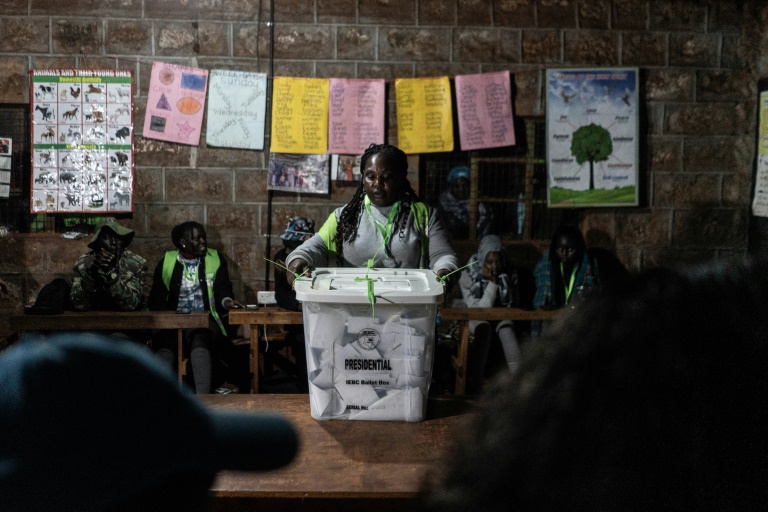
Kenyans waited anxiously on Wednesday for the results of the country’s presidential election after a largely peaceful poll, with low turnout pointing to growing frustration with the political elite.

Preliminary results broadcast by Kenyan television suggest a tight race for the presidency between Deputy President William Ruto and Raila Odinga, the veteran opposition leader now backed by the ruling party.

Both men have vowed to maintain calm following Tuesday’s poll, but the memory of past election-related violence remains fresh for many Kenyans, who have urged political parties to accept the results.

With pressure building on the Independent Electoral and Boundaries Commission (IEBC), which has to declare the results by August 16, officials worked overnight to count votes and dispel rigging fears, as observers watched.

By 10:00 am (0700 GMT) on Wednesday, the national tallying centre had received nearly 95 percent of the presidential results forms transmitted from thousands of polling stations.

“We call for patience among Kenyans as we undertake this rigorous exercise and also endeavour to complete this exercise as soon as possible,” IEBC chairman Wafula Chebukati said in a late-night briefing.

Kenyans, some of whom lined up before dawn to cast their ballot, voted in six elections on Tuesday, choosing a new president as well as senators, governors, lawmakers, woman representatives and some 1,500 county officials.

Despite the early show of enthusiasm however, turnout was markedly lower than previous years, suggesting that for some Kenyans at least, patience with years of unfulfilled promises was running out.

According to latest IECB figures, turnout at 4:00 pm Tuesday, 10 hours after polling began, was just over 56 percent of the 22 million registered voters.

That compares with a final turnout in the disputed August 2017 election of 78 percent.

Some Kenyans said they just wanted the election cycle to end so they could focus on putting food on the table in a country hit by skyrocketing inflation and an unemployment crisis. 

“The election was done yesterday, I am not interested in wasting more time on it,” Celestine Muoki, a 28-year-old IT specialist, told AFP.

“Let us move on,” she said, echoing the exhaustion felt by many in Kenya.

– ‘Lack of faith in politicians’ –

But few Kenyans expect either Ruto or Odinga to accept the result without a fight, reflecting earlier polls in the East African nation where no presidential election outcome has gone uncontested since 2002.

Once the heir-apparent, Ruto, 55, found himself banished to the sidelines after two-term President Uhuru Kenyatta — who cannot run a third time — joined hands with his former foe Odinga, 77, in a move that stunned the country.

Since then, the wealthy businessman has cast himself as the champion of “hustlers” trying to survive in a country ruled by “dynasties” — the Kenyatta and Odinga families that have dominated Kenyan politics since independence from Britain in 1963.

With a third of Kenya’s population living in poverty, economic pressures weighed on voters even before the war in Ukraine sent the prices of essential goods soaring.

Prior to the election, some observers surmised that the economy could surpass tribal affiliations as a key factor driving voter behaviour, while others said politicians’ failure to tackle the crisis could keep people away from the ballot all together.

“Many Kenyans… have cited their lack of faith in politicians to improve their current economic circumstances as the main reason for not participating in the August polls,” Oxford Economics said in a note last week.

– ‘Calm and peaceful’ –

If neither Ruto nor Odinga wins more than 50 percent of the vote, Kenya will stage a run-off for the first time in its history.

Kenya’s international partners are closely watching the election in a country deemed a beacon of regional stability.

Local polls were suspended in several areas on Tuesday, triggering a protest in one case, but police said the electoral process had largely “remained calm and peaceful with no major incidents to report”.

Security is tight nationwide, with a view to preventing a repeat of the post-election violence that has hit Kenya in the past, and schools have been ordered to remain closed until Monday.

The 2007 poll was followed by politically motivated ethnic clashes that killed more than 1,100 people, while Odinga’s challenge to the 2017 election result was met with a heavy-handed police response that left dozens dead.

China's landmark #MeToo case returns to court after setback

A landmark sexual harassment case in China returned to court Wednesday after an earlier ruling dealt a blow to the country’s fledgling #MeToo movement.

Zhou Xiaoxuan stepped forward in 2018 to accuse state TV host Zhu Jun of forcibly kissing and groping her during her 2014 internship at the broadcaster.

While the case of Zhou, now 29, inspired many others to share their experiences of sexual assault publicly and sparked a social media storm, a court ruled last year there was insufficient evidence to back her allegation.

Zhou appealed, and returned to court for another hearing on Wednesday in Beijing.

“I still feel a little scared and dejected,” she told AFP ahead of the hearing. 

“The process of the first trial was a deep secondary injury.”

Police cordoned off long stretches of pavement outside the Beijing No. 1 Intermediate People’s Court ahead of her arrival, with officers logging the details of passers-by.

Zhou told AFP her legal team would focus on getting access to more evidence, such as the police transcripts of interviews with her parents after she reported the incident — which were not included in the earlier trial.

They are also requesting access to surveillance video footage.

Zhou said Zhu was absent from earlier proceedings, and that while he had sued her for defamation, she was not aware of further developments in that case.

A small group of supporters came to wish Zhou luck on Wednesday, holding up signs that said “#MeToo” and balloons spelling out “All the best” in Chinese.

“Four years have passed, and the most important thing is that we have raised this question: When a woman encounters sexual harassment in a closed space, is her pain worth paying attention to?” Zhou said to supporters.

“There may be no answer today, but the most important thing is that we put this question here.”

– ‘Too difficult’ –

Zhou, also known by the pseudonym Xianzi, originally sued for a public apology from Zhu and 50,000 yuan ($7,400) in damages.

Her first hearing in December 2020 drew a large crowd and a significant police presence in Beijing.

Reporters from foreign media outlets including AFP were dragged away by police while filming the scene.

“The process for my case has truly been too difficult,” Zhou told AFP.

“I worry that other victims fear standing up for their rights after seeing what I’ve experienced.”

But she added that with her case, “perhaps the next victim that walks into court can receive more trust”.

Her case against Zhu was originally filed under the “personality rights” law — covering rights relating to an individual’s health and body.

But her lawyers later asked for it to be considered under a new sexual harassment law that was passed in 2020.

Despite that law, many women in China are still reluctant to come forward with harassment charges, and it is rare for cases to make it to court in a legal system that places a heavy burden on the claimant.

The country’s #MeToo movement has stumbled since 2018, when a wave of women published allegations of sexual harassment against university professors.

Threatened at the time by the prospect of an uncontrolled mass movement, internet censors quickly began blocking social media hashtags and keywords.

Pakistan zoo cancels lion auction, plans expansion instead

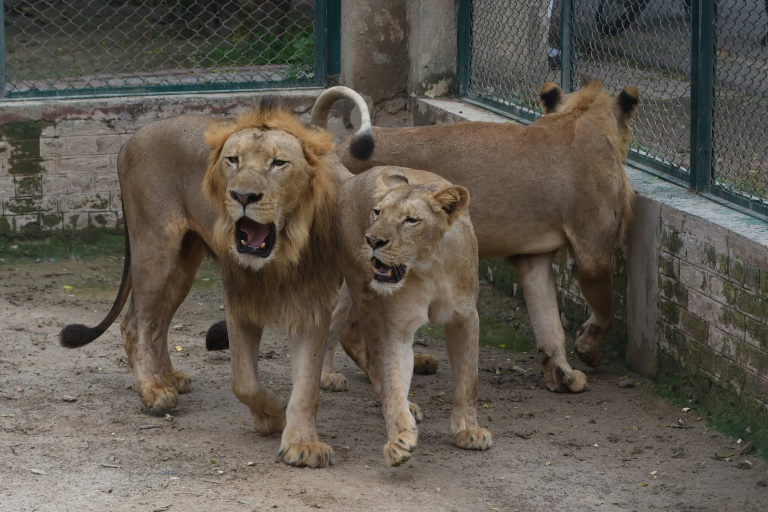
A Pakistan zoo has called off plans to auction 12 lions from its ever-growing pride to private buyers, saying it would instead create new enclosures for the big cats.

The auction planned for Thursday had drawn condemnation from the WWF, which urged authorities at Lahore Safari Zoo to instead rehome them with other government wildlife facilities.

“The main reason behind the auction was the lack of space,” deputy director Tanvir Ahmed Janjua told AFP, adding officials had decided to speed up work building two new enclosures.

“Now that this issue is to be resolved soon, there is no need for the auction to take place.”

Set over 200 acres, Lahore Safari Zoo is considered one of the best in the country — where zoos are known for disregarding animal welfare. 

The Lahore facility is currently home to 29 lions, six resident tigers and two jaguars.

Zoo officials had set a reserve of 150,000 Pakistan rupees ($700) per cat — about the same price as a cow — but hoped each would fetch around two million rupees at auction.

Keeping lions, tigers and other exotic wildlife as pets is not uncommon in Pakistan, and is seen as a status symbol.

Wealthy owners post images and video clips of their big cats on social media, and rent them out as props for movies and photoshoots.

Janjua denied opposition from animal rights activists had led to the decision to cancel the auction.

“Should the lions breed more, and we see we are running out of space once again, then we can easily hold another auction,” he said.

Pakistan zoo cancels lion auction, plans expansion instead

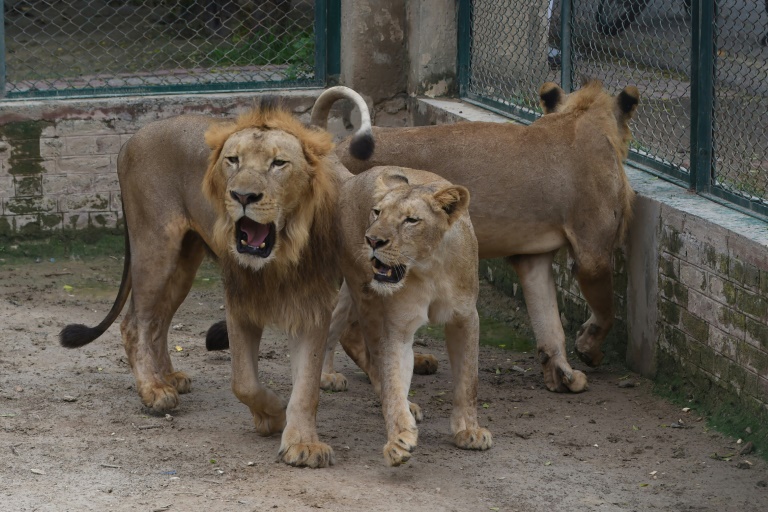
A Pakistan zoo has called off plans to auction 12 lions from its ever-growing pride to private buyers, saying it would instead create new enclosures for the big cats.

The auction planned for Thursday had drawn condemnation from the WWF, which urged authorities at Lahore Safari Zoo to instead rehome them with other government wildlife facilities.

“The main reason behind the auction was the lack of space,” deputy director Tanvir Ahmed Janjua told AFP, adding officials had decided to speed up work building two new enclosures.

“Now that this issue is to be resolved soon, there is no need for the auction to take place.”

Set over 200 acres, Lahore Safari Zoo is considered one of the best in the country — where zoos are known for disregarding animal welfare. 

The Lahore facility is currently home to 29 lions, six resident tigers and two jaguars.

Zoo officials had set a reserve of 150,000 Pakistan rupees ($700) per cat — about the same price as a cow — but hoped each would fetch around two million rupees at auction.

Keeping lions, tigers and other exotic wildlife as pets is not uncommon in Pakistan, and is seen as a status symbol.

Wealthy owners post images and video clips of their big cats on social media, and rent them out as props for movies and photoshoots.

Janjua denied opposition from animal rights activists had led to the decision to cancel the auction.

“Should the lions breed more, and we see we are running out of space once again, then we can easily hold another auction,” he said.

Stranded beluga whale removed from France's Seine river

A beluga whale stranded in the Seine river in northern France for more than a week was removed from the water early Wednesday in a risky rescue operation, but officials warned it was in poor health.

After nearly six hours of work by dozens of divers and rescuers, the 800-kilogram (1,800-pound) cetacean was lifted from the river by a net and crane at around 4:00 am (0200 GMT) and placed on a barge under the immediate care of a dozen veterinarians.

The beluga, a protected species usually found in cold Arctic waters, was then given a health check and driven in a refrigerated truck toward the coastal town of Ouistreham.

Upon arrival, the beluga will be installed in a seawater lock where it will be held for observation for several days before being released into the open sea.

But officials in Eure, where the beluga was stranded, said the whale was worryingly thin.

“It bodes, according to veterinarians, for a poor vital prognosis,” the Eure prefecture said in a statement after the rescue operation, which it said was “particularly complex”. 

The four-metre (13-foot) whale was spotted more than a week ago heading towards Paris and was stranded about 130 kilometres (81 miles) inland from the Channel at Saint-Pierre-la-Garenne in Normandy.

Since Friday, the animal’s movement inland had been blocked by a lock at Saint-Pierre-la-Garenne, 70 kilometres (44 miles) northwest of Paris, and its health deteriorated after it refused to eat.

Isabelle Dorliat-Pouzet, secretary general of the Eure prefecture, said earlier that medical tests would be carried out before transporting the whale. 

“He is a male, that he is very underweight and that he has a few sores,” she said. 

– ‘A great day’ –

The animal’s rescue was hailed online after a nail-biting few days.  

“Today is a great day for this beluga whale and for everyone involved in its rescue,” conservation group Sea Shepherd said on its website.

But the operation to return it to the sea is not without risk, said Isabelle Brasseur of the Marineland sea animal park in southern France, part of a Marineland team sent to assist with the rescue.

“It could be that he dies now, during the handling, during the journey or at point B,” in Ouistreham, she told AFP Tuesday.

The 24 divers involved in the operation and the rescuers handling the ropes had to try several times between 10:00 pm and 4:00 am to lure the animal into the nets to be lifted out of the water.

As preparations for the operation got under way, people gathered along the banks of the river to observe.

“I’m hopeful that he will reach the sea and that he will not end up like the orca,” said Isabelle Rainsart, referring to a killer whale that was spotted in the Seine in May but later died. 

“We will wait to see how the transport goes, but we may have already succeeded in the hard part,” added Rainsart, who first filmed the beluga on August 2 from her garden overlooking the river.

Interest in the beluga’s fate has spread far beyond France, generating a large influx of financial donations and other aid from conservation groups as well as individuals, officials said.

While belugas migrate south in the autumn to feed as ice forms in their native Arctic waters, they rarely venture so far.

According to France’s Pelagis Observatory, which specialises in sea mammals, the nearest beluga population is off the Svalbard archipelago, north of Norway, 3,000 kilometres from the Seine.

The trapped whale is only the second beluga ever sighted in France. The first was pulled out of the Loire estuary in a fisherman’s net in 1948.

Stranded beluga whale removed from France's Seine river

A beluga whale stranded in the Seine river in northern France for more than a week was removed from the water early Wednesday in a risky rescue operation, but officials warned it was in poor health.

After nearly six hours of work by dozens of divers and rescuers, the 800-kilogram (1,800-pound) cetacean was lifted from the river by a net and crane at around 4:00 am (0200 GMT) and placed on a barge under the immediate care of a dozen veterinarians.

The beluga, a protected species usually found in cold Arctic waters, was then given a health check and driven in a refrigerated truck toward the coastal town of Ouistreham.

Upon arrival, the beluga will be installed in a seawater lock where it will be held for observation for several days before being released into the open sea.

But officials in Eure, where the beluga was stranded, said the whale was worryingly thin.

“It bodes, according to veterinarians, for a poor vital prognosis,” the Eure prefecture said in a statement after the rescue operation, which it said was “particularly complex”. 

The four-metre (13-foot) whale was spotted more than a week ago heading towards Paris and was stranded about 130 kilometres (81 miles) inland from the Channel at Saint-Pierre-la-Garenne in Normandy.

Since Friday, the animal’s movement inland had been blocked by a lock at Saint-Pierre-la-Garenne, 70 kilometres (44 miles) northwest of Paris, and its health deteriorated after it refused to eat.

Isabelle Dorliat-Pouzet, secretary general of the Eure prefecture, said earlier that medical tests would be carried out before transporting the whale. 

“He is a male, that he is very underweight and that he has a few sores,” she said. 

– ‘A great day’ –

The animal’s rescue was hailed online after a nail-biting few days.  

“Today is a great day for this beluga whale and for everyone involved in its rescue,” conservation group Sea Shepherd said on its website.

But the operation to return it to the sea is not without risk, said Isabelle Brasseur of the Marineland sea animal park in southern France, part of a Marineland team sent to assist with the rescue.

“It could be that he dies now, during the handling, during the journey or at point B,” in Ouistreham, she told AFP Tuesday.

The 24 divers involved in the operation and the rescuers handling the ropes had to try several times between 10:00 pm and 4:00 am to lure the animal into the nets to be lifted out of the water.

As preparations for the operation got under way, people gathered along the banks of the river to observe.

“I’m hopeful that he will reach the sea and that he will not end up like the orca,” said Isabelle Rainsart, referring to a killer whale that was spotted in the Seine in May but later died. 

“We will wait to see how the transport goes, but we may have already succeeded in the hard part,” added Rainsart, who first filmed the beluga on August 2 from her garden overlooking the river.

Interest in the beluga’s fate has spread far beyond France, generating a large influx of financial donations and other aid from conservation groups as well as individuals, officials said.

While belugas migrate south in the autumn to feed as ice forms in their native Arctic waters, they rarely venture so far.

According to France’s Pelagis Observatory, which specialises in sea mammals, the nearest beluga population is off the Svalbard archipelago, north of Norway, 3,000 kilometres from the Seine.

The trapped whale is only the second beluga ever sighted in France. The first was pulled out of the Loire estuary in a fisherman’s net in 1948.

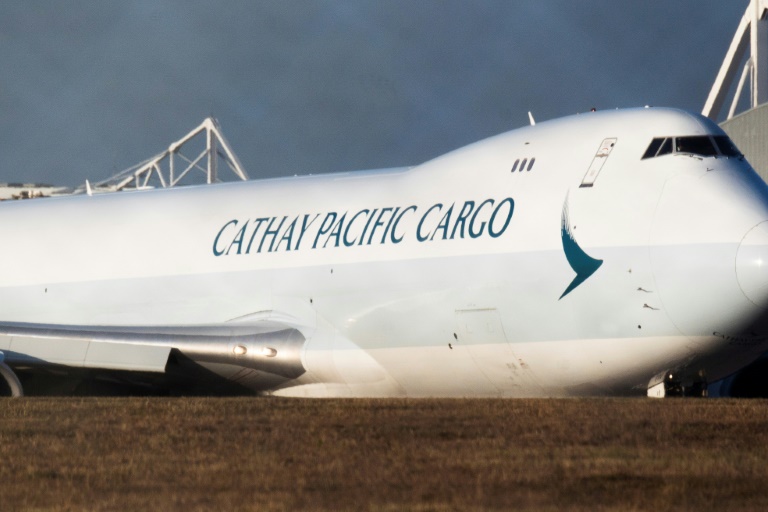
Hong Kong's Cathay Pacific narrows H1 loss, eyes better end to year

Hong Kong carrier Cathay Pacific on Wednesday reported losses had narrowed in the first half after an “extremely difficult start” to the year, but said its capacity will improve in coming months as travel sentiment improves.

The US$637 million loss in January-June was narrower than the US$968 million deficit suffered in the same period last year, as the airline benefited from strong cargo demand and cost-cutting measures.

Chairman Patrick Healey said in a statement that the first few months were “particularly unfavourable” as pandemic-related travel restrictions severely constrained Cathay’s flight operations and greatly affected demand for travel.

But he added that the airline was gearing up for borders reopening and expected a stronger second-half.

Cathay aims to boost passenger flight capacity to a quarter of pre-pandemic levels by the end of 2022, while it is looking to lift cargo capacity to 65 percent, Healey said.

The airline carried 335,000 passengers in the first half of the year, more than double that of the same period in 2021, bringing in US$263 million in revenue. Income from the cargo unit jumped 9.3 percent to US$1.5 billion.

Total revenue was up 17 percent on-year at US$2.4 billion.

Hong Kong has taken tentative steps toward reopening its borders after being internationally isolated for two and a half years owing to strict Covid rules for travellers.

On Monday authorities said visitors would now have to spend just three days in hotel quarantine, down from seven and much lower than the three weeks earlier in the year.

Cathay praised the adjustments as “positive steps” but pressed the government to “urgently provide a clear roadmap” to remove all pandemic-related restrictions on passengers and aircrew.

The firm’s ability to operate more flights “continues to be severely constrained by a bottleneck on crewing resources under the existing quarantine requirements”, Healey said on Wednesday.

Last month, Hong Kong also suspended a circuit-breaker mechanism that penalised airlines for bringing in coronavirus cases — which had affected numerous Cathay routes, including for key markets such as the United States and Britain.

The airline operated just 29 destinations in January, compared with more than 100 before the pandemic.

Hong Kong authorities are hinting at a potential international reopening in November, timed to coincide with the high-profile Rugby Sevens tournament and a banking summit.

Cathay is bringing aircraft parked overseas back to Hong Kong and is aiming to hire more than 4,000 front-line employees over the next 18 to 24 months, Healey said.

In June, Hong Kong also extended the drawdown period of a US$1 billion bridge loan to Cathay — the second time in two years — as part of a US$5 billion government bailout to help the airline weather the pandemic.

Hong Kong’s home carrier suffered a reputational blow earlier this year when a coronavirus outbreak was traced to two of its flight attendants who breached their quarantine rules. They were fired and later prosecuted.

Close Bitnami banner
Bitnami