World

Stranded beluga whale removed from France's Seine river: AFP

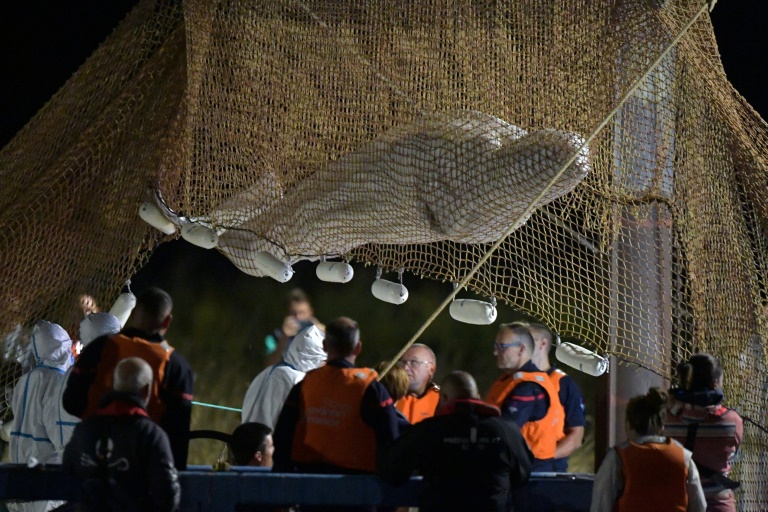
The beluga whale stranded in the river Seine in northern France was removed from the water early Wednesday in the first stage of an ambitious rescue operation, an AFP journalist said.

After nearly six hours of work, the 800-kilogram (1,800-pound) cetacean was lifted from the river by a net and crane at around 4:00 am (0200 GMT) and placed on a barge under the immediate care of a dozen veterinarians.

The beluga, a protected species usually found in cold Arctic waters, will next be placed in a refrigerated truck and transported to the coast, Isabelle Dorliat-Pouzet, secretary general of the Eure prefecture, said ahead of the rescue operation.

The four-metre (13-foot) whale was spotted more than a week ago heading towards Paris and was stranded some 130 kilometres (80 miles) inland from the Channel at Saint-Pierre-La-Garenne in Normandy.

Since Friday, the animal’s movement inland has been blocked by a lock at Saint-Pierre-La-Garenne, 70 kilometres northwest of Paris, and its health had deteriorated after it refused to eat.

But its condition was “satisfactory”, Isabelle Brasseur of the Marineland sea animal park in southern France, Europe’s biggest, told AFP earlier on Tuesday.

A seawater basin at a lock in the Channel port of Ouistreham has been readied for the animal, which will spend three days there under observation in preparation for its release.

The “exceptional” operation to return it to the sea is not without risk for the whale, which is already weakened and stressed, said Brasseur, part of a Marineland team sent to assist with the rescue, alongside the NGO Sea Shepherd France.

“It could be that he dies now, during the handling, during the journey or at point B,” in Ouistreham, she said.

The 24 divers involved in the operation and the rescuers handling the ropes had to try several times between 10:00 pm and 4:00 am to lure the animal into the nets to be lifted out of the water.

A handful of curious people remained on the bank all night to observe the operation.

Stranded beluga whale removed from France's Seine river: AFP

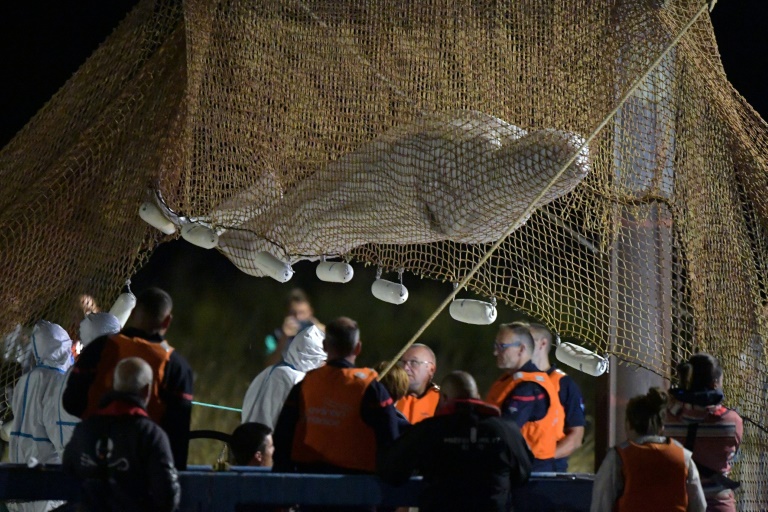
The beluga whale stranded in the river Seine in northern France was removed from the water early Wednesday in the first stage of an ambitious rescue operation, an AFP journalist said.

After nearly six hours of work, the 800-kilogram (1,800-pound) cetacean was lifted from the river by a net and crane at around 4:00 am (0200 GMT) and placed on a barge under the immediate care of a dozen veterinarians.

The beluga, a protected species usually found in cold Arctic waters, will next be placed in a refrigerated truck and transported to the coast, Isabelle Dorliat-Pouzet, secretary general of the Eure prefecture, said ahead of the rescue operation.

The four-metre (13-foot) whale was spotted more than a week ago heading towards Paris and was stranded some 130 kilometres (80 miles) inland from the Channel at Saint-Pierre-La-Garenne in Normandy.

Since Friday, the animal’s movement inland has been blocked by a lock at Saint-Pierre-La-Garenne, 70 kilometres northwest of Paris, and its health had deteriorated after it refused to eat.

But its condition was “satisfactory”, Isabelle Brasseur of the Marineland sea animal park in southern France, Europe’s biggest, told AFP earlier on Tuesday.

A seawater basin at a lock in the Channel port of Ouistreham has been readied for the animal, which will spend three days there under observation in preparation for its release.

The “exceptional” operation to return it to the sea is not without risk for the whale, which is already weakened and stressed, said Brasseur, part of a Marineland team sent to assist with the rescue, alongside the NGO Sea Shepherd France.

“It could be that he dies now, during the handling, during the journey or at point B,” in Ouistreham, she said.

The 24 divers involved in the operation and the rescuers handling the ropes had to try several times between 10:00 pm and 4:00 am to lure the animal into the nets to be lifted out of the water.

A handful of curious people remained on the bank all night to observe the operation.

Bollywood seeks boost with 'Forrest Gump' remake

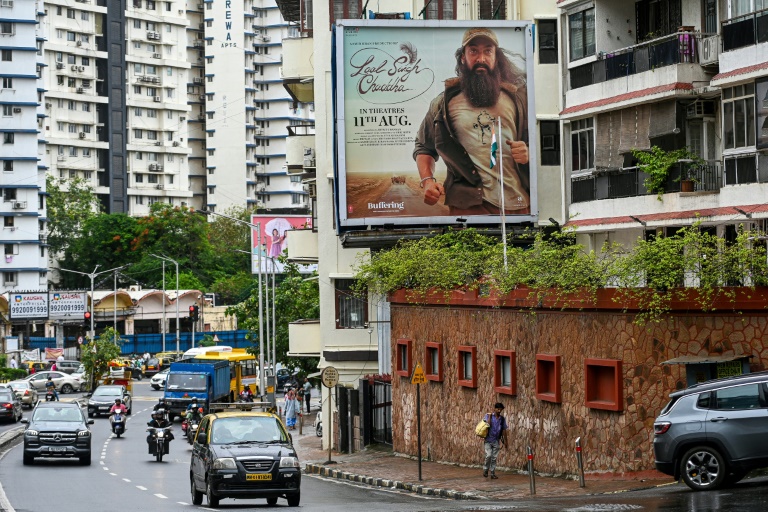
One of India’s biggest stars is banking on a remake of Hollywood feelgood hit “Forrest Gump” to revive the fortunes of Hindi-language Bollywood, after a string of weak box-office showings.

Aamir Khan’s “Laal Singh Chaddha”, an adaptation of the 1994 US classic starring Tom Hanks, hits cinemas on Thursday ahead of India’s 75th independence celebrations.

Disappointing takings for other Bollywood A-listers have cast a pall over an industry still recovering from Covid-19 lockdown losses when many in movie-mad India turned to streaming giants like Netflix and Disney+ Hotstar.

The adaptation keeps several iconic scenes from the original — which netted six Oscars, including for Best Picture — such as a floating white feather, ping-pong playing and lots of running.

– Box of golgappas –

But there are several changes, with Gump’s “box of chocolates” line becoming “Life is just like a golgappa. Your tummy might feel full, but your heart always craves more.”

Golgappa is a popular Indian snack, while the second half of the saying — “you never know what you’re gonna get” in the original —  draws from a common Hindi phrase.

The film promises to take people through India’s history in the same way Gump stumbled through and influenced major US events like the Vietnam War.

This could irk Indian right-wing critics who have already called for a boycott of the film because of comments made by Khan in 2015 that were deemed to be unpatriotic.

Khan, the star of megahit “Dangal” (2016), and screenwriter Atul Kulkarni were coy in sharing what Indian historical settings would be featured.

Kulkarni would only say that his script was a “beautiful story about a beautiful country called India through a beautiful person called Laal Singh”.

– Remaking a ‘classic’ –

Khan, 57, admitted that he initially put off reading Kulkarni’s script, uncertain it would be possible to adapt such a “cult classic”.

“It’s like saying we are remaking ‘Mughal-e-Azam’ and ‘Mother India’. It’s not a wise thing to do,” he said, referring to two Indian classics.

“But when I heard the script, I understood he’s done it. It was a moving experience for me. I really loved it. The moment I heard it I wanted to do this.”

Bollywood star Kareena Kapoor, 41, who plays Singh’s lifelong friend Rupa, based on Robin Wright’s Jenny Curran, said the plot was “timeless” with a love story at its core.

“I wondered how they would play around with such an iconic film,” added Naga Chaitanya, a Telugu-language star from the southern film industry “Tollywood” who plays Bala, an adaptation of Gump’s shrimp-fishing Vietnam comrade Bubba.

“But the way they have conceived the film for Indian cinema is unique.”

– Competition –

Recent silver-screen hits have not come from Hindi-language Bollywood but are in other Indian languages, such as action flicks “Pushpa”, “KGF: Chapter 2” and “RRR”.

“RRR”, released in March, raked in $87 million domestically, while “KGF: Chapter 2”, which debuted a few weeks later, took in $106 million, media analyst Karan Taurani of Mumbai-based Elara Capital told AFP.

Action film “Shamshera”, released on July 22 and starring Bollywood actor Ranbir Kapoor, has so far only made $5.6 million, dashing hopes it would lure audiences back to Hindi cinema.

A rare Bollywood hit this year has been comedy horror “Bhool Bhulaiyaa 2” released on May 20 and featuring rising star Kartik Aryan, which has brought in $24 million so far.

Now, all eyes are on “Laal Singh Chaddha” and family dramedy “Raksha Bandhan” with Bollywood megastar Akshay Kumar — which also releases on Thursday.

Taurani estimates that “Laal Singh Chaddha” will make $19 million, falling short of Khan’s per-film average of $35 million.

Khan, who co-produced “Laal Singh Chaddha”, believes Bollywood hasn’t lost its mojo, blaming the early release of movies on streaming services for lower box-office takings.

“I feel that perhaps we — I’m including myself in this — as Hindi filmmakers, need to… also pick topics which are relevant to a larger audience, as opposed to picking topics which are relevant to a smaller audience,” he said.

A tense Kenya awaits results of high-stakes vote

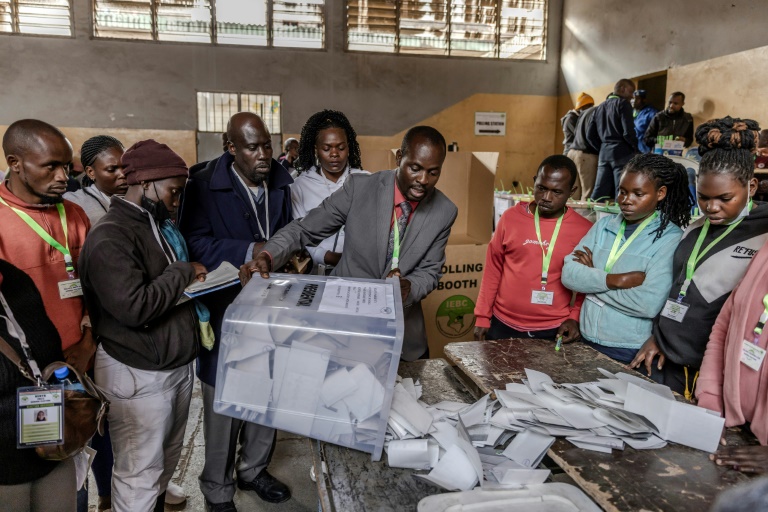
Kenyans waited anxiously on Wednesday for the results of the country’s presidential election after a largely peaceful poll, with low turnout in some areas suggesting growing frustration with the political elite.

Although presidential frontrunners William Ruto and Raila Odinga have both vowed to maintain calm following Tuesday’s poll, the memory of past election-related violence remains fresh for many Kenyans, who have urged political parties to accept the results.

With pressure building on the Independent Electoral and Boundaries Commission (IEBC), which has to declare the results by August 16, officials worked overnight to count votes and dispel rigging fears.

“We call for patience among Kenyans as we undertake this rigorous exercise and also endeavour to complete this exercise as soon as possible,” IEBC chairman Wafula Chebukati said in a late-night briefing.

Kenyans, some of whom lined up before dawn to cast their ballot, voted in six elections on Tuesday, choosing a new president as well as senators, governors, lawmakers, woman representatives and some 1,500 county officials.

Despite the early show of enthusiasm however, turnout in some areas appeared to be weak, suggesting that for some Kenyans at least, patience with years of unfulfilled promises was running out.

Even those who showed up early to vote said they were tired of electing political leaders who had done little to improve their lives.

“All along we have been doing elections, getting promises but we see no change,” said George Otieno Henry, a 56-year-old artisan.

“I hope this time it will be better,” he told AFP in Kibera, one of Nairobi’s largest slums.

By 4:00 pm (1300 GMT), 10 hours after polling began, turnout was at just over 56 percent of the 22 million registered voters, according to the IEBC.

Comparable figures for the August 2017 election were not immediately available but overall turnout reached 78 percent in that vote.

– Cost-of-living crisis –

Deputy President Ruto and Odinga, a veteran opposition leader now backed by the ruling party, have both pledged to tackle the cost-of-living crisis and ease the lives of ordinary Kenyans.

But many are bracing for the pair to spar over the results, reflecting earlier polls in the East African nation where no presidential election outcome has gone uncontested since 2002.

Once the heir-apparent, Ruto, 55, found himself banished to the sidelines after two-term President Uhuru Kenyatta — who cannot run for a third time — joined hands with his former foe Odinga, 77, in a move that stunned the country.

Since then, the wealthy businessman has cast himself as the champion of “hustlers” trying to eke out a living in a country ruled by “dynasties” — the Kenyatta and Odinga families that have dominated Kenyan politics since independence from Britain in 1963.

With a third of Kenya’s population living in poverty, economic pressures weighed on voters even before the war in Ukraine sent the prices of essential goods soaring.

Prior to the election, some observers surmised that the economy could surpass tribal affiliations as a key factor driving voter behaviour, while others said politicians’ failure to tackle the crisis could keep people away from the ballot all together.

“Many Kenyans… have cited their lack of faith in politicians to improve their current economic circumstances as the main reason for not participating in the August polls,” Oxford Economics said in a note last week.

– ‘Calm and peaceful’ –

Analysts have suggested that Odinga, a onetime political prisoner and former prime minister who is making his fifth stab at the presidency, could edge past his younger rival.

If neither wins more than 50 percent, Kenya will stage a run-off for the first time in its history.

Kenya’s international partners are closely watching the election in a country deemed a beacon of regional stability.

Local polls were suspended in several areas on Tuesday, triggering a protest in one case, but police said the electoral process had largely “remained calm and peaceful with no major incidents to report”.

Security was tight, with a view to preventing a repeat of the post-election violence that has hit Kenya in the past.

The 2007 poll was followed by politically motivated ethnic clashes that killed more than 1,100 people, while Odinga’s challenge to the 2017 election result was met with a heavy-handed police response that left dozens dead.

Misery and disease conquer Afghanistan a year into Taliban rule

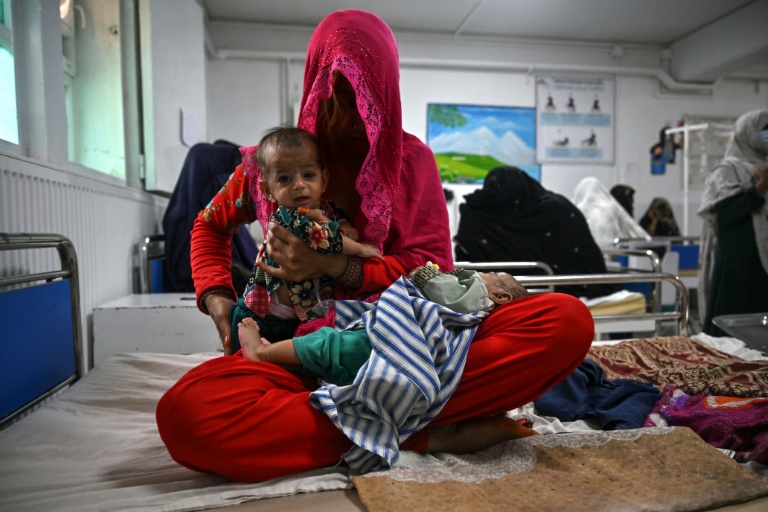
The heaving wards of a ramshackle clinic in southern Afghanistan are just one sign of the catastrophic humanitarian crisis that has gripped the war-ravaged country since the Taliban returned to power a year ago.

Last month, the Musa Qala District Hospital in Helmand province was forced to shut its doors to all except those suffering from suspected cholera.

The infirmary was soon jammed with listless patients, intravenous drips needled into their wrists as they recuperated on rusting gurneys.

Though the clinic lacks facilities to test for cholera, about 550 patients presented themselves within days, showing symptoms of a disease caused by a lack of basic sanitation needs: clean drinking water and an adequate sewerage system.

“It’s very difficult,” hospital chief Ehsanullah Rodi, run ragged on just five hours of sleep a night since the influx began, told AFP.

“We didn’t see this from last year, or another year.”

The United Nations says Afghanistan’s humanitarian crisis is the world’s worst.

– Hungry children – 

Poverty in the country — felt most keenly in Afghanistan’s south — has been driven to desperate new levels, exacerbated by drought and inflation since Russia’s invasion of Ukraine.

“Since the Emirate (Taliban) came into power, we can’t even find cooking oil,” said one woman, perched on a hospital cot next to her malnourished six-month-old grandson in Lashkar Gah, Helmand’s provincial capital.

“Poor people are squashed under their feet,” the 35-year-old said.

Her grandchild is being treated for the fifth time at Boost Hospital, a sun-baked maze of paint-peeled buildings run jointly by the health ministry and Doctors Without Borders (MSF). 

Many of the beds on the malnutrition ward host two tiny, frail patients — some suckling gamely on syringes of milk, while others heave onerous breaths as they fight to regain their strength.

“We can’t even find dry bread,” said Breshna, the mother of another patient, who guesses her age at between 15 and 20.

“We haven’t had anything to eat in three or four days.”

Assistant nursing supervisor Homeira Nowrozi, fighting to be heard above wailing infants, said staff “have not any rest”.

“We have a lot of patients that come in critical,” she said, because parents could not afford to travel sooner.

“We don’t know how many mortalities … we have in the districts, because they didn’t come to hospital.”

– A moral tangle – 

Afghanistan’s plight began well before August 15, 2021 when the Taliban captured Kabul on the heels of a hasty withdrawal of US-led troops and the collapse of the government they propped up.

But the Taliban’s takeover pushed the country — home to 38 million people — over the precipice.

The United States froze $7 billion in central bank assets, the formal banking sector collapsed, and foreign aid representing 45 percent of GDP stopped overnight. 

Over the past year, would-be donors have grappled with the conundrum of funnelling fresh funding to the ailing nation, which the Taliban rebranded the “Islamic Emirate” in line with their austere theocratic beliefs.

“How do you provide assistance in a country where you don’t recognise the government?” asked Roxanna Shapour of the Afghanistan Analysts Network.

Importing humanitarian aid to address crises such as the June earthquake — which killed more than 1,000 people and left tens of thousands more homeless — is relatively simple, she said, as it is “non-political, it’s life-saving assistance”. 

Cash is also airlifted to fund food aid and healthcare, but development aid for long-term projects that could transform the economy is more complex.

“If you go in and say, ‘I’m going to pay all teacher salaries’, that’s great. But then what will the Taliban do with the money they save from not having to pay teacher salaries?” asked Shapour.

–  A souring mood – 

In Musa Qala — a dusty farming outpost with a shipping container bazaar staffed by child shopkeepers — the deprivation is visible.

The local economy seems to barely subsist on motorcycle repairs, the sale of pallid poultry carcasses, and canisters of energy drinks kept tepid in grimy chest freezers.

The town witnessed some of the bloodiest chapters of the 2001-2021 war, and is connected to Lashkar Gah by a makeshift track up a desiccated riverbed lined with jagged rocks.

The road begins again further south at Sangin, a place where mud-walled compounds have been so badly ravaged by gunfire and artillery that they are crumbling back into the earth.

In a cruel irony, desperation and the demand for humanitarian services have only deepened with the arrival of peace.

“Now we can visit the hospital whether it’s night or day,” said Maimana, whose eight-year-old daughter Asia was being treated at Musa Qala.

“Before, there used to be fighting and mines — the roads were blocked.”

Helmand public health director Sayed Ahmad told AFP that the flood of new patients means there is “less space” and that “there are fewer staff, so there are difficulties”.

Nevertheless, Ahmad — a soft-spoken doctor whose office is lined with medical tomes — insists “the overall situation is better” than under the previous government, when corruption was rife.

He blames economic sanctions against the Taliban for some of their woes, saying “the needs and demands of people have increased”.

But analysts say the Islamists are far from blameless.

“The Taliban’s repressive social policies have made it more difficult to reach a deal on getting those frozen assets unlocked,” said International Crisis Group’s Graeme Smith.

“This is really just about the emotions of policymakers — and shutting millions of girls out of secondary schools really soured the mood.”

– Unable to rule –

The Taliban flag now flies openly across Helmand province, staked on bullet-ridden buildings.

But after coveting control for two decades, they are ruling the nation at its most ruined.

One man in Lashkar Gah — who asked not to be named — offered his own scathing remark on the Taliban’s ability to rule.

“The clothes of the government are too big for them,” he said.

Asian markets drop on rate worries ahead of inflation data

Asian equities fell Wednesday, tracking a drop on Wall Street ahead of a crucial US inflation report later in the day, which could have a huge bearing on the Federal Reserve’s plans for raising interest rates.

Investors are preparing for the consumer price figures with a sense of dread as analysts warn a forecast-beating reading would ramp up bets on another big Federal Reserve hike and reinforce recession expectations.

The US central bank has said its decision on when and by how much to tighten monetary policy will be driven by data as it struggles to walk a fine line between bringing inflation down from four-decade highs and trying not to damage the economy.

There had been hope that recent indicators showing activity slowing would give the Fed room to be less hawkish. But a bigger-than-predicted jump in jobs last month revived talk of a third straight three-quarter-point hike in September.

“The (Fed policy board) will need to make sure inflation moves back towards target sustainably before contemplating pausing its tightening cycle,” Carol Kong, of Commonwealth Bank of Australia, said.

“A strong inflation outcome today will likely reinforce the (board) is still some way away from that point yet, and see markets readjust higher their expectations for US interest rates.”

Wednesday’s figures come at a sensitive time for world markets, which have been buffeted by a range of other issues including the war in Ukraine, supply chain snarls and rising China-US tensions over Taiwan.

While the latest earning season has been less painful than feared, there are increasing signs that the economic slowdown is beginning to impact companies, with some major firms — including Apple and Amazon — providing downbeat outlooks.

Chip-maker Micron became the latest, saying revenue would likely come in at the low end of its forecasts in the fourth quarter owing to weak demand. That came a day after rival Nvidia unveiled disappointing results.

Tech firms led losses in New York, with the Nasdaq off more than one percent, and they did so in early Asian trade.

Hong Kong, Shanghai, Tokyo, Sydney, Seoul, Wellington, Taipei, Manila and Jakarta were all well down.

There was little initial  reaction to news that China’s consumer price index rose last month to a two-year high but came in below expectations.

Oil prices were flat but remained around six-month lows, even after news that supplies from Russia to three European countries through Ukraine had been halted as sanctions prohibited the processing of the transit payment.

The cost of the commodity has essentially wiped out all the gains seen since Russia’s invasion of its neighbour in February as expectations of a recession hit demand forecasts, while consumers are put off buying petrol owing to rising prices.

But OANDA’s Edward Moya said the market would not likely weaken further.

“Whatever crude demand destruction that occurs from a weakening global economy won’t be able to drag down oil prices much lower given how low the supply outlook remains,” he said in a note. 

– Key figures at around 0230 GMT –

Tokyo – Nikkei 225: DOWN 0.8 percent at 27,767.07 (break)

Hong Kong – Hang Seng Index: DOWN 1.6 percent at 19,687.72

Shanghai – Composite: DOWN 0.4 percent at 3,233.24

Euro/dollar: UP at $1.0215 from $1.0213 Tuesday

Pound/dollar: UP at $1.2081 from $1.2071

Euro/pound: DOWN at 84.55 pence from 84.57 pence

Dollar/yen: DOWN at 135.06 yen from 135.12 yen

West Texas Intermediate: DOWN 0.1 percent at $90.45 per barrel

Brent North Sea crude: UP 0.1 percent at $96.39 per barrel

New York – Dow: DOWN 0.2 percent at 32,774.41 (close)

London – FTSE 100: UP 0.1 percent at 7,488.15 (close)

Russia launches Iranian satellite amid Ukraine war concerns

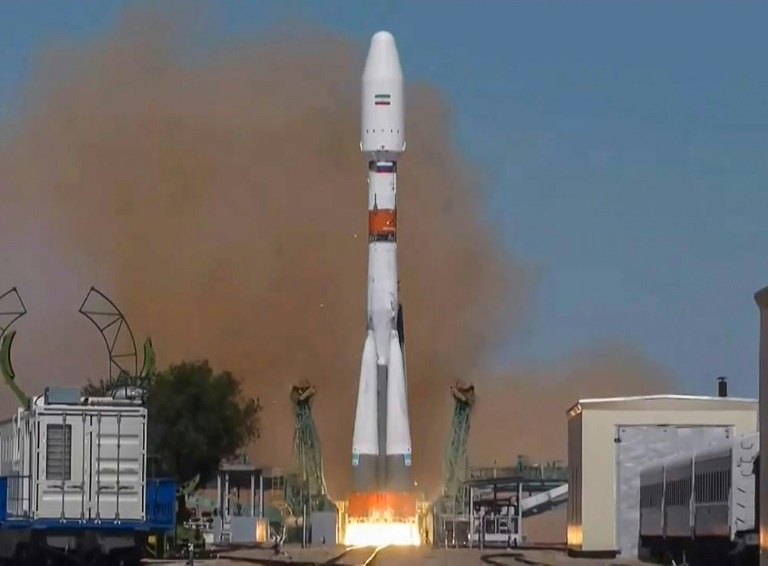
An Iranian satellite launched by Russia blasted off from Kazakhstan Tuesday and reached orbit amid controversy that Moscow might use it to boost its surveillance of military targets in Ukraine.

As Russia’s international isolation grows following Western sanctions over its invasion of Ukraine, the Kremlin is seeking to pivot towards the Middle East, Asia and Africa and find new clients for its embattled space programme.

Speaking at the Moscow-controlled Baikonur Cosmodrome in the Kazakh steppe, Russian space chief Yury Borisov hailed “an important milestone in Russian-Iranian bilateral cooperation, opening the way to the implementation of new and even larger projects”.

Iran’s Telecommunications Minister Issa Zarepour, who also attended the launch of the Khayyam satellite, called the event “historic” and “a turning point for the start of a new interaction in the field of space between our two countries”.

Nasser Kanani, the Iranian foreign ministry spokesman, said on Twitter that “the brilliant path of scientific and technological progress of the Islamic republic of Iran continues despite sanctions and the enemies’ maximum pressure”.

Iran, which has maintained ties with Moscow and refrained from criticism of the Ukraine invasion, has sought to deflect suspicions that Moscow could use Khayyam to spy on Ukraine.

Responding to the launch, Washington said Russia’s growing cooperation with Iran should be viewed as a “profound threat”.

“We are aware of reports that Russia launched a satellite with significant spying capabilities on Iran’s behalf,” a US State Department spokesperson said.

“Russia deepening an alliance with Iran is something that the whole world should look at and see as a profound threat.”

Last week, The Washington Post quoted anonymous Western intelligence officials as saying that Russia “plans to use the satellite for several months or longer” to assist its war efforts before allowing Iran to take control.

Less than two hours after the satellite was launched on a Soyuz-2.1b rocket, the Iran Space Agency (ISA) said “ground stations of the Iran Space Agency” had already received “first telemetric data”. 

The space agency stressed on Sunday that the Islamic republic would control the satellite “from day one” in an apparent reaction to the Post’s report.

“No third country is able to access the information” sent by the satellite due to its “encrypted algorithm”, it said.

The purpose of Khayyam is to “monitor the country’s borders”, enhance agricultural productivity and monitor water resources and natural disasters, according to the space agency.

– ‘Long-term cooperation’ –

Khayyam, apparently named after the 11th-century Persian polymath Omar Khayyam, will not be the first Iranian satellite that Russia has put into space. 

In 2005, Iran’s Sina-1 satellite was deployed from Russia’s Plesetsk Cosmodrome.

Iran is currently negotiating with world powers, including Moscow, to salvage a 2015 deal aimed at reining in Tehran’s nuclear ambitions.

The United States — which quit the landmark Joint Comprehensive Plan of Action or JCPOA in 2018 under then-president Donald Trump — has accused Iran of effectively supporting Russia’s war against Ukraine while adopting a “veil of neutrality”.

Russian President Vladimir Putin met Iranian counterpart Ebrahim Raisi and Supreme Leader Ayatollah Ali Khamenei in Tehran last month — one of his few trips abroad since Moscow’s February 24 invasion. 

Iran’s Khamenei called for “long-term cooperation” with Russia during their meeting, and Tehran has refused to join international condemnation of Moscow’s invasion of its pro-Western neighbour.

Iran insists its space programme is for civilian and defence purposes only, and does not breach the 2015 nuclear deal, or any other international agreement. 

Western governments worry that satellite launch systems incorporate technologies interchangeable with those used in ballistic missiles capable of delivering a nuclear warhead, something Iran has always denied wanting to build.

Iran successfully put its first military satellite into orbit in April 2020, drawing a sharp rebuke from the United States.

Borisov, who last month replaced bombastic nationalist Dmitry Rogozin as head of the Russian space agency, had acknowledged that the national space industry is in a “difficult situation” amid tensions with the West.

Russia will continue its space programme but end activities at the International Space Station — an outlier of cooperation between Moscow and the West — after 2024, he said.

China's consumer inflation pushes higher

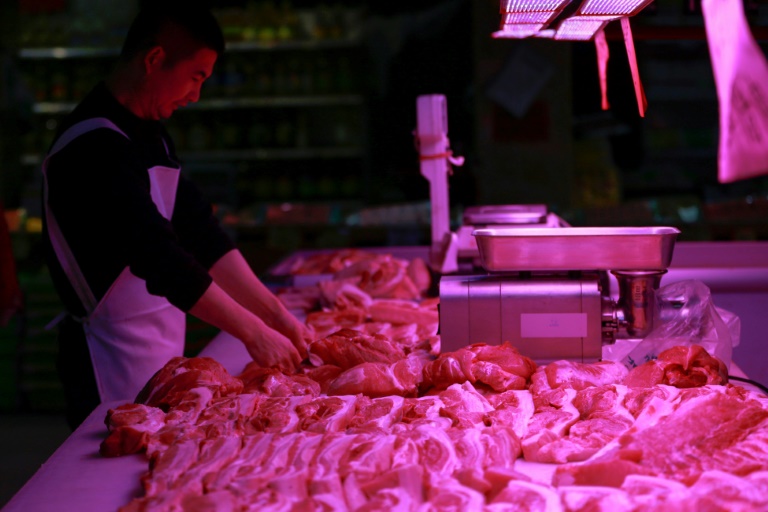
China’s consumer inflation rose in July to a two-year high, official data showed Wednesday, with a surge in pork prices pushing up the cost of food.

Compared with other countries, consumer costs in the world’s second-biggest economy have not skyrocketed, largely spared the impact of a global surge in food prices after the Russian invasion of Ukraine.

China’s consumer price index (CPI), a key gauge of retail inflation, grew less than expected at 2.7 percent from a year ago in July, National Bureau of Statistics (NBS) data showed.

CPI rose slightly on-year “due to an increase in prices of pork, fresh vegetables and other food, as well as seasonal factors”, NBS senior statistician Dong Lijuan said in a statement.

Food prices were up 6.3 percent on-year, with pork spiking 20.2 percent in July, she added.

Prices of the staple meat rose in part because of the reluctance of some farmers to sell — ostensibly to maximize profits — and a pick-up in consumer demand, according to the NBS.

While fuel prices were also higher than the same period last year, their growth rates have declined, Dong said.

“The headline rate has been lifted by fuel inflation and, more recently, a rebound in food inflation,” said Julian Evans-Pritchard, senior China economist at Capital Economics in a recent report.

He added that a weak labour market “may further sap price pressures”, and that he expects inflation to fall later this year.

The producer price index (PPI) — measuring the cost of goods at the factory gate — rose 4.2 percent in July, down from 6.1 percent in June, official data showed Wednesday.

This was lower than the expectation in a Bloomberg poll of analysts.

The NBS said this was influenced by a drop in international commodity prices such as crude oil and non-ferrous metals.

“The priority given to keeping factories open while restricting many consumer activities has meant that, domestically, lockdowns have been disinflationary,” Evans-Pritchard added in his earlier report.

“Unlike elsewhere, stimulus has targeted investment rather than household spending.”

Tourists return but Easter Islanders draw lessons from Covid isolation

During more than two years of the coronavirus pandemic, Easter Island was closed to tourism — forcing inhabitants to turn to a more sustainable way of life and relearn forgotten skills.

Now that the island’s borders are open once again, local people, including the Rapa Nui indigenous population, want to resist the temptation to return to their pre-pandemic lifestyle.

“The time has come that the ancients predicted,” Julio Hotus, a member of the Easter Island council of elders, told AFP.

Hotus said the Rapa Nui people’s ancestors had warned about the importance of maintaining food independence because of the risk the island faced of one day becoming isolated, but that recent generations had ignored the warnings.

Before the pandemic, the island’s food supply was almost exclusively provided by Chile.

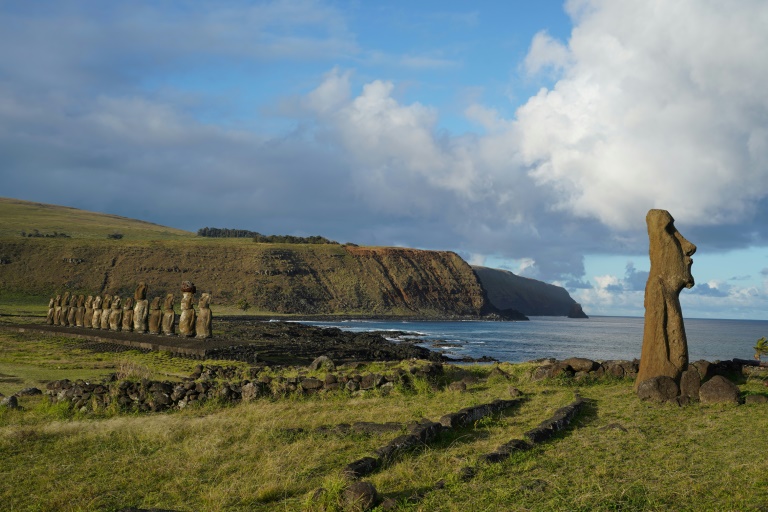
Easter Island lies 3,500 kilometers (2,100 miles) off the west coast of Chile and is world renown for its monumental statues of human figures with giant heads, called moai.

With a population of just 8,000, it used to attract 160,000 tourists a year — “an avalanche” according to Hotus — but in March 2020 Easter Island closed its borders over Covid.

– No tourists, no income –

Olga Ickapakarati used to sell small stone moai figurines to tourists but once she was left without an income, she turned to agriculture and fishing to survive, just as her ancestors had lived before contact with European explorers.

“We were all left with nothing, we were left in the wind …. but we began planting,” Ickapakarati told AFP.

She took advantage of a program that delivered seeds before the island was shut off from the outside world.

Ickapakarati planted spinach, beets, cilantro, chard, celery, basil, pineapple, oregano and tomatoes.

What she didn’t eat, she shared with neighbors, just as many families did in creating an island-wide support network.

“All the islanders are like this. They have good hearts. If I see that I have a surplus of something, I give it to another family,” said Ickapakarati, who lives with her children and grandchildren.

This new focus on sustainable living does not mean an end to tourism on Easter Island.

Last week, the first airplane of tourists for 28 months landed on the island, to much excitement from the locals desperate to see new faces.

But there will be no immediate return to the two flights a day of yesteryear. There will be just two a week for now, although the number will gradually increase.

Large hotel chains have decided to stay closed.

“We will continue with tourists, but I hope that the pandemic has taught a lesson that we can apply for the future,” said Hotus.

– ‘Archeological heritage at risk’ –

Another thing the pandemic did was to create awareness of the necessity to look after natural resources affected by climate change, such as water and energy. And also the emblematic moais.

Carved from volcanic rock by the Polynesian Rapa Nui people between 1200 and 1500, there are more than 900 on the island, which measures 24 kilometers by 12 kilometers.

The statues can measure up to 20 meters in height and weigh more than 80 tons.

Most remain at the quarry where they were originally carved but many others were carted to coastal areas to look inland, presumably for ceremonial purposes.

The moais have been damaged by heavy rainfall, strong winds and the ocean waves crashing against the statues and their bases, leading to fears for their future.

“Climate change, with its extreme events, is putting our archeological heritage at risk,” said Vairoa Ika, the local environment director.

“The stone is degrading” and needs to be protected.

“The problem with the moais is that they are very fragile,” added Pedro Edmunds Paoa, the island’s mayor, who says the statues’ worth is “incalculable.”

He said that authorities need to “forget about the tourist” vision and take protective measures, even if that means covering the statues “with glass domes”, which would ruin not just the authentic view but also tourists’ photographs.

He also wants inhabitants to make maximum use of natural resources and to prioritize locals in employment, while resurrecting the ancestral practise of fostering community solidarity.

“From now on the tourist must become a friend of the place, whereas before they were visiting foreigners,” said Edmunds Paoa.

Endangered sharks, rays caught in protected Med areas: study

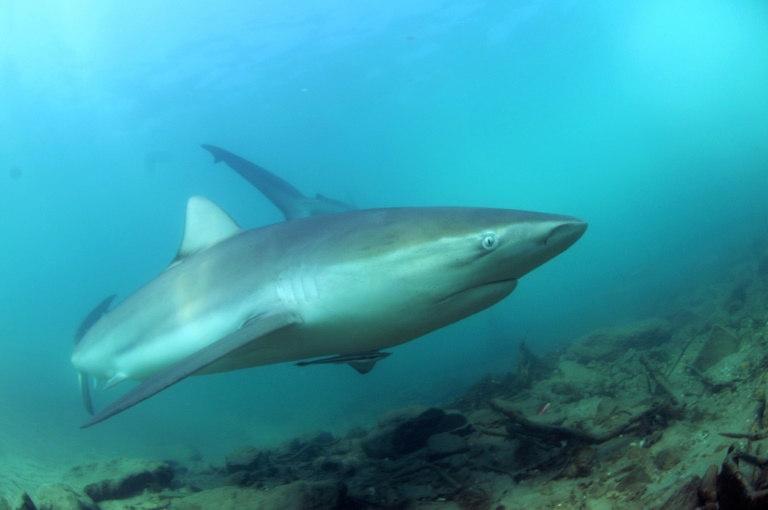
Endangered sharks, rays and skates in the Mediterranean are more frequently caught in protected than in unprotected areas, according to research published Tuesday highlighting the need for better conservation for critically threatened species.

The three types of elasmobranch are among the species most threatened by overfishing. 

While often landed as by-catch — or caught in nets of boats seeking to land other species — demand for their fins and meat has driven an estimated 71-percent decline in ocean sharks and rays since 1970. 

Although they are among the oldest marine species on Earth, their slow growth rate and late maturity mean one third of elasmobranchs are categorised by the International Union for the Conservation of Nature (IUCN) as at risk of extinction. 

While dozens of nations have banned large-scale fishing of endangered shark, ray and skate species, true global catch figures are likely to be hugely underestimated as 90 percent of the world’s fishing fleet is made up of small-scale boats.

Researchers in Italy wanted to get a better idea of how species fare in the Mediterranean’s partially protected areas, which allow some fishing with restrictions.

They used photo-sampling and image analysis to compile a database covering more than 1,200 small-scale fishing operations across 11 locations in France, Italy, Spain, Croatia, Slovenia and Greece. 

– Protected areas –

The team then used statistical models to demonstrate that catches of threatened species were higher in partially protected areas than in areas with no protection at all.

“People assume that it is large-scale trawlers that are impacting biodiversity, which is true and there’s a lot of evidence for this,” said co-author Antonio Di Franco, from the Sicily Marine Centre.

“There is less research on small-scale fishing’s impact and our research shows that there is this potential.”

The team found that catches they analysed in partially protected areas landed 24 species of shark, skate and ray — more than a third of which are endangered.

This is likely in part due to the species’ preference for coastal waters, where most small-scale fisheries prefer to operate. 

“We don’t know the activity of small-scale fisheries in general, we don’t know how many nets they actually fish or where they fish,” said Di Franco. 

Overall, in the partially protected areas studied, 517 elasmobranchs were caught compared with 358 in non-protected areas. 

In terms of mass, the weight of shark, ray or skate species caught in partially protected areas was roughly double that in non-protected areas.

More than 100 countries have committed to increase the amount of protected oceans worldwide to 30 percent by 2030.

Di Franco said there were a number of steps countries could take to help threatened species, including fitting smaller fishing boats with GPS trackers and ensuring that protected areas were joined up, allowing the species to more easily change living regions.

“Protected areas are a great potential benefit to biodiversity but the point is to look at management,” he told AFP. 

“But often countries don’t have the capacity to properly manage stocks.” 

Close Bitnami banner
Bitnami