World

London police strip-searched hundreds of kids: new data

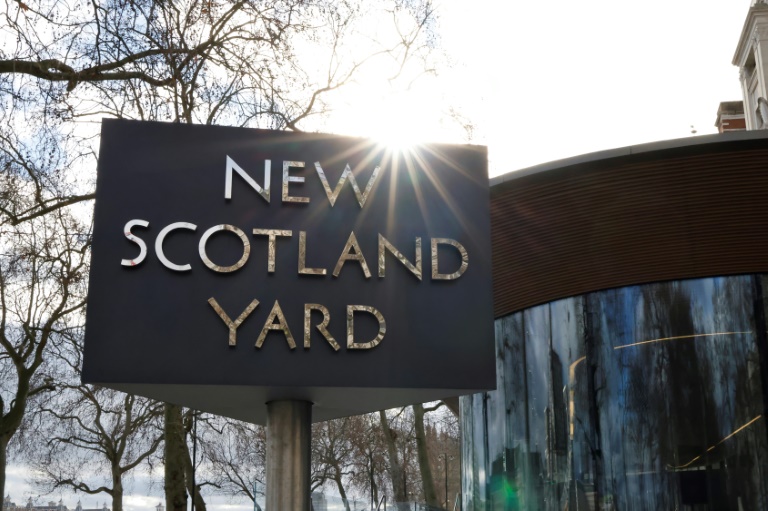
London’s under-fire police force strip-searched more than 600 children over a two-year period, most of them black boys, according to new data released Monday.

England’s commissioner for children, Rachel de Souza, said she was “deeply shocked” by the figures after obtaining them from the Metropolitan police. 

De Souza’s request came after Britain’s biggest police force was forced to apologise in March over the case of “Child Q”, which has sparked an investigation for gross misconduct into four officers.

The 15-year-old black schoolgirl was strip-searched by female officers in 2020 after being wrongly suspected of carrying cannabis, despite them being aware she was menstruating.

She was searched without an “appropriate adult” present, and neither was an adult in attendance in 23 percent of the cases unearthed by de Souza.

In total, 650 minors aged 10-17 were strip-searched by Met officers between 2018 and 2020, she found. 

More than 95 percent were boys, and 58 percent of the 650 were described by the officer as being black.

De Souza said she was “extremely concerned” at the ethnic imbalance, and said Child Q may be part of a bigger “systemic problem around child protection” in the Met.

The figures had gone up sharply year after year, she said, and showed that a significant number of children “are being subjected to this intrusive and traumatising practice each year”.

The London force has been rocked in recent years by a succession of incidents involving officers, including last year, when a diplomatic protection squad member was jailed for the kidnap, rape and murder of Sarah Everard.

A crisis of public confidence in the police saw Cressida Dick resign as Met commissioner in February. 

In response to de Souza’s findings, the Met said it had already instituted changes “to ensure children subject to intrusive searches are dealt with appropriately and respectfully”.

Some children may themselves be a “vulnerable victim of exploitation” by gangsters and drug criminals, it conceded.

London mayor Sadiq Khan redoubled his criticism of the Met after slamming the force over the Child Q case and other incidents.

It was “deeply concerning” that so many body searches were happening without an adult present, a spokesman for Khan said.

“And there remain serious wider issues with regard to disproportionality and the use of stop and search on young black boys,” the spokesman said.

US Senate adopts sweeping climate and health plan, in major victory for Biden

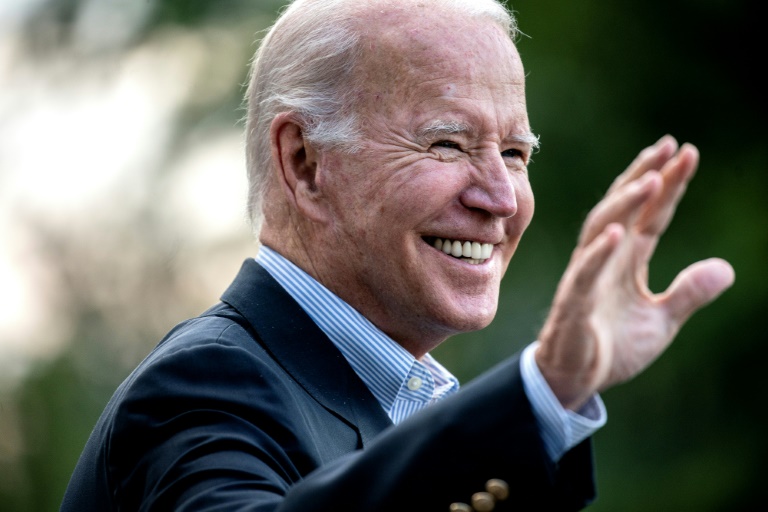
After 18 months of arduous negotiations and a marathon night of debate, the US Senate on Sunday passed Joe Biden’s ambitious climate, tax and health care plan — a significant victory for the president ahead of crucial midterm elections.

Voting as a unified bloc and with the tie-breaking vote cast by Vice President Kamala Harris, Democrats approved the $430-billion spending plan, which will go to the House of Representatives next week, where it is expected to pass before being signed into law by Biden.

The plan, crafted in sensitive talks with members on the right wing of his Democratic Party, would include the biggest US investment ever on climate — $370 billion aimed at effecting a 40 percent drop in greenhouse gas emissions by 2030.

That would give Biden a clear victory on one of his top agenda items and go some way toward restoring US leadership in meeting the global climate challenge.

Biden hailed the passage of the bill, highlighting the work that went into it — and acknowledging that not everyone is happy with the final result.

“It required many compromises. Doing important things almost always does. The House should pass this as soon as possible and I look forward to signing it into law,” the president said in a statement.

The bill — officially known as the “Inflation Reduction Act” — passed the Senate with no Republicans voting in favor.

Conservative lawmakers have criticized the bill as wasteful spending, with top Republican Senator Mitch McConnell accusing Democrats of voting to “double down on their economic disaster.”

– ‘Change America for decades’ –

The bill would provide Americans with a tax credit of up to $7,500 when purchasing an electric car, plus a 30 percent discount when they install solar panels on their roofs.

But the Alliance for Automotive Innovation, a group representing major automakers, on Sunday said that most cars would not meet the bill’s electric vehicle tax credit requirements, calling it a “missed opportunity.”

The legislation would also provide millions to help protect and conserve forests — which have been increasingly ravaged in recent years by wildfires during record heat waves that scientists say are linked to global warming.

Billions of dollars in tax credits would also go to some of the country’s worst-polluting industries to help their transition to greener methods — a measure bitterly opposed by some liberal Democrats who have, however, accepted this as a least-bad alternative after months of frustration.

Biden, who came to office with promises of sweeping reforms, has seen his hopes dashed, then revived, then dashed again. 

Democrats’ narrow edge in the Senate has given a virtual veto to moderates such as Joe Manchin of West Virginia, who earlier had used that power to block Biden’s much more expansive Build Back Better plan.

But in late July, Senate Democratic leader Chuck Schumer managed to engineer a compromise with the West Virginian, whose state’s economy depends heavily on coal mining.

“This bill is gonna change America for decades,” Schumer said after its passage, while Manchin tweeted that it “will lower the inflation taxes that have been so hurtful for West Virginian and American families.”

– ‘Vote-a-rama’ –

Senators finally opened debate on the text on Saturday, with final passage not until Sunday afternoon.

Late Saturday, they began working through a marathon procedure known as a “vote-a-rama,” in which members can propose dozens of amendments and demand a vote on each one.

That allowed both Republicans, who view Biden’s plan as too costly, and liberal Democrats, who say it does not reach far enough, to make their opposition clear.

Influential progressive Senator Bernie Sanders used that platform through the evening to propose several amendments aimed at strengthening social planks in the legislation, which were considerably weakened during the months of negotiation.

The bill would provide $64 billion for health care initiatives and ensure a lowering of some drug costs — which can be 10 times more expensive in the United States than in some other rich countries.

But progressive Democrats long ago had to give up their ambitions for free preschool and community colleges and expanded health care for the elderly.

“Millions of seniors will continue to have rotten teeth and lack the dentures, hearing aids or eyeglasses that they deserve,” Sanders said from the Senate floor. “This bill, as currently written, does nothing to address it.”

But fellow Democrats, eager to pass the legislation ahead of November midterms when control of Congress is at stake, have rejected any change in the text.

To help offset the plan’s massive spending, it would reduce the US deficit through a new 15-percent minimum tax on companies with profits of $1 billion or more — a move targeting some that now pay far less.

That measure could generate more than $258 billion in tax receipts for the government over the next 10 years, by some estimates.

More Ukraine grain sets sail as new strike hits nuclear site

Four more ships loaded with grain set off from Ukrainian ports on Sunday, as Moscow and Kyiv blamed each other for a new strike at a Russian-occupied nuclear plant. 

Amnesty International, meanwhile, said it deeply regretted the “distress and anger” caused after it alleged Ukrainian forces were flouting international law by exposing civilians to Russian fire. But it stands by its controversial report.

Kyiv’s infrastructure ministry wrote on Telegram that a second convoy of Ukrainian supplies had just left, three from Chornomorsk and one from Odessa.

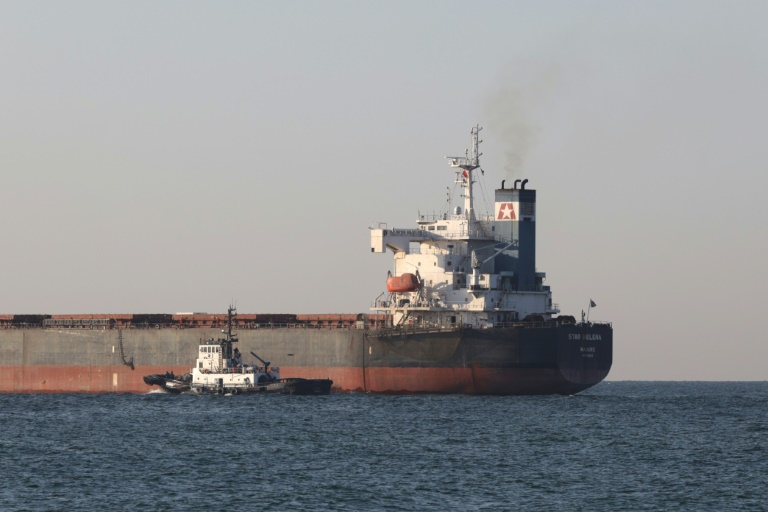
The Mustafa Necati, the Star Helena, the Glory and the Riva Wind were carrying “around 170,000 tonnes of agriculture-related merchandise”, it said.

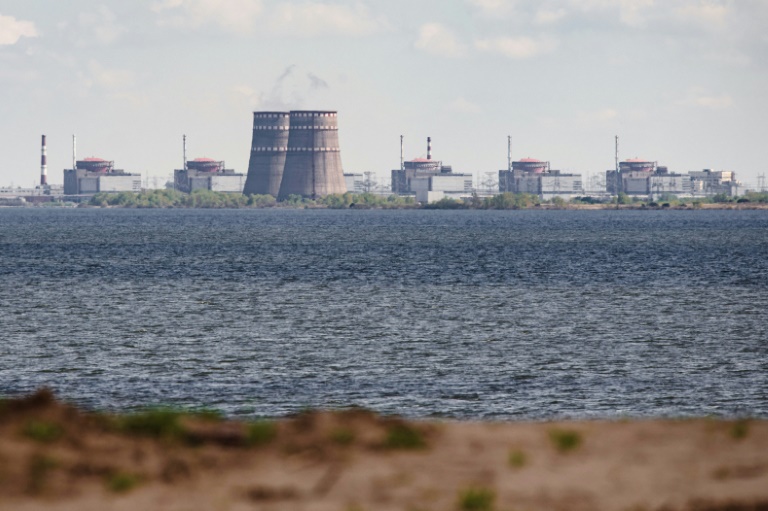
Moscow and Kyiv traded accusations Sunday over who bombed the Zaporizhzhia nuclear site in southern Ukraine.

Europe’s largest atomic power complex has been under Russian control since the early days of the February 24 invasion.

And as Ukraine President Volodymyr Zelensky welcomed US actress Jessica Chastain to Ukraine, Moscow celebrated the re-election of a former senior Russian politician to the world body governing chess.

– ‘Very real risk’ –

Recent fighting at the plant has prompted UN’s nuclear watchdog, the International Atomic Energy Agency (IAEA) to warn of “the very real risk of a nuclear disaster”.

Russia’s occupying authorities in the town of Enerhodar, where the plant is located, said the Ukrainian army overnight “carried out a strike with a cluster bomb fired from an Uragan multiple rocket launcher”.

The projectiles fell “within 400 metres of a working reactor” and in a “zone storing used nuclear fuel”, Russia’s state news agency TASS reported.

Ukraine’s state nuclear energy company Enerhoatom however said the “Russian occupiers once again fired rockets at the nuclear power plant its host town, Enerhodar. One worker there had been hospitalised with shrapnel wounds, it added.

AFP was not able to confirm the allegations from an independent source.

On Saturday, Enerhoatom had already said parts of the facility had been “seriously damaged” by military strikes the previous day, forcing the shutdown of one of its reactors. 

IAEA chief Rafael Grossi warned Saturday: “Any military firepower directed at or from the facility would amount to playing with fire, with potentially catastrophic consequences.”

Zelensky in his nightly address Sunday, called for a “principled response” from the international community.

Evoking the possibility that the plant was hit causing the release of a toxic cloud, he added: No-one will stop the wind that will spread the radioactive contamination.”

– Amnesty’s regret –

Amnesty International sparked outrage in Ukraine with a report Thursday accusing the military of endangering civilians by establishing bases in schools and hospitals, and launching counter-attacks from heavily populated areas.

The head of their Ukraine bureau resigned over the report, accusing Amnesty of becoming “a tool of Russian propaganda”.

On Sunday, the rights group said that while it stood by its finding, “nothing we documented Ukrainian forces doing in any way justifies Russian violations”.

The renewed shipments of Ukrainian grain to help ease global food shortages and bring down prices nevertheless offer a small glimmer of hope as the war enters its sixth month.

Ukraine, one of the world’s largest grain exporters, had been forced to halt almost all deliveries in the wake of Russia’s invasion.

That sent global food prices soaring, making imports prohibitively expensive for some of the world’s poorest nations.

A bulk carrier arrived in Chornomorsk on Saturday to be loaded with grain for the first time since Moscow’s invasion.

The departure Sunday of the four other vessels follows several others last week under a deal brokered with the help of Turkey.

– ‘Sign of hope’ –

In Rome on Sunday, Pope Francis welcomed the resumption of grain exports as “a sign of hope” that showed dialogue was possible to end the war. 

“I sincerely hope that, following this path, we can put an end to the fighting and arrive at a just and lasting peace.”

Ukraine President Volodymyr Zelensky posted pictures on Telegram Sunday of a meeting with Oscar-winning actress Jessica Chastain.

Underlining the value of visits from famous people, he wrote: “Thanks to this, the world will hear, know and understand the truth about what is happening in our country even more.”

Earlier Sunday, Moscow celebrated a diplomatic victory of its own with the re-election of Russia’s Arkady Dvorkovich to the helm of the international chess body FIDE.

Dvorkovich, a former deputy premier under Russian President Vladimir Putin, comfortably saw off a challenge from Ukrainian grandmaster Andrii Baryshpolets who had accused him of being part of Moscow’s “war machine”.

Kremlin spokesman Dmitri Peskov called it “clearly very good news and a very significant victory”, Russia’s TASS news agency reported.

Islamic Jihad agrees Gaza truce with Israel

Islamic Jihad militants on Sunday agreed terms of an Egyptian-brokered truce with Israel, intended to end three days of intense conflict that has left at least 43 Palestinians dead.

The deal raises hopes of an imminent cessation of the worst fighting in Gaza since an 11-day war last year devastated the impoverished Palestinian coastal territory.

“A short while ago the wording of the Egyptian truce agreement was reached,” senior Islamic Jihad member Mohammad al-Hindi said in a statement.

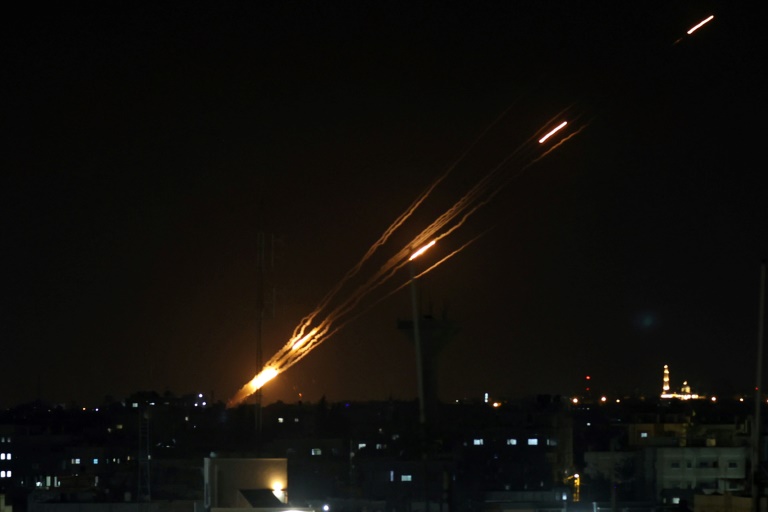
Since Friday, Israel has carried out heavy aerial and artillery bombardment of Islamic Jihad positions in Gaza, with the militants firing hundreds of rockets in retaliation.

Gaza’s health ministry on Sunday evening raised the death toll to 43 including 15 children, with more than 300 people wounded in the Palestinian enclave, which is run by the Islamist group Hamas.

Two Israelis have been injured by shrapnel over the same period, medics reported.

Islamic Jihad’s Hindi said the deal “contains Egypt’s commitment to work towards the release of two prisoners, (Bassem) al-Saadi and (Khalil) Awawdeh”.

Saadi, a senior figure in Islamic Jihad’s political wing, was recently arrested in the occupied West Bank, while militant Awawdeh is also in Israeli detention.

Earlier in the day, an Egyptian security source said that Israel “has accepted” a ceasefire.

– ‘Terrifying’ –

Buildings in Gaza have been reduced to rubble in Gaza, while Israelis have been forced to shelter from a barrage of rockets.

Nour Abu Sultan, who lives west of Gaza, said earlier Sunday that she was “awaiting the declaration of the ceasefire on tenterhooks”.

“We haven’t slept for days (due to) heat and shelling and rockets, the sound of aircrafts hovering above us… is terrifying,” the 29-year-old said.

Dalia Harel, a resident in the Israeli town of Sderot close to the Gaza border, said she was “disappointed” at news of a truce despite her five children being “traumatised”.

“We’re tired of having a military operation every year,” she said. “We need our military and political leaders to get it over with once and for all… we’re not for war, but we can’t go on like this.”

An AFP photographer saw two rockets being intercepted in the centre of Israel’s commercial capital Tel Aviv on Sunday evening.

Two Islamic Jihad rockets earlier in the day had targeted Jerusalem, but they were shot down by the Israeli army.

Islamic Jihad is aligned with Hamas but often acts independently. Hamas has fought four wars with Israel since seizing control of Gaza in 2007, including the conflict last May.

The Israeli army has said the entire “senior leadership of the military wing of the Islamic Jihad in Gaza has been neutralised”.

Muhammad Abu Salmiya, director general of the Shifa hospital in Gaza City, said medics were treating wounded people in a “very bad condition”, warning of dire shortages of drugs and fuel to run power generators.

“Every minute we receive injured people,” he said earlier Sunday.

– Top militants killed –

Israel said it had “irrefutable” evidence that a stray rocket fired by Islamic Jihad was responsible for the deaths of several children in Gaza’s northern Jabalia area on Saturday.

An AFP photographer saw six dead bodies at the hospital there, including three minors.

“We came running to the place and found body parts lying on the ground… they were torn-apart children,” said Muhammad Abu Sadaa, describing the devastation in Jabalia. 

The army said it had struck 139 Islamic Jihad positions, with the militants firing over 600 rockets and mortars, but with more than 100 of those projectiles falling short inside Gaza.

Amid the high tensions, Jews in Israel-annexed east Jerusalem marked the Tisha Be’av fasting day Sunday at the Al-Aqsa mosque compound, known in Judaism as the Temple Mount.

Some Palestinians shouted “God is greatest” in response, and an AFP photographer was briefly detained by Israeli police, but commemorations passed without major incident.

Israel has said it was necessary to launch a “pre-emptive” operation Friday against Islamic Jihad, which it said was planning an imminent attack.

The army has killed senior leaders of Islamic Jihad in Gaza, including Taysir al-Jabari in Gaza City and Khaled Mansour in Rafah in the south.

In southern and central Israel, civilians were forced into air raid shelters. Two people were hospitalised with shrapnel wounds and 13 others lightly hurt while running for safety, the Magen David Adom emergency service said.

bur-pjm-rsc/lg

China's largest-ever Taiwan military drills draw to a close

China’s largest-ever military exercises surrounding Taiwan were drawing to a close on Sunday following a controversial visit last week to the island by US House Speaker Nancy Pelosi.

Beijing has raged at the trip by Pelosi — the highest-ranking elected US official to visit Taiwan in decades — ripping up a series of talks and cooperation agreements with Washington, most notably on climate change and defence. 

It has also deployed fighter jets, warships and ballistic missiles in what analysts have described as practice for a blockade and ultimate invasion of the self-ruled island — which China claims as its territory.

Those exercises were supposed to end on Sunday, but neither Beijing nor Taipei confirmed their conclusion, though Taiwan’s transport ministry said it had seen some evidence suggesting at least a partial drawdown.

Beijing conducted “exercises in the sea and airspace surrounding Taiwan Island as planned”, the Chinese military’s Eastern Command said.

Taipei’s defence ministry confirmed China had dispatched “planes, vessels and drones… simulating attacks on Taiwan’s main island and on ships in our waters”.

It detected 66 air force planes and 14 warships operating in the Taiwan Strait, of which 22 crossed the median line and the extended area of the unofficial demarcation in the waters that separate Taiwan and China.

Beijing does not recognise that demarcation.

China also sent at least one drone over Taiwan’s outlying Kinmen islands, forcing troops to respond with flares, local authorities said.

China’s defence ministry did not respond to a request for comment about the expected conclusion of the drills. A Taiwan defence ministry official told reporters to “ask the country conducting them to explain”.

Early Monday, Chinese state news agency Xinhua issued a short report that did not mention the conclusion of the drills.

The exercises tested “tactics of systems warfare under information-based conditions, and honed and improved the capabilities to destroy crucial island targets with precision strikes,” Xinhua quoted air force officer Zhang Zhi as saying.

Taiwan’s transport ministry said six of the seven “temporary danger zones” China had warned airlines to avoid ceased to be in effect as of noon on Sunday, signalling a partial drawdown of the drills. 

It said the seventh zone, in waters east of Taiwan, would remain in effect until 10:00 am Monday (0200 GMT).

“Relevant flights and sailings can gradually resume,” the ministry said. 

Taipei said some routes were still affected in the seventh area, and authorities would continue to monitor ship movements there.

– ‘Jeopardising’ peace –

Beijing has also announced fresh drills in the Yellow Sea — located between China and the Korean peninsula — to take place until August 15.

In response, Taiwan said it had mobilised a “joint intelligence surveillance and reconnaissance system to closely monitor the enemy situation” as well as sending planes and vessels.

Su Tseng-chang, Taiwan’s premier, said China is “barbarously using military action” to disturb peace in the Taiwan Strait.

“We call on the Chinese government not to go around wielding its military power, showing its muscles everywhere and jeopardising the peace of the region,” he told reporters Sunday.

Taipei’s foreign ministry said the drills threatened “the region and even the world”.

To show how close it has got to Taiwan’s shores, the Chinese military released a video of an air force pilot filming the island’s coastline and mountains from his cockpit.

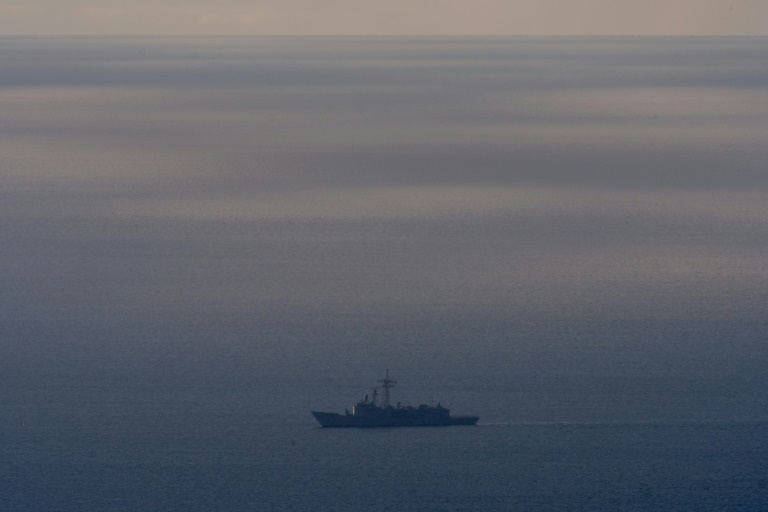
The Eastern Command also shared a photo it said was of a warship on patrol with Taiwan’s shoreline visible in the background.

Ballistic missiles were also fired over Taiwan’s capital during the drills, according to Chinese state media.

– ‘A dangerous opponent’ –

Taiwan has remained defiant throughout China’s sabre-rattling, insisting it will not be cowed by its “evil neighbour”. 

But experts have warned the drills have revealed an increasingly emboldened Chinese military capable of carrying out a gruelling blockade of the island as well as obstructing US forces from coming to its aid.

“In some areas, the PLA might even surpass US capabilities,” Grant Newsham, a researcher at the Japan Forum for Strategic Studies and a former US Navy officer, told AFP, referring to China’s military by its official name.

“If the battle is confined to the area right around Taiwan, today’s Chinese navy is a dangerous opponent — and if the Americans and Japanese do not intervene for some reason, things would be difficult for Taiwan.”

The scale and intensity of China’s drills — as well as Beijing’s withdrawal from key talks on climate and defence — have triggered outrage in the United States and other democracies.

US Secretary of State Antony Blinken said Washington was “determined to act responsibly” to avoid a major global crisis.

More Ukraine grain sets sail as new strike hits nuclear site

Four more ships loaded with grain set off from Ukrainian ports on Sunday, as Moscow and Kyiv blamed each other for a new strike at a Russian-occupied nuclear plant. 

Amnesty International, meanwhile, said it deeply regretted the “distress and anger” caused after it alleged Ukrainian forces were flouting international law by exposing civilians to Russian fire.

Kyiv’s infrastructure ministry wrote on Telegram that a second convoy of Ukrainian supplies had just left, three from Chornomorsk and one from Odessa.

It said the Mustafa Necati, the Star Helena, the Glory and the Riva Wind were carrying “around 170,000 tonnes of agriculture-related merchandise”.

Also Sunday, Moscow and Kyiv traded accusations over who bombed the Zaporizhzhia nuclear site in southern Ukraine, Europe’s largest atomic power complex, which has been under Russian control since the early days of the February 24 invasion.

– ‘Very real risk’ –

The recent fighting at the plant prompted UN’s nuclear watchdog, the International Atomic Energy Agency (IAEA) to warn of “the very real risk of a nuclear disaster”.

Russia’s occupying authorities in the town of Enerhodar, where the plant is located, said the Ukrainian army overnight “carried out a strike with a cluster bomb fired from an Uragan multiple rocket launcher”.

The projectiles fell “within 400 metres of a working reactor”, Russia’s state news agency TASS reported.

The strike damaged some administrative buildings and fell in a “zone storing used nuclear fuel”.

However Ukraine’s state nuclear energy company Enerhoatom said the “Russian occupiers once again fired rockets at the site of the Zaporizhzhia nuclear power plant and the town of Enerhodar.

“One… employee was hospitalised with shrapnel wounds caused by the explosion,” it said in a statement.

AFP was not able to confirm the allegations from an independent source.

On Saturday, Enerhoatom had already said parts of the facility had been “seriously damaged” by military strikes the previous day and that one of its reactors had been forced to shut down. 

The prospect of the giant complex being seriously damaged in the fighting has provoked widespread alarm. 

“Any military firepower directed at or from the facility would amount to playing with fire, with potentially catastrophic consequences,” IAEA Rafael Grossi said on Saturday.

– ‘Sign of hope’ –

Amnesty International sparked outrage in Ukraine with the publication of a report on Thursday that accused the military of endangering civilians by establishing bases in schools and hospitals, and launching counter-attacks from heavily populated areas.

On Sunday, the rights group said that while it stood by its finding, “nothing we documented Ukrainian forces doing in any way justifies Russian violations”.

The renewed shipments of Ukrainian grain to help ease global food shortages and bring down prices nevertheless offer a small glimmer of hope as the war enters its sixth month.

Ukraine, one of the world’s largest grain exporters, had been forced to halt almost all deliveries in the wake of Russia’s invasion, sending global food prices soaring and making imports prohibitively expensive for some of the world’s poorest nations. 

In Rome on Sunday, Pope Francis welcomed the resumption of grain exports as “a sign of hope” that showed dialogue was possible to end the war. 

“I sincerely hope that, following this path, we can put an end to the fighting and arrive at a just and lasting peace.”

A bulk carrier arrived in Chornomorsk on Saturday to be loaded with grain for the first time since Moscow’s invasion. 

Last Monday, the Sierra Leone-flagged vessel, Razoni, set sail from the Ukrainian port of Odessa carrying 26,000 tonnes of corn in the first departure under the deal that was brokered with the help of Turkey. 

Then on Friday, Kyiv said another three ships loaded with grain had also set off for Turkey and markets in Ireland and Britain with a further 13 waiting to depart.

'Little hope' of saving beluga whale stranded in France's Seine river

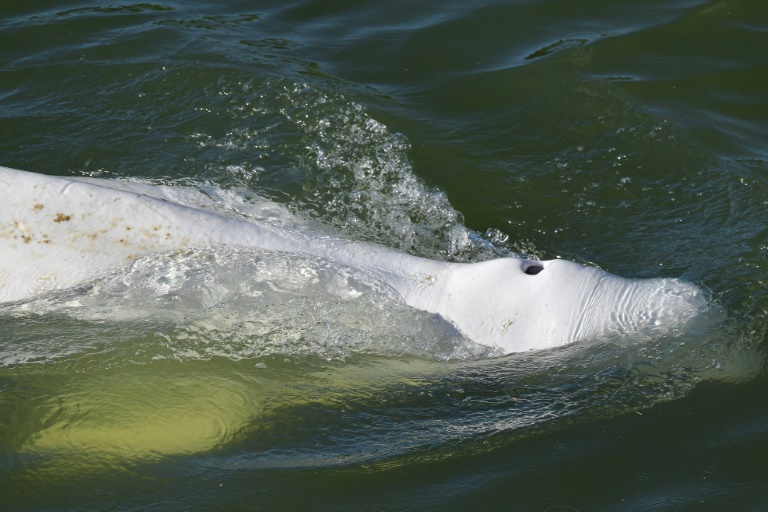
Hopes of saving a malnourished beluga whale that has swum up the Seine river were receding on Sunday, as rescuers said they were in a race against the clock to find a solution.

The whale was first spotted on Tuesday in the river that runs through Paris to the English Channel. Since Friday it has been between two locks some 70 kilometres (44 miles) north of the French capital.

But leaving it in the warm stagnant water between the lock gates is no longer an option.

“He has to be moved in the coming 24-48 hours, these conditions are not good for him,” Sea Shepherd France head Lamya Essemlali told AFP.

Specialists held out “little hope” for the visibly underweight whale as they were “in a race against the clock” to save the creature, Essemlali said.

“We are all doubtful about its own ability to return to the sea,” she said. “Even if we ‘drove’ it with a boat, that would be extremely dangerous, if not impossible”.

Before swimming between the two locks, “he had the tendency to be heading toward Paris. It would be catastrophic if he reached there,” Essemlali said.

However, “the euthanasia option has been ruled out for the moment, because at this stage it would be premature”, she said.

The whale still has “energy … turns its head, reacts to stimuli”, she said after a meeting of experts and French officials.

Although rescuers have tried feeding it frozen herring and then live trout, the animal was refusing the food.

“His lack of appetite is surely a symptom of something else… an illness. He is malnourished and this dates back weeks, if not months. He was no longer eating at sea,” Essemlali said.

On Saturday veterinarians had administered “vitaminsand products to stimulate its appetite,” said a statement on Sunday by the police in Normandy’s Eure department, which is overseeing the rescue effort.

The small spots that were reported on its pale skin on Saturday were due to the fresh water, it said.

Another option under consideration would be to take it out of the water, give it vitamins, check the cause of the illness and eventually ship it out to sea once it regains its strength.

Another is “to let it end its life peacefully, like someone who is very ill and who does not have much chance to live”, said Isabelle Dorliat-Pouzet, a senior police official in Evreux.

– Rare sighting –

Belugas are normally found only in cold Arctic waters, and while they migrate south in the autumn to feed as ice forms, they rarely venture so far.

An adult can reach up to four metres (13 feet) in length.

According to France’s Pelagis Observatory, specialised in sea mammals, the nearest beluga population is off the Svalbard archipelago, north of Norway, 3,000 kilometres (1,800 miles) from the Seine.

It is only the second recorded sighting of a beluga in a French river since 1948, when a fisherman in the estuary of the Loire river found one in his nets.

The sighting comes just a few months after a killer whale — also known as an orca, but technically part of the dolphin family — became stranded in the Seine and was later found dead between Le Havre and Rouen in late May.

A post-mortem found the animal, more than four metres long, had likely suffered exhaustion after being unable to feed.

Officials said they had also discovered a bullet lodged in the base of its skull — though it was far from clear that the wound played a role in its death.

Iran says UN nuclear watchdog should resolve outstanding issues

Iran on Sunday demanded that the UN nuclear watchdog “completely” resolve outstanding issues related to questions over nuclear material at undeclared sites, amid resumed talks to revive its 2015 nuclear deal. 

Talks aimed at reviving the agreement over Iran’s nuclear programme resumed this week in Vienna, months after they had stalled.

Iranian sources have suggested that one of the key sticking points is a probe by the International Atomic Energy Agency on traces of nuclear material found at undeclared Iranian sites.

“We believe that the agency should completely resolve the remaining safeguard issues from a technical route by distancing itself from irrelevant and unconstructive political issues,” Iran’s foreign minister Hossein Amir-Abdollahian said.

During a phone call with UN Secretary-General Antonio Guterres, Amir-Abdollahian reiterated that his country is “serious about reaching a strong and lasting agreement”, Iran’s foreign ministry said.

“The outcome of this matter depends on whether the United States wants to make an agreement,” he added.

The IAEA’s board of governors adopted a resolution in June, censuring Iran for failing to adequately explain the previous discovery of traces of enriched uranium at three previously undeclared sites.

But Tehran argued on Friday that the issues surrounding the undeclared sites “are political in nature and should not be used as a pretext for abuse against Iran in the future”.

“Nuclear weapons have no place in the doctrine of the Islamic republic of Iran and are contrary to our policies and beliefs,” Amir-Abdollahian reiterated on Sunday.

The negotiations to revive the deal, known formally as the Joint Comprehensive Plan of Action, began in April 2021 before coming to a standstill in March.

The 2015 deal gave Iran sanctions relief in exchange for curbs on its nuclear programme to guarantee that Tehran could not develop a nuclear weapon — something it has always denied wanting to do.

But the US unilateral withdrawal from the accord in 2018 and the reimposition of biting economic sanctions prompted Iran to begin rolling back on its own commitments.

Russia’s envoy to Vienna Mikhail Ulyanov however said Sunday that talks are moving “in the right direction”.

A successful conclusion can be reached “very soon, but no guarantees — as always nothing is agreed until everything is agreed”, he told reporters outside the Palais Coburg hotel where the talks are being held.

No recession in Switzerland this year: chief economist

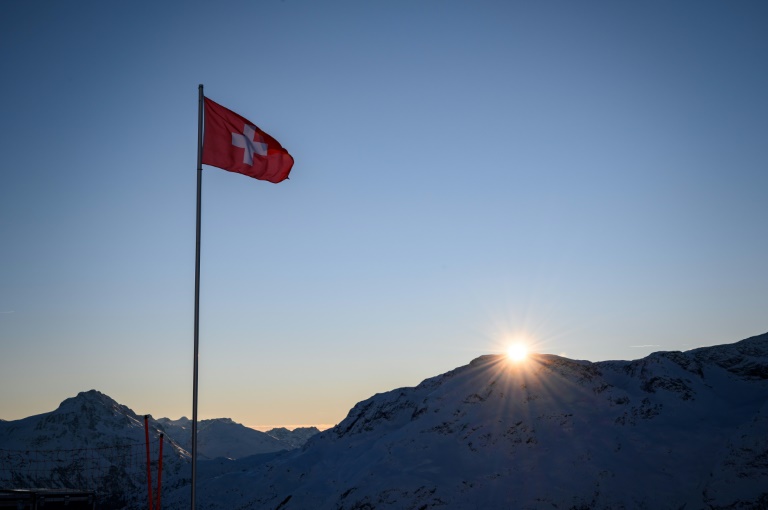
Switzerland does not expect to dip into recession this year despite the threat of an energy supply squeeze, the government’s chief economist said Sunday.

The Swiss economy is “doing well” despite the impact of the war in Ukraine on energy prices, Eric Scheidegger told the SonntagsZeitung newspaper.

He said it was down to companies to steel themselves for the possibility of power shortages in the winter months.

“We may have to revise our economic forecast downwards for next year. The revised forecast will be published on September 20. However, we do not expect a recession for this year,” Scheidegger said.

“We run the risk of an energy supply bottleneck in winter. If there are persistent production interruptions in the EU and we ourselves have a gas shortage, it becomes problematic.

“In our negative scenario, we expect zero growth for 2023 instead of growth of almost two percent.”

Despite the threat of power shortages and the effects of the war in Ukraine, Scheidegger does not see a serious economic crisis heading towards Switzerland.

“At present, the economy is still doing well. Current indicators show that the economy in this country also developed well in the second quarter — after the outbreak of the war in Ukraine,” he said.

“Economic support measures such as general perks or tax relief are currently therefore neither necessary nor helpful,” he added.

– ‘Foreseeable events’ –

Scheidegger said the Swiss economy was less susceptible to high energy prices than other European countries as gas accounted for only five percent of its total energy consumption.

He said the government would discuss possible measures to curb high energy prices in the coming weeks, which could involve reducing health insurance premiums for low-income households.

The State Secretariat for Economic Affairs official said the help for businesses during the Covid-19 pandemic could not become the norm during economic downturns.

“It’s been known since spring that there can be a power shortage in winter. Companies have time to prepare for this,” he said.

“Companies can, and must, take this operational risk into account… it is up to companies to prepare for foreseeable events.”

As for inflation, he said Switzerland was “an island of bliss” compared to the United States, and inflation was likely to fall before the end of the year.

“At 3.4 percent, inflation is much lower here than in other countries.  Core inflation — inflation excluding fresh food, energy and fuel — is at two percent,” he said.

No recession in Switzerland this year: chief economist

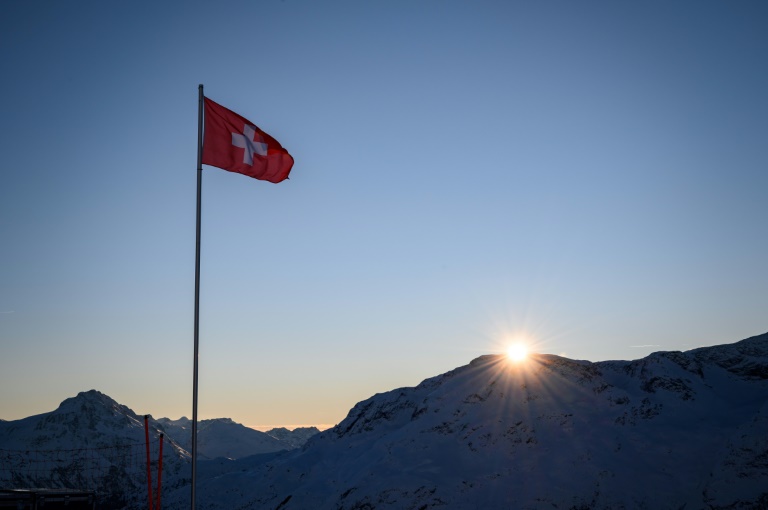
Switzerland does not expect to dip into recession this year despite the threat of an energy supply squeeze, the government’s chief economist said Sunday.

The Swiss economy is “doing well” despite the impact of the war in Ukraine on energy prices, Eric Scheidegger told the SonntagsZeitung newspaper.

He said it was down to companies to steel themselves for the possibility of power shortages in the winter months.

“We may have to revise our economic forecast downwards for next year. The revised forecast will be published on September 20. However, we do not expect a recession for this year,” Scheidegger said.

“We run the risk of an energy supply bottleneck in winter. If there are persistent production interruptions in the EU and we ourselves have a gas shortage, it becomes problematic.

“In our negative scenario, we expect zero growth for 2023 instead of growth of almost two percent.”

Despite the threat of power shortages and the effects of the war in Ukraine, Scheidegger does not see a serious economic crisis heading towards Switzerland.

“At present, the economy is still doing well. Current indicators show that the economy in this country also developed well in the second quarter — after the outbreak of the war in Ukraine,” he said.

“Economic support measures such as general perks or tax relief are currently therefore neither necessary nor helpful,” he added.

– ‘Foreseeable events’ –

Scheidegger said the Swiss economy was less susceptible to high energy prices than other European countries as gas accounted for only five percent of its total energy consumption.

He said the government would discuss possible measures to curb high energy prices in the coming weeks, which could involve reducing health insurance premiums for low-income households.

The State Secretariat for Economic Affairs official said the help for businesses during the Covid-19 pandemic could not become the norm during economic downturns.

“It’s been known since spring that there can be a power shortage in winter. Companies have time to prepare for this,” he said.

“Companies can, and must, take this operational risk into account… it is up to companies to prepare for foreseeable events.”

As for inflation, he said Switzerland was “an island of bliss” compared to the United States, and inflation was likely to fall before the end of the year.

“At 3.4 percent, inflation is much lower here than in other countries.  Core inflation — inflation excluding fresh food, energy and fuel — is at two percent,” he said.

Close Bitnami banner
Bitnami