World

How a Czech football hooligan became a UFC champion, via Japan

Jiri Prochazka was a football hooligan in his native Czech Republic until martial arts and an ancient Japanese text inspired him to turn from street fighting to cage fighting — and become a UFC world champion.

“The Book of Five Rings” was written in 1645 by the master Japanese swordsman Miyamoto Musashi, and when Prochazka was handed a copy about eight years ago he finally found the focus to “become a warrior” after a wildly misspent youth.

“You have to look into yourself, and you have to follow the rules — be honest, be brave, be calm in hard situations,” said the 29-year-old Prochazka, of what he has learned from the book and from the “Bushido” Samurai code of discipline that it encourages.

Prochazka became the UFC’s first Czech world champion after a thrilling back-and-forth battle with Brazilian light heavyweight Glover Teixeira that went deep into the fifth and final round in Singapore in June. 

A battered Prochazka seemed on the verge of defeat to Teixeira, but somehow drew on reserves of strength to apply a choke hold and force the Brazilian veteran into submission.

“Some people say my style is unpredictable,” Prochazka told AFP.

“But I’m not doing unpredictable things. I am calm and I just look for the space for attack — where is the weak point of my opponent — and I attack.”

– Spartan surroundings –

Prochazka was speaking via video phone call from a remote cottage in a forest retreat 30 minutes drive away from his birthplace in the southern Czech city of Brno. 

His spartan surroundings, Prochazka explained, are so he can be alone with his training. The cottage has electricity but no running water, forcing Prochazka to take daily trips to a well.

Prochazka pointed his phone outside the cottage to show the Dojo, or fight ring, he has carved out of the forest floor and the gym equipment frames he has fashioned from local timber.

“You have to find the way that is best for you and this is what’s best for me,” said Prochazka, whose hair is styled in the “chonmage” top-knot favoured by Japan’s ancient Samurai warriors.

“I meditate, and I train, and I live the life I want to be living.”

– ‘Never stop learning’ –

The sense of calm and purpose wasn’t always with Prochazka.

As a teenager he fell in with the local Ultras — football hooligan gangs — supporting FC Zbrojovka Brno and fought in more than 100 street battles with rival fans.

“It was a part of my life and without that there would be no me like I am today,” said Prochazka of his youth. “I had to be that guy to become the guy I am now.”

At 17, Prochazka discovered Muay Thai kickboxing at a local gym and that he could fight legally. 

After winning a national title at 19 he turned to MMA as the sport began to grow in global popularity.

Prochazka’s talent led him to Japan with the Rizin Fighting Federation where he was advised by a coach to read Musashi and the history of the ways of the Samurai.

Prochazka started winning in Japan and his life turned around. A Rizin MMA title was followed by a call from the Las Vegas-based Ultimate Fighting Championship in 2020.

Two straight knockout wins gave him the chance to face the 42-year-old Teixeira for the world title at UFC 275 in Singapore and Prochazka grabbed it.

Back in his cottage, recovering from a knuckle break suffered against Teixeira, Prochazka was plotting the next phase of his career and a possible rematch with the Brazilian.

“I am still going forward,” said Prochazka.

“In our lives we all have to fight at some time, in different ways. So I am still learning and I think we should never stop learning.”
Hong Kong reduces Covid quarantine for arrivals

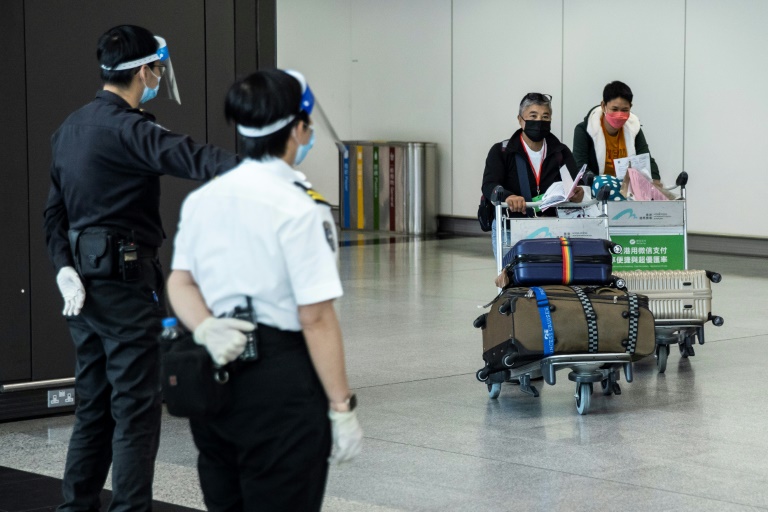
Hong Kong will cut mandatory hotel quarantine for international arrivals from one week to three days from Friday, Chief Executive John Lee announced in an easing of Covid restrictions that have severely curbed travel.

Once a global logistics and transportation hub, Hong Kong has been largely cut off from the rest of the world for more than two years under its strict adherence to China’s zero-Covid policy.

Under some of the world’s tightest pandemic rules, Hong Kong had required overseas and Taiwan arrivals to undergo seven days of mandatory quarantine and repeated testing while confined to a room in a designated hotel, a restriction that residents and the business community complained had deterred them from travelling.

Lee, Hong Kong’s ex-security chief turned city leader, announced Monday that the quarantine period for arrivals would be shortened to three days’ hotel quarantine plus four days of health monitoring at home or a hotel of their choice.

“We hope to maintain livelihood activities and Hong Kong’s competitiveness, and to give the society the best development momentum and economic vitality,” Lee said. 

He denied the easing signalled any departure from China’s policy. 

“Staying in touch with the outside world and working to resume quarantine-free travel with the mainland are no contradiction,” he said.

Alongside the new quarantine arrangements, Hong Kong will implement a health code system similar to mainland China’s on a government-developed tracking app.

Under the system, an infected person will be given a red code that prevents them from leaving quarantine.

Overseas arrivals will be given a yellow code and will not be allowed in places such as restaurants, bars, gyms, and cinemas during their four days of self monitoring.

Mexico president urges increased effort to save trapped miners

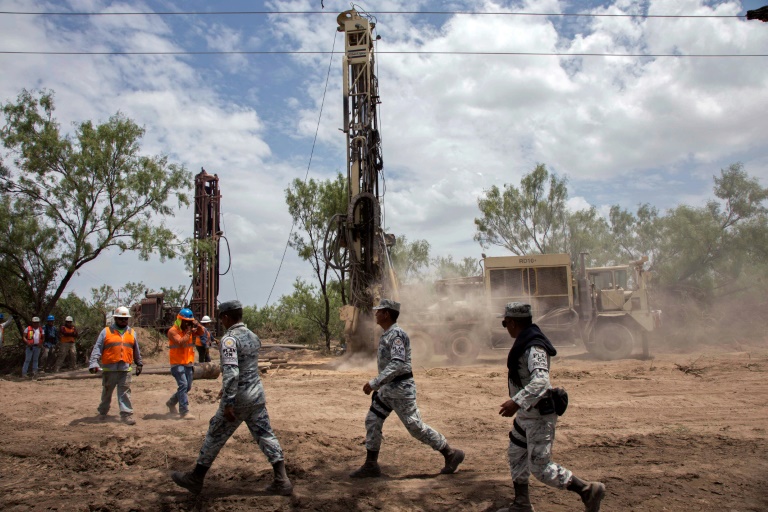
Mexican President Andres Manuel Lopez Obrador called Sunday for intensified efforts to save 10 workers trapped in a flooded coal mine, during a visit to see firsthand the rescue operation.

Relatives of the missing were becoming increasingly desperate four days after the mine flooded in the northern state of Coahuila, fearing time is running out to bring them out alive.

Nearly 400 soldiers and other personnel, including six military scuba divers, have joined the rescue effort, but so far it has been too dangerous to enter the mine, authorities said.

“We have to do everything we are doing and more” to find the missing miners, Lopez Obrador told reporters during his visit to the site in Agujita.

“I want it to be as soon as possible,” he added.

The focus has been on pumping out water from the mine to make it safe enough to descend into the shafts, which are 60 meters (200 feet) deep.

“There is progress. Water levels continue to drop. Much larger volumes continue to be extracted,” said Coahuila Governor Miguel Angel Riquelme.

Rescuers were ready to enter the mine “as soon as the levels drop,” he added.

Five workers managed to escape from the crudely constructed mine in the initial aftermath of the disaster, but since then, no survivors have been found.

Authorities said the miners had been carrying out excavation work when they hit an adjoining area full of water.

The Attorney General’s Office said on Sunday that it asked the Ministry of Labor to provide information on safety inspections carried out at mines in the area to determine the cause of the accident.

– Round-the-clock efforts –

Lopez Obrador had previously declared Saturday “a decisive day” for the operation.

But by the end of the day, the water inside the mine had receded only about 9.5 meters from the initial 34 meters, authorities told relatives.

Liliana Torres, the niece of one of the missing workers, said that she had witnessed the relentlessness of rescuers who “do not stop all day,” but added that the families were increasingly “desperate.”

Some families joined a mass near their improvised camp in the community of Agujita to pray for the safe return of their loved ones.

Water seen flowing from the mine through drainage channels had earlier lifted the hopes of relatives praying that the miners are alive inside a pocket of air.

“We’re still hoping that they’re in a higher part (of the mine), although there’s too much water… but we trust in God,” Elva Hernandez, mother-in-law of one of the trapped workers, told AFP.

The Coahuila State prosecutor’s office said it had interviewed the five workers who managed to escape from the mine.

“Apparently they were expelled by a torrent of water,” Coahuila attorney general Gerardo Marquez told the press.

He added that his office had requested information from the landowner and mine concession holder, but declined to name them.

Experts detected a leak coming from nearby mines and were trying to find its exact location so they can stop water from flowing into the area where the workers are trapped, Coahuila’s labor secretary, Nazira Zogbi, said on Saturday.

A French company has provided equipment to assist in the task, she said, without naming the firm.

Coahuila, Mexico’s main coal-producing region, has seen a series of fatal mining accidents over the years.

Last year, seven miners died when they were trapped in the region.

The worst accident was an explosion that claimed 65 lives at the Pasta de Conchos mine in 2006.

Only two bodies were retrieved after that tragedy.

Gustavo Petro sworn in as Colombia's first leftist president

Gustavo Petro on Sunday took the oath of office as Colombia’s first-ever leftist president, before a crowd of hundreds of thousands at his inauguration in Bogota.

The 62-year-old former guerrilla and onetime mayor takes over from the deeply unpopular Ivan Duque, with plans for profound reforms in a country beset by economic inequality and drug violence.

Petro’s hard-fought victory in June elections brought Colombia, long ruled by a conservative elite, into an expanding left-wing fold in Latin America.

“I swear to God and promise the people that I will faithfully enforce the constitution and the laws of Colombia,” said Petro before the large crowd of supporters gathered in Bogota’s Bolivar Square.

Petro — whose government should enjoy support from a left-leaning majority in Congress — called in his inaugural address for Colombian armed groups to “lay down their arms” and accept legal benefits “in exchange for peace.”

He also took aim at decades of counter-narcotics efforts, saying: “It is time for a new international convention recognizing that the war on drugs has failed.”

And he called for the creation of an international fund to help the deforestation-plagued Colombian Amazon.

On the campaign trail, Petro had promised during his four-year term to raise taxes on the rich, invest in health care and education, and reform the police after a brutal crackdown on anti-inequality protests last year that was internationally condemned.

He has vowed to suspend oil exploration, to promote clean energy and to reactivate diplomatic and commercial relations with the government of Nicolas Maduro in Venezuela, suspended since 2019.

Petro starts from an “enviable position, with a large majority in Congress and, in terms of the street, with support that no government had in recent years,” analyst Jorge Restrepo of the Resource Center for Conflict Analysis (Cerac), told AFP.

Maduro congratulated Petro on his inauguration, saying in a video: “I extend my hand to the people of Colombia, to President Gustavo Petro, to rebuild brotherhood on the basis of respect and love between peoples”.

The Venezuelan leader had not been invited to the ceremony by outgoing president Duque, whose office oversaw preparations for the event.

Duque had also denied a request by Petro to have the sword of revolutionary figure Simon Bolivar present at the ceremony — a decision the new president quickly reversed right after taking his oath.

The sword, which was eventually brought by ceremonial guards to Bolivar Square, was of particular significance for Petro, as it had decades ago been stolen by the M-19 guerrilla group of which he was once a member, before being returned in 1991 after a negotiated peace deal.

– ‘Critical’ debt burden –

Petro’s presidency is historic in another sense, too: by his side will be the country’s first-ever Afro-Colombian woman vice-president, 40-year-old environmental and women’s rights activist Francia Marquez.

The pair will grapple with an economy reeling from the coronavirus pandemic, a spike in violence and deep-rooted anger at the political establishment that culminated in last year’s protests.

Almost 40 percent of Colombia’s 50 million people live in poverty, while 11.7 percent are unemployed.

Inflation in July also reached 10.2 percent year-on-year.

On Monday, a preparatory commission set up by Petro said he was inheriting “a level of indebtedness and fiscal deficit that… is critical.”

– Peace talks –

Petro has promised to implement outstanding provisions of the 2016 peace agreement that saw the rebel FARC movement lay down arms after nearly six decades of civil conflict.

The former mayor of Bogota has also vowed to pursue negotiations with the National Liberation Army (ELN) armed group.

Despite the FARC disbanding to become a political party, Colombia has seen a surge in violence.

Thousands of dissidents continue to battle the ELN and powerful cartels for control of drug fields, illegal gold mines and lucrative smuggling routes.

According to the Indepaz peace research institute, there are 90 armed groups with some 10,000 members active in Colombia, the world’s largest producer of cocaine.

Petro has proposed allowing armed groups to hand themselves over in exchange for some form of amnesty.

Colombian presidents serve only one term.

Markets struggle as strong US jobs boost Fed rate hike bets

Asian markets struggled Monday and the dollar held big gains as a blockbuster US jobs report ramped up bets that the Federal Reserve will announce more sharp interest rate hikes as it tries to tame runaway inflation.

While the employment reading — which was more than twice as high as expected — indicated the world’s top economy remained resilient despite rising prices and borrowing costs, it will complicate the bank’s plans to tighten monetary policy.

Traders have hoped that with several indicators pointing to a slowdown, including GDP figures showing a technical recession, policymakers could begin to ease back on their pace of rate hikes.

Now, speculation is growing that the Fed will have to announce a third successive 75 basis-point increase next month, particularly as officials have said their decisions will be data-dependent.

“Friday’s payroll report indicates an overheated labour market that continues to tighten further,” said SPI Asset Management’s Stephen Innes.

“Hence at minimum, the markets expect another 100 basis points of Fed funds rate increases over the next three meetings… with risks skewed towards significant increases.”

All eyes are now on the release this week of US July inflation data, which is expected to show a slight slowdown from June but still at four-decade highs.

The “report seems very unlikely to offer ‘compelling evidence’ of a slowdown needed for the Fed to pull away from its aggressive inflation-fighting mode.” Innes added.

The jobs figures left Wall Street’s main indexes mixed Friday, and Asia followed suit with markets fluctuating in early trade.

However, there was some relief that tensions had calmed since Nancy Pelosi’s visit to Taiwan last week sparked a furious reaction from China that saw it conduct days of live-fire military drills around the island.

Hong Kong dipped along with Sydney, Seoul, Singapore, Taipei, Manila, Jakarta and Wellington.

Tokyo edged up and Shanghai was flat, with better-than-expected Chinese trade data offset by fresh worries about Covid lockdowns in the country that threaten the economic recovery.

The prospect of higher interest rates sent the dollar surging, and it held on to those gains in Asia.

Bets on a recession across leading economies continued to weigh on oil prices as investors worry about the impact on demand — figures last week indicated Americans were driving less now than in summer 2020 at the height of the pandemic.

A rise in US stockpiles was partly responsible for a 10 percent drop in the commodity last week, pushing WTI below $90 for the first time since February.

Both main contracts have lost all the gains seen in the wake of Vladimir Putin’s invasion of Ukraine, which led the United States and Europe to ban imports of Russian crude, hammering already thin supplies.

– Key figures at around 0230 GMT –

Tokyo – Nikkei 225: UP 0.2 percent at 28,241.09 (break)

Hong Kong – Hang Seng Index: DOWN 0.6 percent at 20,072.68

Shanghai – Composite: FLAT at 3,227.00

Euro/dollar: DOWN at $1.0181 from $1.0184 Friday

Pound/dollar: DOWN at $1.2071 from $1.2075

Euro/pound: UP at 84.35 pence from 84.32 pence

Dollar/yen: UP at 135.32 yen from 135.00 yen

West Texas Intermediate: DOWN 0.2 percent at $88.87 per barrel

Brent North Sea crude: DOWN 0.3 percent at $94.68 per barrel

New York – Dow: UP 0.2 percent at 32,803.47 (close)

London – FTSE 100: DOWN 0.1 percent at 7,439.74 (close)

Any attack on a nuclear plant 'suicidal': UN chief Guterres

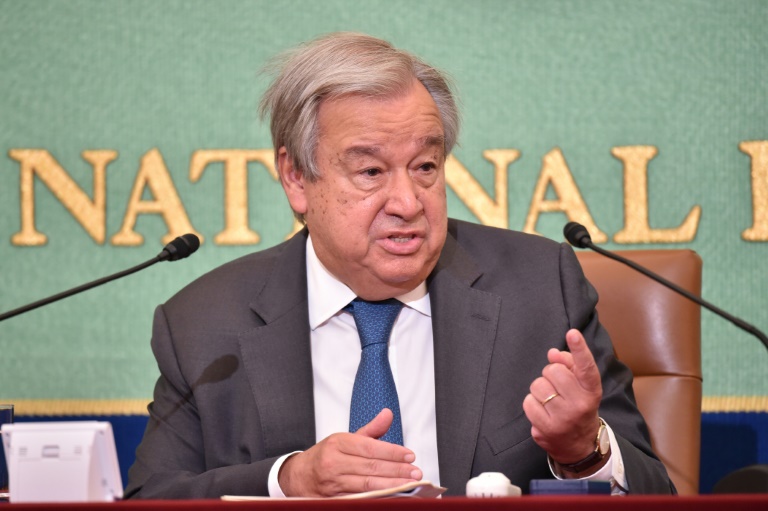
Any attack on a nuclear plant is “suicidal”, United Nations Secretary-General Antonio Guterres warned Monday after fresh shelling hit a huge atomic power complex in southern Ukraine.

Moscow and Kyiv blame each other for the latest strike at the Zaporizhzhia plant, Europe’s largest nuclear power site, which has been under Russian control since the early days of the war.

The fighting on Friday at the plant has prompted the UN’s nuclear watchdog, the International Atomic Energy Agency (IAEA) to warn of “the very real risk of a nuclear disaster”.

At a press conference in Tokyo, Guterres condemned such attacks without saying either side was responsible.

“We support the IAEA on their efforts in relation to create the conditions of stabilisation of that plant,” he said.

“Any attack to a nuclear plant is a suicidal thing. I hope that those attacks will end, and at the same time I hope that the IAEA will be able to access the plant.”

His comments followed a visit to Hiroshima over the weekend, where Guterres gave a speech to mark the 77th anniversary of the world’s first nuclear bomb attack.

In the Japanese city on Saturday, he warned that “humanity is playing with a loaded gun” as crises with the potential for nuclear disaster proliferate worldwide, from Ukraine to the Middle East and the Korean peninsula.

The Portuguese 73-year-old also delivered a stark warning against the horrors of atomic weapons a week ago in New York at a key nuclear Non-Proliferation Treaty conference, which he reiterated on Monday.

“We are witnessing a radicalisation in the geopolitical situation that makes the risk of a nuclear war again something we cannot completely forget,” he said.

When asked about China’s massive military exercises around Taiwan, sparked by a visit last week to the self-ruled island by US House Speaker Nancy Pelosi, Guterres said the UN “abides by a resolution of the General Assembly, the so-called One China policy”.

“But we all want that resolution to correspond to a peaceful environment,” he said, calling for common sense and restraint to allow for an “extremely important” de-escalation.

How a Czech football hooligan became a UFC champion, via Japan

Jiri Prochazka was a football hooligan in his native Czech Republic until martial arts and an ancient Japanese text inspired him to turn from street fighting to cage fighting — and become a UFC world champion.

“The Book of Five Rings” was written in 1645 by the master Japanese swordsman Miyamoto Musashi, and when Prochazka was handed a copy about eight years ago he finally found the focus to “become a warrior” after a wildly misspent youth.

“You have to look into yourself, and you have to follow the rules — be honest, be brave, be calm in hard situations,” said the 29-year-old Prochazka, of what he has learned from the book and from the “Bushido” Samurai code of discipline that it encourages.

Prochazka became the UFC’s first Czech world champion after a thrilling back-and-forth battle with Brazilian light heavyweight Glover Teixeira that went deep into the fifth and final round in Singapore in June. 

A battered Prochazka seemed on the verge of defeat to Teixeira, but somehow drew on reserves of strength to apply a choke hold and force the Brazilian veteran into submission.

“Some people say my style is unpredictable,” Prochazka told AFP.

“But I’m not doing unpredictable things. I am calm and I just look for the space for attack — where is the weak point of my opponent — and I attack.”

– Spartan surroundings –

Prochazka was speaking via video phone call from a remote cottage in a forest retreat 30 minutes drive away from his birthplace in the southern Czech city of Brno. 

His spartan surroundings, Prochazka explained, are so he can be alone with his training. The cottage has electricity but no running water, forcing Prochazka to take daily trips to a well.

Prochazka pointed his phone outside the cottage to show the Dojo, or fight ring, he has carved out of the forest floor and the gym equipment frames he has fashioned from local timber.

“You have to find the way that is best for you and this is what’s best for me,” said Prochazka, whose hair is styled in the “chonmage” top-knot favoured by Japan’s ancient Samurai warriors.

“I meditate, and I train, and I live the life I want to be living.”

– ‘Never stop learning’ –

The sense of calm and purpose wasn’t always with Prochazka.

As a teenager he fell in with the local Ultras — football hooligan gangs — supporting FC Zbrojovka Brno and fought in more than 100 street battles with rival fans.

“It was a part of my life and without that there would be no me like I am today,” said Prochazka of his youth. “I had to be that guy to become the guy I am now.”

At 17, Prochazka discovered Muay Thai kickboxing at a local gym and that he could fight legally. 

After winning a national title at 19 he turned to MMA as the sport began to grow in global popularity.

Prochazka’s talent led him to Japan with the Rizin Fighting Federation where he was advised by a coach to read Musashi and the history of the ways of the Samurai.

Prochazka started winning in Japan and his life turned around. A Rizin MMA title was followed by a call from the Las Vegas-based Ultimate Fighting Championship in 2020.

Two straight knockout wins gave him the chance to face the 42-year-old Teixeira for the world title at UFC 275 in Singapore and Prochazka grabbed it. 

Back in his cottage, recovering from a knuckle break suffered against Teixeira, Prochazka was plotting the next phase of his career and a possible rematch with the Brazilian and.

“I am still going forward,” said Prochazka. 

“In our lives we all have to fight at some time, in different ways. So I am still learning and I think we should never stop learning.”
'Fragile' Gaza truce between Israel and Islamic Jihad holds

A “fragile” Egypt-brokered truce between Israel and Islamic Jihad militants in Gaza appeared to be holding early Monday, raising hopes that the recent intense conflict that has left at least 44 Palestinians dead, including 15 children, has ended.

The truce, which officially started at 11:30 pm (2030 GMT) Sunday night, aims to stem the worst fighting in Gaza since an 11-day war last year devastated the Palestinian coastal territory.

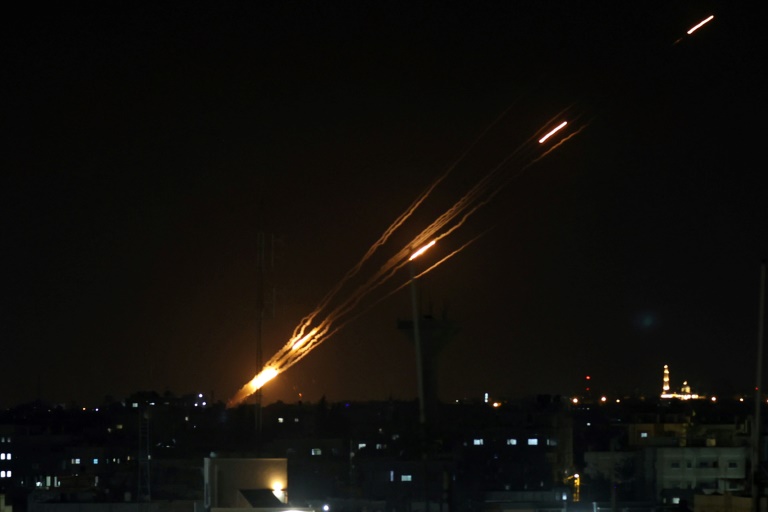
Though a flurry of strikes and rocket attacks took place in the run-up to the truce, with sirens sounding in southern Israel moments before and after the deadline, neither side had reported any major violations of the agreement after four hours.

In a statement sent three minutes after the ceasefire began, Israel’s army said that “in response to rockets fired toward Israeli territory, the (military) is currently striking a wide range of targets” belonging to Islamic Jihad in Gaza.

In a subsequent statement, the army clarified that its “last” strikes took place at 11:25 pm.

While both sides had agreed to the truce, each had warned the other that it would respond with force to any violence.

US President Joe Biden welcomed the ceasefire, thanking Egyptian President Abdel Fattah al-Sisi for his country’s role in brokering it. Biden also called for investigations into civilian casualties, which he called a “tragedy”.

In a statement, UN Middle East peace envoy Tor Wennesland said: “The situation is still very fragile, and I urge all parties to observe the ceasefire.”

– ‘Respond strongly’ –

Since Friday, Israel has carried out heavy aerial and artillery bombardment of Islamic Jihad positions in Gaza, with the militants firing hundreds of rockets in retaliation.

Buildings in Gaza have been reduced to rubble, while Israelis have been forced to shelter from the barrage of rockets.

Israeli Prime Minister Yair Lapid’s office late Sunday thanked “Egypt for its efforts” as it agreed to the truce, but said it that “if the ceasefire is violated”, Israel “maintains the right to respond strongly”.

Islamic Jihad member Mohammad al-Hindi had already confirmed the militants had accepted the truce, but the group added in a statement that it too “reserves the right to respond” to any aggression.

In addition to the 44 people killed, 15 of them children, the Gaza health ministry said 360 people had been wounded in the Palestinian enclave, which is run by the Islamist group Hamas.

Israel insists several children in the territory have been killed by stray militant rockets.

Three people in Israel have been wounded by shrapnel, while 31 others have been lightly hurt, emergency services said.

Islamic Jihad’s Hindi said the ceasefire deal “contains Egypt’s commitment to work towards the release of two prisoners”.

The pair were named as Bassem al-Saadi, a senior figure in the group’s political wing who was recently arrested in the occupied West Bank, and Khalil Awawdeh, a militant also in Israeli detention.

– ‘Terrifying’ –

Gaza resident Nour Abu Sultan had said earlier Sunday that she was “awaiting the declaration of the ceasefire on tenterhooks”.

“We haven’t slept for days (due to) heat and shelling and rockets, the sound of aircraft hovering above us… is terrifying,” the 29-year-old said.

Dalia Harel, a resident in the Israeli town of Sderot close to the Gaza border, said she was “disappointed” at news of a truce despite her five children being “traumatised”.

“We’re tired of having a military operation every year,” she said. “We need our military and political leaders to get it over with once and for all… we’re not for war, but we can’t go on like this.”

Islamic Jihad is aligned with Hamas but often acts independently. Hamas has fought four wars with Israel since seizing control of Gaza in 2007, including the conflict in May last year.

The Israeli army has said the entire “senior leadership of the military wing of the Islamic Jihad in Gaza has been neutralised”.

Muhammad Abu Salmiya, director general of the Shifa hospital in Gaza City, said medics were treating wounded people in a “very bad condition”, warning of dire shortages of drugs and fuel to run power generators.

The army said it had struck over a hundred Islamic Jihad positions, with the militants firing hundreds of rockets and mortars, some of them falling short inside Gaza.

Israel has said it was necessary to launch a “pre-emptive” operation Friday against Islamic Jihad, which it said was planning an imminent attack.

The army has killed senior leaders of Islamic Jihad in Gaza, including Taysir al-Jabari in Gaza City and Khaled Mansour in Rafah in the south.

Mexico president urges increased effort to save trapped miners

Mexican President Andres Manuel Lopez Obrador called Sunday for intensified efforts to save 10 workers trapped in a flooded coal mine, during a visit to see firsthand the rescue operation.

Relatives of the missing were becoming increasingly desperate four days after the mine flooded in the northern state of Coahuila, fearing time is running out to bring them out alive.

Nearly 400 soldiers and other personnel, including six military scuba divers, have joined the rescue effort, but so far it has been too dangerous to enter the mine, authorities said.

“We have to do everything we are doing and more” to find the missing miners, Lopez Obrador told reporters during his visit to the site in Agujita.

“I want it to be as soon as possible,” he added.

The focus has been on pumping out water from the mine to make it safe enough to descend into the shafts, which are 60 meters (200 feet) deep.

“There is progress. Water levels continue to drop. Much larger volumes continue to be extracted,” said Coahuila Governor Miguel Angel Riquelme.

Rescuers were ready to enter the mine “as soon as the levels drop,” he added.

Five workers managed to escape from the crudely constructed mine in the initial aftermath of the disaster, but since then, no survivors have been found.

Authorities said the miners had been carrying out excavation work when they hit an adjoining area full of water.

– Round-the-clock efforts –

Lopez Obrador had previously declared Saturday “a decisive day” for the operation.

But by the end of the day, the water inside the mine had receded only about 9.5 meters from the initial 34 meters, authorities told relatives.

Liliana Torres, the niece of one of the missing workers, said that she had witnessed the relentlessness of rescuers who “do not stop all day,” but added that the families were increasingly “desperate.”

Some families joined a mass near their improvised camp in the community of Agujita to pray for the safe return of their loved ones.

Water seen flowing from the mine through drainage channels had earlier lifted the hopes of relatives praying that the miners are alive inside a pocket of air.

“We’re still hoping that they’re in a higher part (of the mine), although there’s too much water… but we trust in God,” Elva Hernandez, mother-in-law of one of the trapped workers, told AFP.

The Coahuila State prosecutor’s office said it had interviewed the five workers who managed to escape from the mine.

“Apparently they were expelled by a torrent of water,” Coahuila attorney general Gerardo Marquez told the press.

He added that his office had requested information from the landowner and mine concession holder, but declined to name them.

Experts detected a leak coming from nearby mines and were trying to find its exact location so they can stop water from flowing into the area where the workers are trapped, Coahuila’s labor secretary, Nazira Zogbi, said on Saturday.

A French company has provided equipment to assist in the task, she said, without naming the firm.

Coahuila, Mexico’s main coal-producing region, has seen a series of fatal mining accidents over the years.

Last year, seven miners died when they were trapped in the region.

The worst accident was an explosion that claimed 65 lives at the Pasta de Conchos mine in 2006.

Only two bodies were retrieved after that tragedy.

Chad peace talks accord to be signed without key rebel group

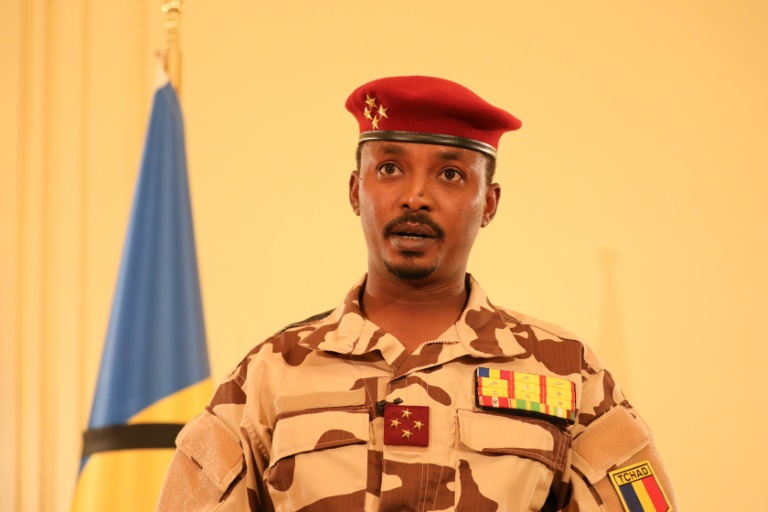
Chad’s military leader will sign a deal on Monday with more than 40 opposition groups to launch national peace talks, but the central African country’s main rebel outfit has refused to take part.

Under the accord, to be signed in the Qatari capital Doha, talks aimed at paving the way for a presidential election will start on August 20.

Since March, Qatar has been mediating between opposition groups and the military government of Mahamat Idriss Deby Itno, a general who seized power after his father died in a battle with rebels last year.

But the Front for Change and Concord in Chad (FACT), the main rebel group, said it would not sign the deal despite last-minute efforts by Qatar’s mediators.

In a statement released in Doha, FACT said it “rejects the accord that will be put to signatories on Monday”.

It added that participants in the national dialogue would not be treated equally and demanded a new committee be set up to organise the talks, as well as the release of rebel prisoners in government prisons.

“However FACT remains available for dialogue anywhere and anytime,” added the statement from the group, which is estimated to have between 1,500 and 2,000 fighters.

FACT fighters led the rebel offensive in which Deby’s father, Idriss Deby Itno, who had been president for 30 years, was killed.

Chad has had little stability since its independence in 1960, and the coming talks are being widely watched, as the country is seen as a key ally in international efforts to counter Islamic extremists fighting around the region.

Qatar’s foreign ministry said the talks, to be held in Chad’s capital, N’Djamena, would seek “inclusive national reconciliation”.

Some 42 of the 47 groups represented in the Doha talks will sign the accord, officials said. 

– Talks will ‘struggle’ without FACT –

The Doha accord commits signatories to a ceasefire during the N’Djamena talks.

The military government has also guaranteed the safety of rebel leaders who attend the talks.

Qatar had wanted FACT leader Mahamat Mahdi Ali to leave his desert camp in Libya to attend the signing.

But FACT and other groups say the guarantees were not strong enough. They have also demanded that Deby pledge in advance that he will not stand in any election.

Deby, 38, promised elections in 18 months when he seized power in April last year.

But his junta has retained the power to extend its “transitional” rule by 18 months. Deby faces pressure, however, from France, the European Union and the African Union to meet the October deadline.

“Getting this many groups to sign the accord is a good launchpad for the national dialogue, but it will struggle without outfits such as FACT,” said the head of one political group that has agreed to sign on Monday.

The Chadian government has said that more than 1,300 representatives of rebel groups, civil society, trade unions, political parties and government officials will attend the N’Djamena talks.

Close Bitnami banner
Bitnami