World

China's largest-ever Taiwan military drills draw to a close

China’s largest-ever military exercises surrounding Taiwan were drawing to a close on Sunday following a controversial visit last week to the self-ruled island by US House Speaker Nancy Pelosi.

Beijing has raged at the trip by Pelosi — the highest-ranking elected US official to visit Taiwan in decades — ripping up a series of talks and cooperation agreements with Washington, most notably on climate change and defence. 

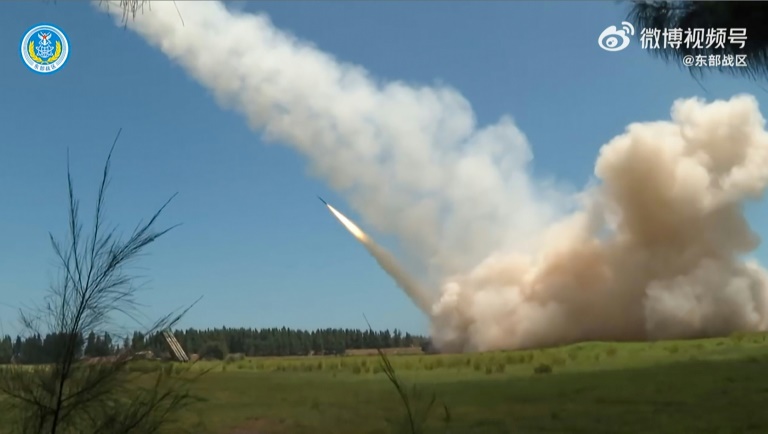
It has also deployed fighter jets, warships and ballistic missiles around Taiwan in what analysts have described as practice for a blockade and ultimate invasion of the island.

Those exercises were set to end Sunday, though Beijing has not confirmed their conclusion.

Taiwan’s transport ministry said six of the seven “temporary danger zones” China had warned airlines to avoid ceased to be in effect as of noon on Sunday, signalling a partial drawdown of the drills. 

It said the seventh zone, in waters east of Taiwan, would remain in effect until 10 am (0200 GMT) local time on Monday.

“Relevant flights and sailings can gradually resume,” the ministry said in a statement. 

Taipei said some routes were still affected in the seventh area, and authorities would continue to monitor ship movements there.

Beijing has also announced fresh drills in the Yellow Sea — located between China and the Korean peninsula — to take place until August 15.

Earlier on Sunday, Beijing conducted “exercises in the sea and airspace surrounding Taiwan Island as planned”, the Chinese military’s Eastern Command said.

Taipei’s defence ministry confirmed China had dispatched “planes, vessels and drones… simulating attacks on Taiwan’s main island and on ships in our waters”.

Beijing also sent drones over Taiwan’s outlying islands, it added.

– ‘Jeopardising’ peace –

In response, Taiwan said it had mobilised a “joint intelligence surveillance and reconnaissance system to closely monitor the enemy situation” as well as sending planes and vessels.

Su Tseng-chang, Taiwan’s premier, said China is “barbarously using military action” to disturb peace in the Taiwan Strait.

“We call on the Chinese government not to go around wielding its military power, showing its muscles everywhere and jeopardising the peace of the region,” he told reporters Sunday.

Taipei’s foreign ministry said the drills threatened “the region and even the world”.

An anonymously authored opinion piece published Sunday by state broadcaster CCTV said that after these exercises, China’s military would be able to stage “regular” training drills east of the median line.

That line is an unofficial demarcation in the Taiwan Strait that Beijing does not recognise.

To show how close it has got to Taiwan’s shores, the Chinese military released a video of an air force pilot filming the island’s coastline and mountains from his cockpit.

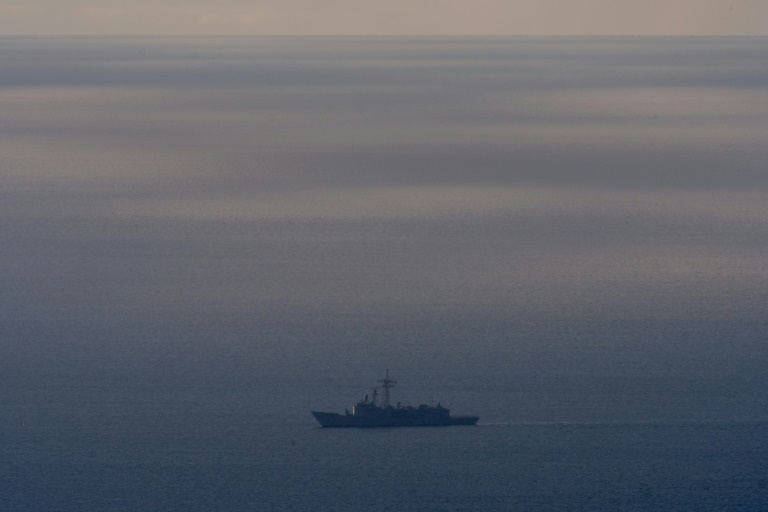
The Eastern Command also shared a photo it said was of a warship on patrol with Taiwan’s shoreline visible in the background.

Ballistic missiles were also fired over Taiwan’s capital during the drills, according to Chinese state media.

– ‘A dangerous opponent’ –

Taiwan has remained defiant throughout China’s sabre-rattling, insisting it will not be cowed by its “evil neighbour”. 

But experts have warned the drills have revealed an increasingly emboldened Chinese military capable of carrying out a gruelling blockade of the island as well as obstructing US forces from coming to its aid.

“In some areas, the PLA might even surpass US capabilities,” Grant Newsham, a researcher at the Japan Forum for Strategic Studies and a former US Navy officer, told AFP, referring to China’s military by its official name.

“If the battle is confined to the area right around Taiwan, today’s Chinese navy is a dangerous opponent — and if the Americans and Japanese do not intervene for some reason, things would be difficult for Taiwan.”

The scale and intensity of China’s drills — as well as Beijing’s withdrawal from key talks on climate and defence — have triggered outrage in the United States and other democracies.

US Secretary of State Antony Blinken said Washington was “determined to act responsibly” to avoid a major global crisis.

China should not hold talks on issues of global concern such as climate change “hostage”, Blinken said, as it “doesn’t punish the United States, it punishes the world”.
Palestinian militants target Jerusalem as Gaza death toll hits 31

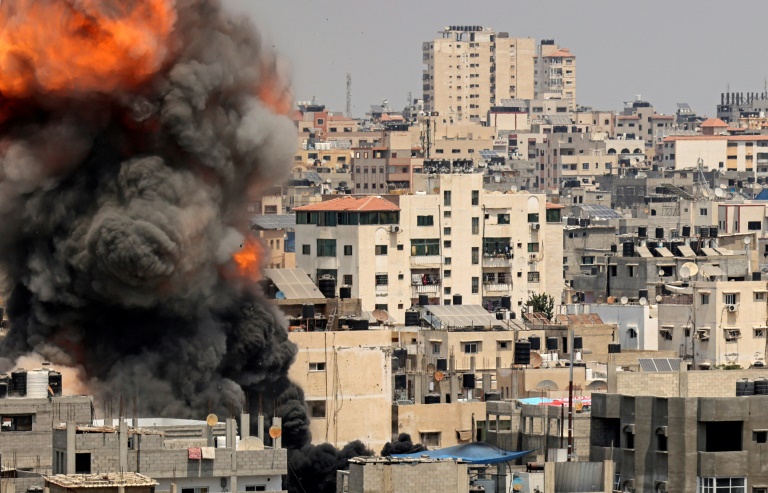
Israel bombarded Islamic Jihad positions in the Gaza Strip for a third day Sunday as violence escalated, with 31 Palestinians reported dead and militants firing their first rockets at Jerusalem. 

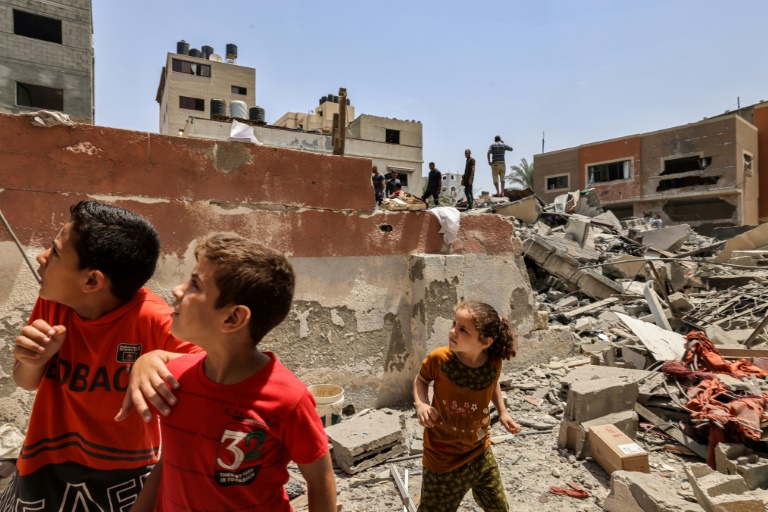
Six children were among those killed in the latest “Israeli aggression” since Friday, and 265 people have been wounded, said health authorities in the Islamist-run enclave where several buildings were reduced to rubble.

The fighting is the worst in Gaza since a war last year devastated the impoverished coastal territory, home to some 2.3 million Palestinians, and forced Israelis to seek shelter from rockets.

Israel pressed on with its aerial and artillery bombardment of positions of Islamic Jihad, an Iran-backed group designated as a terrorist organisation by several Western nations, as the group has fired over 500 rockets in return. 

The Israeli army has said the entire “senior leadership of the military wing of the Islamic Jihad in Gaza has been neutralised”, and Prime Minister Yair Lapid vowed Sunday that “the operation will continue as long as necessary”.

In Gaza, run by the Islamist group Hamas — who said Sunday they were “united” with Islamic Jihad, but have not joined the fray — the ministry said 31 people had died since the start of Israel’s “Operation Breaking Dawn”.

Israel said it had “irrefutable” evidence that a stray rocket fired by Islamic Jihad was responsible for the deaths of several children in Jabalia, northern Gaza, on Saturday.

It was not immediately clear how many children were killed there, but an AFP photographer saw six dead bodies at the local hospital, including three minors.

“We were sitting in the street and suddenly we saw an explosion,” said Muhammad Abu Sadaa, describing the devastation in Jabalia. 

“We came running to the place and found body parts lying on the ground… they were torn-apart children.”

– Leaders targeted –

The army said it had struck 139 Islamic Jihad positions, with the militants firing 470 rockets that had crossed into Israel, while another 115 rockets fired from Gaza fell inside the enclave.

Al Quds Brigades, the Islamic Jihad’s military wing, said it had “fired rockets” at Jerusalem, where sirens wailed and explosions were heard as the army shot them down.

In total, Israel said its Iron Dome air defence system had intercepted some 185 rockets, with a success rate of 97 percent of projectiles targeted.

Jews in Israel-annexed east Jerusalem meanwhile marked the Tisha Be’av fasting day Sunday at the Al Aqsa mosque compound, known in Judaism as the Temple Mount, where some Palestinians shouted “God is greatest” in response.

Tensions there have previously sparked wider violence — with Hamas’s Doha-based chief Ismail Haniyeh warning of the risk of an “uncontrollable” security crisis.

An AFP photographer was briefly detained by Israeli police, amid a heavy security deployment, but wider commemorations passed off without major incident.

Israel has said it was necessary to launch a “pre-emptive” operation against Islamic Jihad, as the group was planning an imminent attack.

“Whoever seeks to hurt Israeli citizens will be hurt,” said Defence Minister Benny Gantz.

Egypt’s President Abdel Fattah al-Sisi has said Cairo was talking with both sides “around the clock” to ease the violence, but Gantz said strikes would continue “until we restore quiet and remove the threats”.

Israel’s army has reported killing senior leaders of Islamic Jihad in Gaza, including Taysir al-Jabari in Gaza City and Khaled Mansour in Rafah in the south, as well as the arrest of 20 members in the West Bank.

Israel’s Lapid called the killing of Mansour an “extraordinary achievement”.

– ‘We are all alone’ –

Daily life in the Gaza strip has come to a standstill, with the sole power station shut down due to a lack of fuel after Israel closed its border crossings.

Gaza’s health ministry said the next few hours will be “crucial and difficult”, warning that without electricity it soon risked suspending vital services.

In Gaza City, resident Dounia Ismail said the Israeli bombardment “brings back images of fear, anxiety and the feeling that we are all alone”.

Civilians in southern and central Israel, meanwhile, were forced into air raid shelters, with two people hospitalised with shrapnel wounds and 13 others lightly hurt while running for safety, the Magen David Adom emergency service said.

“It’s tense, it’s frightening,” said Beverly Jamil, a resident of Ashkelon close to Gaza, who has been rushing repeatedly to her air raid shelter.

“Ashkelon’s a ghost town — it’s a holiday, kids should be out playing.”

Meanwhile, the response of Hamas to the violence remains critical, with spokesman Fawzi Barhoum offering the group’s support to Islamic Jihad on Sunday, but stopping short of saying they would take part.

Islamic Jihad is aligned with Hamas but often acts independently. Hamas has fought four wars with Israel since seizing control of Gaza in 2007, including the conflict last May.

“The resistance in all its military wings and factions are united in this battle,” Barhoum said.

bur-pjm/fz

China's largest-ever Taiwan military drills draw to a close

China’s largest-ever military exercises surrounding Taiwan were drawing to a close on Sunday following a controversial visit last week to the self-ruled island by US House Speaker Nancy Pelosi.

Beijing has raged at the trip by Pelosi — the second in the line of succession to the US presidency — ripping up a series of talks and cooperation agreements with Washington, most notably on climate change and defence. 

It has also deployed fighter jets, warships and ballistic missiles around Taiwan in what analysts have described as practice for a blockade and ultimate invasion of the island.

Those exercises were set to end Sunday, though Beijing has announced fresh drills in the Yellow Sea — located between China and the Korean peninsula — to take place until August 15.

Taiwan’s transport ministry said six of the seven “temporary danger zones” China warned airlines to avoid ceased to be in effect as of noon on Sunday, signalling a drawdown of the drills. 

It said the seventh zone, in waters east of Taiwan, would remain in effect until 10:00 am (0200 GMT) local time on Monday.

“Relevant flights and sailings can gradually resume,” the ministry said in a statement. 

Taipei said some routes were still being affected in the seventh area, and authorities would continue to monitor ship movements there.

Earlier on Sunday, Beijing conducted “practical joint exercises in the sea and airspace surrounding Taiwan Island as planned”, the Chinese military’s Eastern Command said.

The drills were focused “on testing the joint firepower on the ground and long-range air strike capabilities”, it added.

Taipei’s defence ministry also confirmed that China had dispatched “planes, vessels and drones” around the Taiwan Strait, “simulating attacks on Taiwan’s main island and on ships in our waters”.

Beijing also sent drones over Taiwan’s outlying islands, it added.

In response, the democratic island said it mobilised a “joint intelligence surveillance and reconnaissance system to closely monitor the enemy situation” as well as sending planes and vessels.

Su Tseng-chang, Taiwan’s premier, said China is “barbarously using military action” to disturb peace in the Taiwan Strait.

“We call on the Chinese government not to go around wielding its military power, showing its muscles everywhere and jeopardising the peace of the region,” he told reporters Sunday.

China’s defence ministry did not respond to a request for comment about the expected conclusion of the drills on Sunday.

– ‘A dangerous opponent’ –

To show how close China’s forces have been getting to Taiwan’s shores, Beijing’s military released a video of an air force pilot filming the island’s coastline and mountains from his cockpit.

And the Eastern Command of the Chinese army shared a photo it said was taken of a warship patrolling seas near Taiwan with the island’s shoreline visible in the background.

The drills have also seen Beijing fire ballistic missiles over Taiwan’s capital, according to Chinese state media.

Taipei has remained defiant throughout China’s sabre-rattling, insisting it will not be cowed by its “evil neighbour”. 

Taiwan’s foreign ministry urged Beijing on Saturday to “immediately stop raising tensions and taking provocative actions to intimidate the Taiwanese people”.

But experts have warned the drills reveal an increasingly emboldened Chinese military capable of carrying out a gruelling blockade of the self-ruled island as well as obstructing US forces from coming to its aid.

“In some areas, the PLA might even surpass US capabilities,” Grant Newsham, a researcher at the Japan Forum for Strategic Studies and former US Navy officer, told AFP, referring to China’s military by its official name.

“If the battle is confined to the area right around Taiwan, today’s Chinese navy is a dangerous opponent — and if the Americans and Japanese do not intervene for some reason, things would be difficult for Taiwan.”

– ‘Punishing the world’ –

The scale and intensity of China’s drills — as well as Beijing’s withdrawal from key talks on climate and defence — have triggered outrage in the United States and other democracies.

US Secretary of State Antony Blinken, meeting with his Philippine counterpart on Saturday, said Washington was “determined to act responsibly” to avoid a major global crisis.

China should not hold talks on issues of global concern such as climate change “hostage”, Blinken said, as it “doesn’t punish the United States, it punishes the world”.
The United Nations has also urged the two superpowers to continue to work together.

“For the secretary-general, there is no way to solve the most pressing problems of all the world without an effective dialogue and cooperation between the two countries,” his spokesman Stephane Dujarric said.

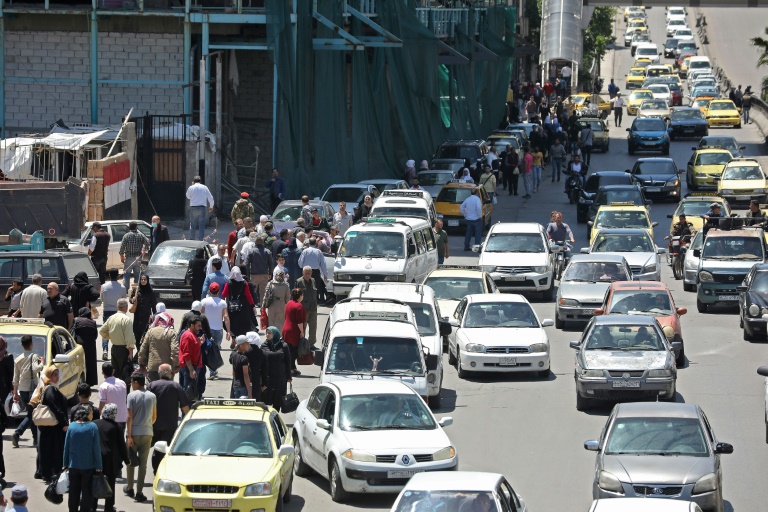
Syria more than doubles petrol prices: ministry

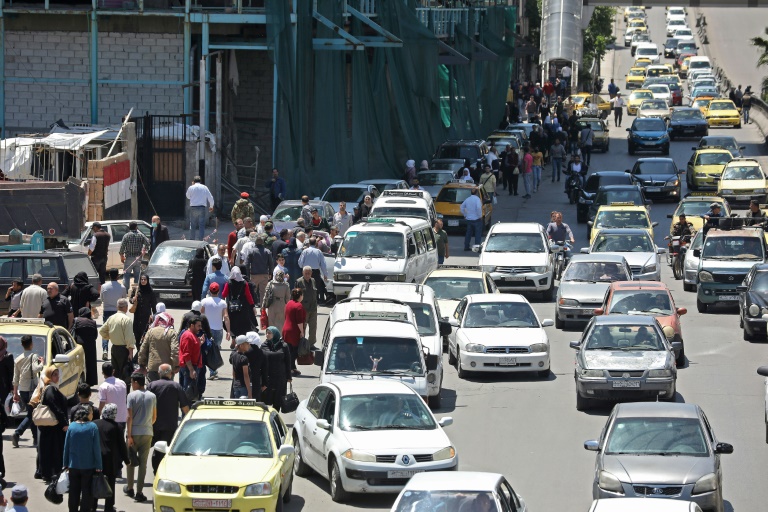
Syria’s internal commerce ministry has announced a petrol price hike of around 130 percent in the war-torn country facing fuel shortages and extended power cuts. 

The cost of a litre of subsidised fuel will rise to 2,500 Syrian pounds, from 1,100 previously, a rise of 127 percent, the ministry said in a statement quoted by the official SANA news agency late Saturday. 

The cost of non-subsidised petrol will rise from 3,500 to 4,000 Syrian pounds, the ministry added. 

The increases represent the third time this year that authorities have increased the price of fuel, as the Syrian pound continues to depreciate.

Syria’s currency is trading at around 4,250 to the dollar on the black market, compared to an official rate of 2,814. 

“This measure will hit everyone,” said Raed al-Saadi, a warehouse worker. “Our salary is now only enough to get us to the workplace, and not even enough to get us home again.” 

“Life has become very difficult and I don’t where this situation will lead us,” the 48-year-old added. 

Since the outbreak of war in 2011, Syria’s oil and gas sector has suffered losses amounting to tens of billions of dollars.

The economy has been hit hard by both the long-running war and sanctions imposed against Damascus. 

A UN commission in March called for a review of sanctions against President Bashar al-Assad’s regime because of concerns that the measures were hitting ordinary people too hard.

The conflict in Syria started in 2011 with the brutal repression of peaceful protests and escalated to pull in foreign powers and global jihadists. 

It has killed around 500,000 people and displaced around half of the country’s pre-war population.

Syria more than doubles petrol prices: ministry

Syria’s internal commerce ministry has announced a petrol price hike of around 130 percent in the war-torn country facing fuel shortages and extended power cuts. 

The cost of a litre of subsidised fuel will rise to 2,500 Syrian pounds, from 1,100 previously, a rise of 127 percent, the ministry said in a statement quoted by the official SANA news agency late Saturday. 

The cost of non-subsidised petrol will rise from 3,500 to 4,000 Syrian pounds, the ministry added. 

The increases represent the third time this year that authorities have increased the price of fuel, as the Syrian pound continues to depreciate.

Syria’s currency is trading at around 4,250 to the dollar on the black market, compared to an official rate of 2,814. 

“This measure will hit everyone,” said Raed al-Saadi, a warehouse worker. “Our salary is now only enough to get us to the workplace, and not even enough to get us home again.” 

“Life has become very difficult and I don’t where this situation will lead us,” the 48-year-old added. 

Since the outbreak of war in 2011, Syria’s oil and gas sector has suffered losses amounting to tens of billions of dollars.

The economy has been hit hard by both the long-running war and sanctions imposed against Damascus. 

A UN commission in March called for a review of sanctions against President Bashar al-Assad’s regime because of concerns that the measures were hitting ordinary people too hard.

The conflict in Syria started in 2011 with the brutal repression of peaceful protests and escalated to pull in foreign powers and global jihadists. 

It has killed around 500,000 people and displaced around half of the country’s pre-war population.

US warns Pacific islands of struggle against coercive regimes

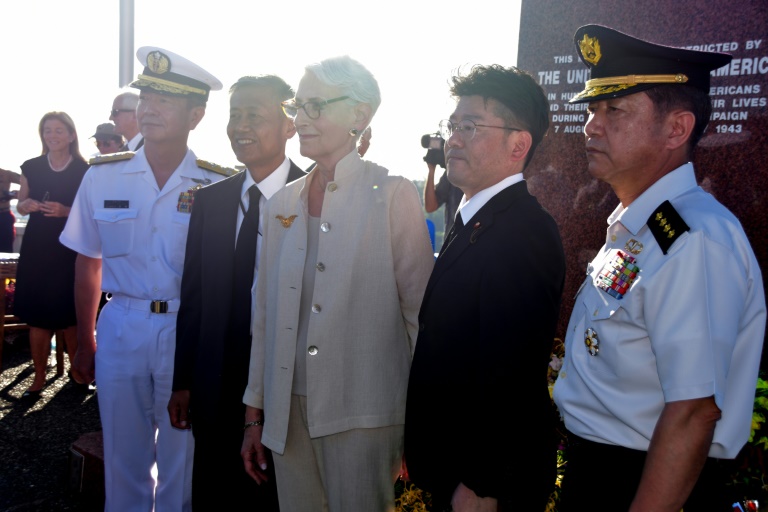
A top US diplomat warned Pacific Islands of a new struggle against violent power-hungry regimes Sunday, as she visited the Solomon Islands to mark the 80th anniversary of World War II’s Battle of Guadalcanal.

With China’s military conducting drills around Taiwan and Russia bombarding Ukraine, Deputy Secretary of State Wendy Sherman hit out at a new crop of world leaders reviving “bankrupt” ideas about the use of force — without mentioning any countries.

Attending a dawn memorial service in the Solomon Islands, Sherman said “some around the world” had forgotten the cost of war, or were ignoring the lessons of the past.

She hit out at “leaders who believe that coercion, pressure, and violence are tools to be used with impunity”, but did not specify any names during her speech at the service.

The battle of Guadalcanal was a turning point in World War II.

The brutal seven-month land, sea and air fight between Allied and Japanese forces killed tens of thousands of troops — most Japanese.

Painting the situation today as carrying faint echoes of the fight against Nazi Germany and Imperial Japan in the 1930-40s, the State Department number two urged the region to push back.

“We remember how bankrupt, how empty, such views were then, and remain today,” she said.

“Today we are once again engaged in a different kind of struggle — a struggle that will go on for some time to come.”

Sherman’s trip comes as the United States tries to rebuild diplomatic relations in the Pacific, where China is growing stronger and democratic alliances have faltered.

– Sogavare no-show –

Nowhere is the United States’s waning regional influence more evident than in the Solomon Islands.

The government of Prime Minister Manasseh Sogavare recently signed a secretive security pact with Beijing, moved to curb press freedoms, and suggested delaying elections.

Sherman, again without mentioning names, told her hosts: “It is up to us to decide if we want to continue having societies where people are free to speak their minds.”

It is time, she said, to decide “if we want to have governments that are transparent and accountable to their people”.

Sogavare was slated to attend the ceremony, appearing on the event programme, but was a no-show.

He did, however, meet Sherman later, for what she described as “wide-ranging” talks.

As well as warnings, Sherman said Washington wants to increase cooperation with the “absolutely critical” Pacific island nations, including by opening embassies in Tonga, Kiribati, and the Solomon Islands.

As part of the charm offensive, US President Joe Biden is also expected to invite Pacific Island leaders to the White House for a September summit.

Solomon Islands police and security minister Anthony Veke welcomed what he termed US “re-engagement” with the country and the region.

But he called on Washington to launch a “scaled-up effort” to remove unexploded WWII ordnance that continues to injure and kill Solomon Islanders to this day. 

Taiwan crisis: what we've learned so far

China’s live-fire drills around Taiwan –- which saw vessels encircle the democratically ruled island –- have offered an unprecedented insight into how Beijing may conduct a military campaign against its neighbour.

Beijing has also imposed economic sanctions and increased efforts to isolate Taiwan on the international stage, in a move that experts say will permanently alter the status quo on the Taiwan Strait.

AFP looks at what we learned from China’s largest-ever military exercise around Taiwan, which was conducted in retaliation to US House Speaker Nancy Pelosi’s visit to the self-ruled island this week.

Could China impose a blockade of Taiwan?

The Chinese military has conducted drills on Taiwan’s eastern flank, a strategically vital area for supplies to the island’s military forces — as well as any potential American reinforcements — for the first time.

This has sent an ominous signal that Beijing can now blockade the entire island and could prevent any entry or exit of commercial or military ships and aircraft.

Analysts have long speculated that this will be one of China’s preferred strategies in the event of a war to conquer Taiwan.

“This crisis will signal that Beijing has the ability to repeat — and intensify — similar responses at will,” said Christopher Twomey, a security scholar at the US Naval Postgraduate School in California. 

“But sustaining (a blockade) would be very costly, both for China’s reputation and in direct costs for its military.”

China’s current economic woes mean it is unlikely to risk a major disruption in the Taiwan Strait — one of the world’s busiest waterways — for now. 

Is the Chinese military battle-ready?

China has swiftly expanded and modernised its air, space and sea forces with the aim of projecting its power globally and narrowing the gap with the United States military. 

Beijing’s military capabilities still lag behind Washington’s but it aims to have the ability by 2027 to overcome any pushback to reclaiming Taiwan, according to the Pentagon.

These military drills around Taiwan have put the People’s Liberation Army’s (PLA) Eastern Theater Command, which spearheaded the exercises, to the test, said Collin Koh, a naval affairs expert at the S. Rajaratnam School of International Studies in Singapore.

They have shown how far reform of the Chinese military has come since the last Taiwan Strait crisis in 1995-96, demonstrating its “ability to pull in or to master a bigger range of capabilities”, he said.

“At least the tangible assets they put on the ground, as well as the ability for them to pull off an exercise on this scale, does show that they are much more capable than they used to be back in the 1990s.”

What’s changed about China-Taiwan relations?  

Taiwan’s 23 million people have long lived with the possibility of an invasion, but that threat has intensified under President Xi Jinping, China’s most assertive ruler in a generation.

China is now boycotting fruits and fish from Taiwan, economically harming the island in a move analysts say is designed to erode support from major voting blocs for the pro-independent government.

Beijing has put sanctions on companies that donate to the development assistance arm of Taiwan’s government — putting an end to what has been called Taiwan’s “cheque-book diplomacy” with allies.

But China will aim to keep its military and economic manoeuvres below the threshold of war to avoid a direct confrontation with the US, analysts said.

“I think prolonged tensions are unlikely,” said Bonnie Glaser, director of the Asia programme at the US-based German Marshall Fund think tank, told AFP.

“But certainly a major crisis would affect shipping, insurance rates, trade routes, and (global) supply chains.”

A new normal for Taiwan?

Taiwan may have to get used to China holding similar military exercises in the future, Koh said.

“It will become the norm to have exercises that are close to the main Taiwan island itself… this time it has set a new precedent that the PLA will conduct drills of this sort.”

“We’re looking at the bar being raised to another level for future exercises of this scale and intensity.”

China has periodically sent warships or planes across the median line — an unofficial but once largely adhered-to border that runs down the middle of the Taiwan Strait — during times of tension.

But Pelosi’s visit has “given them the excuse or justification to say that in the future they will just legitimately carry out exercises east of the median line without having to pay due regard to it at all,” Koh said.

Where do China-US relations go from here?

China has said it is ending cooperation with the United States on key issues including climate change and defence. 

Washington has decried the move as “fundamentally irresponsible” as relations between the two superpowers have nosedived over Taiwan.

Beijing separately announced that it would personally sanction Pelosi — third in line to the US presidency — in response to her “vicious” and “provocative” actions.

Tian Shichen, a Beijing-based security analyst, told Chinese state-run publication Global Times that the break in communications had raised the risk of conflict, but ascribed blame solely to the US. 

“At present, almost all the channels of mechanism communication between the Chinese and US militaries are interrupted, increasing the possibility of misunderstanding and unexpected incidents, all of which are the responsibility of the US,” he was quoted as saying.

“This is a moment in the US-China relationship where we are really at a very low point,” Glaser said in a discussion hosted by the Center for Strategic and International Studies in Washington DC.

“I hope our two governments will find a way forward to talk about their… redlines, their concerns and prevent a continuous downward spiral in the relationship.”

Palestinian militants target Jerusalem as Gaza death toll reaches 29

Palestinian militants in Gaza fired rockets at Jerusalem Sunday for the first time since conflict escalated, as Israel bombarded Islamic Jihad positions for a third day in violence that has left 29 dead.

The updated count from health authorities in the Islamist-run enclave said six children were among those killed since the start of the “Israeli aggression” on Friday, in addition to 253 people injured.

On Sunday Israel pressed on with its bombardment of positons of Islamic Jihad militants who have retaliated with barrages of rockets.

The Israeli army has said the entire “senior leadership of the military wing of the Islamic Jihad in Gaza has been neutralised”, and Prime Minister Yair Lapid vowed Sunday that “the operation will continue as long as necessary”.

In Gaza, the ministry initially said 32 people had died since Friday, but later revised the figure down to 29.

Israel said it had “irrefutable” evidence that a stray rocket from Islamic Jihad militants had been responsible for the deaths of multiple children in Jabalia, northern Gaza, on Saturday.

It was not immediately clear how many children were killed in the incident in Jabalia. An AFP photographer saw six dead bodies at an area hospital, including three minors.

In Jerusalem AFP reporters heard two explosions as rockets were intercepted in the air.

Al Quds Brigades, the Islamic Jihad movement’s military wing, said it had “fired rockets” at the city, where air raid sirens wailed.

Jews on Sunday mark the Tisha Be’av remembrance day by visiting the Al Aqsa mosque compound, known in Judaism as the Temple Mount, in Israel-annexed east Jerusalem.

Tensions there have previously sparked wider violence, and Hamas’s Doha-based chief Ismail Haniyeh has warned against allowing Jews to “storm” the compound Sunday, saying it could lead to an “uncontrollable” security crisis.  

– ‘Crucial and difficult’ –

The violence is the worst in Gaza since a war last year devastated the impoverished territory — home to some 2.3 million Palestinians — and forced countless Israelis to seek shelter from rockets. 

Israel’s military has warned its latest aerial and artillery campaign against Islamic Jihad could last a week, but Egypt’s President Abdel Fattah al-Sisi said Cairo was talking “around the clock” with both sides to ease the violence.  

Israel has said it was necessary to launch a “pre-emptive” operation against Islamic Jihad, as the group was planning an imminent attack following days of tensions along the border with Gaza.

The head of the army’s operations directorate, Oded Basiok, said the entire “senior leadership of the military wing of the Islamic Jihad in Gaza has been neutralised” by Israel’s campaign.  

That includes Taysir al-Jabari, a top militant commander killed in Gaza City on Friday, and Khaled Mansour, who Islamic Jihad confirmed died in a strike in Rafah, southern Gaza on Saturday. 

Israel’s Lapid on Sunday called the killing of Mansour a “remarkable achievement”.

Twenty members of Islamic Jihad were arrested overnight in several raids by Israeli security forces in the West Bank, the army said.

Daily life in the Gaza strip has come to a standstill, while the electricity distributor said the sole power station shut down due to a lack of fuel after Israel closed its border crossings.

Gaza’s health ministry said the next few hours will be “crucial and difficult”, warning it risked soon suspending vital services as a result of the lack of electricity.

– ‘We are all alone’ –

In Gaza City, resident Dounia Ismail said Palestinians had become accustomed to preparing a “survival bag” of items such as money and medicine.

“This latest escalation brings back images of fear, anxiety, and the feeling that we are all alone,” she told AFP.

Civilians in southern and central Israel, meanwhile, have been forced into air raid shelters since Friday.

The Magen David Adom emergency service said two people were hospitalised with shrapnel wounds and 13 others were lightly hurt while running for safety.

In Kibbutz Nahal Oz, an Israeli community beside the Gaza border, resident Nadav Peretz said he had been “in the bomb shelter or around it” since Friday. 

“We recognise that on the other side too there is an uninvolved civilian population, and on both sides children deserve to enjoy their summer vacation,” the 40-year-old said.

Islamic Jihad is aligned with Hamas, but often acts independently. Both are blacklisted as terrorist organisations by much of the West.

Hamas has fought four wars with Israel since seizing control of Gaza in 2007, including the conflict last May. 

A flare-up with Islamic Jihad came in 2019, following Israel’s killing of Baha Abu al-Ata, Jabari’s predecessor. Hamas did not join the fray in that conflict.

Hamas’s moves now could prove crucial, with the group facing pressure from some to restore calm in order to improve economic conditions in Gaza.

Austrian scientists race to reveal melting glaciers' secrets

Jumping from rock to rock to rock over a creek formed off Austria’s Jamtal glacier,  scientist Andrea Fischer worries that precious scientific data will be irreversibly lost as the snow and ice melt faster than ever.

“I couldn’t have imagined that it would ever melt as dramatically as this summer… Our ‘archive’ is melting away,” says the glaciologist. 

Fischer — vice director of the Institute for Interdisciplinary Mountain Research at the Austrian Academy of Sciences — has spent more than 20 years surveying Jamtal and four other Alpine glaciers across Austria’s highest peaks for the oldest areas of ice.

For scientists looking to reconstruct the Earth’s climate in the distant past, such ice formations are a unique time capsule stretching back thousands of years.

The glaciers contain an invaluable treasure trove of data — as they grew, the ice encapsulated twigs and leaves, which can now be carbon-dated, Fischer explains.

And based on the age of such material and the depth where it was found, scientists can infer when ice grew during colder periods, or when warmer conditions caused it to melt. 

But now the glaciers are melting rapidly — including the one in the remote and narrow Jamtal valley, not far from where tourists found the stunningly preserved 5,300-year-old mummy of Oetzi, the Iceman, in the 1990s.

Temperatures in Europe’s highest mountains have risen by nearly two degrees Celsius in the past 120 years — almost double the global average, according to the International Commission for the Protection of the Alps (CIPRA). 

The Alps’ roughly 4,000 glaciers have since become one of the starkest signs of global warming.

– Disappear completely? –

The Jamtal glacier has been losing about one metre (three feet) from its surface annually, but this year it has already lost more than a metre, Fischer says.

“And we’ve got at least two months of summer left… where the glacier is entirely exposed to the sun,” she warns. 

Snow usually protects most of the glacial ice from the sun until September, but the little snow that fell last winter had already melted by early July.

“This year is outrageous compared to the average of the past 6,000 years,” says Fischer. 

“If this continues, in five years, Jamtal glacier won’t be a glacier anymore.”

By the end of the summer, Fischer fears that about seven metres of depth will have melted off the surface — or about 300 years of climate “archives”. 

“We need the data the glaciers hold to understand the climate of the past — and to create models of what awaits us in the future,” she says.

Fischer and her team have drilled on both the Jamtal and other nearby glaciers to extract data, taking out ice samples up to 14 metres deep.

As temperatures rise and the glaciers become more unstable, they are compelled to take additional safety precautions — 11 people died in a glacial ice avalanche in the Italian Dolomites in July, the day after temperatures there rose to new records. 

– ‘My heart is bleeding’ –

In Galtuer, the nearest village to Jamtal with 870 residents who are mostly dependent on tourism, the Alpine Club is already offering a “Goodbye, glacier!” tour through the once ice-filled valley to raise awareness about the effects of climate change.

Where the ice has retreated, scientists found that within three years about 20 species of plants, mostly mosses, have taken over. In some areas, larches are growing, according to Fischer.

“If the glacier is gone in five years, that’s a pity, because it’s part of the landscape,” says Sarah Mattle, who heads the Alpine Club.

“But then there’ll also be new paths, and maybe there’ll be an easier hike over the mountains than over the ice. It’ll all be a matter of adapting,” the 34-year-old adds.

Other locals like Gottlieb Lorenz, whose great-grandfather was the first manager of the 2,165-metre-high Jamtal cabin set up as a refuge for mountaineers, are heartbroken.

“My heart is bleeding when I think about how magnificent and mighty the glacier was and what a miserable tiny pile it is today,” the 60-year-old says.

He points at a black-and-white photo taken in 1882 showing a thick ice sheet flowing past the cabin.

Today, the ice is a 90-minute hike away.

China's largest-ever Taiwan military drills draw to a close

China’s largest-ever military exercises surrounding Taiwan were drawing to a close on Sunday following a controversial visit last week to the self-ruled island by US House Speaker Nancy Pelosi.

Beijing has raged at the trip by Pelosi — the second in the line of succession to the US presidency — ripping up a series of talks and cooperation agreements with Washington, most notably on climate change and defence. 

It has also deployed fighter jets, warships and ballistic missiles around Taiwan in what analysts have described as practice for a blockade and ultimate invasion of the island.

Those exercises are set to end Sunday, though Beijing has announced fresh drills in the Yellow Sea — located between China and the Korean peninsula — to take place until August 15.

Sunday saw Beijing conduct “practical joint exercises in the sea and airspace surrounding Taiwan Island as planned”, the Chinese military’s Eastern Command said.

The drills were focused “on testing the joint firepower on the ground and long-range air strike capabilities”, it added.

Taipei’s defence ministry also confirmed that China had dispatched “planes, vessels and drones” around the Taiwan Strait, “simulating attacks on Taiwan’s main island and on ships in our waters”.

Beijing also sent drones over Taiwan’s outlying islands, it added.

In response, the democratic island said it mobilised a “joint intelligence surveillance and reconnaissance system to closely monitor the enemy situation” as well as sending planes and vessels.

– ‘A dangerous opponent’ –

To show how close China’s forces have been getting to Taiwan’s shores, Beijing’s military released a video of an air force pilot filming the island’s coastline and mountains from his cockpit.

And the Eastern Command of the Chinese army shared a photo it said was taken of a warship patrolling seas near Taiwan with the island’s shoreline visible in the background.

The drills have also seen Beijing fire ballistic missiles over Taiwan’s capital, according to Chinese state media.

Taipei has remained defiant throughout China’s sabre-rattling, insisting it will not be cowed by its “evil neighbour”. 

Taiwan’s foreign ministry urged Beijing on Saturday to “immediately stop raising tensions and taking provocative actions to intimidate the Taiwanese people”.

But experts have warned the drills reveal an increasingly emboldened Chinese military capable of carrying out a gruelling blockade of the self-ruled island as well as obstructing US forces from coming to its aid.

“In some areas, the PLA might even surpass US capabilities,” Grant Newsham, a researcher at the Japan Forum for Strategic Studies and former US Navy officer, told AFP, referring to China’s military by its official name.

“If the battle is confined to the area right around Taiwan, today’s Chinese navy is a dangerous opponent — and if the Americans and Japanese do not intervene for some reason, things would be difficult for Taiwan.”

– ‘Punishing the world’ –

The scale and intensity of China’s drills — as well as Beijing’s withdrawal from key talks on climate and defence — have triggered outrage in the United States and other democracies.

US Secretary of State Antony Blinken, meeting with his Philippine counterpart on Saturday, said Washington was “determined to act responsibly” to avoid a major global crisis.

China should not hold talks on issues of global concern such as climate change “hostage”, Blinken said, as it “doesn’t punish the United States, it punishes the world”.
The United Nations has also urged the two superpowers to continue to work together — for the world’s sake.

“For the secretary-general, there is no way to solve the most pressing problems of all the world without an effective dialogue and cooperation between the two countries,” his spokesman Stephane Dujarric said.

Close Bitnami banner
Bitnami