World

When the sun switches off the solar panels

The more the sun shines in the southern German town of Aurach, the more likely it is that Jens Husemann’s solar panels will be disconnected from the grid — an exasperating paradox at a time when Germany is navigating an energy supply crisis.

“It’s being switched off every day,” Husemann told AFP during a recent sunny spell, saying there had been more than 120 days of forced shutdowns so far this year.

Husemann, who runs an energy conversion business near Munich, also owns a sprawling solar power system on the flat roof of a transport company in Aurach, Bavaria.

The energy generated flows into power lines run by grid operator N-Ergie, which then distributes it on the network.

But in sunny weather, the power lines are becoming overloaded — leading the grid operator to cut off supply from the solar panels.

“It’s a betrayal of the population,” said Husemann, pointing to soaring electricity prices and a continued push to install more solar panels across Germany.

Europe’s biggest economy is eyeing an ambitious switch to renewables making up 80 percent of its electricity from 2030 in a bid to go carbon neutral.

But Russia’s invasion of Ukraine has put a spanner in the works. 

Moscow has cut gas supplies to Germany by 80 percent, in what is believed to be a bid to weaken the European powerhouse’s resolve in backing Ukraine.

As a result, Berlin has been scrambling for alternative sources across the world to replace the shortfall.

This makes it all the more frustrating for Husemann, whose solar panels normally generate enough electricity for 50 households. With the repeated shutdowns, he suspects they will only supply half of their capacity by the end of the year.

– Grid bottlenecks –

Grid operator N-Ergie, which is responsible for harvesting electricity from Husemann’s panels, admits the situation is less than ideal. 

There were 257 days last year when it had to cut off supply from solar panels on parts of the grid.

“We are currently witnessing — and this is a good thing — an unprecedented boom in photovoltaic parks,” Rainer Kleedoerfer, head of N-Ergie’s development department, told AFP.

But while it takes just a couple of years to commission a solar power plant, updating the necessary infrastructure takes between five and 10 years, he said.

“The number of interventions and the amount of curtailed energy have increased continuously in recent years” as a result, according to N-Ergie spokesman Michael Enderlein. 

“The likelihood is that grid bottlenecks will actually increase in the coming years,” while resolving them will take several more years, Enderlein said.

According to Carsten Koenig, managing director of the German Solar Industry Association, the problem is not unique to solar power and also affects wind energy.

Solar bottlenecks tend to be regional and temporary, he said. “Occasionally, however, we hear that especially in rural areas in Bavaria, the shutdowns are more frequent.”

– 2.4 million households –

Koenig agrees the problem is likely to get worse before it gets better.

“This will be especially true if political measures aimed at sufficiently expanding the power grid in Germany… drag on for too long,” he said.

Some 6.1 terawatt hours of electricity from renewables had to be curtailed in 2020, according to the most recent figures available. 

With an average consumption of around 2,500 kilowatt hours per year in a two-person household, this would have been enough to power around 2.4 million households. 

A spokesman for Germany’s Federal Network Agency said it did not share the belief that “it will not be possible to expand the network in line with demand in the coming years”. 

Only some aspects of the expansion are seeing delays, the spokesman said — mainly due to slow approval procedures and a lack of specialist companies to do the work. 

According to Husemann there have also been delays to the payments he is supposed to receive in return for the solar power he supplies — or cannot supply.

He said he is already owed around 35,000 euros ($35,600) for electricity produced so far this year that has never found its way into a socket. 

When the sun switches off the solar panels

The more the sun shines in the southern German town of Aurach, the more likely it is that Jens Husemann’s solar panels will be disconnected from the grid — an exasperating paradox at a time when Germany is navigating an energy supply crisis.

“It’s being switched off every day,” Husemann told AFP during a recent sunny spell, saying there had been more than 120 days of forced shutdowns so far this year.

Husemann, who runs an energy conversion business near Munich, also owns a sprawling solar power system on the flat roof of a transport company in Aurach, Bavaria.

The energy generated flows into power lines run by grid operator N-Ergie, which then distributes it on the network.

But in sunny weather, the power lines are becoming overloaded — leading the grid operator to cut off supply from the solar panels.

“It’s a betrayal of the population,” said Husemann, pointing to soaring electricity prices and a continued push to install more solar panels across Germany.

Europe’s biggest economy is eyeing an ambitious switch to renewables making up 80 percent of its electricity from 2030 in a bid to go carbon neutral.

But Russia’s invasion of Ukraine has put a spanner in the works. 

Moscow has cut gas supplies to Germany by 80 percent, in what is believed to be a bid to weaken the European powerhouse’s resolve in backing Ukraine.

As a result, Berlin has been scrambling for alternative sources across the world to replace the shortfall.

This makes it all the more frustrating for Husemann, whose solar panels normally generate enough electricity for 50 households. With the repeated shutdowns, he suspects they will only supply half of their capacity by the end of the year.

– Grid bottlenecks –

Grid operator N-Ergie, which is responsible for harvesting electricity from Husemann’s panels, admits the situation is less than ideal. 

There were 257 days last year when it had to cut off supply from solar panels on parts of the grid.

“We are currently witnessing — and this is a good thing — an unprecedented boom in photovoltaic parks,” Rainer Kleedoerfer, head of N-Ergie’s development department, told AFP.

But while it takes just a couple of years to commission a solar power plant, updating the necessary infrastructure takes between five and 10 years, he said.

“The number of interventions and the amount of curtailed energy have increased continuously in recent years” as a result, according to N-Ergie spokesman Michael Enderlein. 

“The likelihood is that grid bottlenecks will actually increase in the coming years,” while resolving them will take several more years, Enderlein said.

According to Carsten Koenig, managing director of the German Solar Industry Association, the problem is not unique to solar power and also affects wind energy.

Solar bottlenecks tend to be regional and temporary, he said. “Occasionally, however, we hear that especially in rural areas in Bavaria, the shutdowns are more frequent.”

– 2.4 million households –

Koenig agrees the problem is likely to get worse before it gets better.

“This will be especially true if political measures aimed at sufficiently expanding the power grid in Germany… drag on for too long,” he said.

Some 6.1 terawatt hours of electricity from renewables had to be curtailed in 2020, according to the most recent figures available. 

With an average consumption of around 2,500 kilowatt hours per year in a two-person household, this would have been enough to power around 2.4 million households. 

A spokesman for Germany’s Federal Network Agency said it did not share the belief that “it will not be possible to expand the network in line with demand in the coming years”. 

Only some aspects of the expansion are seeing delays, the spokesman said — mainly due to slow approval procedures and a lack of specialist companies to do the work. 

According to Husemann there have also been delays to the payments he is supposed to receive in return for the solar power he supplies — or cannot supply.

He said he is already owed around 35,000 euros ($35,600) for electricity produced so far this year that has never found its way into a socket. 

When the sun switches off the solar panels

The more the sun shines in the southern German town of Aurach, the more likely it is that Jens Husemann’s solar panels will be disconnected from the grid — an exasperating paradox at a time when Germany is navigating an energy supply crisis.

“It’s being switched off every day,” Husemann told AFP during a recent sunny spell, saying there had been more than 120 days of forced shutdowns so far this year.

Husemann, who runs an energy conversion business near Munich, also owns a sprawling solar power system on the flat roof of a transport company in Aurach, Bavaria.

The energy generated flows into power lines run by grid operator N-Ergie, which then distributes it on the network.

But in sunny weather, the power lines are becoming overloaded — leading the grid operator to cut off supply from the solar panels.

“It’s a betrayal of the population,” said Husemann, pointing to soaring electricity prices and a continued push to install more solar panels across Germany.

Europe’s biggest economy is eyeing an ambitious switch to renewables making up 80 percent of its electricity from 2030 in a bid to go carbon neutral.

But Russia’s invasion of Ukraine has put a spanner in the works. 

Moscow has cut gas supplies to Germany by 80 percent, in what is believed to be a bid to weaken the European powerhouse’s resolve in backing Ukraine.

As a result, Berlin has been scrambling for alternative sources across the world to replace the shortfall.

This makes it all the more frustrating for Husemann, whose solar panels normally generate enough electricity for 50 households. With the repeated shutdowns, he suspects they will only supply half of their capacity by the end of the year.

– Grid bottlenecks –

Grid operator N-Ergie, which is responsible for harvesting electricity from Husemann’s panels, admits the situation is less than ideal. 

There were 257 days last year when it had to cut off supply from solar panels on parts of the grid.

“We are currently witnessing — and this is a good thing — an unprecedented boom in photovoltaic parks,” Rainer Kleedoerfer, head of N-Ergie’s development department, told AFP.

But while it takes just a couple of years to commission a solar power plant, updating the necessary infrastructure takes between five and 10 years, he said.

“The number of interventions and the amount of curtailed energy have increased continuously in recent years” as a result, according to N-Ergie spokesman Michael Enderlein. 

“The likelihood is that grid bottlenecks will actually increase in the coming years,” while resolving them will take several more years, Enderlein said.

According to Carsten Koenig, managing director of the German Solar Industry Association, the problem is not unique to solar power and also affects wind energy.

Solar bottlenecks tend to be regional and temporary, he said. “Occasionally, however, we hear that especially in rural areas in Bavaria, the shutdowns are more frequent.”

– 2.4 million households –

Koenig agrees the problem is likely to get worse before it gets better.

“This will be especially true if political measures aimed at sufficiently expanding the power grid in Germany… drag on for too long,” he said.

Some 6.1 terawatt hours of electricity from renewables had to be curtailed in 2020, according to the most recent figures available. 

With an average consumption of around 2,500 kilowatt hours per year in a two-person household, this would have been enough to power around 2.4 million households. 

A spokesman for Germany’s Federal Network Agency said it did not share the belief that “it will not be possible to expand the network in line with demand in the coming years”. 

Only some aspects of the expansion are seeing delays, the spokesman said — mainly due to slow approval procedures and a lack of specialist companies to do the work. 

According to Husemann there have also been delays to the payments he is supposed to receive in return for the solar power he supplies — or cannot supply.

He said he is already owed around 35,000 euros ($35,600) for electricity produced so far this year that has never found its way into a socket. 
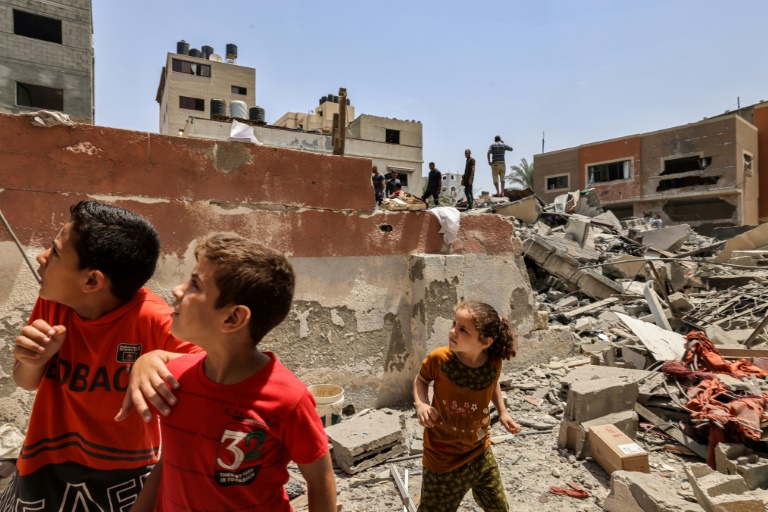
Gaza death toll rises as Israel, Palestinian militants trade fire

The death toll from violence in Gaza had risen to 24 on Sunday, including six children, as Israel pressed on with its bombardment of Palestinian militants who have retaliated with barrages of rockets.

The updated count from health authorities in the Hamas Islamist-run territory said six children were among those killed since the start of the “Israeli aggression” on Friday, in addition to 204 people injured.

But Israel said it had “irrefutable” evidence that a stray rocket from Islamic Jihad militants had been responsible for the death of multiple children in Jabalia, northern Gaza, on Saturday. 

It was not immediately clear how many children were killed in the incident in Jabalia. An AFP photographer saw six dead bodies at an area hospital, including three minors.  

The violence is the worst in Gaza since a war last year that devastated the impoverished territory — home to some 2.3 million Palestinians — and forced countless Israelis to seek shelter from rockets. 

Israel’s military has warned its latest aerial and artillery campaign against Islamic Jihad could last a week, but Egypt’s President Abdel Fattah al-Sisi said Cairo was talking “around the clock” with both sides to ease the violence.  

Israel has said it was necessary to launch a “pre-emptive” operation against Islamic Jihad, as the group was planning an imminent attack following days of tensions along the border with Gaza.

The head of the army’s operations directorate, Oded Basiok, said the entire “senior leadership of the military wing of the Islamic Jihad in Gaza has been neutralised” by Israel’s campaign.  

That includes Taysir al-Jabari, a top militant commander killed in Gaza City on Friday, and Khaled Mansour, who Islamic Jihad confirmed died in a strike in Rafah, southern Gaza on Saturday. 

A total of eight people were killed in the Rafah strike, including a 14-year-old, according to Gaza’s interior ministry.  

Daily life in the strip has come to a standstill, while the electricity distributor said the sole power station shut down due to a lack of fuel after Israel closed its border crossings.

Gaza’s health ministry said the next few hours will be “crucial and difficult”, warning it risked suspending vital services within 72 hours as a result of the lack of electricity.

– ‘We are all alone’ –

In Gaza City, resident Dounia Ismail said Palestinians had become accustomed to preparing a “survival bag” of items such as money and medicine.

“This latest escalation brings back images of fear, anxiety, and the feeling that we are all alone,” she told AFP.

Civilians in southern and central Israel, meanwhile, have been forced into air raid shelters since Friday.

The Magen David Adom emergency service said two people were hospitalised with shrapnel wounds and 13 others were lightly hurt while running for safety.

In Kibbutz Nahal Oz, an Israeli community beside the Gaza border, resident Nadav Peretz said he had been “in the bomb shelter or around it” since Friday. 

“We recognise that on the other side too there is an uninvolved civilian population, and on both sides children deserve to enjoy their summer vacation,” the 40-year-old said.

– Jerusalem –

Islamic Jihad is aligned with Hamas, but often acts independently. Both are blacklisted as terrorist organisations by much of the West.

Hamas has fought four wars with Israel since seizing control of Gaza in 2007, including the conflict last May. 

A flare-up with Islamic Jihad came in 2019, following Israel’s killing of Baha Abu al-Ata, Jabari’s predecessor. Hamas did not join the fray in that conflict.

Hamas’s moves now could prove crucial, with the group facing pressure from some to restore calm in order to improve economic conditions in Gaza.

Focus will in part turn to Jerusalem on Sunday, where some Jews will mark the Tisha Be’av remembrance day by visiting the holy city’s most sensitive religious site, the Al Aqsa mosque compound, known in Judaism as the Temple Mount. 

Tensions at the compound in Israel-annexed east Jerusalem have previously sparked wider violence, and Hamas’s Doha-based chief Ismail Haniyeh has warned against allowing Jews to “storm” the compound on Sunday, saying it could lead to an “uncontrollable” security crisis given events in Gaza.  

Extreme-right Israeli politician Itamar Ben Gvir is scheduled to visit the compound on Sunday morning. 

Tonnes of fruit stranded in EU, S.Africa battle of oranges

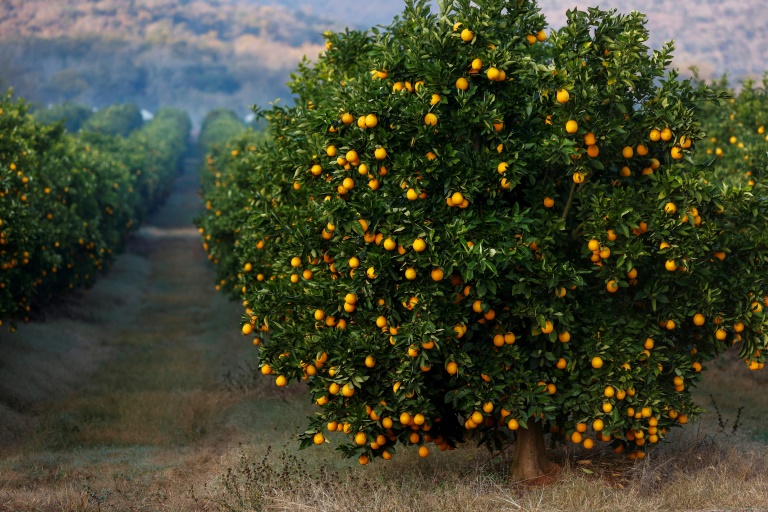
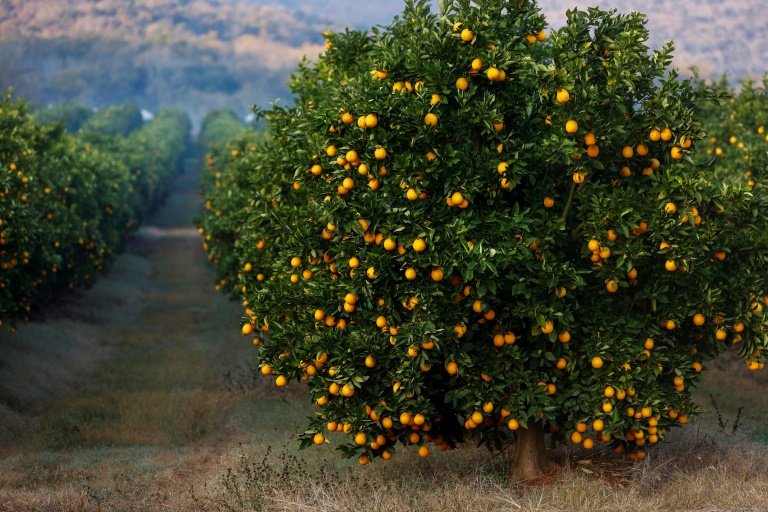
Millions of boxes of oranges are spoiling in containers stranded at European ports as South Africa and the European Union lock horns in a dispute over import rules, citrus growers have said. 

South Africa, the world’s second largest exporter of fresh citrus after Spain, filed a complaint with the World Trade Organisation (WTO) last month after the EU introduced new plant and health safety requirements that orange farmers say threaten their survival.

The measures came into force in July as ships were already at sea carrying hundreds of containers full of South African fruit to Europe, resulting in them being held up on arrival, South Africa’s Citrus Growers’ Association (CGA) says. 

“It’s a complete and utter disaster,” CGA’s CEO Justin Chadwick told AFP by phone.

“Food that has fantastic quality and is safe is (just) sitting there — and this at a time when people are worried about food security.”

The EU rules aim at tackling the potential spread of an insect called the false codling moth, a pest native to sub-Saharan Africa that feeds on fruits including oranges and grapefruits.

The new measures require South African farmers to apply extreme cold treatment to all Europe-bound oranges and keep the fruits at temperatures of two degrees Celsius (35 degrees Fahrenheit) or lower for 25 days.

But the CGA says this measure is unnecessary as the country already has its own, more targeted way of preventing infestation. 

In its WTO complaint, South Africa argued that the EU requirements were “not based on science”, more restrictive than necessary and “discriminatory”.

South African citrus growers say the requirement puts undue extra pressure on an industry already in dire straits. 

“This is going to add a lot of costs… and at the moment, that is what no grower in the world can afford,” said Hannes de Waal, who heads of the almost 100-year-old farm Sundays River Citrus.

De Waal, whose company has orange, clementine and lemon trees straddling 7,000 hectares (17,000 acres) near the southeastern coast city of Gqeberha, said revenues were already squeezed by high shipping and fertiliser costs. 

Freight costs have rocketed since Covid-19 struck, and so has the price of fertilisers due to the war in Ukraine — Russia being one of the world’s largest producers.

– ‘Under pressure’ –

Europe is the largest market for South Africa’s almost $2 billion citrus industry, accounting for 37 percent of all exports, according to the CGA.

The new rules hit at the height of South Africa’s orange season, during the southern hemisphere’s winter, when export operations were in full swing.

This gave fruit growers too little time to adapt, said Chadwick. 

Some 3.2 million cartons of citrus worth about 605 million rand ($36 million) left port with paperwork that would be wrong on arrival.

The South African government was scrambling to issue new documents for shipments that met the new criteria, but hundreds of containers could be slated for destruction, said Chadwick. 

South Africa already has an effective anti-moth system, the CGA says. 

“Our system does involve cold treatment, but targeted at the risk, whereas the EU measure is a blanket measure that covers all oranges,” Chadwick said.

“The higher the risk, the more extreme the cold treatment,” he said, of the South African measures.

The dispute is now with the WTO. The parties have 60 days to negotiate a solution. Failing that, the complainant can request the matter be decided by a panel of experts.

The EU said it was confident of the “WTO-compatibility” of its measures.  

“The objective of the EU’s plant and health safety criteria is to protect the union territory from the potential significant impact on the agriculture and the environment, should this pest establish itself in the union,” a spokesperson for the EU Commission said in a statement. 

Chadwick hopes that “sense” will prevail and a quick fix can be found.

“Our industry is under pressure. It’s basically a year of survival,” he said. 

Tonnes of fruit stranded in EU, S.Africa battle of oranges

Millions of boxes of oranges are spoiling in containers stranded at European ports as South Africa and the European Union lock horns in a dispute over import rules, citrus growers have said. 

South Africa, the world’s second largest exporter of fresh citrus after Spain, filed a complaint with the World Trade Organisation (WTO) last month after the EU introduced new plant and health safety requirements that orange farmers say threaten their survival.

The measures came into force in July as ships were already at sea carrying hundreds of containers full of South African fruit to Europe, resulting in them being held up on arrival, South Africa’s Citrus Growers’ Association (CGA) says. 

“It’s a complete and utter disaster,” CGA’s CEO Justin Chadwick told AFP by phone.

“Food that has fantastic quality and is safe is (just) sitting there — and this at a time when people are worried about food security.”

The EU rules aim at tackling the potential spread of an insect called the false codling moth, a pest native to sub-Saharan Africa that feeds on fruits including oranges and grapefruits.

The new measures require South African farmers to apply extreme cold treatment to all Europe-bound oranges and keep the fruits at temperatures of two degrees Celsius (35 degrees Fahrenheit) or lower for 25 days.

But the CGA says this measure is unnecessary as the country already has its own, more targeted way of preventing infestation. 

In its WTO complaint, South Africa argued that the EU requirements were “not based on science”, more restrictive than necessary and “discriminatory”.

South African citrus growers say the requirement puts undue extra pressure on an industry already in dire straits. 

“This is going to add a lot of costs… and at the moment, that is what no grower in the world can afford,” said Hannes de Waal, who heads of the almost 100-year-old farm Sundays River Citrus.

De Waal, whose company has orange, clementine and lemon trees straddling 7,000 hectares (17,000 acres) near the southeastern coast city of Gqeberha, said revenues were already squeezed by high shipping and fertiliser costs. 

Freight costs have rocketed since Covid-19 struck, and so has the price of fertilisers due to the war in Ukraine — Russia being one of the world’s largest producers.

– ‘Under pressure’ –

Europe is the largest market for South Africa’s almost $2 billion citrus industry, accounting for 37 percent of all exports, according to the CGA.

The new rules hit at the height of South Africa’s orange season, during the southern hemisphere’s winter, when export operations were in full swing.

This gave fruit growers too little time to adapt, said Chadwick. 

Some 3.2 million cartons of citrus worth about 605 million rand ($36 million) left port with paperwork that would be wrong on arrival.

The South African government was scrambling to issue new documents for shipments that met the new criteria, but hundreds of containers could be slated for destruction, said Chadwick. 

South Africa already has an effective anti-moth system, the CGA says. 

“Our system does involve cold treatment, but targeted at the risk, whereas the EU measure is a blanket measure that covers all oranges,” Chadwick said.

“The higher the risk, the more extreme the cold treatment,” he said, of the South African measures.

The dispute is now with the WTO. The parties have 60 days to negotiate a solution. Failing that, the complainant can request the matter be decided by a panel of experts.

The EU said it was confident of the “WTO-compatibility” of its measures.  

“The objective of the EU’s plant and health safety criteria is to protect the union territory from the potential significant impact on the agriculture and the environment, should this pest establish itself in the union,” a spokesperson for the EU Commission said in a statement. 

Chadwick hopes that “sense” will prevail and a quick fix can be found.

“Our industry is under pressure. It’s basically a year of survival,” he said. 

US police say killings of four Muslim men may be linked

Police in the US state of New Mexico said Saturday they are investigating the murders of three Muslim men that they suspect are related to a fourth homicide from last year.

The Albuquerque police department said in a statement they had found the latest victim overnight Friday.

They did not identify him but said he was in his mid-20s, Muslim and “a native from South Asia.”

“Investigators believe Friday’s murder may be connected to three recent murders of Muslim men also from South Asia,” the statement said.

Two of the previous victims were Muslim Pakistani men, a 27-year-old whose body was found on August 1 and a 41-year-old who was found on July 26.

Detectives are now investigating whether these murders are connected to the death of a Muslim man from Afghanistan who was killed on November 7, 2021, outside of the business he ran with his brother in Albuquerque, the statement said.

The police urged anyone with information to call a tip line and said the FBI was assisting with the investigation.

New Mexico Governor Michelle Lujan Grisham expressed outrage at the attacks and solidarity with the southwestern state’s Muslim community.

“The targeted killings of Muslim residents of Albuquerque is deeply angering and wholly intolerable,” Lujan Grisham said on Twitter.

She said she was sending additional state police officers to Albuquerque to help with the investigation.

“We will continue to do everything we can to support to the Muslim community of Albuquerque and greater New Mexico,” she said.

The Council on American-Islamic Relations (CAIR), the largest US Muslim civil rights group, said Saturday it would offer a $10,000 reward to whoever provides information leading to the killer’s arrest.

“This tragedy is impacting not only the Muslim community — but all Americans,” CAIR national executive director Nihad Awad said in a statement. 

“We must be united against hate and violence regardless of the race, faith or background of the victims or the perpetrators.”

China set to wrap up largest-ever Taiwan military drills

China is set Sunday to wrap up its largest-ever military exercises surrounding Taiwan after a controversial visit to the self-ruled island by US leader Nancy Pelosi. 

Beijing has raged at the trip by Pelosi — the second in the line of succession to the US presidency — ripping up a series of talks and cooperation agreements with Washington, most notably on climate change and defence cooperation. 

It has also deployed fighter jets, warships and ballistic missiles around Taiwan in what analysts have described as practising a blockade and ultimate invasion of the island.

Those exercises are set to wrap up Sunday, though Beijing has announced fresh drills in the Yellow Sea — located between China and the Korean peninsula — to take place until August 15.

Saturday saw China deploy “multiple batches” of planes and ships into the Taiwan Strait, Taipei authorities said, some of which crossed a demarcation line that divides the waters, which Beijing does not recognise.

“They were judged to be conducting a simulation of an attack on Taiwan’s main island,” Taipei’s defence ministry said.

In response, the democratic island’s military mobilised air and land patrols and deployed land-based missile systems the ministry said.

As of 5:00 pm local time (0900 GMT), Taiwan’s army said “20 Communist planes and 14 ships were detected in the waters around Taiwan conducting joint air-sea exercises”.

– ‘A dangerous opponent’ –

In a bid to show how close China’s forces have been getting to Taiwan’s shores, Beijing’s military released a video of an air force pilot filming the island’s coastline and mountains from his cockpit.

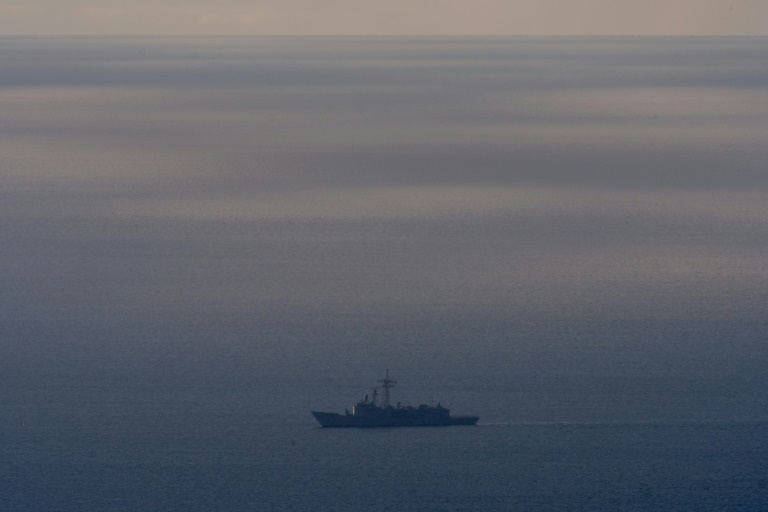
And the Eastern Command of the Chinese army shared a photo it said was taken of a warship patrolling seas near Taiwan with the island’s shoreline visible in the background.

The drills have also seen Beijing fire ballistic missiles over Taiwan’s capital, according to Chinese state media.

Taipei has remained defiant throughout China’s sabre-rattling, insisting it will not be cowed by its “evil neighbour”. 

Taiwan’s foreign ministry urged Beijing on Saturday to “immediately stop raising tensions and taking provocative actions to intimidate the Taiwanese people”.

But experts have warned the drills reveal an increasingly emboldened Chinese military capable of carrying out a gruelling blockade of the self-ruled island as well as obstructing American forces from coming to its aid.

“In some areas, the PLA might even surpass US capabilities,” Grant Newsham, a former US Navy officer, told AFP, referring to China’s military by its official name.

“If the battle is confined to the area right around Taiwan, today’s Chinese navy is a dangerous opponent — and if the Americans and Japanese do not intervene for some reason, things would be difficult for Taiwan.”

– ‘Punishing the world’ –

The scale and intensity of China’s drills — as well as Beijing’s withdrawal from key talks on climate and defence — have triggered outrage in the United States and other democracies.

US Secretary of State Antony Blinken, meeting with his Philippine counterpart on Saturday, said Washington was “determined to act responsibly” to avoid a major global crisis.

China should not hold talks on issues of global concern such as climate change “hostage”, Blinken said, as it “doesn’t punish the United States, it punishes the world”.

The United Nations has also urged the two superpowers to continue to work together — for the world’s sake.

“For the secretary-general, there is no way to solve the most pressing problems of all the world without an effective dialogue and cooperation between the two countries,” his spokesman Stephane Dujarric said.

Zelensky condemns Russian 'terror' after damage to nuclear plant

Ukraine’s President Volodymyr Zelensky on Saturday accused Russia of using the Zaporizhzhia nuclear power plant “for terror” after the operator of the facility reported major damage at the site.

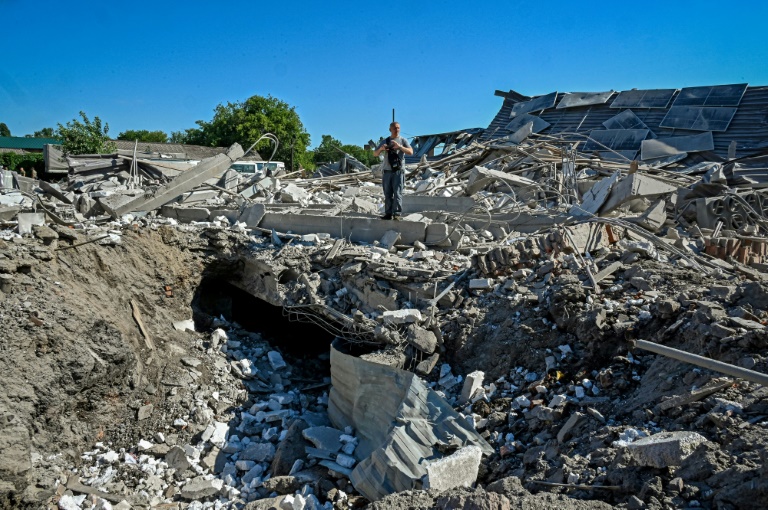
Energoatom, operator of the Zaporizhzhia nuclear power plant in the south of the country, said Saturday that parts of the facility had been “seriously damaged” by military strikes and one of its reactors was forced to shut down.

Friday’s strikes had damaged a station containing nitrogen and oxygen and an auxiliary building, Energoatom said on the Telegram messaging service.

As hostilities raged on in the east and south of Ukraine, pro-Moscow authorities in the Russian-occupied Kherson region reported the assassination of a senior official.

And the head of Amnesty International’s Ukraine office announced she had resigned from the organisation over the group’s publication of a controversial report that accused the country’s military of endangering civilians.

Kyiv and Moscow have blamed each other for the attacks on the Zaporizhzhia plant, Europe’s largest atomic power complex.

Zelensky, in his nightly address on Saturday, once again accused Moscow of terrorism, saying, “Russian terrorists became the first in the world to use the power plant… for terror.”

The head of the UN’s nuclear watchdog expressed alarm over the shelling at the plant. The strikes underline “the very real risk of a nuclear disaster”, said Rafael Grossi, director general of the International Atomic Energy Agency (IAEA).

“Any military firepower directed at or from the facility would amount to playing with fire, with potentially catastrophic consequences,” he added.

The European Union’s top diplomat Josep Borrell condemned the attack “as a serious and irresponsible breach of nuclear safety rules and another example of Russia’s disregard for international norms”.

– Another assassination –

An official with the Russian occupying authorities in Kherson died in hospital after being shot on Saturday, Russian state media reported.

Vitalii Hura, “the deputy head of the Novaya Kakhovka administration in charge of the housing and utility sector, died from his wounds”, Yekaterina Gubareva, the deputy head of Russia’s civil-military administration in Kherson, wrote on Telegram, according to TASS.

The report said Hura had been attacked in his home and shot several times.

Another Moscow-appointed official was killed in the same region in June, reportedly by a bomb planted in his car.

There has been a spate of reported assassination attempts and attacks against pro-Kremlin officials in Ukrainian regions controlled by Russia.

Although Russia has seized a large swath of the Kherson region and part of nearby Zaporizhzhia in recent months, Ukraine’s forces have reclaimed some territory.

In his address Saturday, Zelensky hit out at Amnesty International, comparing the rights group’s accusations against Ukraine’s military with its silence on Russia’s actions.

Referring to the strikes on the Zaporizhzhia plant, he said that although they represented “one of the most dangerous crimes against Ukrainians and all Europeans… for some reason, there’s still no report or even just a simple message from Amnesty International about it.

“It’s a very eloquent silence, which points out, once more, a manipulative selectivity of this organisation,” he added.

Amnesty sparked outrage in Ukraine with the report published Thursday that accused the military of endangering civilians by establishing bases in schools and hospitals, and launching counterattacks from heavily populated areas.

– Amnesty report row –

The head of Amnesty’s Ukraine office quit the organisation in protest.

“If you don’t live in a country invaded by occupiers who are tearing it to pieces, you probably don’t understand what it’s like to condemn an army of defenders,” Oksana Pokalchuk said on social media late Friday.

“And there are no words in any language that can convey this to someone who has not experienced this pain.”

Pokalchuk said she had tried to warn Amnesty’s senior leadership that the report was one-sided and failed to properly take into account the Ukrainian position but had been ignored.

Amnesty secretary general Agnes Callamard expressed regret at her departure and paid tribute to her work. But the organisation stands by its report.

On Friday, Ukrainian officials said three grain ships left Ukraine after the first in months sailed on Monday as part of a deal to avert widespread food shortages.

Another five cargo ships are due to leave the Ukrainian ports of Odessa and Chernomorsk on Sunday, said a statement from the Joint Coordination Centre of the Black Sea Grain Initiative — the organisation coordinating the operation agreed between Russia, Turkey, Ukraine and the United Nations.

Flight tracking exposure irks billionaires and baddies

How to upset Russian freight companies, Elon Musk, Chinese authorities and Kylie Jenner in one go? Track their jets. 

Flight following websites and Twitter accounts offer real-time views of air traffic –- and sometimes major news like Nancy Pelosi’s Taiwan trip –- but that exposure draws pushback ranging from complaints to gear seizures.

Whether Russian air freight firms, Saudi Arabian plane owners or others, Dan Streufert said his group gets dozens of “requests” each year to stop posting aircrafts’ whereabouts.

“We have not removed anything so far. This is all public information. And I don’t want to be the arbiter of who’s right and who’s wrong,” added Streufert, founder of the US-based flight tracking site ADS-B Exchange.

Limits do apply in some cases, but groups that piece together the flight paths note that the core information source is legally available and open to anyone with the right gear.

US rules require planes in designated areas be equipped with ADS-B technology that broadcasts aircraft positions using signals that relatively simple equipment can pick up.

A service like Sweden-based Flightradar24 has 34,000, mostly volunteer-operated receivers around the world to pick up the signals, a key source of information that’s routed back to a central network and combined with data on flight schedules and aircraft information.

Figuring out or confirming to whom a plane actually belongs can require some sleuthing, said jet tracker Jack Sweeney, who filed a public records request with the US government that yielded a form bearing the signature of a particular plane’s owner: Tesla boss Elon Musk.

Sweeney has gotten quite a bit of attention with his Twitter account that tracks the movements of the billionaire’s plane and even rejected Musk’s offer of $5,000 to shut down @ElonJet, which has over 480,000 followers.

“There’s so much traction, I’m doing something right. The celebrity thing –- people like seeing what celebrities are doing, that and the whole emissions thing,” he told AFP, referring to concerns over the planes’ greenhouse gas impact. 

“Putting it on Twitter makes it easier for people to access and understand,” Sweeney added.

– ‘We will track anything’ –

Another of Sweeney’s Twitter accounts, powered by data from ADS-B Exchange, showed in July that US model and celebrity Kylie Jenner’s plane took a flight in California that lasted just 17 minutes.

The internet was not pleased and she faced a torrent of criticism on social media over concerns about the message it sent regarding climate change.

“They tell us working class people to feel bad about our once a year flight to a much needed vacation while these celebs take private jets every other day as if it’s an Uber,” tweeted @juliphoria, in an example of the outrage.

Neither Sweeney nor Streufert evoked a distinct redline they were concerned could be crossed by publishing the flight data.

“We will track anything because honestly, if somebody really was a bad actor, and they wanted to know where this stuff is, you can build the electronics for $100 and just deploy receivers to pick up the same signals yourself,” said Streufert from ADS-B Exchange.

Sweeney said “the data is already out there. I’m just redistributing it.”

There is also money to be made, but it’s not clear how much –- Streufert acknowledged he makes a living but declined to provide specifics and Sweeney said his flight tracking work brought in about $100 a month. Flightradar24 didn’t provide its revenue.

The services’ information -– as recently shown by the hundreds of thousands watching whether Pelosi would defy China’s warnings –- has significant potential for impact far beyond embarrassment of celebrities or the rankling of billionaires.

For example, ADS-B Exchange’s data was cited in a non-profit group’s report alleging Europe’s border agency Frontex worked to prevent migrants from crossing the Mediterranean, while US media used it to show surveillance planes flew over racial justice protests in Washington in 2020.

In fact, dozens of US Congress members responded to the revelations by signing on to a letter urging the FBI and other government entities like the National Guard to “cease surveilling peaceful protests immediately and permanently.”

In some parts of the world, governments have made clear the technology and resulting information is not welcome.

Chinese state media reported in 2021 that the government had recently confiscated hundreds of receivers used in crowd-sourced flight tracking, citing the risk of “espionage.”

“In many cases, it’s authoritarian regimes that don’t like this exposure,” Streufert said.

Close Bitnami banner
Bitnami