World

UK's busiest container port set for 8-day strike

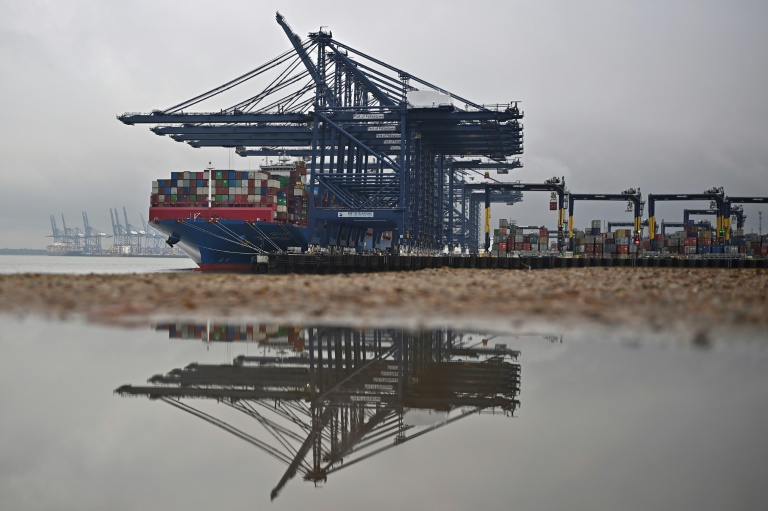
Workers at the UK’s largest container port will hold an eight-day strike at the end of August, union bosses said Friday, in the country’s latest industrial action over pay amid spiralling inflation.

“Workers at the port of Felixstowe will begin strike action later this month in a dispute over pay after peace talks… failed to produce a reasonable offer,” the Unite union said in a statement.

Over 1,900 workers will hold eight days of strikes from August 21 until August 29, it added.

The union said port operator, the Felixstowe Dock and Railway Company, had “failed to improve on its offer of a seven per cent pay increase,” with inflation predicted to hit 13 percent later this year.

“Felixstowe docks and its parent company CK Hutchison Holdings Ltd are both massively profitable and incredibly wealthy. They are fully able to pay the workforce a fair day’s pay,” said Unite general secretary Sharon Graham.

Felixstowe, in east England, is the UK’s largest container port and handles 48 percent of containers brought into the country.

“Strike action will cause huge disruption and will generate massive shockwaves throughout the UK’s supply chain, but this dispute is entirely of the company’s own making,” said Unite’s national officer for docks, Bobby Morton.

The UK is mired in disputes over pay and conditions, with economic headwinds set to strengthen later this year.

Hundreds of workers at an Amazon warehouse in the UK downed tools Thursday in protest over a pay rise offer of 35 pence (41 euro cents, 42 US cents) per hour.

The GMB trade union said staff at the warehouse in Tilbury, southeast England, are seeking a £2-an-hour rise to help them deal with the cost-of-living crisis.

Train workers recently brought the country’s network to a virtual standstill when they held their biggest walkouts in three decades.

Gases from Iceland's volcano threaten nearby village

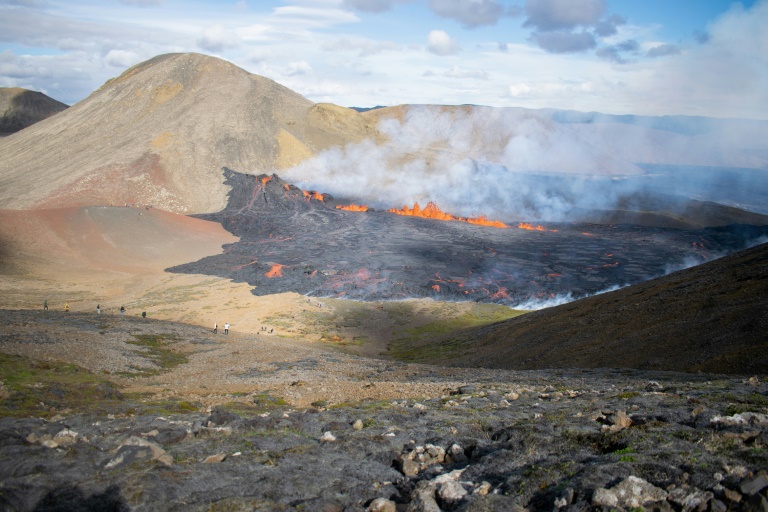
Noxious gases from an Icelandic volcano threaten to pollute the air of a nearby village and risk spreading to the capital Reykjavik, the Icelandic Meteorological Office (IMO) said on Friday.

The weather agency said it expected particularly heavy gas pollution in Vogar, a village of some 1,000 inhabitants about five kilometres (three miles) northeast of Fagradalsfjall, the uninhabited valley where the volcano is located.

It said the pollution could reach Reykjavik, 40 kilometres from the volcano, by Saturday.

Concentrations of sulphur dioxide could reach up to 2,600 microgrammes per cubic metre, a level considered “unhealthy for the sensitive”, according to the Environment Agency of Iceland. 

But the IMO warned that their models were uncertain since the “flow from the eruption is very uneven”.

The warning came after measurements showed that activity had halved at the volcanic fissure, which has been spewing glowing lava since Wednesday, and that the length of the crack had shrunk from an initial 360 metres (1,181 feet) to around 130 metres.

Although more powerful than a previous eruption in the same area last year, the initial lava flow of around 32 cubic metres (1,130 cubic feet) per second had decreased by the second day to around 18 cubic metres per second, according to an assessment published late on Thursday.

“This behaviour is very similar to what is usually observed during eruptions in the country — the eruption is powerful at the beginning and then subsides,” the Institute of Earth Sciences said in a statement.

The field of lava from the eruption covered 144,000 square metres on Thursday. 

“The (lava) flow is strongest in the middle of (the fissure) and there are indications that it may extend northwards,” authorities warned.

The pressure in the tunnel feeding the eruption is not balanced, which geophysicists say could lead to a new eruption at a new location. 

“New fissures can open in the immediate vicinity of the eruption site with little notice,” the IMO said.

Visitors have flocked to the eruption in record numbers to marvel at the flow of lava.

According to authorities, more than 4,200 people walked the 14-kilometre round trip to the site on the Reykjanes peninsula in southwest Iceland on Thursday, about two hours from the nearest car park. 

Surprise US job surge lifts employment back to pre-Covid levels

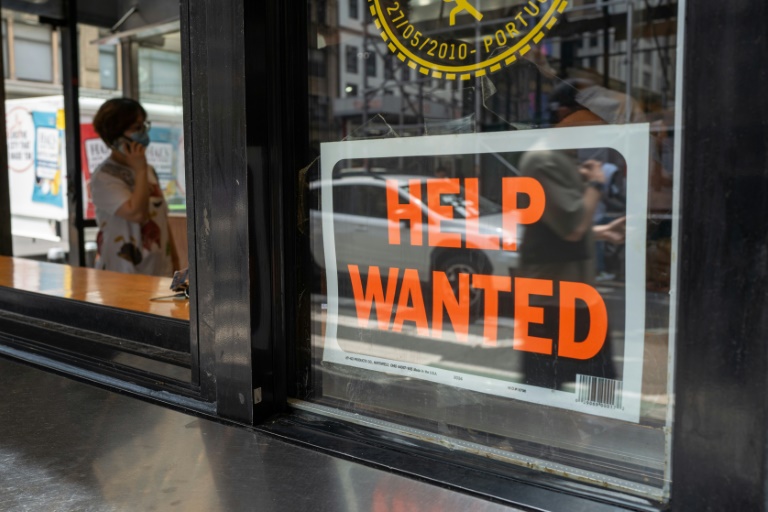
The US jobs market grew much faster than expected in July, lifting employment back to pre-pandemic levels, in news welcomed by President Joe Biden as he faces tough midterm elections — but which also fuels concerns over sky-high inflation.

Even the White House had predicted job gains would slow last month, which Biden had said was part of the natural downshift after the rapid rebound of the world’s largest economy from the pandemic downturn.

Instead, US job growth jumped in July, as the economy added a surprising 528,000 positions, more than double what economists were expecting, according to official data released Friday. That took the jobless rate back to the pre-pandemic level of February 2020.

“Today, the unemployment rate matches the lowest it’s been in more than 50 years: 3.5%,” Biden said in a statement.

“More people are working than at any point in American history … there’s more work to do, but today’s jobs report shows we are making significant progress for working families.”

On top of the hiring surge last month, the Labor Department report said the outsized job gain in June was revised higher, as was May, adding a total 28,000 positions to the initial data.

Meanwhile, the closely-watched report showed wages jumped in July — with average hourly earnings up 15 cents from June — stoking concerns about a possible wage-price spiral. Over the past 12 months, average hourly earnings have increased by 5.2 percent.

That’s good for families struggling to make ends meet as they face soaring prices for groceries and gas, but could drive firms to raise prices further.

With inflation topping nine percent, the highest in more than 40 years, the Federal Reserve has been raising interest rates aggressively to cool the economy, and economists now say a third consecutive three-quarter-point hike is likely in September.

– ‘Wow’ –

After recent data showed GDP contracted for the second consecutive quarter — causing many to say the economy is in recession — US stocks had been gaining ground due to investor optimism that the Fed would be able to dial back its inflation-fighting efforts.

But Wall Street opened sharply lower following the jobs report, amid concerns about coming rate hikes.

With the latest increase, total non-farm employment recovered to its pre-pandemic level, the data showed, and hiring topped 430,000 in the past three months.

KPMG economist Diane Swonk’s initial reaction: “Wow.”

“This report pushes the Fed towards a 75 basis point move AGAIN in September,” she said on Twitter.

From zero at the start of the year, the Fed has raised the benchmark borrowing rate four times, and pledged to continue its war on inflation.

And central bankers this week have made it clear that investor optimism about a possible downshift was misplaced.

“Recession is now less of a worry. Inflation is more of a worry,” Harvard economist Jason Furman tweeted. “The Fed will likely need to do more.”

The central bank will get two more employment reports and multiple inflation reports before its next policy meeting in mid-September.

While employers for months have been struggling to find workers — with nearly two open positions for every unemployed person in the work force — job gains have continued.

Hiring was robust in leisure and hospitality and health care, which each adding 96,000 or more in july, while manufacturing and construction gained at least 32,000.

Builders in particular have been under pressure as the struggle to meet high demand for construction, especially homes, but employment in the sector is now back to its pre-pandemic level, the report said.

But there were signs of strains as well. The number of people working part time for economic reasons, which dropped sharply in June, rebounded in July. And a growing number of workers are taking on second jobs, including 403,000 with two full-time positions.

The share of people in the labor force has been stuck at around 62 percent, and some economists are pointing to the impact of long-Covid, which is keeping potential workers on the sidelines.

Kathryn Bach of the Brookings Institution said she believes there could be as many as four million people prevented from working due to the effects of Covid-19.

ASEAN condemns lack of Myanmar peace progress

Southeast Asian ministers Friday condemned the lack of progress on a crisis resolution plan for coup-hit Myanmar, demanding the junta take action before a regional summit later this year.

Myanmar has been in chaos since a putsch in February last year, and the death toll from the military’s brutal crackdown on dissent has passed 2,100, according to a local monitoring group.

Anger is growing among some Association of Southeast Asian Nations (ASEAN) members at the generals’ stonewalling, particularly after the execution last month of four prisoners — including two prominent pro-democracy figures.

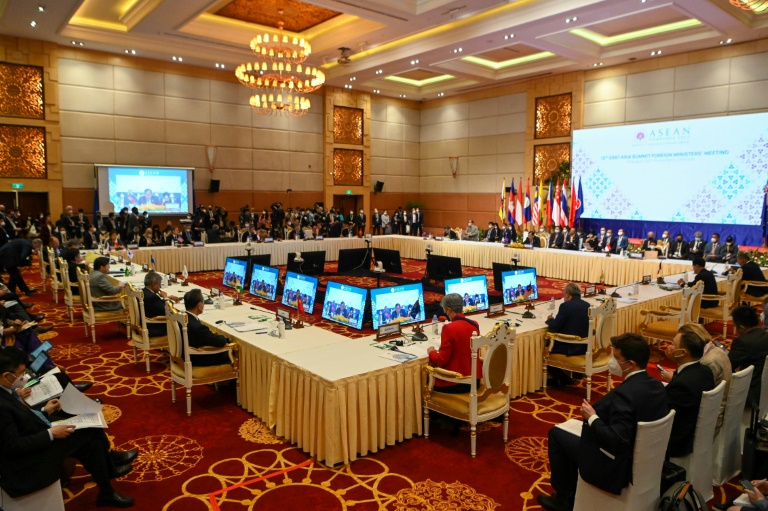
The 10-member bloc — spearheading so far fruitless efforts to resolve the turmoil — issued a joint statement after foreign minister talks in Phnom Penh.

The ministers said they were “deeply disappointed by the limited progress in and lack of commitment of the Naypyidaw authorities to the timely and complete implementation of the five point consensus”.

And in a veiled warning to Myanmar’s junta, the statement — referencing Article 20 of the ASEAN charter — noted the leaders’ meeting later this year could still take action over “non-compliance”.

ASEAN decisions are usually taken by consensus, but Article 20 allows a summit to override this principle.

Late Friday, the junta’s foreign ministry said it “rejects” the bloc’s statement on the lack of progress on the crisis resolution plan reached with ASEAN last April. 

“Myanmar believes ASEAN can maintain its unity and centrality in the long term only if all ASEAN member states respect… sovereignty and non-interference in the internal affairs” of members, it added.

The junta’s top diplomat, Wunna Maung Lwin, was not invited to Phnom Penh and was also left out of a foreign ministers’ retreat in February, while junta leader Min Aung Hlaing was snubbed at a leaders summit last year.

The foreign ministers also condemned last month’s executions of Phyo Zeya Thaw, a rapper-turned-lawmaker from ousted civilian leader Aung San Suu Kyi’s National League for Democracy party, and veteran political activist Kyaw Min Yu, better known as “Jimmy”.

Earlier in the week, Malaysia — which has led calls for tougher action — indicated that Myanmar could face suspension from the bloc, should members not see concrete progress ahead of the leaders summit.

ASEAN has long been derided by critics as a toothless talking shop, but in addition to Malaysia, the Philippines, Indonesia and Singapore have pushed for a firmer line on Myanmar.

Friday’s statement said ASEAN’s special envoy to Myanmar must be allowed to meet with “all relevant stakeholders” — alluding to the military junta’s decision to block access to the detained Suu Kyi.

The Nobel laureate and democracy icon faces a raft of charges that could see her jailed for more than 150 years.

The difficulty of reaching an ASEAN consensus was acknowledged by visiting EU foreign policy chief Josep Borrell, who was in town for the regional talks.

But he emphasised the “Myanmar situation requires bolder, stronger actions”.

“It is clear that the junta is not listening,” he said, labelling the recent executions “a clear provocation”.

– Taiwan tensions –

The latest communique did not specifically mention this week’s spat between China and the United States following US House Speaker Nancy Pelosi’s visit to Taiwan.

A furious Beijing kicked off its biggest-ever military exercises in waters surrounding the self-ruled island in response to the visit on Thursday.

But the ASEAN foreign ministers warned against “provocative action”.

The situation “could lead to miscalculation, serious confrontation, open conflicts and unpredictable consequences among major powers”, they said in a joint statement published Thursday.

On Friday, the ministers also held regional security talks with their counterparts from the US, China, Russia, Japan and Australia at the East Asia Summit.

Senior militant among more than 15 dead as Israel strikes Gaza

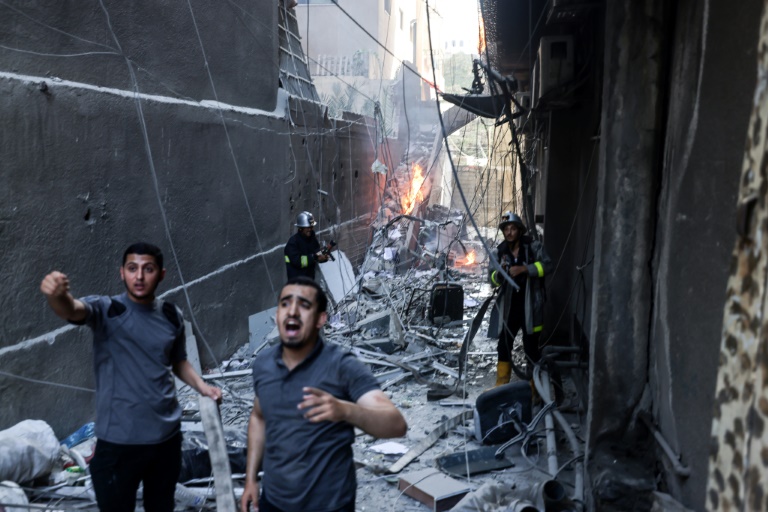
A senior militant from Islamic Jihad was among more than 15 people killed in Israeli air strikes on the Gaza Strip Friday, prompting the militant group to warn Israel has “started a war”.

A child was among those killed in the strikes, the enclave’s health ministry said, while Israel’s military estimated 15 combatants were killed. 

The Israeli army said the strikes were part of an operation “against targets in the Palestinian Islamic Jihad” group.

Islamic Jihad said Israel had “started a war against our people”.

“We collectively must defend ourselves and our people. We will not allow the enemy’s policy of undermining the resistance and our national perseverance,” the group said in a statement.

Flames poured out of a building in Gaza City following an air strike, while wounded Palestinians were evacuated by medics.

Gaza’s health ministry reported “a five-year-old girl, targeted by the Israeli occupation” was among those killed.

Islamic Jihad said it was mourning “the great jihadist commander Tayseer al-Jabari ‘Abu Mahmud’, who was killed in a Zionist assassination in Gaza City”.

An Israeli military spokesman said “we are assuming about 15 killed in action” in Gaza, referring to Palestinian combatants.

“We haven’t finished yet,” spokesman Richard Hecht told journalists.

The strikes come four days after Israel closed its two border crossings with Gaza and restricted the movement of Israeli civilians living near the frontier, citing security concerns.

The measures follow the arrest in the occupied West Bank of two senior members of Islamic Jihad, which has a strong presence in Gaza.

Hamas, the militant group which rules Gaza, said Israel has “committed a new crime for which it must pay the price”.

“The resistance in all its military arms and factions is united in this struggle and will speak loudly, as we cannot accept the situation as it is… all fronts must open fire on the enemy,” Hamas said in a statement.

Israeli Prime Minister Yair Lapid was due to hold talks with Defence Minister Benny Gantz on Friday evening.

“The Israeli government will not allow terrorist organisations to set the agenda in the Gaza Strip and threaten the citizens of the State of Israel. The security forces will act against the Islamic Jihad terrorists to remove the threat,” Lapid said.

Islamic Jihad is blacklisted as a terrorist organisation by the European Union and the United States.

On Friday afternoon, the Israeli military banned large gatherings in communities within 80 kilometres (50 miles) of the Gaza frontier, until Saturday evening. 

The measures follow four days of road closures and other restrictions on movement in the border area.

Palestinians including patients and those with Israeli work permits have been prevented from leaving the Gaza Strip since Tuesday, while the goods crossing has also been shut.

Gaza’s only power station is at risk of imminent outage due to a lack of fuel supplies through Israel, its manager warned on Thursday.

This week’s shutdown of the border area follows a raid by security forces in the northern West Bank district of Jenin.

Israeli forces detained Bassem al-Saadi and another senior member of Islamic Jihad. A 17-year-old member of the group was shot dead by Israeli forces during the raid.

'Synthetic embryo' breakthrough but growing human organs far off

Stem cell scientists say they have created “synthetic embryos” without using sperm, eggs or fertilisation for the first time, but the prospect of using such a technique to grow human organs for transplantation remains distant.

The breakthrough was hailed as a major step forward, though some experts said the result could not fully be considered to be embryos and warned of future ethical considerations.

In research published in the journal Cell this week, scientists at the Weizmann Institute of Science in Israel said found a way to have mouse stem cells self-assemble into embryo-like structures in the lab.

They started by collecting cells from the skin of mice, then made them return to the state of stem cells.

The stem cells were then placed in a special incubator designed by the researchers, which continuously moved to mimic a mother’s womb.

The vast majority of the cells failed to form anything.

But 50 — 0.5 percent of the 10,000 total — collected themselves into spheres, then embryo-like structures, the researchers said.

After eight days — around a third of the 20-day mouse gestation period — there were early signs of a brain and a beating heart, they added.

They were described as 95-percent similar to normal mouse embryos.

– ‘Time will tell’ –

If human organs could one day be grown in a lab, the technique could provide life-saving transplants for thousands of people every year.

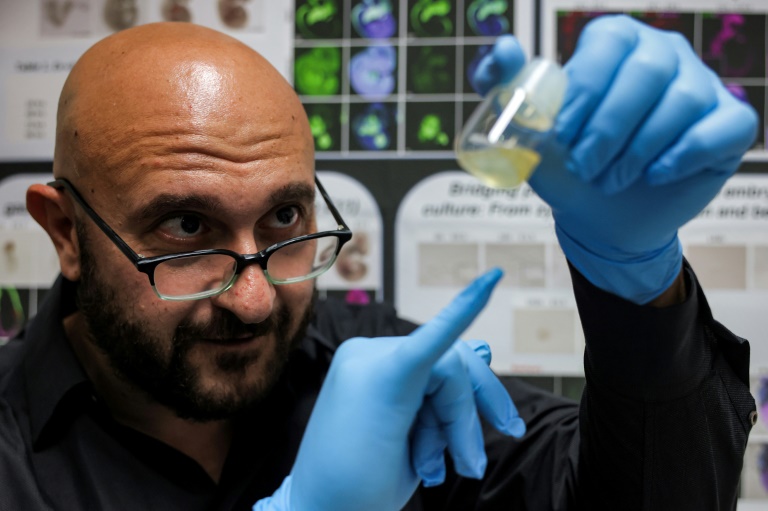
Stem cell scientist Jacob Hanna, who led the research, told AFP, “The big problem for transplantation is that you need to find a matching donor and the DNA is never identical to the patient.”

But using the new technique, one day scientists could take cells from a patient’s liver, for example, use them to make stem cells, grow a synthetic embryo then “transplant them back into the patient”, Hanna said.

“The cell will be made from the patient, so it will be the exact DNA — no need to find donors and there can be no rejection,” he added.

While they were the most advanced synthetic embryo-like structures ever grown, some scientists not involved in the research warned against calling them “embryos”.

“These are not embryos,” French stem cell scientist Laurent David told AFP.

He preferred to call them embryoids, the name for a group of cells that resemble an embryo.

However, David welcomed the “very convincing” research, which he said could allow further experiments to understand exactly how organs form.

Beyond organs, Hanna said the embryoids could also help identify new targets for drugs and potentially help find solutions for a range of issues such as pregnancy loss, infertility, endometriosis and preeclampsia.

“Time will tell,” he said.

Hanna, a Palestinian who led the research at the institute in Israel, said, “Science is my escape from the harsh reality I face while living in my homeland.”

“And I am one of the very ‘lucky’ ones,” he added.

The first author of the Cell study is a PhD student from the Palestinian enclave of Gaza, who needs a special permit regularly renewed to allow him to work at the institute in the Israeli city of Rehovot, Hanna said.

– Ethical implications –

Hanna has founded a company, Renewal Bio, that he said “will be focusing on testing potential clinical applications of human synthetic embryoids”.

He said they had ethical approval for such testing in Israel and it was legal in many other countries such as the US and UK.

“We should remember that synthetic embryos are embryoids and not real embryos and do not have the potential to become viable,” he said.

But researchers not involved in the study said it was very early to consider using such a technique for humans.

Alfonso Martinez Arias of Spain’s Pompeu Fabra University said the breakthrough “opens the door to similar studies with human cells, though there are many regulatory hoops to get through first and, from the point of view of the experiments, human systems lag behind mouse systems”.

And aiming to get similar results from human cells is likely to open an ethical can of worms.

“Although the prospect of synthetic human embryos is still distant, it will be crucial to engage in wider discussions about the legal and ethical implications of such research,” James Briscoe of Britain’s Francis Crick Institute said.

On Lampedusa, migrant worries leave locals behind

“It’s just words, words,” complains Pino D’Aietti, who like many residents of the tiny island of Lampedusa feels abandoned by Italy’s politicians — except when a surge in migrant arrivals makes the headlines.

The 78-year-old retired plumber is sitting outside a restaurant on the island, where anti-immigration leader Matteo Salvini has spent the past two days as part of his campaign for September 25 elections.

Located between Sicily and Tunisia, Lampedusa is known for its beaches and turquoise waters, but also as the landing point for thousands of migrants on boats from north Africa.

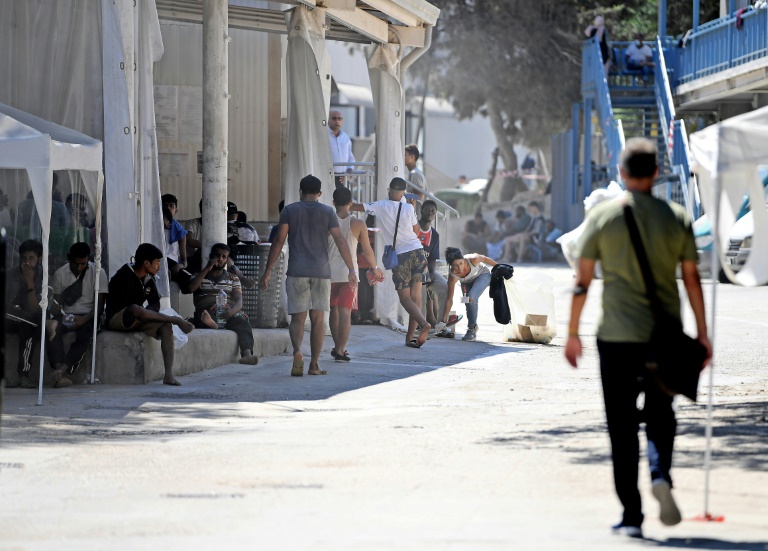
On Thursday, Salvini visited the migrant reception centre where as many as 1,500 mostly young men were packed this week in a facility meant for 350.

The League leader, whose right-wing alliance is expected to form Italy’s next government, has made stopping the arrivals a cornerstone of his campaign.

He also listened to locals’ concerns about rising inflation, particularly soaring energy costs, which are weighing heavily on the eurozone’s third-largest economy.

But there is a sense of disillusionment here, an island of just 6,000 residents out in the middle of the Mediterranean.

“We have the most expensive fuel, the (water) purifier hasn’t worked for a long time, there is no hospital,” railed D’Aietti, as tourists in swimsuits browsed shops nearby.

“We are spare parts. When the tourists go, the rubbish we eat! It’s disgusting. And who defends us?”

The lack of healthcare is a recurrent theme.

“We have specialists and that’s it. For anything else we have to go onto the mainland,” said Maria Garito, a 58-year-old housewife out shopping.

– Limited means –

Mayor Filippo Mannino admits healthcare is a problem, but tells AFP: “The municipality has limited means, it is up to the state to take charge.”

He has also called for more help from Rome — and the European Union — to manage the inflow of migrants, which often becomes unmanageable in the summer months when calmer seas cause a surge in new arrivals.

Not far from the town hall, at the end of an isolated road, is the so-called hotspot, the immigration reception centre.

It is protected by steel gates, but those inside can be seen whiling away the hours in a few shady spots. 

The government last week agreed to lay on a special ferry to transfer migrants three times a week to Sicily, and AFP reporters this week saw hundreds boarding a boat.

Few get to sample the delights of Lampedusa — unlike Salvini, who was pictured in his swimsuit in a pleasure boat off the island on Friday.

– Separate things –

Although the locals prefer not to talk about the migrants, prejudice is an issue here.

Ibrahima Mbaye, a 43-year-old Senegalese man who arrived here on a French visa three years ago, said “there are good people but half the people are racist, you feel it”.

He has been working as a fisherman, but says it has not been easy — and nor is it for those who arrive illegally.

“They think that Italy is their future, but when they arrive they’re disappointed. They understand that it’s not easy to earn money,” he told AFP.

As for the tourists on holiday on Lampedusa, many are either unaware or willing to turn a blind eye.

“We read about it in the newspapers but we really don’t feel it,” said fifty-something Dino, who has been coming here every summer for ten years.

The two faces of Lampedusa “are two separate things”, he adds.

China scraps cooperation with US over Taiwan spat

China said Friday it was ending cooperation with the United States on a litany of key issues including climate change, anti-drug efforts and military talks, as relations between the two superpowers nosedive over Taiwan.

Beijing has reacted furiously to a visit by US House Speaker Nancy Pelosi to Taiwan, which it claims as its territory and has vowed to retake — by force if necessary.

It has since Thursday encircled the self-ruled, democratic island with a series of huge military drills that have been roundly condemned by the United States and other Western allies.

And Friday saw its foreign ministry hit back further against the United States, suspending talks and cooperation on multiple agreements between the two — including on climate change.

The world’s two largest polluters last year pledged to work together to accelerate climate action this decade, and vowed to meet regularly to “address the climate crisis”.

But that deal looks shaky as relations sink to some of their lowest levels in years, as do agreements on everything from talks on military matters to anti-drug cooperation.

Pelosi — who Beijing also hit with sanctions for the visit — has defended her trip to Taiwan, saying Friday that Washington would “not allow” China to isolate the island.

In Washington, the White House summoned China’s ambassador to Washington to condemn Beijing’s “irresponsible” behaviour over Taiwan, a senior US official said Friday.

Taiwan has also condemned Beijing’s response to the visit, with premier Su Tseng-chang calling for allies to push for de-escalation.

“(We) didn’t expect that the evil neighbour next door would show off its power at our door and arbitrarily jeopardise the busiest waterways in the world with its military exercises,” he told reporters.

– ‘Our motherland is powerful’ –

Beijing has said its military exercises will continue until midday Sunday, and Taipei reported that 68 Chinese planes and 13 warships crossed the “median line” that runs down the Taiwan Strait on Friday.

AFP journalists on the Chinese island of Pingtan saw a fighter jet flying overhead, prompting tourists to snap photos as it flew along the coast.

A Chinese military vessel sailing through the Taiwan Strait was also visible, they added.

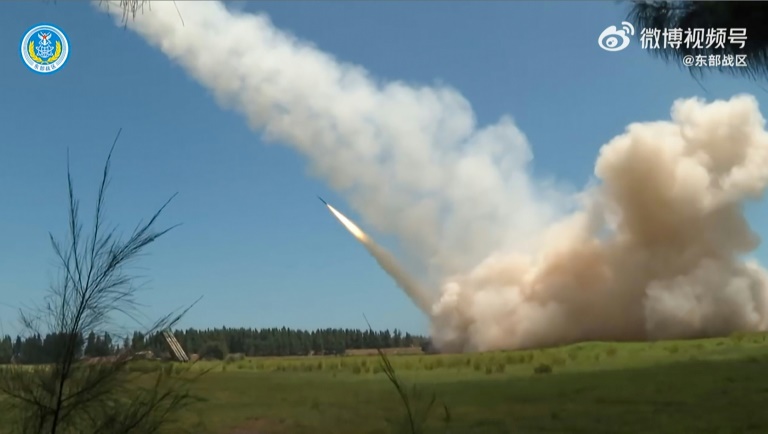
China’s drills involved a “conventional missile firepower assault” in waters to the east of Taiwan, the Chinese military said. 

And state broadcaster CCTV reported that Chinese missiles had flown directly over Taiwan — a major escalation if officially confirmed.

On the Chinese island of Pingtan, local tourists proudly extolled their country’s military might against its much smaller neighbour.

“Our motherland is powerful. We are not afraid of having war with Taiwan, the US or any country in the world,” Liu, a 40-year-old tourist from Zhejiang province, told AFP.

“We hope to unify Taiwan soon. We are not scared of anyone,” he added. 

“We don’t want to start a war, but we are not afraid of others.”

Wang, a businesswoman, was more sanguine about prospects for cross-strait ties.

“I hope China can unify Taiwan, but I don’t want war,” she said. “I hope this issue can be solved in a peaceful way.”

– ‘Significant escalation’ –

The scale and intensity of China’s drills have triggered outrage in the United States and other democracies.

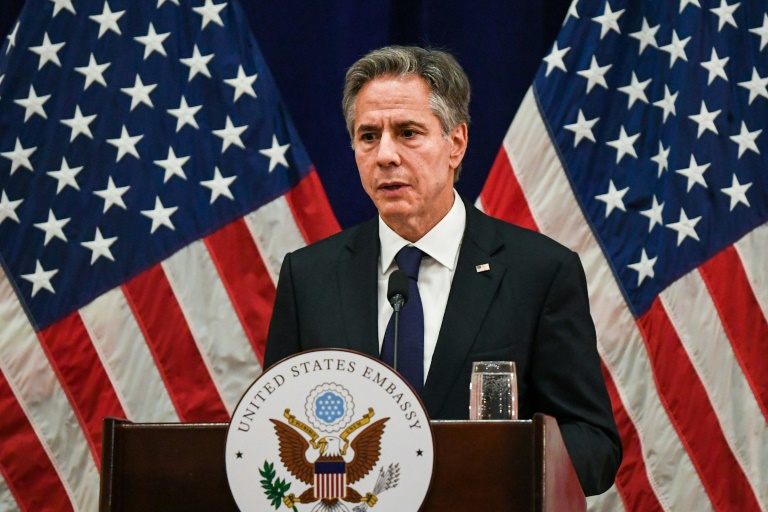
“These provocative actions are a significant escalation,” US Secretary of State Antony Blinken said after talks with Southeast Asian foreign ministers at an ASEAN summit in Phnom Penh.

“The fact is, the speaker’s visit was peaceful. There is no justification for this extreme, disproportionate and escalatory military response,” he added.

China’s foreign minister countered with a warning for the United States, urging Washington not to escalate tensions.

“America’s habit is to create a problem and then use this problem to achieve its goals. But this approach will not work with China,” Wang Yi said at a press conference on the sidelines of the same summit.

“We want to issue a warning to the US not to act rashly and not to create a bigger crisis.”

Japan has lodged a formal diplomatic complaint against Beijing, with five of China’s missiles believed to have landed in its exclusive economic zone. 

On Friday, Japan’s foreign ministry said China “cancelled” a planned bilateral meeting on the sidelines of the ASEAN summit. 

And Australia — which has a troubled relationship with China, its largest trading partner — condemned the drills as “disproportionate and destabilising”.

The manoeuvres are taking place along some of the world’s busiest shipping routes, used to disseminate the global supply of vital semiconductors and electronic equipment produced in East Asia.

Blinken meets Cambodian opposition leader

US Secretary of State Antony Blinken met a Cambodian opposition leader facing treason charges during a visit to Phnom Penh Friday, expressing concern about the kingdom’s eroding democracy ahead of elections next year.

One of the world’s longest-serving leaders, Prime Minister Hun Sen has ruled Cambodia for more than 37 years. In 2018 his party won every seat in a national election.

And in June, a Phnom Penh court convicted about 60 opposition figures — including dual US-Cambodian citizen Theary Seng — in a mass treason trial that rights groups have condemned as politically motivated.

Blinken said he directly expressed concerns about the kingdom’s ailing democracy during talks with Hun Sen, while visiting the Cambodian capital for the Association of South East Nations (ASEAN) foreign ministers’ meeting.

Allowing broader participation in the political system would strengthen the country, the secretary of state told reporters Friday.

“One of the things that stands in the way of strengthening the relationship between our countries are our concerns about eroding respect for human rights and democratic institutions here in Cambodia,” he said.

Washington’s top diplomat said that earlier Friday he met Cambodian opposition leader Kem Sokha, who is on trial for treason in a case that has dragged on since January 2020 — and which could effectively rule him out of next year’s national election.

During talks with Hun Sen, Blinken also raised the case of Theary Seng. The outspoken lawyer and campaigner was hit with a six-year jail term in June’s treason case.

Hun Sen and his ruling party have publicly backed the prime minister’s eldest son — currently commander of the army — to eventually take the reins.

Ahead of local elections two months ago, the United Nations Human Rights Office said it was disturbed by reports of opposition obstruction in a “paralysing political environment”.

Hun Sen’s political party later announced a landslide win.

Japan’s foreign minister Yoshimasa Hayashi also raised concerns about Cambodia’s democracy with Hun Sen during his bilateral talks on the sidelines of the ASEAN meeting.

Japan hopes Cambodia’s election next year is a “reflection of the diverse voices of the Cambodian people”, Japanese foreign ministry official Yasuhiro Tsukamoto told reporters in an online briefing.

Drought-hit Mont Blanc shuts shelters to dissuade hikers

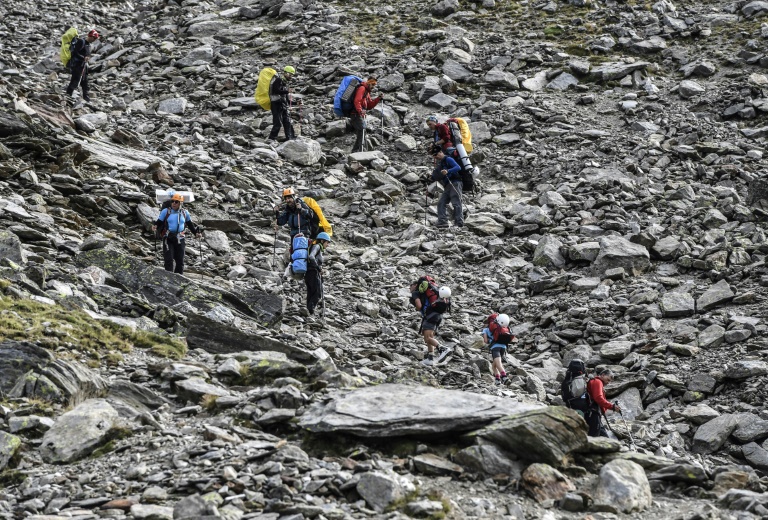
Authorities in the French Alps said Friday they had closed down two popular mountain shelters used by Mont Blanc climbers because of potentially deadly drought-related rockfalls.

In a year marked by drought and heatwaves, rockfalls and gaping crevices have made access to the top of Mont Blanc, western Europe’s highest mountain, even more difficult and perilous.

The mayor’s office in the Mont Blanc village of Saint-Gervais, said climbers were in “mortal danger” from rocks and shards coming loose because of dry weather and dropping from a height.

“All day long, we still see climbers going on the mountain range, all the time, as if this was Disneyland or the Parc Asterix,” said Saint-Gervais mayor Jean-Marc Peillex, in reference to two popular theme parks near Paris.

Hikers had been advised since last month to stay away because of the danger, but “they just don’t give a damn,” he told AFP. 

The closure of the two mountain shelters — Gouter with 120 overnight spots and Tete Rousse with 74, as well as a base camp accommodating up to 50 people — was to “show clearly that there is no accommodation available”.

The authorities had warned for weeks that falling rocks were a danger, he said, adding that crossing the Gouter mountain corridor represented “a mortal danger”, he said.

Nevertheless, 79 people stayed at the Gouter shelter Thursday night, he said.

The shelters will remain shut until normal weather conditions return, the mayor said, probably not before early September.

Peillex had warned Wednesday that Saint-Gervais would require a deposit of 15,000 euros ($15,200) from each hiker, saying the sum represented the average cost of a rescue operation and a funeral.

He was, however, advised that French law offers no basis for such a move.

A lack of snow during the winter has laid bare vast areas of greyish glacier — yellowish where sand dust from the Sahara has accumulated — riven with fractures on the Mont Blanc.

The heat did the rest, causing the fragile snow bridges to melt that make it possible to cross the crevasses, as well as leading to landslides.

Following several heatwaves, France is in the grip of severe drought, blamed by scientists on climate change.

On Friday, 100 municipalities across the country were without drinking water, Environment Minister Christophe Bechu said.

Calling the drought “historic”, Prime Minister Elisabeth Borne called a crisis meeting Friday to seek solutions.

Scientists say human-induced climate change is amplifying extreme weather — including the heatwaves, droughts and floods seen in several parts of the planet in recent weeks — and say these events will become more frequent and more intense.

The international community has agreed that climate change poses an existential threat to human systems and the natural world. 

Close Bitnami banner
Bitnami