World

Thai nightclub fire kills 14, PM orders probe

Thailand’s prime minister on Friday ordered an investigation into a massive blaze that tore through a nightclub, killing at least 14 people.

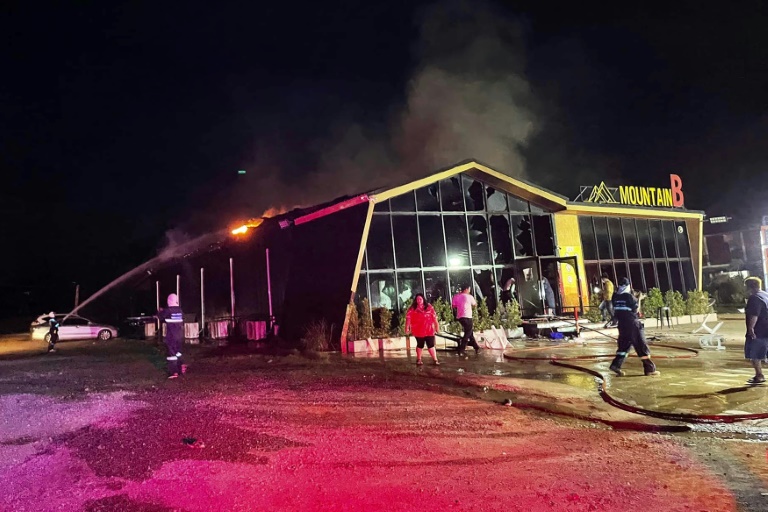
The fire broke out around 1:00 am (1800 GMT Thursday) at the Mountain B nightspot in Chonburi province’s Sattahip district, about 150 kilometres (90 miles) southeast of Bangkok.

Video footage posted by a rescue service showed desperate revellers fleeing the club screaming, their clothes ablaze, as a huge fire raged in the background.

Chalit Chotisupakarn, who escaped with burns to his arms and torso, described scenes of panic and desperation as people struggled to get out of the building.

“I couldn’t see anything, everything was dark. Everybody was shouting ‘Get out! Get out!’ We all had to try to get out,” he told reporters.

“I just pushed and pushed. There were people with fire all over their bodies.”

The Sawang Rojanathammasathan Rescue Foundation said 14 people were killed and around 40 injured.

The service said the blaze was accelerated by flammable acoustic foam on the walls of the club, and it took firefighters more than three hours to bring it under control.

Prime Minister Prayut Chan-O-Cha offered condolences to the victims’ families and said he had ordered a probe into the fire.

The dead — four women and 10 men — were found mostly crowded by the entrance and in the bathroom, their bodies severely burned, the service said. 

They were aged between 17 and 49 and all are believed to have been Thai.

“There is not death related to foreigners,” police lieutenant colonel Boonsong Yingyong of the Phlu Ta Luang police station, which oversees the area where the blaze occurred, told AFP by phone.

– Charred wreck –

One of the victims was the singer of the band playing at the club, his mother told local media.

“I don’t know what to say. The death came all of a sudden,” Premjai Sae-Oung told reporters.

She said a musician friend who managed to escape had told her the fire broke out in front of the band and spread rapidly.

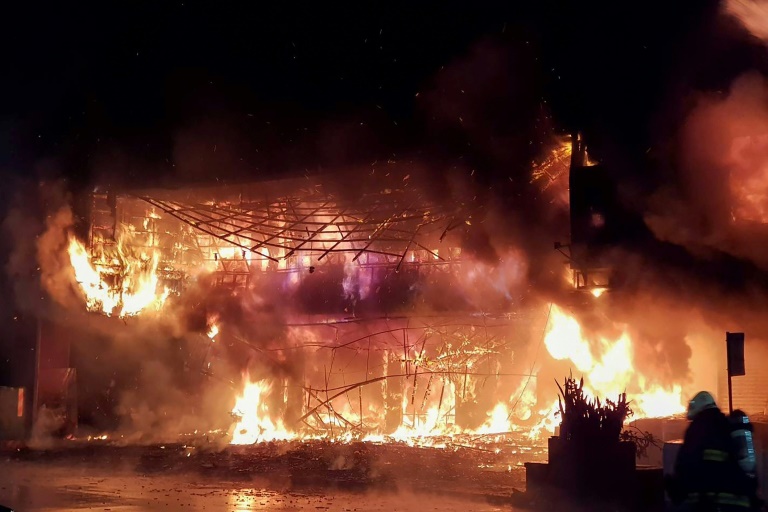
Images of the aftermath showed how the fire had turned the inside of the club into a blackened wreck, with the charred metal frames of furniture scattered among ashes. 

Police are investigating if fire escapes were present in the one-storey building and engineers are inspecting the structure amid fears it could collapse.

Interior minister Anupong Paochinda told reporters it appeared the Mountain B was operating “without permission” to run as an entertainment venue.

Sompong Chingduang, assistant commissioner of the Royal Thai Police, said the owner was under investigation for apparently changing the venue from a restaurant to a nightclub without permission.

Concerns have long been raised about Thailand’s lax approach to health and safety regulations, particularly in its countless bars and nightclubs.

A massive inferno erupted at a New Year’s Eve party at Bangkok’s swanky Santika club in 2009, killing 67 people and injuring more than 200.

The owner of Santika was jailed for three years over the blaze, which began when fireworks were set off as a rock band called Burn played on stage.

More recently, four people were killed in a fire caused by an electrical fault at a club on the holiday island of Phuket, a magnet for foreign tourists, in 2012.
ASEAN condemns lack of Myanmar peace progress

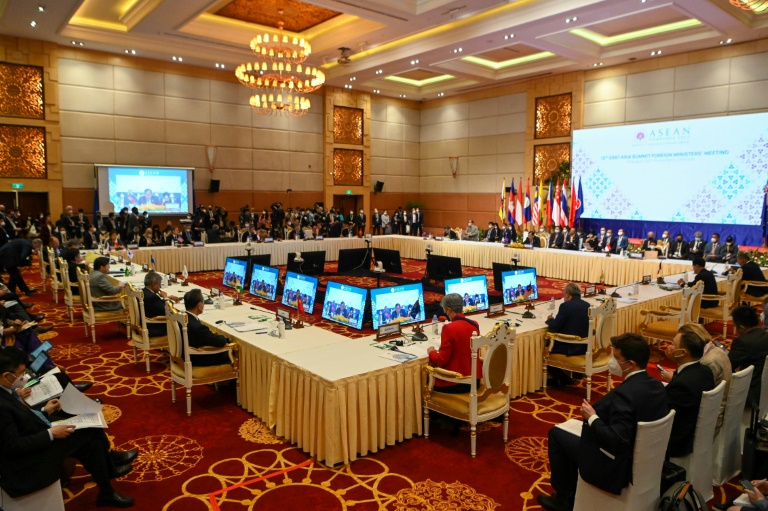
Southeast Asian ministers Friday condemned the lack of progress on a crisis resolution plan for coup-hit Myanmar, demanding the junta take action before a regional summit later this year.

Myanmar has been in chaos since a putsch in February last year, and the death toll from the military’s brutal crackdown on dissent has passed 2,100, according to a local monitoring group.

Anger is growing among some Association of Southeast Asian Nations (ASEAN) members at the generals’ stonewalling, particularly after the execution last month of four prisoners — including two prominent pro-democracy figures.

The 10-member bloc — spearheading so far fruitless efforts to resolve the turmoil — issued a joint statement after foreign minister talks in Phnom Penh.

The ministers said they were “deeply disappointed by the limited progress in and lack of commitment of the Naypyidaw authorities to the timely and complete implementation of the five point consensus”.

And in a veiled warning to Myanmar’s junta, the statement — referencing Article 20 of the ASEAN charter — noted the leaders’ meeting later this year could still take action over “non-compliance”.

ASEAN decisions are usually taken by consensus, but Article 20 allows a summit to override this principle.

Myanmar’s top diplomat, Wunna Maung Lwin, was not invited to Phnom Penh and was also left out of a foreign ministers’ retreat in February, while junta leader Min Aung Hlaing was snubbed at a leaders summit last year.

The foreign ministers also condemned last month’s executions of Phyo Zeya Thaw, a rapper-turned-lawmaker from ousted civilian leader Aung San Suu Kyi’s National League for Democracy party, and veteran political activist Kyaw Min Yu, better known as “Jimmy”.

Earlier in the week, Malaysia — which has led calls for tougher action — indicated that Myanmar could face suspension from the bloc, should members not see concrete progress ahead of the leaders summit.

ASEAN has long been derided by critics as a toothless talking shop, but in addition to Malaysia, the Philippines, Indonesia and Singapore have pushed for a firmer line on Myanmar.

Friday’s statement said ASEAN’s special envoy to Myanmar must be allowed to meet with “all relevant stakeholders” — alluding to the military junta’s decision to block access to the detained Suu Kyi.

The Nobel laureate and democracy icon faces a raft of charges that could see her jailed for more than 150 years.

The difficulty of reaching an ASEAN consensus was acknowledged by visiting EU foreign policy chief Josep Borrell, who was in town for the regional talks.

But he emphasised the “Myanmar situation requires bolder, stronger actions”.

“It is clear that the junta is not listening,” he said, labelling the recent executions “a clear provocation”.

– Taiwan tensions –

The latest communique did not specifically mention this week’s spat between China and the United States following US House Speaker Nancy Pelosi’s visit to Taiwan.

A furious Beijing kicked off its biggest-ever military exercises in waters surrounding the self-ruled island in response to the visit on Thursday.

But the ASEAN foreign ministers warned against “provocative action”.

The situation “could lead to miscalculation, serious confrontation, open conflicts and unpredictable consequences among major powers”, they said in a joint statement published Thursday.

On Friday, the ministers also held regional security talks with their counterparts from the US, China, Russia, Japan and Australia at the East Asia Summit.

'Synthetic embryo' breakthrough but growing human organs far off

Stem cell scientists say they have created “synthetic embryos” without using sperm, eggs or fertilisation for the first time, but the prospect of using such a technique to grow human organs for transplantation remains distant.

The breakthrough was hailed as a major step forward, though some experts said the result could not fully be considered to be embryos and warned of future ethical considerations.

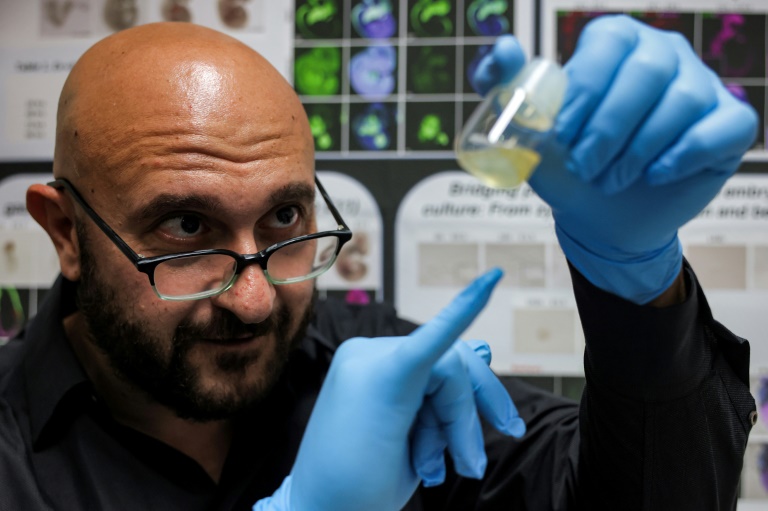
In research published in the journal Cell this week, scientists at the Weizmann Institute of Science in Israel described mouse stem cells self-assembling into embryo-like structures in the lab.

The research built upon 2018 research that had a bundle of mouse stem cells self-organised into something resembling the beginnings of an embryo — but with far fewer cells.

The Weizmann team led by Palestinian stem cell scientist Jacob Hanna went much further.

They started by collecting cells from the skin of mice, then made them artificially return to the state of stem cells.

The stem cells were then placed in a special incubator, which continuously moved to mimic a mother’s womb.

The vast majority of the cells failed to form anything.

But 50 — 0.5 percent of the 10,000 total — collected themselves into spheres, then embryo-like structures, the researchers said.

After eight days — around a third of the 20-day mouse gestation period — there were early signs of a brain and a beating heart, they added.

They were described as 95 percent similar to normal mouse embryos.

“The embryo is the best organ-making machine and the best 3D bioprinter — we tried to emulate what it does,” Hanna said in a Weizmann statement.

– ‘Not embryos’ – 

While they were the most advanced synthetic embryo-like structures ever grown, some scientists not involved in the research warned against calling them “embryos”.

“These are not embryos,” French stem cell scientist Laurent David told AFP.

“Until proven otherwise, they do not result in a viable individual capable of reproducing,” he added.

He preferred to call them embryoids, the name for a group of cells that resemble an embryo, emphasising that they showed only the very beginnings of organs.

However, David welcomed the “very convincing” research, which he said could allow further experiments to understand exactly how organs form.

Hanna said the team’s “next challenge is to understand how stem cells know what to do — how they self-assemble into organs and find their way to their assigned spots inside an embryo”.

– Ethical implications – 

If human organs could one day be grown in a lab, it could provide life-saving transplants to thousands of people every year without the need for donors.

There has been progress in this new field — several years ago researchers managed to develop an artificial intestine in the lab that could be implanted into a mouse. 

For humans, however, such organ implants remain science fiction.

Still, Hanna has founded a company, Renewal Bio, that aims to find a way to use the technology for therapeutic purposes.

Researchers not involved in the study said it was very early to consider using such a technique for humans.

Alfonso Martinez Arias of Spain’s Pompeu Fabra University said the breakthrough “opens the door to similar studies with human cells, though there are many regulatory hoops to get through first and, from the point of view of the experiments, human systems lag behind mouse systems”.

And aiming to get similar results from human cells will likely open an ethical can of worms.

“Although the prospect of synthetic human embryos is still distant, it will be crucial to engage in wider discussions about the legal and ethical implications of such research,” James Briscoe of Britain’s Francis Crick Institute said.

Blinken meets Cambodian opposition leader

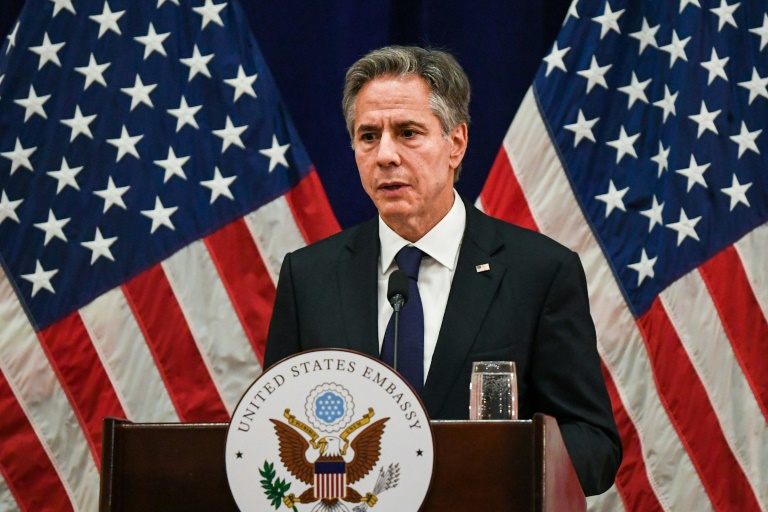
US Secretary of State Anthony Blinken met a Cambodian opposition leader facing treason charges during a visit to Phnom Penh Friday, expressing concern about the kingdom’s eroding democracy ahead of elections next year.

One of the world’s longest-serving leaders, Prime Minister Hun Sen has ruled Cambodia for more than 37 years. In 2018 his party won every seat in a national election.

And in June, a Phnom Penh court convicted about 60 opposition figures — including dual US-Cambodian citizen Theary Seng — in a mass treason trial that rights groups have condemned as politically motivated.

Blinken said he directly expressed concerns about the kingdom’s ailing democracy during talks with Hun Sen, while visiting the Cambodian capital for the Association of South East Nations (ASEAN) foreign ministers’ meeting.

Allowing broader participation in the political system would strengthen the country, the secretary of state told reporters Friday.

“One of the things that stands in the way of strengthening the relationship between our countries are our concerns about eroding respect for human rights and democratic institutions here in Cambodia,” he said.

Washington’s top diplomat said that earlier Friday he met Cambodian opposition leader Kem Sokha, who is on trial for treason in a case that has dragged on since January 2020 — and which could effectively rule him out of next year’s national election.

During talks with Hun Sen, Blinken also raised the case of Theary Seng. The outspoken lawyer and campaigner was hit with a six-year jail term in June’s treason case.

Hun Sen and his ruling party have publicly backed the prime minister’s eldest son — currently commander of the army — to eventually take the reins.

Ahead of local elections two months ago, the United Nations Human Rights Office said it was disturbed by reports of opposition obstruction in a “paralysing political environment”.

Hun Sen’s political party later announced a landslide win.

Who could be part of a US-Russia prisoner exchange?

The drug smuggling conviction in Russia of US basketball star Brittney Griner has again raised the question of a prisoner exchange between Moscow and Washington.

Russia said Friday it was “ready” for talks on a swap. Below are prisoners who could potentially be involved in a swap.  

– Brittney Griner –

Griner was on Thursday sentenced to nine years in a Russian penal colony and ordered to pay a fine of one million rubles ($16,590) for possessing and smuggling narcotics.

She was arrested at a Moscow airport in February for possessing vape cartridges with cannabis oil. The arrest came just days before Moscow launched its offensive in Ukraine on February 24.

She said it was prescribed by a US doctor to relieve pain for her many injuries.

The 31-year-old Phoenix Mercury player came to Russia to play basketball for a club in Russia’s Yekaterinburg during the off-season — a common path for American stars seeking additional income.

The two-time Olympic gold medallist and Women’s NBA champion pleaded guilty to the charges, but said she did not intend to break the law or use the banned substance in Russia.

– Paul Whelan –

Former US marine Paul Whelan, 52, was arrested in December 2018 and accused by Russian security services of spying. 

He was detained on a visit to Moscow to attend a wedding when he took a USB drive from an acquaintance, thinking it contained holiday photographs. He did not look at the contents of the drive, but his lawyer said it contained “state secrets”.

The former security official at a vehicle parts company — who also has British, Canadian and Irish passports — was sentenced to 16 years on espionage charges in June 2020. 

During his closed-door trial, Whelan insisted he was innocent.

– Marc Fogel – 

A teacher at an international school in Moscow, US citizen Marc Fogel was in June sentenced to 14 years in prison on charges of “large-scale” cannabis trafficking.

Russian customs officers said they found marijuana and hash oil in Fogel’s luggage when he arrived from New York at Moscow’s Sheremetyevo airport. 

Fogel said the marijuana was prescribed in the United States for medical purposes after a spinal operation.

Russia has not made the use of cannabis legal for medicinal purposes. 

Russian officials said Fogel was earlier employed by the US embassy in Moscow and benefited from diplomatic immunity until May 2021. 

– Victor Bout –

Russian arms trafficker Victor Bout was in 2012 sentenced to 25 years in a US jail after he was accused of arming rebels in some of the world’s bloodiest conflicts. 

The 55-year-old is considered the highest-profile Russian imprisoned in the United States.

The former Soviet air force officer and polyglot was arrested in Thailand in 2008 during a sting operation in which US agents posed as Colombia’s FARC rebels seeking weapons.

He inspired the 2005 arms smuggling movie “Lord of War” starring Nicolas Cage and was dubbed the “Merchant of Death” by former British minister Peter Hain for supplying weapons to war-torn Angola and Liberia.

Thai nightclub fire kills 14, PM orders probe

Thailand’s prime minister on Friday ordered an investigation into a massive blaze that tore through a nightclub, killing at least 14 people.

The fire broke out around 1:00 am (1800 GMT Thursday) at the Mountain B nightspot in Chonburi province’s Sattahip district, about 150 kilometres (90 miles) southeast of Bangkok.

Video footage posted by a rescue service showed desperate revellers fleeing the club screaming, their clothes ablaze, as a huge fire raged in the background.

The Sawang Rojanathammasathan Rescue Foundation said 14 people were killed and around 40 injured.

The service said the blaze was accelerated by flammable acoustic foam on the walls of the club, and it took firefighters more than three hours to bring it under control.

Prime Minister Prayut Chan-O-Cha offered condolences to the victims’ families and said he had ordered a probe into the fire.

The dead — four women and 10 men — were found mostly crowded by the entrance and in the bathroom, their bodies severely burned, the service said. 

They were aged between 17 and 49 and all are believed to have been Thai.

“There is not death related to foreigners,” police lieutenant colonel Boonsong Yingyong of the Phlu Ta Luang police station, which oversees the area where the blaze occurred, told AFP by phone.

– Charred wreck –

One of the victims was the singer of the band playing at the club, his mother told local media.

“I don’t know what to say. The death came all of a sudden,” Premjai Sae-Oung told reporters.

She said a musician friend who managed to escape had told her the fire broke out in front of the band and spread rapidly.

Images of the aftermath showed how the fire had turned the inside of the club into a blackened wreck, with the charred metal frames of furniture scattered among ashes. 

Police are investigating if fire escapes were present in the one-storey building and engineers are inspecting the structure amid fears it could collapse.

Interior minister Anupong Paochinda told reporters it appeared the Mountain B was operating “without permission” to run as an entertainment venue.

Sompong Chingduang, assistant commissioner of the Royal Thai Police, said the owner was under investigation for apparently changing the venue from a restaurant to a nightclub without permission.

Concerns have long been raised about Thailand’s lax approach to health and safety regulations, particularly in its countless bars and nightclubs.

A massive inferno erupted at a New Year’s Eve party at Bangkok’s swanky Santika club in 2009, killing 67 people and injuring more than 200.

The owner of Santika was jailed for three years over the blaze, which began when fireworks were set off as a rock band called Burn played on stage.

More recently, four people were killed in a fire caused by an electrical fault at a club on the holiday island of Phuket, a magnet for foreign tourists, in 2012.
In new power play, Iraq's Sadr mobilises supporters for mass prayer

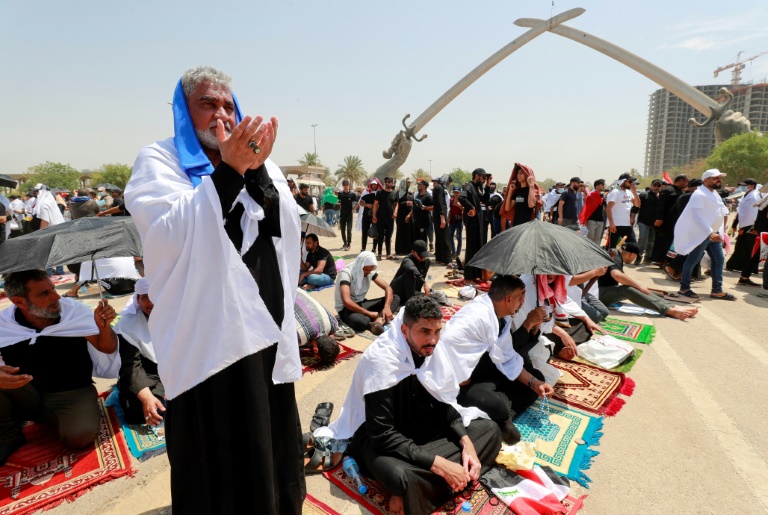
Tens of thousands converged on Baghdad’s Green Zone Friday for mass prayers in a new power play by Iraqi Shiite cleric Moqtada Sadr after his adversaries conditionally backed his call for early elections.

Sadr, a longtime political and religious force in the war-scarred country, has for months been in a political standoff with a rival alliance backed by Iran.

Worshippers converged on a vast square inside the normally secure Green Zone, home to government and diplomatic buildings, including the parliament which his followers have occupied since last Saturday.

Sadr’s mass prayer appeal follows his demand for early elections — a possibility that the rival bloc says it is conditionally open to, despite the last national polls only taking place about 10 months ago.

The country’s political factions have not been able to form a government, even as the country grapples with rampant corruption, crumbling infrastructure and unemployment.

Sheikh Ali al-Atabi, 38, joined the throng to support Sadr. Calling people to Friday prayers is “part of his repertoire” when he “wants to use the people for something,” Atabi explained.

A similar prayer call and pressure tactic from Sadr in mid-July drew hundreds of thousands of Muslim worshippers to Sadr City, a Baghdad district named after his assassinated father.

Also on his way to the midday prayers, Qassem Abu Mustafa, 40, described the gathering as “a thorn” jabbing “the enemy to demand legislative elections and reforms.”

“The prayer will be the prayer of a million men,” said the civil servant.

– Devoted following –

The faithful, mostly men but with some women, used umbrellas to protect themselves from Baghdad’s 42 degrees Celsius (108 Fahrenheit) heat.

Some waved Iraqi flags and carried portraits of Sadr, calling out: “Yes, yes Sayyed,” a reference to his formal title.

“Whatever Mr Sadr’s opinion, we are with him,” Abu Mustafa said.

Months of post-election negotiations between Sadr’s bloc — the largest in parliament — and other factions failed to lead to agreement on a new government, prime minister and president.

Sadr’s bloc emerged from the October polls as parliament’s biggest, but still far short of a majority.

In June, his 73 lawmakers quit in a bid to break the logjam. That led to a rival Shiite bloc, the pro-Iran Coordination Framework, becoming the largest in the legislature. 

The Coordination Framework’s nomination of former cabinet minister Mohammed Shia al-Sudani as prime minister angered the Sadrists and triggered their occupation of parliament.

With armed groups linked to the various political factions in Iraq, the United Nations has warned about the risk of political tensions escalating.

On Wednesday Sadr called for the dissolution of parliament and new polls. His adversaries in the Coordination Framework on Thursday night said they were conditionally open to that idea, signalling a potential deescalation.

In a brief statement, the Coordination Framework said it “affirms its support to any constitutional way to resolve the political crises and realise the interests of the people, including early elections.”

But “a national consensus on the question and providing a safe environment” were prerequisites for such polls, it said.

Above all, the Framework stressed the importance of “not disrupting the functioning” of constitutional institutions — a clear reference to the occupation of parliament by Sadr’s followers.

The Coordination Framework includes lawmakers from the party of former prime minister Nuri al-Maliki, a longtime foe of Sadr, and the Hashed al-Shaabi, a pro-Iran ex-paramilitary network now integrated into the security forces.

Parliament can only be dissolved by a majority vote, according to the constitution. Such a vote can take place at the request of a third of lawmakers, or by the prime minister with the president’s agreement.

Taiwan condemns 'evil neighbour' China over war drills

Taiwan blasted its “evil neighbour” on Friday after China encircled the island with a series of huge military drills that were condemned by the United States and other Western allies.

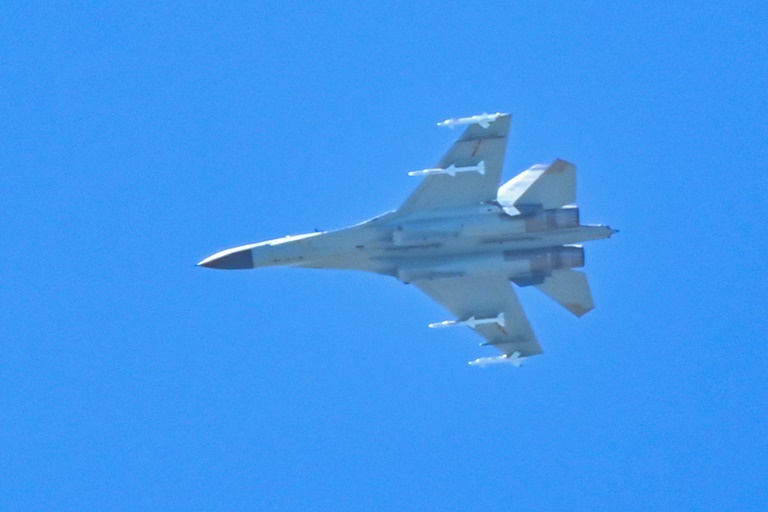
During military exercises on Thursday and Friday, China fired ballistic missiles and deployed fighter jets and warships around Taiwan.

The People’s Liberation Army declared multiple no-go danger zones around Taiwan, straddling major shipping lanes in the world and at some points coming within 20 kilometres (12 miles) of the island’s shores.

Beijing has said the exercises will continue until midday Sunday, and Taipei reported that Chinese fighter jets and ships crossed the “median line” that runs down the Taiwan Strait on Friday morning.

“As of 11 am, multiple batches of Chinese warplanes and warships conducted exercises around the Taiwan Strait and crossed the median line of the strait,” Taipei’s defence ministry said in a statement. 

The median line is an unofficial but once largely adhered-to border that runs down the middle of the Taiwan Strait, which separates Taiwan and China.

Chinese incursions have become more common since Beijing declared in 2020 that the unofficial border no longer existed.

AFP journalists on the Chinese island of Pingtan saw a fighter jet flying overhead, prompting tourists to snap photos as it flew along the coast.

A Chinese military vessel was also visible sailing through the Taiwan Strait, they added.

Beijing has insisted its war games are a “necessary” response to US House Speaker Nancy Pelosi’s visit to Taiwan, but Washington countered that China’s leaders had “chosen to overreact”.

Taiwan’s premier Su Tseng-chang, meanwhile, called for allies to push for de-escalation.

(We) didn’t expect that the evil neighbour next door would show off its power at our door and arbitrarily jeopardise the busiest waterways in the world with its military exercises,” he told reporters.

Pelosi has defended her trip to the self-ruled, democratic island, saying Friday that Washington would “not allow” China to isolate Taiwan.

“We have said from the start that our representation here is not about changing the status quo here in Asia, changing the status quo in Taiwan,” she told reporters in Tokyo on the final leg of an Asia tour.

Later on Friday China hit back, announcing sanctions against Pelosi and her immediate family, without providing details on the punitive measures.

Beijing has in recent years sanctioned a number of US officials for what it views as acting against its core interests, and speaking out on human rights issues in Hong Kong and the northwestern region of Xinjiang.

– Missiles over Taiwan –

China’s drills involved a “conventional missile firepower assault” in waters to the east of Taiwan, the Chinese military said. 

The state-run Xinhua news agency said the Chinese military “flew more than 100 warplanes including fighters and bombers” during the exercises, as well as “over 10 destroyers and frigates”.

State broadcaster CCTV reported that Chinese missiles had flown directly over Taiwan.

Japan also claimed that of the nine missiles it had detected, four were “believed to have flown over Taiwan’s main island”.

Taipei’s military said it would not confirm missile flight paths, in a bid to protect its intelligence capabilities and not allow China “to intimidate us”.

– ‘Significant escalation’ –

China’s ruling Communist Party views Taiwan as part of its territory and has vowed to one day take it, by force if necessary.

But the scale and intensity of the drills have triggered outrage in the United States and other democracies.

“These provocative actions are a significant escalation,” Blinken said after talks with Southeast Asian foreign ministers in Phnom Penh.

“The fact is, the speaker’s visit was peaceful. There is no justification for this extreme, disproportionate and escalatory military response,” he added.

Japan lodged a formal diplomatic complaint against Beijing, with five of China’s missiles believed to have landed in its exclusive economic zone.

And Australia — which has a troubled relationship with China, its largest trading partner — condemned the drills as “disproportionate and destabilising”.

“Australia is deeply concerned about the launch of ballistic missiles by China into waters around Taiwan’s coastline,” foreign minister Penny Wong said.

The manoeuvres are taking place along some of the world’s busiest shipping routes, used to disseminate the global supply of vital semiconductors and electronic equipment produced in East Asia.

“The shutting down of these transport routes — even temporarily — has consequences not only for Taiwan, but also trade flows tied to Japan and South Korea,” Nick Marro, the Economist Intelligence Unit’s lead analyst for global trade, wrote in a note.

Taiwan said the drills would disrupt 18 international routes passing through its flight information region while several airlines told AFP they would divert flights.

But markets in Taipei appeared to shrug off the tensions, with the Taiwan Taiex Shipping and Transportation Index, which tracks major shipping and airline stocks, up 3.7 percent Friday.

And analysts broadly agree that despite all its aggressive posturing, Beijing does not want an active military conflict against the United States and its allies over Taiwan — just yet.

“The last thing Xi wants is an accidental war ignited,” Titus Chen, an associate professor of political science at the National Sun Yat-Sen University in Taiwan, told AFP.

Asian markets up after oil drop, eyes on Taiwan and US jobs

Asian equities mostly rose Friday as a drop in oil prices to pre-Ukraine war levels stirred hopes of a slowdown in inflation and central bank interest rate hikes, while focus turns to key US jobs data later in the day.

However, while markets have enjoyed a broadly positive week, optimism remains at a premium as traders fret over issues including the conflict in Eastern Europe, China’s military drills around Taiwan and a possible global recession.

Crude edged up but expectations that economies will contract — dampening demand — have sent the commodity tumbling more than 10 percent this week, with US data indicating Americans were driving less now than in summer 2020 at the height of the pandemic.

And while analysts are beating the drum of recession, traders are taking heart from the possibility of a reprieve from central bank monetary tightening.

“The recent fall in oil prices, which are now trading below the levels immediately before Russia’s invasion of Ukraine, has contributed to the market’s perception that inflation is likely to peak soon, taking pressure off the Fed to raise rates as aggressively,” said National Australia Bank’s Rodrigo Catril. 

Traders will now be closely watching the release of a crucial US jobs report on Friday for a fresh snapshot of the world’s top economy.

The Federal Reserve has said its rate decision will be guided by data, with signs of economic weakness seen as likely to mean any increases will be light.

Officials have said the economy remains healthy despite four-decade high inflation and a sharp lift in borrowing costs, while several have suggested they are open to more big increases to get on top of prices.

And SPI Asset Management’s Stephen Innes said: “Though some high-frequency data suggest employment and inflation have softened in some parts of the economy, markets may wonder if they are soft enough to change the course for the Fed.”

In a sign of the long road ahead, the Bank of England hiked rates by the most since it was made independent in 1997, and warned inflation will likely go higher than 13 percent while Britain will suffer an extended recession.

India on Friday lifted costs for the third time in four months to the highest level since summer 2019.

Wall Street provided a soft lead after recent gains, but Asia was largely higher.

Hong Kong, Tokyo, Shanghai, Sydney, Seoul, Jakarta, Mumbai and Singapore rose, though Bangkok, Wellington and Manila dipped.

London dipped, Paris was flat and Frankfurt edged up.

Taipei surged more than two percent on easing concerns over a conflict with Beijing, even as China conducts its largest-ever military exercises around Taiwan in response to US House Speaker Nancy Pelosi’s visit this week.

China launched a series of exercises in multiple zones Thursday, straddling some of the busiest shipping lanes in the world.

While Taipei did not say where the missiles landed or whether they flew over the island, Japan said that of the nine missiles it had detected, four were “believed to have flown over Taiwan’s main island”.

Geir Lode, of Federated Hermes, said: “For a world facing a whole raft of major challenges, there sure is a lot of optimism across equities right now.

“Inflation is challenging corporate earnings and weighing on consumer sentiment. Global recession appears probable as growth becomes ever more scarce. Geopolitical tensions and the growth in populism accelerate the trend towards localisation (and increase the risk of even darker futures). Climate change looms over us all.

“And yet equities this week have continued July’s strong rally.”

– Key figures at around 0810 GMT –

Tokyo – Nikkei 225: UP 0.9 percent at 28,175.87 (close)

Hong Kong – Hang Seng Index: UP 0.1 percent at 20,201.94 (close)

Shanghai – Composite: UP 1.2 percent at 3,227.03 (close)

London – FTSE 100: DOWN 0.1 percent at 7,439.88

Euro/dollar: DOWN at $1.0227 from $1.0248 Thursday

Pound/dollar: DOWN at $1.2148 from $1.2166

Euro/pound: DOWN at 84.18 pence from 84.21 pence

Dollar/yen: UP at 133.30 yen from 132.95 yen

West Texas Intermediate: UP 0.6 percent at $89.05 per barrel

Brent North Sea crude: UP 0.6 percent at $94.71 per barrel

New York – Dow: DOWN 0.3 percent at 32,726.82 (close)

Taiwan woman gets life sentence over blaze that killed 46

A Taiwanese woman who set off the island’s deadliest fire in decades to get back at her boyfriend escaped the death penalty Friday as the court handed down a life sentence.

Last October’s inferno in the southern city of Kaohsiung raged through multiple floors of a dilapidated 13-storey apartment block for hours, killing 46 people and injuring 41.

Authorities had said the blaze started when the defendant Huang Ke-ke, 51, left unextinguished incense ashes on a sofa before leaving the building.

Huang was indicted on murder and arson charges in January, with prosecutors seeking her execution.

Prosecutors said she deliberately started the fire to “embarrass” her boyfriend, who she suspected of cheating, and had shown no remorse for her actions. 

Kaohsiung district court on Friday convicted Huang on charges of arson and negligence leading to death, and sentenced her to life in prison.

“The defendant didn’t have motive to inflict damage on other residents in the building… the murder offence didn’t stand because she didn’t deliberately” cause the deaths, the court said in a statement.

Huang admitted lighting sandalwood incense to repel mosquitoes. But she gave inconsistent statements on what she did before leaving her room, according to prosecutors. 

She initially claimed she threw the incense into a bin, but later said she could not remember what she did. 

The blaze highlighted concerns over lax safety standards in Taiwan and exposed the poor living conditions of the elderly in a rapidly ageing society.  

Prosecutors said they would appeal the ruling.

Close Bitnami banner
Bitnami