World

French sailor survives 16 hours under capsized boat off Spain

A 62-year-old French sailor has been rescued in the Atlantic Ocean off Spain after surviving for 16 hours in a tiny air bubble under his capsized sailboat, the Spanish coastguard said Thursday.

Laurent Camprubi fired a flare after his boat, the Jeanne Solo Sailor, ran into trouble at around 8:30 pm on Monday when it was 14 miles (22 kilometres) from the Sisargas Islands off Spain’s northwestern Galicia region, the coastguard said in a statement.

A rescue ship and three helicopters were immediately dispatched and the search team found the boat overturned in the darkness.

A diver was lowered onto the ship’s hull and banged on it, seeking signs of life. Camprubi began knocking from inside and crying out for help.

But due to the rough seas, rescuers then had to work “frantically” to stop the boat from sinking before they could reach the stricken French sailor.

They attached buoys to its hull, and the following day two divers equipped with torches swam under the boat and saw Camprubi, who was wearing a neoprene survival suit. The divers extended a pole to Camprubi who immediately grabbed it.

“A face appeared with the eyes open,” the coastguard statement said. “He rushed towards us… we pulled him to the surface.”

Once on the surface Camprubi — an experienced sailor who has won several regattas — was airlifted to hospital by helicopter for checks. He escaped uninjured.

“I knew that they were there and that they would rescue me, that they would not abandon me. It was a question of time, I had to survive for me and my family,” Camprubi was quoted as saying in the statement.

The coastguard said Camprubi was rescued at around noon on Tuesday, so he spent 16 hours under the boat with “just 30 centimetres (12 inches) of air”. It described the rescue operation as “verging on the impossible”.

Juan Ferrer, head of the Spanish coastguard’s rescue operations, said the neoprene suit Camprubi was wearing prevented him from getting hypothermia. 

He also praised the French sailor for “calmly awaiting our arrival”.
Mexico races to rescue 10 trapped coal miners

Rescuers raced Thursday to free 10 workers trapped in a coal mine after a cave-in in northern Mexico, where desperate relatives spent a sleepless night waiting for news.

Dozens of military personnel, emergency workers and rescue dogs were deployed after flooding caused the collapse Wednesday in Sabinas in the state of Coahuila, President Andres Manuel Lopez Obrador said.

“What I want with all my soul is that we rescue the miners,” he told reporters.

“We must not lose faith. We must not lose hope,” he added.

Five miners managed to escape alive and were taken to hospital, civil defense national coordinator Laura Velazquez said, adding that two had been discharged.

“Time is crucial here,” she said.

“To get to the mines you have to go down three shafts. It’s complicated but we’ve been managing to do it, pumping out water… to rescue the miners as soon as possible,” Velazquez added.

– ‘Not much hope’ –

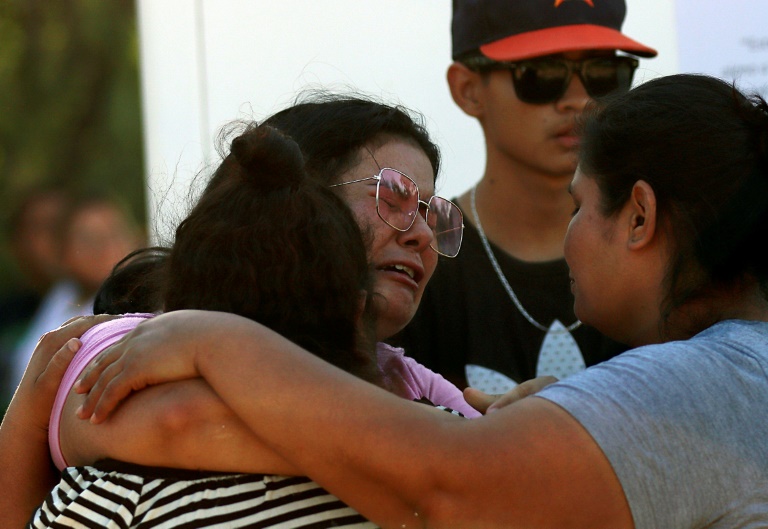
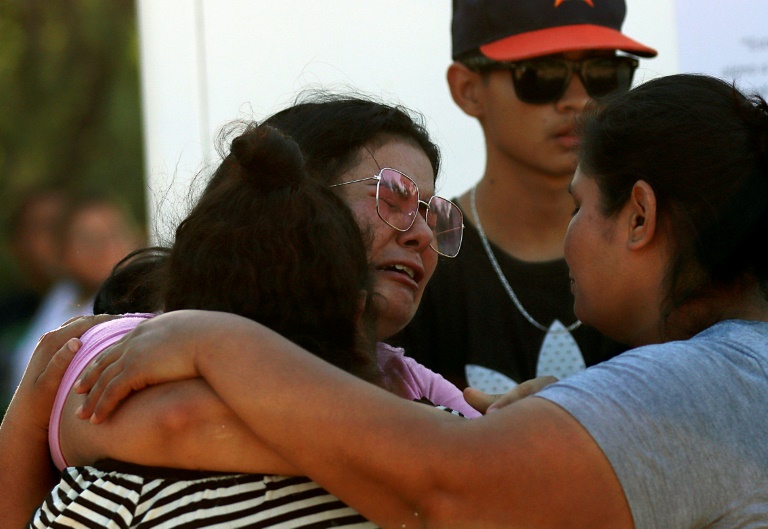
Anxious relatives gathered to wait for news, with some crying and comforting each other at the site, about 1,130 kilometers (700 miles) north of Mexico City.

“Unfortunately, there’s not much hope,” Jose Luis Amaya, whose cousin and brother-in-law were among those trapped, told Milenio TV on Wednesday night.

The mother of one of the workers wept inconsolably, unable to answer questions from the press.

Through tears, another woman at the scene said two of her children worked in the mine, though one of them had managed to escape after the accident.

As night fell hours later, the families gathered under tents outside the mine in silence as state police, the national guard, medical teams and other rescuers worked to find the trapped workers.

Coahuila’s state government said that the miners had been carrying out excavation work when they hit an adjoining area full of water, causing the shaft to collapse and flood.

“The mine began operating in January of this year and until now there have been no reports of any type of anomaly,” it said in a statement.

State governor Miguel Riquelme said he had asked labor authorities and the local prosecutor’s office to prioritize the rescue and investigation.

Coahuila, the country’s main coal-producing region, has seen a series of fatal mining accidents over the years.

The worst was an explosion that claimed 65 lives at the Pasta de Conchos mine in 2006.

Last year, seven miners died when they were trapped after another accident in Coahuila.

Mexico races to rescue 10 trapped coal miners

Rescuers raced Thursday to free 10 workers trapped in a coal mine after a cave-in in northern Mexico, where desperate relatives spent a sleepless night waiting for news.

Dozens of military personnel, emergency workers and rescue dogs were deployed after flooding caused the collapse Wednesday in Sabinas in the state of Coahuila, President Andres Manuel Lopez Obrador said.

“What I want with all my soul is that we rescue the miners,” he told reporters.

“We must not lose faith. We must not lose hope,” he added.

Five miners managed to escape alive and were taken to hospital, civil defense national coordinator Laura Velazquez said, adding that two had been discharged.

“Time is crucial here,” she said.

“To get to the mines you have to go down three shafts. It’s complicated but we’ve been managing to do it, pumping out water… to rescue the miners as soon as possible,” Velazquez added.

– ‘Not much hope’ –

Anxious relatives gathered to wait for news, with some crying and comforting each other at the site, about 1,130 kilometers (700 miles) north of Mexico City.

“Unfortunately, there’s not much hope,” Jose Luis Amaya, whose cousin and brother-in-law were among those trapped, told Milenio TV on Wednesday night.

The mother of one of the workers wept inconsolably, unable to answer questions from the press.

Through tears, another woman at the scene said two of her children worked in the mine, though one of them had managed to escape after the accident.

As night fell hours later, the families gathered under tents outside the mine in silence as state police, the national guard, medical teams and other rescuers worked to find the trapped workers.

Coahuila’s state government said that the miners had been carrying out excavation work when they hit an adjoining area full of water, causing the shaft to collapse and flood.

“The mine began operating in January of this year and until now there have been no reports of any type of anomaly,” it said in a statement.

State governor Miguel Riquelme said he had asked labor authorities and the local prosecutor’s office to prioritize the rescue and investigation.

Coahuila, the country’s main coal-producing region, has seen a series of fatal mining accidents over the years.

The worst was an explosion that claimed 65 lives at the Pasta de Conchos mine in 2006.

Last year, seven miners died when they were trapped after another accident in Coahuila.

BoE forecasts recession as inflation soars, unveils big rate hike

Britain will sink into a lengthy recession later this year as inflation rockets even higher, the Bank of England forecast Thursday as it unveiled the biggest interest rate hike since 1995.

The move comes as Britons endure a cost-of-living crisis that has dominated the race to succeed Boris Johnson following his resignation as prime minister.

The BoE’s Monetary Policy Committee voted 8-1 to lift its key rate by 0.50 percentage points to 1.75 percent, it said in a statement.

Most policymakers felt that a “more forceful policy action was justified” than in previous meetings to combat rampant inflation fuelled by rocketing domestic energy bills.

The BoE is the latest central bank to ramp up its rates as countries around the world battle decades-high consumer prices that have soared since Russia invaded Ukraine in February.

“I have huge sympathy for those who are struggling and are asking why we’re making it even harder,” bank governor Andrew Bailey said at a news conference.

“All I can say is the alternative is worse,” he said.

– ‘Winter is coming’ –

UK inflation was predicted to peak this year at just over 13 percent, reaching the highest level since 1980. The BoE’s chief task is to keep inflation close to a target of 2.0 percent.

The bank said wholesale gas prices have nearly doubled since May due to Russia restricting supplies to Europe, warning that this will “exacerbate” the fall in real incomes and further increase inflation in the near term.

The bank now anticipates the UK economy will enter a painful recession in the fourth quarter that will last until late 2023.

The UK economy is expected to shrink by up to 2.1 percent in size from its highest point, according to the forecast.

“Winter is coming, and it’s shaping up to be an absolute horror show for the UK economy,” said Laith Khalaf, analyst at AJ Bell, an investment platform.

“Make no mistake, 0.5 percent is a historic interest rate rise, but it is overshadowed by the abysmal economic forecasts produced by the Bank of England,” Khalaf said.

UK inflation had already jumped to a four-decade high of 9.4 percent in June.

“Our job is to make sure that this inflation, created by the crisis, isn’t still around in two, three years,” said BoE deputy governor Ben Broadbent.

The BoE rate hike met expectations but the British pound sank 0.7 percent versus the euro and dollar as dealers fretted over the gloomy outlook.

– ‘Challenging winter ahead’ –

The two Conservatives vying to succeed Johnson seized on the BoE announcement to highlight their cost-of-living plans.

Liz Truss, who leads in the polls, has pledged to start cutting taxes from day one with an emergency budget. 

“Today’s (BoE) news underlines the need for the bold economic plan that I am advocating. We need to take immediate action to deal with the cost of living crisis, grow the economy and delivering as much support to people as possible,” she said.

Former finance minister Rishi Sunak tweeted that “one of the most urgent challenges we face as a country is getting inflation under control as quickly as possible.”

“As prime minister I would prioritise gripping inflation, growing the economy and then cutting taxes.”

Added to the picture, UK energy regulator Ofgem is due to ramp up domestic electricity and gas prices again in October, just ahead of the colder northern hemisphere winter.

The BoE said Thursday that the typical UK household energy bill will leap to £3,500 ($4,255) per year as a result.

Separately, Ofgem warned Thursday that Britons face a “very challenging winter ahead”, adding its energy price cap will now be reviewed every quarter instead of every six months.

ASEAN ministers warn Taiwan tensions could spark 'open conflicts'

Southeast Asian foreign ministers urged restraint Thursday as China launched massive military drills off Taiwan, warning the situation risked spiralling into “open conflicts”.

A furious Beijing kicked off its biggest-ever exercises around Taiwan in response to US House Speaker Nancy Pelosi’s visit this week to the self-ruled island.

Ministers from the 10-member Association of Southeast Asian Nations (ASEAN) meeting in Phnom Penh warned against “provocative action”.

The situation “could lead to miscalculation, serious confrontation, open conflicts and unpredictable consequences among major powers”, the ministers said in a joint statement published Thursday.

Chinese Foreign Minister Wang Yi is attending the talks along with his US counterpart Antony Blinken, though they are not expected to hold a one-on-one meeting.

At a meeting with ASEAN ministers, Blinken said the United States had contacted China “at every level of government” in recent days to call for calm and stability.

“I hope very much that Beijing will not manufacture a crisis or seek a pretext to increase its aggressive military activity,” Blinken said.

“We and countries around the world believe that escalation serves no one and could have unintended consequences that serve no one’s interests including ASEAN members and including China.”

Beijing, which considers Taiwan a part of its territory to one day be reclaimed, by force if necessary, was enraged by the trip by Pelosi — the highest-profile elected US official to visit the island in 25 years.

It vowed “punishment” and state TV said it began military drills, including live-fire exercises, at 0400 GMT in several areas encircling Taiwan.

Late Thursday, Japan’s foreign minister Hayashi called for an “immediate stop” to the exercises.

“China’s actions this time have a serious impact on the peace and stability of the region and the international community. I once again demand the immediate stop of these military exercises,” Hayashi told reporters.

His comments came after the Japanese defence minister said five Chinese ballistic missiles fired during the exercises were “believed to have landed within Japan’s (exclusive economic zone)”. 

EU foreign policy chief Josep Borrell, also in Phnom Penh, condemned the Chinese response.

“There is no justification to use a visit as pretext for aggressive military activity in the Taiwan Strait. It is normal and routine for legislators from our countries to travel internationally,” he tweeted.

Kung Phoak, Cambodia’s deputy foreign minister and ASEAN spokesman, urged both sides to stabilise the situation. 

“We hope de-escalation happens… and normalcy returns to the Taiwan Strait,” he told reporters.

– ‘Miscalculation’ fear –

ASEAN is split between countries with close ties to China, such as Myanmar, Cambodia and Laos, and others that are more wary of Beijing and its growing international assertiveness. 

But no ASEAN country formally recognises Taiwan and none has shown an appetite for backing Taipei against China.

The ministers’ statement — which avoided referring to Taiwan by name — said ASEAN “stands ready to play a constructive role in facilitating peaceful dialogue”, though it is not clear either side is interested in outside mediation.

While Wang and Blinken are not scheduled to meet bilaterally, they will both attend a meeting Friday of the ASEAN Regional Forum (ARF), a 27-member body set up to discuss security issues that also includes Russia and the EU.

Australian Foreign Minister Penny Wong, who will also join the ARF gathering, said the fragile status quo in the Taiwan Strait must be maintained.

“All parties should consider how they can contribute to de-escalating current tensions,” Wong told AFP.

“One of the risks the region is concerned about is the risk of miscalculation.”

Pelosi’s visit and the flare-up over Taiwan have overshadowed the ASEAN meeting, which had been due to focus on the violent political crisis in Myanmar.

ASEAN has spearheaded so far fruitless diplomatic efforts to ease the turmoil that has flowed from last year’s military coup.

Several members are growing increasingly angry at the junta’s stonewalling tactics.

Half of species not assessed for endangered list risk extinction: study

More than half of species whose endangered status cannot be assessed due to a lack of data are predicted to face the risk of extinction, according to a machine-learning analysis published Thursday.

The International Union for the Conservation of Nature (IUCN) currently has nearly 150,000 entries on its Red List for threatened species, including some 41,000 species threatened with extinction. 

These include 41 percent of amphibians, 38 percent of sharks and rays, 33 percent of reef building corals, 27 percent of mammals and 13 percent of birds.

But there are thousands of species that the IUCN has been unable to categorise as they are “data insufficient” and are not on the Red List even though they live in the same regions and face similar threats to those species that have so far been assessed. 

Researchers from the Norwegian University of Science and Technology used a machine learning technique to predict the likelihood of 7,699 data deficient species being at risk of extinction. 

They trained the algorithm on a list of more than 26,000 species that the IUCN has been able to categorise, incorporating data on the regions where species live and other factors known to influence biodiversity to determine whether it predicted their extinction risk status.

“These could include climatic conditions, land use conditions or land use changes, pesticide use, threats from invasive species or really a range of different stressors,” lead author Jan Borgelt, from the university’s Industrial Ecology Programme, told AFP.

After comparing the algorithm’s results with the IUCN’s lists, the team then applied it to predict the data deficient species’ extinction risk. 

Writing in the journal Communications Biology, they found that 4,336 species — or 56 percent of those sampled — were likely threatened with extinction, including 85 percent of amphibians and 61 percent of mammals. 

This compares to the 28 percent of species assessed by the IUCN Red List.

“We see that across most land areas and coastal areas around the world that the average extinction risk would be higher if we included data deficient species,” said Borgelt.

A global United Nations biodiversity assessment in 2019 warned that as many as a million species were threatened with extinction due to a number of factors including habitat loss, invasive species and climate change.

Borgelt said the analysis revealed some hotspots for data-deficient species risk, including Madagascar and southern India. He said he hoped the study could help the IUCN develop its strategy for underreported species, adding that the team had reached out to the union.

“With these predictions from machine learning we can get really sort of pre-assessments or we could use those as predictions to prioritise which species have to be looked at by the IUCN,” he said.

Head of the IUCN’s Red List Craig Hilton-Taylor said the organisation was continuously harnessing new technology with a view to reduce the number of data deficient species.

“We also understand that a proportion of data deficient species are at risk of extinction, and include this in our calculations when we estimate the proportion of threatened species in a group,” he told AFP.

War in Ukraine: latest developments

Here are the latest developments in the war in Ukraine:

– US ratifies Finland, Sweden NATO membership –  

The US Senate ratifies the entry of Sweden and Finland into NATO, strongly backing the expansion of the transatlantic military alliance in the face of Russia’s invasion of Ukraine.

With the agreement of all 30 members of the North Atlantic Treaty Organization needed before hitherto non-aligned Finland and Sweden can join, the United States becomes the 23rd to give the nod.

Of the seven member countries which have yet to formally agree, only Turkey has raised a challenge, demanding certain concessions from both countries to back their memberships.

These include the extradition of dozens of government opponents it labels “terrorists” from both countries in exchange for its support.

Ankara has said a special committee will meet Finnish and Swedish officials in August to assess if the two nations are complying with its conditions.

– Deadly bus stop shelling –

Russian shelling of a bus stop in the frontline east Ukraine town of Toretsk kills eight people and injures four, the regional governor says. 

“According to preliminary information, there was artillery fire. They hit a public transport stop, where there was a crowd of people at that time,” Pavlo Kyrylenko, head of the Ukraine-run Donetsk region administration, writes on Telegram. 

The attack comes as Kyiv orders civilians to leave the war-torn Donetsk region which is bearing the brunt of Moscow’s gruelling eastern offensive.

Ukrainian officials say Russia also continues to pound towns and cities across the sprawling front line, notably in Mykolaiv in the south and Kharkiv in the northeast.

– Ukrainian forces endangering civilians: Amnesty –

Rights group Amnesty International accuses Ukrainian forces of violating international law and endangering civilians by establishing bases in residential areas, including in schools and hospitals.

Their tactics “in no way justify Russia’s indiscriminate attacks”, it says in a new report, and some Russian “war crimes” including in the city of Kharkiv are not linked to the tactics.

But it lists incidents when Ukrainian forces appeared to have exposed civilians to danger in 19 towns and villages in the Kharkiv, Donbas and Mykolaiv regions.

Ukraine slams the report as “unfair”.

“This behaviour of Amnesty International is not about finding and reporting the truth to the world, it is about creating a false equivalence — between the offender and the victim, between the country that destroys hundreds and thousands of civilians, cities, territories, and a country that is desperately defending itself,” Foreign Minister Dmytro Kuleba says in a video posted on Facebook. 

– UN to seek ‘truths’ on prison bombing –

UN secretary-general Antonio Guterres announces he will launch a fact-finding mission to uncover the “truths” about a jail where dozens of Ukrainian prisoners of war died in a bombing strike last week.

Kyiv and Moscow have blamed each other over the strikes on the prison in Kremlin-controlled Olenivka in eastern Ukraine, which killed over 50.

Moscow said that among the dead were Ukrainian forces that had laid down their arms after weeks of fighting off Russia’s brutal bombardment of the sprawling Azovstal steel works in Mariupol.

– Accused grain ship leaves Lebanese port –

A Syrian ship leaves the Lebanese port of Tripoli after being cleared for release after it was seized over allegations it was carrying flour and barley stolen from Ukraine.

Investigations have failed to prove The Laodicea carried stolen goods, officials say.

Ukraine has repeatedly accused Moscow’s forces of ransacking its grain warehouses since Russia invaded on February 24.

Ukraine says it is “disappointed” by the decision, which it argues will encourage Russia to “continue thefts in the temporarily occupied southern Ukraine with a sense of impunity.”

burs-jmy/eab/gw

Explosions, 'unprecedented' fire hit Berlin forest

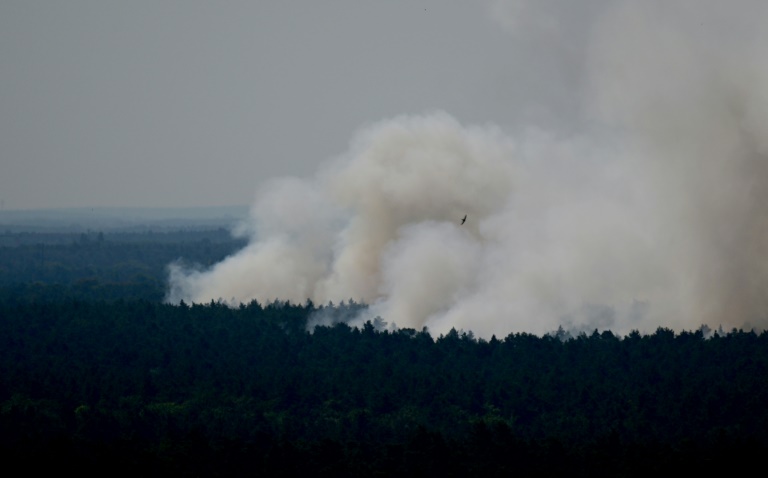
An “unprecedented” fire broke out Thursday around a German police munitions storage site in a popular forest in western Berlin, sending plumes of smoke into the skies and setting off explosions.

Firefighters were unable to tackle the blaze directly due to the danger of further blasts, with emergency services setting up a 1,000-metre (3,280-foot) safety zone around the site. 

Berlin fire brigade spokesman Thomas Kirstein said the situation was “under control and there was no danger for Berliners” but that the fire was expected to last for some time.

Around 250 emergency personnel were deployed to the site.

The army sent in a tank aimed at evacuating munitions at the affected storage site as well as remote-controlled de-mining robots, while drones circled the air to assess the emergency.

Water cannons were also deployed around the safety zone to prevent the fire from spreading.

Berlin mayor Franziska Giffey interrupted her holiday to visit the scene, calling the events “unprecedented in the post-war history of Berlin”.

Giffey advised Berliners to close their windows but said the danger was minimal as there were no residential buildings within a two-kilometre (1.2-mile) radius and so no need to issue evacuation orders.

– Heatwave –

“It would be much more difficult if there were residential buildings nearby,” she said.

Firefighters called to the site in the middle of the night were confronted with intermittent blasts that sent debris flying and hindered their work. 

No one has been hurt by the fires, which came as a heatwave enveloped Germany. 

Scientists say climate change is making heatwaves around the world more frequent and more intense, which increases the risk of fires.

Police said they were investigating what set off the fire.

The store holds munitions uncovered by police, but also unexploded World War II-era ordnance which is regularly dug up during construction works.

Giffey said local authorities would “have to think about how to deal with this munitions site in the future and whether such a place is the right one in Berlin”.

Authorities appealed for the public to avoid the forest, popular with both locals and tourists, as several regional rail lines have been halted.

– Forest fires –

But authorities said no firefighting choppers were available as they were already in use to calm forest fires in eastern Germany.

They also said the 1,000-metre safety zone applied to the air, so there was a limit to how useful it would be to drop water on the fire from above.

The German capital is rarely hit by forest fires, even though its 29,000 hectares of forests make it one of the greenest cities in the world.

Brandenburg, the region surrounding Berlin, as well as parts of eastern Germany have for days been battling forest fires.

Temperatures are expected to climb as high as 40 degrees Celsius (104 degrees Fahrenheit) across parts of Germany on Thursday. In Berlin, they are predicted to reach 38C.

Heavy thunderstorms are then due to sweep into the country from the west on Friday, the German weather service said.

A cold front is predicted to bring temperatures down by more than 10C overnight in western Germany, falling to around 20-25C on Friday.

Firefighters battle blaze in northwestern Spain

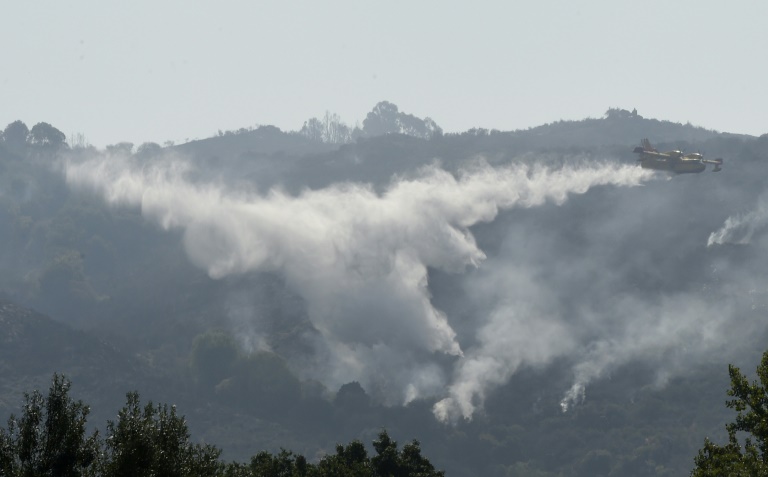
Firefighters backed by more than 20 aircraft battled a wildfire in northwestern Spain which appears to have been started deliberately, local authorities said on Thursday.

Fanned by strong winds and a heatwave, the blaze has already destroyed some 600 hectares (1,500 acres) of forest and scrubland in Galicia, the regional government said in a statement.

“Everything indicates it was started intentionally,” it said.

The fire started out on Wednesday in several spots near the town of Verin near the border with Portugal, which is experiencing its worst drought in a century.

They authorities said the blaze did not currently pose a threat to “inhabited areas”.

Scientists say human-induced climate change is making extreme weather events including heatwaves and droughts more frequent and more intense. They in turn increase the risk of fires, which emit climate heating greenhouse gases.

Spain has battled 354 wildfires since the start of the year, fuelled by scorching temperatures and drought conditions.

The flames have destroyed nearly 230,000 hectares, more than in any other nation in Europe, according to the European Union’s satellite monitoring service EFFIS.

Since the weekend, much of Spain has been in the grip of its third heatwave since June. 

Temperatures are set to soar above 40 degrees Celsius (104 degrees Fahrenheit) on Thursday in the south and east.

Poverty and turmoil: S.Sudan's post-independence history

South Sudan’s leaders have announced they will remain in power two years beyond an agreed deadline, sparking criticism from foreign partners.

Here’s a look at the tragic history of the world’s newest nation.

– 2011: New nation –

On July 9, South Sudan proclaims itself independent from Sudan following six years of autonomy and decades of war.

The president is Salva Kiir, with Riek Machar as his deputy. The rivals, who belong to two different ethnic groups, led the Sudan People’s Liberation Movement (SPLM) that spearheaded the push for independence.

– 2013: Civil war –

Kiir fires Machar and all government ministers, their deputies and several police brigadiers on July 23.

After a night of fighting in the capital Juba, Kiir says on December 16 his forces had thwarted an attempted coup by Machar, who denies the claim.

The fighting spreads beyond the capital, fuelled by rivalries between Kiir’s Dinka group and Machar’s Nuer.

It sets off tit-for-tat massacres, spiralling into five years of war.

– 2016: Leader in exile –

Machar and Kiir sign a peace accord in August 2015.

Machar returns to Juba and is sworn in as vice president on April 26, 2016.

But fighting between supporters of both leaders breaks out again in July. Machar goes into exile, accusing Kiir of trying to have him killed.

– 2018: Peace deal –

Kiir and Machar meet for the first time in two years on June 20. 

On September 12 they sign a new peace agreement to end a war that has killed nearly 400,000 people and displaced roughly four million.

The deal paves the way for a power-sharing government which, after much delay concerted international pressure, is eventually installed in February 2020, with Machar reinstated as vice president.

– 2021: Violence continues – 

However, armed violence remains widespread, with recurring bloodshed beween rival ethnic groups, and an insurgency in the country’s south displacing hundreds of thousands of people. 

The UN several times extends its peace mission, as well as an arms embargo.

A UN report in April warns that the slow pace of implementing the peace accord risks a relapse into “large-scale conflict”.

On May 8, after a delay of more than a year, Kiir includes opposition lawmakers in a new parliament. 

– 2022: Extension of power –

In March, the UN accuses the government of rights violations amounting to war crimes over attacks in the southwest last year, calling for investigations against dozens of individuals, including for abuses against children.

The same month, the UN’s World Food Programme (WFP) warns that over 70 percent of South Sudan’s 11 million people will face extreme hunger this year because of natural disasters and violence.

In April, Kiir and Machar agree on the creation of a unified armed forces command, a key provision of the peace deal after years of deadlock.

Four months later, they announce that the transitional government will remain in power two years beyond the agreed deadline, in a move foreign partners warned lacked legitimacy.

Martin Elia Lomuro, the minister of cabinet affairs, says the decision was taken “to address the challenges that impede the implementation of the peace agreement”.

But the United States, Britain and Norway boycott the announcement, expressing concern that the extension did not involve consultations with civil society or international partners, among other groups.

Close Bitnami banner
Bitnami