World

European stocks rise as BoE unleashes big rate hike

European stocks rose Thursday as the Bank of England delivered its biggest interest rate hike in 27 years and traders tracked Chinese military drills around Taiwan.

Although economists had anticipated the 0.50-percentage point rise, the UK central bank also grimly predicted the country would dip into a lengthy recession later in the year.

The rate hike mirrored aggressive monetary policy from the US Federal Reserve and the European Central Bank last month, as the world races to cool red-hot inflation that has been fuelled by Russia’s invasion of Ukraine.

Underscoring the urgency, the Bank of England also predicted that UK inflation would peak this year at just over 13 percent, its highest level since 1980.

Analyst Kallum Pickering, from Berenberg, said the UK central bank’s moves would “contribute to a further tightening of UK financial conditions”.

“While this will do little to dampen the likely further rise in inflation near-term, it should help to contain inflation expectations. This will reduce the risk that high inflation persists once its mostly external triggers have faded,” he said. 

After the rate hike announcement, the British pound sank 0.7 percent versus the euro and dollar as dealers fretted over the gloomy outlook.

In mid-afternoon trading, shares in London were 0.2 percent higher, while Paris and Frankfurt were both nearer one percent higher.

Wall Street stocks treaded water early on ahead of key US jobs data.

– Oil tumbles –

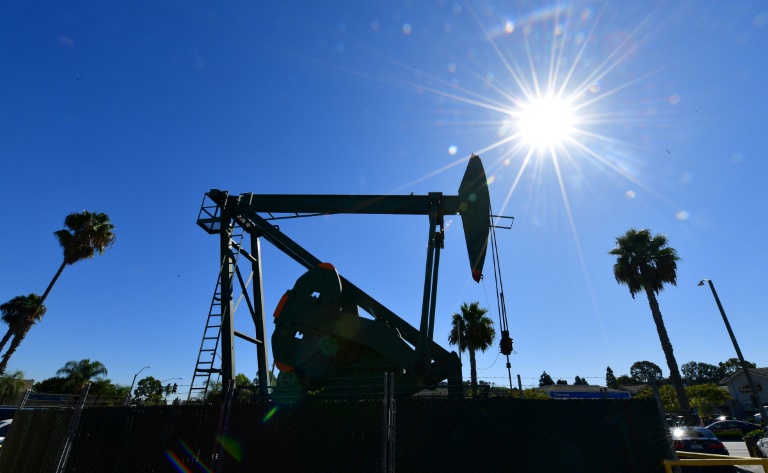
Oil prices tumbled with the main US oil contract falling back down to levels not seen since before the war in Ukraine sent crude prices soaring.

The drop comes after a decision by the OPEC+ oil cartel, led by Saudi Arabia and Russia, a day earlier to undertake just a small increase in production.

US energy data also revealed unexpectedly weak gasoline demand.

“The oil market is a mixed bag as demand destruction is met with limited spare capacity,” said Edward Moya, analyst at OANDA trading platform.

Most Asian indices tracked a Wall Street rally the previous session fuelled by healthy economic and earnings data, despite lingering Taiwan concerns.

New York surged Wednesday after a report on the crucial US services sector showed surprise improvement, soothing recession fears in the world’s top economy.

Markets have swung this week after a number of Federal Reserve officials lined up to suggest there were still some big US rate hikes likely and talk of cuts next year might be overdone.

– Pelosi visit –

The mood in Asia was also a lot more settled after the upheaval of this week’s visit to Taiwan by US House Speaker Nancy Pelosi, which sparked outrage in China with warnings of stern military and economic responses.

Beijing has suspended a limited amount of cross-strait imports and exports, and on Thursday began its largest-ever military exercises encircling Taiwan that are expected to last for days.

Soon after, Taiwan’s defence ministry said it was “preparing for war without seeking war”.

Taipei stocks fell again on worries that the Chinese manoeuvres would hit shipping lanes and flights into Taiwan.

– Key figures at around 1345 GMT –

London – FTSE 100: UP 0.2 percent at 7,462.37 points

Frankfurt – DAX: UP 0.96 percent at 13,717.96

Paris – CAC 40: UP 0.8 percent at 6,524.47 

EURO STOXX 50: UP 0.8 percent at 3,761.31 

New York – Dow:  DOWN 0.04 percent at 32,787.82 

Tokyo – Nikkei 225: UP 0.7 percent at 27,932.20 (close)

Hong Kong – Hang Seng Index: UP 2.1 percent at 20,174.04 (close)

Shanghai – Composite: UP 0.8 percent at 3,189.04 (close)

Euro/dollar: UP at $1.0195 from $1.0166 Wednesday

Pound/dollar:  DOWN at $1.2112 from $1.2149

Euro/pound: UP at 84.18  pence from 83.63 pence

Dollar/yen: DOWN at 133.52  yen from 133.86 yen

Brent North Sea crude: DOWN 1.5 percent at $95.28 per barrel

West Texas Intermediate: DOWN 1.4 percent at $89.43 per barrel

burs/rfj-kjm/lth
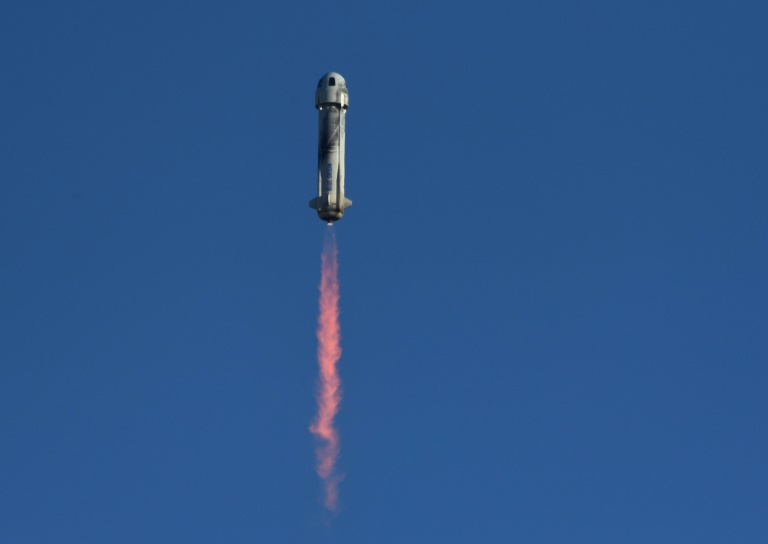
Blue Origin sends first Egyptian and Portugese nationals to space

Jeff Bezos’ Blue Origin on Thursday launched six people to space, including the first from Egypt and Portugal, on the company’s sixth crewed flight. 

Mission “N-22” saw the New Shepard suborbital rocket blast off around 8:58 am local time (1358 GMT) from Blue’s base in the west Texas desert.

The autonomous, re-usable vehicle sent its crew capsule soaring above the Karman line, the internationally recognized space boundary, 62 miles (100 kilometers) above sea level. 

“I’m floating!” a crew mate could be heard saying on a livestream, as the capsule coasted to its highest point and the passengers experienced a few minutes of weightlessness. 

Both the rocket and capsule separately returned to the base — the latter using giant parachutes — completing the mission around 11 minutes after lift-off.

The crew included Egyptian engineer Sara Sabry, and Portuguese entrepreneur Mario Ferreira, both the first people of their countries to leave Earth.

It also included Coby Cotton, one of five co-founders of the YouTube sports and comedy channel Dude Perfect, which boasts more than 57 million followers.

A Blue Origin spokeswoman confirmed all six crew were paying passengers — though Sabry’s seat was sponsored by nonprofit Space for Humanity.

Blue Origin has not revealed its ticket prices. 

Past flights have included celebrity guests who have flown for free, including Star Trek legend William Shatner. 

Taliban say 'no information' about Al-Qaeda chief Zawahiri in Afghanistan

The Taliban said Thursday they have no knowledge of Ayman al-Zawahiri’s presence in Afghanistan, days after US President Joe Biden announced the Al-Qaeda chief had been killed by a drone strike in Kabul.

A carefully phrased Taliban statement neither confirmed Zawahiri’s presence in Afghanistan nor acknowledged his death, but carried the first official mention of his name since Sunday’s strike.

Zawahiri’s assassination is the biggest blow to Al-Qaeda since US special forces killed Osama bin Laden in 2011, and calls into question the Taliban’s promise not to harbour militant groups.

The United States led an invasion in 2001 that toppled the first Taliban government, after the hardline Islamist group refused to hand over bin Laden following the 9/11 attacks.

“The Islamic Emirate of Afghanistan has no information about Ayman al-Zawahiri’s arrival and stay,” Thursday’s Taliban statement said.

“The leadership of the Islamic Emirate of Afghanistan has instructed the intelligence agencies to hold a comprehensive and serious investigation.” 

Taliban officials had previously conceded that a US drone strike had taken place in an upmarket Kabul suburb, but gave no details of any casualties. 

Washington said earlier this week that Zawahiri’s presence was a clear violation of the Doha agreement signed in 2020 that paved the way for the withdrawal of foreign forces from Afghanistan a year ago.

– Accord breached –

The Taliban, in turn, said Washington had breached the accord.

“The fact that America invaded our territory and violated all international principles, we strongly condemn the action once again,” the statement said.

“If such action is repeated, the responsibility of any consequences will be on the United States of America.”

The Taliban said in their statement that there was “no threat” to any country from Afghanistan’s soil.

In announcing Zawahiri’s death, Biden declared “justice had been delivered” to the families of victims of the 9/11 attacks on the United States.

US officials said Zawahiri was on the balcony of a three-storey house in the Afghan capital when targeted with two Hellfire missiles early on Sunday.

The drone attack was the first known over-the-horizon strike by the US on a target in Afghanistan since Washington withdrew its forces from the country on August 31 last year, days after the Taliban swept back to power.

The house targeted in the strike was in Sherpur, one of Kabul’s most affluent neighbourhoods, with several villas occupied by high-ranking Taliban officials and commanders.

Zawahiri took over Al-Qaeda after bin Laden was killed, and had a $25 million US bounty on his head.

News of his death comes a month before the first anniversary of the final withdrawal of US troops from Afghanistan and the return to power of the Taliban.

No country has yet recognised the new government, which has slowly reintroduced a harsh interpretation of Islamic law that characterised the Taliban’s first stint in power.

While the insurgency has ended, the country has been plunged into economic turmoil, with Afghanistan’s assets abroad frozen, aid curtailed, and sanctions on key Taliban leaders.

“Even if the Taliban face no new sanctions, lifting the existing ones will be harder after Zawahiri’s discovery and killing in downtown Kabul,” said Nishank Motwani, fellow at Harvard University’s Kennedy School.

“As a consequence of Zawahiri’s killing… it is likely that fragmentations within the Taliban will widen that could result in internal violence.”

abh-sjd-jd-fox/aha

Italy's Salvini hits campaign trail with migrants in Lampedusa

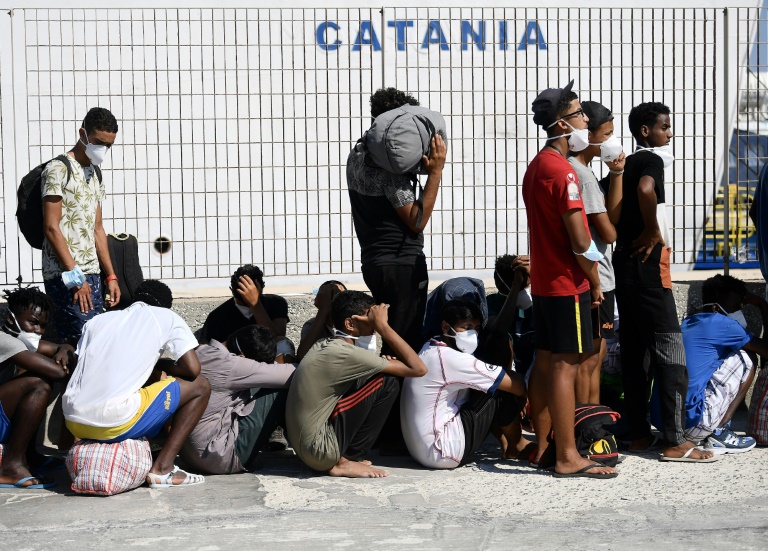
Hundreds of migrants were ferried off the tiny Italian island of Lampedusa Thursday ahead of a visit by anti-immigrant leader Matteo Salvini, who is campaigning for September elections vowing to stop new arrivals.

Scores of overcrowded boats have arrived in recent days on Lampedusa, whose location off the Tunisian coast have made it a first port of call for the tens of thousands of migrants who cross the Mediterranean each year, hoping to reach Europe.

Salvini, who leads Italy’s League party, has made stopping the arrivals the cornerstone of his platform ahead of general elections on September 25, where he is expected to gain power as part of a right-wing alliance.

“Italy cannot accept tens of thousands of immigrants who only bring problems,” he said ahead of his two-day visit, adding: “Italy is not Europe’s refugee camp.”

As often in the summer months, when calmer seas spark a surge in arrivals, the island’s facilities are overwhelmed, with more than 1,500 people said to be in a reception centre designed for 350.

Prime Minister Mario Draghi’s outgoing government last week announced a special ferry to take migrants to Sicily three times a week, to ease the overcrowding.

But Salvini accused the government — which he helped bring down last month by withdrawing his support — of trying to hide the problem before he arrives.

AFP journalists saw around 200 people boarding a ferry bound for Sicily on Thursday, while a policeman said the reception centre was being cleaned up.

“Two days ago it was filthy. And if you come back again in two days, it will be filthy again,” he said.

– Trial for kidnapping –

When he was interior minister in 2019, Salvini blocked several charity rescue ships carrying migrants from disembarking in Italy, under his party’s “closed ports” policy.

The move saw him prosecuted in Sicily on charges of kidnapping and abuse of office, in an ongoing trial he has worn as a badge of honour.

Surveys suggest immigration is less of a concern for Italians than the rampant inflation squeezing already stagnant wages.

But Salvini is racing to boost the League’s support, which stands at around 13 percent — far behind the 23 percent of Giorgia Meloni’s post-fascist Brothers of Italy.

The two parties are on course to enter government together in an alliance with Silvio Berlusconi’s Forza Italia, but their vote share will determine who wields the most power.

While Salvini’s visit may have spurred action in the reception centre, many locals on Lampedusa appeared unmoved.

“Many politicians have come to Lampedusa. Most of them make promises,” said Salvatore Maggiore, a 47-year-old florist and ex-fisherman.

But he said many local people felt “abandoned”, echoing concerns here about a lack of public services, notably health facilities.

– Desperation –

The central Mediterranean is the world’s deadliest migration route, with almost 20,000 deaths and disappearances since 2014, according to the International Organization for Migration (IOM).

Many of those who survive end up on Italy’s shores. The interior ministry has counted more than 42,000 migrant landings so far this year, up from almost 30,000 in the same period in 2021.

The numbers show no sign of slowing — rescue charities SOS Mediterranee, Doctors Without Borders (MSF) and Sea-Watch have picked up more than 1,000 people in the central Mediterranean in the past few days.

In a joint statement on Wednesday, the trio said they cannot cope with the numbers and called on the European Union to help.

The EU ended its controversial counter-people trafficking operation in the Mediterranean in 2020, replacing it with Operation Irini, which is focused on policing the UN arms embargo on Libya.

Rescuing migrants has since been left up to individual states, but NGOs complain that countries ignore distress calls or even work with Libyan authorities to send migrants back.

The mayor of Lampedusa, Filippo Mannino, said the problem was too big for his island alone.

“There are some years that a few more migrants arrive and others when they arrive a few less, but the problem persists,” he told AFP.

“What we are asking is that Europe should take charge of this problem. Europe and Italy.”

US House Speaker Pelosi lands in Japan, final stop on Asia trip

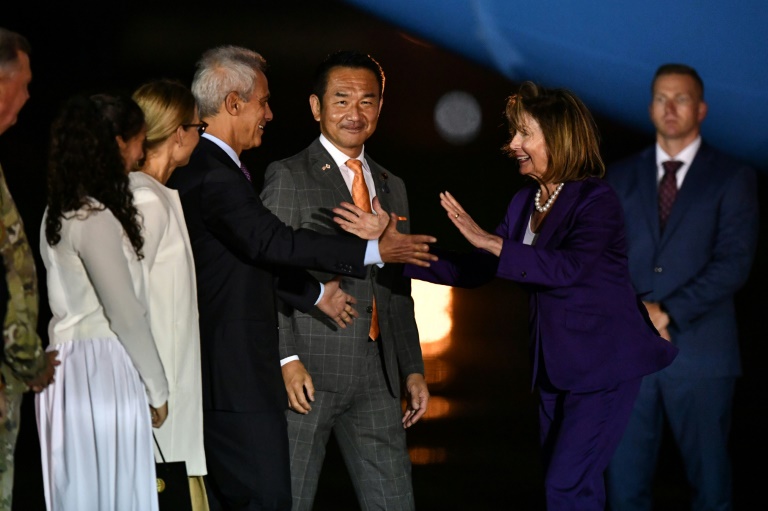
US House Speaker Nancy Pelosi arrived in Japan on Thursday for the final stop on her Asian tour, following a visit to Taiwan that incensed China.

AFP reporters saw the politician disembark from her plane at Yokota Air Base in Tokyo, before greeting the US ambassador and other officials with hugs and handshakes.

Beijing has launched large-scale military drills in the waters around Taiwan after Pelosi this week became the highest-profile elected US official to set foot on the self-ruled island in 25 years.

The 82-year-old politician defied a series of stern threats from China to meet Taiwanese leaders on Wednesday, saying her trip made it “unequivocally clear” that the United States would not abandon a democratic ally.

It is Pelosi’s first trip to Japan since 2015, and she arrived from South Korea where her schedule included a visit to the border with nuclear-armed North Korea.

She will meet Prime Minister Fumio Kishida for breakfast on Friday, Japan’s foreign ministry said, to discuss the two countries’ alliance and issues of shared interest.

Pelosi is also scheduled to discuss international affairs with Japan’s House of Representatives speaker Hiroyuki Hosoda.

Japan, a key US ally, has lodged a diplomatic protest with China over its massive military exercises encircling Taiwan, which began on Thursday.

Just before Pelosi’s arrival, Defence Minister Nobuo Kishi said five ballistic missiles fired by China were believed to have landed in Japan’s exclusive economic zone.

Parts of Japan’s southernmost island region Okinawa are close to Taiwan, as are islets at the centre of a long-running dispute between Tokyo and Beijing.

US President Joe Biden also angered Beijing on a visit to Japan in May, when he said US forces would defend Taiwan militarily if China attempted to take control of the island by force — prompting Beijing to warn that the US was “playing with fire”.

Biden and his team insisted at the time that their decades-old approach to Taiwan remained in place, however.

This includes arming the democratic island for its own defence while acknowledging China’s legal sovereignty, and expressing “strategic ambiguity” on whether American troops would ever intervene if China invaded the territory.

US exports hit new record in June, lowering trade deficit

American exports set another record in June, narrowing the US trade gap for the third consecutive month, according to official data Thursday.

Goods and services exports rose by $4.3 billion last month to $260.8 billion, topping the prior record set in May, while imports fell by $1 billion, the Commerce Department reported.

That trimmed the US trade deficit by 6.2 percent to $79.6 billion, the data showed.

Sales of US goods abroad were boosted by gold, natural gas, aircraft, and foods and feeds. 

Petroleum exports were the highest on record at $29.1 billion, but petroleum imports also hit an all-time high of $27.8 billion, the report said.

Services exports, including travel and transport, rose slightly hitting a new peak.

Meanwhile, imports of autos and parts fell sharply.

The US trade gap with China rebounded after narrowing in May, rising $4.7 billion to a new record of $36.9 billion on a surge in imports after dipping the prior month, the report said. That was the highest in nearly three years.

Companies in recent months rushed to replenish depleted inventories amid strong demand from American shoppers, but sky-high inflation has raised concerns that consumers will pull back causing firms to become more cautious.

The Federal Reserve is raising interest rates aggressively to dampen demand and cool inflation, and many families are having to spend a greater share of their incomes on staple goods.

Mahir Rasheed of Oxford Economics said that despite the headwinds in the global economy “exports have maintained stronger than expected resilience.”

But he cautioned that with the Fed moving to cool demand and tamp down inflation “we expect the ongoing slowdown in the economy to further arrest trade flows in the second half of 2022.”

In the first half of 2022, the total trade deficit increased 33.4 percent from the same period in 2021 as the rapid rise in imports outpaced the increase in exports, the report said.

Beluga whale spotted in France's Seine river

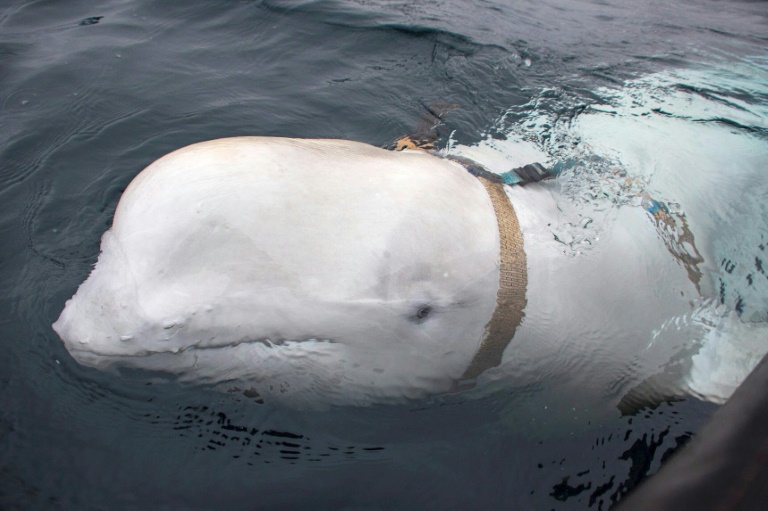
A beluga whale, a protected species usually found in cold Arctic waters, has swum into France’s Seine river and reached a lock some 70 kilometres (44 miles) from Paris, officials said Thursday.

The whale was first spotted Tuesday in the waterway that flows through the French capital to the English Channel, and follows the rare appearance of a killer whale in the Seine just over two months ago.

It is currently near Vernon, about halfway between Paris and the port city of Le Havre, with authorities in Normandy’s Eure department urging people to keep their distance to avoid distressing the animal.

“In order to carry out the necessary observations… an operation to keep it in place at the lock will be carried out this afternoon,” the regional authorities said.

They did not specify the size, but an adult beluga can reach up to four metres (13 feet) in length.

While they migrate away from the Arctic in the autumn to feed as ice forms, they rarely venture so far south.

“Studies of its health are underway to determine the best measures to take to ensure its chances of survival,” the Eure authorities said late Wednesday.

In late May, a killer whale — also known as an orca, but technically part of the dolphin family — was found dead in the Seine between Le Havre and Rouen.

The animal found itself stranded in the river and was unable to make its way back to the ocean despite attempts by officials to guide it.

The Eure authorities said lone belugas do sometimes swim further south than usual, and are able to temporarily survive in fresh water.

Alibaba quarterly revenue flat for first time ever in June

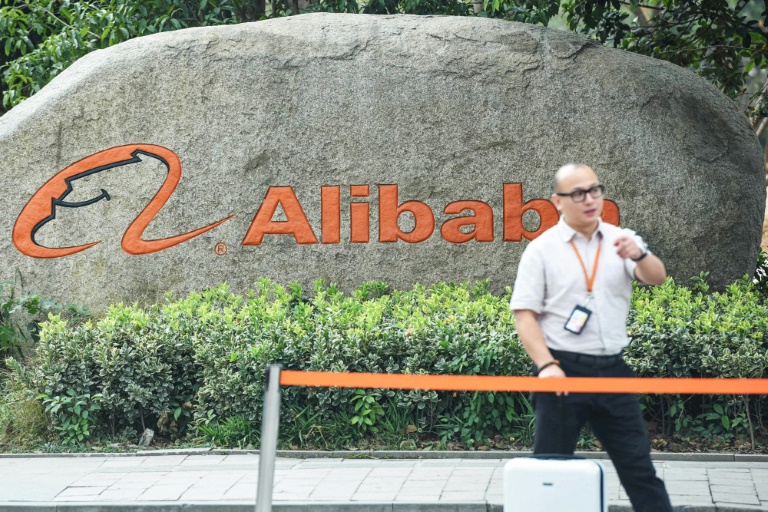
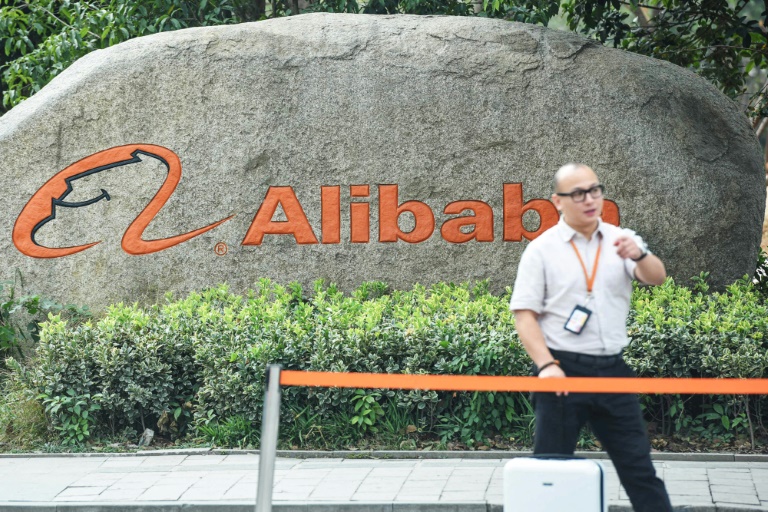
Chinese e-commerce giant Alibaba reported flat revenue growth on Thursday for the first time ever, as the country grappled with an economic slowdown and Covid-19 resurgences kept consumers jittery.

Alibaba’s performance is widely seen as a gauge of Chinese consumer sentiment, given its market dominance, and its revenue growth has slowed markedly over the past year.

Revenue came in at 205.6 billion yuan ($30.7 billion) in the April-June quarter, beating analyst expectations despite being slightly below the same period last year, following a decline in the company’s China commerce segment revenue, Alibaba said.

The company has been grappling with growing competition and economic fallout from strict Covid restrictions that have battered consumer sentiment, pushed the unemployment rate up and tangled supply chains.

“Following a relatively slow April and May, we saw signs of recovery across our businesses in June,” said Alibaba Group’s chairman and chief executive Daniel Zhang in a statement.

“Despite the soft economic conditions, we managed to deliver stable revenues and narrowed losses in several strategic businesses by improving operating efficiency,” he added in an earnings call.

The company’s revenue growth was flat “primarily due to a decline in China commerce segment revenue” although this was offset by growth in the cloud segment, Alibaba said.

Many parts of China have faced harsh lockdowns in recent months, as officials struggled to stamp out the Omicron variant under the country’s zero-Covid policy. 

Shanghai, China’s biggest city and a major economic hub, was sealed off for two months due to Covid-related restrictions during the quarter.

The firm cited “restrictions that resulted in supply chain and logistics disruptions in April and most of May” that bogged down performance in its China commerce sector, although there was a pick-up in demand in June during a popular shopping festival.

Its profit for the latest quarter stood at 22.7 billion yuan, down from 45.1 billion yuan a year earlier.

Alibaba has recently been building its international commerce businesses, such as Lazada in Southeast Asia and Trendyol in Turkey.

It has also shifted from its aggressive market expansion in the past, amid slowing growth.

– Challenges –

Apart from coronavirus curbs, Alibaba has been contending with a regulatory crackdown on China’s tech giants and other challenges abroad.

US authorities have put the company on a watchlist that could see it delisted in New York if it does not comply with disclosure orders, causing its shares to slump.

The company is seeking a primary listing in Hong Kong which could allow it to access mainland China’s vast pool of investors, a move that comes as Chinese tech firms trading in New York grow increasingly worried about regulatory action by US authorities.

Alibaba, a tech behemoth, has also seen its market value plummet after Beijing launched a sweeping crackdown in 2020.

In recent years, Chinese officials have taken aim at alleged anti-competitive practices by some of the country’s biggest names, driven by fears that major internet firms control too much data and expanded too quickly.

This included a last-minute cancellation of a planned IPO by Alibaba’s financial arm Ant Group, which would have been the world’s largest public offering at the time.

Last week, a report said Alibaba co-founder Jack Ma plans to give up control of Ant Group as part of a strategy to appease Chinese regulators and revive the digital payments unit’s initial public offering.

Following the latest results, Alibaba’s US-listed shares rose 4.5 percent in pre-market trading.

China’s economy expanded just 0.4 percent in the second quarter this year, logging its slowest growth since the initial coronavirus outbreak more than two years ago.

Alibaba quarterly revenue flat for first time ever in June

Chinese e-commerce giant Alibaba reported flat revenue growth on Thursday for the first time ever, as the country grappled with an economic slowdown and Covid-19 resurgences kept consumers jittery.

Alibaba’s performance is widely seen as a gauge of Chinese consumer sentiment, given its market dominance, and its revenue growth has slowed markedly over the past year.

Revenue came in at 205.6 billion yuan ($30.7 billion) in the April-June quarter, beating analyst expectations despite being slightly below the same period last year, following a decline in the company’s China commerce segment revenue, Alibaba said.

The company has been grappling with growing competition and economic fallout from strict Covid restrictions that have battered consumer sentiment, pushed the unemployment rate up and tangled supply chains.

“Following a relatively slow April and May, we saw signs of recovery across our businesses in June,” said Alibaba Group’s chairman and chief executive Daniel Zhang in a statement.

“Despite the soft economic conditions, we managed to deliver stable revenues and narrowed losses in several strategic businesses by improving operating efficiency,” he added in an earnings call.

The company’s revenue growth was flat “primarily due to a decline in China commerce segment revenue” although this was offset by growth in the cloud segment, Alibaba said.

Many parts of China have faced harsh lockdowns in recent months, as officials struggled to stamp out the Omicron variant under the country’s zero-Covid policy. 

Shanghai, China’s biggest city and a major economic hub, was sealed off for two months due to Covid-related restrictions during the quarter.

The firm cited “restrictions that resulted in supply chain and logistics disruptions in April and most of May” that bogged down performance in its China commerce sector, although there was a pick-up in demand in June during a popular shopping festival.

Its profit for the latest quarter stood at 22.7 billion yuan, down from 45.1 billion yuan a year earlier.

Alibaba has recently been building its international commerce businesses, such as Lazada in Southeast Asia and Trendyol in Turkey.

It has also shifted from its aggressive market expansion in the past, amid slowing growth.

– Challenges –

Apart from coronavirus curbs, Alibaba has been contending with a regulatory crackdown on China’s tech giants and other challenges abroad.

US authorities have put the company on a watchlist that could see it delisted in New York if it does not comply with disclosure orders, causing its shares to slump.

The company is seeking a primary listing in Hong Kong which could allow it to access mainland China’s vast pool of investors, a move that comes as Chinese tech firms trading in New York grow increasingly worried about regulatory action by US authorities.

Alibaba, a tech behemoth, has also seen its market value plummet after Beijing launched a sweeping crackdown in 2020.

In recent years, Chinese officials have taken aim at alleged anti-competitive practices by some of the country’s biggest names, driven by fears that major internet firms control too much data and expanded too quickly.

This included a last-minute cancellation of a planned IPO by Alibaba’s financial arm Ant Group, which would have been the world’s largest public offering at the time.

Last week, a report said Alibaba co-founder Jack Ma plans to give up control of Ant Group as part of a strategy to appease Chinese regulators and revive the digital payments unit’s initial public offering.

Following the latest results, Alibaba’s US-listed shares rose 4.5 percent in pre-market trading.

China’s economy expanded just 0.4 percent in the second quarter this year, logging its slowest growth since the initial coronavirus outbreak more than two years ago.

Iran nuclear talks restart in Vienna

Negotiators kicked off a fresh round of talks over Iran’s nuclear programme in Vienna on Thursday, seeking to salvage the agreement on Tehran’s atomic ambitions.

Officials from world powers and Iran were meeting in the Austrian capital for the first time since March, when negotiations, which began in 2021 to reintegrate the United States into the agreement, stalled.

In late June, Qatar hosted indirect talks between Tehran and Washington in the hope of getting the process back on track — but those talks failed to make a breakthrough. 

In a last-ditch effort, EU foreign policy chief Josep Borrell submitted a compromise proposal last month and called on the parties to accept it to avoid a “dangerous nuclear crisis”.  

Borrell said the draft text includes “hard-won compromises by all sides” and “addresses, in precise detail, the sanctions lifting as well as the nuclear steps needed to restore” the 2015 pact.

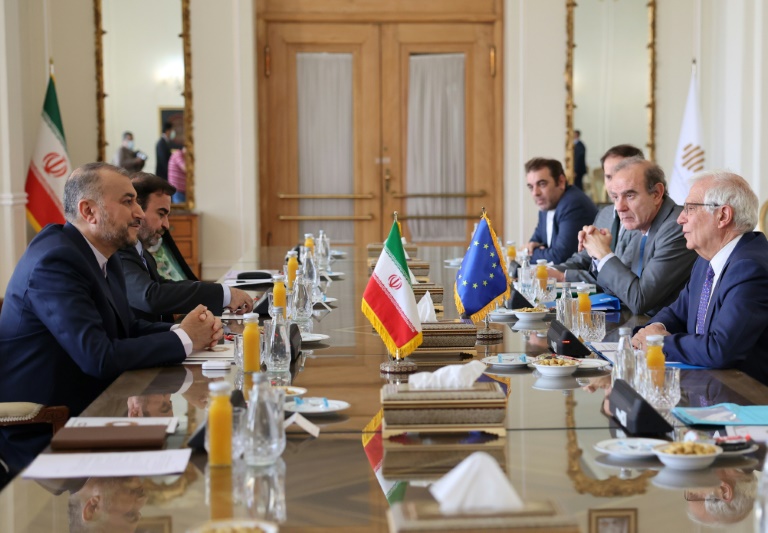
Bilateral talks began on Thursday at Vienna’s luxury Palais Coburg hotel under the auspices of the European Union’s representative Enrique Mora.

The Iranian and Russian delegations, which have traditionally been close in the negotiations, held a separate meeting.

Britain, China, France, Germany, Iran, Russia and the United States signed the JCPOA in July 2015. Delegations from all will partake in Thursday’s talks, but officials from the US and Iran are not expected to meet face to face.

The Joint Comprehensive Plan of Action aims to guarantee the civilian nature of Iran’s nuclear programme in exchange for a gradual lifting of sanctions. 

But following the unilateral withdrawal of the United States in 2018 under former president Donald Trump and the re-imposition of US sanctions, Tehran has backtracked on its obligations. 

Iran subsequently exceeded the JCPOA’s uranium enrichment rate of 3.67 percent, rising to 20 percent in early 2021. 

It then crossed an unprecedented 60-percent threshold, getting closer to the 90 percent needed to make a bomb. 

The head of the UN nuclear watchdog, Rafael Grossi, on Tuesday warned Iran’s programme was “moving ahead very, very fast” and “growing in ambition and capacity”.

– Cautious optimism –

Ahead of Thursday’s talks, officials expressed cautious optimism, all the while cautioning that the parties remained far apart on key issues.

These include sanctions, Iranian demands for guarantees and the end of a probe by the UN nuclear watchdog, the International Atomic Energy Agency.

The head of the US delegation, Rob Malley, and the head of Tehran’s representatives, Ali Bagheri, said on Twitter ahead of the talks that they were coming in good faith but put the onus on each other.

Analysts meanwhile said reviving the JCPOA remained the best option.

“The last thing the United States needs is a nuclear crisis with Iran that could easily escalate to a broader regional conflict,” Suzanne DiMaggio, a senior fellow at the Carnegie Endowment for International Peace, said in a statement.

Ellie Geranmayeh, an analyst at the European Council on Foreign Relations (ECFR), said that “at the end of the day, Tehran and Washington know the alternatives to a JCPOA collapse are terrible.”

“This is unlikely to be a meeting that resolves the outstanding issues” but “it could create the breakthrough necessary to push the talks towards a finishing line rather than a collapse,” she said.

burx-anb/imm/gw

Close Bitnami banner
Bitnami