World

Kansas abortion vote rocks US midterms outlook

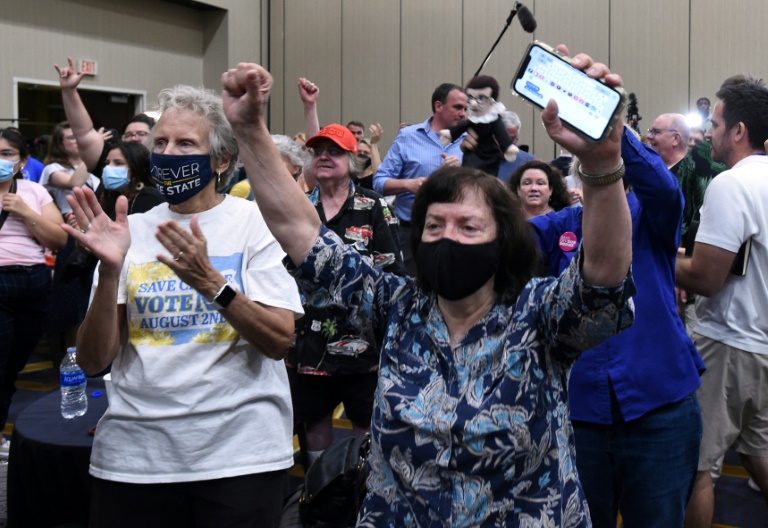
The surprise vote in Republican-heavy Kansas to repudiate a push for abortion bans fired shockwaves through the US political landscape ahead of November’s midterm elections, with President Joe Biden’s Democrats now seeing a glimmer of hope that they may avoid their predicted drubbing.

Ever since the Supreme Court overturned the nationwide right to terminate a pregnancy in June, US conservatives have been nervously asking whether their triumphant push to severely restrict access to the procedure — a decades-long dream — has gone too far in the run-up to the midterms.

In Kansas, they got an answer.

The state is a Republican stronghold, but in Tuesday’s referendum, a bid to remove abortion rights from the Kansas constitution was rejected by 59 to 41 percent, with unusually heavy turnout.

Given this was the first time Americans had an opportunity to vote on the issue since the conservative-dominated Supreme Court ruled to overturn the half-century-old Roe v. Wade decision enshrining abortion rights, Democrats are celebrating the result — and say a major backlash is only beginning.

“The court practically dared women in this country to go to the ballot box and restore the right to choose that the court had just ripped away after 50 years,” Biden said at the White House where he signed an executive order that aims to help Americans who travel to get an abortion when their own state makes it impossible.

“They don’t have a clue about the power of American women. Last night in Kansas, they found out.”

Later, he predicted that outrage over the issue would drive “record numbers” of voters.

Planned Parenthood, which lobbies for abortion access, called the Kansas vote “a clear warning to anti-abortion politicians.” The organization’s president, Alexis McGill Johnson, also called on voters to keep up the momentum into the midterms.

“We have the opportunity to protect abortion access at the ballot box in November. We know that Kansas will not be our last fight or our last victory.”

– Trump card –

The November midterms, which will decide which party controls Congress for the last two years of Biden’s first term, are shaping up as rough for Democrats who even now only control the legislature by a few votes.

Blamed by voters for soaring inflation — at a four-decade high — and widespread pessimism in the messy aftermath of the Covid-19 pandemic, Democrats are forecast to lose at least the House of Representatives and maybe the Senate. 

This would likely make Biden a lame duck, turning Washington into an even uglier political battlefield than it is today.

And abortion is not the only reason the midterms campaign will bring ideological tensions to a boil.

Donald Trump is pushing hardline right-wing candidates to boost his brand and possibly set the stage for his own attempted White House comeback in 2024.

Several candidates endorsed by Trump won primary votes held around the United States on Tuesday at the same time as the Kansas referendum, signaling that the disgraced ex-president remains a force.

In Michigan, one of the handful of House Republicans who dared join Democrats in impeaching Trump as president was tossed out, replaced by a former Trump administration official.

Trump’s candidate for the Senate, Blake Masters, won the Republican primary in the swing state of Arizona.

And Trump’s candidate for the sensitive post of Arizona secretary of state, a key figure in running elections, also won. Mark Finchem, a supporter of Trump’s lie that the 2020 presidential election was stolen, has ties to a far-right militia.

– ‘Extremists’ –

Increasingly, Democrats are seeking to link that Trump surge and the abortion dispute, arguing that the midterms will be a battle not just between two parties but generally between political moderates and growing extremism.

Across the country, Democrats have even gone so far as to pay for advertising boosting Trump’s primary candidates — the theory being that they will be easier to beat in November than more moderate Republicans.

For example, according to The New York Times, the Democratic side spent about $627,000 on advertising in Maryland to help Trump-endorsed candidate Dan Cox — another 2020 election lie supporter — win his Republican gubernatorial primary.

In a speech to the Democratic National Committee late Wednesday, Biden homed in on the emerging campaign message.

Referring to Trump’s Make America Great Again movement, Biden told Democratic organizers that democracy itself is “at risk from extremists in the MAGA Republican Party.”

“We need to make clear to this country this year just how critical and fundamental choices between us and the MAGA Republicans (are),” he said.
Brazil hikes interest rate, signals may tighten further

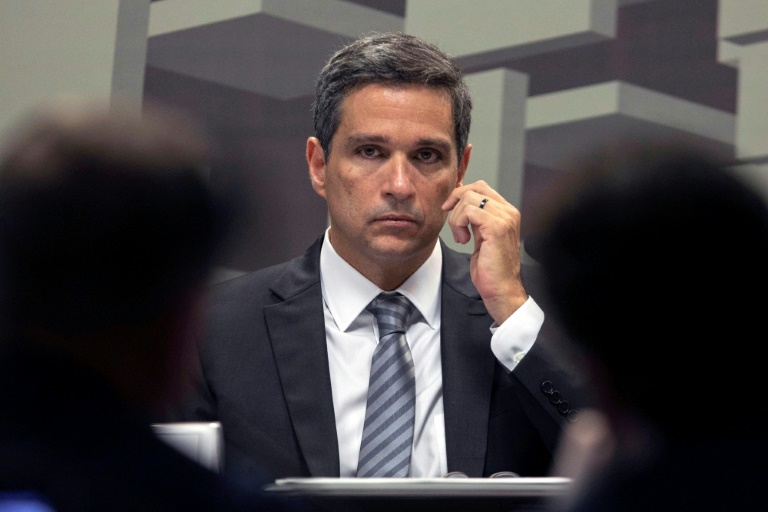
Brazil’s central bank raised its benchmark interest rate for the 12th straight time Wednesday, citing an “adverse and volatile” global economy, and indicated its tightening cycle, one of the world’s most aggressive, may not be over.

The bank’s monetary policy committee raised the benchmark Selic rate by half a percentage point, to 13.75 percent, in line with market expectations.

And though many analysts had forecast Brazil’s hawkish rate hikes would stop there, the bank said stubbornly high inflation meant more could be in store.

“The committee will evaluate the need for a residual adjustment of lesser magnitude at its next meeting” from September 20 to 21, it said in a statement.

“The external environment remains adverse and volatile, with larger downward revisions of the global economic growth outlook in an inflationary environment that is still under pressure,” it added.

“The uncertainty of the current economic situation, both domestic and global… demands extra caution.”

The decision was unanimous by the committee’s nine members, it said.

The key interest rate now stands at its highest level since January 2017.

– End near? –

Haunted by a history of hyperinflation, Brazil — Latin America’s biggest economy — reacted fast and aggressively to the global price surges unleashed by the coronavirus pandemic and then Russia’s invasion of Ukraine.

Since March 2021, the central bank has rapidly raised the Selic from an all-time low of two percent, which it had introduced to stimulate the pandemic-battered economy.

That included three whopping hikes of 1.5 percentage points from October 2021 to February 2022, followed by two one-percentage-point increases.

Now, Brazil is weighing when to bring its hawkish cycle to an end, just as policy makers in other major economies shift their monetary tightening into high gear.

The US Federal Reserve hiked its benchmark rate by 0.75 point last week, the fourth straight increase. The week before, the European Central Bank raised its key rate by 0.5 point, the first increase since 2011.

Annual inflation remains high in Brazil, at 11.89 percent in June — way above the central bank’s target of 3.5 percent.

But analysts polled by the central bank forecast the inflation rate will fall to 7.15 percent by the end of the year.

The same poll found analysts expect the central bank’s tightening cycle is nearly over: they gave an average forecast of 13.75 percent for the Selic rate at year’s end.

– Business world criticizes –

Even as the bank’s policy makers try to slow runaway prices by hiking interest rates, they are wary of tipping the economy into a recession by slamming the brakes on too hard.

The central bank is facing calls to ease up on its rate increases.

“Since December, the real interest rate has been at a level that is inhibiting economic activity,” the chief economic analyst at Brazil’s powerful National Confederation of Industry (CNI), Marcelo Azevedo, said in a recent statement.

The CNI called Wednesday’s hike “wrong.”

A 0.4-percent month-on-month fall in Brazilian industrial production in June and other “softer surveys” last month indicate the economy is losing steam, said William Jackson, chief emerging markets economist at consulting firm Capital Economics.

Analysts polled by the central bank forecast Brazil’s GDP growth will come in at 1.97 percent for the year, after an expansion of 4.6 percent last year and a contraction of 3.9 percent in pandemic-stricken 2020.

Brazil’s economy grew by one percent in the first quarter, but experts warn the second half of the year looks bleaker.

With soaring prices for food and fuel hurting Brazilian families, the weak economy has become a major liability for President Jair Bolsonaro as he campaigns for reelection this October.

The far-right incumbent trails leftist ex-president Luiz Inacio Lula da Silva by 47 percent to 29 percent, according to the latest poll from the Datafolha institute.

Oil prices tumble on demand worries as global stocks mostly rise

Oil prices tumbled on demand worries Wednesday while global equities mostly rose as US-China tensions receded somewhat after House Speaker Nancy Pelosi’s trip to Taiwan.

The drop in oil prices came despite a move by the OPEC+ oil cartel, led by Saudi Arabia and Russia, to undertake just a small increase in production.

The OPEC+ decision to raise production by 100,000 barrels per day for September is likely to disappoint US President Joe Biden, who travelled to Saudi Arabia last month to lobby for help to tame soaring energy prices. The increase is much smaller than other recent boosts by the exporter group.

But oil prices finished about four percent lower following US energy data that showed unexpectedly weak gasoline demand.

Gasoline demand last week was 8.5 million barrels per day, down almost 13 percent from the year-ago period, which is part of the peak summer driving season.

In equity markets, Wall Street stocks bounced after two down sessions following a report from the Institute for Supply Management that showed surprising strength in the massive US services sector, thanks to a jump in business activity and new orders even as some companies expressed recession fears.

A note from Oxford Economics described the ISM data as “encouraging,” but pointed to lingering questions about the direction of the economy.

“The recovery’s best days are clearly in the rearview mirror, but this doesn’t mean a downturn has begun,” Oxford said. “We think fundamentals are strong enough to prevent a recession this year, though the window to achieving a softish landing is narrowing.”

All three US indices won solid gains, with the S&P 500 finishing 1.6 percent higher.

Earlier, European markets closed higher, with Paris and Frankfurt both up around one percent and London’s FTSE 100 rising by 0.5 percent.

Analysts pointed to relief that there hadn’t been greater fallout from Pelosi’s provocative visit to Taiwan, which China considers a part of its territory.

“What China didn’t do has seemingly been the focal point,” said Patrick O’Hare, at Briefing.com.

“China didn’t take any action that would necessitate a military response from the US. That understanding has sparked a measure of relief for investors as Speaker Pelosi heads to South Korea,” he said.

The highest profile trip to Taiwan in 25 years by a US politician was met with condemnation from Beijing, which vowed “punishment.”

– Key figures at around 2030 GMT –

New York – Dow: UP 1.3 percent at 32,812.50 (close)

New York – S&P 500: UP 1.6 percent at 4,155.17 (close)

New York – Nasdaq: UP 2.6 percent at 12,668.16 (close)

London – FTSE 100: UP 0.5 percent at 7,445.68 (close)

Frankfurt – DAX: UP 1.0 percent at 13,587.56 (close)

Paris – CAC 40: UP 1.0 percent at 6,472.06 (close)

EURO STOXX 50: UP 1.3 percent at 3,732.54 (close)

Tokyo – Nikkei 225: UP 0.5 percent at 27,741.90 (close)

Hong Kong – Hang Seng Index: UP 0.4 percent at 19,767.09 (close)

Shanghai – Composite: DOWN 0.7 percent at 3,163.67 (close)

Dollar/yen: UP at 133.92 yen from 133.17 yen Tuesday

Euro/dollar: UP at $1.0172 from $1.0166

Pound/dollar: DOWN at $1.2149 from $1.2170

Euro/pound: UP at 83.71 pence from 83.54 pence

Brent North Sea crude: DOWN 3.7 percent at $96.78 per barrel

West Texas Intermediate: DOWN 4.0 percent at $90.66 per barrel

burs-jmb/bfm

Iraq's Sadr demands new polls as political crisis escalates

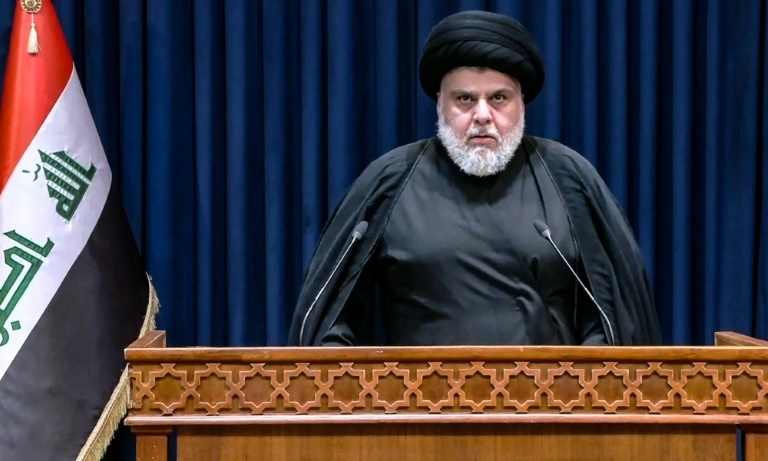
Powerful Shiite leader Moqtada Sadr, whose bloc won the most seats in Iraq’s elections last year, demanded Wednesday that parliament be dissolved and new national polls be called.

Nearly 10 months on from the last elections, the country still has no government, new prime minister or new president, due to repeated squabbles between factions over forming a coalition.

In the latest political turmoil to strike the oil-rich but war-scarred nation, Sadr called for a “revolutionary and peaceful process, then early democratic elections after a dissolution of parliament”.

His televised speech came as calls for dialogue intensify after his supporters occupied parliament for a fifth consecutive day, in protest at a nomination for prime minister by a rival Shiite faction, the Iran-backed Coordination Framework.

However, parliament can only be dissolved by a majority vote, according to the constitution. Such a vote can take place at the request of a third of lawmakers, or by the prime minster with the president’s agreement.

“I am certain that the majority of the population is exasperated by the ruling class in its entirety, including some (politicians) belonging to my movement”, Sadr said.

“From now on there will be no more old-guard politicians, whatever their affiliation,” he added.

Sadr’s bloc emerged from elections in October as the biggest faction, but it was still far short of a majority. 

In June, his 73 lawmakers quit, ostensibly in a bid to break the political logjam.

Sadr, who once led an anti-US militia and who has millions of devoted followers, noted also that he had “no interest” in negotiating with his rivals.

– ‘Risk of escalation’ –

Along with their sit-in, the cleric’s supporters have set up an encampment outside parliament with tents and food stalls, and Sadr on Wednesday called on them to continue.

“The revolutionaries and protesters participating in the sit-in must stay and continue their camp until the demands are realised,” he said.

In multi-confessional and multi-ethnic Iraq, government formation has involved complex negotiations since a 2003 US-led invasion toppled dictator Saddam Hussein.

The resignation of Sadr’s lawmakers led to the pro-Iran bloc becoming the largest in parliament, but still there was no agreement on new top posts.

The Sadrist camp was outraged by the Coordination Framework last week nominating former minister Mohammed Shia al-Sudani as prime minister.

The Coordination Framework is a grouping that includes former prime minister Nuri al-Maliki, a long-standing foe of Sadr, and the Hashed al-Shaabi, a former paramilitary network now integrated into the security forces.

Outgoing prime minister Mustafa al-Kadhemi has called for a “national dialogue” in a bid to bring all sides together to talk, and on Wednesday he spoke with President Barham Saleh.

Both men stressed the importance of “guaranteeing security and stability” in the country, according to the Iraqi News Agency.

Sadr’s foe Maliki said late Wednesday “serious dialogue giving hope for resolving differences… begins with respect for constitutional inistitutions”. 

Thousands of Coordination Framework supporters have held counter-protests in Baghdad against the occupation of parliament.

“Don’t believe the rumours that I don’t want dialogue,” Sadr said on Wednesday. 

“But we have already tried and experienced dialogue with them,” he added. “It has brought nothing to us and to the nation — only ruin and corruption.”

Earlier on Wednesday, the United Nations mission in Iraq called on leaders to “prioritise (the) national interest” and end the long-running power struggle.

“Meaningful dialogue among all Iraqi parties is now more urgent than ever, as recent events have demonstrated the rapid risk of escalation in this tense political climate,” the UN mission warned.

French President Emmanuel Macron also spoke with political leaders on Wednesday, saying that “dialogue and consultation” was the only way out of the crisis.

lk/tgg/pjm/dwo

Driest July in memory imperils Europe's crops

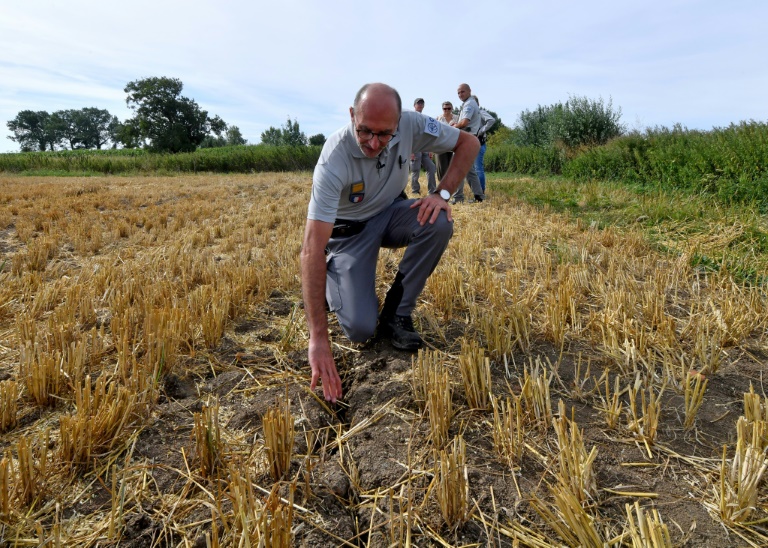
As much of Europe bakes in a third heatwave since June, fears are growing that extreme drought driven by climate change in the continent’s breadbasket nations will dent stable crop yields and deepen the cost-of-living crisis. 

The European Commission on Wednesday urged EU member states to re-use treated urban wastewater as irrigation on the continent’s parched farms, after France and parts of England saw their driest July on record.

In France, where an intense drought has hammered farmers and prompted widespread limits on freshwater use, there was just 9.7 millimetres (0.38 inches) of rain last month, Meteo-France said.

That was 84 percent down on the average levels seen for July between 1991 and 2022, making it the driest month since March 1961, the agency added.

The southwestern region of Gironde, already devastated by last month’s wildfires, saw a maximum temperature of 39.6 degrees Celsius (103 degrees Fahrenheit) on Wednesday, with Meteo-France predicting a peak on Thursday.

Animals, including lions and monkeys, evacuated two weeks ago due to the blazes there returned to their zoo on Wednesday.

Farmers nationwide are reporting difficulties in feeding livestock because of parched grasslands, while irrigation has been banned in large areas of the northwest and southeast due to freshwater shortages.

Environment Minister Christophe Bechu said July’s rainfall represented “just 12 percent of what’s needed”. 

France is the fourth-largest exporter of wheat and among the top five exporters of maize globally. Poor harvests due to drought may heap further pressure on grain supplies after Russia’s invasion of Ukraine caused global shockwaves. 

“Our food system has been under stress for a while, and with the supply issues from Ukraine, that has only gotten worse,” said Shouro Dasgupta, environmental economist at the Euro-Mediterranean Center on Climate Change.

“These heatwaves are on top of droughts and will see crops wither faster.”

Dasgupta said that extreme heat driven by climate change is also contributing to food price inflation for consumers and harsher conditions for producers. 

“Droughts and heatwaves impact people’s livelihoods. People will be less able to afford food,” he told AFP. 

“And during heatwaves outdoor workers are only able to work fewer hours, which brings cascading impacts for supply.”

– ‘Food systems not working’ –

Britain’s Met Office this week said much of southern and eastern England had their driest July on record. 

Some water providers have already announced restrictions affecting millions of people, and fruit and vegetable producers have announced several crop losses such as beans and berries.

Britain’s inflation surged to a 40-year high in June on rising fuel and food prices.

Elizabeth Robinson, director of the London School of Economics’ Grantham Research Institute on Climate Change and the Environment, said spiralling food costs — worsened by heat-induced losses in Europe and Britain — were a sign that “food systems aren’t working for people.”

“There are some long-term, difficult conversations that need to be had, particularly about food waste and the diversion of grains away from food for people to feed animals,” she told AFP.

In Spain, already parched under a prolonged hot spell, temperatures will breach 40C in several areas this week. 

The heat is worsening water shortages that have dogged Spanish agriculture since last winter, with local restrictions on water usage in the most affected regions. 

The government said this week that Spain’s reservoirs are at just 40.4 percent capacity.

Juan Carlos Hervas, from the COAG farmers’ union, told AFP that Spain’s olive harvest from unirrigated land will come in at less than 20 percent of the average of the last five years. 

Spain supplies nearly half the world’s olive oil.  

– ‘Worst drought this century’ –

Portugal, where temperatures yet again breached the 40C mark this week, is experiencing “the worst drought this century”, Environment Minister Jose Duarte Cordeiro warned last month.

Portugal along with Poland has asked its citizens to cut down on water use to ease the pressure.

“Water authorities across Europe are unprepared for what scientists have been saying for three decades,” said Dasgupta.

The European Commission in an updated assessment last month found that nearly half — 44 percent — of the EU and Britain was currently experiencing “warning” levels of drought. 

It warned that exceptionally low soil moisture levels meant several countries, including France, Romania, Spain, Portugal and Italy will experience reduced crop yield in 2022. 

“The unfavourable forecasts for the coming months may compromise the water supply and will likely keep the competition for this resource high,” it said. 

A separate EU bulletin, also last month, said that EU yields of soybean, sunflowers and maize were already 9 percent below average. 

On Wednesday Virginijus Sinkevicius, EU commissioner for the environment, fisheries and the oceans, urged EU nations to re-use more of its wastewater.

“We need to stop wasting water and use this resource more efficiently to adapt to the changing climate and ensure the security and sustainability of our agricultural supply,” he said.

Deja vu as volcano erupts again near Iceland capital

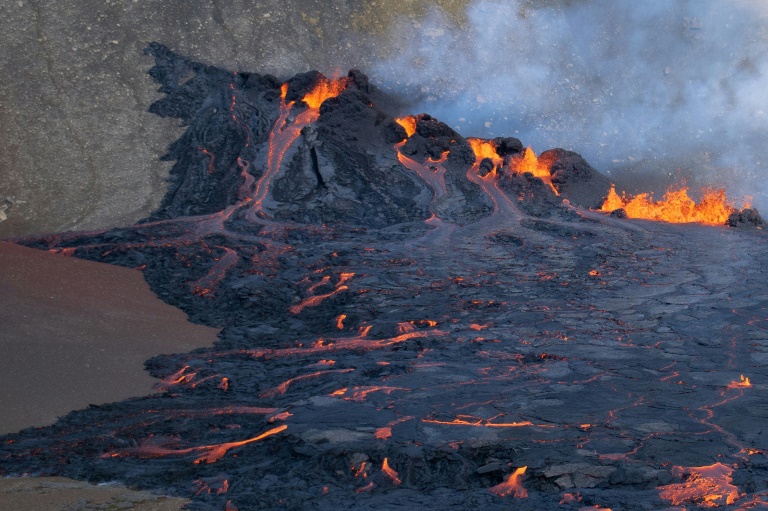
A volcano erupted in Iceland on Wednesday near the capital Reykjavik, spewing red hot lava and plumes of smoke out of a fissure in an uninhabited valley after several days of intense seismic activity.

The eruption was around 40 kilometres (25 miles) from Reykjavik, near the site of the Mount Fagradalsfjall volcano in southwestern Iceland that erupted for six months in March-September 2021, mesmerising tourists and spectators who flocked to the scene.

On Wednesday, a strip of glowing red lava could be seen gushing from the ground, spouting 20-30 metres (65-100 feet) into the air before spreading into a blanket of smouldering black rock.

As it cooled, blueish smoke rose up from the hilly landscape on the Reykjanes peninsula. 

About 100 curious onlookers quickly made their way to the scene, bewitched by the sight of the bubbling lava and the intense roar that could be heard rising up from the ground as the lava erupted, an AFP reporter at the scene said.

The Icelandic Meteorological Office (IMO), which monitors seismic activity, estimated the size of the fissure at about 300 metres. It said the eruption started in the Meradalir valley, less than one kilometre (0.6 miles) from the scene of last year’s eruption.

Wednesday’s eruption came after a period of intense seismic activity, with about 10,000 earthquakes detected since Saturday, including two with a magnitude of at least 5.0.

While there was no ash plume, the IMO said it was “possible that pollution can be detected due to the gas release”.

Gases from a volcanic eruption — especially sulphur dioxide — can be elevated in the immediate vicinity, and may pose a danger to health and even be fatal.

Gas pollution can also be carried by the wind.

“Risk to populated areas and critical infrastructure is considered very low and there have been no disruptions to flights”, the Icelandic foreign ministry said on Twitter.

More than an hour after the start of the eruption, a commercial passenger jet could be seen flying over the eruption site at low altitude heading for Reykjavik’s main airport Keflavik.

– Tourist magnet –

Last year’s eruption saw more than 140 million cubic metres of magma spilled into the area over a period of six months before it was officially declared over after nine months, in December 2021.

Relatively easy to access, the site became a major tourist attraction, drawing more than 430,000 visitors, according to the most recent figures from the Icelandic Tourist Board.

Wednesday’s eruption was believed to be five to 10 times bigger than last year’s eruption, with about 20-50 cubic metres of magma spewing out per second, Magnus Tuma Gudmundsson, professor of geophysics at the University of Iceland, told Icelandic media.

On Wednesday, rescue teams and police rushed to the scene to assess the danger and possible gas contamination, and discouraged people from visiting.

Iceland President Gudni Johannesson, who happened to be driving near the scene of Wednesday’s eruption when it occurred, echoed that appeal.

“I just want people to be careful and know more before they go there into the unknown. If this eruption will be anything like the last one, there will be enough time, so there is no need to rush,” he told the English-language media Iceland Monitor.

– Awakening –

Mount Fagradalsfjall belongs to the Krysuvik volcanic system on the Reykjanes peninsula in southwestern Iceland.

Known as the land of fire and ice, Iceland has 32 volcanic systems currently considered active, the highest number in Europe. The country has had an eruption every five years on average.

Wednesday’s eruption was the country’s seventh in 21 years.

However, until last year, the Reykjanes peninsula had not experienced an eruption since the 13th century, when a volcano erupted for 30 years from 1210-1240.

Geophysicists have said that the 2021 eruption could signal the beginning of a new period of eruptions lasting centuries.

A vast island near the Arctic Circle, Iceland straddles the Mid-Atlantic Ridge, a crack on the ocean floor separating the Eurasian and North American tectonic plates.

The shifting of these plates is in part responsible for Iceland’s intense volcanic activity.

A real treat: Canadian candy company seeks professional taster

The chance to earn an annual salary of Can$100,000 (US$78,000) by tasting more than 3,500 candies, all from the comfort of your couch, sounds like a pretty sweet deal.

Candy Funhouse, a Canadian online candy shop, is looking for a “Chief Candy Officer” to lead a team of product taste testers.

“Early last year we were looking for Candyologists, our original taste testers and we currently have three on board,” Funhouse spokeswoman Vanessa Janakijevski-Rebelo told AFP.

“Now we are on the hunt for our Chief Candy Officer who will guide our Candyologists down the sweetest path possible!”

Responsibilities range from approving new products to organizing staff meetings or acting as chief taster, as well as “all things fun.”

The offer is open to anyone aged five and up living in North America.

The main requirements include having “golden taste buds” and an “obvious sweet tooth,” according to the job listing on LinkedIn.

Candy Funhouse said it has received more than 100,000 candidates in two weeks.

On social media, the posting is a big hit with adults and children alike. One Twitter user said that his eight-year-old daughter had made a LinkedIn profile just to apply.

“It’s official @candyfunhouseca, she has applied. Thank you for helping her learn about hard work and the importance of a strong resume, even if she’s only 8,” Matthew Crooks wrote on his account.

Once chosen, the lucky new hire will undergo “extensive palate training.”

Job benefits include, naturally, “an extensive dental plan.”

'No' camp leads ahead of referendum on changing Chile constitution: poll

Just months after Chileans elected a leftist president in a mass rejection of establishment politics, they appear to stand deeply divided on overhauling the country’s dictatorship-era constitution, an opinion poll showed Wednesday.

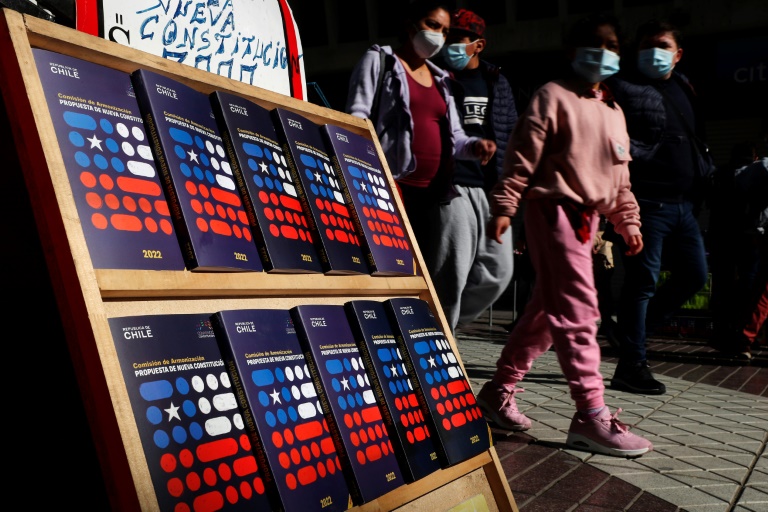
A proposed new constitution, drafted over a year by a specially-elected assembly of 154 members, comes up for approval in a referendum on September 4.

More than 15 million people are eligible to participate in Chile’s first mandatory vote in 10 years — choosing essentially between the rights-driven “welfare state” promised by President Gabriel Boric and the neo-liberal status quo he had vowed to repeal.

According to recent polls, supporters of change are in the minority despite the recent revolutionary mood in Chile which saw mass anti-establishment protests in 2019 and calls for a more equitable society.

Rewriting the constitution adopted during the dictatorship of Augusto Pinochet (1973-1990) was a key demand of demonstrators.

But Chile has also long been one of Latin America’s most conservative countries, and abortion is high on the list of provisions that opponents of the draft constitution point to as objectionable.

If it is approved, Chile will become one of few countries in the world, and the first in majority Catholic Latin America, to guarantee the right to “voluntary termination of pregnancy” in its founding law.

– Almost a fifth undecided –

Many in Catholic-majority Chile, however, are against legalizing a procedure that was banned outright until 2017 and is allowed today only in cases of rape or a threat to the life of the woman or if the fetus is unviable.

“As Christians we are against… abortion,” Hernan Reyes, a 22-year-old student and opponent of the draft constitution, told AFP. 

A survey conducted by pollster Criteria showed Wednesday that 45 percent of respondents were against the new constitution, with only 36 percent in favor — though this percentage has been climbing.

Nineteen percent were undecided.

The political agreement that allowed the drafting of a new constitution in response to the protests, said that if rejected, the existing constitution would remain in place.

That understanding appears to have  been thrown in doubt by Boric himself, who said a rejection could trigger a brand-new drafting process.

The “anti” camp also object to the draft’s overt mention of different indigenous groups in the country, which they say undermines national unity.

“That they divide us into different nations, different laws which are not the same for everyone, seems to me aberrant”, voter Isabel Rodriguez, 42, told AFP.

On the pro-change side are many who welcome protections for the environment, women’s rights and guarantees for basic health care, education, water and housing for all.

Iraq's Sadr demands new polls as political crisis escalates

Powerful Shiite leader Moqtada Sadr, whose bloc won the most seats in Iraq’s elections last year, demanded Wednesday that parliament be dissolved and new elections be called.

Nearly 10 months on from the last elections, the country still has no government and no new prime minister or president after repeated squabbles between factions over forming a coalition.

In the latest political turmoil to strike the oil-rich but war-scarred country, Sadr called for a “revolutionary and peaceful process, then early democratic elections after a dissolution of parliament”.

“I am certain that the majority of the population is exasperated by the ruling class in its entirety, including some (politicians) belonging to my movement”, Sadr said.

His televised speech came as his supporters occupied parliament for a fifth consecutive day, in protest at a nomination for prime minister by a rival Shiite faction, the Iran-backed Coordination Framework.

Supporters of that rival faction have in recent days accused Sadr of attempting to launch a coup. 

“From now on there will be no more old-guard politicians, whatever their affiliation,” Sadr added. 

Sadr, who once led an anti-US militia and who has millions of devoted followers, noted that he also had “no interest” in negotiating with his rivals.

– ‘Risk of escalation’ –

Surrounding parliament, the cleric’s supporters have set up an encampment with tents and food stalls, and Sadr on Wednesday called on them to continue.

“The revolutionaries and protesters participating in the sit-in must stay and continue their camp until the demands are realised,” he said.

The Sadrist camp was outraged by the Coordination Framework faction last week nominating former minister Mohammed Shia al-Sudani as prime minister.

The Coordination Framework is a grouping that includes former prime minister Nuri al-Maliki, a long-standing foe of Sadr, and the Hashed al-Shaabi, a former paramilitary network now integrated into the security forces.

Outgoing prime minister Mustafa al-Kadhemi has called for a “national dialogue” in a bid to bring all sides together to talk, and on Wednesday he spoke with President Barham Saleh.

Both men stressed the importance of “guaranteeing security and stability” in the country, according to the Iraqi News Agency.

Thousands of Coordination Framework supporters have held counter-protests in Baghdad against the occupation of parliament.

“Don’t believe the rumours that I don’t want dialogue,” Sadr said Wednesday. 

“But we have already tried and experienced dialogue with them,” he added. “It has brought nothing to us and to the nation — only ruin and corruption.”

Earlier on Wednesday, the United Nations mission in Iraq called on leaders to put their country first and end the long-running power struggle.

“Meaningful dialogue among all Iraqi parties is now more urgent than ever, as recent events have demonstrated the rapid risk of escalation in this tense political climate,” the UN mission warned.

“We appeal to all actors to commit, actively engage and agree on solutions without delay”, it added, warning that “leaders must prioritise (the) national interest”.

lk/tgg/pjm/dwo

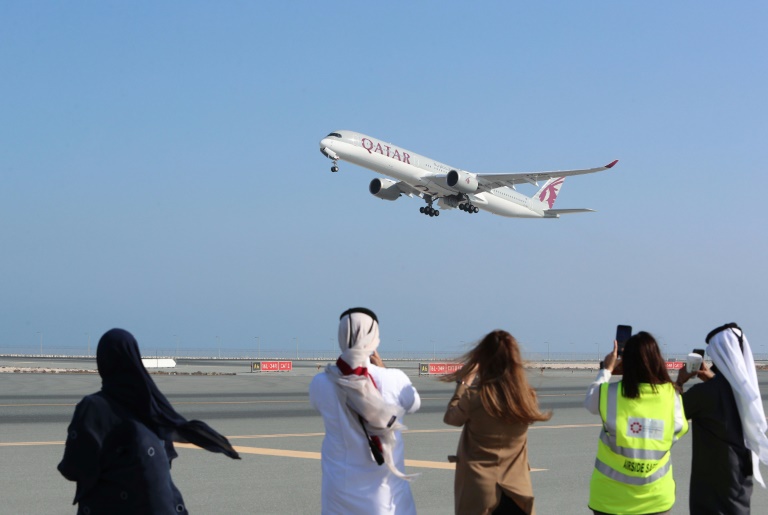
Airbus scraps A350 contract with Qatar Airways in feud

European aircraft maker Airbus has cancelled its contract to deliver 19 A350 planes to Qatar Airways, a source close to the matter said Wednesday, amid a feud between the two aviation giants.

Airbus had already cancelled a multi-billion-dollar order of 50 planes from Qatar Airways, a major customer, earlier in the year, over the airline’s grounding of A350 aircraft.

Qatar Airways has been locked in a dispute with Airbus over degradation of the exterior fuselage surfaces on some of its A350 wide-body planes.

The issue has led the airline, one of the Gulf region’s “big three” carriers, to ground 23 of the aircraft and not accept further deliveries from the European firm until the problem is resolved.

Qatar Airways claimed damages from Airbus amounting to $200,000 per day, per plane out of action.

The order for the 19 aircraft was worth seven billion euros at catalogue prices, though airlines are usually charged less for large purchases.

Neither Airbus nor Qatar Airways immediately commented on the cancelled order.

– Court battle –

The airline and leading plane-maker have been fighting in the British courts for months over the paint problem.

Qatar Airways launched legal action against Airbus over the issue before the High Court in London in December, with Airbus vigorously defending the A350 against any suggestions the aircraft isn’t safe.

Qatar’s civil aviation authority grounded the planes judging the exposure of the metal mesh under the paint posed a safety risk.

But the European Aviation Safety Agency (EASA) found it posed no impact on the airworthiness of the aircraft.

In May, both sides said they hoped to reach a negotiated settlement.

Qatar Airways is demanding about $1 billion in damages over the peeling paintwork, which it says is a threat to the A350’s lightning conductor.

After the airline last year grounded part of its fleet of A350s, Airbus responded by cancelling an order worth more than $6 billion for 50 A321s from Qatar Airways.

Airbus said that a clause in the contract for the 50 A321 planes allowed its cancellation if Qatar Airways failed to fully honour any of its other contracts, which the airline did by refusing to take delivery of A350 aircraft.

In January, an Airbus spokesman told AFP that the aircraft maker had “terminated” the contract for 50 single-aisle A321neo aircraft, “in accordance with our rights”.

Qatar Airways chief executive Akbar Al Baker in June accused Airbus of acting like a “bully” over the dispute. 

“A manufacturer must never be allowed to use their market dominance to bully their long-standing customer,” he said at the International Air Transport Association annual general meeting in Doha.

Airbus chief Guillaume Faury, for his part, had said he was looking to talk to try to resolve the issue but acknowledged it was difficult.

Close Bitnami banner
Bitnami