World

China to stage major drills around Taiwan after Pelosi visit

China’s largest-ever military exercises encircling Taiwan were due to kick off Thursday, in a show of force straddling vital international shipping lanes after a visit to the island by US House Speaker Nancy Pelosi.

Pelosi left Taiwan Wednesday after a trip that defied a series of increasingly stark threats from Beijing, which views the self-ruled island as its territory.

Second in line to the presidency, Pelosi was the highest-profile elected US official to visit Taiwan in 25 years.

She said her presence made it “unequivocally clear” that the United States would “not abandon” a democratic ally like Taiwan.

The trip sparked a furious reaction from Beijing, which vowed “punishment” and announced military drills in the seas around Taiwan — some of the world’s busiest waterways.

The exercises, set to begin at 12 pm (0400 GMT), will involve “training activities including live-fire drills”, according to an announcement in state media.

They will take place in multiple zones encircling Taiwan — at some points within just 20 kilometres (12 miles) of the island’s shore — and will conclude at midday on Sunday.

Nationalist state-run tabloid Global Times said, citing military analysts, that the exercises were “unprecedented” and that missiles would fly over Taiwan for the first time.

“This is the first time the PLA will launch live long-range artillery across” the Taiwan Strait, the newspaper said using the Chinese military’s formal name, the People’s Liberation Army.

Drills taking place since last Tuesday have set the stage for the exercises, with the official Xinhua news agency reporting they had simulated a “joint blockade” of Taiwan.

Taipei has condemned the plans, warning they threaten the security of the East Asia region.

“Some of the areas of China’s drills breach into… (Taiwan’s) territorial waters,” defence ministry spokesman Sun Li-fang said at a press conference Wednesday.

“This is an irrational move to challenge the international order.”

The Group of Seven industrialised nations also condemned the planned drills, saying in a statement there was “no justification to use a visit as pretext for aggressive military activity in the Taiwan Strait”.

– ‘Preparation for actual combat’ –

Taiwan’s Maritime and Port Bureau issued warnings on Wednesday to ships to avoid the areas being used for the Chinese drills.

The Taiwanese cabinet said the drills would disrupt 18 international routes passing through its flight information region (FIR).

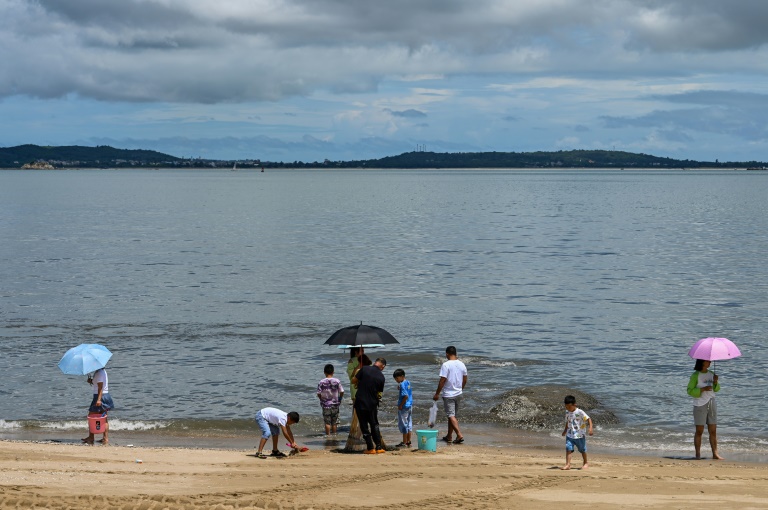
The island’s defence ministry said Taiwanese forces on Wednesday night fired a flare to warn away a drone flying over the island of Kinmen, which lies just 10 km from the Chinese mainland city of Xiamen.

The statement did not say what kind of drone it was or where it came from.

Beijing has defended its military operations as “necessary and just”, pinning the blame for the escalation on the United States and its allies.

“In the current struggle surrounding Pelosi’s Taiwan visit, the United States are the provocateurs, China is the victim,” foreign ministry spokeswoman Hua Chunying told a regular briefing Wednesday.

A Chinese military source also told AFP the exercises would be staged “in preparation for actual combat”.  

“If the Taiwanese forces come into contact with the PLA on purpose and accidentally fire a gun, the PLA will take stern countermeasures, and all the consequences will be borne by the Taiwanese side,” the source said.

– ‘Some limits’ –

Taiwan’s 23 million people have long lived with the possibility of an invasion, but that threat has intensified under President Xi Jinping, China’s most assertive ruler in a generation.

Just 130 km wide at its narrowest point, the Taiwan Strait is a major international shipping channel and all that lies between democratic Taiwan and its giant authoritarian neighbour.

It is now a flashpoint between the United States, Taiwan and a Chinese leadership keen to project strength ahead of a crucial ruling party meeting this autumn at which Xi is expected to be given an unprecedented third term.

“China’s announced military exercises represent a clear escalation from the existing baseline of Chinese military activities around Taiwan and from the last Taiwan Strait Crisis in 1995-1996,” said Amanda Hsiao, senior analyst for China at the International Crisis Group. 

“Beijing is signalling that it rejects Taiwan’s sovereignty.”

Nevertheless, analysts have told AFP that China is not aiming to escalate the situation beyond its control — at least for now.

“Clearly they recognise that there are some limits to what they are willing to do,” Chong Ja Ian, an associate professor at the National University of Singapore, told AFP.

And Titus Chen, an associate professor of political science at the National Sun Yat-Sen University in Taiwan, said: “The last thing Xi wants is an accidental war.”
400-year-old Ecuadoran beer resurrected from yeast

Inside an old oak barrel, Ecuadoran bioengineer Javier Carvajal found the fungus of fortune: a 400-year-old yeast specimen that he has since managed to resurrect and use to reproduce what is believed to be Latin America’s oldest beer.

That single-cell microorganism, taken from just a splinter of wood, was the key to recovering the formula for an elixir first brewed in Quito in 1566 by friar Jodoco Ricke, a Franciscan of Flemish origin who historians believe introduced wheat and barley to what is now the Ecuadoran capital.

“Not only have we recovered a biological treasure but also the 400-year-old work of silent domestication of a yeast that probably came from a chicha and that had been collected from the local environment,” Carvajal told AFP.

Chicha is a fermented corn drink brewed by the Indigenous people of the Americas before Spanish colonization.

Carvajal, who already had experience recovering other yeasts, found out about the ancient Franciscan brewery in Quito while reading specialist beer magazines.

It took him a year to do so, but he finally managed to find a barrel from the old brewery in 2008.

It was stored in Quito’s San Francisco Convent, an imposing three-hectare complex built between 1537 and 1680, which is now a museum.

After extracting a splinter, Carvajal used a microscope to find a tiny yeast specimen, which after a long period of cultivation he was able to resurrect.

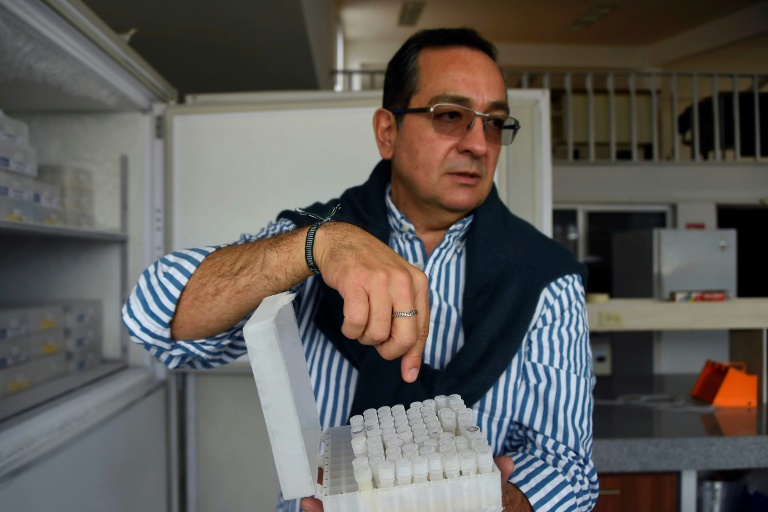
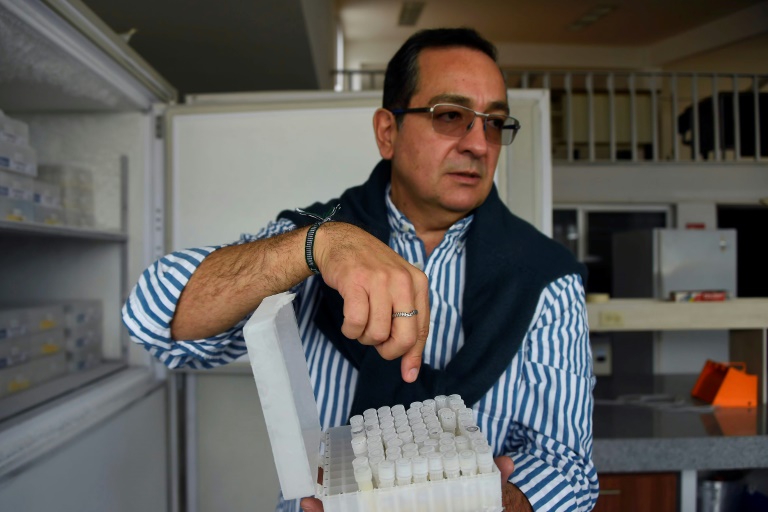
In his laboratory at the Catholic University of Ecuador, Carvajal takes a small vial containing a variety of the Saccharomyces cerevisiaerescatada yeast.

“It lives here in a little container. It’s very humble, but it is the star” of the laboratory, said the 59-year-old. 

– Filling the holes –

Carvajal, who comes from a brewing family, found an article in an industry magazine that vaguely described the formula for the Franciscans’ 16th century drink.

Little by little, he pieced together bits of information to revive the brew with cinnamon, fig, clove and sugarcane flavors.

“There were a massive number of holes in the recipe and my job was to fill those holes,” said Carvajal.

“It is a work of beer archeology within the microbial archeology” he had to carry out to rescue the yeast, which generates the majority of the drink’s flavor.

After a decade of investigation and testing, Carvajal in 2018 began producing the beer at his home — but the pandemic frustrated his attempts to commercialize it.

He still has not come up with a launch date for his product, nor a price.

Carvajal compares his work, centuries after the Franciscans domesticated the yeast, to intensive care on a molecular scale.

“It is as if they were dormant, like dried seeds but having deteriorated over the years. So you have to reconstruct them, fluidize them, hydrate them and see if their vital signs return.”

Historian Javier Gomezjurado, who wrote a book on Quito beverages, told AFP that the brewery in the San Francisco Convent was the first brewery in hispanic America.

It began operations in 1566, but there were just eight friars in the convent at that time and production was minimal, said Gomezjurado.

With the introduction of machinery into the brewing industry, ancient formulas began to disappear. The brewery closed in 1970.

For Carvajal, resurrecting the yeast and the age-old methods used to make the ancient recipe was simply a labor of love for “the value of the intangible.”

400-year-old Ecuadoran beer resurrected from yeast

Inside an old oak barrel, Ecuadoran bioengineer Javier Carvajal found the fungus of fortune: a 400-year-old yeast specimen that he has since managed to resurrect and use to reproduce what is believed to be Latin America’s oldest beer.

That single-cell microorganism, taken from just a splinter of wood, was the key to recovering the formula for an elixir first brewed in Quito in 1566 by friar Jodoco Ricke, a Franciscan of Flemish origin who historians believe introduced wheat and barley to what is now the Ecuadoran capital.

“Not only have we recovered a biological treasure but also the 400-year-old work of silent domestication of a yeast that probably came from a chicha and that had been collected from the local environment,” Carvajal told AFP.

Chicha is a fermented corn drink brewed by the Indigenous people of the Americas before Spanish colonization.

Carvajal, who already had experience recovering other yeasts, found out about the ancient Franciscan brewery in Quito while reading specialist beer magazines.

It took him a year to do so, but he finally managed to find a barrel from the old brewery in 2008.

It was stored in Quito’s San Francisco Convent, an imposing three-hectare complex built between 1537 and 1680, which is now a museum.

After extracting a splinter, Carvajal used a microscope to find a tiny yeast specimen, which after a long period of cultivation he was able to resurrect.

In his laboratory at the Catholic University of Ecuador, Carvajal takes a small vial containing a variety of the Saccharomyces cerevisiaerescatada yeast.

“It lives here in a little container. It’s very humble, but it is the star” of the laboratory, said the 59-year-old. 

– Filling the holes –

Carvajal, who comes from a brewing family, found an article in an industry magazine that vaguely described the formula for the Franciscans’ 16th century drink.

Little by little, he pieced together bits of information to revive the brew with cinnamon, fig, clove and sugarcane flavors.

“There were a massive number of holes in the recipe and my job was to fill those holes,” said Carvajal.

“It is a work of beer archeology within the microbial archeology” he had to carry out to rescue the yeast, which generates the majority of the drink’s flavor.

After a decade of investigation and testing, Carvajal in 2018 began producing the beer at his home — but the pandemic frustrated his attempts to commercialize it.

He still has not come up with a launch date for his product, nor a price.

Carvajal compares his work, centuries after the Franciscans domesticated the yeast, to intensive care on a molecular scale.

“It is as if they were dormant, like dried seeds but having deteriorated over the years. So you have to reconstruct them, fluidize them, hydrate them and see if their vital signs return.”

Historian Javier Gomezjurado, who wrote a book on Quito beverages, told AFP that the brewery in the San Francisco Convent was the first brewery in hispanic America.

It began operations in 1566, but there were just eight friars in the convent at that time and production was minimal, said Gomezjurado.

With the introduction of machinery into the brewing industry, ancient formulas began to disappear. The brewery closed in 1970.

For Carvajal, resurrecting the yeast and the age-old methods used to make the ancient recipe was simply a labor of love for “the value of the intangible.”

Mexico races to rescue nine trapped miners

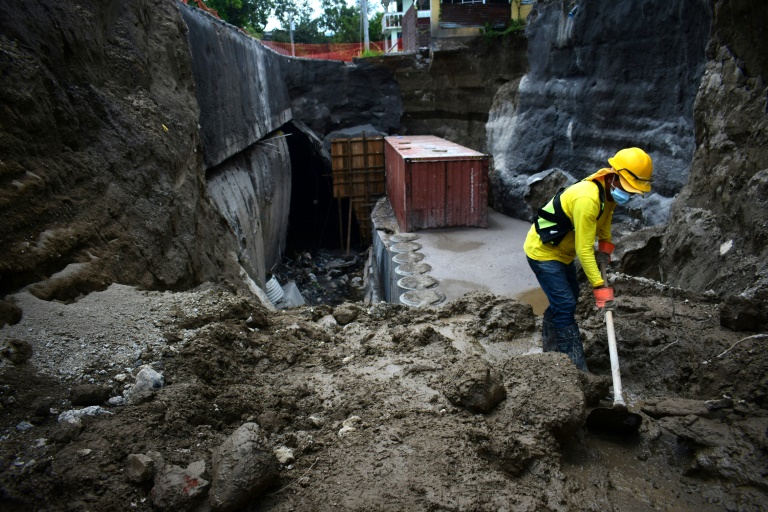
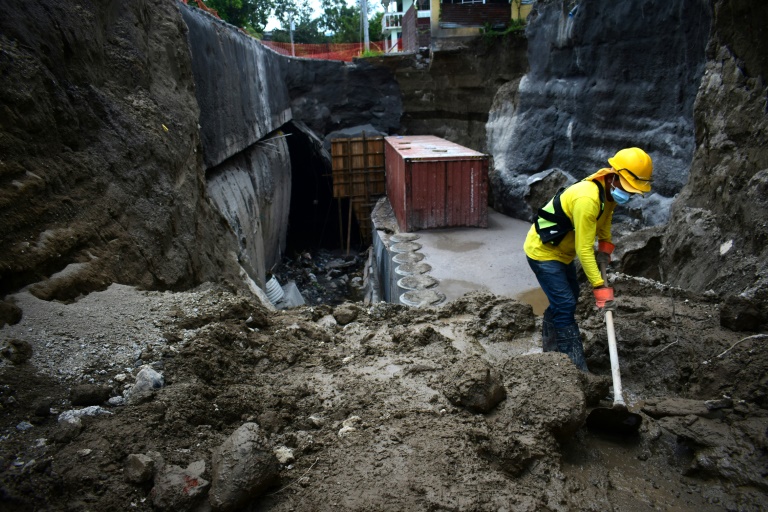
Rescuers battled Wednesday to free around nine workers believed to be trapped in a coal mine in northern Mexico, President Andres Manuel Lopez Obrador said.

Military personnel and rescue dogs were deployed to the scene of the accident in the state of Coahuila, Lopez Obrador said.

“A coal mine collapsed in the municipality of Sabinas, Coahuila, which caused a tunnel to flood and apparently trapped nine miners,” he tweeted.

“We hope to find them safe,” he added.

Anxious relatives gathered at the site waiting for news, some crying and comforting each other.

One woman said through tears that two of her children worked in the mine, although one of them had managed to escape after the accident.

Coahuila’s state government said that the miners had been carrying out excavation work when they hit an adjoining area full of water, causing the shaft to collapse and flood.

“The mine began operating in January of this year and until now there have been no reports of any type of anomaly,” it said in a statement.

Coahuila, the country’s main coal-producing region, has seen a series of fatal mining accidents over the years.

The worst was an explosion that claimed 65 lives at the Pasta de Conchos mine in 2006.

Last year seven miners died after they were trapped in another accident in Coahuila.

Climate, poverty collude to torment Central America

Every time it rains, Blanca Arias in El Salvador and Sandra Ramos in Honduras fear that flooding will raze their precarious homes and leave their families destitute. Again.

It is a fate that strikes all too often in parts of Central America and, experts say, ever more frequently and severely due to climate change.

Corruption, crumbling infrastructure, uncontrolled urbanization and poverty  — which afflicts 60 percent of Central America’s 50 million inhabitants — all combine to leave more and more people exposed to natural disasters.

And the region has many: from volcanic eruptions, drought and heat waves to regular flooding brought on by tropical storms and hurricanes.

In July this year, Tropical Storm Bonnie unleashed a downpour on San Salvador, flooding Arias’s humble dwelling and many others built in a ravine in the capital’s southeast.

Her house was left “in ruins,” Arias told AFP, and she lost everything she needs for her artisanal ice cream business.

“We have nowhere to go,” the 58-year-old said.

In neighboring Honduras, 22-year-old Ramos lives in a state of constant nervousness on the banks of the Ulua River.

“A little while ago, a fortnight ago, we were scared because they announced a very strong hurricane. We went to look at the river, the river filled up … some of it drained into the valley.

“All of this alarms us, because we are in a risk zone and we cannot be at ease,” she said.

– Vicious cycle –

When both Hurricane Eta and Iota hit in October 2020, Ramos said her entire settlement became flooded.

“All the houses were lost, we lost everything.”

The UN’s Economic Commission for Latin America and the Caribbean estimates that the hurricane duo caused damage exceeding $2 billion in Honduras alone.

In 2021, according to a World Food Programme report, more than 8.4 million people in Guatemala, Honduras, El Salvador and Nicaragua were in a food “crisis” due to conflict, economic shocks resulting from the coronavirus epidemic, and extreme weather events.

It is a vicious cycle.

“Poverty makes the same people look for the cheapest areas to live in and those are usually the most vulnerable zones,” Ricardo Navarro, president of the CESTA environmental NGO told AFP. 

The areas of Central America most exposed to tropical cyclones are on the Caribbean and Pacific coasts, both stretching almost 3,000 kilometers (some 1,800 miles) in length, and heavily populated.

Experts regularly warn of the danger of high-density settlements in high-risk areas.

In some areas of Nicaragua, for example, “there was a time when rivers shrunk and people built (homes) in their beds or very close to the rivers which, of course, returned to their normal flow,” said Janett Castillo, of the Nicaraguan National Risk Management Board (MNGR).

“Nature reclaims the space that humans invade,” added Magdalena Cortez of the Salvadoran risk-management NGO MPGR, who said that to minimize risk, “we must respect nature.”

Despite the many disasters afflicting the region, “civil protection systems have been weakened” by government neglect, said Guido Calderon of the Cociger risk management NGO in Guatemala.

Every time there is an event, the systems mobilize for a rapid response, “and then leave those affected abandoned,” he said.

– ‘Uncontrolled exploitation’ –

Back in Honduras, Jose Ramon Avila of the NGO coalition ASONOG said the vulnerability exposed by Hurricane Mitch in 1998 — which was the country’s worst-ever natural disaster with more than 5,000 deaths — has only become worse with “uncontrolled exploitation of forests” ever since.

Flooding has worsened due to a changing climate, said Avila, with “abundant rainfall in shorter periods, which in turn saturates the soil” that would normally absorb the excess water.

According to a 2021 report of the Inter-American Development Bank, a total of 81 weather disasters killed 26,887 people in Honduras between 1970 and 2019.

In some areas, the country has sought to deal with the threat by building stone-and-soil dikes.

But when Hurricane Eta hit, even those barriers were overwhelmed, remembered Ramos. 

After the water receded, she and her neighbors returned and settled in makeshift huts, slowly rebuilding their lives, but with no faith left in the dikes. 

Now, every time a storm is forecast, they get ready to leave.

“We can lose the little we have collected — the animals, even our lives,” Ramos said.

Climate, poverty collude to torment Central America

Every time it rains, Blanca Arias in El Salvador and Sandra Ramos in Honduras fear that flooding will raze their precarious homes and leave their families destitute. Again.

It is a fate that strikes all too often in parts of Central America and, experts say, ever more frequently and severely due to climate change.

Corruption, crumbling infrastructure, uncontrolled urbanization and poverty  — which afflicts 60 percent of Central America’s 50 million inhabitants — all combine to leave more and more people exposed to natural disasters.

And the region has many: from volcanic eruptions, drought and heat waves to regular flooding brought on by tropical storms and hurricanes.

In July this year, Tropical Storm Bonnie unleashed a downpour on San Salvador, flooding Arias’s humble dwelling and many others built in a ravine in the capital’s southeast.

Her house was left “in ruins,” Arias told AFP, and she lost everything she needs for her artisanal ice cream business.

“We have nowhere to go,” the 58-year-old said.

In neighboring Honduras, 22-year-old Ramos lives in a state of constant nervousness on the banks of the Ulua River.

“A little while ago, a fortnight ago, we were scared because they announced a very strong hurricane. We went to look at the river, the river filled up … some of it drained into the valley.

“All of this alarms us, because we are in a risk zone and we cannot be at ease,” she said.

– Vicious cycle –

When both Hurricane Eta and Iota hit in October 2020, Ramos said her entire settlement became flooded.

“All the houses were lost, we lost everything.”

The UN’s Economic Commission for Latin America and the Caribbean estimates that the hurricane duo caused damage exceeding $2 billion in Honduras alone.

In 2021, according to a World Food Programme report, more than 8.4 million people in Guatemala, Honduras, El Salvador and Nicaragua were in a food “crisis” due to conflict, economic shocks resulting from the coronavirus epidemic, and extreme weather events.

It is a vicious cycle.

“Poverty makes the same people look for the cheapest areas to live in and those are usually the most vulnerable zones,” Ricardo Navarro, president of the CESTA environmental NGO told AFP. 

The areas of Central America most exposed to tropical cyclones are on the Caribbean and Pacific coasts, both stretching almost 3,000 kilometers (some 1,800 miles) in length, and heavily populated.

Experts regularly warn of the danger of high-density settlements in high-risk areas.

In some areas of Nicaragua, for example, “there was a time when rivers shrunk and people built (homes) in their beds or very close to the rivers which, of course, returned to their normal flow,” said Janett Castillo, of the Nicaraguan National Risk Management Board (MNGR).

“Nature reclaims the space that humans invade,” added Magdalena Cortez of the Salvadoran risk-management NGO MPGR, who said that to minimize risk, “we must respect nature.”

Despite the many disasters afflicting the region, “civil protection systems have been weakened” by government neglect, said Guido Calderon of the Cociger risk management NGO in Guatemala.

Every time there is an event, the systems mobilize for a rapid response, “and then leave those affected abandoned,” he said.

– ‘Uncontrolled exploitation’ –

Back in Honduras, Jose Ramon Avila of the NGO coalition ASONOG said the vulnerability exposed by Hurricane Mitch in 1998 — which was the country’s worst-ever natural disaster with more than 5,000 deaths — has only become worse with “uncontrolled exploitation of forests” ever since.

Flooding has worsened due to a changing climate, said Avila, with “abundant rainfall in shorter periods, which in turn saturates the soil” that would normally absorb the excess water.

According to a 2021 report of the Inter-American Development Bank, a total of 81 weather disasters killed 26,887 people in Honduras between 1970 and 2019.

In some areas, the country has sought to deal with the threat by building stone-and-soil dikes.

But when Hurricane Eta hit, even those barriers were overwhelmed, remembered Ramos. 

After the water receded, she and her neighbors returned and settled in makeshift huts, slowly rebuilding their lives, but with no faith left in the dikes. 

Now, every time a storm is forecast, they get ready to leave.

“We can lose the little we have collected — the animals, even our lives,” Ramos said.

Inflation-fighting BoE poised to unleash big rate hike

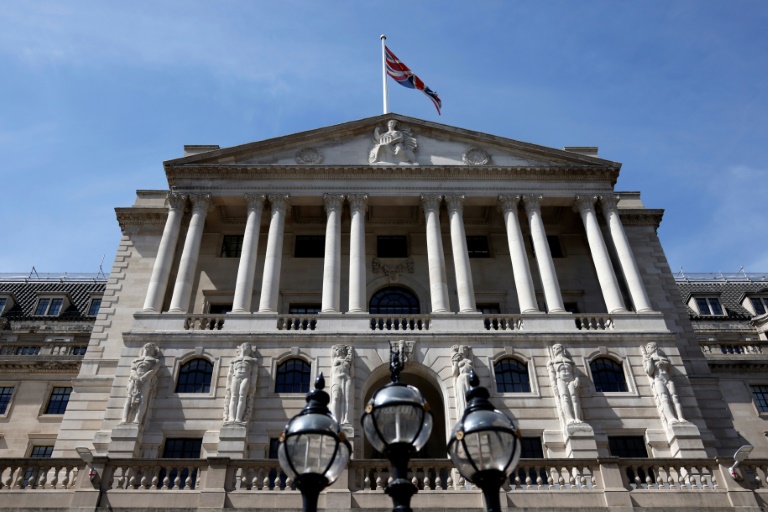
The Bank of England is expected Thursday to follow other major central banks with an aggressive interest rate hike to tackle surging inflation.

The BoE is tipped to lift its main rate by 0.50 percentage points — the biggest amount in more than a quarter of a century.

British inflation jumped to a four-decade high of 9.4 percent in June, worsening a cost-of-living crisis as workers’ wages fail to keep pace.

With inflation spiking globally following Russia’s invasion of Ukraine, the US Federal Reserve and the European Central Bank sprang large hikes last month of 0.75 and 0.50 percentage points respectively.

– ‘Up the ante’ –

“After the ECB and the Fed delivered oversized hikes at their July meetings, the Bank of England is likely to feel similar pressure to up the ante at its August meeting,” said BNP Paribas economist Amarjot Sidhu in a note to clients.

“We expect the Monetary Policy Committee… to deliver the first 50 basis point hike since its independence and to signal its determination to prevent inflation from becoming entrenched.”

The BoE, granted operational independence from the government over monetary policy in 1997, will reveal its latest rate decision at 1100 GMT on Thursday alongside its latest outlook.

Governor Andrew Bailey has already stated that a half-point hike — which would be the biggest since 1995 — will be “among the choices on the table” this time around.

That would take borrowing costs to 1.75 percent, a level last seen in December 2008.

Consumer prices have soared as energy costs spike on key gas and oil producer Russia’s invasion of Ukraine.

Inflation has also raced higher on supply-chain woes, including labour market shortages in the wake of Brexit, and strong demand for goods and services as the Covid pandemic recedes.

– Inflation ‘spooks’ central banks –

Yet the bank predicts UK inflation will spike to 11 percent later this year — and it was expected to lift this guidance on Thursday.

Added to the picture, state energy regulator Ofgem is due to ramp up domestic electricity and gas prices again in October.

That could take the average UK household energy bill above £3,000 ($3,600) per year.

“Surging energy prices… will force the BoE to revise up its inflation forecast yet again,” said Barclays analyst Fabrice Montagne.

“Higher inflation for even longer is the kind of scenario that spooks central banks.”

The BoE’s key task is to keep inflation close to a 2.0-percent target.

Economists meanwhile argue that a large rate hike damages the nation’s recovery from the coronavirus pandemic — and risks the prospect of recession.

Rising rates inflict more misery for businesses and consumers via rising loan repayments.

“The… anticipated hike would be harmful to the economy and pile on the pain for people across the country,” said Nigel Green, boss of financial consultants deVere.

The BoE has increased its key rate five times since December, lifting it to 1.25 percent from a record-low 0.1 percent.

Until now, the BoE has not hiked its rates by more than 0.25 percentage points each time.

The soaring cost of living has dominated the race to become Britain’s next prime minister.

Liz Truss is currently ahead in the polls against fellow Conservative and former finance minister Rishi Sunak.

Inflation-fighting BoE poised to unleash big rate hike

The Bank of England is expected Thursday to follow other major central banks with an aggressive interest rate hike to tackle surging inflation.

The BoE is tipped to lift its main rate by 0.50 percentage points — the biggest amount in more than a quarter of a century.

British inflation jumped to a four-decade high of 9.4 percent in June, worsening a cost-of-living crisis as workers’ wages fail to keep pace.

With inflation spiking globally following Russia’s invasion of Ukraine, the US Federal Reserve and the European Central Bank sprang large hikes last month of 0.75 and 0.50 percentage points respectively.

– ‘Up the ante’ –

“After the ECB and the Fed delivered oversized hikes at their July meetings, the Bank of England is likely to feel similar pressure to up the ante at its August meeting,” said BNP Paribas economist Amarjot Sidhu in a note to clients.

“We expect the Monetary Policy Committee… to deliver the first 50 basis point hike since its independence and to signal its determination to prevent inflation from becoming entrenched.”

The BoE, granted operational independence from the government over monetary policy in 1997, will reveal its latest rate decision at 1100 GMT on Thursday alongside its latest outlook.

Governor Andrew Bailey has already stated that a half-point hike — which would be the biggest since 1995 — will be “among the choices on the table” this time around.

That would take borrowing costs to 1.75 percent, a level last seen in December 2008.

Consumer prices have soared as energy costs spike on key gas and oil producer Russia’s invasion of Ukraine.

Inflation has also raced higher on supply-chain woes, including labour market shortages in the wake of Brexit, and strong demand for goods and services as the Covid pandemic recedes.

– Inflation ‘spooks’ central banks –

Yet the bank predicts UK inflation will spike to 11 percent later this year — and it was expected to lift this guidance on Thursday.

Added to the picture, state energy regulator Ofgem is due to ramp up domestic electricity and gas prices again in October.

That could take the average UK household energy bill above £3,000 ($3,600) per year.

“Surging energy prices… will force the BoE to revise up its inflation forecast yet again,” said Barclays analyst Fabrice Montagne.

“Higher inflation for even longer is the kind of scenario that spooks central banks.”

The BoE’s key task is to keep inflation close to a 2.0-percent target.

Economists meanwhile argue that a large rate hike damages the nation’s recovery from the coronavirus pandemic — and risks the prospect of recession.

Rising rates inflict more misery for businesses and consumers via rising loan repayments.

“The… anticipated hike would be harmful to the economy and pile on the pain for people across the country,” said Nigel Green, boss of financial consultants deVere.

The BoE has increased its key rate five times since December, lifting it to 1.25 percent from a record-low 0.1 percent.

Until now, the BoE has not hiked its rates by more than 0.25 percentage points each time.

The soaring cost of living has dominated the race to become Britain’s next prime minister.

Liz Truss is currently ahead in the polls against fellow Conservative and former finance minister Rishi Sunak.

Scholz opens door to extend nuclear as Russia squeezes gas supply

German Chancellor Olaf Scholz on Wednesday raised the possibility of keeping nuclear plants going as he accused Russia of blocking the delivery of a key turbine to throttle gas supplies to Europe.

The continent’s biggest economy has been scrambling for energy sources to fill a gap left by a reduction in gas supplies from Moscow. 

Standing next to the turbine, Scholz said that extending the lifetime of Germany’s three remaining nuclear power plants “can make sense”.

The power stations, which are set to be taken off the grid at the end of the year, were “relevant exclusively for electricity production, and only for a small part of it”, Scholz said.

In total, the nuclear fleet accounts for six percent of Germany’s electricity output.

The government has said it will await the outcome of a new “stress test” of the national electric grid before determining whether to stick with the long-planned phase-out.

– Nuclear switch –

Former chancellor Angela Merkel spectacularly decided to ditch atomic energy in 2011 following the Fukushima nuclear disaster in Japan.

Extending the lifetime of the plants has set off a heated debate in Germany, where nuclear power has been a source of controversy stretching back before Merkel’s decision.

Germany has already moved to restart mothballed coal power plants to guard against an energy shortfall. 

The squeeze comes as Russia dwindles supplies of gas, which Germany has long relied on to power industry and heat homes.

Russian energy giant Gazprom has chalked up limited supplies to technical issues.

The delayed return of a turbine from Canada, where the unit was being serviced, was behind the initial reduction in deliveries via the Nord Stream 1 gas pipeline in June, according to Gazprom.

Supplies via the energy link were further reduced to around 20 percent of capacity in late July, after Gazprom halted the operation of one of the last two operating turbines due to the “technical condition of the engine”.

– Turbine trouble –

Berlin has dismissed Gazprom’s justifications for the reduction to supply, seeing instead a “political” move in response to the West’s support for Ukraine.

The turbine which was transferred from Canada to Germany was “available and working”, Scholz said Wednesday.

“There is no reason why this delivery cannot happen,” he said, adding that it had received “all the approvals” needed for export from Germany to Russia.

Pipeline operators only had to say “they want to have the turbine and provide the necessary customs information for transport to Russia”, Scholz said.

Gazprom however insisted it was unable to take delivery of the turbine.

“Sanctions regimes in Canada, in the European Union and in Britain, as well as the inconsistencies in the current situation concerning the contractual obligations of (turbine maker) Siemens make the delivery impossible,” it said.

Kremlin spokesman Dmitry Peskov also said Gazprom was still waiting for documents confirming the unit was “not affected by sanctions”.

It was however “technologically possible” in the opinion of Russian President Vladimir Putin to continue deliveries via the Nord Stream 2 pipeline, Peskov said.

The second pipeline, which runs parallel to Nord Stream 1, stands completed but was blocked by the German government in the run-up to the invasion of Ukraine.

Former chancellor Gerhard Schroeder, who signed off on the pipeline while in office, told German magazine Stern it was “the easiest solution” to use Nord Stream 2 instead.

But Scholz has rejected the call, saying Nord Stream 1 provided sufficient capacity for gas flows. 

Moscow’s move to limit supplies sent a “difficult message” to the world by creating doubt over Russia’s commitment to its agreements, he added.

Scholz opens door to extend nuclear as Russia squeezes gas supply

German Chancellor Olaf Scholz on Wednesday raised the possibility of keeping nuclear plants going as he accused Russia of blocking the delivery of a key turbine to throttle gas supplies to Europe.

The continent’s biggest economy has been scrambling for energy sources to fill a gap left by a reduction in gas supplies from Moscow. 

Standing next to the turbine, Scholz said that extending the lifetime of Germany’s three remaining nuclear power plants “can make sense”.

The power stations, which are set to be taken off the grid at the end of the year, were “relevant exclusively for electricity production, and only for a small part of it”, Scholz said.

In total, the nuclear fleet accounts for six percent of Germany’s electricity output.

The government has said it will await the outcome of a new “stress test” of the national electric grid before determining whether to stick with the long-planned phase-out.

– Nuclear switch –

Former chancellor Angela Merkel spectacularly decided to ditch atomic energy in 2011 following the Fukushima nuclear disaster in Japan.

Extending the lifetime of the plants has set off a heated debate in Germany, where nuclear power has been a source of controversy stretching back before Merkel’s decision.

Germany has already moved to restart mothballed coal power plants to guard against an energy shortfall. 

The squeeze comes as Russia dwindles supplies of gas, which Germany has long relied on to power industry and heat homes.

Russian energy giant Gazprom has chalked up limited supplies to technical issues.

The delayed return of a turbine from Canada, where the unit was being serviced, was behind the initial reduction in deliveries via the Nord Stream 1 gas pipeline in June, according to Gazprom.

Supplies via the energy link were further reduced to around 20 percent of capacity in late July, after Gazprom halted the operation of one of the last two operating turbines due to the “technical condition of the engine”.

– Turbine trouble –

Berlin has dismissed Gazprom’s justifications for the reduction to supply, seeing instead a “political” move in response to the West’s support for Ukraine.

The turbine which was transferred from Canada to Germany was “available and working”, Scholz said Wednesday.

“There is no reason why this delivery cannot happen,” he said, adding that it had received “all the approvals” needed for export from Germany to Russia.

Pipeline operators only had to say “they want to have the turbine and provide the necessary customs information for transport to Russia”, Scholz said.

Gazprom however insisted it was unable to take delivery of the turbine.

“Sanctions regimes in Canada, in the European Union and in Britain, as well as the inconsistencies in the current situation concerning the contractual obligations of (turbine maker) Siemens make the delivery impossible,” it said.

Kremlin spokesman Dmitry Peskov also said Gazprom was still waiting for documents confirming the unit was “not affected by sanctions”.

It was however “technologically possible” in the opinion of Russian President Vladimir Putin to continue deliveries via the Nord Stream 2 pipeline, Peskov said.

The second pipeline, which runs parallel to Nord Stream 1, stands completed but was blocked by the German government in the run-up to the invasion of Ukraine.

Former chancellor Gerhard Schroeder, who signed off on the pipeline while in office, told German magazine Stern it was “the easiest solution” to use Nord Stream 2 instead.

But Scholz has rejected the call, saying Nord Stream 1 provided sufficient capacity for gas flows. 

Moscow’s move to limit supplies sent a “difficult message” to the world by creating doubt over Russia’s commitment to its agreements, he added.

Close Bitnami banner
Bitnami