World

Focus on Samira, celebrity snapper of southern Iraq

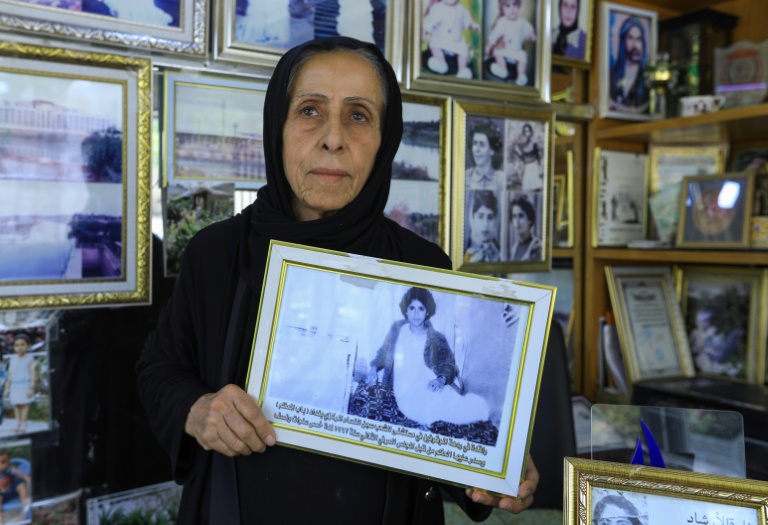
She’s southern Iraq’s celebrity photographer, a former political prisoner who has spent more than 60 years behind the lens documenting people and places and defying convention.

Samira Mazaal is 77 and still going strong more than half a century after turning to photography to feed her family — because she had no choice.

“Peasants, intellectuals, I’ve photographed them all,” says the mother of two, her black hijab framing a face lined by life.

“I have photographed Amarah in all its beauty — I went deep into the marshes,” to the south of the city in the floodplain of the Tigris and Euphrates rivers.

Everyone in the area turns to Studio Samira, be it for a passport photograph or to have a couple’s portrait taken ahead of their wedding.

She tells how she became the first female photographer in Maysan province aged just 16, despite familial conventions that ruled in the Iraq of the 1960s, and also how political activism led to imprisonment and torture.

“My family has never known any other business — we’re all photographers,” Samira says.

Framed photographs lining the walls bear witness to her trade, in both black and white or in colours faded by time.

She has albums of images showing Iraq as it used to be: black-clad women carrying huge bales balanced on their heads; a smiling peasant woman in a flowery dress, her hair braided, standing near a cow; a mother and child filling a pot with water from the river.

– ‘Society can be cruel’ –

Samira’s father was among the first to introduce photography to the province.

“I asked him to initiate me into the craft, but he said: ‘No, you’re too young. You can’t — society can be cruel’,” she recalls.

But soon circumstances would force him to change his mind. He was rendered blind in a botched operation, and could no longer provide for his family.

So Samira had to step in.

She started off using the daguerreotype method of the 1800s that uses silver-plated copper sheets, but then her father sold off some land so she could buy more modern equipment.

“My studio became extraordinarily successful,” she smiles. “Because I was a young woman, I could take pictures of families.”

Samira exploited the norms of a conservative society: the male heads of households preferred that a woman photographer, not a man, take the pictures of their wives and daughters.

Bassem al-Subaid is one satisfied client of Studio Samira.

“There isn’t a single household in all of Maysan province that doesn’t know Samira the photographer,” he tells AFP.

“My generation got to know Samira when we came to be photographed by her,” adds the man in his forties. “It was the previous generation that saw her political activism.”

In 1963, Iraq was being torn apart by revolutions and bloody crackdowns, and the then adolescent had no idea that a communist tract would put her behind bars.

– A source of pride –

After General Abdel Salam Aref took power in a Baath party coup, three militants came to Samira’s studio and asked her to mass-produce a poster denouncing the new regime. 

She accepts that she had not yet completely formed her own political opinions, and was swayed at the time by her brother’s sympathies.

“In all of Amarah, there wasn’t a single wall without a pasted copy of the poster,” she boasts. “It wasn’t a crime — it’s a source of pride.”

A picture of herself, which she still has today, made her famous. It shows her lying on a hospital bed after being tortured in a building in Amarah.

“I was screaming so hard I thought the whole town would come and save me,” she recalls.

It was not to be: she spent the next four years, ill and abused, in a Baghdad prison.

She was freed after an international campaign that led to pardons for several political prisoners in Iraq.

In 1981, she was again jailed briefly under the rule of then dictator Saddam Hussein. And then again 10 years later over a protest in Amarah against the repercussions of the Gulf War over Kuwait.

Like several other women prisoners, she was granted a pardon after just a few months.

Today the photographic studio is still welcoming clients, and despite her age, the revolutionary flame still burns brightly in Samira.

She hails the October 2019 uprising, sparked by angry young Iraqis seeking to bring those in power to account.

“The protesters should have transformed their movement into a massive revolution to root out corruption and the corrupt,” Samira says.
Hong Kong mahjong carver among the last of his kind

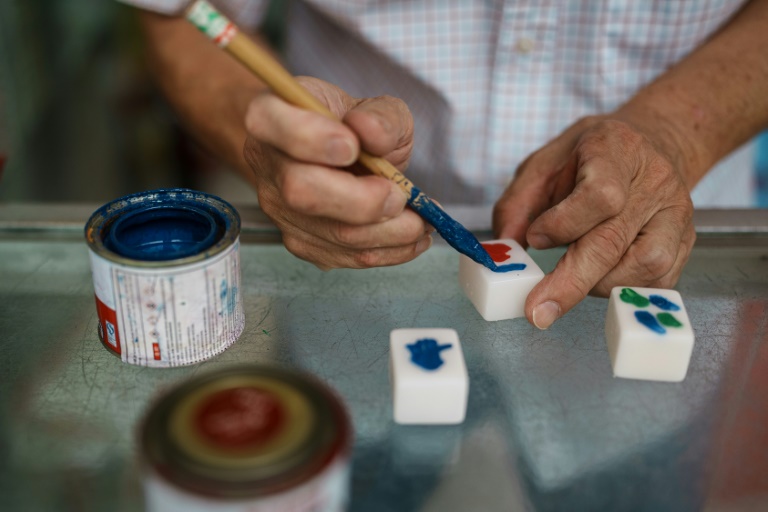
Eyebrows furrowed in careful concentration as he chisels images and Chinese characters onto mahjong tiles, 70-year-old Cheung Shun-king is one of the last craftsmen of his kind in Hong Kong.

Hand carving playing tiles for the popular Chinese game used to be a source of income for many, but the introduction of much cheaper machine-made sets whittled away at their customer base and turned their work into a rarity.

Cheung’s family alone used to own four separate shops, where as a teenager he learned his trade.

Now only one remains.

“I have given my youth to it,” he says of his work. “I don’t know if I’ll have the energy to carry on in a few years, but for now, I’ll continue to do it.”

Cheung’s store is on a street lined with mahjong parlours, but none of them buy their tiles from him.

“My mahjong sets are expensive,” he admits.

A full set of hand-carved tiles costs HK$5,500 (US$700), he says, whereas machine-carved ones are around HK$2,000.

The price reflects the time spent making them. 

Industrial production of tiles takes about an hour, but it takes five days for Cheung to complete the process of carving and colouring his tiles.

Many of his customers buy sets as souvenirs and often request customised images. 

But Cheung thinks this recent surge in interest in an old tradition may be ephemeral.

“It is only in these last few years that people have felt a sense of nostalgia” and come to buy his tiles, he says. 

“What if a few years later no one feels nostalgia?” 

Despite his belief that his industry will continue to decline, Cheung says he will work for as long as he can, until there is no demand.

He used to conduct workshops for young people but does not want to take on apprentices because of his pessimism.

“To learn (this skill) isn’t a matter of one or two months — attempting it wouldn’t work if you didn’t immerse yourself in it for two to three years,” Cheung says.

“If, by then, handcrafted mahjong tiles are no more a trend, then this skill would become useless.”

Cheung does not know how to play mahjong himself — his interest lies only in crafting the tiles.

He says that being called an artist, however, is flattering, and a “big compliment” for him.

“If others say it is art, then it is art. For me, it is my job, as I have to make a living.”

Colombian deforestation policy 'failure' a headache for new government

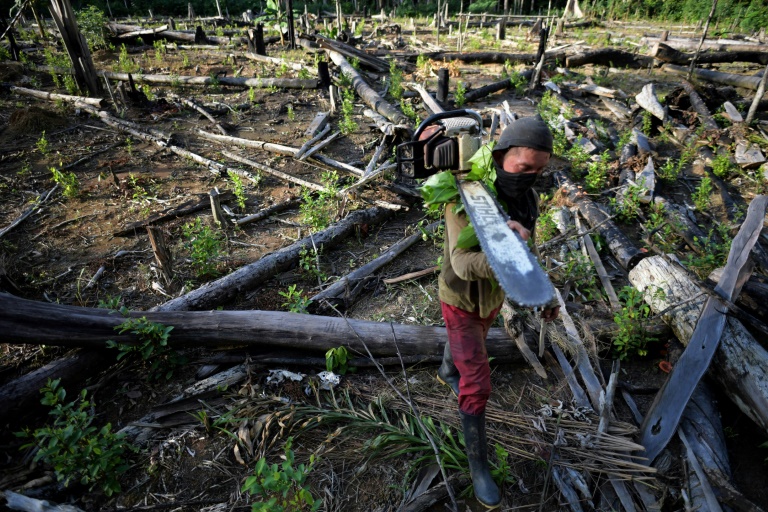
Colombian President Ivan Duque’s environmental policies “failed” according to experts who dispute the outgoing right-wing government’s claims to have reduced deforestation.

With conservative Duque due to hand over to his left-wing successor Gustavo Petro on Sunday, the new government will have to find solutions to the problem.

The South American country is one of the most biodiverse in the world, according to the United Nations, but between 2018 and 2021 it lost an area of forest larger than the size of the Gaza Strip (7,000 square kilometers, 2,700 square miles), according to official data.

The Duque government “focused on military and judicial operations” to tackle deforestation, particularly in the Amazon rainforest, but these “failed,” according to former environment minister Manuel Rodriguez (1991-96).

And even though the deforestation figure is worse than the previous four years, from 2014-2017 (6,500 square kilometers), the government has defended its record.

“This phenomena reduced by 34 percent compared to the trend model,” said environment minister Carlos Correa when presenting the 2021 deforestation figure of 1,741 square kilometers.

But instead of comparing that figure to the 1,717 square kilometers from 2020, the government contrasted it against a projection model based on the trend between 2008 and 2017, when deforestation was out of control.

“So, faced with a hypothetical catastrophic scenario, is losing 1,700 square kilometers of forest good? I don’t think so,” said Rodrigo Botero, director of the Conservation and Development Foundation.

Botero says the authorities’ own figures show that rainforest loss increased between 2019 and 2021.

“We are still at a very high point on the deforestation curve,” Botero told AFP.

“The fact that we have had three consecutive years of increase means that there is no control over the structural variables, it’s an alarming sign.”

Colombia is not the only South American country struggling to rein in the loss of forests.

Neighboring Brazil, which is home to the majority of the Amazon rainforest, saw a record amount lost in the first half of 2022.

The figure of 3,750 square kilometers topped the previous record for the first half of the year, set in 2021.

– ‘Modest’ government success –

President-elect Petro, who will be Colombia’s first ever left-wing leader, has said he will prioritize the fight against climate change and environmental protection.

Petro says he will suspend oil exploration to progressively move to clean energy and will restrict the expansion of farming in the Amazon.

He also aims to create environmental reserves where indigenous and peasant communities can develop sustainable projects.

But before then, the new president will need to decide what to do about his predecessor’s strategy.

In April 2019, eight months after coming to power, Duque launched the Artemisa military operation to fight deforestation using 23,000 soldiers.

Since then, around 100 people have been arrested and a similar number of pieces of machinery confiscated.

“Artemisa had 20 interventions, over four years that’s a pretty modest number,” said Rodriguez.

“You have to create a state presence in terms of education and the generation of employment.”

Peasants have complained that the military operation attacked the weakest links in the chain rather than the large-scale architects of deforestation.

Farming, land grabbing and the growing of drug crops are the main sources of deforestation.

As part of the Paris climate accords, Colombia committed to eliminate deforestation by 2030.

To do so, the environment ministry projects a reduction to 1,550 kilometers squared of lost forest in 2022 and just 1,000 square kilometers a year by 2025.

The government of Norway, which like Germany and the United Kingdom sends millions of dollars in aid to Colombia to preserve its forests, has expressed its alarm at the likelihood that Colombia will miss its first target.

And it could cost the country.

“We are not seeing a constant reduction in the rate of deforestation … the country could lose up to $260 million up to 2025 for not slowing it,” Ole Bergum, Norway’s climate and forests advisor in Colombia, told the El Tiempo newspaper. 

jss/vel/das/bc/jh

OPEC+ meeting to test Biden's Saudi oil entreaty

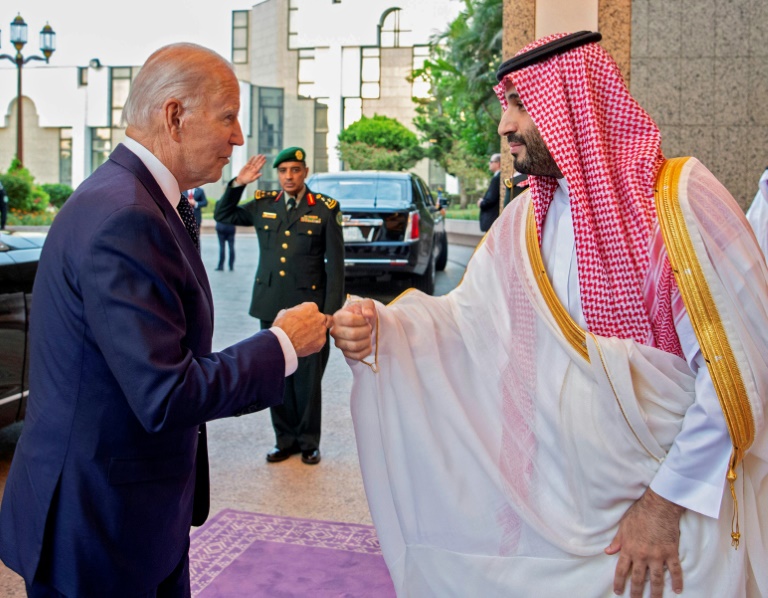
The OPEC+ group of major oil exporters meets Wednesday to discuss its output strategy after US President Joe Biden lobbied Saudi Arabia to boost production to tame energy-fuelled inflation.

The cartel led by Saudi Arabia and Russia has resisted US pressure to ramp up production significantly so far after Moscow’s invasion of Ukraine sent oil prices soaring.

After cutting production in 2020 in response to falling prices during the Covid pandemic, OPEC+ began to modestly raise production last year and has renewed the policy every month.

Its output is supposed to have returned to pre-Covid levels — but only on paper as members of the 23-nation group have struggled to meet their quotas.

Craig Erlam, analyst at OANDA trading platform, said the OPEC+ meeting will show whether “President Biden has any influence in the cartel at all”.

Biden made a controversial trip to Saudi Arabia in July in part to convince the kingdom to loosen the production taps to stabilise the market and curb rampant inflation.

The US president met with Crown Prince Mohammed bin Salman despite his promise to make the kingdom a “pariah” in the wake of the 2018 killing of journalist Jamal Khashoggi.

Biden said after his meetings with Saudi officials that he was “doing all I can” to increase the oil supply.

“Saudi Arabia and its allies will have to decide whether to heed Joe Biden’s request and raise production or show solidarity towards Russia by staying put,” said Tamas Varga, analyst at oil broker PVM.

Stephen Innes, managing partner at SPI Asset Management, said OPEC+ is “unlikely to announce a significant production increase given growing recession fears” and a drop in oil prices since early June.

– More cautious? –

After reaching close to $140 per barrel in early March, crude prices have slid further this week following weak economic data from China, the world’s biggest importer of oil.

The main contracts, Brent and WTI, are now trading below $100 per barrel.

“The noticeable price slide since yesterday (Monday) could make OPEC+ more cautious,” Commerzbank said in a note.

The German bank said news that Libyan production has returned to normal levels for the first time in nearly four months could also serve as an argument against a bigger expansion in output.

OPEC+ began to add around 400,000 barrels per day to the market last year, renewing the policy every month until June, when it upped production by almost 650,000 barrels per day.

Analysts say the group has now reversed cuts totalling 9.7 million barrels per day that had been agreed in 2020, though only in theory.

OPEC+ meeting to test Biden's Saudi oil entreaty

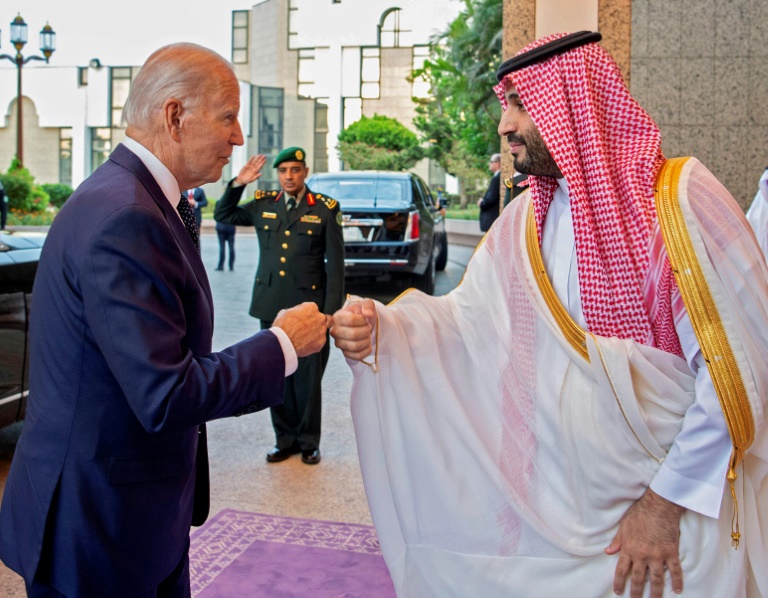
The OPEC+ group of major oil exporters meets Wednesday to discuss its output strategy after US President Joe Biden lobbied Saudi Arabia to boost production to tame energy-fuelled inflation.

The cartel led by Saudi Arabia and Russia has resisted US pressure to ramp up production significantly so far after Moscow’s invasion of Ukraine sent oil prices soaring.

After cutting production in 2020 in response to falling prices during the Covid pandemic, OPEC+ began to modestly raise production last year and has renewed the policy every month.

Its output is supposed to have returned to pre-Covid levels — but only on paper as members of the 23-nation group have struggled to meet their quotas.

Craig Erlam, analyst at OANDA trading platform, said the OPEC+ meeting will show whether “President Biden has any influence in the cartel at all”.

Biden made a controversial trip to Saudi Arabia in July in part to convince the kingdom to loosen the production taps to stabilise the market and curb rampant inflation.

The US president met with Crown Prince Mohammed bin Salman despite his promise to make the kingdom a “pariah” in the wake of the 2018 killing of journalist Jamal Khashoggi.

Biden said after his meetings with Saudi officials that he was “doing all I can” to increase the oil supply.

“Saudi Arabia and its allies will have to decide whether to heed Joe Biden’s request and raise production or show solidarity towards Russia by staying put,” said Tamas Varga, analyst at oil broker PVM.

Stephen Innes, managing partner at SPI Asset Management, said OPEC+ is “unlikely to announce a significant production increase given growing recession fears” and a drop in oil prices since early June.

– More cautious? –

After reaching close to $140 per barrel in early March, crude prices have slid further this week following weak economic data from China, the world’s biggest importer of oil.

The main contracts, Brent and WTI, are now trading below $100 per barrel.

“The noticeable price slide since yesterday (Monday) could make OPEC+ more cautious,” Commerzbank said in a note.

The German bank said news that Libyan production has returned to normal levels for the first time in nearly four months could also serve as an argument against a bigger expansion in output.

OPEC+ began to add around 400,000 barrels per day to the market last year, renewing the policy every month until June, when it upped production by almost 650,000 barrels per day.

Analysts say the group has now reversed cuts totalling 9.7 million barrels per day that had been agreed in 2020, though only in theory.

US sanctions Putin 'girlfriend,' more oligarchs for 'complicity' in Ukraine war

The United States blacklisted Russian President Vladimir Putin’s purported girlfriend and the tycoon owner of the second-largest estate in London Tuesday in the latest round of sanctions over the invasion of Ukraine.

Also hit with US business bans were several other oligarchs believed to be close to Putin, four officials Russia has named to administer occupied territories in Ukraine, and around two dozen high technology institutes and companies, including key state-backed electronics entities.

The US Treasury announced sanctions on Putin associate and billionaire Andrey Grigoryevich Guryev, who owns the Witanhurst estate, the second-largest estate in London after Buckingham Palace. 

Guryev is the founder and former deputy chairman of PhosAgro, a major supplier to global fertilizer markets.

He and his son were hit with financial sanctions, which ban US businesses — including banks with US branches — from transactions with them, and freeze their assets under US jurisdictions.

The Treasury also blacklisted Guryev’s Caribbean-based 81-meter (267 feet) yacht Alfa Nero, which puts it at risk of seizure.

However, the Treasury said Alfa Nero “has reportedly shut off its location tracking hardware in order to avoid seizure.”

The Treasury also imposed sanctions on Alina Kabaeva, a former Olympic gymnast widely described as Putin’s girlfriend, and Natalya Popova, the wife of Kirill Dmitriev, the manager of the Russian government’s massive sovereign wealth fund. 

The Treasury said Popova works for the technology firm Innopraktika, which is run by one of Putin’s daughters.

“As innocent people suffer from Russia’s illegal war of aggression, Putin’s allies have enriched themselves and funded opulent lifestyles,” Treasury Secretary Janet Yellen said in a statement. 

“The Treasury Department will use every tool at our disposal to make sure that Russian elites and the Kremlin’s enablers are held accountable for their complicity in a war that has cost countless lives,” Yellen said.

Viktor Filippovich Rashnikov, one of Russia’s largest taxpayers, and two subsidiaries of his MMK, which is among the world’s largest steel producers, also were hit with sanctions.

In a joint action, the State Department imposed sanctions, including visa restrictions, on oligarchs “running massive revenue-generating companies,” including Dmitry Aleksandrovich Pumpyanskiy, Andrey Igorevich Melnichenko and Alexander Anatolevich Ponomarenko. 

In addition, nearly 900 Russian officials were placed on a US visa ban list, as were 31 unnamed non-Russian officials who have supported Russia’s occupation of Crimea, the State Department said.

“Today, the United States is taking additional actions to ensure that the Kremlin and its enablers feel the compounding effects of our response to the Kremlin’s unconscionable war of aggression,” Secretary of State Antony Blinken said.

US asks Argentina to seize grounded Venezuelan plane

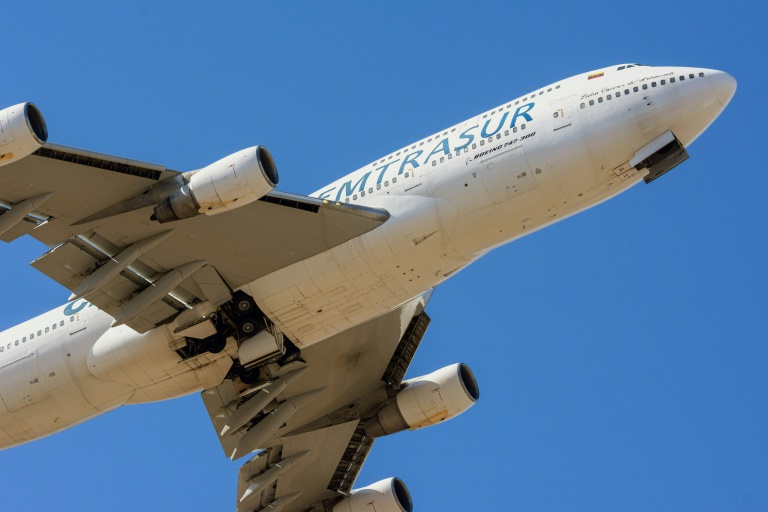
The United States asked Argentina Tuesday to seize a Venezuelan plane that has been grounded in Buenos Aires since June after an Iranian airline allegedly violated Washington sanctions by selling it to Caracas.

The Boeing 747 cargo plane, owned by the Venezuelan company Emtrasur, has been stuck with its 19 crew members at a Buenos Aires airport since it arrived on June 8 from Mexico with a shipment of auto parts, after having tried unsuccessfully to enter Uruguay. 

The crew is made up of five Iranians and 14 Venezuelans. On July 19, a US court in the District of Columbia issued an order to seize the plane on the grounds that US “export control laws” were violated. 

The court alleged an “unauthorized transfer” from Mahan Air — an airline affiliated with the Iran’s Islamic Revolutionary Guard Corps Quds Force (IRGC-QF), which Washington considers a terrorist organization and has sanctioned — to Emtrasur, a subsidiary of the Venezuelan company Conviasa, which is also under sanctions from the US Treasury.

“The Department of Justice will not tolerate transactions that violate our sanctions and export laws,” said Assistant Attorney General Matthew Olsen in a statement. 

“We will aggressively seek to prevent sanctioned entities from gaining access to America-made items or profiting from their illegal transfer,” added another US attorney, Matthew Graves.

In 2008, the US Department of Commerce issued an order prohibiting Mahan Air from engaging in transactions involving products exported from the United States.

“As alleged in the seizure warrant, in or around October 2021, Mahan Air violated the Temporary Denial Order and US export control laws when it transferred custody and control of the Boeing aircraft to EMTRASUR without US Government authorization,” the Justice Department said in a statement.

The statement came a day after a judge in Argentina said that 12 of the crew members from the grounded plane could leave the country, although four Iranians — including one suspected of being an IRGC member — and three Venezuelans were ordered to stay. 

China's Pelosi bombast shows insecurity over Taiwan: analysts

China’s tough rhetoric around US House Speaker Nancy Pelosi’s visit to Taiwan reveals deep insecurity about Washington’s shifting stance towards the island, analysts told AFP, as well as efforts to distract from economic woes at home.

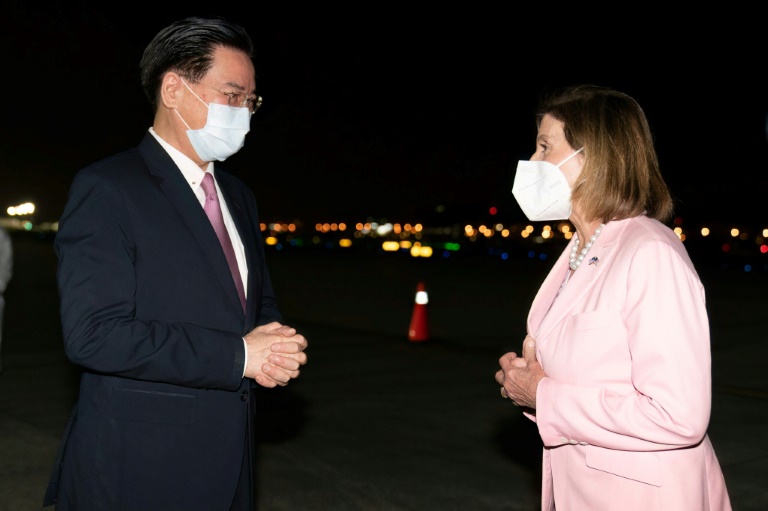
The 82-year-old lawmaker landed in Taipei late Tuesday night — becoming the highest-profile American official to set foot there in 25 years. 

But for days before the military plane carrying her landed at Songshan Airport, Beijing wielded increasingly bellicose language, issuing threats of “consequences” and making demonstrations of military force.

China held live-fire drills across the strait from Taiwan over the weekend, while Hu Xijin, former editor-in-chief of nationalist tabloid Global Times, suggested that Beijing could “forcibly dispel Pelosi’s plane” or even “shoot them down”.

But analysts told AFP that beneath the bombast there is insecurity, with China’s rulers threatened by what they perceive as increasing efforts by the US and Western allies to foster relationships with Taiwan and encourage the island’s independence.

At the same time, Chinese President Xi Jinping is anxious to project strength against the United States — its greatest military and economic rival — ahead of a key political meeting expected to secure him an unprecedented third term. 

– Show of strength –

Last week, Xi warned his US counterpart Joe Biden in a call that the United States shouldn’t “play with fire” when it comes to Taiwan. 

The aggressive message serves to reinforce the Chinese leader’s domestic image ahead of his expected political coronation at the 20th Party Congress this autumn, said Steve Tsang, director of the SOAS China Institute in London. 

“As a strongman leader, the last thing he would want to show is any sign of weakness,” Tsang told AFP.

Drumming up nationalist sentiment also serves to distract from China’s slowing economy and growing public impatience with Beijing’s harsh zero-Covid restrictions that have dampened the mood in what would have been a jubilant year for Xi.

“For the Chinese communist party, there are two pillars of legitimacy — economic growth and nationalism,” Willy Lam, a Hong Kong-based Chinese politics analyst, told AFP.

Headlines and aggressive messaging on Taiwan have been “diverting the attention of the Chinese public away from economic problems”, he said. 

– Dire strait –

There are also deep-rooted frustrations in Beijing over Washington’s shifting attitudes toward Taiwan. 

China considers the self-ruled, democratic island as its territory and has vowed to one day reclaim it, by force if necessary.

Beijing’s sabre-rattling stems in large part from a perception that the United States’ engagement with Taiwan has become more proactive and threatening to the mainland’s interests in recent years, said Li Mingjiang, associate professor of international relations at Singapore’s Nanyang Technological University.

Since the Trump administration, some in Beijing believe Washington appears to have become increasingly “supportive of Taiwan independence”, Li told AFP.

Chinese diplomats have complained that the United States is no longer honouring what it claims is a binding tenet of bilateral relations, the “One China” policy, pointing to arms deals between Washington and Taipei. 

Visits to Taiwan by politicians from regional neighbours as well as Europe and the US have also increased. 

Xi is “getting very impatient and irritated by the fact that in the past year senior leaders… not just from the US but from Japan, the EU and so forth have been visiting Taiwan,” Lam, the Hong Kong-based analyst, said.

At the same time, there is a greater sense of distinctive Taiwanese identity among the younger generation. 

Combined with the ruling Democratic Progressive Party’s pro-independence agenda, this means that to Beijing’s elite “the whole Taiwan issue does not really look positive,” Li said.

Chinese leaders are turning to fiery rhetoric to “discourage the development of cross-strait relations and US-Taiwan relations from becoming even more challenging for mainland China,” he said.

– ‘The last thing Xi wants’ –

Despite all its aggressive posturing, few believe Beijing wants an active military conflict against the United States and its allies over Taiwan — just yet.

“The last thing Xi wants is an accidental war ignited,” Titus Chen, an associate professor of political science at the National Sun Yat-Sen University in Taiwan, said.

Multiple scholars noted that Beijing’s military capabilities still lag behind Washington’s, and told AFP that recent military drills, while clearly intended to be intimidating, fell short of targeting areas immediately adjacent to the Taiwanese coast.

“Xi’s Plan B would be to explain away, via (Chinese Communist Party) propaganda and thought control system, the sense of embarrassment or humiliation that Pelosi’s Taiwan visit brings to Beijing,” Chen said.

Sinkhole larger than tennis court has Chile perplexed

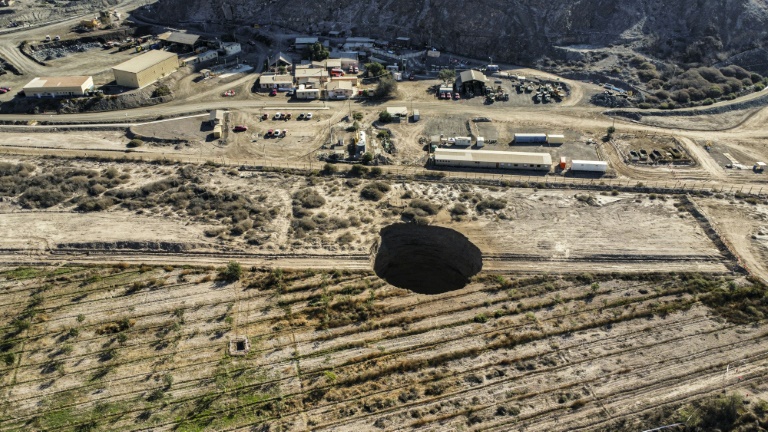
Experts in Chile on Tuesday were investigating the appearance of an enormous sinkhole, bigger than a tennis court, that has appeared near a copper mine in the Atacama desert.

Experts were dispatched to examine the hole, some 32 meters (104 feet) across and twice as deep, which appeared in an area about 800 kilometers (nearly 500 miles) north of Santiago over the weekend, the National Geology and Mining Service (Sernageomin) said in a statement.

A 100-meter security perimeter has been erected around the hole in the Tierra Amarilla municipality, near the Alcaparrosa mine operated by Canadian firm Lundin Mining.

The company said in a statement there had been “no impact to personnel, equipment or infrastructure,” and the sinkhole has remained stable since its detection.

As a preventive measure, “development work in an area of the Alcaparrosa underground mine has been temporarily suspended,” the company said.

Sernageomin director David Montenegro said experts would seek to determine the cause of the collapse and “ensure that all safety measures are taken to safeguard the lives of workers and communities close to the site.”

Cristian Zuniga, mayor of the Tierra Amarilla municipality of some 13,000 inhabitants, told journalists the sinkhole was unprecedented.

“We ask that the cause be clarified: whether the collapse is the product of mining activity or something else,” he said.

Chile is the world’s largest copper producer, responsible for a quarter of global supply.

Airbnb reports soaring revenue as travel rebounds

Airbnb said Tuesday revenue in the recently ended quarter topped $2 billion as people shook off pandemic worries and took part in a banner travel season.

The home rental platform logged a net income of $379 million in what it touted as the most profitable second quarter in its history.

As a sign of confidence in its future, the San Francisco-based company announced it will devote $2 billion to buying back shares.

“During the height of the pandemic, we made many difficult choices to reduce our spending, making us a leaner and more focused company,” the company said in a letter to investors.

“Airbnb is well positioned for whatever lies ahead.”

More than 103 million nights and travel “experiences” arranged by Airbnb were booked during the quarter, setting a new high, despite inflation and other broad economic woes, the company reported.

The $2.1 billion in revenue taken in during the quarter was 58 percent higher than the same period a year earlier.

“We are in the midst of our strongest peak travel season yet,” Airbnb said in the letter.

“On July 4th, we recorded our highest single day revenue ever, signaling the strong summer season ahead.”

Airbnb expects to set a new revenue record in the current quarter, bringing in between $2.78 billion and $2.88 billion.

“We have nearly every type of space in nearly every location, so however travel changes, we are able to adapt,” Airbnb said.

“Regardless of the economic environment, our guests come to Airbnb because they can find great value, and our hosts can earn extra income.”

The optimism came despite Airbnb shutting down its business in China early this year as pandemic lockdowns show no sign of ending there.

Airbnb in July stopped booking stays or visitor “experiences” in China, focusing instead on helping people there with travel plans outside the country, the company said in an earnings report.

“We made this difficult decision based on the costly and complex challenges of operating in the country, exacerbated by the severe Covid lockdowns,” Airbnb said.

“We continue to expect Asia Pacific, including outbound travel from China, to represent a significant growth opportunity for Airbnb over the long term.”

Airbnb launched its business in China six years ago, and has booked stays there for some 25 million guests. Bookings at residences in China have accounted for only one percent of Airbnb reservations in recent years, the company has reported.

Airbnb faced strong competition in China.

Close Bitnami banner
Bitnami