World

Markets drop over China-US tensions

Asian and European stock markets fell Tuesday as investors dumped risky equities on spiking US-China tensions over a possible visit by House Speaker Nancy Pelosi to Taiwan.

“Tensions ramped up on reports that Pelosi is due to visit Taiwan later this evening,” noted CMC Markets analyst Michael Hewson.

Traders were already skittish after a string of data showed economies beginning to take a hit from surging inflation and central bank interest rate hikes aimed at taming prices.

A possible meeting between Pelosi and Taiwanese President Tsai Ing-wen is sure to anger Beijing, which views the island as its territory and has said the White House was playing “with fire”.

While observers do not think the move will spark a conflict, US officials said China was preparing possible military provocations that could include firing missiles in the Taiwan Strait or “large-scale” incursions into Taiwan’s airspace.

Heightened tensions between the world’s two superpowers have sent shivers through trading floors, compounding worries that Russia’s invasion of Ukraine could escalate into a wider war.

– Investors ‘very nervous’ –

“We’re seeing more risk aversion as Nancy Pelosi’s trip to Taiwan generates numerous unsettling headlines at a time of strained ties between the US and China,” said OANDA analyst Craig Erlam.

“Pelosi’s proposed visit has been met with numerous threats from Beijing including an unspecified military response.

“They have continued this morning, hours ahead of the apparent arrival which is clearly making investors very nervous.”

Reports of the visit hit US stocks, with all three main indexes reversing an early rally to end in negative territory.

And Asia followed suit, though some markets recovered as the day wore on.

Hong Kong and Shanghai led losses, shedding more than two percent, while Taipei was off more than one percent along with Tokyo.

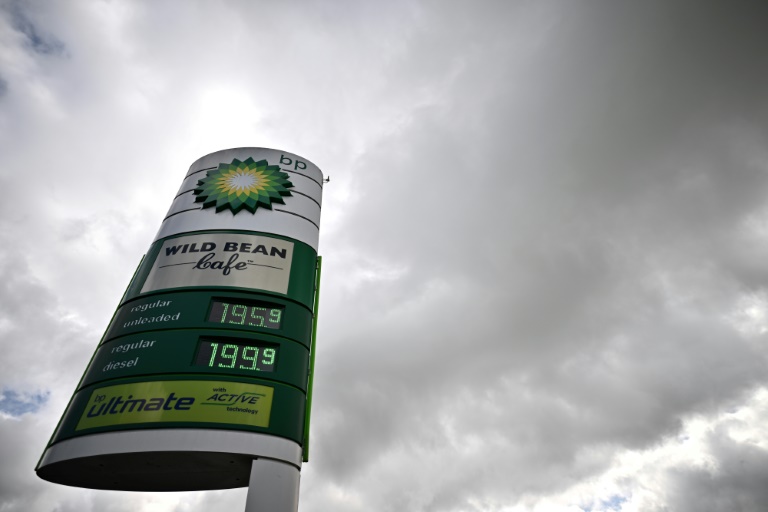
In Europe, Frankfurt fell 0.8 percent and Paris shed 0.6 percent, while London dipped just 0.2 percent with losses tempered partly by news of oil giant BP’s soaring profits.

The safe-haven yen jumped to a two-month high against the dollar.

The Taiwan dollar meanwhile sank to its lowest since April 2020 before bouncing back.

The flare-up in tensions comes less than a week after US President Joe Biden and Xi Jinping held phone talks during which the Chinese leader warned the United States not to “play with fire”.

The market selloff comes as investors try to assess the outlook for the global economy as leaders try to bring down sky-high inflation by lifting rates while at the same time maintaining growth.

Oil prices extended Monday’s steep losses that were fuelled by falling demand expectations.

– Key figures at around 1000 GMT –

London – FTSE 100: DOWN 0.2 percent at 7,401.35 points

Frankfurt – DAX: DOWN 0.8 percent at 13,377.70

Paris – CAC 40: DOWN 0.6 at 6,398.54

EURO STOXX 50: DOWN 0.7 percent at 3,680.56

Tokyo – Nikkei 225: DOWN 1.4 percent at 27,594.73 (close)

Hong Kong – Hang Seng Index: DOWN 2.4 percent at 19,689.21 (close)

Shanghai – Composite: DOWN 2.3 percent at 3,186.27 (close)

Taipei – TAIEX: DOWN 1.6 percent at 14,747.23 (close)

New York – Dow: DOWN 0.1 percent at 32,798.40 (close)

Dollar/yen: DOWN at 130.88 yen from 131.61 yen Monday

Euro/dollar: DOWN at $1.0234 from $1.0262

Pound/dollar: DOWN at $1.2214 from $1.2255

Euro/pound: UP at 83.80 pence from 83.70 pence

Brent North Sea crude: DOWN 1.1 percent at $98.98 per barrel

West Texas Intermediate: DOWN 0.5 percent at $93.40 per barrel

burs/rfj/lth
First Ukrainian grain shipment since invasion heads to Istanbul

The first shipment of grain to leave Ukraine under a deal to ease Russia’s naval blockade was expected in Istanbul “after midnight,” as Kyiv said Tuesday it had begun mandatory evacuations from the war-torn Donetsk region.

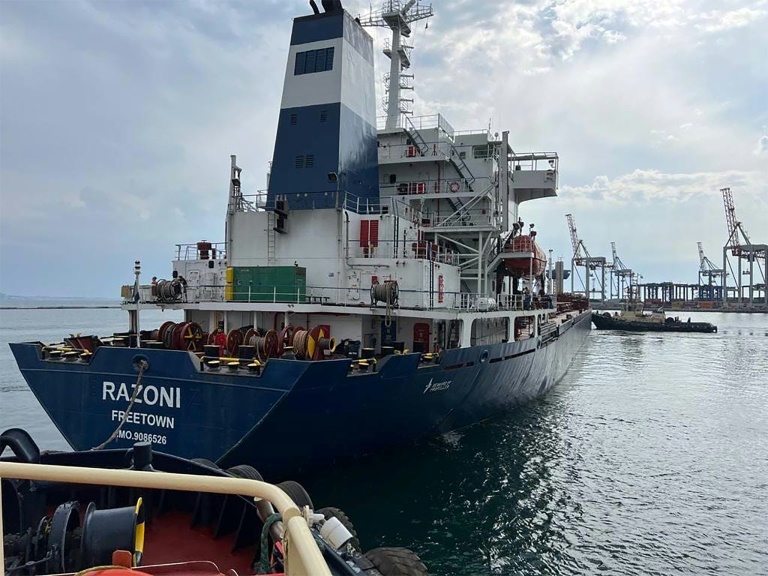
The Sierra Leone-registered ship, Razoni, set sail from Odessa port for Lebanon Monday under an accord brokered by Turkey and the United Nations that it is hoped will get millions of tonnes of trapped Ukrainian produce to world markets and curb a global food crisis. 

Turkish officials said it would arrive in Istanbul “after midnight”. 

The ship had cautiously made its way through a specially cleared corridor in the mine-infested waters of the Black Sea. 

The Marine Traffic website showed the vessel — which is carrying 26,000 tonnes of maize — off the coast of Bulgaria by 0900 GMT. 

It will be inspected by a special coordination centre involving representatives of Ukraine, Russia, Turkey and the UN at sea in the mouth of the Bosphorus before being allowed to progress.

The five-month halt of deliveries from Ukraine — one of the world’s biggest grain exporters — has contributed to soaring food prices, hitting the world’s poorest nations especially hard.

Kyiv says at least 16 more grain ships are waiting to depart but President Volodymyr Zelensky cautioned it was too early to celebrate.

“Let’s wait and see how the agreement works and whether security will be really guaranteed,” Zelensky said in a video address late Monday. 

The breakthrough pact signed in July was the first significant accord involving Ukraine and Russia since Moscow invaded its neighbour on February 24.

– Donetsk evacuations –

Yet Russia has continued to pound cities and towns across Ukraine’s sprawling front line.

Kyiv said it had started mandatory evacuations from the eastern region of Donetsk bearing the brunt of the Russian offensive after Zelensky urged the estimated 200,000 remaining residents to leave. 

Ukrainian Deputy Prime Minister Iryna Vershchuk said a train carrying “women, children, elderly people, many people with reduced mobility” arrived in the central city of Kropyvnytskyi on Tuesday morning.

Officials have said they want to get residents out of the battered region before the start of winter as gas pipes for heating have been severed.

In the south of the country, the head of Ukraine’s Kryviy Rig military administration said Russian shelling had killed two civilians in a minibus trying to leave the Moscow-controlled Kherson region.

Oleksander Vilkul said two other passengers were in serious condition in hospital with burns. 

The mayor of the city of Mykolaiv, the closest to where Ukrainian forces are looking to launch a counter-offensive in Kherson, said Russian strikes had damaged a university dormitory. 

– More Western arms –

He said in a briefing that 403 people had been killed in his region since the invasion but that a looming Ukraine counter-offensive for the neighbouring Kherson region “will result in a decrease of shelling”.

Ukraine was bolstered by more supplies of Western arms — particularly long-range artillery — as it looks launch a major push in the south to retake Kherson.

The United States announced a new tranche of weapons worth $550 million for Ukraine’s forces, including ammunition for increasingly important rocket launchers and artillery guns.

“Our artillerymen are ready to turn night into day to expel the Russian invaders,” Ukraine’s Defence Minister Oleksiy Reznikov said.

On the diplomatic front, Washington, London and Paris used a review of a key United Nations nuclear treaty to rebuke Moscow for “irresponsible and dangerous” talk about possibly deploying nuclear weapons.

Russian President Vladimir Putin rebuffed the accusation, telling the Tenth Nuclear Proliferation Treaty Review Conference there could be “no winners” in a nuclear war and it should “never be unleashed”.

The Kremlin nevertheless accused Britain, one of Kyiv’s most vocal supporters, of deliberately worsening relations between Russia and the West.

It blacklisted 39 British citizens, including Labour Party leader Keir Starmer and former prime minister David Cameron, saying they “contribute to the hostile course of London, aimed at the demonisation of our country and its international isolation”.

Two dead in California's largest wildfire this year

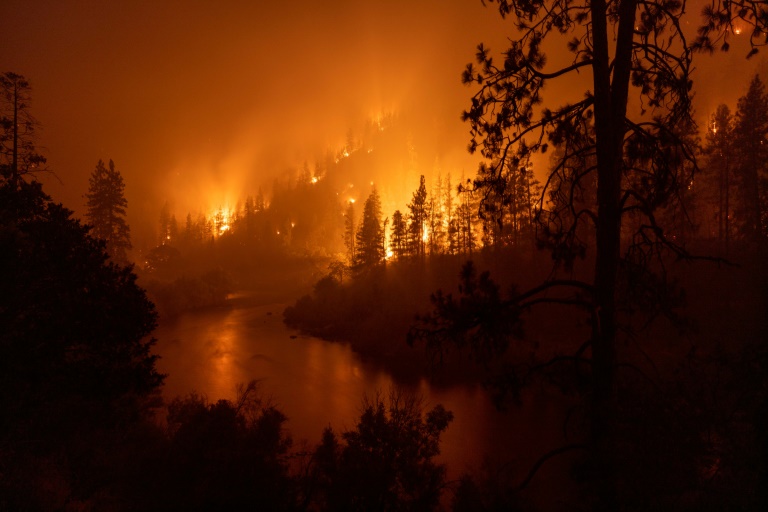
Firefighters faced “extremely dangerous” conditions Monday as they battled to save a community of 8,000 residents, with lightning strikes threatening to worsen a blaze that has already killed at least two people and become California’s biggest fire of the year.

Hundreds of personnel were involved in the fight against the fast-moving McKinney Fire, which has torn through more than 55,000 acres (22,000 hectares) near the border with Oregon, forcing thousands from their homes.

The National Weather Service meanwhile issued a warning because of the threat of dry lightning — powerful electrical strikes that come without any of the desperately needed rain.

“These conditions can be extremely dangerous for firefighters, as winds can be erratic and extremely strong, causing fire to spread in any direction,” said CalFire, an interagency website that collates fire information.

California, along with much of the western United States, is in the grip of its worst drought in more than 1,000 years.

The drought, exacerbated by man-made climate change, has left the countryside parched and exceedingly vulnerable to the wildfires that naturally break out, making the blazes hotter, faster and more destructive.

The McKinney Fire on Sunday claimed its first human lives, with the Siskiyou County Sheriff’s Office saying firefighters found two people dead inside a burned-out car in the driveway of a home in the town of Klamath River.

Sheriff Jeremiah LaRue said the pair were likely caught in the swift-moving blaze as they tried to flee.

California Governor Gavin Newsom has declared a state of emergency in Siskiyou County, and more than 2,000 residents of the rural area are under evacuation orders.

“I’m holding out trying not to leave too soon because I’m helping out my mom. She’s not in the best physical health to get around,” Rafael Franco, a resident who is in the mandatory evacuation area, told AFP.

“At the last minute if I see the fire cross the ridge where we are, we are going to head out and grab what we can and get going and hope for the best.”

Marjie Lawrence, who fled Klamath River on Friday night, said she went back to retrieve some belongings in case the fire spread to her home. 

“We are taking stuff in case the house goes, we are taking things we want, but not too many,” she said.

– Complicated firefight –

A heat wave with temperatures of over 100 degrees Fahrenheit (38 degrees Celsius), tinder-dry terrain and thunderstorms packing strong winds are complicating the efforts of firefighters battling the blaze.

“Fire growth is expected to spread in all directions,” the Klamath National Forest service said in a statement. 

“Warning for thunderstorms and lightning. Gusty outflow winds of 30 to 50 mph (50 to 80 kph) will be possible near thunderstorm cells.”

According to the Siskiyou County Sheriff’s Office, the fire has destroyed more than 100 structures — including homes, a grocery store and a community center — in the area surrounding Yreka, though it has not yet encroached upon the town of about 7,800 people.

“Surrounding areas should be ready to leave if needed. Please don’t hesitate to evacuate,” the county sheriff tweeted.

The McKinney fire is California’s largest wildfire so far this year — though it remains much smaller than last year’s Dixie Fire, which burned nearly one million acres.

– Animal rescue –

An AFP journalist working in the fire area captured a photograph of a kitten with singed whiskers cowering in between rocks in the Klamath National Forest.

As the picture ricocheted around the internet, users asked for updates, with one seemingly offering to look after the animal.

“Do you know if this kitten has been cared for and adopted at this point?” tweeted @bobbiescat.

Another journalist shared footage of a young puppy gratefully lapping at a bowl of water after emerging from the ashen ruins of a home in Klamath River.

Rescue Ranch Yreka, which took in the stricken pup, said it had received nearly 140 dogs in less than two days, and appealed for donations to help feed and care for them.

The fast-spreading blaze comes just days after the Oak Fire near Yosemite National Park destroyed dozens of buildings and forced thousands to evacuate.

California still has months of fire season ahead of it.

Other parts of the world have also faced intense wildfires this year, as scientists say climate change is making heatwaves more frequent and more intense, increasing the risk of fires.

Two dead in California's largest wildfire this year

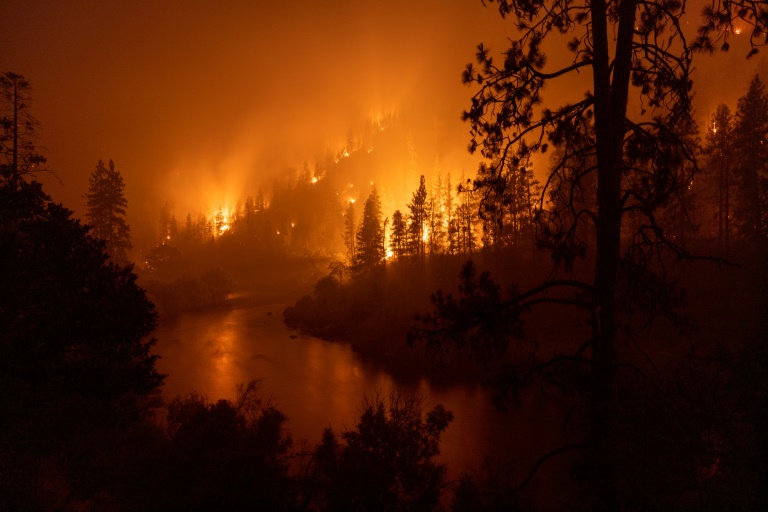
Firefighters faced “extremely dangerous” conditions Monday as they battled to save a community of 8,000 residents, with lightning strikes threatening to worsen a blaze that has already killed at least two people and become California’s biggest fire of the year.

Hundreds of personnel were involved in the fight against the fast-moving McKinney Fire, which has torn through more than 55,000 acres (22,000 hectares) near the border with Oregon, forcing thousands from their homes.

The National Weather Service meanwhile issued a warning because of the threat of dry lightning — powerful electrical strikes that come without any of the desperately needed rain.

“These conditions can be extremely dangerous for firefighters, as winds can be erratic and extremely strong, causing fire to spread in any direction,” said CalFire, an interagency website that collates fire information.

California, along with much of the western United States, is in the grip of its worst drought in more than 1,000 years.

The drought, exacerbated by man-made climate change, has left the countryside parched and exceedingly vulnerable to the wildfires that naturally break out, making the blazes hotter, faster and more destructive.

The McKinney Fire on Sunday claimed its first human lives, with the Siskiyou County Sheriff’s Office saying firefighters found two people dead inside a burned-out car in the driveway of a home in the town of Klamath River.

Sheriff Jeremiah LaRue said the pair were likely caught in the swift-moving blaze as they tried to flee.

California Governor Gavin Newsom has declared a state of emergency in Siskiyou County, and more than 2,000 residents of the rural area are under evacuation orders.

“I’m holding out trying not to leave too soon because I’m helping out my mom. She’s not in the best physical health to get around,” Rafael Franco, a resident who is in the mandatory evacuation area, told AFP.

“At the last minute if I see the fire cross the ridge where we are, we are going to head out and grab what we can and get going and hope for the best.”

Marjie Lawrence, who fled Klamath River on Friday night, said she went back to retrieve some belongings in case the fire spread to her home. 

“We are taking stuff in case the house goes, we are taking things we want, but not too many,” she said.

– Complicated firefight –

A heat wave with temperatures of over 100 degrees Fahrenheit (38 degrees Celsius), tinder-dry terrain and thunderstorms packing strong winds are complicating the efforts of firefighters battling the blaze.

“Fire growth is expected to spread in all directions,” the Klamath National Forest service said in a statement. 

“Warning for thunderstorms and lightning. Gusty outflow winds of 30 to 50 mph (50 to 80 kph) will be possible near thunderstorm cells.”

According to the Siskiyou County Sheriff’s Office, the fire has destroyed more than 100 structures — including homes, a grocery store and a community center — in the area surrounding Yreka, though it has not yet encroached upon the town of about 7,800 people.

“Surrounding areas should be ready to leave if needed. Please don’t hesitate to evacuate,” the county sheriff tweeted.

The McKinney fire is California’s largest wildfire so far this year — though it remains much smaller than last year’s Dixie Fire, which burned nearly one million acres.

– Animal rescue –

An AFP journalist working in the fire area captured a photograph of a kitten with singed whiskers cowering in between rocks in the Klamath National Forest.

As the picture ricocheted around the internet, users asked for updates, with one seemingly offering to look after the animal.

“Do you know if this kitten has been cared for and adopted at this point?” tweeted @bobbiescat.

Another journalist shared footage of a young puppy gratefully lapping at a bowl of water after emerging from the ashen ruins of a home in Klamath River.

Rescue Ranch Yreka, which took in the stricken pup, said it had received nearly 140 dogs in less than two days, and appealed for donations to help feed and care for them.

The fast-spreading blaze comes just days after the Oak Fire near Yosemite National Park destroyed dozens of buildings and forced thousands to evacuate.

California still has months of fire season ahead of it.

Other parts of the world have also faced intense wildfires this year, as scientists say climate change is making heatwaves more frequent and more intense, increasing the risk of fires.

Pakistan election commission says Imran Khan's party accepted illegal donations

Pakistan’s ex-premier Imran Khan’s party accepted millions of dollars in illegal funds from foreign individuals and groups, the election commission ruled Tuesday. 

The case dates back to 2014 when a disgruntled founding member of Pakistan Tehreek-e-Insaf (PTI) filed a case against his party leadership accusing it of financial irregularities.

The Election Commission Pakistan found that Khan’s party concealed 16 bank accounts and accepted donations from foreigners or foreign groups based in Australia, Canada, the UAE and the Cayman Islands.

Pakistani law bars political parties from receiving funds and donations from foreign individuals and companies.

The commission also said that financial details submitted by Khan were “found to be grossly inaccurate”.

Pakistan’s Prime Minister Shehbaz Sharif — who came into power in April after Khan’s ouster — said the commission’s verdict showed “yet again that he (Khan) is a certified liar”.

“(The) Nation should ponder over the implications of his politics funded by foreigners,” Sharif said in a tweet Tuesday. 

The party has denied the accusations.

Responding to the decision, senior PTI leader Fawad Chaudhry said the party had taken funds from “overseas Pakistanis”, not foreign nationals.

“Overseas Pakistanis are the backbone of Pakistan’s economy, and we would continue to rely on them for funding,” Chaudhry told reporters.

Cricket star-turned-politician Khan swept into power in 2018 thanks to an electorate weary of the dynastic politics of the country’s two major parties, with the popular former sports star promising to sweep away decades of entrenched corruption and cronyism.

But in April, he was kicked out following a no-confidence vote — brought down in part by his failure to rectify the country’s dire economic situation, including its crippling debt, shrinking foreign currency reserves and soaring inflation. 

He also reportedly fell out with the country’s powerful military.

Khan has since staged a series of rallies, touting a claim he was pushed out of office in a “foreign conspiracy” and heaping pressure on a coalition of former opposition parties now in power.

PTI has been sent a notice to explain the prohibited funds, or it can challenge the order in court.

The commission meanwhile could pursue confiscating the prohibited funds, while the government could take the case to the Supreme Court to ban Khan’s PTI party.

However, legal expert Osama Malik said: “Politically it would not be an ideal precedent for one group of political parties to ban their rivals.”

The commission is also investigating a foreign funding case against two other major political parties — Sharif’s ruling PML-N and its coalition partner Pakistan Peoples Party (PPP).

Both parties deny the claims. 

Afghans cast doubt on Kabul killing of Al-Qaeda chief

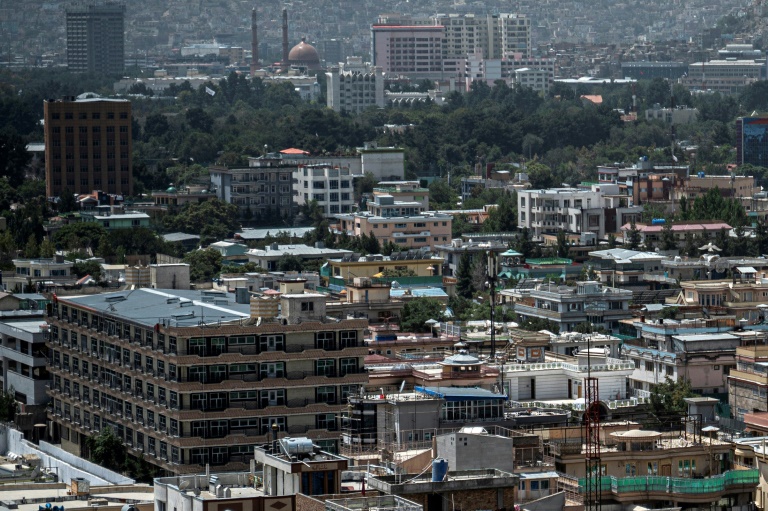
Many Afghans expressed shock or doubt Tuesday that Al-Qaeda’s chief had been killed in Kabul by a US drone strike, saying they couldn’t believe Ayman Al-Zawahiri had been hiding in their midst.

“It’s just propaganda,” Fahim Shah, 66, a resident of the Afghan capital, told AFP.

Late Monday, US President Joe Biden announced Zawahiri’s assassination, saying “justice has been delivered” to the Egyptian with a $25 million bounty on his head.

A senior US official said the 71-year-old was on the balcony of a three-storey house in the upmarket Sherpur neighbourhood when targeted with two Hellfire missiles shortly after dawn Sunday. 

“We have experienced such propaganda in the past and there was never anything in it,” Shah said.

“In reality, I don’t think he was killed here.”

The Taliban admitted earlier Tuesday that the US had carried out a drone strike, but gave no details of casualties — and did not name Zawahiri, who was considered a key plotter of the 9/11 attacks on the United States.

On Sunday, the interior ministry had denied reports of a drone strike, but Taliban spokesman Zabihullah Mujahid said Tuesday that was because an investigation was underway.

Kabul resident Abdul Kabir said he heard the strike Sunday morning, but still called on the United States to prove who was killed.

“They should show to the people and to the world that ‘we had hit this man and here is the evidence’,” Kabir said.

“We think they killed somebody else and announced it was the Al-Qaeda chief… there are many other places he could be hiding — in Pakistan, or even in Iraq.”

The strike is sure to further sour already bitter relations between Washington and the Taliban, which pledged to stop Afghanistan from being a sanctuary for militants as part of the agreement that led to the US troop withdrawal last year.

University student Mohammad Bilal was another who thought it unlikely Zawahiri had been living in Kabul.

“This is a terrorist group and I do not think they will send their leader to Afghanistan,” Bilal said.

“Leaders of most terrorist groups, including the Taliban, were either living in Pakistan or in the United Arab Emirates when they were in conflict with former Afghan forces,” he said.

A straw poll, however, found some believers in the capital.

Kabul housewife Freshta, who asked not to be further identified, said she was shocked to learn of Zawahiri’s killing.

“It’s so uncomfortable to know that he was living here,” she said.

A shopkeeper who also asked not to be named said he too wasn’t surprised.

“Any terrorist group can enter our land, use it and get out easily,” he told AFP.

“We don’t have a good government. We are unable to protect ourselves, our soil and our property.”

Inside the Ukrainian city that said no to occupation

A motorist yells at a cyclist, churchgoers avoid a street hawker, a shellsuited pensioner crams pampushky — a Ukrainian bread — into her face, the falling breadcrumbs causing a pigeon to double-take.

Ignore the rubble everywhere and it could be a jaunty lunchtime vignette in any city in Europe. But Okhtyrka isn’t like other places — certainly not in northeastern Ukraine, anyway.

As towns and villages across the countryside fell like skittles to the ruthless and swift Russian invasion on February 24, this city of 48,000 on the Vorskla River said “No”.

Civilian deaths mounted across the Sumy region in the early weeks of the war, with more than 50 people killed in the battle for the much smaller neighbouring town of Trostyanets.

But Okhtyrka’s mayor Pavlo Kuzmenko says he managed to keep his citizens free and relatively safe by maintaining cool heads. 

“Only 18 civilians have died. I don’t want to praise myself, but it was because of the city administration, because of volunteers, because people stayed in shelters,” he said.

“The biggest challenge at the start of the war was not to have panic among citizens. Panic could ruin the defence of the city.”

A column of Russian tanks rolled into Okhtyrka on the first day of the invasion on February 24, intent on capturing it and moving on to the capital Kyiv.

“They thought they would pass through very quickly,” Kuzmenko told AFP. “As they had in most cities, they put a checkpoint at the entrance and exits, not really leaving anyone in the city.”

– ‘Stomach-turning’ –

The mayor — suddenly thrust to the top of the command structure, with more senior regional government figures either indecisive or unavailable — decided the incursion would not stand.

He led an immediate pushback that saw Ukrainian troops force a hasty retreat of their Russian adversaries, who left behind tanks and other hardware.

A month-long siege followed with the Russians bombarding the city almost daily with BM-27 Uragan missiles as well as Smerch and Grad rockets.

They destroyed the town hall, a shopping centre, the water supply and sewage systems, an oil depot and the local thermal power station.

They also killed at least 70 Ukrainian soldiers at a military base with a powerful thermobaric bomb, according to Ukraine’s ambassador to the United States.

Amnesty International blamed cluster bombs for a “stomach-turning” attack on a pre-school on the second day of the siege in which three people, including a child, were reportedly killed.

But Okhtyrka endured, refusing to live under Russian occupation.

Among the destroyed buildings was the 108-year-old local cultural centre, attacked in a night time bombing on March 8.

The centre’s director Tetyana Barchenko, 59, fought back tears as she relived the missile strike that robbed the community of its beating heart.

But, like many locals AFP spoke to, she brimmed with righteous defiance and gratitude for the soldiers who had kept the would-be occupiers at bay.

“This city was never seized, and it was thanks to the army, thanks to the territorial defence force, and because of the patriotism of the local citizens,” she said.

“I would never see myself living under Russian occupation.”

The Russian invaders had encircled Okhtyrka for a month but fell further back on March 26, under fire from Bayraktar combat drones and with the plan to take Kyiv in disarray.

– ‘Hero City’ –

Two days earlier Ukraine’s president Volodymyr Zelensky, had designated Okhtyrka a “Hero City of Ukraine,” an honorary title awarded only to one other northeastern city, Kharkiv.

The population dipped to 20,000 at the height of the fighting — as the city helped about 1,000 people a day flee — but is now back up to somewhere near the original figure.

At a public housing block that had absorbed so much artillery fire its facade resembled the paper targets at rifle ranges, pensioner Nina Kolot explained the easy symbiosis that had developed between the troops dug-in yards from their homes and the civilians they protected.

“They were here, fighting for the city and we were helping them — cooking food to bring to them,” the 70-year-old told AFP. 

“So it’s thanks to the soldiers — they were everywhere, on the roofs, everywhere — that we were kept safe.” 

A recent increase in shelling has locals fearing that the Russians might soon return but the Mayor Kuzmenko remains defiant.

“Nobody can be even one percent sure that the enemy will not attack the Sumy region again. The possibility exists and is still high,” he told AFP.

“Every day the Sumy region is being hit by missiles, by rockets, but the enemy cannot seize the cities. They can hold some small  localities, some small villages, but they need resources and they have less every day.”

China warns US will 'pay the price' if Pelosi visits Taiwan

China said Tuesday that the United States will “pay the price” if House Speaker Nancy Pelosi visits Taiwan during her Asia trip.

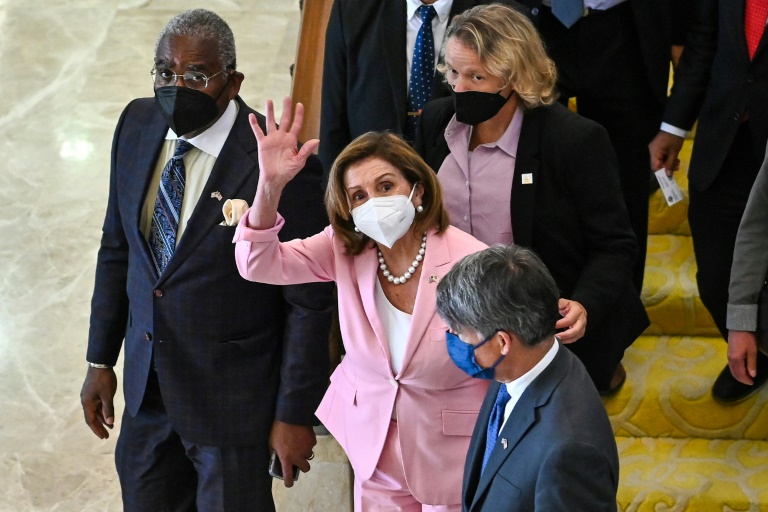
Pelosi was in Malaysia, the second stop in a tour that has sparked rage in Beijing after reports of a potential Taipei visit.

China considers Taiwan its territory and has indicated through repeated warnings that it would view a Pelosi visit as a major provocation.

“The US side will bear the responsibility and pay the price for undermining China’s sovereign security interests,” foreign ministry spokeswoman Hua Chunying said at a regular press briefing in Beijing.

American officials often make discreet visits to Taiwan to show support, but Pelosi would be a higher-profile visitor than any in recent history.

Reports of her plans have sent US-China tensions soaring.

In a call with US President Joe Biden last week, Chinese President Xi Jinping warned the United States against “playing with fire” on Taiwan.

And China’s ambassador to the United Nations, Zhang Hun, said Monday that such a visit would be “very much dangerous, very much provocative”.

While the Biden administration is understood to be opposed to a Taiwan stop, White House National Security Council spokesman John Kirby said Pelosi was entitled to go where she pleased.

“The speaker has the right to visit Taiwan,” he told reporters on Monday.

“There is no reason for Beijing to turn a potential visit consistent with longstanding US policies into some sort of crisis.”

Kirby cited intelligence that China was preparing possible military provocations.

He said Pelosi was travelling on a military aircraft and that while Washington did not fear a direct attack, it “raises the stakes of a miscalculation”.

Kirby reiterated, however, that US policy was unchanged toward Taiwan.

This means support for its self-ruling government, while diplomatically recognising Beijing over Taipei and opposing a formal independence declaration by Taiwan or a forceful takeover by China.

Meanwhile, Russia on Tuesday backed its ally China on the issue.

“Washington is bringing destabilisation to the world,” Russian foreign ministry spokeswoman Maria Zakharova said on social media.

China has refused to condemn Russia’s invasion of Ukraine and has been accused of providing diplomatic cover for the Kremlin by blasting Western sanctions and arms sales to Kyiv.

– All eyes on Taiwan –

Pelosi arrived in Kuala Lumpur on Tuesday where she met Malaysian Prime Minister Ismail Sabri and Foreign Minister Saifuddin Abdullah.

“We engaged in wide-ranging discussion on advancing our shared goals for a free and secure Indo-Pacific,” Pelosi said in a statement, using another term for the Asia-Pacific region.

AFP journalists saw Pelosi coming out of a hotel in the Malaysian capital and entering an SUV. Her motorcade then departed under heavy security.

After Singapore and Malaysia, her itinerary includes stops in South Korea and Japan — but the prospect of a Taiwan trip has dominated attention.

Taipei has remained silent on the prospect of a Pelosi visit.

Premier Su Tseng-chang did not confirm the visit on Tuesday when asked by reporters, but thanked Pelosi for her support.

Multiple Taiwanese media outlets carried comments from deputy parliament speaker Tsai Chi-chang saying Pelosi was “very likely” to visit in the coming days.

And the Liberty Times newspaper cited unnamed sources as saying she would land Tuesday night, then meet President Tsai Ing-wen the next day before departing in the afternoon.

Taiwan’s 23 million people have long lived with the possibility of an invasion, but the threat has intensified under Xi.

The island’s military on Tuesday said it was “determined” to defend it against increased threats by China over the potential Pelosi visit.

“The probability of war or a serious incident is low,” tweeted Bonnie Glaser, director of the Asia programme at the US-based German Marshall Fund think tank.

“But the probability that… (China) will take a series of military, economic, and diplomatic actions to show strength & resolve is not insignificant,” she added.

“Likely it will seek to punish Taiwan in myriad ways.”

ehl-pl-aw-qan/leg

Hong Kong bans eating at annual food expo

Visitors to Hong Kong’s annual exhibition of global gourmet food will once again not be allowed to sample the delicacies due to coronavirus curbs, the organiser said Tuesday.

Tens of thousands of visitors and hundreds of exhibitors are expected at the five-day Food Expo starting next Thursday in the city’s Convention and Exhibition Centre.

But for the second year in a row, there will not be any tasting areas and all attendees must keep their masks on due to public health restrictions, according to Sophia Chong, acting CEO of the expo organiser, the Trade Development Council.

“We understand that visitors would like to taste the samples,” Chong said.

“We hope we can resume this arrangement after the pandemic, when it’s safe and hygienic to do it.” 

The decision was announced a day after the government said fans at November’s Hong Kong Sevens will be allowed to drink but not eat in the stands, with masks having to be worn between sips. 

Chong said they were not concerned by the measures’ impacts on the exhibition as it would be the second year of the tasting ban. 

“The number of exhibitors participating in this year’s Food Expo actually exceeded that of last year,” Chong said. 

A new round of HK$2,000 ($255) consumption vouchers will be distributed to most of the 7.5 million Hong Kong residents from Sunday, which is expected by the expo organiser to boost visitors’ appetites for shopping. 

Hong Kong has been strictly adhering to China’s zero-Covid policy, enforcing some of the world’s most severe restrictions for more than two years, including mandatory quarantine for overseas arrivals and a ban on group gatherings of more than four people in public places. 

In recent weeks, the city has been recording 3-4,000 daily infections, prompting fears of a resurgence after more than 1.2 million residents fell sick and 9,300 died in the first four months of this year.  

BP profit triples to $9.3 bn on soaring energy prices

British oil giant BP rebounded to second-quarter profit on soaring energy prices, it said Tuesday, after a big loss linked to its Russia exit following Moscow’s invasion of Ukraine.

Net profit hit $9.3 billion in the three months to June — a threefold increase from the same period last year, the company said in a results statement.

And it contrasted sharply with a $20.4-billion loss after tax in the first quarter, when it took a vast writedown after its decision to leave Russia.

BP is the latest energy major to post bumper second-quarter earnings as oil and gas prices have surged in the wake of key producer Russia’s invasion of Ukraine.

Prices also spiked after countries lifted Covid pandemic lockdowns, spurring global energy demand. 

British rival Shell revealed last week a fivefold surge in net profit to $18 billion while France’s TotalEnergies raked in nearly $6 billion.

US majors ExxonMobil and Chevron last week logged record profits for the same period.

Turning to the third-quarter outlook, BP forecast Tuesday that oil prices will “remain elevated … due to ongoing disruption to Russian supply, reduced levels of spare capacity and with inventory levels significantly below the five-year average”.

It warned gas prices will also remain “elevated and volatile” as Russia also squeezes European supplies in retaliation for Western sanctions over the assault on Ukraine.

The gas outlook was “heavily dependent on Russian pipeline flows or other supply disruptions”, BP added.

The group’s share price jumped about four percent in London trade, as investors welcomed news of a dividend hike and a $3.5-billion stock buyback.

Revenues were catapulted 86 percent to almost $68 billion from a year earlier.

– Windfall tax pleas –

At the same time, BP posted a net loss of $11.1 billion for the first half of 2022.

That was sparked by a colossal first-quarter charge of $24.4 billion, linked to a decision to exit its 19.75-percent stake in Russian energy group Rosneft as well as its other activities in the country.

That wiped out the overall benefit of high energy prices in the first half.

Gas prices, which skyrocketed in March after Russia launched its invasion of neighbouring Ukraine, surged last week after Moscow curbed crucial deliveries to Europe.

The market remains at its highest level since March after state-run Gazprom suspended gas deliveries to Latvia on Saturday.

Back in Britain, the government in May proposed a temporary windfall tax on BP and its UK rivals including Shell to help ease a cost-of-living crisis.

The proceeds will help to fund a multi-billion-pound support package for consumers hit by surging domestic electricity and gas bills.

UK annual inflation hit a new 40-year high of 9.4 percent in June.

Rocketing Chevron and ExxonMobil earnings also prompted calls for a windfall profits tax on the sector in the United States, which faces the highest inflation in four decades as well.

A similar plea was made by left-wing politicians in France after TotalEnergies published its second-quarter earnings, but President Emmanuel Macron’s government has opposed such a move.

Britain-based campaigners slammed BP on Tuesday over its latest results.

“While households are being plunged into poverty with knock-on-impacts  for the whole economy, fossil fuel companies are laughing all the way to the bank,” said Doug Parr, chief scientist at green campaign group Greenpeace UK.

Close Bitnami banner
Bitnami