World

Markets drop as talk of Pelosi Taiwan trip fans China-US tension

Asian markets mostly fell Tuesday on geopolitical fears after reports that House Speaker Nancy Pelosi would visit Taiwan fanned China-US tensions.

Traders were already skittish after a string of data showed economies beginning to take a hit from surging inflation and central bank interest rate hikes aimed at taming prices.

A possible meeting between Pelosi and Taiwanese President Tsai Ing-wen is sure to anger Beijing, which views the island as its territory and has said the White House was playing “with fire”.

While observers do not think the move will spark a conflict, US officials said China was preparing possible military provocations that could include firing missiles in the Taiwan Strait or “large-scale” incursions into Taiwan’s airspace.

White House National Security Council spokesman John Kirby told reporters there was “no reason for Beijing to turn a potential visit consistent with longstanding US policies into some sort of crisis”.

Still, the spike in tensions between the world’s two superpowers has sent shivers through trading floors, compounding worries that Russia’s invasion of Ukraine could escalate into a wider war.

Reports of the visit hit US stocks, with all three main indexes reversing an early rally to end in negative territory.

And Asia followed suit, though some markets recovered as the day wore on.

Hong Kong and Shanghai led losses, shedding more than two percent, while Taipei was off more than one percent along with Tokyo.

Seoul, Singapore, Mumbai, Bangkok and Jakarta were also well down, though Sydney, Wellington and Manila saw gains.

London was flat in the morning while Paris and Frankfurt fell.

The safe-haven yen jumped to a two-month high against the dollar, and the Taiwan dollar dropped 0.7 percent.

“Risk is mounting,” said Stephen Innes of SPI Asset Management.

“As Pelosi is almost sure to visit Taiwan on Tuesday, now it is in China’s hands to see if the situation escalates,” he said, adding that while “it could be little more than a tempest in a teapot still, international and Taiwan investors are pretty concerned”.

“No party wants a real war, but the risk of mishap or even aggressive war game escalation is real, which could always lead to a tactical mistake.”

The flare-up in tensions comes less than a week after US President Joe Biden and Xi Jinping held phone talks during which the Chinese president warned the United States not to “play with fire”.

However, Ayako Yoshioka, at Wealth Enhancement Group, told Bloomberg Radio the crisis may be another “short-term dislocation” for investors but “it’s always concerning when they do happen”.

The selling on markets comes as investors try to assess the outlook for the global economy as leaders try to bring down inflation by lifting rates while at the same time maintaining growth.

Data this week showed the US economy was in a technical recession, China was being battered by Covid lockdowns and Europe was on the brink of an energy crisis caused by the Ukraine war compounded by its own inflation problems.

Traders will be keeping a close eye Friday on the release of US jobs data, which will give fresh insight into the state of the economy, with a weak reading providing the Fed some room to ease back on its rate hikes.

Oil markets were mixed after Monday’s steep losses that were fuelled by falling demand expectations as economies slow. 

– Key figures at around 0810 GMT –

Tokyo – Nikkei 225: DOWN 1.4 percent at 27,594.73 (close)

Hong Kong – Hang Seng Index: DOWN 2.4 percent at 19,689.21 (close)

Shanghai – Composite: DOWN 2.3 percent at 3,186.27 (close)

Taipei – TAIEX: DOWN 1.6 percent at 14,747.23 (close)

London – FTSE 100: FLAT at 7,414.66

Dollar/yen: DOWN at 130.90 yen from 131.61 yen Monday

Euro/dollar: DOWN at $1.0224 from $1.0262

Pound/dollar: DOWN at $1.2200 from $1.2255 

Euro/pound: UP at 83.81 pence from 83.70 pence

West Texas Intermediate: UP 0.3 percent at $94.15 per barrel

Brent North Sea crude: DOWN 0.1 percent at $99.93 per barrel

New York – Dow: DOWN 0.1 percent at 32,798.40 (close)
US kills Al-Qaeda chief in Afghan drone strike

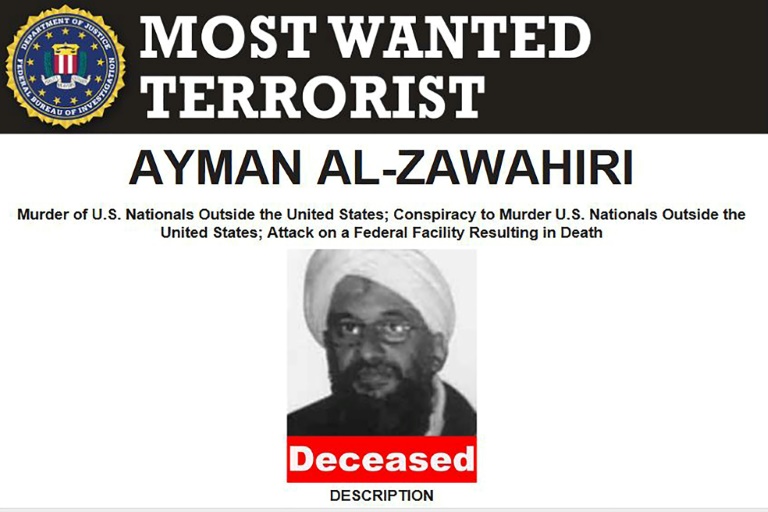
A United States drone strike killed Al-Qaeda chief Ayman al-Zawahiri at a hideout in Kabul, President Joe Biden said Monday, declaring that “justice had been delivered” to the families of the 9/11 attacks.

Zawahiri’s assassination is the biggest blow to Al-Qaeda since US special forces killed Osama bin Laden in 2011, and calls into question the Taliban’s promise not to harbour militant groups.

It was the first known over-the-horizon strike by the US on a target in Afghanistan since Washington withdrew its forces from the country on August 31 last year, days after the Taliban swept back to power.

“Justice has been delivered and this terrorist leader is no more,” Biden said in a sombre televised address, adding he hoped Zawahiri’s death would bring “closure” to families of the 3,000 people killed in the US on September 11, 2001.

Zawahiri was believed to be the mastermind who steered Al-Qaeda’s operations — including the 9/11 attacks — as well as bin Laden’s personal doctor.

A senior administration official said the 71-year-old Egyptian was on the balcony of a three-storey house in the Afghan capital when targeted with two Hellfire missiles after dawn Sunday.

“We identified Zawahiri on multiple occasions for sustained periods of time on the balcony where he was ultimately struck,” the official said. 

The house is in Sherpur, one of Kabul’s most affluent neighbourhoods, with several villas occupied by high-ranking Taliban officials and commanders.

The interior ministry previously denied reports of a drone strike circulating on social media, telling AFP a rocket struck “an empty house” in Kabul, causing no casualties.

Early Tuesday, however, Taliban spokesman Zabihullah Mujahid tweeted that an “aerial attack” was carried out.

“The nature of the incident was not revealed at first,” he said.

“The security and intelligence agencies of the Islamic Emirate investigated the incident and found in their preliminary investigations that the attack was carried out by American drones.”

– ‘Grossly violated’ –

Although Biden did not mention the Taliban in his televised address, Secretary of State Antony Blinken said “by hosting and sheltering” Zawahiri, the Islamist group had “grossly violated the Doha Agreement” which paved the way for America’s withdrawal.

Zabihullah, in turn, accused Washington of breaking the 2020 deal.

“Such actions are a repetition of the failed experiences of the past 20 years and are against the interests of the United States of America, Afghanistan, and the region,” he said.

Zawahiri, who grew up in a comfortable Cairo household before turning to violent radicalism, had been on the run since the 9/11 attacks.

He took over Al-Qaeda after bin Laden was killed, and had a $25 million US bounty on his head.

News of his death comes a month before the first anniversary of the final withdrawal of US troops from Afghanistan, leaving the country in the hands of the Taliban insurgency that fought Western forces for two decades.

Under the Doha deal, the Taliban promised not to allow Afghanistan to be used again as a launchpad for international jihadism, but experts believe the group never broke ties with Al-Qaeda.

“What we know is that the senior Haqqani Taliban were aware of his presence in Kabul,” the senior US official said. 

Afghan Interior Minister Sirajuddin Haqqani also heads the feared Haqqani Network, a brutal subset of the Taliban blamed for some of the worst violence of the past 20 years and which has been described by US officials as a “veritable arm” of Pakistani intelligence.

In Sherpur, locals told AFP they long thought the targeted house  — surrounded by high walls and barbed wire, with green tarpaulin covering the balcony where Zawahiri was believed to have been killed — was empty.

“We have not seen anybody living there for almost a year,” said an employee of a nearby office.

“It has always been in dark, with not a single bulb lit.”

– Doctor turned jihadist –

Zawahiri lacked the potent charisma that helped bin Laden rally jihadists around the world but willingly channelled his analytical skills into the Al-Qaeda cause.

Still, the group is believed to have been degraded since the US invasion of Afghanistan, and the White House official said Zawahiri was “one of the last remaining figures who carried this kind of significance”.

The organisation is “at a crossroads”, said Soufan Center researcher Colin Clarke. 

“Despite Zawahiri’s leadership, which minimised AQ’s losses while rebuilding, the group still faces serious challenges going forward. For one, there’s the question of who will lead Al-Qaeda after Zawahiri’s gone.”

Zawahiri’s father was a renowned physician and his grandfather a prayer leader at Cairo’s Al-Azhar institute, the highest authority for Sunni Muslims.

He became involved with Egypt’s radical Islamist community at a young age and published several books which came for many to symbolise the movement.

He left Egypt in the mid-1980s, heading for Pakistan’s northwestern city of Peshawar where the resistance to the Soviet occupation of Afghanistan was based.

Thousands of Islamist fighters were flooding into Afghanistan at the time, setting the stage for Zawahiri’s first meeting with bin Laden. 

In 1998 he became one of five signatories to bin Laden’s “fatwa” calling for attacks against Americans.

Jihadist monitor SITE said some militants were questioning the veracity of the report he had been killed, while others believed Zawahiri had achieved his desire of “martyrdom.” 

sms-pmh-st-fox/ecl/ssy

Key Hong Kong court ruling to lift lid on national security cases

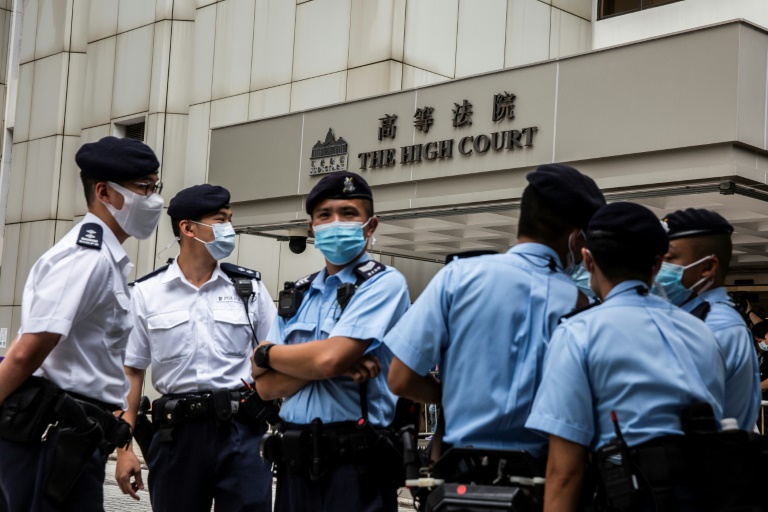
A Hong Kong court delivered a landmark ruling on Tuesday that will help lift the lid on secrecy-shrouded pre-trial hearings held under a national security law.

The security law was imposed by Beijing after huge democracy protests and has largely snuffed out dissent in the city.

About 100 people have been charged under the law with the vast majority denied bail, held for months — some more than a year — in pre-trial detention.

Precedent-setting decisions have been made in lengthy pre-trial hearings but the media have been unable to cover legal arguments because of strict reporting restrictions, even though multiple defendants have asked for them to be lifted. 

On Tuesday, High Court judge Alex Lee ruled that if a defendant asks, the restrictions must be lifted around hearings and proceedings for referring a case to the High Court. 

The magistrate has no right to refuse “to lift the reporting restrictions at the instance of the accused,” Lee wrote in his judgement.

The ruling will set a precedent for other cases and should allow the media to report more details on how the national security law is being applied.

China says the security law was needed to restore stability after huge and sometimes violent democracy protests in 2019.

Critics say it has dealt a blow to Hong Kong’s freedoms and transformed the city’s legal landscape — a bedrock of its business hub reputation.

Tuesday’s successful appeal was brought by Chow Hang-tung, a prominent jailed democracy activist and lawyer.

Chow was also a key organiser of Hong Kong’s annual commemorations of the deadly 1989 Tiananmen Square crackdown, a huge pro-democracy event outlawed since the protests.

Last September, she and two other Tiananmen vigil leaders, Lee Cheuk-yan and Albert Ho, were charged with “incitement to subversion”, which carries up to a decade in jail under the security law.

While members of the public have been allowed to attend pre-trial hearings in the past year, reporting has largely been limited to names, hearing dates and what a judge rules.

Tuesday’s ruling is expected to affect the biggest national security trial currently winding its way through the courts — the prosecution of 47 prominent activists on subversion charges. 

Four defendants in that case recently made an application to remove reporting restrictions. 

The group is charged with subversion for joining a primary election to choose opposition candidates.

The majority have been in custody for over a year and the few granted bail must adhere to strict speech curbs.

Hong Kong authorities say the group tried to topple the government. Those on trial counter they were engaging in legal politics and that their prosecution reveals how far freedoms have faltered in Hong Kong.

Grim fragments of life seep out from Russian-occupied Ukraine

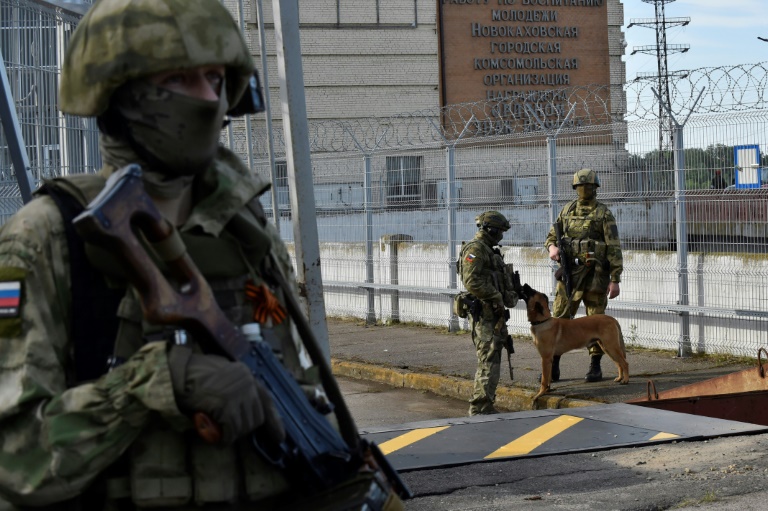
Collapsed social services, financial woes and fear: only brief snippets filter out of the daily reality for Ukrainians in Russian-occupied territory.

Areas seized by Moscow since its invasion in February have been abruptly cut off from the rest of the country and communication with those left behind is often patchy.

Several people living in three regions captured by the Kremlin gave grim accounts of the hardships and poisonous atmosphere of suspicion for those living under Russia’s new rule.

All have had their names changed to protect them from any retribution and AFP was unable to verify their accounts independently.

– Kherson – 

Kherson in southern Ukraine became the first major city to be captured by Russia when it fell to the invading forces in the early days of the war. 

Ukrainian forces are now looking to carry out a major counter-offensive to recapture the strategic region on the Black sea coast.

Oleksandr, 25, is a teacher in a village close to Kherson city: 

“Liberating the city is one thing, but liberating the whole Kherson region is something else. The Russians have built up defensive positions deep behind the front lines,” he told AFP.

“We know it won’t happen now, but still have hope.

“The roads of the region are dotted with numerous checkpoints, and you can always hear bombing raids.

“There are many soldiers in the cities, in Kherson, Nova Kakhovka, many helicopters and planes fly over the area.

“In Kherson itself, it is very depressing. There is no more medicine at all and many elderly people have died because of lack of treatment.

“For the elderly, it’s hell.

“If I had to describe the situation in one word, I would say ‘difficult’. 

“There is a total collapse of public services. The military and the new authorities tell us absolutely nothing, except that they are there forever.

“The ruble is not circulating. Passports are not being issued — nobody wants them anyway.”

Russia has declared the ruble the official currency in the areas it occupies and has started handing out Russian passports.

“Hyrvnias are circulating but there are big problems with cash. 

“We have enough food, although there is very little delivery of humanitarian aid.” 

“Many people are left without work, and often only unskilled labourers are left. 

“People who had money and good jobs in tech or communications left at the beginning. Everything stopped.

“In the first weeks of the occupation, a lot of activists were kidnapped. There were big demonstrations against the occupation, but after a month it stopped, because there is no internet, no communication.

“And all the activists are either hiding or have been kidnapped or killed, I don’t know. 

“If the Russians hear you speaking Ukrainian, they think you are a Nazi. They check social networks, tattoos, if you have Ukrainian symbols on your body, you are in trouble. I know that some people have had their tattoos removed.”

– Lysychansk – 

Antonina, 52, lives with her husband and adult daughter in the eastern town that was taken by Russian forces in early July after fierce fighting. 

“There are no authorities in the town, no gas, no water, no electricity. We can’t take a shower. 

“There is very little humanitarian aid and still a lot of shelling.

“I don’t know if it’s possible to leave, in any case nobody has money for that. Salaries have not been paid for several months.

“The internet still works in some towns, like Svatove, which is an hour’s drive away. 

“Once a week, people who can do so go there to make personal calls, and calls for their neighbours who cannot travel. 

“Some people make offers to go to Ukraine by private bus, $600 or $700 per person, through Russia and Belarus, but many people don’t believe it, they are afraid of simply being taken to Russia.”

– Balakliya – 

Andriy and Tetyana are a couple of teachers from Balakliya in the north-eastern Kherson region, which has been under occupation since the beginning of March. 

Their daughter Anna, who lives in Ukrainian territory, described their experiences from the infrequent conversations she has her parents. 

“In the first months of the war, my parents continued to teach online. Then the internet was cut off. 

“Then they called their students to give them homework. Then the phone was cut off. Now they are still officially teachers, but they don’t get paid anymore.

“A lot of people have left. It was still possible at the beginning. Now it’s not. 

“My parents told me that in their four-storey building there are only two families left.  

“Some of the people who stayed don’t care about the country they live in — they support the new (Russian-installed) authorities.

“Sometimes they provoke my parents by telling them that they will have to teach Russian from now on. 

“My parents keep calm. At the beginning of the occupation, patriotic activists were kidnapped and even killed. Now everyone is quiet”.  

Kansas votes on abortion rights in US test case

Voters in the Midwestern state of Kansas head to the polls Tuesday in the first major ballot on abortion since the US Supreme Court ended the national right to the procedure in June.

The vote is heavy with consequences for Kansans themselves, who will decide whether to remove the right to an abortion from the traditionally conservative state’s constitution.

But it is also being seen as a test case for abortion rights nationwide, as Republican-dominated legislatures rush to impose strict bans on the procedure following the Supreme Court’s decision to overturn Roe v. Wade.

Other states including California and Kentucky are set to vote on the issue in November, at the same time as midterm elections to Congress in which both Republicans and Democrats hope to mobilize their supporters nationwide around the question of abortion.

The Kansas ballot centers on a 2019 ruling by the state’s supreme court that guarantees access to abortion — currently up to 22 weeks. 

In response, the Republican-dominated state legislature introduced an amendment known as “Value Them Both” that would scrap the constitutional right — with the stated aim of handing regulation of the procedure back to lawmakers.

But in the opposing camp, activists see the campaign as a barely-masked bid to clear the way for an outright ban — a conservative state legislator having already introduced a bill that would ban abortion without exceptions for rape, incest, or the life of the mother. 

For Ashley All, spokeswoman for pro-abortion rights campaign Kansans for Constitutional Freedom, the amendment would deal a blow to “personal autonomy.”

Activists also complain that the phrasing of the ballot question is counterintuitive, and potentially confusing: voting “Yes” to the amendment means abortion rights being curbed, while people who wish to keep those rights intact must vote “No.” 

– All eyes on Kansas –

Abortion rights advocates in Kansas are looking nervously to neighboring Oklahoma and Missouri which are among at least eight states to have passed near-total bans — the latter making no exceptions for rape or incest — while Midwestern Indiana adopted its own rigid ban on Saturday.

Kara Miller Karns, a voter in Leawood, Kansas, said she planned to vote for the status quo on Tuesday, saying it was “not acceptable” for her daughters to grow up with fewer rights than she did. 

But in the same neighborhood, 43-year-old Christine Vasquez said she planned to back the constitutional amendment — in hope it would clear the way for a future vote on an abortion ban.

“I believe that life starts at conception,” she told AFP ahead of the ballot.

The outcome in Kansas could mean a boost or a blow to either side of the highly charged US abortion debate — and the eyes of the nation will be fixed on the state on Tuesday.

Kansas leans heavily toward the Republican party, which favors stricter abortion regulations, but a 2021 survey from Fort Hays State University found that fewer than 20 percent of Kansas respondents agreed that abortion should be illegal even in cases of rape or incest.

Pelosi lands in Malaysia as China rages over Taiwan

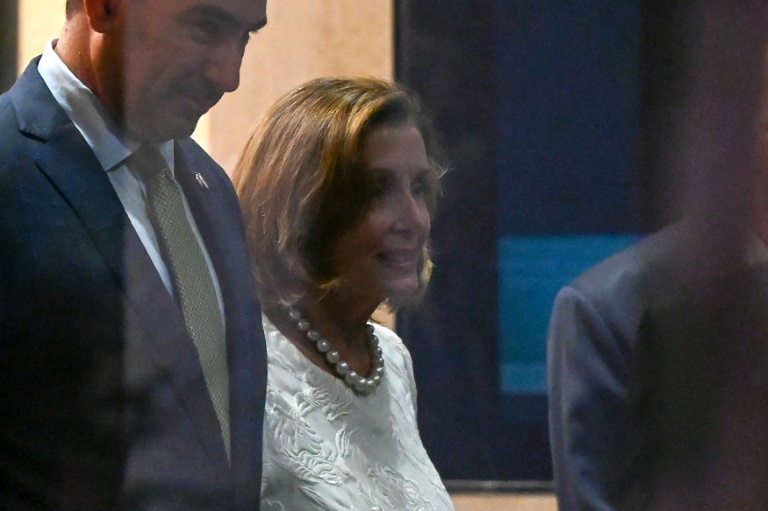
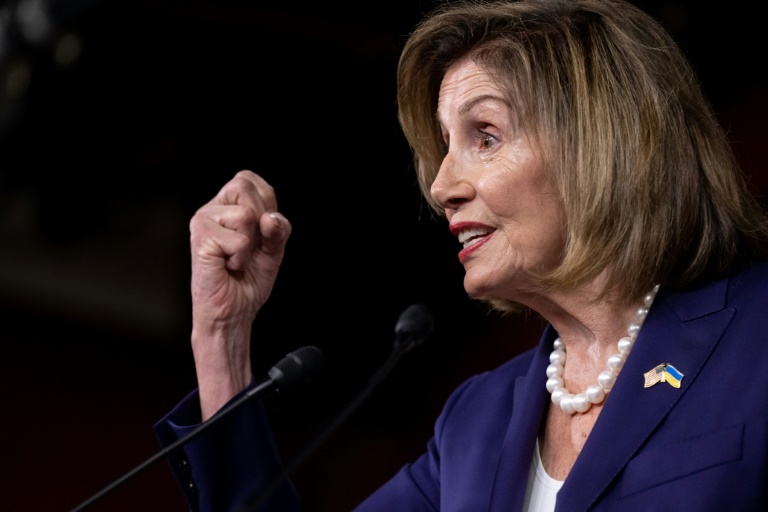
US House Speaker Nancy Pelosi arrived in Kuala Lumpur on Tuesday, Malaysian state media reported, her second stop in an Asian tour that has sparked rage in Beijing over a possible stop in Taiwan.

Beijing views Taiwan as its territory and has indicated through repeated warnings that it would view the visit as a major provocation.

Pelosi landed at a Malaysian air force base ahead of meetings with the prime minister and the speaker of the lower house of parliament, state news agency Bernama reported.

After Singapore and Malaysia, her itinerary includes stops in South Korea and Japan — but the prospect of a Taiwan visit has dominated attention.

While President Joe Biden’s administration is understood to be opposed to a Taiwan stop by Pelosi, White House National Security Council spokesman John Kirby said she was entitled to go where she pleased.

“The speaker has the right to visit Taiwan,” he told reporters.

“There is no reason for Beijing to turn a potential visit consistent with longstanding US policies into some sort of crisis.”

Kirby cited intelligence that China was preparing possible military provocations that could include firing missiles in the Taiwan Strait or “large-scale” incursions into Taiwanese airspace.

He said Pelosi was travelling on a military aircraft and that while Washington does not fear a direct attack, it “raises the stakes of a miscalculation”.

Taiwan’s military on Tuesday said it was “determined” to defend the island against increased threats by China over the potential Pelosi visit.

Kirby reiterated, however, that US policy was unchanged toward Taiwan.

This means support for its self-ruling government, while diplomatically recognising Beijing over Taipei and opposing a formal independence declaration by Taiwan or a forceful takeover by China.

Taiwan’s government has remained silent on the prospect of a Pelosi visit.

Premier Su Tseng-chang did not confirm the visit on Tuesday when asked by reporters but thanked Pelosi for her support.

And Taiwanese newspaper Liberty Times cited unnamed sources as saying Pelosi would land on the island Tuesday night, then meet Tsai the next day before departing in the afternoon.

– More warnings from China –

Taiwan’s 23 million people have long lived with the possibility of an invasion, but the threat has intensified under Chinese President Xi Jinping.

In a call with Biden last week, Xi warned the United States against “playing with fire” on Taiwan.

And on Monday, China’s ambassador to the United Nations, Zhang Hun, said such a visit would be “very much dangerous, very much provocative”.

If it happens, “China will take firm and strong measures to safeguard our sovereignty and territorial integrity”, he said.

American officials often make discreet visits to the island to show support, but a Pelosi trip would be higher-profile than any in recent history.

US kills Al-Qaeda chief in Kabul drone strike

A United States drone strike killed Al Qaeda chief Ayman al-Zawahiri at a hideout in the Afghan capital, President Joe Biden said Monday, adding “justice had been delivered” to the families of the September 11, 2001 attacks. 

In a somber televised address, Biden said he gave the final go-ahead for the high-precision strike that successfully targeted Zawahiri in the Afghan capital over the weekend.

“Justice has been delivered and this terrorist leader is no more,” Biden said, adding that he hoped Zawahiri’s death would bring “closure” to families of the 3,000 people killed in the United States on 9/11.

A senior administration official said Zawahiri was on the balcony of a house in Kabul when he was targeted with two Hellfire missiles, an hour after sunrise on July 31, and that there had been no US boots on the ground in Afghanistan.

“We are not aware of him ever leaving the safe house. We identified Zawahiri on multiple occasions for sustained periods of time on the balcony of where he was ultimately struck,” the official said. 

According to the official’s account, the president gave his green light for the strike on July 25 — as he was recovering in isolation from Covid-19. Biden said there were no civilian casualties in the operation. 

It was the first known over-the-horizon strike by the United States on an Al-Qaeda target in Afghanistan since American forces withdrew from the country on August 31, 2021.

US Secretary of State Antony Blinken said Monday evening that “by hosting and sheltering” Zawahiri, the Taliban had “grossly violated the Doha Agreement” signed in 2020, which paved the way for America’s withdrawal.

Zawahiri, an Egyptian surgeon who grew up in a comfortable Cairo household before turning to violent radicalism, had been on the run for 20 years since the 9/11 attacks.

He took over Al-Qaeda after Osama bin Laden was killed by US special forces in Pakistan in 2011, and had a $25 million US bounty on his head.

Over the weekend the Afghan interior ministry denied reports circulating on social media of a drone strike in Kabul, telling AFP a rocket struck “an empty house” in the capital, causing no casualties.

Early Tuesday in Kabul, however, Taliban spokesman Zabihullah Mujahid tweeted that an “aerial attack” was carried out on a residence in the Sherpur area of the city.

“The nature of the incident was not revealed at first. The security and intelligence agencies of the Islamic Emirate investigated the incident and found in their preliminary investigations that the attack was carried out by American drones,” his tweet said.

The news comes a month before the first anniversary of the final withdrawal of US troops from Afghanistan, leaving the country in the control of the Taliban insurgency that fought Western forces over the preceding two decades.

Under the 2020 Doha deal, the Taliban promised not to allow Afghanistan to be used again as a launchpad for international jihadism, but experts believe the group never broke its ties with Al-Qaeda.

“What we know is that the senior Haqqani Taliban were aware of his presence in Kabul,” the Biden official said. 

Taliban interior minister Sirajuddin Haqqani also heads the feared Haqqani Network, a brutal subset of the Taliban blamed for some of the worst violence of the past 20 years and which has been described by US officials as a “veritable arm” of Pakistani intelligence.

– Doctor turned jihadist –

Zawahiri, 71, lacked the potent charisma that helped bin Laden rally jihadists around the world, but willingly channeled his analytical skills into the Al-Qaeda cause.

He was believed to be the main strategist — the real mastermind who steered operations, including the September 11 attacks, as well as bin Laden’s personal doctor.

Saudi Arabia, the home country of bin Laden as well as many of the 9/11 hijackers, welcomed the announcement of Zawahiri’s death.

“Thousands of innocent people of different nationalities and religions, including Saudi citizens, were killed,” by terrorists under his leadership, the Saudi foreign ministry said.

Al-Qaeda is believed to have been degraded in the years since the US invasion of Afghanistan, and the White House official said Zawahiri was “one of the last remaining figures who carried this kind of significance.”

The organization, agreed Soufan Center researcher Colin Clarke, is “at a crossroads.”

“Despite Zawahiri’s leadership, which minimized AQ’s losses while rebuilding, the group still faces serious challenges going forward. For one, there’s the question of who will lead al Qaeda after Zawahiri’s gone,” he said.

Zawahiri’s father was a renowned physician and his grandfather a prayer leader at Cairo’s Al-Azhar institute, the highest authority for Sunni Muslims.

He became involved with Egypt’s radical Muslim community at a young age and published several books which came for many to symbolize the radical Islamist movement.

He left Egypt in the mid-1980s, heading for Pakistan’s northwestern city of Peshawar where the resistance to the Soviet occupation of Afghanistan was based.

It was at that time, when thousands of Islamist fighters flooded into Afghanistan during the 1980s, that Zawahiri and bin Laden met, and in 1998 he became one of five signatories to bin Laden’s “fatwa” calling for attacks against Americans.

Jihadist monitor SITE said some militants were questioning the veracity of the report he had been killed, while others believed Zawahiri had achieved his desire of “martyrdom.” 

As for Al-Qaeda’s future without him, SITE said jihadists were bullish, with one writing: “If Sheikh Ayman al-Zawahiri is dead, there are a thousand Aymans.”

sms-fox-pmh-st/ssy

Two dead in California's largest wildfire this year

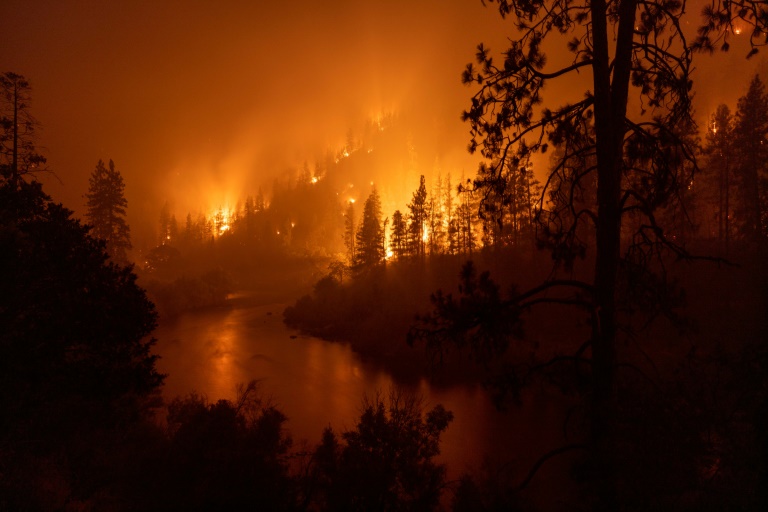
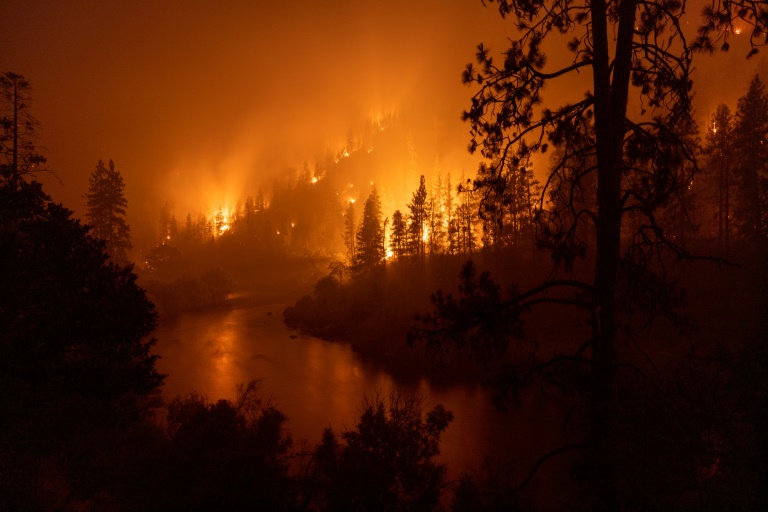
Firefighters faced “extremely dangerous” conditions Monday as they battled to save a community of 8,000 residents, with lightning strikes threatening to worsen a blaze that has already killed at least two people and become California’s biggest fire of the year.

Hundreds of personnel were involved in the fight against the fast-moving McKinney Fire, which has torn through more than 55,000 acres (22,000 hectares) near the border with Oregon, forcing thousands from their homes.

The National Weather Service meanwhile issued a warning because of the threat of dry lightning — powerful electrical strikes that come without any of the desperately needed rain.

“These conditions can be extremely dangerous for firefighters, as winds can be erratic and extremely strong, causing fire to spread in any direction,” said CalFire, an interagency website that collates fire information.

California, along with much of the western United States, is in the grip of its worst drought in more than 1,000 years.

The drought, exacerbated by man-made climate change, has left the countryside parched and exceedingly vulnerable to the wildfires that naturally break out, making the blazes hotter, faster and more destructive.

The McKinney Fire on Sunday claimed its first human lives, with the Siskiyou County Sheriff’s Office saying firefighters found two people dead inside a burned-out car in the driveway of a home in the town of Klamath River.

Sheriff Jeremiah LaRue said the pair were likely caught in the swift-moving fire as they tried to flee.

California Governor Gavin Newsom has declared a state of emergency in Siskiyou County, and more than 2,000 residents of the rural area are under evacuation orders.

A heat wave with temperatures of over 100 degrees Fahrenheit (38 degrees Celsius), tinder dry terrain and thunderstorms packing strong winds are complicating the efforts of firefighters battling the blaze.

“Fire growth is expected to spread in all directions,” the Klamath National Forest service said in a statement. “Warning for thunderstorms and lightning. Gusty outflow winds of 30 to 50 mph (50 to 80 kph) will be possible near thunderstorm cells.”

According to the Siskiyou County Sheriff’s Office, the fire has destroyed more than 100 structures — including homes, a grocery store and a community center — in the area surrounding Yreka, though it has not yet encroached upon the town of about 7,800 people.

“Surrounding areas should be ready to leave if needed. Please don’t hesitate to evacuate,” the county sheriff tweeted.

The McKinney fire is California’s largest wildfire so far this year — though it remains much smaller than last year’s Dixie Fire, which burned nearly one million acres.

– Animal rescue –

An AFP journalist working in the fire area captured a photograph of a kitten with singed whiskers cowering in between rocks in the Klamath National Forest.

As the picture ricocheted around the internet, users asked for updates, with one seemingly offering to look after the animal.

“Do you know if this kitten has been cared for and adopted at this point?” tweeted @bobbiescat

Another journalist shared footage of a young puppy gratefully lapping at a bowl of water after emerging from the ashen ruins of a home in Klamath River.

Rescue Ranch Yreka, which took in the stricken pup, said it had received nearly 140 dogs in less than two days, and appealed for donations to help feed and care for them.

The fast-spreading blaze comes just days after the Oak Fire near Yosemite National Park destroyed dozens of buildings and forced thousands to evacuate.

California still has months of fire season ahead of it.

Other parts of the world have also faced intense wildfires this year, as scientists say climate change is making heatwaves more frequent and more intense, increasing the risk of fires.

In Portugal, a blaze broke out in the Mafra area, north of Lisbon, over the weekend while in France at least four firefighters were seriously injured and motorways were closed.

Also over the weekend, hundreds of firefighters battled a blaze in eastern Germany, with four people injured.

Two dead in California's largest wildfire this year

Firefighters faced “extremely dangerous” conditions Monday as they battled to save a community of 8,000 residents, with lightning strikes threatening to worsen a blaze that has already killed at least two people and become California’s biggest fire of the year.

Hundreds of personnel were involved in the fight against the fast-moving McKinney Fire, which has torn through more than 55,000 acres (22,000 hectares) near the border with Oregon, forcing thousands from their homes.

The National Weather Service meanwhile issued a warning because of the threat of dry lightning — powerful electrical strikes that come without any of the desperately needed rain.

“These conditions can be extremely dangerous for firefighters, as winds can be erratic and extremely strong, causing fire to spread in any direction,” said CalFire, an interagency website that collates fire information.

California, along with much of the western United States, is in the grip of its worst drought in more than 1,000 years.

The drought, exacerbated by man-made climate change, has left the countryside parched and exceedingly vulnerable to the wildfires that naturally break out, making the blazes hotter, faster and more destructive.

The McKinney Fire on Sunday claimed its first human lives, with the Siskiyou County Sheriff’s Office saying firefighters found two people dead inside a burned-out car in the driveway of a home in the town of Klamath River.

Sheriff Jeremiah LaRue said the pair were likely caught in the swift-moving fire as they tried to flee.

California Governor Gavin Newsom has declared a state of emergency in Siskiyou County, and more than 2,000 residents of the rural area are under evacuation orders.

A heat wave with temperatures of over 100 degrees Fahrenheit (38 degrees Celsius), tinder dry terrain and thunderstorms packing strong winds are complicating the efforts of firefighters battling the blaze.

“Fire growth is expected to spread in all directions,” the Klamath National Forest service said in a statement. “Warning for thunderstorms and lightning. Gusty outflow winds of 30 to 50 mph (50 to 80 kph) will be possible near thunderstorm cells.”

According to the Siskiyou County Sheriff’s Office, the fire has destroyed more than 100 structures — including homes, a grocery store and a community center — in the area surrounding Yreka, though it has not yet encroached upon the town of about 7,800 people.

“Surrounding areas should be ready to leave if needed. Please don’t hesitate to evacuate,” the county sheriff tweeted.

The McKinney fire is California’s largest wildfire so far this year — though it remains much smaller than last year’s Dixie Fire, which burned nearly one million acres.

– Animal rescue –

An AFP journalist working in the fire area captured a photograph of a kitten with singed whiskers cowering in between rocks in the Klamath National Forest.

As the picture ricocheted around the internet, users asked for updates, with one seemingly offering to look after the animal.

“Do you know if this kitten has been cared for and adopted at this point?” tweeted @bobbiescat

Another journalist shared footage of a young puppy gratefully lapping at a bowl of water after emerging from the ashen ruins of a home in Klamath River.

Rescue Ranch Yreka, which took in the stricken pup, said it had received nearly 140 dogs in less than two days, and appealed for donations to help feed and care for them.

The fast-spreading blaze comes just days after the Oak Fire near Yosemite National Park destroyed dozens of buildings and forced thousands to evacuate.

California still has months of fire season ahead of it.

Other parts of the world have also faced intense wildfires this year, as scientists say climate change is making heatwaves more frequent and more intense, increasing the risk of fires.

In Portugal, a blaze broke out in the Mafra area, north of Lisbon, over the weekend while in France at least four firefighters were seriously injured and motorways were closed.

Also over the weekend, hundreds of firefighters battled a blaze in eastern Germany, with four people injured.

Crackdown seeks to stifle Iran's critical voices

Executions on a scale not seen for years. Mass arrests of regime critics including top film-makers. Trials of foreign nationals denounced as a sham by their families.

Activists argue Iran is in the throes of an intensified crackdown affecting all sectors of society from trade union activists, to campaigners against the enforced wearing of the headscarf for women, to religious minorities.

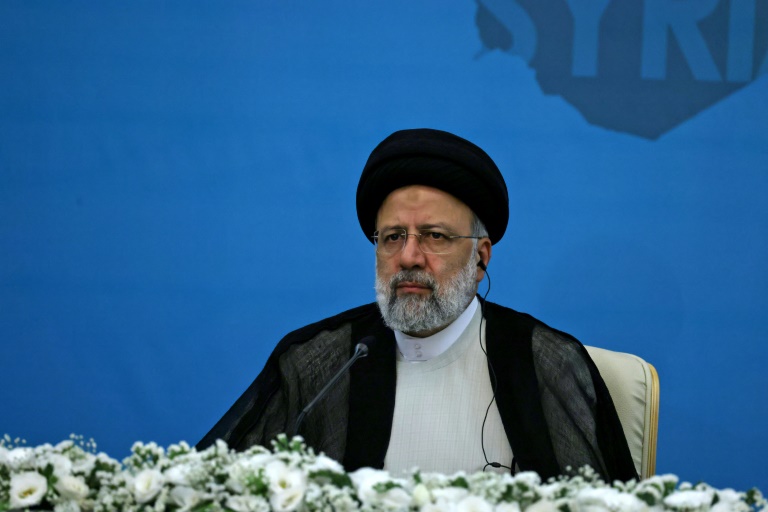
The repression comes one year into the rule of President Ebrahim Raisi, the ultra-conservative former judiciary chief who in August 2021 took over from the more moderate Hassan Rouhani.

Raisi and supreme leader Ayatollah Ali Khamenei, who remains Iran’s number one figure, are battling an economic crisis, as well as a sequence of disasters, including a deadly building collapse in Abadan in May, that have sparked unusual protests.

The economic troubles are partially caused by sanctions over the Iranian nuclear programme. But there is so far no sign world powers and Iran’s leadership are close to the breakthrough needed to revive the 2015 deal over the atomic drive.

“The current crackdown is intimately linked with the upsurge of protests in Iran,” said Ali Fathollah-Nejad, Iran expert at the Issam Fares Institute for Public Policy and International Affairs and American University of Beirut.

He said nationwide protests in December 2017 and November 2019 had left their mark on Iran’s leadership and, while the protests are at root socio-economically driven, they “swiftly turn political and have targeted the entire establishment.”

“Street protests continue to be a threat to regime stability,” he told AFP.

– ‘Instil fear’ –

The rise in executions has been startling, with Iran putting to death twice as many people in the first half of 2022 as it did in the same period a year earlier, according to Iran Human Rights, a Norway-based NGO, which now counts at least 318 hangings this year.

Amnesty International has said Iran is on an “execution spree” with hangings now proceeding at a “horrifying pace”. IHR said that those executed have included 10 women, with three hanged in a single day on July 27, all for murdering their husbands.

Meanwhile, Iran has also resumed amputating the fingers of prisoners convicted of theft, with at least two people suffering this punishment this year which was implemented by a guillotine specially installed in Tehran’s Evin prison, Amnesty said.

Meanwhile, on July 23, Iran also carried out its first public execution in two years.

“The widespread executions are used by the authorities to instil fear in society to prevent further anti-government protests,” said IHR’s director Mahmood Amiry Moghaddam.

– ‘Repressive reflex’ –

There has been a growing movement inside and outside Iran — based around the hashtag “#edam_nakon” (don’t execute) –- to halt the use of the death penalty in the Islamic republic, which executes more people annually than any nation other than China.

One prominent voice has been director Mohammad Rasoulof, whose chilling anti-capital punishment movie “There is No Evil” won the Golden Bear at the Berlin film festival in 2020.

But Rasoulof was arrested in early July after launching in May a petition from directors and actors urging security forces to lay down their arms in the face of protests.

Fellow prize-winning director Jafar Panahi, who for years has been unable to leave Iran, was then detained when he went two days later to inquire about the whereabouts of Rasoulof and told he had to serve a six-year sentence previously handed out.

Behind bars, they join other celebrated dissidents, including the rights activist Narges Mohammadi whose life, rights groups fear, is at risk due to health conditions prison authorities are failing to treat.

The crackdown has also seen the arrest of a number of relatives of victims of the authorities’ violent suppression of protests in November 2019 who have been seeking justice for their loved ones.

“There is no reason to believe these recent arrests are anything but cynical moves to deter popular outrage at the government’s widespread failures,” said Tara Sepehri Far, senior Iran researcher at Human Rights Watch, accusing the government of resorting to “its repressive reflex of arresting popular critics”.

– ‘Outrageous’ –

There have also been arrests in the last two months of the Bahais, in what the Bahai International Community (BIC) calls an “escalating crisis in the Iranian government’s systematic campaign” against the country’s largest non-Muslim religious minority.

At least 20 dual or foreign nationals remain jailed, under house arrest or stuck in Iran, according to the New York based Center for Human Rights in Iran (CHRI), in what their families term a policy of hostage-taking aimed at extracting concessions from the West.

In July, Iran allowed German-Iranian Nahid Taghavi out of jail for medical treatment and released Iran-UK-US citizen Morad Tahbaz with an ankle bracelet. Both, however, remain unable to leave Iran, while a Polish citizen, Belgian, Swede and two French have joined those in prison.

Those behind bars include German national Jamshid Sharmahd who, according to his family, was abducted in the Gulf in July 2020 and now risks the death penalty in a trial expected to reach its conclusion in the next weeks.

“This is a framed job against him aimed at persecuting dissidents and journalists who use their freedom of speech in the free world,” his daughter Gazelle Sharmahd told AFP. “It is outrageous we let this happen,” she said.

Close Bitnami banner
Bitnami