World

Sri Lanka president seeks unity government to save economy

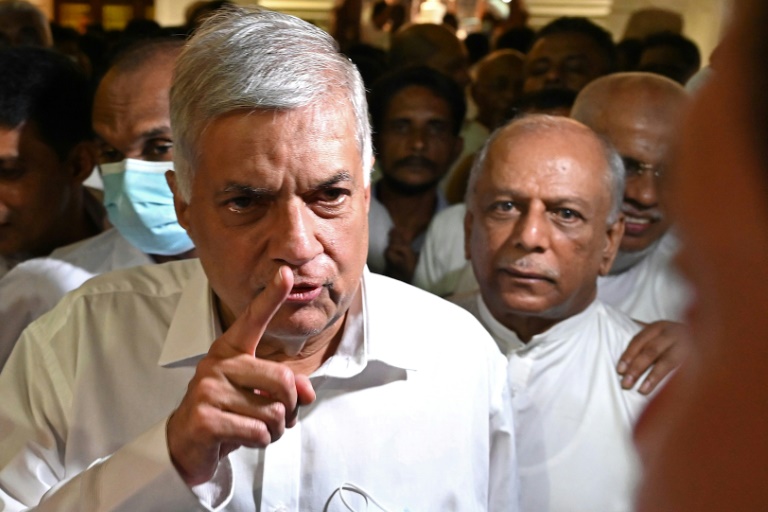
Sri Lanka’s new president Ranil Wickremesinghe has formally invited MPs to join an all-party unity government to revive the bankrupt economy by undertaking painful reforms, his office said Sunday.

Wickremesinghe took office earlier this month after public anger over the island nation’s worst economic crisis forced his predecessor Gotabaya Rajapaksa to flee the country and quit.

In a meeting Saturday with the influential monks of the Temple of the Tooth in Kandy, one of Buddhism’s most sacred shrines, Wickremesinghe outlined his plans.

“As the president, I wish to start a new journey,” Wickremesinghe was quoted as telling the monks in his first meeting with the powerful Buddhist clergy since taking office.

“I would like to get all the parties together and go on that journey as well as to form an all-party government.”

He has written to all lawmakers asking them to join a unity government.

A former opposition MP, Wickremesinghe, 73, took up the premiership for the sixth time in May after Rajapaksa’s elder brother Mahinda resigned and there were no other takers for the job.

Wickremesinghe went onto become the president after Gotabaya escaped on July 9 when tens of thousands of protesters angry at the economic crisis stormed the presidential palace.

He fled to Singapore from where he resigned five days later and Wickremesinghe became interim president and later won a vote in parliament confirming his ascension.

Sri Lanka’s 22 million people have endured months of lengthy blackouts, record inflation and shortages of food, fuel and medicines. 

Since late last year, the country has run out of foreign exchange to finance even the most essential imports.

In April, Sri Lanka defaulted on its $51 billion foreign debt and opened bailout talks with the International Monetary Fund.

Wickremesinghe told monks that the economy would decline further this year with a contraction of 7.0 percent, but expected a recovery next year.

“I am working to re-stabilise this economy and build the economy in such a way that the country can be developed by 2023, 2024.

“It is a difficult task. But if you don’t do it now, it will be more difficult. We should think about whether we should try to cure the patient by giving medicine or let the patient die without giving medicine,” he added.

He said inflation currently running at 60.8 percent could go up further.

After his election as president, Wickremesinghe, while ordering security forces to clear protest sites, has appointed an interim cabinet leaving the door open for others to join.

He has called a new session of parliament from Wednesday and is expected to expand the 18-member cabinet to accommodate members from opposition parties.
Zelensky urges evacuation of Ukraine's frontline Donetsk

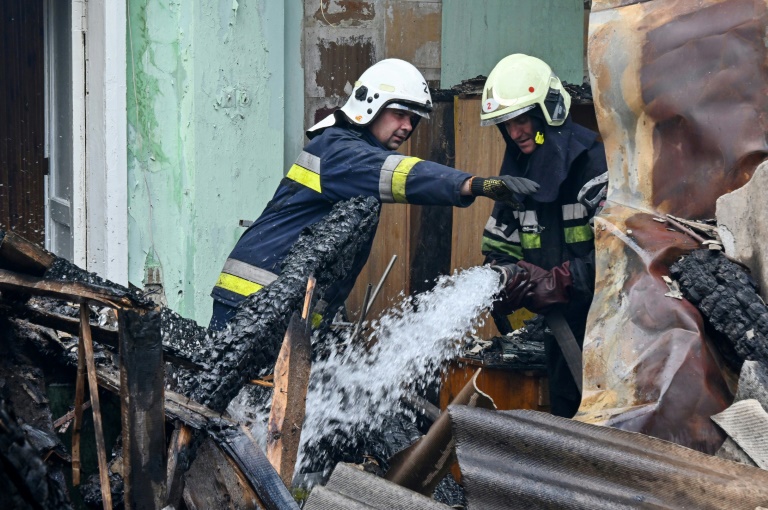
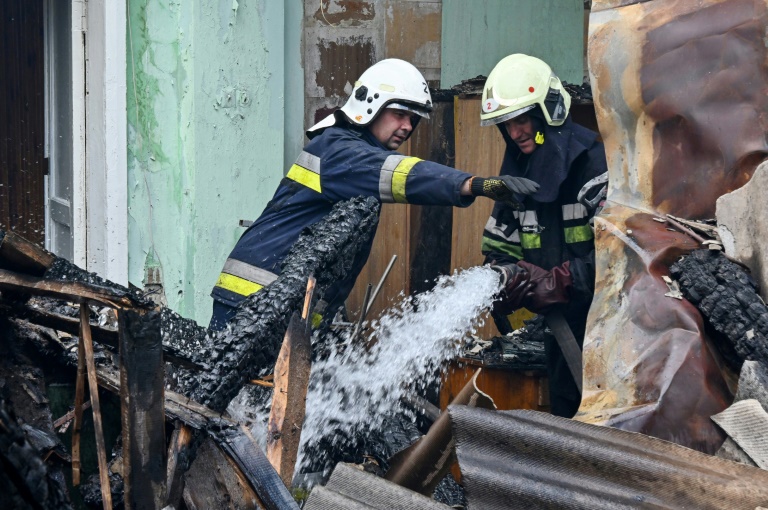
Ukraine’s president urged civilians on Saturday to evacuate the frontline Donetsk region, the scene of fierce clashes with the Russian military, as Kyiv called on the Red Cross and UN to gain access to its soldiers being held by Moscow’s forces.

The eastern Donetsk region has faced the brunt of Russia’s offensive since its assault on Kyiv failed weeks into the invasion launched on February 24.

President Volodymyr Zelensky warned in his daily address that thousands of people, including children, were still in the region’s battleground areas, with six civilians killed and 15 wounded on Friday, according to the Donetsk governor.

“There’s already a governmental decision about obligatory evacuation from Donetsk,” Zelensky said, underscoring authorities’ calls to leave the besieged region in recent weeks.

“Leave, we will help,” Zelensky said. “At this stage of the war, terror is the main weapon of Russia.”

Official Ukrainian estimates put the number of civilians still living in the unoccupied area of Donetsk at between 200,000 and 220,000.

A mandatory evacuation notice posted Saturday evening said the coming winter made it a matter of urgency, particularly for the more than 50,000 children still in the region.

“They need to be evacuated, you cannot put them in mortal danger in the winter without heating, light, without the ability to keep them warm,” Kyiv’s Ministry of Reintegration of Temporarily Occupied Territories said in a statement.

Zelensky, in his address, also once more pressed the international community, especially the United States, to have Russia officially declared a “state sponsor of terrorism”.

– Deadly jail strike –

The call came a day after a jail holding Ukrainian prisoners of war in Kremlin-controlled Olenivka was bombed, leaving scores dead, with Kyiv and Moscow trading blame. 

On Saturday, Ukrainian human rights official Dmytro Lubinets said on national television he had asked the International Committee of the Red Cross (ICRC) and the United Nations Human Rights Monitoring Mission to go to Olenivka.

The ICRC has made a request but not yet obtained authorisation from the Russians, he said.

Russia’s defence ministry accused Kyiv of striking the Olenivka prison with US-supplied long-range missiles in an “egregious provocation” designed to stop soldiers from surrendering.

It said Saturday that the dead included Ukrainian forces who had surrendered after weeks of fighting off Russia’s brutal bombardment of the sprawling Azovstal steelworks in the port city of Mariupol. 

The defence ministry said 50 Ukrainian prisoners were killed and 73 were taken to hospital with serious injuries.

Zelensky accused Russia of “deliberate mass murder of Ukrainian prisoners of war”.

– Gazprom cuts off Latvia –

Also on Saturday, Russian energy giant Gazprom suspended gas supplies to Latvia in the latest tightening of gas provision to European Union states, which have accused Russia of squeezing supplies in retaliation for Western sanctions imposed over Moscow’s invasion of Ukraine.

Latvia’s Economy Minister Ilze Indriksone told the LETA news agency that his country “was not counting on natural gas flows from Russia.”

Gazprom drastically cut gas deliveries to Europe via the Nord Stream pipeline on Wednesday to about 20 percent of its capacity. It had reduced gas flows to Europe twice in June.

The Russian state-run company had earlier announced it would choke supply to 33 million cubic metres a day — half the amount it has been delivering since service resumed last week after 10 days of maintenance work.

– Drone attack –

Russian strikes continued to rain down on Ukrainian towns and cities.

Ukrainian authorities said Russian bombardments targeting the south and east of the country had left one dead in southern Mykolaiv and one dead in eastern Bakhmut.

The death toll from a strike on a Mykolaiv bus stop on Friday climbed to seven after two men died in hospital.

Meanwhile, in the eastern city of Kharkiv, three Russian S-300 missiles struck a school, mayor Igor Terekhov said on Telegram Saturday, adding that the main building was destroyed.

By early Sunday morning, Mykolaiv was again hit with “massive shelling”, according to its mayor.

“Probably the strongest of all time,” Oleksandr Sienkevych said in a Telegram post. 

“Powerful explosions were heard after 1 (am) at night and around 5 in the morning. A number of objects were destroyed, residential buildings were damaged. A number of fires broke out at the struck sites.”

Shortly afterwards Russia said a Ukrainian drone attack on its fleet in the Crimean port of Sebastopol wounded five people.

“This morning, Ukrainian nationalists decided to spoil the Day of the Russian Fleet” being celebrated on Sunday, the Russian-annexed city’s mayor Mikhail Razvozhayev said on Telegram.

A Ukrainian spokesman said his country’s forces had set fire to grain fields around Mariupol so they could not be used by the Russians.

Zelensky urges evacuation of Ukraine's frontline Donetsk

Ukraine’s president urged civilians on Saturday to evacuate the frontline Donetsk region, the scene of fierce clashes with the Russian military, as Kyiv called on the Red Cross and UN to gain access to its soldiers being held by Moscow’s forces.

The eastern Donetsk region has faced the brunt of Russia’s offensive since its assault on Kyiv failed weeks into the invasion launched on February 24.

President Volodymyr Zelensky warned in his daily address that thousands of people, including children, were still in the region’s battleground areas, with six civilians killed and 15 wounded on Friday, according to the Donetsk governor.

“There’s already a governmental decision about obligatory evacuation from Donetsk,” Zelensky said, underscoring authorities’ calls to leave the besieged region in recent weeks.

“Leave, we will help,” Zelensky said. “At this stage of the war, terror is the main weapon of Russia.”

Official Ukrainian estimates put the number of civilians still living in the unoccupied area of Donetsk at between 200,000 and 220,000.

A mandatory evacuation notice posted Saturday evening said the coming winter made it a matter of urgency, particularly for the more than 50,000 children still in the region.

“They need to be evacuated, you cannot put them in mortal danger in the winter without heating, light, without the ability to keep them warm,” Kyiv’s Ministry of Reintegration of Temporarily Occupied Territories said in a statement.

Zelensky, in his address, also once more pressed the international community, especially the United States, to have Russia officially declared a “state sponsor of terrorism”.

– Deadly jail strike –

The call came a day after a jail holding Ukrainian prisoners of war in Kremlin-controlled Olenivka was bombed, leaving scores dead, with Kyiv and Moscow trading blame. 

On Saturday, Ukrainian human rights official Dmytro Lubinets said on national television he had asked the International Committee of the Red Cross (ICRC) and the United Nations Human Rights Monitoring Mission to go to Olenivka.

The ICRC has made a request but not yet obtained authorisation from the Russians, he said.

Russia’s defence ministry accused Kyiv of striking the Olenivka prison with US-supplied long-range missiles in an “egregious provocation” designed to stop soldiers from surrendering.

It said Saturday that the dead included Ukrainian forces who had surrendered after weeks of fighting off Russia’s brutal bombardment of the sprawling Azovstal steelworks in the port city of Mariupol. 

The defence ministry said 50 Ukrainian prisoners were killed and 73 were taken to hospital with serious injuries.

Zelensky accused Russia of “deliberate mass murder of Ukrainian prisoners of war”.

– Gazprom cuts off Latvia –

Also on Saturday, Russian energy giant Gazprom suspended gas supplies to Latvia in the latest tightening of gas provision to European Union states, which have accused Russia of squeezing supplies in retaliation for Western sanctions imposed over Moscow’s invasion of Ukraine.

Latvia’s Economy Minister Ilze Indriksone told the LETA news agency that his country “was not counting on natural gas flows from Russia.”

Gazprom drastically cut gas deliveries to Europe via the Nord Stream pipeline on Wednesday to about 20 percent of its capacity. It had reduced gas flows to Europe twice in June.

The Russian state-run company had earlier announced it would choke supply to 33 million cubic metres a day — half the amount it has been delivering since service resumed last week after 10 days of maintenance work.

– Drone attack –

Russian strikes continued to rain down on Ukrainian towns and cities.

Ukrainian authorities said Russian bombardments targeting the south and east of the country had left one dead in southern Mykolaiv and one dead in eastern Bakhmut.

The death toll from a strike on a Mykolaiv bus stop on Friday climbed to seven after two men died in hospital.

Meanwhile, in the eastern city of Kharkiv, three Russian S-300 missiles struck a school, mayor Igor Terekhov said on Telegram Saturday, adding that the main building was destroyed.

By early Sunday morning, Mykolaiv was again hit with “massive shelling”, according to its mayor.

“Probably the strongest of all time,” Oleksandr Sienkevych said in a Telegram post. 

“Powerful explosions were heard after 1 (am) at night and around 5 in the morning. A number of objects were destroyed, residential buildings were damaged. A number of fires broke out at the struck sites.”

Shortly afterwards Russia said a Ukrainian drone attack on its fleet in the Crimean port of Sebastopol wounded five people.

“This morning, Ukrainian nationalists decided to spoil the Day of the Russian Fleet” being celebrated on Sunday, the Russian-annexed city’s mayor Mikhail Razvozhayev said on Telegram.

A Ukrainian spokesman said his country’s forces had set fire to grain fields around Mariupol so they could not be used by the Russians.

Chinese booster rocket makes uncontrolled return to Earth

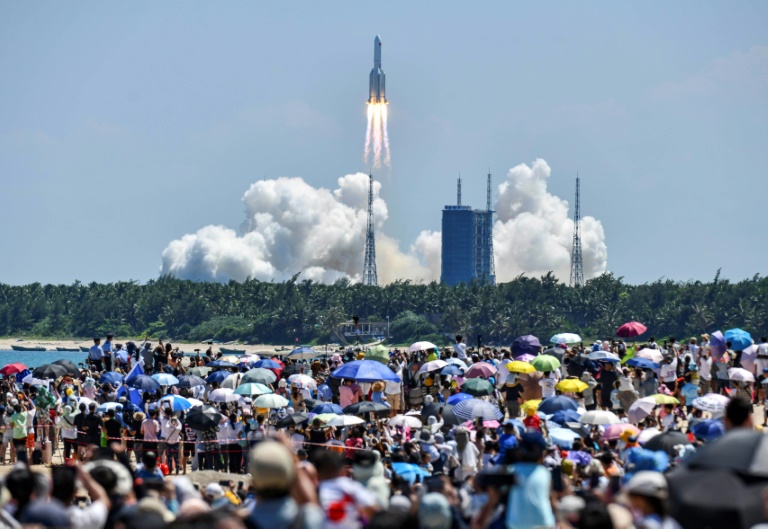
A Chinese booster rocket made an uncontrolled return to Earth on Saturday, leading US officials to chide Beijing for not sharing information about the potentially hazardous object’s descent.

US Space Command “can confirm the People’s Republic of China (PRC) Long March 5B (CZ-5B) re-entered over the Indian Ocean at approx 10:45 am MDT on 7/30,” the US military unit said on Twitter.

“We refer you to the #PRC for further details on the reentry’s technical aspects such as potential debris dispersal+ impact location,” it said.

In a statement posted to its official WeChat profile, the China Manned Space Agency later gave coordinates for an impact area in the Sulu Sea, about 35 miles (57 kilometers) off the east coast of the Philippines’ Palawan Island.

“Most of its devices were ablated and destroyed during re-entry,” the agency said of the booster rocket, which was used last Sunday to launch the second of three modules China needed to complete its new Tiangong space station.

Malaysia’s space agency said it detected rocket debris burning up on re-entry before falling in the Sulu Sea northeast of the island of Borneo.

“The debris of the rocket caught fire while entering the Earth’s airspace and the movement of the burning debris also crossed Malaysian airspace and could be detected in several areas including crossing the airspace around the state of Sarawak,” it said.

– NASA criticism –

NASA administrator Bill Nelson criticized Beijing on Twitter, saying the failure to share details of the rocket’s descent was irresponsible and risky.

“All spacefaring nations should follow established best practices, and do their part to share this type of information in advance,” Nelson wrote, “to allow reliable predictions of potential debris impact risk, especially for heavy-lift vehicles, like the Long March 5B, which carry a significant risk of loss of life and property.”

He added: “Doing so is critical to the responsible use of space and to ensure the safety of people here on Earth”.

The Tiangong space station is one of the crown jewels of Beijing’s ambitious space program, which has landed robotic rovers on Mars and the Moon, and made China only the third nation to put humans in orbit.

The new module, propelled by the Long March 5B, successfully docked with Tiangong’s core module on Monday and the three astronauts who had been living in the main compartment since June successfully entered the new lab.

When China launched its first Tiangong module in April 2021, there was a similar frenzy around the possibility of damage caused by an unpredictable booster reentry.

Objects generate immense amounts of heat and friction when they enter the atmosphere, which can cause them to burn up and disintegrate. But larger ones such as the Long March-5B may not be destroyed entirely.

In 2020, debris from another Chinese rocket fell on villages in the Ivory Coast, causing structural damage but no injuries or deaths.

China has poured billions of dollars into space flight and exploration as it seeks to build a program that reflects its stature as a rising global power.

Lebanese face long 'insulting' queues to buy bread

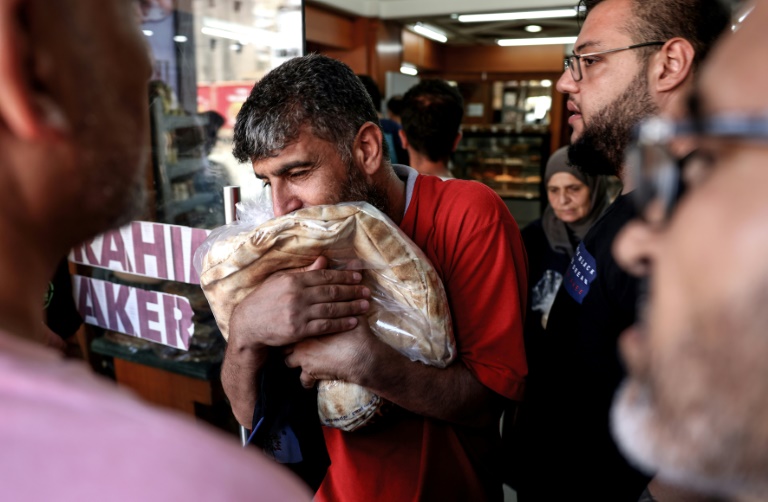
In bankrupt Lebanon, Khalil Mansour has to queue for hours every day just to buy bread for his family and some days he can’t afford any.

In a country which once boasted the nickname “Switzerland of the Middle East” for its thriving banking sector before financial crisis hit in 2019, the chronic shortage of the staple of the Lebanese diet has been hard to take.

Lebanon defaulted on its national debt in 2020 and its currency has lost around 90 percent of its black market value.

The World Bank has branded the financial crisis one of the worst since the 19th century while the United Nations now considers four out five Lebanese to be living under the poverty line.

Faced with demands from international creditors for painful reforms in return for the release of new aid, the embattled government has been forced to end subsidies on most essential goods — although not so far on wheat.

The price of subsidised bread has gone up, although by less than if there were no subsidy, but bakeries have started rationing the staple.

A bag of flat Arabic pitta-like bread now officially sells for 13,000 Lebanese pounds (43 US cents). On the black market it costs more than 30,000.

“Last week I went without bread for three days because I cannot afford to pay 30,000,” said Mansour, 48.

For Mansour and most Lebanese, buying bread means standing for hours in long queues outside bakeries and sometimes, when their turn comes, the bakeries have run out of bread.

“Today I queued for three hours, yesterday two-and-a-half. What next?” Mansour said on Friday outside a Beirut bakery.

“I have to feed my family. What else can I do?” asked Mansour, who earns the equivalent of $50 a month working in a pastry shop.

– ‘Wild West’ –

Most bakeries limit the sale of bread to one or two bags per customer, and each bag contains six flatbreads.

Subsidised bread is often bought in large quantities and sold again on the black market by unscrupulous dealers.

“The queues have become worse over the past two weeks,” said bakery owner Mohammed Mehdi. “We are facing huge shortages.”

The 49-year-old said the bakery business had become like the “Wild West”. “Some customers come armed with guns and knives,” he complained.

Lebanese media carry frequent reports of fights breaking out at bakeries, and even shots fired by customers demanding more bread.

In Taalbaya, in eastern Lebanon, a customer stormed a bakery on Tuesday furious he could not buy more bread, one report said.

The client shoved an employee then ransacked the bakery, forcing the army to intervene, it added.

“What is happening is an insult… and it is even more difficult than the petrol shortage” that gripped Lebanon last year, Mehdi said.

– ‘Incitement’ –

Lebanon imports 80 percent of its wheat from war-torn Ukraine, according to industry figures.

But the country’s capacity to store wheat took a heavy blow when a deadly blast at Beirut port in August 2020 severely damaged the country’s main grain silos.

The government and bakeries have traded blame for the bread shortage.

Bakeries accuse cash-strapped authorities of failing to provide enough subsidised flour.

The economy ministry denies the claim and has accused bakeries of hoarding subsidised flour to use in unsubsidised products such as sweets.

Authorities also claim that the presence in Lebanon of more than one million refugees from war-torn Syria is partly to blame for Lebanon’s economic collapse.

Some Lebanese have even gone as far as accusing Syrian refugees of buying subsidised bread to sell on the black market, fuelling resentment against the refugees and demands for them to go home.

There have been reports of some bakeries imposing separate queues for Lebanese and Syrians.

This has prompted the UN refugee agency to voice its concern.

“Lebanon is witnessing an increase in tensions and incitement between different communities, leading to localised violence in the streets, including against refugees,” the UNHCR warned on Friday.

Cyprus tourism rebounds despite sanctions-hit Russia plunge

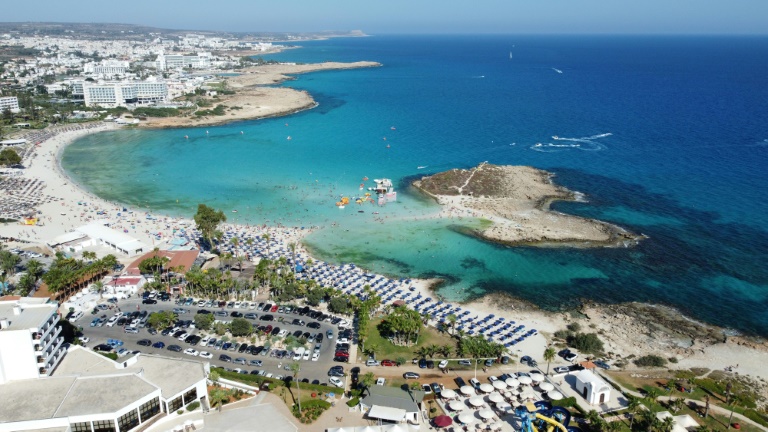
Beside sparkling Mediterranean waters at the Cypriot resort town of Ayia Napa, the bars are bouncing with foam dance parties as tourist numbers rebound following two tough years of pandemic.

But one key nationality is effectively missing: Russian visitors, as the once lucrative market has been hit by European Union sanctions imposed after Moscow invaded Ukraine.

“This year, we expected 800,000 Russian tourists,” said Haris Loizides, head of the Cyprus Hotel Association. 

The Russian market “was wiped out from one day to the next,” said Christos Angelides, head of the Pancyprian Association of Hotel Managers. “Nobody was prepared for this huge change.”

The key tourism sector, which had contributed 2.68 billion euros ($2.72 billion) in 2019, 15 percent of GDP, is still counting the cost of the disastrous years of Covid travel chaos.

In 2019, before the start of the Covid-19 pandemic, a fifth of tourists were Russian — 782,000 out of 3.9 million — making it the holiday island’s second largest market after Britain.

Last year, despite tough Covid travel restrictions, that share rose to more than 25 percent, with arrivals from Russia totalling nearly 520,000 out of 1.93 million.

Operators had hoped this summer would see Russian numbers return to pre-pandemic levels.

– Flight bans, banking sanctions –

Some 18,000 Russians are resident in Cyprus, many in the seaside town of Limassol — dubbed by some “Moscow on the Med.”

But, with EU sanctions on Russia continuing and with no let-up in the bloodshed on Ukraine’s battlefields, just 17,000 Russian tourists came to Cyprus between January and June. 

“Our hotel is doing well, but others — who had 100 percent Russian clientele — are not,” said Angelides, who is also manager of the Napa Mermaid Hotel.

Nicosia and Moscow have close political and cultural ties, but when Russia sent troops into Ukraine, the Cypriot parliament unanimously passed a resolution condemning the invasion.

Cyprus, the EU’s most easterly member, backed the bloc’s actions on Moscow, including a flight ban and sanctions barring some Russian banks from the SWIFT financial system.

The tourism ministry says fewer Russian visitors could mean some $600 million in potential lost earnings.

Overall, tourist arrivals in Cyprus are bouncing back, thanks to strong demand in other key markets following the lifting of coronavirus restrictions.

From January to June, Cyprus recorded 1.2 million visitors, nearly five times the level last year, and the white sand beaches at Ayia Napa are crowded with sunseekers and partygoers.

But that is still 25 percent down on the same period of 2019, when 1.63 million tourists came to Cyprus.

“We have somewhat limited the damage, but it is impossible to replace this huge number of customers,” Angelides added.

– ‘Big gap’ –

In the first half of this year, British tourists made up nearly two-fifths of visitors, followed by Israelis, making up seven percent of visitors, then Poland, Germany and Greece.

“There have been many attempts by several sectors to encourage tourists from other markets, such as the German, Polish, Italian and French markets,” said Charis Papacharalambous, spokesman of the Association of Cyprus Travel Agents (ACTA).

But it was still “very difficult to fill the big gap” left by Russian tourists, he added, with industry experts fearing the impact may still worsen, since many Russians previously preferred to visit later in the year.

For Loizides, from the island’s Hotel Association, the war in Ukraine has also provided another problem.

Surging global costs of fuel sparked by the conflict have driven electricity prices higher. 

With tourists turning air conditioning on full blast to counter the sweltering heat of Cyprus, hotels are struggling with “astronomical bills”, Loizides said.

“The EU must remedy this situation and help companies, especially at a time when inflation is raging,” he added.

Cyprus tourism rebounds despite sanctions-hit Russia plunge

Beside sparkling Mediterranean waters at the Cypriot resort town of Ayia Napa, the bars are bouncing with foam dance parties as tourist numbers rebound following two tough years of pandemic.

But one key nationality is effectively missing: Russian visitors, as the once lucrative market has been hit by European Union sanctions imposed after Moscow invaded Ukraine.

“This year, we expected 800,000 Russian tourists,” said Haris Loizides, head of the Cyprus Hotel Association. 

The Russian market “was wiped out from one day to the next,” said Christos Angelides, head of the Pancyprian Association of Hotel Managers. “Nobody was prepared for this huge change.”

The key tourism sector, which had contributed 2.68 billion euros ($2.72 billion) in 2019, 15 percent of GDP, is still counting the cost of the disastrous years of Covid travel chaos.

In 2019, before the start of the Covid-19 pandemic, a fifth of tourists were Russian — 782,000 out of 3.9 million — making it the holiday island’s second largest market after Britain.

Last year, despite tough Covid travel restrictions, that share rose to more than 25 percent, with arrivals from Russia totalling nearly 520,000 out of 1.93 million.

Operators had hoped this summer would see Russian numbers return to pre-pandemic levels.

– Flight bans, banking sanctions –

Some 18,000 Russians are resident in Cyprus, many in the seaside town of Limassol — dubbed by some “Moscow on the Med.”

But, with EU sanctions on Russia continuing and with no let-up in the bloodshed on Ukraine’s battlefields, just 17,000 Russian tourists came to Cyprus between January and June. 

“Our hotel is doing well, but others — who had 100 percent Russian clientele — are not,” said Angelides, who is also manager of the Napa Mermaid Hotel.

Nicosia and Moscow have close political and cultural ties, but when Russia sent troops into Ukraine, the Cypriot parliament unanimously passed a resolution condemning the invasion.

Cyprus, the EU’s most easterly member, backed the bloc’s actions on Moscow, including a flight ban and sanctions barring some Russian banks from the SWIFT financial system.

The tourism ministry says fewer Russian visitors could mean some $600 million in potential lost earnings.

Overall, tourist arrivals in Cyprus are bouncing back, thanks to strong demand in other key markets following the lifting of coronavirus restrictions.

From January to June, Cyprus recorded 1.2 million visitors, nearly five times the level last year, and the white sand beaches at Ayia Napa are crowded with sunseekers and partygoers.

But that is still 25 percent down on the same period of 2019, when 1.63 million tourists came to Cyprus.

“We have somewhat limited the damage, but it is impossible to replace this huge number of customers,” Angelides added.

– ‘Big gap’ –

In the first half of this year, British tourists made up nearly two-fifths of visitors, followed by Israelis, making up seven percent of visitors, then Poland, Germany and Greece.

“There have been many attempts by several sectors to encourage tourists from other markets, such as the German, Polish, Italian and French markets,” said Charis Papacharalambous, spokesman of the Association of Cyprus Travel Agents (ACTA).

But it was still “very difficult to fill the big gap” left by Russian tourists, he added, with industry experts fearing the impact may still worsen, since many Russians previously preferred to visit later in the year.

For Loizides, from the island’s Hotel Association, the war in Ukraine has also provided another problem.

Surging global costs of fuel sparked by the conflict have driven electricity prices higher. 

With tourists turning air conditioning on full blast to counter the sweltering heat of Cyprus, hotels are struggling with “astronomical bills”, Loizides said.

“The EU must remedy this situation and help companies, especially at a time when inflation is raging,” he added.

Saudi women DJs go from hobbyists to headliners

Standing behind her control tower with headphones around her neck, Saudi DJ Leen Naif segues smoothly between pop hits and club tracks for a crowd of business school graduates noshing on sushi.

The subdued scene is a far cry from the high-profile stages –- a Formula 1 Grand Prix in Jeddah, Expo 2020 in Dubai -– that have helped the 26-year-old, known as DJ Leen, make a name for herself on the Saudi music circuit.

Yet it captures an important milestone: Women DJs, an unthinkable phenomenon just a few years ago in the traditionally ultraconservative kingdom, are becoming a relatively common sight in its main cities.

These days they turn few heads as, gig after gig, they go about making a living from what once was merely a pastime.

“A lot of female DJs have been coming up,” Naif told AFP, adding that this has, over time, made audiences “more comfortable” seeing them on stage.

“It’s easier now than it has been.” 

Naif and her peers embody two major reforms championed by Crown Prince Mohammed bin Salman, Saudi Arabia’s de facto ruler: new opportunities for women and expanding entertainment options –- notably music, which was once discouraged under Wahabism, a rigid Sunni version of Islam.

The possibility that DJs would be welcomed at public events, let alone that many would be women, is something “we didn’t expect” until recently, said Mohammed Nassar, a Saudi DJ known as Vinyl Mode.

“You are seeing now more female artists coming out,” Nassar said.

Before “it was just a hobby to express themselves in their bedrooms”.

“Now we have platforms, and you know they could even have careers. So it’s really amazing.”

– Winning over sceptics –

Naif was first introduced to electronic music as a teenager by one of her uncles, and she almost instantly started wondering whether DJ’ing was a viable job.

While her friends dreamed of careers as doctors and teachers, she knew she didn’t have the patience for the schooling those paths required.

“I’m a work person, not a studying person,” she said.

Unlike other women DJs, she had the immediate support of her parents and siblings.

Other Saudis, however, required some winning over.

Several years ago, a man came up to her mid-performance, declaring she was “not allowed” and demanding “Why are you doing this?”

His complaints got Naif’s set shut down, but she doubts the scene would play out the same way today.

“Now I bet that same guy, if he sees me, he’s going to stand first in line just to watch.”

Naif has benefited from official attempts to trumpet Saudi Arabia’s new entertainment-friendly image, which is often criticised by human rights groups as a distraction from abuses.

Her nomination to play at the Saudi pavilion of Expo Dubai 2020 gave her an international audience for the first time.

But it’s the work at home that supports her day-to-day, earning her 1,000 Saudi riyals (around $260) per hour.

– Here to stay –

Other women DJs have encountered more resistance.

Lujain Albishi, who performs under the name “Biirdperson”, started experimenting on DJ decks during the pandemic.

Her family disapproved when she started talking about DJ’ing professionally, preferring she strive to become a doctor.

She stuck with it anyway, developing her skills at private parties.

Her big break came last year when she was invited to perform at MDLBeast Soundstorm, a festival in the Saudi capital Riyadh that drew more than 700,000 revellers for performances including a set by superstar French DJ David Guetta.

The experience left her “really proud”.

“My family came to Soundstorm, saw me on stage. They were dancing, they were happy,” she said.

Both Naif and Albishi say they believe women DJs will remain fixtures in the kingdom, though their reasoning varies.

For Naif, women DJs succeed because they are better than men at “reading people” and playing what they want to hear.

Albishi, for her part, thinks there is no difference between men and women once they put their headphones on, and that’s why women DJs belong.

“My music is not for females or for males,” she said. “It’s for music-lovers.”

China's July factory activity weakens on soft demand

China’s manufacturing activity logged a surprise drop in July, official data showed Sunday, on the back of weak demand and as strict zero-Covid restrictions continue to cast a pall on growth.

The Purchasing Managers’ Index (PMI), a key gauge of manufacturing activity in the world’s second-biggest economy, came in at 49.0 in July, down from 50.2 June and below the 50-point mark separating growth from contraction, National Bureau of Statistics data showed.

While sweeping Covid curbs have eased in major cities such as Shanghai and Beijing, sporadic lockdowns around the country have kept businesses and consumers worried.

“In July, the manufacturing PMI dropped… due to factors such as the traditional off-season for production, insufficient release of market demand, and decline in prosperity of high-energy-consuming industries,” said NBS senior statistician Zhao Qinghe in a statement.

Zhao added that sharp price fluctuations of raw materials had led some companies to adopt a wait-and-see approach, “weakening purchasing intentions”.

The proportion of firms saying there was insufficient market demand had also increased for four consecutive months, he said, noting this was the “main difficulty” among manufacturers.

But officials show few signs of relaxing strict pandemic curbs, with policymakers appearing to emphasise zero-Covid over growth in a Politburo meeting this week, where they vowed to strive for “the best outcome” rather than to meet economic and social targets.

“In acknowledging the difficulties, the government has finally become flexible towards this year’s growth target,” ANZ Research analysts said in a note.

Chinese leaders had originally set a full-year GDP growth target of around 5.5 percent, but with economic expansion of just 0.4 percent in the second quarter, analysts believe it is unlikely to hit that goal.

China’s non-manufacturing PMI dropped to 53.8 points as well in July, down from 54.7 in June, NBS data showed Sunday.

This follows policies to boost consumption and with a pick-up in construction activities, the NBS statement said.

Mountain melt shutters classic Alpine routes

Little snow cover and glaciers melting at an alarming rate amid Europe’s sweltering heatwaves have put some of the most classic Alpine hiking routes off-limits.

Usually at the height of summer, tourists flock to the Alps and seek out well-trodden paths up to some of Europe’s most iconic peaks. 

But with warmer temperatures speeding up glacier melt and thawing permafrost — which scientists say are driven by climate change — routes that are usually safe this time of year now face hazards like falling rocks released from the ice.

“Currently in the Alps, there are warnings for around a dozen peaks, including emblematic ones like Matterhorn and Mount Blanc,” Pierre Mathey, head of the Swiss mountain guide association, told AFP.

This is happening far earlier in the season than normal, he said.

“Usually we see such closures in August, but now they have started at the end of June and are continuing in July.”

– ‘Postpone’ –

Alpine guides who usually lead thousands of hikers up towards Europe’s highest peak announced earlier this week that they would suspend ascents on the most classic routes up Mont Blanc, which straddles France, Italy and Switzerland.

The Guide Alpine Italiane said on its Facebook page that the “particularly delicate conditions” caused by the temperature spike made it necessary to “postpone the climbs”.

Mountain guides have also refrained — reportedly for the first time in a century — from offering tours up the classic route to the Jungfrau peak in Switzerland.

And they have advised against tours along routes on both the Italian and Swiss sides of the towering pyramid-shaped Matterhorn peak.

Ezio Marlier, president of the Valle D’Aosta guides association, said having to steer clear of routes most coveted by tourists was a blow after the Covid slowdowns.

“It is not easy… after two almost empty seasons to decide to halt work,” he told AFP.

He stressed that the Italian Alpine region had shut only two and that there were many other breathtaking and safe routes to take.

But he lamented that many people simply cancelled their trip when they heard their preferred route was off-limits.

“There are plenty of other things to do, but usually when people want Mont Blanc, they want Mont Blanc.”

– Dangerous glaciers –

Climbing on some of the thousands of glaciers dotting Europe’s largest mountain range is also proving trickier. 

“The glaciers are in a state that they are usually in at the end of the summer or even later,” said Andreas Linsbauer, a glaciologist at Zurich University.

“It is sure that we will break the record for negative melts,” he told AFP.

He said a combination of factors were contributing to a “really extreme” summer, starting with exceptionally little snowfall last winter, meaning there was less to protect the glaciers.

Sand also blew up from the Sahara early in the year, darkening the snow, which makes it melt faster.

And then the first heatwave hit Europe in May, with subsequent ones following in June and July, pushing up temperatures even at high altitudes.

The rapid melting can make glaciers more dangerous, as seen with the sudden collapse of Italy’s until then seemingly harmless Marmolada glacier earlier this month, which saw 11 people killed as ice and rock hurtled down the mountain.

While scientists have yet to draw clear conclusions on what caused the disaster, one theory is that meltwater may have reached the point where the glacier was frozen to the rock, loosening its grip.

– ‘Invisible threat’ –

Mylene Jacquemart, a glacier and mountain hazard researcher at Zurich’s ETH university, told AFP there were many unknowns about the catastrophe.

“But the general theme is definitely that more meltwater… makes things complicated and potentially more dangerous.”

Mathey, who said warmer temperatures had put mountain guides on high alert, also voiced concern that meltwater filtering under a glacier posed an “additional and invisible threat”.

But despite the challenges, he voiced confidence that guides would find solutions, seeking out alternative routes to keep showing off Alpine splendours.

“Resilience is really in the mountain guides’ DNA,” as is adaptability, he said.

“Humans have to adapt to nature and to the mountains, not the other way around.”

Close Bitnami banner
Bitnami