World

Nichelle Nichols, Uhura of 'Star Trek' fame, dies at 89

Nichelle Nichols, a groundbreaking Black actress who played communications officer Nyota Uhura with cool authority on the popular 1960s series “Star Trek,” has died at 89.

Her son, Kyle Johnson, announced the death on the official uhura.com website, saying, “Last night, my mother, Nichelle Nichols, succumbed to natural causes and passed away. Her light, however, like the ancient galaxies now being seen for the first time, will remain.”

A family spokesman said Nichols died in Silver City, New Mexico, where she had been living with her son.

Tributes poured in quickly, including from a long list of devoted “Trekkies.”

William Shatner, who played the USS Enterprise’s Captain James T. Kirk, sent his condolences to Nichols’ family.

“She was a beautiful woman & played an admirable character that did so much for redefining social issues both here in the US & throughout the world. I will certainly miss her.”  

George Takei, who as helmsman Sulu shared the bridge with Lieutenant Uhura, called her “trailblazing and incomparable.”

And US President Joe Biden said Nichols “redefined what is possible for Black Americans and women.” 

“Our nation is forever indebted to inspiring artists like Nichelle Nichols, who show us a future where unity, dignity, and respect are cornerstones of every society,” he said in a statement. 

Nichols made history with one of the first interracial kisses on US television — a 1968 embrace shared with Shatner (a kiss deemed worthy of a separate entry in Wikipedia).

Martin Luther King Jr. himself once praised Nichols, who broke ground with her powerful performance at a time when Black actors more often were cast as servants or criminals.

– ‘An equal role’ –

Nichols, who had trained in ballet and musical theater, at one point told “Star Trek” creator Gene Roddenberry that she wanted to quit the show to return to the theater.

But when she mentioned that to King, in a chance meeting recounted by the Hollywood Reporter: “All the smile came off his face and he said, ‘You can’t do that. Don’t you understand, for the first time, we’re seen as we should be seen? You don’t have a Black role. You have an equal role.'”

She stayed.

Nichols worked as a recruiter for NASA — which reached out to her after she had criticized its lack of diversity — and successfully encouraged several talented African-Americans and women of all races to consider careers with the space agency. 

NASA paid tribute to her legacy in a tweet Sunday evening, calling her a “trailblazer and role model” who “symbolized to so many what was possible.”

The National Air and Space Museum also praised her work beyond the screen.

“She was an inspiration to many, not just for her groundbreaking work on Star Trek but also through her work with NASA to recruit women and people of color to apply to become astronauts,” the museum tweeted.

While best known as Uhura, Nichols had a varied career, dancing with Sammy Davis Jr. in “Porgy and Bess,” appearing on the NBC series “Heroes” and recording an album.  

She also played Uhura — a name taken from the Swahili for “freedom” — in the first six “Star Trek” movies.

The Smithsonian, the US national museum network, shared a picture on Twitter of the red space jacket Nichols wore as Uhura on screen, adorned with the iconic “Star Trek” pin, which is now on display at the National Museum of African American History and Culture in Washington.

Nichelle Nichols, Uhura of 'Star Trek' fame, dies at 89

Nichelle Nichols, a groundbreaking Black actress who played communications officer Nyota Uhura with cool authority on the popular 1960s series “Star Trek,” has died at 89.

Her son, Kyle Johnson, announced the death on the official uhura.com website, saying, “Last night, my mother, Nichelle Nichols, succumbed to natural causes and passed away. Her light, however, like the ancient galaxies now being seen for the first time, will remain.”

A family spokesman said Nichols died in Silver City, New Mexico, where she had been living with her son.

Tributes poured in quickly, including from a long list of devoted “Trekkies.”

William Shatner, who played the USS Enterprise’s Captain James T. Kirk, sent his condolences to Nichols’ family.

“She was a beautiful woman & played an admirable character that did so much for redefining social issues both here in the US & throughout the world. I will certainly miss her.”  

George Takei, who as helmsman Sulu shared the bridge with Lieutenant Uhura, called her “trailblazing and incomparable.”

And US President Joe Biden said Nichols “redefined what is possible for Black Americans and women.” 

“Our nation is forever indebted to inspiring artists like Nichelle Nichols, who show us a future where unity, dignity, and respect are cornerstones of every society,” he said in a statement. 

Nichols made history with one of the first interracial kisses on US television — a 1968 embrace shared with Shatner (a kiss deemed worthy of a separate entry in Wikipedia).

Martin Luther King Jr. himself once praised Nichols, who broke ground with her powerful performance at a time when Black actors more often were cast as servants or criminals.

– ‘An equal role’ –

Nichols, who had trained in ballet and musical theater, at one point told “Star Trek” creator Gene Roddenberry that she wanted to quit the show to return to the theater.

But when she mentioned that to King, in a chance meeting recounted by the Hollywood Reporter: “All the smile came off his face and he said, ‘You can’t do that. Don’t you understand, for the first time, we’re seen as we should be seen? You don’t have a Black role. You have an equal role.'”

She stayed.

Nichols worked as a recruiter for NASA — which reached out to her after she had criticized its lack of diversity — and successfully encouraged several talented African-Americans and women of all races to consider careers with the space agency. 

NASA paid tribute to her legacy in a tweet Sunday evening, calling her a “trailblazer and role model” who “symbolized to so many what was possible.”

The National Air and Space Museum also praised her work beyond the screen.

“She was an inspiration to many, not just for her groundbreaking work on Star Trek but also through her work with NASA to recruit women and people of color to apply to become astronauts,” the museum tweeted.

While best known as Uhura, Nichols had a varied career, dancing with Sammy Davis Jr. in “Porgy and Bess,” appearing on the NBC series “Heroes” and recording an album.  

She also played Uhura — a name taken from the Swahili for “freedom” — in the first six “Star Trek” movies.

The Smithsonian, the US national museum network, shared a picture on Twitter of the red space jacket Nichols wore as Uhura on screen, adorned with the iconic “Star Trek” pin, which is now on display at the National Museum of African American History and Culture in Washington.
Pelosi's Asia tour set to kick off under Taiwan cloud

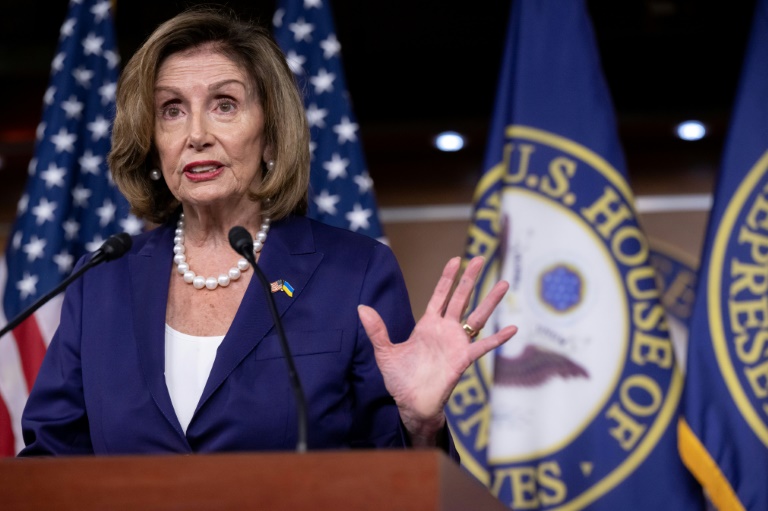
US House of Representatives Speaker Nancy Pelosi was expected to begin her Asia tour Monday in the shadow of diplomatic tensions with China, with no word yet if she will make a stop in Taiwan.

Her reported plans to visit the island have sparked strong warnings from Beijing, and even unease in the White House with President Joe Biden trying to lower the temperature with China.

Beijing considers self-ruled Taiwan its territory — to be seized one day, by force if necessary — and would see a visit by Pelosi as a provocation.

“The trip will focus on mutual security, economic partnership and democratic governance in the Indo-Pacific region,” Pelosi’s office said Sunday in a statement, referring to the Asia-Pacific.

“Our delegation will hold high-level meetings to discuss how we can further advance our shared interests and values.”

The statement did not mention Taiwan.

Pelosi is expected to begin the tour in Singapore, where meetings with the prime minister and president are on the agenda.

Her itinerary also includes Malaysia, South Korea and Japan.

Her delegation includes Chairman of the House Foreign Affairs Committee Gregory Meeks, as well as members of the House Permanent Select Committee on Intelligence and the House Armed Services Committee.

– Xi warning –

The United States maintains a policy of “strategic ambiguity” over whether it would intervene militarily were China to invade Taiwan.

While it recognises Beijing’s claim to the island, it also backs Taiwan’s democratic government.

American officials often make discreet visits to Taiwan to show support, but a Pelosi visit would be higher-profile than any in recent history.

As the House speaker, she is third in line for the US presidency and one of the country’s most powerful politicians.

The last House speaker to visit was Newt Gingrich in 1997.

Biden and his Chinese counterpart Xi Jinping had a tense phone call last week that was clouded by disagreements over Taiwan.

Xi issued an oblique warning to the United States not to “play with fire” over the island.

The feverish speculation about Pelosi’s Taiwan plans has coincided with an uptick in military activity across the region, highlighting the combustibility of the issue.

US officials have sought to play down the significance of a Pelosi visit, urging calm from Chinese leaders.

“We have many differences when it comes to Taiwan, but over the past 40-plus years, we have managed those differences and done it in a way that has preserved peace and stability and has allowed the people on Taiwan to flourish,” US Secretary of State Antony Blinken said Friday.

In Taiwan, there have been mixed views about the prospect of Pelosi visiting, but figures from both the ruling party and the main opposition have said the island should not cave to Chinese pressure.

N.Ireland bids farewell to peacemaker Trimble at Lisburn funeral

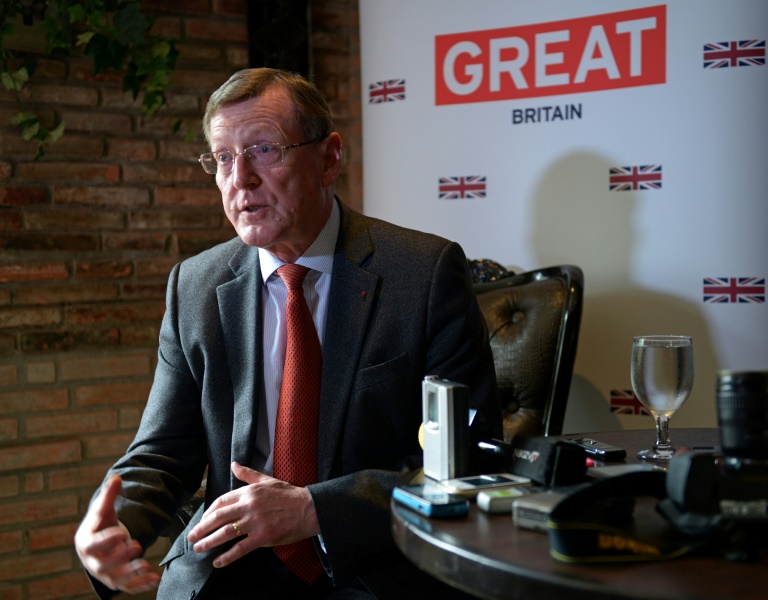
A funeral service for David Trimble, the Nobel peace prize-winning former first minister of Northern Ireland whose statecraft helped end decades of conflict, will be held Monday in his hometown of Lisburn.

Tributes have poured in from around the world and across Northern Ireland’s political divide for Trimble, who worked tirelessly to bridge its sectarian divides, following his death last Monday aged 77.

The service, which will be attended by friends, family and political figures, will be held at Harmony Hill Presbyterian Church in Lisburn, southwest of Belfast, at 1130 GMT.

A pro-UK unionist politician, Trimble’s death following a short illness marked the passing of one of the last in a generation of Northern Irish leaders who delivered the Good Friday Agreement.

The 1998 accords, also referred to as the Belfast Agreement, largely ended the period known as “The Troubles” in Northern Ireland — three decades of sectarian violence in the province which claimed 3,500 lives.

In the same year as the agreements were signed, Trimble was awarded the Nobel Peace Prize for his efforts, alongside pro-Ireland nationalist leader John Hume.

Former UK prime minister Tony Blair and former US president Bill Clinton, who worked with Trimble to midwife peace in Northern Ireland, lauded the unionist leader’s political courage following news of his death.

Former Irish premier Bertie Ahern, who also helped deliver the landmark deal, said Trimble’s stance at the time made peace possible.

Announcing Trimble’s death, his family said the former first minister had “passed away peacefully”.

Books of condolence have since opened across Northern Ireland.

At the seat of the province’s power-sharing government, currently engulfed in a protracted political crisis following elections in May, a wreath of flowers was laid in front of a portrait of Trimble.

Following the elections three months ago, which swept nationalists to victory for the first time in the province’s history, the assembly has been left paralysed amid a boycott by the dominant pro-UK force, the Democratic Unionist Party (DUP).

The party has refused to join a power-sharing government until London rips up a post-Brexit trading pact for Northern Ireland with the European Union.

An attempt to restart the Stormont regional assembly last Tuesday following Trimble’s death was postponed out of respect.

Assembly members are to offer formal condolences to the former first minister in a special sitting Tuesday.

Crypto clients beg for their cash back after lender's crash

An Irishman at risk of losing his farm. An American having suicidal thoughts. An 84-year-old widow’s lost life savings: People caught in the meltdown of crypto lender Celsius are pleading for their money back. 

Hundreds of letters have poured in to the judge overseeing the firm’s multi-billion-dollar bankruptcy and they are heavy with anger, shame, desperation and, frequently, regret.

“I knew there were risks,” said a client whose letter was unsigned. “It seemed a worthwhile risk.”

Celsius and its CEO Alex Mashinsky had billed the platform as a safe place for people to deposit their crypto currencies in exchange for high interest, while the firm lent out and invested those deposits.

But as the value of highly volatile crypto currencies plummeted — bitcoin alone has shed over 60 percent since November — the firm faced mounting troubles until it froze withdrawals in mid-June.

The company owed $4.7 billion to its users, according to a court filing earlier this month, and the endgame is unclear.

The letters — posted to a public online court docket — come from around the world and recount tragic results of users’ money being frozen.

“From that hard-working single mom in Texas struggling with past-due bills, to the teacher in India with all his hard-earned money deposited in Celsius — I believe I can speak for most of us when I say I feel betrayed, ashamed, depressed, angry,” wrote one client who signed their letter E.L.

While the letters vary in their level of sophistication about the crypto world — from self-confessed novices to all-in evangelists — and the monetary impacts range from a few hundred dollars to seven-figure sums, nearly all agree on one thing.

“I have been a loyal Celsius customer since 2019 and feel completely lied to by Alex Mashinsky,” wrote a client who AFP is not identifying to protect his privacy. “Alex would talk about how Celsius is safer than banks.”

Many of the letters point to the CEO’s AMA (Ask Mashinsky Anything) online chats as key to their confidence in him and the platform, which presented itself as stable until days before it froze users’ funds.

– Repeated assurances before fall –

“Celsius has one of the best risk management teams in the world. Our security team and infrastructure is second to none,” the firm wrote on June 7. 

“We have made it through crypto downturns before (this is our fourth!). Celsius is prepared,” the firm wrote.

The message also said the company had the reserves to pay its obligations, and withdrawals were being processed as normal. 

One client, who reported having $32,000 in crypto locked up at Celsius, noted the impact.

“Right up until the end, the retail investor received assurance,” the client wrote to the judge.

But that changed quickly, and on June 12 Celsius announced the freeze: “We are taking this action today to put Celsius in a better position to honor, over time, its withdrawal obligations.”

Some clients got the news in a message from the company.

“By the time I finished the e-mail, I had collapsed onto the floor with my head in my hands and I fought back tears,” wrote one man who had about $50,000 in assets with Celsius.

The clients who said they were hardest hit, including a man who said he placed $525,000 he got from a government loan on Celsius, disclosed they had considered killing themselves.

Others reported heavy stress, lack of sleep and feelings of deep shame for putting their retirement savings or their children’s college money into a platform that was far riskier than they knew.

“As a private unregulated company, Celsius does not come under any requirement for disclosure,” is how the Washington Post summarized the situation.

Celsius did not reply to a request for comment on the clients’ letters.

For people like one 84-year-old woman, who only had her roughly $30,000 in crypto savings on Celsius for a month, their hope lies in the bankruptcy proceedings.

“It’s just not unusual for people to come out of something like this with zero,” said Don Coker, an expert witness on banking and finance.

“Obviously I feel sorry for anyone who loses an investment like this, but it is just something where they need to be aware of the risks,” he said.

Crypto clients beg for their cash back after lender's crash

An Irishman at risk of losing his farm. An American having suicidal thoughts. An 84-year-old widow’s lost life savings: People caught in the meltdown of crypto lender Celsius are pleading for their money back. 

Hundreds of letters have poured in to the judge overseeing the firm’s multi-billion-dollar bankruptcy and they are heavy with anger, shame, desperation and, frequently, regret.

“I knew there were risks,” said a client whose letter was unsigned. “It seemed a worthwhile risk.”

Celsius and its CEO Alex Mashinsky had billed the platform as a safe place for people to deposit their crypto currencies in exchange for high interest, while the firm lent out and invested those deposits.

But as the value of highly volatile crypto currencies plummeted — bitcoin alone has shed over 60 percent since November — the firm faced mounting troubles until it froze withdrawals in mid-June.

The company owed $4.7 billion to its users, according to a court filing earlier this month, and the endgame is unclear.

The letters — posted to a public online court docket — come from around the world and recount tragic results of users’ money being frozen.

“From that hard-working single mom in Texas struggling with past-due bills, to the teacher in India with all his hard-earned money deposited in Celsius — I believe I can speak for most of us when I say I feel betrayed, ashamed, depressed, angry,” wrote one client who signed their letter E.L.

While the letters vary in their level of sophistication about the crypto world — from self-confessed novices to all-in evangelists — and the monetary impacts range from a few hundred dollars to seven-figure sums, nearly all agree on one thing.

“I have been a loyal Celsius customer since 2019 and feel completely lied to by Alex Mashinsky,” wrote a client who AFP is not identifying to protect his privacy. “Alex would talk about how Celsius is safer than banks.”

Many of the letters point to the CEO’s AMA (Ask Mashinsky Anything) online chats as key to their confidence in him and the platform, which presented itself as stable until days before it froze users’ funds.

– Repeated assurances before fall –

“Celsius has one of the best risk management teams in the world. Our security team and infrastructure is second to none,” the firm wrote on June 7. 

“We have made it through crypto downturns before (this is our fourth!). Celsius is prepared,” the firm wrote.

The message also said the company had the reserves to pay its obligations, and withdrawals were being processed as normal. 

One client, who reported having $32,000 in crypto locked up at Celsius, noted the impact.

“Right up until the end, the retail investor received assurance,” the client wrote to the judge.

But that changed quickly, and on June 12 Celsius announced the freeze: “We are taking this action today to put Celsius in a better position to honor, over time, its withdrawal obligations.”

Some clients got the news in a message from the company.

“By the time I finished the e-mail, I had collapsed onto the floor with my head in my hands and I fought back tears,” wrote one man who had about $50,000 in assets with Celsius.

The clients who said they were hardest hit, including a man who said he placed $525,000 he got from a government loan on Celsius, disclosed they had considered killing themselves.

Others reported heavy stress, lack of sleep and feelings of deep shame for putting their retirement savings or their children’s college money into a platform that was far riskier than they knew.

“As a private unregulated company, Celsius does not come under any requirement for disclosure,” is how the Washington Post summarized the situation.

Celsius did not reply to a request for comment on the clients’ letters.

For people like one 84-year-old woman, who only had her roughly $30,000 in crypto savings on Celsius for a month, their hope lies in the bankruptcy proceedings.

“It’s just not unusual for people to come out of something like this with zero,” said Don Coker, an expert witness on banking and finance.

“Obviously I feel sorry for anyone who loses an investment like this, but it is just something where they need to be aware of the risks,” he said.

Beirut's blast-damaged grain silos partially collapse

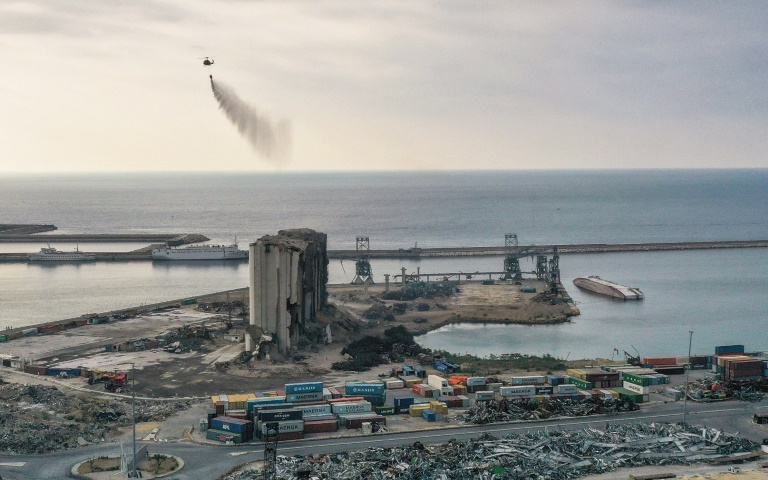
Parts of Beirut’s grain silos collapsed on Sunday, just days before the second anniversary of a catastrophic explosion at the Lebanese capital’s port that ravaged the stores and swathes of the city.

AFP correspondents said a cloud of dust covered the port after the partial collapse of the silos, where a fire has been burning for more than two weeks.

Army helicopters doused the area with water to try to put out the blaze.

“Two towers have collapsed so far, and another two are in danger of collapsing,” in the heavily damaged silos’ northern section, Public Works Minister Ali Hamieh told AFP.

The silos complex had absorbed much of the impact of the August 4, 2020 mega-blast at the port that killed more than 200 people and injured over 6,500.

The silos shielded much of the city’s west from the devastating effects of the blast, which was caused by haphazardly stored ammonium nitrate fertiliser catching fire.

Sunday’s partial collapse came after fire broke out at the silos earlier this month, caused by fermentation of remaining grain stocks along with soaring summer temperatures, according to authorities.

Lebanon’s caretaker prime minister this week warned they could fall.

“The northern group of silos are now in danger of falling,” Najib Mikati said Wednesday in a statement, which added that the silos still contained thousands of tonnes of wheat and corn.

He told the army to be prepared and warned workers, civil defence members and firefighters to keep a safe distance from the site.

Once boasting a capacity of more than 100,000 tonnes, an imposing 48-metre (157-foot) high remnant of the silos has become emblematic of the catastrophic port blast.

The government in April ordered their demolition due to safety concerns, but that move was suspended amid objections, including from relatives of blast victims who want the silos preserved as a memorial site.

“I cried when I learned that they collapsed,” Cecile Roukoz, who lost her brother in the explosion, told AFP.

“We want a part of them to stay as a witness to the crime, as a collective memory to the city, and in memory of those who lost their lives for no reason.”

The Lebanese investigation into the blast has faced systematic and blatant political obstruction from day one.

Authorities were unable to unload around 3,000 tonnes of wheat and corn stuck in the silos because doing so might accelerate their collapse, this week’s statement said.

The environment and health ministries had advised the public to evacuate the port area and use masks in the vicinity of the silos in case they collapsed.

UN force admits deadly shooting at DR Congo border post

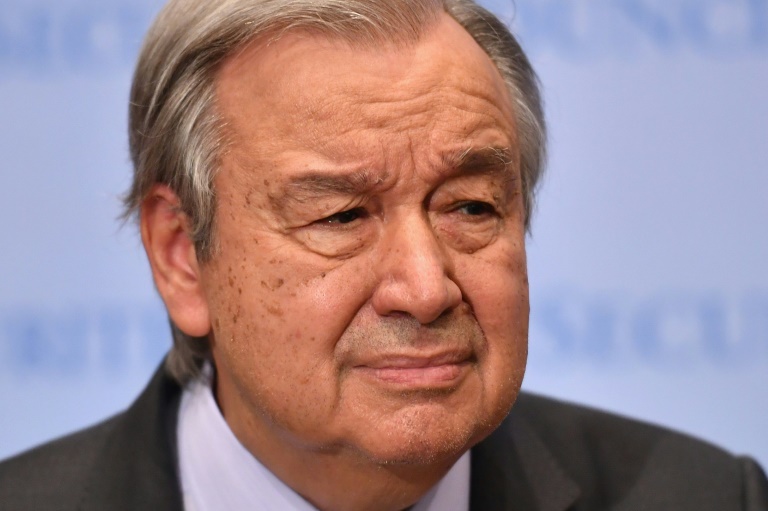
UN chief Antonio Guterres said he was “outraged” after two people were killed and several others injured when UN peacekeepers opened fire during an incident in the eastern Democratic Republic of Congo on the Uganda border on Sunday.

The UN force MONUSCO, admitted that some of its peacekeepers had opened fire “for unexplained reasons”, adding that arrests had already been made.  

Guterres was “saddened and dismayed” to learn of the shooting, a UN statement said.

“The Secretary-General stresses in the strongest terms the need to establish accountability for these events.

“He welcomes the decision of his special representative in the Democratic Republic of the Congo to detain the MONUSCO personnel involved in the incident and to immediately open an investigation,” it added.

Video of the incident, shared on social media showed men, at least one in police uniform and another in army uniform, advancing towards the immobilised UN convoy behind a closed barrier in Kasindi. 

The town is in eastern DR Congo’s Beni territory on the border with Uganda. 

After a verbal exchange, the peacekeepers appeared to open fire before opening the barrier and driving through while people scattered or hid.

“During this incident, soldiers from the intervention brigade of the MONUSCO force returning from leave opened fire at the border post for unexplained reasons and forced their way through,” the UN mission in Kasindi said in a statement earlier on Sunday.

“This serious incident caused loss of life and serious injuries.”

The Democratic Republic of Congo “strongly condemns and deplores this unfortunate incident in which two compatriots died and 15 others were injured according to a provisional roll,” government spokesman Patrick Muyaya said in a statement.

– ‘Shocked and dismayed’ –

The government said it launched an investigation with MONUSCO to establish who was responsible, why the shooting took place and would ensure “severe penalties” are given.

The UN envoy in the Democratic Republic of Congo, Bintou Keita, said she was “deeply shocked and dismayed by this serious incident”, according to the mission’s statement. 

“In the face of this unspeakable and irresponsible behaviour, the perpetrators of the shooting have been identified and arrested pending the conclusions of the investigation which has already begun in collaboration with the Congolese authorities,” MONUSCO said.

The UN mission said the troops’ home countries had been contacted so legal action could be commenced promptly, with the involvement of witnesses and survivors, which could lead to exemplary penalties. 

– Deadly region –

Earlier Barthelemy Kambale Siva, the North Kivu governor’s representative in Kasindi, said that “eight people, including two policemen who were working at the barrier, were seriously injured” in the incident.

Kambale Siva, interviewed by AFP, did not say why the UN convoy had been prevented from crossing.

There are more than 120 militias operating in the DRC’s troubled east. The UN first deployed an observer mission to the region in 1999. 

In 2010, it became the peacekeeping mission MONUSCO — the United Nations Organization Stabilization Mission in the Democratic Republic of the Congo — with a mandate to conduct offensive operations.

There have been 230 fatalities among the force, according to the UN.

– Calls for UN forces to leave –

Last week, deadly demonstrations demanding the departure of the United Nations took place in several towns in eastern DRC. 

A total of 19 people, including three peacekeepers, were killed.

Anger has been fuelled by perceptions that MONUSCO is failing to do enough to stop attacks by the armed groups.

UN under-secretary-general for peace operations Jean-Pierre Lacroix was in the central African country on Saturday to “talk to the Congolese authorities”, he said.

“(They would) examine ways in which we can both avoid a recurrence of these tragic incidents and, above all, work better together to achieve our objectives,” he said.

“We hope that the conditions will be met, in particular the return of state authority, so that MONUSCO can complete its mission as soon as possible. And to leave room for other forms of international support.”

Japanese national detained in Myanmar

A Japanese man has been detained in Myanmar’s commercial capital Yangon, an official at Japan’s embassy confirmed Sunday, the latest foreigner ensnared in the junta-ruled nation.

A military coup last year sparked rolling protests and a deadly response from the junta, with more than 2,000 people killed and at least 14,000 arrested, according to a local monitoring group.

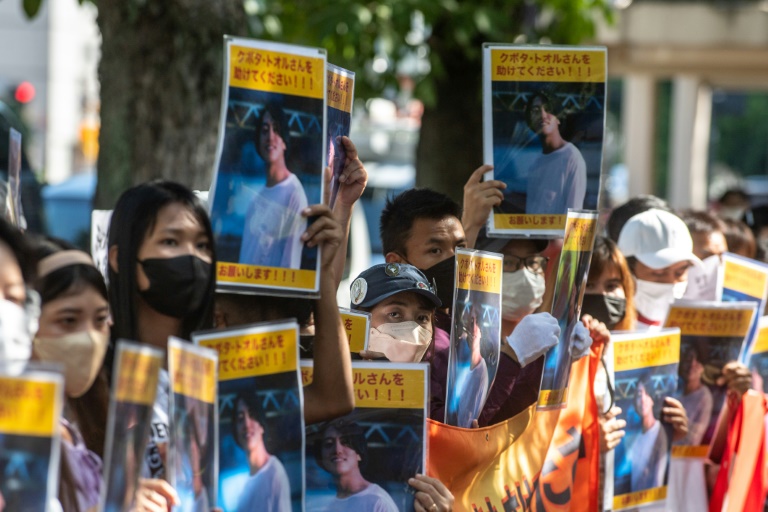
On Saturday, Japanese and local media said filmmaker Toru Kubota, 26, was detained near an anti-government rally along with two Myanmar citizens.

“I can confirm a Japanese national was detained yesterday in Yangon,” an official at the Japanese embassy told AFP Sunday, requesting anonymity.

The embassy is “in contact with the authorities and taking measures to secure their release”.

The Japanese official, who did not confirm the identity of the detained individual, said they had no information on whether he was arrested during a protest.

A junta spokesperson was not available for comment.

A small crowd rallied outside Japan’s foreign ministry in Tokyo on Sunday, holding placards of Kubota.

Several foreigners have been arrested in the military’s crackdown on dissent since the putsch.

Last year Japanese filmmaker Yuki Kitazumi was detained by Myanmar authorities while covering the coup’s aftermath.

Under international pressure he was released and returned to Japan in May 2021.

Kitazumi expressed shock over Kubota’s detention, and said he hoped he would be released “soon”.

“He is a documentary videographer and there is no reason for him to be arrested if he was gathering materials,” he said.

Myanmar’s junta has clamped down on press freedoms, arresting reporters and photographers, as well as revoking broadcasting licences.

As of March this year, 48 journalists remain in custody across the country, according to monitoring group Reporting ASEAN.

US Speaker Pelosi confirms Asia-Pacific tour, silent on Taiwan

US House of Representatives Speaker Nancy Pelosi will lead a congressional delegation to the Asia-Pacific region, her office confirmed on Sunday, with stops in Singapore, Malaysia, South Korea and Japan.

The statement made no mention of whether the six-member delegation would visit Taiwan, a flashpoint in conversations between China and the United States in the run-up to the trip.

“The trip will focus on mutual security, economic partnership and democratic governance in the Indo-Pacific region,” Pelosi’s office said in a statement. 

The all-Democrat delegation includes Chairman of the House Foreign Affairs Committee Gregory Meeks and members of the House Permanent Select Committee on Intelligence and the House Armed Services Committee.

“Our delegation will hold high-level meetings to discuss how we can further advance our shared interests and values, including peace and security, economic growth and trade, the Covid-19 pandemic, the climate crisis, human rights and democratic governance,” said Pelosi in the statement.

Singapore’s foreign ministry confirmed Pelosi’s delegation would visit the city-state August 1-2, with meetings scheduled with President Halimah Yacob and Prime Minister Lee Hsien Loong.

– Tensions over Taiwan –

For weeks, US-China tensions had heightened over reports that Pelosi may visit the self-ruled island of Taiwan, which China sees as part of its territory to be reunited by force if necessary.

On Thursday, President Joe Biden and his Chinese counterpart Xi Jinping held a tense phone call. 

The two leaders agreed to schedule their first in-person summit but disagreements over Taiwan clouded the conversation, with Xi making an oblique warning to the United States not to “play with fire” over the island.

The United States maintains a policy of “strategic ambiguity” over whether it would intervene militarily were China to invade Taiwan, and while it recognises Beijing’s claim to the island, it also backs the democratic Taiwanese government.

In the latest warning from Beijing, Chinese air force spokesman Shen Jinke on Sunday said defending China’s territory was the military’s “sacred mission”.

“The air force has firm determination, full confidence and sufficient capabilities to defend national sovereignty and territorial integrity,” Shen said, according to the state-run People’s Daily.

Over the last two years, China has ramped up flights by fighter jets, bombers and other aircraft into Taiwan’s air defence identification zone as a way to signal displeasure and keep Taipei’s own military stretched.

“The air force’s multi-type fighter jets fly around the motherland’s Taiwan, practicing to enhance its ability to maintain national sovereignty and territorial integrity,” Shen said. 

Close Bitnami banner
Bitnami