World

Kyiv urges UN, Red Cross to help Russia-held forces as gas flows cut

Russian energy giant Gazprom on Saturday suspended gas supplies to Latvia, as Ukraine announced it had asked the Red Cross and UN to gain access to its soldiers being held by Russian forces.

The call came a day after a jail holding Ukrainian prisoners of war in Kremlin-controlled Olenivka was bombed leaving scores dead.

Ukrainian human rights official Dmytro Lubinetsk said on national television he had asked the Red Cross and the United Nations Human Rights Monitoring Mission to go to Olenivka.

The ICRC has made a request but has not yet obtained authorisation from the Russians, he said.

President Volodymyr Zelensky said Friday the agreement for the Azovstal fighters to surrender, brokered by the UN and the International Committee of the Red Cross, included safety guarantees.

He called on the two organisations to intervene as guarantors.

Conexus Baltic Grid meanwhile confirmed to Latvia’s LETA news agency that Gazprom had informed it of the suspension of deliveries, but said other suppliers were continuing them.

“Today, Gazprom suspended its gas supplies to Latvia… due to violations of the conditions” of purchase, the company said on Telegram.

“Latvia was not counting on natural gas flows from Russia,” Economy Minister Ilze Indriksone told LETA.

Gazprom drastically cut gas deliveries to Europe via the Nord Stream pipeline on Wednesday to about 20 percent of its capacity. It had reduced gas flows to Europe twice in June.

The Russian state-run company had earlier announced it would choke supply to 33 million cubic metres a day — half the amount it has been delivering since service resumed last week after 10 days of maintenance work.

European Union states have accused Russia of squeezing supplies in retaliation for Western sanctions over Moscow’s intervention in Ukraine.

Gazprom cited the halted operation of one of the last two operating turbines for the pipeline due to the “technical condition of the engine”.

Kremlin spokesman Dmitry Peskov has blamed EU sanctions for the limited supply.

The European Union this week agreed a plan to reduce gas consumption in solidarity with Germany, where the Nord Stream pipeline runs to, warning of Russian “blackmail”.

– ‘Egregious provocation’ –

Russian strikes continued to rain down on Ukrainian towns and cities on Saturday.

They came a day after Russia’s defence ministry accused Kyiv of striking a prison in Russian-held territory with US-supplied long-range missiles, in an “egregious provocation” designed to stop captured soldiers from surrendering. 

It said Saturday that the dead included Ukrainian forces who had surrendered after weeks of fighting off Russia’s brutal bombardment of the sprawling Azovstal steelworks in the port city of Mariupol. 

The defence ministry said 50 Ukrainian prisoners were killed and 73 were taken to hospital with serious injuries.

“All political, legal and moral responsibility for this bloody massacre of Ukrainians lies with Zelensky personally, his criminal regime and Washington which backs them,” it said.

Zelensky laid the blame squarely on Russia.

“This was a deliberate Russian war crime, a deliberate mass murder of Ukrainian prisoners of war,” he said. “Over 50 are dead.”

Zelensky also urged the international community, especially the United States, to have Russia officially declared a “state sponsor of terrorism”.

Members of the Azov regiment were among those who surrendered at Azovstal.

Azov regiment commander Mykyta Nadtochiy said he considered the attack on the jail in Kremlin-controlled Olenivka to have been “an act of public execution”.

Ukrainian authorities said Russian bombardments targeting the south and east of the country had left one dead in southern Mykolaiv and one dead in eastern Bakhmut.

The death toll from a strike on a Mykolaiv bus stop on Friday climbed to seven after two men died in hospital, he added.

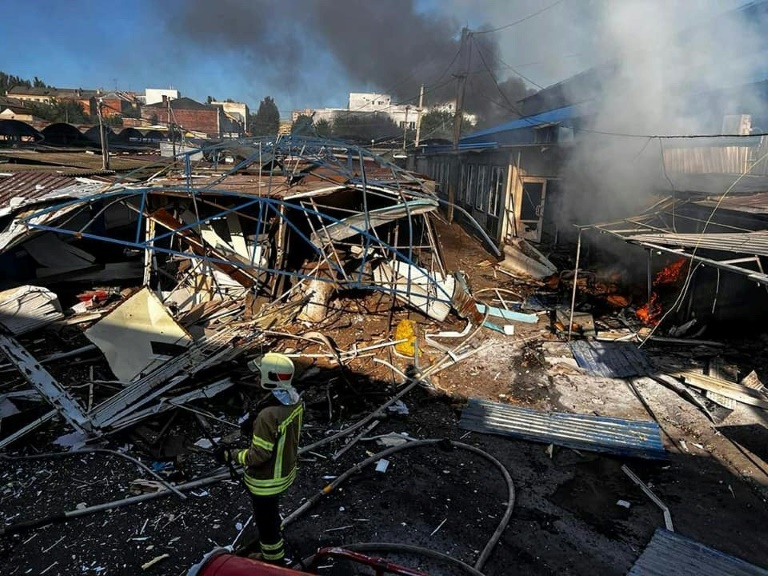
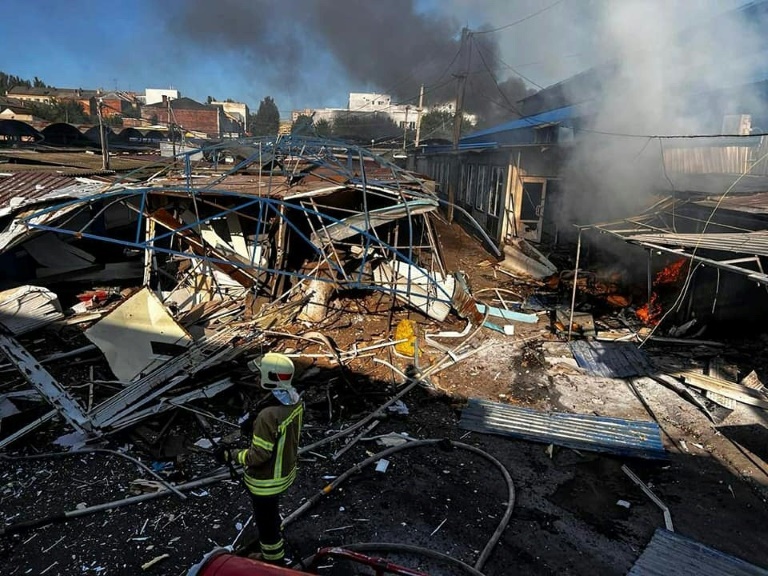
In the eastern city of Kharkiv, three Russian S-300 missiles struck a school, mayor Igor Terekhov said on Telegram, adding that the main building was destroyed.

A Ukrainian spokesman said his country’s forces had set fire to grain fields around Mariupol.

“The Mariupol resistance forces set fire to the fields with grain so that it would not be stolen by the occupiers,” Sergiy Bratchuk, a spokesman for the Odessa regional military administration said.

“The fire can probably spread to the Russian military base… There are Russian fortifications, ammunition warehouses and minefields disposed сlose to the area of the fire.” 

– Grain exports to restart –

Zelensky on Friday visited a port in southern Ukraine to oversee a ship being loaded with grain for export under a UN-backed plan aimed at getting millions of tonnes of Ukrainian grain stranded by Russia’s naval blockade to world markets.

Ukraine’s presidency said exports could start in the “coming days”.

In a separate development, S&P Global Ratings on Friday cut Ukraine’s long-term debt grade by three notches, saying a recently announced plan to defer payments means a default is “a virtual certainty”.

A group of Western countries last week gave their green light to Kyiv’s request to postpone interest payments on its debt and called on other creditors to do the same.
Pro-Sadr protesters vow to remain inside Iraq parliament

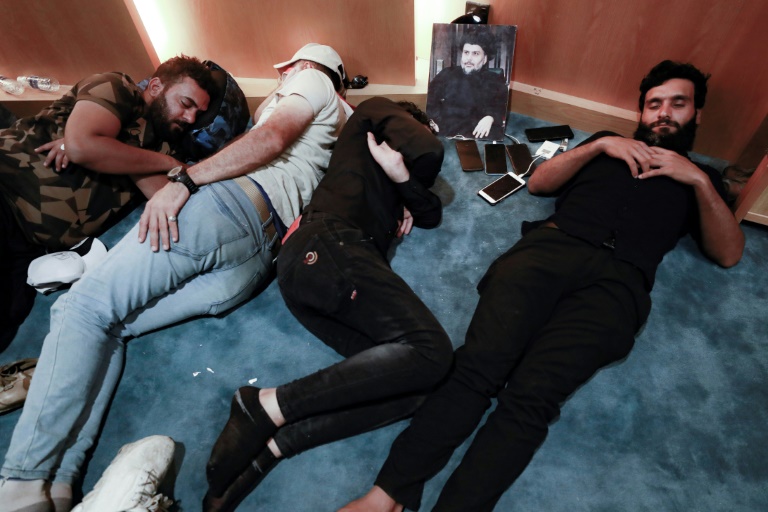
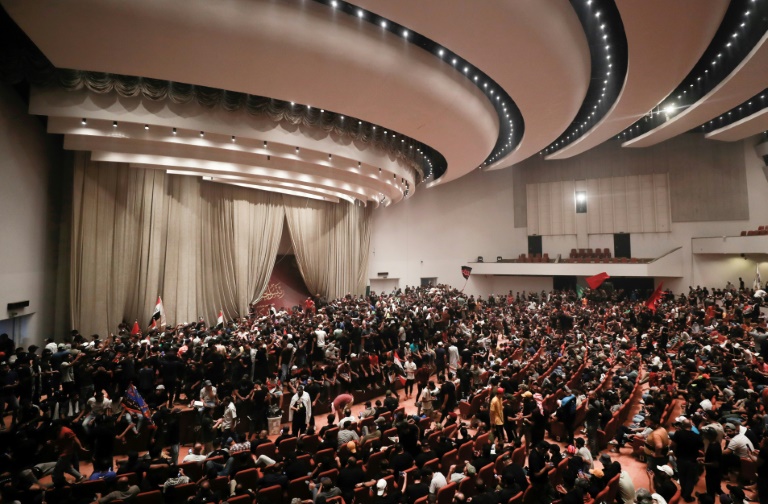
Supporters of powerful Iraqi cleric Moqtada Sadr occupied the country’s parliament on Saturday with no plan to leave, deepening a months-long political standoff.

It is the second time in days that supporters of the firebrand Shiite cleric have forced their way into the legislative chamber, after October elections failed to lead to the formation of a government.

“The demonstrators announce a sit-in until further notice,” Sadr’s movement said in a brief statement to journalists carried by state news agency INA.

In multi-confessional and multi-ethnic Iraq, government formation has involved complex negotiations since the 2003 US-led invasion toppled dictator Saddam Hussein.

Supporters of Sadr, who once led a militia against US and Iraqi government forces, oppose a rival, pro-Iran Shiite bloc’s pick for prime minister — Mohammed Shia al-Sudani.

The post conventionally goes to a figure from Iraq’s Shiite majority.

“We don’t want Mr Sudani,” said one protester, Sattar al-Aliawi, 47.

The civil servant said he was protesting “a corrupt and incapable government” and would “sleep here” in the gardens of parliament.

He added: “The people totally refuse the parties that have governed the country for 18 years.” 

Sadr’s bloc emerged from elections in October as the biggest parliamentary faction, but was still far short of a majority.

The mercurial cleric is now using street protests to pile pressure on his political opponents.

Demonstrators inside the legislature waved Iraqi flags and pictures of the cleric.

They crowded the chamber where some sat at lawmakers’ desks while others milled about, raising their mobile phones to film the occupation.

– ‘The people are with you’ –

Parliament speaker Mohammed al-Halbussi said “all parliamentary meetings” had been suspended.

The crowds entered the chamber after thousands of protesters had massed at the end of a bridge leading to the heavily fortified Green Zone before dozens pulled down concrete barriers and ran inside, an AFP photographer reported.

Security forces had fired tear gas and water cannon near an entrance to the district, also home to foreign embassies and other government buildings.

Some protesters on the bridge were injured and carried off by their fellow demonstrators.

The health ministry said at least 100 protesters and 25 security personnel had been hurt.

“All the people are with you, Sayyed Moqtada,” the protesters chanted, using his title as a descendant of the Prophet Mohammed.

Long a player in Iraqi politics, Sadr has a devoted following of millions among the country’s majority Shiite population.

His supporters oppose the candidacy of Sudani, the pick for premier of the Coordination Framework, an alliance of pro-Iran Shiite factions.

The protests are the latest challenge for a country trying to overcome decades of war.

Despite oil wealth and elevated global crude prices, Iraq remains hobbled by corruption, unemployment and other problems which sparked a youth-led protest movement in 2019.

– ‘Revolution’ –

Saturday’s demonstration came after crowds of Sadr supporters breached the Green Zone and entered the legislature on Wednesday. They left two hours later after Sadr told them to.

After the latest occupation began, the Coordination Framework called on “the popular masses… to peacefully demonstrate in defence of the state and its legitimacy”.

The United Nations Assistance Mission for Iraq said the “ongoing escalation” was deeply concerning.

“Voices of reason and wisdom are critical to prevent further violence,” it said on Twitter.

Caretaker Prime Minister Mustafa al-Kadhemi, in a televised address, called on political blocs “to sit down, negotiate and reach agreement”.

Hadi al-Ameri, who heads a faction of the Hashed al-Shaabi — pro-Iran former paramilitaries now integrated into the regular armed forces — made a similar appeal.

He called on the Sadrists and the Coordination Framework, with which he is aligned, to “overcome differences”.

Intense negotiations between factions over the past several months have failed to do so.

In June, Sadr’s 73 lawmakers quit their seats in a move seen as an attempt to pressure his rivals into fast-tracking the formation of a government.

“The Sadrist movement has a problem with the idea that the Coordination Framework will form a government,” Ammar al-Hakim, whose Hima movement is part of the group, said in a recent interview with BBC Arabic.

Kentucky flooding death toll rises to 25

Devastating flooding in Kentucky has killed 25 people and the toll is expected to rise, the southern US state’s governor said Saturday as rescuers and residents continued a harrowing search for survivors.

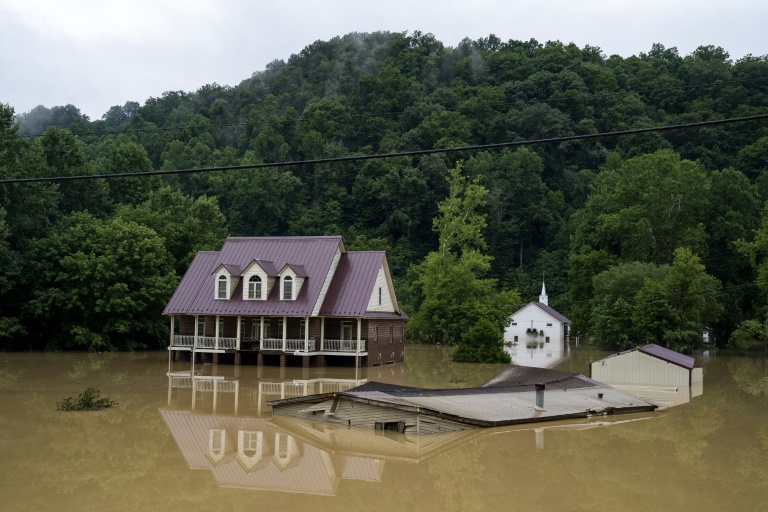
Torrential rain earlier this week caused unprecedented flash flooding in 13 counties in eastern Kentucky.

Many roads and bridges in that mountainous region — an area hard hit by grinding poverty as the coal industry declines — have been damaged or destroyed, and with cell phone service disrupted, finding survivors is difficult.

“I’m worried we are going to be finding bodies for weeks to come,” Governor Andy Beshear said in a midday news briefing, shortly after tweeting that the death toll had risen to 25.

The Democratic governor confirmed that “we are still in the search and rescue phase,” saying, “We will get through this together.”

Beshear said an earlier report that six children were among the dead was inaccurate; two of them had turned out to be adults.

The children, US media reported, were lost in a heart-rending way. Members of a family, clinging to a tree after a fast-rising stream had engulfed their mobile home, saw their children torn from their grip, one after another, by powerfully surging waters.

Beshear said national guard units from Kentucky, Tennessee and West Virginia had made more than 650 air rescues since the flooding began Wednesday evening, while state police and other state personnel had registered some 750 water rescues.

He said the search was “tremendously stressful and difficult” for rescue teams.

Some areas in eastern Kentucky had reported receiving more than eight inches (20 centimeters) of rain in a 24-hour period.

The water level of the North Fork of the Kentucky River at Whitesburg rose to a staggering 20 feet within hours, well above its previous record of 14.7 feet.

– More rain ahead –

The flooding turned many roads into rivers, and some houses in low-lying areas were almost completely submerged, with just their rooftops visible.

Scenes on social media showed houses ripped from their moorings and deposited amid masses of debris along turbid waterways or even atop a bridge.

The weather offered a respite on Saturday, but more rain was expected the following day, with one to two additional inches expected.

Beshear told CNN on Saturday that the impending rain posed a challenge, and “while we don’t think it’ll be historic rain, it’ll be hard.”

He said during the briefing that 15 emergency shelters had been opened in schools, churches and state parks, though at least one had been “overwhelmed.”

Some 18,000 homes remained without power, Beshear said, and thousands were without safe water supplies. 

The governor said the Federal Emergency Management Agency had sent 18 tractor-trailers of water so far. Other federal workers were arriving to process claims.

President Joe Biden has issued a disaster declaration for the Kentucky flooding, allowing federal aid to supplement state and local recovery efforts.

The eastern Kentucky flooding is the latest in a series of extreme weather events that scientists say are an unmistakable sign of climate change.

Nearly 60 people were killed in western Kentucky by a tornado in December 2021 — a disaster that Beshear said offered lessons for current efforts on the other end of the state.

“We learned a lot of lessons in western Kentucky on those devastating tornados about seven months ago, so we are providing as much support as we can and we are moving fast from all over the state to help out,” he said on CNN.

In his briefing, Beshear expressed compassion for hard-hit residents.

“We can’t imagine the grief you’re going through right now,” he said.

Death toll from week-long Iran flooding tops 80

At least 80 people have been killed and 30 others are missing in floods that have wreaked havoc across Iran for more than a week, state media reported Saturday.

Since the start of the Iranian month of Mordad on July 23, “59 people died and 30 are still missing in the incidents caused by recent floods,” Yaghoub Soleimani, secretary-general of the Red Crescent Society, was quoted as saying by state news agency IRNA.

That is in addition to flash floods caused by heavy rains in the normally dry southern province of Fars that left at least 22 people dead just before the start of Mordad.

Many of those victims were spending the day by a riverside.

Soleimani noted that 60 cities, 140 towns and more than 500 villages across the country of around 83 million people have been affected by the inundations.

Tehran province is the hardest-hit with 35 deaths. Nearby Mazandaran province has the highest number of missing people at 20, a list published by the Red Crescent showed.

Supreme leader Ayatollah Ali Khamenei, in a letter published on his website Saturday, expressed condolences to the families and called on authorities to take necessary measures to repair the damage.

President Ebrahim Raisi visited flood-ravaged areas in Firouzkouh region east of the capital, his office said.

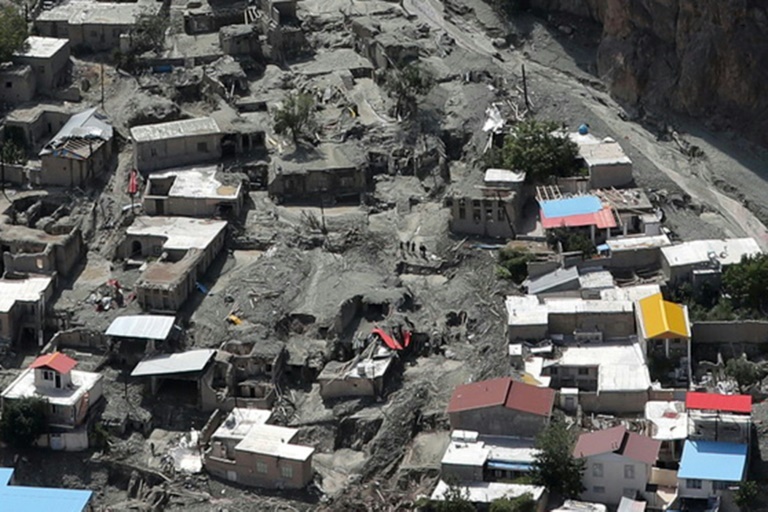
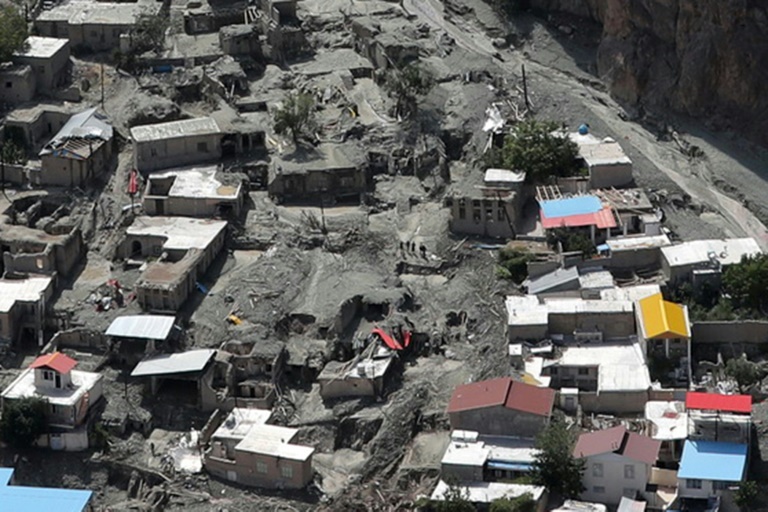
Severe damage occurred there primarily because of a mountain landslide late Thursday which claimed 14 lives, according to state media.

Videos and pictures posted by Iranian media and on social media showed houses and cars surrounded by grey mud, and people trying to recover their belongings.

Initial estimates point to more than 60 trillion rials (about $200 million) in damages to the agricultural sector, Agriculture Minister Javad Sadatinejad said, according to state broadcaster IRIB.

Iran’s meteorological centre on Saturday warned of more rains in the southern and northern provinces in the coming days.

Scientists say climate change amplifies extreme weather, including droughts as well as the potential for the increased intensity of rain storms.

Like other regional countries, Iran has endured repeated droughts over the past decade, but also regular floods, a phenomenon made worse when torrential rain falls on sun-baked earth.

In 2019, heavy rains in Iran’s south left at least 76 people dead and caused damage estimated at more than $2 billion.

Death toll from week-long Iran flooding tops 80

At least 80 people have been killed and 30 others are missing in floods that have wreaked havoc across Iran for more than a week, state media reported Saturday.

Since the start of the Iranian month of Mordad on July 23, “59 people died and 30 are still missing in the incidents caused by recent floods,” Yaghoub Soleimani, secretary-general of the Red Crescent Society, was quoted as saying by state news agency IRNA.

That is in addition to flash floods caused by heavy rains in the normally dry southern province of Fars that left at least 22 people dead just before the start of Mordad.

Many of those victims were spending the day by a riverside.

Soleimani noted that 60 cities, 140 towns and more than 500 villages across the country of around 83 million people have been affected by the inundations.

Tehran province is the hardest-hit with 35 deaths. Nearby Mazandaran province has the highest number of missing people at 20, a list published by the Red Crescent showed.

Supreme leader Ayatollah Ali Khamenei, in a letter published on his website Saturday, expressed condolences to the families and called on authorities to take necessary measures to repair the damage.

President Ebrahim Raisi visited flood-ravaged areas in Firouzkouh region east of the capital, his office said.

Severe damage occurred there primarily because of a mountain landslide late Thursday which claimed 14 lives, according to state media.

Videos and pictures posted by Iranian media and on social media showed houses and cars surrounded by grey mud, and people trying to recover their belongings.

Initial estimates point to more than 60 trillion rials (about $200 million) in damages to the agricultural sector, Agriculture Minister Javad Sadatinejad said, according to state broadcaster IRIB.

Iran’s meteorological centre on Saturday warned of more rains in the southern and northern provinces in the coming days.

Scientists say climate change amplifies extreme weather, including droughts as well as the potential for the increased intensity of rain storms.

Like other regional countries, Iran has endured repeated droughts over the past decade, but also regular floods, a phenomenon made worse when torrential rain falls on sun-baked earth.

In 2019, heavy rains in Iran’s south left at least 76 people dead and caused damage estimated at more than $2 billion.

Russia suspends gas supplies after deadly prison strike

Russian energy giant Gazprom Saturday suspended gas supplies to Latvia, a day after a jail holding Ukrainian prisoners of war was bombed leaving scores dead.

“Today, Gazprom suspended its gas supplies to Latvia… due to violations of the conditions” of purchase, the company said on Telegram.

Gazprom drastically cut gas deliveries to Europe via the Nord Stream pipeline on Wednesday to about 20 percent of its capacity. It had reduced gas flows to Europe twice in June.

The Russian state-run company had earlier announced it would choke supply to 33 million cubic metres a day — half the amount it has been delivering since service resumed last week after 10 days of maintenance work.

European Union states have accused Russia of squeezing supplies in retaliation for Western sanctions over Moscow’s intervention in Ukraine.

Gazprom cited the halted operation of one of the last two operating turbines for the pipeline due to the “technical condition of the engine”.

Kremlin spokesman Dmitry Peskov has blamed EU sanctions for the limited supply.

The European Union this week agreed a plan to reduce gas consumption in solidarity with Germany, where the Nord Stream pipeline runs to, warning of Russian “blackmail”.

The company Conexus Baltic Grid confirmed to Latvian news agency LETA that Gazprom had informed it of the suspension of deliveries, but said other suppliers were continuing them.

“Latvia was not counting on natural gas flows from Russia,” Economy Minister Ilze Indriksone told LETA.

– ‘Egregious provocation’ –

Russian strikes continued to rain down on Ukrainian towns and cities on Saturday, a day after Russia’s defence ministry accused Kyiv of striking a prison in Russian-held territory with US-supplied long-range missiles, in an “egregious provocation” designed to stop captured soldiers from surrendering. 

It said Saturday that the dead included Ukrainian forces who had surrendered after weeks of fighting off Russia’s brutal bombardment of the sprawling Azovstal steelworks in the port city of Mariupol. 

The defence ministry said 50 Ukrainian prisoners were killed and 73 were taken to hospital with serious injuries, adding: “All political, legal and moral responsibility for this bloody massacre of Ukrainians lies with (Ukrainian President Volodymyr) Zelensky personally, his criminal regime and Washington which backs them.”

Zelensky laid the blame squarely on Russia.

“This was a deliberate Russian war crime, a deliberate mass murder of Ukrainian prisoners of war,” he said. “Over 50 are dead.”

Zelensky said an agreement for the Azovstal fighters to lay down their arms, brokered by the United Nations and the International Committee of the Red Cross, included guarantees for their health and safety and called on those two organisations to intervene as guarantors.

Zelensky also urged the international community, especially the United States, to have Russia officially declared as a “state sponsor of terrorism”.

The mayor of the southern city of Mykolaiv, Oleksandr Sienkevych, said one person died and six were injured following Russian shelling in two residential districts overnight Saturday.

The death toll from a strike on a Mykolaiv bus stop on Friday climbed to seven after two men died in hospital, he added.

In the eastern city of Kharkiv, three Russian S-300 missiles struck a school, mayor Igor Terekhov said on Telegram, adding that the main building was destroyed.

A Ukrainian spokesman said resistance forces had set fire to grain fields around Mariupol.

“The Mariupol resistance forces set fire to the fields with grain so that it would not be stolen by the occupiers,” Sergiy Bratchuk, a spokesman for the Odessa regional military administration said.

“The fire can probably spread to the Russian military base… There are Russian fortifications, ammunition warehouses and minefields disposed сlose to the area of fire.” 

– Grain exports to restart –

Zelensky on Friday visited a port in southern Ukraine to oversee a ship being loaded with grain for export under a UN-backed plan aimed at getting millions of tonnes of Ukrainian grain stranded by Russia’s naval blockade to world markets.

Ukraine’s presidency said exports could start in the “coming days”.

In a separate development, S&P Global Ratings on Friday cut Ukraine’s long-term debt grade by three notches, saying a recently announced plan to defer payments means a default is “a virtual certainty”.

A group of Western countries last week gave their green light to Kyiv’s request to postpone interest payments on its debt and called on other creditors to do so as well.

Russia suspends gas supplies after deadly prison strike

Russian energy giant Gazprom Saturday suspended gas supplies to Latvia, a day after a jail holding Ukrainian prisoners of war was bombed leaving scores dead.

“Today, Gazprom suspended its gas supplies to Latvia… due to violations of the conditions” of purchase, the company said on Telegram.

Gazprom drastically cut gas deliveries to Europe via the Nord Stream pipeline on Wednesday to about 20 percent of its capacity. It had reduced gas flows to Europe twice in June.

The Russian state-run company had earlier announced it would choke supply to 33 million cubic metres a day — half the amount it has been delivering since service resumed last week after 10 days of maintenance work.

European Union states have accused Russia of squeezing supplies in retaliation for Western sanctions over Moscow’s intervention in Ukraine.

Gazprom cited the halted operation of one of the last two operating turbines for the pipeline due to the “technical condition of the engine”.

Kremlin spokesman Dmitry Peskov has blamed EU sanctions for the limited supply.

The European Union this week agreed a plan to reduce gas consumption in solidarity with Germany, where the Nord Stream pipeline runs to, warning of Russian “blackmail”.

The company Conexus Baltic Grid confirmed to Latvian news agency LETA that Gazprom had informed it of the suspension of deliveries, but said other suppliers were continuing them.

“Latvia was not counting on natural gas flows from Russia,” Economy Minister Ilze Indriksone told LETA.

– ‘Egregious provocation’ –

Russian strikes continued to rain down on Ukrainian towns and cities on Saturday, a day after Russia’s defence ministry accused Kyiv of striking a prison in Russian-held territory with US-supplied long-range missiles, in an “egregious provocation” designed to stop captured soldiers from surrendering. 

It said Saturday that the dead included Ukrainian forces who had surrendered after weeks of fighting off Russia’s brutal bombardment of the sprawling Azovstal steelworks in the port city of Mariupol. 

The defence ministry said 50 Ukrainian prisoners were killed and 73 were taken to hospital with serious injuries, adding: “All political, legal and moral responsibility for this bloody massacre of Ukrainians lies with (Ukrainian President Volodymyr) Zelensky personally, his criminal regime and Washington which backs them.”

Zelensky laid the blame squarely on Russia.

“This was a deliberate Russian war crime, a deliberate mass murder of Ukrainian prisoners of war,” he said. “Over 50 are dead.”

Zelensky said an agreement for the Azovstal fighters to lay down their arms, brokered by the United Nations and the International Committee of the Red Cross, included guarantees for their health and safety and called on those two organisations to intervene as guarantors.

Zelensky also urged the international community, especially the United States, to have Russia officially declared as a “state sponsor of terrorism”.

The mayor of the southern city of Mykolaiv, Oleksandr Sienkevych, said one person died and six were injured following Russian shelling in two residential districts overnight Saturday.

The death toll from a strike on a Mykolaiv bus stop on Friday climbed to seven after two men died in hospital, he added.

In the eastern city of Kharkiv, three Russian S-300 missiles struck a school, mayor Igor Terekhov said on Telegram, adding that the main building was destroyed.

A Ukrainian spokesman said resistance forces had set fire to grain fields around Mariupol.

“The Mariupol resistance forces set fire to the fields with grain so that it would not be stolen by the occupiers,” Sergiy Bratchuk, a spokesman for the Odessa regional military administration said.

“The fire can probably spread to the Russian military base… There are Russian fortifications, ammunition warehouses and minefields disposed сlose to the area of fire.” 

– Grain exports to restart –

Zelensky on Friday visited a port in southern Ukraine to oversee a ship being loaded with grain for export under a UN-backed plan aimed at getting millions of tonnes of Ukrainian grain stranded by Russia’s naval blockade to world markets.

Ukraine’s presidency said exports could start in the “coming days”.

In a separate development, S&P Global Ratings on Friday cut Ukraine’s long-term debt grade by three notches, saying a recently announced plan to defer payments means a default is “a virtual certainty”.

A group of Western countries last week gave their green light to Kyiv’s request to postpone interest payments on its debt and called on other creditors to do so as well.

Kentucky flooding death toll rises to 25

Devastating flooding in Kentucky killed 25 people and the toll is expected to rise, the southern US state’s governor said Saturday as rescuers continued their search for survivors.

Torrential rain earlier this week caused unprecedented flash flooding in eastern Kentucky, a mountainous region already hard hit by grinding poverty as the coal industry that was the heart of its economy declines.

“We’ve got some tough news to share out of Eastern Kentucky today, where we are still in the search and rescue phase. Our death toll has risen to 25 lost, and that number is likely to increase,” tweeted Governor Andy Beshear.

“To everyone in Eastern Kentucky, we are going to be there for you today and in the weeks, months and years ahead. We will get through this together,” he added.

Beshear previously said hundreds of people had been rescued by boat since the flooding began Wednesday evening, while National Guard helicopters carried out dozens of aerial rescues.

But “there are still so many people unaccounted for, and in this area, it’s going to be a hard task to get a firm number,” he told CNN on Saturday.

Some areas in eastern Kentucky had reported receiving more than eight inches (20 centimeters) of rain in a 24-hour period.

The water level of the North Fork of the Kentucky River at Whitesburg rose to a staggering 20 feet within hours, well above its previous record of 14.7 feet.

– More rain ahead –

The flooding turned many roads into rivers, and some houses in low-lying areas were almost completely submerged, with just their rooftops visible.

The weather offered a respite on Saturday, but more rain was expected the following day.

“As a cold front drags south, the area will remain mainly dry through today. The dry weather is expected to come to an end Sunday afternoon as a boundary lifts north back into the region,” the National Weather Service’s Jackson, Kentucky office tweeted.

Beshear said on CNN that the impending rain posed a challenge, and “while we don’t think it’ll be historic rain, it’ll be hard.”

The eastern Kentucky flooding is the latest in a series of extreme weather events that scientists say are an unmistakable sign of climate change.

Nearly 60 people were killed in western Kentucky by a tornado in December 2021 — a disaster that Beshear said offered lessons for current efforts on the other end of the state.

“We learned a lot of lessons in western Kentucky on those devastating tornados about seven months ago, so we are providing as much support as we can and we are moving fast from all over the state to help out,” he said.

President Joe Biden has issued a disaster declaration for the Kentucky flooding, allowing federal aid to supplement state and local recovery efforts.

Pro-Sadr protesters vow to remain inside Iraq parliament

Supporters of powerful Iraqi cleric Moqtada Sadr penetrated Baghdad’s heavily fortified Green Zone on Saturday, occupying parliament with no plan to leave.

In a deepening political crisis, it is the second time in days that Sadr supporters have forced their way in to the legislative chamber, months after elections that failed to lead to formation of a government.

“The demonstrators announce a sit-in until further notice,” Sadr’s movement said in a brief statement to journalists carried by state news agency INA.

Supporters of Sadr, who once led a militia against US and Iraqi government forces, oppose the recently announced candidacy of Mohammed Shia al-Sudani, a pro-Iran bloc’s pick for prime minister.

“We don’t want Mr Sudani,” said one protester, Sattar al-Aliawi, 47, in the parliamentary gardens.

The civil servant said they were protesting “a corrupt and incapable government” and would “sleep here”.

He added: “The people totally refuse the parties that have governed the country for 18 years,” since a US-led invasion toppled dictator Saddam Hussein.

Demonstrators inside the legislature waved Iraqi flags and pictures of the cleric.

They crowded the chamber where some sat at lawmakers’ desks while others milled about, raising their mobile phones to film the occupation.

– ‘The people are with you’ –

They entered after thousands of protesters had massed at the end of a bridge leading to the Green Zone before dozens pulled down concrete barriers protecting it and ran inside, an AFP photographer reported.

Security forces had fired tear gas and water cannon near an entrance to the district, also home to foreign embassies and other government buildings.

Some protesters on the bridge were injured and carried off by their fellow demonstrators.

The health ministry said at least 100 protesters and 25 members of the security forces had been hurt.

“All the people are with you Sayyed Moqtada,” the protesters chanted, using his title as a descendant of the Prophet Mohammed.

Sadr’s bloc emerged from elections in October as the biggest parliamentary faction, but was still far short of a majority. 

The mercurial Sadr, long a player in the country’s politics, has a devoted following of millions among the country’s majority Shiite population.

His supporters oppose the candidacy of Sudani, the pro-Iran Coordination Framework’s pick for premier.

The protests are the latest challenge for a country trying to overcome decades of war.

Despite oil wealth and elevated global crude prices, Iraq remains hobbled by corruption, unemployment and other problems which sparked a youth-led protest movement in 2019.

– ‘Revolution’ –

Saturday’s demonstration came after crowds of Sadr supporters breached the Green Zone on Wednesday. They left two hours later after Sadr told them to.

After the latest occupation began, the Coordination Framework called on “the popular masses… to peacefully demonstrate in defence of the state and its legitimacy.”

The United Nations Assistance Mission for Iraq said the “ongoing escalation” was deeply concerning.

“Voices of reason and wisdom are critical to prevent further violence,” it said in a tweet.

The current Prime Minister Mustafa al-Kadhemi in a statement expressed regret that “political escalation increases tensions in the street.”

“We are here for a revolution,” said one protester, Haydar al-Lami.

In June, Sadr’s 73 lawmakers quit their seats in a move seen as seeking to pressure his rivals into fast-tracking the formation of a government.

Sixty-four new lawmakers were sworn in later that month, making the pro-Iran bloc the largest in parliament, and triggering the fury of Sadr’s supporters.

“We would have liked them to wait until the government was formed to evaluate its performance, to give it a chance and to challenge it if it is not,” said Ammar al-Hakim, whose Hima movement is part of the Coordination Framework.

“The Sadrist movement has a problem with the idea that the Coordination Framework will form a government,” he said in a recent interview with BBC Arabic.

Women at war: Life on eastern Ukraine's front lines

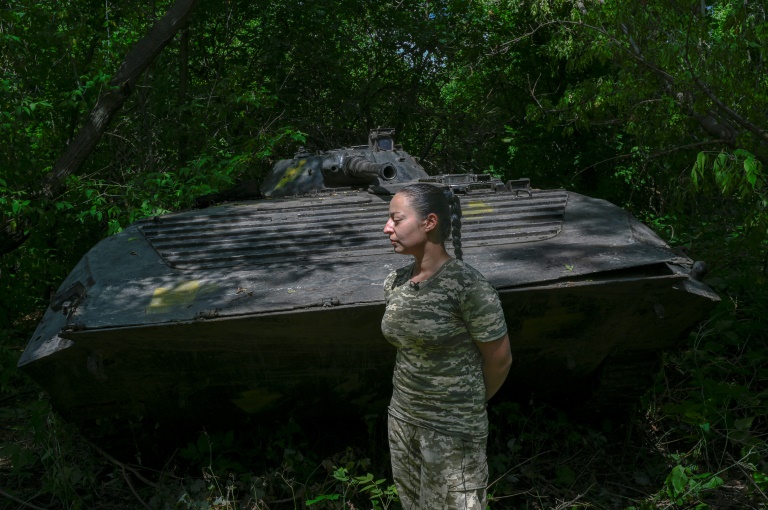
Kateryna never takes pictures with comrades before going to the front line — it’s bad luck. Karina does not tell her mother she is going to the front. Iana uses social media to try and raise the morale at home.

On another day of war in eastern Ukraine, the three are resting with their unit in a village before another rotation.

They agree to talk about their lives on the front line of a war they were not expecting, which has lasted more than five months — and felt like years.

Kateryna Novakivska, 29, is deputy commander of a unit in the Donbas, an industrial region in eastern Ukraine where fighting is raging.

The 29-year-old comes from Vinnytsia in central Ukraine, and had just graduated from an army academy when the war broke out. Her role is to provide the troops with moral and psychological support.

After speaking about the “satisfactory” morale among soldiers and the justness of Ukraine’s cause, she talks more personally about life on the front.

“The hardest thing for them is losing comrades,” she said.

For Kateryna, it is being able to distance herself from the soldiers’ horrific stories.

“They talk more easily with me because there are a lot of things that they cannot tell their loved ones,” she said.

Their biggest fear is being left behind on the battlefield — dead or wounded.

She remembers one day, May 28, when 11 soldiers were killed and around 20 went missing. In the chaos of war, some troops disappear and nobody knows what has happened to them.

Kateryna’s own greatest fear is being kidnapped by Russian soldiers, though she said she has “planned for everything”.

She has a small scar on her nose — left by an explosion in March.

The lotus flower tattoo on her forearm is a memory from her time in Volnovakha in 2017 — a town now in Russian-occupied territory that Kateryna said “no longer exists”.

– ‘Keeping up morale’ –

On social media, Iana Pazdrii plays on the stereotypes of being a soldier, showing off her perfectly manicured nails as she drives an armoured vehicle or clutches a Kalashnikov.

The 35-year-old has been fighting since the start of the invasion in Ukraine and, like all her comrades, has not seen her child for five months.

“I volunteered because I am a patriot and I felt I could be useful here and I am,” said Iana, who speaks of the army as “a family”.

Whenever she has time, she posts little glimpses of military life on Instagram or TikTok.

“Some soldiers have to live on ‘line zero’ under shelling,” she said, using a term frequently used in Ukraine for the front line.

“I try to show that we are keeping up morale despite everything, to tell people not to be afraid and that the army is doing everything to defend the country.

“But to be honest, it’s hard sometimes.”

Dozens of soldiers are killed every day on Ukraine’s eastern front, where Russian forces made major advances in May and June, taking over almost the whole of the Lugansk region.

Since then, the front line has moved little, but ruthless artillery battles between the two sides have intensified.

– ‘Line zero’ –

Karina, a former textile worker of Tajik origin who signed up to the army in 2020 on a two-year contract, drives her armoured vehicle back and forth from the front line.

“When we are in position, it’s hard thinking about fellow soldiers, hoping that nobody will be killed or wounded, that you yourself will not come under attack,” said the young woman, who is also a mechanic.

Her husband is anxiously waiting for her at home — but she said “nobody tells me what to do”.

When Karina calls her mother, she said: “I don’t tell her I’m at line zero and she pretends to believe me”.

Karina has no illusions — she does not think the war will be over soon.

“The Russians have already taken a lot of territory” in Ukraine, she said.

Her sister-in-arms Iana insisted there was no option but victory. 

“Whatever happens, we will win. We do not have the right to lose,” she said. 

After the war, Iana wants to travel to the Caribbean and South America.

“I need to fulfil my dreams. I think I deserve it,” she smiled.

Close Bitnami banner
Bitnami