World

War in Ukraine: latest developments

Here are the latest developments in the war in Ukraine:

– Russia suspends Latvia gas supplies –

Russian energy giant Gazprom suspends gas supplies to Latvia following tensions between Moscow and the West over the conflict in Ukraine and sanctions. 

The company says the flows have been stopped “due to violations of the conditions” of purchase by Latvia.

Gazprom drastically cut gas deliveries to Europe via the Nord Stream pipeline on Wednesday to about 20 percent of its capacity.

EU states have accused Russia of squeezing supplies in retaliation for Western sanctions over Moscow’s invasion of Ukraine.

– Blame traded over strike on POW jail –  

Russia and Ukraine blame each other for striking a jail holding Ukrainian prisoners of war in Russian-held Olenivka, with Moscow saying 50 prisoners were killed and 73 taken to hospital with serious injuries.

Russia’s defence ministry says Ukraine carried out strikes with US-supplied long-range missiles, in an “egregious provocation” designed to stop soldiers from surrendering.

It adds that among the dead were Ukrainian forces that had laid down their arms after repelling Moscow’s assault on the sprawling Azovstal steelworks in Mariupol.

Ukrainian President Volodymyr Zelensky calls the incident “a deliberate Russian war crime”.

– World won’t recognise Russian annexations: Blinken –

US Secretary of State Antony Blinken tells his Russian counterpart Sergei Lavrov that the world will not recognise any further annexations of Ukrainian territory, in their first conversation since the war began.

“Additional significant costs” will be imposed on Moscow if it follows through, Blinken warns, saying Russia was planning “sham referendums” in territory it controls.

– Azov fighters deserve ‘humiliating’ death –

The Russian embassy in Britain tweets that fighters from Ukraine’s controversial Azov regiment “deserve a humiliating death” by hanging rather than firing squad.

The post is accompanied by a video purportedly showing a couple in Russian-held Mariupol claiming they had been shelled by Ukrainian forces at the Azovstal steelworks during the fierce battle for the city.

Russia has said the regiment is made up of fascists and Nazis.

“In the 21st century, only savages and terrorists can talk at the diplomatic level about the fact that people deserve to be executed by hanging,” Andriy Yermak, head of the office of the Ukrainian presidency, writes on Telegram. 

– Deaths in Mykolaiv –

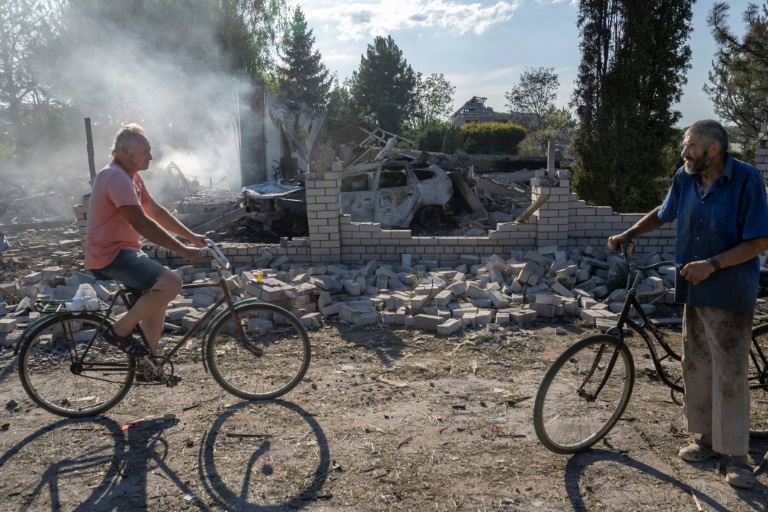
The mayor of the southern Ukrainian city of Mykolaiv says one person died and six were injured in overnight Russian rocket attacks on residential districts.

Oleksandr Sienkevych adds that two more people died in hospital following a strike on a bus stop on Friday, bringing the toll from that attack to seven.

– First grain ship loaded – 

Zelensky visits the port of Chornomorsk in southern Ukraine to oversee the loading onto a Turkish ship of the first grain for export since Russia’s February 24 invasion.

A deal last week brokered by the UN and Turkey to lift a Russian blockade of Ukraine’s grain exports is aimed at helping mitigate a global food crisis causing prices to soar in some of the poorest nations.

A Ukrainian statement says exports could start in “the coming days” under the plan aimed at getting millions of tonnes of grain from one of the top grain exporters to world markets.

– First war crime sentence slashed –

The Kyiv court of appeals reduces to 15 years a life sentence handed to a Russian soldier in May for pre-meditated murder in the country’s first war crimes trial.

Vadim Shishimarin, 21 at the time of the ruling, was found guilty of war crimes for killing an unarmed civilian and handed a life sentence, in the first verdict of its kind after Russia’s invasion.

The sergeant from Siberia had admitted to killing a 62-year-old civilian, Oleksandr Shelipov, as he was riding his bike in the village of Chupakhivka in northeast Ukraine.

burs-imm/pvh
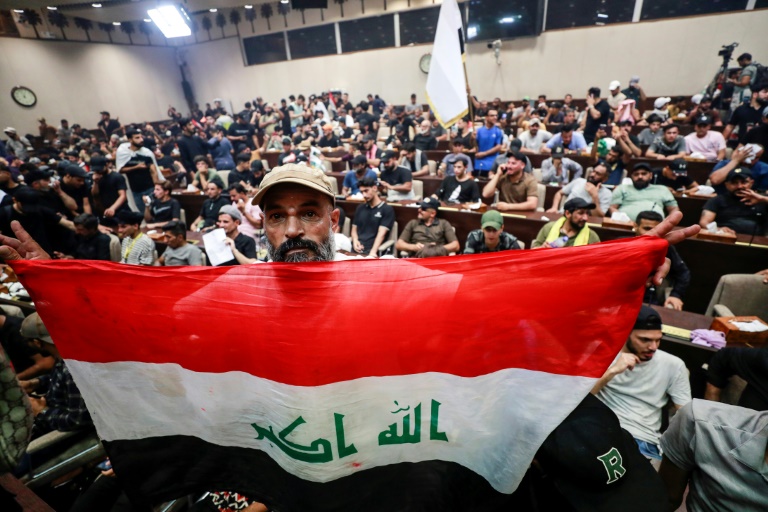
Pro-Sadr protesters vow to remain inside Iraq parliament

Supporters of powerful Iraqi cleric Moqtada Sadr penetrated Baghdad’s heavily fortified Green Zone on Saturday, occupying parliament with no immediate plan to leave.

In a deepening political crisis, it is the second time in days that Sadr supporters have forced their way in to the legislative chamber, months after elections that failed to lead to formation of a government.

“The demonstrators announce a sit-in until further notice,” Sadr’s movement said in a brief statement to journalists over the WhatsApp messaging platform and carried by state news agency INA.

Supporters of Sadr, who once led a militia against US and Iraqi government forces, oppose the recently announced candidacy of Mohammed al-Sudani, a pro-Iran bloc’s pick for prime minister.

Demonstrators waved Iraqi flags and pictures of the cleric inside the legislature. They crowded the chamber where some sat at lawmakers’ desks while others milled about, raising their mobile phones to film the occupation.

They entered after thousands of protesters had massed at the end of a bridge leading to the Green Zone before dozens pulled down concrete barriers protecting it and ran inside, an AFP photographer reported.

Security forces had fired tear gas near an entrance to the district, home to foreign embassies and other government buildings as well as parliament.

Some protesters on the bridge were injured and carried off by their fellow demonstrators.

“All the people are with you Sayed Moqtada,” the protesters chanted, using his title as a descendant of the Prophet Mohammed.

Sadr’s bloc emerged from elections in October as the biggest parliamentary faction, but was still far short of a majority. Ten months on, deadlock persists over the establishment of a new government.

The mercurial Sadr, long a player in the country’s politics, has a devoted following of millions among the country’s majority Shiite population.

His supporters oppose the candidacy of former minister and ex-provincial governor Sudani, who is the pro-Iran Coordination Framework’s pick for premier.

The protests are the latest challenge for oil-rich Iraq, which remains mired in a political and socio-economic crisis despite elevated global crude prices.

Saturday’s demonstration came after crowds of Sadr supporters breached the Green Zone on Wednesday despite volleys of tear gas fire from the police.

They left two hours later but only after Sadr told them to.

– ‘Revolution’ –

On Saturday, security forces shut off roads in the capital leading to the Green Zone with massive blocks of concrete.

“We are here for a revolution,” said one protester, Haydar al-Lami.

“We don’t want the corrupt; we don’t want those who have been in power to return… Since 2003, they have brought us only harm,” he said, referring to the year when a US-led invasion toppled dictator Saddam Hussein.

By convention, the post of prime minister goes to a leader from Iraq’s Shiite majority.

Sadr had initially supported the idea of a majority government.

That would have sent his Shiite adversaries from the Coordination Framework into opposition.

The Coordination Framework draws lawmakers from former prime minister Nuri al-Maliki’s party and the pro-Iran Fatah Alliance, the political arm of the Shiite-led former paramilitary group Hashed al-Shaabi.

But on June 12 Sadr’s 73 lawmakers quit in a move seen as seeking to pressure his rivals to fast-track the formation of a government.

Sixty-four new lawmakers were sworn in later that month, making the pro-Iran bloc the largest in parliament.

That triggered the fury of Sadr’s supporters, who according to a security source also ransacked the Baghdad office of Maliki’s Dawa party on Friday night, as well as that of the Hima movement of Ammar al-Hakim which is a part of the Coordination Framework.

“We would have liked them to wait until the government was formed to evaluate its performance, to give it a chance and to challenge it if it is not,” Hakim said in a recent interview with BBC Arabic.

“The Sadrist movement has a problem with the idea that the Coordination Framework will form a government,” he said.

Spain reports second monkeypox-linked death

Spain on Saturday reported its second monkeypox-related death, bringing to three the number of fatalities linked to the current outbreak outside of Africa.

Spain and Brazil both announced what they believed to be their first deaths related to the virus on Friday.

It is however unclear if monkeypox actually caused any of the three fatalities, with Spanish authorities still carrying out autopsies and Brazilian authorities saying its deceased patient suffered from other serious conditions.

More than 18,000 cases have been detected throughout the world outside of Africa since the beginning of May, the World Health Organization (WHO) says.

Spain is one of the world’s worst-hit countries, with 4,298 people there infected with the virus, according to the Spanish health ministry.

“Among the 3,750 (monkeypox) patients… 120 have been hospitalised and two have died,” it said in a report, without specifying the date of the second death.

It said the victims were “two young men”, and that studies were under way to gather more “epidemiologic information” on both cases.

Brazil said a man with monkeypox died on Thursday in Belo Horizonte, the capital of the southeastern Minas Gerais state.

He “was receiving hospital treatment for other serious conditions”, the state health ministry said in a statement.

“It is important to underline that he had serious co-morbidities, so as not to spread panic in the population. The death rate is very low” for monkeypox, said Minas Gerais health secretary Fabio Baccheretti, who added that the patient was undergoing cancer treatment.

Brazil’s health ministry has recorded close to 1,000 monkeypox cases, mostly in Sao Paulo and Rio de Janeiro states, which are also in the country’s southeast.

The WHO’s European office said on Saturday that more monkeypox-related deaths can be expected.

“With the continued spread of monkeypox in Europe, we will expect to see more deaths,” Catherine Smallwood, Senior Emergency Officer at WHO Europe, said in a statement.

The goal needs to be “interrupting transmission quickly in Europe and stopping this outbreak”, she said.

– ‘Global health emergency’ –

Early signs of the disease include a high fever, swollen lymph glands and a chickenpox-like rash.

But Smallwood stressed that in most cases the disease heals itself without the need for treatment.

“The usual reasons patients might require hospital care include help in managing pain, secondary infections, and in a small number of cases the need to manage life-threatening complications such as encephalitis,” she explained.

The WHO last Saturday declared the monkeypox outbreak a global health emergency.

The disease has been detected in 78 countries, with 70 percent of cases found in Europe and 25 percent in the Americas, WHO chief Tedros Adhanom Ghebreyesus said on Wednesday.

As cases surge globally, the WHO on Wednesday called on the group currently most affected by the virus — men who have sex with men — to limit their sexual partners.

Ghebreyesus told reporters that the best way to protect against infection was “to reduce the risk of exposure”.

“For men who have sex with men, this includes, for the moment, reducing your number of sexual partners, reconsidering sex with new partners, and exchanging contact details with any new partners to enable follow-up if needed,” he said.

The disease usually heals by itself after two to three weeks, sometimes taking a month.

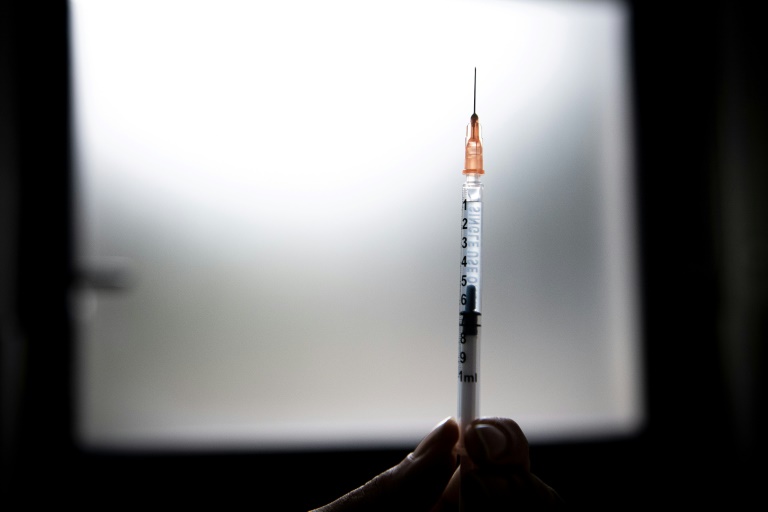
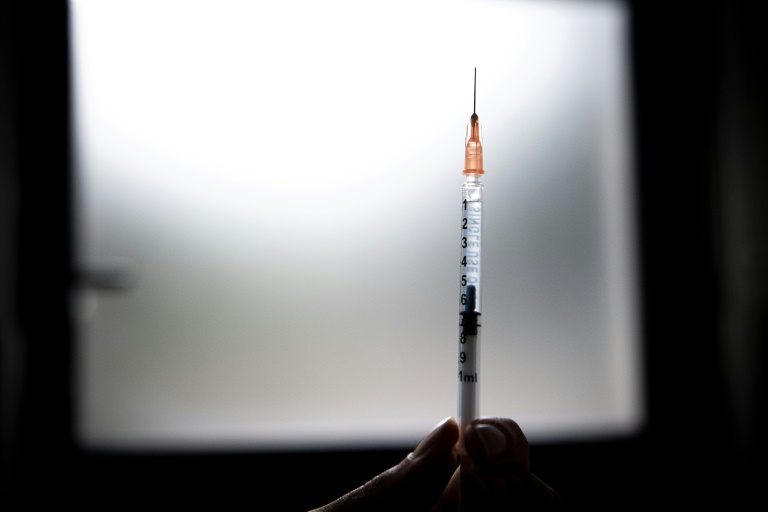
A smallpox vaccine from Danish drug maker Bavarian Nordic, marketed under the name Jynneos in the United States and Imvanex in Europe, has also been found to protect against monkeypox.

burs-ah/imm

Spain reports second monkeypox-linked death

Spain on Saturday reported its second monkeypox-related death, bringing to three the number of fatalities linked to the current outbreak outside of Africa.

Spain and Brazil both announced what they believed to be their first deaths related to the virus on Friday.

It is however unclear if monkeypox actually caused any of the three fatalities, with Spanish authorities still carrying out autopsies and Brazilian authorities saying its deceased patient suffered from other serious conditions.

More than 18,000 cases have been detected throughout the world outside of Africa since the beginning of May, the World Health Organization (WHO) says.

Spain is one of the world’s worst-hit countries, with 4,298 people there infected with the virus, according to the Spanish health ministry.

“Among the 3,750 (monkeypox) patients… 120 have been hospitalised and two have died,” it said in a report, without specifying the date of the second death.

It said the victims were “two young men”, and that studies were under way to gather more “epidemiologic information” on both cases.

Brazil said a man with monkeypox died on Thursday in Belo Horizonte, the capital of the southeastern Minas Gerais state.

He “was receiving hospital treatment for other serious conditions”, the state health ministry said in a statement.

“It is important to underline that he had serious co-morbidities, so as not to spread panic in the population. The death rate is very low” for monkeypox, said Minas Gerais health secretary Fabio Baccheretti, who added that the patient was undergoing cancer treatment.

Brazil’s health ministry has recorded close to 1,000 monkeypox cases, mostly in Sao Paulo and Rio de Janeiro states, which are also in the country’s southeast.

The WHO’s European office said on Saturday that more monkeypox-related deaths can be expected.

“With the continued spread of monkeypox in Europe, we will expect to see more deaths,” Catherine Smallwood, Senior Emergency Officer at WHO Europe, said in a statement.

The goal needs to be “interrupting transmission quickly in Europe and stopping this outbreak”, she said.

– ‘Global health emergency’ –

Early signs of the disease include a high fever, swollen lymph glands and a chickenpox-like rash.

But Smallwood stressed that in most cases the disease heals itself without the need for treatment.

“The usual reasons patients might require hospital care include help in managing pain, secondary infections, and in a small number of cases the need to manage life-threatening complications such as encephalitis,” she explained.

The WHO last Saturday declared the monkeypox outbreak a global health emergency.

The disease has been detected in 78 countries, with 70 percent of cases found in Europe and 25 percent in the Americas, WHO chief Tedros Adhanom Ghebreyesus said on Wednesday.

As cases surge globally, the WHO on Wednesday called on the group currently most affected by the virus — men who have sex with men — to limit their sexual partners.

Ghebreyesus told reporters that the best way to protect against infection was “to reduce the risk of exposure”.

“For men who have sex with men, this includes, for the moment, reducing your number of sexual partners, reconsidering sex with new partners, and exchanging contact details with any new partners to enable follow-up if needed,” he said.

The disease usually heals by itself after two to three weeks, sometimes taking a month.

A smallpox vaccine from Danish drug maker Bavarian Nordic, marketed under the name Jynneos in the United States and Imvanex in Europe, has also been found to protect against monkeypox.

burs-ah/imm

Ageing pope admits he must slow down, or quit

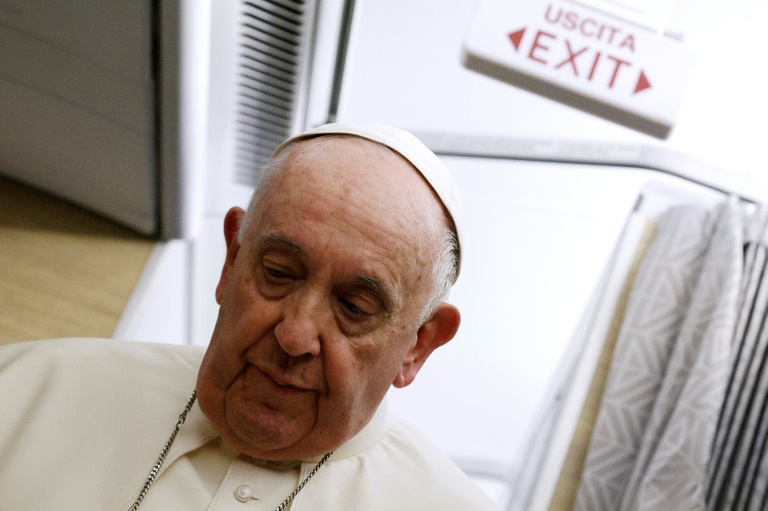
Pope Francis admitted Saturday he needs to slow down, telling reporters after a six-day trip to Canada that he cannot maintain his pace of international travel — and may have to think about retiring.

“I don’t think I can go at the same pace as I used to travel,” said the 85-year-old pope, who suffers pain in his knee that has seen him increasingly reliant on a wheelchair.

“I think that at my age and with this limitation, I have to save myself a little bit to be able to serve the Church. Or, alternatively, to think about the possibility of stepping aside.” 

It is not the first time Francis has raised the possibility of following the example set by his predecessor, Benedict XVI, who quit over his own failing health in 2013, and is now living quietly in Vatican City.

In 2014, a year into his papacy, Francis told reporters that if his health got in the way of his functions as pope, he would consider stepping down.

In May, as reported in the Italian media, Francis joked about his knee during a closed-door meeting with bishops, saying: “Rather than operate, I’ll resign.”

“The door is open, it’s one of the normal options, but up until now I haven’t knocked on this door,” he said Saturday.

“But that doesn’t mean the day after tomorrow I don’t start thinking, right? But right now I honestly don’t. 

“Also this trip was a little bit the test. It is true that you cannot make trips in this state, you have to maybe change the style a little bit, decrease, pay off the debts of the trips you still have to make, rearrange.

“But the Lord will tell. The door is open, that is true.”

– Intense speculation –

The comments come after intense speculation about Francis’s future, after he was forced to cancel a string of events due to his knee pain including a trip to Africa planned for earlier this month.

Talk was also fuelled by his decision to call an extraordinary consistory for August 27, a slow summer month at the Vatican, to create 21 new cardinals — 16 of whom will be under the age of 80, thereby eligible to elect his successor in a future conclave.

Benedict’s decision to quit caused shockwaves through the Catholic Church. He was first pope to resign since the Middle Ages, but the precedent has now been set.

“In all honesty, it is not a catastrophe, it is possible to change pope, it is possible to change, no problem! But I think I have to limit myself a bit with these efforts,” Francis said on Saturday.

He mostly used a wheelchair during his trip to Canada, where he offered a historic apology for decades of abuse of Indigenous children at residential schools run by the Catholic Church.

But he did stand up in his “popemobile” to greet crowds.

Francis said surgery on his knee was not an option, adding that he was still feeling the effects of six hours spent under anaesthetic last summer, when he underwent an operation on his colon.

“You don’t play, you don’t mess around, with anaesthesia,” he said. 

But he added: “I will try to continue to go on trips and be close to people, because I think it is a way of service, closeness.”

Francis still hopes to reschedule his postponed trip to South Sudan and the Democratic Republic of Congo.

“But it will be next year, because of the rainy season — let’s see: I have all the good will, but let’s see what the leg says,” he quipped.

The Argentine pontiff repeated that he would like to visit war-torn Ukraine, but offered no details on the state of his plans.

He has another overseas trip planned for a religious congress in Kazakhstan in September.

“For the moment, I would like to go: it’s a quiet trip, without so much movement,” the pope said.

Pope calls Canada Indigenous abuse 'genocide', says must slow down

Pope Francis said Saturday the decades-long abuse of Indigenous schoolchildren across Canada amounted to “genocide” as he returned from a six-day trip with an acknowledgement that he needed to slow down his pace of travel — or could even resign.

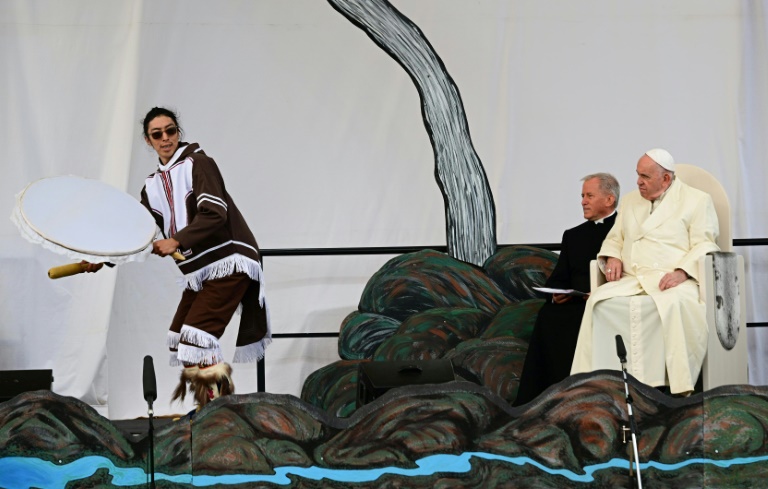
During his “penitential pilgrimage” across Canada this week, the 85-year-old pope offered a historic apology to the First Nations, Metis and Inuit people for what he called the “evil” committed at Catholic-run residential schools.

Speaking to reporters on his return home, the head of the world’s 1.3 billion Catholics used the word “genocide” to describe the treatment of children wrenched from their families and cultures to attend the state schools.

While he told reporters the word “didn’t come to my mind” while in Canada, “I did describe the genocide. And I asked for forgiveness for this process which was genocide”.

“Taking away children, changing the culture, changing the mentality, changing the traditions, changing a race, let’s put it that way, a whole culture,” he said.

Although Francis’s unprecedented apology was mostly welcomed across Canada, from western Alberta to Quebec and the far north, many survivors said much more needed to be done for reconciliation.

– Stepping aside –

Canada was the pope’s 37th international trip since he was elected in 2013, but he admitted he would have to slow down his pace due to knee problems that saw him spent much of the visit in a wheelchair.

“I think that at my age and with this limitation, I have to save myself a little bit to be able to serve the Church. Or, alternatively, to think about the possibility of stepping aside,” the pope said.

It was not the first time Francis has said that, if required, he could follow his predecessor Benedict XVI, who made history in 2013 by resigning due to his own declining health.

“The door is open, it’s one of the normal options, but up until now I haven’t knocked on this door,” he said Saturday.

“But that doesn’t mean the day after tomorrow I don’t start thinking, right? But right now I honestly don’t.”

His comments will fuel already intense speculation about the pope’s future, after he cancelled a string of events in recent months, including a long-planned trip to South Sudan and the Democratic Republic of Congo.

Ruling out surgery due to the risks of anaesthesia at his age, the pope — who underwent colon surgery last year — said he still planned to travel to Kazakhstan in September, and still had hopes of a trip one day to war-torn Ukraine.

– ‘Evil perpetrated’ –

He had wrapped up his Canadian journey Friday in the capital of the vast northern territory of Nunavut, Iqaluit, again asking forgiveness for abuse committed at the 139 residential schools run by the Catholic Church.

About 150,000 Indigenous children were sent there from the late 1800s to the 1990s. 

“I want to tell you how very sorry I am and to ask for forgiveness for the evil perpetrated by not a few Catholics who contributed to the policies of cultural assimilation,” he said. 

Many children were physically and sexually abused at the schools, and thousands are believed to have died of disease, malnutrition or neglect, in what a truth and reconciliation commission later called a “cultural genocide”.

Residents in Iqaluit, a community of just over 7,000 people and where small houses line the rocky ocean shore, have listened closely to the pope’s words throughout his trip.

“He did apologise, and a lot of people don’t seem to be happy with it, but he took that step to come to Nunavut… and I think that’s big,” lifelong Iqaluit resident Evie Kunuk, 47, told AFP. 

– ‘Brilliant light’ –

Throughout the trip, Indigenous people have spoken of a “release of emotion” at hearing the pope’s words, while warning it was only the beginning. 

Many have observed that he did not specifically mention or apologise for the sexual abuse committed at the schools, despite the scandal over such abuse of children by Catholic clergy the world over.

Some called for Francis to rescind the Doctrine of Discovery, the 15th-century papal bulls that allowed European powers to colonise any non-Christian lands and people.

“This doctrine of colonisation, it’s true, it’s bad, it’s unfair,” he said Saturday, adding that “there has always been a danger, a mentality of ‘we are superior and these indigenous people don’t matter’, and that is serious”.

He said it was necessary to “go back and clean up everything that was done wrong, but with the awareness that today there is the same colonialism”, he said, citing the case of the Rohingyas in Myanmar.

Demands were also made in Canada for access to records documenting what happened in the schools, and for the Vatican museums to return Indigenous artefacts.

Russia suspends gas supplies after deadly prison strike

Russian energy giant Gazprom Saturday suspended gas supplies to Latvia, a day after a jail holding Ukrainian prisoners of war was bombed leaving scores dead.

“Today, Gazprom suspended its gas supplies to Latvia… due to violations of the conditions” of purchase, the company said on Telegram.

Gazprom drastically cut gas deliveries to Europe via the Nord Stream pipeline on Wednesday to about 20 percent of its capacity. It had reduced gas flows to Europe twice in June.

The Russian state-run company had earlier announced it would choke supply to 33 million cubic metres a day — half the amount it has been delivering since service resumed last week after 10 days of maintenance work.

European Union states have accused Russia of squeezing supplies in retaliation for Western sanctions over Moscow’s intervention in Ukraine.

Gazprom cited the halted operation of one of the last two operating turbines for the pipeline due to the “technical condition of the engine”.

Kremlin spokesman Dmitry Peskov has blamed EU sanctions for the limited supply.

The EU this week agreed a plan to reduce gas consumption in solidarity with Germany, where the Nord Stream pipeline runs to, warning of Russian “blackmail”.

– ‘Egregious provocation’ –

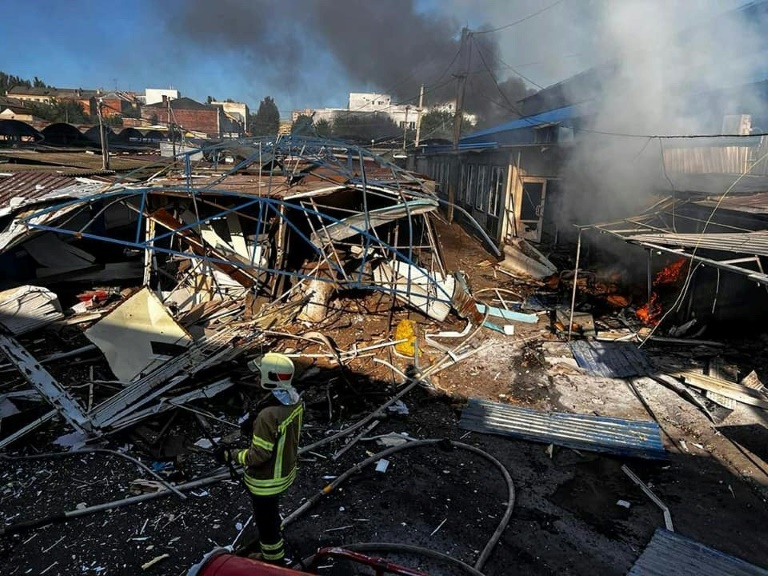
Russian strikes continued to rain down on Ukrainian towns and cities on Saturday, a day after Russia’s defence ministry accused Kyiv of striking a prison in Russian-held territory with US-supplied long-range missiles, in an “egregious provocation” designed to stop captured soldiers from surrendering. 

It said Saturday that the dead included Ukrainian forces who had surrendered after weeks of fighting off Russia’s brutal bombardment of the sprawling Azovstal steelworks in the port city of Mariupol. 

The defence ministry said 50 Ukrainian prisoners were killed and 73 were taken to hospital with serious injuries, adding: “All political, legal and moral responsibility for this bloody massacre of Ukrainians lies with (Ukrainian President Volodymyr) Zelensky personally, his criminal regime and Washington which backs them.”

Zelensky laid the blame squarely on Russia.

“This was a deliberate Russian war crime, a deliberate mass murder of Ukrainian prisoners of war,” he said. “Over 50 are dead.”

Zelensky said an agreement for the Azovstal fighters to lay down their arms, brokered by the United Nations and the International Committee of the Red Cross, included guarantees for their health and safety and called on those two organisations to intervene as guarantors.

Zelensky also urged the international community, especially the United States, to have Russia officially declared as a state sponsor of terrorism.

The mayor of the southern city of Mykolaiv, Oleksandr Sienkevych, said one person died and six were injured following Russian shelling in two residential districts overnight Saturday.

The death toll from a strike on a Mykolaiv bus stop on Friday climbed to seven after two men died in hospital, he added.

In the eastern city of Kharkiv, three Russian S-300 missiles struck a school, mayor Igor Terekhov said on Telegram, adding that the main building was destroyed.

A Ukrainian spokesman said resistance forces had set fire to grain fields around Mariupol.

“The Mariupol Resistance forces set fire to the fields with grain so that it would not be stolen by the occupiers. The fire can probably spread to the Russian military base… There are Russian fortifications, ammunition warehouses and minefields disposed сlose to the area of fire,” Sergiy Bratchuk, a spokesman for the Odessa Regional Military Administration said.

– Grain exports to restart –

Zelensky on Friday visited a port in southern Ukraine to oversee a ship being loaded with grain for export under a UN-backed plan aimed at getting millions of tonnes of Ukrainian grain stranded by Russia’s naval blockade to world markets.

Ukraine’s presidency said exports could start in the “coming days”.

In a separate development, S&P Global Ratings on Friday cut Ukraine’s long-term debt grade by three notches, saying a recently announced plan to defer payments means a default is “a virtual certainty”.

A group of Western countries last week gave their green light to Kyiv’s request to postpone interest payments on its debt and called on other creditors to do so as well.

Russia suspends gas supplies after deadly prison strike

Russian energy giant Gazprom Saturday suspended gas supplies to Latvia, a day after a jail holding Ukrainian prisoners of war was bombed leaving scores dead.

“Today, Gazprom suspended its gas supplies to Latvia… due to violations of the conditions” of purchase, the company said on Telegram.

Gazprom drastically cut gas deliveries to Europe via the Nord Stream pipeline on Wednesday to about 20 percent of its capacity. It had reduced gas flows to Europe twice in June.

The Russian state-run company had earlier announced it would choke supply to 33 million cubic metres a day — half the amount it has been delivering since service resumed last week after 10 days of maintenance work.

European Union states have accused Russia of squeezing supplies in retaliation for Western sanctions over Moscow’s intervention in Ukraine.

Gazprom cited the halted operation of one of the last two operating turbines for the pipeline due to the “technical condition of the engine”.

Kremlin spokesman Dmitry Peskov has blamed EU sanctions for the limited supply.

The EU this week agreed a plan to reduce gas consumption in solidarity with Germany, where the Nord Stream pipeline runs to, warning of Russian “blackmail”.

– ‘Egregious provocation’ –

Russian strikes continued to rain down on Ukrainian towns and cities on Saturday, a day after Russia’s defence ministry accused Kyiv of striking a prison in Russian-held territory with US-supplied long-range missiles, in an “egregious provocation” designed to stop captured soldiers from surrendering. 

It said Saturday that the dead included Ukrainian forces who had surrendered after weeks of fighting off Russia’s brutal bombardment of the sprawling Azovstal steelworks in the port city of Mariupol. 

The defence ministry said 50 Ukrainian prisoners were killed and 73 were taken to hospital with serious injuries, adding: “All political, legal and moral responsibility for this bloody massacre of Ukrainians lies with (Ukrainian President Volodymyr) Zelensky personally, his criminal regime and Washington which backs them.”

Zelensky laid the blame squarely on Russia.

“This was a deliberate Russian war crime, a deliberate mass murder of Ukrainian prisoners of war,” he said. “Over 50 are dead.”

Zelensky said an agreement for the Azovstal fighters to lay down their arms, brokered by the United Nations and the International Committee of the Red Cross, included guarantees for their health and safety and called on those two organisations to intervene as guarantors.

Zelensky also urged the international community, especially the United States, to have Russia officially declared as a state sponsor of terrorism.

The mayor of the southern city of Mykolaiv, Oleksandr Sienkevych, said one person died and six were injured following Russian shelling in two residential districts overnight Saturday.

The death toll from a strike on a Mykolaiv bus stop on Friday climbed to seven after two men died in hospital, he added.

In the eastern city of Kharkiv, three Russian S-300 missiles struck a school, mayor Igor Terekhov said on Telegram, adding that the main building was destroyed.

A Ukrainian spokesman said resistance forces had set fire to grain fields around Mariupol.

“The Mariupol Resistance forces set fire to the fields with grain so that it would not be stolen by the occupiers. The fire can probably spread to the Russian military base… There are Russian fortifications, ammunition warehouses and minefields disposed сlose to the area of fire,” Sergiy Bratchuk, a spokesman for the Odessa Regional Military Administration said.

– Grain exports to restart –

Zelensky on Friday visited a port in southern Ukraine to oversee a ship being loaded with grain for export under a UN-backed plan aimed at getting millions of tonnes of Ukrainian grain stranded by Russia’s naval blockade to world markets.

Ukraine’s presidency said exports could start in the “coming days”.

In a separate development, S&P Global Ratings on Friday cut Ukraine’s long-term debt grade by three notches, saying a recently announced plan to defer payments means a default is “a virtual certainty”.

A group of Western countries last week gave their green light to Kyiv’s request to postpone interest payments on its debt and called on other creditors to do so as well.

Pope calls Canada Indigenous abuse 'genocide', warns he must slow down

Pope Francis said Saturday the decades-long abuse of Indigenous schoolchildren across Canada amounted to “genocide”, as he warned upon his return to Rome that he needed to slow down his travel pace — or resign.

During his six-day “penitential pilgrimage” across Canada this week, the 85-year-old pope offered a historic apology to the First Nations, Metis and Inuit people, who have been waiting for years for such an acknowledgement from the head of the world’s 1.3 billion Catholics. 

Aboard the papal plane, he used the word “genocide” to describe the decades of maltreatment and sexual abuse against Canada’s Indigenous children, who were wrenched from their families and cultures to attend state schools run by the Church. 

“I didn’t say the word (in Canada) because it didn’t come to my mind, but I did describe the genocide. And I asked for forgiveness for this process which was genocide,” he told reporters.

Although Francis’s unprecedented apology was mostly welcomed across Canada, from western Alberta to Quebec and the far north, many survivors said much more needed to be done for reconciliation.

The pope, who spent much of the trip in a wheelchair due to knee pain, told reporters his international trips were numbered. 

“I don’t think I can go at the same pace as I used to travel,” Francis said. 

“I think that at my age and with this (knee) limitation, I have to save myself a little bit to be able to serve the Church. Or, alternatively, to think about the possibility of stepping aside.” 

It was not the first time Francis has said that — should his health require it — he could take a page from his predecessor Benedict XVI, who made history in 2013 by stepping down due to declining physical and mental health. 

– ‘Evil perpetrated’ –

Francis wrapped up his journey Friday in the capital of the vast northern territory of Nunavut, Iqaluit, which means “the place of many fish”.

There, he asked for forgiveness for “the evil perpetrated” by Catholics in the 139 residential schools across Canada run by the Catholic Church, where about 150,000 Indigenous children were sent from the late 1800s to the 1990s. 

“I want to tell you how very sorry I am and to ask for forgiveness for the evil perpetrated by not a few Catholics who contributed to the policies of cultural assimilation,” he said. 

Many were physically and sexually abused at the schools, and thousands are believed to have died of disease, malnutrition or neglect, in what a truth and reconciliation commission later called a “cultural genocide”.

Residents in Iqaluit, a community of just over 7,000 people and where small houses line the rocky ocean shore, have listened closely to the pope’s words throughout his trip.

“He did apologise, and a lot of people don’t seem to be happy with it, but he took that step to come to Nunavut… and I think that’s big,” lifelong Iqaluit resident Evie Kunuk, 47, told AFP. 

– No surgery –

Regarding his ailing knee, Francis said surgery was not an option. 

“Technicians say yes but there is the whole problem of anaesthesia… You don’t play around, you don’t joke with anaesthesia,” he said. 

“But I’m going to try to continue to take trips and be close to people, because I believe it’s a way to serve, to be close.”

The trip to Canada was Francis’s 37th international voyage since becoming pope in 2013. 

But travelling has become increasingly difficult for the pope, who has appeared fragile in recent months, and he has cancelled public appearances and even a trip to Africa that had been scheduled for earlier this month.

– ‘Brilliant light’ –

Throughout the trip, Indigenous people have spoken of a “release of emotion” at hearing the pope’s words, while warning it was only the beginning. 

Some have called for Francis to rescind the Doctrine of Discovery, the 15th-century papal bulls that allowed European powers to colonise any non-Christian lands and people.

“This doctrine of colonisation, it’s true, it’s bad, it’s unfair, and even today it’s used,” he told reporters on Saturday, adding that “there has always been a danger, a mentality of ‘we are superior and these indigenous people don’t matter’, and that is serious”.

He said it was necessary to “go back and clean up everything that was done wrong, but with the awareness that today there is the same colonialism”, he said, citing the case of the Rohingyas in Myanmar.

Demands were also made in Canada for access to records documenting what happened in the schools, and for the Vatican museums to return Indigenous artefacts.

Many have observed that the pope did not specifically mention or apologise for the sexual abuse committed at the schools.

Inuit leaders had been expected to again ask the pope to intervene in the case of 93-year-old Joannes Rivoire, a fugitive French priest accused of sexually abusing Inuit children in Nunavut decades ago.

Earlier this year, Canadian police issued a new arrest warrant for Rivoire, and an Inuit delegation asked Francis to personally intervene to see him extradited.

Francis did not publicly mention Rivoire.

In Iqaluit, he spoke of the “beautiful relationship” between the Inuit and the land.

He said that “it too is strong and resilient, and responds with brilliant light to the darkness that enshrouds it for most of the year.”

Australian PM outlines draft Indigenous recognition vote

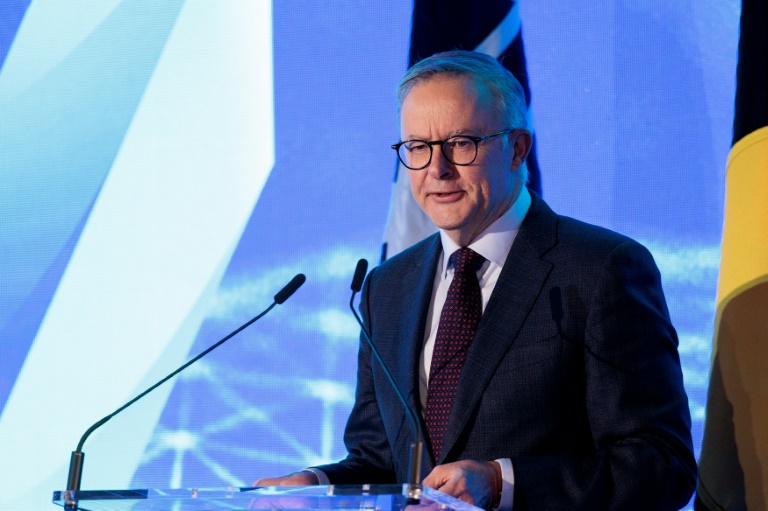
Australian Prime Minister Anthony Albanese on Saturday outlined a draft referendum question in a bid to change the constitution to set up a representative Indigenous body in parliament. 

Australia’s constitution currently does not recognise Indigenous peoples, and the move to enshrine a so-called “voice” — a consultative body to supply advice to the government on decisions that would impact the marginalised group — in the document would require a nationwide referendum. 

Speaking at an Indigenous festival in Arnhem Land — home to a majority Indigenous population — centre-left leader Albanese proposed a draft referendum question to the Australian public: “Do you support an alteration to the Constitution that establishes an Aboriginal and Torres Strait Islander voice?”

Albanese — elected in May — had promised a referendum vote to be held before the end of his term in 2025.

It remains unclear how the referendum will take shape but proposing the draft question to Aboriginal Australian leaders and the public would be a first step.

He also on Saturday recommitted to the “Uluru Statement from the Heart”, which called for improved rights and constitutional recognition for Australia’s First Nations people.

The 2017 statement was rejected by then-prime minister Malcolm Turnbull’s conservative government. 

But Albanese said the Uluru statement is “about consulting Aboriginal and Torres Strait Islander peoples on the decisions that affect you, nothing more, but nothing less”.

“This is simple courtesy. It is common decency,” he added. 

“It recognises the centuries of failure… the failure to ask the most basic human question: how would I feel if this were done to me?”

Australia has long failed to close the gap between the health and wellbeing of its First Nations people and the rest of the population, with soaring incarceration rates among Indigenous peoples and a life expectancy about eight years lower than the national average. 

Close Bitnami banner
Bitnami