World

ExxonMobil profits surge to $17.9 bn on lofty commodity prices

ExxonMobil’s profits nearly quadrupled to $17.9 billion in results released Friday that underscored the elevated state of oil and natural gas prices amid commodity market tightness.

The US oil giant saw profits of $4.7 billion in the year-ago period. Revenues rose 68.7 percent to $111.3 billion.

ExxonMobil joined rivals Royal Dutch Shell and TotalEnergies in releasing massive second-quarter profit increases in the aftermath of the Russian invasion of Ukraine, which has pressured energy markets.

ExxonMobil’s results were also boosted by a strong performance in its downstream business amid high gasoline prices and limited refining capacity.

“Earnings and cash flow benefited from increased production, higher realizations, and tight cost control,” said Chief Executive Darren Woods.

“Strong second-quarter results reflect our focus on the fundamentals and the investments we put in motion several years ago and sustained through the depths of the pandemic.”

The oil giant, which endured a series of quarterly losses early in the pandemic when petroleum demand cratered, is prospering following the turn in the market.

During the quarter, ExxonMobil benefited from a 71 percent surge in crude price realizations compared with the year-ago period and a 186 percent increase in natural gas.

The refining business, which lost money in the 2021 quarter, notched $5.3 billion in profits.

Shares of ExxonMobil jumped 2.6 percent to $95.03 in pre-market trading.

Ultra-fast fashion charms young despite damaging environment

So-called “ultra-fast fashion” has won legions of young trend-setting fans who snap up relatively cheap clothes online amid surging inflation, but the booming genre masks darker environmental problems.

Britain’s Boohoo, China’s SHEIN and Hong Kong’s Emmiol operate the same internet-based business model — produce items and collections at breakneck speed and rock-bottom prices.

They are giving intense competition to more well-known “fast fashion” chains with physical stores, like Sweden’s H&M and Spain’s Zara.

Young people under the age of 25 — widely known as Generation Z — love placing multiple orders for ultra-fast fashion, which then arrive in the post.

– ‘Consequences for planet’ –

Greenpeace has, however, slammed the “throwaway clothing” phenomenon as grossly wasteful, arguing it takes 2,700 litres of water to make one T-shirt that is swiftly binned.

“Many of these cheap clothes end up… on huge dump sites, burnt on open fires, along riverbeds and washed out into the sea, with severe consequences for people and the planet,” the green pressure group says.

Photographs of mountains of shoddy clothing, returned to the vendor or dumped soon after purchase, have gone viral, highlighting the vast amount of waste.

Demand for low-price garments has nevertheless soared due to decades-high inflation, while many Covid-hit high-street shops with big overhead costs struggle to compete.

And it is wildly popular: SHEIN generated $16 billion in global sales last year, Bloomberg says.

– Mirage of cheapness –

Customers purchase T-shirts for £4.0 ($4.80), while bikinis and dresses sell for as little as £8.0 apiece.

For French high-school student Lola, 18, who lives in the city of Nancy, SHEIN shopping has become a cheap hobby.

The brand simply allows her to follow the latest trends “without spending an astronomical amount”, she told AFP, oblivious to the environmental cost.

Lola normally places two to three orders per month on SHEIN with an average combined value of 70 euros ($71) for about 10 items.

Ultra-fast fashion’s young target demographic — like Lola — simply have less cash to spend.

Those consumers therefore “seek quantity rather than quality” of clothing, according to economics professor Valerie Guillard at Paris-Dauphine University.

SHEIN, which was founded in late 2008, now sells across the world helped by its massive presence on social media networks.

– ‘Haul’ videos –

Customers post so-called “haul” videos online — where they unwrap SHEIN packages, try on clothes and review them.

That has boosted its popularity on TikTok, which is favoured by teenagers and young adults, while there are also such videos on Instagram and YouTube.

On TikTok alone, there are 34.4 billion mentions of the hashtag #SHEIN and six billion for #SHEINhaul.

Brands extends their reach via low-cost partnerships with a large number of people on social media, to build trust and increase sales.

Irish social-media influencer Marleen Gallagher, 45, who works with SHEIN and other firms, praised them for offering broader size ranges than regular stores.

“They are unrivalled when it come to choices for plus-size women,” she told AFP.

– Climate emergency –

Yet the industry has a reputation for devouring valuable resources and damaging the environment.

Ultra-fast fashion companies have also been plagued by scandals over allegedly poor working conditions in their factories.

Swiss-based NGO Public Eye discovered in November 2022 that employees in some SHEIN factories worked up to 75 hours per week, in contravention of Chinese labour laws.

Britain’s Boohoo also faced criticism following media reports that its suppliers were underpaying workers in Pakistan.

Added to the picture, the French Agency for Ecological Transition estimates that fast fashion accounts for a staggering two percent of global greenhouse emissions per year.

That is as much as air transport and maritime traffic combined.

The genre has meanwhile attracted the anger of climate campaigner Greta Thunberg.

“The fashion industry is a huge contributor to the climate and ecological emergency, not to mention its impact on the countless workers and communities who are being exploited around the world in order for some to enjoy fast fashion that many treat as disposables,” Thunberg wrote last year, urging change.

Ultra-fast fashion charms young despite damaging environment

So-called “ultra-fast fashion” has won legions of young trend-setting fans who snap up relatively cheap clothes online amid surging inflation, but the booming genre masks darker environmental problems.

Britain’s Boohoo, China’s SHEIN and Hong Kong’s Emmiol operate the same internet-based business model — produce items and collections at breakneck speed and rock-bottom prices.

They are giving intense competition to more well-known “fast fashion” chains with physical stores, like Sweden’s H&M and Spain’s Zara.

Young people under the age of 25 — widely known as Generation Z — love placing multiple orders for ultra-fast fashion, which then arrive in the post.

– ‘Consequences for planet’ –

Greenpeace has, however, slammed the “throwaway clothing” phenomenon as grossly wasteful, arguing it takes 2,700 litres of water to make one T-shirt that is swiftly binned.

“Many of these cheap clothes end up… on huge dump sites, burnt on open fires, along riverbeds and washed out into the sea, with severe consequences for people and the planet,” the green pressure group says.

Photographs of mountains of shoddy clothing, returned to the vendor or dumped soon after purchase, have gone viral, highlighting the vast amount of waste.

Demand for low-price garments has nevertheless soared due to decades-high inflation, while many Covid-hit high-street shops with big overhead costs struggle to compete.

And it is wildly popular: SHEIN generated $16 billion in global sales last year, Bloomberg says.

– Mirage of cheapness –

Customers purchase T-shirts for £4.0 ($4.80), while bikinis and dresses sell for as little as £8.0 apiece.

For French high-school student Lola, 18, who lives in the city of Nancy, SHEIN shopping has become a cheap hobby.

The brand simply allows her to follow the latest trends “without spending an astronomical amount”, she told AFP, oblivious to the environmental cost.

Lola normally places two to three orders per month on SHEIN with an average combined value of 70 euros ($71) for about 10 items.

Ultra-fast fashion’s young target demographic — like Lola — simply have less cash to spend.

Those consumers therefore “seek quantity rather than quality” of clothing, according to economics professor Valerie Guillard at Paris-Dauphine University.

SHEIN, which was founded in late 2008, now sells across the world helped by its massive presence on social media networks.

– ‘Haul’ videos –

Customers post so-called “haul” videos online — where they unwrap SHEIN packages, try on clothes and review them.

That has boosted its popularity on TikTok, which is favoured by teenagers and young adults, while there are also such videos on Instagram and YouTube.

On TikTok alone, there are 34.4 billion mentions of the hashtag #SHEIN and six billion for #SHEINhaul.

Brands extends their reach via low-cost partnerships with a large number of people on social media, to build trust and increase sales.

Irish social-media influencer Marleen Gallagher, 45, who works with SHEIN and other firms, praised them for offering broader size ranges than regular stores.

“They are unrivalled when it come to choices for plus-size women,” she told AFP.

– Climate emergency –

Yet the industry has a reputation for devouring valuable resources and damaging the environment.

Ultra-fast fashion companies have also been plagued by scandals over allegedly poor working conditions in their factories.

Swiss-based NGO Public Eye discovered in November 2022 that employees in some SHEIN factories worked up to 75 hours per week, in contravention of Chinese labour laws.

Britain’s Boohoo also faced criticism following media reports that its suppliers were underpaying workers in Pakistan.

Added to the picture, the French Agency for Ecological Transition estimates that fast fashion accounts for a staggering two percent of global greenhouse emissions per year.

That is as much as air transport and maritime traffic combined.

The genre has meanwhile attracted the anger of climate campaigner Greta Thunberg.

“The fashion industry is a huge contributor to the climate and ecological emergency, not to mention its impact on the countless workers and communities who are being exploited around the world in order for some to enjoy fast fashion that many treat as disposables,” Thunberg wrote last year, urging change.

European stocks end week higher on growth hopes

European stock markets rose robustly on Friday as official data showed eurozone growth holding up in the face of soaring inflation.

Stock markets in Asia ended the session lower after data showed that the US economy contracted again, reinforcing recession fears, but boosting expectations that the US Federal Reserve will slow its pace of interest rate hikes.

After an extended period of pessimism on trading floors, investors were beginning to speculate that the market may be bottoming out. 

The EU’s official data agency said the 19-country eurozone grew by 0.7 percent in the second quarter, even though inflation rose to a new record of 8.9 percent in July. 

A day earlier, US data showed the world’s biggest economy shrank by 0.9 percent in the period from April to June after already contracting by 1.6 percent in the preceding three months. 

But the reading was taken as a sign of good news, since it could give the Fed room to take its foot off the pedal and treasury yields — considered a barometer of future interest rates — eased.

Officials were expected to continue raising US interest rates, but analysts estimate they would announce a half-point rise in September, compared with three-quarters of percentage point at the past two meetings.

“Stocks continued their rally in Europe on Friday, alongside US futures, as market sentiment improved following reassuring macro data in addition to positive corporate results,” said ActivTrades analyst Pierre Veyret.

The prospect of US interest rates not rising as fast as previously expected has knocked the dollar slightly after soaring against other major currencies in recent months.

A second successive contraction in growth is widely considered a technical recession, although it is not officially considered so in the United States until identified as such by the National Bureau of Economic Research.

But while debate rages over that issue, the consensus is that the economy is struggling.

“The more important point is that the economy has quickly lost steam in the face of four-decade high inflation, rapidly rising borrowing costs, and a general tightening in financial conditions,” said Sal Guatieri, of BMO Capital Markets.

China is also struggling, hit by Covid-induced lockdowns in major cities including Shanghai and Beijing that have hammered all sectors and supply chains.

– Key figures at around 0930 GMT –

London – FTSE 100: UP 0.6 percent at 7,386.66 points

Frankfurt – DAX: UP 0.8 percent at 13,386.61

Paris – CAC 40: UP 1.4 at 6,425.71

EURO STOXX 50: UP 1.0 percent at 3,688.90

Tokyo – Nikkei 225: DOWN 0.1 percent at 27,801.64 (close)

Hong Kong – Hang Seng Index: DOWN 2.3 percent at 20,156.51 (close)

Shanghai – Composite: DOWN 0.9 percent at 3,253.24 (close)

New York – Dow: UP 1.0 percent at 32,529.63 (close)

Euro/dollar: UP at $1.0200 from $1.0197 Thursday

Pound/dollar: DOWN at $1.2153 from $1.2177 

Euro/pound: UP at 83.92 pence from 83.70 pence

Dollar/yen: DOWN at 133.29 yen from 134.25 yen

Brent North Sea crude: UP 2.0 percent at $109.23 per barrel

West Texas Intermediate: UP 2.2 percent at $98.57 per barrel

Norwegian woman summits ninth mountain in pursuit of 'super peaks' record

A Norwegian woman remains on course to climb the world’s 14 “super peaks” in the shortest time ever, her Instagram account said, after she summitted Pakistan’s Broad Peak, the ninth mountain on her quest.

Pakistan is home to five of the world’s 14 super peaks — those over 8,000 metres (26,246 feet). Climbing them all is considered the ultimate achievement by mountaineers.

Kristin Harila is taking on Nepali adventurer Nirmal Purja’s 2019 record of six months and six days for climbing all 14. 

On Thursday, day 76 of her pursuit, she scaled Broad Peak, the twelfth highest, a message on her Instagram page said.

Officials from the Alpine Club of Pakistan were not immediately available to confirm the 36-year-old’s latest feat, but it comes just six days after they said she had summitted K2, the world’s second highest peak.

“She is now descending to base camp, and then heading towards the two last mountains in the second phase of this project, Gasherbrum I and II,” the Instagram message read.

A record number of climbers are tackling Pakistan’s peaks this year, but the mountains have taken their toll — with six people missing and feared dead since the season began in June, including four foreigners.

Canadian Richard Cartier, Australian Matthew Eakin, Afghan Ali Akbar and Pakistani Sharif Sadpara are feared dead on K2, officials from the Gilgit-Baltistan tourism department said.

Briton Gordon Henderson was lost climbing Broad Peak, and Pakistani Iman Karim on Gasherbrum II.

Pakistan officials ordinarily don’t list missing climbers as dead until their bodies have been recovered.

Records have tumbled on Pakistan’s mountains this year, according to the Alpine Club, with over 140 people summiting the 8,611-metre K2 — including 20 women.

Until this year, it had been scaled just 425 times, whereas Everest — the world’s highest — has been conquered by more than 6,000 people since Edmund Hillary and Tenzing Norgay first reached the top in 1953.

Last week, Sanu Sherpa, from Nepal, became the first person to complete the double summit of all 14 super peaks after reaching the top of Gasherbrum II.

Soldiers in civilian areas: A touchy topic in Ukraine

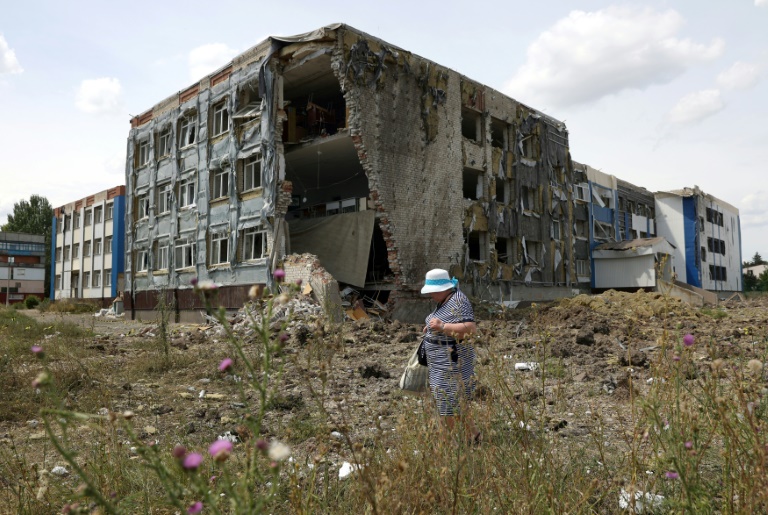
The daily strikes on residential areas in eastern Ukraine have raised sensitive questions about military personnel deploying in civilian areas, as well as the activities of local informants.

AFP has visited many villages and towns in the Donetsk region, which Russian troops are trying to capture, where civilian areas with no apparent military significance are regularly being attacked.

In Pokrovsk, 85 kilometres (53 miles) to the south of Kramatorsk, the main city in the Ukrainian-held part of the region, a strike destroyed or damaged a dozen homes on a single street last week.

There have been similar and often deadly strikes in Kostiantynivka, Toretsk and even in Kramatorsk, further from the front line.

For many local residents, there is no doubt about why these areas are being hit — they say Ukrainian troops are deploying in abandoned homes and schools.

AFP cannot independently verify their claims.

Human Rights Watch, a non-governmental organisation, has accused both Russian and Ukrainian forces of putting civilians at risk by setting up positions in residential areas.

The group named four cases in areas occupied by Russian forces and three on the Ukrainian side in a report this month.

“Russian and Ukrainian forces have put civilians in Ukraine at unnecessary risk by basing their forces in populated areas without removing residents to safer areas,” the report said.

Asked about the issue by AFP, the governor of the Donetsk region, Pavlo Kyrylenko, said: “It’s a war. It is impossible to avoid the destruction of infrastructure or homes.

“Our primary task is to stop the enemy and that can lead to the destruction of infrastructure. It is impossible to fight this war any other way,” he said.

– Informants –

In Kramatorsk, retired lathe operator Yevgen, 70, stood smoking a cigarette outside the ruins of school number 23 after it was destroyed by a strike.

The building, which in peacetime would host 500 children aged between seven and 17, was the second school in the city that was reduced to rubble.

Seven more schools in the city have been damaged since the start of the war, according to Denis Sysoyev, the local official in charge of education.

The school had been used since the start of the war as a food aid depot.

But Yevgen said that “the Russians are targeting Ukrainian soldiers. I don’t know if they were staying inside the school but we regularly saw them coming and going around here”.

“And in our area there are lots of ‘well-intentioned’ people who want to help and inform the Russians,” he said.

Natalia, a mother of three pupils from school 23, made the same claim.

She mentioned a Telegram group of local residents where she said the comments left no doubt about “who is pro-Russian and who is not”.

– ‘Calm down’ –

Every time there is a Russian strike, there is talk about the sensitive topic of informants.

“I wonder, how does the enemy know the coordinates of the places where military are based?” Kyrylenko said.

“Many people remain loyal to the occupiers and are awaiting the Russian world. They know it is treason. They will regret it later,” he said.

Kramatorsk mayor Oleksandr Goncharenko wrote that “hatred is rising among local residents”.

“Those who are awaiting the arrival (of the Russians), those who have been promised piles of gold and freedom of expression from their ‘saviours’ are idiots,” he said on Facebook.

“I beg you to calm down. Set aside your resentment and your suspicions. Turn your anger in a different direction, against those who want to rob you of your normal and peaceful life”.

Galyna Prychepa, spokeswoman for the intelligence services in the Donetsk and Lugansk regions, said 37 informants have been arrested in the area since the Russian invasion began on February 24.

They are accused of espionage and high treason.

There are similar problems in the south of Ukraine where the governor of the Mykolaiv region, which is under constant shelling by Russian forces, has announced a reward of $100 for anyone who helps identify Russian informants.

On his Telegram account, Vitaly Kim asked for information on “those who reveal to the occupiers the locations of Ukrainian troop deployments” or pass on coordinates of potential targets.

Hong Kong activists face years in jail for subversion

Four Hong Kong activists on Friday pleaded guilty to subversion, a violation that could see them jailed for years under the city’s Beijing-imposed national security law.

China is remoulding Hong Kong in its authoritarian image, using the wide-ranging security law to silence dissent.

The latest international criticism of the law came this week from the UN Human Rights Committee, which said it was too broad and applied arbitrarily.

On Friday, four people — aged between 19 and 21 — pleaded guilty to subversion, after prosecutors accused them of inciting others to overthrow the government.

They could now be imprisoned for years under the security law, which China imposed on Hong Kong in 2020 after a wave of huge and sometimes violent pro-democracy protests.

The four were accused of setting up street booths to promote “revolution” against the Chinese government and to incite separatism.

As proof of subversion, the prosecution cited one of the defendants urging the public to not use a Covid-19 contact tracing app and to disobey anti-epidemic policies.

The activists — Wong Yat-chin, Chan Chi-sum, Chu Wai-ying and Wong Yuen-lam — now await sentencing. They will return to court on September 24.

More than 200 people have been arrested so far over alleged violations of the security law.

Chinese and Hong Kong authorities have dismissed criticism of the law, saying it is “unsubstantiated”.

Hong Kong Chief Executive John Lee on Friday said the law had brought stability and peace back to the city, describing the criticism from the UN rights watchdog as “misguided”.

Sony trims annual profit forecast after Bungie purchase

Sony trimmed its annual net profit forecast on Friday, partly due to acquisition expenses from the purchase of US game studio Bungie, creator of hits like “Halo” and “Destiny”.

The PlayStation maker announced in February it would buy Bungie for $3.6 billion, weeks after rival Microsoft unveiled a landmark pact to acquire “Call of Duty” maker Activision Blizzard.

Microsoft says its massive merger, valued at around $69 billion, will make it the third-largest gaming company by revenue, behind Tencent and Sony — a major shift in the booming gaming world.

Sony Group now predicts net profit for 2022-23 will total 800 billion yen ($6 billion), down from its previous estimate of 830 billion yen.

Higher-than-expected acquisition expenses are “mainly due to the acquisition of Bungie, Inc. being completed earlier than the assumed timing”, it said.

Lower sales of games by non-house developers will likely dent its overall sales figures this financial year, the Japanese conglomerate said, but this would be “partially offset” by a weaker yen.

Favourable exchange rates also boosted Sony’s movie segment, chief financial officer Hiroki Totoki told reporters.

Customer traffic at US theatres appears to be returning to pre-pandemic levels, and Sony Pictures is looking to score another box-office win after the runaway success of “Spider-Man: No Way Home”.

“We have high hopes for ‘Bullet Train’ featuring Brad Pitt,” Totoki said.

– PlayStation 5 sales steady –

In the April to June quarter, Sony posted a three percent year-on-year rise in net profit to 218 billion yen, with sales up around two percent to 2.3 trillion yen.

The company has faced challenges rolling out its PlayStation 5 console, which remains difficult to get hold of more than 18 months since its launch, in part due to pandemic supply-chain disruption and the global chip shortage.

Sony sold 11.5 million PS5s last year, and Totoki said the company would maintain its annual sales target of 18 million, while hinting it could make more consoles if Covid-19 lockdowns in China ease further.

“We would like to consider accelerating production and sales (of PS5s) so we can ship many products in time for the year-end shopping season,” he said.

For the PS5, “the problem is more about supply than demand,” Hideki Yasuda, senior analyst at Toyo Securities, told AFP before the earnings release.

A US economic slowdown could open up shipping opportunities, even though it poses broader risks for businesses like Sony, Yasuda added.

In the first quarter of this financial year, Sony sold 2.4 million PS5 units — similar to the same period last year when it sold 2.3 million.

Amir Anvarzadeh of Asymmetric Advisors said Sony could see more “disappointing earnings ahead” despite the tailwind of the weaker yen.

The gaming sector “looks to be where it expects much of the weakness to come from”, he said.

“Although they may blame weaker PS5 sales growth… the real reason looks to be higher development costs the firm has assumed through its aggressive acquisition of game developers, namely Bungie” as Sony tries to keep up with Microsoft’s purchases of game studios “to score first-party titles”.

Two pilots killed as Soviet-era fighter jet crashes in India

Two pilots have been killed in India after a Soviet-era fighter jet crashed during a training sortie, the air force said, heightening safety concerns after a string of incidents involving the aircraft.

The MiG-21 came down on Thursday night in the desert of western Rajasthan state near the city of Barmer, the defence ministry said. 

The crash was the sixth MiG-21 aircraft to have gone down since January last year, with five pilots killed. 

The Indian Air Force (IAF) said the training aircraft “met with an accident” and said an investigation was ordered to determine the cause of the crash. 

“IAF deeply regrets the loss of lives and stands firmly with the bereaved families,” the air force tweeted.

Local media footage showed flaming wreckage spread over a large area.

Defence Minister Rajnath Singh said he was “deeply anguished” by the loss of the two pilots in the crash. 

“Their service to the nation will never be forgotten,” Singh said on Twitter. 

MiG-21 jets first entered Indian service in the 1960s and for decades served as the backbone of the country’s air force.

Numerous crashes in the past few decades, however, have led to the planes being dubbed “flying coffins” because of their poor safety record. 

India is investing billions of dollars in modernising its air force, an initiative motivated by its decades-old rivalry with Pakistan and increased tensions with China.

Its military has bought dozens of French Rafale fighter jets, with deliveries starting in 2020. 

Hustling in Lagos to 'survive in hell'

It’s midnight. Luxury cars arrive outside Cocoon, a nightclub in Lagos, Nigeria’s largest and most vibrant city. In minutes, dozens of people surround the vehicles, hoping to make a buck.

In the wealthy Ikoyi neighbourhood, the flow of people chasing money never stops. All survive on informal jobs they find daily on the streets.

For a handful of dollars, they help people park in front of expensive restaurants, bars and clubs, and help manage traffic during the day. 

In the megacity of some 20 million people, for the poorest a good day is when you have enough to eat. A bad day is when you don’t — and those days are increasingly frequent as high fuel and food costs bite into earnings.

“In Nigeria, it’s simple. Either you hustle or you die. So even 100 naira (25 cents), we take it,” says Musa Omar, standing opposite the Cocoon nightclub.

Africa’s most populous country has some 80 million people living below the national poverty line, earning less than 1.90 dollars a day. 

And in rural Nigeria, millions live in areas where insecurity is rife, making living conditions even harsher. 

Many are now being pushed to a tipping point, after cost of living and food prices increased following the coronavirus pandemic and then again after Russia declared war in Ukraine.

Nigeria’s official year-on-year inflation is now 18 percent, with food inflation at 20 percent — a five-year high.

In Lagos, hustlers — people living and working by the day — can be seen at every corner. 

They embody one of the city’s mottos often seen painted in colourful letters on trucks: “No food for lazy man.” 

The street is like a river, and they hope desperately to catch a passing fish.

“I’m willing to work anywhere, to do anything, to make a decent living,” said Omar, 36.

“Before, it was not like this… prices have gone up, everything is expensive and everybody is suffering.”

– God, only ‘hope’ – 

Every day, thousands of people, mostly young, trickle into the cities and in particular Lagos, hoping to capture a small fraction of the immense wealth concentrated in the hands of a select few. 

It’s the case of Kasheem Sadiq who left Kaduna, in the north, after the death of his baby son, Yusuf, who “got sick”.

“I had to find 9,000 naira (about $20) to pay the treatment but I couldn’t because price of food is up. And there is no job anywhere,” said the 44-year-old, standing under the only functioning light of a dark street of Lagos.

Now working in Lagos, he says he earns about 2,500 naira ($6) a day — almost three times more than what half of the population earns — but, “every night, I’m crying, away from my family,” he said.

It’s now 2.20 am outside the Cocoon nightclub. Someone in a Porsche is trying to park while a group of hustlers guide the driver so that he doesn’t crash the luxury car in a ditch full of trash. 

“The rich are getting so rich and nobody cares about the poor,” says Abdul Musa, 35, who seems to be the hustlers’ informal chief. “Only God can help us.”

– Drugs, prostitution –

From Benue, in the east, Musa has been working the streets of Ikoyi for the past five years. He says he sleeps in a stable at night with donkeys.

“I don’t want to have children,” he says. In this country, “we are surviving in hell.”

Five a.m. Clubbers are streaming out, heading back to their cars.

It’s late, or early, but someone shouting the following three syllables is enough to arouse the crowd: “Bu-ha-ri”, in reference to President Muhammadu Buhari.

The 79-year-old former army general is stepping down next year after his two terms in office allowed by the constitution. 

For many including for those waiting outside Cocoon, the government is “corrupt” and “does nothing for the people”.

Anita Obasi, the only woman in the group of hustlers, is looking at the stream of cars driving away, smoking a joint.

In Nigeria, drugs are widely consumed among the street hustlers as a way to escape reality.

Wearing a black cap, the 24-year-old smiles. She says smoking “eases the pain away”. 

For the past two years, she has been working as a prostitute, charging the equivalent of $9 a client or $11 when she travels to them.

After two decades of growth, Nigeria entered a recession in 2016, after a fall in oil prices. The economy was just starting to recover in 2020 when the pandemic hit. And the war in Ukraine has made everything much worse. 

Obasi lives in constant anguish: will she be able to feed her daughter at the end of the day?

“I try thinking about the bright side of things, but everything around me is going down.”

Close Bitnami banner
Bitnami