World

Deadly elephant virus stalks Zurich zoo

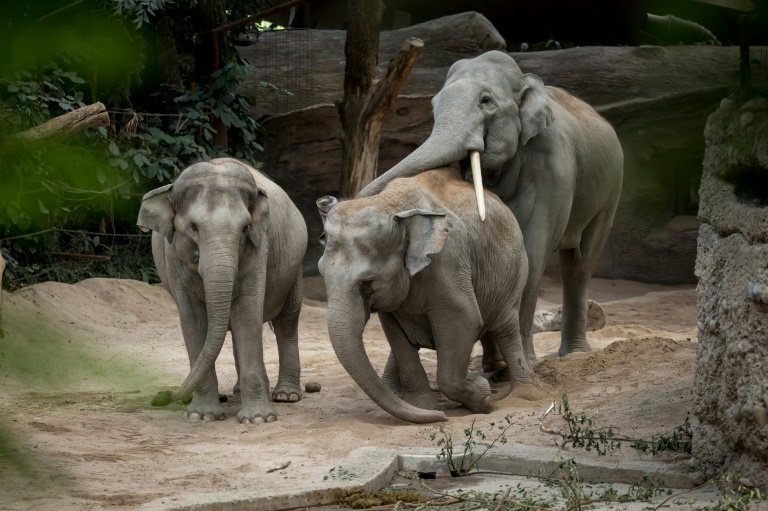
A deadly virus has swept through Zurich’s zoo, killing three Asian elephants in a month and leaving experts stumped as to how to stop its spread.

The zoo overlooking Switzerland’s largest city now has only five of the majestic creatures roaming its 11,000-square-metre (118,400-square-foot) elephant enclosure.

Two-year-old bull Umesh was the first to fall victim to the Elephant endotheliotropic herpesvirus (EEHV) at the end of June, followed just days later by his eight-year-old sister Omysha. 

Last Saturday, Ruwani, a five-year-old female from a second matriarchal herd also died.    

They succumbed at lightning speed to the herpesvirus, which leaves young Asian elephants with internal bleeding and organ failure.

In captivity, this virus is “the main cause of death for elephants between two and eight years”, zoo curator Pascal Marty told AFP.

The virus has also been known to kill elephants in the wild, he said, but “it’s a bit harder to detect”.

– Last goodbye –

The herpesvirus lies latent in nearly all elephants, both in the wild and in captivity, but can in some cases suddenly become deadly, killing its victims in a matter of days.

“We still don’t know why it happens and when it happens,” Marty said. 

The zoo’s five remaining Asian elephants — all adults — were permitted to spend a few hours gathered around the remains of their young family members and companions. 

Marty said it was important to give the animals “enough time (to) say farewell”.

“It’s very hard to say whether or not they are sad, because sadness is something human,” he said.

But he stressed that since elephants are highly social animals, it is vital that they have a chance to realise when a member of their herd is no longer alive.

“It is very important for them to have closure to understand this individual is not part of our group anymore.” 

Less than a week after the latest death, the giant mammals appear to be going nonchalantly about their daily activities, from swimming in a large pond to searching for food.

They slip their trunks into holes, where a computer programme randomly distributes carrots and dried grass, aiming to make the animals walk and search for food as in the wild.

– Stress –

“It is kind of sad, especially because here in Zurich I think the elephants do have enough space,” said frequent visitor Mauro Muller, 29.

Zurich zoo opened its new elephant enclosure in 2014, providing its herds six times more space than they had previously.

But eight years on, the zoo acknowledged it was going through “difficult days”.

“It is particularly frustrating that we are powerless against this virus, despite the best veterinary care through the university animal hospital in Zurich,” zoo director Severin Dressen said in a statement.

There is no vaccine, and while antivirals exist, they are not very efficient and even when elephants are treated quickly, only about a third of them survive.

“The epidemiology of the disease is still not clear,” said Bhaskar Choudhury, a veterinarian and member of the International Union for Conservation of Nature (IUCN) Asian Elephant Specialist Group.

“The virus is shed intermittently by adults but with increasing frequency during stress periods, which is thought to be the source of infection for young calves,” he told AFP.

“IUCN is highly concerned with the mortality worldwide in captivity and more so in the wild.”

– ‘Ambassadors’ –

Asian elephants, which can live up to around 60 years old, are listed by the IUCN as an endangered species, with only about 50,000 left in the wild.

Deforestation, urban sprawl and agricultural development have robbed them of their natural habitat, while poaching and the illegal ivory trade also threaten many herds.

“The populations are declining almost everywhere,” Marty said, adding that for conservation reasons, “it is also really important to have good and healthy populations of Asian elephants in Europe”.

Zurich zoo, he said, has one of the world’s most modern elephant enclosures, and is intent on continuing with its mission to breed them.

He described the elephants in the park as “partners” in educating people about the problems wild elephants face.

“Elephants here at the zoo have an important role as ambassadors for their own species,” he said.

Deadly elephant virus stalks Zurich zoo

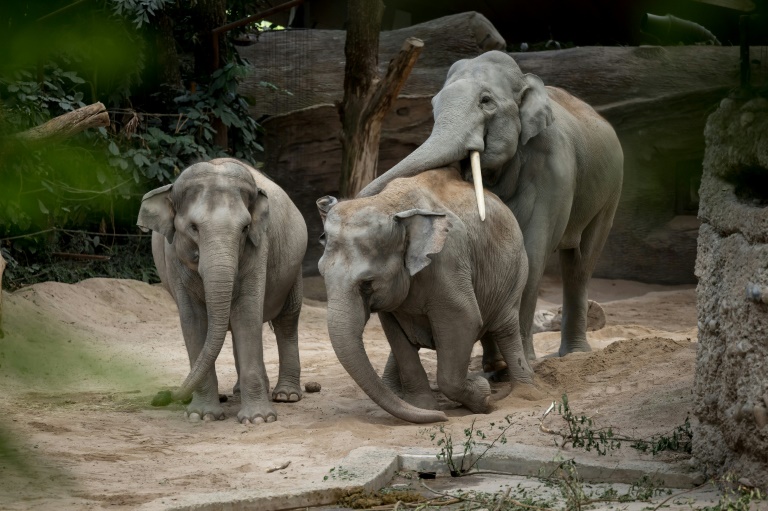
A deadly virus has swept through Zurich’s zoo, killing three Asian elephants in a month and leaving experts stumped as to how to stop its spread.

The zoo overlooking Switzerland’s largest city now has only five of the majestic creatures roaming its 11,000-square-metre (118,400-square-foot) elephant enclosure.

Two-year-old bull Umesh was the first to fall victim to the Elephant endotheliotropic herpesvirus (EEHV) at the end of June, followed just days later by his eight-year-old sister Omysha. 

Last Saturday, Ruwani, a five-year-old female from a second matriarchal herd also died.    

They succumbed at lightning speed to the herpesvirus, which leaves young Asian elephants with internal bleeding and organ failure.

In captivity, this virus is “the main cause of death for elephants between two and eight years”, zoo curator Pascal Marty told AFP.

The virus has also been known to kill elephants in the wild, he said, but “it’s a bit harder to detect”.

– Last goodbye –

The herpesvirus lies latent in nearly all elephants, both in the wild and in captivity, but can in some cases suddenly become deadly, killing its victims in a matter of days.

“We still don’t know why it happens and when it happens,” Marty said. 

The zoo’s five remaining Asian elephants — all adults — were permitted to spend a few hours gathered around the remains of their young family members and companions. 

Marty said it was important to give the animals “enough time (to) say farewell”.

“It’s very hard to say whether or not they are sad, because sadness is something human,” he said.

But he stressed that since elephants are highly social animals, it is vital that they have a chance to realise when a member of their herd is no longer alive.

“It is very important for them to have closure to understand this individual is not part of our group anymore.” 

Less than a week after the latest death, the giant mammals appear to be going nonchalantly about their daily activities, from swimming in a large pond to searching for food.

They slip their trunks into holes, where a computer programme randomly distributes carrots and dried grass, aiming to make the animals walk and search for food as in the wild.

– Stress –

“It is kind of sad, especially because here in Zurich I think the elephants do have enough space,” said frequent visitor Mauro Muller, 29.

Zurich zoo opened its new elephant enclosure in 2014, providing its herds six times more space than they had previously.

But eight years on, the zoo acknowledged it was going through “difficult days”.

“It is particularly frustrating that we are powerless against this virus, despite the best veterinary care through the university animal hospital in Zurich,” zoo director Severin Dressen said in a statement.

There is no vaccine, and while antivirals exist, they are not very efficient and even when elephants are treated quickly, only about a third of them survive.

“The epidemiology of the disease is still not clear,” said Bhaskar Choudhury, a veterinarian and member of the International Union for Conservation of Nature (IUCN) Asian Elephant Specialist Group.

“The virus is shed intermittently by adults but with increasing frequency during stress periods, which is thought to be the source of infection for young calves,” he told AFP.

“IUCN is highly concerned with the mortality worldwide in captivity and more so in the wild.”

– ‘Ambassadors’ –

Asian elephants, which can live up to around 60 years old, are listed by the IUCN as an endangered species, with only about 50,000 left in the wild.

Deforestation, urban sprawl and agricultural development have robbed them of their natural habitat, while poaching and the illegal ivory trade also threaten many herds.

“The populations are declining almost everywhere,” Marty said, adding that for conservation reasons, “it is also really important to have good and healthy populations of Asian elephants in Europe”.

Zurich zoo, he said, has one of the world’s most modern elephant enclosures, and is intent on continuing with its mission to breed them.

He described the elephants in the park as “partners” in educating people about the problems wild elephants face.

“Elephants here at the zoo have an important role as ambassadors for their own species,” he said.
Instagram sidelines TikTok-like features following complaints

Instagram will pause features that users have campaigned against and complained make the social network too much like TikTok, according to a report in the Platformer tech newsletter Thursday.

Celebrity sisters Kim Kardashian and Kylie Jenner were some of the most vocal users to have posted messages on social media this week calling for the company to “make Instagram Instagram again” and stop trying to be like TikTok.

The slogan sprang from a change.org petition that had received more than 229,000 signatures as of late Thursday.

“Lets go back to our roots with Instagram and remember that the intention behind Instagram was to share photos, for Pete’s sake,” the petition read.

Instagram chief Adam Mosseri had responded to the controversy earlier this week with a video on Twitter in which he said the features were a work in progress, and being tested with a small number of users.

Changes included playing up short-form video, displaying it full-screen the way TikTok does, and recommending posts from strangers.

“I’m glad we took a risk,” Mosseri was quoted as saying Thursday in an interview with Platformer’s Casey Newton.

“But we definitely need to take a big step back and regroup.”

“If we’re not failing every once in a while, we’re not thinking big enough or bold enough,” Mosseri said.

Mosseri argued that the shift to more video would happen even if the service changed nothing, as users increasingly share and seek video snippets.

“If you look at what people share on Instagram, that is shifting more and more to video over time,” Mosseri said.

“We are going to have to lean into that shift.”

Meta chief Mark Zuckerberg backed that position during an earnings call Wednesday, saying people are increasingly watching video online.

Both Meta and Google are among companies facing increased competition from TikTok for people’s attention, and have launched their own versions of short-form video sharing.

Asian markets rise as US data boosts hopes of slower Fed hikes

Asian stocks rose Friday after data showing another contraction in the US economy boosted hopes that the Federal Reserve will slow its pace of interest rate hikes.

After an extended period of pessimism on trading floors fuelled by soaring inflation and the central bank’s monetary tightening campaign, investors are beginning to speculate that the market may have reached its nadir.

The world’s top economy shrank 0.9 percent in April-June following a 1.6 percent retreat in the first quarter as it was buffeted by the four-decade spike in inflation and rising borrowing costs.

But the reading was taken as a sign of good news, as it could give the Fed room to take its foot off the pedal, with Treasury yields — considered a barometer of future interest rates — easing.

Officials are expected to continue lifting rates, but analysts estimate they will announce a 50-basis-point rise in September, compared with 75 at the past two meetings.

And analysts said the quick, sharp pace of increases would allow the bank to begin cutting sooner in 2023 while others said any recession would likely only be shallow and short.

The news saw all three main indexes on Wall Street rally more than one percent, with tech firms — which are susceptible to higher rates — leading the way.

The gains extended a rally Wednesday that came after Fed chief Jerome Powell hinted that the bank could start to take it easier in its tightening.

Most of Asia followed suit, with Tokyo, Sydney, Seoul, Singapore, Taipei, Jakarta and Wellington all up. However, Hong Kong dropped and Shanghai struggled.

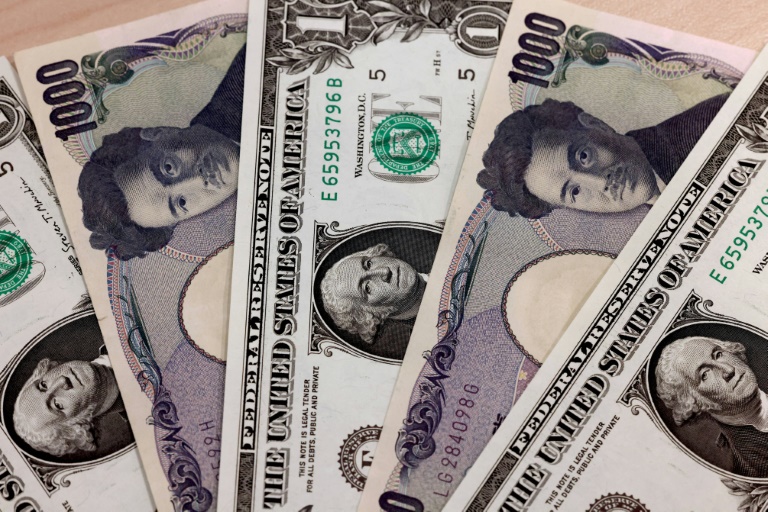
The prospect of US rates not rising as fast as previously expected hit the dollar, which has soared in recent months against most other currencies. 

The greenback dropped below 135 yen Thursday for the first time since July 6, having hit a 24-year high of 139.39 yen just two weeks ago.

A second successive contraction is widely considered a technical recession, though it is not officially considered so in the United States until identified as such by the National Bureau of Economic Research.

But while debate rages over that issue, the general consensus is that the economy is struggling.

“The more important point is that the economy has quickly lost steam in the face of four-decade high inflation, rapidly rising borrowing costs, and a general tightening in financial conditions,” Sal Guatieri, of BMO Capital Markets, wrote.

The retreat in the US economy comes as China also struggles, hit by painful Covid-induced lockdowns in major cities including Shanghai and Beijing that hammered all sectors and supply chains.

On Thursday, the country’s leadership offered a dour assessment of the world’s number two economy but offered no plans to stimulate growth, leaving traders disappointed.

– Key figures at around 0230 GMT –

Tokyo – Nikkei 225: UP 0.5 percent at 27,944.55 (break)

Hong Kong – Hang Seng Index: DOWN 1.4 percent at 20,343.08

Shanghai – Composite: DOWN 0.4 percent at 3,269.18

Dollar/yen: UP at 134.36 yen from 134.25 yen Thursday

Euro/dollar: DOWN at $1.0193 from $1.0197 

Pound/dollar: DOWN at $1.2167 from $1.2177 

Euro/pound: UP at 83.77 pence from 83.70 pence

West Texas Intermediate: DOWN 0.8 percent at $97.16 per barrel

Brent North Sea crude: UP 0.3 percent at $107.50 per barrel

New York – Dow: UP 1.0 percent at 32,529.63 (close)

London – FTSE 100: FLAT at 7,345.25 (close) 

North Korea's Kim says 'ready to mobilise' nuclear weapons

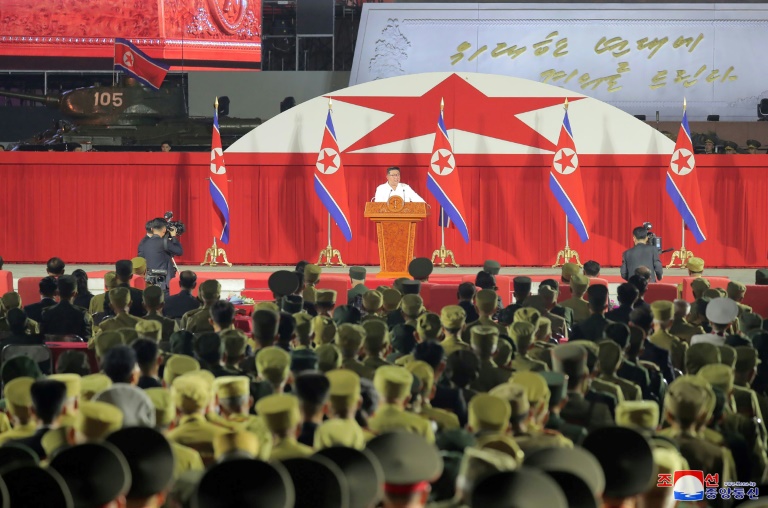
North Korean leader Kim Jong Un said his country was “ready to mobilise” its nuclear deterrent in any future military clash with the United States and South Korea, state media said Thursday.

Washington and Seoul have repeatedly warned that Pyongyang is preparing to carry out its seventh nuclear test — a move that the United States has warned would provoke a “swift and forceful” response.

In Kim’s latest speech to mark the armistice that ended fighting in the Korean War — known as “Victory Day” in the North — he said the country’s armed forces were “thoroughly prepared” for any crisis. 

“Our country’s nuclear war deterrent is also ready to mobilise its absolute power faithfully, accurately and promptly in accordance with its mission,” Kim said in a speech on Wednesday, according to Pyongyang’s official Korean Central News Agency.

Speaking to war veterans on the 69th anniversary of the end of the 1950-53 Korean War, Kim emphasised the country’s “thorough readiness” to “deal with any military clash with the United States”. 

His latest threats come as South Korea and the United States move to ramp up joint military exercises, which have always infuriated the North as Pyongyang — formally known as the Democratic People’s Republic of Korea (DPRK) — considers them rehearsals for invasion.

This week, the US military held live-fire drills using its advanced Apache helicopters stationed in the South for the first time since 2019.

Asked about Kim’s remarks, US State Department spokesman Ned Price said they were “not categorically different from what we’ve heard from the DPRK regime over the course of recent months and in recent years.”

“The DPRK also won’t be surprised to hear the same message from us and that is our commitment to the defence of the Republic of Korea and Japan… remains ironclad,” Price told reporters in Washington.

– Threats to South –

Kim also slammed the new, hawkish leader of the South, formally known as the Republic of Korea.

President Yoon Suk-yeol took office in May and has vowed to take a tougher stance against Pyongyang — which includes a plan to mobilise a preemptive strike capability.

“Talking about military action against our nation, which possesses absolute weapons that they fear the most, is preposterous and is very dangerous self-destructive action,” Kim said of the Yoon administration, which he branded a group of “gangsters”.

“Such a dangerous attempt will be immediately punished by our powerful strength and the Yoon Suk Yeol government and his military will be annihilated.”

The North has carried out a record-breaking blitz of sanctions-busting weapons tests this year, including firing an intercontinental ballistic missile at full range for the first time since 2017.

Nuclear talks between Pyongyang and Washington have been stalled since a summit between Kim and then-US president Donald Trump in February 2019 broke down over sanctions relief and what the North would be willing to give up in return.

The Kim regime has since rejected Washington and Seoul’s repeated offers to resume talks, claiming the United States must first drop its “hostile” policies.

Impoverished Pyongyang has long struggled to feed its people and its economy has been battered by pandemic-led border closures as well as sanctions over its nuclear programmes.

The country has also been battling a massive outbreak of “fever” after it confirmed its first cases of Covid-19 in May. 

“Kim’s rhetoric inflates external threats to justify his militarily focused and economically struggling regime,” said Leif-Eric Easley, a professor at Ewha University in Seoul.

“North Korea’s nuclear and missile programs are in violation of international law, but Kim tries to depict his destabilising arms buildup as a righteous effort at self-defense.”

Abe murder spotlights Unification Church controversy in Japan

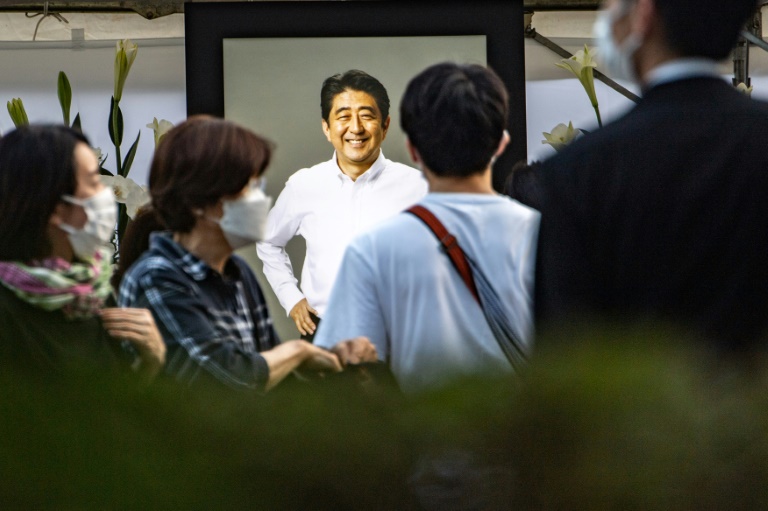
The assassination of former Japanese prime minister Shinzo Abe by a man resentful of the Unification Church has resurfaced years of controversy over the group.

Police say Tetsuya Yamagami targeted Abe because he believed the former prime minister supported a “certain group” to which the man’s mother had made large donations.

In a letter published by local media, Yamagami accused Abe of supporting the Unification Church and expressed resentment towards the group, which has confirmed his mother’s membership.

Former followers, lawyers and academics who study the church say reported details on Yamagami’s family fit a common pattern in Japan.

Yamagami’s mother reportedly joined the church after her husband died by suicide, and was quickly consumed by her faith.

Yamagami’s uncle told local media his nephew sometimes called him for help when his mother left her children alone and without food while attending church.

She donated 100 million yen (then around $1 million) to the church, he said, and later declared bankruptcy.

That all sounds familiar to attorney Hiroshi Yamaguchi, who represents former church members.

“Members are under pressure every day to make donations,” he told AFP.

“They tell you karma is attached to money and (donations) are the only way to save yourself. So you think you have to do it.”

Known officially as the Family Federation for World Peace and Unification (FFWPU), the church was founded by Sun Myung Moon in Korea in 1954 and its followers are colloquially known as “Moonies”.

The Japan chapter began in 1959, and membership took off during the country’s 1980s economic boom — “an era in which people were unsure how to live their lives”, said Kimiaki Nishida, professor of social psychology at Tokyo’s Rissho University.

– ‘Distorted my entire life’ –

Japan became a financial hub for the church, which taught Japanese believers they needed to atone for their country’s wartime occupation of Korea.

“They allocate different roles to each country intentionally,” said Hotaka Tsukada, an associate professor of the sociology of religion at Joetsu University of Education.

“They have (sales) manuals to exploit believers,” he told AFP.

The church offered “spiritual sales” of exorbitantly priced goods including a 43-million-yen ($350,000) statuette, which Japanese believers were told would absolve them or their ancestors.

Huge outlays by members led to a backlash.

Japan’s National Network of Lawyers Against Spiritual Sales says it has filed suits seeking 123.7 billion yen ($900 million) in damages for former followers since 1987.

A series of arrests in the 2000s and verdicts against the church prompted limits on “spiritual sales”, but lawyer Yamaguchi says believers are still pressed to meet monthly donation targets.

“It’s a goal God decides,” he says the church tells members. “It’s a quota they need to meet.”

The church denies members are pressured.

“Our view is that all donations before Heaven must be freely given,” FFWPU press contact Demian Dunkley told AFP.

“FFWPU sometimes makes appeals for donations, but FFWPU members choose whether, when and how much they will give.”

In 2005, Yamagami reportedly attempted suicide after his mother’s bankruptcy, hoping his siblings would receive an insurance payout.

His older brother, a childhood cancer survivor, died by suicide a decade later.

In a letter to an anti-church blogger sent the day before Abe’s murder, Yamagami said his teen years were marred by his mother’s “overspending, family disruption and bankruptcy”.

“The experience has distorted my entire life,” the letter published by local media said.

– ‘One family under God’ –

Former church members have recounted similar family ruptures, including a Japanese woman whose mother told her to stay with an abusive husband chosen by the church because a divorce would “please Satan”.

“I can’t defend what (Yamagami) did,” she told a press conference this month, speaking on condition of anonymity.

“But… that’s how badly the church destroys lives.”

Yamagami’s letter accused Abe of being “one of the most influential supporters of the Unification Church”, based partly on a 2021 speech the politician gave to a church-linked group.

The church and affiliated groups have regularly enlisted prominent figures, including former US president Donald Trump, for events.

Dunkley said the church “seeks to build relationships with anyone interested in peace”.

He said its “mission is to help bring about a peaceful, harmonious world of true love in which humanity lives as ‘one family under God'”.

But the former church member said followers were shown pictures of Moon with prominent figures to encourage reverence.

“It made me feel they have connections with politicians and Moon was a true Messiah,” she said.

The assassination has forced a re-examination of the church’s ties with politicians in Japan, including Abe’s grandfather: former prime minister Nobusuke Kishi.

Abe’s brother, Defence Minister Nobuo Kishi, acknowledged this week that church members had served as campaign volunteers, something Dunkley said followers only do “as private citizens”.

Opposition parties have now announced several task forces to scrutinise the church’s activities and links with politicians.

Finns call for halt to 'unbearable' Russian tourism

Buses of Russian tourists stream into Finland at Nuijamaa border crossing in the country’s southeast, some hoping to enjoy the peaceful Finnish summer and others planning to travel further into Europe.

Finland may be seeking NATO membership following Moscow’s invasion of Ukraine, but the Nordic country remains Russia’s only EU neighbour to grant tourist visas to Russian citizens.

“I have travelled here for 12 years,” 37-year-old Boris Surovtcev from Saint Petersburg told AFP while waiting to cross. “This is a wonderful country with nature and lakes.”

After the EU shut its airspace to Russian flights, Finland has also become an important transit country for Russians looking to fly elsewhere in Europe.

But many Finns are unhappy with the situation, and the thought of Russians enjoying a Finnish summer while Ukrainians suffer under a brutal invasion has been met with indignation.

“It is not right that Russians can freely travel to Finland. It takes away the basis for the sanctions,” local Kirsi Iljin said.

“I think there should be some restrictions.”

– Restrictions proposed –

As an act of solidarity with Ukraine, Finland’s conservative opposition party proposed a halt to new tourist visas for Russians this week.

“This situation is unbearable,” Jukka Kopra, a National Coalition Party MP told AFP.

“Ukraine’s citizens are being killed, including civilians, women and children, and at the same time Russians are spending holidays in the EU.”

There appears to be widespread backing for the proposal in the Finnish parliament, with MPs across party lines voicing support for visa restrictions.

“Personally, I think restrictions should be increased,” said Aki Linden from the ruling Social Democrats, acting PM while Sanna Marin is away.

“The matter is currently (with) the Ministry of Foreign Affairs,” he told AFP.

The high number of existing visas — up to 100,000 — makes the issue more complicated, Linden said.

Finland’s foreign ministry told AFP “alternatives are currently being examined”.

Other Schengen countries that share a border with Russia — Estonia, Latvia, Lithuania and Poland — have already restricted Russian visas.

On Tuesday, Kremlin spokesman Dmitry Peskov said Russia “would react very negatively” to proposed restrictions.

– Full buses –

After Russia lifted Covid travel restrictions on July 15, the number of Russian tourists heading to Finland has steadily increased.

Finland removed its travel restrictions at the end of June. 

Although the numbers are still below pre-Covid levels, there were more than 185,000 border crossings in July — up on the 125,000 seen in June.

Finland issued over 10,000 new visas to Russians in July, according to local media reports.

Bus companies in Saint Petersburg report increased demand for trips to Finland.

“We offer trips once every two days and for the last few weeks every time it has been full,” Serguei Ivanov of transport company Balt Car told AFP.

Many will travel on from Finland by plane, circumventing the Russian flight ban. 

“People want to take advantage of the easier passage,” Ivanov said, expecting the numbers to rise.

– ‘Absurd idea’ –

While many Finns feel solidarity with Ukrainians, Russian tourists are an important source of income for Finnish border towns.

Many business owners in the Lappeenranta municipality by the border worry about the prospect of Russian tourists disappearing again.

“This is the most absurd idea. What do they gain from isolating the normal Russian citizens?” asked Mohamad Darwich, CEO of the Laplandia Market supermarket, just a few minutes from the Russian border.

“They are causing a huge problem for the local people and business.”

Traditionally, people living on the border have had close contact with their neighbours either side, but this has changed drastically following the pandemic and the war.

Surovtcev has a five-year visa to Finland and visits the country up to 10 times a year, but he fears the planned restrictions could put an end to his travels in the country.

“I will be very sad and disappointed. I hope the war will end soon,” he said.

Demolition looms for historic Shanghai neighbourhood

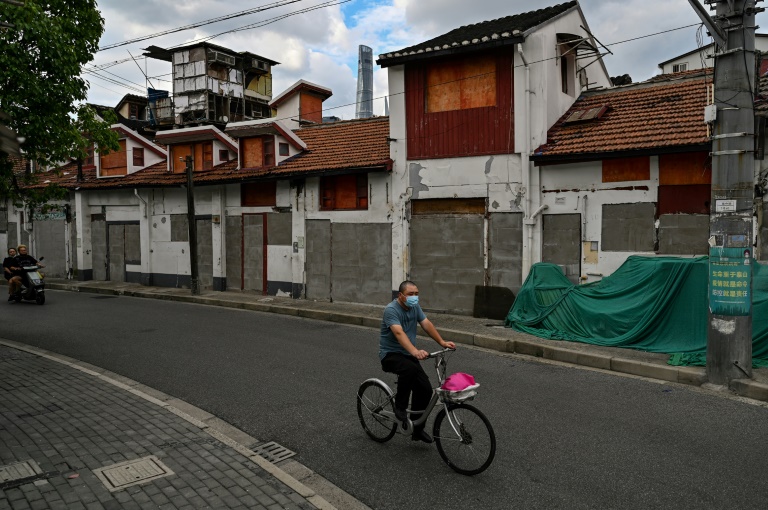
Bricked-up doorways, crumbling facades and a small group of defiant locals: one of Shanghai’s oldest neighbourhoods is barely clinging to life as the city presses ahead with demolition and redevelopment plans.

Laoximen or “old West Gate” — named for its position in Shanghai’s 16th-century defensive walls — was once the city’s cultural centre.

Built around the site of a Confucian temple, the mostly two- and three-storey buildings of stone and wood are an anachronism at the heart of Shanghai’s gleaming commercial district.

Thousands of residents  — a mix of old Shanghai families and migrant workers drawn to the low rent — were ordered to leave their homes at the end of 2017, though some have clung to the ageing buildings for years after the deadline.

Yang, who declined to give his full name, is one of the last residents who has resisted compensation from the government and held onto his home in Laoximen, a damp labyrinth of long corridors stacked with old furniture and household appliances.

“This piece of land was bought by my grandfather,” Yang, whose family has lived in the area since before the Communist Party took power in 1949, told AFP.

Most of his neighbours have agreed to leave, but Yang is holding out for what he says is compensation that would match “the value of the house”.

– Compensation –

According to the local government, Laoximen residents can receive as much as 20,000 yuan ($2,962) per square metre, with bonus payments for moving out early.

But the average pre-owned apartment in Shanghai currently costs more than 55,000 yuan per square metre, according to property company Anjuke. 

The final demolition was apparently delayed by the pandemic, but diggers have resumed their work after Shanghai emerged from lockdown earlier this year.

Where locals once dined at popular restaurants, large red-and-white signs on the walls urge cooperation with redevelopment plans.

“Open, fair and just: promote the renovation of the old city,” one reads.

Doors and windows have been sealed with cement blocks in the winding streets, pockmarked with piles of old chairs, boards and doors.

A short walk from Shanghai’s swanky Bund riverside, Laoximen is one of thousands of ageing neighbourhoods in China where residents have been relocated and the land has been taken back by the government in the name of redevelopment and progress.

Many of the homes in the neighbourhood predated modern building standards, and lack heating or central plumbing.

Residents are typically offered new apartments or a sum of money to give up their homes, though some redevelopment projects have caused public anger and violent confrontations in parts of the country.

Replacing Laoximen’s once densely packed alleyways with larger, higher-end developments could also help the city achieve its goal of capping its population at 25 million by 2035.

Authorities announced the goal in 2017 as part of a campaign to curb “big city diseases” including congestion and housing shortages.

– ‘Public interest’ –

Wu Weigang, a retiree who grew up in the area with his extended family, has especially fond memories of celebrating Chinese New Year in Laoximen as a child.

“Everyone set off fireworks and hung up rabbit-shaped lanterns during the lantern festival,” he said. 

Wu, who now lives two hours away in a temporary apartment in Qingpu district, occasionally returns to Laoximen to revisit his old haunts and check in with neighbours.

Most of the buildings in Laoximen were built in the 20th century in the “shikumen” style of rowhouses arranged along branching lanes.

Antique dealers have been waiting outside family homes to buy up heirlooms in recent months, as families clear out their last belongings.

When night falls, the yellow glow of the streetlights envelops the enclave’s near-empty alleys, while the Oriental Pearl Tower glows in the distance.

Shanghai authorities say the area will be redeveloped to meet “the needs of public interest.”

Wu hopes some of the old neighborhood’s charm will survive the redevelopment intact.

“They told me my home was being preserved,” Wu told AFP. “If it weren’t here, I wouldn’t come to see it, otherwise I would be so sad.”

Venezuela, Colombia agree to reestablish embassies from August 7

Venezuela and Colombia will reestablish diplomatic relations at an ambassadorial level when leftist president-elect Gustavo Petro takes office in Bogota on August 7, representatives of the South American neighbors said Thursday.

Relations between the two countries were broken in 2019 after Colombian President Ivan Duque refused to recognize the reelection of his Venezuelan counterpart Nicolas Maduro.

Duque instead backed the claim of opposition leader Juan Guaido to be Venezuela’s acting president.

Colombia was one of around 60 countries to do so, having rejected Venezuela’s 2018 presidential election that was boycotted by the opposition.

Venezuela’s minister of foreign relations Carlos Faria hosted Colombia’s foreign minister-elect Alvaro Leyva in San Cristobal, the capital of Tachira state on the border between the two countries.

Leyva read out a statement saying that both men had “expressed their desire to progress on a work agenda towards the gradual normalization of bilateral relations from August 7 by naming ambassadors and diplomatic and consular officials.”

Maduro called the three-hour meeting “successful” and said the diplomats had discussed the border’s “progressive, economic and commercial opening” as well as “peace and security plans” for the frontier, among other topics.

Petro, Colombia’s first ever elected left-wing president, had said on the campaign trail that he would reestablish diplomatic relations with Venezuela once in office.

Embassies and consulates in both countries were closed, and flights between the neighbors grounded.

Even the land border between the two countries was closed between 2019 and October 2021.

Maduro regularly accuses Duque of being part of supposed plans to topple him, while the conservative president claims his Venezuelan counterpart is harboring Colombian rebels that carry out attacks on his security forces.

On Thursday, Colombia’s police force claimed a former guerrilla hiding in Venezuela had offered more than $1.5 million as a reward for the assassination of Duque.

When Russia leaves, what's next for the International Space Station?

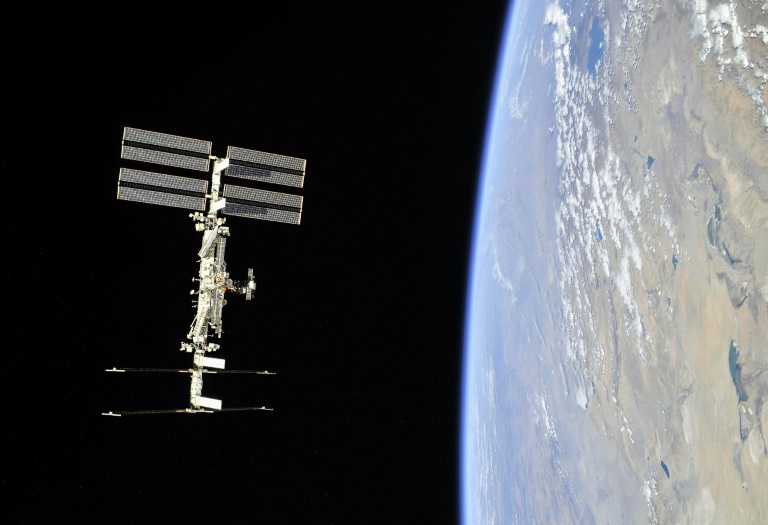
Russia’s announcement this week that it will leave the International Space Station “after 2024” raises critical questions about the outpost’s future viability. 

Here’s what you should know about Moscow’s decision, and the potential effect on one of the last remaining examples of US-Russia cooperation.

– Why does Russia want to leave? – 

Russia’s invasion of Ukraine has pitted it against the West, eviscerating its relationship with the United States and leading to broad sanctions, including against its space industry.

Back in March, Dmitry Rogozin, then-chief of Russian space agency Roscosmos, warned that without his nation’s cooperation, the ISS could plummet to Earth on US or European territory.

But Rogozin’s penchant for bombast, combined with a lack of a firm plan, left things uncertain — and just two weeks ago, Russia and the United States vowed to continue flying each other’s cosmonauts and astronauts to the station.

Scott Pace, director of the Space Policy Institute at George Washington University, said that if anything, the new announcement by Rogozin’s successor Yury Borisov was “mildly helpful.”

“The fact they said, ‘We’re going to be committed through 2024’ is good,” Pace, a former high-ranking government official, told AFP. 

It means Moscow isn’t planning to pull out sooner, even though what precisely is meant by “after 2024” isn’t yet clear.

The year 2024 is what the partners had previously agreed to, though NASA’s goal is to keep the ISS in orbit until at least 2030 and then transition to smaller commercial stations.

The next step in the process is to notify a body called the multilateral control board, comprising all the ISS partners — the United States, Russia, Europe, Japan and Canada — at which point details of the transition will be defined.

If Russia does follow through, it could end up grounding its once proud space program for some time. The country doesn’t have a commercial space economy, and Russian analysts don’t see the country building a new station anytime soon.

– Can the station fly without Russia? –

Probably — but it would be challenging.

The ISS was launched in 1998 at a time of hope for US-Russia cooperation following their Space Race competition during the Cold War.

Since the Space Shuttle was retired, the ISS has relied on Russian propulsion systems for periodic boosts to maintain its orbit, some 250 miles (400 kilometers) above sea level. The US segment is responsible for electricity and life support systems.

The United States has recently taken strides in gaining an independent propulsion system through Northrop Grumman’s Cygnus spacecraft, which successfully carried out a re-boost test in late June.

But altitude is only a part of the equation: the other is “attitude,” or orientation. 

Cygnus “can push, but it can’t keep the station pointed in the right direction while it pushes,” explained astronomer and space watcher Jonathan McDowell.

The ISS itself can make small attitude adjustments, but if the Russians pulled out, the United States would need a more permanent solution — perhaps involving the SpaceX Dragon, Northrop Grumman’s Cygnus or Orion, said Pace.

Russia has two propulsion systems: progress spaceships that dock to the station and the Zvezda service module. All of the control systems are handled out of Moscow.

It would be helpful if Russia left their segment in place rather than took it with them when they go — one of the station’s two bathrooms are on the Russian side — observed Pace, but that’s another unknown. 

“If it’s still there, and we wanted to use it, would there be some sort of rental arrangement? I don’t know.” 

– What do experts predict? –

NASA itself has adopted a bullish position.

“We’re running and gunning, we’re gonna go to 2030 full up,” Joel Montalbano, NASA ISS program manager, said Tuesday on the morning of the Russian announcement. 

“Anybody thinks that there’s a different plan, you’re wrong.”

But while Russia’s withdrawal could present a new opportunity for the private sector, McDowell isn’t so certain.

For him, “how hard they really want to work to get an extra few years out of ISS” is an open question.

“It’s maybe not the right move for the US to go to extreme lengths to save (the) Station,” he said, especially since NASA has bigger goals of building a lunar space station called Gateway, establishing a Moon presence and going to Mars.

“Maybe they should take the Russian pull-out as an excuse, and go, ‘Okay, bye.’ And now let’s put our money in Gateway.”

Close Bitnami banner
Bitnami