World

Recession fears deepen as US economy contracts again

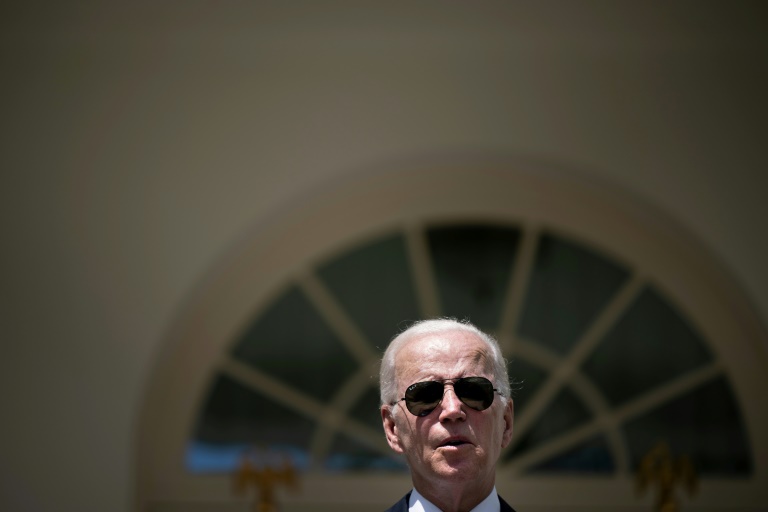
The US economy contracted for a second straight quarter between April and June, government data showed Thursday, adding fuel to recession fears in a headache for President Joe Biden ahead of midterm elections.

Gross domestic product declined at an annual rate of 0.9 percent in the second quarter, following a bigger drop in the first three months of the year, according to the Commerce Department.

While not the official definition, two quarters of negative growth is commonly viewed as a strong signal that a recession is underway, and a downturn in the world’s largest economy would have global consequences, as well as domestic political costs.

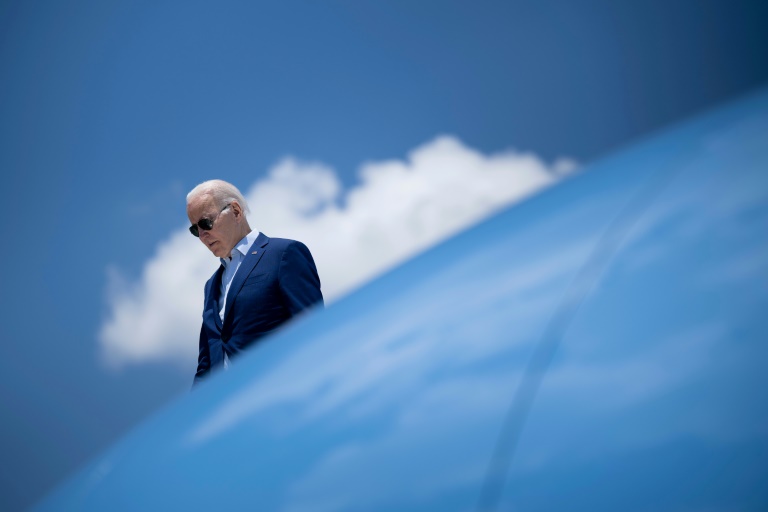
Biden insisted that the US economy is “on the right path,” despite the slowdown, but his critics are sure to seize on the report as proof of the veteran Democrat’s mismanagement.

After a 1.6 percent decline in the first three months of the year, the report said the slowdown in the latest quarter was largely due to drops in government spending at all levels and in private investment on goods, including autos, and on residential buildings, despite an increase in exports.

But personal consumption expenditures (PCE) continued to increase, though at a slower rate than the prior quarter, the data showed.

The US economy also continues to battle sky-high inflation, as a result of supply chain snarls due to Covid lockdowns, as well as the fallout from Russia’s war in Ukraine which has sent food and fuel prices soaring.

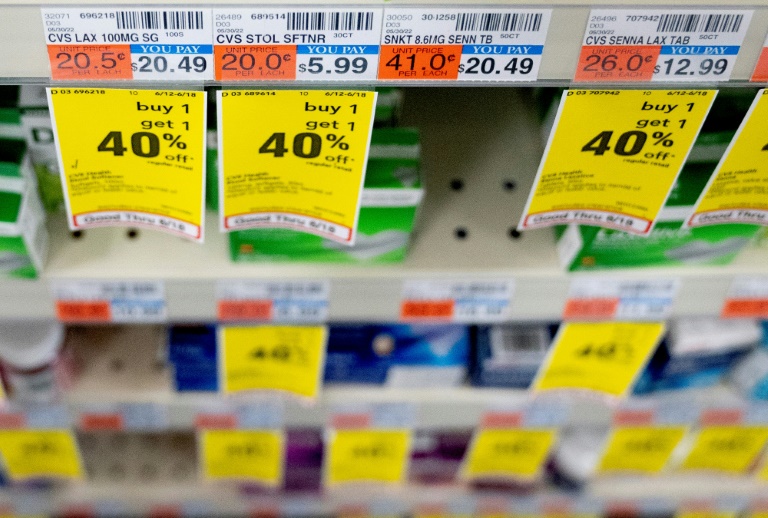
Consumer prices topped nine percent in June, the highest in more than four decades, while the GDP data showed another key inflation measure, the PCE price index, rose a still-high 7.1 percent in the latest three months, the same as in the January-March period.

The US central bank has been raising interest rates aggressively — with the latest big hike on Wednesday — to try to cool the economy and tamp down price pressures.

“It’s no surprise that the economy is slowing down as the Federal Reserve acts to bring down inflation,” Biden said in a statement shortly after the GDP report was released. 

“But even as we face historic global challenges, we are on the right path and we will come through this transition stronger and more secure,” he said, noting the US “job market remains historically strong” and the economy created more than a million jobs in the past three months.

– Recession debate –

It would be highly unusual for an economy still adding jobs at a rapid pace and with near record-low unemployment, to fall into recession, but even so many economists say the discussion of a downturn is more a matter of when, not if.

That poses a major political headache for the president, who has seen his approval ratings plummet in recent months as American families struggle to make ends meet due to surging inflation.

Fed Chair Jerome Powell agreed with Biden and other economists who say the GDP figures are inconsistent with other strong data.

Powell on Wednesday said he does not think the country is currently in a recession because “there are too many areas of the economy that are performing too well.”

Mike Fratantoni, chief economist of the Mortgage Bankers Association, was among those who echoed Powell’s view, saying “the ongoing strength in the job market and other signs of growth make it unlikely that this will be categorized as a recession.”

Powell also said it is possible to cool price pressures without causing a downturn or a big jump in joblessness, although he acknowledged the path to thread that needle is narrowing.

But economist Mohamed El-Erian said on Twitter that the data point to “Deepening stagflation and flashing red recession risk.”

That impression may be the one that sticks in the minds of investors and consumers.

Wall Street was not happy with the data. After big jumps in the wake of the Fed rate hike, all three major stock indices were lower in mid-morning trading.

Hundreds of war-displaced Afghans return east

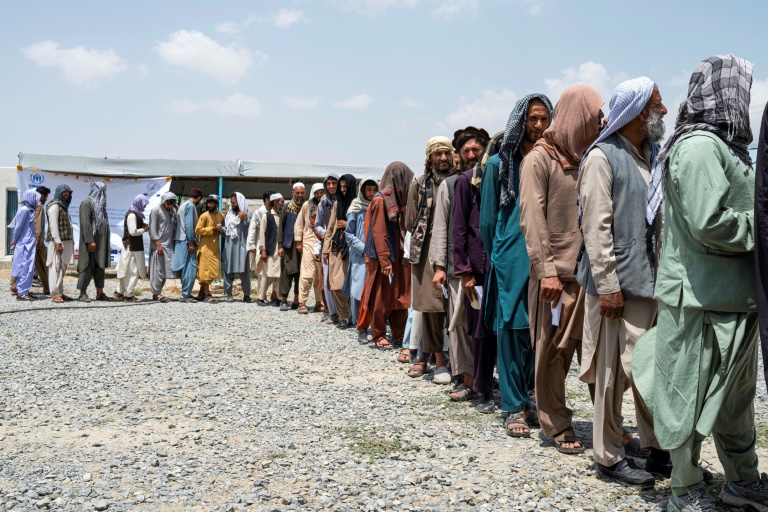
Hundreds of internally displaced Afghans who had taken refuge in the capital left for their homes in the country’s eastern provinces Thursday, almost a year after the war that forced them to flee ended.

Millions migrated inside Afghanistan over two decades of bitter fighting during the US-led military occupation, which ended as the Taliban returned to power last August.

Many flocked to major cities such as Kabul where air strikes, bombings and firefights were less common than in rural Afghanistan, which has historically been the hardline Islamists’ power base.

On Thursday, the United Nations refugee agency UNHCR facilitated the return of some 1,600 Afghans who were living in Kabul to their homes in provinces to the east.

“It’s a delightful day, we’re returning to our houses and our homelands,” said Sardar Wali, 45, a farmer from Laghman province who fled to Kabul months before the Taliban stormed back to power.

“Even if our house was hit by mortars and has been damaged we will build it again,” he told AFP.

More than 30 buses were chartered to transport men, women and children back to their homes, while each family was gifted $200 to buy food and other essentials, the UNHCR said.

Many who took refuge in Kabul lived in makeshift tents or out in the open, while others moved into rented homes only to realise they could not afford the expense.

“It was just two to three months back that we rented a house,” said Pari Gul, who also opted to return to her home under Thursday’s UN-backed programme.

“Our children are collecting plastics and my husband is old. We can’t afford the cost of living here.”

Afghanistan’s economy is in ruins, with tens of thousands of people losing their jobs after the international community halted aid to the country in the wake of the US withdrawal.

An estimated 3.5 million people are still “internally displaced”, according to the UNHCR.

“Everyone loves to live in their own village,” said Huma, 36, as she waited in a queue to take her cash allowance.

“We are leaving thinking that at least we will be headed home.”

First kisses may have helped spread cold sore virus

The modern strain of the virus that causes cold sores has been traced back to around 5,000 years ago, with researchers suggesting its spread could have been propelled by the emergence of kissing.

Around 3.7 billion people — the majority of the world’s population — have a life-long infection of the HSV-1 virus behind facial herpes, according to the World Health Organization.

But despite its ubiquity, relatively little has been known about the history of this virus, or how it spread throughout the world.

So an international team of researchers screened the DNA of teeth in hundreds of people from ancient archaeological finds. 

They found four people who had the virus when they died, then sequenced their genomes for research published in the journal Science Advances on Wednesday.

“Using these reconstructed genomes, we were able to determine that the variations of modern strains all trace back to some time in the late Neolithic, early Bronze Age,” said the study’s co-senior author Christiana Scheib of Cambridge University.

“This was a bit surprising because it has been assumed that herpes is something that has co-evolved with humans for a very long time,” she told AFP.

– Never been kissed –

She said that was still true: all primate species have a form of herpes and humans likely had a strain when they first left Africa.

But the research indicated that those earlier strains were replaced by the modern form around 5,000 years ago.

So what brought about that change? The researchers suggested two theories. 

Around 5,000 years ago was a time of great migration from Eurasia into Europe, and that spread could have affected the virus.

The other theory? That was around the time when people starting romantically kissing each other.

“That is definitely one way to change the transferability of a herpes virus,” Scheib said. 

The virus is normally passed by a parent to their child, but kissing would have given it a whole new way to jump between hosts, she said.

“There is some textual evidence starting to show in the Bronze Age of kissing between romantic partners,” Scheib said. 

– ‘Far grander’ –

The researchers said the earliest known record of kissing was a manuscript from South Asia during the Bronze Age, suggesting the custom may have also migrated from Eurasia into Europe.

Kissing “is not a universal human trait,” Scheib pointed out, emphasising that it is difficult to trace exactly when it began — or if it is definitively linked to the spread of HSV-1.

Around 2,000 years ago, the Roman Emperor Tiberius was believed to have attempted to ban kissing at official functions to prevent the spread of herpes.

Co-senior study author Charlotte Houldcroft, also from Cambridge, said that a virus like herpes evolves on a “far grander timescale” than Covid-19, which the world has watched mutate in a matter of months.

“Facial herpes hides in its host for life and only transmits through oral contact, so mutations occur slowly over centuries and millennia,” she said.

“Previously, genetic data for herpes only went back to 1925,” she added, calling for more “deep time investigations” of viruses.

“Only genetic samples that are hundreds or even thousands of years old will allow us to understand how DNA viruses such as herpes and monkeypox, as well as our own immune systems, are adapting in response to each other.”

Pfizer earnings jump on strong sales of Covid-19 products

Pfizer reported a jump in second-quarter profits Thursday behind a near doubling of revenues driven by sales of its Covid-19 vaccine and therapeutic drug Paxlovid.

The drugmaker raised some of its overall financial benchmarks, but maintained 2022 sales targets for its two Covid-19 products: $32 billion from the vaccine co-developed with German company BioNTech; and $22 billion from Paxlovid.

The total is equal to just over half of forecasted 2022 total revenues.

In the quarter ending June 30, profits were $9.9 billion, up 78 percent from the year-ago period following a 47 percent jump in revenues to $27.7 billion.

US officials last month approved emergency authorization to Pfizer and Moderna for Covid-19 vaccines in under-five-year-olds, the final age group awaiting immunization in most countries.

Pfizer is currently working on a Covid-19 Omicron vaccine booster candidate for the fall, assuming regulatory approval is granted, company officials said.

Pfizer and German BioNTech have also submitted data for an Omicron vaccine to the European Medicines Agency.

“Pfizer is well positioned to satisfy its current contractual obligations and potential demand within its production capacity through the end of the year,” said Chief Executive Albert Bourla in a statement.

Sales for both its Covid-19 products rose during the quarter. 

Revenues for the vaccine came in at $8.8 billion, up 13 percent from the year-ago period, while sales of Paxlovid were $8.1 billion — a big jump over the prior quarter following a five-fold growth in US utilization.

Shares fell 0.2 percent to $51.43 in pre-market trading.

In energy-starved South Africa, whites-only town basks in solar power

Most of South Africa is battling endless power cuts, but a remote whites-only farming town in the country’s sun-drenched centre is close to producing enough electricity to be self-sufficient.

Built after the end of apartheid along the Orange River on 8,000 hectares (more than 19,000 acres) of land acquired by white Afrikaner nationalists, Orania manages its affairs autonomously from the central government.

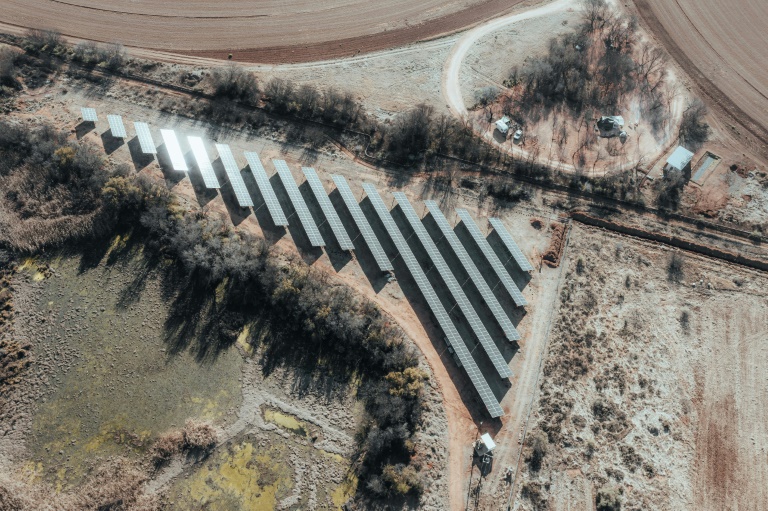
At the end of a gravel track outside the 31-year-old town, a diamond mesh gate opens onto hundreds of photovoltaic panels mounted in rows.

In a country struggling to provide basic services, the small settlement of 2,500 people is the only town nationwide close to reaching energy supply autonomy and freeing itself from the failing national power grid.

“The solar farm is quite a huge game changer for us. It brings energy sustainability to the town,” said Gawie Snyman, 43, who manages the municipality.

“Our big dream is to become an energy exporter”.

Africa’s most developed economy has in recent years been plagued by epileptic power supply, which many blame on the ageing coal-fired plants operated by the state-owned energy giant Eskom.

After weeks of some of the worst blackouts in recent years, President Cyril Ramaphosa on Monday announced energy reforms, urging South Africans to “join in a massive rollout of rooftop solar” and sell excess to the grid.

Orania, a town some 620 kilometres (380 miles) southwest of Johannesburg, was already well on its way to becoming totally energy independent in just several years’ time.

– Solar independence –

Established in 1991 after the abolition of the racial laws, Orania is protected under South Africa’s constitution, which ensures the right to self-determination.

The town was developed on land acquired by a group of Afrikaner families, led by the son-in-law of Hendrik Verwoerd, the architect of apartheid.

It was set up to preserve the “culture” of the Afrikaners — descendants of the Dutch and French-Huguenot Protestant settlers who came to South Africa in the 17th century.

Prospective residents of Orania submit an application, get vetted and the default requirement is one has to be Afrikaner.  

Town spokesman Joost Strydom, 28, said the town in the Karoo region now aimed to make the best of year-round sunshine in order to enjoy “total electricity independence”.

With funding from the municipality and private investors, Orania started building its 10.5-million-rand ($620,000) solar farm in June last year. 

Just 12 months later, the town was generating 841 KW of electricity per hour — almost enough to power half the town and surrounding farms growing corn, wheat and nuts, local authorities say.

“It was the basic idea of self-sufficiency that drove us towards doing this,” said Francois Joubert, the engineer who designed what has become known as the “Orasol” plant.

Standing next to a row of solar panels, the 69-year-old in a grey flat cap said Eskom had “failed dismally” to provide the town with the necessary power.

“You can’t rely on anybody to supply you with basic ingredients to live here in the Karoo,” he said. 

“We had to do that ourselves, we had to work it out… And it’s working for us.”

– Thirsty pecans –

A few kilometres from the solar plant, Joubert’s wife Annatjie watched as a mechanical tree shaker released pecan nuts onto a red net during early morning harvesting on her farm.

The 66-year-old former IT specialist said a stable power supply was crucial for her orchard to flourish.

When Eskom rations electricity to prevent the grid from collapsing, her trees go thirsty as she can’t pump water from the river, she explained.

Yet “it’s vital to complete your irrigation cycles especially with pecans nuts because they use a lot of water,” she said.

The new solar plant would allow her to do just that, she added.

As the world grapples with a food crisis sparked by Russia’s invasion of Ukraine, “we need to produce as much as possible of our own food, and therefore we need water… we need electricity,” her husband said.

The town was proud to be playing its part through producing clean energy, said the engineer.

“We are very glad that we can assist the green idea,” he said.

China's industry minister faces corruption probe

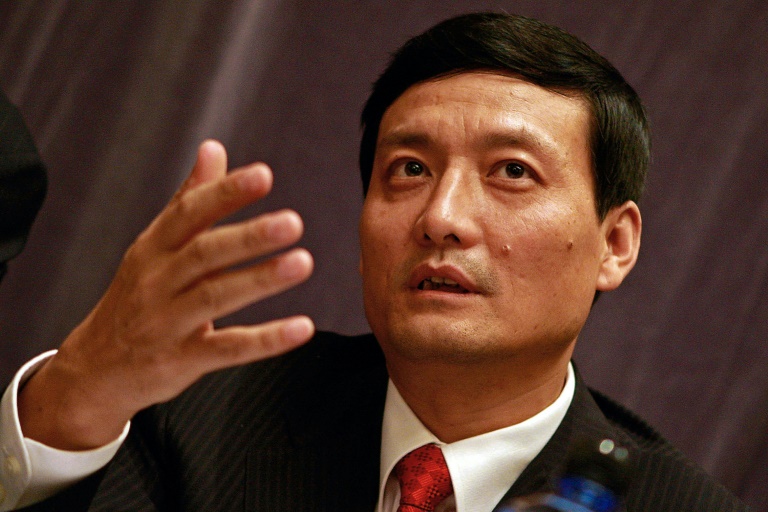
China’s minister for industry and information technology is being investigated for alleged corruption, state media reported Thursday, the latest senior cadre to be snared by Beijing’s sweeping crackdown.

Xiao Yaqing is among the biggest names caught up in President Xi Jinping’s anti-corruption drive, and the investigation into him comes ahead of a key leadership summit this autumn where the Chinese leader will seek to cement his grip on power.

Ostensibly a crackdown on corruption, critics say the wide-ranging campaign launched just after Xi took power in 2012 has also served to remove those voicing criticism of the all-powerful leader, or seen as a threat.

Xiao is facing charges of “violating discipline and law”, and is “currently under review and investigation”, state broadcaster CCTV said, without giving more details. 

His fall from grace comes amid a widespread crackdown on Chinese tech companies, which Beijing fears wield too much power due to lax regulations.

A businessman-turned-politician, Xiao started his career in the early 1980s on a factory floor in northeast China’s rust belt as an engineer and then worked his way up to head the State Administration for Market Regulation, which determines key market rules in China.

In July 2020, he was appointed to the top job at the Ministry of Industry and Information Technology, which decides important issues, including China’s roadmap to dominate the electric vehicle industry and the country’s ambitious 5G communication network plan.

The ministry also played a key role in the now-scrapped “Made in China 2025” policy, which outlined Beijing’s plans to dominate 10 cutting-edge technologies, from artificial intelligence to robotics.

Regulatory chiefs, insurance giants, security officials and financiers are just some of the bigwigs to recently face censure or prosecution under the anti-corruption drive, though it is rare for a minister to face investigation while still holding office.

The vast majority of figures investigated for corruption are eventually convicted.

Former justice minister Fu Zhenghua is awaiting sentencing after pleading guilty on Thursday to charges of “bribe-taking and bending the law for personal gains”.

Prosecutors said Fu had illegally received property and money worth more than 117 million yuan ($17 million), CCTV reported.

Ex-deputy public security minister Sun Lijun — who oversaw security in Hong Kong during months of unrest in 2019 — was arrested in April 2020. 

He later confessed on state TV that he had received a series of bribes worth $14 million, hidden inside boxes of what appeared to be seafood.

The former chairman of Huarong — one of China’s largest state-controlled asset management firms — Lai Xiaomin was executed in January 2021 for receiving “extremely large” bribes.

US economy contracts in second quarter, deepening recession fears

The US economy contracted for a second straight quarter between April and June, government data showed Thursday, fueling recession fears just months before key midterm elections in a blow for President Joe Biden.

Gross domestic product declined at an annual rate of 0.9 percent in the second quarter, following a bigger drop in the first three months of the year, according to the Commerce Department.

Two quarters of negative growth is commonly viewed as a strong signal that a recession is underway, and a downturn in the world’s largest economy would have global consequences, as well as domestic political costs.

Though Biden says he is confident the US economy is not suffering a downturn, his critics are sure to seize on the report as proof of the veteran Democrat’s mismanagement of the economy.

After a 1.6 percent decline in the first three months of the year, the report noted drops in government spending at all levels and private investment on goods, including autos, and on residential buildings fell in the second quarter, despite an increase in exports.

The US economy also continues to battle sky-high inflation, as a result of supply chain snarls due to Covid lockdowns, as well as Russia’s war in Ukraine which has sent prices of food and fuel soaring.

Meanwhile, a key inflation measure, the personal consumption expenditures price index, rose 7.1 percent in the latest three months, the same pace as in the first quarter, the data showed.

With the labor market showing some signs of cooling and supersized interest rate hikes by the Federal Reserve slowing the economy — the latest coming on Wednesday — many economists say the recession discussion is more a matter of when, not if.

And that poses a major political headache for the president, who has seen his approval ratings plummet in recent months as American families struggle to make ends meet due to surging inflation.

– Way out? –

In recent days, Biden has led his administration in a chorus of denial.

“We’re not going to be in a recession, in my view,” he insisted Monday, stressing the strength of the labor market.

It would be highly unusual for an economy still adding jobs at a rapid pace, and with near record-low unemployment, to fall into recession.

Fed Chair Jerome Powell agreed, and said that even with ongoing interest rate hikes to slow the economy, it is possible to cool price pressures without causing a downturn or a big jump in joblessness, although he acknowledged the path to thread that needle is narrowing.

The central bank announced another big interest rate hike of 75 basis points on Wednesday, the fourth increase this year, and stressed it would not hesitate to go for “another unusually large increase” if needed.

Powell said the overriding aim was to get sky-high inflation moving back down toward two percent, but the Fed wants to strike a balance.

“We’re trying to do just the right amount. We’re not trying to have a recession and we don’t think we have to,” he told reporters.

US economy contracts in second quarter, deepening recession fears

The US economy contracted for a second straight quarter between April and June, government data showed Thursday, fueling recession fears just months before key midterm elections in a blow for President Joe Biden.

Gross domestic product declined at an annual rate of 0.9 percent in the second quarter, following a bigger drop in the first three months of the year, according to the Commerce Department.

Two quarters of negative growth is commonly viewed as a strong signal that a recession is underway, and a downturn in the world’s largest economy would have global consequences, as well as domestic political costs.

Though Biden says he is confident the US economy is not suffering a downturn, his critics are sure to seize on the report as proof of the veteran Democrat’s mismanagement of the economy.

After a 1.6 percent decline in the first three months of the year, the report noted drops in government spending at all levels and private investment on goods, including autos, and on residential buildings fell in the second quarter, despite an increase in exports.

The US economy also continues to battle sky-high inflation, as a result of supply chain snarls due to Covid lockdowns, as well as Russia’s war in Ukraine which has sent prices of food and fuel soaring.

Meanwhile, a key inflation measure, the personal consumption expenditures price index, rose 7.1 percent in the latest three months, the same pace as in the first quarter, the data showed.

With the labor market showing some signs of cooling and supersized interest rate hikes by the Federal Reserve slowing the economy — the latest coming on Wednesday — many economists say the recession discussion is more a matter of when, not if.

And that poses a major political headache for the president, who has seen his approval ratings plummet in recent months as American families struggle to make ends meet due to surging inflation.

– Way out? –

In recent days, Biden has led his administration in a chorus of denial.

“We’re not going to be in a recession, in my view,” he insisted Monday, stressing the strength of the labor market.

It would be highly unusual for an economy still adding jobs at a rapid pace, and with near record-low unemployment, to fall into recession.

Fed Chair Jerome Powell agreed, and said that even with ongoing interest rate hikes to slow the economy, it is possible to cool price pressures without causing a downturn or a big jump in joblessness, although he acknowledged the path to thread that needle is narrowing.

The central bank announced another big interest rate hike of 75 basis points on Wednesday, the fourth increase this year, and stressed it would not hesitate to go for “another unusually large increase” if needed.

Powell said the overriding aim was to get sky-high inflation moving back down toward two percent, but the Fed wants to strike a balance.

“We’re trying to do just the right amount. We’re not trying to have a recession and we don’t think we have to,” he told reporters.

Biden, Xi hold talks on Taiwan, trade dispute

President Joe Biden and Chinese counterpart Xi Jinping spoke by phone Thursday on mounting tensions over Taiwan, a festering trade dispute and their bid to keep the superpower rivalry in check.

The White House said the phone call started at 8:33 am in Washington (1233 GMT). A statement would be issued after the call ended, a spokesman said.

While this was Biden’s fifth talk with Xi since becoming president a year and a half ago, it’s getting hard to mask deepening mistrust between the two countries.

Already stuck in a trade war, Beijing and Washington increasingly risk open conflict over Taiwan, with little sign of resolution on either front.

“Tensions over China’s aggressive, coercive behavior in the Indo-Pacific” will be high on the agenda, said White House National Security Council spokesman John Kirby.

The latest flashpoint is a possible trip by Biden ally and speaker of the House of Representatives, Nancy Pelosi, to the island, which Beijing claims is part of China but has its own distinct, democratic government.

Although US officials frequently visit Taiwan, separated by a narrow strip of water from the Chinese mainland, Beijing considers a Pelosi trip as a major provocation. She’s second in line to the US presidency and given her position may travel with military transport.

Washington will “bear the consequences” if the trip, which Pelosi has yet to confirm, goes ahead, China warned Wednesday.

General Mark Milley, chairman of the US joint chiefs of staff, told reporters that if Pelosi asks “for military support, we will do what is necessary to ensure a safe, safe conduct of their business.”

And the dispute around Pelosi is the tip of an iceberg, with US officials fearing that Xi is mulling use of force to impose control over democratic Taiwan.

Once considered unlikely, an invasion, or lesser form of military action, is increasingly seen by China watchers as possible — perhaps even timed to boost Xi’s prestige when he moves later this year into a third term.

Biden’s contradictory comments on whether the United States would defend Taiwan — he said in May that it would, before the White House insisted there was no change in the hands-off “strategic ambiguity” policy — have not helped the tension.

– No face-to-face –

Biden prides himself on a close relationship with Xi going back years but — in large part due to Covid travel restrictions — the two have yet to meet face-to-face since he took office.

According to the White House, Biden’s chief goal is to establish “guardrails” for the two superpowers.

This is meant to ensure that while they sharply disagree on democracy, and are increasingly rivals on the geopolitical stage, they can avoid open conflict.

“He wants to make sure that the lines of communication with President Xi on all the issues, whether they’re issues again that we agree on or issues where we have significant difficulty with — that they can still pick up the phone and talk to one another candidly,” Kirby said.

Where to place the guardrails, however, is challenging amid so many unresolved disputes, including a simmering trade war begun under Donald Trump’s presidency.

Asked whether Biden could lift some of the 25 percent import duties placed on billions of dollars of Chinese products by Trump, Kirby said there was still no decision.

“We do believe… that the tariffs that were put in place by his predecessor were poorly designed. We believe that they’ve increased costs for American families and small businesses, as well as ranchers. And that’s, you know, without actually addressing some of China’s harmful trade practices,” Kirby said.

But “I don’t have any decision to speak to with respect to tariffs by the president. He’s working this out.”

US airline JetBlue announces $3.8 bn acquisition of Spirit

JetBlue Airways plans to acquire low-price carrier Spirit Airlines for $3.8 billion, the companies announced Thursday, in what would establish the fifth largest US airline.

The proposed takeover, which requires regulatory approval, comes a day after Spirit terminated a combination with the Frontier Group following JetBlue’s competing bid challenging the transaction.

By combining, the companies will be able to challenge giant US carriers American, Delta, United and Southwest. They expect $600-$700 million in annual savings by joining forces, said a joint press release from Spirit and JetBlue. 

The companies plan to argue the deal will help consumers.

“We believe we can uniquely be a solution to the lack of competition in the  US airline industry and the continued dominance of the Big Four,” said JetBlue Chief Executive Robin Hayes.

“By enabling JetBlue to grow faster, we can go head-to-head with the legacies in more places to lower fares and improve service for everyone. Even combined with Spirit, JetBlue will still be significantly smaller than the Big Four.”

But some aviation watchers think the transaction could draw criticism in Washington, where antitrust regulators sued to block an alliance of American Airlines and JetBlue.

The all-cash transaction adjusts the price if the deal is delayed because of regulatory challenges. The price will be $33.50 per share if the transaction is completed by December 2023.

But the price would increase to $34.15 per share if the transaction is consummated in July 2024.

JetBlue also agreed to a pay Spirit a fee of $70 million and Spirit shareholders $400 million “in the unlikely event the proposed agreement is not consummated for antitrust reasons,” according to the press release.

In the wake of JetBlue’s challenge to the Spirit-Frontier deal, Spirit leaders, including Chief Executive Ted Christie, had depicted the JetBlue transaction as a risky bet in light of antitrust concerns, as they continued to advocate for the Frontier tie-up.

But on Thursday, Christie told CNBC that at the time he was “actively soliciting” for the Frontier deal, but that there is “a lot of reason to be excited about where we landed.”

“We’ve been listening to the folks at JetBlue and they have a lot of good thoughts on their plans,” Christie told the network.

Although Spirit leaders continued to back the Frontier transaction, they ran into trouble with Spirit shareholders who wanted the richer JetBlue premium. Spirit was repeatedly forced to postpone an investor vote on the Frontier agreement before finally pulling the plug on the transaction on Thursday.

Shares of Spirit rose 4.0 percent to $25.27 in pre-market trading, while JetBlue gained 2.0 percent to $8.57.

Close Bitnami banner
Bitnami