World

Macron defies rights criticism to host Saudi strongman

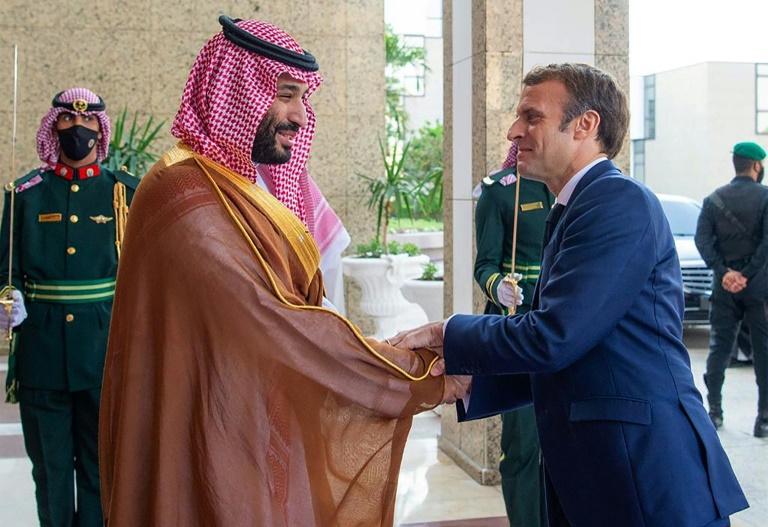
French President Emmanuel Macron on Thursday was to host Saudi Arabia’s Crown Prince Mohammed bin Salman for talks in Paris, defying criticism the invitation is deeply inappropriate barely four years after the murder by Saudi agents of journalist Jamal Khashoggi.

The meeting will be seen as the latest step in the readmission of the de-facto ruler of the kingdom into the international fold, after US President Joe Biden met the man universally known as MBS earlier this month.

The topics set to loom over the meeting include energy supply as concern grows over possible power shortages due to the Russian invasion of Ukraine, as well as reining in the nuclear programme of Riyadh’s top regional foe Iran.

MBS — who is portrayed at home as a champion of social and economic reform but seen by critics as a murderous tyrant — arrives in France fresh from a trip to Greece to discuss energy ties.

“I feel profoundly troubled by the visit, because of what it means for our world and what is means for Jamal (Khashoggi) and people like him,” Amnesty International secretary general Agnes Callamard told AFP, describing MBS as a man who “does not tolerate any dissent”.

The visits mark MBS’ first trip to the EU since the murder of Khashoggi by Saudi agents at the kingdom’s consulate in Istanbul in 2018, a crime that a UN probe described as an “extrajudicial killing for which Saudi Arabia is responsible”.

MBS’ “reintegration into international relations cannot take place at the expense of truth and justice”, Reporters Without Borders (RSF) secretary general Christophe Deloire said in a statement.

US intelligence agencies determined that MBS had “approved” the operation that led to Khashoggi’s death, although Riyadh denies this, blaming rogue operatives.

– ‘Double standards’ –

The killing drew outrage not just over the elimination of a prominent critic of the Saudi regime, but also for the manner in which it was carried out. Khashoggi was lured into the Saudi consulate on October 2, 2018, strangled and dismembered, reportedly with a bonesaw.

“The visit by MBS to France and Joe Biden to Saudi Arabia do not change the fact that MBS is anything other than a killer,” said Callamard, who at the time was the UN special rapporteur on extrajudicial killings and led the independent probe.

His reception by world leaders is “all the more shocking given many of them at the time expressed disgust (over the killing) and a commitment not to bring MBS back into the international community”, she added, denouncing the “double standards”.

MBS had in June also met in Turkey with Turkish President Recep Tayyip Erdogan, who after the Istanbul murder had bitterly criticised Saudi Arabia and vowed no let-up in finding justice for the Washington Post columnist.

RSF meanwhile said at least 27 journalists remain imprisoned in Saudi Arabia and while prominent blogger Raif Badawi was released in March, he is unable to leave the country and join his family abroad.

But despite the concern over Saudi Arabia’s rights record, the kingdom is seen by many in the West as an essential partner due to its energy resources, purchases of weaponry and staunch opposition to Iran’s theocratic regime.

– ‘Political leverage’ –

The French president had already travelled to the kingdom in December 2021 for talks with MBS, a visit that raised some eyebrows at the time.

MBS is in charge of the country’s day-to-day business due to the ailing condition of his father, King Salman.

Macron will be meeting MBS fresh from talks last week in Paris with two close allies of the kingdom, UAE President Sheikh Mohamed bin Zayed Al-Nahyan and Egyptian President Abdul Fattah al-Sisi. The red carpet welcome for both leaders dismayed activists. 

After the recent fist-bump greeting from Biden that for many symbolised the West’s re-acceptance of MBS, there will be huge interest in the body language between Macron and Prince Mohammed.

The talks are set to get under way late in the day, at 8:30 pm (1830 GMT), and include a working dinner at the Elysee Palace. MBS arrived late on Wednesday at a Paris airport and stayed overnight at a private residence outside the city, according to a source who asked not to be named.

“The war in Ukraine has put the energy-producing countries back in the spotlight, and they are taking advantage of it,” said Camille Lons, research associate at the International Institute for Strategic Studies (IISS).

“This gives them political leverage that they will use to reassert their importance on the international stage,” she added.
Mayor of Kharkiv says nowhere in Ukraine's second city 'safe'

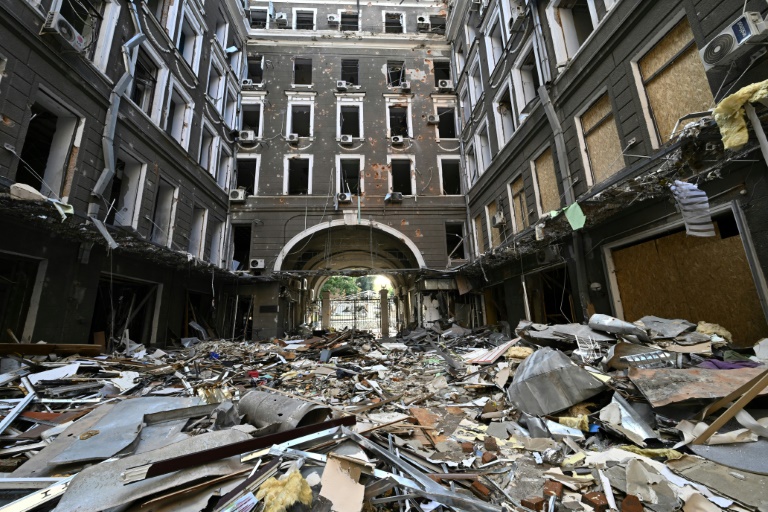
The unmistakable boom of shellfire echoed around the bomb-scarred buildings of western Kharkiv as the mayor of Ukraine’s one-time Soviet capital prepared for his interview. 

Yet the explosion in the suburb of Pisochyn barely registered in a city that has been a key focus of the Russian invasion, its hardest-hit districts pounded to ruins.  

“The Russian aggressors are trying to turn Kharkiv into a pitiful city, like the ones they have in Russia,” Igor Terekhov told AFP in a cafe in the city centre. 

“But they won’t succeed. And, as you see, the people of Kharkiv are defending their city, weapons in hand,” the Russian-speaking official said through an interpreter.

Elected in November last year, the 55-year-old soon found himself staring down the combined might of tens of thousands of Russian troops pouring over the border, which at its closest is just 30 kilometres (20 miles) away.   

Kharkiv — Ukraine’s second biggest city — was besieged from the first days of the full-scale conflict.

It looked as if it would quickly fall to invading Russian troops, who were backed by massive artillery fire and missile strikes. 

Ukrainian forces managed to stem the advance, pushing the invading force back from the outskirts of the city. 

But the Russians remain dug in just a few kilometres away, leaving most of Kharkiv vulnerable to shelling. 

– Shattered hopes –

“We have nine districts in the city and they are all being bombed with varying intensity and at different times. So you can’t say anywhere in Kharkiv is safe,” he said.

“Yes, it is safe in the shelters and it is safe in the metro… But there is no district, no place in the city, where you can claim it is totally safe.”

By the end of March, almost a third of Kharkiv’s residents had left, seeking refuge in towns and cities further west, where going about daily life does not generally mean running the gauntlet of cruise missiles and artillery fire. 

There was a brief lull in early May when Russian forces withdrew towards the border. 

Some 2,000 people a day returned by train, small businesses reopened and beleaguered residents emerged from subway stations.

But the bombardment quickly resumed, shattering any hope of a return to pre-war normality.

Last week a barrage of shelling killed three people, including a 13-year-old boy, adding to a toll that Terekhov says is in the “many hundreds”, although he declines to offer a precise figure.

– 150,000 homeless –

The war has also destroyed 30 percent of houses and apartments in the city, Terekhov said, leaving a staggering 150,000 people homeless.

“It’s more than the population of many European cities… One hundred and one kindergartens, 110 schools, 53 medical institutions and a perinatal centre were hit,” he said.

“Much of this cannot be rebuilt. Also, a metro depot, transformer substations, our municipal transport network.”

Kharkiv, which is far closer geographically to Russia than to Kyiv, is largely Russian-speaking and for a long time was viewed as more sympathetic to Moscow than many of Ukraine’s central and western cities.  

That sentiment changed with Russia’s annexation of Crimea in 2014 and the start of a Moscow-backed separatist conflict in neighbouring regions of the east.

Antipathy to the Kremlin has only hardened since the invasion began on February 24.   

Some Ukrainian officials now fear a renewed Russian attempt to take the city, which had a pre-war population of about 1.4 million.

“The Russian aggressor tries constantly to enter Kharkiv city. That’s why we are preparing ourselves and our army is training,” Terekhov said.

“We must defend our city. And we will defend our city. We will defend Ukraine.”

Asked how long he sees the battle in eastern Ukraine raging, the mayor said he could not second-guess Moscow’s intentions but hoped for a Ukrainian victory “as soon as possible”.

He is already looking towards a future with Kharkiv’s people not just surviving but thriving.

He livened up when he began setting out his vision for the city’s revival, retaining its old-town charm while transforming it into a national hub for technology and innovation. 

“After our victory, there will be a new dynamic in Kharkiv, in Ukraine,” he said.

“And we have this opportunity to build a new city and a new country.” 

Shell profit rockets on high oil prices

British energy giant Shell said Thursday that its net profit soared more than five-fold to $18 billion in the second quarter, fuelled by resurgent oil and gas prices, and rewarded shareholders with another bumper buyback.

The surge in profits in the three months to June was partially attributable to a reversal of $4.3 billion in impairments after the company raised its forecasts for the gas and oil market.

“We delivered strong financial results,” said chief executive Ben van Beurden alongside the results statement.

The London-listed energy major announced a $6-billion share buyback programme, having already returned $8.5 billion to shareholders.

Van Beurden warned also that “with volatile energy markets, economic turbulence and the ongoing need for action to tackle climate change, 2022 continues to present challenges to consumers, to government, and to companies”.

Shell had rebounded into a $3.4-billion profit in second quarter of 2021 from a $18.1-billion loss in the same period of 2020 when it took a massive impairment charge on the Covid-ravaged oil market.

However, oil and gas prices have soared this year owing to the Ukraine war and after countries lifted pandemic lockdowns.

Gas prices, which sky-rocketed in March after Russia launched its invasion of Ukraine, are soaring once more this week after Moscow curbed crucial deliveries to Europe in recent days.

The world’s energy majors are reaping the benefits of this year’s surge in global oil and gas prices as a result of the war in Ukraine.

France’s TotalEnergies said Thursday that net profit more than doubled in the second quarter to 5.7 billion euros ($5.8 billion) from a year earlier.

“The energy sector continues to ride high on the supply and demand imbalance caused by the crisis in Ukraine,” said Laura Hoy, equity analyst at Hargreaves Lansdown.

The Ukraine war has meanwhile sparked an exodus of Western energy companies from Russia.

Earlier this year, Shell logged a first-quarter profit of $7.1 billion, despite taking a $3.9-billion charge on its withdrawal from Russian activities.

China lockdown, chip shortage hit Nissan profits

Japanese car giant Nissan said on Thursday that net profit sank nearly 60 percent in the three months to June as pressures including a lockdown in Shanghai and chip shortages weighed on business.

The firm, which in May reported a positive full-year net profit for the first time in three years, said it logged a net profit of 47.1 billion yen ($347 million), down 58.9 percent on-year. 

The slump was also the result of a one-time boost in the first quarter of last financial year when Nissan unloaded Daimler sales.

But the firm said it was facing a range of headwinds.

“During the first quarter, the extremely challenging business environment put pressure on earnings,” Nissan said in a statement.

“Production was constrained by the Shanghai lockdown caused by spread of the new coronavirus, and semiconductor supply shortages, while external factors such as soaring raw material prices and logistics costs also intensified their impact.”

“The pandemic understandably remains a priority challenge,” chief operating officer Ashwani Gupta told reporters.

“At the same time, we experienced tailwinds with favourable foreign exchange rates,” he added, referring to the yen’s recent slump against the dollar, which helps inflate overseas profits for Japanese firms.

The firm left its full-year forecast unchanged, projecting a net profit of 150 billion yen.

That would be a 30.4 percent slump, however, from the previous year’s 215.5 billion yen.

Operating profit was down 14.2 percent to 64.9 billion yen, but that beat analyst estimates, according to Bloomberg.

– Ghosn saga –

The firm was on a rollercoaster even before the disruption caused by the pandemic and the conflict in Ukraine.

It had been struggling with increasing sales costs, and is currently implementing a plan involving slashing models, cutting costs and restructuring operations.

“Nissan is making progress after an excessive expansion policy in North America in the past that was a factor causing it to lose money,” said Satoru Takada, auto analyst at TIW, a Tokyo-based research and consulting firm.

“Profits declined year-on-year relative to the robust rebound in last year’s April-June quarter, when there was a recovery from the pandemic’s impact and cost-cutting efforts,” Takada told AFP ahead of the earnings report.

“Nissan’s challenge is how to minimise the impact of the chip shortage and sell attractive new cars, including those recently released,” he said.

Gupta said the firm was looking to “invest in building greater resilience” as it battles the effects of obstacles such as China’s lockdowns.

He said its suppliers and dealerships had reopened, and “showroom traffic is recovering”.

On chips, he said Nissan was looking to develop alternatives as well as to replace custom-made semiconductors with general-purpose versions.

And he added that the automaker was attempting to cut its use of precious metals in response to the rising cost of raw materials.

“As always, we move forward with cautious optimism while challenging ourselves to maintain (the) four million sales outlook for the fiscal year,” he said.

Nissan has also been buffeted by the saga surrounding its former chief Carlos Ghosn.

The one-time auto tycoon was detained in Japan in 2018, accused of financial misconduct charges that he denies, but jumped bail and fled to Lebanon the following year.

A Tokyo court in March handed a six-month suspended sentence to former Nissan executive Greg Kelly over allegations that he helped his boss attempt to conceal income.  

The company had pleaded guilty in a separate case, and was ordered to pay a fine of 200 million yen.

In April, French authorities issued an international arrest warrant for Ghosn, who has lived in Lebanon since his daring getaway from Japan, on allegations including corruption, misuse of company assets and money laundering. 

US Senate passes bill to boost domestic chip manufacturing

The US Senate passed a bill on Wednesday to boost domestic production of semiconductors, the in-demand microchips that power everything from smartphones to cars to weapons.

Global semiconductor supplies were disrupted by fallout from Covid-19 shutdowns, sparking widespread shortages of the chips — many of which are made in Asia.

The legislation, which now goes back to the House of Representatives for final passage, provides $52 billion to increase domestic semiconductor production and more than $100 billion over five years for research and development.

The CHIPS Act was passed in the Senate by a rare bipartisan vote of 64 to 33, with 17 Republicans joining hands with Democrats.

President Joe Biden welcomed Senate passage of the legislation that he said will “accelerate the manufacturing of semiconductors in America, lowering prices on everything from cars to dishwashers.”

Global chip shortages notably slowed production of new automobiles last year, causing prices to increase.

“It will mean more resilient American supply chains, so we are never so reliant on foreign countries for the critical technologies that we need for American consumers and national security,” Biden said in a statement.

But Beijing hit out at the details, with foreign ministry spokesman Zhao Lijian saying that while the act “claims to be aimed at improving the competitiveness of US technology and chips, (it) contains provisions that restrict normal scientific and technological cooperation between China and the United States.”

“China is firmly opposed to this,” Zhao told reporters at a regular briefing on Thursday.

The version of the CHIPS Act passed Wednesday provides $39 billion to finance semiconductor manufacturing plants in the United States and another $13 billion for research.

Senate passage of the bill came a day after the South Korean group SK announced a huge investment in US semiconductors and other cutting edge industries.

The conglomerate said in a statement it plans to “increase its new investment in the United States by $22 billion in areas including semiconductors, green energy, and bioscience, creating tens of thousands of new high-tech, high-paying American jobs.”

Easy targets: Drug mules fill women's jails in Hong Kong

Zoila Lecarnaque Saavedra sealed her fate when she agreed to transport a package from Peru to Hong Kong — a decision that landed her more than eight years in prison.

A quarter of Hong Kong’s prisoners are women, a record-high percentage skewed by impoverished foreign drug mules who are often duped or coerced.

Awaiting deportation after her release, Lecarnaque Saavedra sat on a bunk bed in a cramped hostel and described how she lost her gamble for quick money.

It was 2013 and she was broke. Her husband, the main breadwinner for her family in Peru’s capital Lima, had recently left and she needed eye surgery.

Word got around the neighbourhood and she said she was soon approached by a woman who offered her a deal: fly to Hong Kong to pick up tax-free electronics that could be sold for a profit on return, and be paid $2,000.

“They find people who are in a precarious economic situation,” Lecarnaque Saavedra told AFP. “They look for them and in this case it was me.”

A diminutive figure with a face lined by hardship, 60-year-old Lecarnaque Saavedra said she wanted to warn others who might be tempted by such deals.

She lost composure when recounting the moment customs officers pulled her aside and it dawned on her she would not be seeing her daughter and mother for many years.

“I reflected on the damage I caused to my family, to my children, to my mother, because they were the ones who felt worse than me and that hurts me,” she said, her eyes filling with tears.

She described how officers found two jackets inside her suitcase that had been filled with condoms containing about 500 grams (17 ounces) of cocaine in liquid form. 

In the hopes of receiving a lighter sentence, Lecarnaque Saavedra pleaded guilty, though she maintains she did not know about the cocaine and was never paid.

“The bosses are free, they have not been arrested and I don’t know why,” she said.

– ‘Coercion comes in many forms’ –

That story is all too familiar in Hong Kong women’s prisons.

Activists, prison volunteers, lawyers and women in jail who AFP spoke to over the last year said foreign drug mules make up a major chunk of those in female prison wings.

Hong Kong Correctional Services said 37 percent of foreign inmates were female but declined to comment on the reasons for this. 

With a thriving port and airport, Hong Kong has long been a global hub for trade both legitimate and criminal.

Before the Covid-19 pandemic, its airport was one of the world’s busiest and best-connected.

Drug syndicates favour using women as mules, believing they are less likely to draw attention from authorities.

Official statistics show that a quarter of the 8,434 people serving time in Hong Kong last year were women — the highest rate globally, according to the World Prison Brief. 

Hong Kong dwarfs second-place Qatar, another global transport hub, where 15 percent of people in prison are women. Only 16 other countries or territories have proportions above 10 percent.

Father John Wotherspoon, a Catholic prison chaplain who has spent decades working with convicted drug smugglers, said the vast majority of female mules were vulnerable foreigners. 

“Coercion is a big problem and it can come in many forms, economic, physical, emotional,” he told AFP from his office in a crowded Hong Kong neighbourhood known for its red-light businesses.

Wotherspoon, a bundle of energy at 75 years old, has travelled repeatedly to Latin America to try and help families of those arrested — even confronting traffickers at times. 

He attends many of the drug trials that fill the daily schedule at Hong Kong’s High Court, raises donations for the convicted and helps maintain a website that names some of the characters he thinks should be behind bars — collected in part by testimony from those in jail. 

“The big problem is the masterminds, the big fish I call them, don’t get much of a mention,” he said. 

– Perpetrator or victim? –

Drug mules are easy pickings for police and prosecutors in Hong Kong, where an early guilty plea usually results in prison time being reduced by a third.

Fighting a conviction is risky, given the city’s harsh drug rules. Sentencing guidelines begin at 20 years for more than 600 grams of cocaine.

In 2016, Venezuelan national Caterina got 25 years in prison after failing to persuade a jury she was coerced into being a mule.

She alleged she was kidnapped by a gang in Brazil after answering a fake job advertisement. She said she was repeatedly raped, and her family threatened, until she agreed to fly to Hong Kong. 

“They treated me like trash, I was afraid they were going to kill me,” 36-year-old Caterina, who asked not to give her real name to protect her family, told AFP from prison in Hong Kong.

Pregnant before she was kidnapped, Caterina gave birth to a baby boy in prison and her subsequent appeal failed.

“I have been working for many years with vulnerable people, but this is one case that hangs over me,” Patricia Ho, a lawyer who helped with Caterina’s appeal, told AFP.

“What I cannot shake out of my mind is that I would have done exactly the same thing as she did.”

Ho said one of the big issues defence teams encountered was that, although Hong Kong recognises human trafficking is a problem, there is no specific law outlawing it. 

That means prosecutors, judges and juries rarely take into account whether a mule is a trafficking victim.

“Through force or coercion -– whatever words you want to throw in there –- she was forced to commit a crime. That to me all fits squarely within the definition of human trafficking,” Ho said. 

– Mother and child separated –

Some mules know what they might be carrying but feel compelled to take the risk because of their circumstances. 

At first glance, Marcia Sousa’s Facebook profile looks like any other young Brazilian’s: filled with selfies showing off new braids and photos of parties with friends at the beach. 

But four years ago, the updates abruptly stopped.

Shortly after that, Sousa was arrested at Hong Kong’s airport carrying just over 600 grams of liquid cocaine in her bra.

She later told the court that she came from a poor family from northern Brazil, had a mother who needed kidney dialysis and had fallen pregnant with a man who abandoned her.

She gave birth in prison while awaiting trial. 

At her sentencing, Judge Audrey Campbell-Moffat praised the 25-year-old for a host of mitigating circumstances, including pleading guilty early, cooperating with police, and prison reports that she was a model mother to her son.

“There is little more you could possibly have done to show your genuine remorse,” Campbell-Moffat said as she reduced her sentence from the recommended 20 years to 10 years and six months. 

A few weeks later, AFP met Sousa, who asked to use a pseudonym to protect her family from any potential repercussions.

“I tried my best to tell the judge to forgive me. I know I did something criminal, but it was for my son,” she said through a prison phone, dressed in a beige uniform and shielded by thick plexiglass.

“I was angry. But afterwards, I realised she was right to give me the sentence, she was balanced.”

For the first few years of her son’s life, Sousa was allowed to take care of him in prison. 

But as his third birthday approached, he was taken into care until he can be sent to Sousa’s family in Brazil. 

“He cried a lot and didn’t eat,” Sousa said of those first few weeks after the separation.

All her thoughts, she said, revolved around being reunited with him.

“I’m thinking of the future, taking care of my son,” she said.

But that future was pushed further into the horizon when prosecutors successfully appealed her sentence, arguing it was too lenient, with Sousa this month given a further two years. 

– Post-pandemic mule surge? –

As the pandemic hammered air travel, the number of drug mules worldwide plunged.

Traffickers shifted to post and courier shipments, with big deliveries made via air freight and shipping containers.

But as the pandemic eases, drug mules will almost inevitably return to the skies.

That means more women like Zoila will be lured into a trade fuelled by smugglers and consumers that care little about whether they succeed.

Last month, Zoila was deported from Hong Kong, a day she had been dreaming of for years.

She beamed as she pushed her baggage cart through the arrivals hall at Lima’s airport and headed to her family home a short drive away.

“I cried because it has been almost nine years, now I’m going home,” she said. 

“My mother, my brothers and sisters, my children are waiting for me. The whole family is waiting for me at home.”

UK sea levels rising quicker than century ago: study

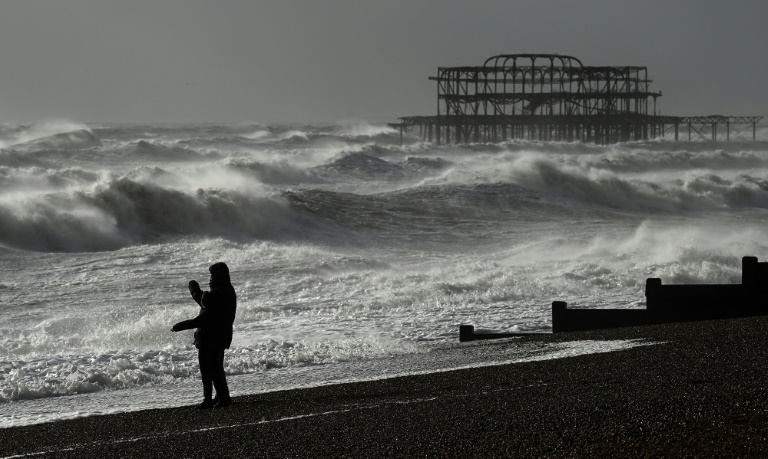
Sea levels are increasing around Britain at a far faster rate than a century ago while the country is warming slightly more than the global average, leading meteorologists said Thursday.

The annual study — the State of the UK Climate 2021 — found recent decades have been “warmer, wetter and sunnier” than the 20th century.  

It comes hot on the heels of temperatures topping 40 degrees Celsius (104 degrees Fahrenheit) in England last week for the first time, setting a record at 40.3C.

“This year’s report continues to show the impact of global temperature rises on the climate in the UK,” the Met Office, the country’s meteorological authority, said in a summary. 

It added the findings were “reaffirming that climate change is not just a problem for the future and that it is already influencing the conditions we experience here at home”. 

Meteorologists noted in the report that sea levels over the last three decades had increased in some places at more than double the rate recorded at the start of the 1900s.

They have risen by around 16.5 cms (6.5 inches) since 1990 — approximately three to 5.2mm each year, compared to 1.5 mm annually in the early part of last century.

This is exposing more areas of coastal land to larger and more frequent storm surges and “wind driven wave impacts”, the Met Office said.   

Svetlana Jevrejeva, of the National Oceanographic Centre, said there was evidence that the rises were due to the increased rate of ice loss from the Greenland and Antarctic ice sheets.

Glacier melting around the world and warming of the ocean were also responsible, she noted. 

“As sea levels rise there can be greater impacts from storm surges,” Jevrejeva warned.

The annual study also found that Britain has warmed at a broadly consistent but “slightly higher” rate than global mean temperature rises.

The Met Office’s Mike Kendon, lead author of the report, said record temperatures, such as last week’s unprecedented heatwave, were “becoming routine rather than the exception”.

“It is telling that whereas we consider 2021 as near-average for temperature in the context of the current climate, had this occurred just over three decades ago it would have been one of the UK’s warmest years on record,” he added.

The UK hosted the COP26 summit last November, when scores of countries agreed collective measures to try to prevent catastrophic climate change.

But fears are growing that many could stall on delivering pledges, including on ending financing fossil fuel projects abroad as they struggle to replace Russian energy imports.

In Britain, Foreign Secretary Liz Truss — the favourite in a leadership battle to replace outgoing Prime Minister Boris Johnson — has vowed to axe energy bill levies earmarked for the renewable sector, to help people through a worsening cost-of-living crisis.

UK sea levels rising quicker than century ago: study

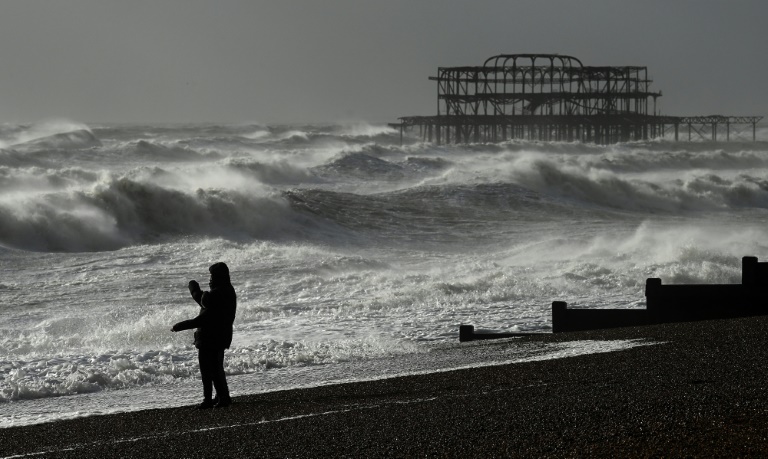
Sea levels are increasing around Britain at a far faster rate than a century ago while the country is warming slightly more than the global average, leading meteorologists said Thursday.

The annual study — the State of the UK Climate 2021 — found recent decades have been “warmer, wetter and sunnier” than the 20th century.  

It comes hot on the heels of temperatures topping 40 degrees Celsius (104 degrees Fahrenheit) in England last week for the first time, setting a record at 40.3C.

“This year’s report continues to show the impact of global temperature rises on the climate in the UK,” the Met Office, the country’s meteorological authority, said in a summary. 

It added the findings were “reaffirming that climate change is not just a problem for the future and that it is already influencing the conditions we experience here at home”. 

Meteorologists noted in the report that sea levels over the last three decades had increased in some places at more than double the rate recorded at the start of the 1900s.

They have risen by around 16.5 cms (6.5 inches) since 1990 — approximately three to 5.2mm each year, compared to 1.5 mm annually in the early part of last century.

This is exposing more areas of coastal land to larger and more frequent storm surges and “wind driven wave impacts”, the Met Office said.   

Svetlana Jevrejeva, of the National Oceanographic Centre, said there was evidence that the rises were due to the increased rate of ice loss from the Greenland and Antarctic ice sheets.

Glacier melting around the world and warming of the ocean were also responsible, she noted. 

“As sea levels rise there can be greater impacts from storm surges,” Jevrejeva warned.

The annual study also found that Britain has warmed at a broadly consistent but “slightly higher” rate than global mean temperature rises.

The Met Office’s Mike Kendon, lead author of the report, said record temperatures, such as last week’s unprecedented heatwave, were “becoming routine rather than the exception”.

“It is telling that whereas we consider 2021 as near-average for temperature in the context of the current climate, had this occurred just over three decades ago it would have been one of the UK’s warmest years on record,” he added.

The UK hosted the COP26 summit last November, when scores of countries agreed collective measures to try to prevent catastrophic climate change.

But fears are growing that many could stall on delivering pledges, including on ending financing fossil fuel projects abroad as they struggle to replace Russian energy imports.

In Britain, Foreign Secretary Liz Truss — the favourite in a leadership battle to replace outgoing Prime Minister Boris Johnson — has vowed to axe energy bill levies earmarked for the renewable sector, to help people through a worsening cost-of-living crisis.

Asia, Europe track post-Fed surge on Wall St but caution urged

Asian and European markets rose Thursday following a surge on Wall Street fuelled by hopes that the Federal Reserve could slow its pace of inflation-fighting interest rate hikes.

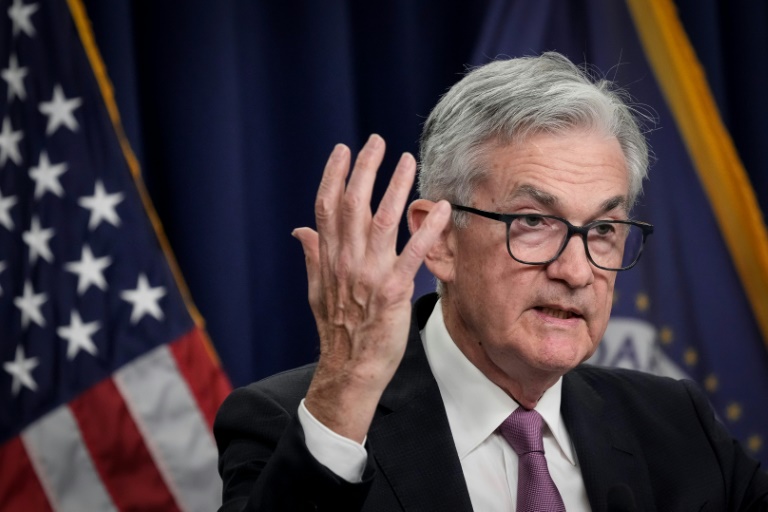
The dollar also struggled to bounce back from a sell-off — sitting at a three-week low against the yen — that came in response to comments by Fed chief Jerome Powell suggesting its next super-sized increase could be its last.

However, analysts cautioned that the initial joy, which sent New York’s three main indexes soaring, could be short-lived as the global economy continued to face several headwinds and inflation would likely not come down quickly.

As expected, the Fed lifted borrowing costs 75 basis points to a range of 2.25 to 2.5 percent, close to the neutral level it considers neither stimulating nor slowing economic growth.

Forecasts have rates going as high as 3.8 percent in 2023, as the bank tries to control runaway inflation.

There is a growing concern that the sharp rise in rates is bearing down on the world’s top economy and could send it into recession.

In his post-meeting comments, however, Powell said he did not consider that was the case, because “there are too many areas of the economy that are performing too well”. 

He did note that growth was slowing.

Powell added that officials would not give any guidance on their next move, instead taking each decision on a meeting-to-meeting basis. 

While he said another “unusually large increase could be appropriate” in September and officials “wouldn’t hesitate” to lift by one percentage point, markets took heart from the suggestion that the bank was ready to take its foot off the gas towards the end of the year.

On Wall Street, the Dow and S&P rallied and the Nasdaq soared more than four percent — its best one-day rise since late 2020 — as tech firms caught a wave of optimism. The sector is more susceptible to higher rates.

And Asia followed suit, though with more muted gains.

Shanghai, Tokyo, Sydney, Seoul, Singapore, Mumbai, Manila, Jakarta and Wellington were also well in the green.

But Hong Kong dipped as the city’s de facto central bank followed the Fed in lifting rates owing to its currency peg.

London, Paris and Frankfurt were up in the morning.

The prospect of a slower pace of rate hikes weighed on the dollar against most other currencies, and on Thursday it hit its lowest level against the yen since July 6.

There was a warning that the positive mood likely will not last, however.

“This market move is the victory of hope over experience,” Jeffrey Rosenberg, at BlackRock Inc, told Bloomberg Television. “I’d be a little bit cautious here.”

And Citigroup’s Andrew Hollenhorst and Veronica Clark added that traders appeared to be misjudging Powell’s remarks.

“We read Chair Powell’s press conference as more hawkish than the market’s interpretation,” they said, adding that inflation readings excluding food and energy will “push the Fed to hike more aggressively than they or markets anticipate”.

All eyes are now on the release of second-quarter growth data later Thursday. After a 1.6 percent contraction in the previous three months, another negative reading would put the economy into a technical recession.

An expected phone call between US President Joe Biden and his Chinese counterpart Xi Jinping will also be high on the agenda for investors as the world’s superpowers try to navigate a period of rising tensions. Updates on US tariffs and Taiwan will be among the main areas of focus.

Oil prices rose after data showed a big drop in US stockpiles, while Powell’s comments on the economy eased recession concerns and the weaker dollar made the commodity cheaper for buyers with other currencies.

– Key figures at around 0810 GMT –

Tokyo – Nikkei 225: UP 0.4 percent at 27,815.48 (close)

Hong Kong – Hang Seng Index: DOWN 0.2 percent at 20,622.68 (close)

Shanghai – Composite: UP 0.2 percent at 3,282.58 (close)

London – FTSE 100: UP 0.1 percent at 7,353.01

Euro/dollar: DOWN at $1.0200 from $1.0201 late Wednesday

Pound/dollar: UP at $1.2185 from $1.2151 

Euro/pound: DOWN at 83.71 pence from 83.85 pence

Dollar/yen: DOWN at 135.60 yen from 136.51 yen

West Texas Intermediate: UP 1.3 percent at $98.48 per barrel

Brent North Sea crude: UP 0.9 percent at $107.57 per barrel

New York – Dow: UP 1.4 percent at 32,197.59 (close)

US GDP data due with all eyes on possible recession

The United States is set to release key data on economic growth Thursday and global investors are watching closely as the world’s largest economy flirts with recession — while President Joe Biden walks a political tightrope.

Though Biden says he is confident the US economy is not suffering a downturn, a report showing a second consecutive quarter of negative growth — meeting one of the common definitions of a recession — would increase fears of a wider downturn.

Biden’s critics would seize on such a report as proof of the veteran Democrat’s mismanagement of the economy.

With crucial midterm elections just over three months away, the stakes could not be higher, and the Biden administration has spent the past week talking up the positive signs in the US economy, including job growth and solid consumer spending.

It would be highly unusual for an economy still adding jobs at a rapid pace, and with near record-low unemployment, to fall into recession.

The consensus forecast among analysts is for an annualized 0.5 percent increase in the gross domestic product in the second quarter, after a 1.6 percent decline in the first three months of the year.

But many economists say recent figures suggest GDP may have contracted in the April-June period.

With the labor market showing some signs of cooling and supersized interest rate hikes by the Federal Reserve slowing the economy — the latest coming on Wednesday — many economists say the recession discussion is more a matter of when, not if.

And that poses a major political headache for the president, who has seen his approval ratings plummet in recent months as American families struggle to make ends meet due to surging inflation.

– Way out? –

In recent days, Biden has led his administration in a chorus of denial.

“We’re not going to be in a recession, in my view,” he insisted Monday.

Treasury Secretary Janet Yellen argued that while growth is slowing, the data does not necessarily point to an extended downturn.

“I’m not saying that we will definitely avoid a recession, but I think there is a path that keeps the labor market strong and brings inflation down,” she said.

Fed Chair Jerome Powell agreed, saying even with ongoing interest rate hikes to slow the economy, it is possible to cool price price pressures without causing a downturn or a big jump in joblessness.

The central bank announced another big interest rate hike of 75 basis points on Wednesday, the fourth increase this year, and stressed it would not hesitate to go for “another unusually large increase” if needed — or an even bigger one.

Powell said the overriding aim was to get sky-high inflation moving back down toward two percent, but the Fed wants to strike a balance.

“We’re trying to do just the right amount. We’re not trying to have a recession and we don’t think we have to,” he told reporters.

Nevertheless, the International Monetary Fund downgraded its growth forecast for the United States earlier this week — and said a recession may already have begun.

IMF chief economist Pierre-Olivier Gourinchas said the path to avoiding a downturn was “very narrow” and warned that even a “small shock” could tip the economy into the abyss.

Close Bitnami banner
Bitnami