World

US GDP data due with all eyes on possible recession

The United States is set to release key data on economic growth Thursday and global investors are watching closely as the world’s largest economy flirts with recession — while President Joe Biden walks a political tightrope.

Though Biden says he is confident the US economy is not suffering a downturn, a report showing a second consecutive quarter of negative growth — meeting one of the common definitions of a recession — would increase fears of a wider downturn.

Biden’s critics would seize on such a report as proof of the veteran Democrat’s mismanagement of the economy.

With crucial midterm elections just over three months away, the stakes could not be higher, and the Biden administration has spent the past week talking up the positive signs in the US economy, including job growth and solid consumer spending.

It would be highly unusual for an economy still adding jobs at a rapid pace, and with near record-low unemployment, to fall into recession.

The consensus forecast among analysts is for an annualized 0.5 percent increase in the gross domestic product in the second quarter, after a 1.6 percent decline in the first three months of the year.

But many economists say recent figures suggest GDP may have contracted in the April-June period.

With the labor market showing some signs of cooling and supersized interest rate hikes by the Federal Reserve slowing the economy — the latest coming on Wednesday — many economists say the recession discussion is more a matter of when, not if.

And that poses a major political headache for the president, who has seen his approval ratings plummet in recent months as American families struggle to make ends meet due to surging inflation.

– Way out? –

In recent days, Biden has led his administration in a chorus of denial.

“We’re not going to be in a recession, in my view,” he insisted Monday.

Treasury Secretary Janet Yellen argued that while growth is slowing, the data does not necessarily point to an extended downturn.

“I’m not saying that we will definitely avoid a recession, but I think there is a path that keeps the labor market strong and brings inflation down,” she said.

Fed Chair Jerome Powell agreed, saying even with ongoing interest rate hikes to slow the economy, it is possible to cool price price pressures without causing a downturn or a big jump in joblessness.

The central bank announced another big interest rate hike of 75 basis points on Wednesday, the fourth increase this year, and stressed it would not hesitate to go for “another unusually large increase” if needed — or an even bigger one.

Powell said the overriding aim was to get sky-high inflation moving back down toward two percent, but the Fed wants to strike a balance.

“We’re trying to do just the right amount. We’re not trying to have a recession and we don’t think we have to,” he told reporters.

Nevertheless, the International Monetary Fund downgraded its growth forecast for the United States earlier this week — and said a recession may already have begun.

IMF chief economist Pierre-Olivier Gourinchas said the path to avoiding a downturn was “very narrow” and warned that even a “small shock” could tip the economy into the abyss.

Easy targets: Drug mules fill women's jails in Hong Kong

Zoila Lecarnaque Saavedra sealed her fate when she agreed to transport a package from Peru to Hong Kong — a decision that landed her more than eight years in prison.

A quarter of Hong Kong’s prisoners are women, a record-high percentage skewed by impoverished foreign drug mules who are often duped or coerced.

Awaiting deportation after her release, Lecarnaque Saavedra sat on a bunk bed in a cramped hostel and described how she lost her gamble for quick money.

It was 2013 and she was broke. Her husband, the main breadwinner for her family in Peru’s capital Lima, had recently left and she needed eye surgery.

Word got around the neighbourhood and she said she was soon approached by a woman who offered her a deal: fly to Hong Kong to pick up tax-free electronics that could be sold for a profit on return, and be paid $2,000.

“They find people who are in a precarious economic situation,” Lecarnaque Saavedra told AFP. “They look for them and in this case it was me.”

A diminutive figure with a face lined by hardship, 60-year-old Lecarnaque Saavedra said she wanted to warn others who might be tempted by such deals.

She lost composure when recounting the moment customs officers pulled her aside and it dawned on her she would not be seeing her daughter and mother for many years.

“I reflected on the damage I caused to my family, to my children, to my mother, because they were the ones who felt worse than me and that hurts me,” she said, her eyes filling with tears.

She described how officers found two jackets inside her suitcase that had been filled with condoms containing about 500 grams (17 ounces) of cocaine in liquid form. 

In the hopes of receiving a lighter sentence, Lecarnaque Saavedra pleaded guilty, though she maintains she did not know about the cocaine and was never paid.

“The bosses are free, they have not been arrested and I don’t know why,” she said.

– ‘Coercion comes in many forms’ –

That story is all too familiar in Hong Kong women’s prisons.

Activists, prison volunteers, lawyers and women in jail who AFP spoke to over the last year said foreign drug mules make up a major chunk of those in female prison wings.

Hong Kong Correctional Services said 37 percent of foreign inmates were female but declined to comment on the reasons for this. 

With a thriving port and airport, Hong Kong has long been a global hub for trade both legitimate and criminal.

Before the Covid-19 pandemic, its airport was one of the world’s busiest and best-connected.

Drug syndicates favour using women as mules, believing they are less likely to draw attention from authorities.

Official statistics show that a quarter of the 8,434 people serving time in Hong Kong last year were women — the highest rate globally, according to the World Prison Brief. 

Hong Kong dwarfs second-place Qatar, another global transport hub, where 15 percent of people in prison are women. Only 16 other countries or territories have proportions above 10 percent.

Father John Wotherspoon, a Catholic prison chaplain who has spent decades working with convicted drug smugglers, said the vast majority of female mules were vulnerable foreigners. 

“Coercion is a big problem and it can come in many forms, economic, physical, emotional,” he told AFP from his office in a crowded Hong Kong neighbourhood known for its red-light businesses.

Wotherspoon, a bundle of energy at 75 years old, has travelled repeatedly to Latin America to try and help families of those arrested — even confronting traffickers at times. 

He attends many of the drug trials that fill the daily schedule at Hong Kong’s High Court, raises donations for the convicted and helps maintain a website that names some of the characters he thinks should be behind bars — collected in part by testimony from those in jail. 

“The big problem is the masterminds, the big fish I call them, don’t get much of a mention,” he said. 

– Perpetrator or victim? –

Drug mules are easy pickings for police and prosecutors in Hong Kong, where an early guilty plea usually results in prison time being reduced by a third.

Fighting a conviction is risky, given the city’s harsh drug rules. Sentencing guidelines begin at 20 years for more than 600 grams of cocaine.

In 2016, Venezuelan national Caterina got 25 years in prison after failing to persuade a jury she was coerced into being a mule.

She alleged she was kidnapped by a gang in Brazil after answering a fake job advertisement. She said she was repeatedly raped, and her family threatened, until she agreed to fly to Hong Kong. 

“They treated me like trash, I was afraid they were going to kill me,” 36-year-old Caterina, who asked not to give her real name to protect her family, told AFP from prison in Hong Kong.

Pregnant before she was kidnapped, Caterina gave birth to a baby boy in prison and her subsequent appeal failed.

“I have been working for many years with vulnerable people, but this is one case that hangs over me,” Patricia Ho, a lawyer who helped with Caterina’s appeal, told AFP.

“What I cannot shake out of my mind is that I would have done exactly the same thing as she did.”

Ho said one of the big issues defence teams encountered was that, although Hong Kong recognises human trafficking is a problem, there is no specific law outlawing it. 

That means prosecutors, judges and juries rarely take into account whether a mule is a trafficking victim.

“Through force or coercion -– whatever words you want to throw in there –- she was forced to commit a crime. That to me all fits squarely within the definition of human trafficking,” Ho said. 

– Mother and child separated –

Some mules know what they might be carrying but feel compelled to take the risk because of their circumstances. 

At first glance, Marcia Sousa’s Facebook profile looks like any other young Brazilian’s: filled with selfies showing off new braids and photos of parties with friends at the beach. 

But four years ago, the updates abruptly stopped.

Shortly after that, Sousa was arrested at Hong Kong’s airport carrying just over 600 grams of liquid cocaine in her bra.

She later told the court that she came from a poor family from northern Brazil, had a mother who needed kidney dialysis and had fallen pregnant with a man who abandoned her.

She gave birth in prison while awaiting trial. 

At her sentencing, Judge Audrey Campbell-Moffat praised the 25-year-old for a host of mitigating circumstances, including pleading guilty early, cooperating with police, and prison reports that she was a model mother to her son.

“There is little more you could possibly have done to show your genuine remorse,” Campbell-Moffat said as she reduced her sentence from the recommended 20 years to 10 years and six months. 

A few weeks later, AFP met Sousa, who asked to use a pseudonym to protect her family from any potential repercussions.

“I tried my best to tell the judge to forgive me. I know I did something criminal, but it was for my son,” she said through a prison phone, dressed in a beige uniform and shielded by thick plexiglass.

“I was angry. But afterwards, I realised she was right to give me the sentence, she was balanced.”

For the first few years of her son’s life, Sousa was allowed to take care of him in prison. 

But as his third birthday approached, he was taken into care until he can be sent to Sousa’s family in Brazil. 

“He cried a lot and didn’t eat,” Sousa said of those first few weeks after the separation.

All her thoughts, she said, revolved around being reunited with him.

“I’m thinking of the future, taking care of my son,” she said.

But that future was pushed further into the horizon when prosecutors successfully appealed her sentence, arguing it was too lenient, with Sousa this month given a further two years. 

– Post-pandemic mule surge? –

As the pandemic hammered air travel, the number of drug mules worldwide plunged.

Traffickers shifted to post and courier shipments, with big deliveries made via air freight and shipping containers.

But as the pandemic eases, drug mules will almost inevitably return to the skies.

That means more women like Zoila will be lured into a trade fuelled by smugglers and consumers that care little about whether they succeed.

Last month, Zoila was deported from Hong Kong, a day she had been dreaming of for years.

She beamed as she pushed her baggage cart through the arrivals hall at Lima’s airport and headed to her family home a short drive away.

“I cried because it has been almost nine years, now I’m going home,” she said. 

“My mother, my brothers and sisters, my children are waiting for me. The whole family is waiting for me at home.”


Indebted Evergrande looks to sell Hong Kong headquarters again

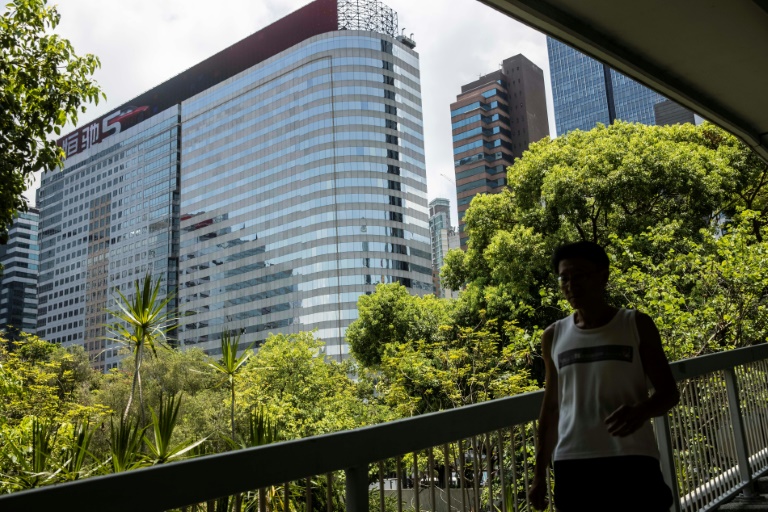
Troubled Chinese property developer Evergrande has found a potential buyer for its Hong Kong headquarters, reports said Thursday, days before an expected announcement of the firm’s long-awaited restructuring plans. 

CK Asset Holdings, founded by Hong Kong billionaire Li Ka-shing, said it had submitted a tender for the 26-storey building, which is currently valued at HK$9 billion ($1.1 billion) according to Hong Kong media. 

Evergrande has been involved in restructuring negotiations after racking up $300 billion in liabilities, as Beijing continues its wide-ranging crackdown on excessive debt and rampant consumer speculation in the real estate sector.

The group previously said it was on track to deliver a preliminary restructuring plan by the end of July.

In 2015, when it acquired the headquarters for $1.61 billion, the deal set a record for the single largest transaction for an office building in Hong Kong, as well as the price per square foot, according to the South China Morning Post.

Last October, the building was offered to Chinese state-owned developer Yuexiu for $1.7 billion, but the buyer pulled out over concerns about Evergrande’s unresolved indebtedness.

Once a leading light in China’s real estate sector, Evergrande has in recent months scrambled to offload assets, with chairman Hui Ka Yan paying off some of its debts using his personal wealth. 

In a further sign of turmoil, Evergrande last week ousted its CEO and CFO after an internal investigation into why banks seized over $2 billion from the firm’s property services arm.

Evergrande’s woes have had knock-on effects throughout China’s property sector, with some smaller companies also defaulting on loans and others struggling to find enough cash. 

China’s real estate firms, long heavily dependent on loans to finance their massive developments, have found themselves in trouble as a push by Beijing to reign in debt has cut cash flows.

Analysts have said that if the property crisis spreads to China’s financial system, the shock would be felt far beyond its borders.

But on Thursday, Hong Kong Financial Secretary Paul Chan said the difficulties of Chinese developers would have a “very limited” impact on the financial hub’s banking stability. 

“We have been monitoring this situation very carefully, and we do not find cause for alarm,” Chan said.

Evergrande did not immediately reply to AFP’s request for comment.

US GDP data due with all eyes on possible recession

The United States is set to release key data on economic growth Thursday and global investors are watching closely as the world’s largest economy flirts with recession — while President Joe Biden walks a political tightrope.

Though Biden says he is confident the US economy is not suffering a downturn, a report showing a second consecutive quarter of negative growth — meeting one of the common definitions of a recession — would increase fears of a wider downturn.

Biden’s critics would seize on such a report as proof of the veteran Democrat’s mismanagement of the economy.

With crucial midterm elections just over three months away, the stakes could not be higher, and the Biden administration has spent the past week talking up the positive signs in the US economy, including job growth and solid consumer spending.

It would be highly unusual for an economy still adding jobs at a rapid pace, and with near record-low unemployment, to fall into recession.

The consensus forecast among analysts is for an annualized 0.5 percent increase in the gross domestic product in the second quarter, after a 1.6 percent decline in the first three months of the year.

But many economists say recent figures suggest GDP may have contracted in the April-June period.

With the labor market showing some signs of cooling and supersized interest rate hikes by the Federal Reserve slowing the economy — the latest coming on Wednesday — many economists say the recession discussion is more a matter of when, not if.

And that poses a major political headache for the president, who has seen his approval ratings plummet in recent months as American families struggle to make ends meet due to surging inflation.

– Way out? –

In recent days, Biden has led his administration in a chorus of denial.

“We’re not going to be in a recession, in my view,” he insisted Monday.

Treasury Secretary Janet Yellen argued that while growth is slowing, the data does not necessarily point to an extended downturn.

“I’m not saying that we will definitely avoid a recession, but I think there is a path that keeps the labor market strong and brings inflation down,” she said.

Fed Chair Jerome Powell agreed, saying even with ongoing interest rate hikes to slow the economy, it is possible to cool price price pressures without causing a downturn or a big jump in joblessness.

The central bank announced another big interest rate hike of 75 basis points on Wednesday, the fourth increase this year, and stressed it would not hesitate to go for “another unusually large increase” if needed — or an even bigger one.

Powell said the overriding aim was to get sky-high inflation moving back down toward two percent, but the Fed wants to strike a balance.

“We’re trying to do just the right amount. We’re not trying to have a recession and we don’t think we have to,” he told reporters.

Nevertheless, the International Monetary Fund downgraded its growth forecast for the United States earlier this week — and said a recession may already have begun.

IMF chief economist Pierre-Olivier Gourinchas said the path to avoiding a downturn was “very narrow” and warned that even a “small shock” could tip the economy into the abyss.

US GDP data due with all eyes on possible recession

The United States is set to release key data on economic growth Thursday and global investors are watching closely as the world’s largest economy flirts with recession — while President Joe Biden walks a political tightrope.

Though Biden says he is confident the US economy is not suffering a downturn, a report showing a second consecutive quarter of negative growth — meeting one of the common definitions of a recession — would increase fears of a wider downturn.

Biden’s critics would seize on such a report as proof of the veteran Democrat’s mismanagement of the economy.

With crucial midterm elections just over three months away, the stakes could not be higher, and the Biden administration has spent the past week talking up the positive signs in the US economy, including job growth and solid consumer spending.

It would be highly unusual for an economy still adding jobs at a rapid pace, and with near record-low unemployment, to fall into recession.

The consensus forecast among analysts is for an annualized 0.5 percent increase in the gross domestic product in the second quarter, after a 1.6 percent decline in the first three months of the year.

But many economists say recent figures suggest GDP may have contracted in the April-June period.

With the labor market showing some signs of cooling and supersized interest rate hikes by the Federal Reserve slowing the economy — the latest coming on Wednesday — many economists say the recession discussion is more a matter of when, not if.

And that poses a major political headache for the president, who has seen his approval ratings plummet in recent months as American families struggle to make ends meet due to surging inflation.

– Way out? –

In recent days, Biden has led his administration in a chorus of denial.

“We’re not going to be in a recession, in my view,” he insisted Monday.

Treasury Secretary Janet Yellen argued that while growth is slowing, the data does not necessarily point to an extended downturn.

“I’m not saying that we will definitely avoid a recession, but I think there is a path that keeps the labor market strong and brings inflation down,” she said.

Fed Chair Jerome Powell agreed, saying even with ongoing interest rate hikes to slow the economy, it is possible to cool price price pressures without causing a downturn or a big jump in joblessness.

The central bank announced another big interest rate hike of 75 basis points on Wednesday, the fourth increase this year, and stressed it would not hesitate to go for “another unusually large increase” if needed — or an even bigger one.

Powell said the overriding aim was to get sky-high inflation moving back down toward two percent, but the Fed wants to strike a balance.

“We’re trying to do just the right amount. We’re not trying to have a recession and we don’t think we have to,” he told reporters.

Nevertheless, the International Monetary Fund downgraded its growth forecast for the United States earlier this week — and said a recession may already have begun.

IMF chief economist Pierre-Olivier Gourinchas said the path to avoiding a downturn was “very narrow” and warned that even a “small shock” could tip the economy into the abyss.

'A dirty game': Young Kenyans shun election hype

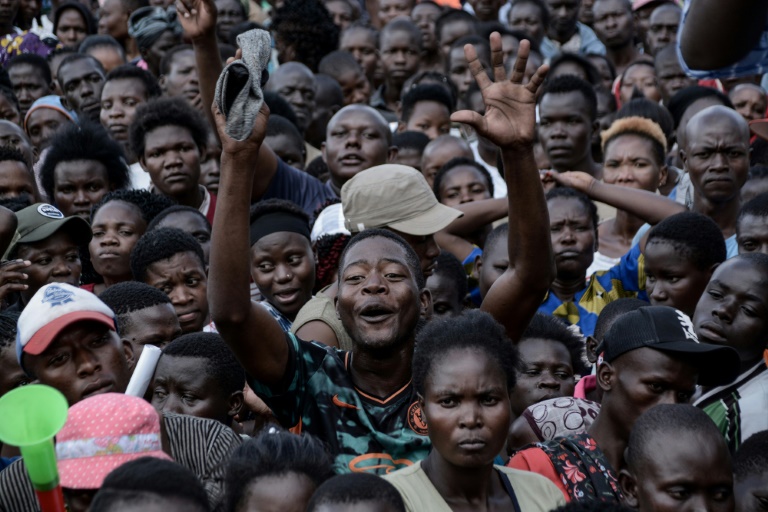
As a familiar campaign jingle brings the Kenyan crowd to their feet, Hellen Atieno joins her compatriots and sways to the catchy tune at a political rally in the lakeside city of Kisumu.

Just don’t expect the 23-year-old to vote.

“I have only come to the rally because there is money. I hope there will be something,” Atieno told AFP, referring to the widespread Kenyan practice of offering freebies to prospective voters. 

Currently without a job, the former fishmonger says she is so fed up with the country’s insular political class that she plans to stay home when Kenya votes on August 9 in parliamentary and presidential polls.

She is not alone.

The East African economic powerhouse ranks among the world’s youngest countries — three-quarters of Kenyans are aged under 34, according to government figures.

Many have no interest in participating in an electoral process they widely dismiss as corrupt and pointless.

The number of registered young voters has dropped five percent since the 2017 poll, in contrast to over-35s, whose tally has increased, Kenya’s election commission announced last month.

Over 22 million Kenyans are eligible to take part in this year’s polls, with young people accounting for less than 40 percent of that number, the Independent Electoral and Boundaries Commission (IEBC) said.

– ‘A dirty game’ –

Politicians have responded with a freebie bonanza, offering cash, umbrellas, shirts, caps and even packets of maize flour — a dietary staple — to anyone who attends their rallies.

The bribes — an electoral offence that can attract a fine of up to two million Kenyan shillings ($17,000) and/or a six-year jail term — are not new to Kenyan politics.

But galloping food inflation — made worse by the war in Ukraine — and an unemployment crisis have intensified the appetite for such handouts.

According to census figures published in 2020, about five million young Kenyans were out of work.

Brian Denzel has spent recent weeks hitting one rally after another, eager to pocket the cash on offer, even though the 19-year-old butcher has no plans to vote and sees politics as little more than “a dirty game”.

“Who will reject the free money that they are given?” he said, while waiting in line to collect 200 shillings ($1.70) from a local politician.

Kenya’s Interior Minister Fred Matiang’i even told reporters on Wednesday that the banks were running short of 100 and 200 shilling notes “because politicians are bribing villagers”.

In the months leading up to the polls, observers suggested that the youth factor could help heal Kenya’s often toxic tribal politics, with a younger electorate less likely to vote according to ethnic affiliations.

Yet, although young Kenyans are less tribally-minded, they also lack “ideological steadfastness”, Kisumu-based political analyst Francis Owuor told AFP.

“That conviction that normally comes with the political process is not there,” Owuor said.

“Everyone (is) to blame for this, both the people and the leaders, but again the leaders are the duty bearers, so they must take much of the blame.” 

– Disillusioned –

Thirty years after the emergence of multi-party democracy in Kenya, many are disillusioned by constant battles over the credibility of polls and disputed election results.

This year’s presidential vote is largely a two-horse race between Deputy President William Ruto, 55, and Raila Odinga, the 77-year-old veteran opposition leader who is now backed by the ruling party.

If both leaders accept the results, it will be a first for the country since 2002.

Amina Soud, manager for voter education at the IEBC, told AFP the election watchdog was “worried” by the increasing indifference shown by young people towards the political process.

“We did a lot of mobilisation during registration using all these tools and still voter apathy was too high,” Soud said, referring to the IEBC’s social media push to enlist new voters.

But exhorting youth to vote via campaigns on TikTok or comics in Sheng — a local slang popular with urban youth — does little to offer hope to a generation of Kenyans facing runaway inflation, corruption and unemployment.

“I don’t think I am going to vote,” 27-year-old salon owner Irene Awino Owino told AFP.

“I have no interest, because the government puts themselves first rather than us.”

No slowdown yet: US import deluge tests supply chain

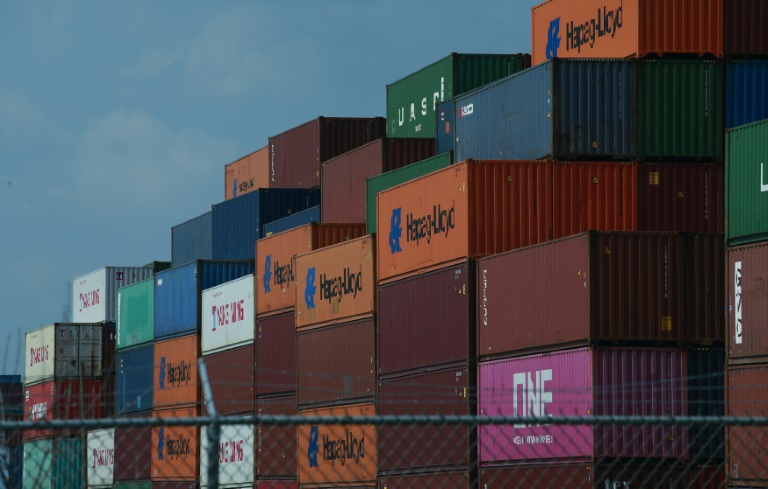
Throngs of 18-wheelers are the clearest sign of brisk activity at the Port Newark-Elizabeth marine terminals in northern New Jersey, defying talk of a US economic slowdown.

Last week, the Port of New York and New Jersey reported that its June 2022 volumes were the second-highest in history, capping a torrid semester that has overtaken the first half of the record-setting 2021 year by 11.4 percent.

“Volumes continue to be extremely strong,” said Michael Bozza, assistant director of commercial development at the Port of New York and New Jersey, who nonetheless expects a moderation in activity later in 2022, partly due to inflation.

Bozza said warehouses, freight rail and other supply chain nodes remain “stressed” and are at or near capacity. Some of the cargo is being held for later in the year as importers shift from a “just in time” strategy to “just in case,” he said.

A key report Thursday could show the US economy technically entered recession last quarter. But the nation’s ports tell a different story.

“Are we seeing an economy that’s screeching to a halt? No, we are not,” said Phil Levy, chief economist of Flexport, a freight forwarding company. “We are seeing continued imports. We are seeing continued consumption.”

That persistent deluge of imports — which is also playing out at other key US container ports such as Los Angeles and Savannah, Georgia — is one reason logistics experts remain cautious about the state of the US supply chain, even though ports no longer face the backlogs of last fall.

New problems sometimes surface quickly, as was the case last week, when protests from truckers over a newly implemented California law effectively halted deliveries at the Port of Oakland, another of the nation’s larger container ports.

Normal operation has since resumed, but the incident underscores the brittle state of play for overtaxed US infrastructure during the pandemic.

“There’s not a lot of slack in the system when something goes wrong,” said Sal Mercogliano, a maritime historian at Campbell University in North Carolina.

“While the economy is slowing and inflation is rising, people are still buying a lot.”

– Rail bottleneck –

Worries in the United States about the supply chain hit a peak last fall when dozens of stalled vessels of the Ports of Los Angeles and Long Beach sparked worries of a spartan holiday season.

Those fears proved overwrought. To secure merchandise, retailers took extraordinary measures, making greater use of air cargo and in some cases chartering their own vessels to keep store shelves full.

Most major ports no longer have big backlogs, but there are other problems in the system.

Gene Seroka, executive director of the Port of Los Angeles, recently highlighted freight rail delays as a worry. He pointed to an excess of some 20,000 rail containers stuck on the facility.

“We must take action on this immediately to avoid a nationwide logjam,” Seroka said two weeks ago.

At least part of the problem in rail transport stems from staff cutbacks at freight rail companies such as CSX and Union Pacific in the years immediately preceding the pandemic.

“The rail is a big piece of why things are still snarled up,” said Jason Miller, a supply chain management professor at Michigan State University, who notes that overall freight rail employment is about 40,000 below its level in 2016.

The unresolved state of labor talks between rail companies and rail worker unions also adds unease. The two sides have been unable to reach an accord on a contract to oversee wages, health care and working conditions.

On July 15, President Joe Biden blocked a freight railroad strike for at least 60 days, signing an executive order to establish an arbitration system to resolve the conflict.

Another outstanding labor issue is the contract for West Coast longshoremen, which expired at the end of June. Again, there has been no strike as the two sides continue negotiations.

East Coast ports such as New York and others in the Gulf Coast have picked up incremental business from shippers worried about strike risk, as well as a repeat of last fall’s travails in Los Angeles and Long Beach.

Bozza estimates that about seventy percent of the New York and New Jersey port’s new volumes in 2022 is displaced cargo from the West Coast. 

Despite these issues, Miller does not expect a repeat of last fall’s crisis, saying, “We’re in a better place than we were eight or nine months ago.”

“There’s a lot of uncertainty over just how much spending power the US consumer has this holiday season,” said Miller, who pointed to China’s zero-tolerance Covid-19 policy as another big supply chain wildcard.

But Levy of Flexport notes that port delivery times, while improving, are still running much longer than in the pre-pandemic period.

“We are still experiencing ample supply chain difficulties,” Levy said. “Lately, we’ve seen ports do better and rail do worse.”

North Korea's Kim says 'ready to mobilise' nuclear weapons

North Korean leader Kim Jong Un said his country was “ready to mobilise” its nuclear deterrent in any future military clash with the United States and South Korea, state media said Thursday.

Washington and Seoul have repeatedly warned that Pyongyang is preparing to carry out its seventh nuclear test — a move that the United States has warned would provoke a “swift and forceful” response.

In Kim’s latest speech to mark the armistice that ended fighting in the Korean War — known as “Victory Day” in the North — he said the country’s armed forces were “thoroughly prepared” for any crisis. 

“Our country’s nuclear war deterrent is also ready to mobilise its absolute power faithfully, accurately and promptly in accordance with its mission,” Kim said in a speech on Wednesday, according to Pyongyang’s official Korean Central News Agency.

Speaking to war veterans on the 69th anniversary of the end of the 1950-53 Korean War, Kim emphasised the country’s “thorough readiness” to “deal with any military clash with the United States”. 

His latest threats come as South Korea and the United States move to ramp up joint military exercises, which have always infuriated the North as Pyongyang considers them rehearsals for invasion.

This week, the US military held live-fire drills using its advanced Apache helicopters stationed in the South for the first time since 2019.

Kim also slammed South Korea’s new, hawkish president Yoon Suk-yeol, who took office in May and has vowed to take a tougher stance against Pyongyang — which includes a plan to mobilise a preemptive strike capability.

“Talking about military action against our nation, which possess absolute weapons that they fear the most, is preposterous and is very dangerous self-destructive action,” Kim said of the Yoon administration, which he branded a group of “gangsters”.

“Such a dangerous attempt will be immediately punished by our powerful strength and the Yoon Suk Yeol government and his military will be annihilated.”

– ‘Righteous effort’ –

The North has carried out a record-breaking blitz of sanctions-busting weapons tests this year, including firing an intercontinental ballistic missile at full range for the first time since 2017.

Nuclear talks between Pyongyang and Washington have been stalled since a summit between Kim and then-US president Donald Trump in February 2019 broke down over sanctions relief and what the North would be willing to give up in return.

The Kim regime has since rejected Washington and Seoul’s repeated offers to resume talks, claiming the United States must first drop its “hostile” policies.

Impoverished Pyongyang has long struggled to feed its people and its economy has been battered by pandemic-led border closures as well as sanctions over its nuclear programmes.

The country has also been battling a massive outbreak of “fever” after it confirmed its first cases of Covid-19 in May. 

“Kim’s rhetoric inflates external threats to justify his militarily focused and economically struggling regime,” said Leif-Eric Easley, a professor at Ewha University in Seoul.

“North Korea’s nuclear and missile programs are in violation of international law, but Kim tries to depict his destabilising arms buildup as a righteous effort at self-defense.”

Hundreds of aftershocks shake earthquake-hit northern Philippines

Anxious residents slept outside after hundreds of aftershocks rattled the earthquake-hit northern Philippines, locals said Thursday, as President Ferdinand Marcos Jr inspected damage in the region. 

Five people were killed and more than 150 injured when a 7.0-magnitude quake struck the lightly populated province of Abra on Wednesday morning, authorities said.

The powerful quake rippled across the mountainous area, toppling buildings, triggering landslides and shaking high-rise towers hundreds of kilometres away in the capital Manila.

“Aftershocks happen almost every 20 minutes, 15 minutes since yesterday,” said Reggi Tolentino, a restaurant owner in Abra’s provincial capital Bangued.

“Many slept outside last night, almost every family.”

Some families have been given modular tents to stay in. Marcos Jr has urged people to wait for their homes to be inspected before moving back.  

Hundreds of buildings were damaged or destroyed, roads were blocked by landslides, and power was knocked out in affected areas. 

But in Abra, which felt the full force of the quake, overall damage had been “very minimal”, police chief Colonel Maly Cula told AFP. 

“We don’t have a lot of people in evacuation sites, although many people are staying in the streets because of the aftershocks,” Cula said.

“Abra is back to normal.”

Marcos Jr, who took office last month, arrived in Bangued on Thursday to inspect the damage and discuss the response effort with government, military and disaster officials. 

More than 800 aftershocks have been recorded since the quake hit, including 24 that were strong enough to feel, the local seismological agency said.

Aftershocks were expected to continue for “several weeks”, Renato Solidum, director of the Philippine Institute of Volcanology and Seismology, told a briefing presided over by Marcos Jr.

There would be “a lot” in the first three days, then “hopefully it will decline afterwards”, he said.

– Tourism operators hit –

In Vigan City, a UNESCO World Heritage site and tourist destination in Ilocos Sur province, centuries-old structures built during the Spanish colonial period were damaged.

Governor Jeremias Singson told TV broadcaster Teleradyo that 460 buildings in the province had been affected, including the Bantay Bell Tower, which partially crumbled.

“Our tourism industry and small business owners were really affected,” Singson said.

After visiting Vigan on Thursday, Senator Imee Marcos, the president’s elder sister, said the damage to old churches in the city was “overwhelming”.  

The Philippines is regularly rocked by quakes due to its location on the Pacific “Ring of Fire”, an arc of intense seismic activity that stretches from Japan through Southeast Asia and across the Pacific basin.

Wednesday’s quake was one of the strongest recorded in the Philippines in recent years and was felt across swathes of Luzon island, the most populous in the archipelago.

In October 2013, a magnitude 7.1 earthquake struck Bohol Island in the central Philippines, killing more than 200 people and triggering landslides.

Old churches in the birthplace of Catholicism in the Philippines were badly damaged. Nearly 400,000 were displaced and tens of thousands of houses were damaged. 

The powerful quake altered the island’s landscape and a “ground rupture” pushed up a stretch of earth by about three metres, creating a wall of rock above the epicentre. 

In 1990, a 7.8-magnitude earthquake in the northern Philippines created a ground rupture stretching over a hundred kilometres.

Fatalities were estimated at more than 1,200, with major damage to buildings in Manila.

Hundreds of aftershocks shake earthquake-hit northern Philippines

Anxious residents slept outside after hundreds of aftershocks rattled the earthquake-hit northern Philippines, locals said Thursday, as President Ferdinand Marcos Jr inspected damage in the region. 

Five people were killed and more than 150 injured when a 7.0-magnitude quake struck the lightly populated province of Abra on Wednesday morning, authorities said.

The powerful quake rippled across the mountainous area, toppling buildings, triggering landslides and shaking high-rise towers hundreds of kilometres away in the capital Manila.

“Aftershocks happen almost every 20 minutes, 15 minutes since yesterday,” said Reggi Tolentino, a restaurant owner in Abra’s provincial capital Bangued.

“Many slept outside last night, almost every family.”

Some families have been given modular tents to stay in. Marcos Jr has urged people to wait for their homes to be inspected before moving back.  

Hundreds of buildings were damaged or destroyed, roads were blocked by landslides, and power was knocked out in affected areas. 

But in Abra, which felt the full force of the quake, overall damage had been “very minimal”, police chief Colonel Maly Cula told AFP. 

“We don’t have a lot of people in evacuation sites, although many people are staying in the streets because of the aftershocks,” Cula said.

“Abra is back to normal.”

Marcos Jr, who took office last month, arrived in Bangued on Thursday to inspect the damage and discuss the response effort with government, military and disaster officials. 

More than 800 aftershocks have been recorded since the quake hit, including 24 that were strong enough to feel, the local seismological agency said.

Aftershocks were expected to continue for “several weeks”, Renato Solidum, director of the Philippine Institute of Volcanology and Seismology, told a briefing presided over by Marcos Jr.

There would be “a lot” in the first three days, then “hopefully it will decline afterwards”, he said.

– Tourism operators hit –

In Vigan City, a UNESCO World Heritage site and tourist destination in Ilocos Sur province, centuries-old structures built during the Spanish colonial period were damaged.

Governor Jeremias Singson told TV broadcaster Teleradyo that 460 buildings in the province had been affected, including the Bantay Bell Tower, which partially crumbled.

“Our tourism industry and small business owners were really affected,” Singson said.

After visiting Vigan on Thursday, Senator Imee Marcos, the president’s elder sister, said the damage to old churches in the city was “overwhelming”.  

The Philippines is regularly rocked by quakes due to its location on the Pacific “Ring of Fire”, an arc of intense seismic activity that stretches from Japan through Southeast Asia and across the Pacific basin.

Wednesday’s quake was one of the strongest recorded in the Philippines in recent years and was felt across swathes of Luzon island, the most populous in the archipelago.

In October 2013, a magnitude 7.1 earthquake struck Bohol Island in the central Philippines, killing more than 200 people and triggering landslides.

Old churches in the birthplace of Catholicism in the Philippines were badly damaged. Nearly 400,000 were displaced and tens of thousands of houses were damaged. 

The powerful quake altered the island’s landscape and a “ground rupture” pushed up a stretch of earth by about three metres, creating a wall of rock above the epicentre. 

In 1990, a 7.8-magnitude earthquake in the northern Philippines created a ground rupture stretching over a hundred kilometres.

Fatalities were estimated at more than 1,200, with major damage to buildings in Manila.

Close Bitnami banner
Bitnami