World

Nicaraguan opposition leader Suazo sentenced to 10 years in jail: group

Nicaraguan opposition leader Yubrank Suazo, who took part in protests against President Daniel Ortega’s government in 2018, was sentenced on Wednesday to 10 years in prison, his group said.

A court in the capital Managua sentenced Suazo to five years in jail for “conspiring to undermine national integrity” and another five years for spreading fake news, according to the Civic Alliance for Justice and Democracy, where he served as a director.

Suazo was “prosecuted and sentenced without having committed any crime, nor having any link with criminal structures,” the group said in a statement.

The 31-year-old hails from the southern city of Masaya, which was shaken by large anti-government protests in 2018.

The city had declared itself in rebellion against ex-guerrilla Ortega’s government as part of massive nationwide street protests.

The government’s crackdown on the demonstrations left 355 dead.

Suazo was detained in 2018 but released in 2019 as part of an agreement with the government mediated by the Catholic Church, which also saw several hundred other opposition figures freed.

But in May Suazo was arrested again and put on trial.

A Nicaraguan NGO campaigning for political prisoners says about 190 opposition figures have been detained.

About 45 opposition figures, including seven presidential hopefuls, were arrested last year ahead of elections in which Ortega benefitted from the lack of credible opposition to win a fourth successive term.

They were sentenced to up to 13 years in prison for allegedly undermining national security.

Ortega accuses his opponents of trying to oust him with help from the United States, which has hit him and his inner circle with sanctions.

Asian markets track post-Fed surge on Wall St, but caution urged

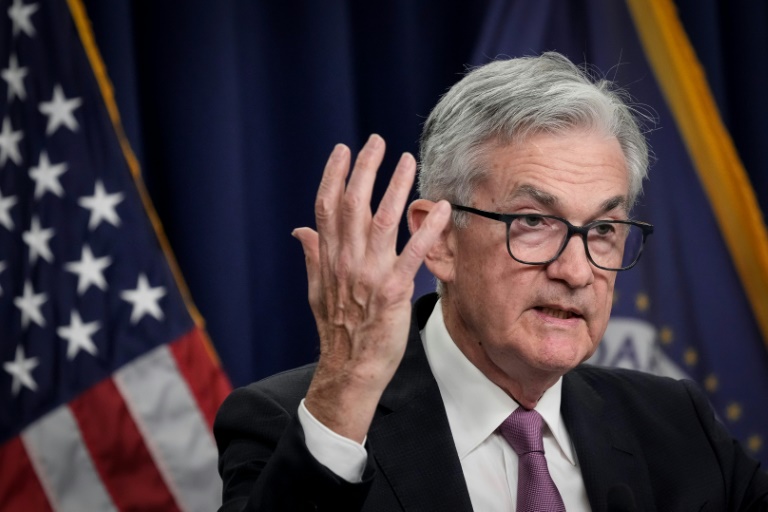
Asian markets rose Thursday following a surge on Wall Street fuelled by hopes that the Federal Reserve could slow its pace of inflation-fighting interest rate hikes.

The dollar also struggled to bounce back from a sell-off — sitting at a three-week low against the yen — that came in response to comments by bank chief Jerome Powell suggesting its next super-sized increase could be its last.

However, analysts cautioned that the initial joy, which sent New York’s three main indexes soaring, could be short-lived as the global economy continued to face several headwinds and inflation would not likely come down quickly.

As expected, the Fed lifted borrowing costs 75 basis points to a range of 2.25-2.5 percent, close to the neutral level it considers neither stimulating nor slowing economic growth.

Forecasts have rates going as high as 3.8 percent in 2023 as the bank tries to control runaway inflation.

There is a growing concern that the sharp rise in rates is bearing down on the world’s top economy and could send it into recession.

But in his post-meeting comments, Powell said he did not consider that was the case, because “there are too many areas of the economy that are performing too well”. He did, however, note growth was slowing.

He added that officials would not give any guidance on their next move, instead taking each decision on a meeting-to-meeting basis. 

And while he said another “unusually large increase could be appropriate” in September, markets took heart from the suggestion that the bank was ready to take its foot off the gas towards the end of the year.

On Wall Street, the Dow and S&P rallied and the Nasdaq soared more than four percent — its best one-day rise since late 2020 — as tech firms caught a wave of optimism. The sector is more susceptible to higher rates.

And Asia followed suit, though with more muted gains.

Hong Kong was up after bouncing from initial losses as the city’s de facto central bank followed the Fed in lifting rates owing to its currency peg.

Shanghai, Tokyo, Sydney, Seoul, Singapore, Taipei, Manila, Jakarta and Wellington were also well in the green.

The prospect of a slower pace of rate hikes weighed on the dollar against most other currencies, and on Thursday hit its lowest level against the yen since July 6.

However, there was a warning that the positive mood likely will not last.

“This market move is the victory of hope over experience,” Jeffrey Rosenberg, at BlackRock Inc, told Bloomberg Television. “I’d be a little bit cautious here.”

And Citigroup’s Andrew Hollenhorst and Veronica Clark added that traders appeared to be misjudging Powell’s remarks.

“We read Chair Powell’s press conference as more hawkish than the market’s interpretation,” they said, adding that inflation readings excluding food and energy will “push the Fed to hike more aggressively than they or markets anticipate”.

All eyes are now on the release of second-quarter growth data later Thursday. After a 1.6 percent contraction in the previous three months, another negative reading would put the economy into a technical recession.

An expected phone call between Joe Biden and China’s Xi Jinping will also be high on the agenda for investors as the world’s superpowers try to navigate a period of rising tensions. Anything on US tariffs and Taiwan will be among the main areas of focus.

– Key figures at around 0230 GMT –

Tokyo – Nikkei 225: UP 0.3 percent at 27,804.21 (break)

Hong Kong – Hang Seng Index: UP 0.4 percent at 20,75001

Shanghai – Composite: UP 0.7 percent at 3,299.89

Euro/dollar: DOWN at $1.0198 from $1.0201 late Wednesday

Pound/dollar: UP at $1.2157 from $1.2151 

Euro/pound: DOWN at 83.39 pence from 83.85 pence

Dollar/yen: DOWN at 135.52 yen from 136.51 yen

West Texas Intermediate: UP 1.6 percent at $98.80 per barrel

Brent North Sea crude: UP 1.2 percent at $108.00 per barrel

New York – Dow: UP 1.4 percent at 32,197.59 (close)

London – FTSE 100: UP 0.6 percent at 7,348.23 (close) 

Hundreds of aftershocks shake earthquake-hit northern Philippines

Anxious residents slept outside after hundreds of aftershocks rattled the earthquake-hit northern Philippines, locals said Thursday, as President Ferdinand Marcos Jr flew to the region to inspect the damage.

Five people were killed and more than 150 injured when a 7.0-magnitude quake struck the lightly populated province of Abra on Wednesday morning, authorities said.

The powerful quake rippled across the mountainous region, toppling buildings, triggering landslides and shaking high-rise towers hundreds of kilometres away in the capital Manila.

“Aftershocks happen almost every 20 minutes, 15 minutes since yesterday,” said Reggi Tolentino, a restaurant owner in Abra’s provincial capital Bangued.

“Many slept outside last night, almost every family.”

Hundreds of buildings were damaged or destroyed, roads were blocked by landslides and power was knocked out in affected provinces. 

But in Abra, which felt the full force of the quake, overall damage had been “very minimal”, police chief Colonel Maly Cula told AFP. 

“We don’t have a lot of people in evacuation sites although many people are staying in the streets because of the aftershocks,” Cula said.

“Abra is back to normal.”

More than 800 aftershocks have been recorded since the quake hit, including 24 that were strong enough to feel, the local seismological agency said. 

In Vigan City, a UNESCO World Heritage site and tourist destination in Ilocos Sur province, centuries-old structures built during the Spanish colonial period were damaged.

Governor Jeremias Singson told Teleradyo that 460 buildings in the province had been affected, including the Bantay Bell Tower, which partially crumbled.

“Our tourism industry and small business owners were really affected,” Singson said.

The Philippines is regularly rocked by quakes due to its location on the Pacific “Ring of Fire”, an arc of intense seismic activity that stretches from Japan through Southeast Asia and across the Pacific basin.

Wednesday’s quake was one of the strongest recorded in the Philippines in recent years and was felt across swathes of Luzon island, the most populous in the archipelago.

In October 2013, a magnitude 7.1 earthquake struck Bohol Island in the central Philippines, killing more than 200 people and triggering landslides.

Old churches in the birthplace of Catholicism in the Philippines were badly damaged. Nearly 400,000 were displaced and tens of thousands of houses were damaged. 

The powerful quake altered the island’s landscape and a “ground rupture” pushed up a stretch of earth by about three metres, creating a wall of rock above the epicentre. 

In 1990, a 7.8-magnitude earthquake in the northern Philippines created a ground rupture stretching over a hundred kilometres.

Fatalities were estimated to reach over 1,200, with major damage to buildings in Manila.

Hundreds of aftershocks shake earthquake-hit northern Philippines

Anxious residents slept outside after hundreds of aftershocks rattled the earthquake-hit northern Philippines, locals said Thursday, as President Ferdinand Marcos Jr flew to the region to inspect the damage.

Five people were killed and more than 150 injured when a 7.0-magnitude quake struck the lightly populated province of Abra on Wednesday morning, authorities said.

The powerful quake rippled across the mountainous region, toppling buildings, triggering landslides and shaking high-rise towers hundreds of kilometres away in the capital Manila.

“Aftershocks happen almost every 20 minutes, 15 minutes since yesterday,” said Reggi Tolentino, a restaurant owner in Abra’s provincial capital Bangued.

“Many slept outside last night, almost every family.”

Hundreds of buildings were damaged or destroyed, roads were blocked by landslides and power was knocked out in affected provinces. 

But in Abra, which felt the full force of the quake, overall damage had been “very minimal”, police chief Colonel Maly Cula told AFP. 

“We don’t have a lot of people in evacuation sites although many people are staying in the streets because of the aftershocks,” Cula said.

“Abra is back to normal.”

More than 800 aftershocks have been recorded since the quake hit, including 24 that were strong enough to feel, the local seismological agency said. 

In Vigan City, a UNESCO World Heritage site and tourist destination in Ilocos Sur province, centuries-old structures built during the Spanish colonial period were damaged.

Governor Jeremias Singson told Teleradyo that 460 buildings in the province had been affected, including the Bantay Bell Tower, which partially crumbled.

“Our tourism industry and small business owners were really affected,” Singson said.

The Philippines is regularly rocked by quakes due to its location on the Pacific “Ring of Fire”, an arc of intense seismic activity that stretches from Japan through Southeast Asia and across the Pacific basin.

Wednesday’s quake was one of the strongest recorded in the Philippines in recent years and was felt across swathes of Luzon island, the most populous in the archipelago.

In October 2013, a magnitude 7.1 earthquake struck Bohol Island in the central Philippines, killing more than 200 people and triggering landslides.

Old churches in the birthplace of Catholicism in the Philippines were badly damaged. Nearly 400,000 were displaced and tens of thousands of houses were damaged. 

The powerful quake altered the island’s landscape and a “ground rupture” pushed up a stretch of earth by about three metres, creating a wall of rock above the epicentre. 

In 1990, a 7.8-magnitude earthquake in the northern Philippines created a ground rupture stretching over a hundred kilometres.

Fatalities were estimated to reach over 1,200, with major damage to buildings in Manila.

Samsung Electronics says operating profits up 12.18 percent in Q2

South Korean chip powerhouse Samsung Electronics said Thursday that second-quarter operating profits were up 12.18 percent, with record profits in its system semiconductor division despite global supply chain woes.

The company’s “system semiconductor businesses… achieved a record high quarterly profit,” Samsung said in a statement, adding it had both expanded its product line-up and increased the supply of chips to global customers.

“Earnings in the Memory Business improved both year-on-year and quarter-on-quarter as the Company focused on meeting solid demand for servers,” Samsung said.

In June, the company became the first chipmaker in the world to mass-produce 3-nanometre microchips as it sought to match and eventually outpace Taiwan’s TSMC in the race to manufacture the world’s most advanced chips. 

The new chips will be smaller, more powerful and efficient, and will be used in high-performance computing applications before being put into gadgets such as mobile phones.

The vast majority of the world’s most advanced microchips are made by just two companies — Samsung and TSMC — both of which are running at full capacity to alleviate a global shortage.

Samsung is the market leader in memory chips, but it has been scrambling to catch up with TSMC in its advanced foundry division, which makes high-tech microchips for other companies.

Samsung, which is also a world leader in handset production, said demand and profits from its smartphone division were down from the first quarter.

“Overall market demand declined from the previous quarter amid geopolitical issues and concerns over inflation on top of continued weak seasonality,” it said.

“Profitability decreased from the previous quarter at some degree due to rising costs of components and logistics as well as negative effects of foreign exchange movement,” it added.

But overall, the weakness of the Korean won against the US dollar benefited the company, it said in the statement, “resulting in an approximately 1.3 trillion won ($994 million) company-wide gain in operating profit compared to the previous quarter.”

Weak chip market

Samsung’s mobile business is “expected to improve in the second half of the year from the second quarter, which was heavily affected by external elements such as the war in Ukraine,” Park Sung-soon, an analyst at Cape Investment & Securities, told AFP.

But decreased market demand for memory chips due to concerns over a possible global recession will hamper the company’s profit outlook, he said.

“What determines Samsung’s overall profit is its semiconductor business. With what’s expected to be faltering demand for memory chips down the road, sales could weaken in the second half of the year.” 

Global demand for chips is “entering a period of weakness, which will persist through 2023,” Richard Gordon, an analyst at research company Gartner, said in a report, according to Bloomberg.

“We are already seeing weakness in semiconductor end markets, especially those exposed to consumer spending.”

The supply of memory chips has become an issue of global geopolitical significance recently, with leading governments scrambling to secure advanced chip supplies.

That was demonstrated in May when US President Joe Biden kicked off a South Korea tour by visiting Samsung’s sprawling Pyeongtaek chip plant.

Russia’s invasion of Ukraine has “further spotlighted the need to secure our critical supply chains”, Biden said at the plant, underscoring the importance of bolstering technology partnerships among “close partners who do share our values”.

Bombshells and wedding bells: Ukraine sees wartime marriage rush

She should have awoken to the sound of popping champagne corks on her wedding day, but Tetyana was instead startled out of bed by Russian rocket fire near her home in central Ukraine.

“At first I thought it was thunder. But the sky was clear, and I realised that it was shelling,” the 31-year-old designer told AFP, recalling how she raced to the corridor outside her room in case of a direct hit.  

Shocked at the destruction wreaked by the pre-dawn explosions but determined to go ahead with their nuptials, Tetyana and her fiance Taras exchanged their vows on schedule, six hours later.

“Initially I thought we should cancel the wedding, but my fiance told me we should go ahead…. The war doesn’t have any right to ruin our plans,” said Tetyana, who asked for the couple to be allowed to use assumed names.

“And we have the right to create our family and live our lives to the fullest.”

The couple, who married in June in the industrial hub of Kremenchuk, 250 kilometres (155 miles) southeast of Kyiv, are part of a massive surge in weddings brought on by the war with Russia.

Her neighbour since the age of six, Taras proposed to Tetyana last year and they had originally envisaged a spring wedding. 

“In May we realised that the war might last quite a long time. We decided not to postpone life until later because, as this war has shown us, later might never happen,” Tetyana told AFP.

In the Poltava region where Tetyana and Taras tied the knot, there were 1,600 weddings in the first six weeks after Moscow’s February 24 invasion — compared with 1,300 for the whole of 2020.

– ‘The war goes on’ –

In the capital the uptick is even more pronounced, with 9,120 marriages registered in five months, a more than eight-fold increase on the 1,110 ceremonies that took place during the same period in 2021.

A sunny recent Saturday in Kyiv saw more than 40 newlyweds embark on their lives together in one downtown register office. 

“Getting married during the war is the bravest and hardest step you can take, because you never know what will happen next,” said Vitaliy, 25, who was about to marry 22-year-old Anastasiya in full military uniform before heading to war. 

“I could leave for the front at any moment.”

In Ukraine, would-be spouses have been taking advantage of a simplification in the red tape around marriage that allows them to wed on the spot, rather than having to register first and come back after a long wait.

Vitaliy and Anastasiya, who did not give their surnames, have had vague notions of making their commitment official for three years — but only signed up the day before the happy occasion.  

“The war goes on. It’s better to do it now,” the groom told AFP. 

Vitaliy Charnykh has been conducting back-to-back ceremonies at the administrative building since early March, and sees his role as his own special contribution to the war effort. 

“As a civil servant, I believe I can help my country by supporting Ukrainians emotionally,” the 21-year-old told AFP.  

– ‘Defiant message’ –

Unsure of what the future might bring and suddenly forced to focus on the things that matter, young lovers have historically proven unable to resist the urge to formalise blossoming romance in wartime. 

At the height of World War II in 1942, the United States saw 1.8 million weddings in 12 months — an 83 percent increase from a decade earlier.

Charnykh said he had seen a particular upsurge in soldiers getting married. 

“In such tough times, people don’t really know what will happen tomorrow, so they are eager to marry as soon as possible,” he said.

Daria Steniukova, a 31-year-old yoga teacher from Vinnytsia, 200 kilometres southwest of the capital, had been planning her wedding to 30-year-old Vitalii Zavalniuk for weeks but disaster struck with just one day to go.

A Russian cruise missile devastated the city centre two weeks ago, killing 26 people, damaging the register office and destroying her apartment. 

“We were shocked but determined to go through with it. It was out of the question to give up. My house was ruined, but not our life,” she said.

They were forced to postpone the celebration with friends and family — no one in Vinnytsia was in the mood for partying — but they set their hearts on swapping vows that day in an alternative venue.  

“None of the administrative centres had a single free slot. But we decided to go to one even though we were told that we had no chance,” Steniukova told AFP.

“We were ready to wait the whole day but then we got a result: we were married within three minutes of arriving.”

Topping an already astonishing wedding, they marked their union in an unusual but striking way — opting for a photo shoot in Steniukova’s bombed flat. 

“It was a defiant message to the whole world — stressing how strong Ukrainians are. We are ready to get married even with rockets flying over our heads.” 

Macron hosts Saudi crown prince despite rights outrage

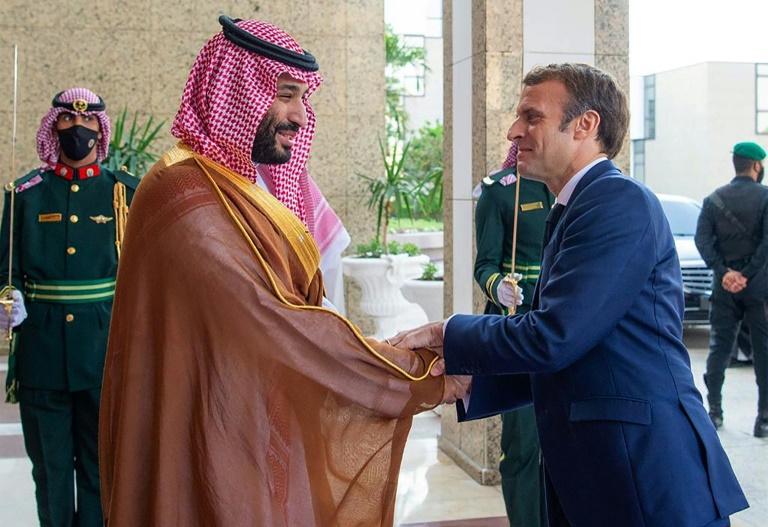
French President Emmanuel Macron is hosting Saudi Arabia’s Crown Prince Mohammed bin Salman for talks in Paris on Thursday, defying criticism that the invitation is deeply inappropriate barely four years after the murder by Saudi agents of journalist Jamal Khashoggi.

The meeting will be seen as the latest step in the readmission of the de-facto ruler of the kingdom into the international fold, after US President Joe Biden met the man universally known as MBS earlier this month.

The topics set to loom over the meeting include energy supply as concern grows over possible power shortages due to the Russian invasion of Ukraine, as well as reining in the nuclear programme of Riyadh’s top regional foe Iran.

MBS — who is portrayed at home as a champion of social and economic reform but seen by critics as a murderous tyrant — arrives in France fresh from a trip to Greece to discuss energy ties.

“I feel profoundly troubled by the visit, because of what it means for our world and what is means for Jamal (Khashoggi) and people like him,” Amnesty International secretary general Agnes Callamard told AFP, describing MBS as a man who “does not tolerate any dissent”.

The visits mark MBS’ first trip to the EU since the murder of Khashoggi by Saudi agents at the kingdom’s consulate in Istanbul in 2018, a crime that a UN probe described as an “extrajudicial killing for which Saudi Arabia is responsible”.

It also said there was “credible evidence” warranting further investigation of the individual liability of high-level Saudi officials, including MBS.

US intelligence agencies determined that MBS had “approved” the operation that led to Khashoggi’s death, though Riyadh denies this, blaming rogue operatives.

– ‘Double standards’ –

The killing drew outrage not just over the elimination of a prominent critic of the Saudi regime, but also for the manner in which it was carried out. Khashoggi was lured into the Saudi consulate on October 2, 2018, strangled and dismembered, reportedly with a bonesaw.

“The visit by MBS to France and Joe Biden to Saudi Arabia do not change the fact that MBS is anything other than a killer,” said Callamard, who at the time of the killing was the UN special rapporteur on extrajudicial killings and led the independent probe.

His reception by world leaders is “all the more shocking given many of them at the time expressed disgust (over the killing) and a committment not to bring MBS back into the international community”, she added, denouncing the “double standard”.  

But despite the concern over Saudi Arabia’s rights record, the kingdom is seen by many in the West as an essential partner due to its energy resources, purchases of weaponry and staunch opposition to Iran’s theocratic regime.

Russia’s invasion of Ukraine has made the the oil and gas reserves of the kingdom all the more important for the West.

Callamard expressed concern that “values were being obliterated in the face of concern about the rising price of oil”.

– ‘Political leverage’ –

The French president had already travelled to the kingdom in December 2021 for talks with MBS, a visit that raised some eyebrows at the time.

MBS is in charge of the country’s day-to-day business due to the ailing condition of his father, King Salman.

Macron will be meeting MBS fresh from talks with two close allies of the kingdom, UAE President Mohamed bin Zayed and Egpytian President Abdul Fattah al-Sisi. The red carpet welcome for both leaders dismayed activists. 

Macron will also be arriving from a three-nation tour of Africa, where he visited Cameroon, Benin and Guinea Bissau, none of which are seen as exemplary democracies.

After the recent fist-bump greeting from Biden that for many symbolised the West’s re-acceptance of MBS, there will be huge interest in the body language between Macron and the Saudi.

The talks are set to get under way late in the day, at 4:30 pm (1830 GMT), and include a working dinner at the Elysee Palace. MBS reportedly arrived late Wednesday at a Paris airport and headed to a private residence outside the city.

“The war in Ukraine has put the energy-producing countries back in the spotlight, and they are taking advantage of it,” said Camille Lons, research associate at the International Institute for Strategic Studies (IISS).

“This gives them political leverage that they will use to reassert their importance on the international stage,” she added.

Cartel steps up police attacks as Colombia power transfer nears

A dozen police officers have been killed, and dozens more injured in recent weeks by Colombia’s most powerful drug gang, the Gulf Clan.

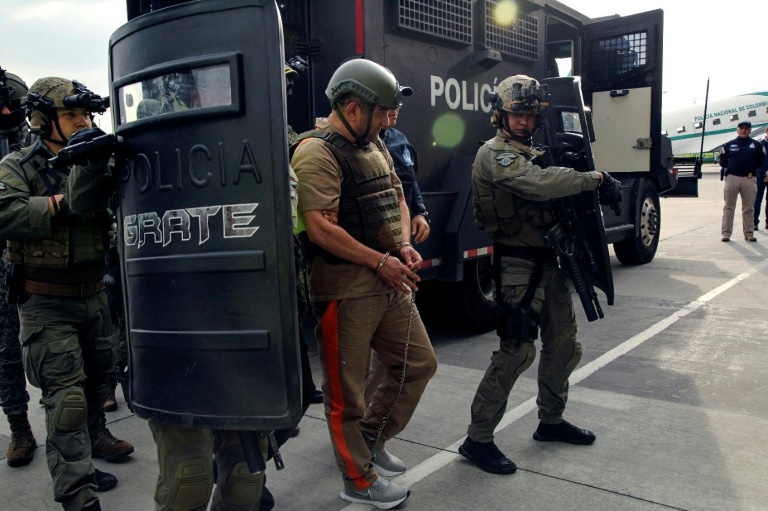
The group has been sowing terror in the country since May, when its boss Dario Antonio Usuga, known as “Otoniel,” was extradited to the United States to face trafficking charges. 

But those attacks have intensified even more recently as Colombia approaches the transfer of power on August 7 from conservative President Ivan Duque to leftist former guerrilla Gustavo Petro, who has vowed to negotiate with criminal gangs in a bid to end a decades-long conflict in exchange for more lenient sanctions.

“They are (carrying out attacks) with the sole intention of positioning themselves for political negotiations. This cannot be accepted,” warned Defense Minister Diego Molano.

Since the beginning of the year, 25 police officers have been killed by the Gulf Clan, almost half of them in the last month, according to officials. Another 60 officers have been injured in dozens of attacks using firearms and explosives.

And three police officers were killed just this week in separate attacks by suspected gang members, according to officials.

“They attack patrols from behind … it’s unacceptable,” said Molano.

Officials say the Gulf Clan, which is made up of former members of right-wing paramilitaries, has launched an “armed strike” following Otoniel’s extradition.

According to police, the Clan is offering between $1,000 and $5,000 for each murder of a member of the security forces.

It’s a tactic reminiscent of that used by late cocaine kingpin Pablo Escobar in the 1990s as part of his “pistol plan” open war against the state.

At least five Clan members have been killed and a dozen captured in the police counter-offensive.

– Potential surrender –

Since the historic victory by a left-wing candidate in June’s presidential election run-off, security forces have been targeted in 75 attacks by Clan members and other groups, according to the Center for Conflict Analysis Resources (CERAC). 

The clan “is escalating violence to present itself, in an eventual negotiation, as a group that can offer de-escalation,” CERAC director Jorge Restrepo told AFP.

Otoniel had indicated in 2018 that he was willing to turn himself in and Colombia’s then-president Juan Manuel Santos, who had won the Nobel Peace Prize for signing a peace deal with the Revolutionary Armed Forces of Colombia rebels, began organizing the process.

But it never came to fruition and the Clan continued to traffic cocaine.

When authorities captured the drug lord in October after months of hunting him through the jungle, Duque declared the end of the Gulf Clan, but the cartel has since been more active than ever.

According to independent estimates, the Clan can count on 3,000 fighters and collaborators.

Last week, a letter began circulating in which the Clan and other armed groups involved in the cocaine trade declared they were ready to call a ceasefire on August 7 ahead of an eventual disarmament.

Authorities have not confirmed the authenticity of the letter, but foreign minister-elect Alvaro Leyva said he was aware of the document.

However, a collective surrender seems far-fetched “unless there is a big enough incentive for these groups to turn themselves in … something that would allow them to avoid extradition or keep their wealth,” said Restrepo.

Petro has also opened up the possibility of suspending the extradition of drug-traffickers that “peacefully dismantle” their operations.

He has admitted, though, that it depends on “a negotiation with the United States,” which has not commented on the possibility.

Despite almost five decades fighting drug trafficking together with American authorities, Colombia remains the world’s largest producer of cocaine, and the United States its biggest consumer.

Biden hails Democrats' breakthrough on health, climate spending bill

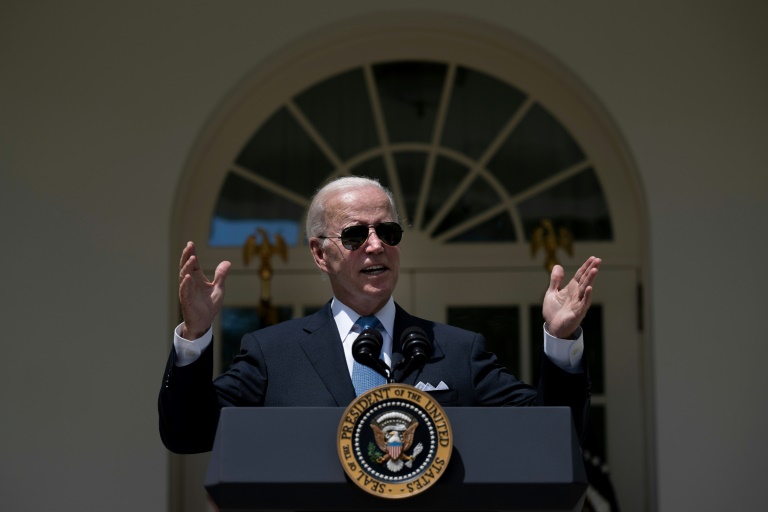
President Joe Biden hailed a breakthrough Wednesday in getting a major chunk of his seemingly doomed healthcare and climate crisis agenda through Congress after Senate Democrats overcame divisions.

“This is the action the American people have been waiting for. This addresses the problems of today — high health care costs and overall inflation — as well as investments in our energy security for the future,” Biden said in a statement.

The bill still has some way to go before becoming law but the multi-billion dollar package finally won crucial support from conservative Democratic Senator Joe Manchin. His previous opposition had essentially killed Biden’s ambitious plans, because in the 50-50 Senate, where Republicans rarely back Biden on anything, Democrats can’t afford to lose a single vote.

For Biden, whose approval ratings hover below 40 percent, the truce with Manchin comes as a big political boost ahead of November midterms when his Democratic Party is forecast to lose control of Congress to the Republicans.

If passed, the bill will pour some $369 billion into clean energy and climate initiatives and $64 billion into state-funded healthcare, including a popular measure meant to lower ruinously high prescription medicine prices.

It would be paid for by raising $739 billion, with a major chunk coming from a 15 percent corporate tax rate. An extra $300 billion raised under the plan would go to paying off the federal deficit.

Biden, who has had to abandon even broader scale social and environmental spending ideas, got the good news of a reprieve for this bill on the same day he finished his five days isolating after a Covid-19 infection.

It also comes as Congress moves closer to passing another of his priorities — a $52 billion fund to encourage domestic production of semiconductors, the electronic brains in modern equipment ranging from washing machines to military weapons.

In his statement, Biden said prescription drug prices would drop and healthcare for Americans using the subsidized Affordable Care Act policy would also become $800 a year cheaper.

Funding for clean energy will “create thousands of new jobs and help lower energy costs in the future,” he said.

“We will pay for all of this by requiring big corporations to pay their fair share of taxes, with no tax increases at all for families making under $400,000 a year.”

Biden thanked Manchin, an often unpredictable partner in the Senate, for his “extraordinary effort.”

“If enacted, this legislation will be historic, and I urge the Senate to move on this bill as soon as possible, and for the House to follow as well.”

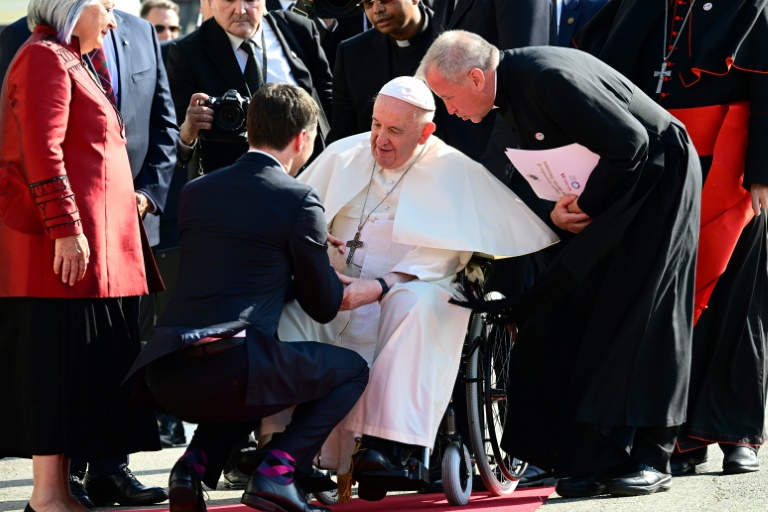
Pope Francis denounces 'ideological colonization' on Canada visit

Pope Francis decried “ideological colonization” Wednesday and renewed his apology to Indigenous peoples for decades of abuse in a speech to Canada’s top officials, who invited him to take further action leading to “real reconciliation.”

The leader of the world’s 1.3 billion Catholics was speaking in Quebec City, the latest stage of his landmark tour of Canada which he kicked off this week with a powerful apology for the Church’s role in the abuse of Indigenous children at Catholic-run residential schools.

On Wednesday, the 85-year-old pontiff slammed the “deplorable” school system and again expressed his “deep shame and sorrow… I renew my request for forgiveness for the wrong done by so many Christians to the Indigenous peoples.”

He derided the “colonialist mentality” of the past — adding that “today, too, there are any number of forms of ideological colonization that clash with the reality of life, stifle the natural attachment of peoples to their values, and attempt to uproot their traditions, history and religious ties.”

Praising multiculturalism, he vowed to promote the rights of Indigenous people and to “move forward on a fraternal and patient journey … working for healing and reconciliation.”

From the late 1800s to the 1990s, Canada’s government sent about 150,000 children into 139 residential schools run by the Church, where they were cut off from their families, language and culture in a failed policy of forced assimilation.

Many were physically and sexually abused, and thousands are believed to have died of disease, malnutrition or neglect.

Francis has been welcomed in Canada, and his apology — which he first made on Monday in the western Indigenous community of Maskwacis — has been hailed as historic, though many Indigenous people who have spoken to AFP have warned there is more work to do. 

That point was driven home again to the pope on Wednesday by Mary Simon, Canada’s first Indigenous governor general, who along with Prime Minister Justin Trudeau greeted Francis when he arrived in Quebec City from Edmonton. 

“Regardless of where you are listening from… you are on Indigenous land,” she said.

She praised the survivors of the school system, who came to hear the pope’s words “with hearts and minds open, some willing to forgive, some still living with the hurt, but all willing to listen.”

The pontiff’s visit, she added, was “an important step towards further dialogue and actions that will lead to real reconciliation.”

Trudeau, too, looked to the future.

“Survivors and their descendants need to be at the centre of everything we do together going forward,” he said.

– ‘Intolerant’ cultural fashion –

Pope Francis also took on cancel culture on Wednesday, branding it “a cultural fashion that … proves intolerant of difference and concentrates on the present moment, on the needs and rights of individuals, while frequently neglecting their duties with regard to the most weak and vulnerable.”

The pontiff also reiterated his feelings about the war in Ukraine, warning against “an arms race and strategies of deterrence” and raising the spectre of “terrible and protracted cold wars.”

Along the road from the airport to the Citadel in Quebec City, hundreds of people, smartphones in hand, crowded behind the barriers to catch a glimpse of the pope in his white Fiat. Some carried welcome signs or flags of the Vatican.

On Thursday, Francis will visit the National Shrine of Saint Anne de Beaupre, one of the main pilgrimage sites in North America, and preside over a mass. Later that day he will go to Notre Dame Cathedral in Quebec City to give a homily.

On Friday, he will travel to the Arctic archipelago of Nunavut, where he will visit the town of Iqaluit for the last stop of his six-day visit.

Francis has been suffering from knee pain and often using a wheelchair during his Canada tour.

Close Bitnami banner
Bitnami