World

McDonald's beefs up UK price for 99p cheeseburger

Stung by an across-the-board surge in inflation, McDonald’s said Wednesday it was raising the UK price of its cheeseburger — set at a lowly 99 pence ($1.19) for 14 years.

The 20-percent hike, to £1.19, sees the US fast-food giant join a raft of companies passing on higher wholesale prices to British consumers, fuelling the country’s worst cost-of-living crisis in generations.

McDonald’s said it was increasing the price of menu items “impacted most by inflation” by between 10p and 20p.

The chain is contending with “incredibly challenging times”, UK and chief executive officer Alistair Macrow said in a statement.

“Since we opened in the UK in 1974, we have committed to offering great tasting food at affordable prices, and that commitment will not change,” he said.

“But today’s pressures mean, like many, we are having to make some tough choices about our prices.” 

Last month, UK inflation hit a 40-year high of 9.4 percent and is forecast to rise into double digits, with energy prices set to rocket further on the back of Russia’s war in Ukraine.

On Tuesday, McDonald’s reported lower quarterly profits following its exit from Russia, and warned of the impact of rising inflation on consumer sentiment in Europe especially.

Russian anger after EU court upholds ban on RT

The Kremlin vowed to further restrict Western media in Russia on Wednesday after the EU’s top court upheld European sanctions that took Moscow’s RT channel off-air around the continent.

The European Court of Justice (ECJ) in Luxembourg threw out an appeal from state-owned RT France against a broadcast ban which was introduced as part of EU sanctions following Russia’s invasion of Ukraine in February.

Finding that the channel “actively supported” Moscow’s destabilisation of Ukraine and broadcast pro-war propaganda, the court concluded that the EU’s decision was legal and proportionate.

“In the light of those considerations, the general court dismisses the action in its entirety,” the judges ruled, referring to RT France’s bid to overturn the ban and restrictions on its website.

The channel immediately announced an appeal, while the Kremlin said it would take retaliatory measures.

“Of course, we will take similar measures of pressure on Western media that operate in our country,” Kremlin spokesman Dmitry Peskov told reporters in Moscow. 

“We will also not let them work in our country,” he said, describing the Kremlin’s reaction to the ban as “extremely negative.”

“Essentially, RT has been blocked and cannot operate in Europe,” Peskov said. “Europeans are trampling on their own ideals.”

Most Western media outlets are off-air in Russia and have seen their websites banned, while many foreign journalists have left because of draconian new laws that muzzle independent reporters.

– ‘Supported destabilisation’ –

Launched in 2005 as Russia Today, RT has grown its reach through broadcasts and websites in several languages including English, French, Spanish, German and Arabic.

The EU’s decision to ban RT as well as fellow Kremlin-funded news service Sputnik raised questions about freedom of expression in the 27-member bloc and formed part of RT France’s legal appeal.

France’s national journalists’ union, the SNJ, issued a statement at the end of February calling the targeting of Russian media “an act of censorship.”

But the ECJ judges noted that the sanction was temporary — until July 2022 — and found that it was “appropriate and necessary to the aims pursued” given the “extraordinary context”.

“RT France actively supported… the policy of destabilisation and aggression conducted by the Russian Federation towards Ukraine, which ultimately resulted in a large-scale military offensive,” the court’s statement said.

Secondly “RT France broadcast, in particular, information justifying the military aggression against Ukraine, capable of constituting a significant and direct threat to the Union’s public order and security,” it continued. 

Evidence presented to the court by RT France was “not capable of demonstrating an overall balanced treatment by the latter of information concerning the ongoing war,” the judges concluded.

The channel is seen by critics as parroting Russian state propaganda and has been blocked in most Western countries since President Vladimir Putin sent troops into Ukraine.

– ‘Unfriendly’ –

Most Western broadcasters in Russia were dropped by their local Russian providers after the invasion and websites including the BBC, France’s RFI or Germany’s Deutsche Welle are blocked.

Earlier this month, Russian President Vladimir Putin signed a decree that gave the government powers to shut media organisations from countries that were considered “unfriendly.”

Western social networks such as Facebook, Twitter and Instagram are also banned.

The censors can be circumvented by using a VPN which hides the location of a computer as it accesses the internet. 

Elsewhere on Wednesday, Russian energy giant Gazprom drastically cut gas deliveries to Europe via the Nord Stream pipeline to about 20 percent of its capacity, German authorities said.

War in Ukraine: latest developments

Here are the latest developments in the war in Ukraine:

– Ukraine moves closer to grain exports –

The Ukrainian navy says that work has resumed at three Black Sea ports designated under a deal with Russia to resume cereals’ exports that have been blocked by Russia’s invasion. 

At talks in Turkey last week, Kyiv and Moscow agreed a mechanism to allow blocked Ukrainian grain to be exported across the Black Sea from the ports of Odessa, Chernomorsk and Pivdennyi.

Kyiv has said it hopes to begin sending out the first of millions of tonnes of grain “this week” despite a missile strike by Russia last week on the port in Odessa.

Russia and Ukraine are major exporters of agricultural products, but Moscow’s invasion has severely disrupted Ukrainian wheat exports as the fighting damaged harvests and left ports blocked and mined.

As part of the deal, a coordination centre involving Ukrainian and Russian representatives was opened Wednesday in Istanbul to monitor the safe passage of ships along the agreed routes.

– Ukraine hits Russian-held bridge –

Ukrainian forces hit a key Russian-held bridge overnight during a counter-offensive to retake the occupied southern city of Kherson, representatives from both sides say.

The Russian army has used the Antonivskiy bridge over the Dnipro River as a key resupply route into Kherson, which fell to Russian forces in the early days of the invasion.

Kyiv has vowed a major counter-offensive to retake the region next to the Crimea peninsula, with the help of advanced missile systems supplied by the West.

– New Ukraine prosecutor named –

Ukrainian lawmaker Andriy Kostin is appointed the country’s new prosecutor general, a week after President Volodymyr Zelensky fired Kostin’s predecessor and the head of the country’s security agency, citing widespread collusion with Russia among their staff.

The prosecutor general’s office said that 299 lawmakers of Ukraine’s parliament — the Rada — backed Kostin’s nomination.

Zelensky says he hopes Kostin will help achieve “fair punishment for every Russian war criminal.”

– EU court confirms ban on Russian news channel –

The European Court of Justice in Luxembourg upholds a broadcast ban imposed on Russian news channel RT France.

Consistently accused of churning out Russian state propaganda, RT has been blocked in most Western countries since President Vladimir Putin sent troops into Ukraine in February.

The Kremlin has hit back by curtailing the work of some Western media outlets in Russia.

Russian lawmakers have also passed draconian laws restricting free speech, under which criticism of the war and occupation can lead to lengthy prison sentences.

– Gazprom carries out threatened cuts –

Russian energy giant Gazprom has carried out its promise to drastically cut gas deliveries to Europe through the Nord Stream pipeline to about 20 percent of its capacity from 40 percent, German authorities say.

The Russian state-run company announced Monday that it would slash supply to 33 million cubic metres a day — half the amount it has been delivering since service resumed last week after 10 days of maintenance work.

EU states have accused Russia of squeezing supplies in retaliation for Western sanctions over Moscow’s war in Ukraine.

Kremlin spokesman Dmitry Peskov blames EU sanctions for the limited supply.

Pope Francis to address Canada's political leaders in Quebec

Pope Francis will travel to Quebec City Wednesday, where he will address Canada’s political leaders after dedicating the first part of his journey to apologizing for the abuse of Indigenous children at Catholic-run schools.

After two days in the western province of Alberta, during which he begged for forgiveness from the First Nations, Metis and Inuit people of Canada for abuse suffered over the span of a century, the 85-year-old pontiff will fly to Quebec City from Edmonton on Wednesday morning.

He will go first to the Citadel of Quebec, where he will meet with Mary Simon, the first Indigenous person to become Canada’s governor general, and then with Prime Minister Justin Trudeau.

He will then deliver a speech to officials, Indigenous representatives and the diplomatic corps. 

Francis has been welcomed in Canada and his apology for the Church’s role in the residential school system has been hailed as historic, though many Indigenous people who have spoken to AFP have warned there is more work to do. 

From the late 1800s to the 1990s, Canada’s government sent about 150,000 children into 139 residential schools run by the Church, where they were cut off from their families, language and culture.

Many were physically and sexually abused, and thousands are believed to have died of disease, malnutrition or neglect.

For some, the healing had already begun.

Cindy Dearhead, a First Nations woman who was a student in one of the infamous schools, said she felt the pope’s apology was “important.”

“It was a long time coming, but finally a pope himself is acknowledging ‘yes, I’m sorry,'” she told AFP at Lac Ste. Anne in Alberta, one of the most important pilgrimage sites in North America, as the pope visited the lake on Tuesday.

But for many others, that healing may well depend on what comes next. 

“I think the apology has always been one thing, part of a process of reconciliation. To me, the actions that need to come behind it are very important,” said Chief Peter Powder of the Mikisew Cree First Nations.

On Thursday, Francis will visit the National Shrine of Saint Anne de Beaupre, one of the main pilgrimage sites in North America, and preside over a mass. Later that day he will go to Notre Dame Cathedral in Quebec City to give a homily.

On Friday, he will travel to the Arctic archipelago of Nunavut, where he will visit the town of Iqaluit for the last stop of his six-day visit.

Francis has been suffering from knee pain and often uses a wheelchair. On Tuesday, he appeared tired and frail as he visited the lake, where he called for healing and sprinkled water he had blessed on to the assembled faithful.

Boeing profit falls as CEO eyes resumption of 787 deliveries

Boeing reported a drop in second-quarter profits on Wednesday due to the continued travails of the 787, but the company said it was close to receiving regulatory approval to resume deliveries of the plane.

“We’re on the verge,” Chief Executive Dave Calhoun said on CNBC, although he declined to set a date when asked about when he expects Federal Aviation Administration approval to resume deliveries on the Dreamliner aircraft.

Deliveries on the top-selling widebody jet have been suspended for more than a year, a factor that again dragged down revenues.

The aviation giant reported a 67 percent plunge in quarterly profits to $193 million, as revenues declined 1.9 percent to $16.7 billion.

The company missed analyst estimates for revenues and earnings-per-share, but stock prices rose after the report, as Boeing confirmed it still expects to have positive cash flow in 2022. 

Calhoun told CNBC the company was at a “bit of a turning point” in terms of getting past key obstacles.

On the 787, the company has been working with the Federal Aviation Administration to address a series of manufacturing issues uncovered in 2020 and since.

The company took a $3.5 billion charge for additional rework costs on the 787 in the fourth quarter of 2021. It said in April it expects another $2 billion in “abnormal costs” for the 787.

At the end of March, Boeing had 115 Dreamliner planes in inventory and was producing the jet “at very low rates.”

On Wednesday, the company said it was working with US air safety officials on “final actions” to resume 787 deliveries. 

The enhanced regulatory scrutiny of the 787 and other Boeing planes comes on the heels of a pair of crashes in 2018 and 2019 on the 737 MAX, which led to a lengthy global grounding of the plane.

But the MAX has since returned to service, enabling Boeing to ramp up production of the planes, collect meaningful revenues and announce significant new orders at the Farnborough Airshow earlier this month.

Even so, Boeing’s backlog of orders in the pipeline lags that of archrival Airbus, but Calhoun told CNBC he is not worried about the difference.

“We don’t need to close that gap,” Calhoun said, adding that aviation industry is “supply constrained for as far as I can see.”

Boeing’s job is “to deliver against our backlog,” he said. “My job is to make sure I’ve got a big enough backlog to continue to increase my rate, stay stable in production and satisfy our customers every step of the way.”

Shares climbed 2.0 percent to $159.11 in morning trading.

Lufthansa strike causes travel turmoil in Germany

Lufthansa passengers faced massive travel disruption Wednesday as a strike led the German airline group to cancel almost all its flights from its domestic hubs in Frankfurt and Munich.

Lufthansa axed more than 1,000 flights after the one-day walkout by ground staff was called by the powerful Verdi union earlier in the week. 

The stoppage promises to bring more pain to a turbulent summer for air travel across Europe.

Lufthansa had already cancelled thousands of flights over the summer as the airline industry contends with ground-side disruptions.

The relaxation of coronavirus rules has boosted demand, but chronic staff shortages have left passengers facing flight disruptions, long queues and lost luggage.

“Lufthansa reduced its staffing during the (coronavirus) crisis, despite being saved by the taxpayer, and now there are personnel shortages in all corners,” said Verdi Lufthansa representative Marvin Reschinsky.

“We now need financial investments in personnel to make sure air travel is still possible in the future,” he told AFP.

Participation in the strike was “enormous”, he said, reflecting the financial pressure employees feel from a recent surge in inflation, which stood at 7.6 percent in Germany last month. 

Ground staff had “earned” a raise, said Katharina Horn, a Lufthansa employee.

After two years of the pandemic which battered the industry and led to long work stoppages for employees “all the savings are used up”, she told AFP.

“We would have liked not to have to go out into the streets today. Lufthansa could have avoided that by making a reasonable offer,” she said.

The strike was “wholly unnecessary” and had destroyed the “holiday dreams of more than 100,000 people”, said Lufthansa spokesman, Martin Leutke.

Lufthansa was seeking to find alternatives for stranded passengers but Leutke warned that the process was “not easy in the peak travel period because all the flights are full”.

“I wanted to go to Tunis but the flight is cancelled,” Adel Zayani said to AFP, adding that he would now have to wait for a flight tomorrow.

The strike was “good for people, workers” who needed to earn money but “not easy” for passengers, said the 56-year-old.

Spotify losses widen as costs and subscribers increase

The world’s most popular streaming service Spotify on Wednesday recorded wider losses on rising costs even though subscriber numbers beat expectations in the second quarter. 

Between April and June, the Swedish giant suffered a net loss of 125 million euros ($126 million), compared to 20 million euros in the second quarter of 2021.

In the same period, the number of paying subscribers rose by 14 percent to 188 million out of a total of 433 million including non-paying users.

The 19 percent increase in overall users is the largest ever in the second quarter, the company said.

Analysts had expected a loss of 127 million euros ($128 million) and a rise in paying subscribers to 187 million, Bloomberg reported.

The rise in paying subscribers confounded concerns that the rising cost of living would push consumers to cut back on non-essential spending such as entertainment.

Spotify’s operating losses hit 194 million in the second quarter, compared with operating profits of 12 million euros a year earlier.

Spotify blamed the losses on higher staff costs after expanding its team and new acquisitions as it widens its reach into the world of podcasts.

Spotify raised hackles earlier this year with a $100 million multi-year deal with controversial star podcaster Joe Rogan.

At the end of the second quarter, Spotify listed 4.4 million podcasts on its platform, a rise of 400,000 from the end of March.

The number of users that engaged with podcasts grew in the “substantial double-digits” year-on-year and “per user podcast consumption rates continued to rise”, it said.

Spotify expects operating losses of 218 million euros in the third quarter due to unfavourable exchange rates.

The euro has slumped against the dollar in recent months, triggered by the war in Ukraine and the mounting risks to the European Union’s economy, as well as a relatively slow increase of interest rates by the ECB.

Spotify shares rose 16 percent in morning trading on the New York Stock Exchange. 

Stocks advance ahead of US rate decision, dollar dips

European and US stock markets advanced while the dollar retreated on Wednesday as attention switched to the Federal Reserve and the size of its upcoming interest rate hike.

Tuesday saw a steep drop on Wall Street as traders pored over more company earnings that pointed to fallout caused by decades-high inflation.

After markets closed both Google and Microsoft reported disappointing earnings, but shares in both companies shot higher as trading got under way.

“The takeaway for many apparently is that their results and/or guidance was better than feared,” said market analyst Patrick J. O’Hare at Briefing.com.

Shares in Google climbed 3.3 percent and Microsoft stock jumped 4.0 percent.

While traders will continue to sift over company results and economic data early in the US trading session, attention will later shift to the Fed’s rate decision.

Central banks are seeking to combat runaway prices by hiking interest rates, even though that risks pushing economies into recession.

The US central bank is widely tipped to announce a 0.75-percentage-point increase in interest rates, with traders particularly interested in any indications whether it will keep up this pace of rate hikes.

“This increase in the interest rate is already very much priced in,” noted Naeem Aslam, chief market analyst at Avatrade.

He added that should the Fed indicate a plan to raise rates by another 75 basis points at its next meeting, “that would be highly bullish for the dollar”. 

Focus was also on gas prices as Russian energy giant Gazprom slashed deliveries of the fuel to Europe via the Nord Stream pipeline.

EU states have accused Russia of squeezing supplies in retaliation for Western sanctions over Moscow’s war in Ukraine.

The price of natural gas reference, Dutch TTF, rose 3.5 percent to 210.25 euros per megawatt hour, building on Tuesday gains.

On the corporate front, Switzerland’s scandal-hit banking giant Credit Suisse appointed a new chief executive as higher litigation costs and financial market volatility pushed it deeper into the red.

Ulrich Koerner, head of asset management at the bank, takes the reins from Thomas Gottstein on Monday.

The bank has been hit by a series of scandals and crises including the implosions of financial services firms Greensill and Archegos last year.

After starting the day lower on the Swiss stock exchange, Credit Suisse shares rallied more than two percent.

– Key figures at around 1330 GMT –

London – FTSE 100: UP 0.6 percent at 7,349 points

Frankfurt – DAX: UP 0.2 percent at 13,128.54 

Paris – CAC 40: UP 0.4 percent at 6,235.00

EURO STOXX 50: UP 0.6 percent at 3,595.85

New York – Dow: UP 0.5 percent at 31,915.08

Tokyo – Nikkei 225: UP 0.2 percent at 27,715.75 (close)

Hong Kong – Hang Seng Index: DOWN 1.1 percent at 20,670.04 (close)

Shanghai – Composite: DOWN 0.1 percent at 3,275.76 (close)

Euro/dollar: UP at $1.0143 from $1.0126 Tuesday

Pound/dollar: UP at $1.2049 from $1.2030 

Euro/pound: UP at 84.20 pence from 84.09 pence

Dollar/yen: DOWN at 136.87 yen from 136.95 yen

Brent North Sea crude: UP 0.8 percent at $105.23 per barrel

West Texas Intermediate: UP 1.0 percent at $95.92 per barrel

burs-rl/lcm

Fourth person 'cured' of HIV, but is a less risky cure in sight?

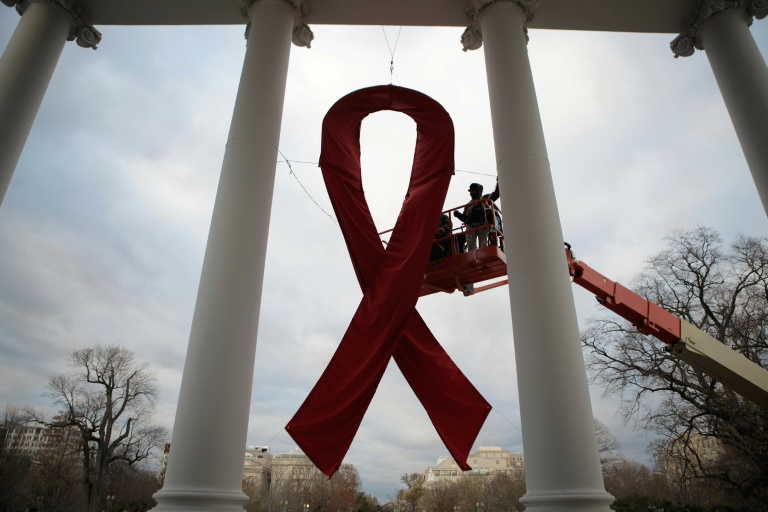
AIDS researchers announced on Wednesday that a fourth person has been “cured” of HIV, but the dangerous procedure for patients also battling cancer may be little comfort for the tens of millions living with the virus worldwide.

The 66-year-old man, named the “City of Hope” patient after the Californian centre where he was treated, was declared in remission in the lead up to the International AIDS Conference, which begins in Montreal, Canada on Friday.

He is the second person to be announced cured this year, after researchers said in February that a US woman dubbed the New York patient had also gone into remission.

The City of Hope patient, like the Berlin and London patients before him, achieved lasting remission from the virus after a bone marrow transplant to treat cancer.

Another man, the Duesseldorf patient, has also previously been said to have reached remission, potentially bringing the number cured to five.

Jana Dickter, an infectious disease specialist at the City of Hope, told AFP that because the latest patient was the oldest yet to achieve remission, his success could be promising for older HIV sufferers who also have cancer.

Dickter is the lead author of research on the patient which was announced at a pre-conference in Montreal but has not been peer reviewed.

– ‘I am beyond grateful’ –

“When I was diagnosed with HIV in 1988, like many others, I thought it was a death sentence,” said the patient, who does not want to be identified.

“I never thought I would live to see the day that I no longer have HIV,” he said in a City of Hope statement. “I am beyond grateful.”

Dickter said the patient had told her of the stigma he experienced during the early days of the AIDS epidemic in the 1980s.

“He saw many of his friends and loved ones become very ill and ultimately succumb to the disease,” she said.

He had “full-blown AIDS” for a time, she said, but was part of early trials of antiretroviral therapy, which now allows many of the 38 million with HIV globally to live with the virus. 

He had HIV for 31 years, longer than any previous patient who went into remission. 

After being diagnosed with leukaemia, in 2019 he received a bone marrow transplant with stem cells from an unrelated donor with a rare mutation in which part of the CCR5 gene is missing, making people resistant to HIV.

He waited until getting vaccinated for Covid-19 in March 2021 to stop taking antiretrovirals, and has been in remission from both HIV and cancer since.

Reduced-intensity chemotherapy worked for the patient, potentially allowing older HIV patients with cancer to get the treatment, Dickter said.

But it is a complex procedure with serious side effects and “isn’t a suitable option for most people with HIV”, she added.

Steven Deeks, an HIV expert at the University of California, San Francisco who was not involved in the research, said the “first thing you do in a bone marrow transplant is you destroy your own immune system temporarily”.

“You would never do this if you didn’t have cancer,” he told AFP.

– ‘Holy Grail’ –

Also announced at the AIDS conference was research about a 59-year-old Spanish woman with HIV who has maintained an undetectable viral load for 15 years despite stopping antiretroviral therapy.

Sharon Lewin, president-elect of the International AIDS Society which convenes the conference, said that it was not quite the same as the City of Hope patient, because the virus remained at a very low level.

“A cure remains the Holy Grail of HIV research,” Lewin said.

“We have seen a handful of individual cure cases before and the two presented today provide continued hope for people living with HIV and inspiration for the scientific community.”

She also pointed to a “truly exciting development” towards identifying HIV in an individual cell, which is “a bit like finding a needle in a haystack”.

Deeks, an author of the new research also presented at the conference, said it was an “unprecedented deep dive into the biology of the infected cell”.

The researchers identified that a cell with HIV has several particular characteristics.

It can proliferate better than most, is hard to kill, and is both resilient and hard to detect, Deeks said.

“This is why HIV is a lifelong infection.”

But he said that cases such as the City of Hope patient offered a potential roadmap towards a more broadly available cure, possibly using CRISPR gene-editing technology.

“I think that if you can get rid of HIV, and get rid of CCR5, the door by which HIV gets in, then you can cure someone,” Deeks said.

“It’s theoretically possible — we’re not there yet — to give someone a shot in the arm that will deliver an enzyme that will go into the cells and knock out CCR5, and knock out the virus.

“But that’s science fiction for now.”

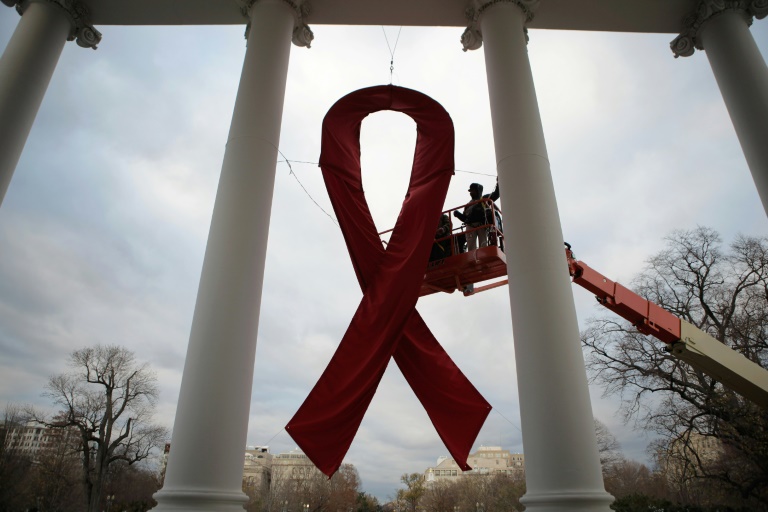
Fourth person 'cured' of HIV, but is a less risky cure in sight?

AIDS researchers announced on Wednesday that a fourth person has been “cured” of HIV, but the dangerous procedure for patients also battling cancer may be little comfort for the tens of millions living with the virus worldwide.

The 66-year-old man, named the “City of Hope” patient after the Californian centre where he was treated, was declared in remission in the lead up to the International AIDS Conference, which begins in Montreal, Canada on Friday.

He is the second person to be announced cured this year, after researchers said in February that a US woman dubbed the New York patient had also gone into remission.

The City of Hope patient, like the Berlin and London patients before him, achieved lasting remission from the virus after a bone marrow transplant to treat cancer.

Another man, the Duesseldorf patient, has also previously been said to have reached remission, potentially bringing the number cured to five.

Jana Dickter, an infectious disease specialist at the City of Hope, told AFP that because the latest patient was the oldest yet to achieve remission, his success could be promising for older HIV sufferers who also have cancer.

Dickter is the lead author of research on the patient which was announced at a pre-conference in Montreal but has not been peer reviewed.

– ‘I am beyond grateful’ –

“When I was diagnosed with HIV in 1988, like many others, I thought it was a death sentence,” said the patient, who does not want to be identified.

“I never thought I would live to see the day that I no longer have HIV,” he said in a City of Hope statement. “I am beyond grateful.”

Dickter said the patient had told her of the stigma he experienced during the early days of the AIDS epidemic in the 1980s.

“He saw many of his friends and loved ones become very ill and ultimately succumb to the disease,” she said.

He had “full-blown AIDS” for a time, she said, but was part of early trials of antiretroviral therapy, which now allows many of the 38 million with HIV globally to live with the virus. 

He had HIV for 31 years, longer than any previous patient who went into remission. 

After being diagnosed with leukaemia, in 2019 he received a bone marrow transplant with stem cells from an unrelated donor with a rare mutation in which part of the CCR5 gene is missing, making people resistant to HIV.

He waited until getting vaccinated for Covid-19 in March 2021 to stop taking antiretrovirals, and has been in remission from both HIV and cancer since.

Reduced-intensity chemotherapy worked for the patient, potentially allowing older HIV patients with cancer to get the treatment, Dickter said.

But it is a complex procedure with serious side effects and “isn’t a suitable option for most people with HIV”, she added.

Steven Deeks, an HIV expert at the University of California, San Francisco who was not involved in the research, said the “first thing you do in a bone marrow transplant is you destroy your own immune system temporarily”.

“You would never do this if you didn’t have cancer,” he told AFP.

– ‘Holy Grail’ –

Also announced at the AIDS conference was research about a 59-year-old Spanish woman with HIV who has maintained an undetectable viral load for 15 years despite stopping antiretroviral therapy.

Sharon Lewin, president-elect of the International AIDS Society which convenes the conference, said that it was not quite the same as the City of Hope patient, because the virus remained at a very low level.

“A cure remains the Holy Grail of HIV research,” Lewin said.

“We have seen a handful of individual cure cases before and the two presented today provide continued hope for people living with HIV and inspiration for the scientific community.”

She also pointed to a “truly exciting development” towards identifying HIV in an individual cell, which is “a bit like finding a needle in a haystack”.

Deeks, an author of the new research also presented at the conference, said it was an “unprecedented deep dive into the biology of the infected cell”.

The researchers identified that a cell with HIV has several particular characteristics.

It can proliferate better than most, is hard to kill, and is both resilient and hard to detect, Deeks said.

“This is why HIV is a lifelong infection.”

But he said that cases such as the City of Hope patient offered a potential roadmap towards a more broadly available cure, possibly using CRISPR gene-editing technology.

“I think that if you can get rid of HIV, and get rid of CCR5, the door by which HIV gets in, then you can cure someone,” Deeks said.

“It’s theoretically possible — we’re not there yet — to give someone a shot in the arm that will deliver an enzyme that will go into the cells and knock out CCR5, and knock out the virus.

“But that’s science fiction for now.”

Close Bitnami banner
Bitnami